The Palmerai is a 54 square mile palm oasis on the northeast edge of Marrakech. It’s a 20-minute drive from the city centre and is well known for its lush landscape, high-end resorts, and popular activities.
I needed to take a break from the manic pace of life in the medina, so I decided to visit the Palmerai for a camel ride at sunset. I booked the activity through Get Your Guide, and I was picked up at 4.00pm next to the Islane Hotel. I was part of a small group, and we were taken to our destination in a small air-conditioned van.
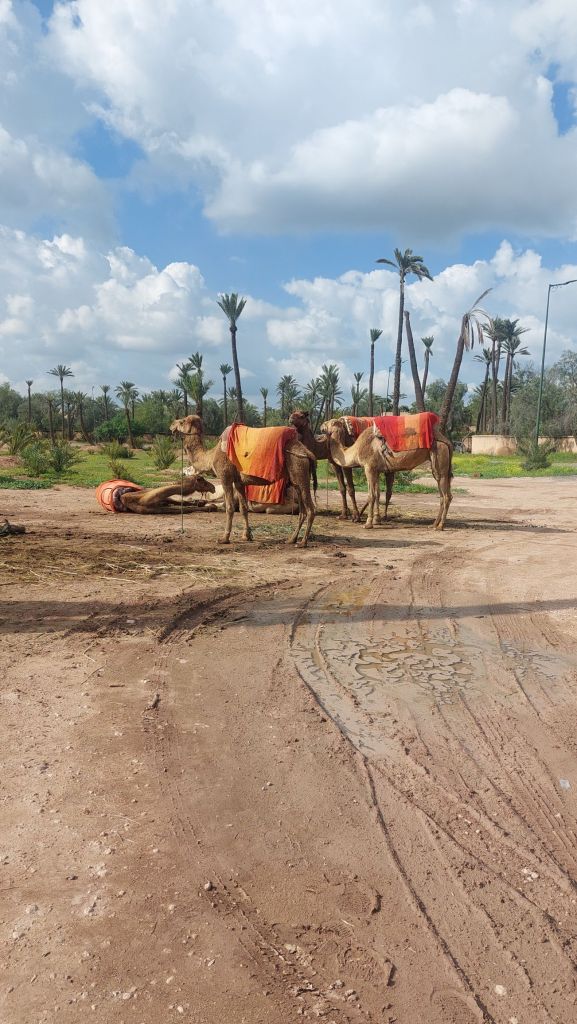
After a short drive, the scenery began to change into open roads landscaped with thousands of palm trees. There were camels sitting at the sides of the road wearing colourfully decorated seats, waiting to take tourists for a ride around the scenic area.
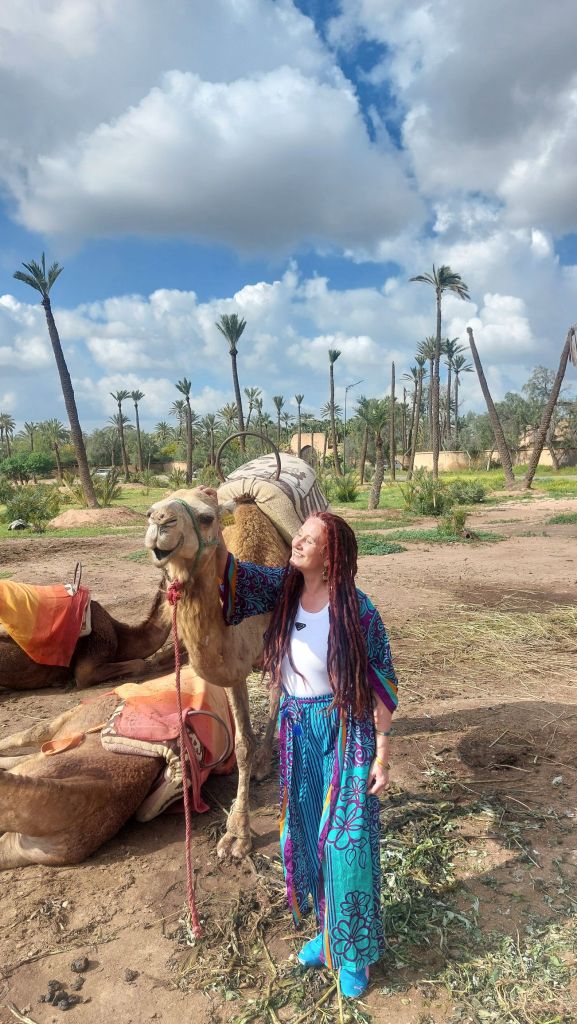
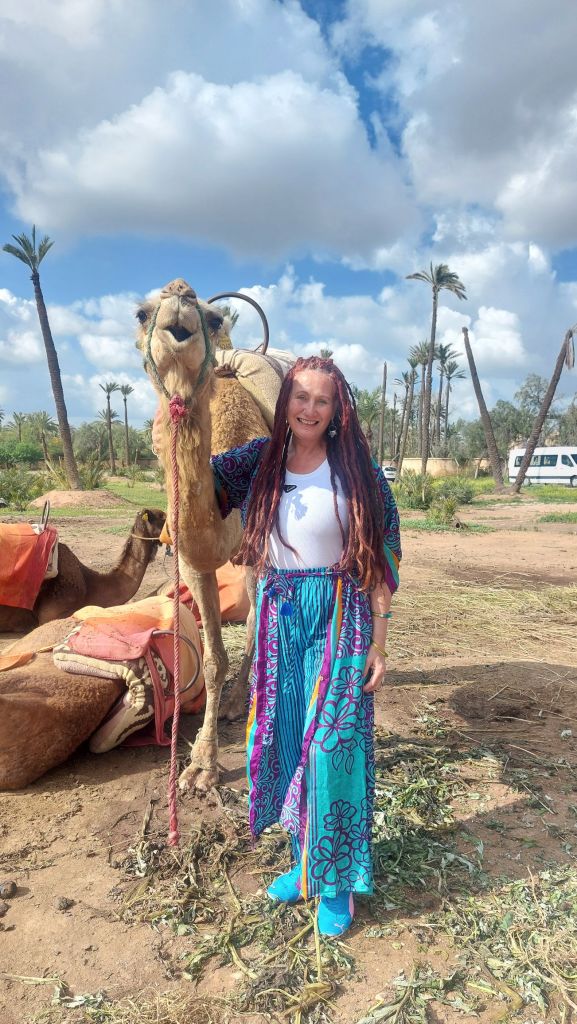
Once we had arrived at our destination, I was dressed in traditional blue Tuareg clothing and helped onto my camel by a friendly camel driver.
Video taken by our guide Mohammed.
Soon afterwards, we set off trekking through the palm groves as the sun began to set. The trek lasted for around 40 minutes across a stretch of gravelly ground.
I have every respect for the Tuareg, who would spend months on the back of a camel in search of salt mines. However, they are not the most comfortable creatures, and 40 minutes was more than enough for me.
Image by Freebird Tracey.
It was late March when I went. Therefore, I imagine the sunset would be more spectacular during the summer months. It was still nice and peaceful, even if I didn’t get the wow factor I was hoping for.
The camel drivers were entertaining, singing songs along the way and making little camels for us by plaiting the grass they picked along our route.
Back at the vehicle, the camel drivers prepared a pot of mint tea for us all. After drinking it, we got back into the van and were soon heading back into Marrakech.
My thoughts on the activity are mixed. It was good to get out of the busy city for a short while, and the scenery was nice. I enjoyed seeing another side of Marrakech, but I didn’t really get the experience I was hoping for. Perhaps it was the overcast sky spoiling my expectations of a dramatic sunset or how swiftly the event seemed to come to an end.
In terms of value for money, I think that quad biking may have been the better option. On a positive note, our guide was lovely. He took videos and photographs for me and helped me into my headscarf.
If I return to this part of Marrakech, I will try another activity. The Palmerai hosts balloon rides, which are available through Paradise Ballooning and Marrakech Balloon. There are several golf courses in the area also.
For people who want to experience riding a camel, the Palmerai is ideal due to its close proximity to Marrakech.
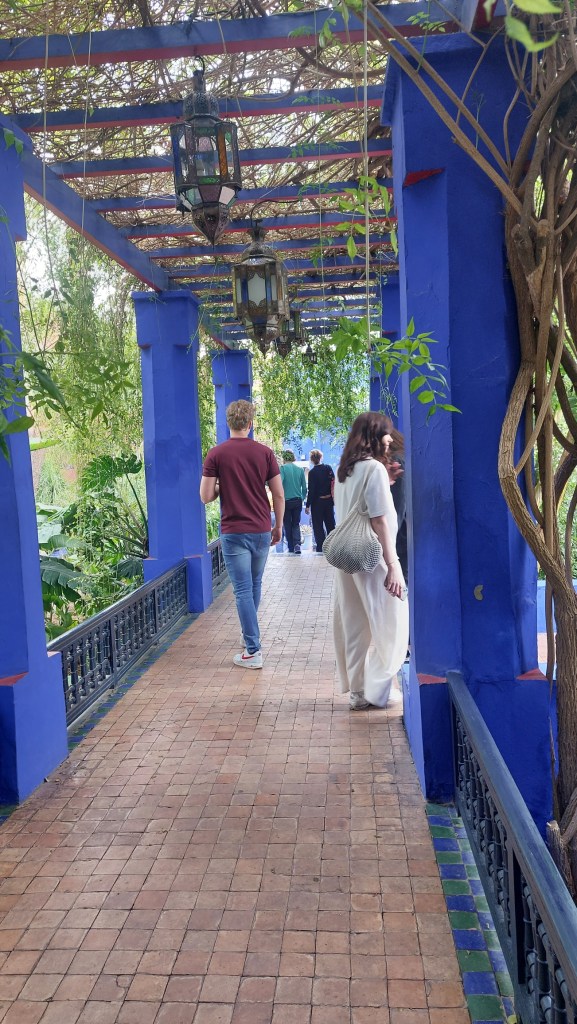
Named the second most beautiful garden in the world in 2022. The Majorelle Gardens is a one hectare botanical garden and artists landscape in Marrakech. It features a cubist villa designed by the French architect Paul Sinoir in the 1930s.
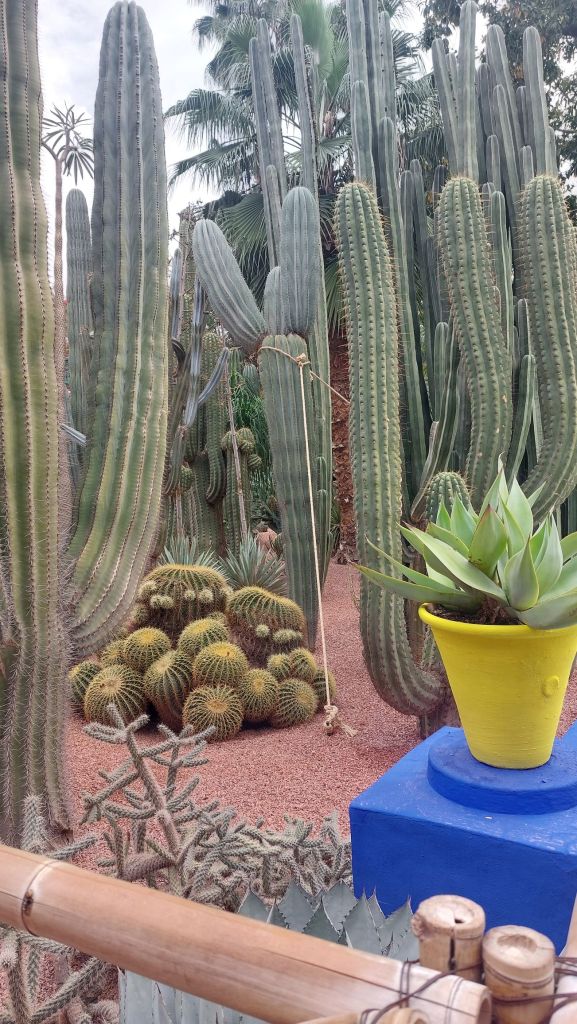
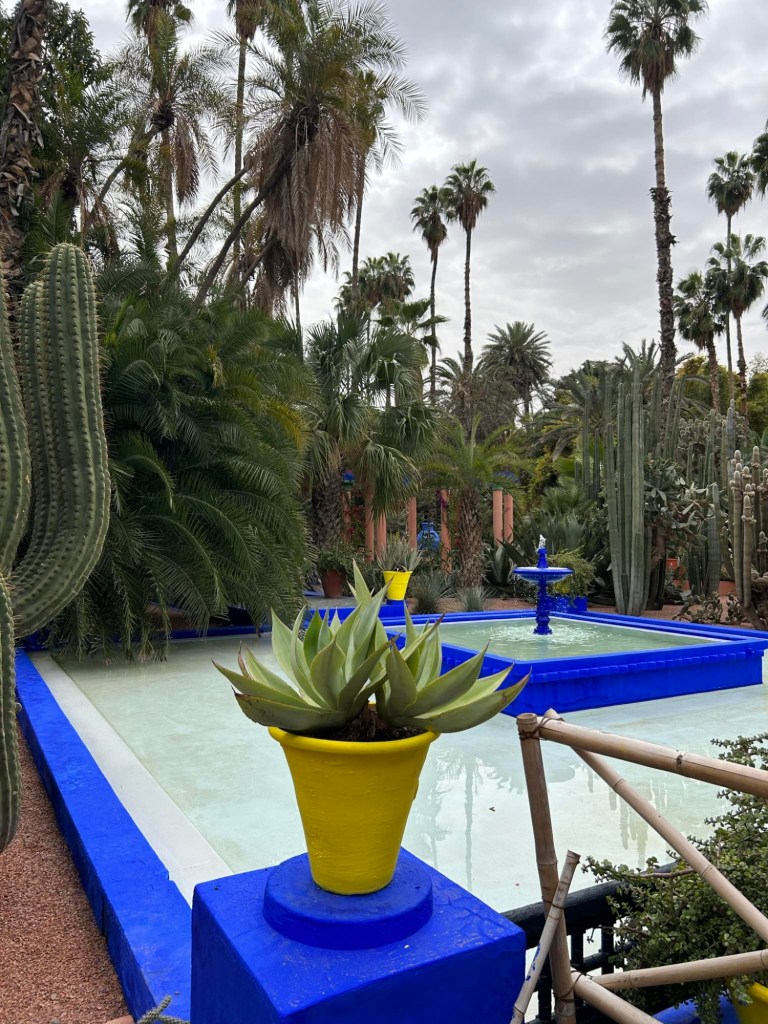
Inside the Majorelle Gardens, there are over 300 plant species from all over the world. There are Mexican agave, Chinese windmill palms, African date palms, coconut, and banana trees all coexisting together amongst a labyrinth of pathways. The tall bamboo and exotic Cacti species have produced some of the most visually appealing gardens in marrakech.
Images by Freebird Tracey.
The gardens were originally designed by the French orientalist artist Jacques Majorelle in 1923. He planted numerous exotic species, added pools and fountains, and painted the architecture in the splendid blue that has become the iconic Marjorelle blue.
Sadly, he was forced to abandon his home due to divorce, and it was left to perish and decay due to neglect.
In 1980, the fashion designer Yves Saint Laurent took it over with his partner Pierre Berge to save it from hotel development. Together,they restored the house and brought the gardens back to their former glory. They added irrigation and doubled the amount of plants transforming the gardens into what they are today.
For many years the Jardin Majorelle has provided me with an endless source of inspiration, and I have often dreamt of its unique colours – Yves Saint Laurent
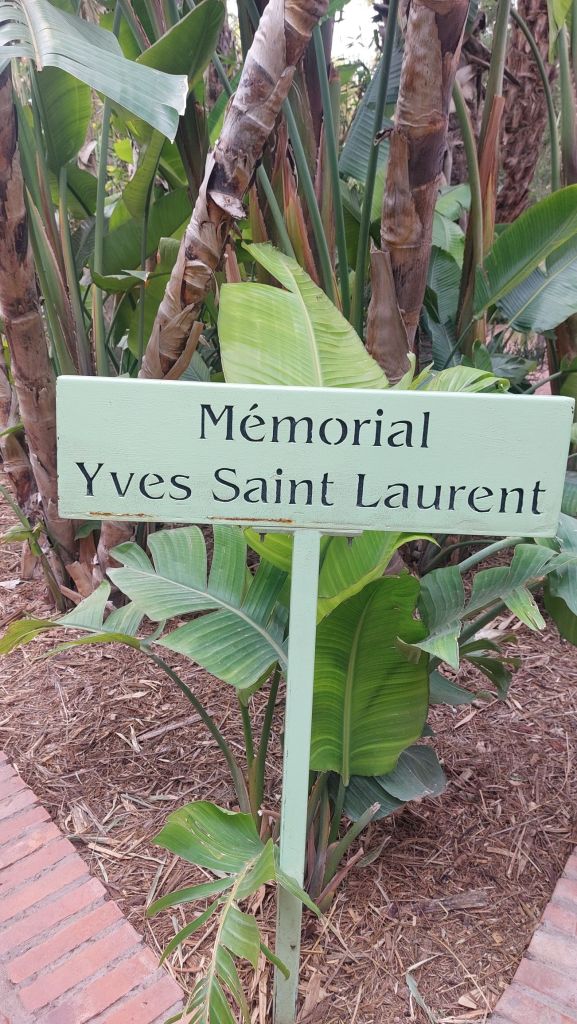
After his death in 2008, the gardens were donated to the Fondation Pierre Berge, a non-profit organisation based in Paris. Inside the garden, you will find a memorial to Yves Saint Laurent and his partner Pierre Berge.
Image by Freebird Tracey.
Majorelle Garden attracts over 900,000 visitors each year, making it one of the most touristic attractions in Marrakech.
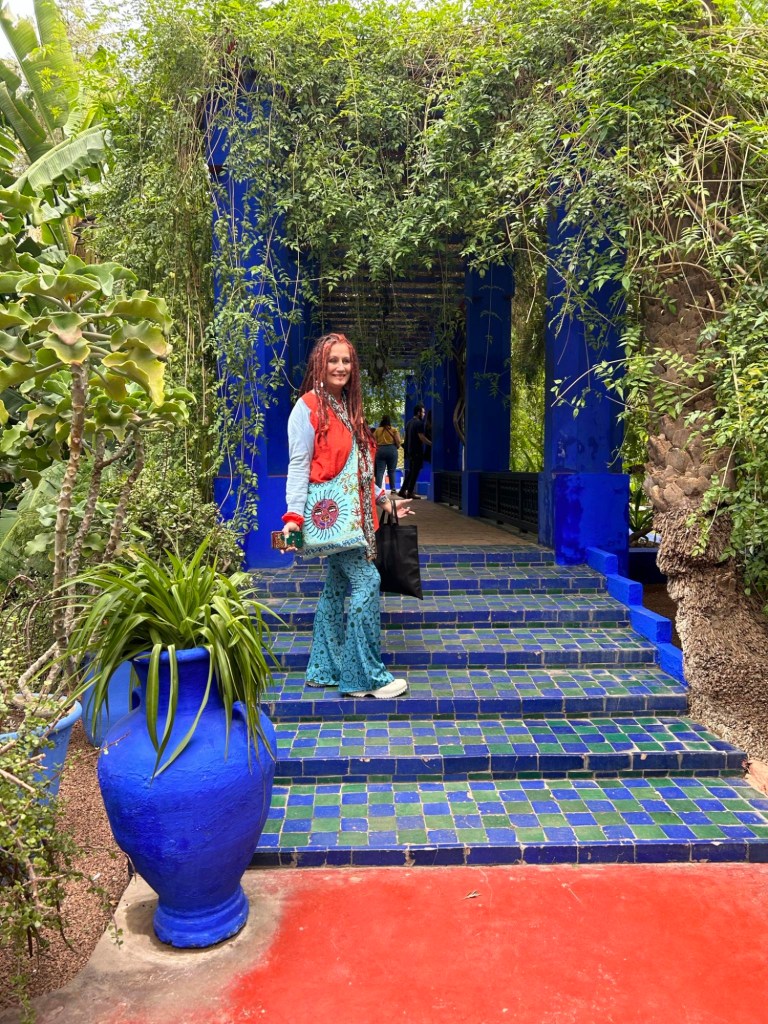
I sat in quiet contemplation amongst the lush green vegetation and colourful bougainvillaea, but I was never alone for too long. Despite the beauty of the gardens, there are swarms of people flocking to spend time here, and it’s not peaceful for long.
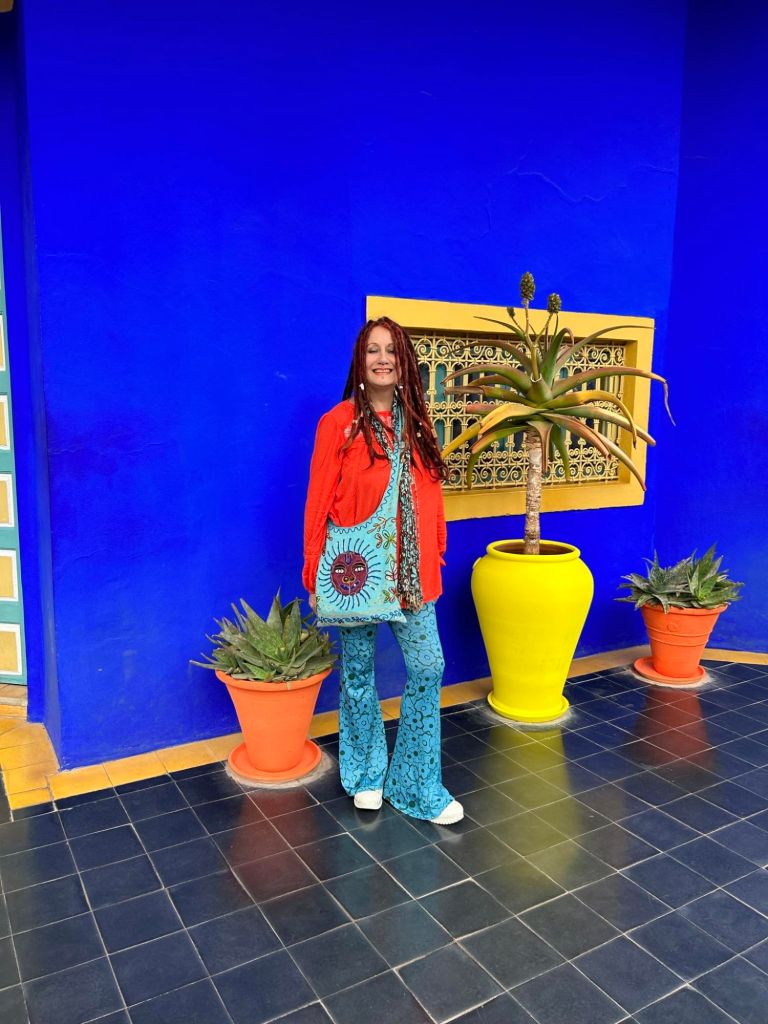
The art deco pavilion with its striking colours of blue and yellow is a popular place where tourists queue for the perfect instagram photos.
Image by Freebird Tracey.
There is a cafe on site where visitors can get a bite to eat, and an interesting shop selling postcards of Yves Saint Laurents’ annual Love sketches
Images by Freebird Tracey.
The gardens open daily at 8.00am and close at 6.00pm, and the last entry is at 5.30pm. I would suggest getting there before 10.00 am. for the best experience, plus Booking online is essential to guarantee entry.
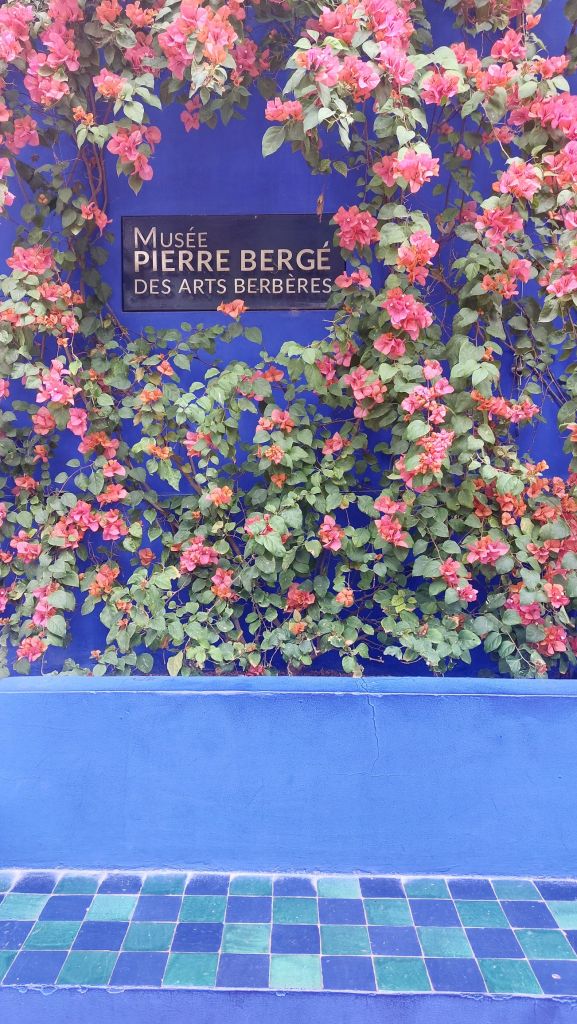
The ticket also permits entry into the YSL museum, along with the Pierre Berge Museum of Berber Arts. It’s worth a visit if you are interested in the history of Amazigh culture. However, photography is not allowed inside these museums.
Opening times for the museum are from 9.00 am until 5.30 pm with the last entry at 5.00pm.
Image by Freebird Tracey.
The price of a ticket varies depending on where you purchase them from, but you can expect to pay somewhere in the region of €24 to visit everything.
There are plenty of good restaurants outside the gardens, and I highly recommend My Kawa. There are also some great shops selling souvenirs and clothes.
Le Jardin Marjorelle was beautiful. The gardens are lush, and their are several places to sit and take in the splendid surroundings. However, the huge number of tourists detract from the serenity and peace that such a spectacular setting really deserves.
Le Jardin Marjorelle is located to the north west of Marrakech medina. It can be reached by taxi from Jamaa El Fna, or it’s a steady 30-minute walk.
Marrakech is the perfect starting point for visiting other Moroccan destinations. One of the popular day trips from Marrakech is the beautiful city of Essaouira on the Atlantic coast. The journey takes approximately 3 hours with a 20-minute break for refreshments midway through.
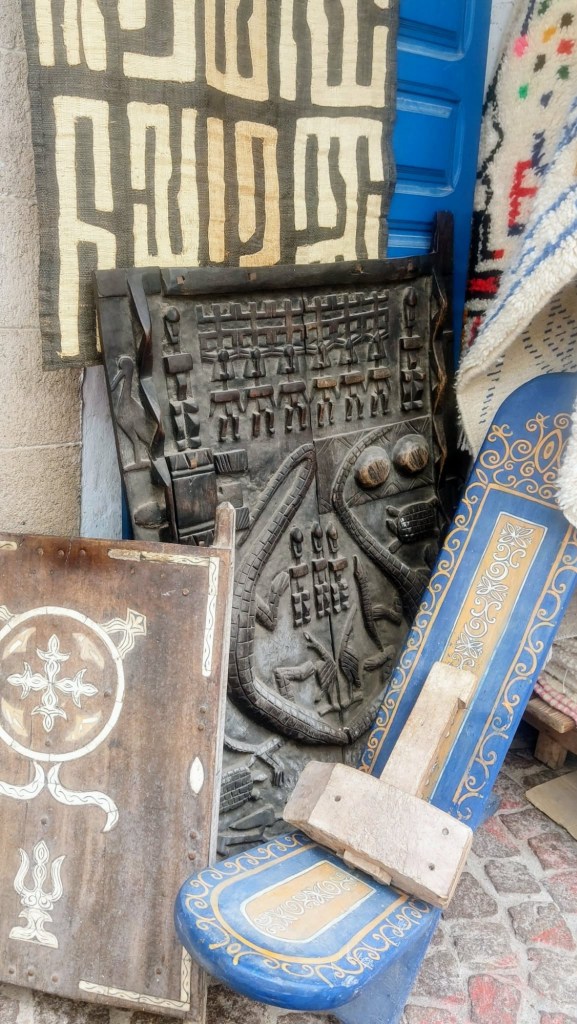
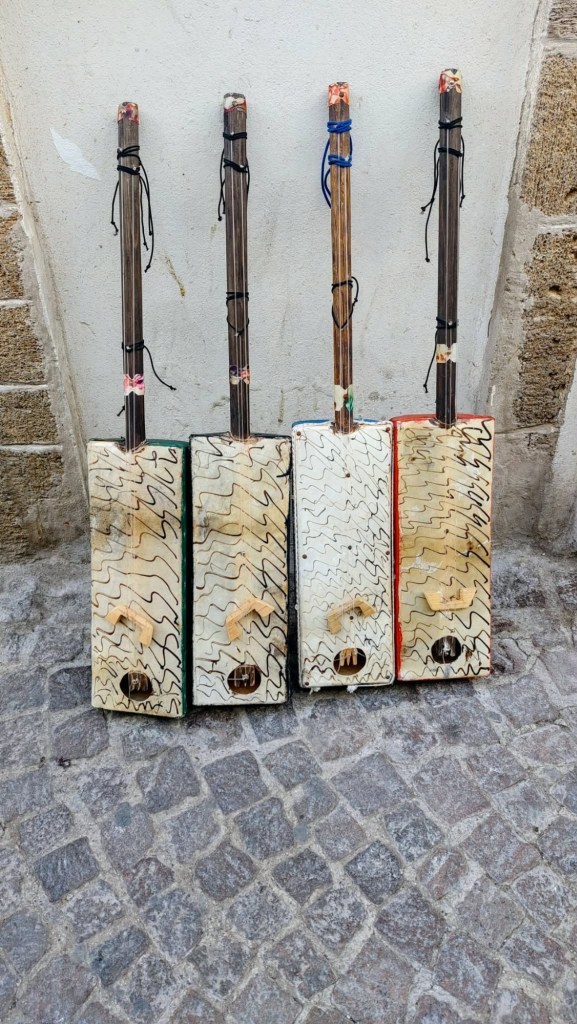
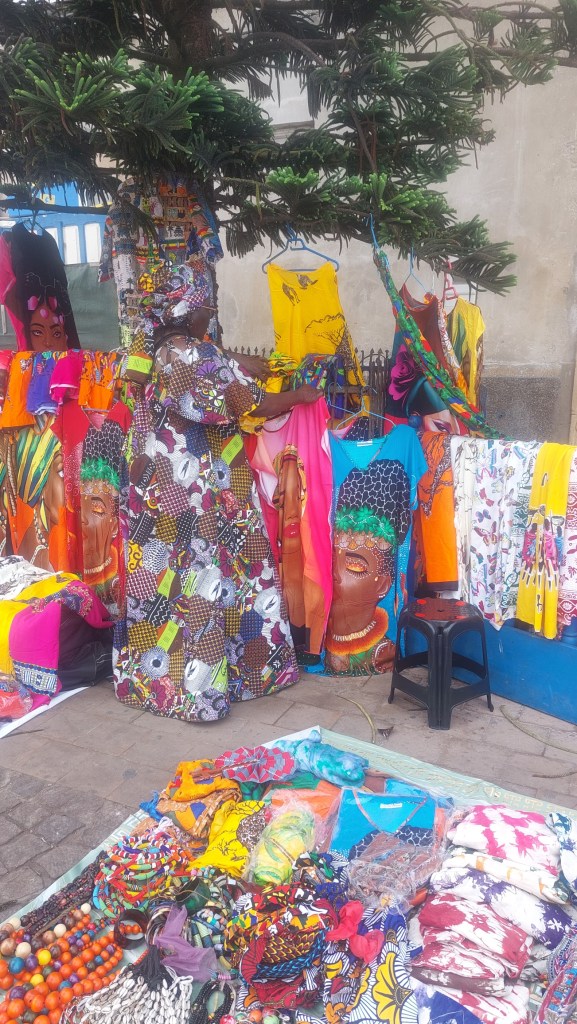
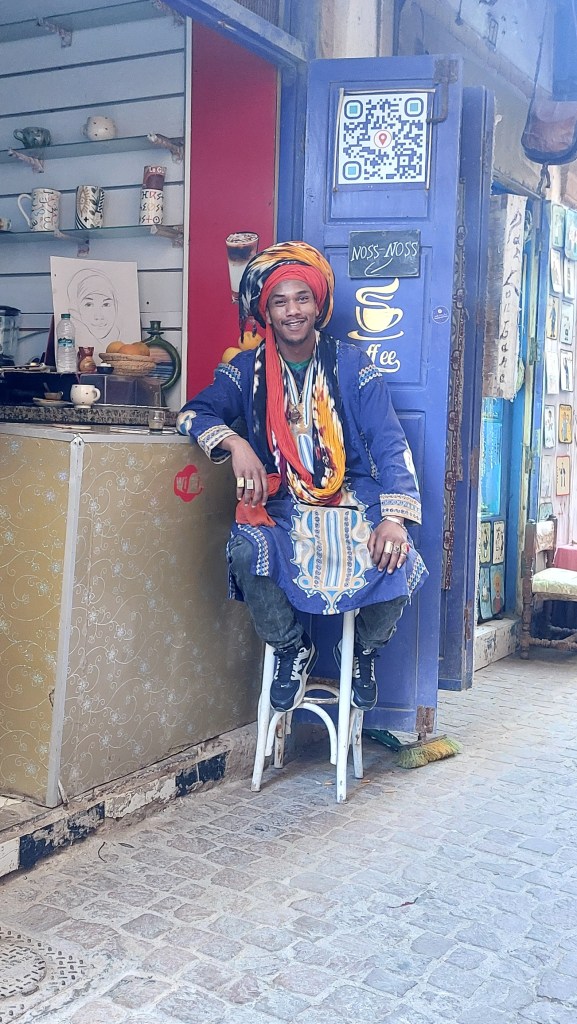
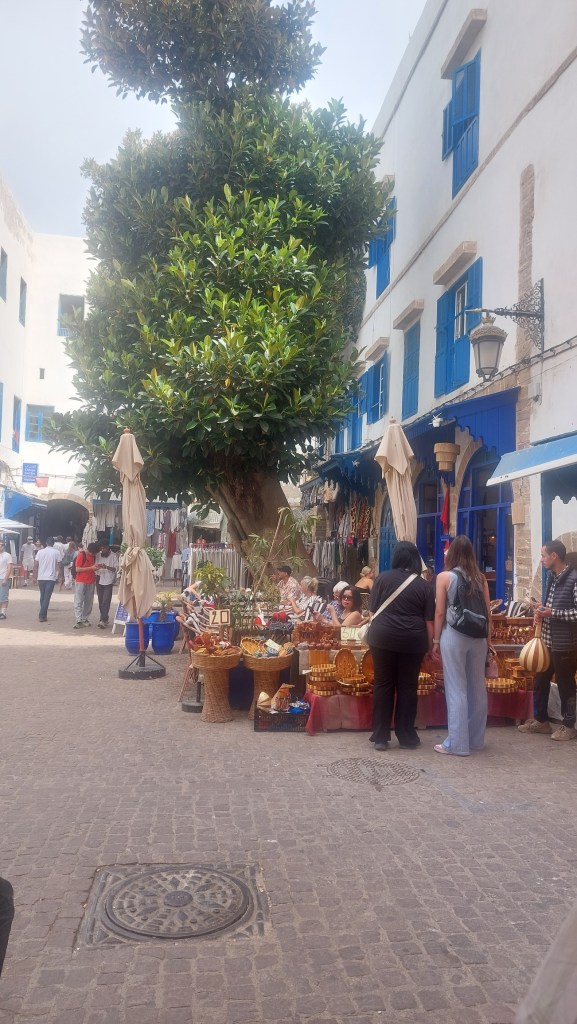
Essaouira is a delightful city, steeped in history. It is full of eclectic, quirky little shops, and the atmosphere is very bohemian. There are street musicians, local artists, and artisans plying their trade all around the picturesque old medina.
Images by Freebird Tracey.
The beach is huge and a great place for a spot of sunbathing if the wind allows. You will most likely notice kite surfers because Essaouira is popular with the surfing community. The wind can be pretty wild, so it isn’t known as a beach destination, but on calm days, the beach attracts lots of local families and gets quite busy.
The temperature in Essaouira is cooler than it is in Marrakech. However, even on the windiest of days, you can not underestimate the power of the Moroccan sun. In the old medina, it can still feel very warm. Be mindful of this and apply sunscreen to stay safe.
Image by Freebird Tracey.
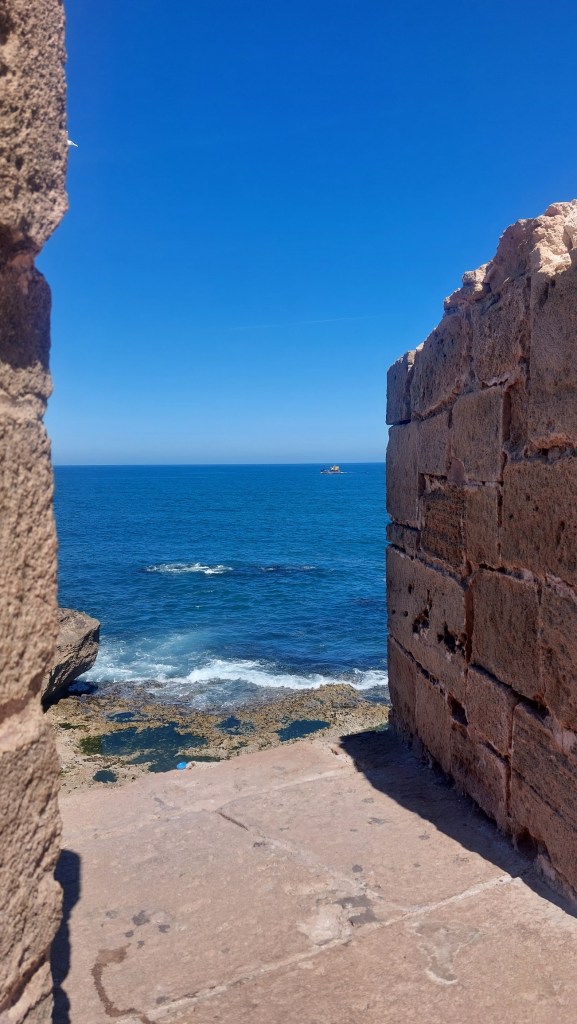
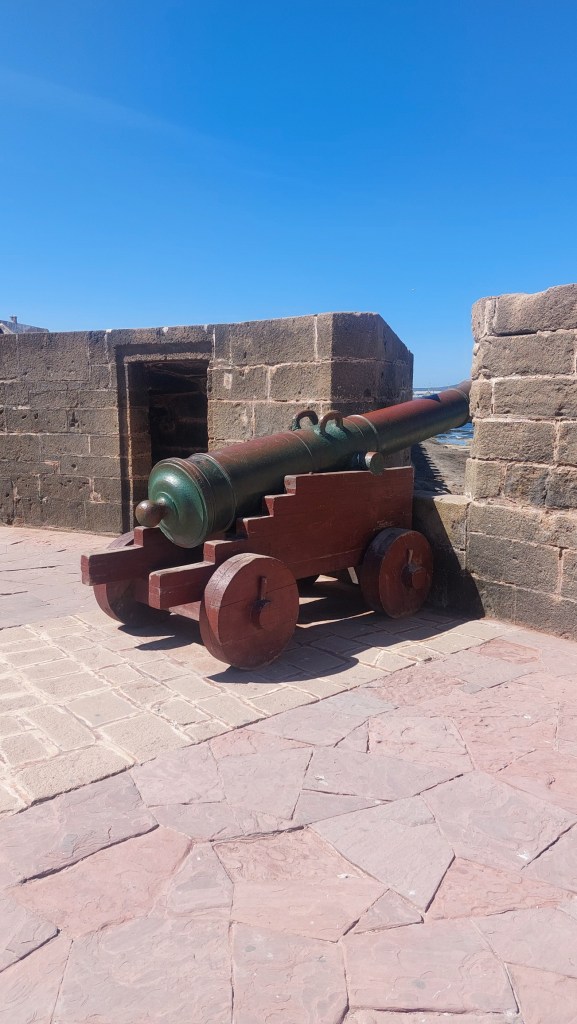
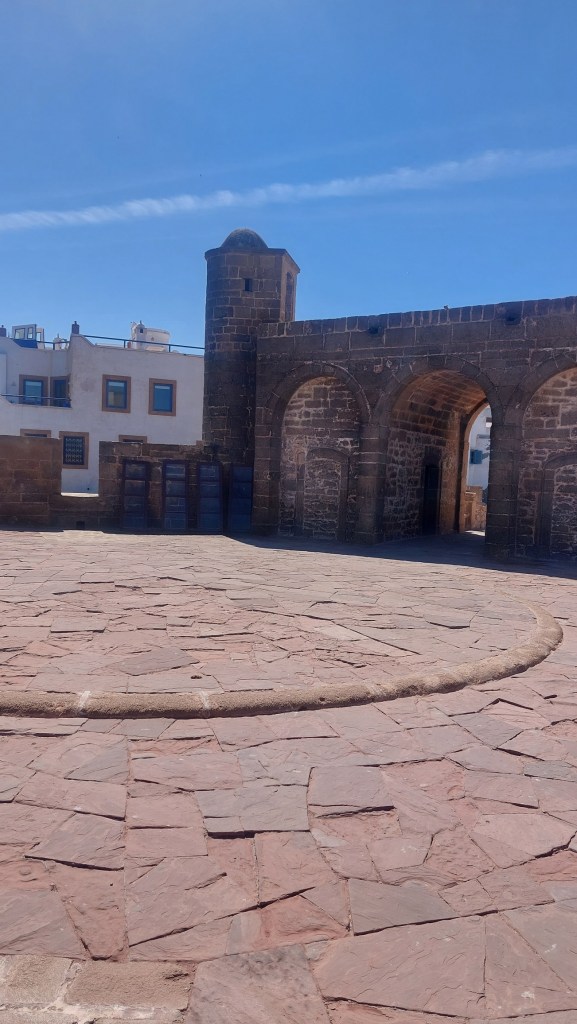
The fort is exciting and offers incredible views over the Atlantic Ocean. Cannons look out across the dramatic blue sea, and tourists gather to take photos. In the distance, you can see the island of Mogador, once home to a notorious prison known as the Alcatraz of Morocco. The fort was also one of the locations where Game Of Thrones was filmed.
Images by Freebird Tracey.
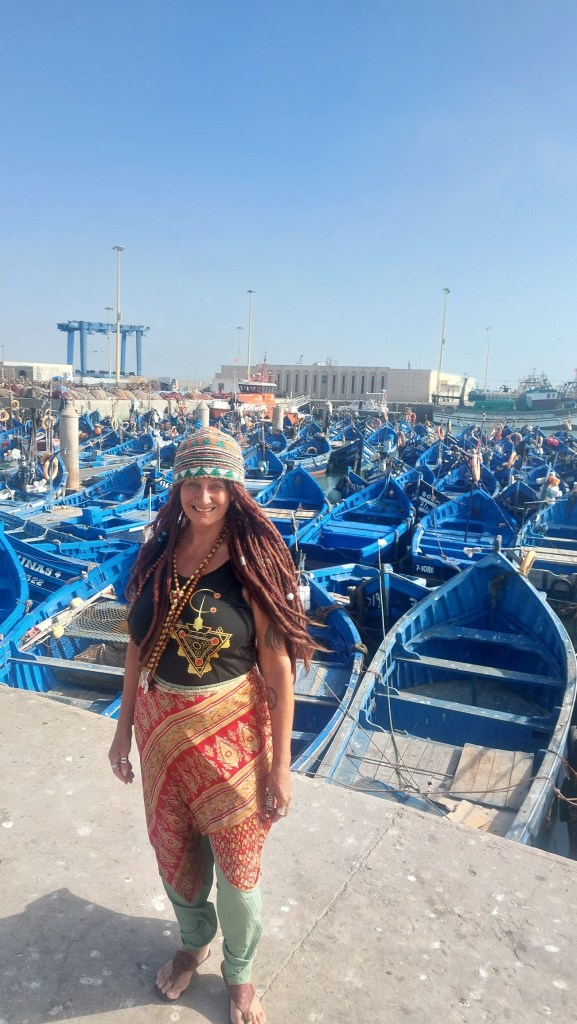
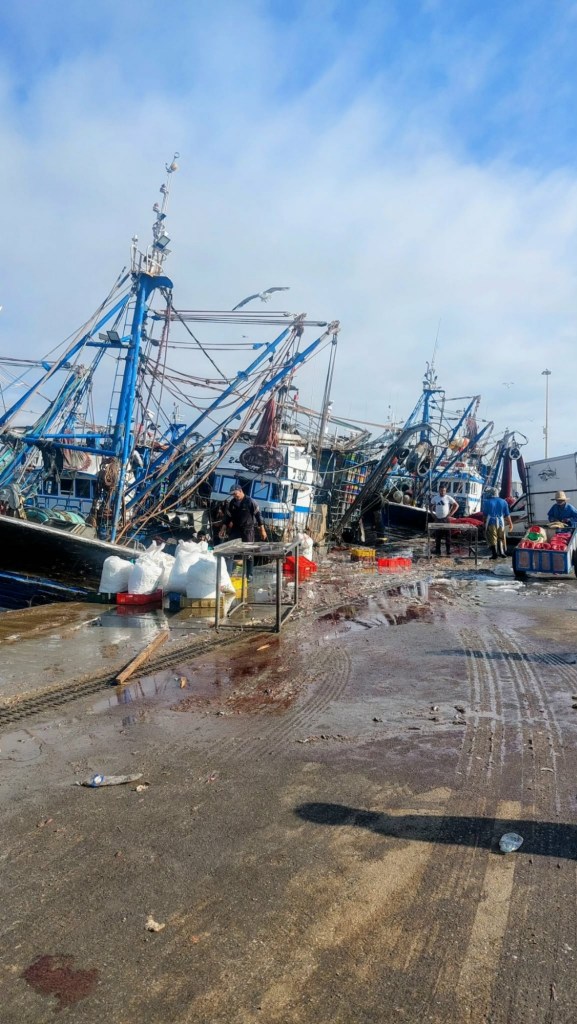
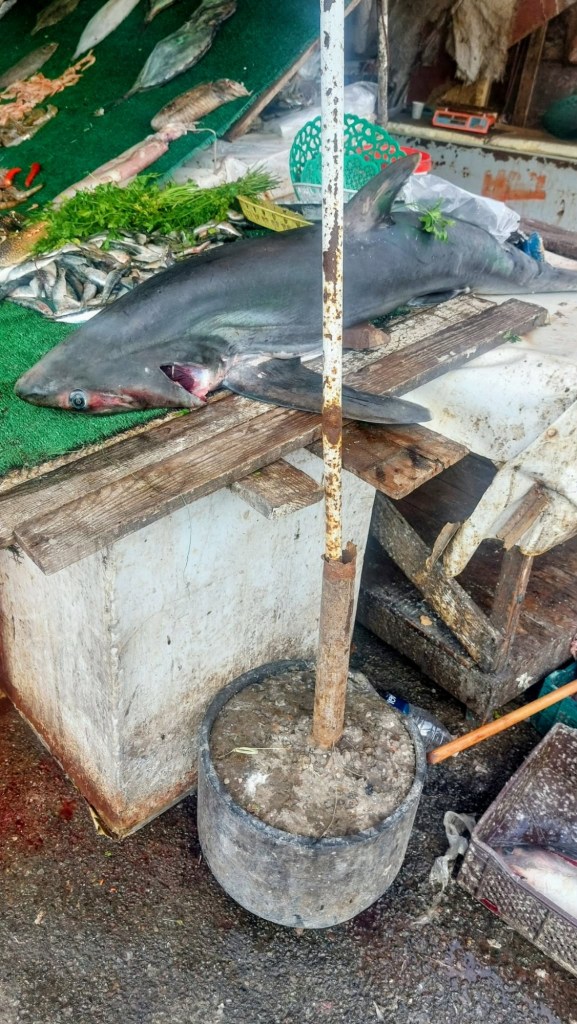
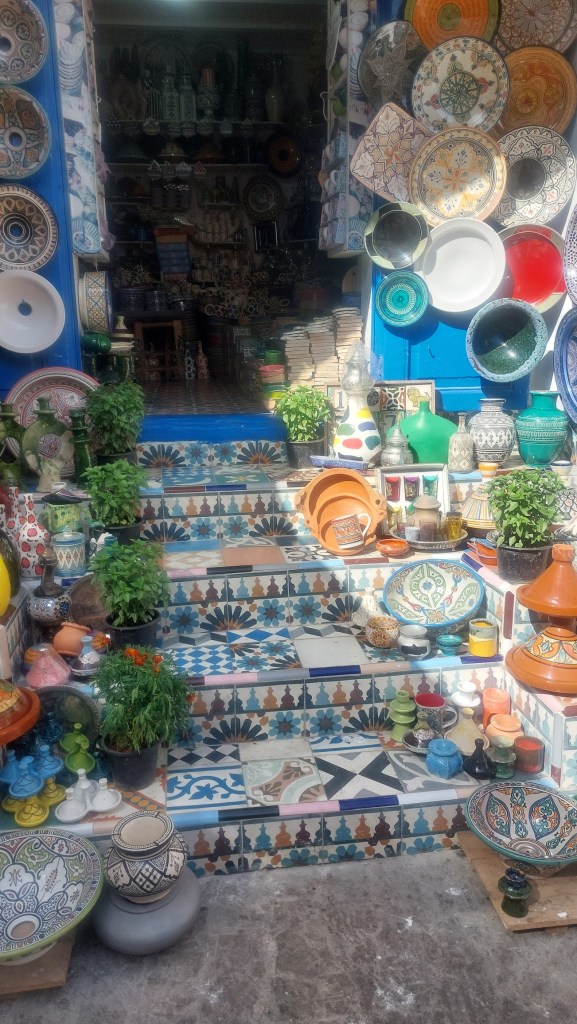
The port is one of the main attractions of Essaouira. The beautiful iconic blue fishing boats featured on every postcard of Essaouira are a sight to behold. Freshly caught fish are on display, including everything from sardines to baby sharks. The tourists queue to sample sea urchins and fresh oysters. It is possible to buy fish at the port and take it to a nearby cafe to be barbecued. There is also a fish market in the old medina that will barbecue fish for you. I have heard that prices here are better than the cafes next to the port.
Images by Freebird Tracey.
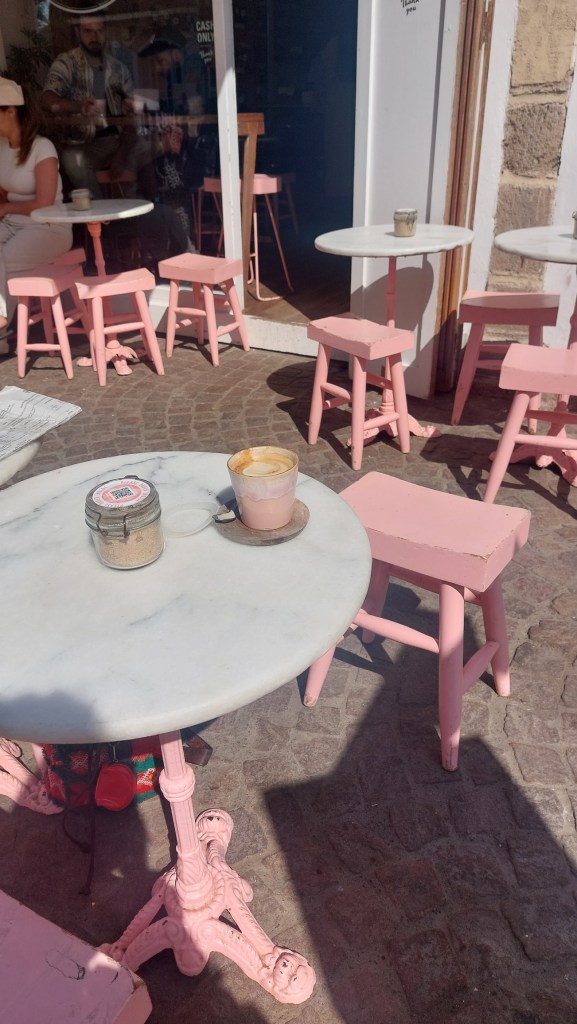
Lovely little cafes adorn the streets of the old medina, perfect for a spot of people watching. Pumpkin Cafe is very popular with its pink hues and delicious pastries. Three Little Birds and Soul Cafe are vibey and serve great coffee.
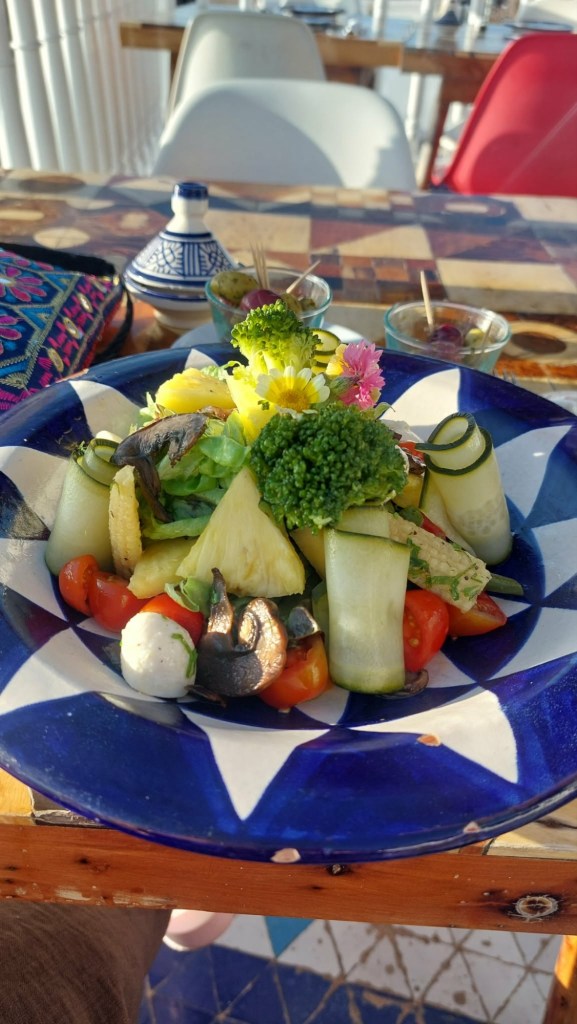
There are plenty of great restaurants for lunch, and prices are more reasonable than Marrakech or Agadir. I recommend Mandala Society and The Loft, which has interesting decor and excellent food. Love Caravan is very exotic, and Salut Maroc does a very creative salad. It’s one of the best places to watch the sunset. Many of the restaurants play live music, and gnawa musicians can be heard all around the walls of the medina. After all, Essaouira is the spiritual capital and cultural home to gnawa music.
Images by Freebird Tracey.
Moulay Hassan Square is a gathering place for the locals to sit and drink mint tea and coffee. It is a vibrant area and houses one of the main stages during the annual Gnawa Festival in June. Sitting in the sun, listening to the many street entertainers is a nice way to relax and experience the cities culture.
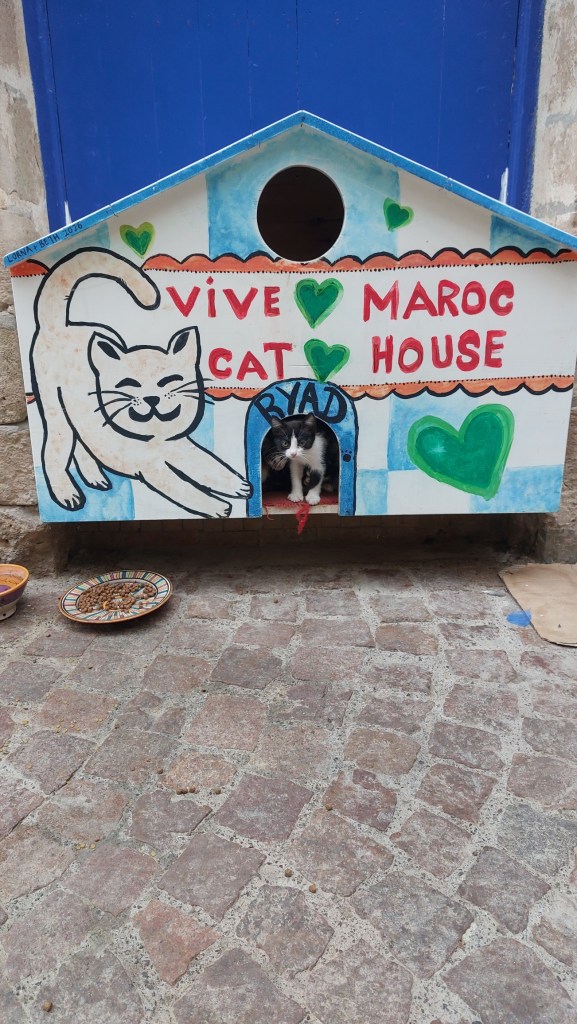
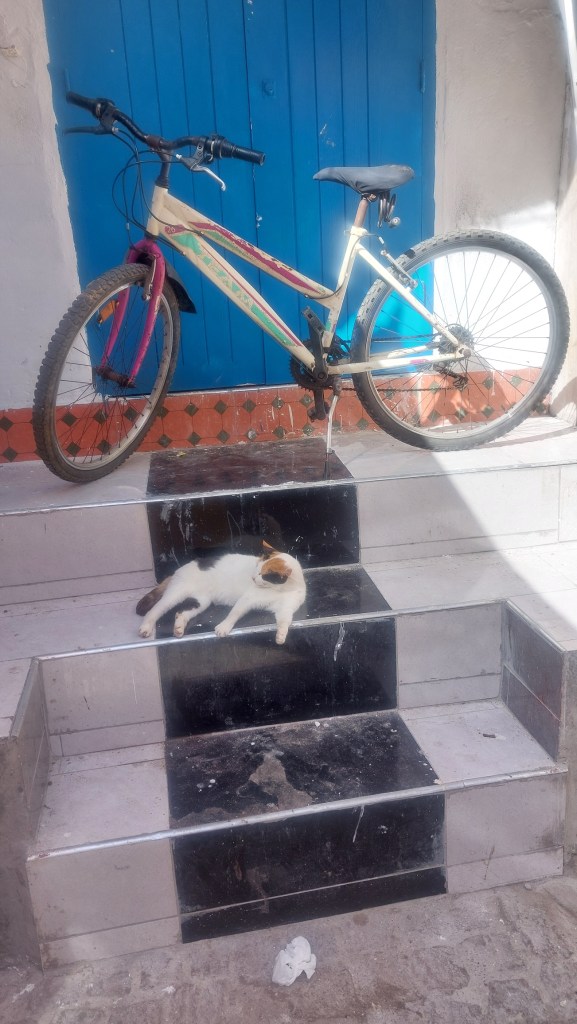
Cats wander around freely as if they have the right of way, and you can expect to see hundreds of them wherever you go in Essaouira. The locals look after them well, and it’s not uncommon to see cats sitting on the laps of the shop owners. Food, water, and shelter are strategically placed around the medina.
Image by Freebird Tracey.
Essaouira is a fascinating place. Ideally, you would need at least a few days to appreciate it in its full entirety. There is plenty to do, and you need a couple of days to enjoy some of the attractions Essaouira has to offer.
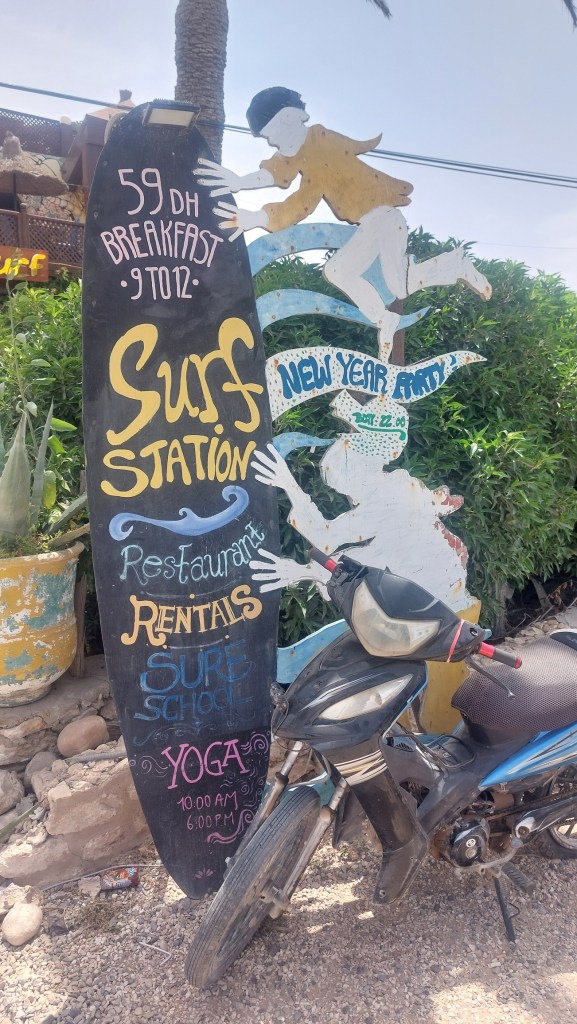
The Jimi Hendrix cafe in Diabat is worth a visit for fans. Sidi Kouki 25 km away is a very chilled surfing spot with a long white beach. It’s a 30-minute ride by grand or private taxi, longer if you decide to take the bus.
Images by Freebird Tracey.
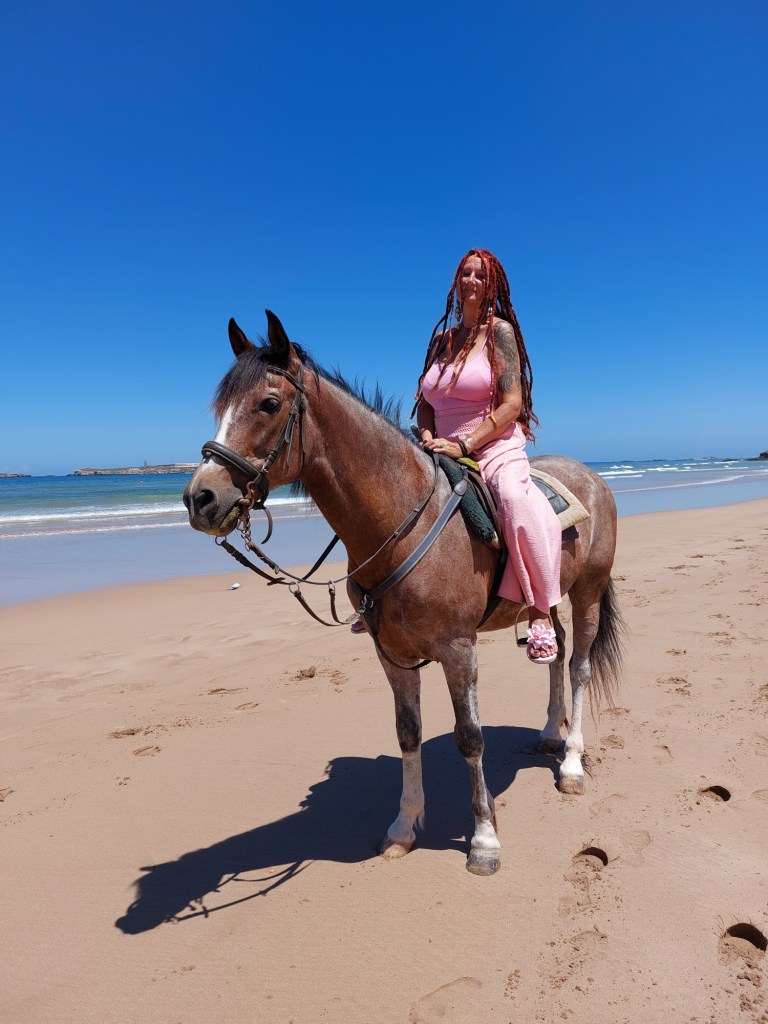
There is the opportunity to ride an Arabian horse across the beach. The horses are very well looked after, and the stables are spotlessly clean. This can be booked in advance through Get Your Guide or by visiting the stables in Diabat independentently, which I did. After visiting the Jimi Hendrix cafe, I simply wandered down to the stables and got to ride across the beach on my own with my guide. It was a memorable experience on a gentle horse called Andaluse, perfect for beginners.
Image by Freebird Tracey.
When visiting Essaouira, knowing a little bit of French or Darija helps because English is considered a foreign language, and you will hear much more spoken French than in Marrakech. However, the locals in Essaouira are friendly and welcoming and will go out of their way to help you.
Image by Freebird Tracey.
The pace of life in Essaouira is much slower than Marrakech despite the growing influx of tourism and the popularity of this wonderful destination. Shops open slightly later and close earlier. The feeling is very laid-back.
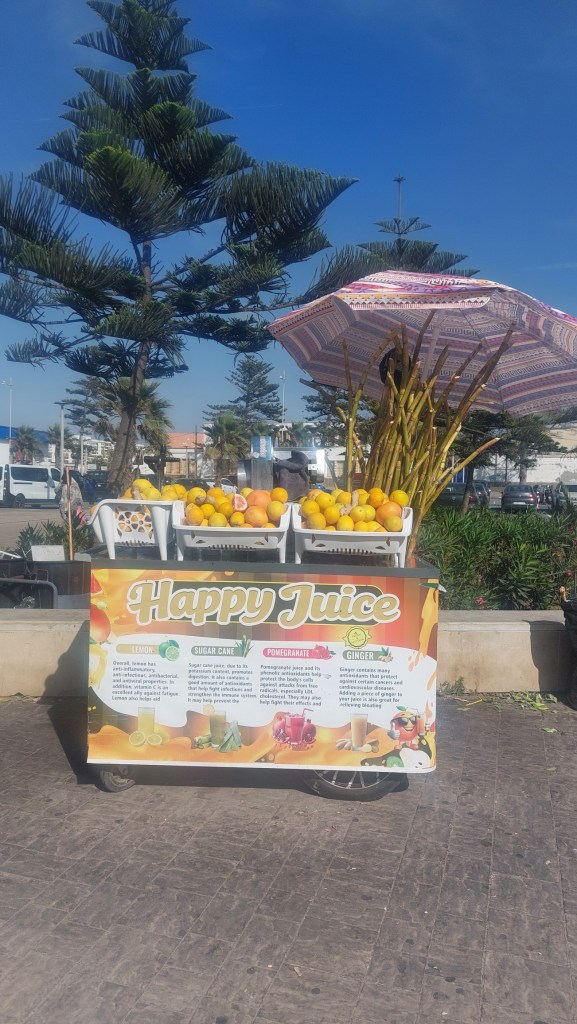
Essaouira is ideal for solo travellers and families with children alike. The long promenade is kept beautifully clean and comes to life at dusk, lined with street vendors selling corn, ice cream, and sugar cane juice. Locals play football on the beach, and families and friends sit together watching the sunset.
Incidentally, Essaouira has one of the most beautiful sunsets I’ve ever witnessed. The best places to watch it are from the ramparts or Salut Maroc and Taros. Both of these places serve alcoholic beverages.
Image by Freebird Tracey.
Whilst it’s true that Essaouira is a very windy city, it doesn’t detract from the enjoyment of visiting, even between the months of June and August when the climate is perfect for surfing. The wind picks up during these months. However, if you carry a light jacket or sweater, you will be comfortable near the beach and ramparts where the wind is felt the most.
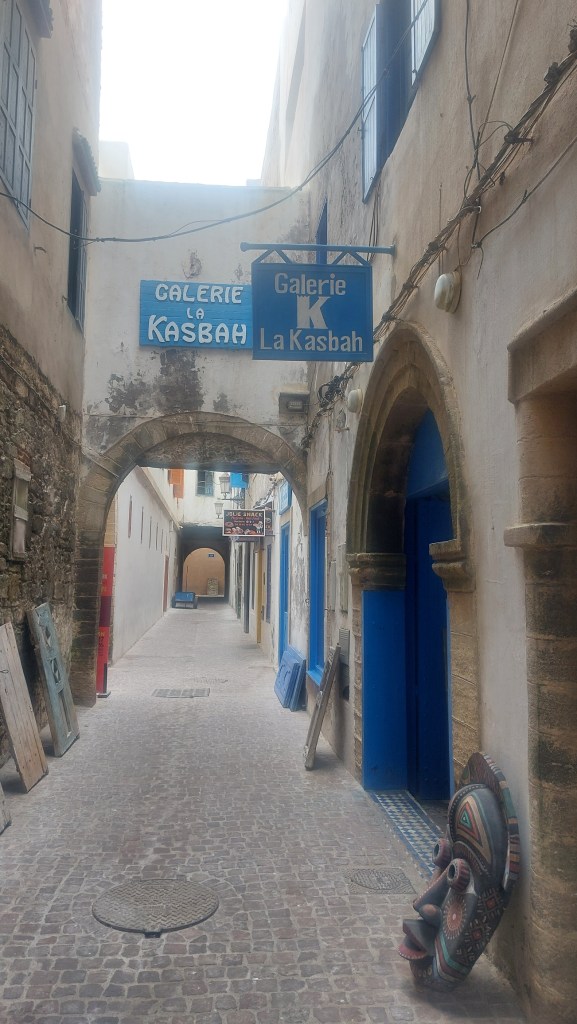
Essaouira is a very pretty city. The white buildings, with their blue shutters influenced by the Portuguese, are a complete contrast from the red city of Marrakech. Some visitors have claimed that it feels more like being in a European city than Morocco. The Amazigh culture is still very present in Essaouira despite its whitewashed buildings and laid-back charm.
Images by Freebird Tracey.
I would recommend a visit to Essaouira as part of your itinerary when you’re visiting Marrakech. You can get a good feel of the city in a day. It may encourage you to return in order to spend a few more days exploring everything this great destination has to offer.
If you are travelling to Essaouira by yourself, I recommend taking the CTM or Supratours coach adjacent to the train station in Marrakech. Booking online guarantees you a seat, and there is a small charge of around 5 dirhams for your luggage. Backpacks can be taken on board free of charge. The coaches have air conditioning, and mine had reclining seats. The journey was very comfortable.
If you book as part of a group, including a guide, you may stop off and visit an argan cooperative during the journey. You may also stop to photograph the goats sitting in the argan trees. The journey may take slightly longer if you factor this in. On average, you get to spend approximately 4 hours sightseeing. Essaouira is a relatively small city, so you will have plenty of time to shop, have lunch, walk along the beach, and visit the port.
Just a gentle reminder, keep a few dirhams handy in case you need to use the bathroom during the rest stop. There is often an attendant present who will expect around 2 dirhams for the privilege of toilet tissue and the maintenance of the bathroom. It’s also a good idea to carry hand sanitiser.
Essaouira is sunny all year round, so it can be an enjoyable experience at any time of year. However, during June, when the annual Gnawa Festival takes place, it can be incredibly busy. At least 500,000 visitors descend on the city, which puts a strain on its infrastructure. The festival lasts 3 days. If you’re put off by huge crowds, I would choose a different time to visit. However, the energy around the city is electric during the festival, and it’s an explosion of sound and colour. Most visitors choose Essaouira for its contrast to the heady, over stimulation of Marrakech, so take that into consideration before planning a visit.
Whichever time you choose to come, your heart will be captured by Essaouira.
A day trip to North Africa’s second largest waterfall.
Image by Freebird Tracey.
Ouzoud Falls is the collective name for several waterfalls in the province of Azilal.
The waterfall is the second largest in Africa, and it is well worth the three hour drive through the stunning Atlas Mountains to see it.
I met my driver at Cafe de France, and after picking up a few more passengers, we were on our way. The mini bus had air conditioning and comfortable seating.
We drove for approximately one and a half hours, then stopped for a toilet break. There was a small women’s cooperative selling Argan oil for people who were interested.
Soon, we were on our way again, and the views of the Atlas Mountains were simply breathtaking. It was a really scenic drive, helping the time pass quickly.
When we arrived at Ouzoud, we were introduced to our guide and immediately set off walking. We rambled through the olive groves, and the cheeky Barbary macaque monkeys played hide and seek in the trees with us.
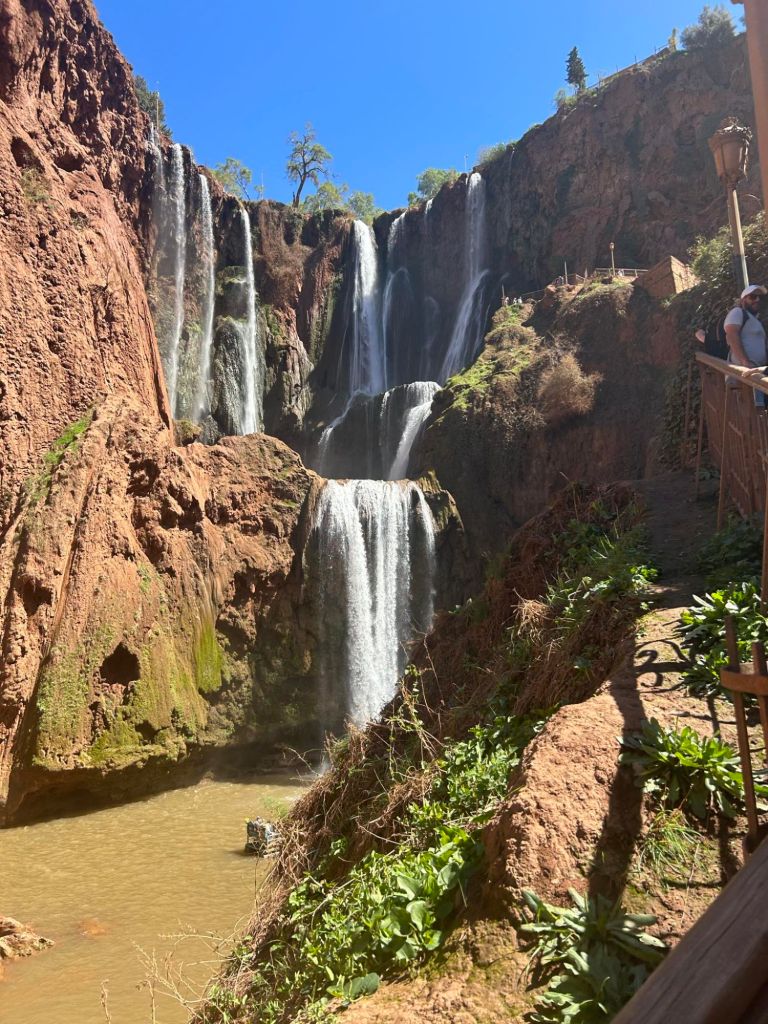
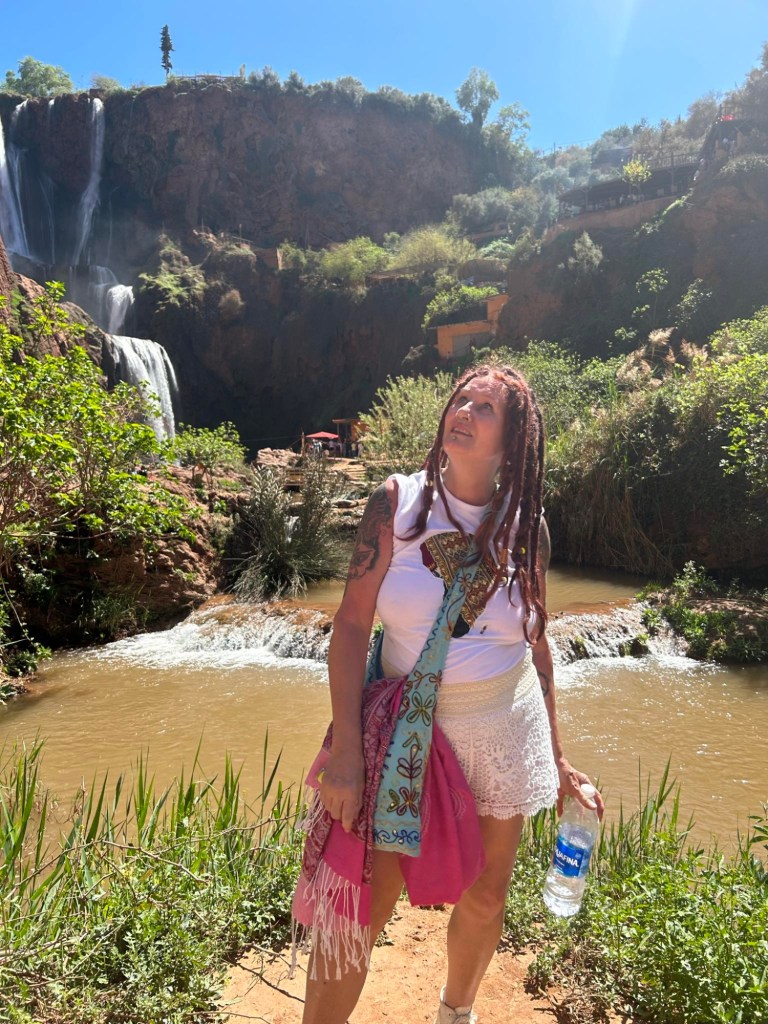
The waterfall is visible from different angles with plenty of viewing points. It plunges 110 metres into the canyon below, and the red sandstone cliffs are a picturesque contrast against the lush green vegetation.
Images by Freebird Tracey.
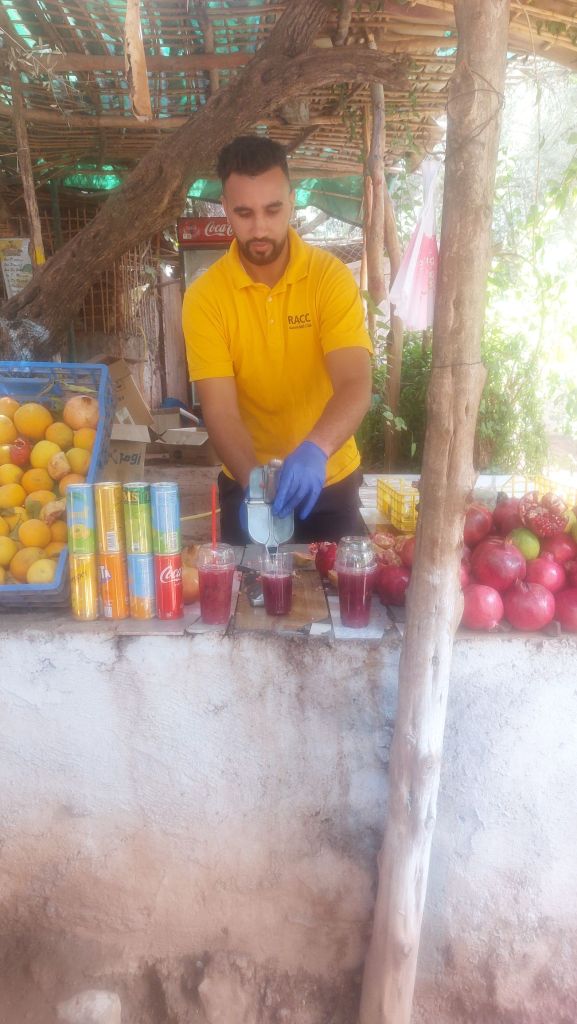
The hike around the waterfall is moderately strenuous, and their are occasional places to purchase fruit juice and take a rest. It was hot,and I was grateful for the chance to stop and recuperate for a while.
Image by Freebird Tracey.
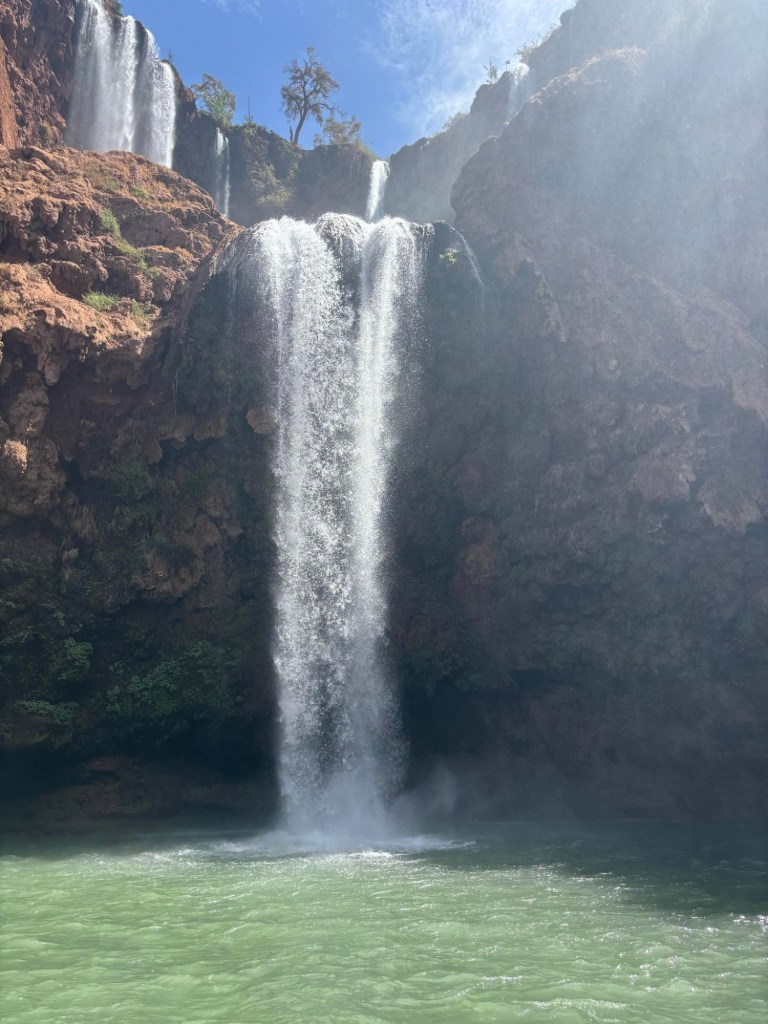
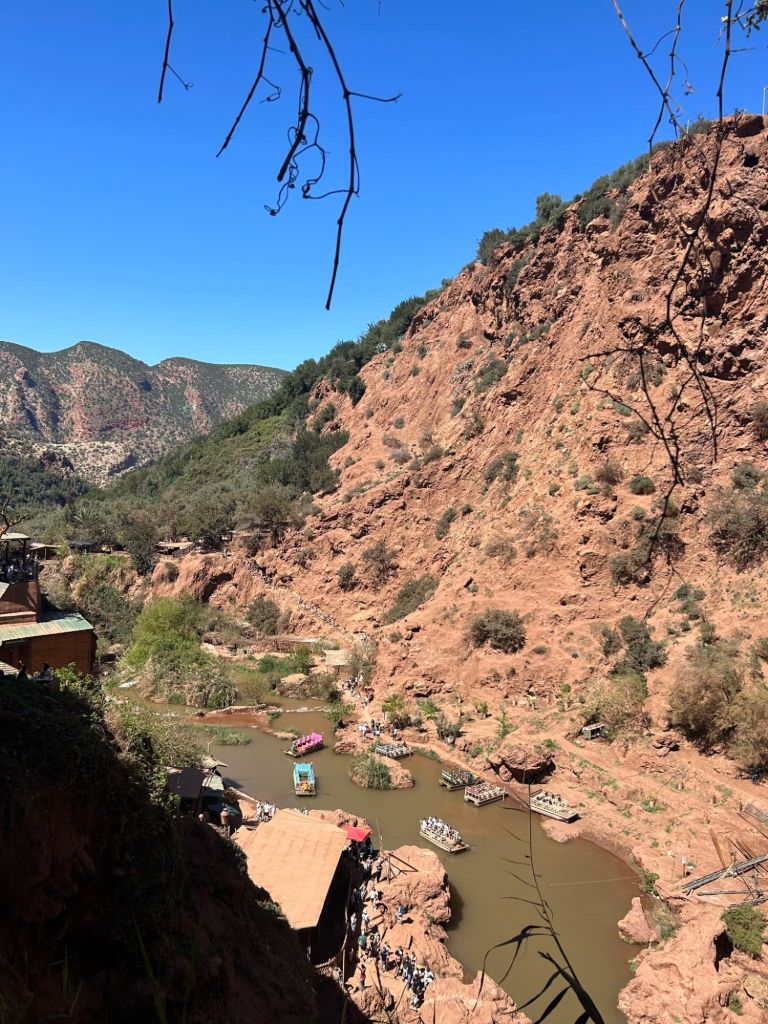
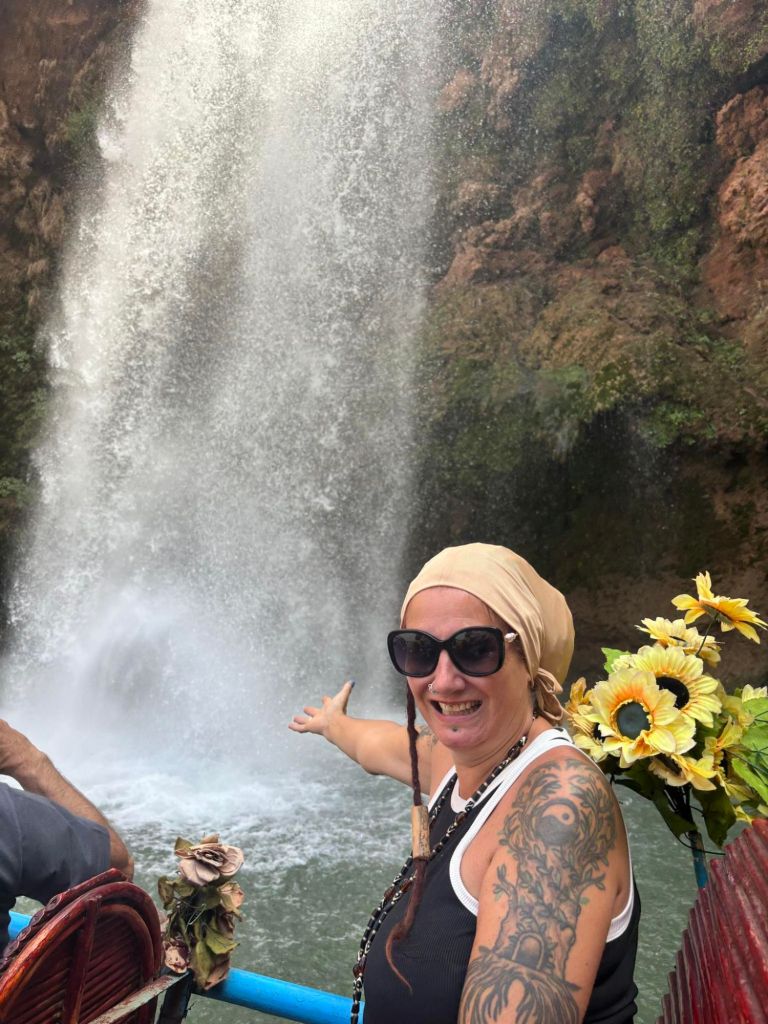
A boat ride is part of the itinerary if you book a tour. The boats are vibrantly decorated and take to the water beneath the falls for a really close-up shot. It was an amazing experience. The feeling of the cool water spraying my face was a welcome relief from the heat.
Image by Freebird Tracey.
Once the boat drops you off on the opposite side, it’s quite a steep climb up to get to the restaurants. I was lucky enough to get a table that overlooked the waterfall, and the view was incredible.
I ate a three course meal that included a small salad with bread and olives, followed by a tagine and fruit for dessert. It was pleasant looking down on the boats and seeing people having fun in the water whilst eating my lunch.
Image by Freebird Tracey.
The meal cost around 150 dirhams. It was nothing spectacular, just a simple lunch in the most gorgeous of settings, but the portion was adequate.
After lunch, I walked further up a steep incline,where a lot more monkeys were gathered waiting for tourists to feed them. I fed a few of them with some food given to me by our guide.
Image by Freebird Tracey.
The final part of the walk took me past a few souvenir stalls and a shop selling drinks and ice cream. Eventually, I made it back to the car park where the journey began.
The group was reunited with the driver, and then it was time to set off back to Marrakech. We stopped again for a toilet break midway through the journey, and it was early evening when I arrived back at the main square.
In my opinion, the trip to Ouzoud was definitely worth the six hours of travelling.
The highlight for me was sitting above the waterfall eating my lunch and looking at the spectacular view. The monkeys were also very amusing.
There is a fair amount of walking in the heat, and some of it is steep, but I was able to take my time, and the guide was really patient and kind. The walk was worth every moment to see the waterfall from all its vantage points.
Some people in the group who were struggling went up on Donkeys, so that’s an option if you have limited mobility.
I booked my trip with Get Your Guide and found it good value for money for such a great day out. It included the journey in an air-conditioned vehicle, the tour, and the boat ride. The lunch was separate. Your accommodation can also organise a trip to Ouzoud for you.
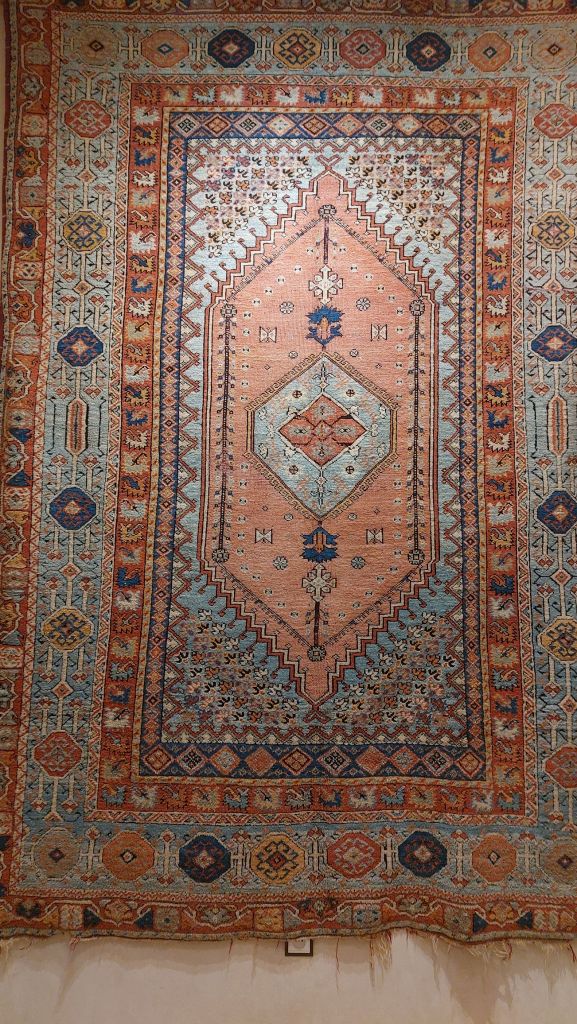
Berber rugs are handmade by the indigenous Amazigh people of Morocco.
They are made from the wool of sheep in the high Atlas Mountains. Each type of rug tends to vary in thickness, and the pattern also differs depending on which tribe or village has made it.
Kilim Berber rugs have no pile and are relatively fine in texture.They are handcrafted using techniques passed down through generations. To create them natural materials renowned for their durability and luxurious feel are used. Hand-knotting is a long and laborious process. To create a single rug takes around one to two months, with four weavers working on one rug at a time.
There are several steps that go into making a beautiful Berber rug.
1. Shearing the Sheep
Shearing the sheep is the first step in making a Berber rug. This is done by hand, using a special shearing knife. The sheep are first restrained, and then the knife is used to remove the wool from their body in one long strip. The wool is then sorted and cleaned. It is usually the job of the men to shear the sheep, taking care not to injure them or spread infection. The women are responsible for washing the sheared wool.
2. Carding.
Carding is the process of aligning the wool fibers so the weavers can spin them into yarn. To card the wool, the fibres are first combed in one direction, and then the wool is brushed in the opposite direction.This helps to loosen the fibers and align them in the same direction. Once the fibers are aligned, the weavers can then spin them into yarn.Carding is an essential step in making a Berber rug, as it helps to ensure that the rug is strong and durable. The process of carding also helps to give the rug its unique texture. Women are responsible for this process.
3. Spinning the wool into yarn.
To spin the wool into yarn, Amazigh women use something called a drop spindle. This simple tool consists of a shaft with a weight at the bottom. The wool is attached to the shaft, and then the shaft is twirled between the women’s hands. As the shaft is twirled, the wool is wrapped around it, creating the yarn.
4. Weaving the rug.
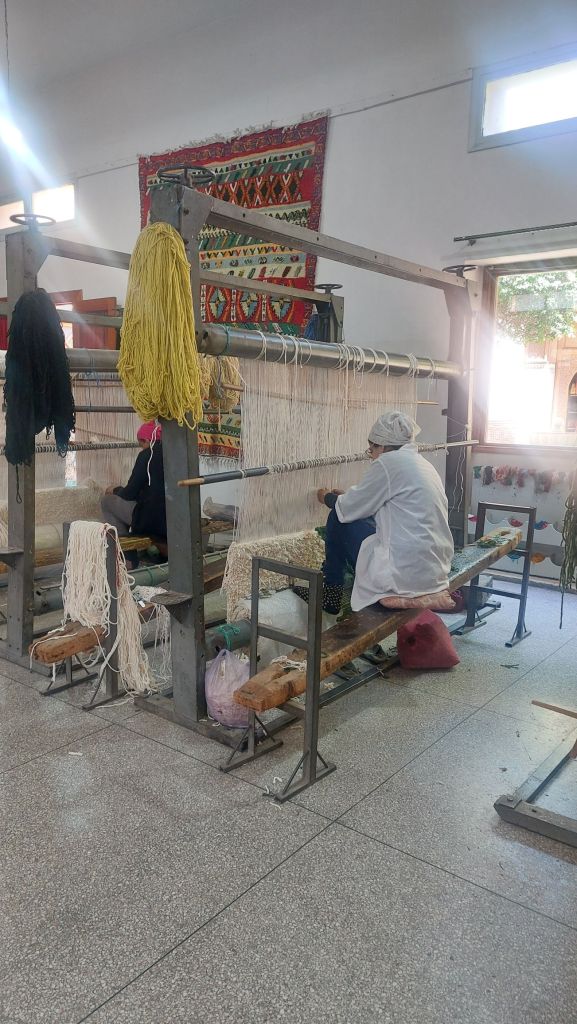
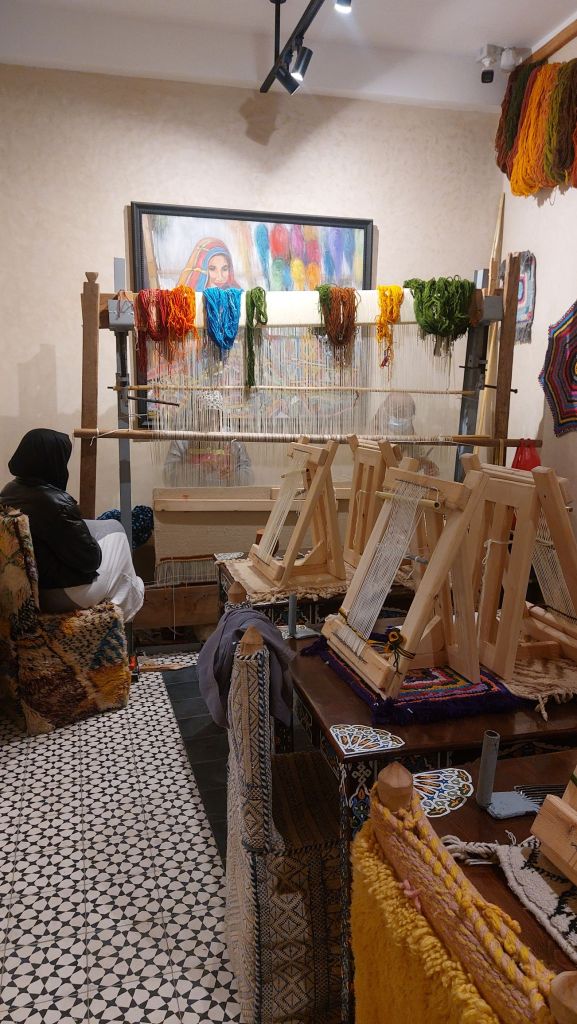
The village women are responsible for weaving the rugs. Weavers use a technique called continuous knotting to create intricate patterns. This method of knotting allows the weaver to create a rug that is durable and will last for many years.The process begins by the weaver tying knots in the woollen yarn.The yarn is then dyed using natural dyes from plants, spices, and fruits. This gives the rugs their characteristic colours. Once the yarn has been dyed, the weaver begins weaving it into a rug using a loom.The loom is a wooden frame that the weaver uses to create the rugs design. The weaver ties the yarn around the looms warp threads, which are the vertical threads that run through the loom. The weaver then weaves the weft threads, which are the horizontal threads, over and under the warp threads.The weaver can create various patterns by changing the direction of the weft threads. Once the rug is complete, the weaver cuts the rug from the loom and ties the ends of the rug together. The rug is now finished.
Image by Freebird Tracey.
Making a Berber rug is a long, laborious task. The women of the village who weaved them rarely get anything near the price they’re eventually sold for. Their husbands load the rugs onto the back of a donkey and take them to a buyer. The buyer gives him a fraction of their value.
Efforts are being made to make sure that ethical practices are being implemented. Many organizations now work directly with Berber artisans to eliminate middlemen, ensuring women receive fair payment for their work. More women are forming cooperatives to manage the entire process, increasing their income.
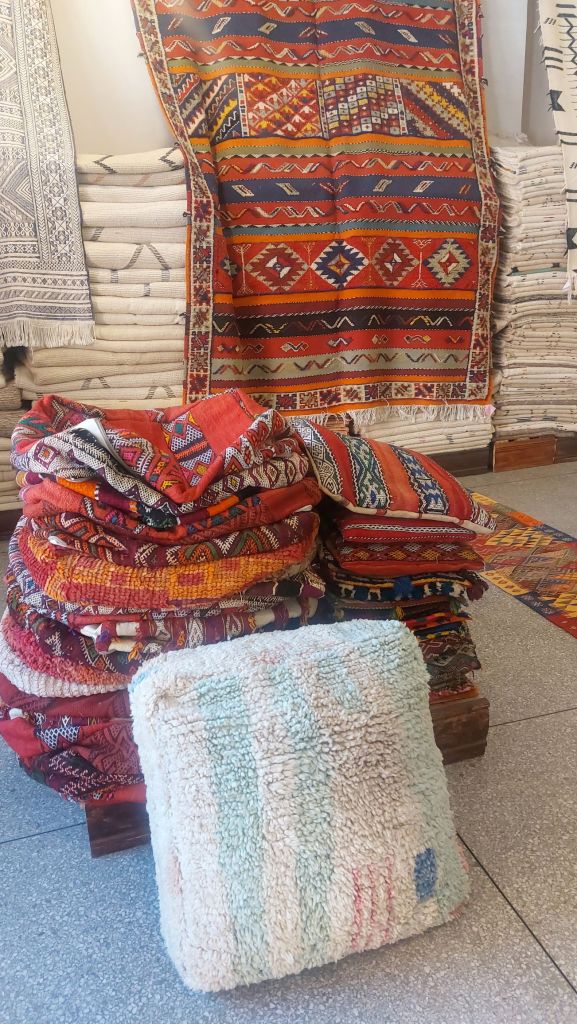
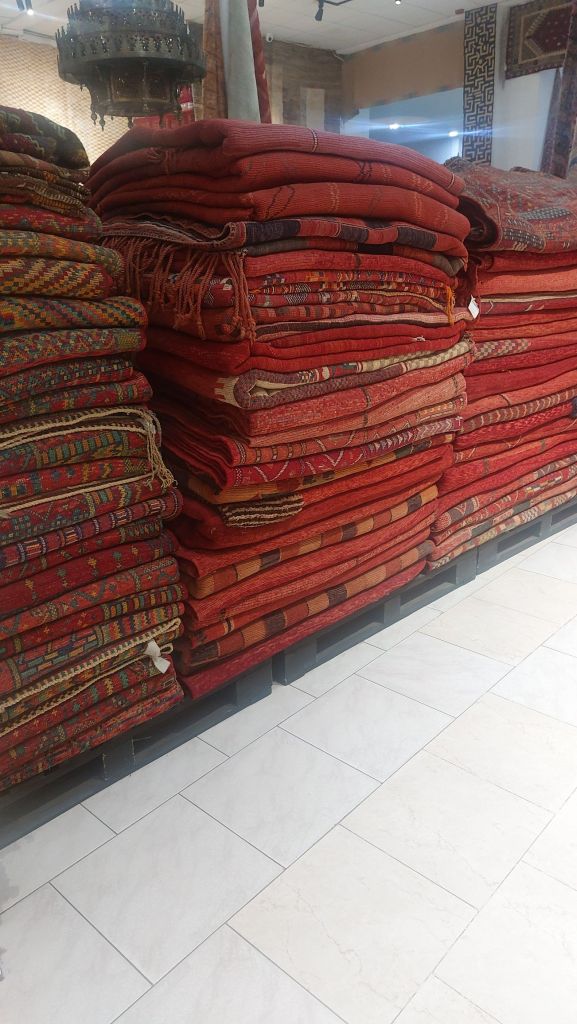
Images by Freebird Tracey.
Berber rugs are beautiful and give a home a wonderful boho vibe. They are hard-wearing and last a lifetime. It’s important when visiting Marrakech to make sure you’re purchasing a genuine Berber rug. There are a few scams, so be mindful. Before you get taken to a shop where you’re promised the best quality and price, do your research.
Les Nomads de Marrakech has a great reputation and can ship rugs back home for you. This is their address, Bennahid #40 Derb Zaouiat Lahdar, Marrakesh 40030, Morocco.
Dar Bouchaib in the Kasbah is a fixed price store that also ships rugs worldwide and has a huge selection.
To find out more about the history of Berber rugs, there is a carpet museum in the souks called The Maison Culturelle du Tapis. It’s worth visiting to learn more about how they’re made. They also have some beautiful vintage rugs on display.