A fixed price store selling everything in the Kasbah
If you are fed up with haggling every time you want to buy something, there is a huge store in the Kasbah called Dar Bouchaib.
Here, you will find everything that’s for sale in the souks at a fixed price.
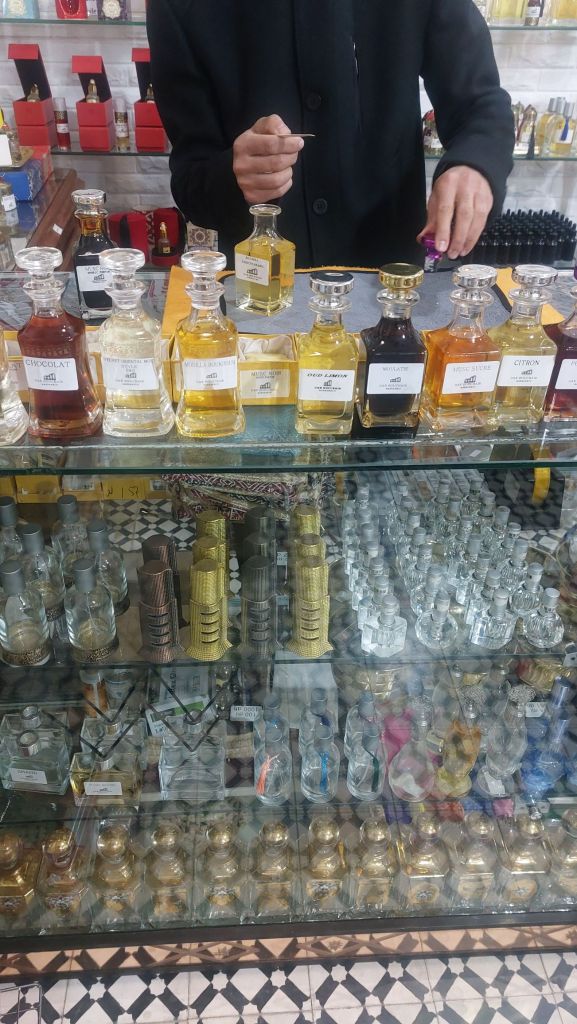
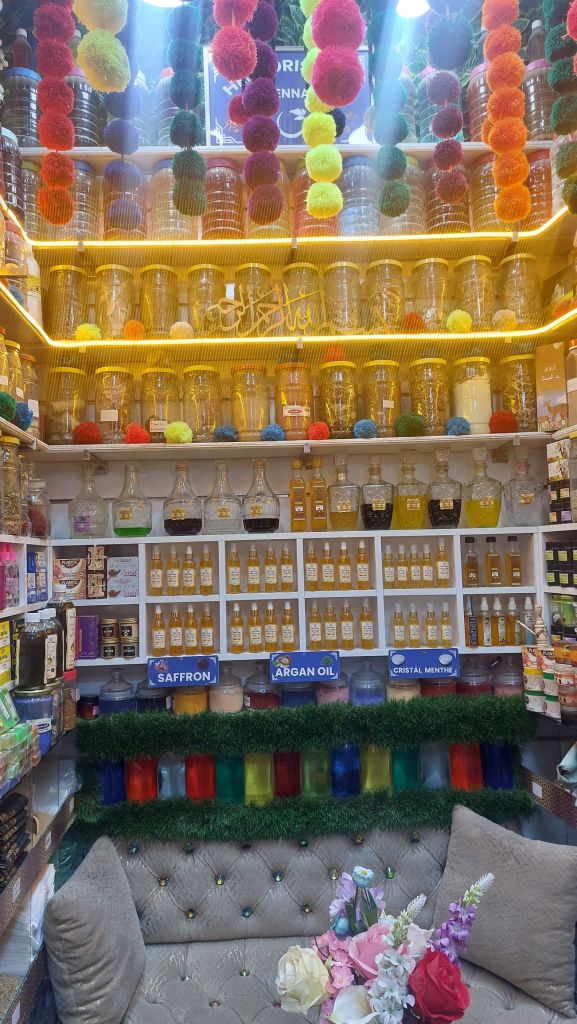
The perfumed oils are of a very high quality, and you can create your own signature fragrance by blending several oils together.
Image by Freebird Tracey.
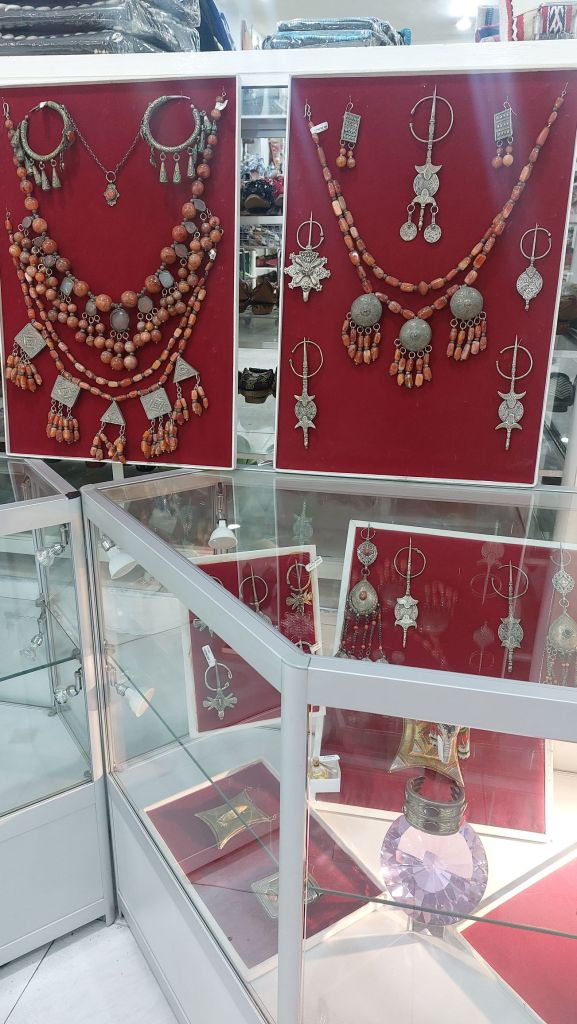
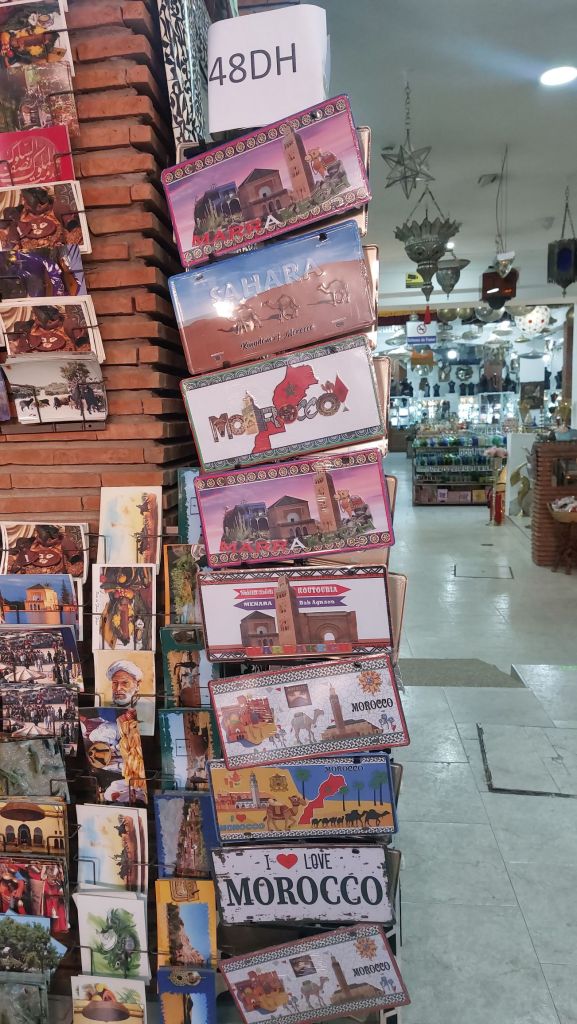
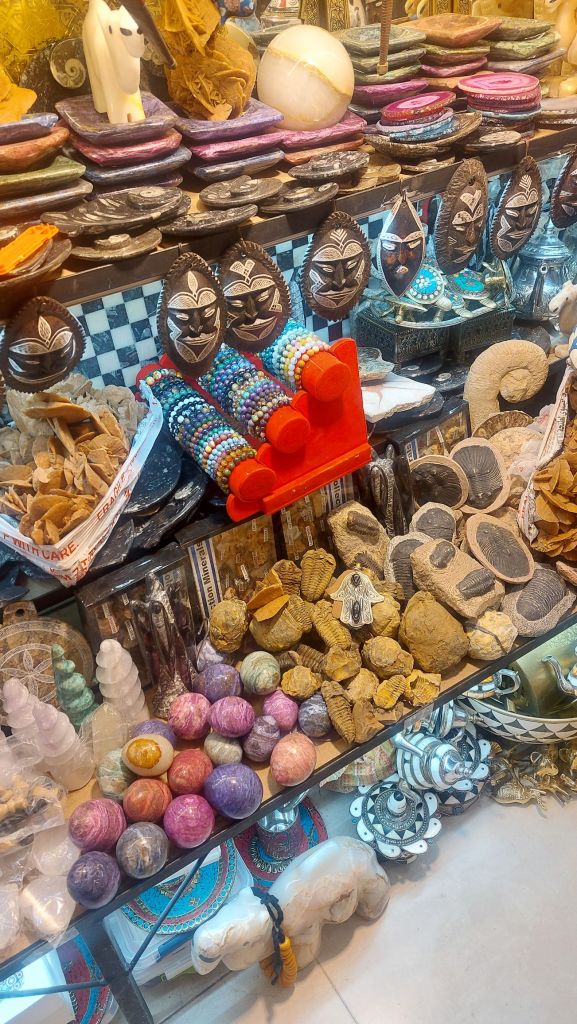
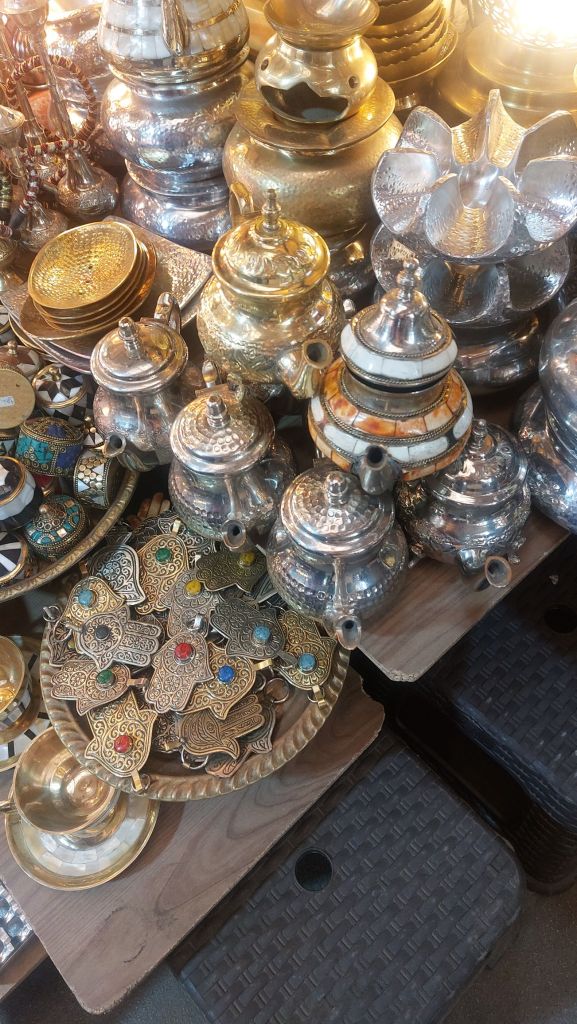
On the ground floor, there are ceramics, jewellery, clothing, footwear, bags, souvenirs, and much more.
Images by Freebird Tracey.
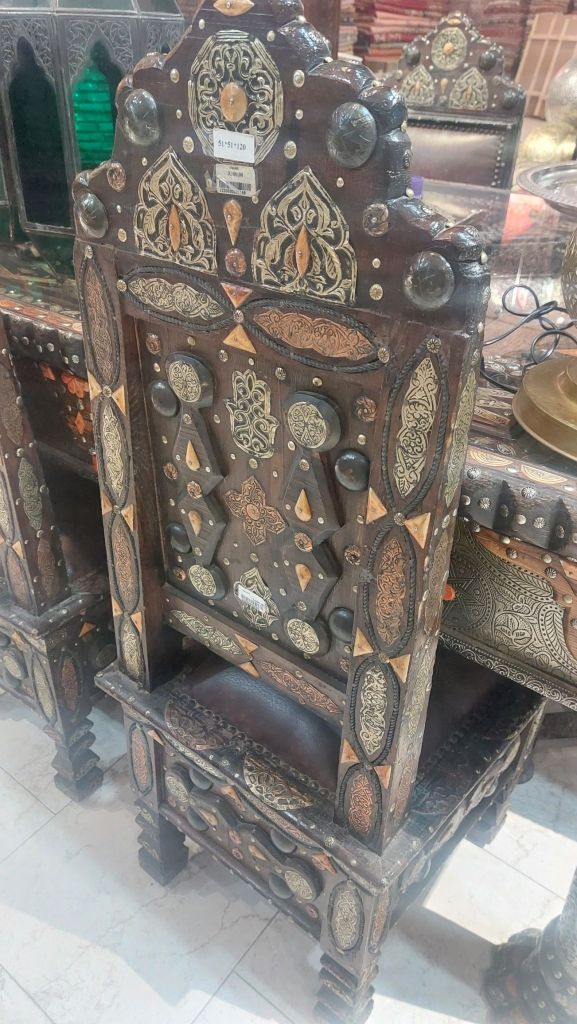
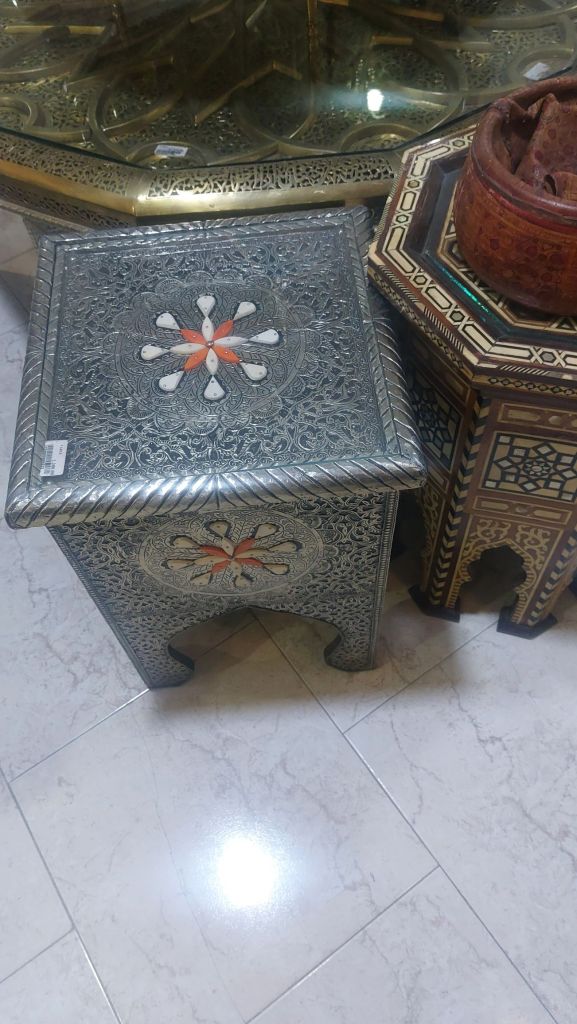
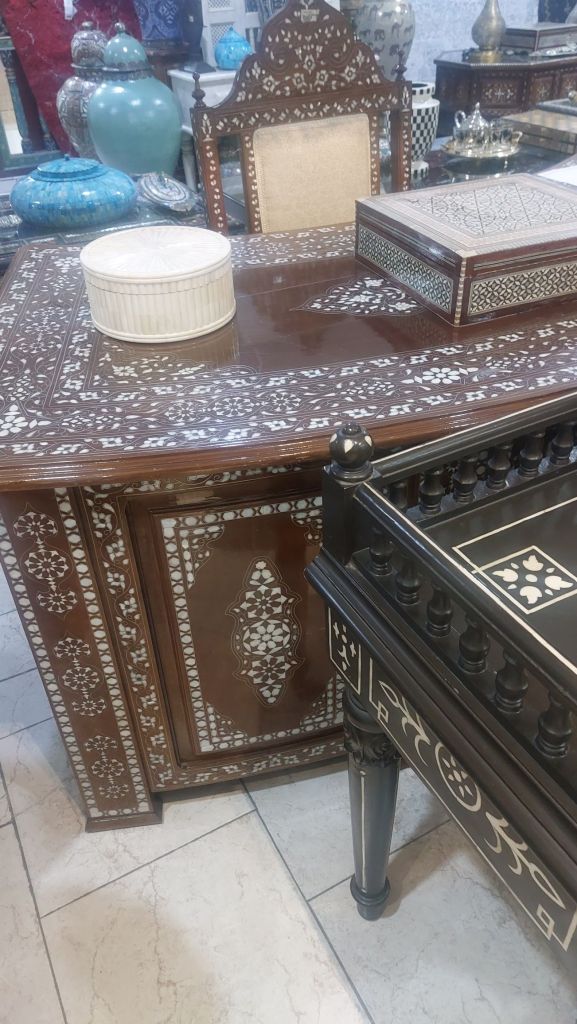
On the first floor, exquisite furniture, mirrors, Berber rugs, and other beautiful handmade pieces to furnish your home with.
They also ship worldwide.
The staff are incredibly helpful and not pushy at all.
The store is huge and worth visiting just to see the craftsmanship and detail that’s gone into creating each piece.
Images by Freebird Tracey.
The Kasbah is a 15 – to 20-minute walk from the main square with plenty of interesting shops and good restaurants along the way.
Here, you will find the Saadian tombs and El Badi Palace.
Dar Bouchaib can be found on;
Rue de La Kasbah,
Marrakech 40000.
Opening times are;
Daily from 9.00 am until 8.30 pm.
Bank holiday hours may differ.
Although part of visiting Marrakech is to enjoy shopping in the souks, sometimes haggling and knowing how much you should be paying for something can become slightly stressful.
Dar Bouchaib is a relaxed shopping experience with everything under one roof.
The prices are fixed and realistic.
Make it part of your visit to the Kasbah area.
You won’t be disappointed.
Images by Freebird Tracey.
For more information, see my other posts or contact me via the email address below..
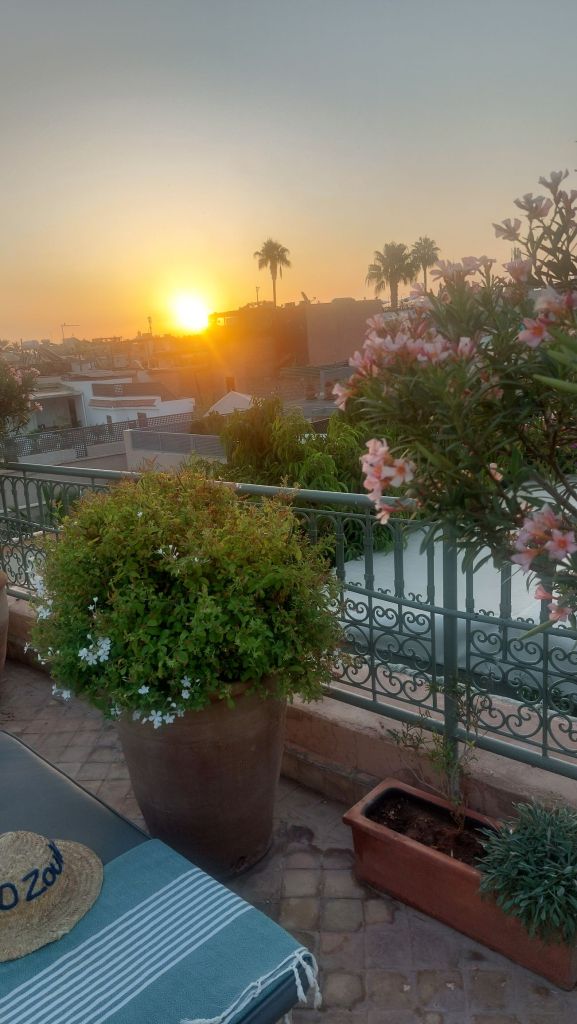
For myself, the perfect day in Marrakech begins by waking up early to watch the sunrise from the rooftop of my riad.
View from the rooftop of Riad Zouhour
Listening to the birds chirping and the sound of the medina waking up.
Watching cats prowling along the rooftops and hearing the clatter of plates as staff in the riad prepare for breakfast.
The first glass of freshly squeezed orange juice hits the spot perfectly.
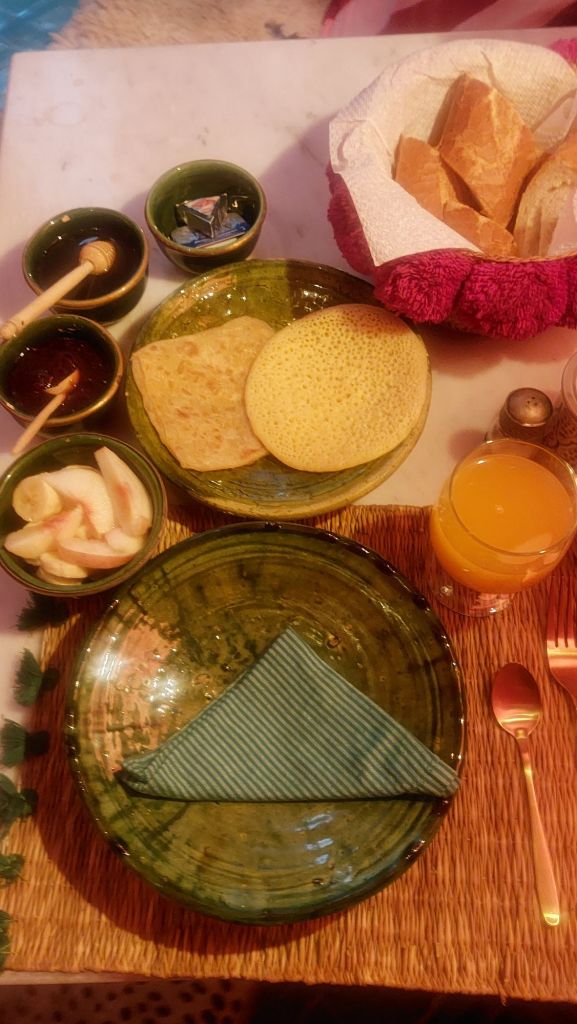
I enjoy a breakfast of pancakes with homemade jam and honey, bread, yoghurt, and fresh fruit.
Traditional riad breakfast.
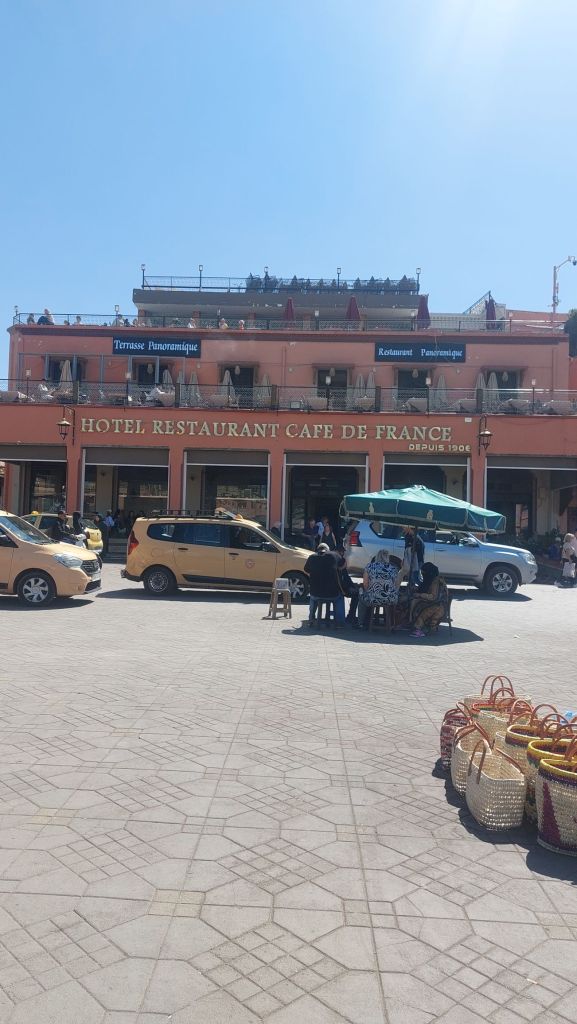
After a refreshing shower, I head out into the medina for a nice coffee in a cafe on the main square.
Sat outside, I observe the vendors setting up for the day. The entertainers get ready to entice the crowds of tourists and the local ladies on their way to the market for fresh spices.
The medina waking up.
My next destination is the souks for a browse around before they get too busy.
I suggest just after 9.00 am. is the perfect time to go.
Vendors are eager for their first sale of the day, and bargaining is much easier.
The colourful array of beautiful things on offer is a sight to behold.
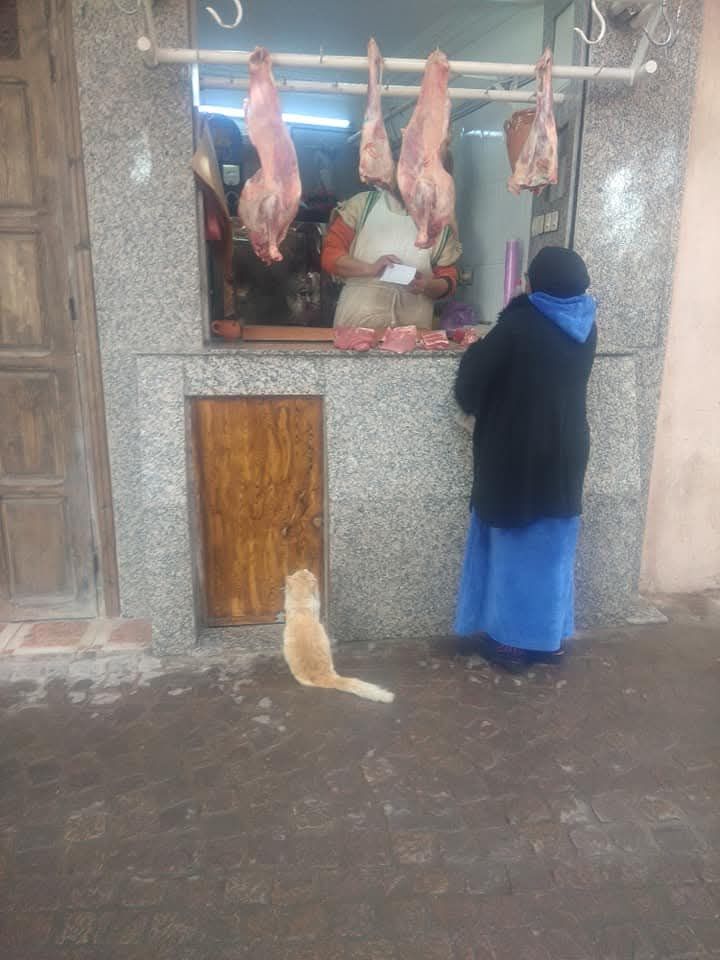
The cats gather for a few morsels off the butcher.
Cats are well looked after in the medina.
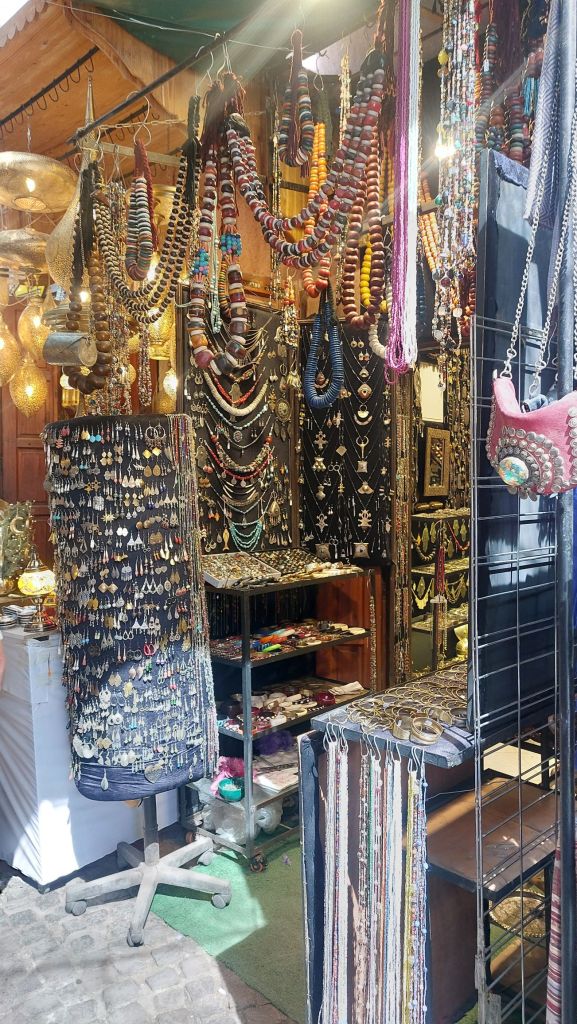
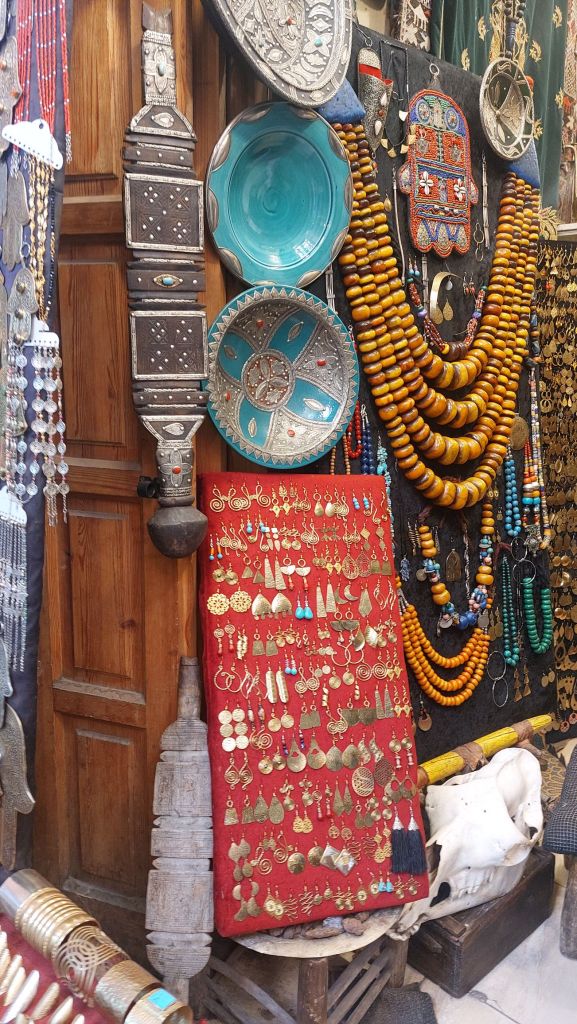
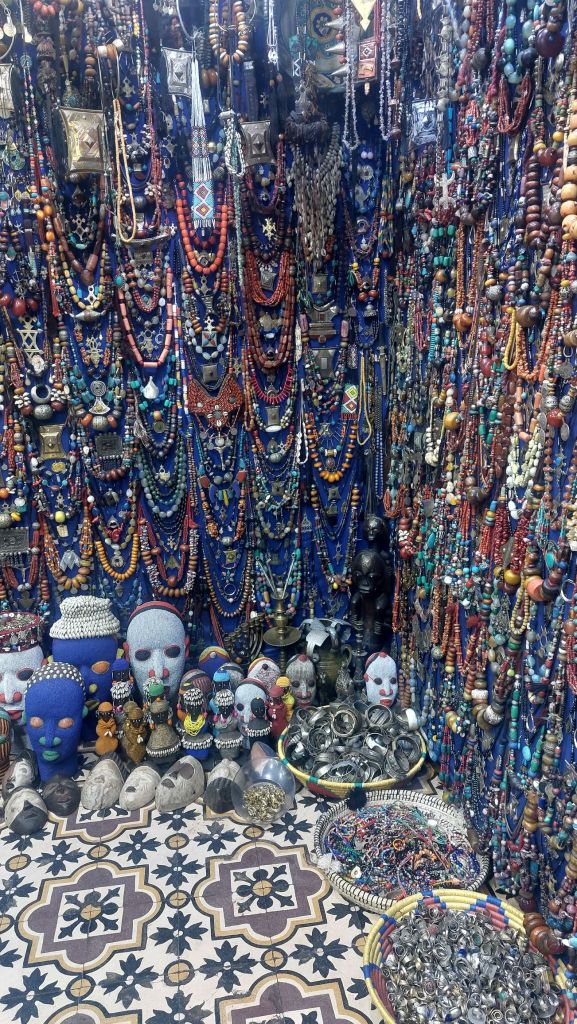
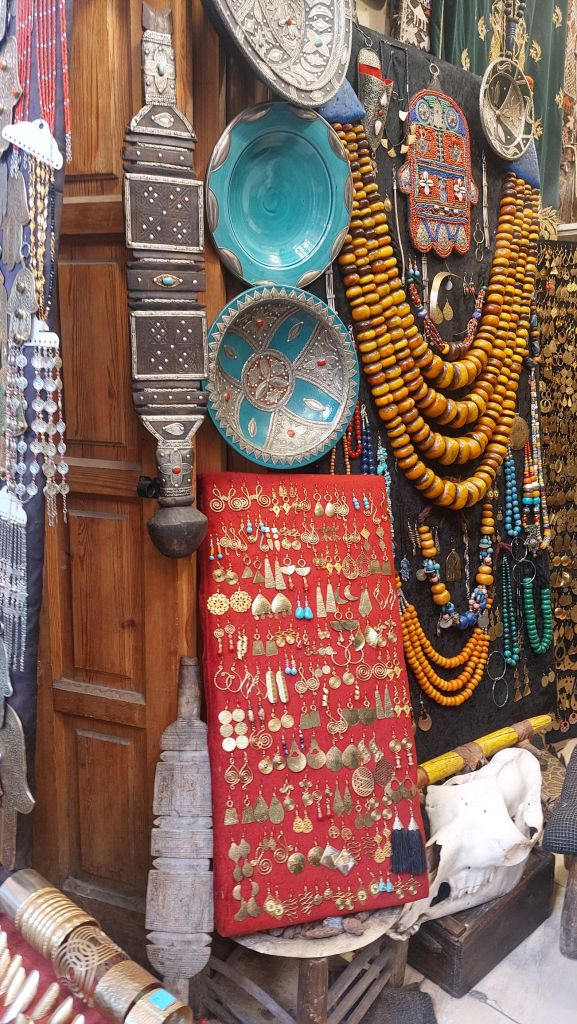
I check out the wonderful Amazigh jewellery, the argan oil, and the beautiful ceramics and mirrors.
Amazigh jewellery in the souks.
I buy one or two keepsakes and then decide it’s time for a snack.
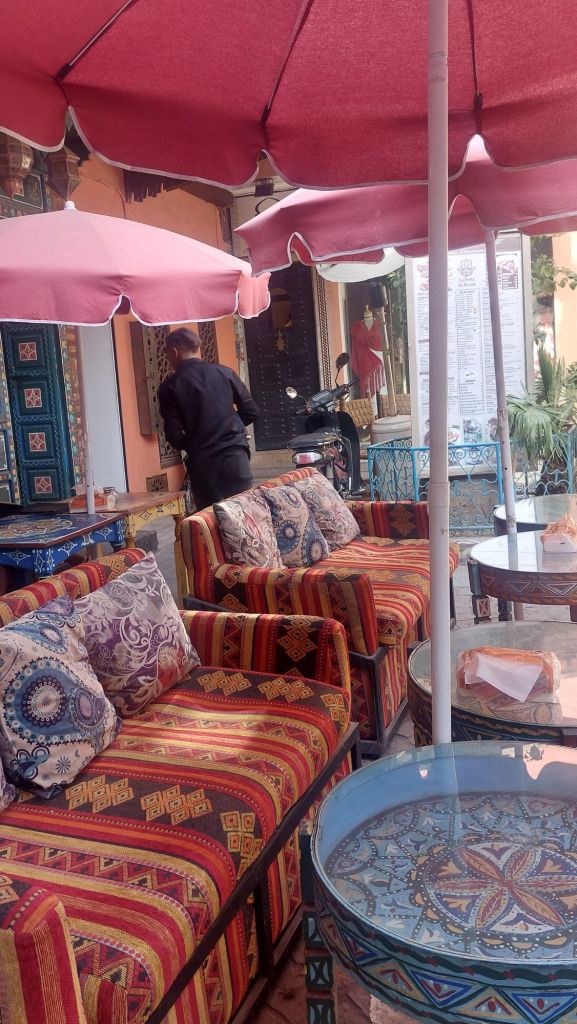
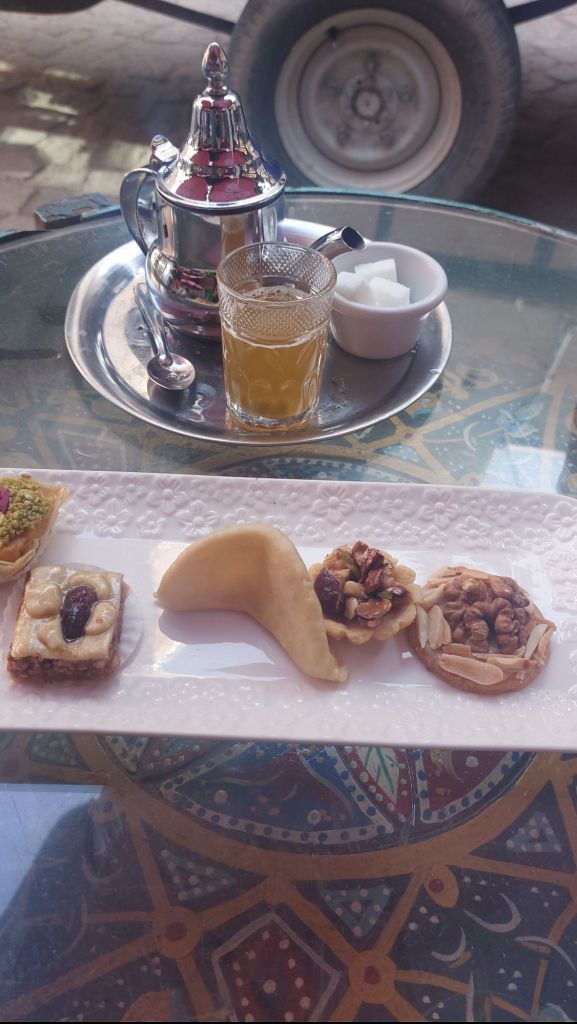
A colourful outdoor cafe calls out to me, and I choose some delicious pastries with a mint tea.
It’s magical watching the world of Marrakech go by.
The motorcycles, the donkeys, all competing for space in the narrow streets.
Tourists wandering about, looking in awe at the beautiful colours around the medina.
After recharging my batteries, it’s time for some sightseeing.
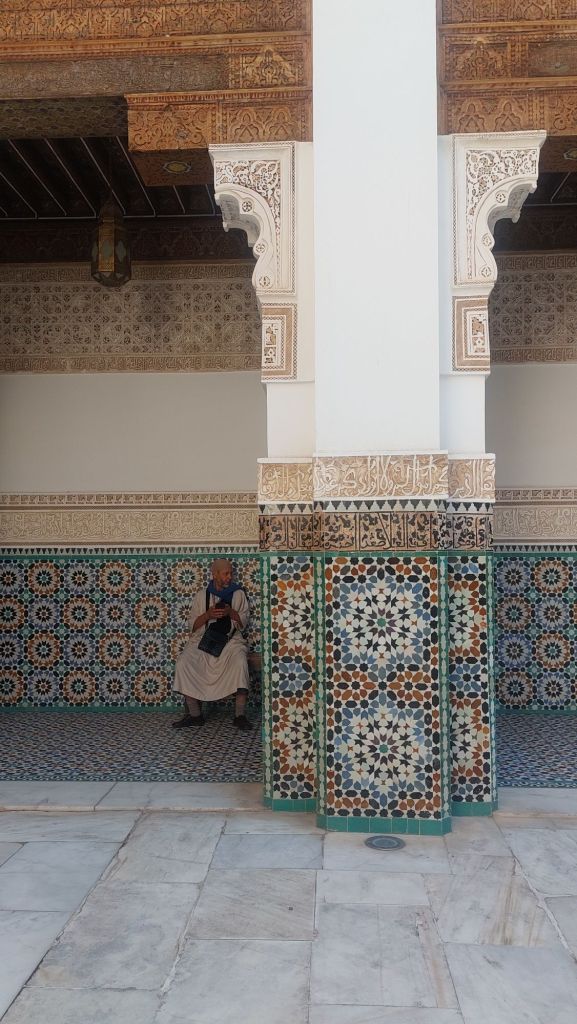
I head towards Madrasa Ben Youssef and get some amazing photos of the stunning architecture.
The incredible Islamic architecture in the Mederssa Ben Youssef .
The medina is beginning to get rather busy, so I make my way to the gardens of the Koutoubia Mosque to sit quietly for a while.
Enjoying the stunning gardens of the Koutoubia Mosque.
Afterwards, I treat myself to a sugarcane juice from a vendor outside.
Sugar cane vendor.
The heat is now quite intense, so I return to the riad for a rest.
I head upstairs onto the rooftop for a rest from the busy medina and a spot of sunbathing.
Enjoying the peace and tranquillity in my riad.
The call to prayer echos across the medina.
I read a book and order myself a glass of mint tea and a dish of olives.
Soon, it’s time to get ready for the evening.
I decide to go to La Pergola rooftop bar for a couple of cocktails.
It’s a lively atmosphere, and there’s a jazz band playing downstairs in the courtyard of Le Bistro Arabe.
I stop and listen for a while before heading towards Jamaa El Fna.
The energy is electric, food vendors touting for business, dancing, drumming, and crowds of people everywhere.
The smell of food makes me hungry, so I decide to find a nice place to dine.
I choose a place overlooking the square and observe the action from above, sat on the rooftop.
I enjoy a traditional tagine, flavourful and aromatic. I’m tempted by the exotic sounding smoothies on the menu and treat myself to one containing dried fruit.
I watch the beautiful sunset and everywhere has a golden glow.
Once dinner is finished, I nip into The Clock, situated in the square to listen to some traditional storytelling.
After an interesting time immersing myself in the culture of Morrocco, I decide to head back to my riad.
I pick up a few souvenirs along the way.
Back at the riad, I sit in the courtyard reflecting on my day.
The staff in the riad are happy to help me decide where to go the following day.
We chat about possibilities, and they help me put together the perfect plan for another day sightseeing.
I have had a perfect day…
I have experienced a different culture, tasted delicious food, watched a magnificent sunset, chatted with the locals, and navigated the maze of the souks successfully.
I have made a mental note of some of the things I want to buy to take home with me, and I look forward to haggling for a fair price before the end of my trip.
I fall asleep, happy and content, ready to do it all again tomorrow..
Browsing around the busy souks in the medina is an exciting experience.
Berber jewellery in the souks.
There is everything that you could possibly dream of.
As you meander through the maze of colourful alleyways, be prepared for a complete assault on the senses.
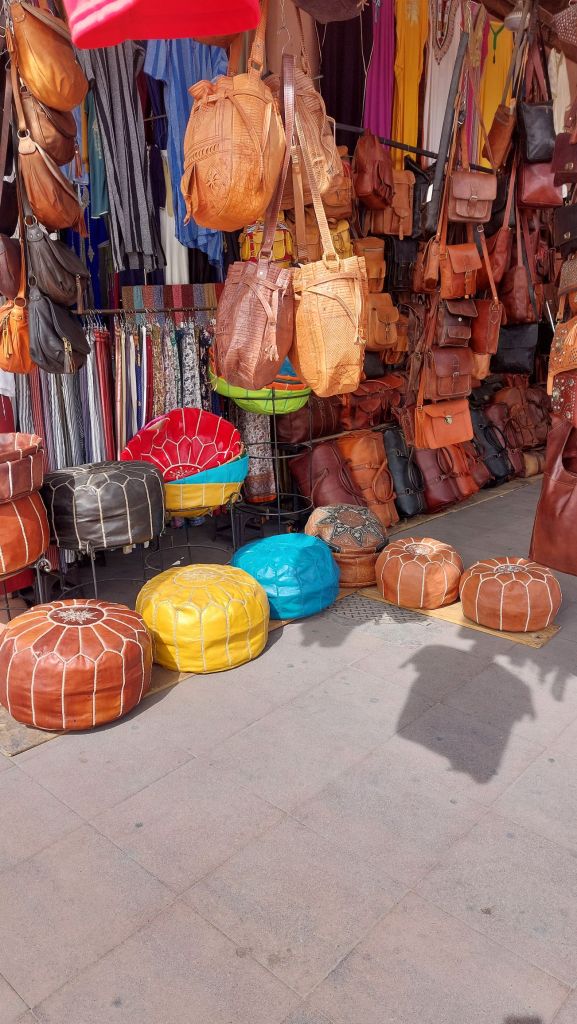
From beautiful jewellery to exotic spices, leather shoes and bags, to Morroccan lamps and ceramics.
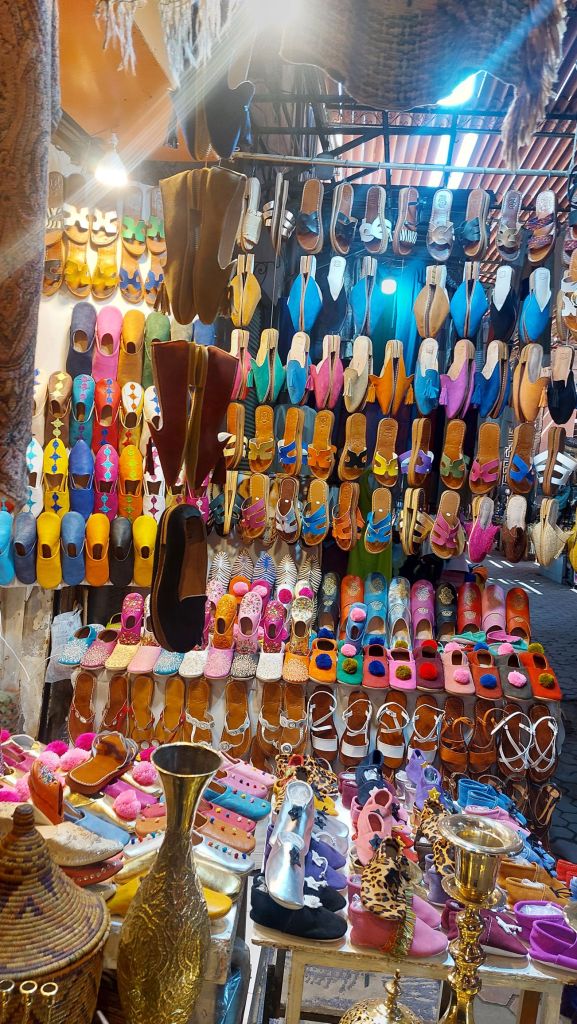
Traditional Morroccan Babouches.
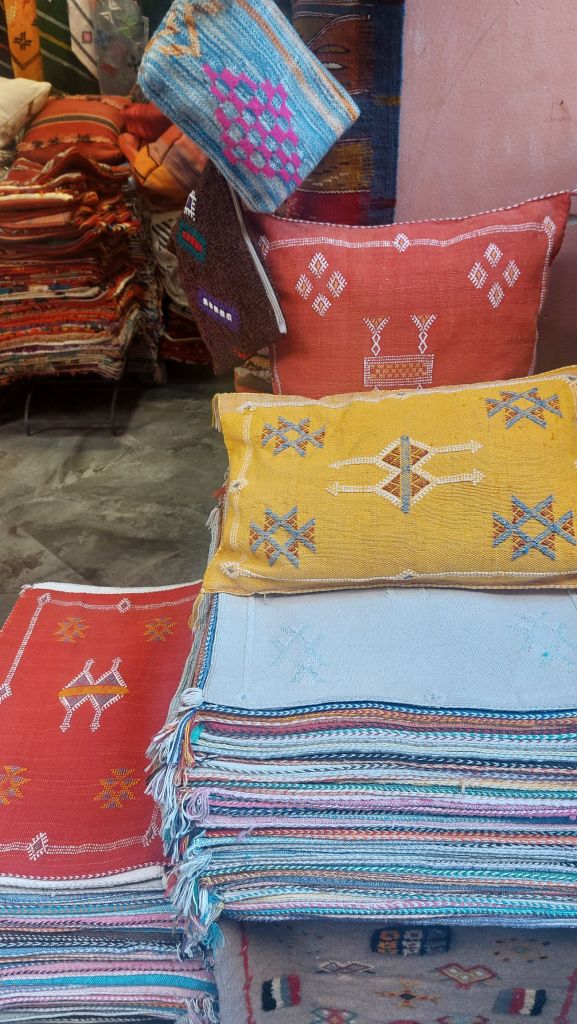
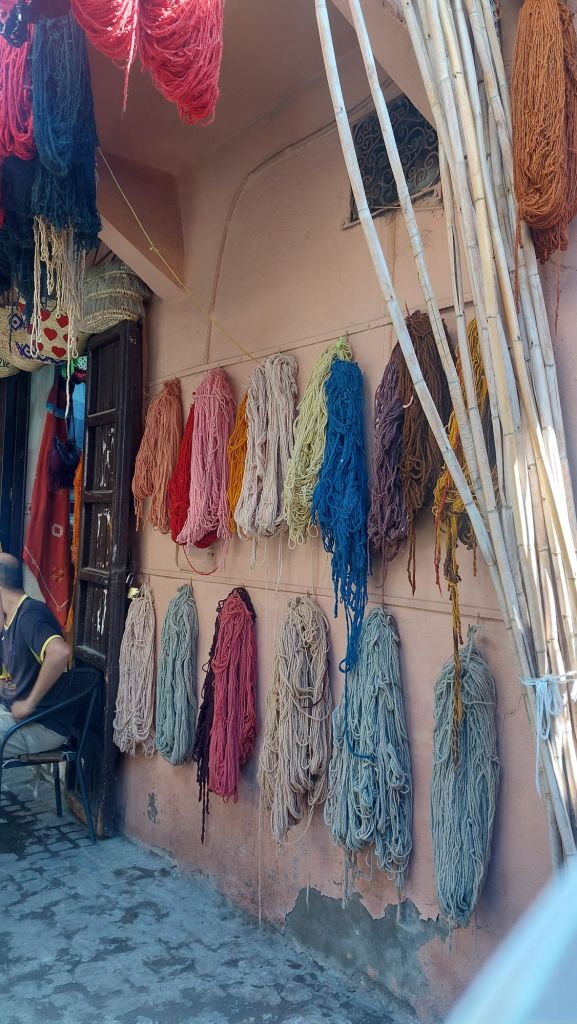
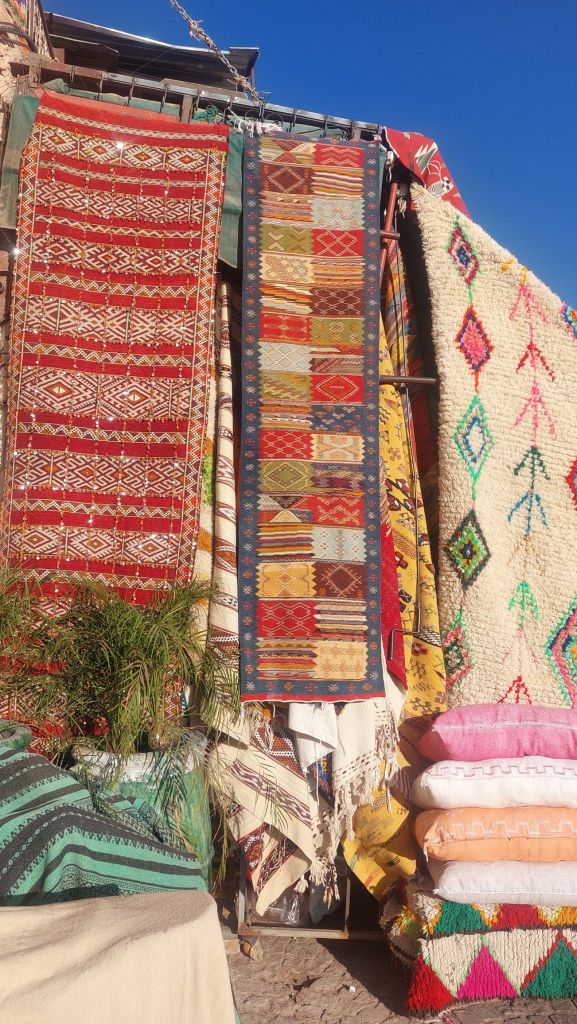
The craftsmanship is astonishing, and you can find areas that are dedicated to certain products, such as leather goods and handmade Berber rugs or cushion covers.
It’s a lovely experience watching the locals making their goods to sell, and there is also the opportunity to have a go at making things yourself, such as a pair of babouche shoes to take home.
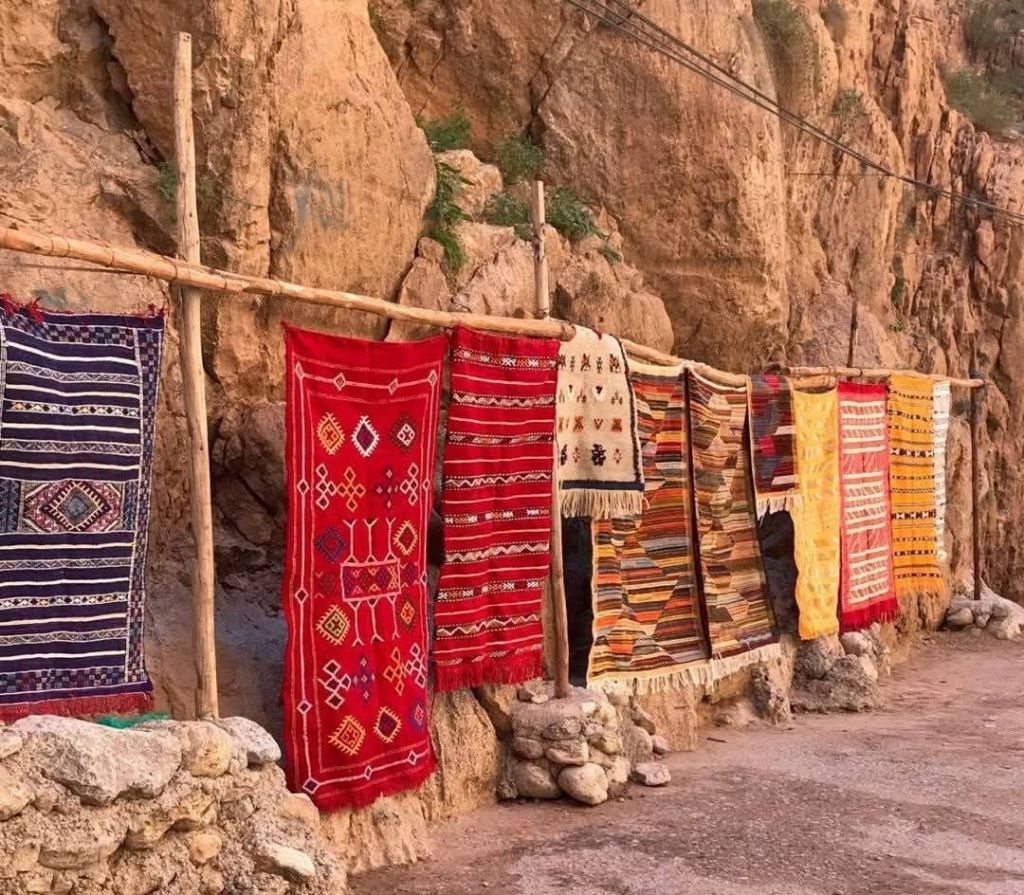
Berber rugs are beautifully displayed, and the assortment of colours and patterns are a feast for the eyes.
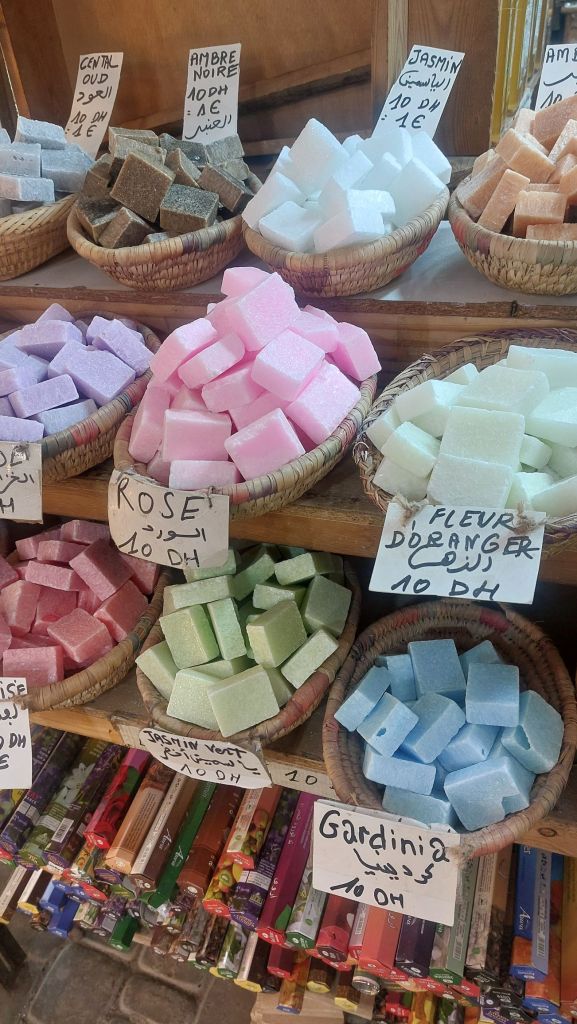
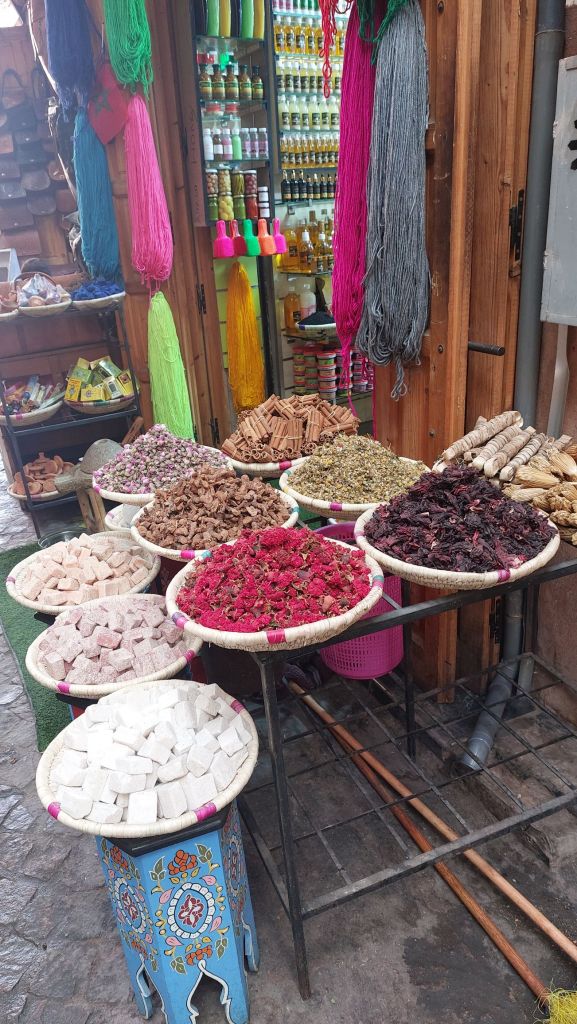
Argan oil and morroccan black soap, orange blossom oil, and gardenia float on the gentle breeze.
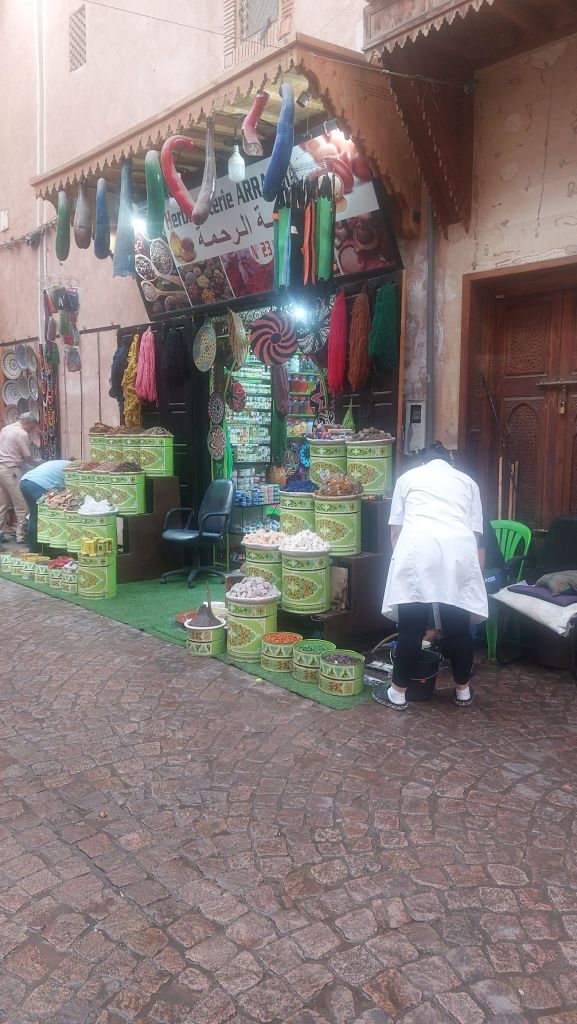
Oils and perfumes for sale in the souks.
Wooden boxes ornately decorated with mother of pearl, chess sets, and traditional toys tempt you for the perfect souvenir to take back for family and friends.
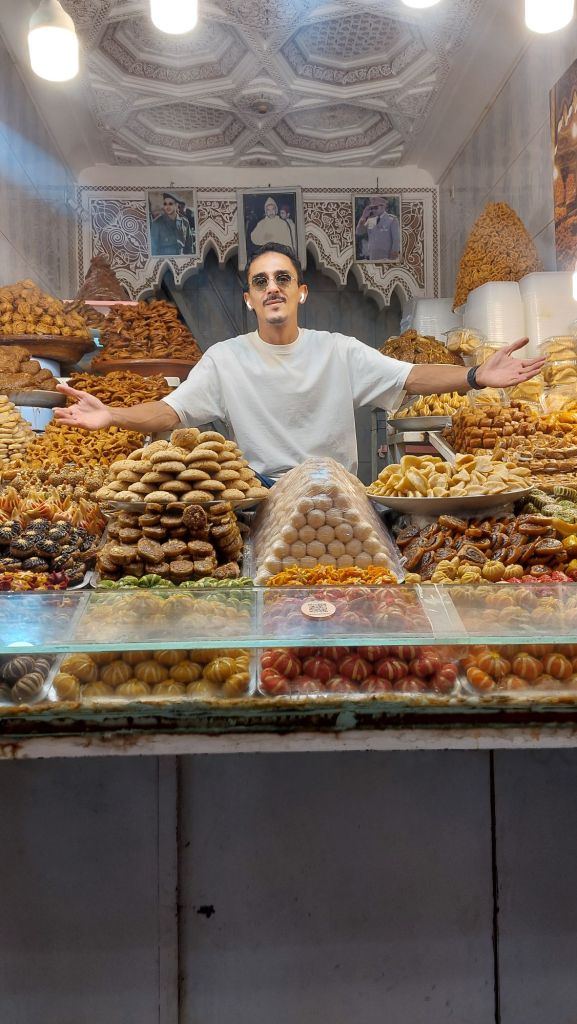
Then there’s the nuts, sweets, and pastries.
Traditional sweets for sale in the souks.
The olives and exotic fruits.
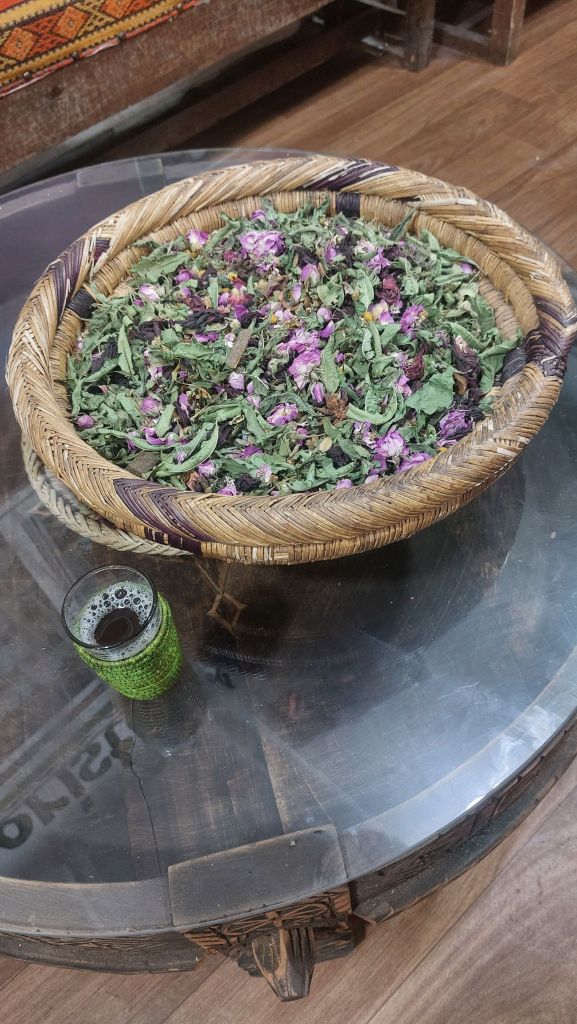
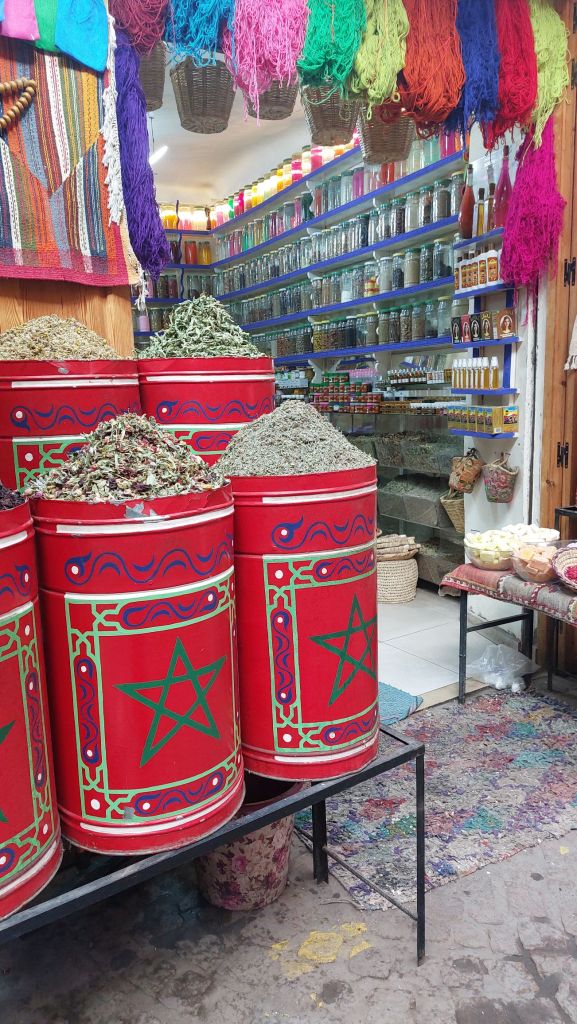
The medicinal herbs and spices, a cacophony of colours and fragrances.
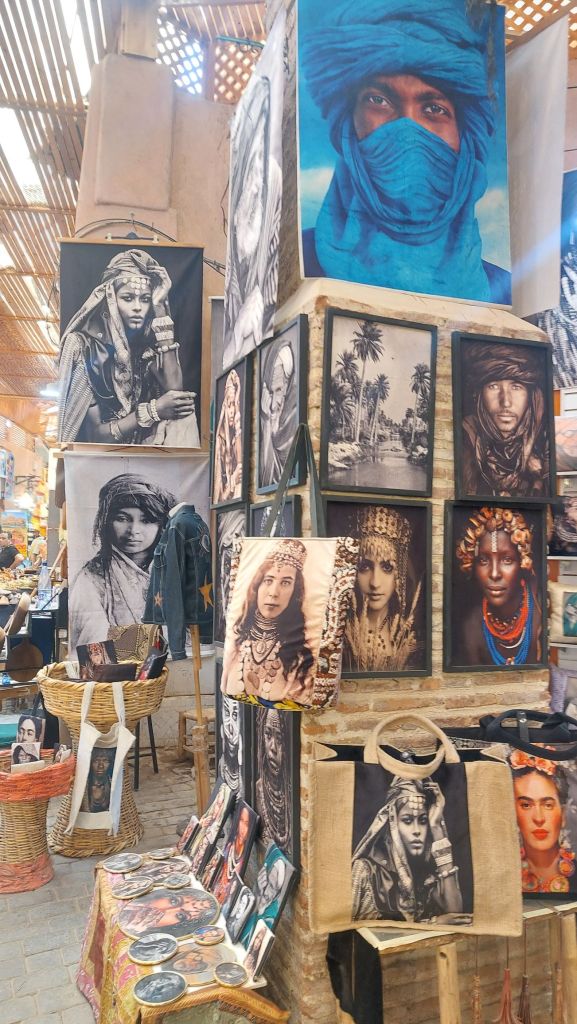
Paintings and prints of traditional Morroccan doors and Berber people.
Hand painted pictures for sale.
For the person who loves shopping, Marrakech is an absolute delight.
The souks are crowded and busy.
You have to dodge motorcycles and donkeys, vendors with carts, and tourists looking for the perfect gift.
You can expect to get lost, but that’s all part of the experience.
No one went into the souks and was never heard from again…
So, if you’re coming to Marrakech for the vibrant abundance of enticing goods on sale around the medina, fully immerse yourself in the experience and enjoy every minute.
It’s an unforgettable experience, one which will envoke the spirit of camel caravans and ancient trade routes from centuries ago.
A few helpful tips to make the most of your shopping experience:
Pace yourself.
The souks are very busy with motorcycles, donkeys, and tourists. It can feel slightly chaotic at times, especially in the heat.
Stop for a drink and rehydrate.
Rest for a while, try a spot of lunch on the rooftop of a cafe.
Be prepared to haggle. It may seem daunting at first, but you’ll soon get the hang of it.
Stay vigilant, and keep your wits about you.
Marrakech is a safe city, but pick pocketing can happen just like anywhere else in the world.
In crowded, narrow streets, keep your possessions safe in a closed bag at the front of your body.
If you’re lost, try to use Google maps or look for signs above your head pointing you back to Jamaa El Fna.
If you need help or advice, ask a shop vendor or try calling the riad you are staying in.
They may offer to collect you.
Don’t be tempted to accept directions from locals who may lead you to a friend or family members’ shop so they can get commission.
You may struggle to get away, and you may find yourself seated and drinking mint tea before you know it.
Colourful spice drums in the medina.
Take time to shop around and walk away if you don’t think you’re being offered a fair price.
You will usually find yourself being called back, and a good price reached.
If not, the same items will most likely be found on sale elsewhere in the souks.
Exercise patience.
Remember, this is someone’s livelihood, and it’s a different culture to what you may be used to.
Wages are not very high for most people in Marrakesh, and tourists with money to spend are fair game for boosting the take-home salary of most vendors.
After all, they too have mouths to feed..
Although the souks can be overwhelming, they are an unforgettable shopping experience.
You will be dazzled by the vast number of weird and wonderful items on display.
The sights, sounds, and smells will stay with you a long time after you leave this fascinating city.
Berber rugs are handmade by the indigenous Amazigh people of Morocco.
They are made from the wool of sheep in the high Atlas Mountains.
Each type of rug tends to vary in thickness depending on which tribe has made it, so that they are suitable for the environment where they are used.
For example, Kilim Berber rugs have no pile and are relatively fine in texture.
They are handcrafted using techniques passed down through generations using natural materials renowned for their durability and luxurious feel.
Hand-knotting is a long and laborious process.
To create a single rug takes about one to two months, with four weavers working on a rug at a time.
Here are the steps taken to make a beautiful Berber rug.
1. Shearing the Sheep
Shearing the sheep is the first step in making a Berber rug. This is done by hand, using a special shearing knife. The sheep are first restrained, and then the knife is used to remove the wool from their body in one long strip. The wool is then sorted and cleaned.
It is usually the job of the men to shear the sheep, taking care not to injure them or spread infection.
The women are responsible for washing the sheared wool.
2. Carding Carding is the process of aligning the wool fibers so the weavers can spin them into yarn. To card the wool, the fibres are first combed in one direction, and then the wool is brushed in the opposite direction. This helps to loosen the fibers and align them in the same direction. Once the fibers are aligned, the weavers can then spin them into yarn. Carding is an essential step in making a Berber rug, as it helps to ensure that the rug is strong and durable. The process of carding also helps to give the rug its unique texture.
The women are often responsible for this process.
3. Spinning into Yarn
To spin the wool into yarn, Amazigh women use a drop spindle.
This simple tool consists of a shaft with a weight at the bottom. The wool is attached to the shaft, and then the shaft is twirled between the woman’s hands. As the shaft is twirled, the wool is wrapped around it, creating the yarn.
4. Weaving the Berber Rug
The weavers use a technique called continuous knotting to create intricate patterns.
This method of knotting allows the weaver to create a rug that is incredibly durable and will last many years. The process begins with the weaver tying knots in the woollen yarn.
The yarn is then dyed using natural dyes from plants, spices, and fruits, which give the rugs their characteristic colours.
Once the yarn is dyed, the weaver begins weaving it into the rug using a loom.
The loom is a wooden frame that the weaver uses to create the rug’s design.
The weaver ties the yarn around the looms warp threads, which are the vertical threads that run through the loom.
The weaver then weaves the weft threads, which are the horizontal threads, over and under the warp threads.
The weaver can create various patterns by changing the direction of the weft threads.
Once the rug is complete, the weaver cuts the rug from the loom and ties the ends of the rug together. The rug is then completed.
Berber rugs are beautiful and give a home a wonderful boho vibe.
It’s important when visiting Marrakech to make sure you’re purchasing a genuine Berber rug.
There are a few scams, so be aware before you get whisked away to a shop by a friendly local.
Les Nomads de Marrakech has a great reputation and can ship rugs back home for you.





























 Sounds Of The Souks