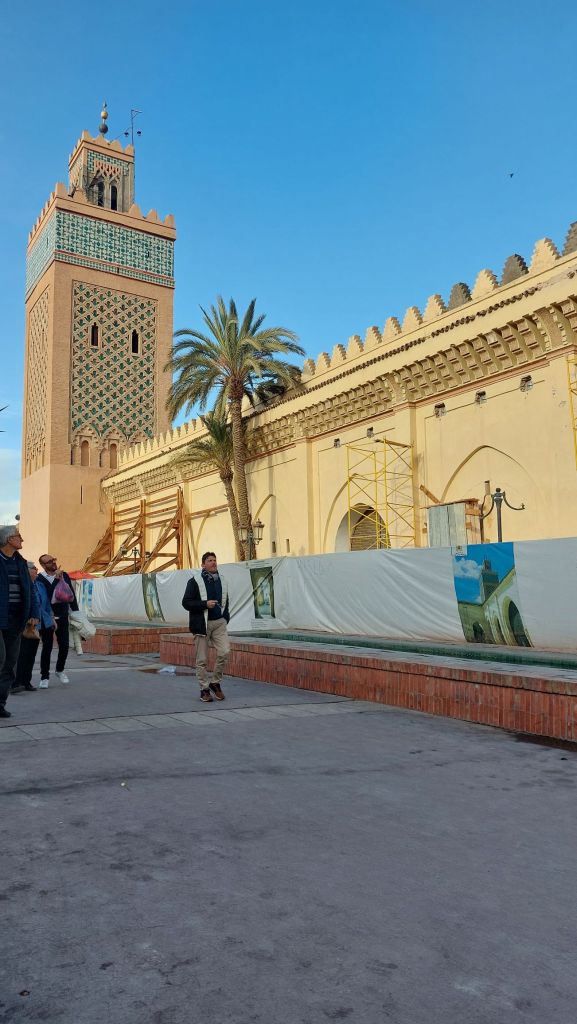
The Kasbah is a quieter part of Marrakech, with fewer tourists than the medina.
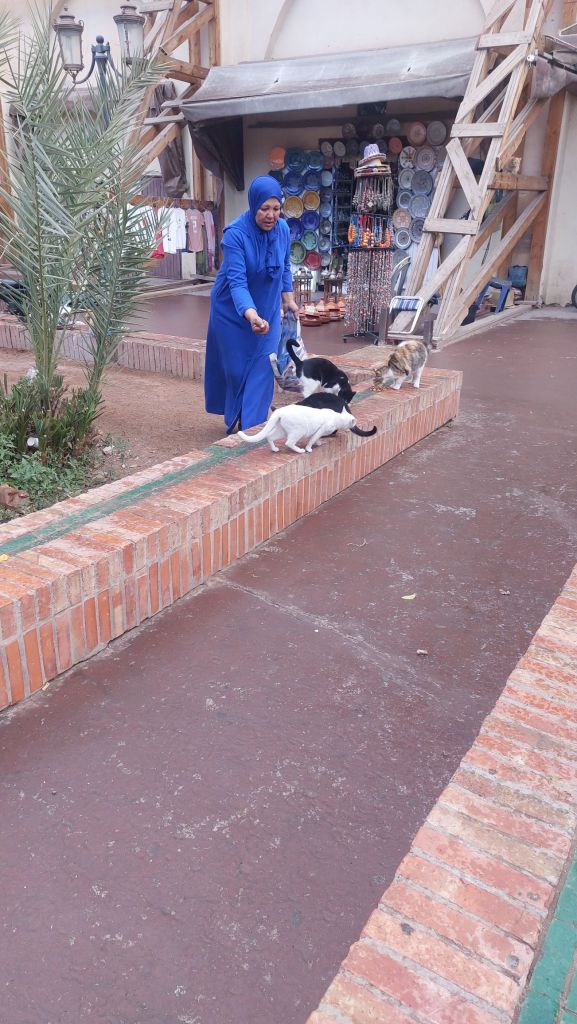
Staying in the Kasbah, you feel totally immersed in the culture of Marrakech as you rub shoulders with the friendly locals.
There are plenty of restaurants and shops including a good fixed price store selling everything you will find in the souks at a realistic price.
*See my separate post on Dar Bouchaib.
Images by Freebird Tracey.
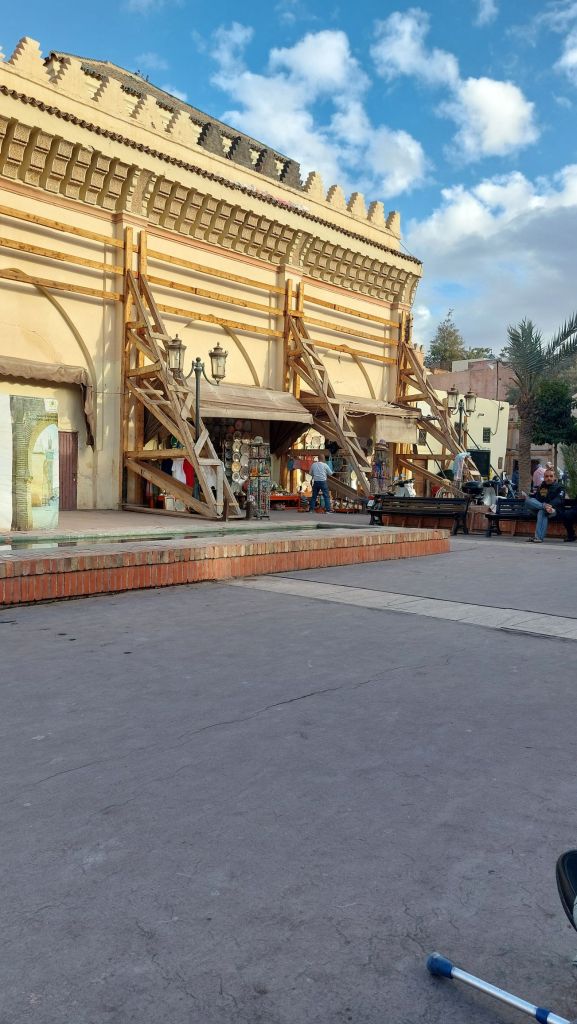
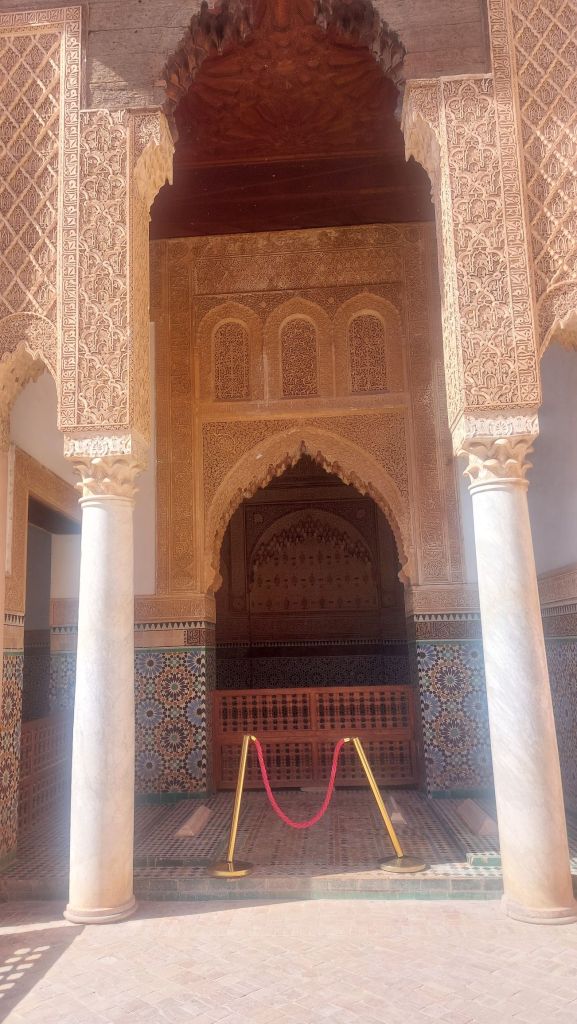
Inside the Kasbah, you can visit tourist attractions like the Saadian tombs and El Badi Palace.
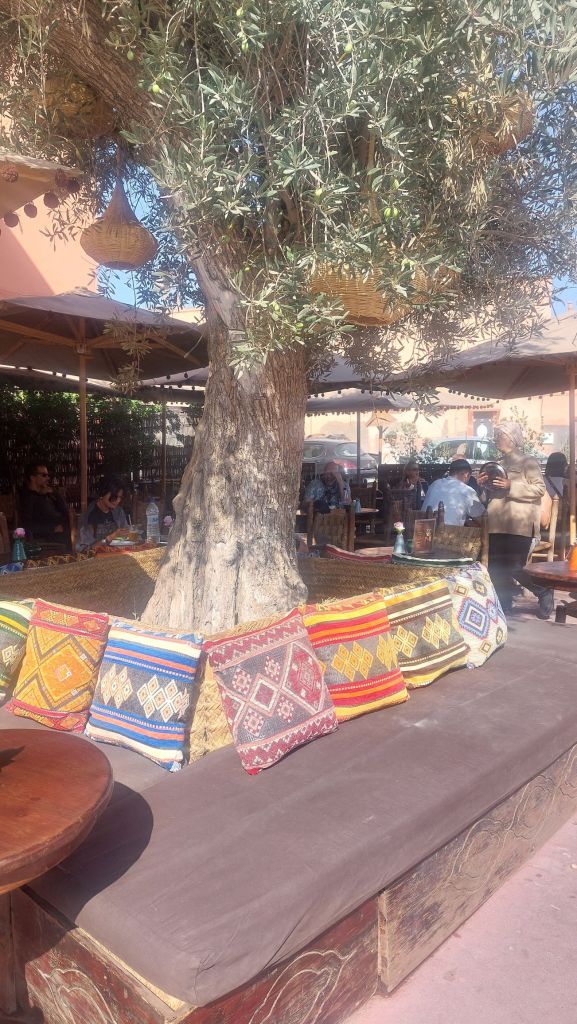
Zeitoune Cafe overlooking the mosque is a lovely spot for lunch or a drink whilst taking a break from sightseeing.
Image by Freebird Tracey.
It is about 15 to 20 minutes leisurely walking from the main square with plenty to see along the way.
There are a range of budget and high-end riads to stay in around the Kasbah.
* See my separate post on Riad Hikaya.
The Kasbah is the historical citadel in Marrakesh with fortified walls.
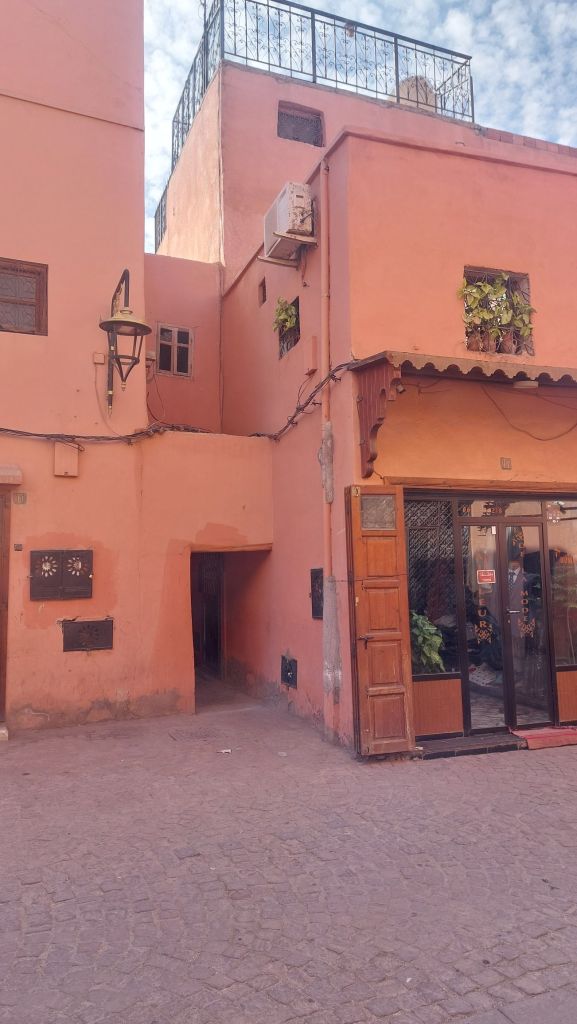
The narrow alleyways make it an exciting place to visit, and there are fewer motorcycles and donkeys trying to negotiate the streets at the same time as you, making it less stressful.
The Kasbah is home to the Clock restaurant and its legendary camel burger and storytelling evenings.
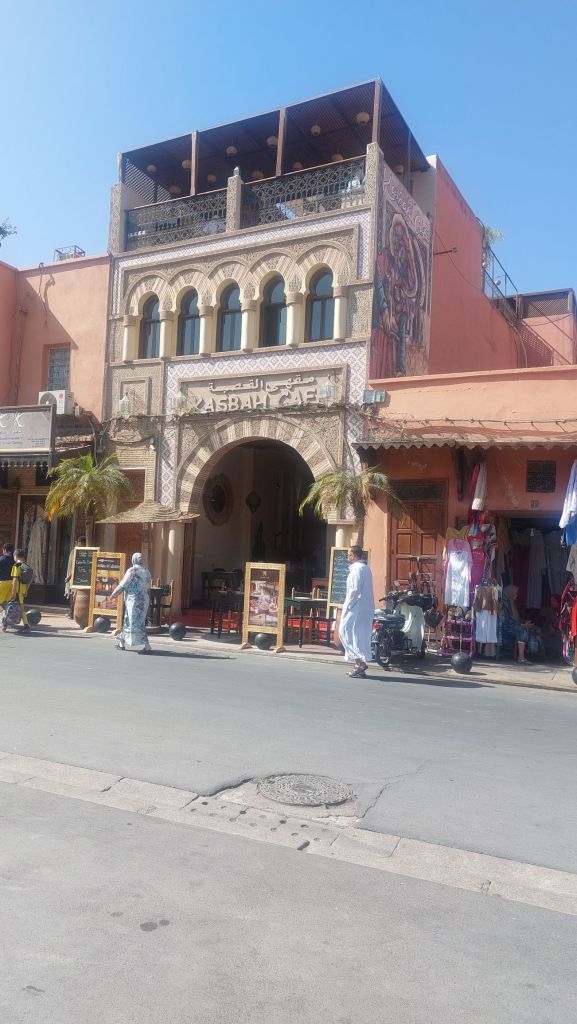
Also, the Kasbah Cafe is a popular place for lunch and dinner.
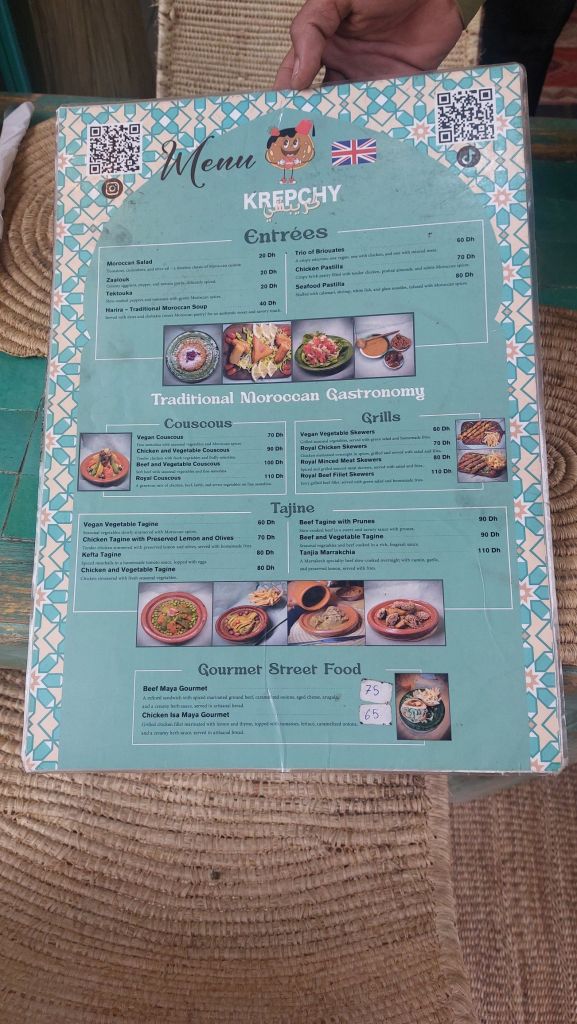
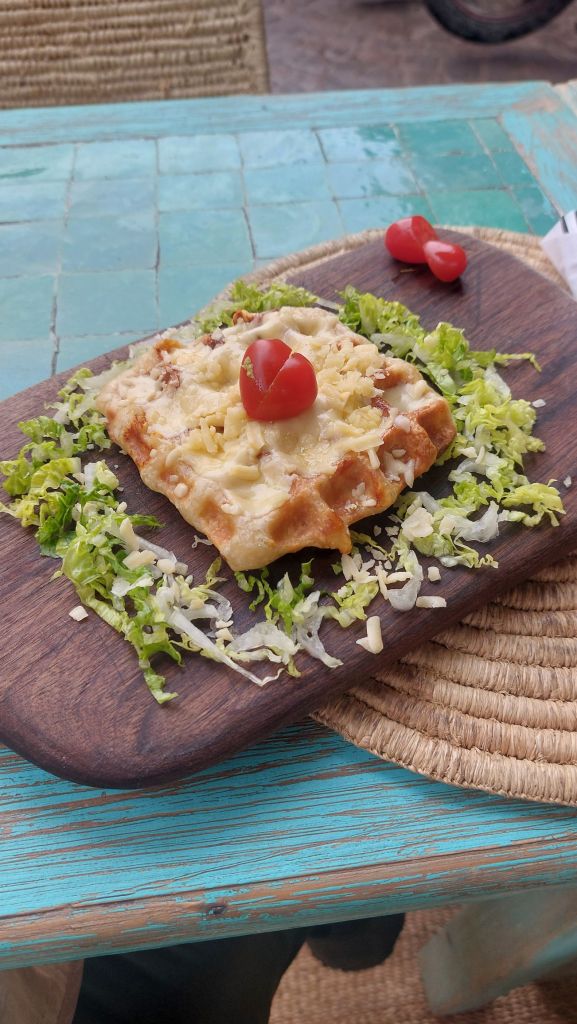
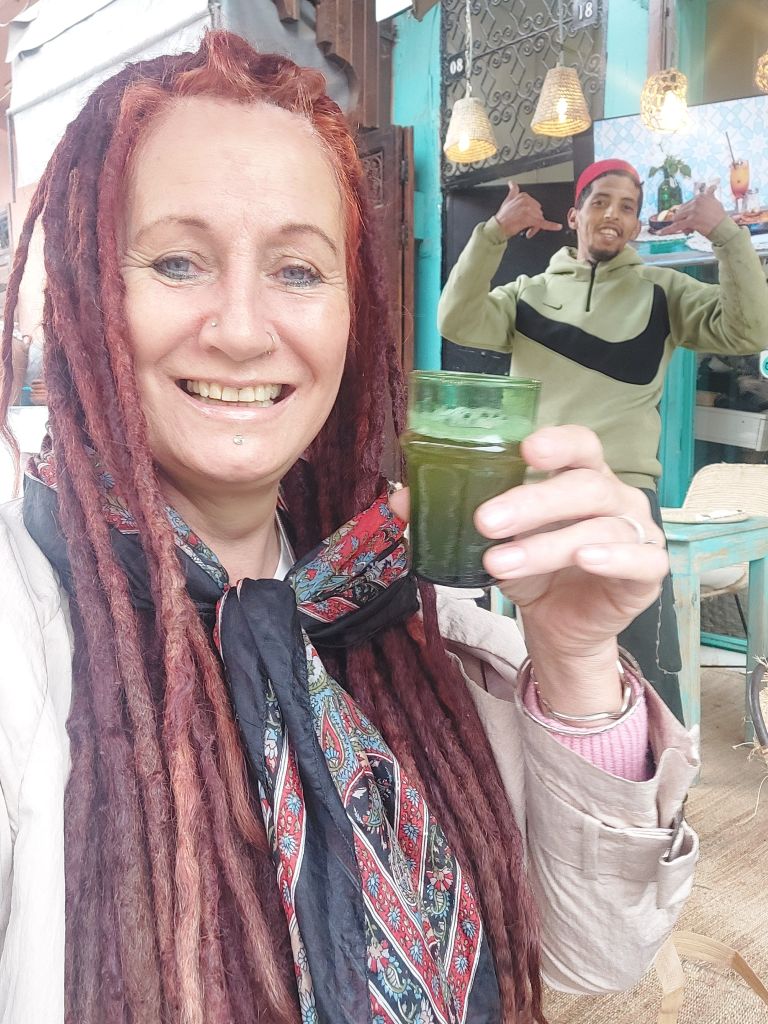
Krepchy does a fantastic breakfast, and the prices are very reasonable.
I highly recommend the waffles.
Images by Freebird Tracey.
Consider taking a tuk-tuk from the main square if the weather is hot.
It’s quite an adventure in itself as you rattle along the bumpy streets.
Spending an hour or two enjoying this interesting area of Marrakech is definitely worth it.
Images by Freebird Tracey.
For details about places to stay or eat in the Kasbah, contact me via the email address below;
El Badi Palace was built in 1578 by Sultan Ahmad al-Mansoor of the Saadian dynasty.
The palace was built to showcase the considerable wealth of the Saadian dynasty and was a prime example of Islamic architecture and exquisite craftsmanship.
Using both Moroccan and European influences, the palace was beautifully decorated with intricate mosaic tiles, marble arches, and ornate carvings.
The palace was home to the sultans harem and included over 500 women.
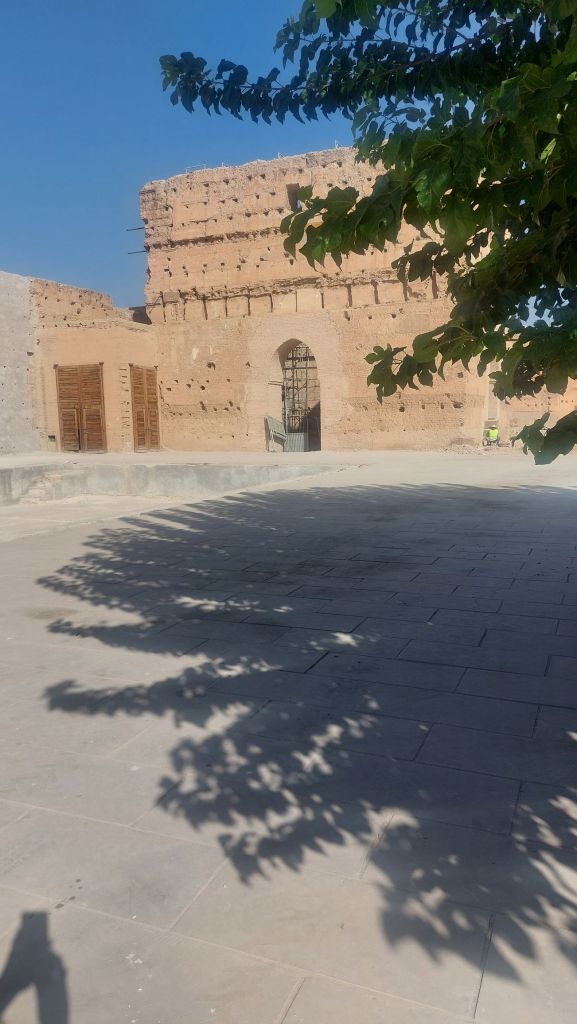
Now, only the ruins remain.
After Sultan Ahmad al-Mansoor died in 1603, the palace fell into neglect and was subsequently stripped away with the materials being used for other buildings in Morocco.
The palace is certainly worth a visit if you want to learn about the history of Marrakech and the ruling elite centuries ago.
The exhibition space contains the Almoravid Minbar, which is a finely decorated pulpit that once stood in the Koutoubia Mosque.
It also hosts temporary art and cultural exhibitions.
The underground chambers contain information and photographs about the palaces history.
Image by Freebird Tracey.
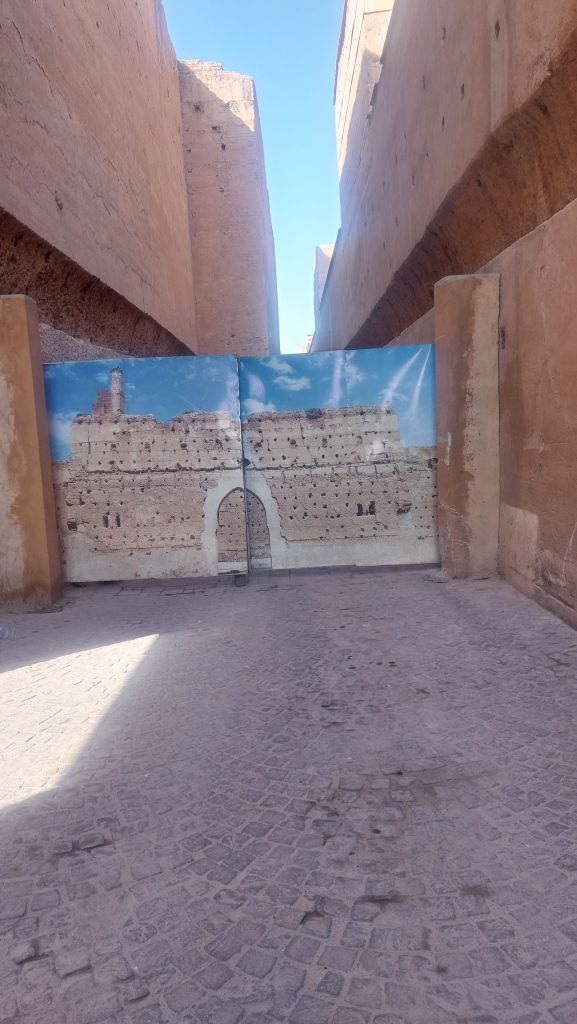
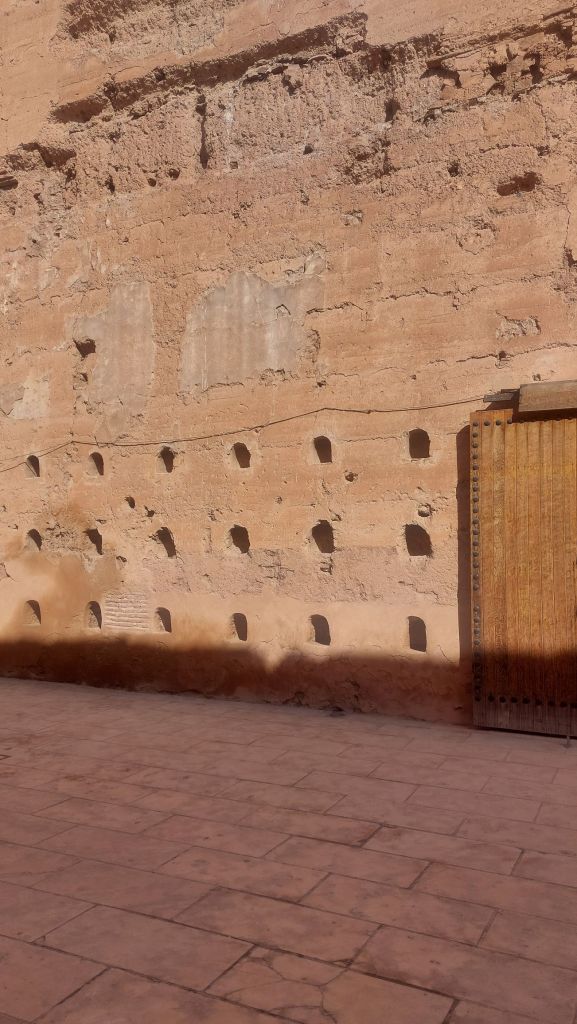
The palace was badly damaged during the earthquake in 2023, and renovations have taken place to repair the cracks in the walls.
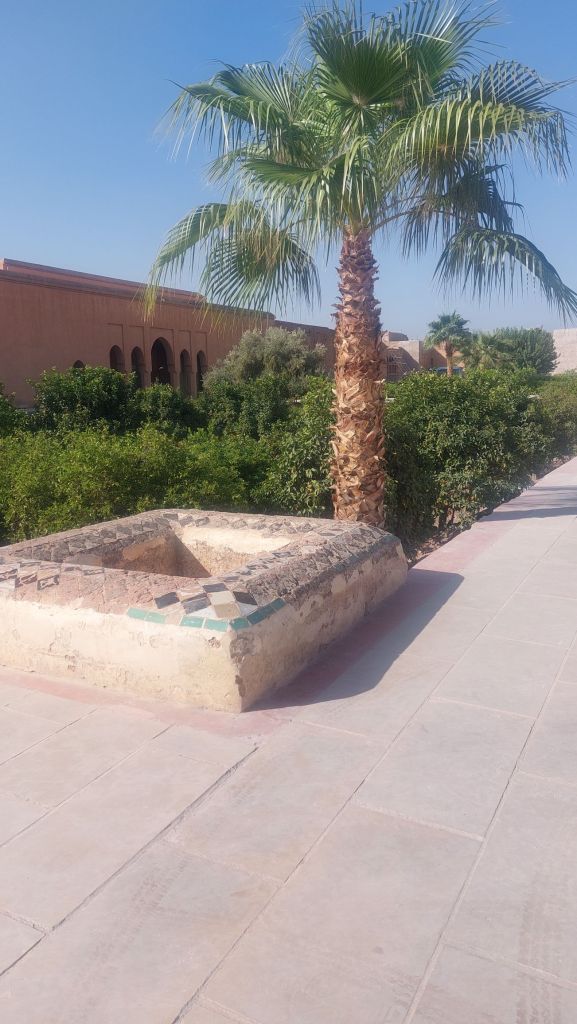
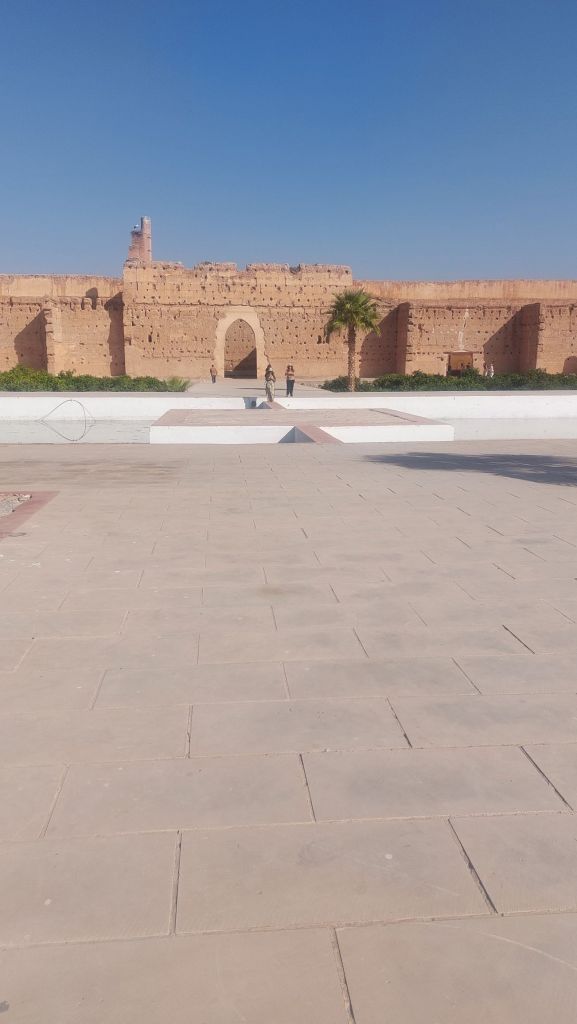
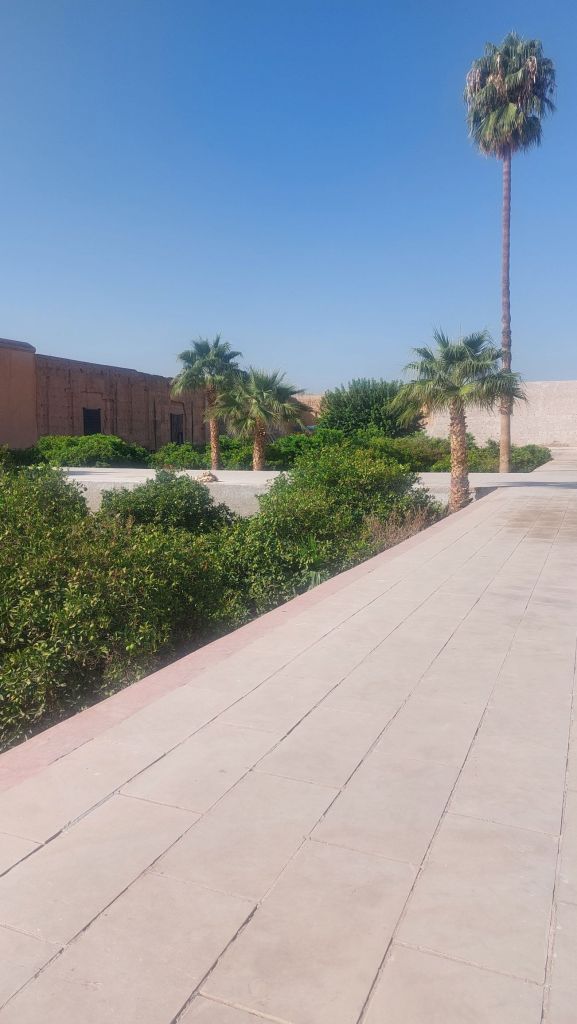
El Badi Palace is situated in the Kasbah district of Marrakech and a popular tourist attraction.
The courtyards are impressive, and the nesting storks on the towers give it a magical feel.
Images by Freebird Tracey.
You get a sense of the grandeur of the Saadian dynasty, and there’s a feeling of peace and tranquillity within the walls of the once opulent palace.
El Badi Palace is open every day from 9.00am to 5.00pm and costs 100 dirhams to enter.
Images by Freebird Tracey.
For more information, contact me via the email address below;
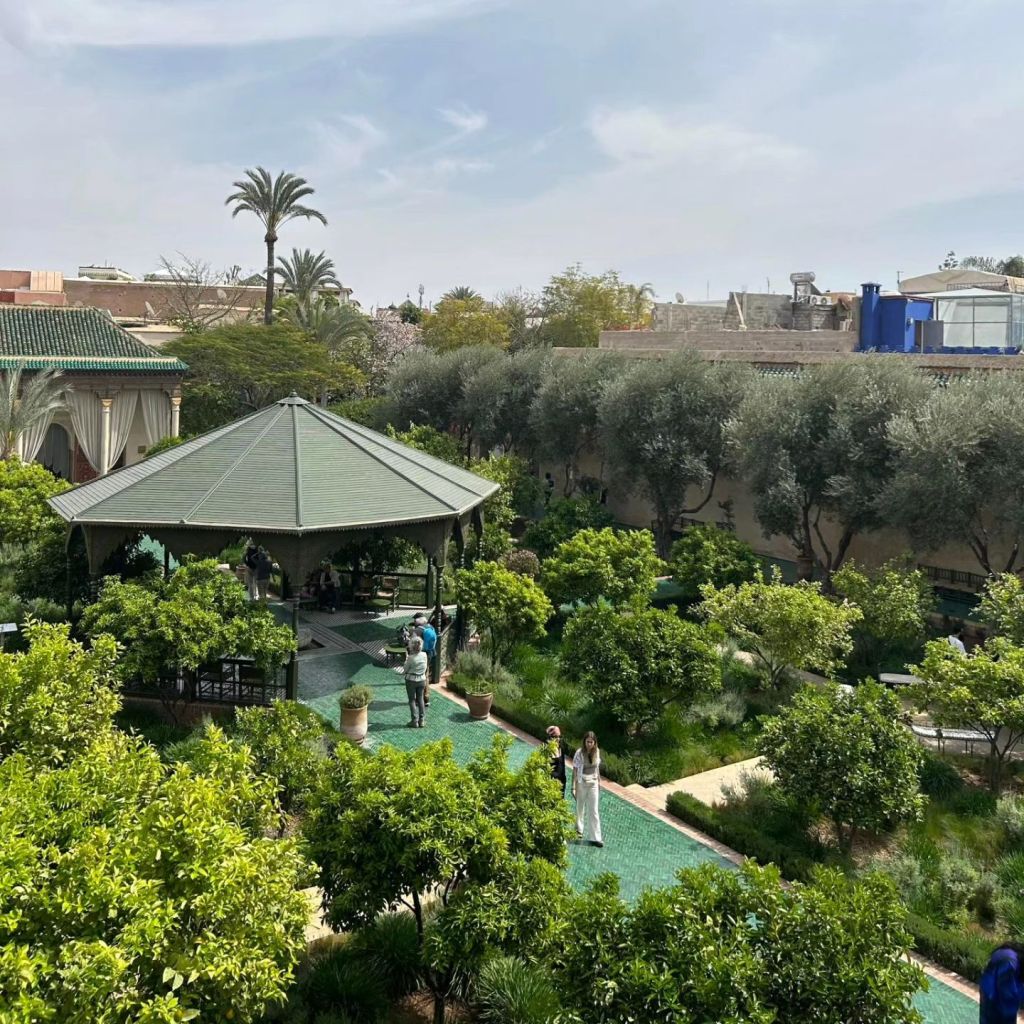
It’s a hidden gem, a peaceful retreat from the madness of the souks, and Jamaa el Fna.
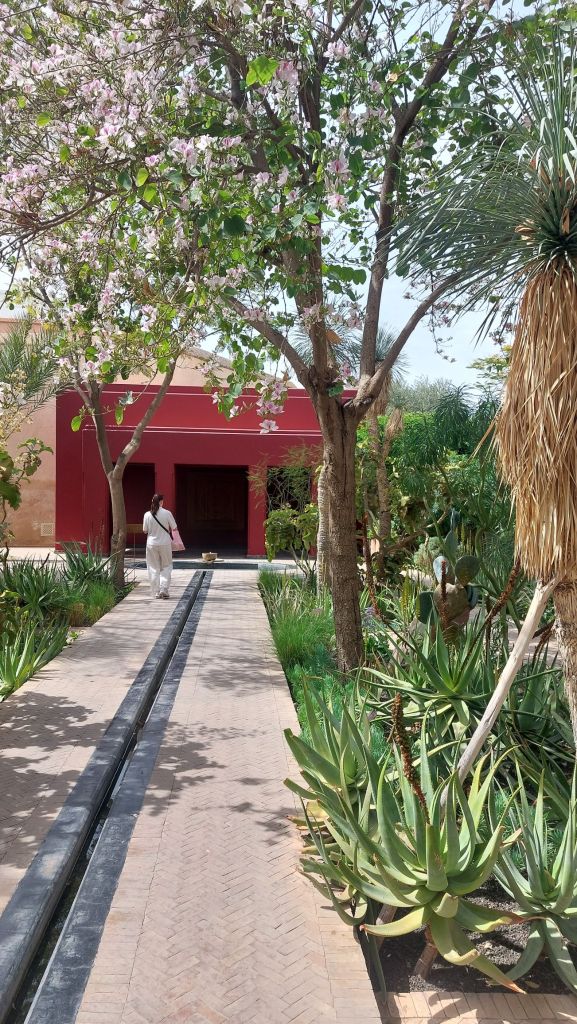
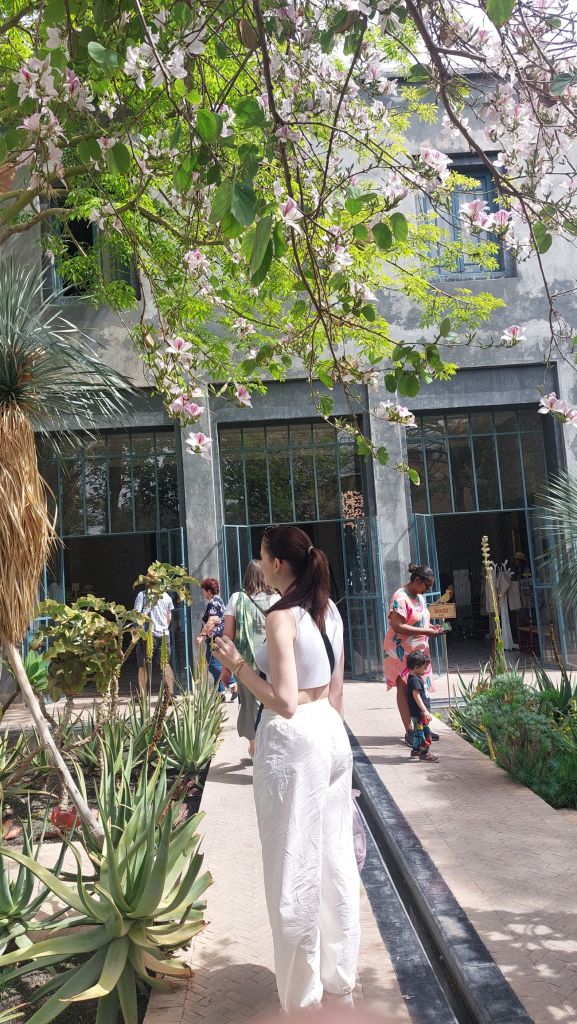
It is a little oasis with exotic plants and flowers where you can sit and enjoy the calm and beautiful surroundings.
There is a beautifully painted pergoda in the centre.
It comprises of two large gardens and one of the highest towers in the medina.
There is a museum, boutique, and two coffee shops on site also.
Le Jardin Secret dates back 400 years ago to the Saadian dynasty and was left to decay before being discovered and renovated in the nineteenth century.
It is the perfect example of Islamic art and architecture, and you can read all about its history inside the museum.
The beautiful gardens of Le Jardin Secret
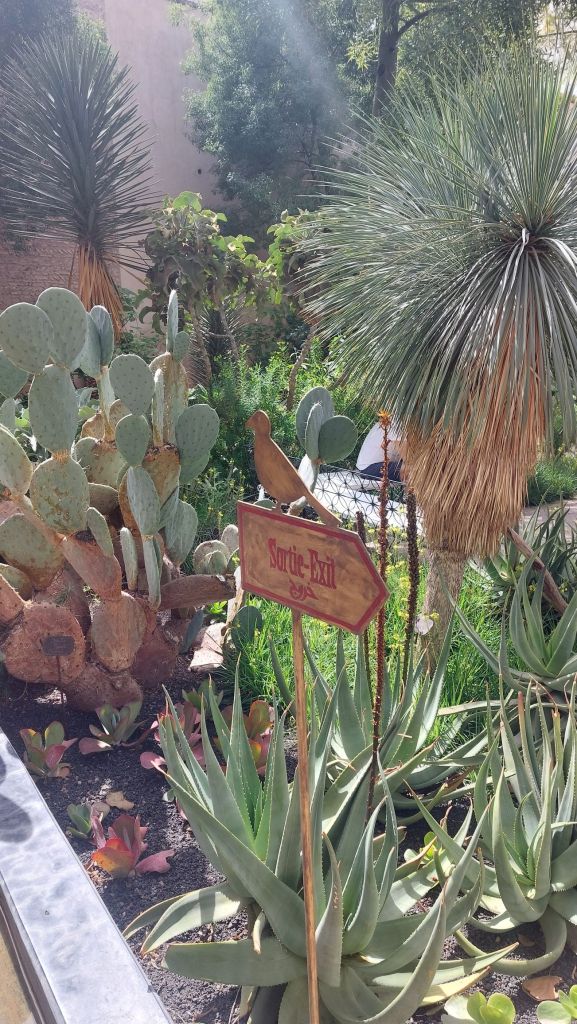
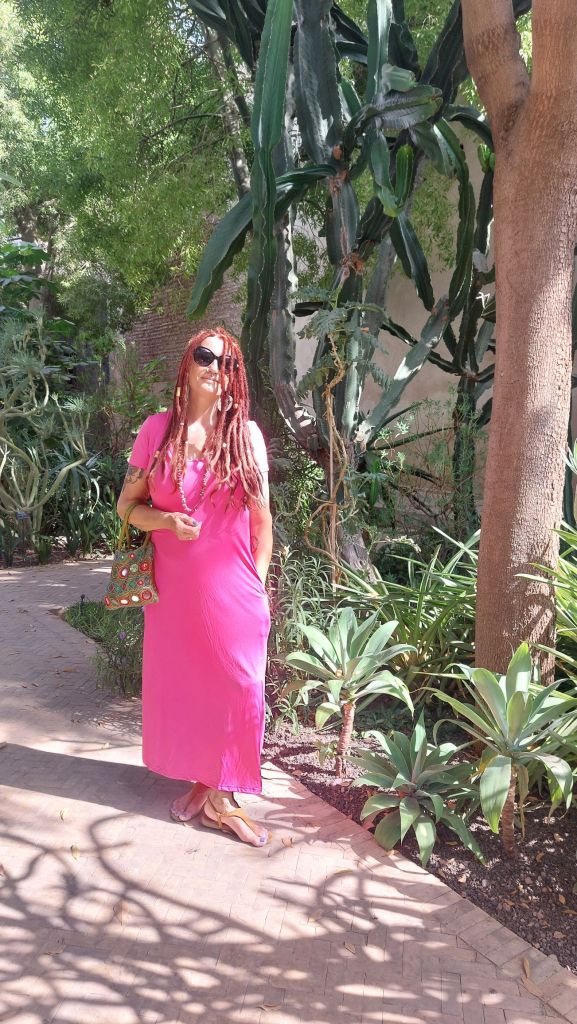
The gardens are simply beautiful with Cacti, palm trees, and other floral plants and shrubs.
The sound of birdsong and toads in the little pond feels like a world away from outside the walls.
As you wander around the tranquil gardens, you forget you are inside the busy medina, dodging motorcycles and donkey carts.
There are plenty of benches dotted around the gardens to sit peacefully and enjoy the tranquillity and beauty surrounding you.
Images by Freebird Tracey.
Le Jardin Secret is located at,
121 Rue Mouassine
Marrakech 40030 Morocco.
Opening times vary depending on the time of the year.
It costs 100 dirhams to enter.
It is wheelchair user-friendly.
The cafe has a nice selection of sandwiches, pizzas, and salads with fruit and vegetable smoothies, hot and cold drinks, and homemade cakes.
Bahia Palace is a stunning, 19th century palace in Marrakesh.
Image by Freebird Tracey.
It’s definitely a must-see if you’re visiting the city, and it’s quite spectacular.
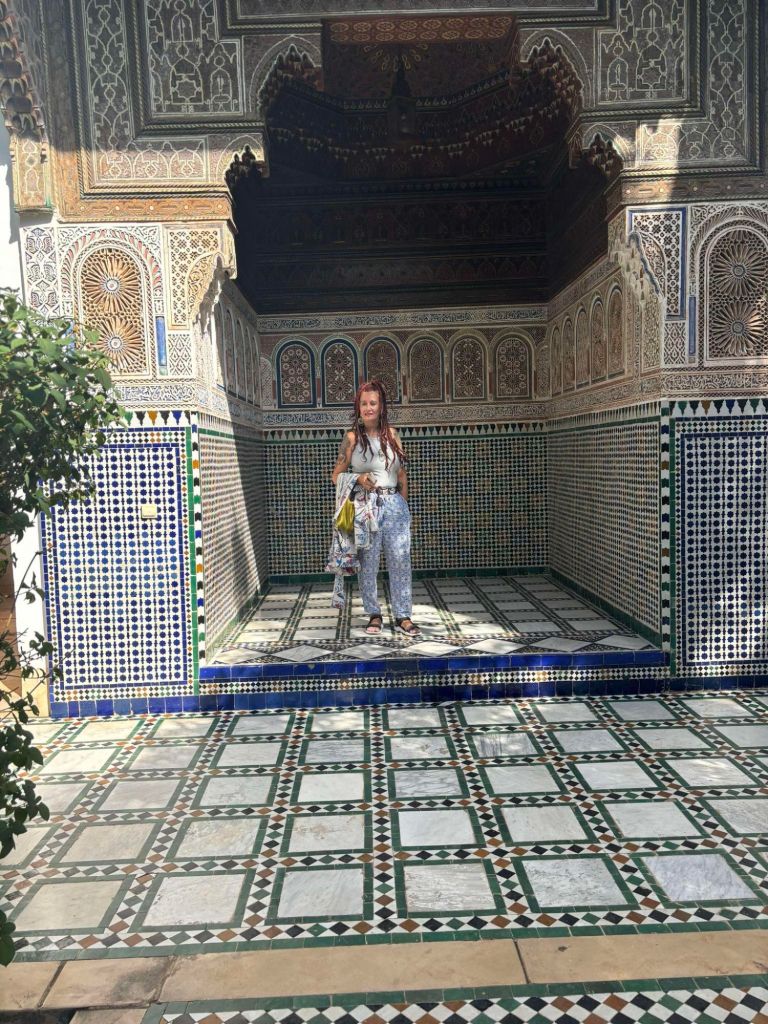
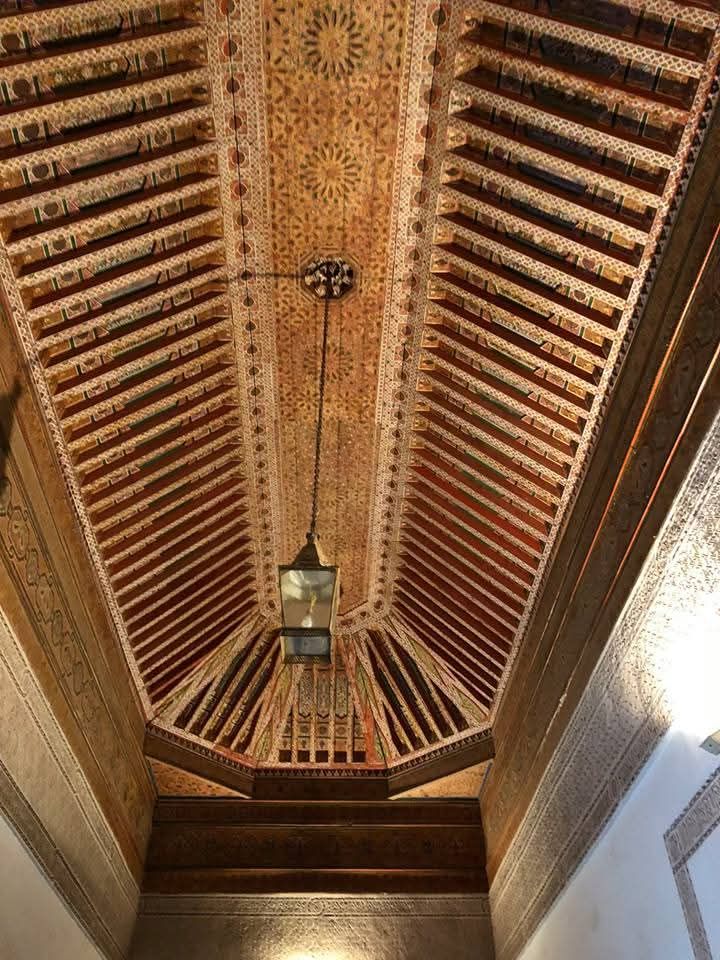
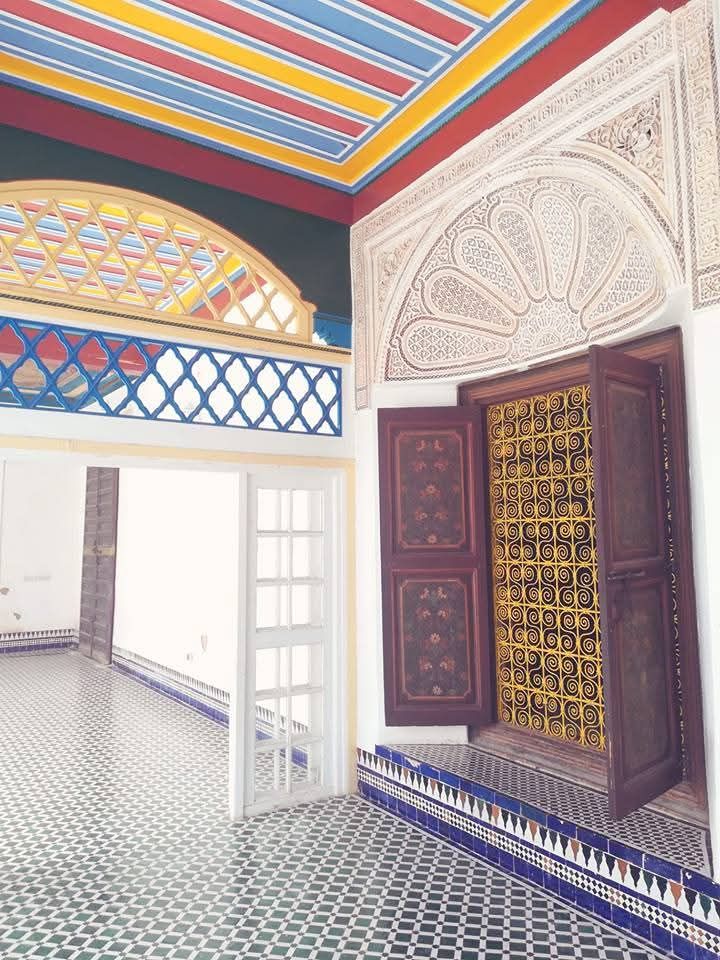
The rooms are decorated with stuccos, paintings, and mosaics to capture the essence of Islamic architecture.
The word Bahia means ‘brilliance’ in Arabic, reflecting the splendour of Islamic art and architecture.
It is necessary to book tickets prior to visiting the palace as queues can be extremely long.
They cost 70 dirhams each, and the palace is open from 8.00am-5.00pm daily.
The courtyard is stunning, and all the rooms open out onto it.
It is rather grand and very spacious with a fountain in the centre and intricate tile work typical of Morroccan culture.
There is also a 2-acre garden surrounding the palace.
There are orange trees lining the route up to the entrance of the palace.
When Morocco gained independence from France in 1956, the Bahia palace was used as a royal residence. This was until King Hassan II transferred it to the custody of the Moroccan Ministry of Culture.
The building then became a cultural icon and tourist attraction.
Bahia Palace is one of the most visited tourist attractions in Marrakech.
It is best to arrive as close to opening time as possible to avoid the crowds.
That way, you can spend time reading about the history of the palace and enjoying the experience.
I would recommend visiting Bahia Palace.
It’s gives you a good understanding of Islamic culture and the fine craftsmanship that defines it.
If you enjoy looking at Islamic architecture, you could also visit Badi Palace in the Kasbah area of the city.
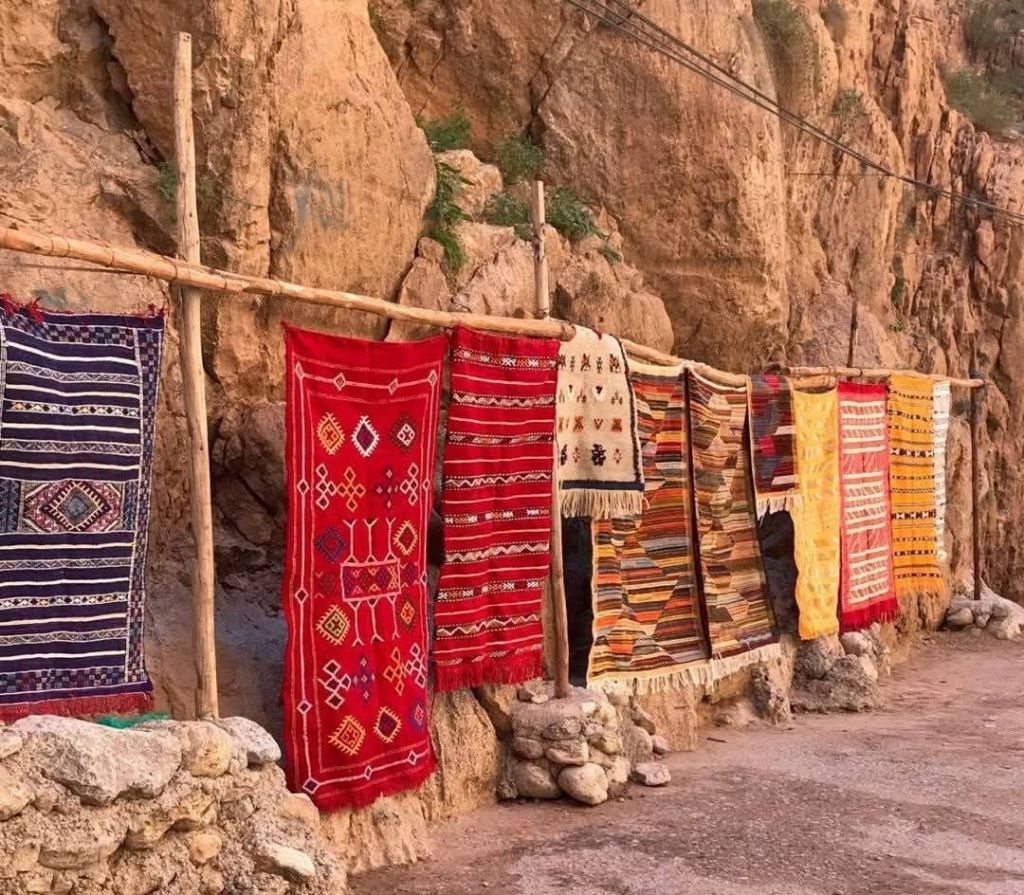
Berber rugs are handmade by the indigenous Amazigh people of Morocco.
They are made from the wool of sheep in the high Atlas Mountains.
Each type of rug tends to vary in thickness depending on which tribe has made it, so that they are suitable for the environment where they are used.
For example, Kilim Berber rugs have no pile and are relatively fine in texture.
They are handcrafted using techniques passed down through generations using natural materials renowned for their durability and luxurious feel.
Hand-knotting is a long and laborious process.
To create a single rug takes about one to two months, with four weavers working on a rug at a time.
Here are the steps taken to make a beautiful Berber rug.
1. Shearing the Sheep
Shearing the sheep is the first step in making a Berber rug. This is done by hand, using a special shearing knife. The sheep are first restrained, and then the knife is used to remove the wool from their body in one long strip. The wool is then sorted and cleaned.
It is usually the job of the men to shear the sheep, taking care not to injure them or spread infection.
The women are responsible for washing the sheared wool.
2. Carding Carding is the process of aligning the wool fibers so the weavers can spin them into yarn. To card the wool, the fibres are first combed in one direction, and then the wool is brushed in the opposite direction. This helps to loosen the fibers and align them in the same direction. Once the fibers are aligned, the weavers can then spin them into yarn. Carding is an essential step in making a Berber rug, as it helps to ensure that the rug is strong and durable. The process of carding also helps to give the rug its unique texture.
The women are often responsible for this process.
3. Spinning into Yarn
To spin the wool into yarn, Amazigh women use a drop spindle.
This simple tool consists of a shaft with a weight at the bottom. The wool is attached to the shaft, and then the shaft is twirled between the woman’s hands. As the shaft is twirled, the wool is wrapped around it, creating the yarn.
4. Weaving the Berber Rug
The weavers use a technique called continuous knotting to create intricate patterns.
This method of knotting allows the weaver to create a rug that is incredibly durable and will last many years. The process begins with the weaver tying knots in the woollen yarn.
The yarn is then dyed using natural dyes from plants, spices, and fruits, which give the rugs their characteristic colours.
Once the yarn is dyed, the weaver begins weaving it into the rug using a loom.
The loom is a wooden frame that the weaver uses to create the rug’s design.
The weaver ties the yarn around the looms warp threads, which are the vertical threads that run through the loom.
The weaver then weaves the weft threads, which are the horizontal threads, over and under the warp threads.
The weaver can create various patterns by changing the direction of the weft threads.
Once the rug is complete, the weaver cuts the rug from the loom and ties the ends of the rug together. The rug is then completed.
Berber rugs are beautiful and give a home a wonderful boho vibe.
It’s important when visiting Marrakech to make sure you’re purchasing a genuine Berber rug.
There are a few scams, so be aware before you get whisked away to a shop by a friendly local.
Les Nomads de Marrakech has a great reputation and can ship rugs back home for you.
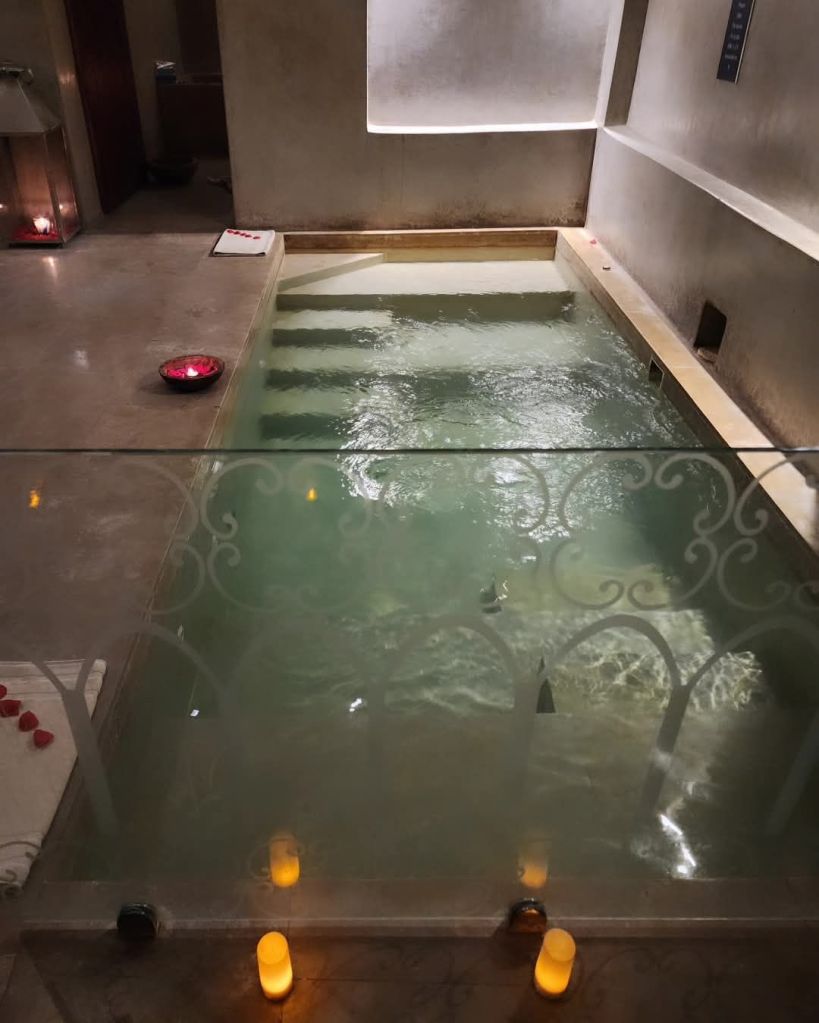
One thing that is central to Morroccon culture is the Hammam.
A Hammam is similar to a Roman bath and dates back centuries in morrocco.
It was a ritualistic cleansing that people did before prayers, and many Hammams can be found near a mosque.
Before homes had plumbing, a Hammam was a place local people could come to get cleansed.
Seperated by gender, they were a space for people to socialise, relax, and detoxify.
During a treatment, morroccan black soap is used to scrub the body.
It is a grainy soap made from olive oil and macerated olives, perfect for exfoliating the dead skin cells.
The scrubbing is quite vigorous.
This is followed by buckets of water being thrown over you to wash off the black soap.
A clay called Rassoul clay from the Atlas mountains is used to cover the body as it’s rich in minerals like silica,magnesium, and calcium.
After this, your whole body is lathered thoroughly, including your hair with a gentler soap or gel.
The next treatment is an all-over massage using exquisite oils like rose oil or argan oil..
The treatment always begins in a dry steam room.
Relaxing in heat opens the pores and prepares the body for the scrubbing.
Once the treatment is finished, you can relax in a separate area with mint tea and morroccan pastries..
The fragrance of incense wafting around the room adds to the ambience.
There are two types of Hammam in Marrakesh.
The public or private hammam.
The public Hammam is a true taste of Morroccan life, with many local people bathing together and chatting in their native language.
In a public Hammam, you have to take your own soap, towel, and oils in.
These are much less expensive.
The private Hammams provide you with everything you need, including disposable underwear, a bathrobe, and sandles.
Treatment options vary, including the length of the treatment and the type of massage and oils you prefer.
You can relax for as long as you want to after the treatment has finished.
The underwear for women is very flimsy, and some women ask for the male underwear instead.
Nubies can feel slightly vulnerable or uncomfortable being so exposed with just a disposable thong hiding your modesty.
The rooms are dimly lit, and the women known as Kassalas working in the hammam are very professional.
Most women do get over their initial shyness pretty quickly.
Hammam Mouassine is the oldest Hammam in Marrakesh. It opened in 1562 and can be found by the Mouassine fountain, close to the secret garden.
Many riads have a Hammam room and offer this service.
Other popular hammams are,
. Hammam de la rose.
. Mamounia Hamman..
. Les Bains Ziani.
Palm oil is often used to wash people’s hair, so if you don’t agree with the use of it, check beforehand.
Experiencing a traditional Hammam is a welcome break from the chaotic souks and Jamaa El Fna.
It’s a relief from the baking heat of the morroccan sun and a chance to slow down the manic pace for an hour or so.
Many tourists feel unsure about wearing virtually nothing in front of strangers, but this is an ancient ritual that has been part of Morroccan culture for centuries.
Visitors to Marrakech have said that they experienced the most invigorating and relaxing time in a hammam and would definitely do it again.
I would recommend paying a little bit more for a private Hammam if it’s your first time.
However, if you want a taste of authentic Marrakechi life, go for a public hammam.
You can buy Morroccan black soap and other toiletries you’ll need inside the souks, near the spice square.
You can book a Hammam through Get Your Guide or Viator.
Riads organise their own..
Don’t forget a towel, bathrobe and fresh underwear..
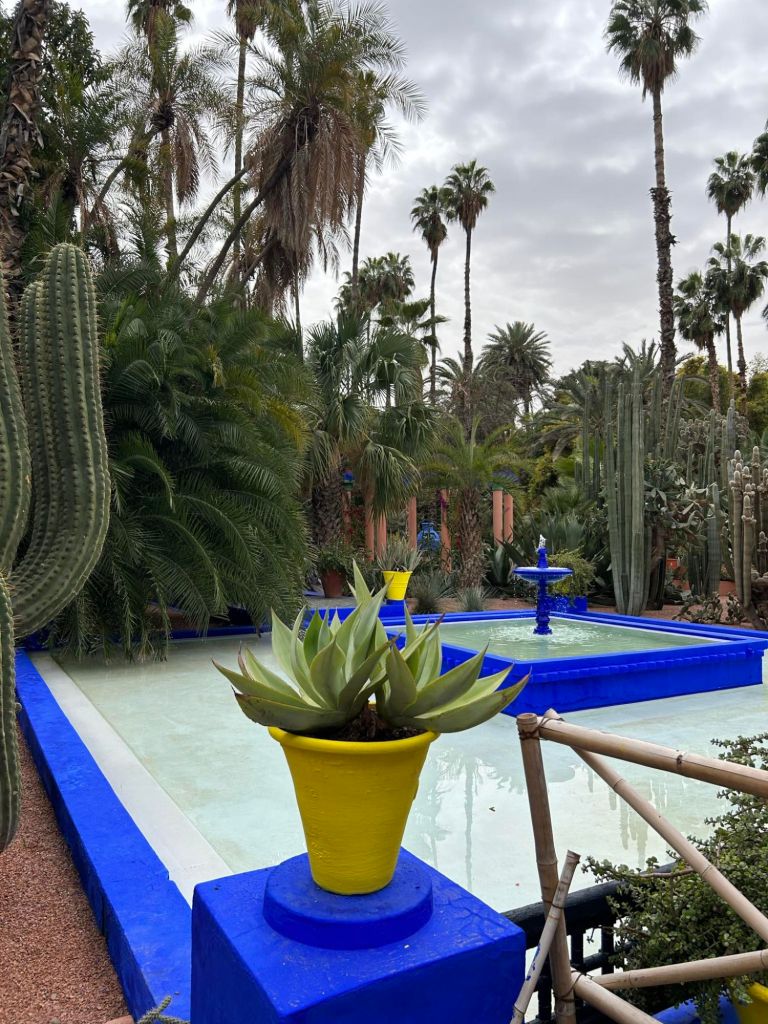
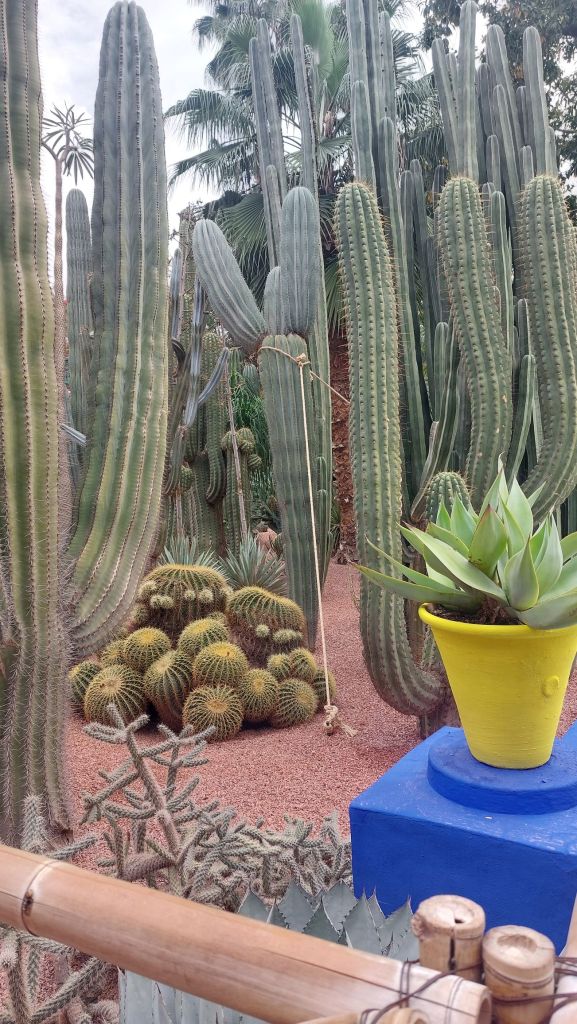
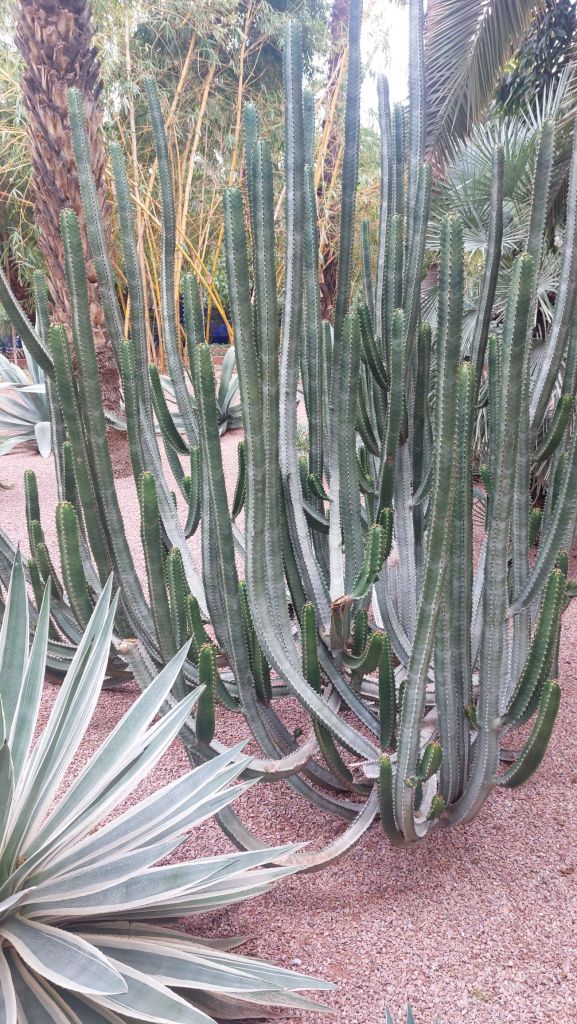
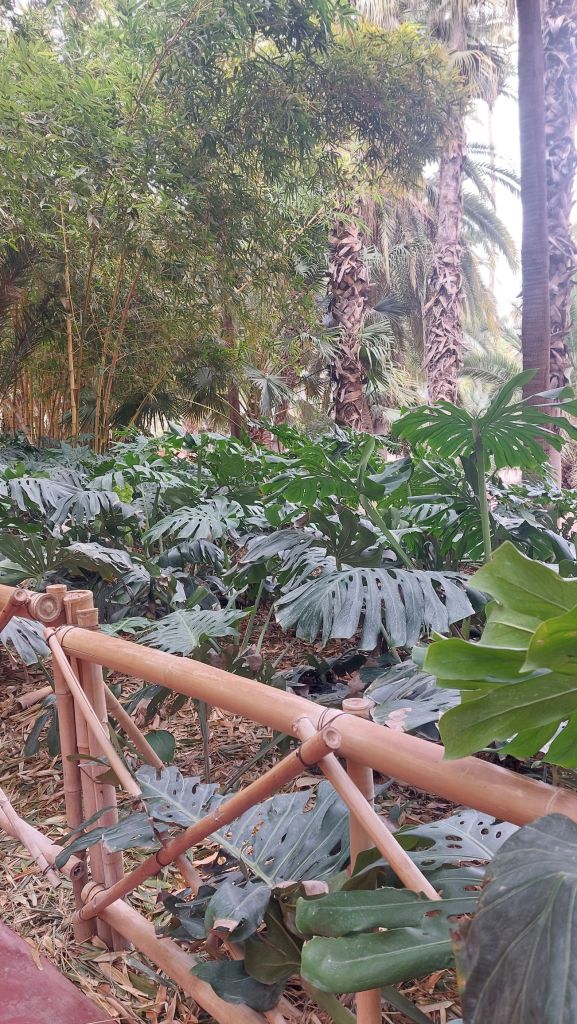
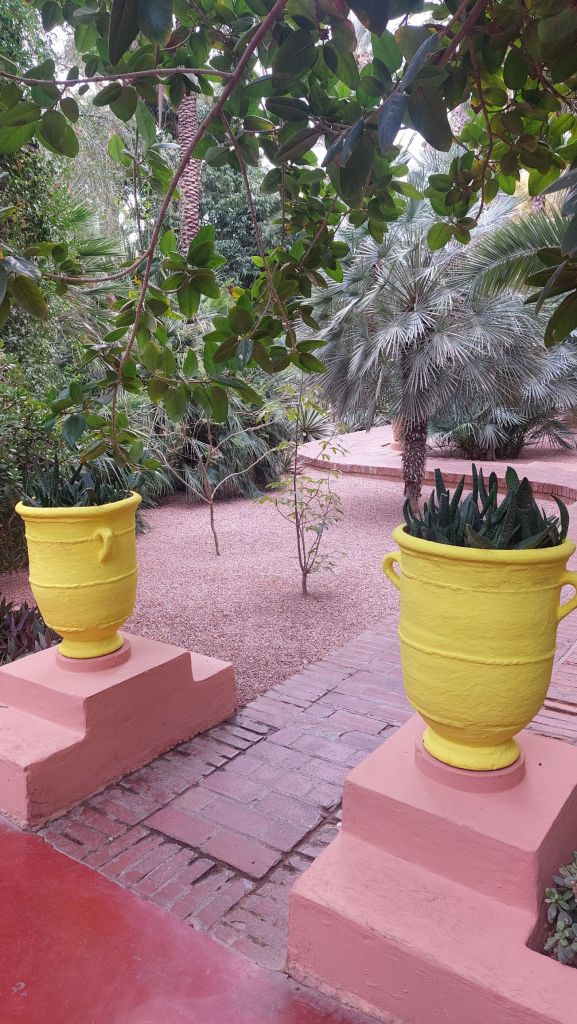
Inside the beautiful Majorelle Garden, there are over 300 stunning plant species from all over the world.
Mexican agave, Chinese windmill palms, African date palms, coconut, and banana trees amongst a labyrinth of pathways.
The incredibly tall bamboo and exotic Cacti species coexist together to create one of the most beautiful gardens in marrakech.
Two acres of botanical landscape gardens.
Originally designed by Jean Majorelle in the 1920s.
After he was forced to abandon his home because of divorce, the fashion designer Yves Saint Laurent took it over with his partner Pierre Berge to save it from hotel development in 1980.
They restored it and made it their home, bringing the garden back to it’s former glory.
For many years the Jardin Majorelle has provided me with an endless source of inspiration, and I have often dreamt of its unique colours – Yves Saint Laurent
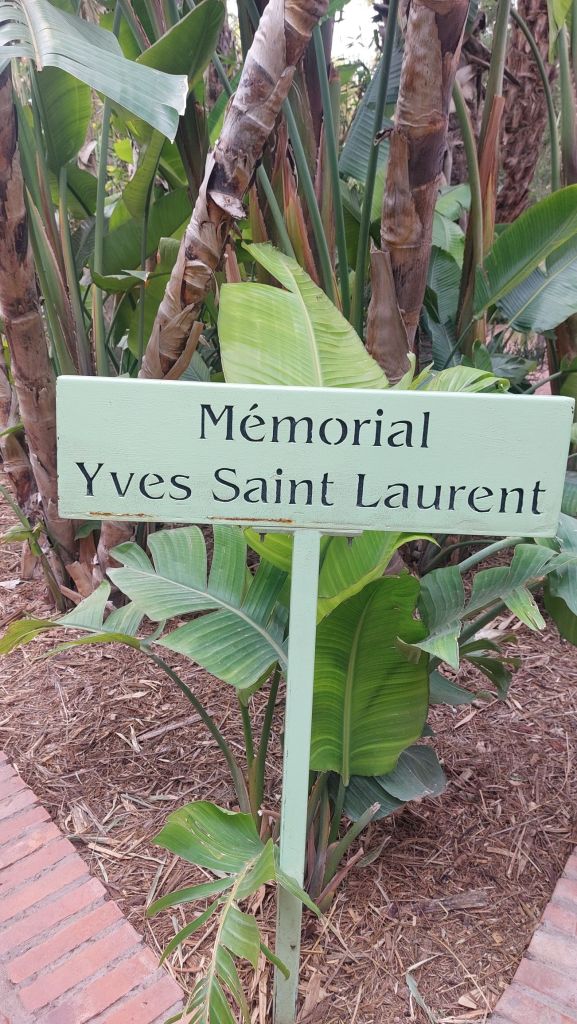
There is a memorial to Yves Saint Laurent and his partner Pierre Berge in the garden.
Majorelle Garden attracts over 900,000 visitors each year, making it a less than tranquil place to sit and reflect.
I would have loved to have sat in quiet contemplation amongst the lush green vegetation, admiring the pop of colour from the bougainvillea, but I was never alone for very long.
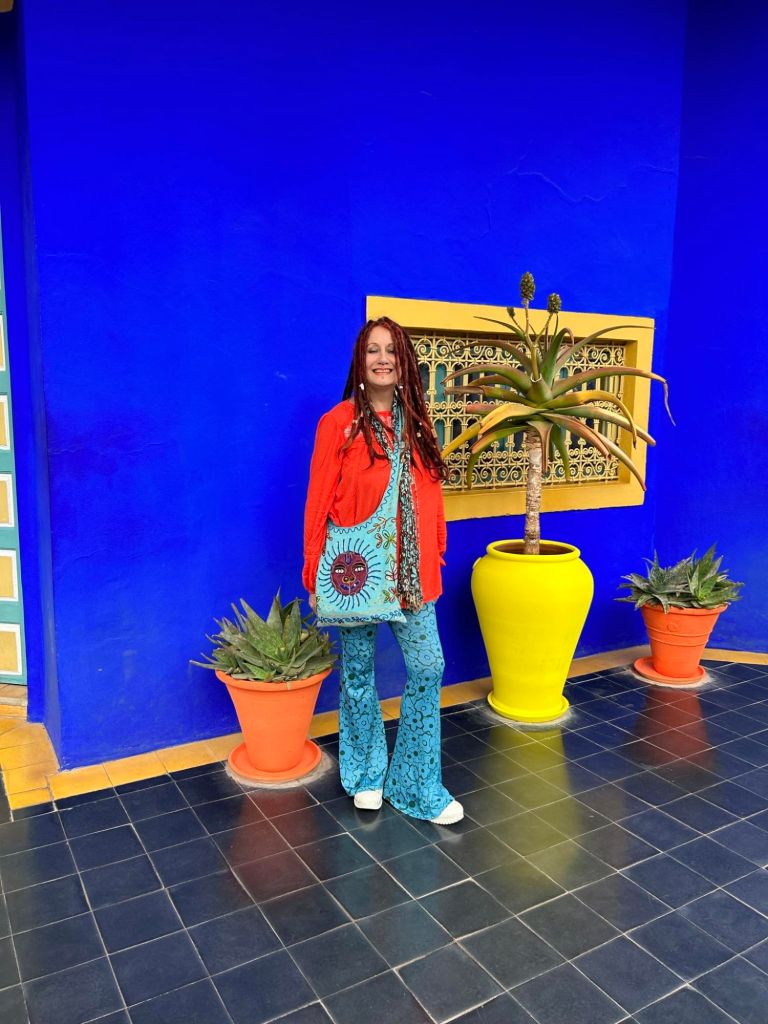
The attractive art deco pavilion with its striking colours of blue and yellow is a popular place for visitors to get their photographs taken.
The colourful pavilion The exotic blue and Islamic green tiles.
There is also a cafe and shop.
I purchased some postcards of Yves Saint Laurents’ yearly ‘Love’ drawings.
I didn’t go to the cafe because there were too many people and the queues were really long.
Yves Saint Laurent early ‘Love’ drawings
The gardens open daily at 8.00am and close at 6.00pm, and the last entry is at 5.30pm.
I would suggest getting there before 10.00 am, preferably at opening time if you want a more peaceful experience.
Luckily, I had prebooked online, so I didn’t have to queue.
I’m thankful that I did because the queues were really long, and it was a very hot day for standing around without any shade.
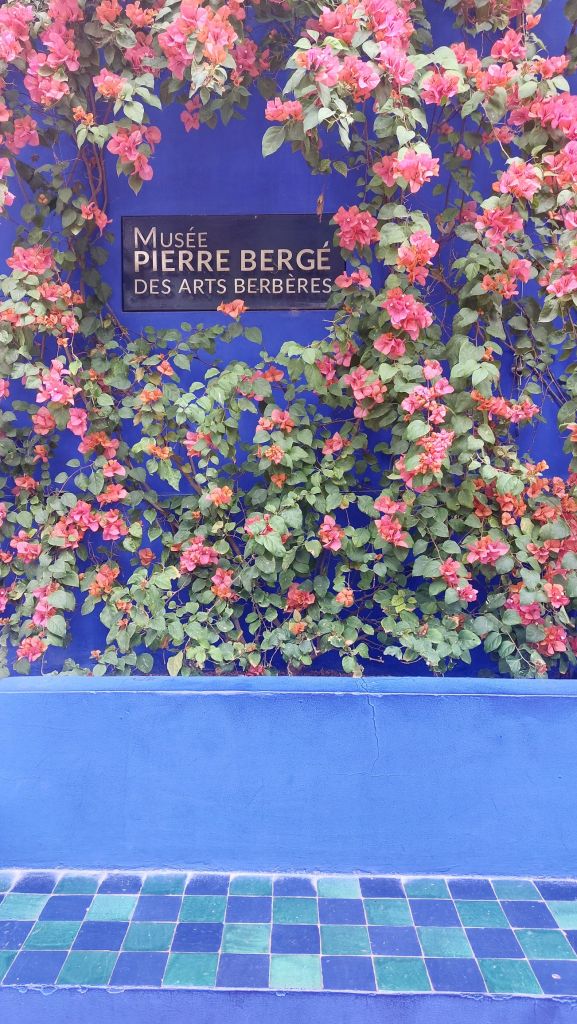
The YSL museum is also part of the visit, along with the Pierre Berge Museum of Berber Arts. It’s worth a look around if you are interested in Berber history.
Opening times are from 9.00 am until 5.30 pm with the last entry at 5.00pm.
You can’t take photographs inside the museum.
The price varies depending on where you purchase tickets from but you can expect to pay approximately €24 to visit everything.
There are plenty of nice restaurants outside the gardens, and I decided to get something to eat and drink in one of those. It was much quieter.
I recommend My Kawa for a nice salad.
There are a few shops across the road from Majorelle Garden selling souvenirs and a few attractive boutiques.
Shopping around Majorelle Garden
Stuff was a bit pricey, but I picked up some nice jasmine oil at a fairly decent price.
Overall, Majorelle Garden was absolutely beautiful. It is colourful and lush with several spots to sit and absorb the exotic sights and sounds.
However, it is incredibly busy with tourists, which detracts from the calm sense of serenity you’d expect to get from such a delightful setting.
It was worth visiting for the wonderful trees and plants and to get some great photos, but unless you go very early during the quiet season, you won’t get a peaceful, relaxing vibe..
Majorelle Garden is located to the north west of Marrakech medina.
Camels, sunsets, and a fire show that left me speechless.
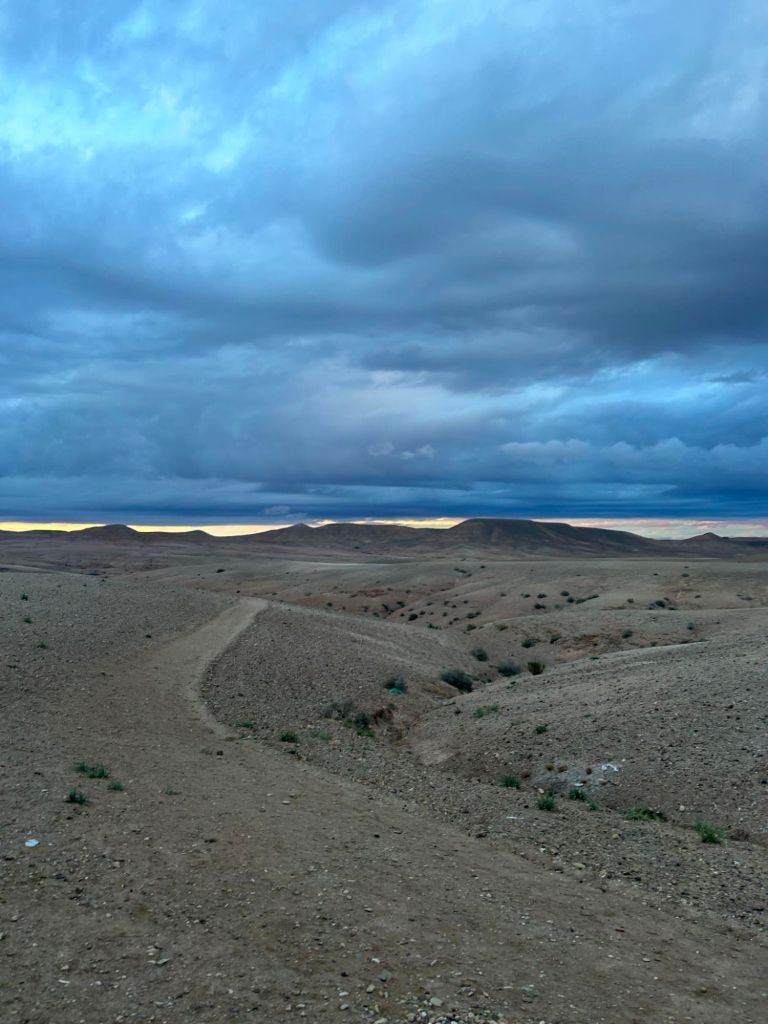
Stunning scenery at Agafay desert
We met our tour guide near Jamaa El Fna at 6.00pm and boarded our air-conditioned mini bus.
The journey took around 45 minutes in total even though we seemed to be driving across the gravelly desert for what seemed like ages.
There were camels with their young calfs dotted about, looking fairly nonplussed at the convoy of tourists driving past slowly.
On arrival, we could hear music playing from our camp a short distance away from where we were parked.
Our guide led us to tables overlooking the vast expansive desert. The panoramic view was absolutely breathtaking..
We could see for miles.
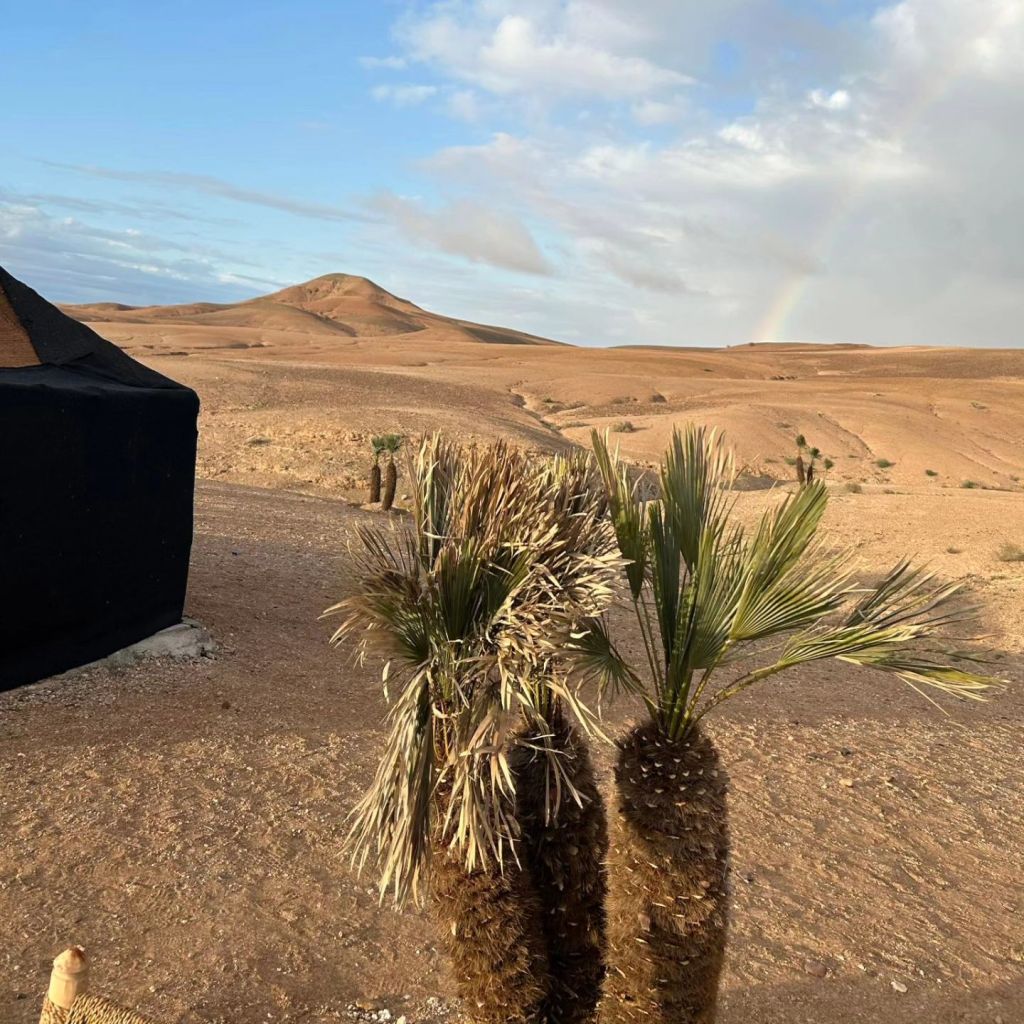
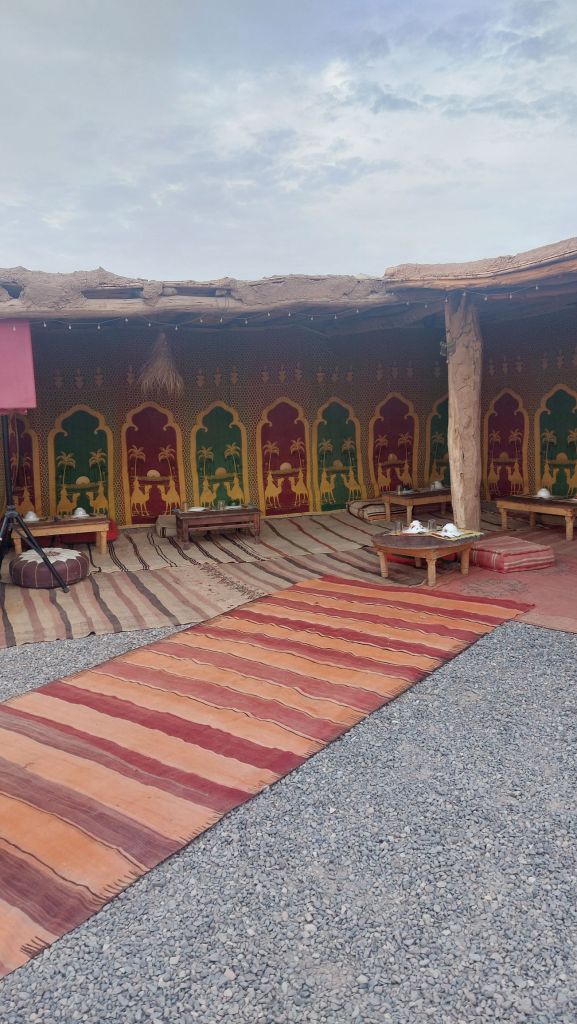
Images of our camp at Agafay desert
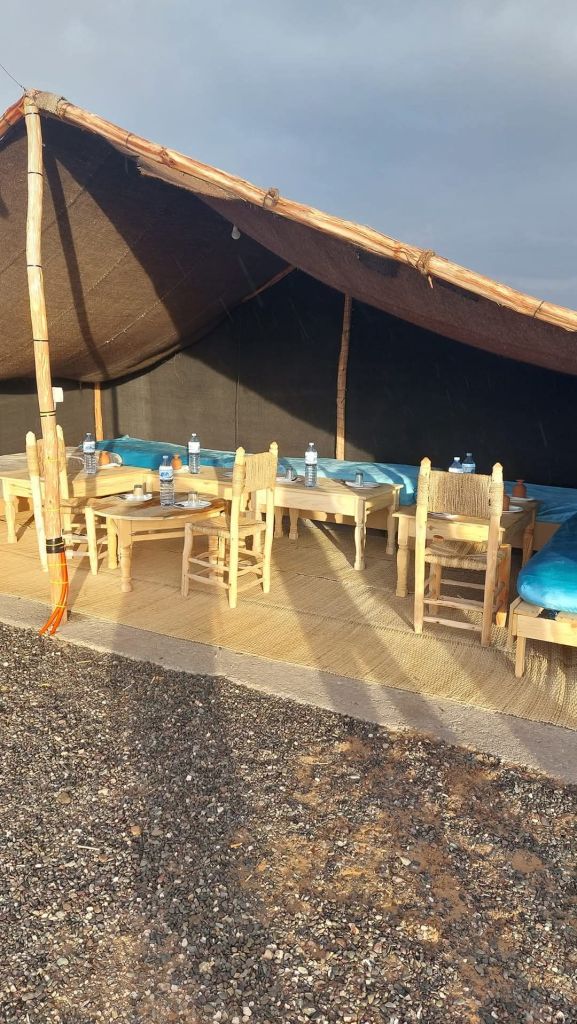
Our camp was really pretty, with colourful seats and rugs scattered everywhere.
There was a Berber tent for us to shelter in, and we could also eat inside there if we wanted to since it was slightly windy.
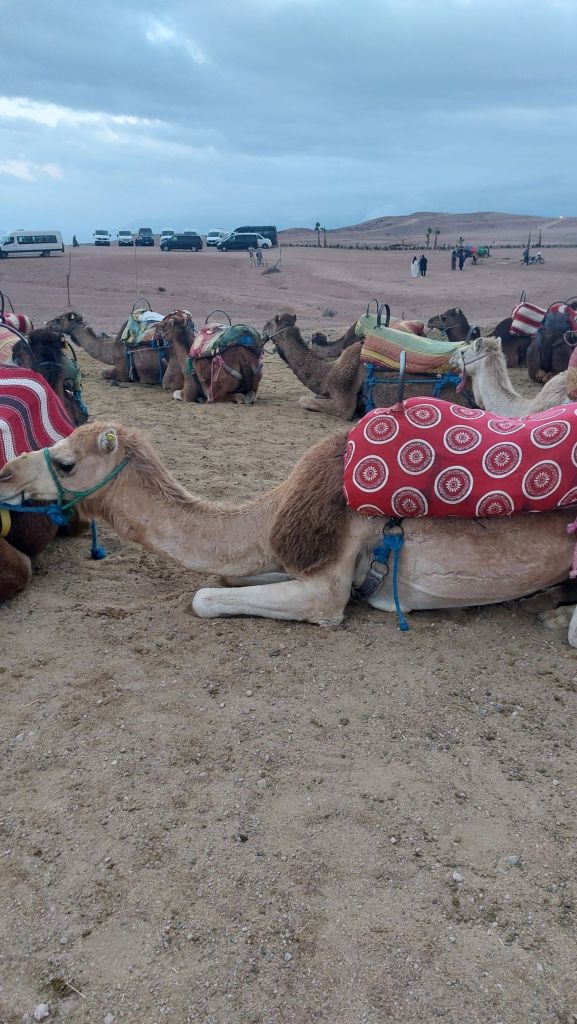
After a hot, sweet mint tea, we all took the optional camel ride..
All aboard the camels
It was rather a scary experience because my camel came untied and got a bit frisky with the one in front.
After he was reattached, we continued a bit further for a short while before turning around and heading back to disembark.
That was also something of a nerve-wracking experience.
I wobbled about on my camels back as he dropped down to the ground in the most undignified manner.
I probably wouldn’t do that part of the trip again, but everyone else seemed to really enjoy it.
Immediately after we got off the camels, our meal was presented to us.
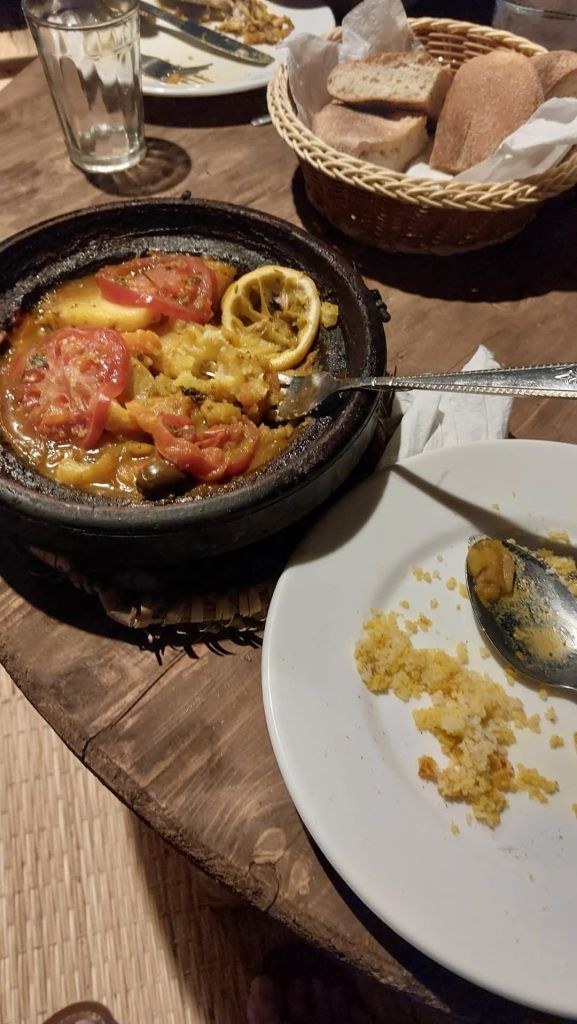
It was a three course meal consisting of vegetable soup with traditional Morroccan bread, a delicious tagine followed by cakes and fruit for dessert.
Fresh food cooked beautifully in Agafay desert.
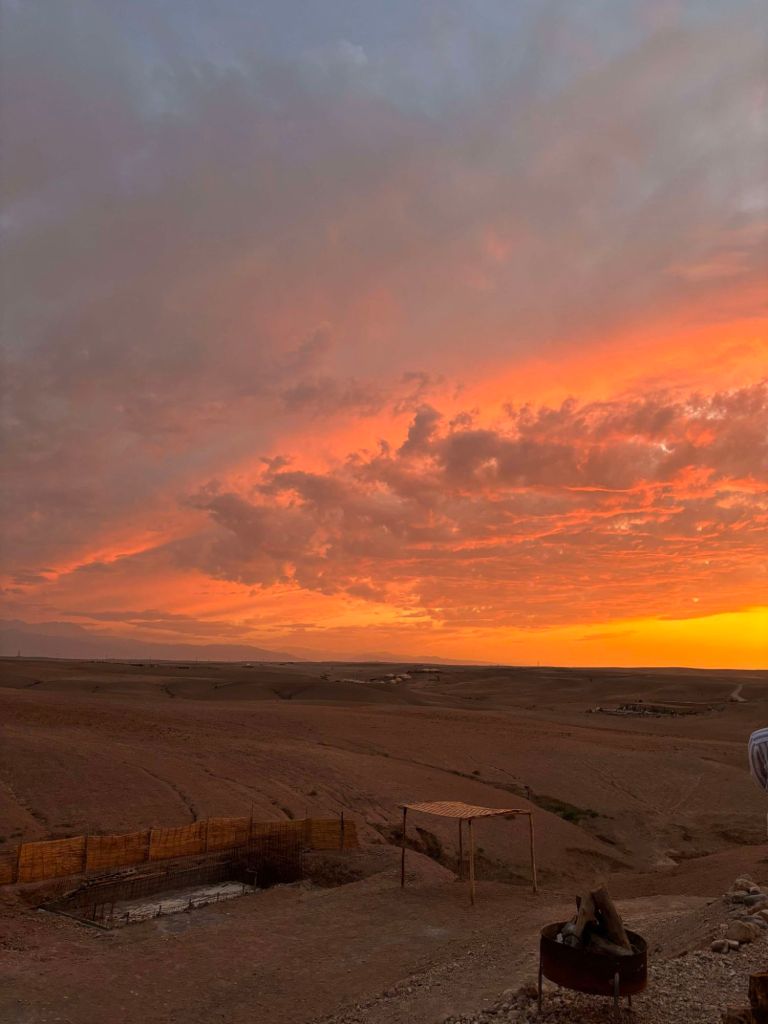
We ate watching the beautiful golden sun go down. The sky was fiery red.
It was absolutely stunning.
I can honestly say it was one of the most beautiful sunsets I have ever seen.
A spectacular sunset
We ate our meal, with traditional musicians playing their instruments around the tables.
It was very entertaining.
Traditional musicians entertaining visitors.
As soon as dinner was over, more merriment began..
The dubious tourists were pulled into a circle and were soon snaking around the campfires and attempting to mimic the traditional Berber dancing.
The atmosphere was incredible.
Everyone was out of their seats, clapping and enjoying themselves.
The stars came out, and the campfires roared.
The temperature had cooled down, but we were soon nice and warm again.
After the lively display of Berber dancing had finished, we all sat down to catch our breath once more.
The air was full of laughter, and spirits were high.
Soon, the grand finale was about to begin..
A spectacular light show in the middle of the desert.
It was completely dark by now, and the visual effects were totally hypnotising.
Everyone looked on in awe at the amazing pyrotechnic display.
It was the highlight of the whole evening.
We were completely blown away, watching the flames leaping about against the back drop of the vast dark desert.
I certainly wasn’t expecting anything quite as fantastic as that!
The fire display brought the evening in Agafay desert to a close.
It had been a wonderful evening.
We had tasty food, the entertainment was a lot of fun, the fire display was incredible, and the camel ride was rather… interesting!
Everyone was able to participate in what turned out to be a very enjoyable time.
We were taken back to our meeting point near Jamaa El Fna.
The cost of the excursion was well worth the money, and I would highly recommend it.
I booked my trip through Get Your Guide.
I believe there are a few different desert camps.
Some have better facilities than others, and some include a different itinerary. The cost varies, so do check what activities you are getting before you book.
Hotels and riads can also organise the trip for you, if you prefer, although you may pay slightly more.
It is also possible to book an overnight stay at Agafay luxury camp.
There is a swimming pool and other amenities with a more luxurious touch.
Check Booking.com or look for reputable online sites for details about staying there.
There are a few things to consider if you plan to visit Agafay desert camp..
Take a warm sweater or blanket, the evenings drop cooler, and you may find the wind is a little bit blustery in some camps.
There are plenty of toilet facilities but take some tissue with you in case there isn’t any. You may also want to take some hand sanitiser.
There are vegetarian options available. I had vegetable tagine, and the other people in my group had chicken.
The guides are excellent at their job.
I have been several times and they always find us at the end of the evening. No one gets left behind.
Some tours visit an Argan Cooperative on the way to the desert.
I really enjoyed this and purchased some argan oil for my skin. It was a decent quality oil and lasted me ages.
The tour usually finishes around 9.30-10.00.
I went in March and September and enjoyed it both times.
Despite it being Ramadan in March, I was impressed how well I was looked after.
I think I may take a journey to the Sahara desert next.











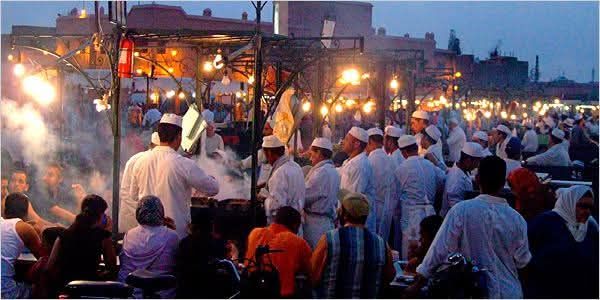
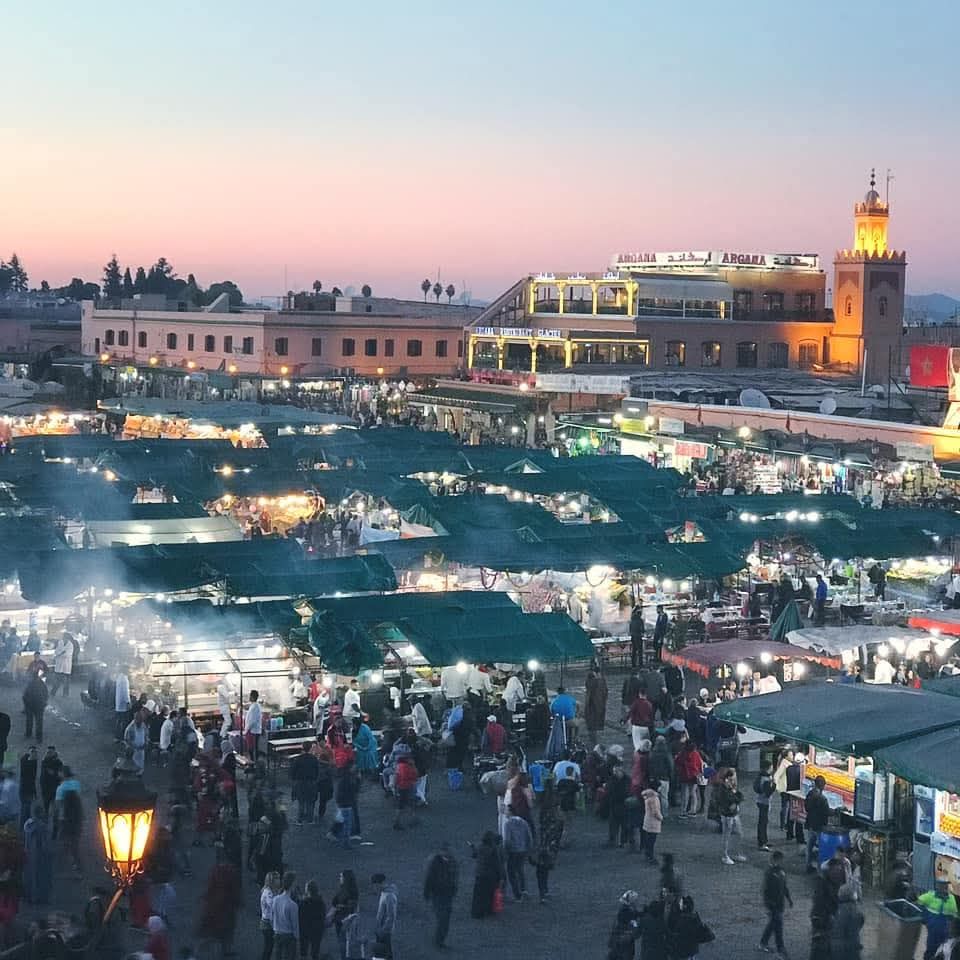

















 Sounds Of The Souks