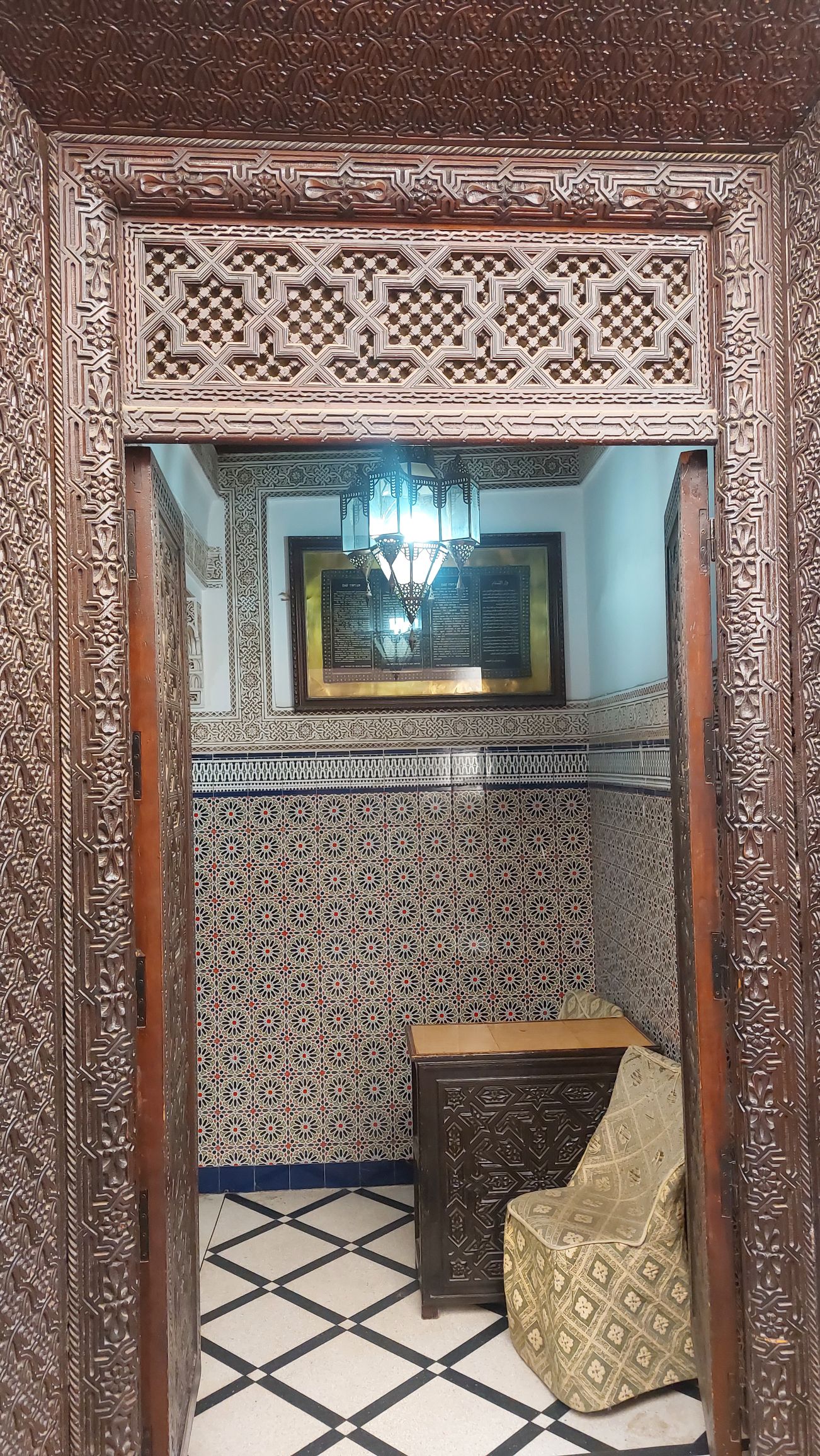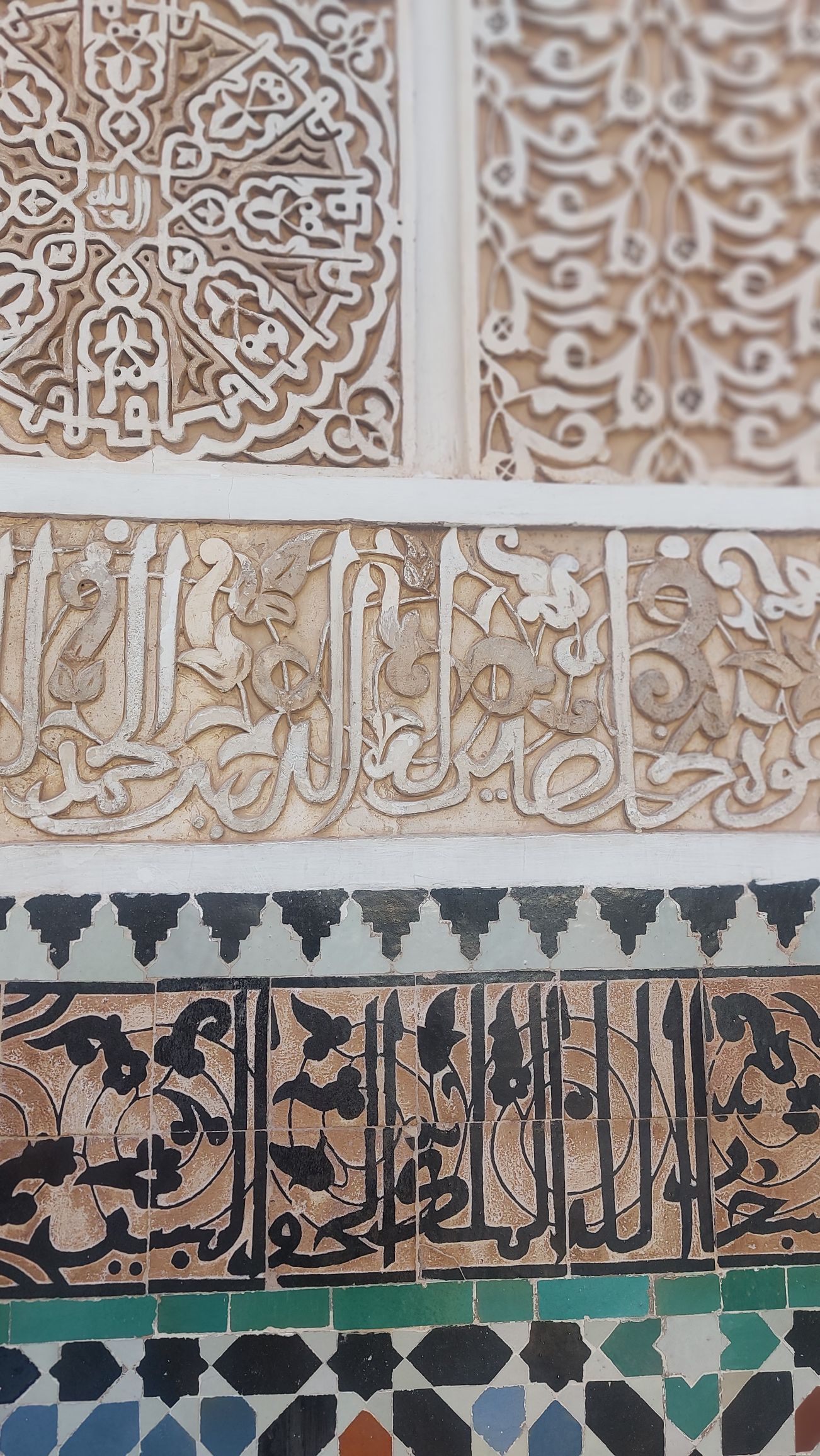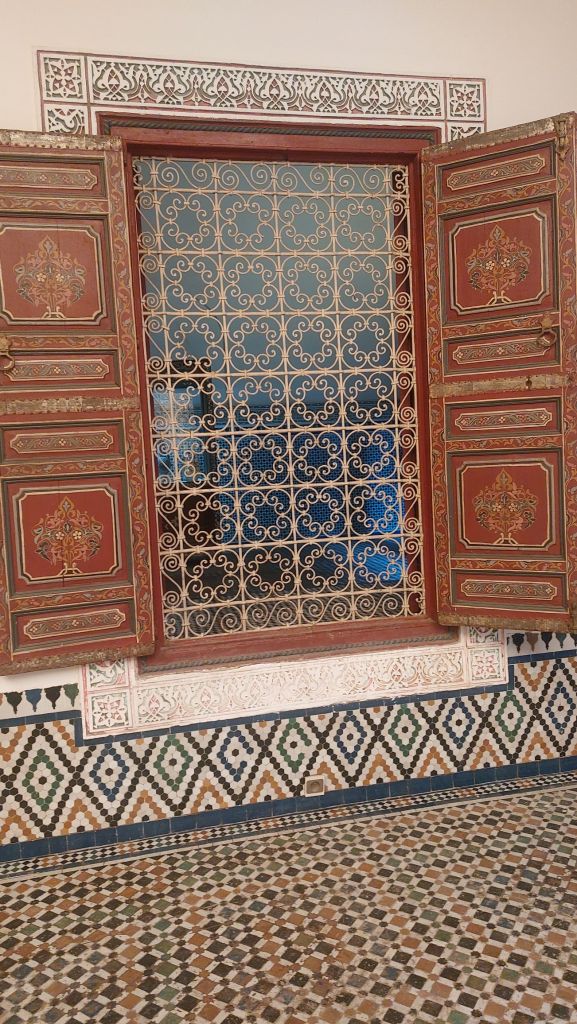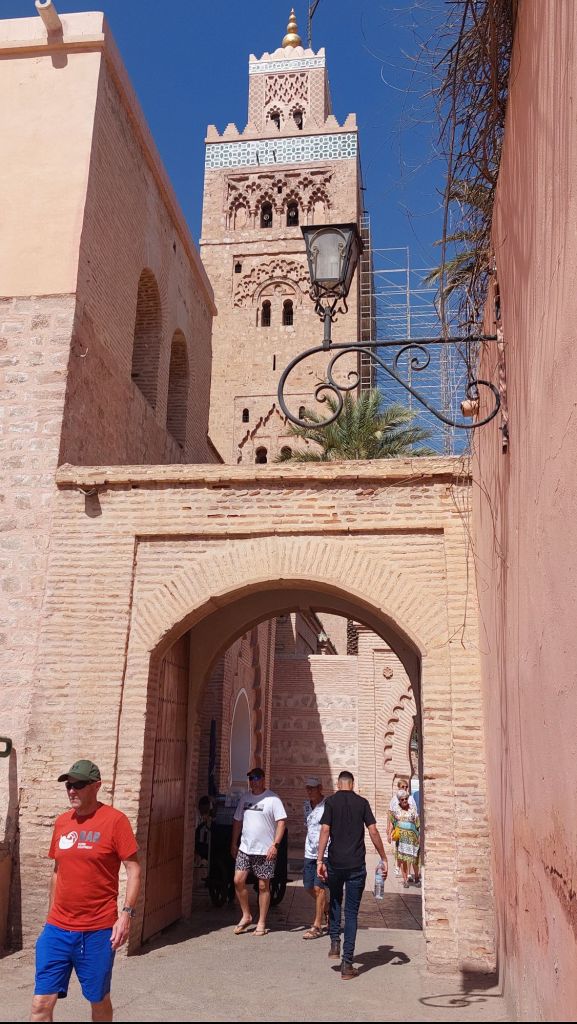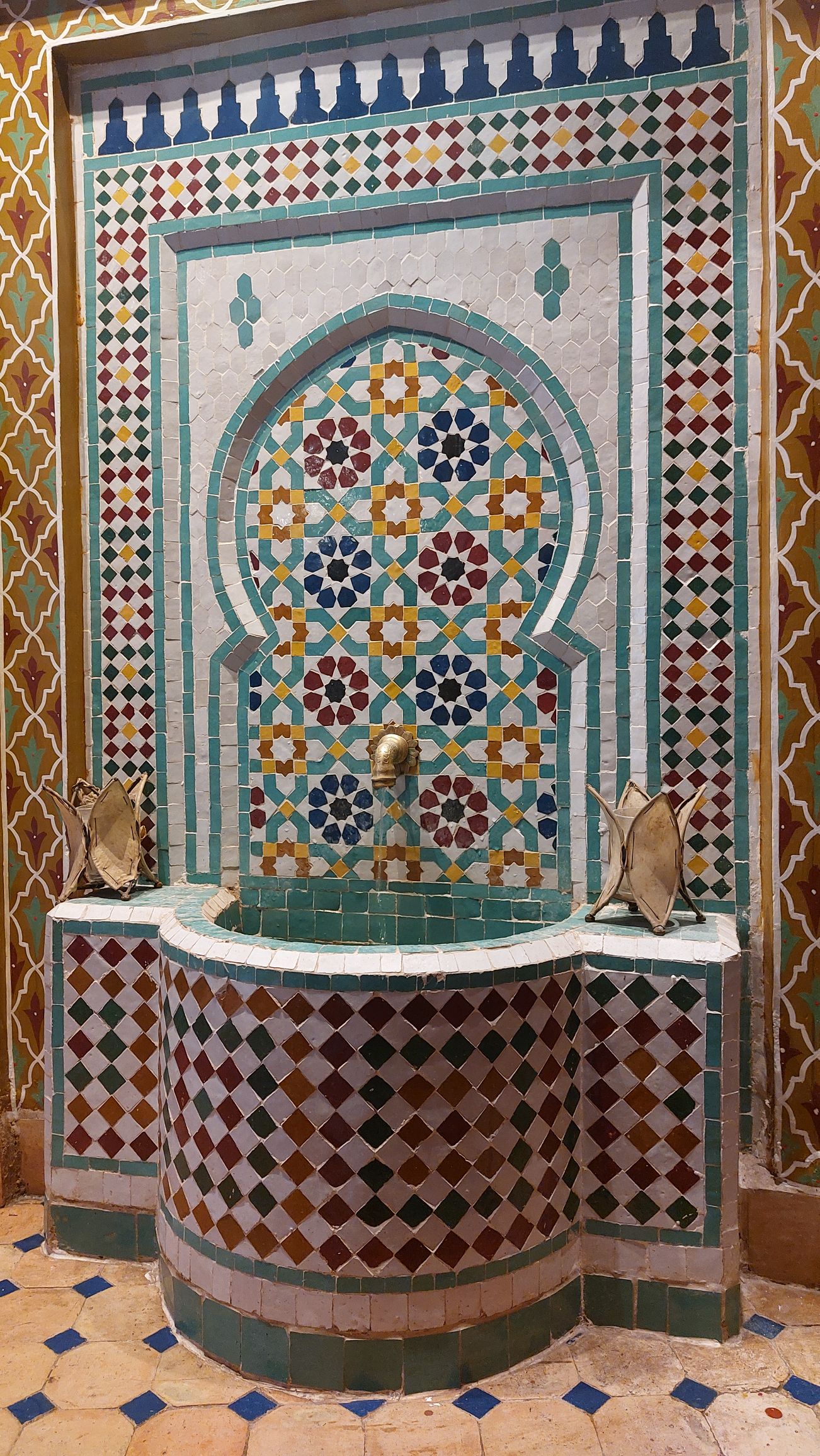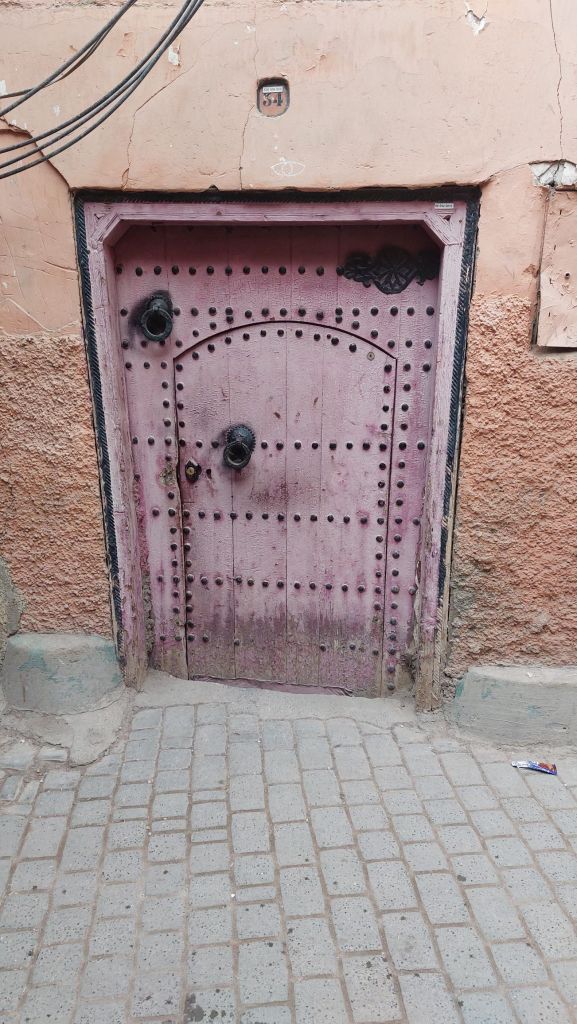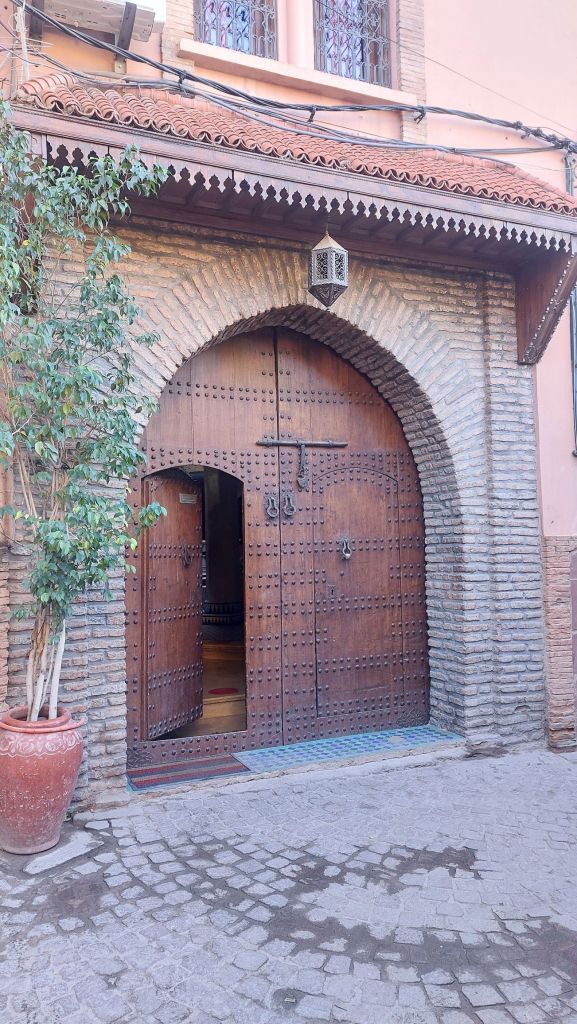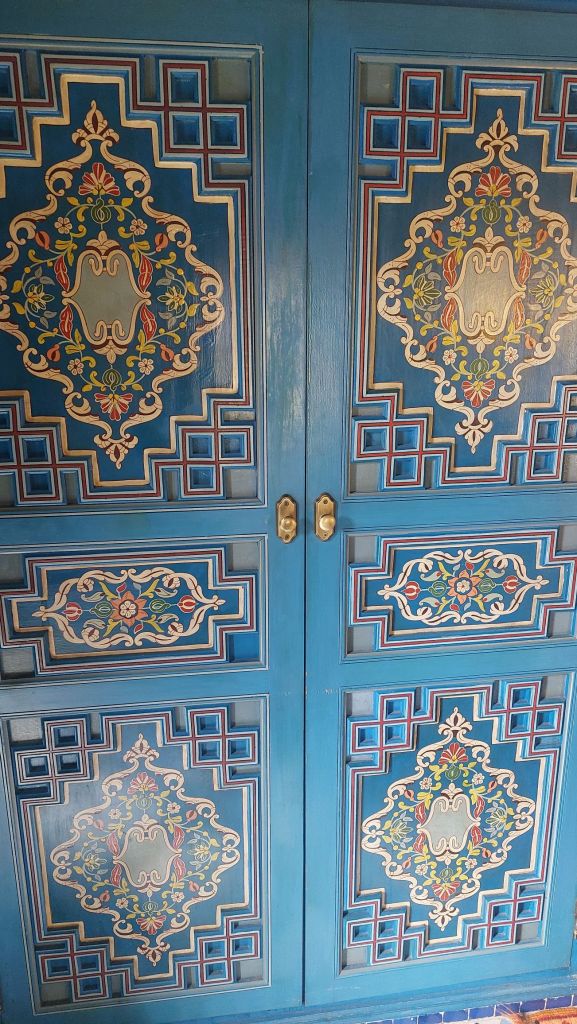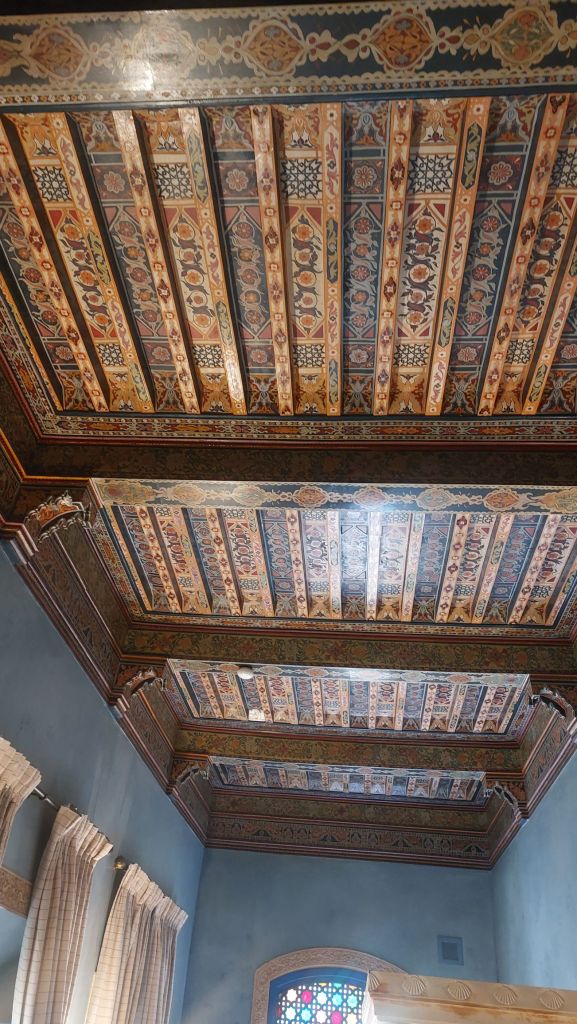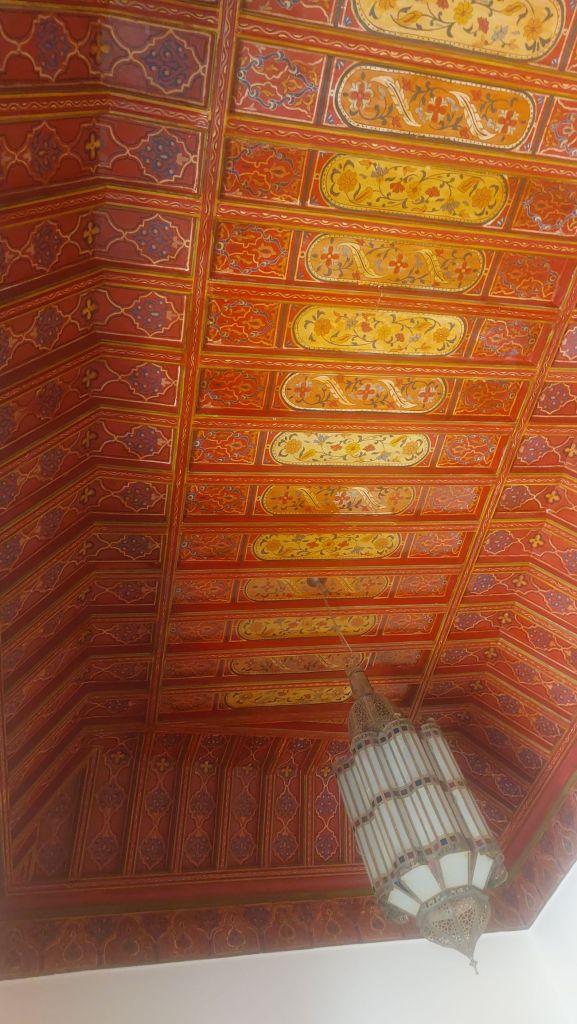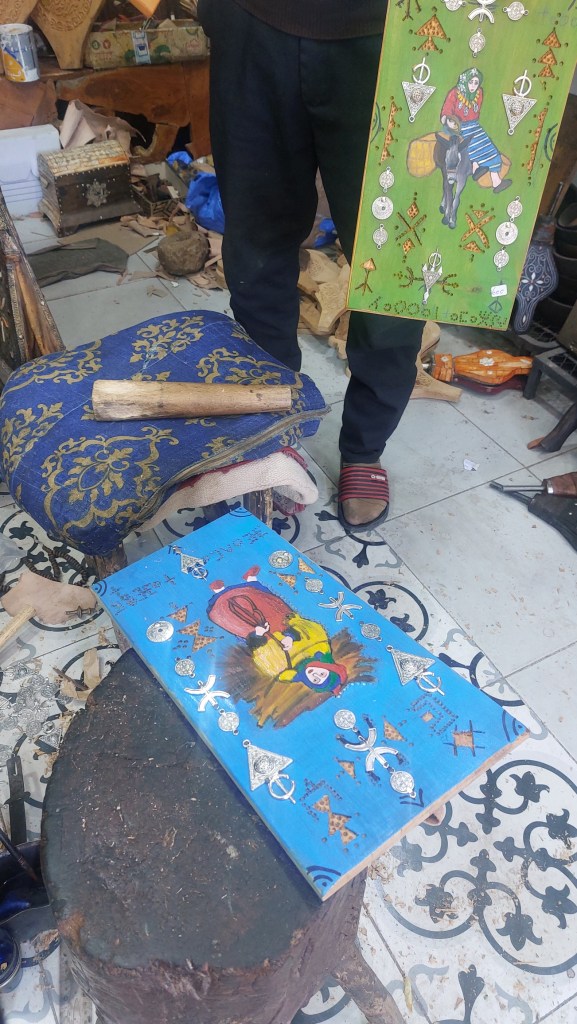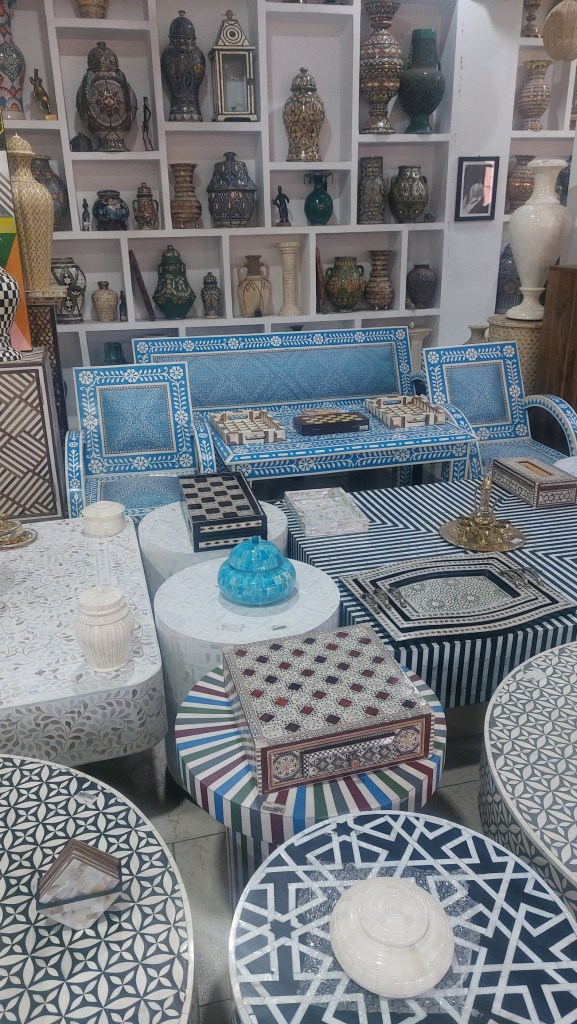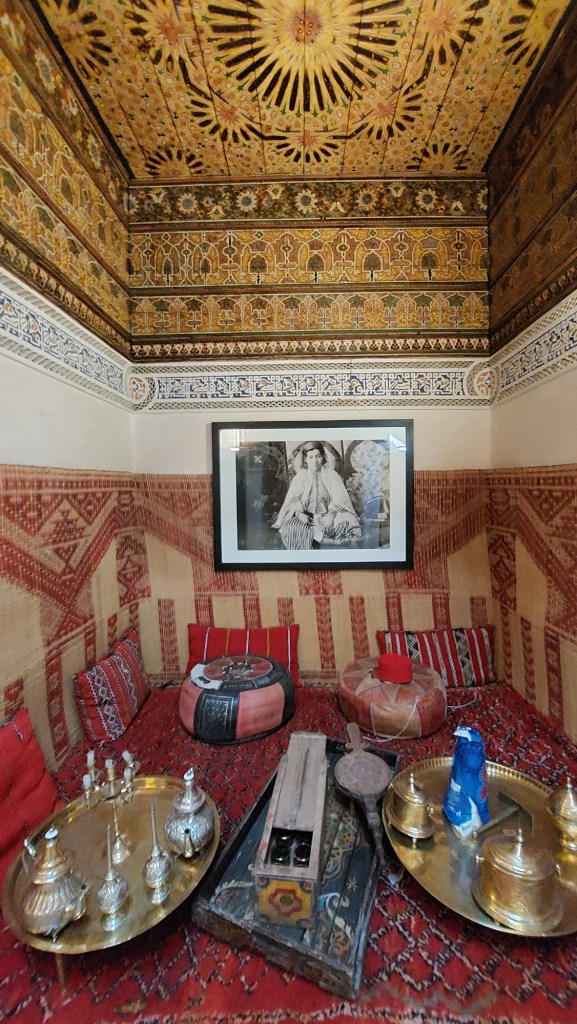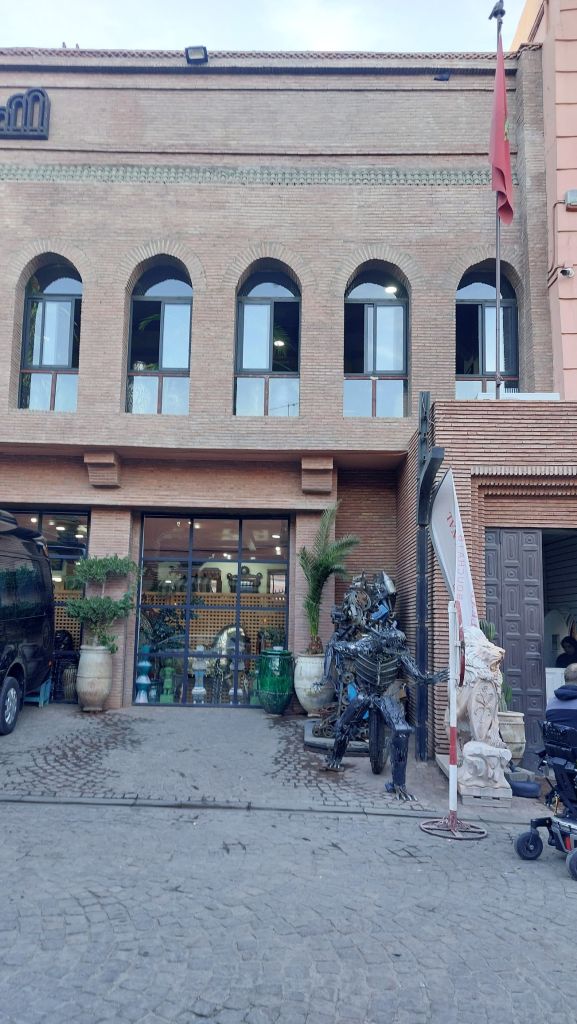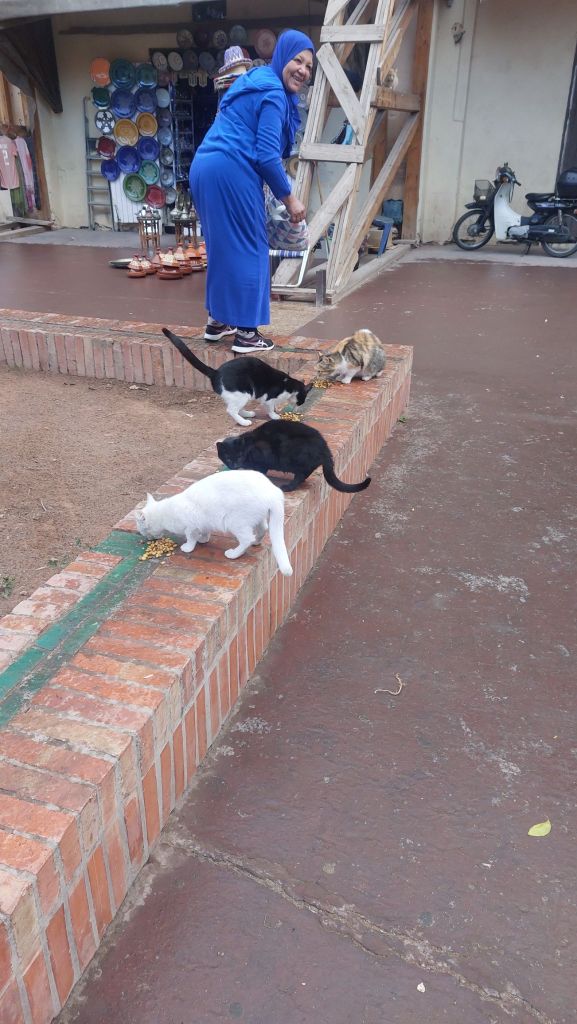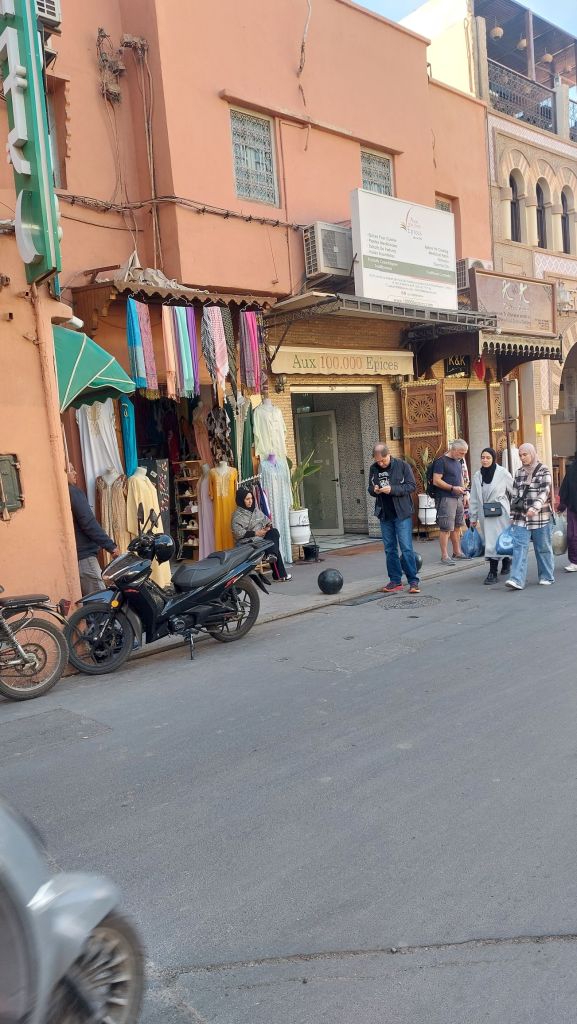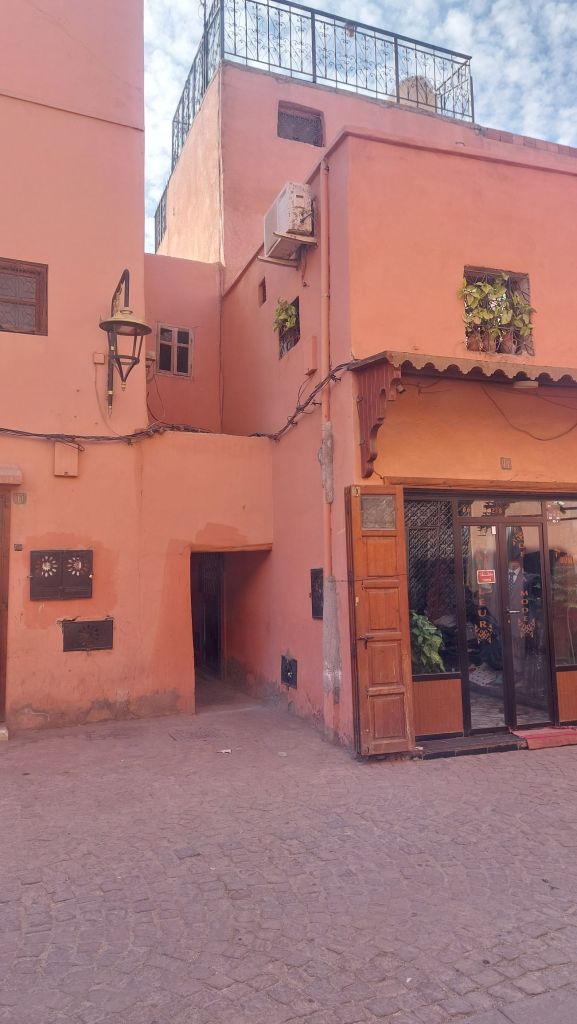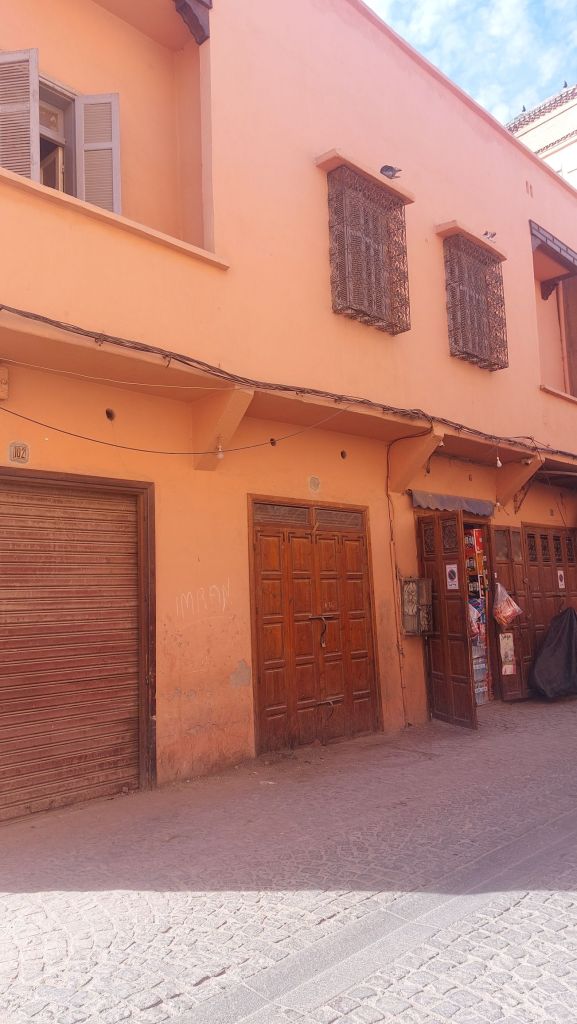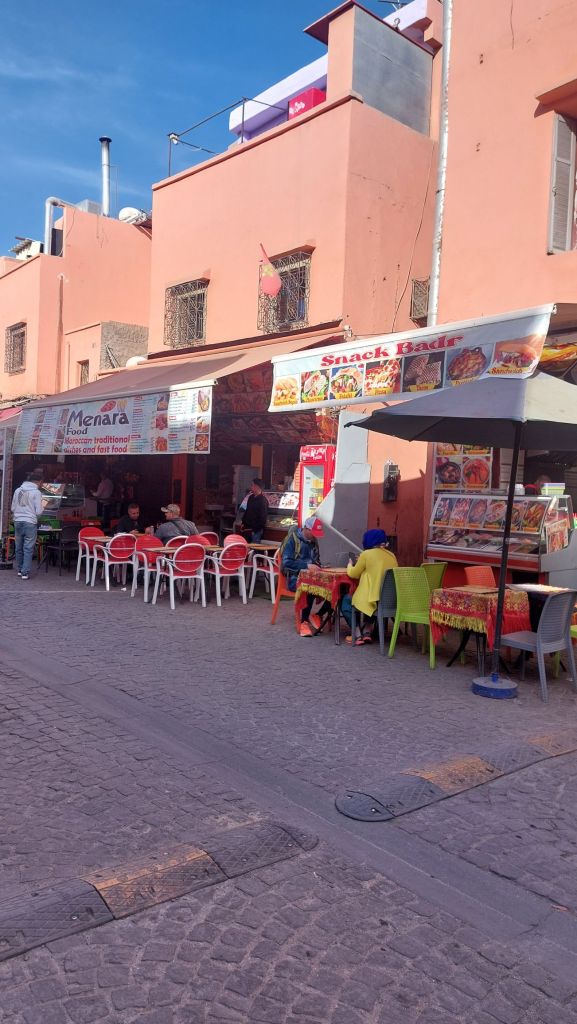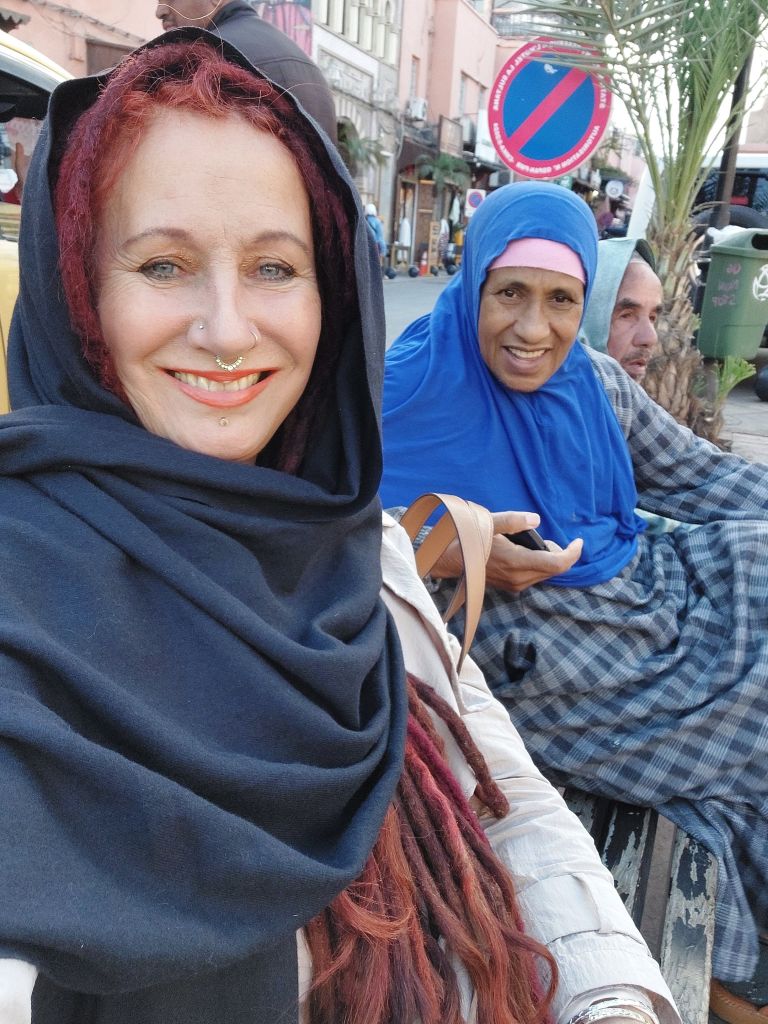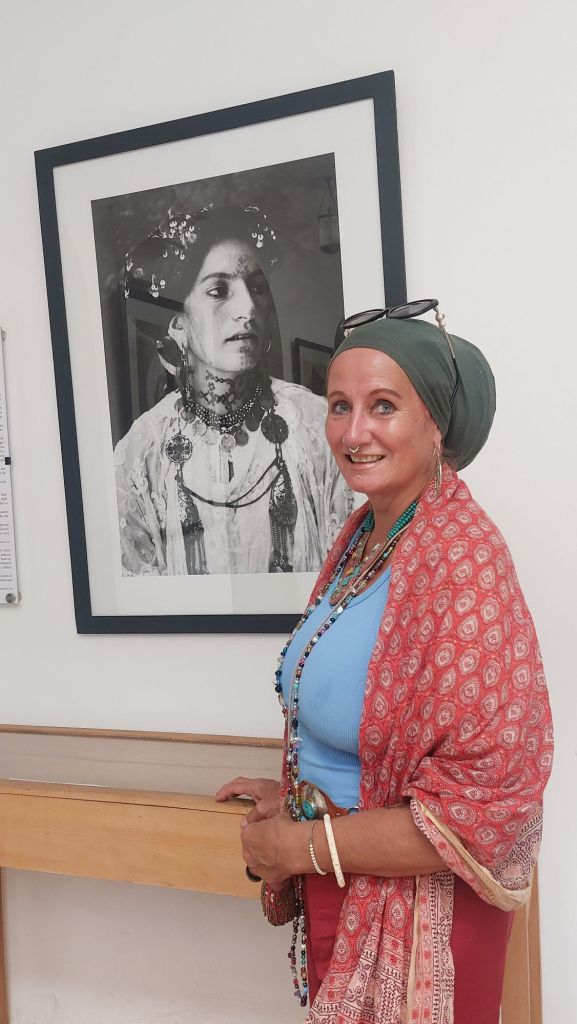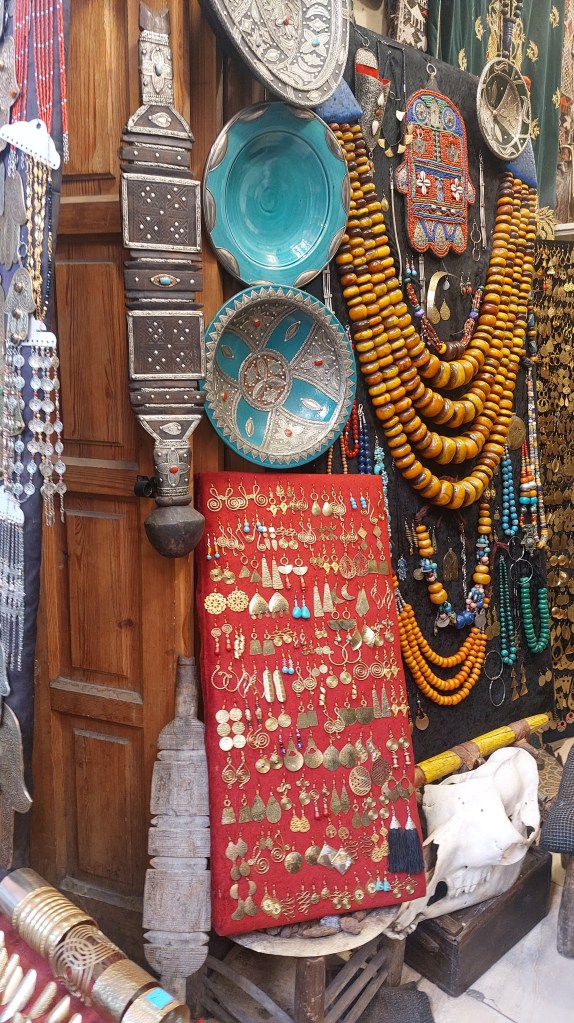
Check Bismillah Sand Coffee is a hidden gem inside Souk El Kebir.
Rich, aromatic coffee is brewed using hot saharan sand and gently spiced with a touch of Cardamom, Turmeric, or Cinnamon to give it a distinct flavour.
To make it, the coffee is added to iced water inside small brass pots and then heated by moving it around by hand in hot sand.
The coffee has a rich, dense, creamy flavour unlike any other coffee found in the medina.
This charming spot is humble in appearance, cosy and inviting.
Images by Freebird Tracey.
There is also a rooftop where you can sit to enjoy your coffee in peace, a moment of self-indulgence
Chez Bismillah offers you a serene refuge where you can sit watching the medina come to life tucked away in a quiet space away from the crowds.
It’s an experience seeing the coffee gently warmed by hot Merzouga desert sand and savouring its unique taste.
I was surprised how quickly the coffee became hot. I sat watching it being made from arabica and fragrant spices, which filled the air around me.
Chez Bismillah is a unique experience firmly rooted in place and tradition.
The friendly, welcoming proprietor gives you a glimpse into a past that conjures up images of camel traders selling cloth in the fondouk and stretches of vast desert terrain.
Images by Freebird Tracey.
It’s not just a cup of coffee.
It’s an escape from reality, a moment of peace from the hectic rhythm of the busy alleyways of the souks.
Chez Bismillah Sand Coffee can be found at 193 Souk El Kabir, it is open daily from 9.00am until 9.00pm with the exception of Saturday and Sunday when it closes at 7.00pm.
The Spice Square, also known as Rahba Kedima, is a smaller market, less densely packed with tourists.
It is located at the end of Souk Semmarine and a five minute walk from Jamaa El Fna.
It is here that you will find a wonderful selection of spices, including saffron, cumin, and turmeric.
The spices are beautifully displayed in pyramids around the square, and the air is fragrant with the scent of incense.
There are dried herbs, oils, potions, tea, and the traditional Moroccan lip stain.
The Spice Square is the traditional apothecary of Marrakech and a treasure trove of Moroccan culture.
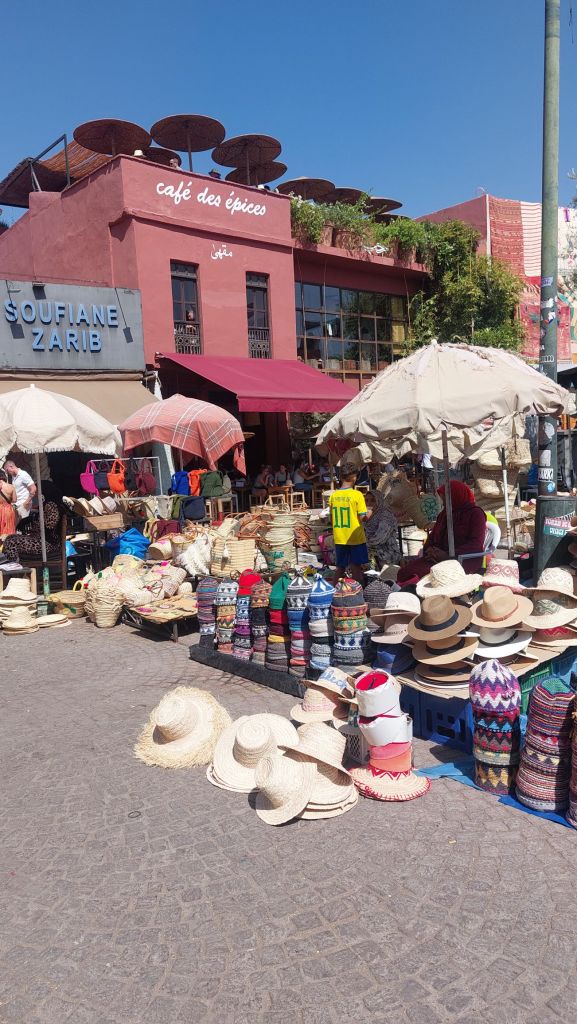
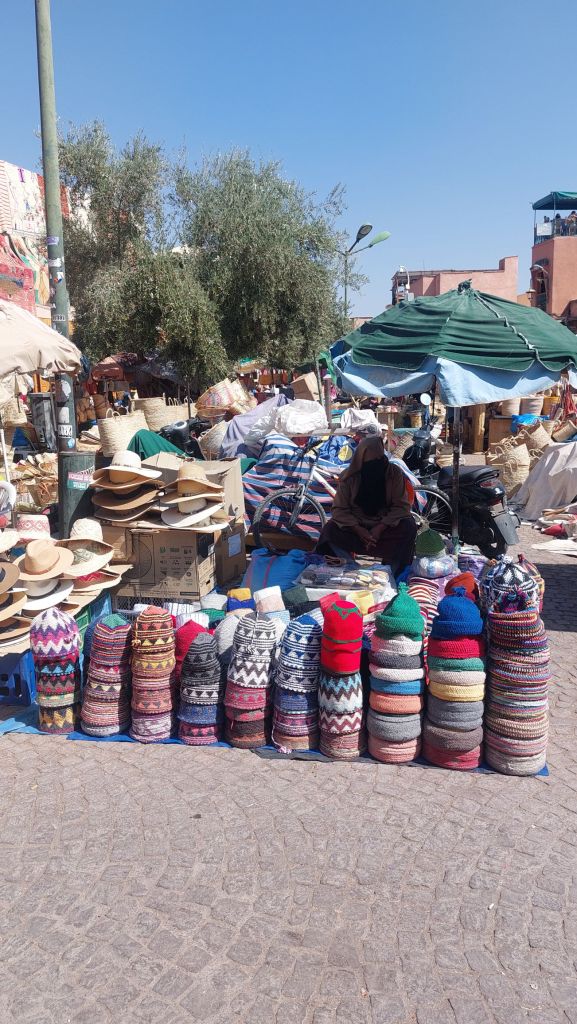
In the Spice Square, you will also find hand woven baskets, hats, baby tortoises, and a range of shops selling Amazigh jewellery and other stuff.
Images by Freebird Tracey.
It is a vibrant, colourful market with a less frantic pace than Jamaa El Fna.
It is home to popular restaurants like the Cafe Des Espices, a rooftop restaurant that overlooks the market.
Nomad is also in close proximity to the Spice Square.
The Spice Square is not far from the Medersa Ben Youseff and Marrakech museum, so it’s ideal for making it part of your day when visiting both of these attractions.
Until the 20th century, Rahba Kedima was the cities grain market and the place where slaves were sold.
It is now the epicentre of the medina where you can pick up the famous Moroccan spice blend ras el hanout and watch the spice sellers who come down from the mountain villages at 4.00 in the afternoon to sell their trade to the professionals.
The smells and colours are heady with friendly vendors, demonstrating the benefits of eucalyptus.
The Spice Square is a photogenic place where you will be met with a glimpse of trading traditions from the past.
It’s the perfect balance between a bustling market experience and a relaxing, more laid-back atmosphere.
I took a trip to the Palmerai to get out of the city for a while.
Image by Freebird Tracey.
The Palmerai is a 54 square mile palm oasis on the northeast edge of Marrakech.
It’s a 20-minute drive from the city centre and is known for its lush landscape, high-end resorts, and popular activities.
I needed to take a break from the manic pace of life in the medina, so I decided to visit for a camel ride at sunset.
I booked through Get Your Guide and was picked up by my guide Mohammed next to the Islane Hotel.
I was part of a small group, and we were taken to our destination in a small air-conditioned mini bus.
After a short drive, the scenery changed, turning into a beautiful landscape with thousands of palm trees.
There were so many camels with colourful seats sitting at the sides of the road.
We stopped, and immediately, we were all dressed in traditional blue Tuareg clothing.
Video taken by our guide Mohammed.
After embarking on our camels, we set off trekking.
It lasted for approximately 40 minutes, around palm trees and gravelly ground.
I have every respect for Tuareg people, who can spend months on the back of a camel.
I think they are wonderful creatures but not the most comfortable, and 40 minutes was more than enough for me.
Image by Freebird Tracey.
The sunset was pretty, although I would imagine it to be more spectacular during the summer months.
The camel drivers were friendly and entertaining, singing songs and making little camels for us by plaiting the grass they collected along our route.
Back at the vehicle, our small group sat with the camel drivers who prepared traditional mint tea for us all.
We drank it, and soon afterwards, we were heading back into Marrakech.
It was nice to get out of the city for a while.
In terms of value for money,
I think that quad biking may be the better option.
The scenery was amazing, and I enjoyed seeing another side of Marrakech, but I wasn’t blown away by the experience.
Our guide was lovely.
He took videos and photographs for everyone.
The Palmerai also hosts balloon rides available through Paradise Ballooning and Marrakech Balloon.
There are several golf courses in the area also.
If I return again, I may try a different activity next time.
For people who don’t wish to head out into the Sahara desert and want the experience of riding a camel, the Palmerai is worth considering due to its close proximity to Marrakech.
An authentic district of Marrakech with more local people.
Image by Freebird Tracey.
The Kasbah is a quieter part of Marrakech, with fewer tourists than the medina.
Staying in the Kasbah, you feel totally immersed in the culture of Marrakech as you rub shoulders with the friendly locals.
There are plenty of restaurants and shops including a good fixed price store selling everything you will find in the souks at a realistic price.
*See my separate post on Dar Bouchaib.
Images by Freebird Tracey.
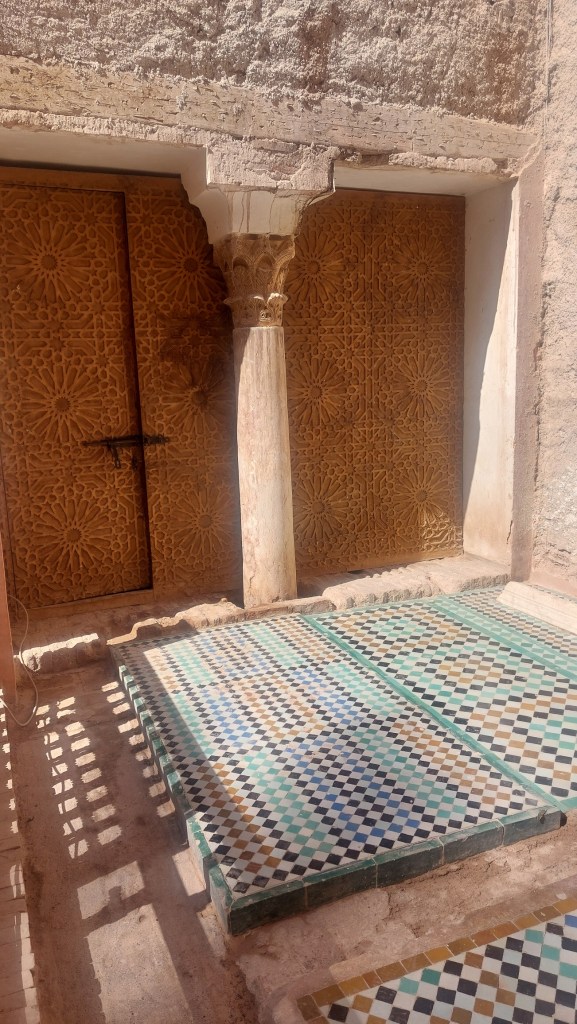
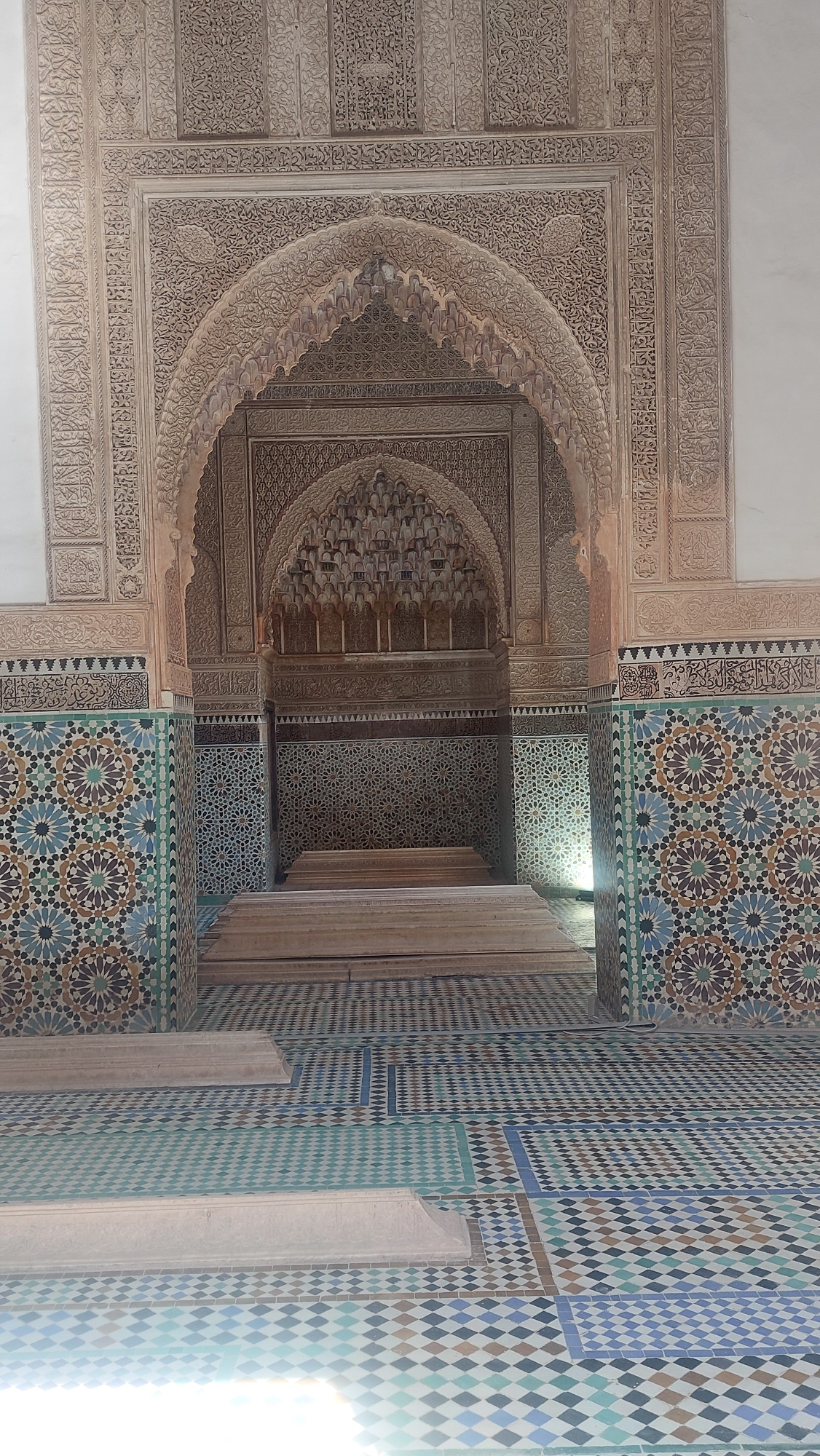
Inside the Kasbah, you can visit tourist attractions like the Saadian tombs and El Badi Palace.
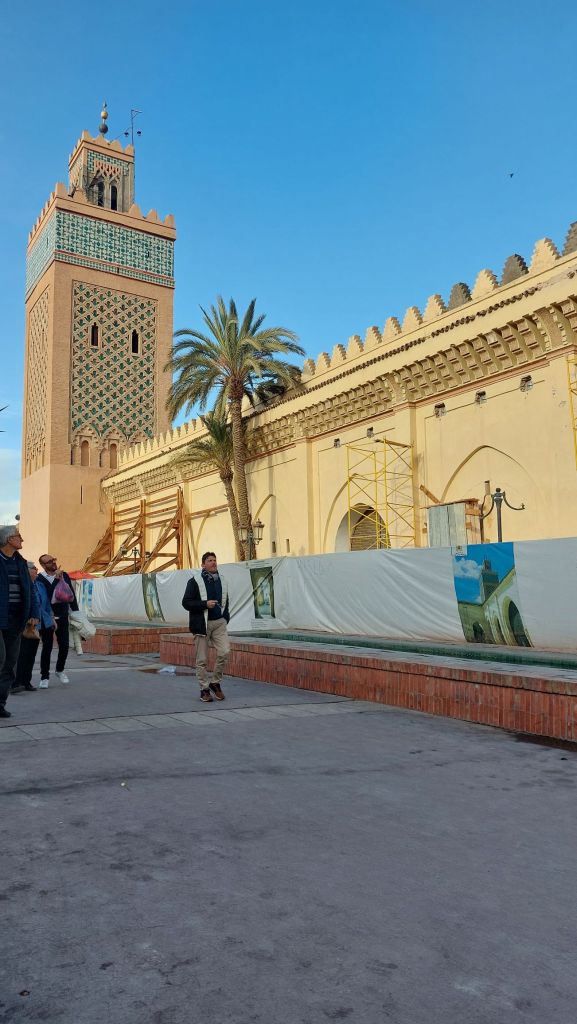
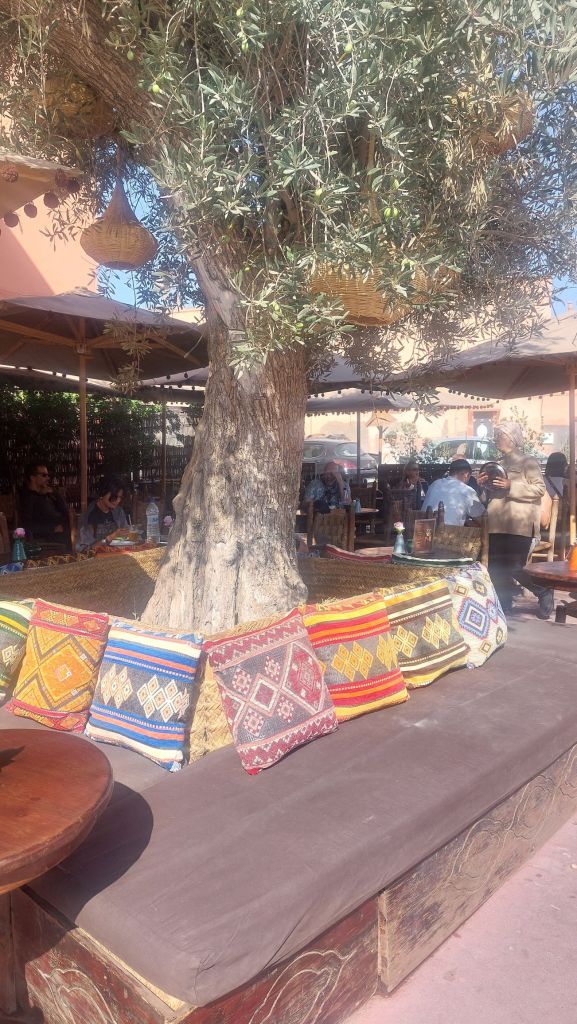
Zeitoune Cafe overlooking the mosque is a lovely spot for lunch or a drink whilst taking a break from sightseeing.
Sitting outside on the colourful cushions people watching in the Moroccan sun was quite an experience.
Image by Freebird Tracey.
The kasbah is about 15 to 20 minutes leisurely walking from the main square with plenty to see along the way.
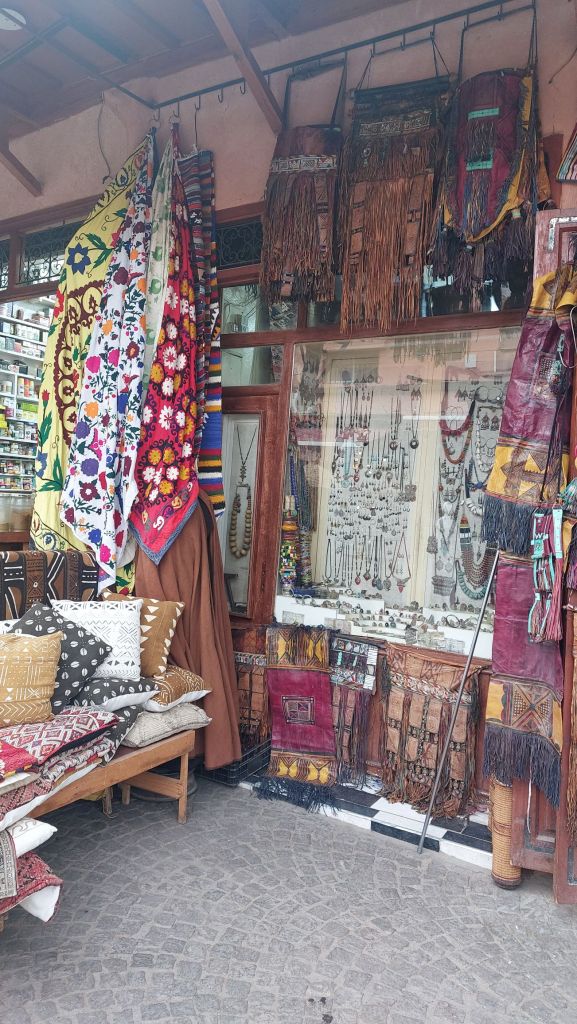
The walk is interesting, with many shops and vendors selling all kinds of stuff.
Image by Freebird Tracey.
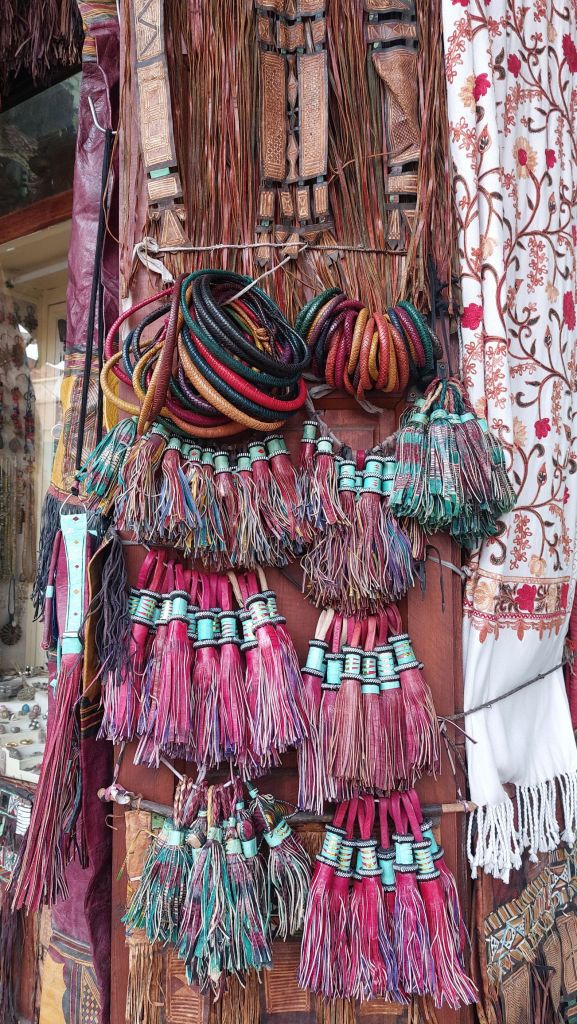
In the kasbah, there are a range of budget and high-end riads to stay in.
It is definitely quieter than the medina.
I stayed in Riad Hikaya, it was absolutely lovely and a totally relaxing few days for me.
Image by Freebird Tracey.
*See my separate article about staying at Riad Hikaya.
The Kasbah is the historical citadel in Marrakesh with fortified walls.
The narrow alleyways make it an exciting place to visit, and there are fewer motorcycles and donkeys trying to negotiate the streets at the same time as you, making it less stressful than the medina.
There are plenty of good restaurants to enjoy nice food so you won’t have to go too far.
The Kasbah is home to the Clock restaurant and its legendary camel burger and storytelling evenings.
Also, the Kasbah Cafe is a popular place for lunch and dinner.
Krepchy does a fantastic breakfast, and the prices are very reasonable.
I highly recommend the waffles.
To return from the medina, consider taking a tuk-tuk if the weather is hot.
It’s quite an adventure in itself as you rattle along the bumpy streets.
Spending an hour or two enjoying this interesting area of Marrakech is definitely worth it.
The locals are very friendly, and it was a pleasure getting the opportunity to sit and chat with them.
Image by Freebird Tracey.
I would recommend staying in the kasbah if you prefer a quieter, more authentic experience in Marrakech.
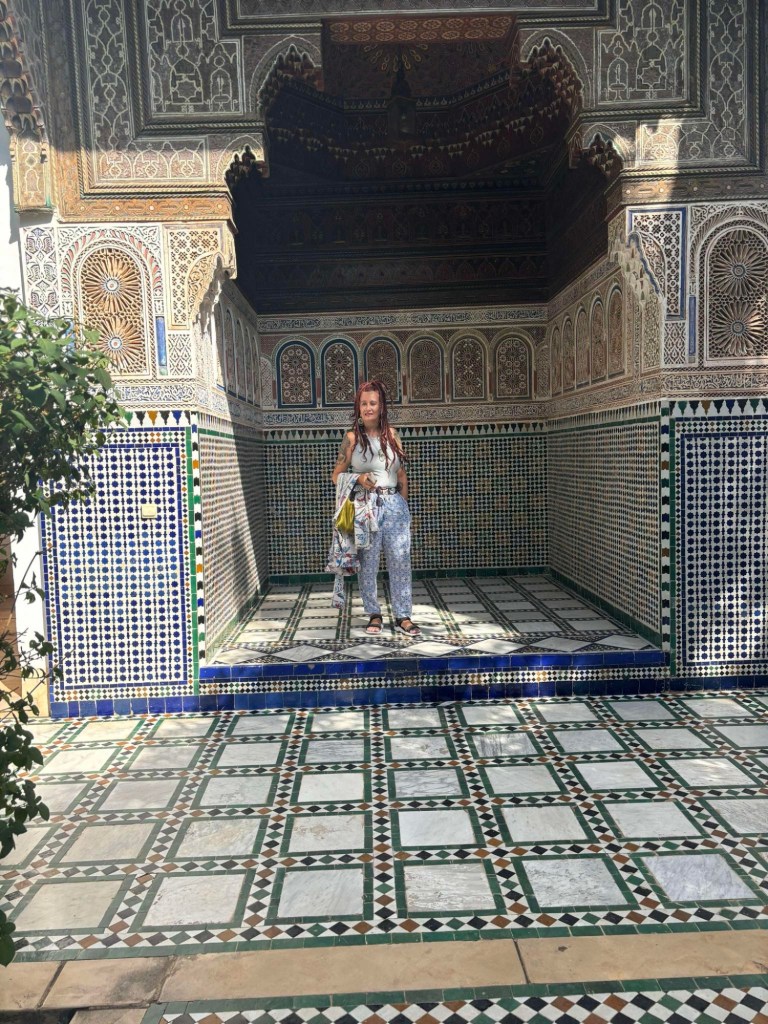
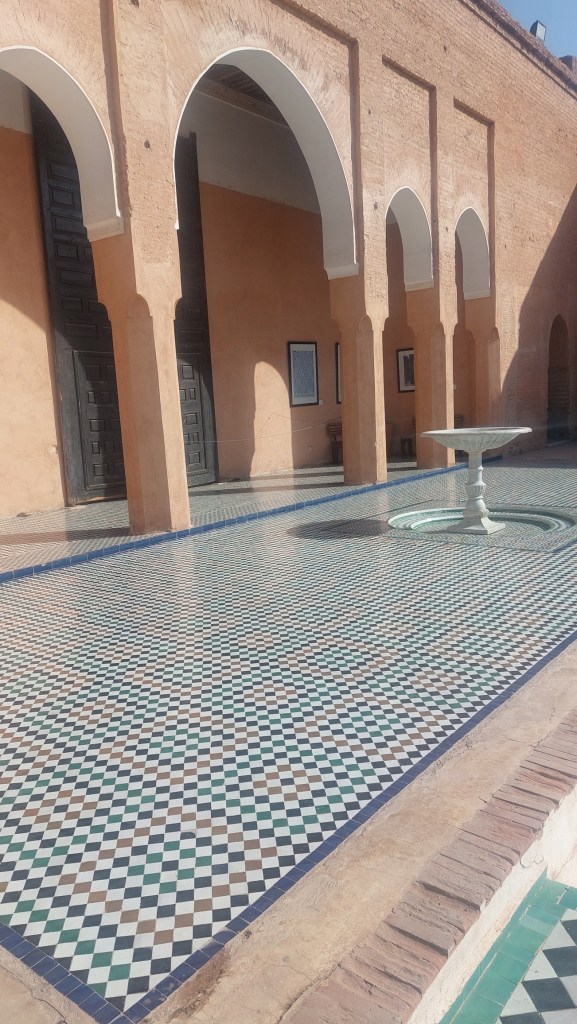
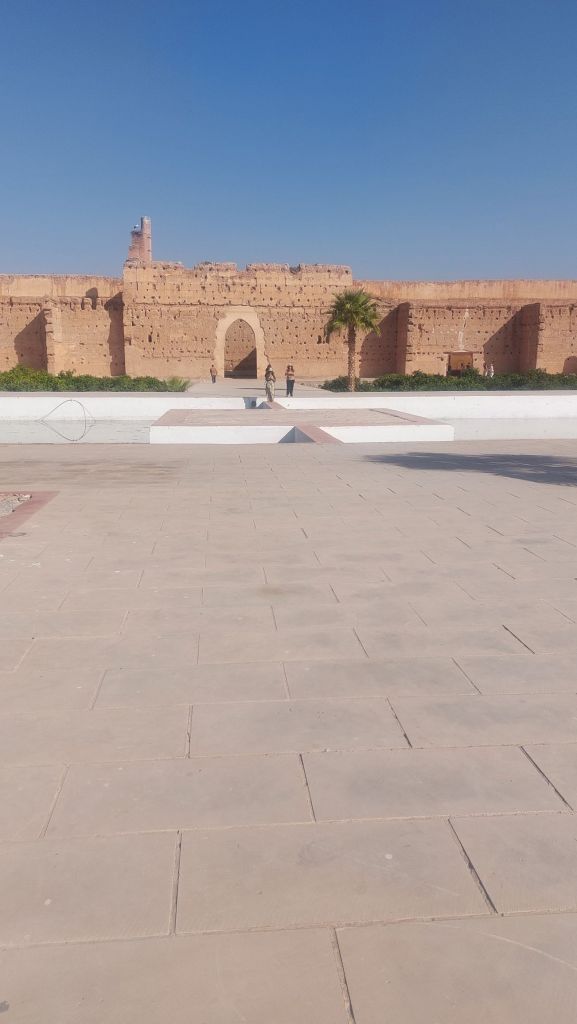
El Badi Palace was built in 1578 by Sultan Ahmad al-Mansoor of the Saadian dynasty.
The palace was built to showcase the considerable wealth of the Saadian dynasty and was a prime example of Islamic architecture and exquisite craftsmanship.
Using both Moroccan and European influences, the palace was beautifully decorated with intricate mosaic tiles, marble arches, and ornate carvings.
The palace was home to the sultans harem and included over 500 women.
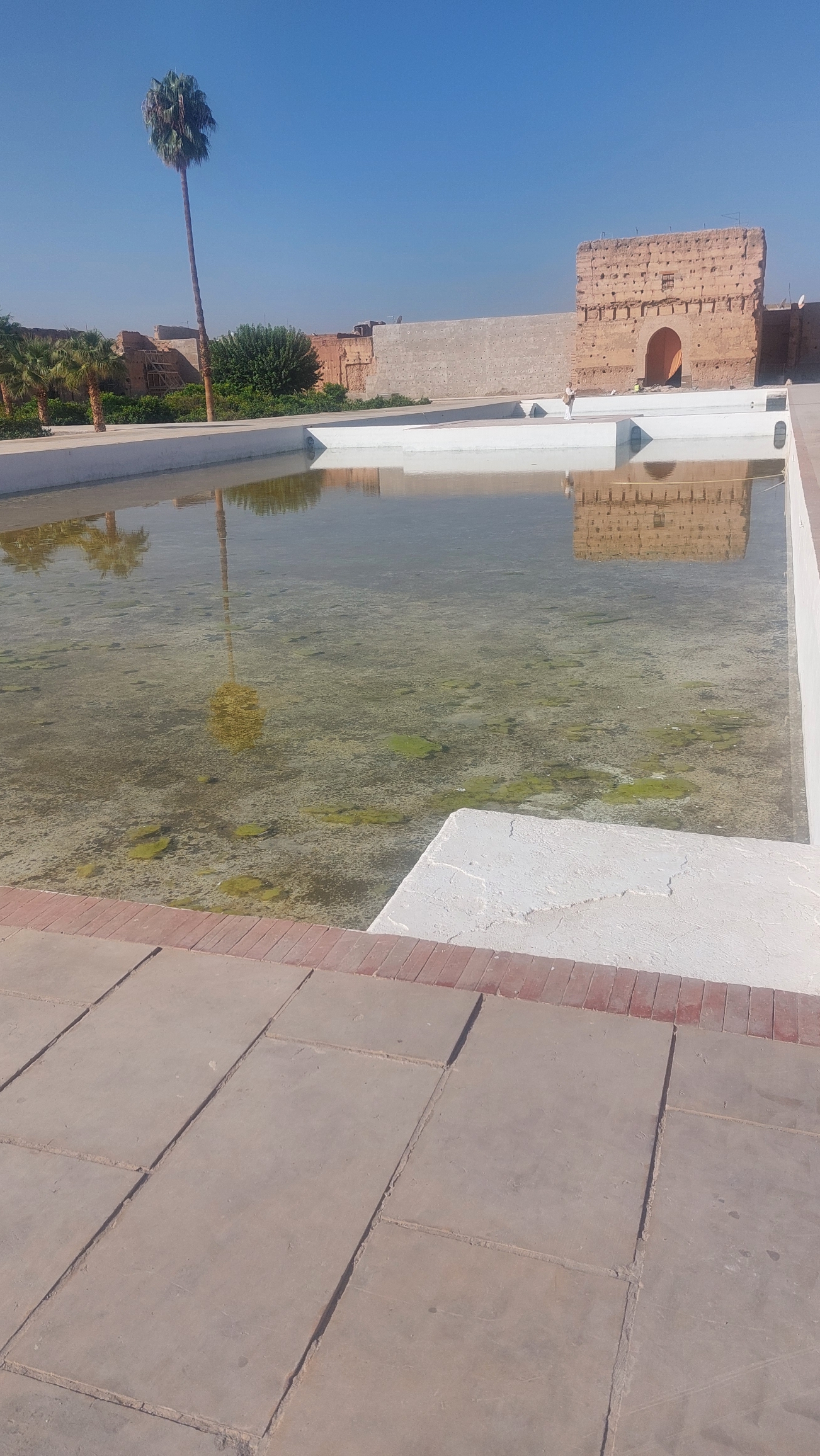
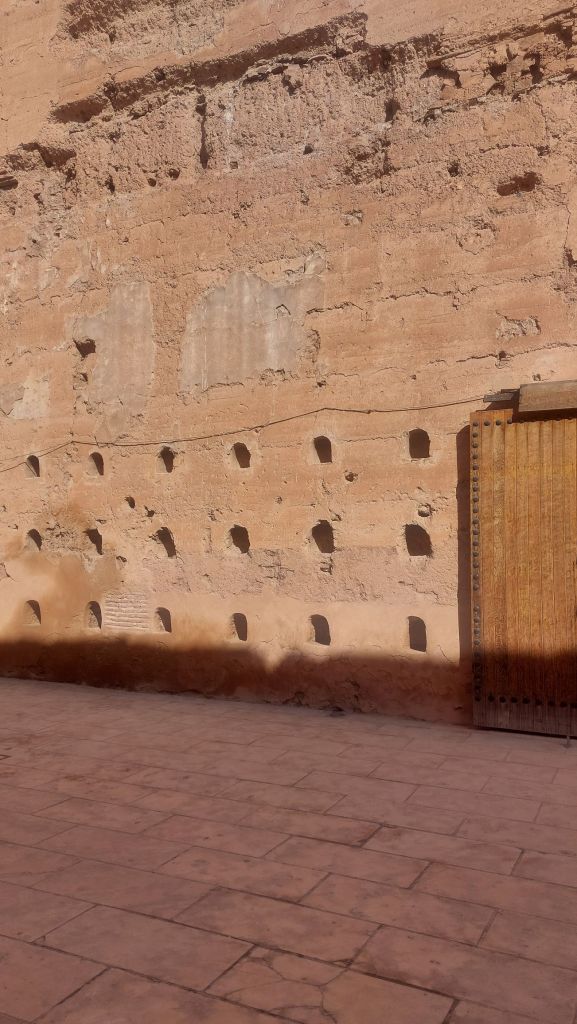
Now, only the ruins remain.
After Sultan Ahmad al-Mansoor died in 1603, the palace fell into neglect and was subsequently stripped away with the materials being used for other buildings in Morocco.
The palace is certainly worth a visit if you want to learn about the history of Marrakech and the ruling elite centuries ago.
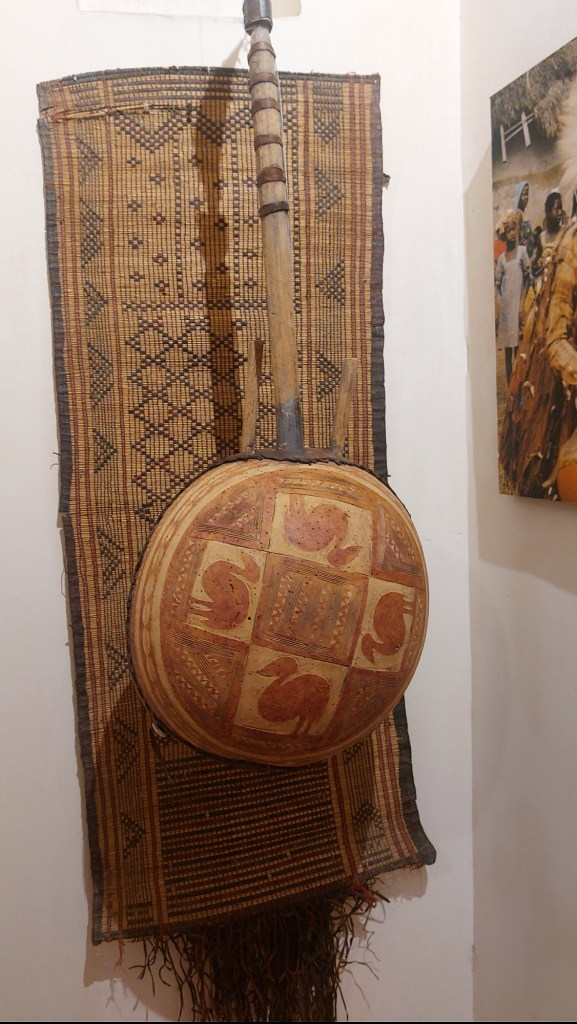
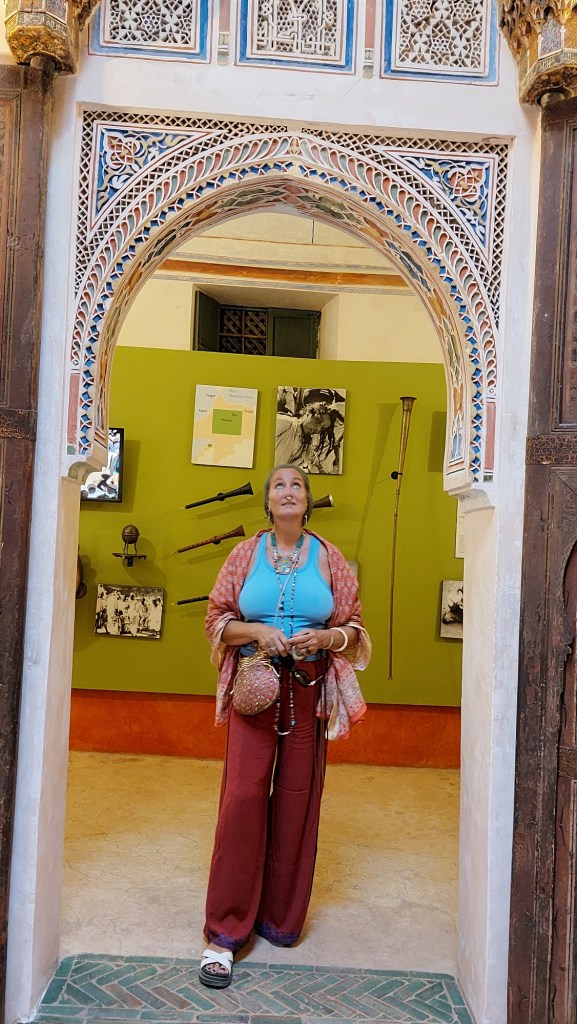
The exhibition space contains the Almoravid Minbar, which is a finely decorated pulpit that once stood in the Koutoubia Mosque.
It also hosts temporary art and cultural exhibitions.
The underground chambers contain information and photographs about the palaces history.
Image by Freebird Tracey.
The palace was badly damaged during the earthquake in 2023, and renovations have taken place to repair the cracks in the walls.
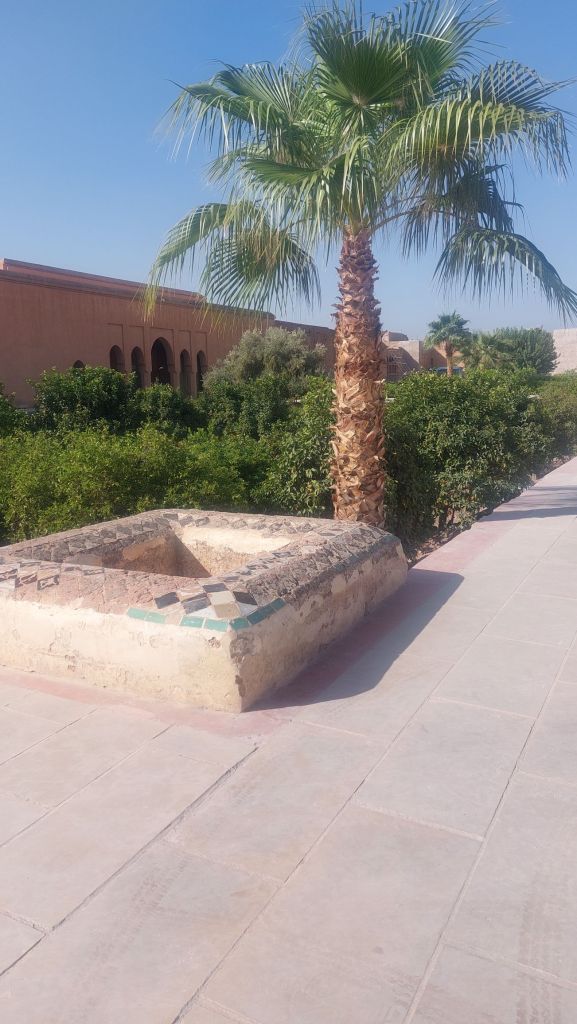
El Badi Palace is situated in the Kasbah district of Marrakech and a popular tourist attraction.
The courtyards are impressive, and the nesting storks on the towers give it a magical feel.
Images by Freebird Tracey.
You get a sense of the grandeur of the Saadian dynasty, and there’s a feeling of peace and tranquillity within the walls of the once opulent palace.
El Badi Palace is open every day from 9.00am to 5.00pm and costs 100 dirhams to enter.
A place of serenity and calm in the middle of the souks.
Image by Freebird Tracey.
It’s a hidden gem, a peaceful retreat from the madness of the souks, and Jamaa el Fna.
Le Jardin Secret is a little oasis with exotic plants and flowers where you can sit and enjoy calm, beautiful surroundings, listening to the birds in the trees.
Image by Freebird Tracey.
There is a beautifully painted pergoda in the centre, for sitting in the shade.
Le Jardin Secret boasts two attractive large gardens and has one of the highest towers in the medina.
There is a museum, a boutique, and two coffee shops on site for light refreshments.
Image by Freebird Tracey.
Le Jardin Secret dates back 400 years ago to the Saadian dynasty and was left to decay before being discovered and renovated in the nineteenth century.
It is a perfect example of Islamic art and architecture, and you can read all about its history inside the museum.
Images by Freebird Tracey.
The gardens are simply beautiful with Cacti, palm trees, and other exotic plants, flowers, and shrubs.
The sound of birdsong and the resident toads in the little pond feels like a world away from the busy souks outside the walls.
Image by Freebird Tracey.
As you wander around the tranquil gardens, you forget you are inside the busy medina, dodging motorcycles and donkey carts.
There are plenty of benches dotted around the gardens to sit and enjoy the tranquillity and beauty that surrounds you.
Image by Freebird Tracey.
Le Jardin Secret is located at,
121 Rue Mouassine
Marrakech 40030 Morocco.
Opening times vary depending on the time of the year.
It costs 100 dirhams to enter and it is wheelchair user-friendly.
Image by Freebird Tracey.
The cafe has a good selection of sandwiches, pizzas and salads.
Fruit and vegetable smoothies, tea and coffee, and homemade cakes.
To get the most peaceful experience from your visit, try going early in the daytime before the gardens become too busy with tourists.
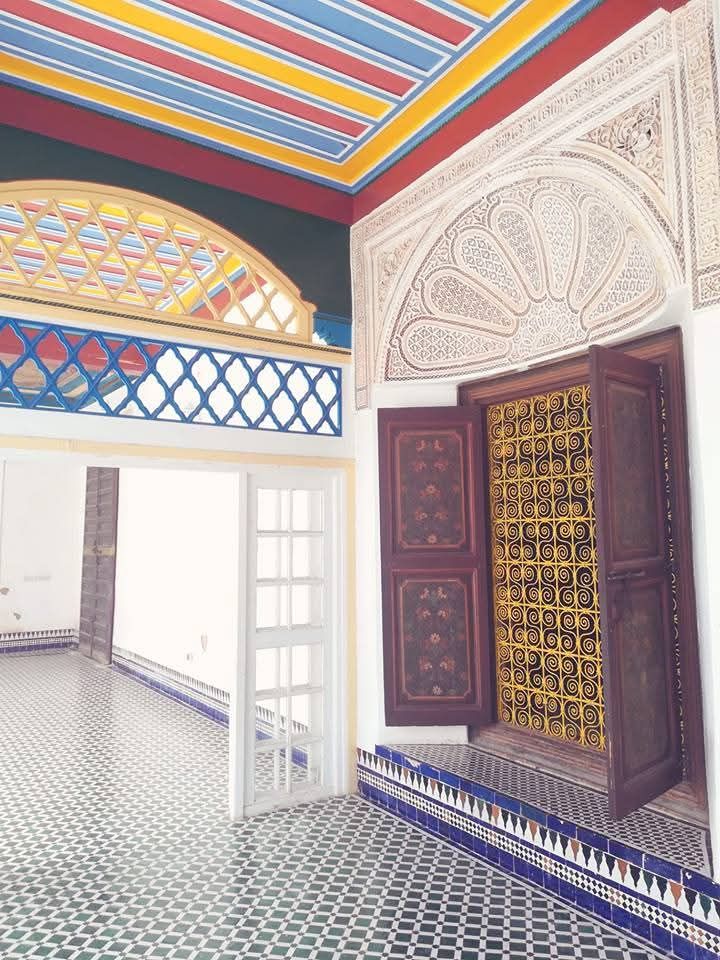
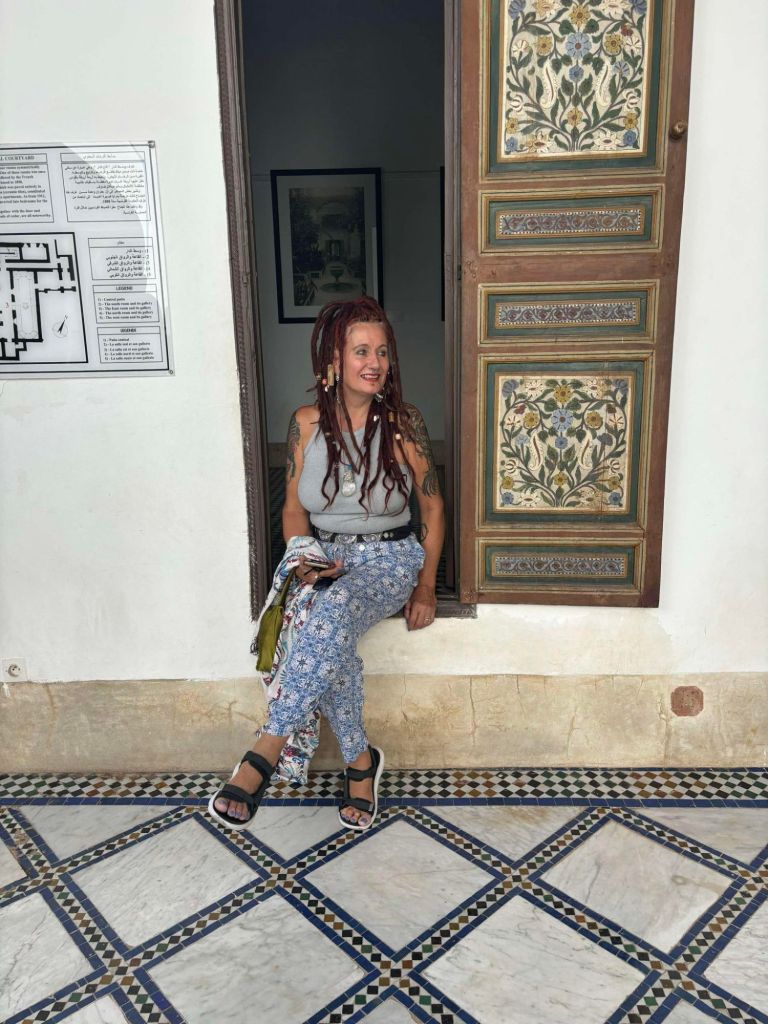
Bahia Palace is a stunning, 19th century palace in Marrakesh.
It’s definitely a must-see if you’re visiting the city, as it’s quite a spectacular place.
Image by Freebird Tracey.
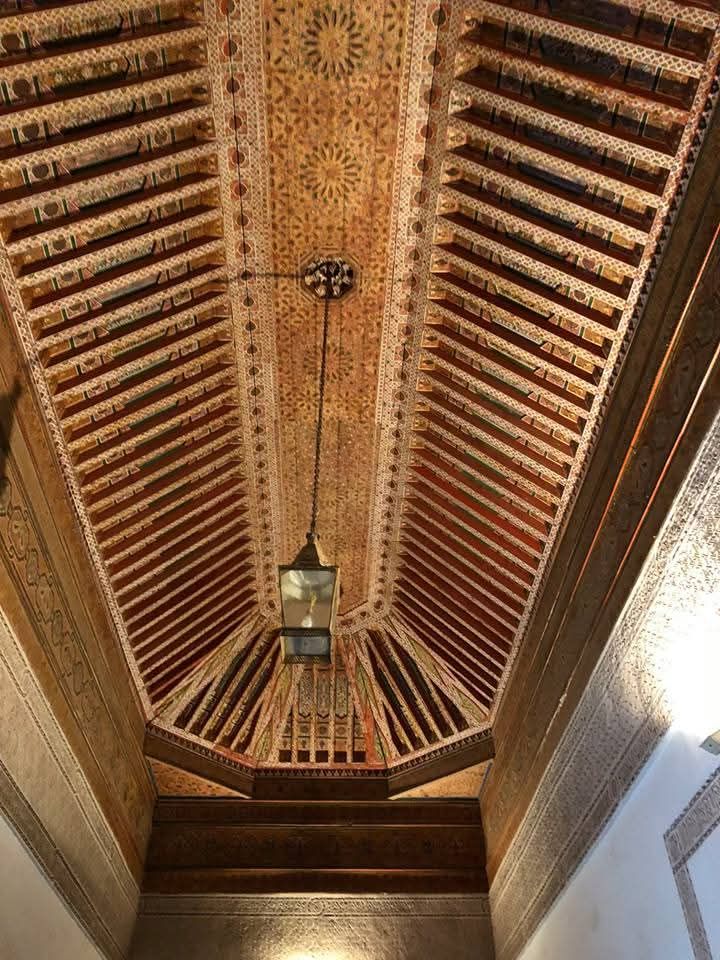
The rooms are decorated with stuccos, paintings, and mosaics to capture the essence of Islamic architecture.
Images by Freebird Tracey.
The word Bahia means ‘brilliance’ in Arabic, reflecting the splendour of Islamic art and architecture.
It is necessary to book tickets prior to visiting the palace as queues can be extremely long.
They cost 70 dirhams each, and the palace is open from 8.00am-5.00pm daily.
Image by Freebird Tracey.
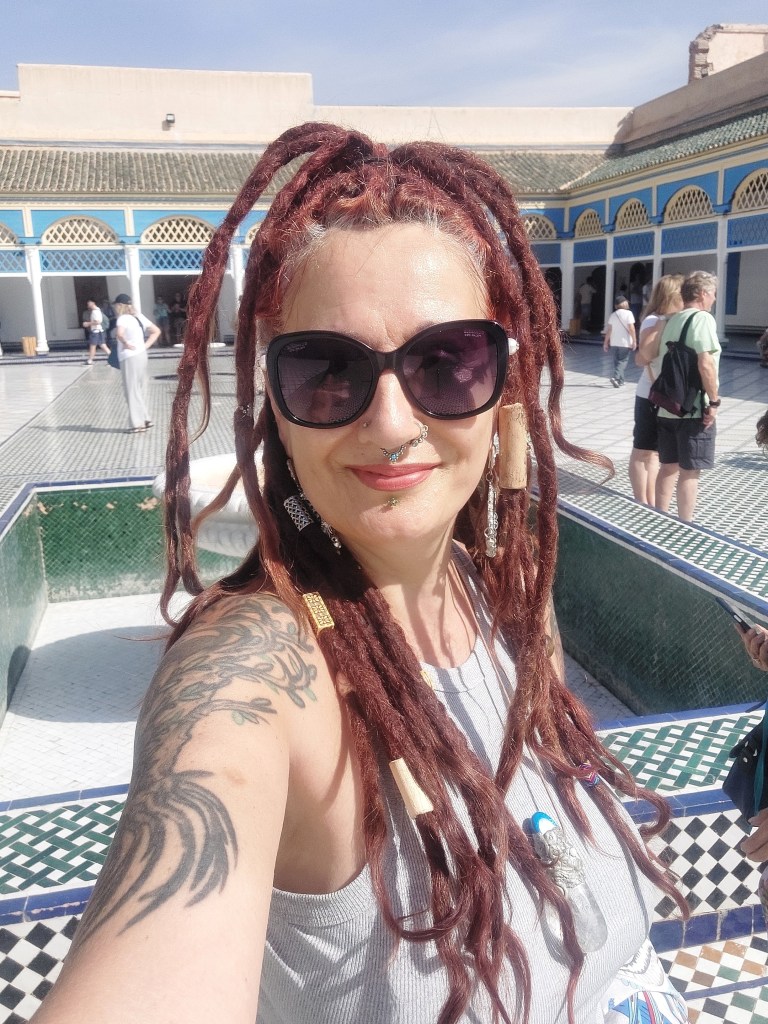
The courtyard is stunning, and all the rooms open out onto it.
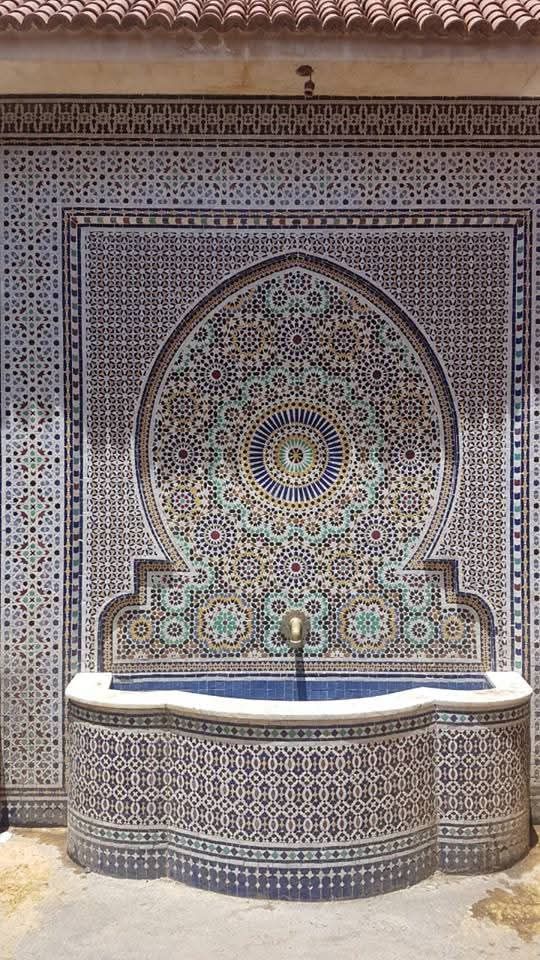
It is rather grand and very spacious with a fountain in the centre and intricate tile work typical of Morroccan culture.
Image by Freebird Tracey.
There is also a 2-acre garden surrounding the palace and beautiful orange trees lining the route to the entrance.
Image by Freebird Tracey.
When Morocco gained independence from France in 1956, the Bahia palace was used as a royal residence. This was until King Hassan II transferred it to the custody of the Moroccan Ministry of Culture.
The building then became a cultural icon and tourist attraction in Marrakech.
Bahia Palace is one of the most visited tourist attractions in the city.
It is best to arrive as close to opening time as possible to avoid the crowds.
That way, you can spend time reading about the history of the palace and enjoying the experience before it becomes too overwhelming and you can’t capture any photos.
Image by Freebird Tracey.
I would recommend visiting Bahia Palace.
It’s gives you a good understanding of Islamic culture and the fine craftsmanship that defines it.
If you enjoy looking at Islamic architecture, you could also visit Badi Palace in the Kasbah area of the city.
If you think that the main square in Marrakech is a busy place during the daytime, be prepared for a surprise once the sun begins to set.
Gone are the snake charmers and monkeys on chains, replaced by food vendors, henna ladies, street musicians, and dancers.
Images by Freebird Tracey.
The scene is organised chaos and a complete sensory overload.
The sights, sounds, and smells are not for the faint-hearted.
The drumming becomes intense, and the square takes on the appearance of a huge fair ground with thousands of people congregating.
People from Marrakech and beyond come together to meet each other, alongside tourists all vying for space to watch the spectacle unfold.
The atmosphere is electric and vibrates with a magnetic energy.
Street vendors pursue potential customers with menus as they try to navigate their way through the crowds.
They hop in front of you, and you have to dodge them like you are part of some assault course.
Images by Freebird Tracey
Sometimes, they can be very persistent, and you can feel pretty intimidated.
Camel head and fresh snails may not be your thing, and you have to be quite firm when telling them you’ve already eaten.
Although the scene is very intense, it is magical and exciting.
I really enjoyed myself, but other people were saying that they felt overwhelmed.
They preferred sitting on the edge of the square, sipping mint tea, and observing from a safe distance.
It is unlike anything else you may have experienced.
There is so much to see. There are games being played, and a few little scams take place to trick you into coughing up a few dirhams.
Locals hang around the cafe de France, chatting with each other over coffee.
Youths play football against the walls of the medina.
Sugarcane and fresh juice are sold from vending carts by lively vendors in high spirits.
Bemused onlookers sit observing everything outside restaurants or from the rooftops around the square as the Koutoubia mosque rings out the call to prayer.
As the sun sets, the crowds flock, and the atmosphere becomes electrifying.
The square is transformed into a social hub where anything and everything takes place.
It’s an incredible experience.
The bright lights dazzle from the food vendors, and beautiful Morroccan lamps sit for sale on blankets lighting the way, giving off a wonderful glow.
The scent of fragrant incense competes with the aroma of sheeps head cooking, floating through the air on the breeze.
Tourists tempted to try a traditional bowl of snails queue to sample this culinary delight.
Drums beat, belly dancers perform to curious onlookers and acrobats show off their skills to the gathering crowd.
You can not escape the craziness.
It draws you in.
It is the heartbeat of the city.
Image by Freebird Tracey.
Jamaa El Fna magnetises you.
The sheer chaos is a complete assault on the senses in every way possible.
Image by Freebird Tracey.
Just be mindful when stopping to take photos.
Someone in the thick of the action is eagle eyed and continuously watching for interested tourists who have stopped to watch.
They will spring upon you from out of nowhere, cap in hand for a donation.
After sunset, it’s as though the whole of Morrocco has come out to play in Jamaa El Fna, and they are determined to have a good time.
It is truly a spectacle to behold.
Lively, colourful, aromatic, and noisy.
Be sure to visit and become a part of what makes Marrakech so unique.
It’s certainly an eye-opener.
Although it’s mostly safe around the square, exercise the usual caution in large crowded areas and try to avoid obvious scams.
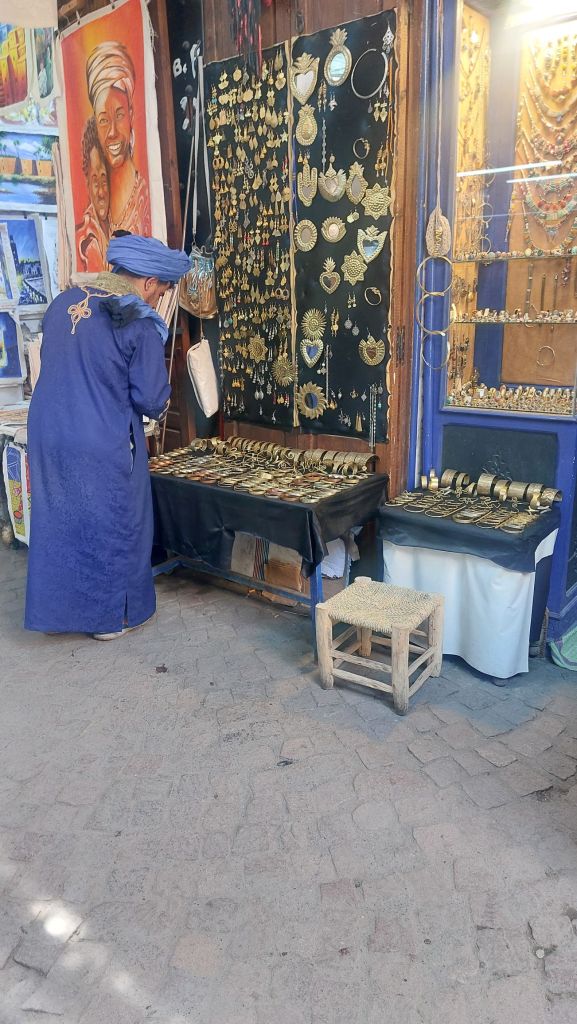
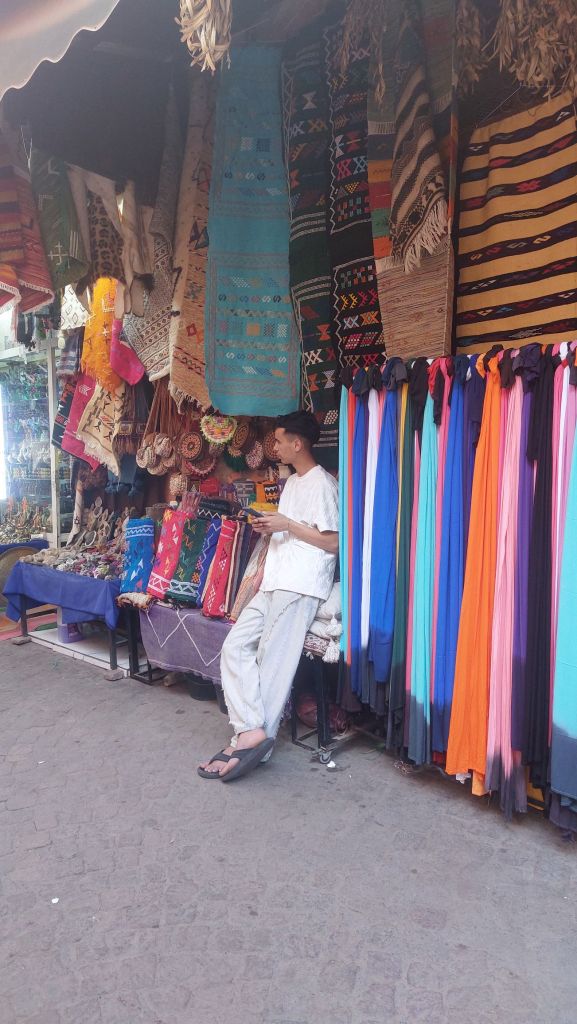
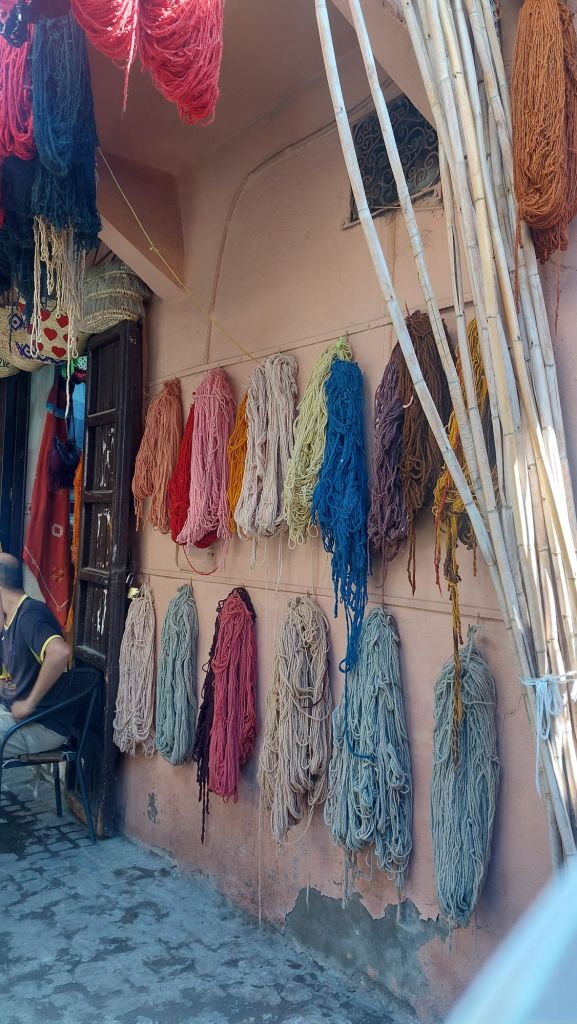
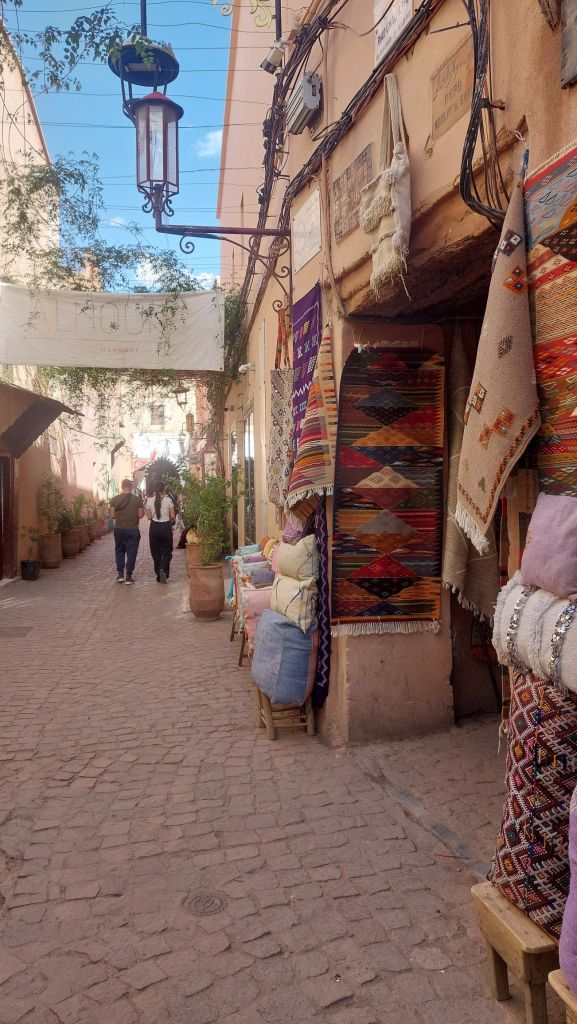
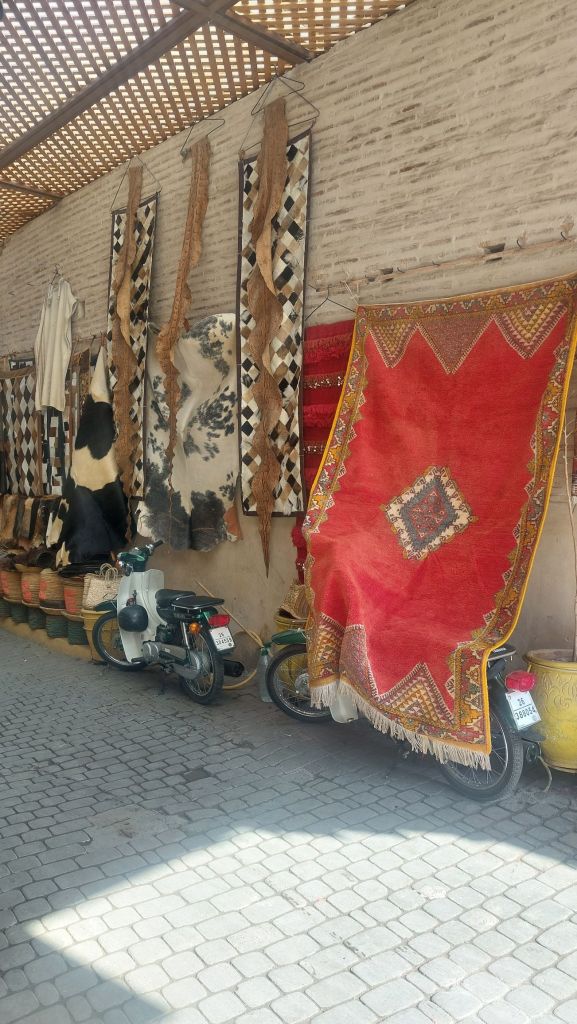
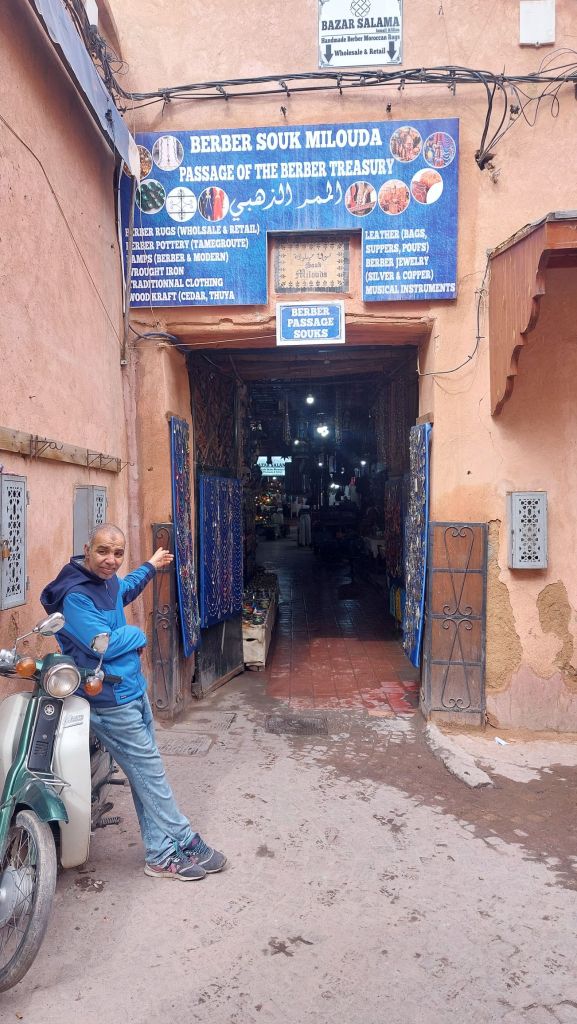
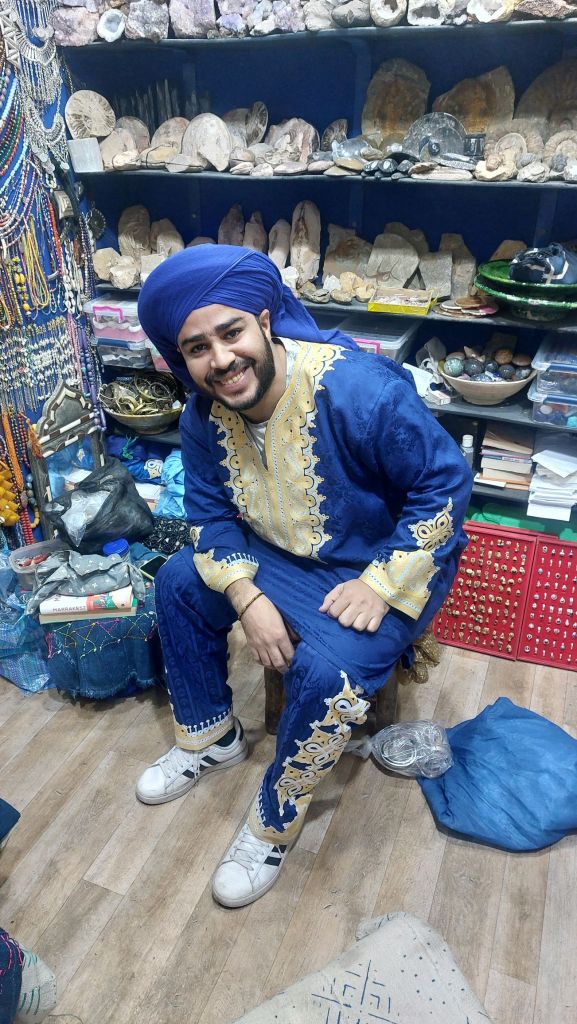
There is everything that you could possibly dream of buying in the wonderful souks of Marrakech.
As you meander through the maze of colourful alleyways, be prepared for a complete assault on the senses.
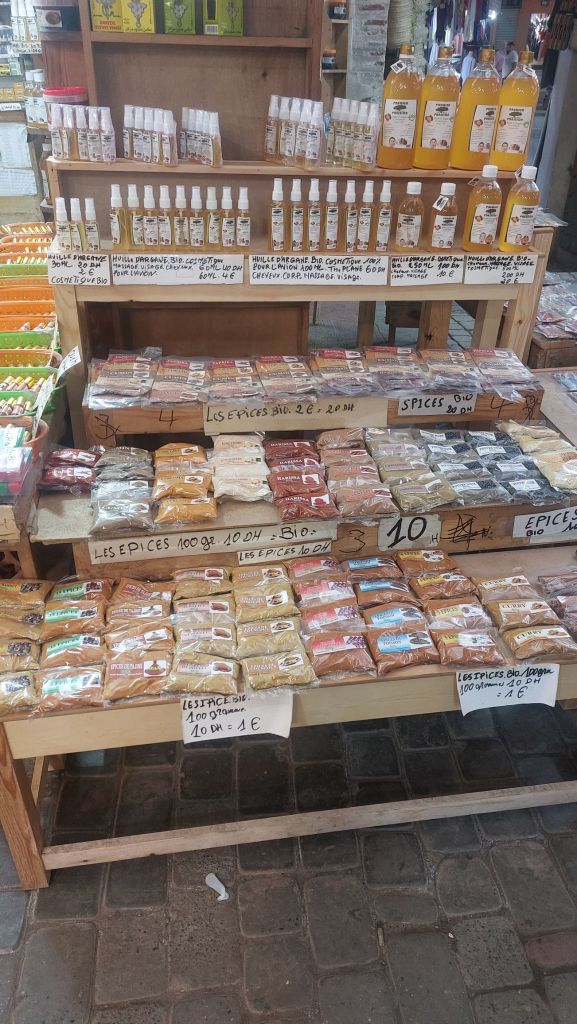
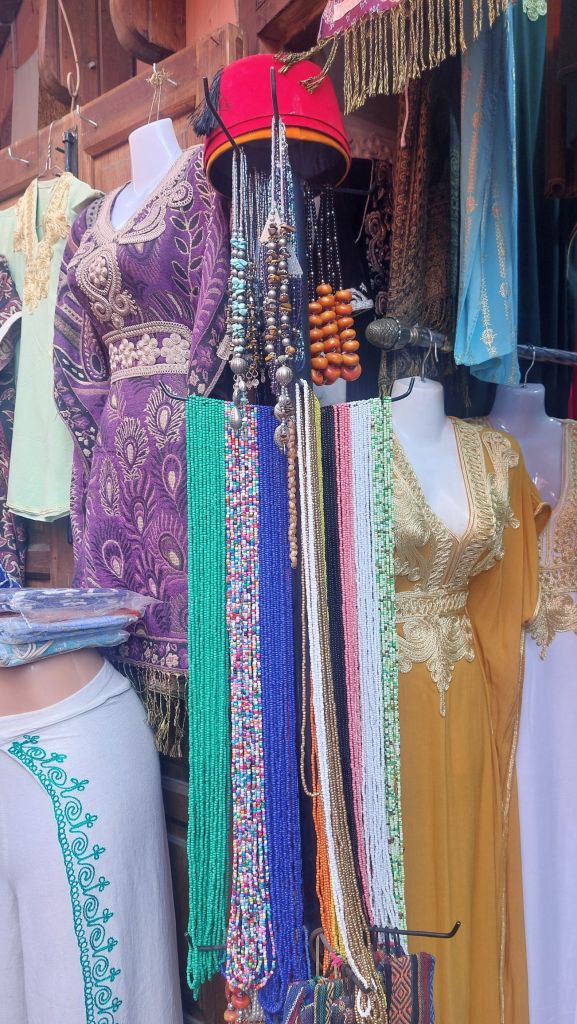
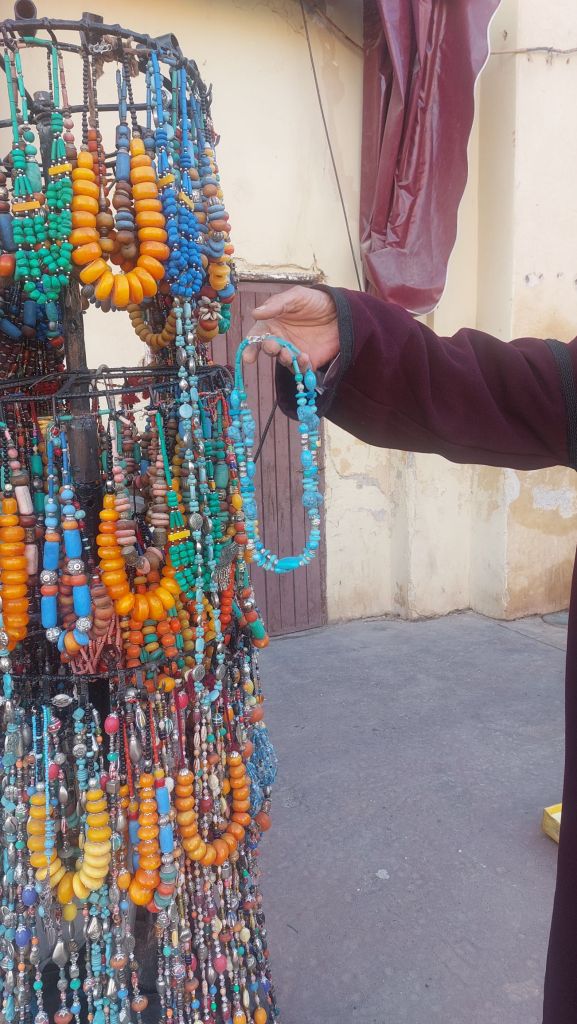
From beautiful jewellery to exotic spices, leather shoes and bags, to Morroccan lamps and ceramics.
It’s all here crammed into narrow alleyways and calling out to be bought and taken back home with you.
Images by Freebird Tracey.
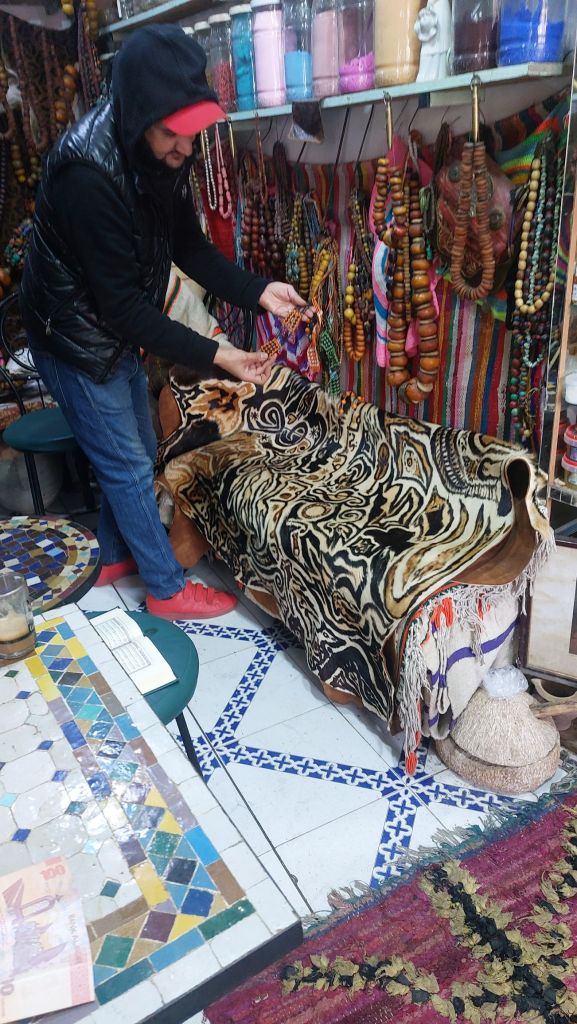
The skilled craftsmanship is astonishing, and you can find areas dedicated to making and selling different things.
There is a separate place for leather goods, a place where metal workers make beautiful Moroccan lamps and metal sculptures.
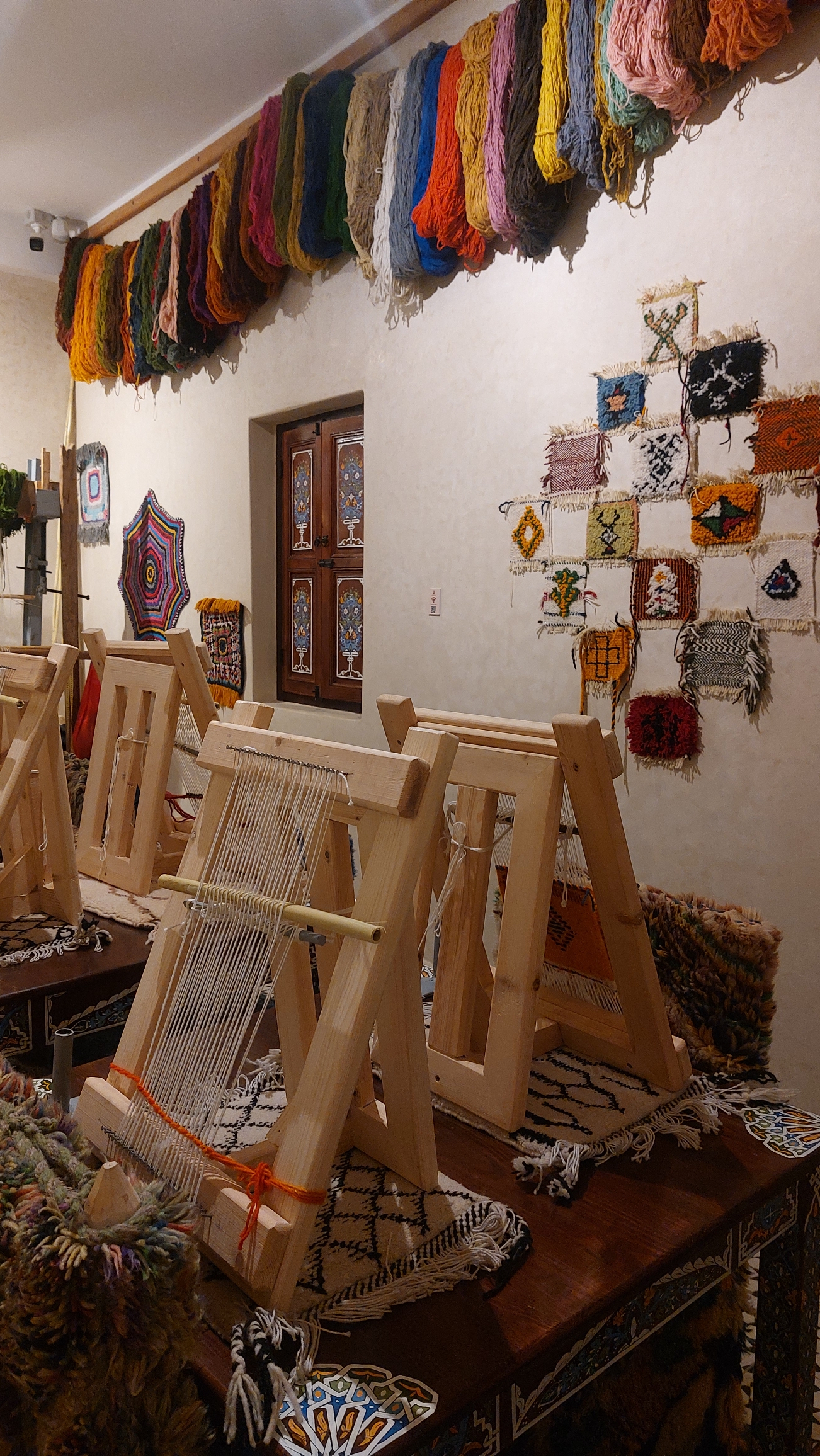
An area where wooden things are handmade and rug weaving is demonstrated.
Images by Freebird Tracey.
It’s a lovely experience watching the locals make their goods to sell, and there is also the opportunity to have a go at making things yourself, such as a pair of babouche shoes.
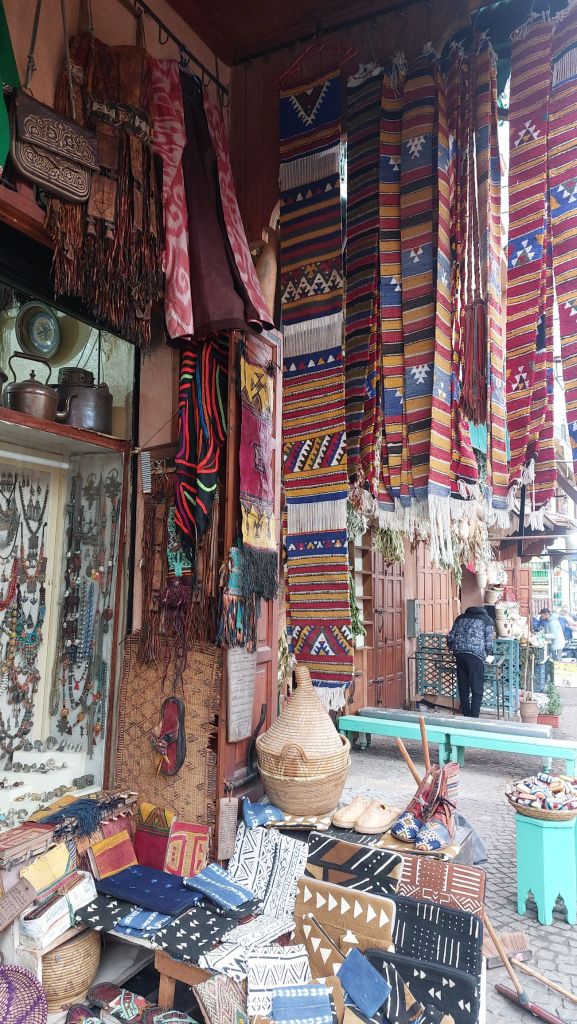
Berber rugs hang proudly around the medina. Each colour and pattern is a feast for the eyes.
Image by Freebird Tracey.
Argan oil and morroccan black soap, orange blossom oil, and gardenia float on the gentle breeze.
The smell is so fragrant in the souks.
Images by Freebird Tracey.
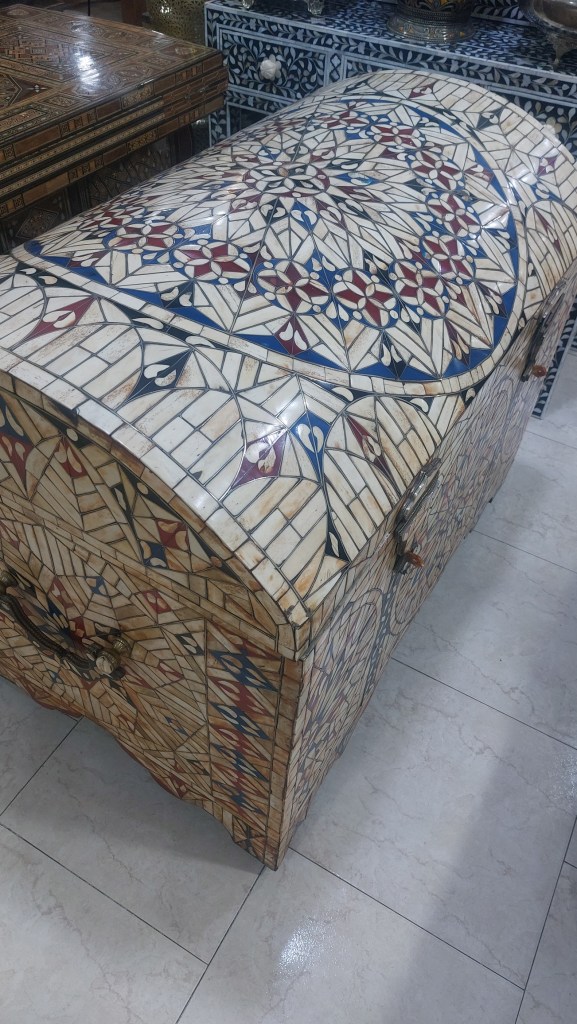
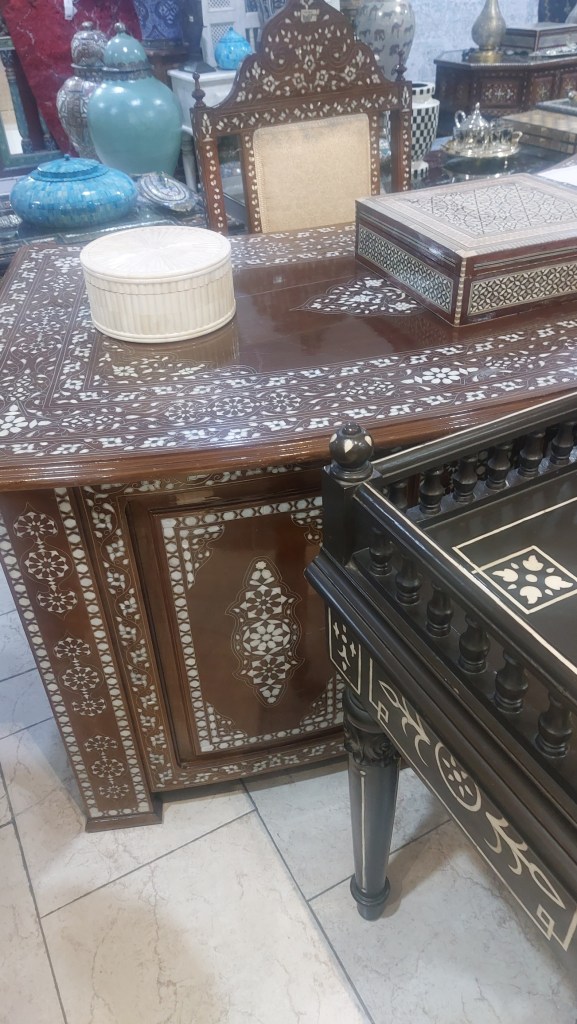
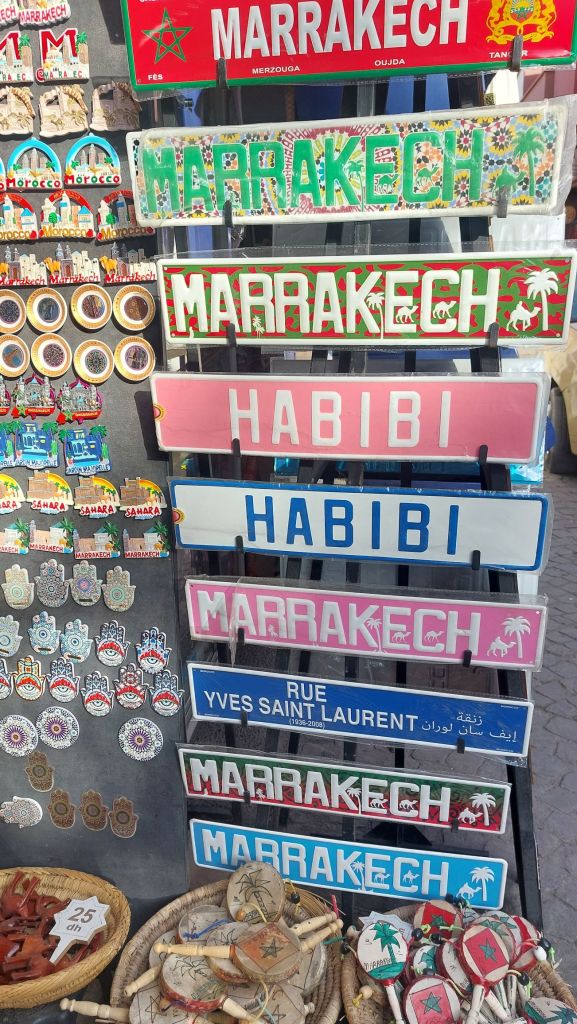
Wooden boxes ornately decorated with mother of pearl, chess sets, and traditional toys tempt you for the perfect souvenir to take back for your family and friends.
Images by Freebird Tracey.
The soft furnishings such as cushion covers made from cactus silk are eye-catching and colourful.
Image by Freebird Tracey.
Then there’s the nuts, sweets, and pastries for sale.
Moroccan sweets are a delicacy, and you’ll find yourself spoilt for choice.
Image by Freebird Tracey.
The medicinal herbs and spices are a cacophony of colours and fragrances.
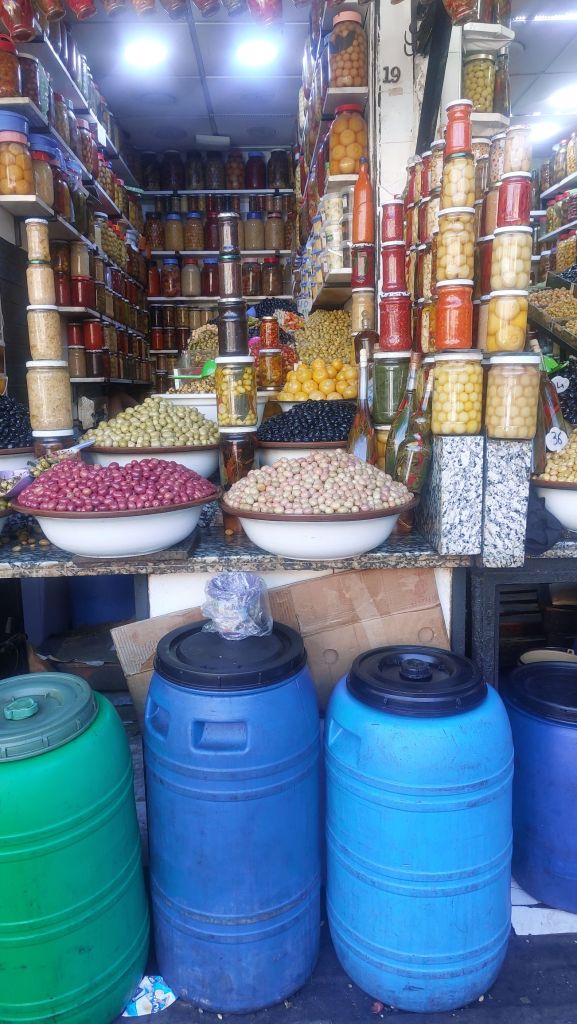
Fresh olives with a hint of spice pop with colour.
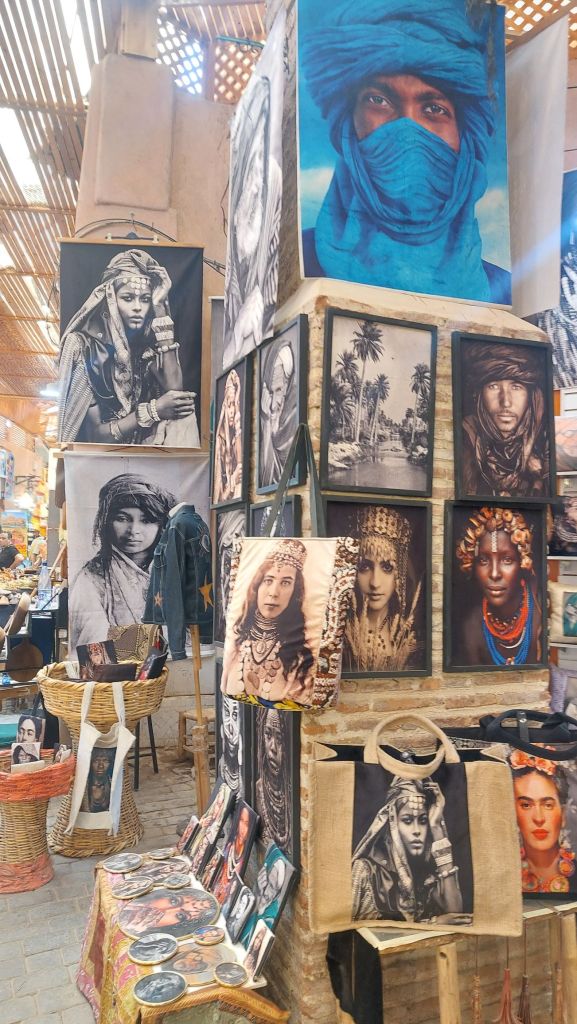
Paintings and prints of traditional Morroccan doors, Amazigh people and camels crossing the Sahara desert.
Images by Freebird Tracey.
For people who love to shop until they drop like I do, Marrakech is an absolute delight.
It’s not all fun and laughs, though.
The souks are incredibly busy with tourists.
You also have to dodge motorcycles, donkeys, and vendors with carts.
You can expect to get lost, but that’s all part of the experience.
No one went into the souks and was never heard from again…
So, fully immerse yourself in the experience and enjoy every minute.
It’s unforgettable.
It will invoke the spirit of camel caravans and ancient trade routes from centuries ago in you.
A way to fully delve into the wonderful culture of Marrakech.
Images by Freebird Tracey.
Here are a few helpful tips to help you enjoy the souks.
First of all, pace yourself.
The souks are very busy and can feel slightly chaotic at times, especially in the heat.
Stop for a drink and rehydrate.
Rest for a while, and try a spot of lunch on a rooftop cafe. There are plenty inside the souks.
Be prepared to haggle. It may seem daunting at first, but you’ll soon get the hang of it.
Stay vigilant, and keep your wits about you.
Marrakech is a safe city, but pick pocketing can happen just like anywhere else in the world.
In crowded, narrow streets, keep your possessions safe in a closed bag at the front of your body.
If you’re lost, look for signs above your head pointing you back to Jamaa El Fna.
Having an orange sim is useful but may not always work in the denser parts of the souks.
If you need help, ask a shop vendor. They’re usually more than happy to help you.
Don’t be tempted to accept directions from locals who may lead you to a friend or family members’ shop so that they can get commission if you buy something.
You may struggle to get away, and you may find yourself seated and drinking mint tea before you know it.
Take time to shop around and walk away if you don’t think you’re being offered a fair price.
You will usually find yourself being called back, and a realistic price can often be reached.
If not, the same items will most likely be found on sale elsewhere in the souks.
Exercise patience.
Remember, this is someone’s livelihood, and it’s a different culture to what you may be used to.
Wages are not very high for most people in Marrakesh, and tourists with money to spend are fair game for boosting the take-home salary of most vendors.
Image by Freebird Tracey.
Although the souks can often feel overwhelming, they are an unforgettable shopping experience.
You will be dazzled by the number of weird and wonderful items on display.
The sights, sounds, and smells will stay with you a long time after you leave this fascinating city.