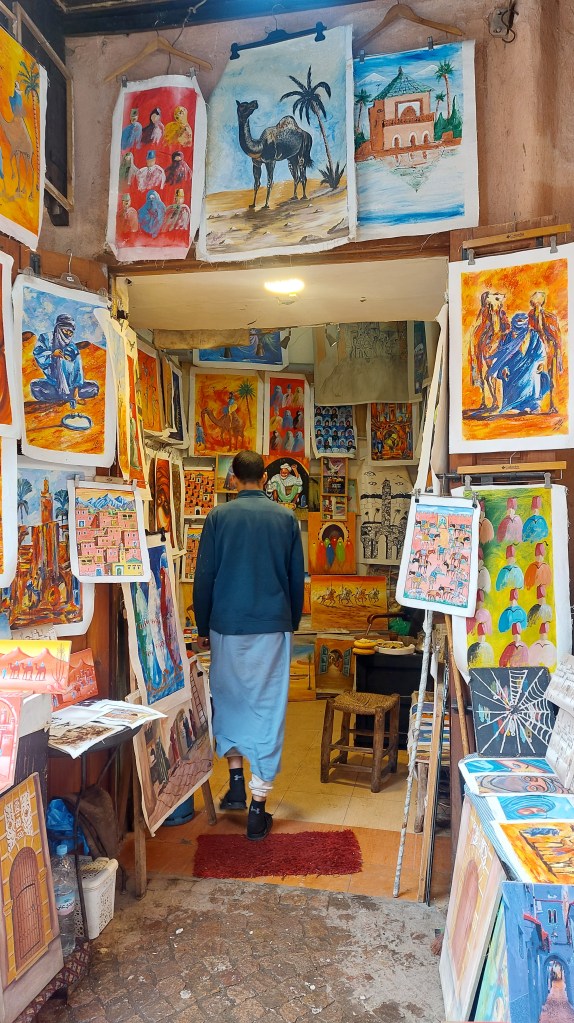
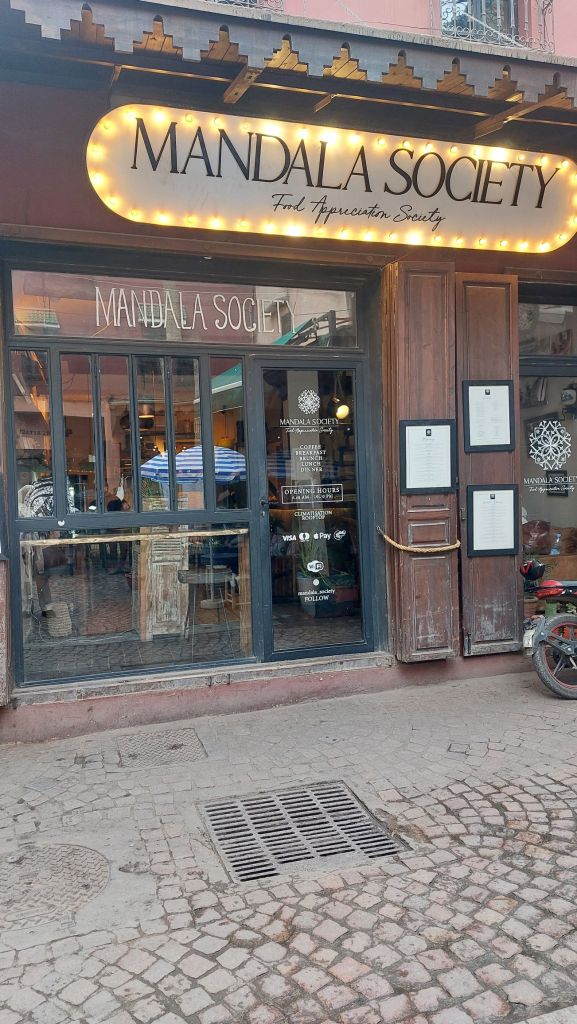
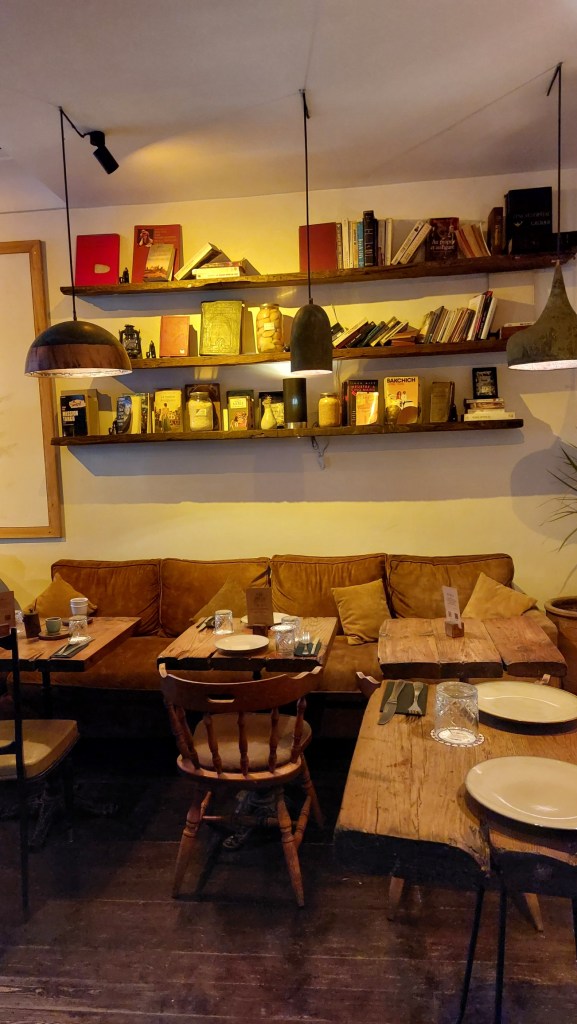
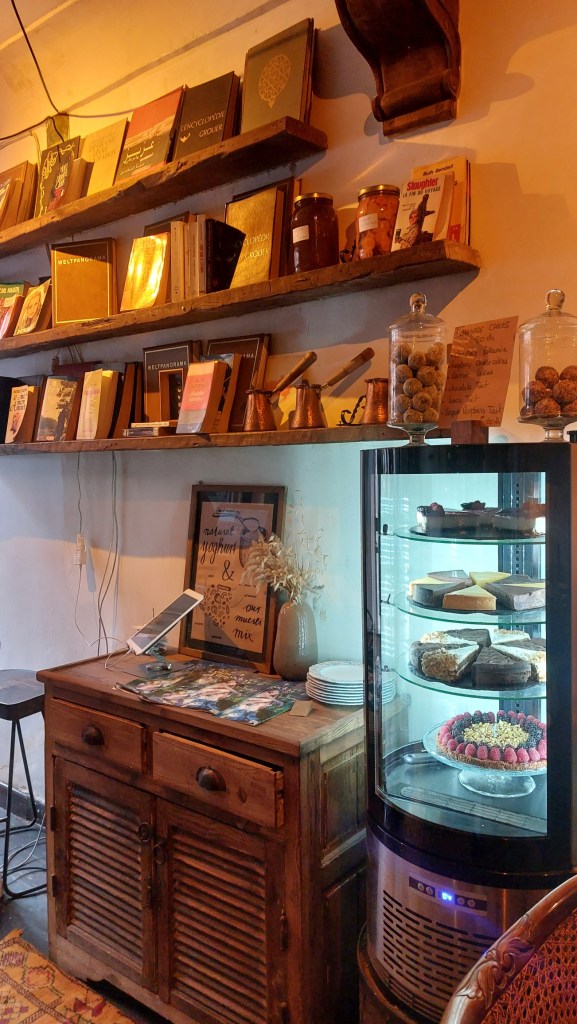
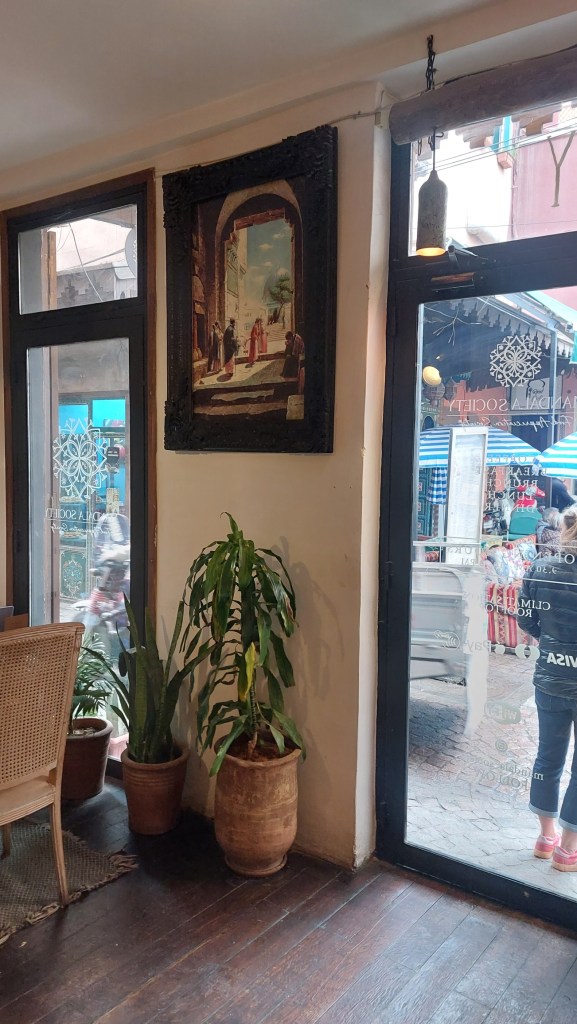
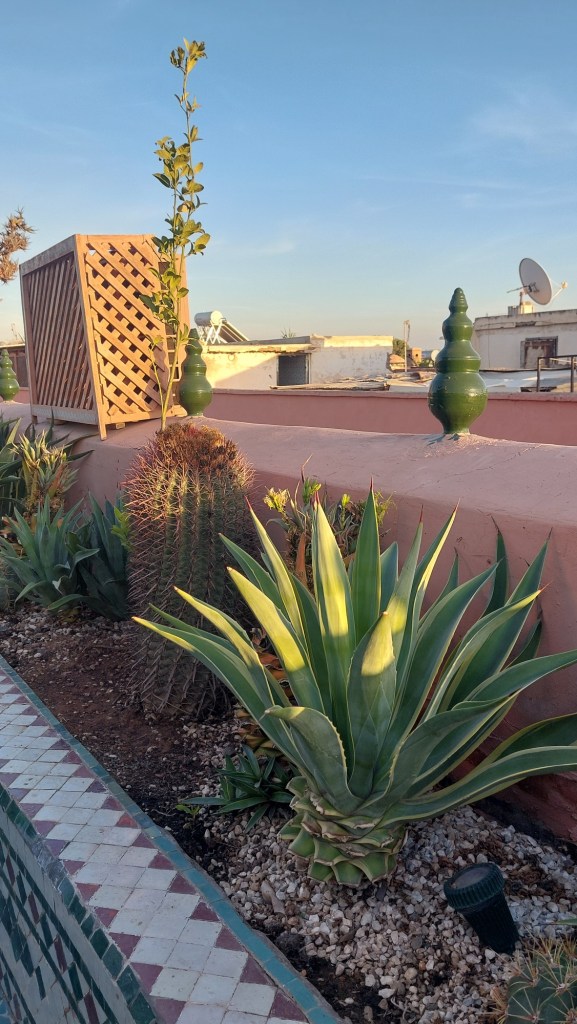
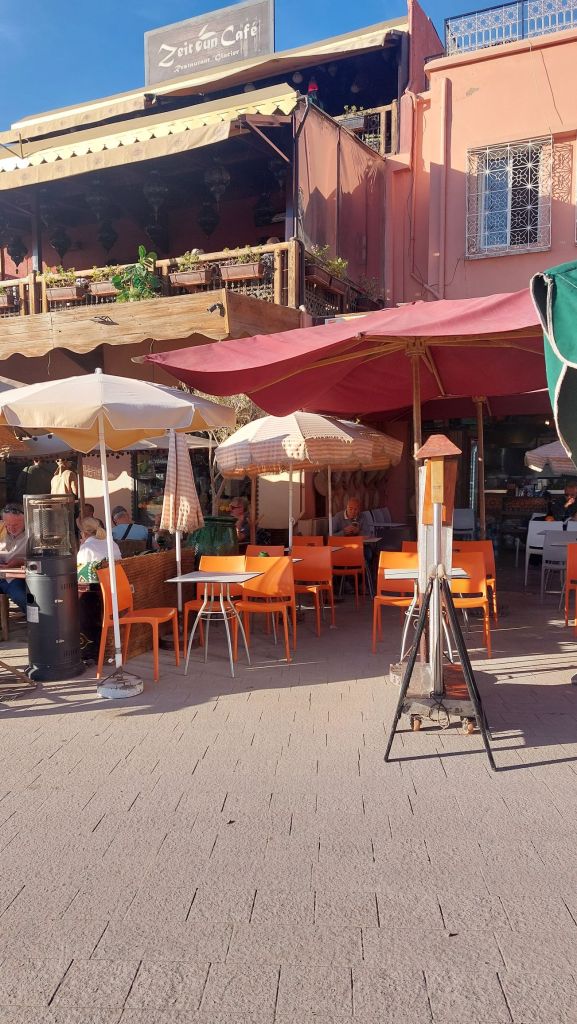
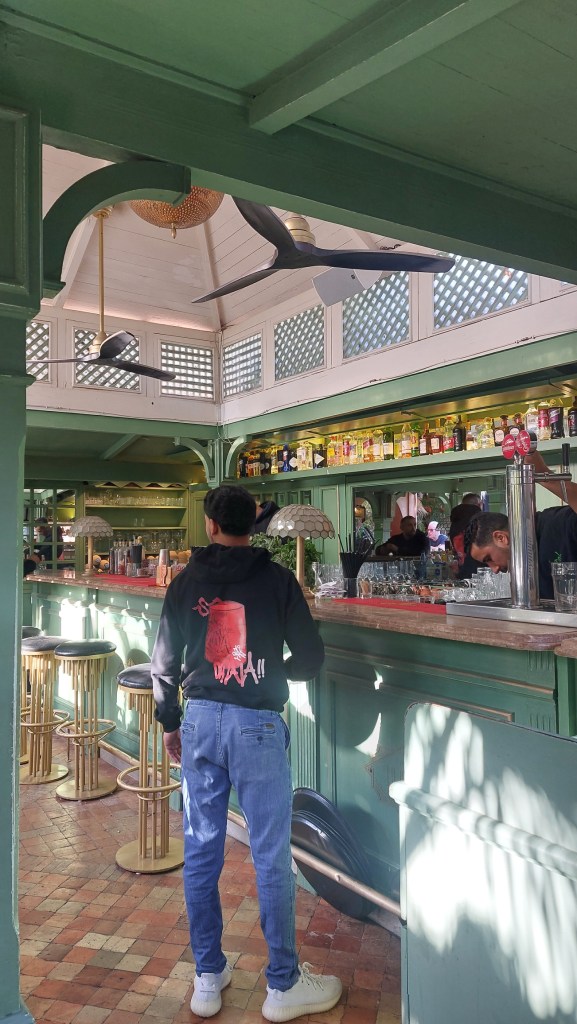
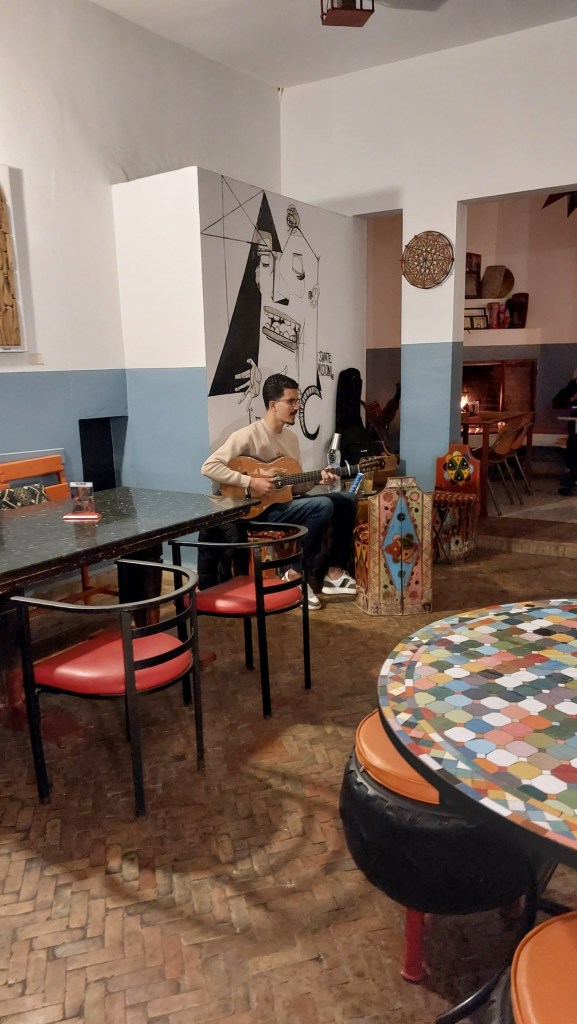
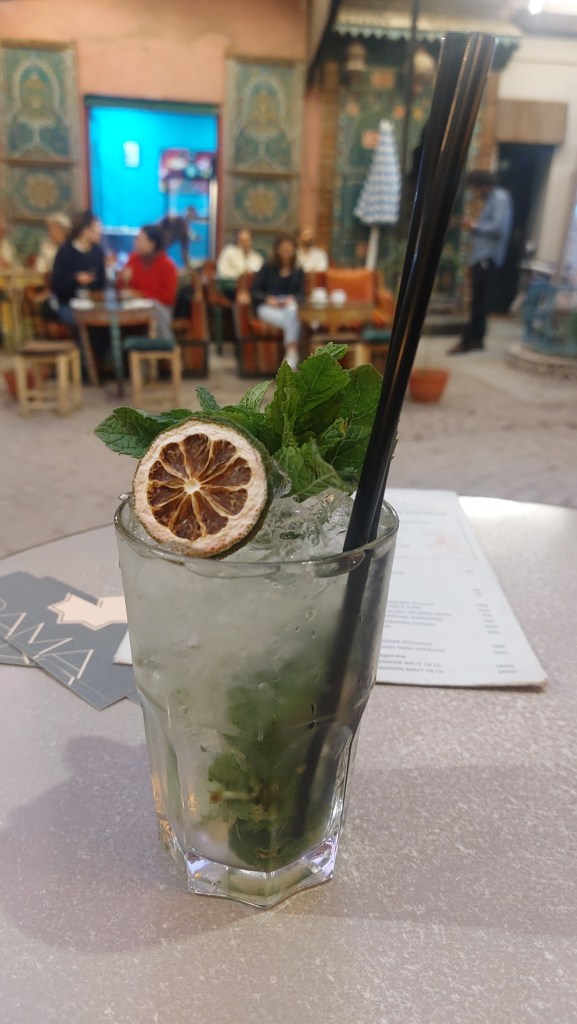
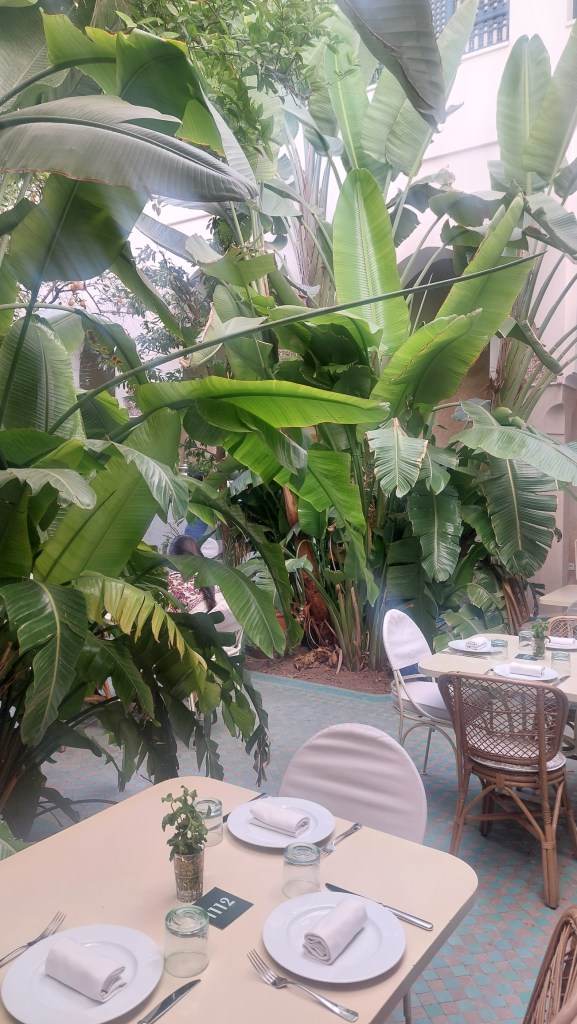
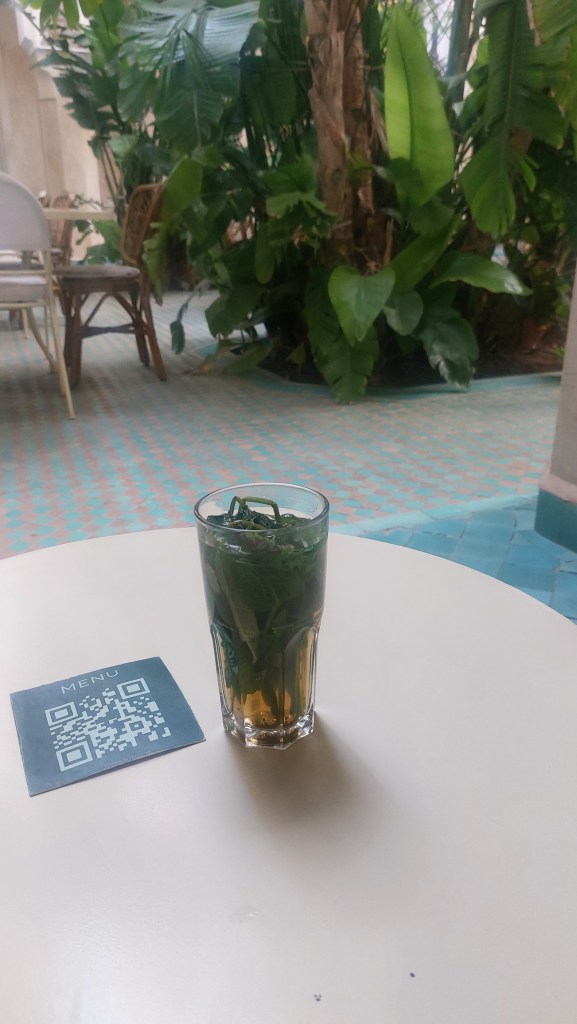
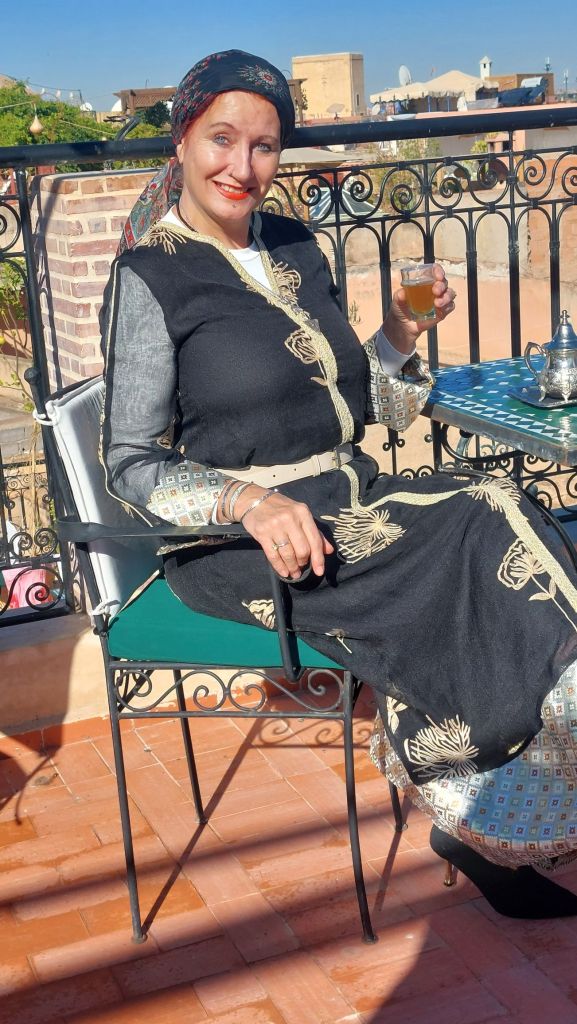
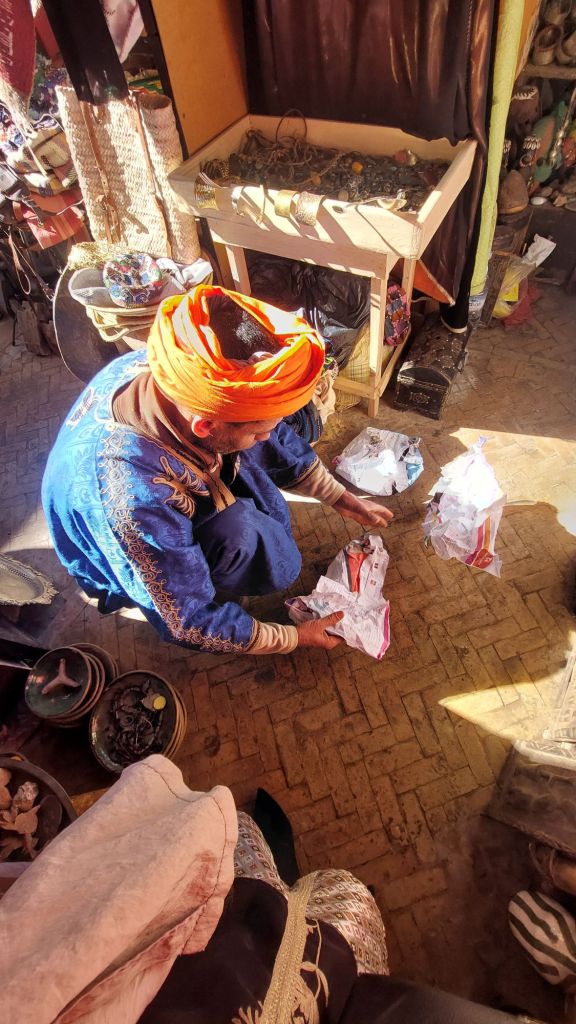
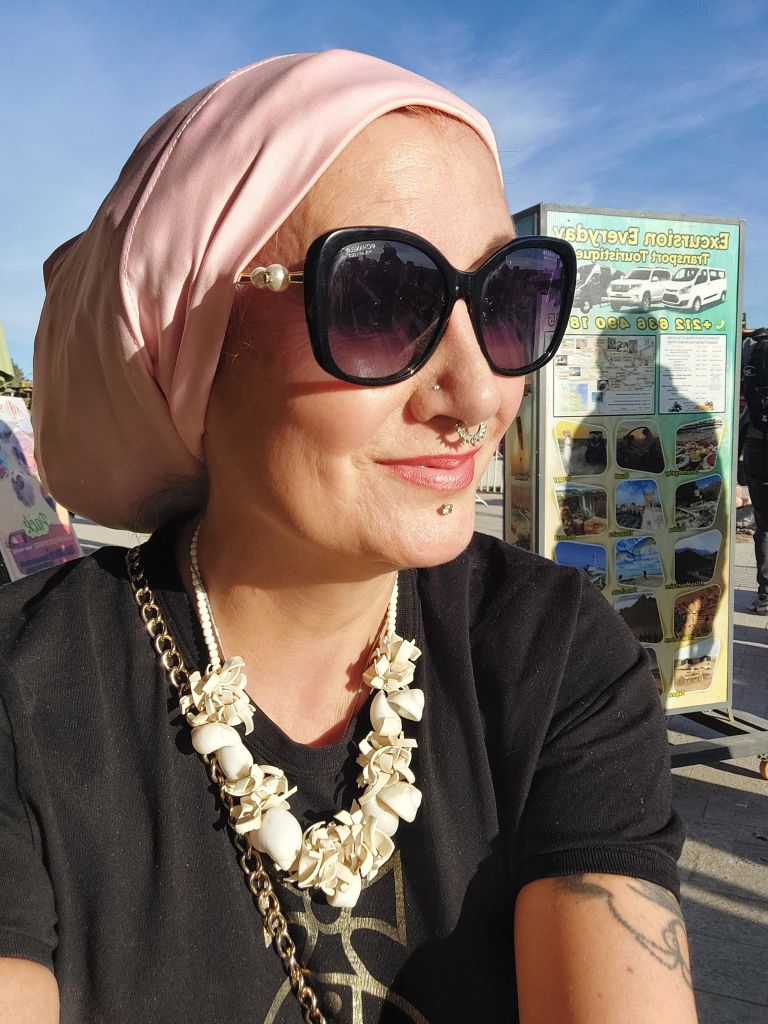
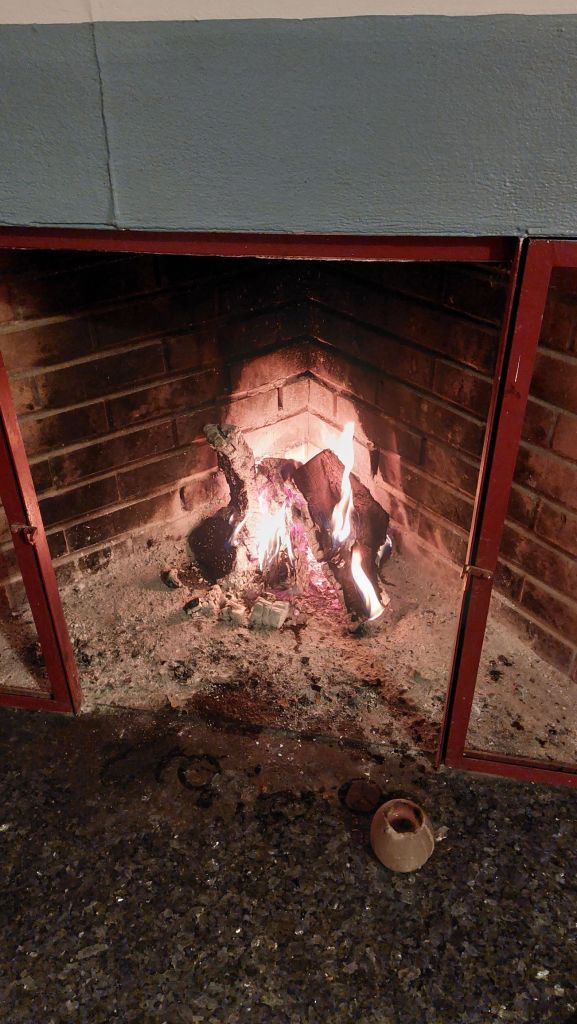
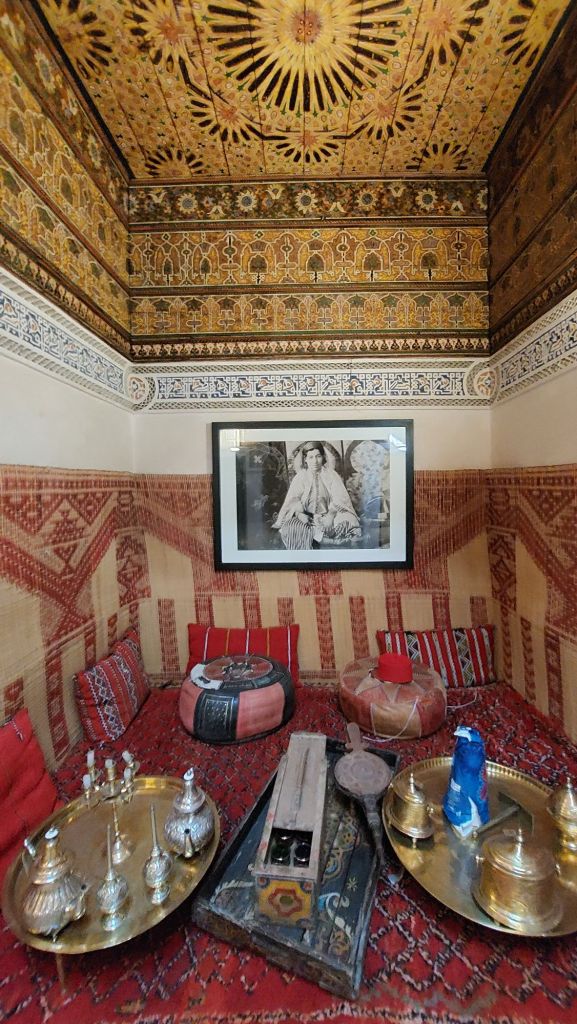
I was lucky to stumble across this wonderful little place in the medina. The music they were playing was enough to keep me happy for a while. There is a chilled, boho vibe in Mandala Society. It’s the kind of environment that attracts all age groups and walks of life.
The restaurant is dedicated to sourcing local ethically produced food that is organic wherever possible. Sustainability is evident from the natural wood, soft lighting, and cosy seating inside the restaurant.
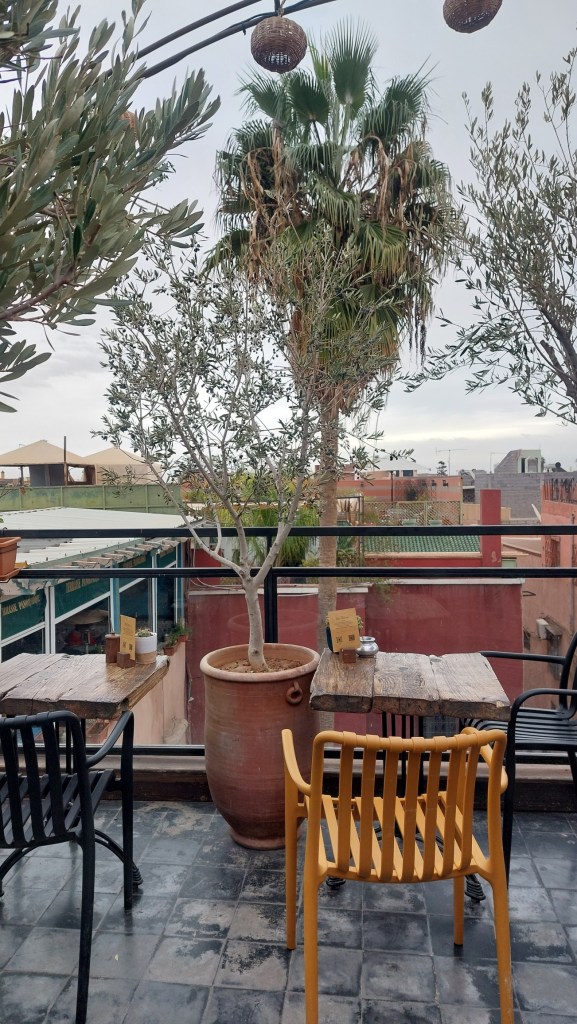
Images by Freebird Tracey.
I went at lunchtime. It was quite busy, so I sat on the rooftop terrace to eat my food. There are views across the medina, and the energy was good up there.
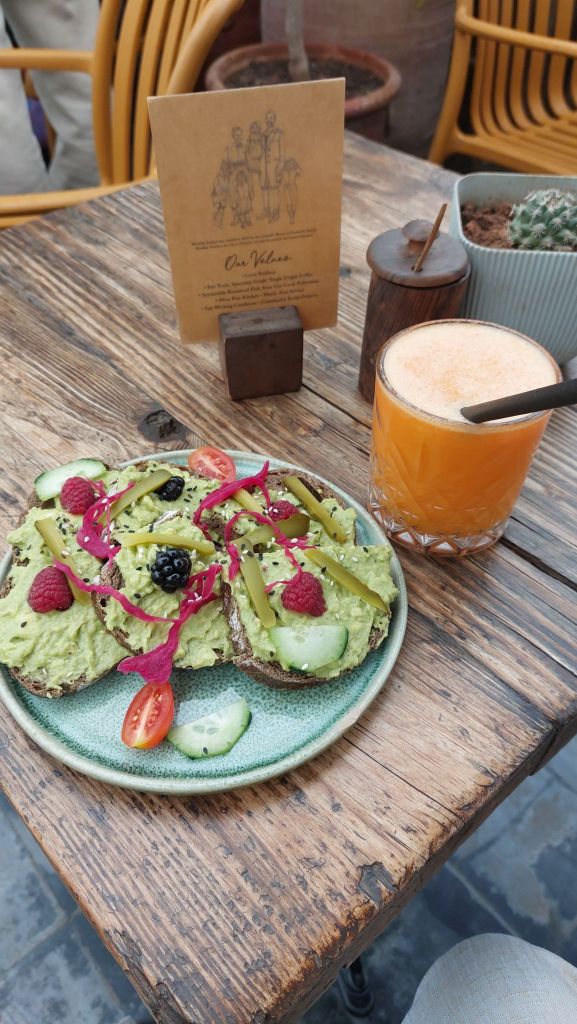
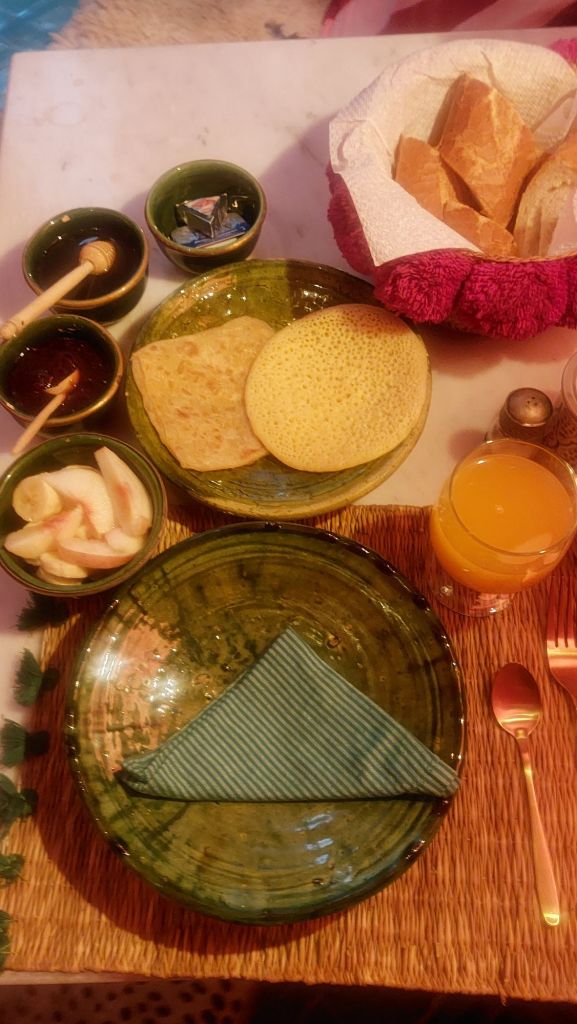
I ordered the avocado toast. The creative way that the chef used seasonal fruit added something special to my meal.
Image by Freebird Tracey.
The restaurant is spread across 3 levels. The decor is modern and bright, with a homely welcoming atmosphere.
The staff are friendly, and the menu includes homemade dishes using ingredients that are ethically sourced.
I sat listening to music by The Doors, Bob Dylan, and other great artists. It was such a relaxed vibe. I could have hung out on the rooftop terrace for hours quite happily.
You can find Mandala Society at 159 Rue Riad Zitoun el Jdid,Marrakech 40000. The opening hours are 9.30am to 10.30pm daily.
Imagine walking around the medina, and you fancy something to tickle your tastebuds. It’s too early for lunch or dinner, but you fancy a snack, something other than sweets and pastries. Marrakech has an abundance of street vendors selling delicious things. Some you may know, some you may not be so familiar with.
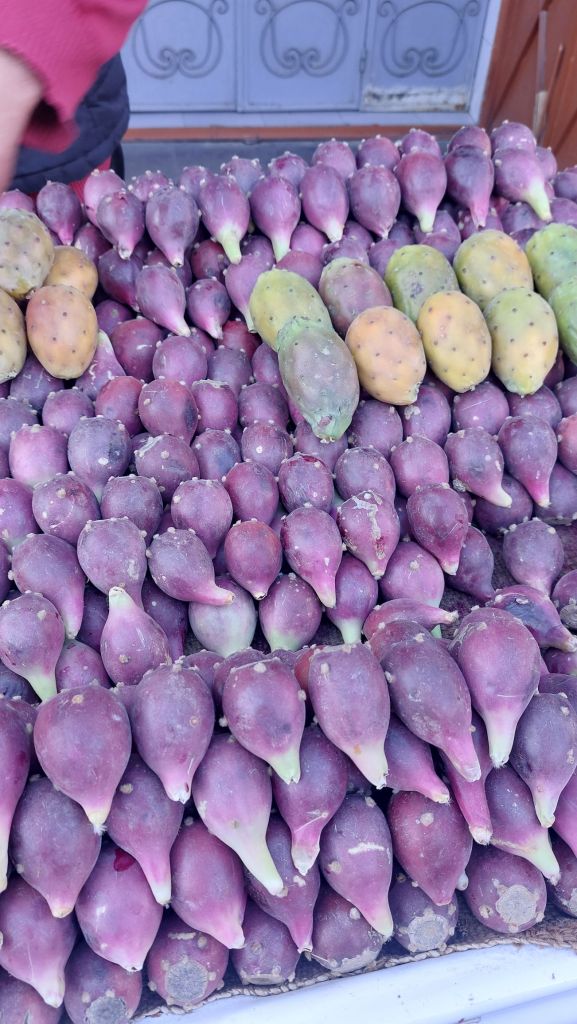
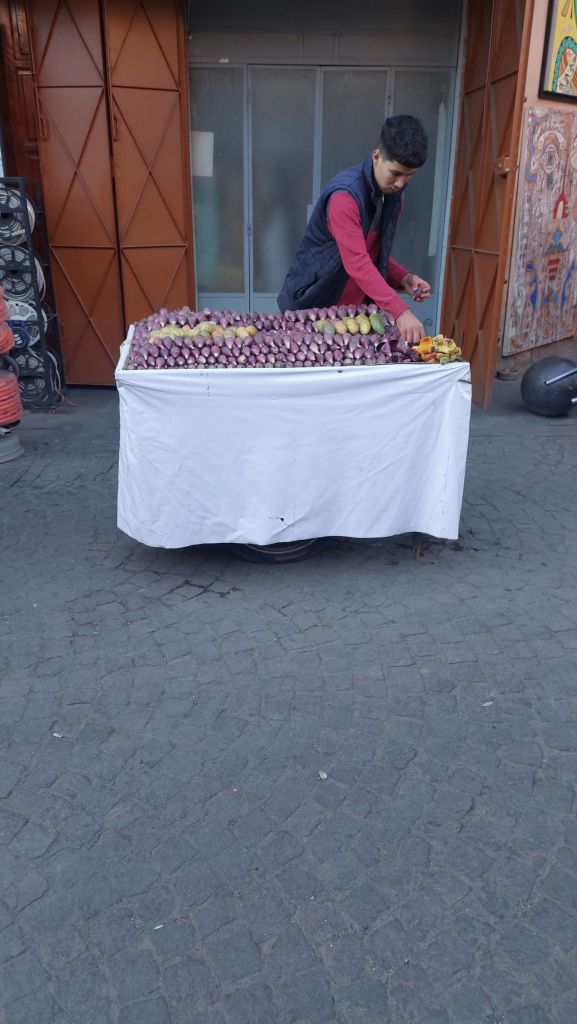
Cactus fruit is commonly seen displayed on carts around the medina in Marrakech. Cactus fruit or prickly pear, as it’s also known, is a spiky, sweet treat in season from July to September. The vibrantly coloured fruit is nutritious, refreshing, and packed with antioxidants. Eating cactus fruit is a great way to hydrate. It’s juicy and full of vitamin C. You can pick one up for 1 dirham, making them a great snack for travellers on a tight budget. If you haven’t tried one before, I would give them a go. They are absolutely delicious and a cheap, healthy alternative to sweets.
Image by Freebird Tracey.
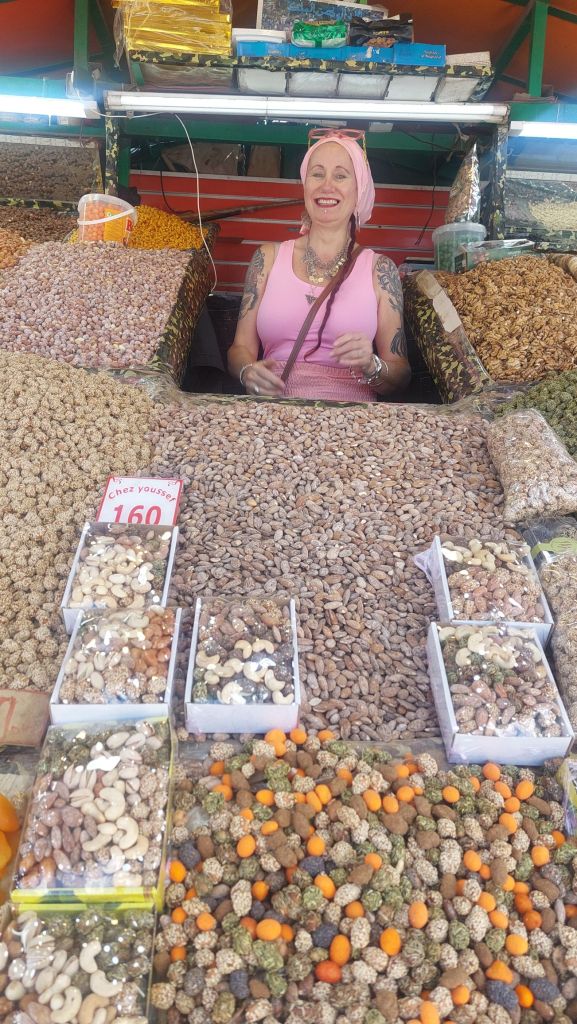
Nuts are central to Moroccan cuisine. There’s a good variety available, including walnuts, cashews, pistachios, and peanuts. Souk Kchacha in the medina is the best place to buy quality nuts. Vendors in the main square also sell packets of mixed nuts in various flavours. They are absolutely delicious. The perfect snack to take with you sightseeing or to fill a gap before your next meal.
Nuts can be filling and calorific, so bear that in mind.Once you pop, you might not stop. The problem for me was which ones to buy from the huge variety on sale. Luckily, I was able to taste them before purchasing any.
Image by Freebird Tracey.
There are plenty of shops selling nuts around the medina in Marrakech. One I recommend is Marche aux Espices in Tinsmiths Square, open from 9.00am until 8.00pm.
Image by Freebird Tracey.
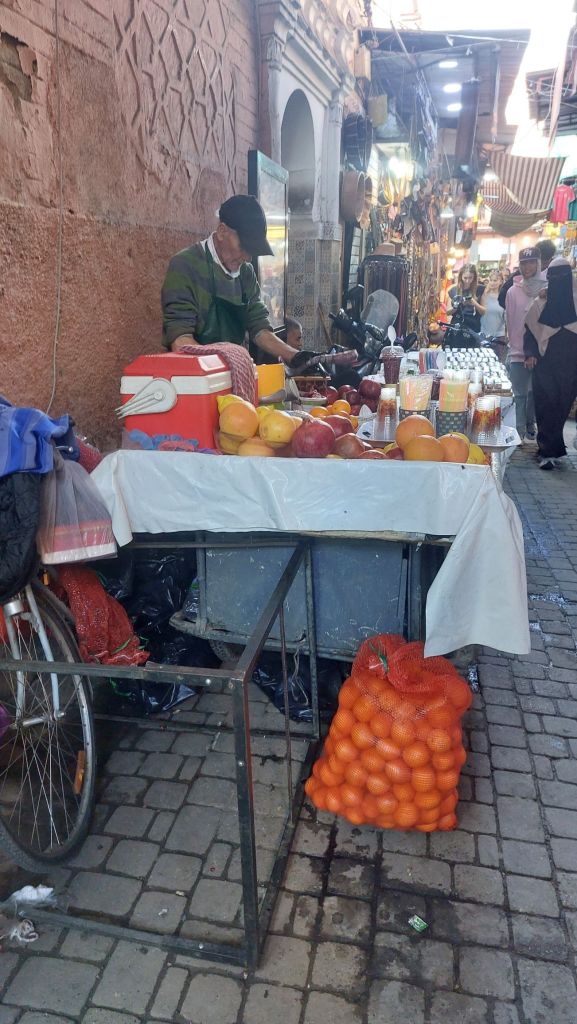
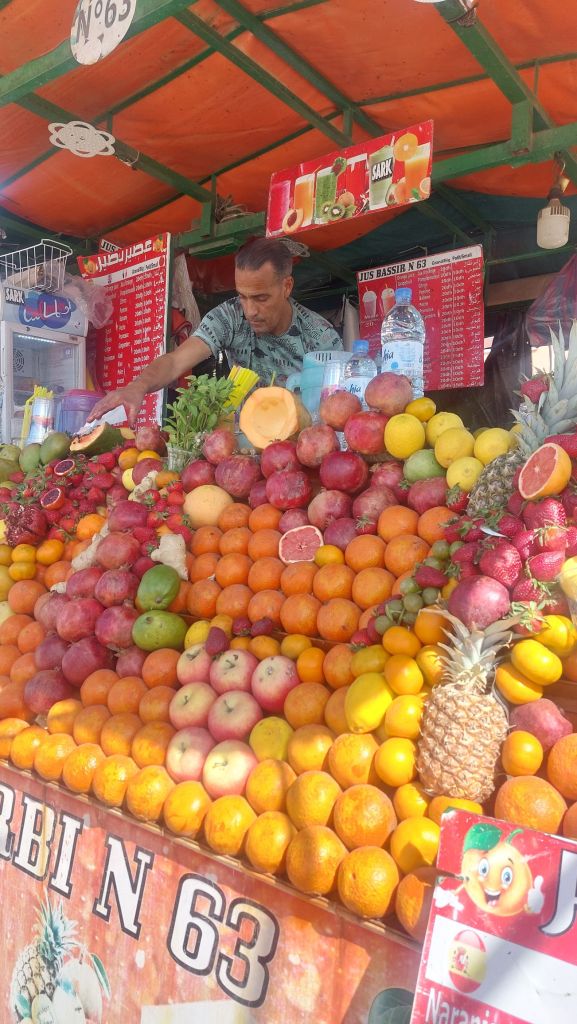
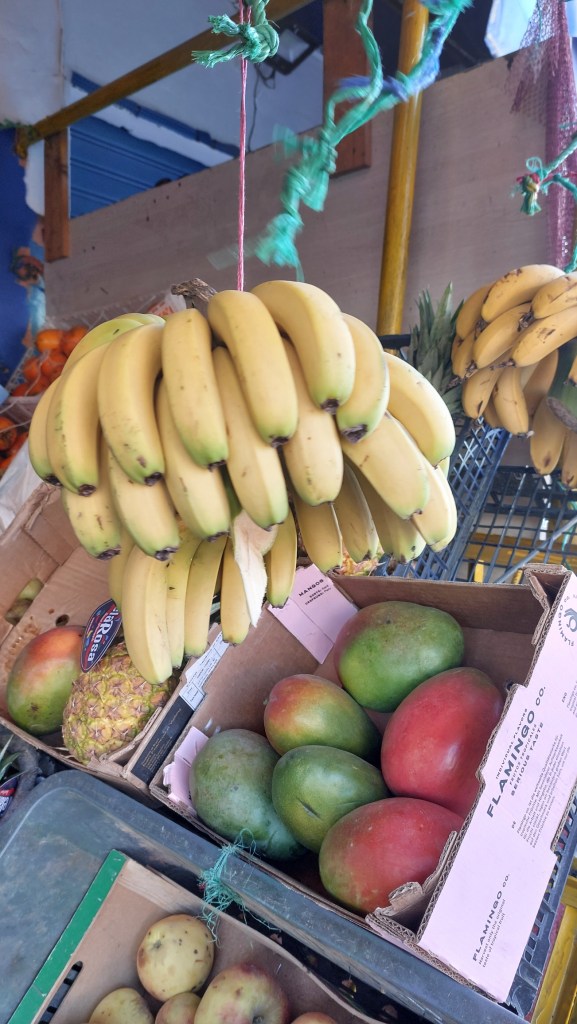
Fruit is everywhere in Marrakesh. Colourful, mouthwatering, fresh fruit displayed around the medina. There is a fruit and vegetable market where locals shop called Market el Kheir. This is a great area to visit if you want an authentic experience buying fresh produce. Its location is M233+FQG AV Ibn, Marrakech. It closes at 11.00pm, and everything is fresh with a lively, bustling atmosphere.
There are carts all around the medina selling a wonderful variety of fruit, and Jamaa El Fna is abundant with fruit sellers plying their trade.
Image by Freebird Tracey.
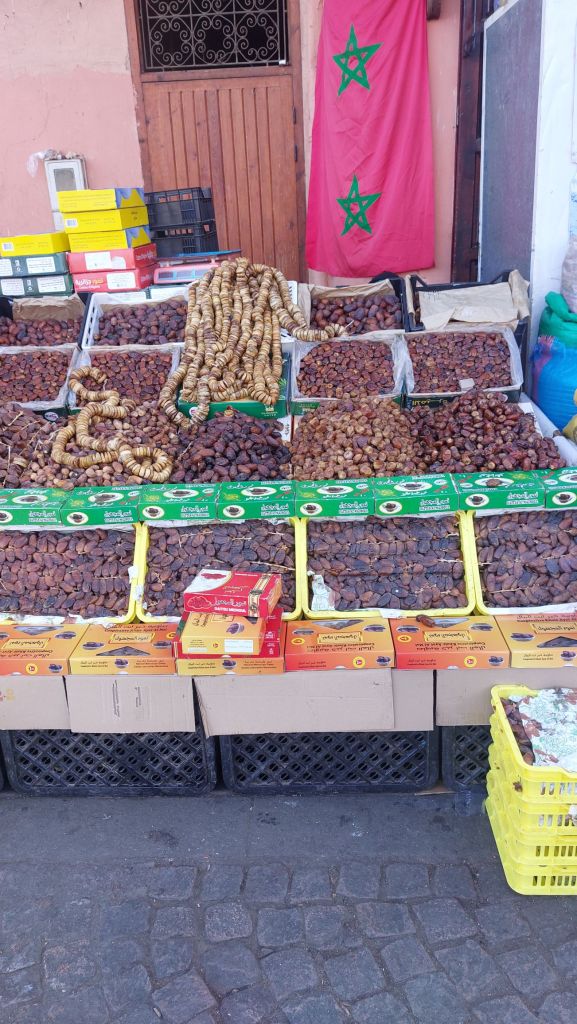
One thing you really ought to try when you come to Marrakech are the dates. Dates are a staple in Marrakech. The most popular is the large sweet variety called Medjool and the popular Boufeggous, highly regarded by the local people. Medjool dates, also known as ‘The King of Dates’, have a caramel like flavour and soft texture. They are mainly grown in the Tafilalet region of Morocco and are rich in potassium, fibre, and energy. If you’re flagging from all the sightseeing, they’re the ideal pick me up.
The most common location for purchasing dates is from vendors in Jamaa El Fnaa or in the medina. They are considered safe to eat but get them packaged if you’re taking them home. This will avoid issues with customs at the airport.
I was pleasantly surprised by the soft fleshy texture and the size of dates in Marrakech. They tasted really fresh, completely different from the ones back home. I was so impressed that I purchased some to bring back with me. At the time of writing, dates average at about MAD 99.57 and MAD 248.92 per kilogram.
Fruits still contain natural sugar, so moderate snacking is advisable for obtaining optimum health.
The perfect day in Marrakech begins watching the sunrise on a rooftop terrace in my riad. I can hear birds singing in the courtyard below. I hear the sound of the medina as it gradually wakes up and comes back to life. I watch cats prowl along the rooftops. Below me, I hear the clattering of plates as staff prepare breakfast.
A glass of freshly squeezed orange juice hits the spot perfectly. I enjoy a breakfast of msemen pancakes with homemade jam, amlou, and honey.
Image by Freebird Tracey.
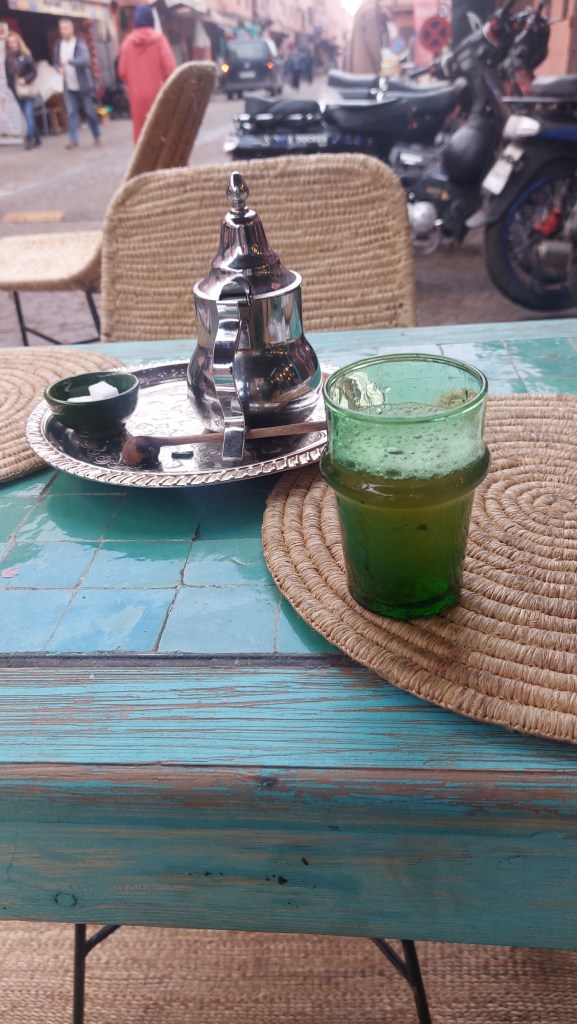
After my shower, I head out into the medina for a glass of mint atay. I sit outside a cafe overlooking the main square. I observe the vendors setting up their stalls for the day. The street entertainers are ready to entice crowds of tourists. The local ladies pass by on their way to the market for fresh herbs and spices.
Images by Freebird Tracey.
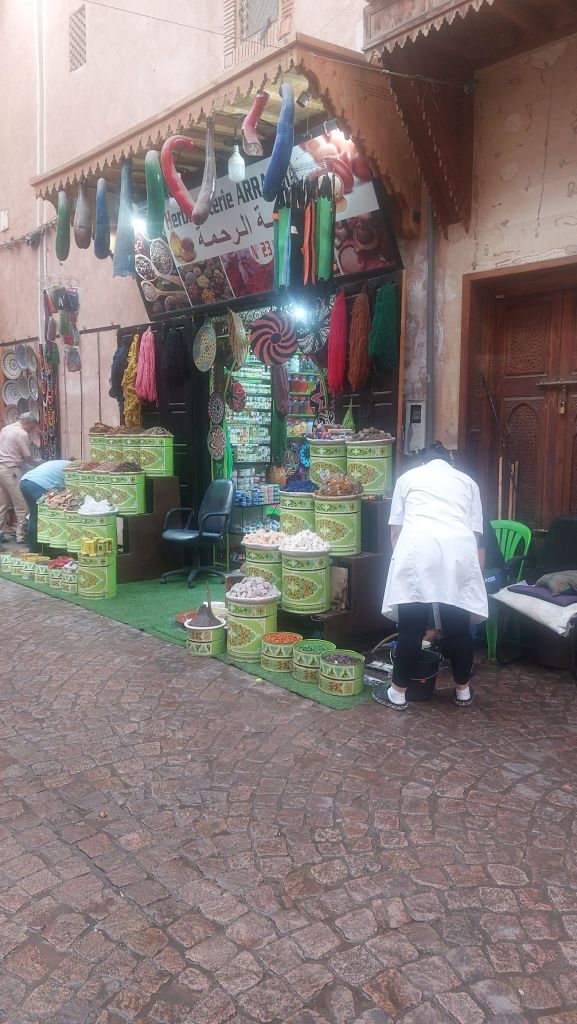
My next destination is the souks before they get busy. Vendors are eager for their first sale of the day, and bargaining is easier early in the morning. The array of things on offer is a sight to behold.
Images by Freebird Tracey.
Cats gather for a few morsels off the butcher, and locals toss titbits for them to eat. They vye with each other for the perfect spot to laze in the sunshine.
Images by Freebird Tracey.
I check out the Amazigh jewellery, the argan oil, and the beautiful ceramics on display. At the same time, I dodge motorcycles and donkey carts as they make their way through the narrow alleyways. I buy a few souvenirs and then decide it’s time for a light snack.
Images by Freebird Tracey.
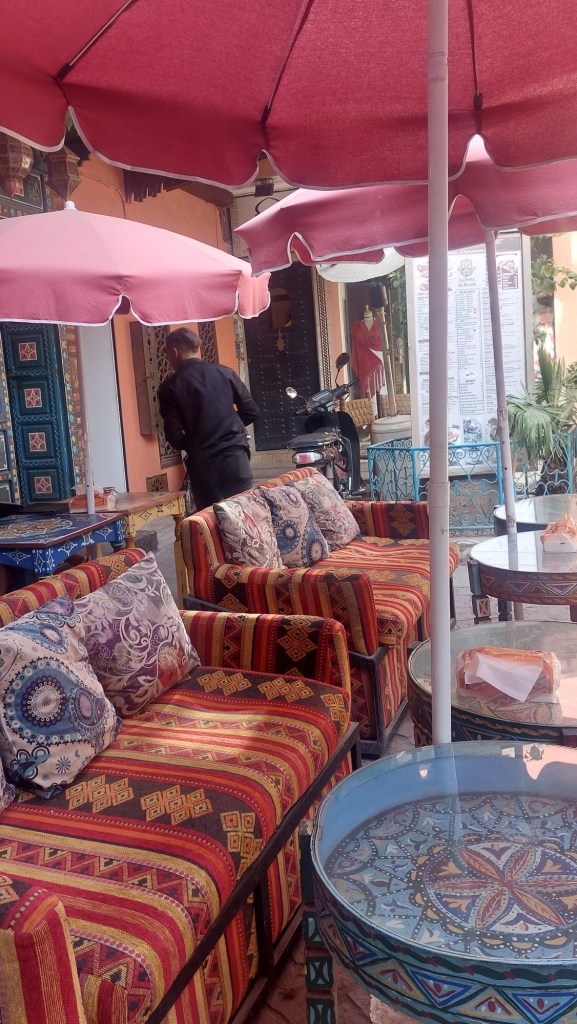
A cafe with colourful outdoor seating looks inviting. I order a selection of Morroccan pastries and a pot of mint tea. I sit for a while people watching, enjoying the scenes that are unfolding around me. It’s fascinating watching daily life in the medina. Tourists look in awe at things for sale, and vendors call out to them with friendly banter.
Image by Freebird Tracey.
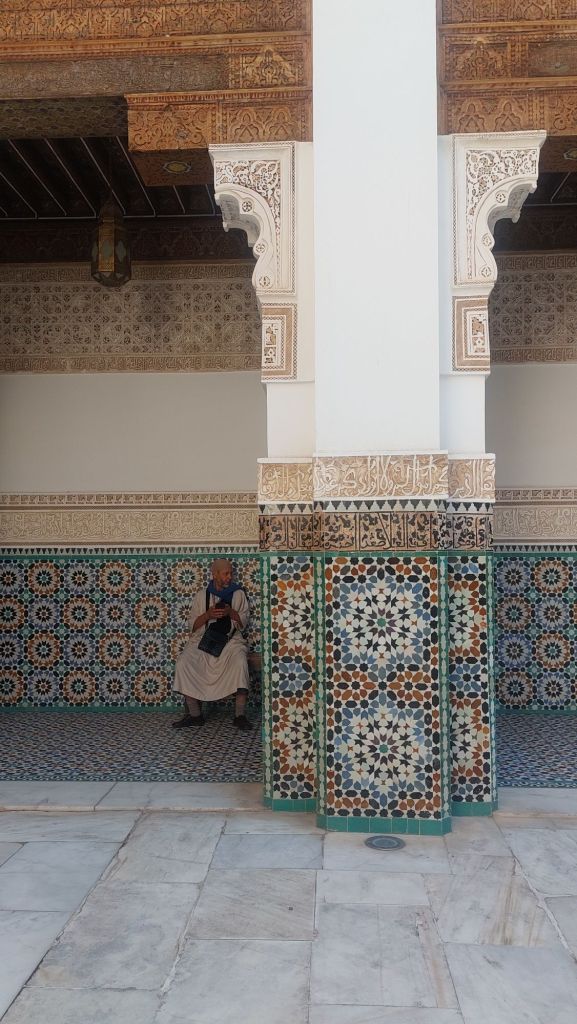
After recharging my batteries, it’s time to do some sightseeing. I head towards Madrasa Ben Youssef for an opportunity to get some photos of the stunning architecture. I learn the history of one of the most important koranic colleges in Morocco.
Image by Freebird Tracey.
Afterwards, I make my way to the gardens of the Koutoubia Mosque. The medina is getting busy, and I want to sit somewhere less crowded.
I relax amongst the beautiful trees, admiring the most famous landmark in Marrakech. As I sit near the fountain, it feels cool and refreshing as it sprays into the air.
Image by Freebird Tracey.
I treat myself to a sugarcane juice from a vendor. It goes down well, and the day is getting steadily warmer.
Image by Freebird Tracey.
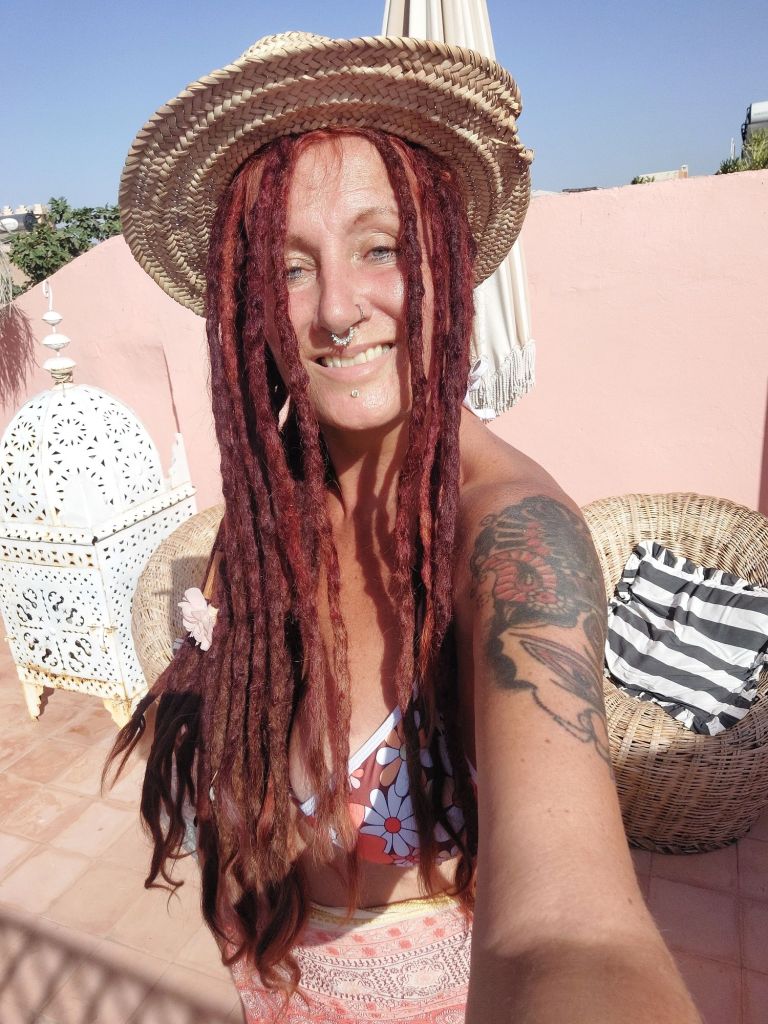
By now, the heat is quite intense, so I return to my riad for a rest. I make my way onto the rooftop terrace to sunbathe and read a book. The call to prayer echos across the medina. It’s a familiar sound that can be heard in Marrakech five times a day.
Image by Freebird Tracey.
Soon, it’s time to get ready for dinner.
I go to La Pergola rooftop bar for a couple of cocktails beforehand. It’s a lively atmosphere. There are people enjoying a drink and chatting with friends.
Images by Freebird Tracey.
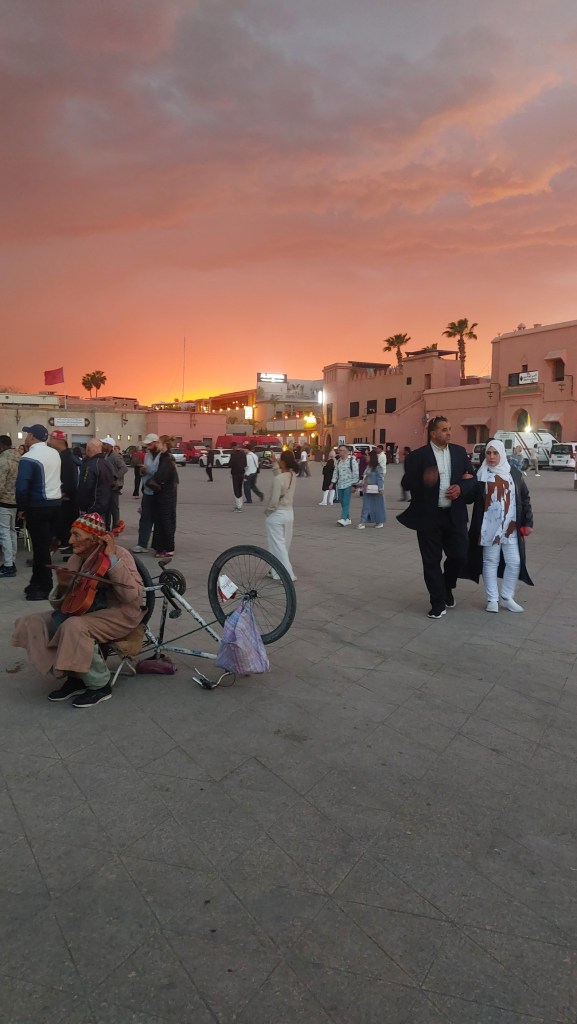
Next, it’s time to head towards Jamaa El Fna. The energy is electric. Food vendors are touting for business. There are dancers, drumming, and gambling games. Crowds of tourists gather to witness the spectacle. The smell of food cooking makes me hungry. I decide to find a nice place to dine.
I choose a place that has a rooftop terrace overlooking the square. It’s a perfect spot to watch the sunset. As the sun slowly disappears behind the Koutoubia Mosque, it’s a spectacular sight. Everywhere has a golden glow.
Image by Freebird Tracey.
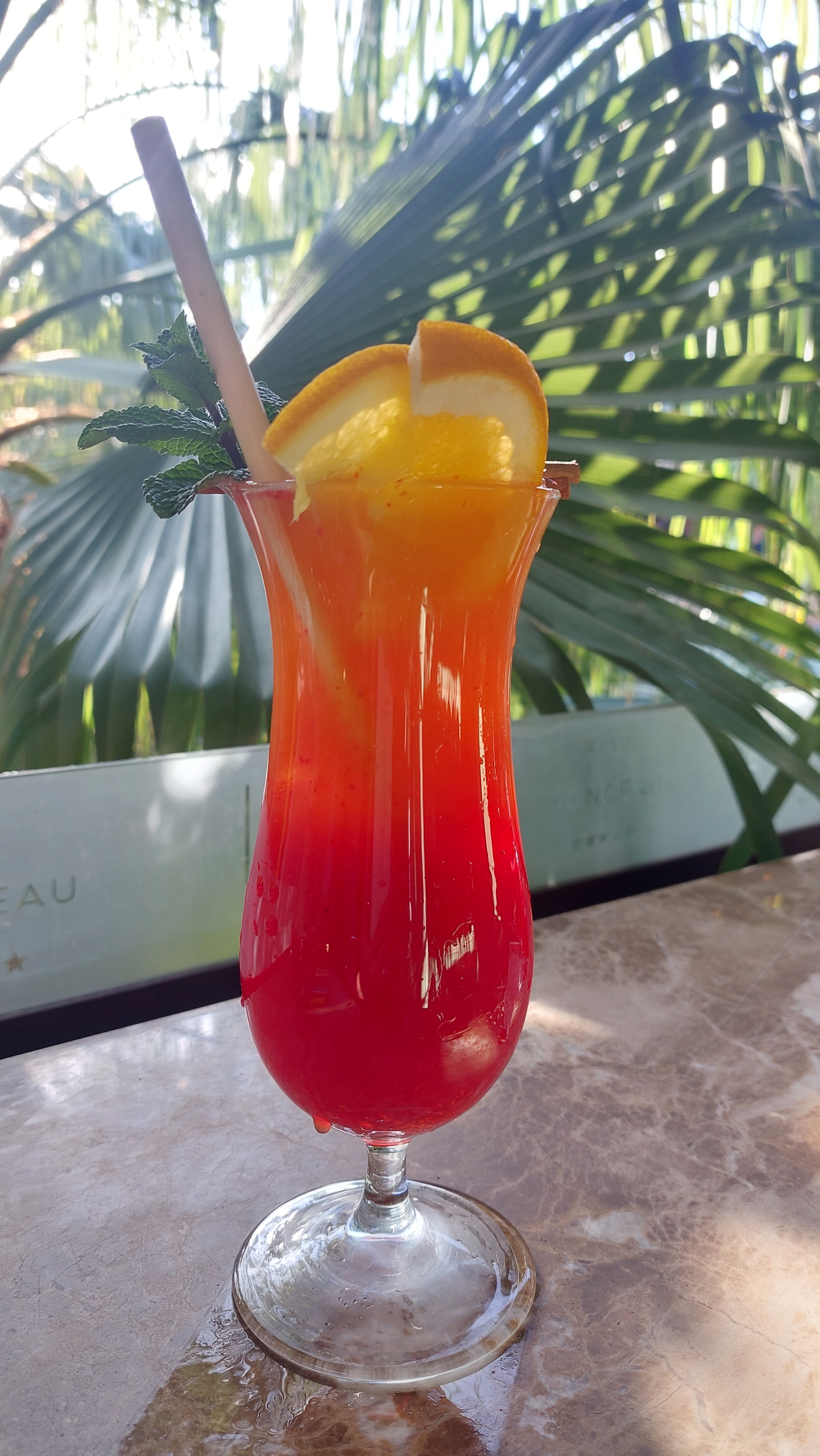
I order a traditional tagine, which is flavourful and aromatic. I’m tempted by the exotic fruit smoothies on the menu. I treat myself to one containing dried fruit, and it’s delicious.
The evening is still young, so I take a leisurely walk to the kasbah. I spend the rest of my evening at the famous Clock listening to some live music and traditional storytelling.
Image by Freebird Tracey.
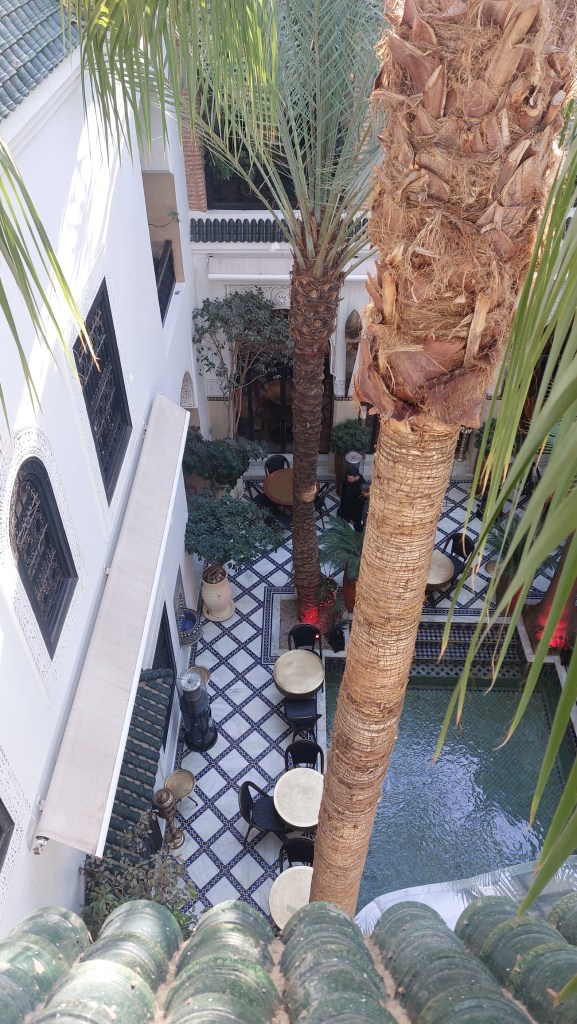
After immersing myself in the culture of Morrocco, I head back to my riad. I sit in the peaceful courtyard reflecting on the day I’ve had.
I have learnt some history about the culture of Marrakech. I have tasted delicious food. I watched a beautiful sunset and chatted with friendly locals. I have successfully navigated my way through the souks without getting too lost. I also have some nice souvenirs to take home.
I fall asleep. It’s been a perfect day, and I’m ready to do it all again tomorrow.
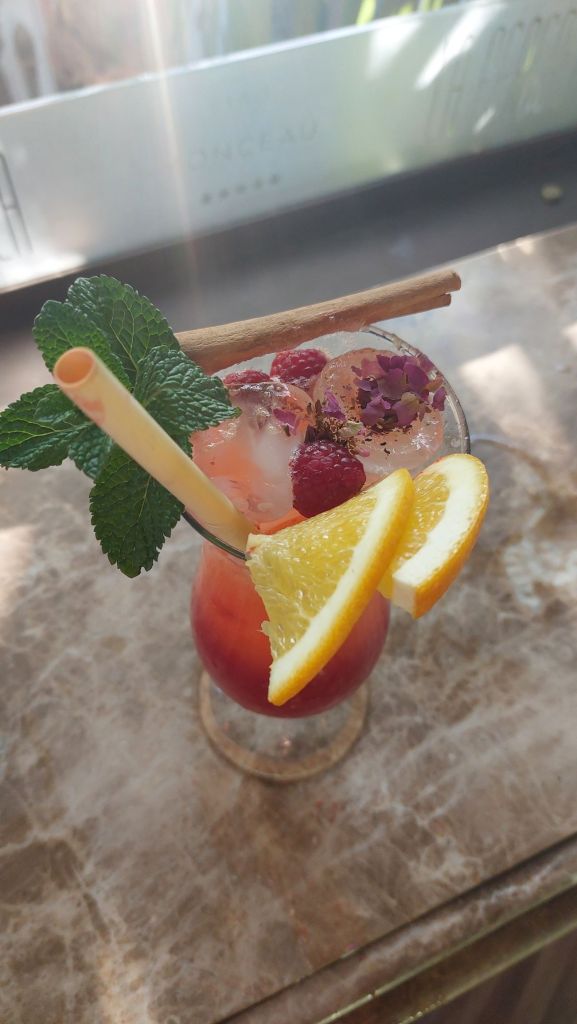
Marrakech is a smoothie lover’s dream come true. Smoothies can be found everywhere. They are one of the most vibrant and refreshing drinks in the medina.Using the freshest fruit from the local market and packed with nutritional goodness, smoothies are the perfect start to the day. I regularly enjoy a detoxifying smoothie for its positive health benefits or as a pick me up during the day. There is no shortage of exotic fruits and vegetables in Marrakech. The markets are alive with colour.
Image by Freebird Tracey.
Literally, everything goes into making a delicious smoothie, and in Marrakech, they seem to have perfected the art. Fresh fruit, dried nuts, spiralina, cucumber, avocado, berries, banana, and spinach are just some of the healthy ingredients blended together to make a smoothie. There is an abundance of fruit around the medina, so you can expect colourful, fresh ingredients every time.
Image by Freebird Tracey.
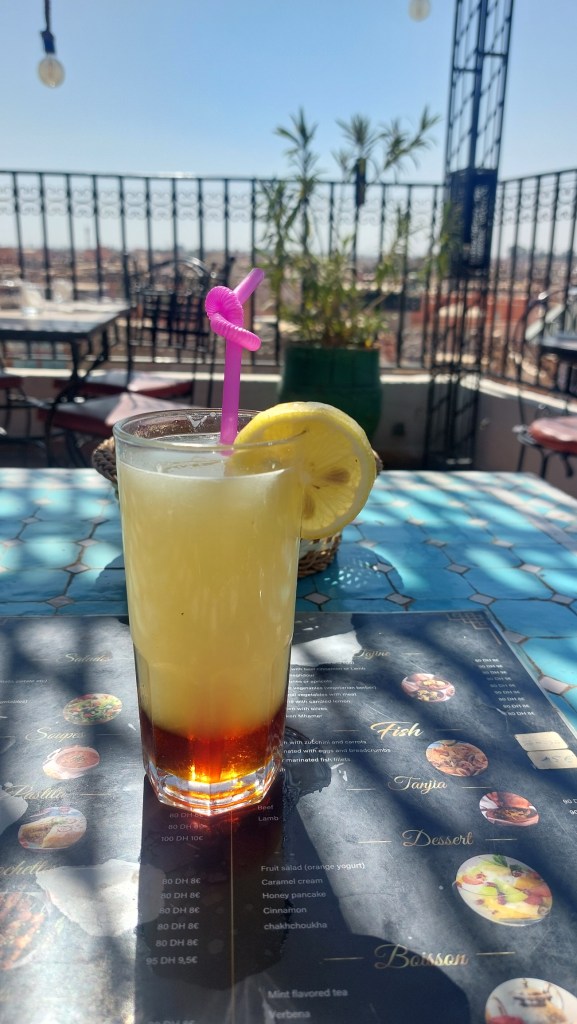
Fresh juice is also popular amongst tourists who need something to quench their thirst in the hot African sun. Freshly squeezed lemon juice is tangy and exhilarating. Served with fresh mint, it’s a combination that is both aromatic and refreshing. It’s a taste sensation.
Image by Freebird Tracey.
Orange juice made using freshly picked oranges off trees around the medina is a breakfast staple.It is sunshine in a glass.
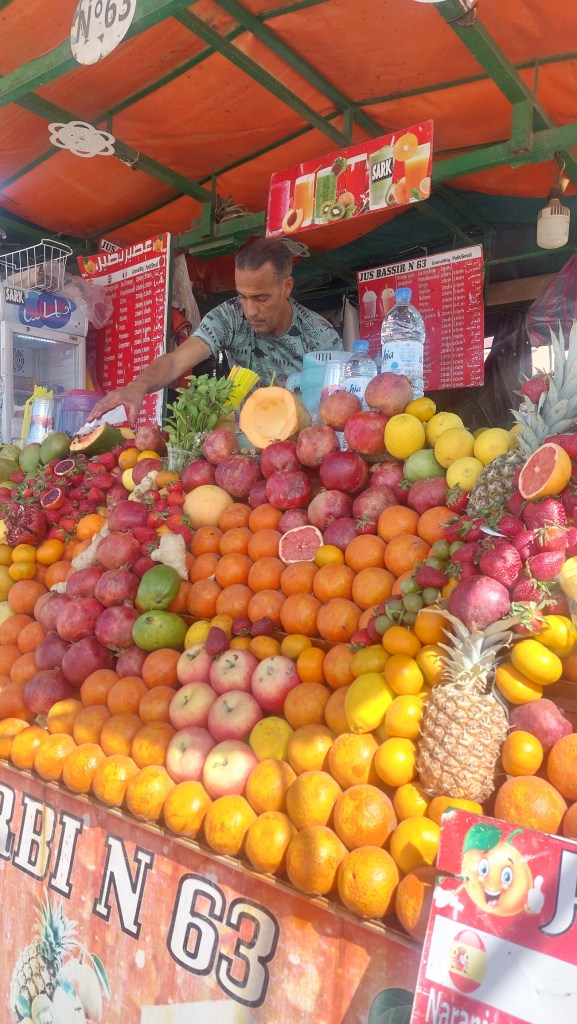
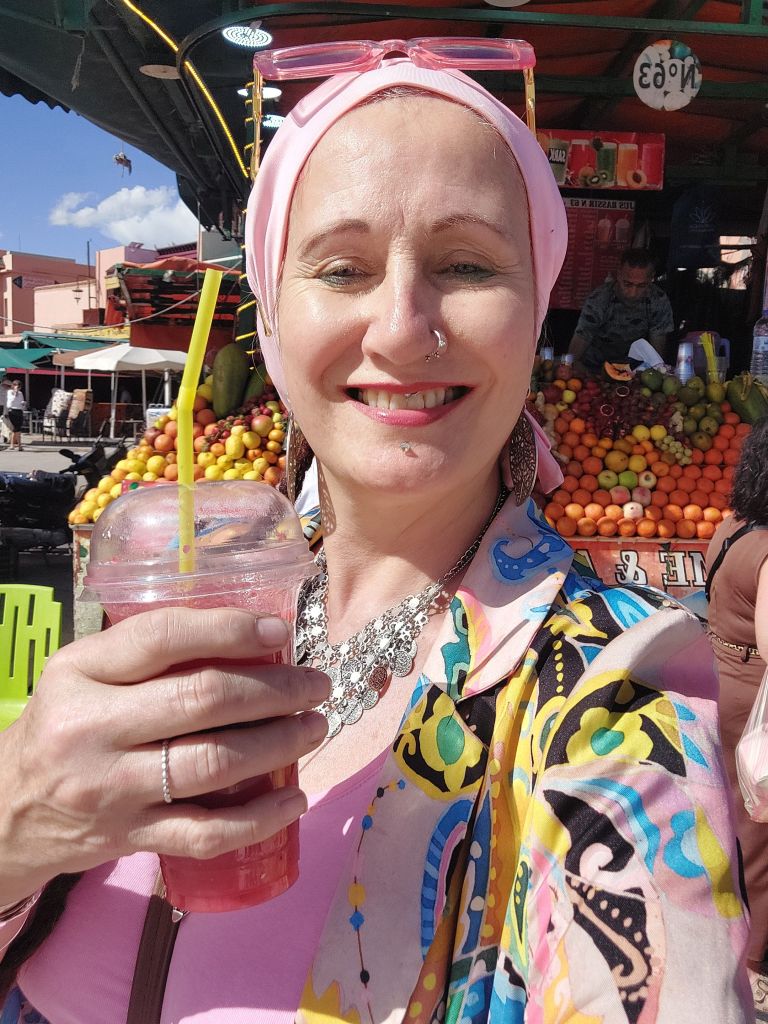
Mixed fruit juice is another favourite and sold in the main square. Vendors encourage business with friendly banter. They call tourists over to sample their mango and pineapple juice, and it can be fun to watch them competing for business. On the stalls, they display a selection of exotic fruits. It’s exciting watching them make the juice for you.
Images by Freebird Tracey.
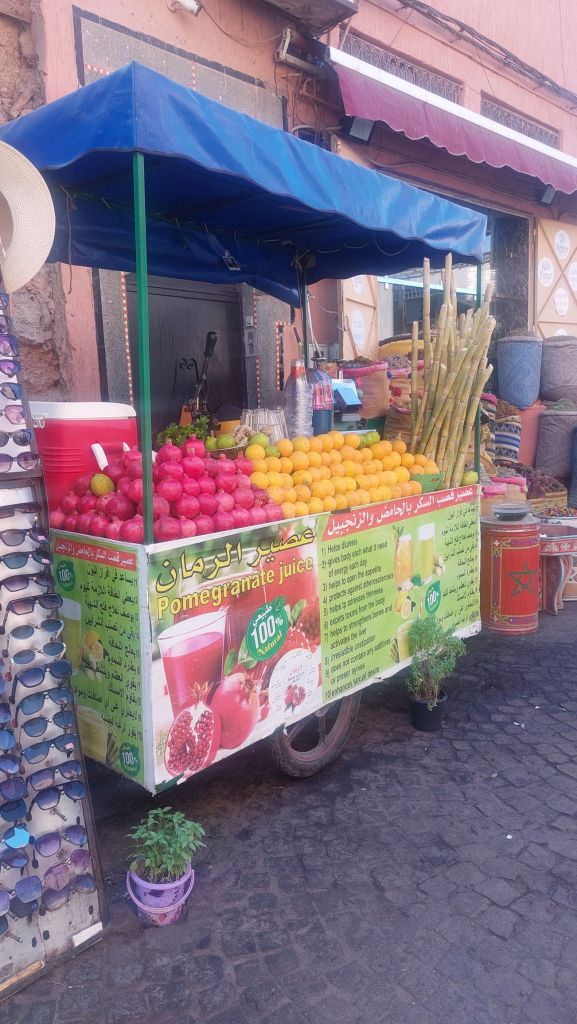
My absolute favourite is freshly squeezed pomegranate juice. It is a refreshing tonic and gives me a boost of energy.
I was flagging in the heat hiking around Ouzoud Waterfall. Freshly squeezed pomegranate juice instantly hit the spot. I soon felt revitalised again.
Sugarcane juice is widely available around the medina, also. You can find vendors near Koutoubia Mosque.
Image by Freebird Tracey.
Here are a few places I recommend to enjoy a refreshing juice or a healthy smoothie..
Le Ferme Medina.
Henna Art Cafe.
La Famille.
Pikala Cafe.
They each have attractive, comfortable surroundings for a break from sightseeing. There are also plenty of rooftop terraces around the medina. These are great places to enjoy sipping a fruit juice or smoothie, watching all the action below. It’s a pleasant way to get some vitamin C.
Image by Freebird Tracey.
It is important to stay hydrated in Marrakech. The temperature can be hot and humid. I can not underestimate the power of a bottle of water, and you should always carry one with you.
For a healthy treat, consider trying a few of the wonderful juices and smoothies available also. The vitamins and minerals are necessary to function during a hectic schedule.Just remember, there may still be high sugar content, so moderation is key. It’s all about balance.
Shopping in the medina is a fascinating experience, but it can be overwhelming at times. I soon realised that taking a regular break and pacing myself was the best way to enjoy the experience.
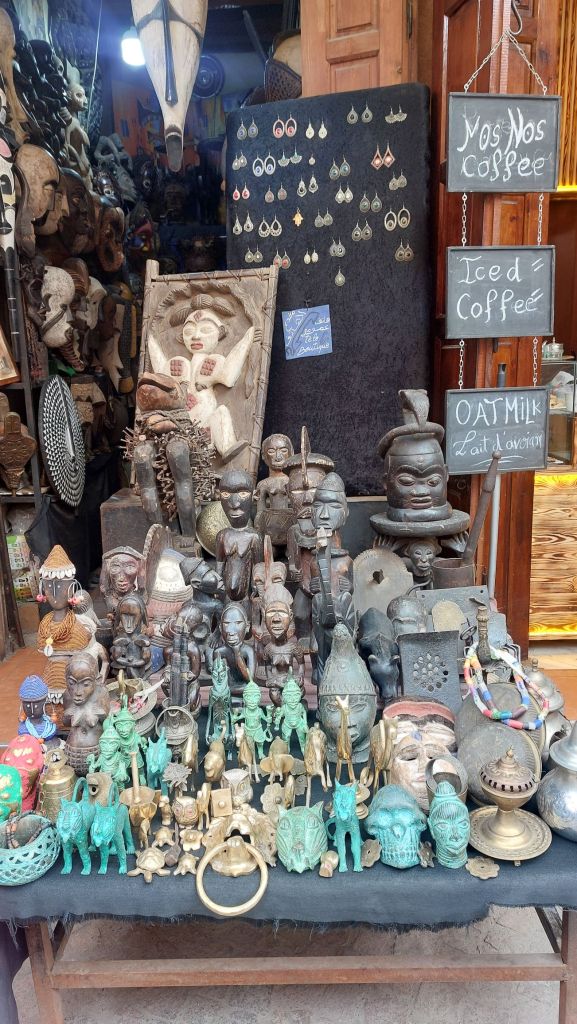
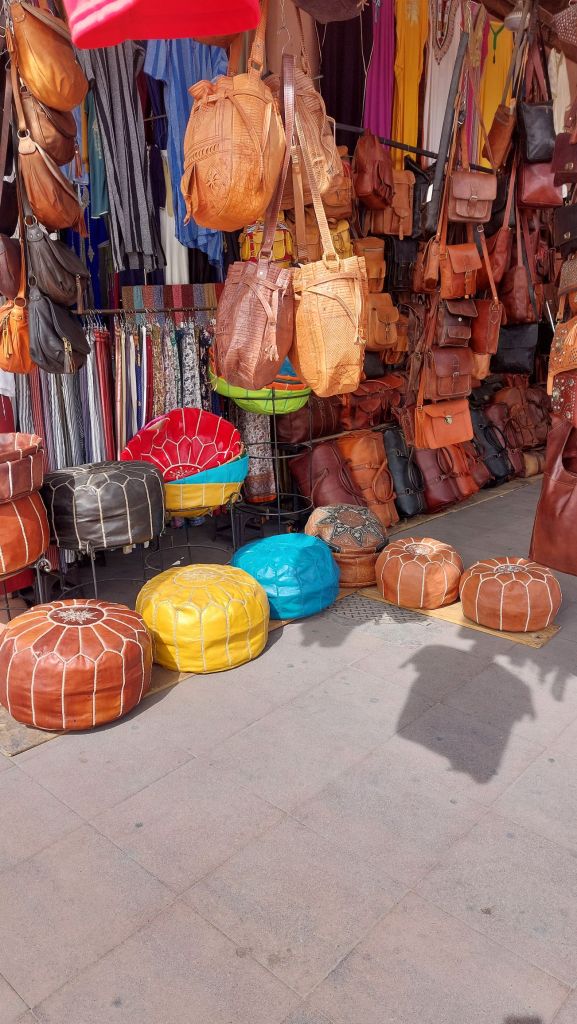
Navigating the maze of alleyways in the souks is exciting. There is so much more to them than beautiful leather goods and Moroccan lamps, though.
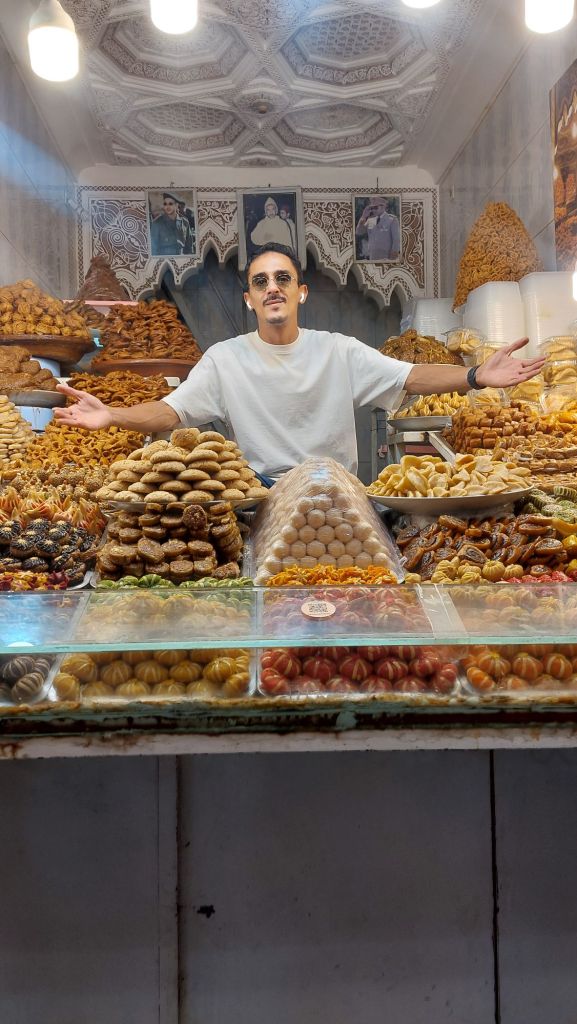
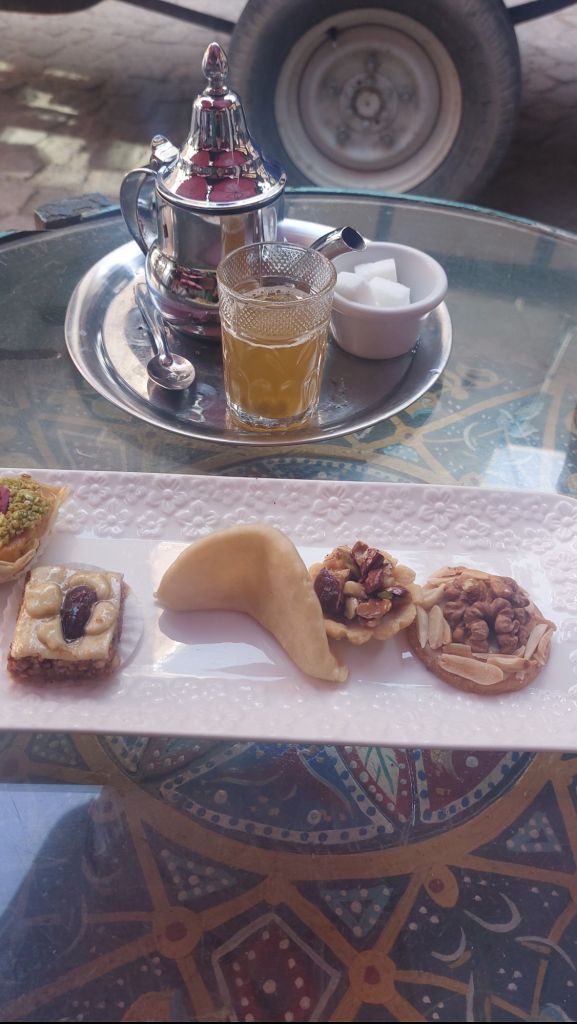
There are delicious sweets and pastries waiting to be sampled. These compliment the taste of traditional mint tea known as atay perfectly.
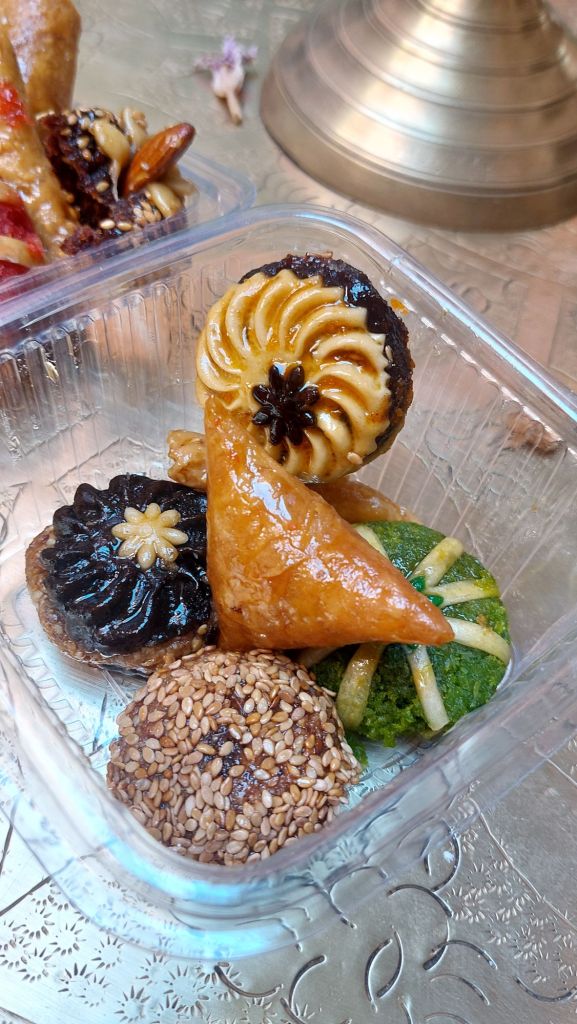
There are so many different pastries to choose from. I decided to treat myself to a selection to find out which ones are my favourite. I enjoyed the taste of the almond pastries most of all.
Traditional mint tea is very hydrating. Sitting in a colourful, boho nook drinking mint tea is a perfect way to take time out from the hectic rhythm of the souks.
Images by Freebird Tracey.
If you are shopping in the souks, I recommend that you pace yourselves and take some time to enjoy the experience. Sitting outside a cute little tea shop is the perfect way to do that.
There are plenty of places around the medina selling mint tea with traditional sweets and pastries. Part of the pleasure of exploring is finding these hidden gems.
Image by Freebird Tracey.
A few places I recommend are,
Medina Kawa Marrakech.
La Patisserie de la Terracce Spices
Boughaz Coffee in the Kasbah.
Marrakech has an abundant supply of sweets and pastries, and I suggest trying Baclava. It’s a sweet pastry made of layers of flaky phyllo dough filled with chopped nuts like walnuts, pistachios, or almonds. It’s sweetened with honey and flavoured with spices like cinnamon and lemon juice. This was one of my many favourites.
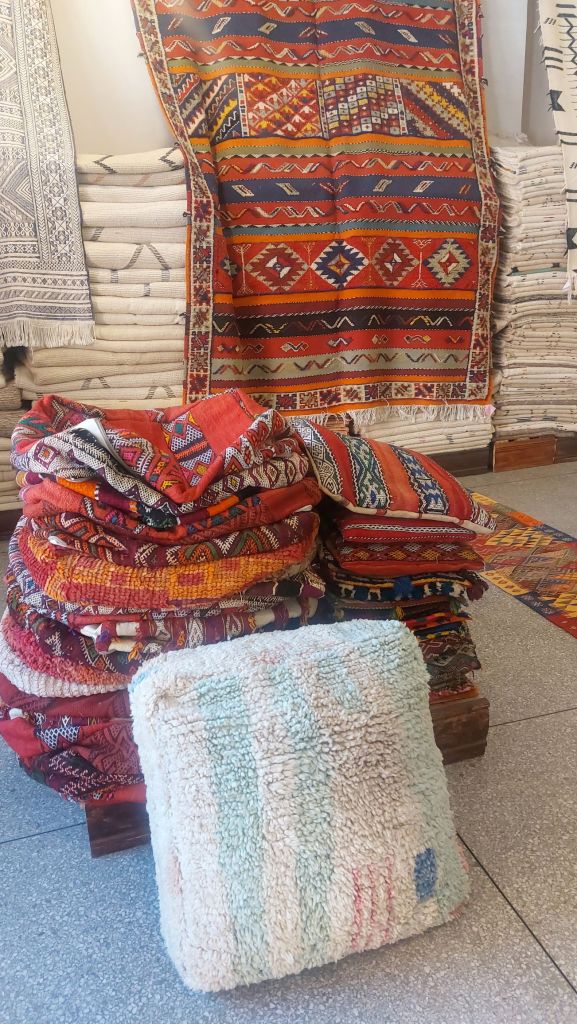
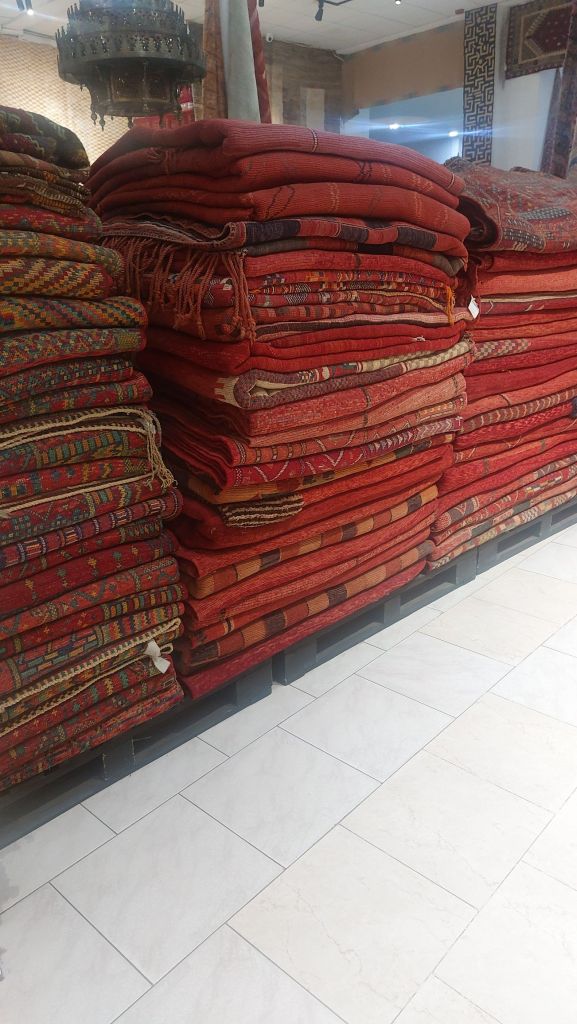
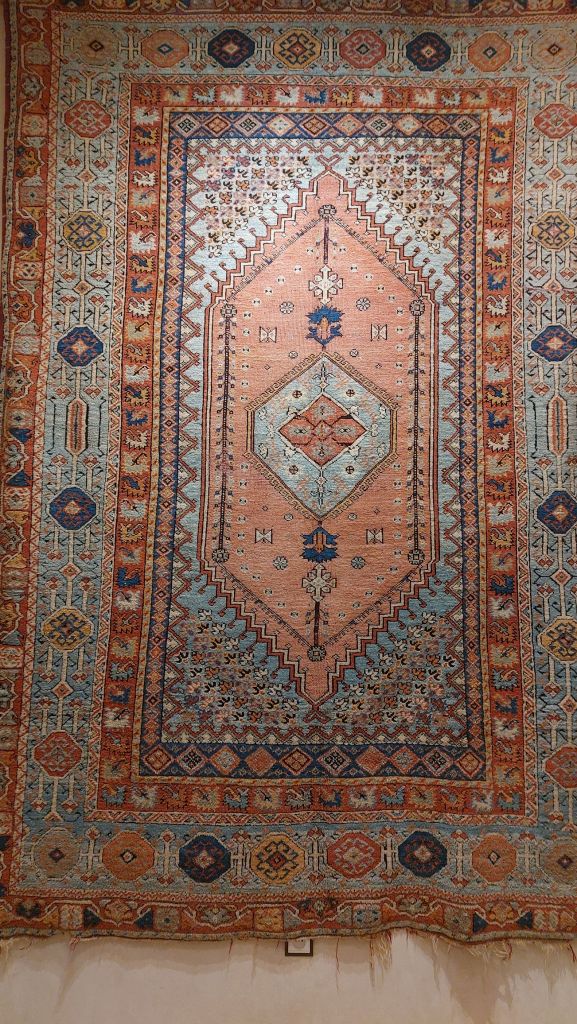
Berber rugs are handmade by the indigenous Amazigh people of Morocco.
They are made from the wool of sheep in the high Atlas Mountains. Each type of rug tends to vary in thickness, and the pattern also differs depending on which tribe or village has made it.
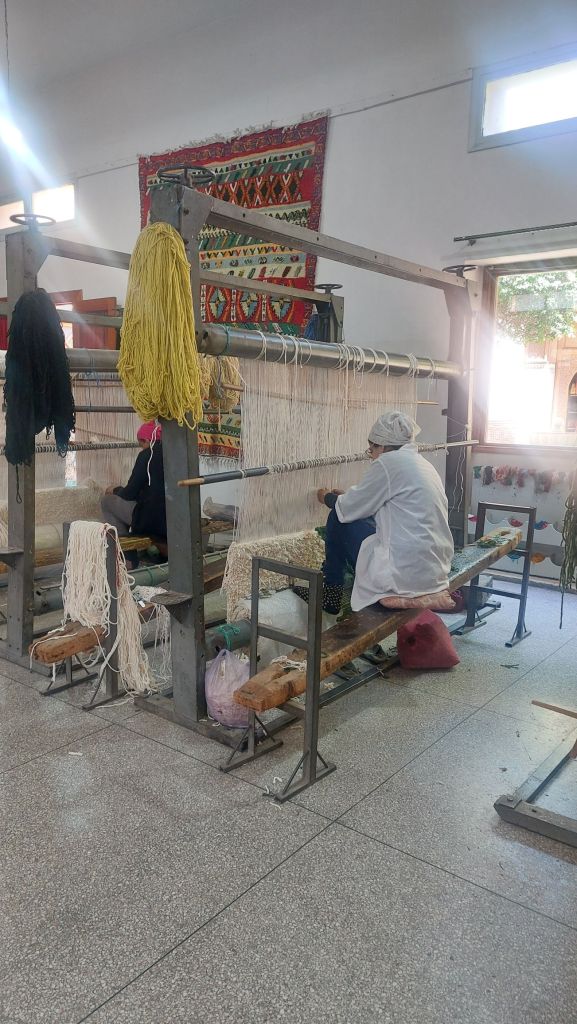
Kilim Berber rugs have no pile and are relatively fine in texture.They are handcrafted using techniques passed down through generations. To create them natural materials renowned for their durability and luxurious feel are used. Hand-knotting is a long and laborious process. To create a single rug takes around one to two months, with four weavers working on one rug at a time.
There are several steps that go into making a beautiful Berber rug.
1. Shearing the Sheep
Shearing the sheep is the first step in making a Berber rug. This is done by hand, using a special shearing knife. The sheep are first restrained, and then the knife is used to remove the wool from their body in one long strip. The wool is then sorted and cleaned. It is usually the job of the men to shear the sheep, taking care not to injure them or spread infection. The women are responsible for washing the sheared wool.
2. Carding.
Carding is the process of aligning the wool fibers so the weavers can spin them into yarn. To card the wool, the fibres are first combed in one direction, and then the wool is brushed in the opposite direction.This helps to loosen the fibers and align them in the same direction. Once the fibers are aligned, the weavers can then spin them into yarn.Carding is an essential step in making a Berber rug, as it helps to ensure that the rug is strong and durable. The process of carding also helps to give the rug its unique texture. Women are responsible for this process.
3. Spinning the wool into yarn.
To spin the wool into yarn, Amazigh women use something called a drop spindle. This simple tool consists of a shaft with a weight at the bottom. The wool is attached to the shaft, and then the shaft is twirled between the women’s hands. As the shaft is twirled, the wool is wrapped around it, creating the yarn.
4. Weaving the rug.
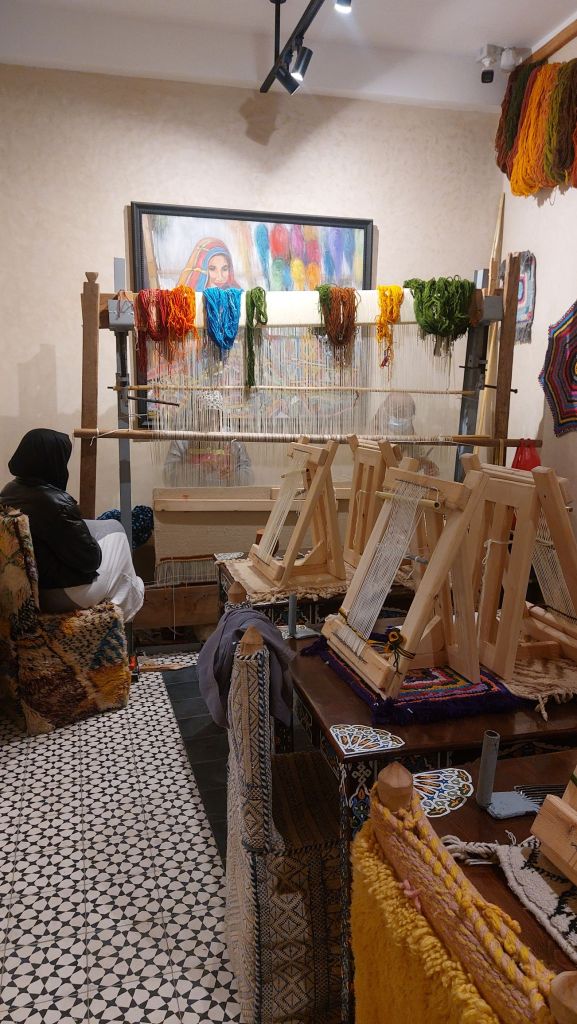
The village women are responsible for weaving the rugs. Weavers use a technique called continuous knotting to create intricate patterns. This method of knotting allows the weaver to create a rug that is durable and will last for many years.The process begins by the weaver tying knots in the woollen yarn.The yarn is then dyed using natural dyes from plants, spices, and fruits. This gives the rugs their characteristic colours. Once the yarn has been dyed, the weaver begins weaving it into a rug using a loom.The loom is a wooden frame that the weaver uses to create the rugs design. The weaver ties the yarn around the looms warp threads, which are the vertical threads that run through the loom. The weaver then weaves the weft threads, which are the horizontal threads, over and under the warp threads.The weaver can create various patterns by changing the direction of the weft threads. Once the rug is complete, the weaver cuts the rug from the loom and ties the ends of the rug together. The rug is now finished.
Image by Freebird Tracey.
Making a Berber rug is a long, laborious task. The women of the village who weaved them rarely get anything near the price they’re eventually sold for. Their husbands load the rugs onto the back of a donkey and take them to a buyer. The buyer gives him a fraction of their value.
Efforts are being made to make sure that ethical practices are being implemented. Many organizations now work directly with Berber artisans to eliminate middlemen, ensuring women receive fair payment for their work. More women are forming cooperatives to manage the entire process, increasing their income.
Images by Freebird Tracey.
Berber rugs are beautiful and give a home a wonderful boho vibe. They are hard-wearing and last a lifetime. It’s important when visiting Marrakech to make sure you’re purchasing a genuine Berber rug. There are a few scams, so be mindful. Before you get taken to a shop where you’re promised the best quality and price, do your research.
Les Nomads de Marrakech has a great reputation and can ship rugs back home for you. This is their address, Bennahid #40 Derb Zaouiat Lahdar, Marrakesh 40030, Morocco.
Dar Bouchaib in the Kasbah is a fixed price store that also ships rugs worldwide and has a huge selection.
To find out more about the history of Berber rugs, there is a carpet museum in the souks called The Maison Culturelle du Tapis. It’s worth visiting to learn more about how they’re made. They also have some beautiful vintage rugs on display.
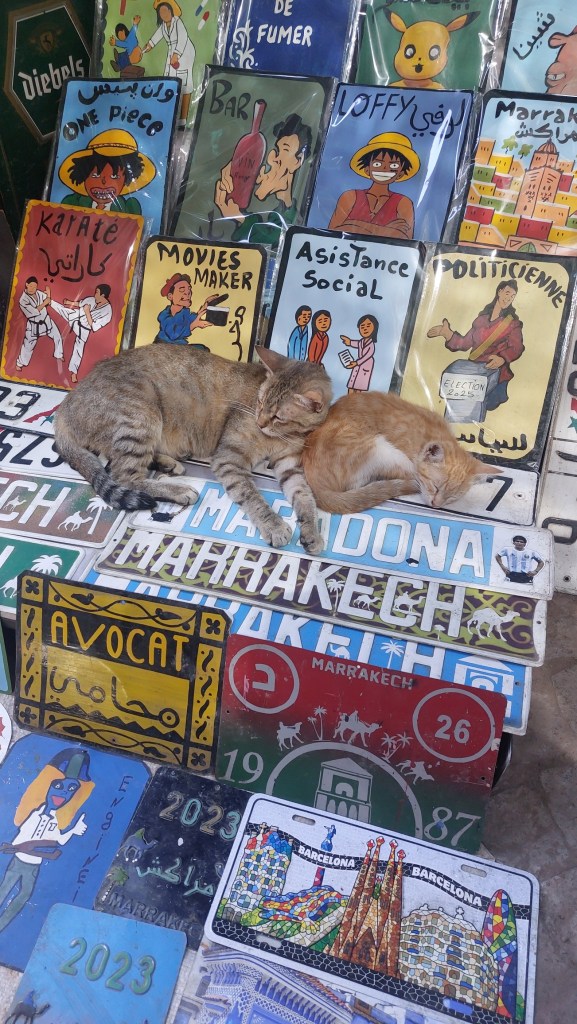
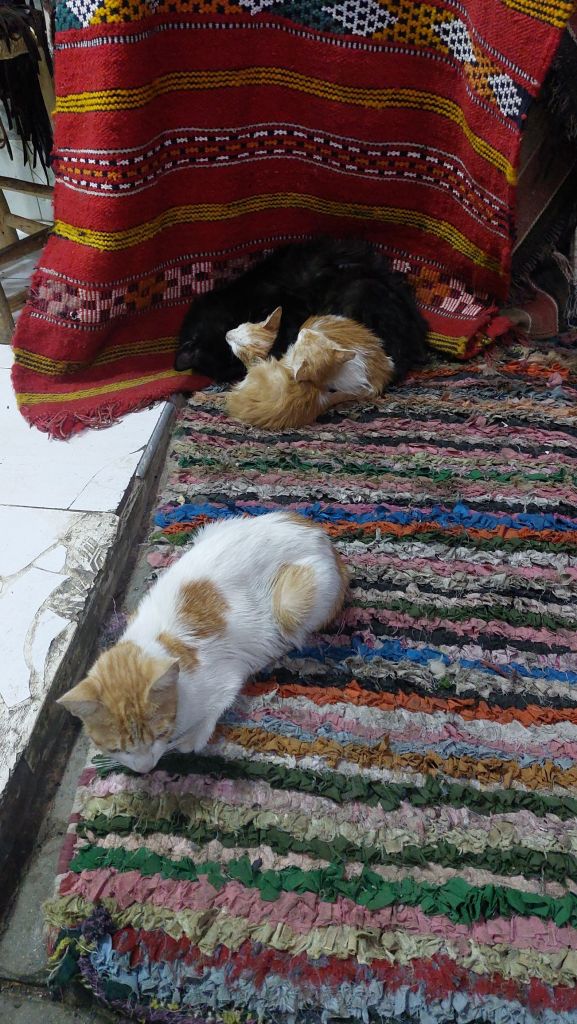
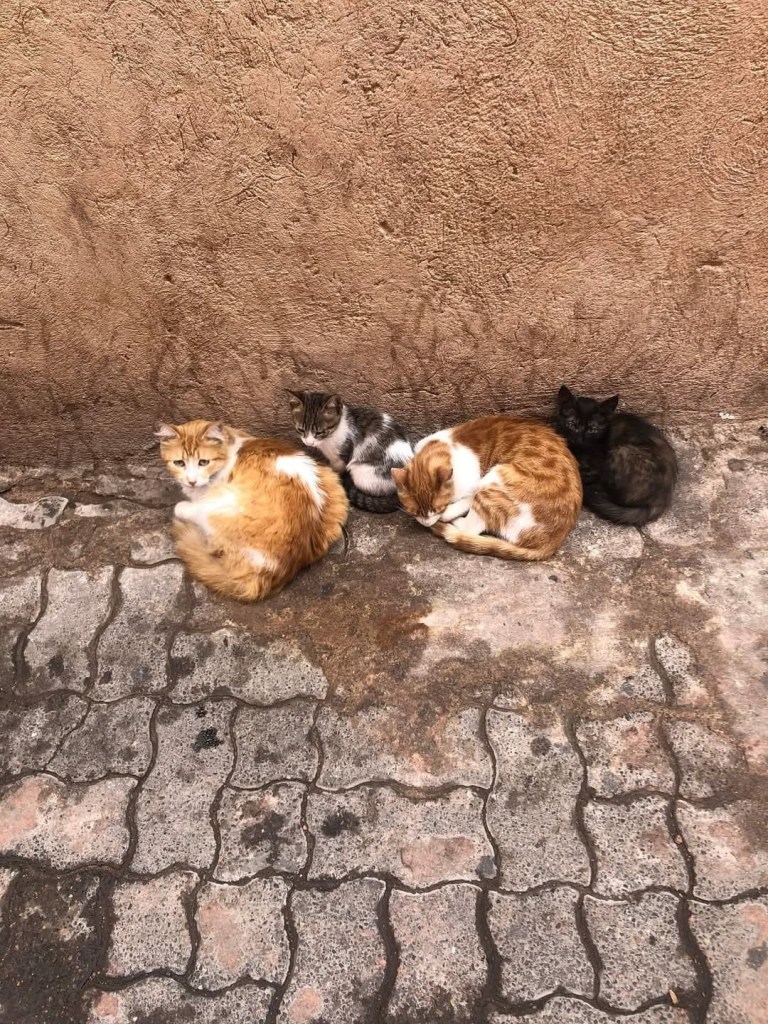
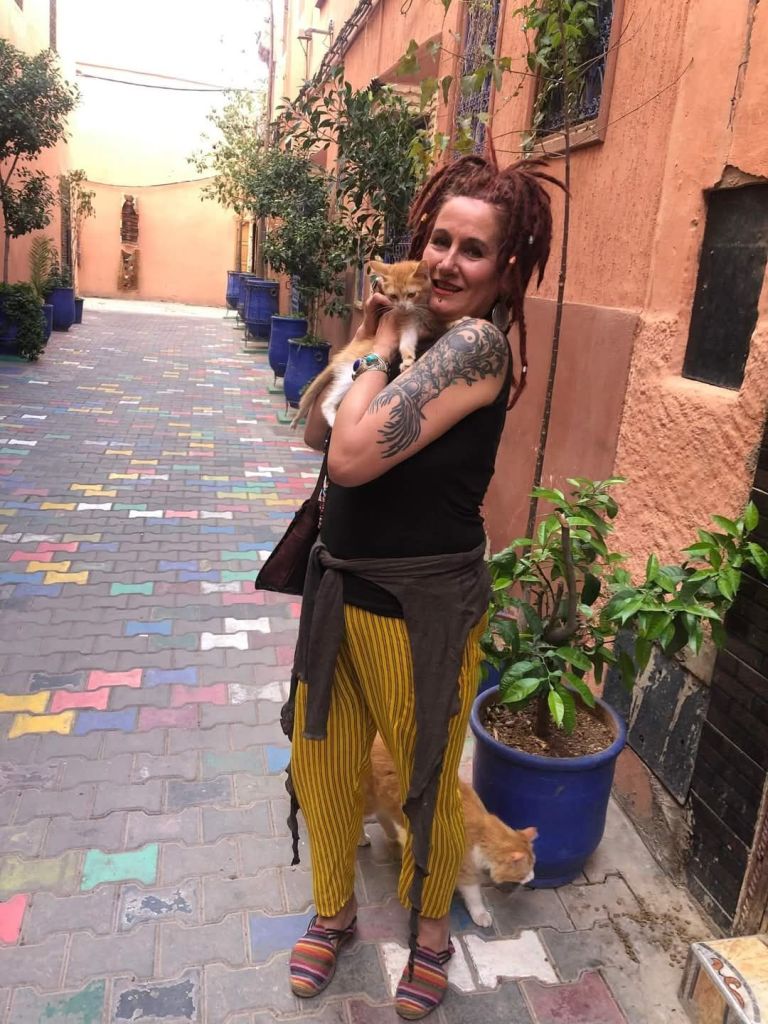
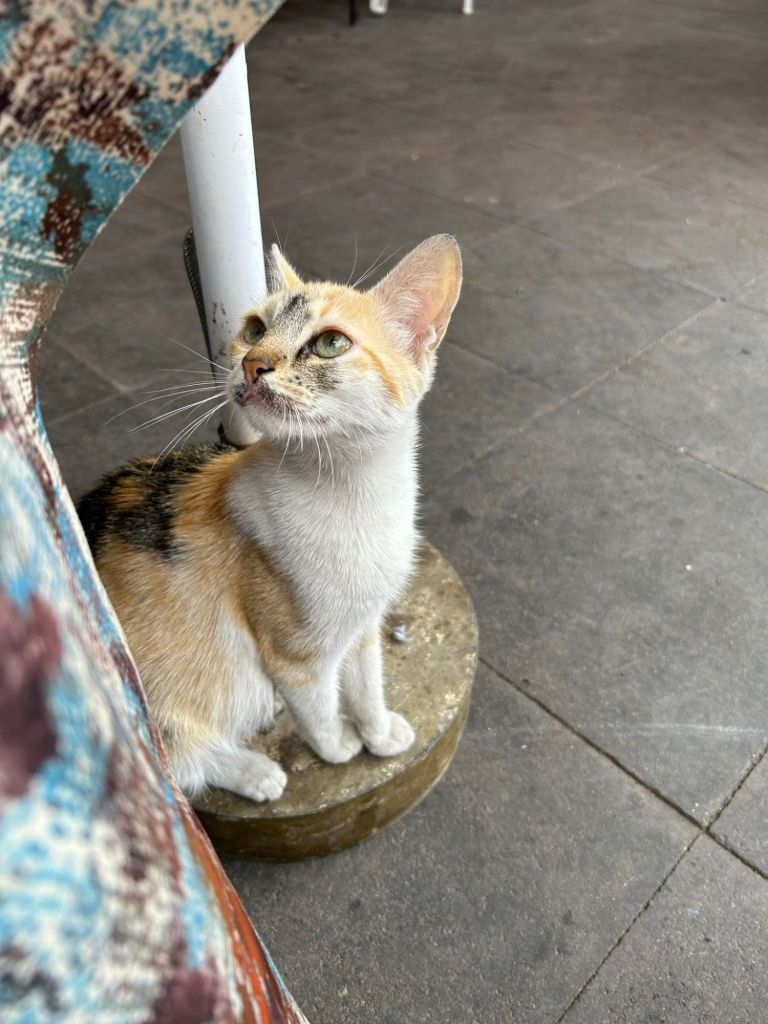
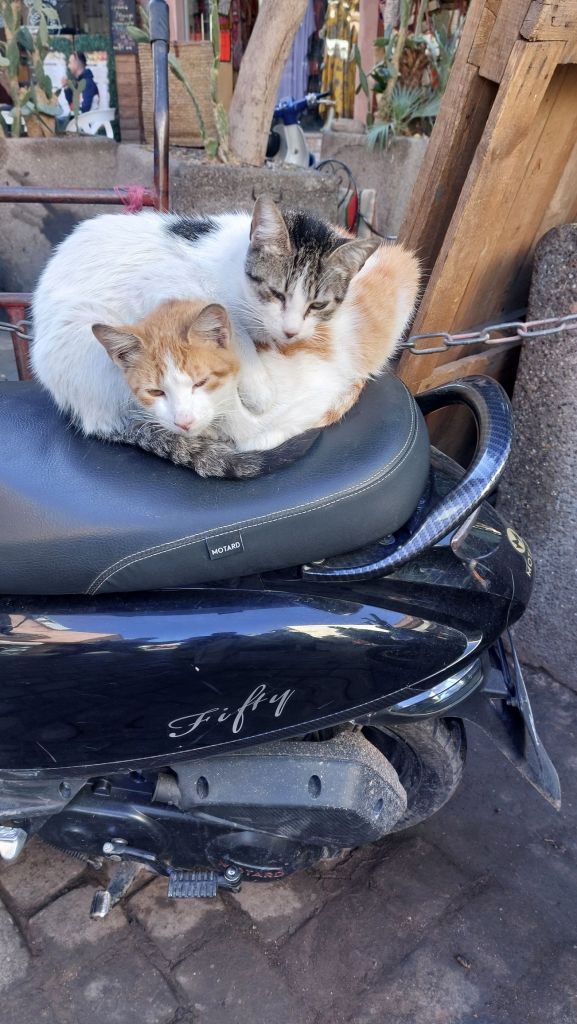
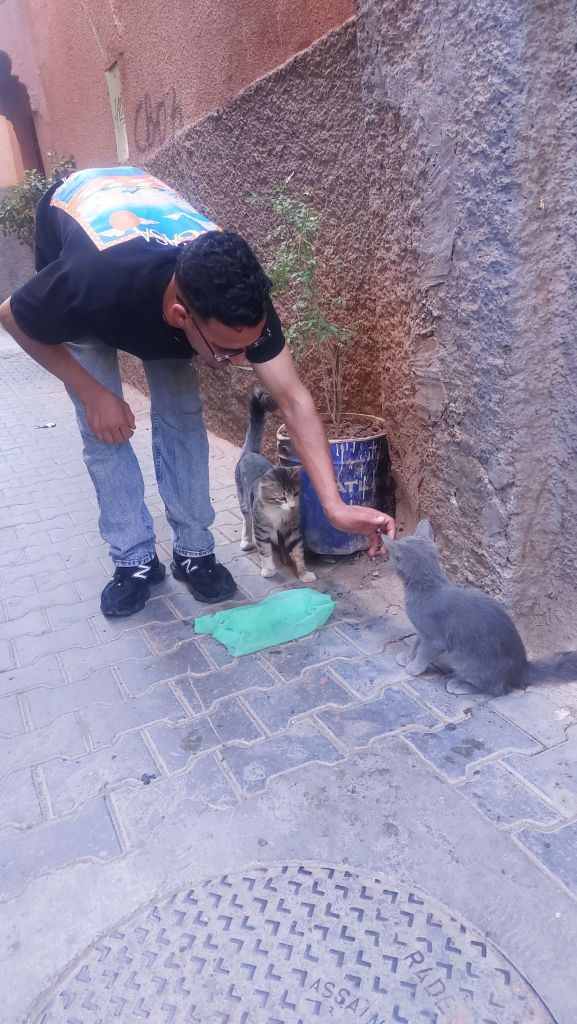
One of the things you will notice when you are in Marrakech is the number of stray cats everywhere. When I first visited the city, I was surprised to see so many. They seemed to be experts at dodging the motorcycles and hiding inconspicuously underneath juice stalls. There were cats sleeping on rugs and cushions in the souks. I witnessed strays giving birth to kittens in narrow alleyways and watched cats prowl along rooftops at dawn.
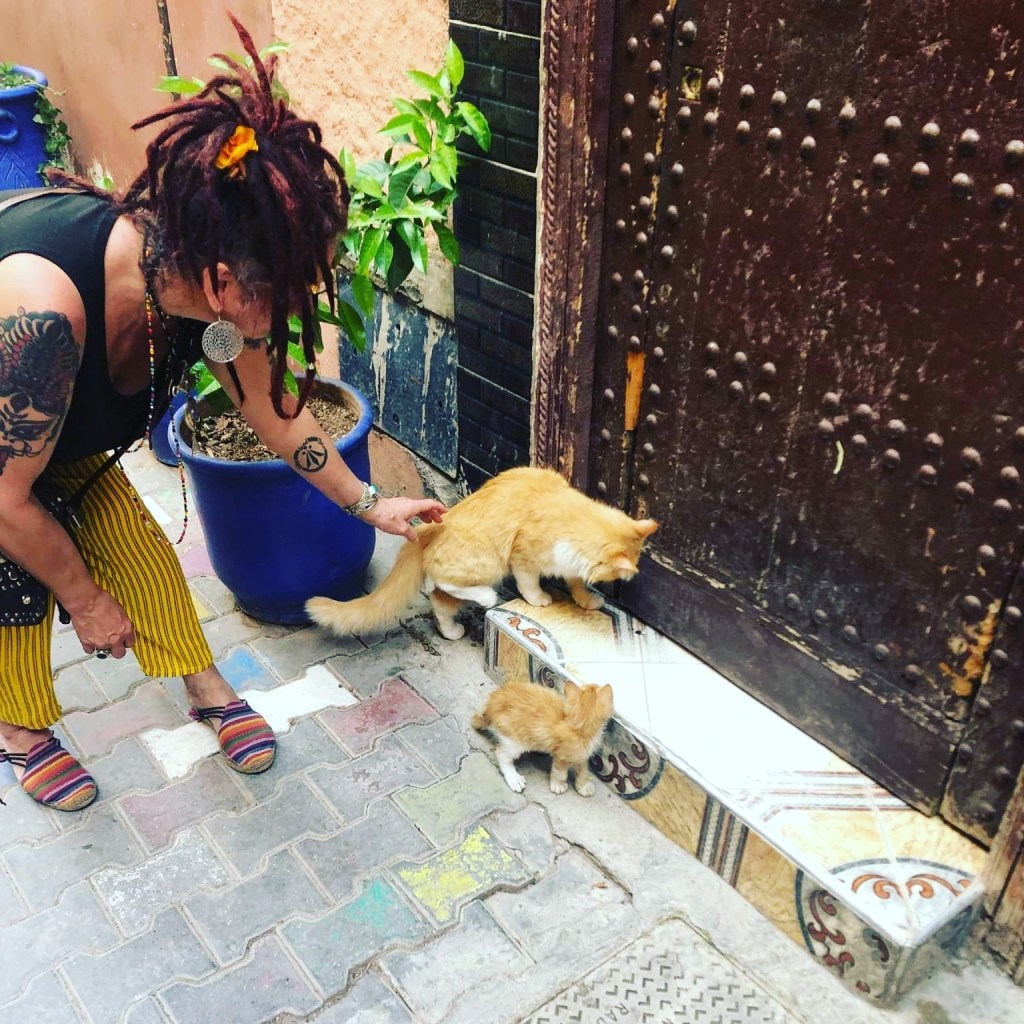
I took pity on some kittens outside my riad. They looked hungry, and I wanted to do something to help them. I purchased a couple of tins of sardines and carefully wrapped leftovers from my dinner into napkins. I placed the food in a safe place for them.
Images by Freebird Tracey.
The next moment, cats appeared out of nowhere, also expecting to be fed. This made me feel very guilty. It was a case of first come, first served, and I didn’t have enough food to go around. I went home to the UK feeling really sorry for all the strays and the fact that I couldn’t do anything to help them all.
The next time I visited marrakech, I saw things from a different perspective. Cats are seen as ritually pure in the Islamic faith and highly regarded. According to the Prophet Muhammad, cats are allowed access to homes and mosques because they don’t create impurity.
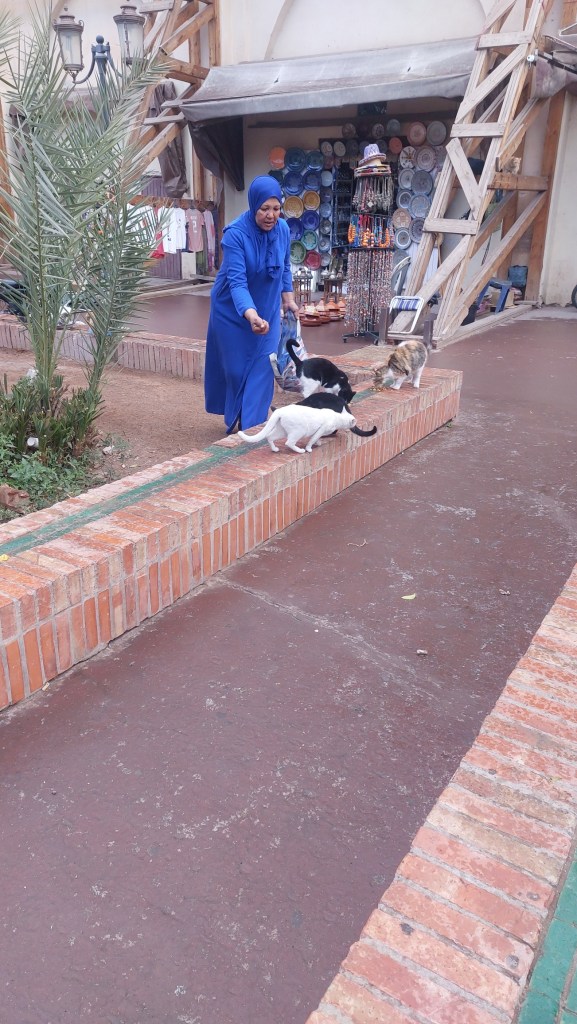
I stayed in three riads, and each one had a resident cat, who was very well cared for. I noticed restaurants leaving food outside and butchers dropping scraps of meat on the floor.
Images by Freebird Tracey.
Many of the cats were being cared for, and some were actually thriving. I noticed bowls of food and water around the medina. Shop vendors were putting food outside every morning. Tourists were secretly dropping food on the floor, and the cats knew exactly where to go to find it all.
Images by Freebird Tracey.
On the whole, the cats appear to be content. They laze around on stalls, sleepily acknowledging tourists. They find shade in the plant pots of courtyards and hide amongst the trailing flowers on rooftop terraces.
They don’t exist in the same way domesticated cats do in the west. However, they’re not being ill treated any more than elsewhere in the world. Once, a man got off his motorcycle in the busy souk and moved a little kitten to the safety of a quiet alleyway.
Image by Freebird Tracey.
When you first come to Marrakech, seeing all the stray cats may shock you. I was the same. After closer inspection, I came to the conclusion that the situation wasn’t as dire as I first thought. The cats are free to roam, and somehow, they have mastered the art of avoiding motorcycles and carts in the souks. The roads around Marrakech are chaotic, and I’m happy to say that I have never spotted an injured cat.
Of course, I’m aware that life could be better for stray animals. In an ideal world, they would have access to flea treatment and regular veterinary care. They would also be neutered to keep the population under control.
Recently, there has been a surge in tourists rescuing stray cats around Marrakech. Many are being taken back to European countries to begin a new life. Tourists are working with local vets to get injured cats treated and all their vaccinations done. Many people are willing to pay a lot of money to rescue cats.
For the cats that remain in Marrakesh. They have learnt how to survive. They only know one life and have adapted to it. On the whole, local people are kind and compassionate towards them. Plus, in all the years of visiting Marrakech, I’ve never seen a single rat in the city.
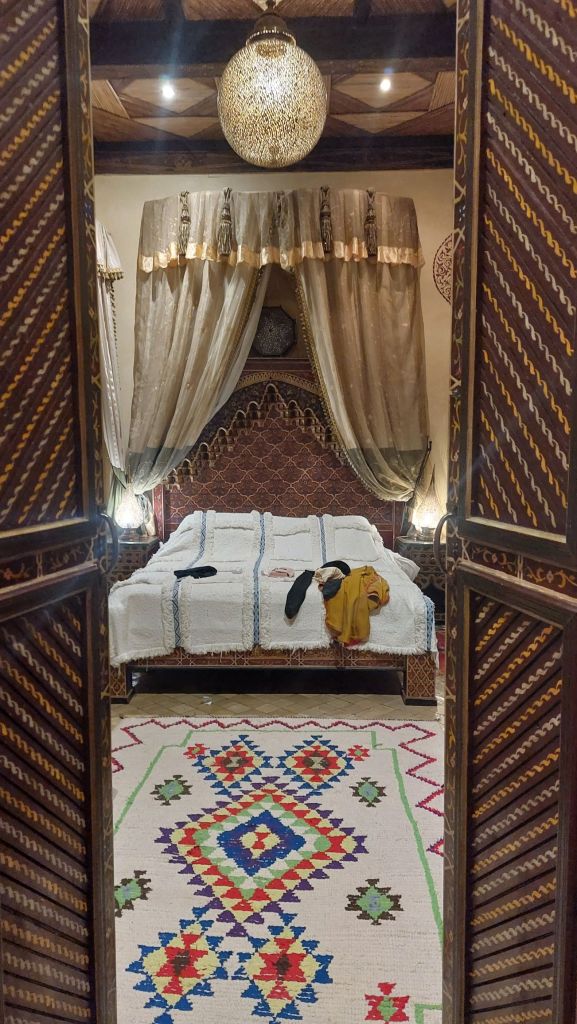
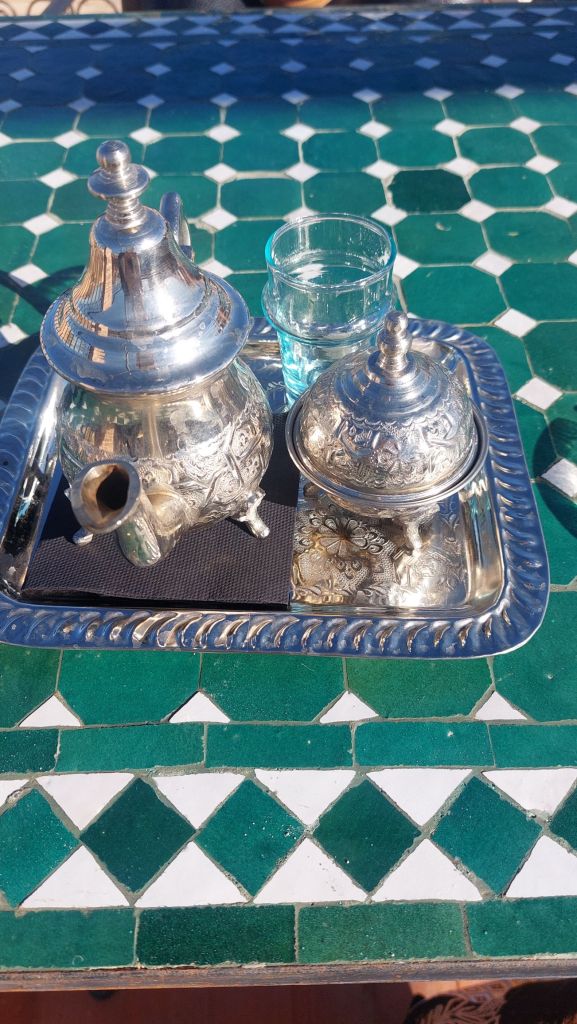
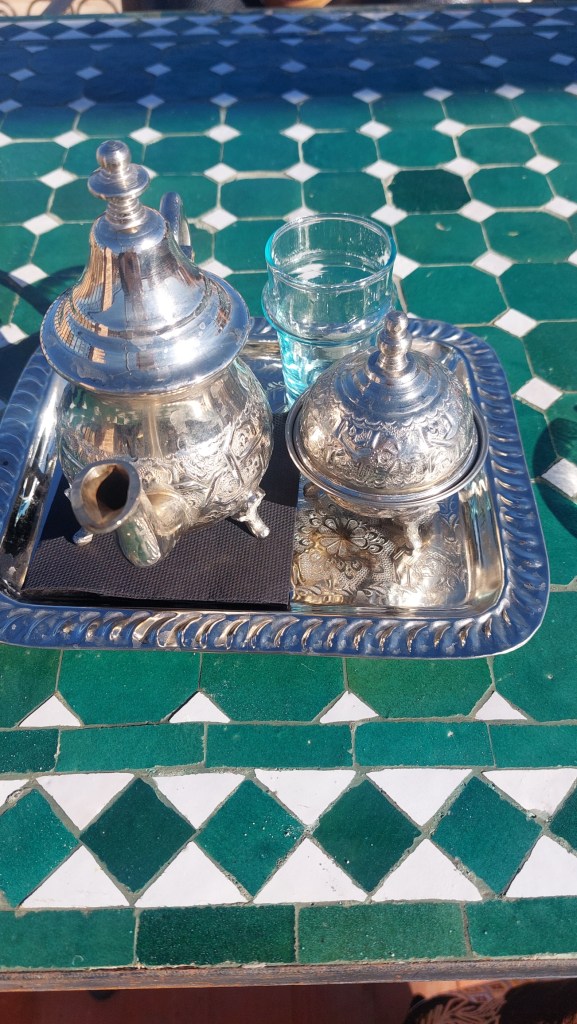
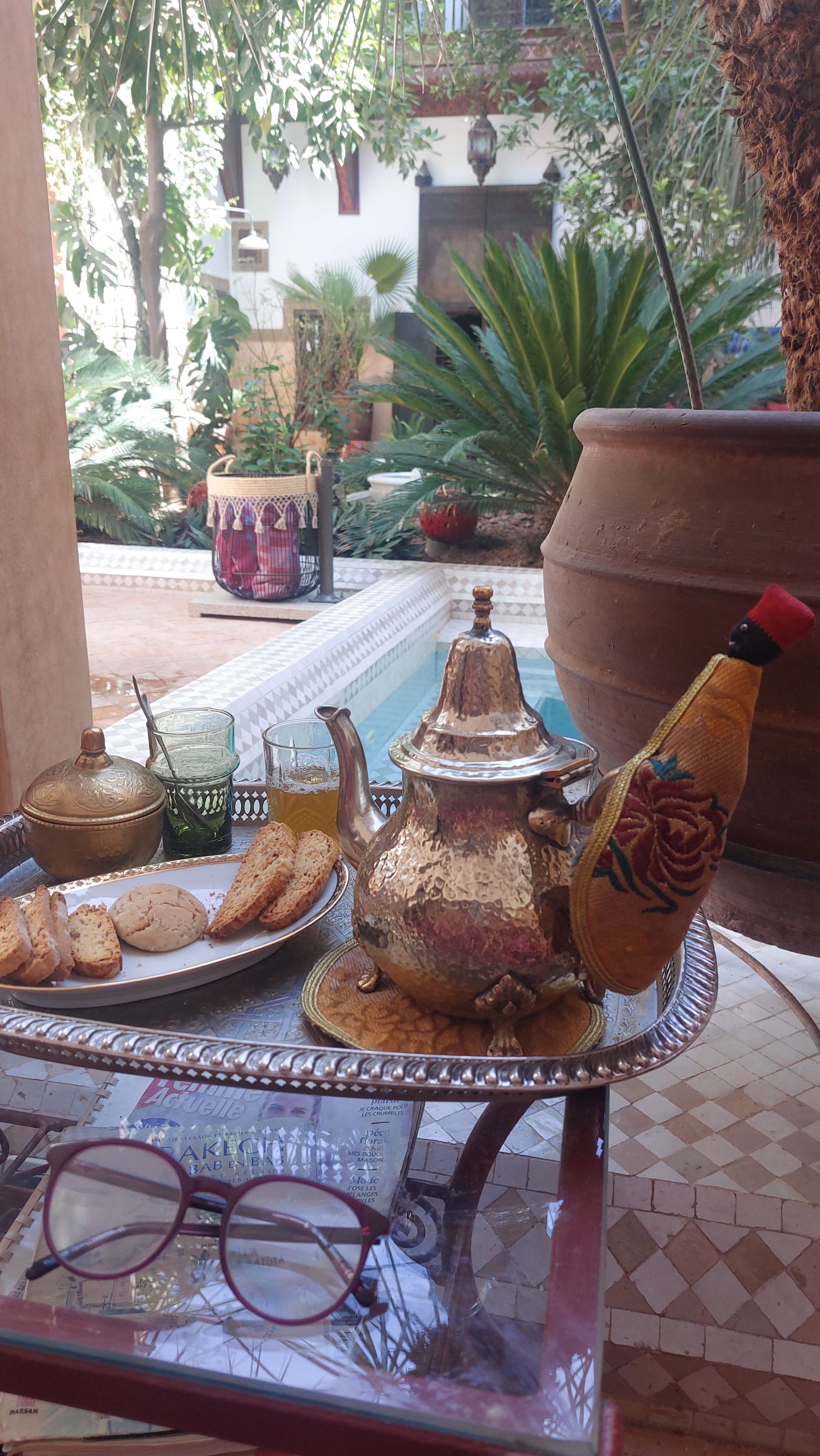
After the painstakingly long queues at Marrakech airport, you finally arrive at your riad. At this point, you’re feeling overwhelmed and dishevelled. The manager gives you the warmest welcome and guides you into the tranquil courtyard. You sit down on colourful cushions, listening to the sound of trickling water. Suddenly, you’re presented with an ornate silver tray containing a teapot and colourful glasses. This is accompanied by a dish of olives and homemade biscuits. You begin to unwind.
The tea is poured, holding the teapot higher and higher. You watch with amazement as the tea finds its way perfectly into the little glasses. Not a drop is spilt. This is a traditional Morroccan greeting for visitors. The higher up the teapot is held, the more respect the guest is being shown. The tea also becomes aerated, making it cooler to drink.
The fragrant aroma of fresh mint fills the air around you. Soon, you are feeling relaxed and becoming accustomed to your new surroundings.
Video by Freebird Tracey.
Once you have finished your tea, the panic of trying to locate the riad disappears as if by magic. The image of dragging your luggage through dark, narrow alleyways starts to become a distant memory.
Image by Freebird Tracey.
Mint tea is served everywhere in Marrakech. It’s a customary drink that locals enjoy whilst chatting with their friends in cafes. Drinking mint tea is a central part of Moroccan social life. It is known as atay in Moroccan darija. It is also called ‘Morroccan Whisky’ by the locals in Morocco.
Image by Freebird Tracey.
The tea is made using gunpowder green tea and spearmint leaves. It is sweetened with sugar cubes before serving. Moroccans like their tea sweet, so if you don’t, ask to have the sugar cubes separately.
Moroccan mint tea has many health benefits. It improves digestion, helps to improve oral health, is a natural decongestant, and provides antioxidants that support good mental well-being, skincare, and alertness.
Fresh mint is sold all around the medina, and the familiar smell is noticeable when you walk past. It’s an aroma you will come across a lot in Marrakech.
Sipping mint tea overlooking the square from a rooftop terrace is a nice way to experience Marrakech. There is also a tea house that I highly recommend called 1112 Moroccan Tea House. It’s situated in a beautifully restored riad, and it’s the first Moroccan tea house in Marrakech.
Images by Freebird Tracey.
Drinking atay is a big part of Moroccan culture. You will be offered tea in spice shops, in Berber carpet shops, and friendly locals will want to share it with you. It’s practically a ritual in Marrakech.
You can purchase the pretty glasses in the souks, along with ornate silver teapots. They make perfect gifts for taking home with you.
Marrakech is my happy place. It’s a city of contrasts. From the ancient walls of the medina to the plush bars and clubs of Gueliz and Hivernage. Visitors may find Marrakech to be an assault on the senses. The sights, sounds, and smells of Jamaa El Fna can be overly stimulating for the most seasoned of travellers. However, it’s part of the charm of the city, and it’s just as exciting as it is chaotic.
Although I love visiting Marrakech, there are things that frustrate me. I have to give a realistic, balanced opinion. Like anywhere else in the world, things can not be all perfect. Therefore, I have decided to share some of the things that I have struggled with versus the things I adore about the city of Marrakech. I have made a list of 5 things that I love and 5 things I don’t like.
Here are the 5 things I don’t like about Marrakech.
1.
If you’re an animal lover, you might find the hustlers in the main square too much to cope with. The monkeys on chains and the snake charmers encouraging you to have your photo taken with them were hard for me to see. The monkeys have been brought down from their natural habitat in the Atlas mountains. I accept that local people need to make a living, but they clearly don’t look happy chained up all day. They are dressed in tutus and nappies, and it just feels wrong to me.
There are horse-drawn carriages taking tourists through the chaotic traffic into the newer part of the city. The donkeys pulling heavey laden carts through narrow alleyways full of motorbikes and tourists. I’ve witnessed accidents where they’ve been clipped by passing motorists. The donkeys look as though they’re overworked and appear neglected.
I appreciate it’s the culture of Marrakech, and I have no right to criticise anyone’s way of life or impose my own beliefs onto another culture. However, I did struggle with it the first time I visited Marrakech. I avoided eye contact with the snake charmers and monkeys on chains, and eventually, they stopped approaching me. I would feel happier if a separate lane was implemented just for the horse-drawn carriages to use. For now, they are taken through some of the worst traffic I’ve ever seen, and I found that difficult to watch.
There are also a lot of stray dogs and cats in Marrakech. They are looked after by the locals, and many of the cats have been rehomed by owners of the riads. They are regularly fed, and the local people try their best to look after them. However, I found it difficult to see the sheer volume of strays to begin with.
Finally, there are chickens in tiny cages and caged tortoises, If you are an animal lover like me, you may find all the above a bit shocking.
2.
Queueing at the airport.
Be prepared to stand in line for up to 2 hours on arrival. The process is slow, and all you can do is accept it. Take a snack and keep a drink with you. It is possible to pay extra for the fast- track service, but it may cost you around €230 for the first person and €190 for the second person.
Tip: Try to visit the bathroom before the aircraft lands and consider choosing a seat near the entrance and exit. This way, you can get to the front of the queue quickly.
3.
Marrakech is touristy.
The narrow alleyways in the Souks can be very crowded. You and hundreds of other tourists will be browsing around the shops at the same time. Marrakech is one of the most visited destinations, and it may feel as though everyone is there at the same time as you.
Tip: Plan to visit in January or November when it’s quieter. There are fewer people around the main attractions, so you will get the perfect photo opportunity. Queues will be shorter also. Consider sightseeing and shopping early in the morning. It’s less crowded, and bargaining is easier.
4.
The smell of fumes in the souks.
The souks are full of motorcycles and tuk-tuks, giving off clouds of fumes as they hurtle past. The fumes can get stuck in the back of your throat, making you feel nauseous. Unfortunately, there is little you can do to change this. There are a lot of vehicles on the main roads around Marrakech, and they can be chaotic at times. Pollution can be bad in Marrakech. Just be aware of this if you struggle with asthma or other breathing issues.
5.
The vendors in the main square can be persistent.
During the evening, the main square opens up becoming a meeting place for thousands of people. The food stalls are all in competition with each other. Vendors will try to shove a menu in your face to get your custom. Some of them can be very persuasive, occasionally pushing the boundaries. It can become overwhelming, and it’s often difficult to remain calm in those situations
The henna ladies also vy for your custom. It’s not uncommon for them to take hold of your hand and begin applying henna, telling you that it’s a gift. After they’ve finished, they’ll ask for money from you, and it can get quite heated if you refuse.
Tip: If you’re not interested, try not to show interest by avoiding eye contact. Politely saying “La Shukran” meaning no thank you in darija, is a good way to discourage unwanted harassment.
Marrakech was badly affected by the devastating earthquake in 2023, and many people lost their livelihoods and homes. Whilst it was sometimes difficult to cope with the constant barage of vendors. I had to remind myself that their struggle to survive is very real.
Marrakech is certainly a culture shock to many first-time visitors, and I was no exception.
I’ve shared 5 of the things I find challenging about Marrakech. I would now like to tell you about what it is that keeps me going back time and time again.
Image by Freebird Tracey.
Here are 5 things I love about Marrakech.
1.
The people.
You can expect to meet the friendliest, most welcoming people you have ever met in Marrakech. They are constantly smiling and can’t wait to tell you all about their fascinating city. They are multi-lingual, and many people speak up to 5 different languages. They love to teach you about the Amazigh culture, the indigenous tribes of North Africa. Many of the people of Marrakech identify as Amazigh, and the history of their culture is really interesting. Moroccans are some of the most hospitable people in the world, and I always feel welcome.
2.
The vibrant colours and craftsmanship in Marrakech.
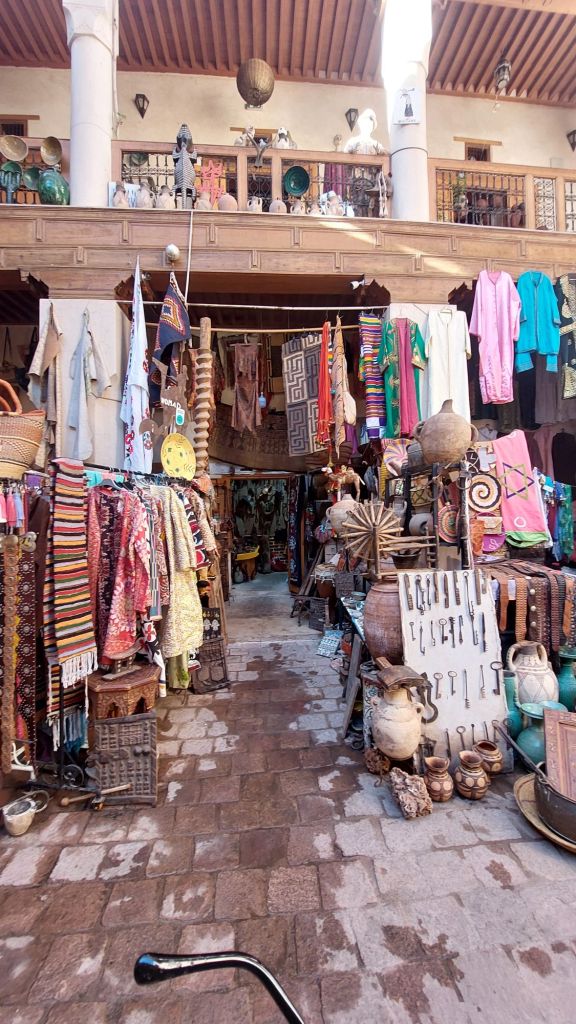
If, like me, you are drawn to colourful things, you will be in your element in the Souks. You will find jewellery, Berber rugs, wood carvings, and an array of other handcrafted items. Wherever you look, you will notice something that catches your eye. You will see skilled artisans creating Moroccan lamps and women demonstrating carpet weaving. The souks are a cacophony of colours. Lively and energetic. It’s a sight to behold.
3.
The food is delicious.
There are plenty of great restaurants in Marrakech, and the food is excellent. There are vegetarian and vegan restaurants, and many cater for people with gluten intolerance. The food is diverse, and you can find dishes to suit everyone’s palate. I would need years to work my way through all the exciting menus in Marrakech.
I enjoyed every meal I ordered, especially tagine and couscous. The deserts in Marrakesh are incredible. My favourite was the Japanese souffle pancakes in Fluffys.
4.
The Islamic architecture.
Islamic architecture, with its symmetry and attention to detail, is beautiful and had me spellbound. I recommend visiting the places below to see some of the finest examples of Islamic architecture and craftsmanship.
. Bahia Palace.
. Madrasa Ben Youssef.
. The saadian Tombs.
. The Koutoubia Mosque.
. Bacha Museum.
. Marrakech Museum
I loved the large wooden doors around the medina. The intricately carved cedarwood was a pleasure to see.
5.
Marrakech is central for visiting other places
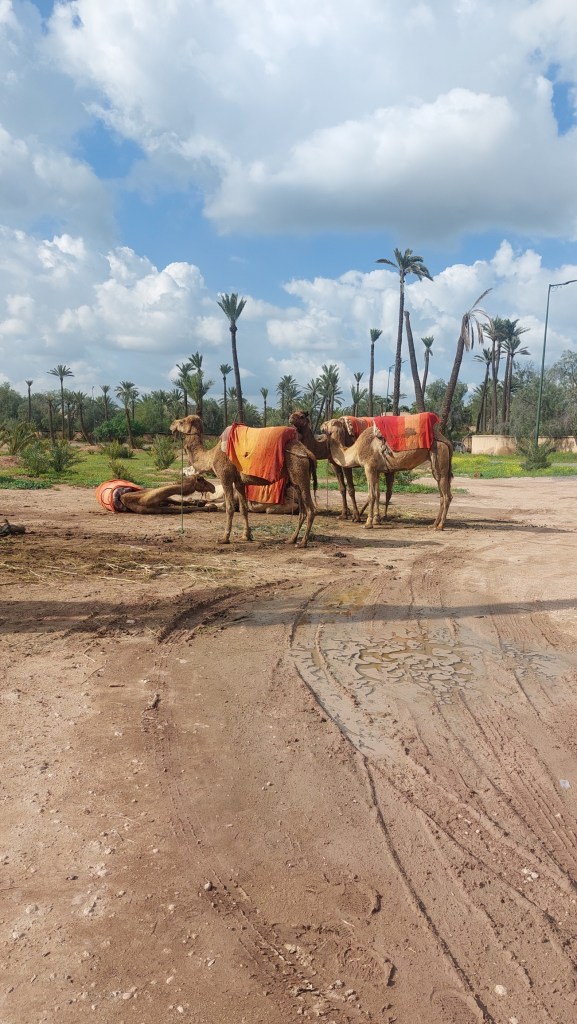
I took a trip out to Agafay desert, and it was magical. There are trips to Ouzoud to see the second largest waterfall in North Africa. You can take a train to Casablanca or visit Essaouira on the coast for the day. There are shared taxis to Imlil in the Atlas mountains and domestic flights to Tangier. If you have three days to spare, you can venture further into the Sahara desert. If not, you can take a camel ride at sunset in the Palmerai. There are plenty of excursions that are accessible from the city, and the transport system is developing rapidly. Supratours and CTM buses can take you to many places, including Essaouira, in three hours.
Image by Freebird Tracey.
There are so many reasons why I love Marrakech. I have featured only a few.
If you’re looking for a place that combines ancient and modern. A place that is diverse. Somewhere that can sometimes feel like organised chaos yet functions perfectly. A place that will transport you to the tales from Arabian Nights, Marrakech, is all of those things and more. However, do not be under any illusion that you won’t see things you find difficult. Go with an open mind and compassion. That way, you will be prepared for the things you find different from what you’re used to.
December in Marrakesh can still be warm and sunny. This time of year can be easier for people who don’t enjoy the stifling heat in the summer months. If you also want to avoid huge crowds of tourists, you might prefer the winter months
There is a possibility of more rain during the winter, and evenings can get chilly, but packing the right clothing will ensure that you still have a great experience.
In the medina, riads have air conditioning and will supply their guests with extra warm blankets to keep them warm and cosy.
When sightseeing,wearing several light layers and carrying a weatherproof jacket and umbrella will make sure you’re equipped for clement weather.
I went to Marrakech in December, and it was still warm and sunny most days, turning chillier after sunset. I still had a brilliant time. Vendors in the souks were easier to haggle with because of fewer tourists. I managed to bag a few good deals to take home with me.
Images by Freebird Tracey.
During the low season, the price of flights is often cheaper, and accommodation is easier to find for a good price.
If you’re planning a day excursion into the Atlas mountains, they do get snow. Check places like Ourika Valley or Imlil are safe to travel to before booking. The train to Casablanca is always operational, and buses to Essaouira still run for an alternative day trip if it’s too dangerous to go hiking in more remote areas.
I was surprised at how often I was able to sit outside and people watch in Jamaa El Fna in December. Some days were bright and sunny, and some were cloudy with slightly a cool temperature. I never felt cold.
Marrakech in December/image by Freebird Tracey.
Some restaurants I visited, such as The Clock in the Kasbah, had roaring fires during the evenings. This created a cosy atmosphere.
Occasionally, Marrakech can experience more rainfall than usual. If you don’t want to get caught out, take an umbrella out with you.
If it rains, there are plenty of interesting museums, so don’t be disheartened if you’re caught in a storm. There’s always plenty to do. Tailor your itinerary to suit the climate and keep an eye on the weather forecast daily.
Spend time in places such as the Museum of Photography, the Berber Carpet Museum, and the Museum of Mouassine Music to keep yourself entertained.
Image by Freebird Tracey.
I would definitely go again during winter. It helped me to cope with the gloomy, grey days in the UK by breaking up the long winter. I enjoyed shopping whilst it was quieter and shorter queues into most of the attractions. In addition, the airport was quiet, and I got through passport control really quickly.