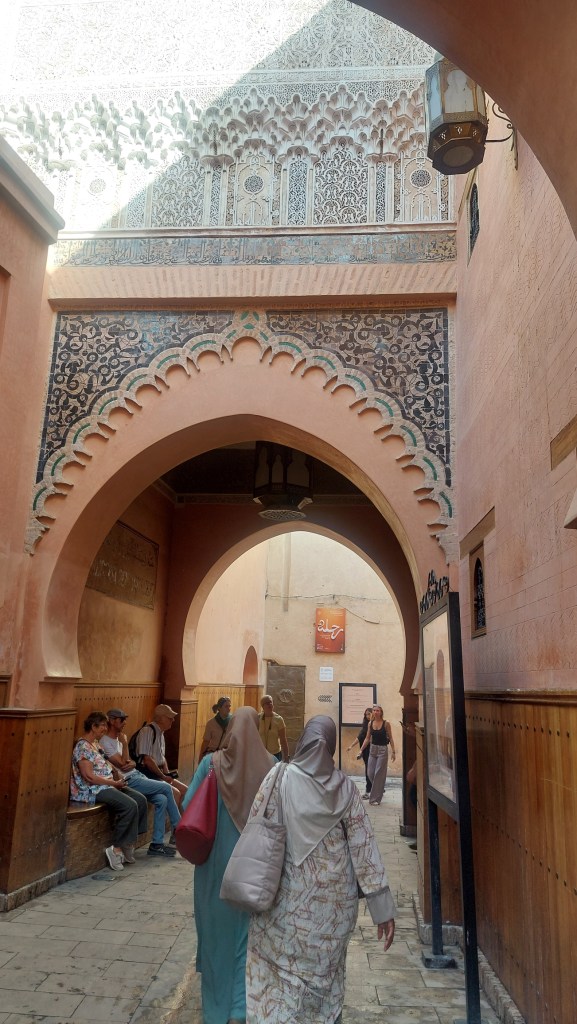
Tag: Ben Youseff Madrasa

Exploring The Red City Of Marrakech.
  • Islamic Architecture In Marrakech.

    A look at Islamic architecture and craftsmanship.
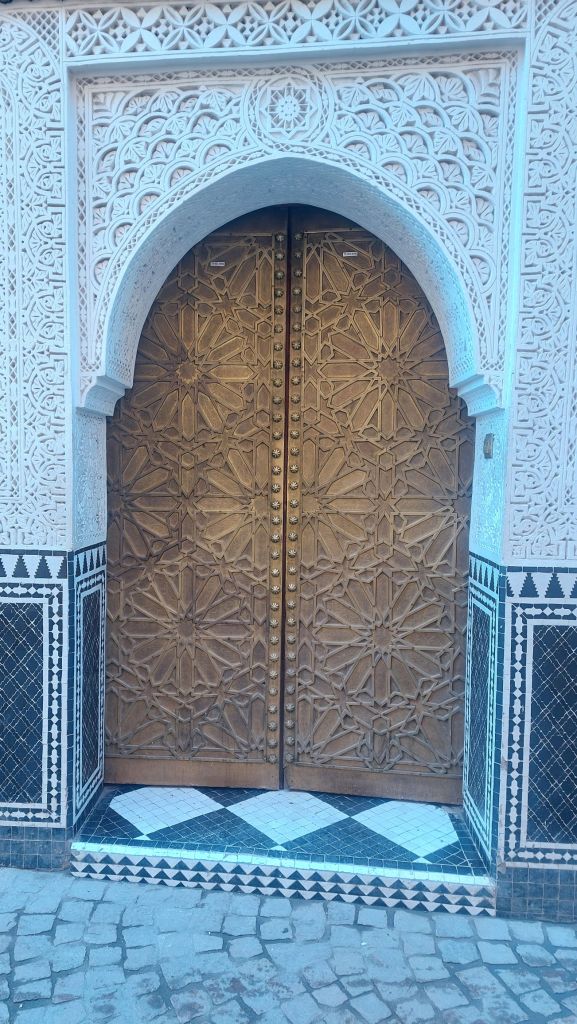
    Image by Freebird Tracey.

    The beautiful Islamic architecture found in Marrakech is a testimony to its wealth of history and culture. From intricately carved wooden doors to geometric mosaic tiles and tadelakt, Marrakech has some of the finest examples of Islamic architecture in Morocco.You can’t help but be impressed by the attention to detail as you wonder around the medina.

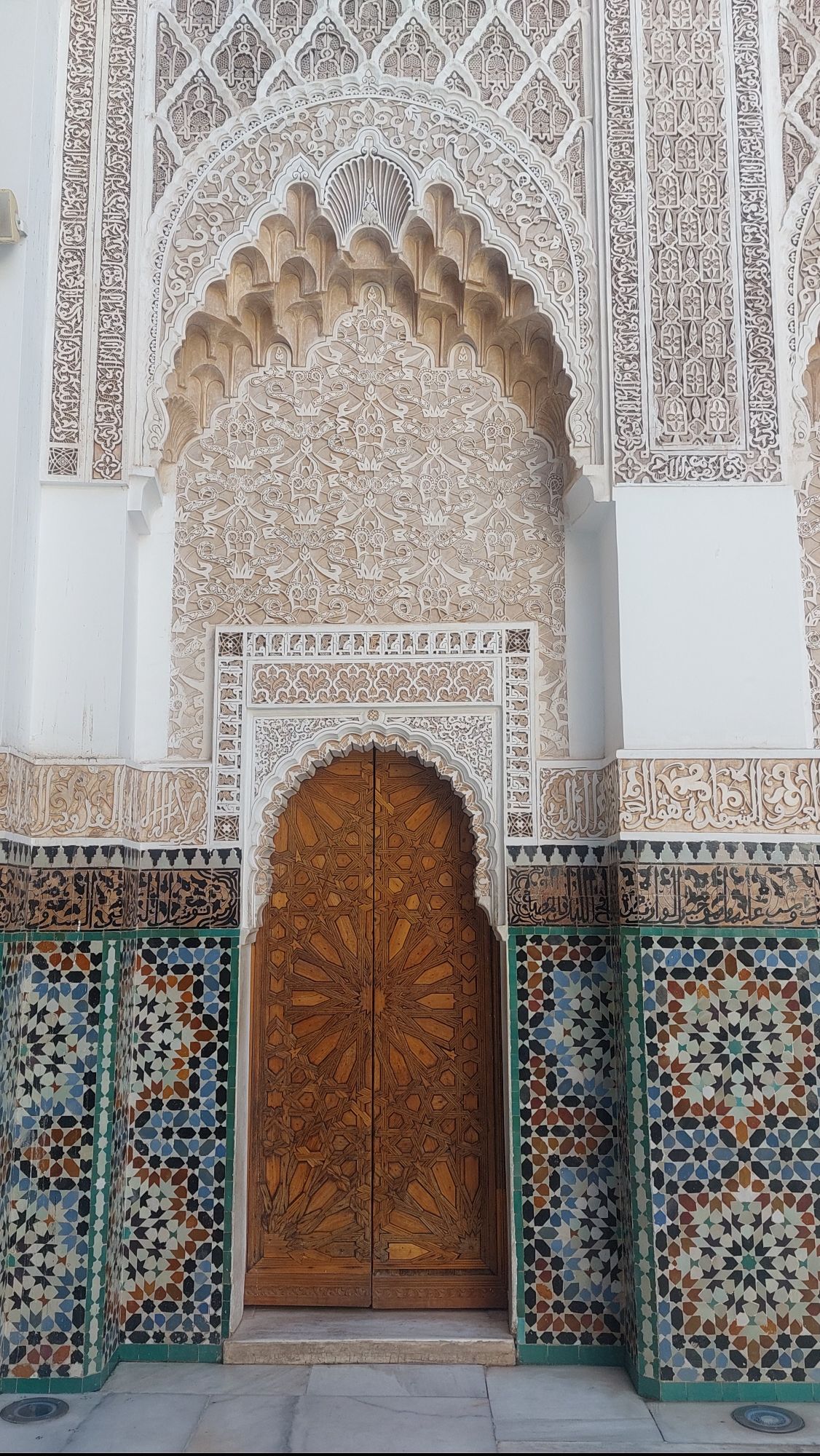
    Large wooden doors exquisitely carved out of Cedar wood appear out of nowhere as you pass through the winding alleyways.
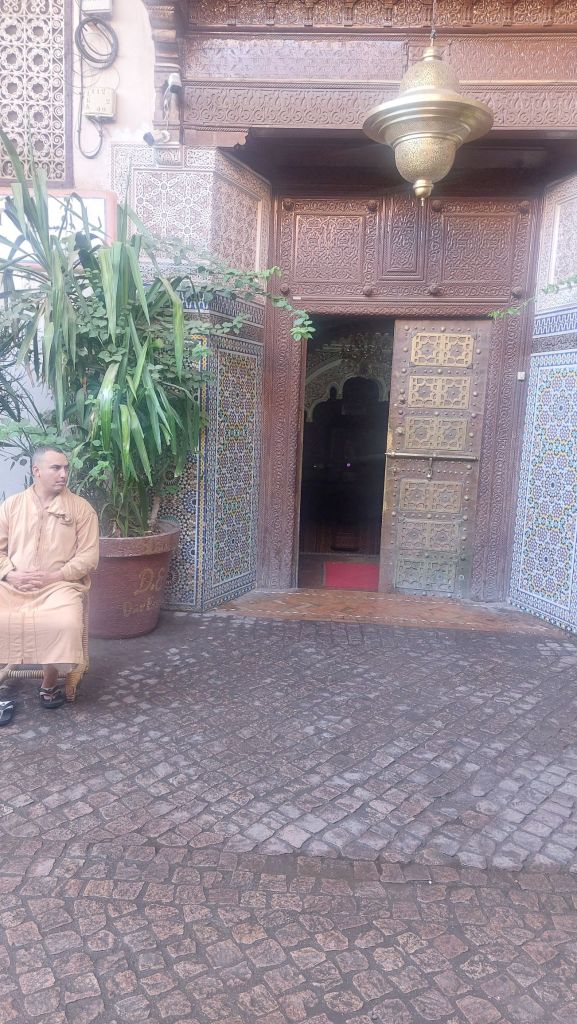
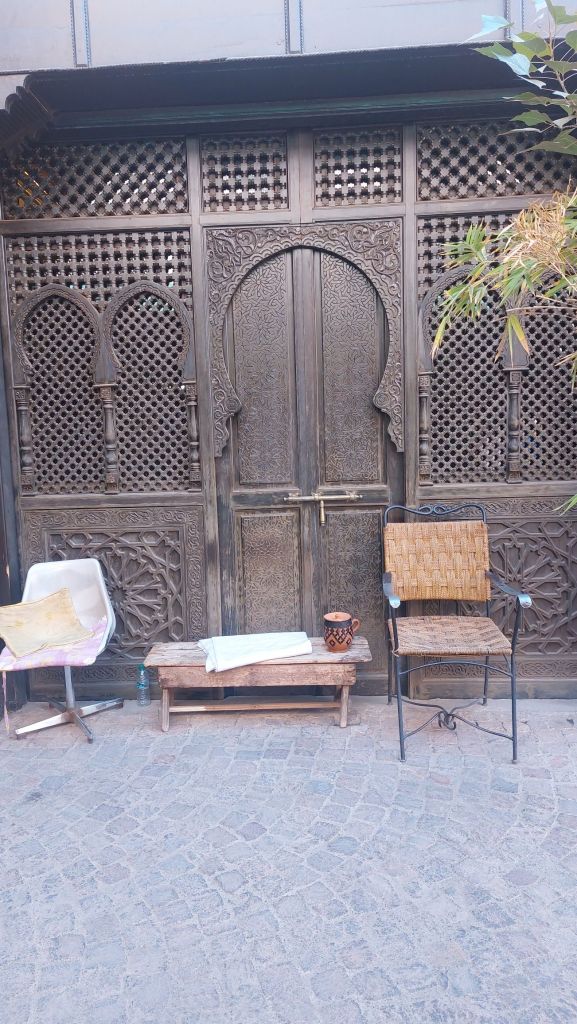
    Images by Freebird Tracey.

    Zellige tiles originating from the 10th century form geometric mosaics decorating the floors, walls, and fountains. A skill which has passed down from generation to generation.
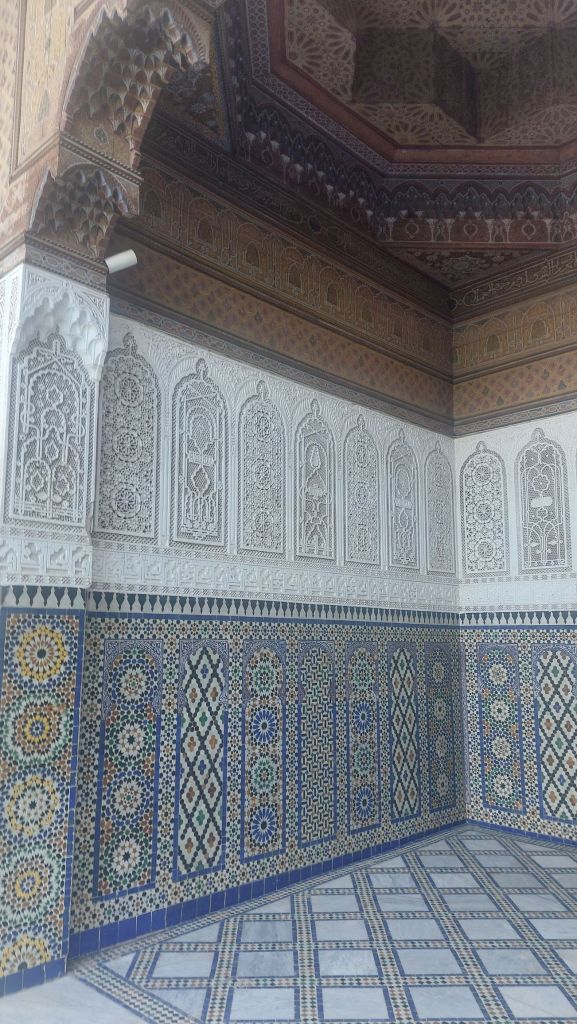
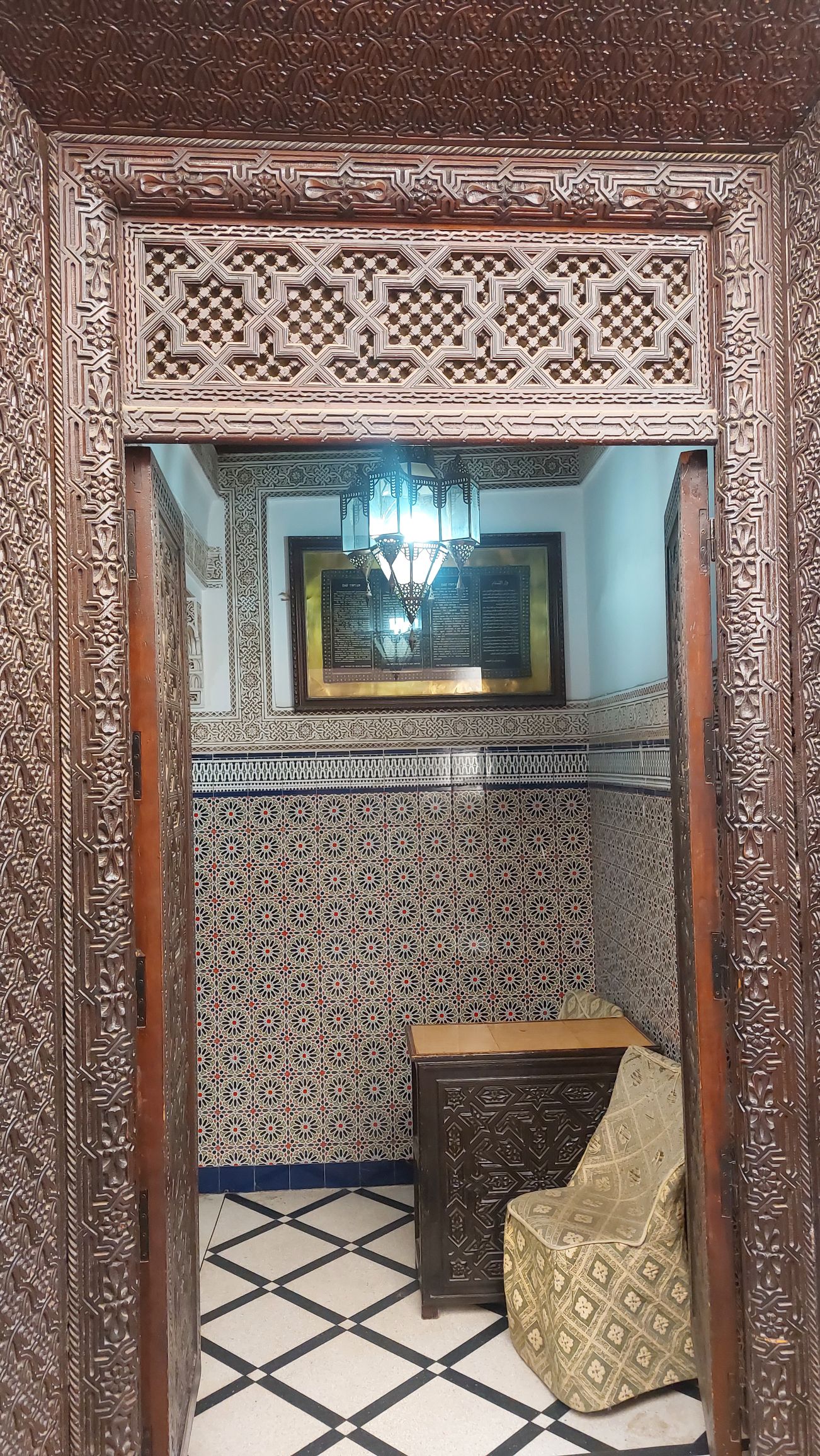
    Images by Freebird Tracey.

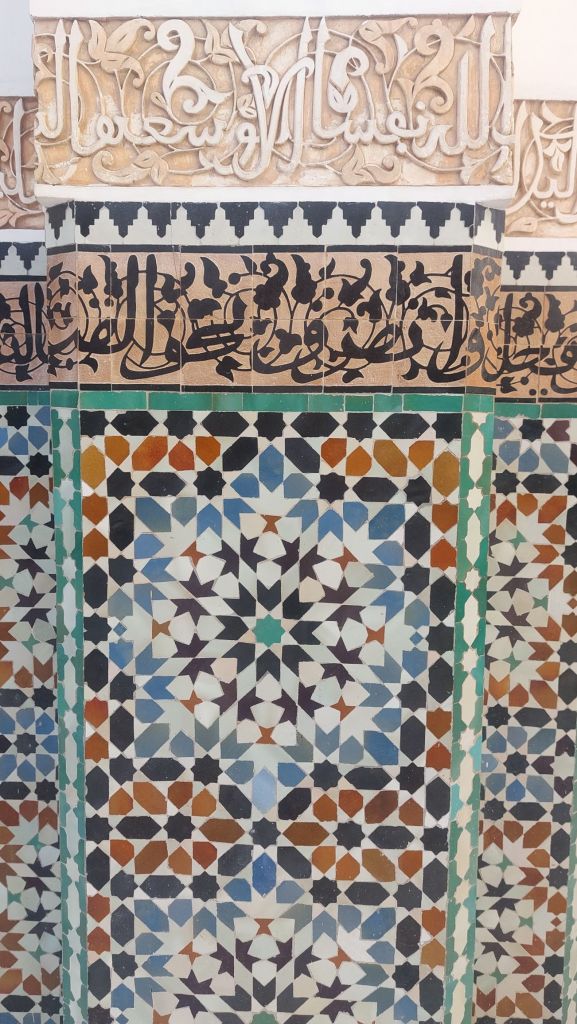
    Islamic architecture in Morocco follows the spiritual principle of Tawhid, the unity of God. There are handcarved stucco panels with expertly applied fine details, including floral motifs and calligraphy from Nakshi and Kufic Arabic scripts. These are set against a backdrop of peace and tranquillity.
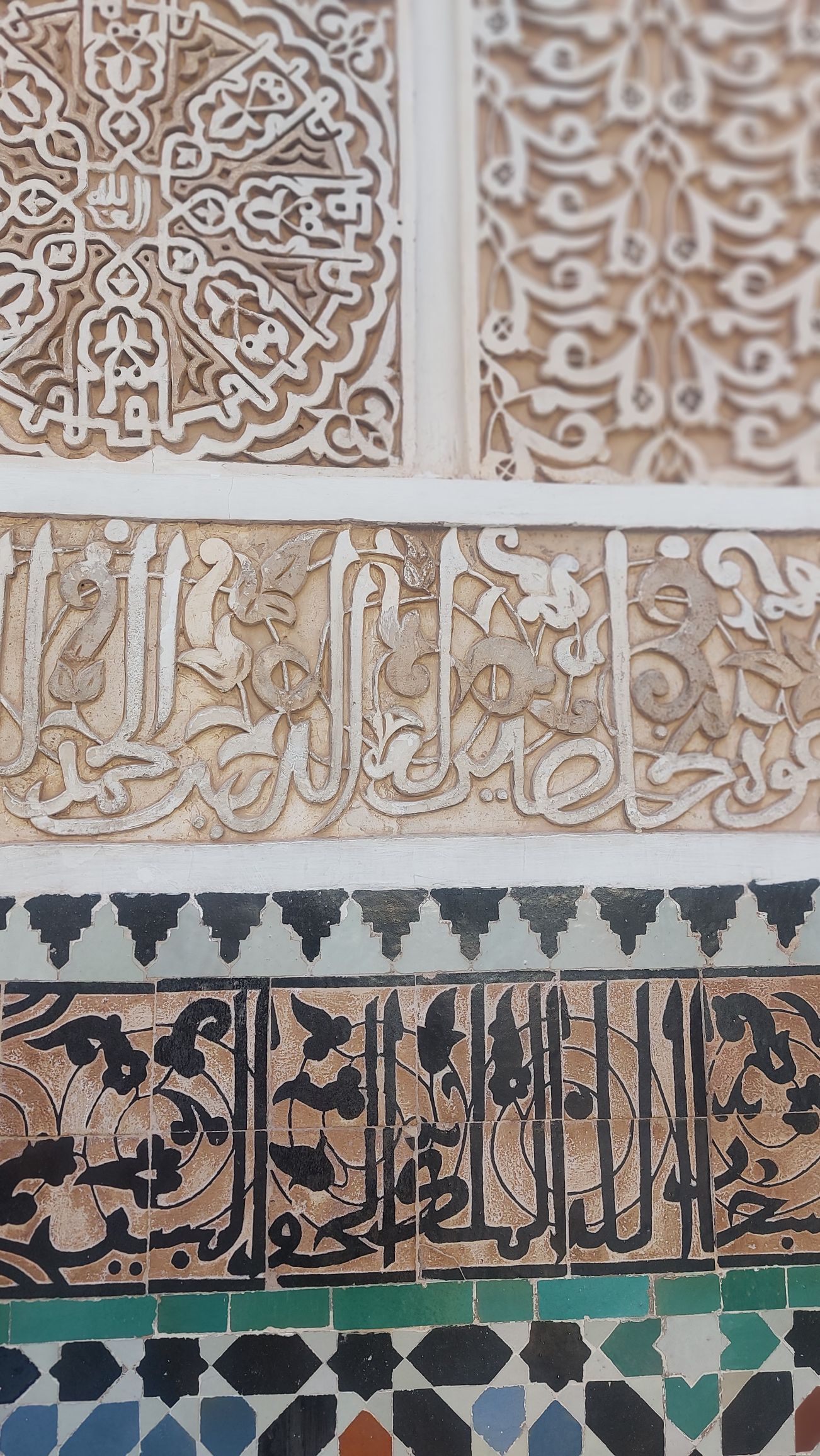
    Image by Freebird Tracey.

    The use of symmetry, repeated geometric patterns, and balanced proportions reflect divine order and infinity. The use of geometry and proportion symbolizes universal harmony.
    Calligraphy enshrines verses from the Qur’an, which merges both word and form together. Light also plays a sacred role. As it filters through lattice screens called mashrabiyas and central courtyards, it evokes the essence of divine presence.
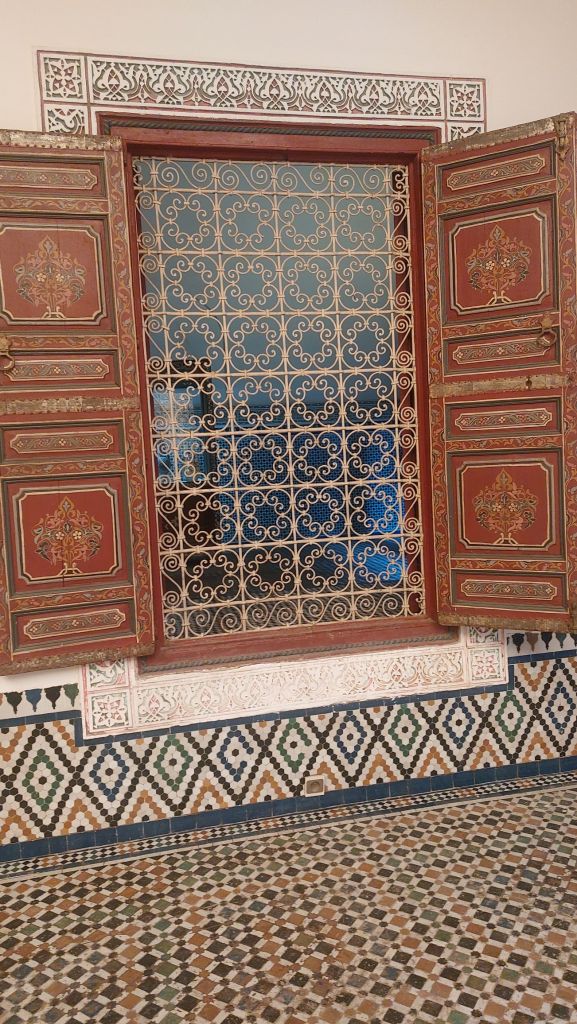
    Image by Freebird Tracey.

    Islamic architecture blends together Arab, Amazigh, Andalusian and Sub Saharan influences. Perfect examples can be seen at the Koutoubia Mosque, Ben Youseff Madrasa, Bahia Palace, Saadian tombs, and El Badi Palace.
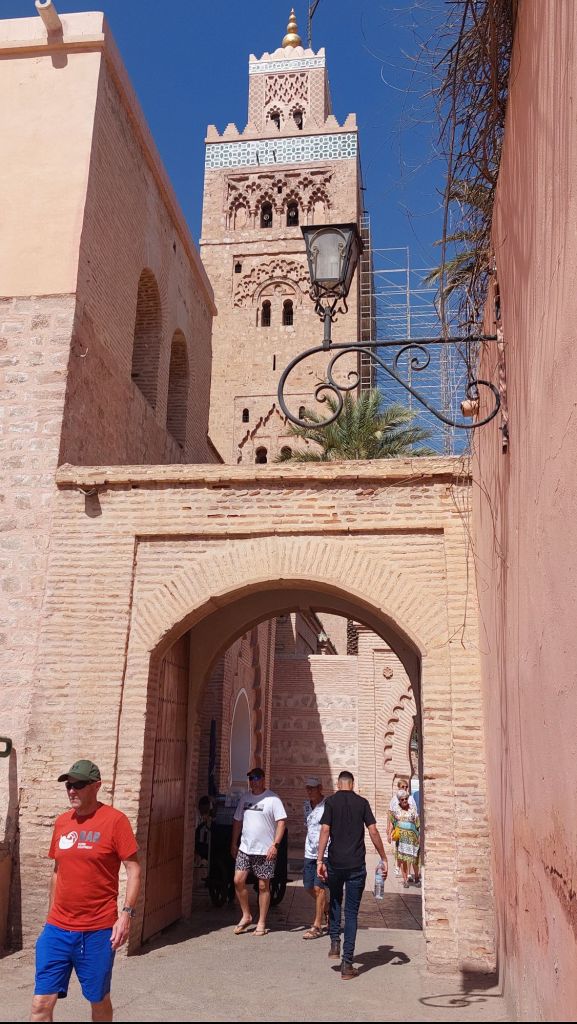
    Image by Freebird Tracey.

    Bab Agnaou gate is one of 19 splendid arched gates into the city showcasing intricate carvings.

    Hammams, which were constructed centuries ago, reflect the scale of precision and sheer brilliance of Islamic architecture. Exploring these beautiful places is a journey through the history and culture of Marrakech. You will be spellbound by the beauty of the tiled fountains with their original zellige tilework in the courtyards of riads. Original water features have been restored and strategically situated around the medina.
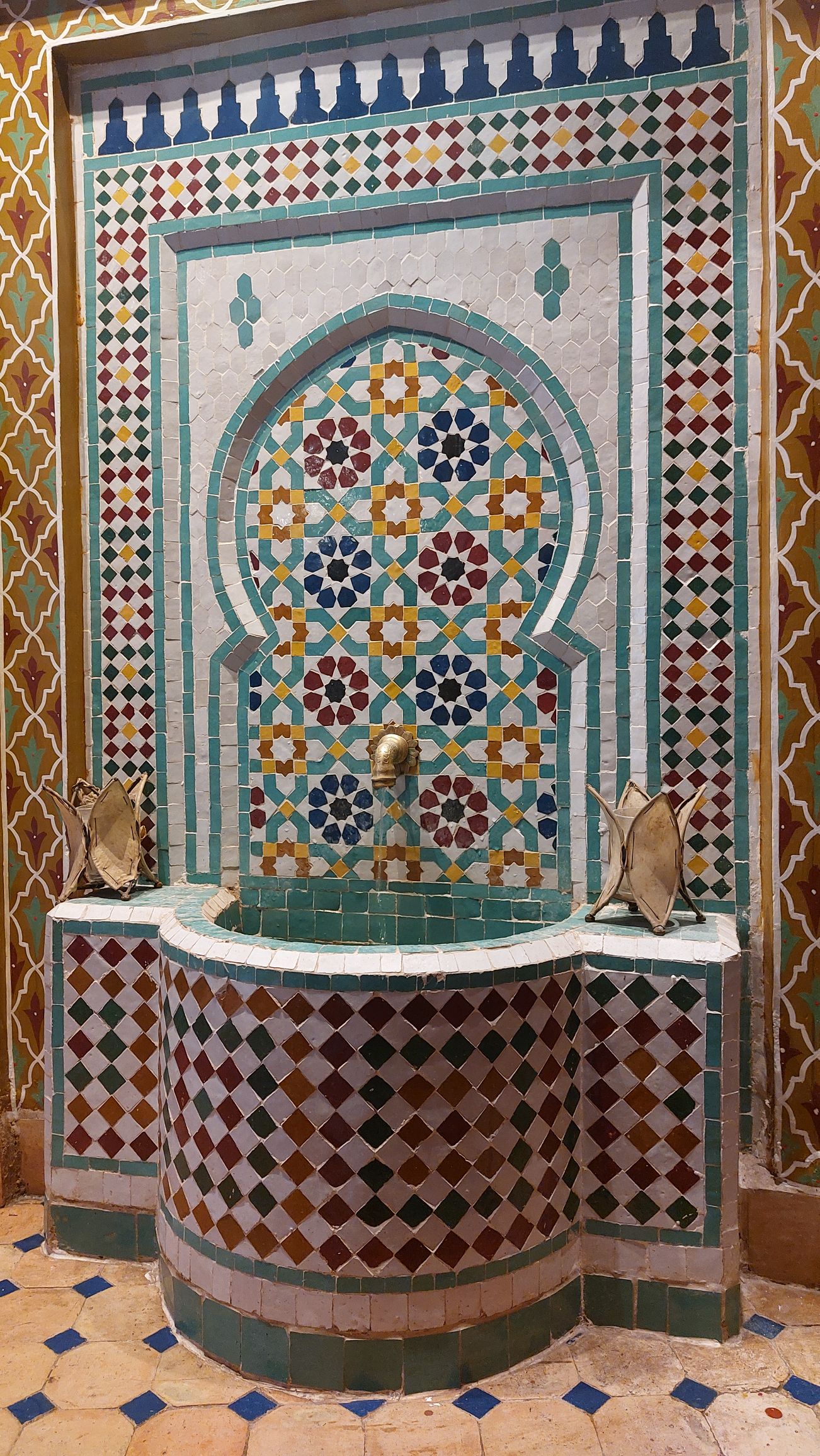
    Image by Freebird Tracey.

    There are two knockers on the magnificent wooden doors. One which is strictly for family members and one for guests to use.  This is in order to shield and protect the women of the household from the gaze of male strangers.
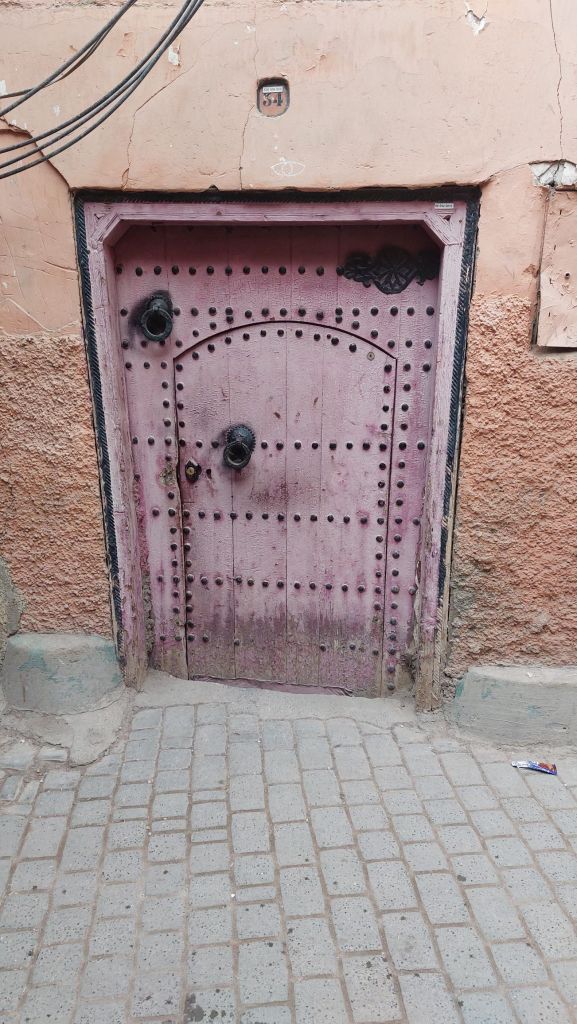
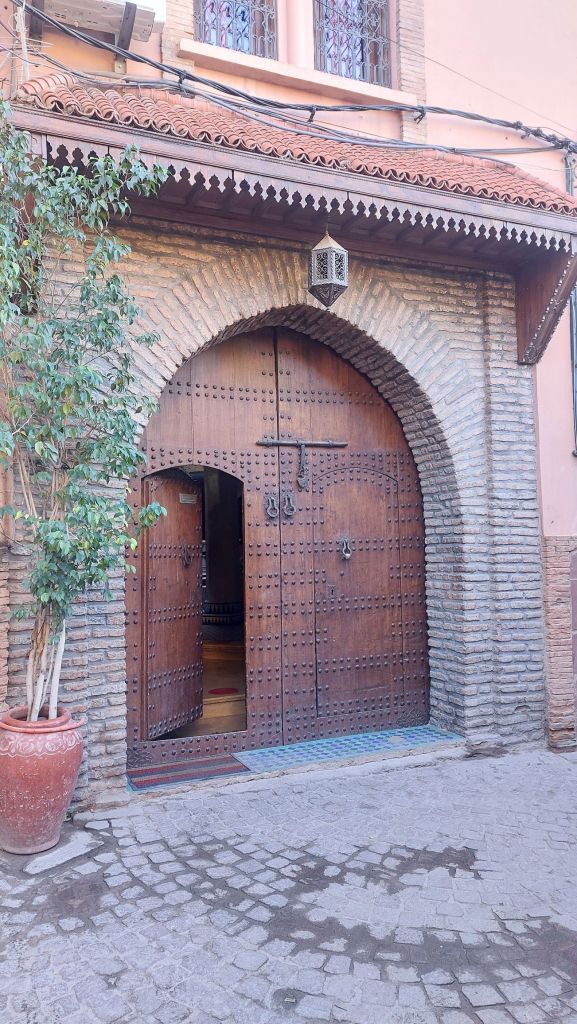
    Images by Freebird Tracey.

    There are places all around the medina where you will want to take photographs of the beautiful work local artisans left the world as their legacy.

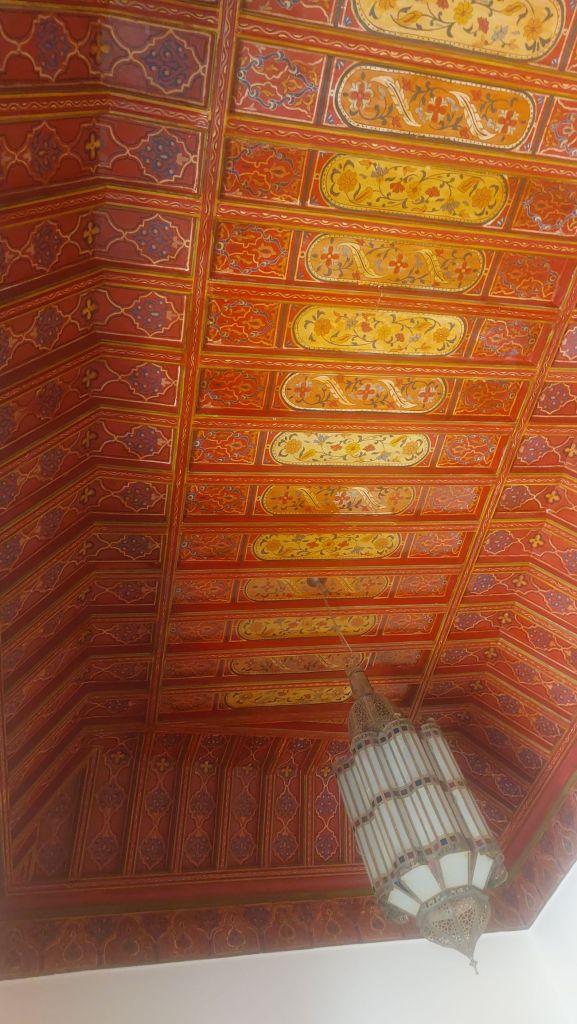
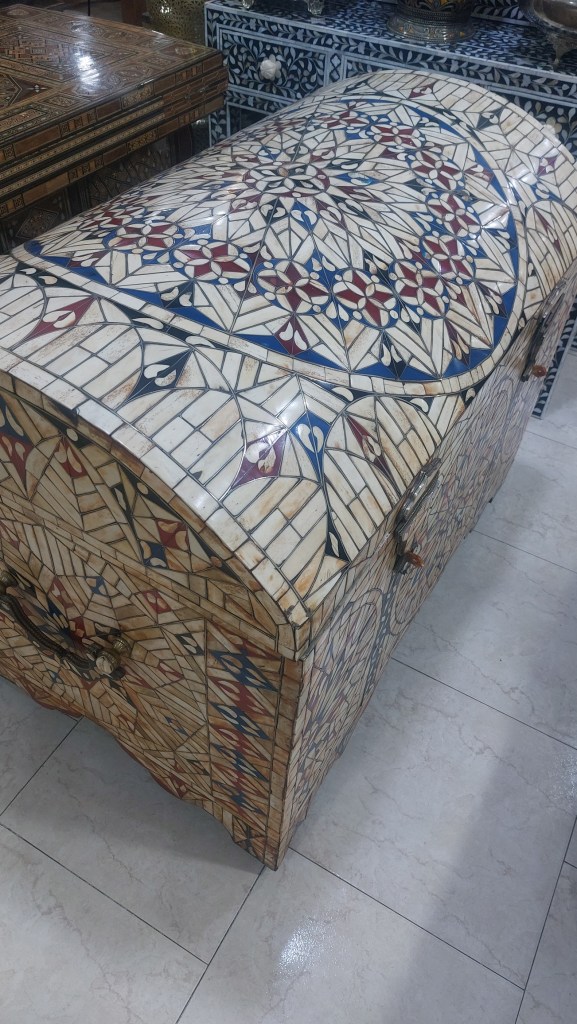
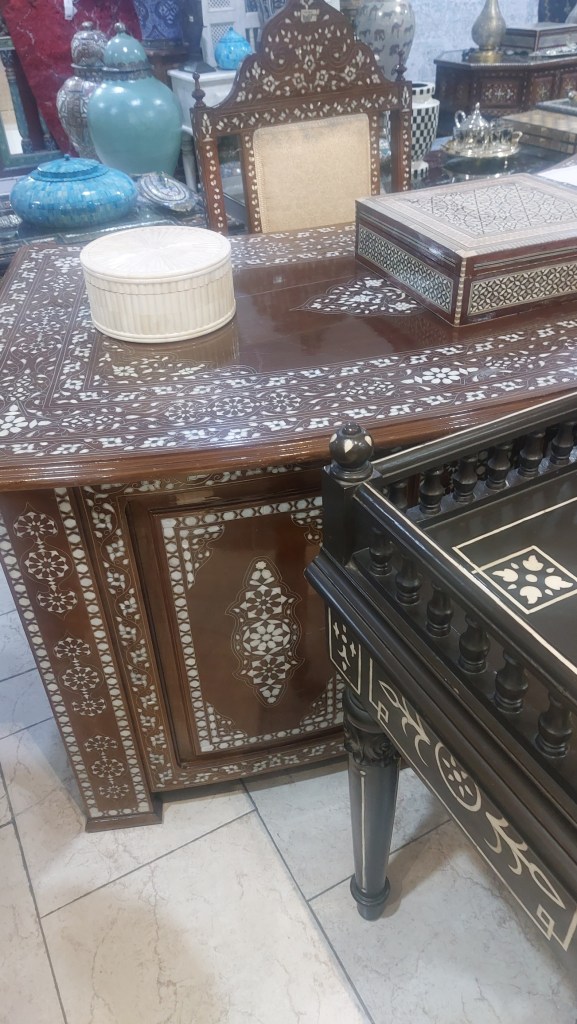
    The remarkable skills of trained craftsmen are evident inside traditional riads. Unique pieces of handmade furniture, beautifully painted doors, and splendid ceilings demonstrate the skill involved.
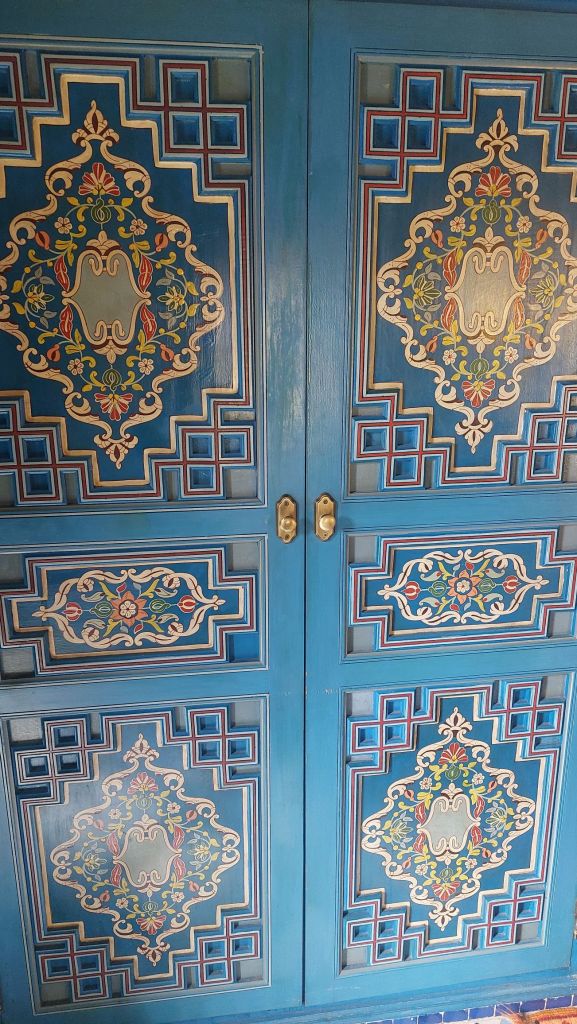
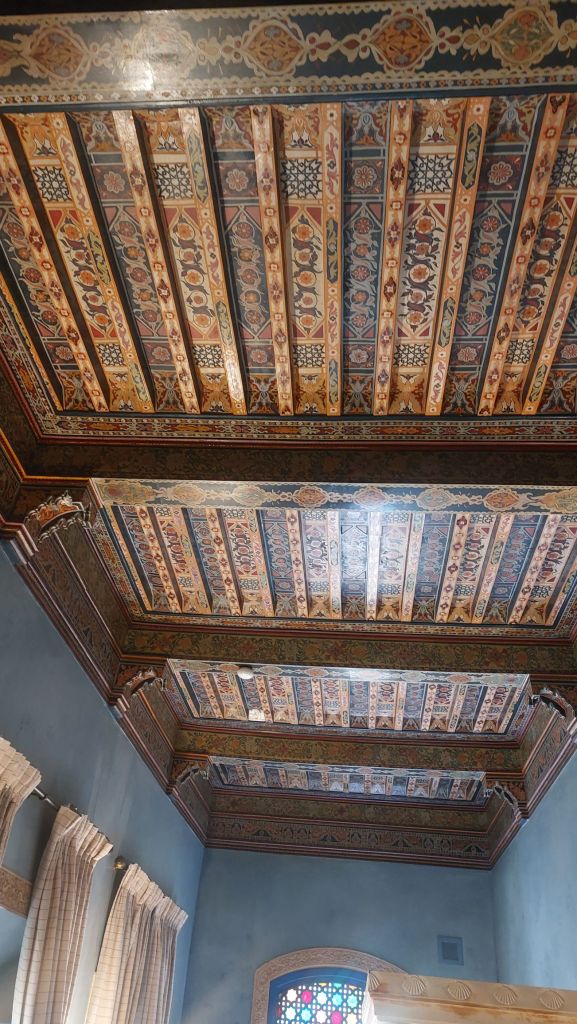
    Images by Freebird Tracey.

    You can find people creating things in Marrakech using the same techniques that generations before them had used. At Ensemble Artisanal Craft Complex near Cyber Park, you can see the artisans busy at work. Here, they teach young apprentices the art passed down by their ancestors.

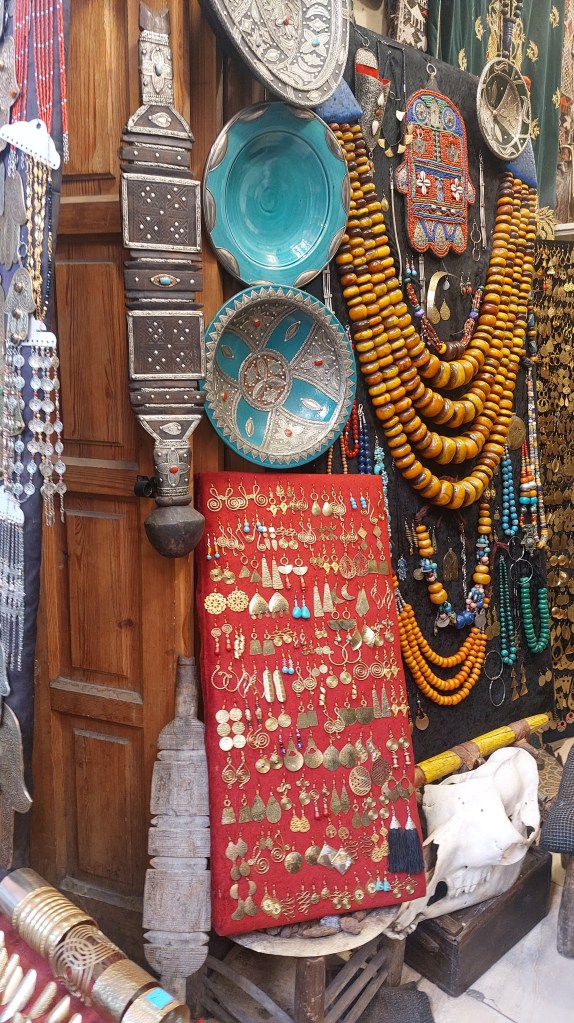
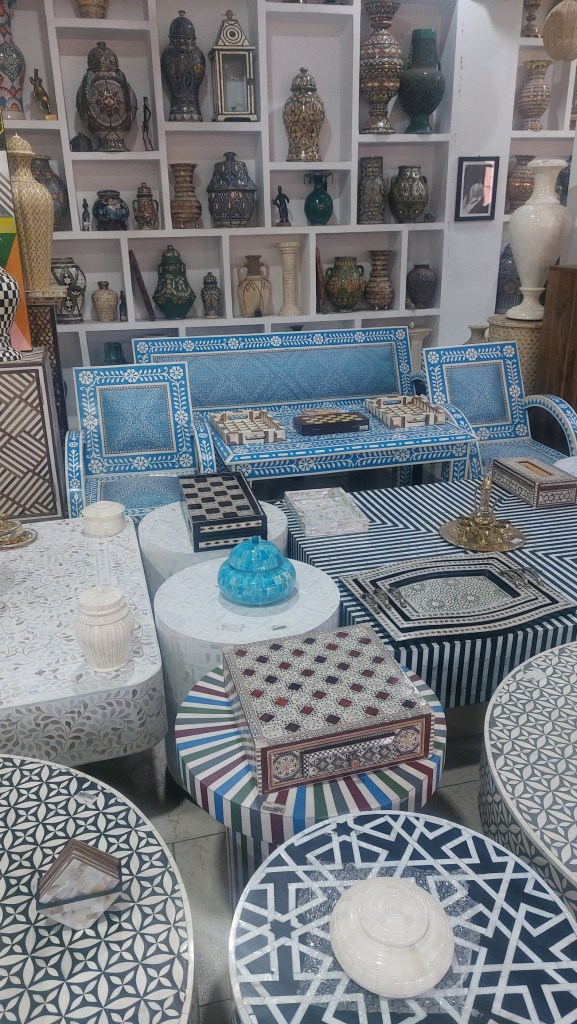
    Around the medina, you will find carefully designed wooden chess sets and wooden boxes ornately inlaid with Mother of pearl. In Tinsmiths Square, metal workers are busy crafting traditional Morroccan lamps and mirrors.

    As you wander through the souks, you are presented with examples of beautifully crafted items for sale. The amount of work that has gone into creating each piece is phenomenal.
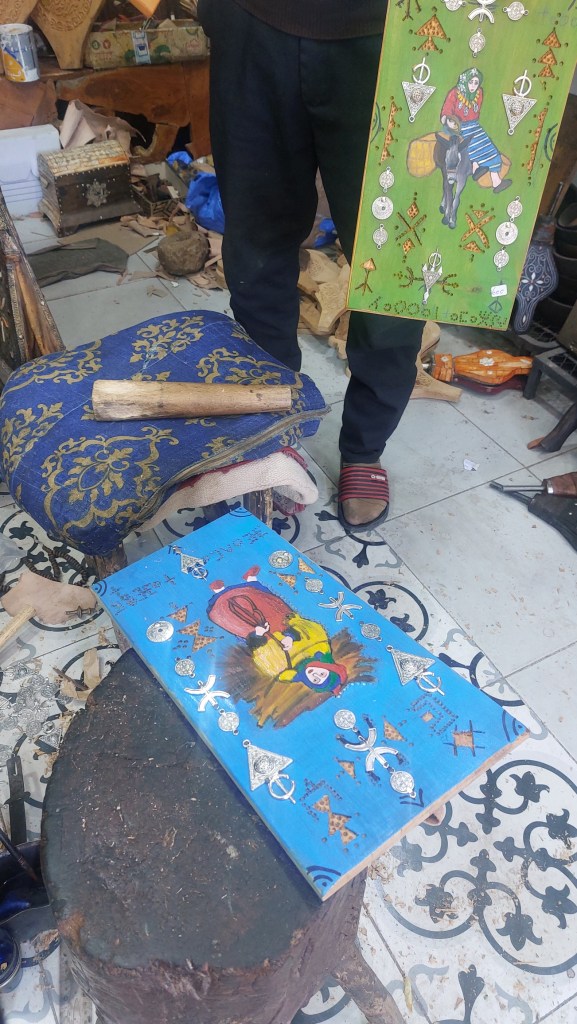
    Images by Freebird Tracey.

    The roots of Moroccan architecture originate from the Amazigh and Arab culture. Styles have evolved from one dynasty to the other, including the Almoravids, the Almohads, and the Marinids.

    Nowadays, architects are using a combination of old and modern designs in their construction of buildings. This has led to a new style. It’s still characteristic of the old medina, but introduces newer, environmentally friendly buildings. They continue to incorporate the traditional zellige tilework in order to pay homage to the history and culture of the city. Riads are restored as close to their original appearance as possible. Some are modern and contemporary, which some tourists find appealing.

    I personally love the rustic charm of the older riads. The ones that evoke images of a world gone by. Those riads clinging to remnants of the past. The ones telling the story of an ancient culture which, if you look closely, is still very much alive today.
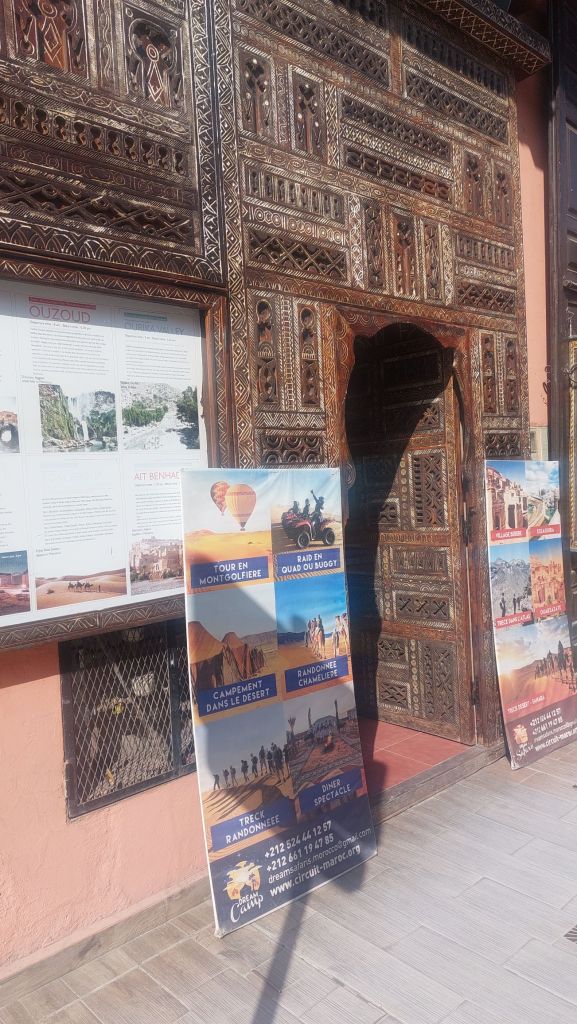
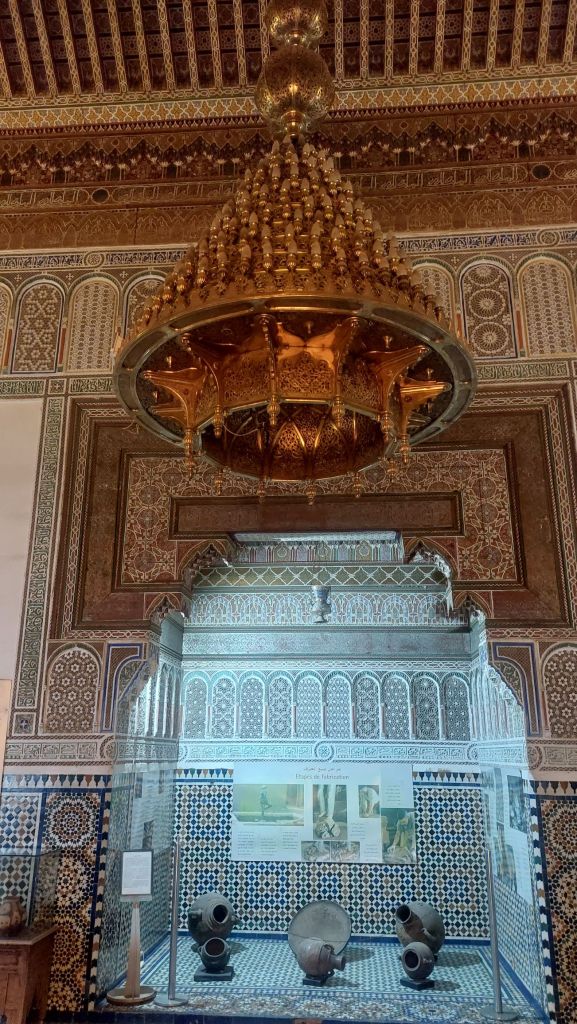
    Image by Freebird Tracey.
    (more…)
  • The Marrakech Museum.

    A fascinating museum next to Ben Youssef Madrasa.

    Image by Freebird Tracey.

    Marrakech Museum has a calmer atmosphere than other tourist attractions.

    It is undoubtedly one of the most beautiful museums I have ever seen. Literally, next door to Ben youssef Madrasa, it’s in a perfect location for combining both sightseeing attractions.

    I had mixed feelings about visiting after reading reviews, suggesting there wasn’t much to see. I was so glad that I did. It was really beautiful inside and held a lot of information about the Amazigh culture and the history of Marrakech.

    The museum was once Dar Mnebhi Palace, constructed at the beginning of the 20th century by Mehdi al-Mnebhi. It was renovated by the Omar Benjelloun Foundation and became a museum in 1997.

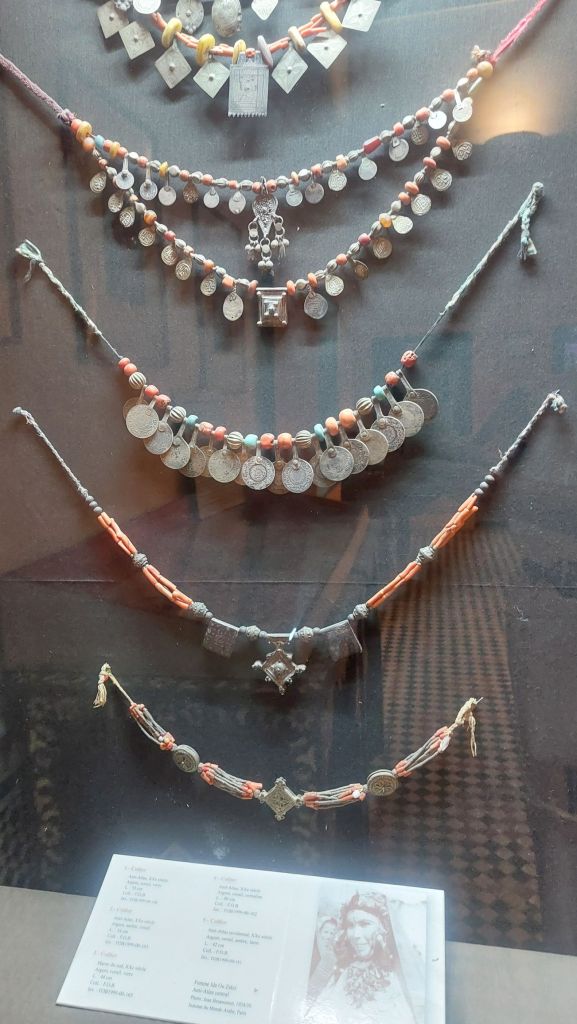
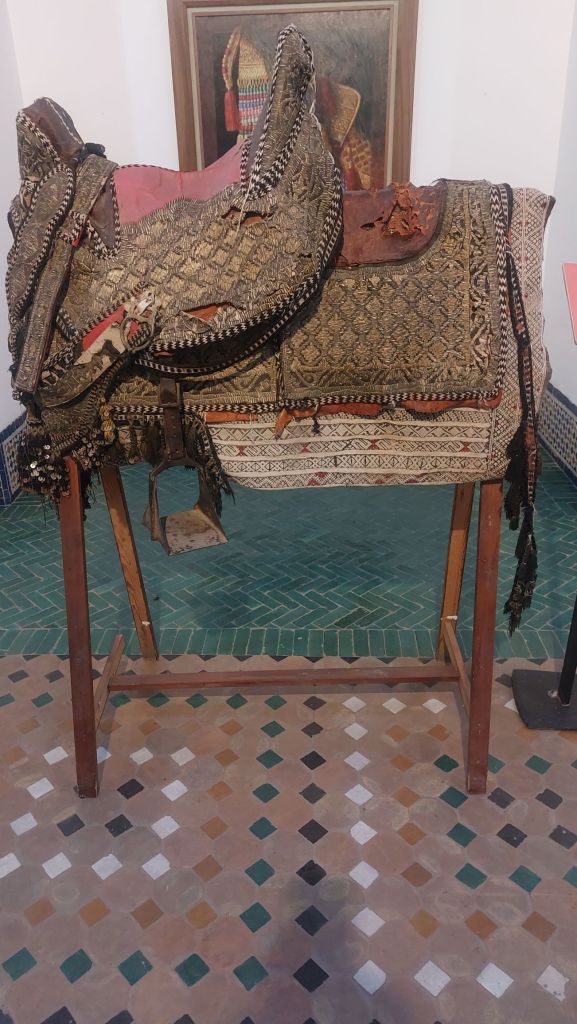
    It now houses a selection of art objects, including Berber jewellery, weapons, carpets, costumes, and pottery from Fes. There is also a variety of modern contemporary art that changes regularly to keep it exciting. Regular events and exhibitions are also held here.

    Images by Freebird Tracey.

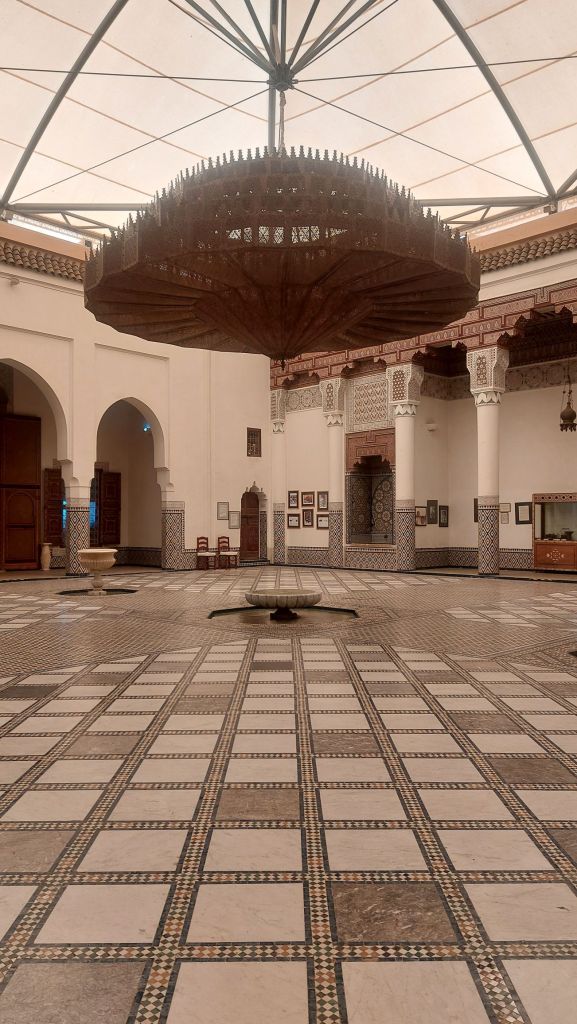
    The architecture is stunning with a large courtyard containing a huge central chandelier made up of brass pieces cut into ornate geometric and arabesque motifs.

    Images by Freebird Tracey.

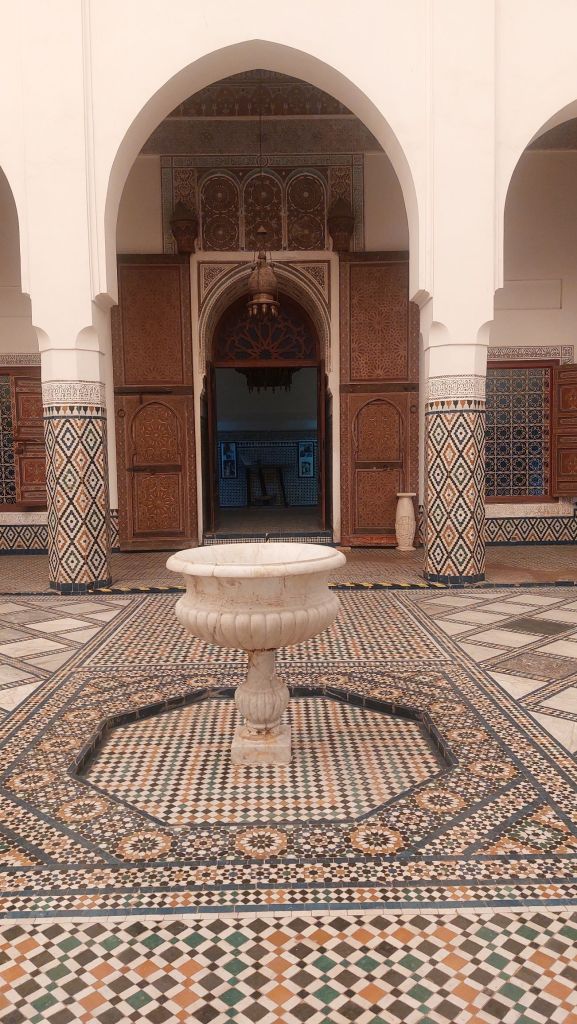
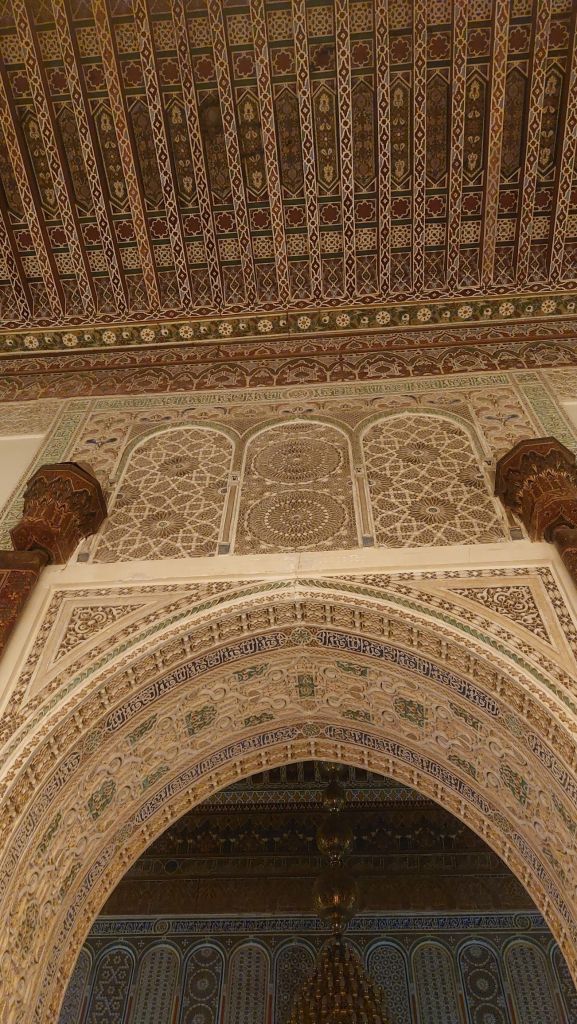
    There are fountains with beautiful coloured zellige tiles and rooms that branch off with ornate cedar wood and stucco decoration. There is also a centuries old hammam.

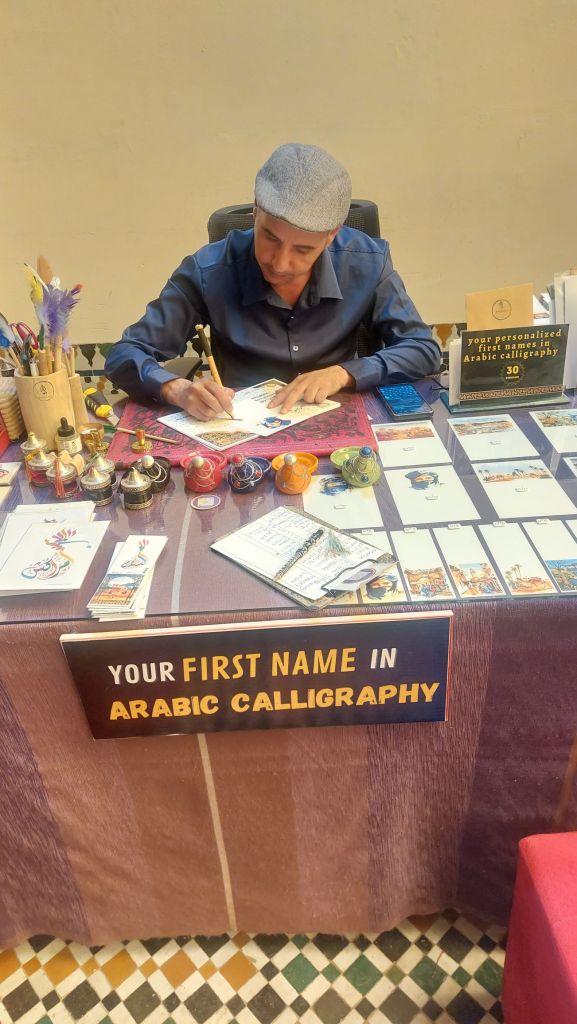
    In one corner of the courtyard sits a calligrapher who can write your name in Arabic on a postcard. If you want this as a gift, get him to scribe it before you begin looking around the museum as it takes a little while to dry.

    Image by Freebird Tracey.

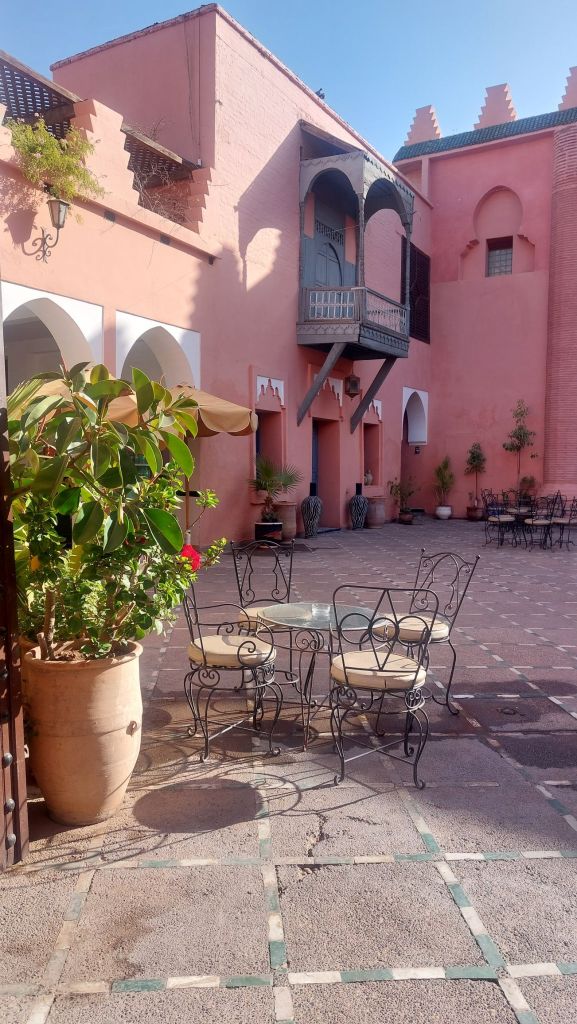
    Outside is a large open courtyard with a cafe where you can have drinks and light snacks. There’s also a small shop selling good quality prints, postcards and other interesting stuff.

    I really enjoyed the Marrakech museum. The architecture was beautiful, and I found it more low-key and less crowded than some of the other attractions around Marrakech. I liked the structure of the building from the outside and the typical red coloured clay that glows in different hues in the sunlight.

    I would recommend stopping by to explore some of the exhibits in the Marrakech Museum after visiting Ben Youssef Madrasa.There is no cafe within the Madrasa, so it’s a great place to stop and take a break from the heaving number of tourists and spend some time in a calmer environment.

    The Marrakech Museum is located at J2H6+VPJ, Place Ben Youssef, Marrakech 40000, and opening hours are 9.30am-6.00pm daily.

    There’s a small entry fee of approximately 50 dirhams.

    Image by Freebird Tracey.
    (more…)
  • Ben Youssef Madrasa

    Visit a centuries old Koranic school.

    Image by Freebird Tracey.

    Ben Youssef Madrasa was once the largest and most important Islamic college in Morocco.

    It was commissioned by Saadian Sultan, Abdellah al- Ghaleb Assaadi in 1564-65 and named after the adjacent Ben Youseff mosque.

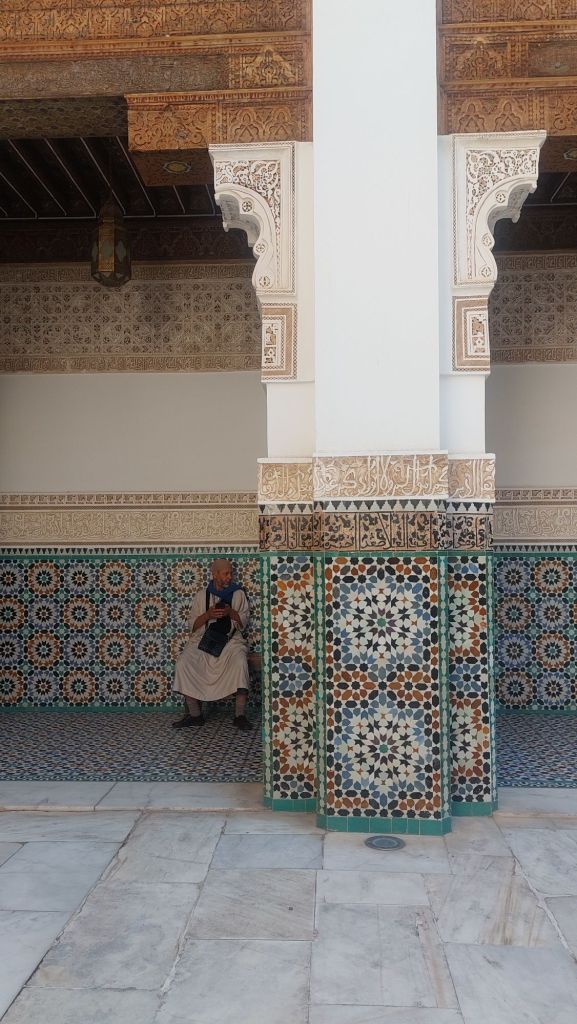
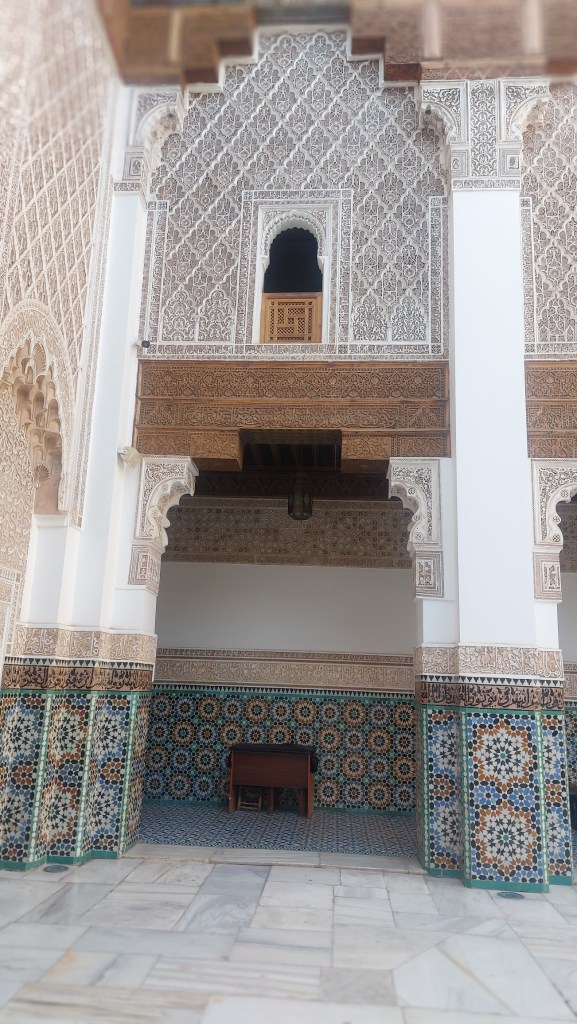
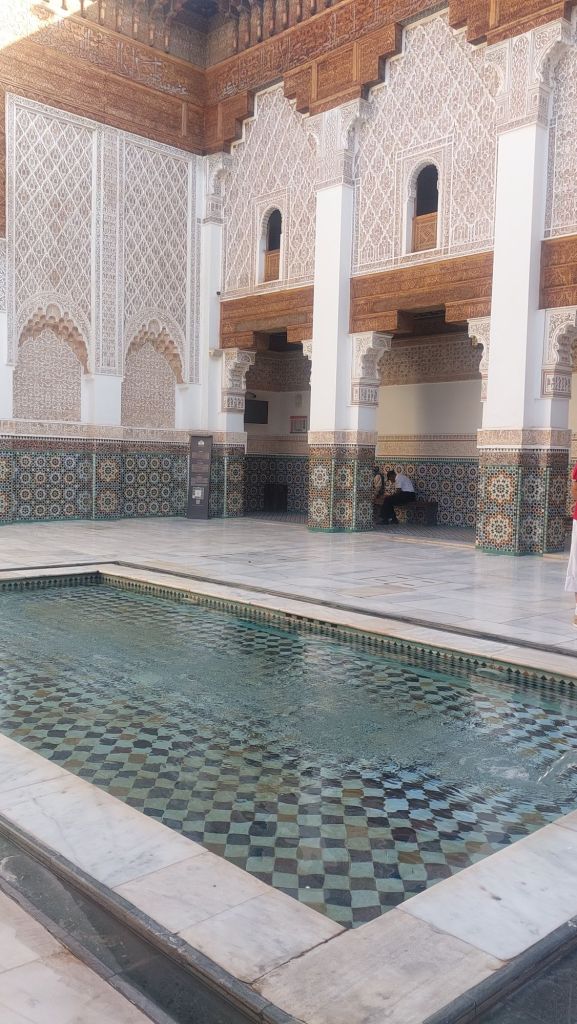
    It’s a fascinating place to visit with invaluable historical and cultural significance. The spectacular architecture inside the Madrasa is simply breathtaking and a testimony to the beauty of Islamic art and craftsmanship.

    Students who studied at the Madrasa would learn many subjects, including religious science, mathematics, philosophy, and medicine.The Madrasa attracted the best scholars and thinkers from the Arab Muslim world.

    Images by Freebird Tracey.

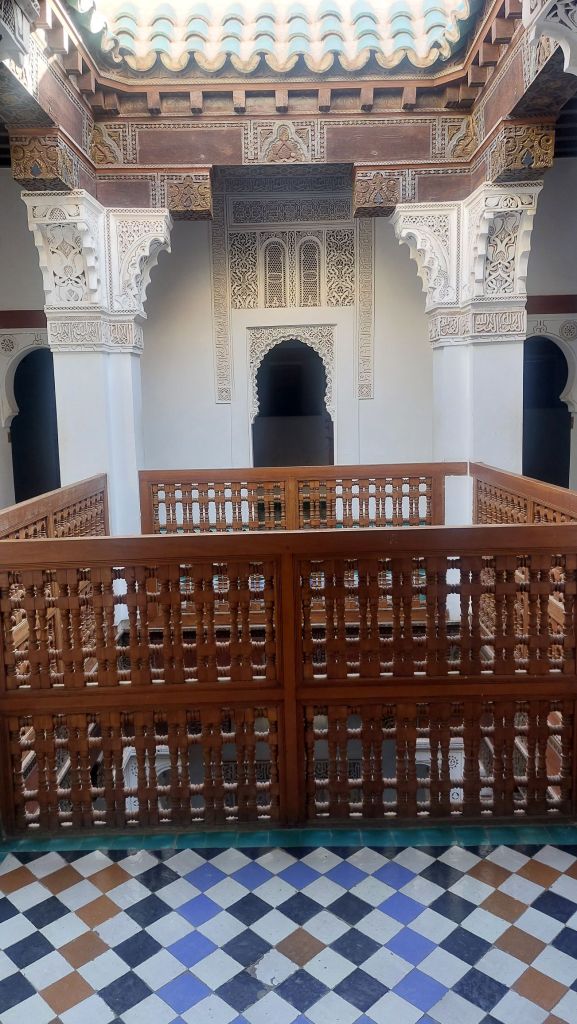
    Ben Youseff Madrasa has been beautifully restored. Zellige tiles decorated with floral, geometric motifs and Arabic scripts adorn the walls. Carved cedarwood doors, ceilings, and intricately crafted pillars showcase the quality of the craftsmanship. It’s a prime example of the skill used to create traditional Islamic architecture.

    There are approximately 130 dormitories and in it’s heyday as a koranic school, the Madrasa housed around 900 students.The small rooms were just big enough for them to roll out their mats to sleep on.The main focus for each student was study and prayer.

    The rooms overlook the large courtyard, and tourists cram inside to have their photos taken standing in the window frames.

    Images by Freebird Tracey.

    Ben Youseff Madrasa is one of the most touristic sightseeing spots in Marrakech. Due to its popularity, you have to get there early to appreciate the serene environment that the students would have lived in. If you arrive later in the day, expect huge crowds to jostle with each other for perfect photo opportunities.

    I visited at opening time, and although there was a small queue of people waiting to enter, it wasn’t too packed with tourists.

    Ben Youseff Madrasa is next to Marrakech Museum. The address is Rue Assoual, Marrakech 40000.

    Image by Freebird Tracey.

    Opening times are 9.00 am until 7.00pm, except on Tuesdays when they close at 4.30 pm. The entrance fee is 70 dirhams.

    There are guided tours available to book online. Some include skipping the line entry. I didn’t bother booking a tour. There is information inside the Madrasa, which gave me an idea of what it would have been like to study there. For a more detailed history, a reputable, knowledgeable guide would be helpful.

    Image by Freebird Tracey.
    (more…)