A guide to stressfree shopping in Marrakech.
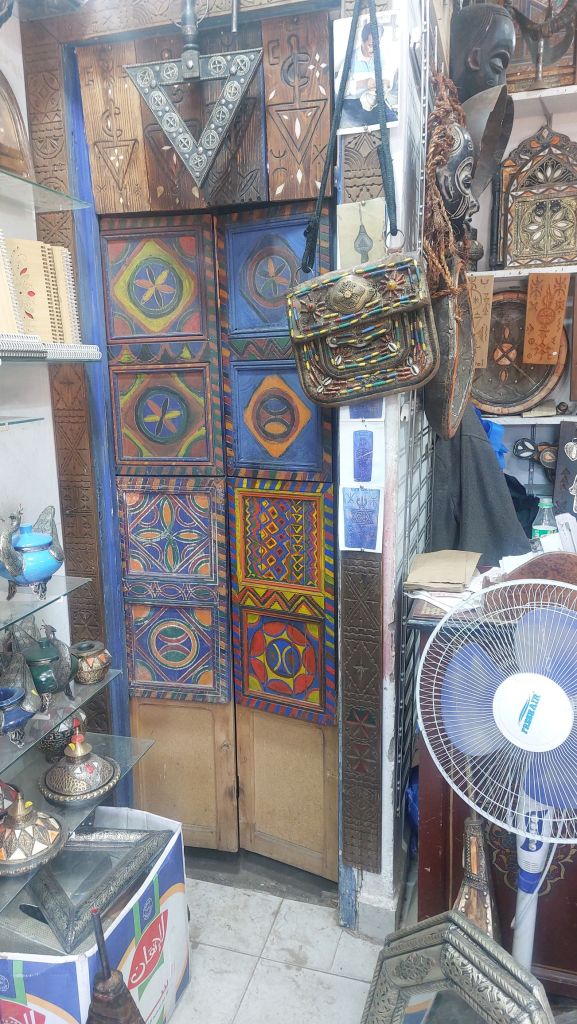
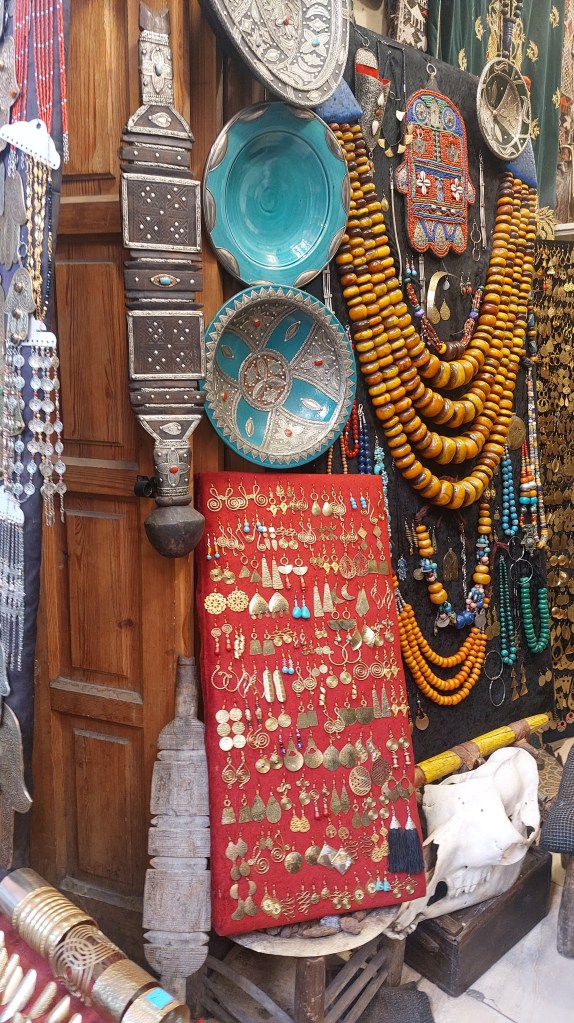
The sound of the souks is something you will never forget. There is everything you could dream of buying in the colourful bazaars around Marrakech medina. As you meander through the maze of winding alleyways, prepare yourself for a complete overload on the senses. You will be dazzled by everything from beautiful Amazigh jewellery to exotic spices, leather goods, Morroccan lamps, and pretty ceramics. It’s all there waiting for you inside the vibrant souks.
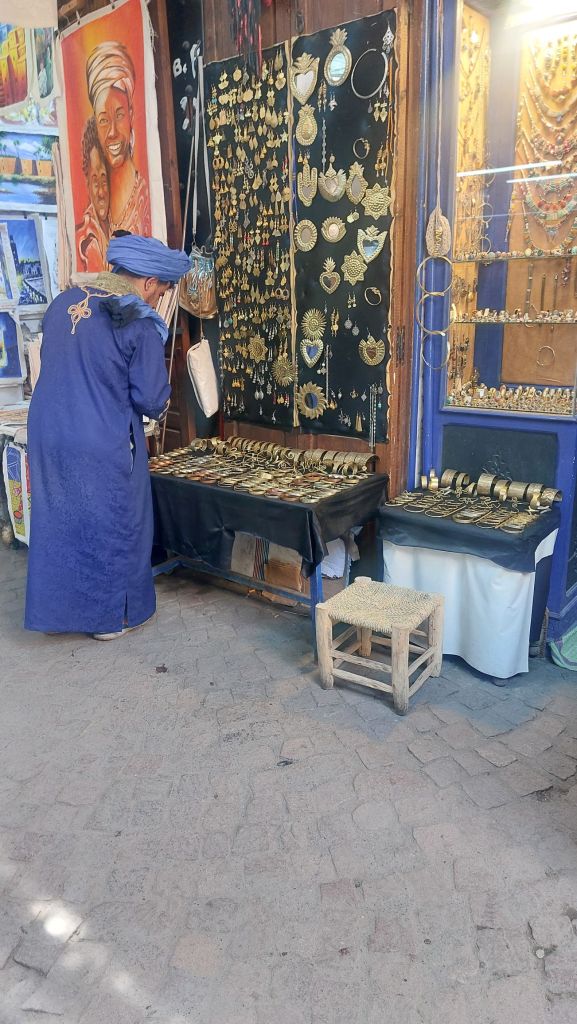
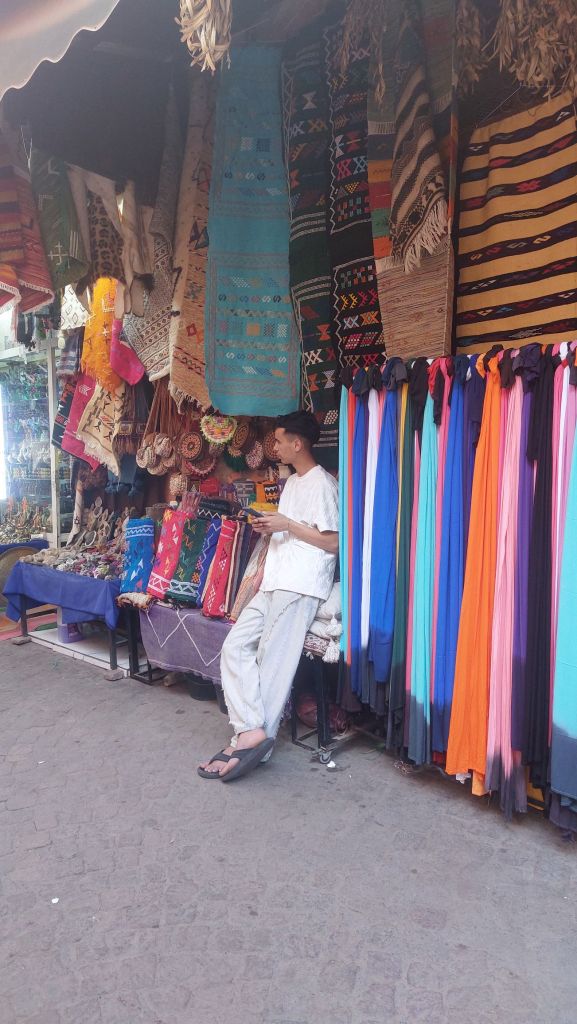
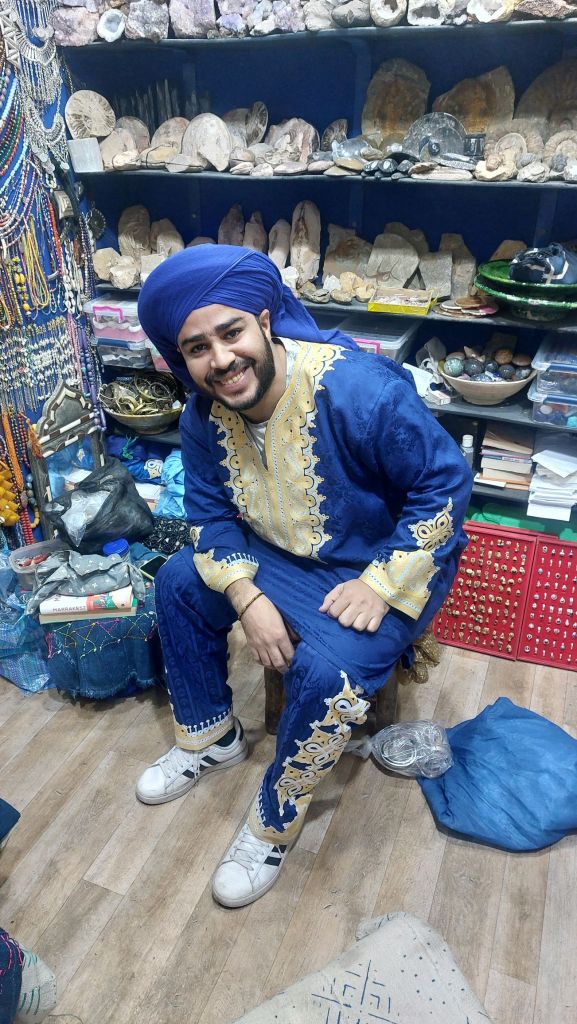
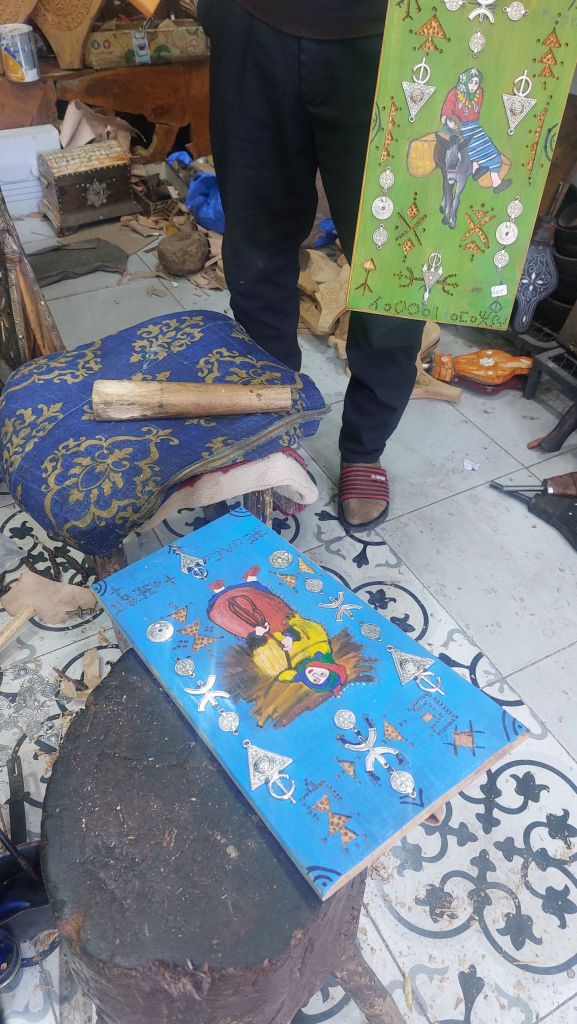
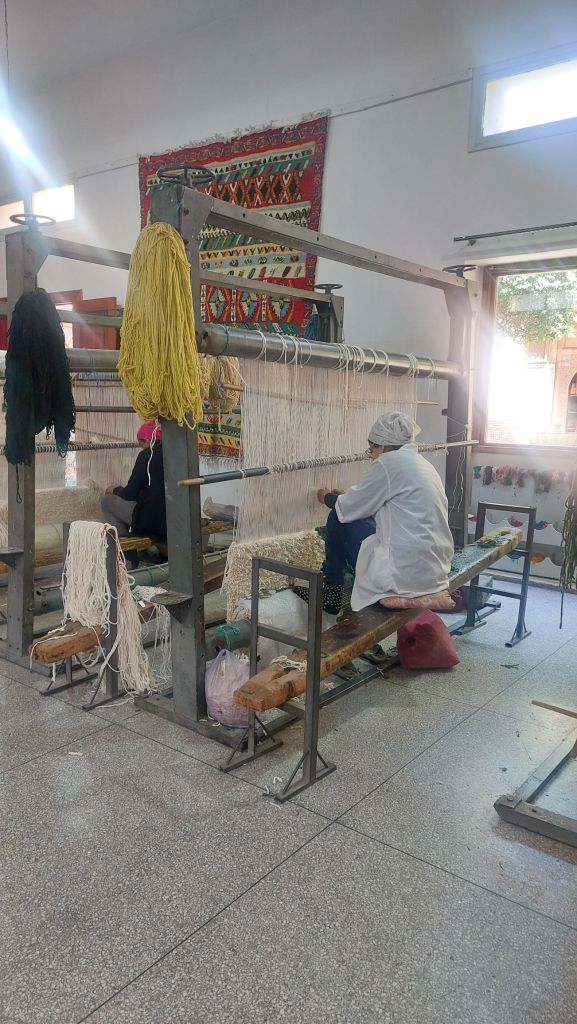
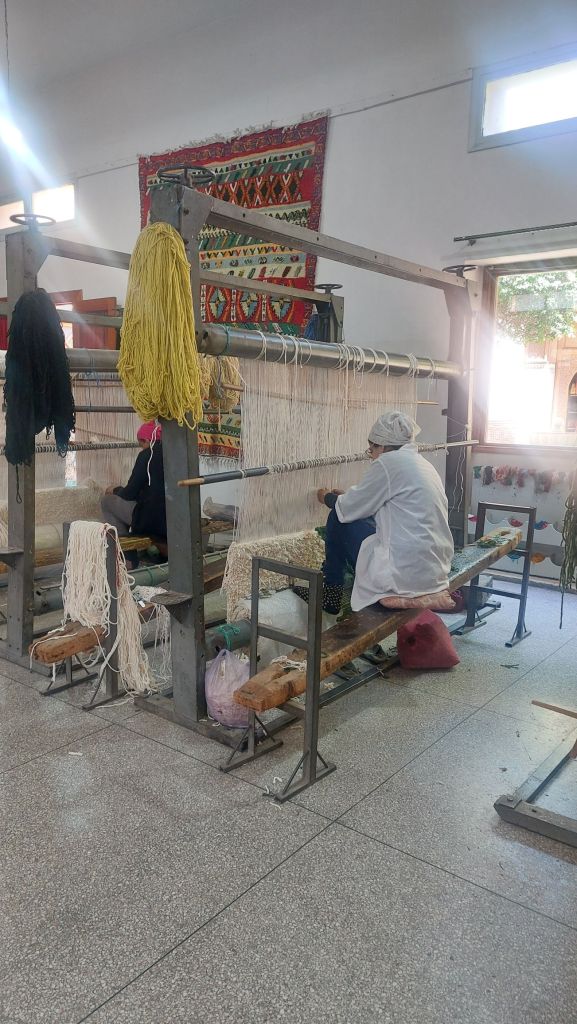
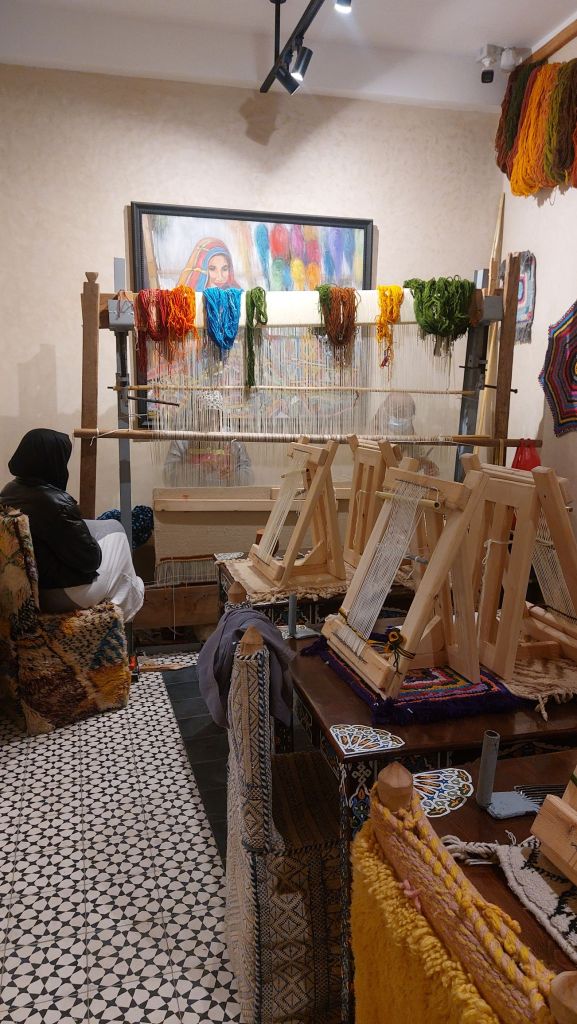
Within each bustling area, skilled craftsmen are busy at work, and there are souks dedicated to creating and selling different items.There is an area for leather goods, a place where metal workers make Moroccan lamps and metal sculptures and areas where handmade wooden things are meticulously created. The art of rug weaving is demonstrated, and you may even get the chance to have a go.
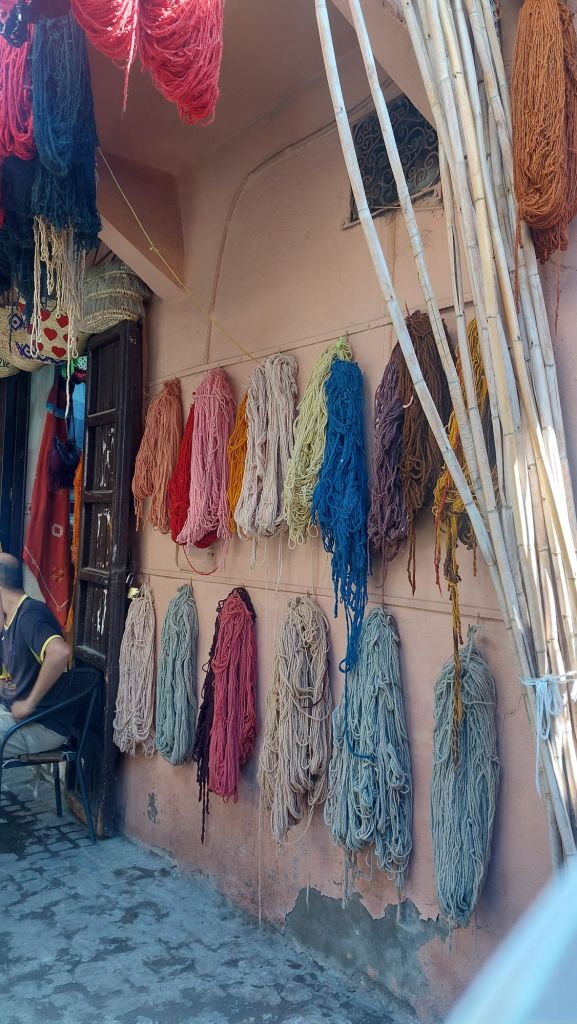

It’s interesting watching the locals make their wares to sell and seeing silver and copper bangles being engraved with your Arabic name on them. There is also an opportunity to have a go at making a pair of traditional Morroccan shoes known as babouches.
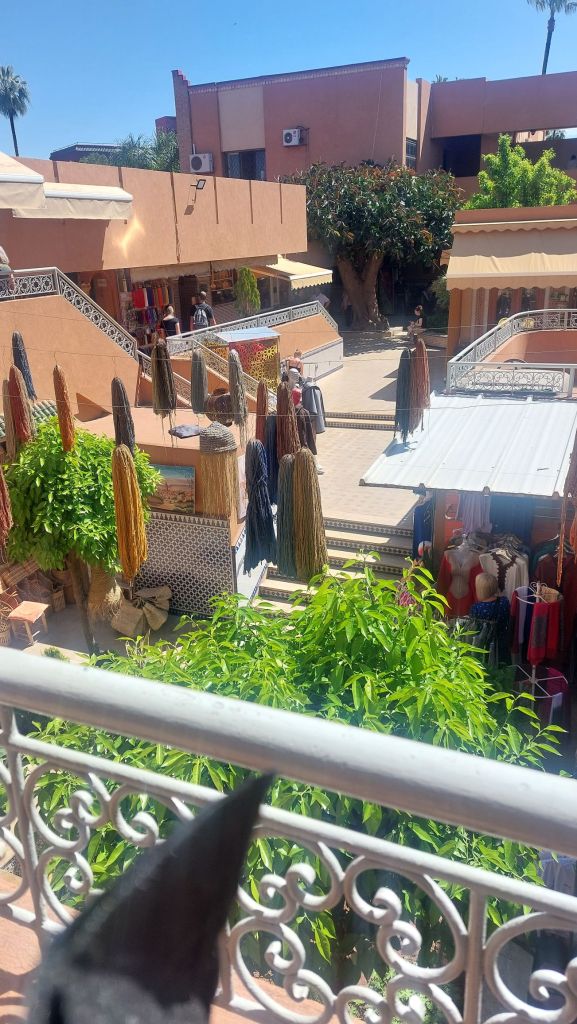
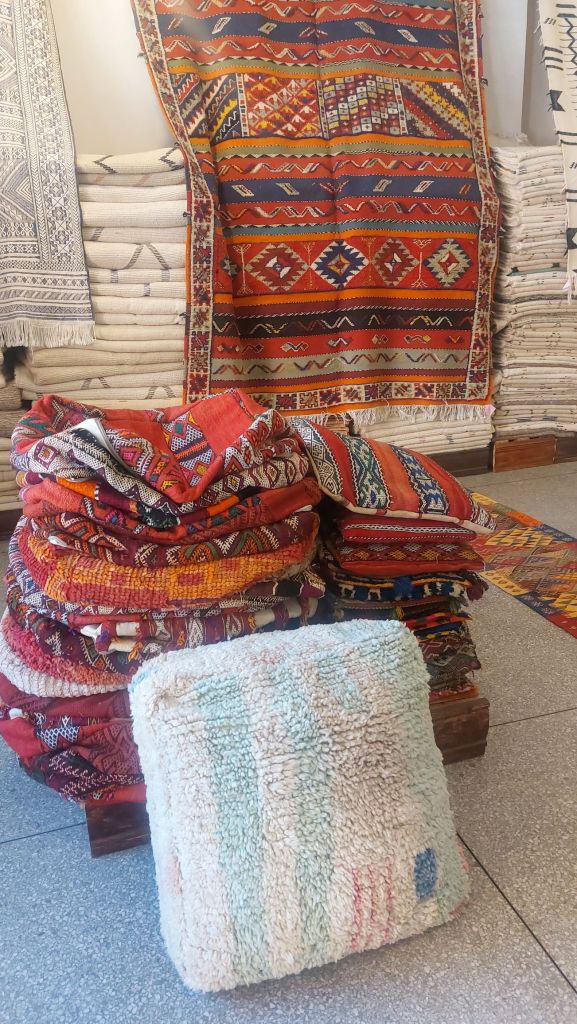
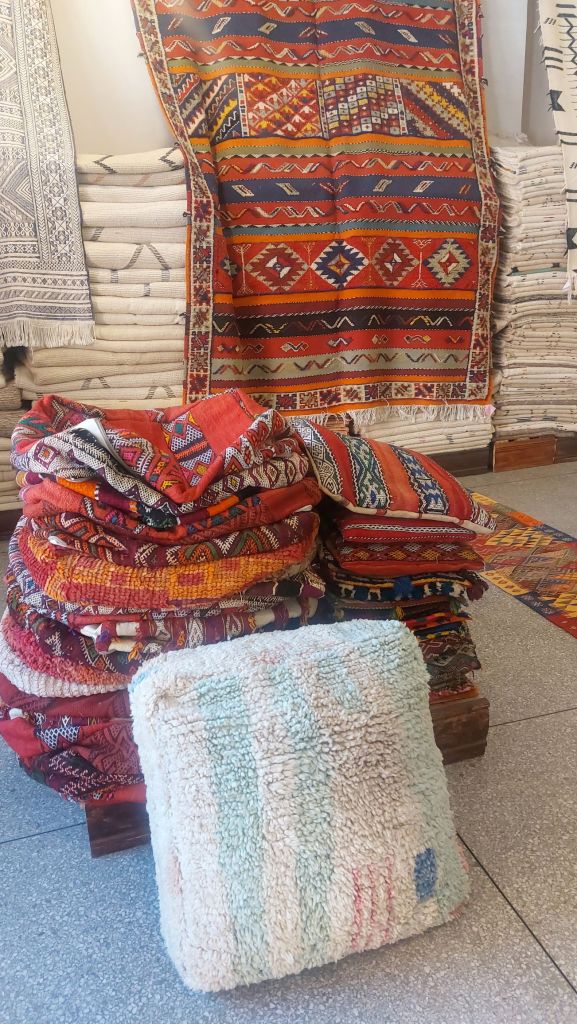
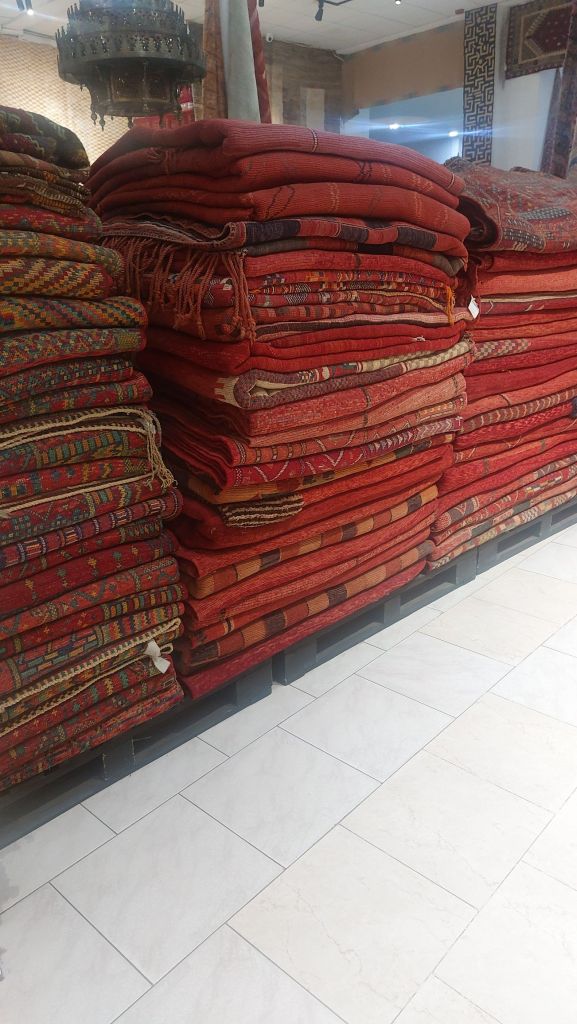
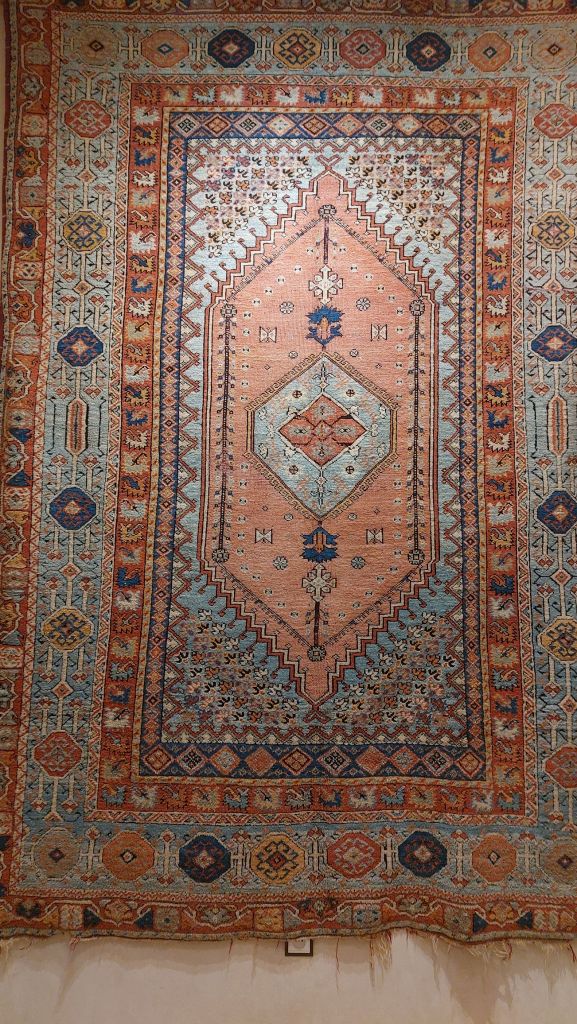
Berber rugs hang proudly around the medina. Each colour and pattern tells the story of the villagers who worked tirelessly to create them in the Atlas mountains.
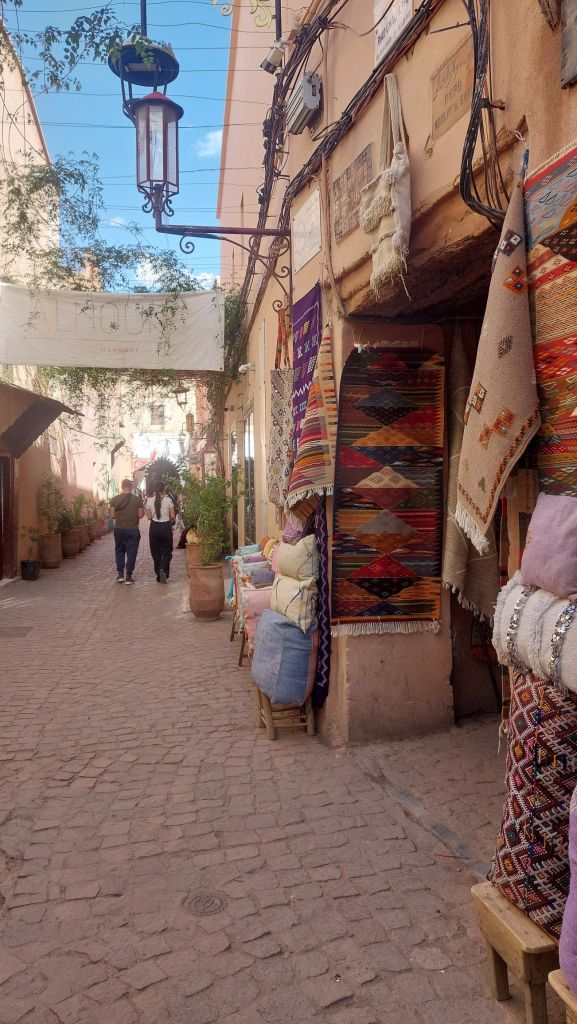
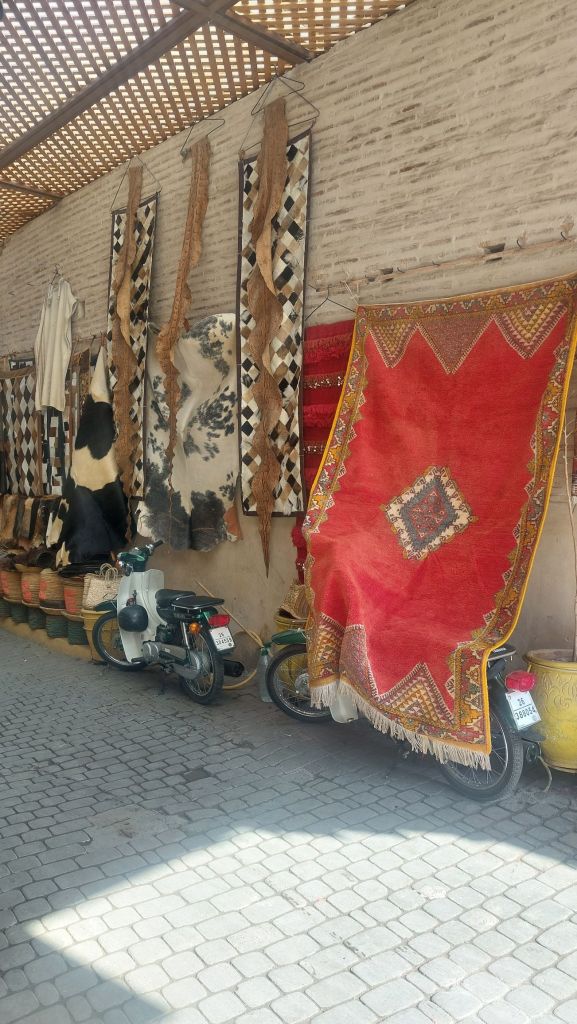
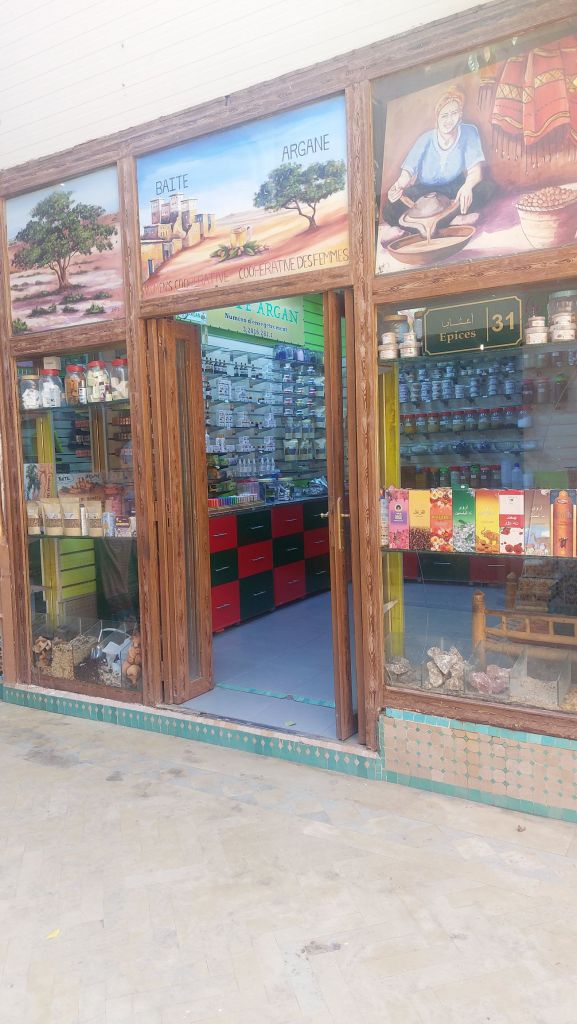
You will find argan oil and morroccan black soap, orange blossom oil, and gardenia.The subtle fragrance floats past you, only shattered by the fumes of motorcycles as they drive through. It’s a heady combination of spices, incense, and day to day life in Marrakech.
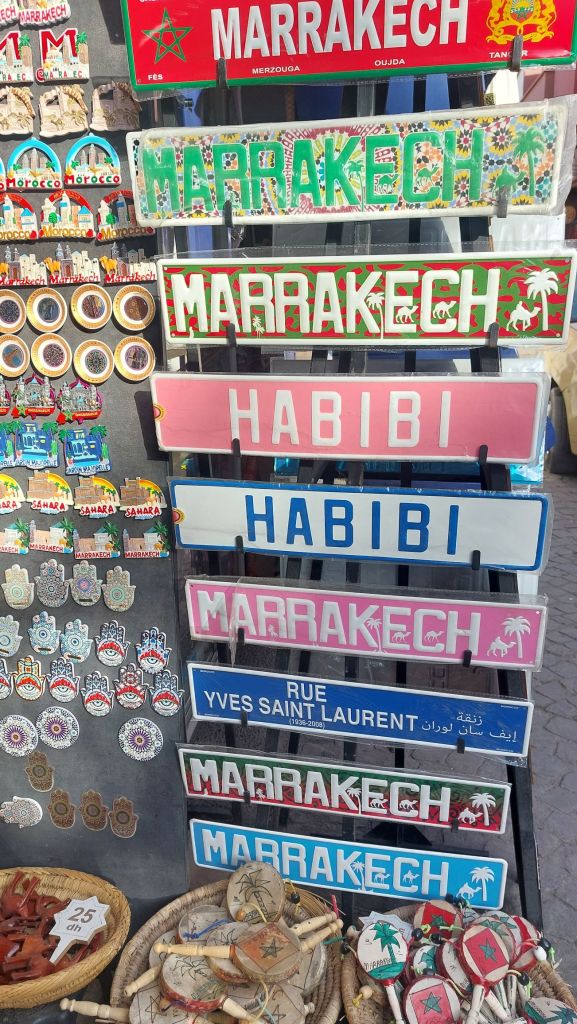
Wooden boxes ornately decorated with mother of pearl,chess sets, cuddly toys, and traditional teapots tempt you as you search the souks for souvenirs. You learn the art of haggling for the best prices.
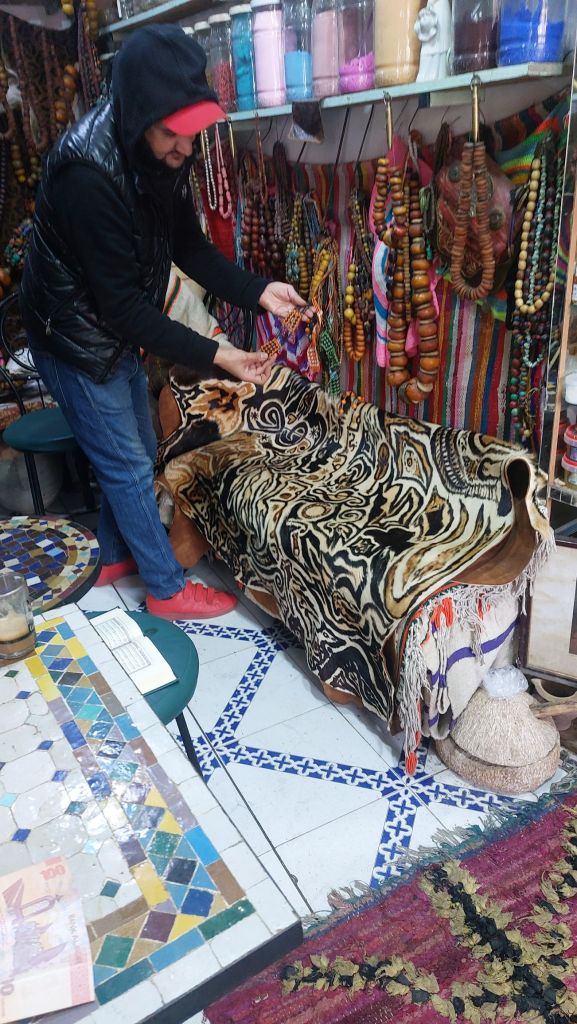
Cushion covers made from cactus silk are eye-catching. The only problem is choosing your favourite colours, patterns, and textures and wandering how you’ll fit them into your luggage.

Moroccan sweets are a delicacy. You’ll find yourself spoilt for choice with the amount of nuts and pastries for sale around the medina.
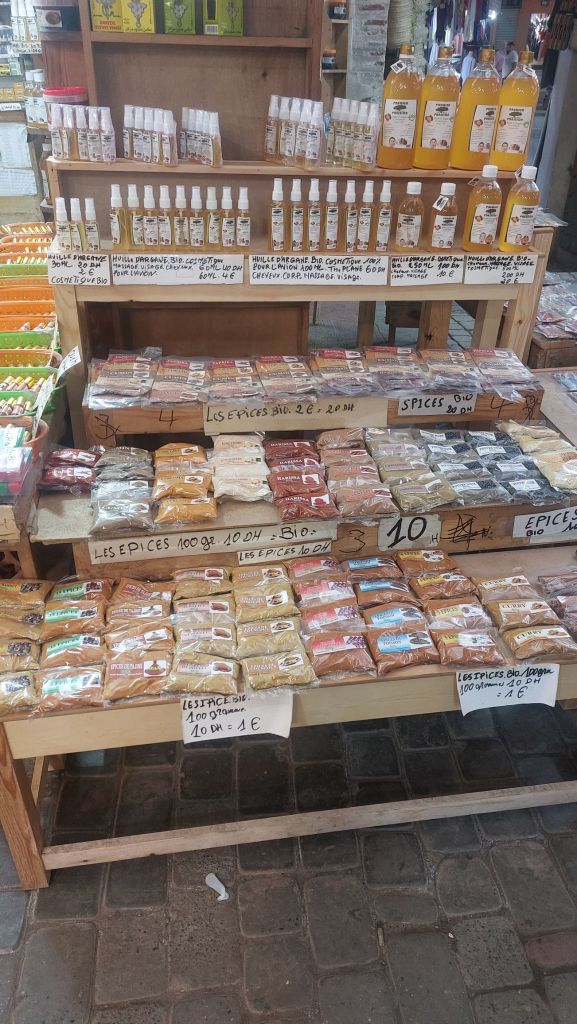
The medicinal herbs and spices are a cacophony of colours and fragrances. You draw closer to look, and a friendly vendor sticks a piece of eucalyptus under your nose. Before you know it, your eyes are watering, and you’re reaching for a tissue.
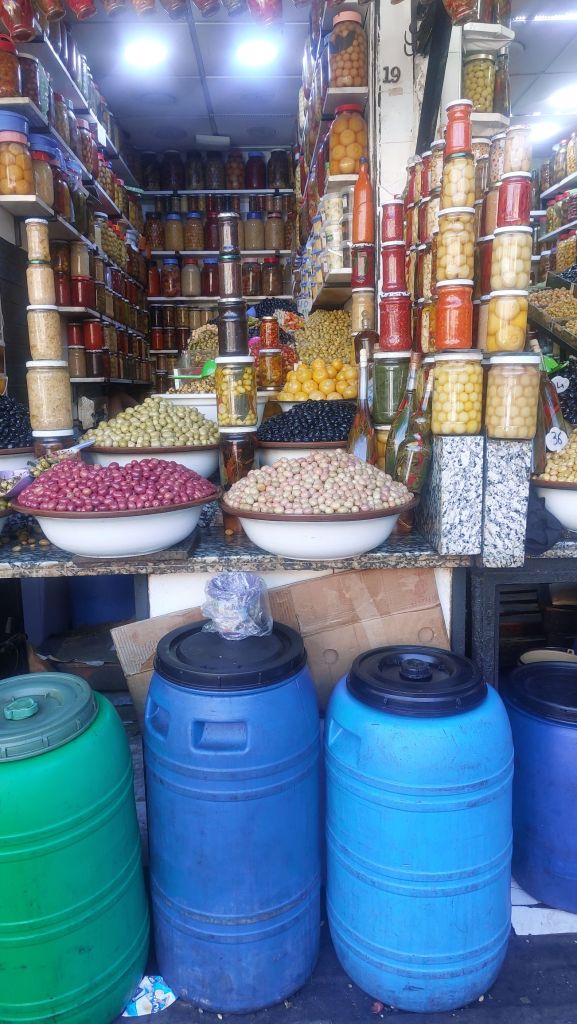
Fresh olives pop with colour. Their subtle spice dances on your tongue, and you have to buy some because they’re addictive. One or two is never enough to satisfy.
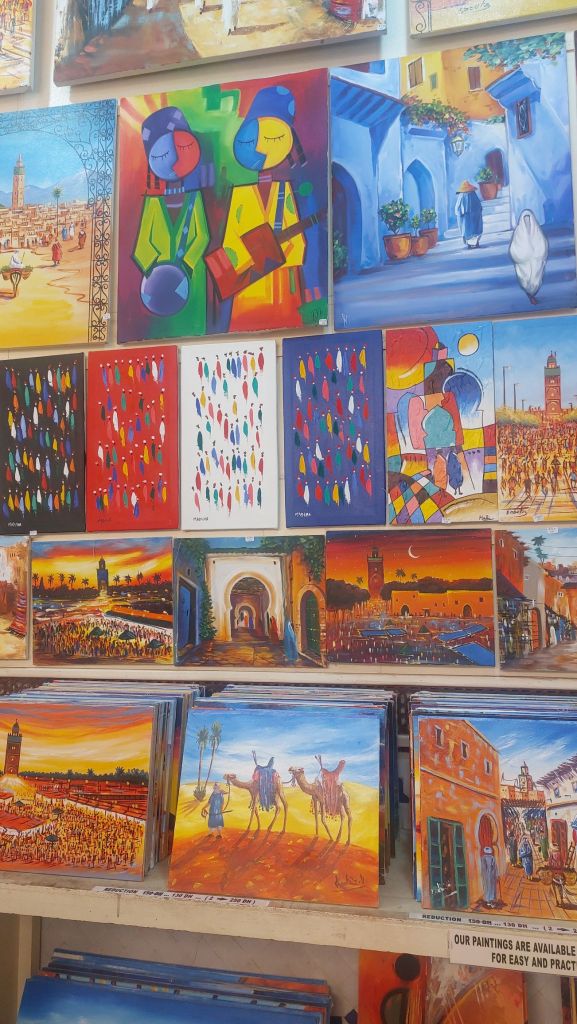
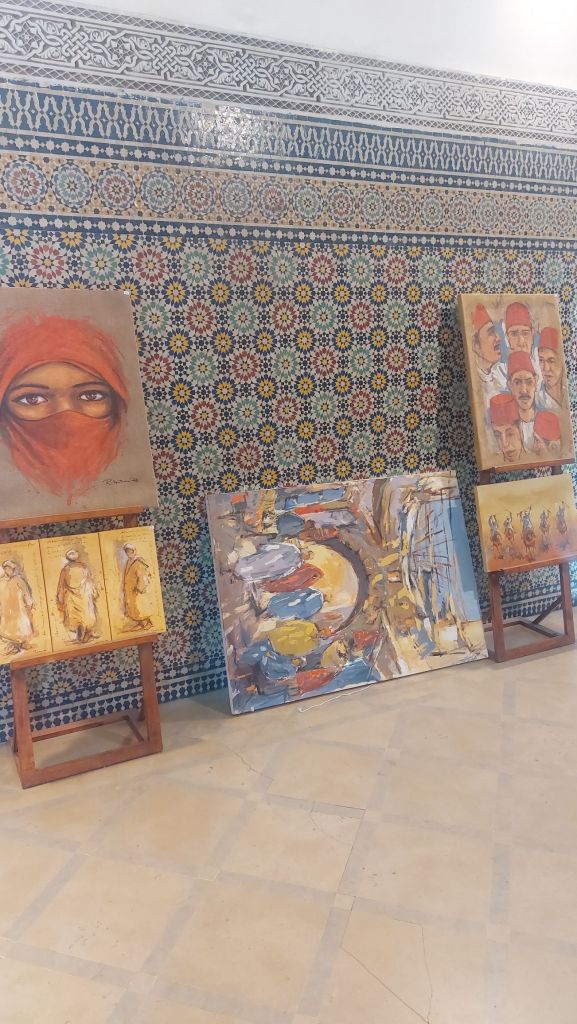
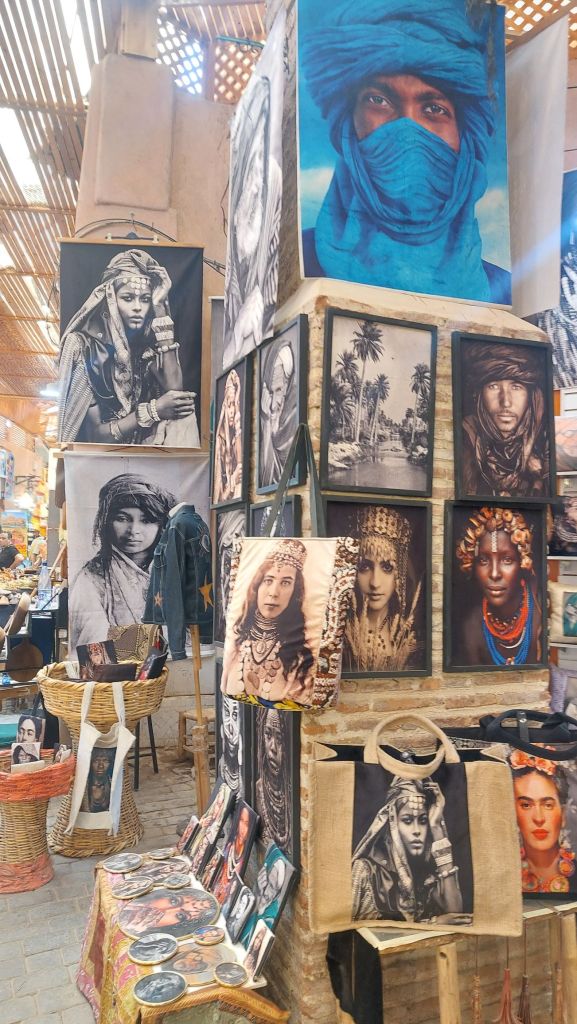
Paintings of Morroccan doors, Amazigh people and camels crossing the Sahara desert are displayed on walls and hang strategically outside shop doorways.
For people who love to shop until they drop, the souks are a dream come true. The lively rhythm and friendly banter is a magical experience.
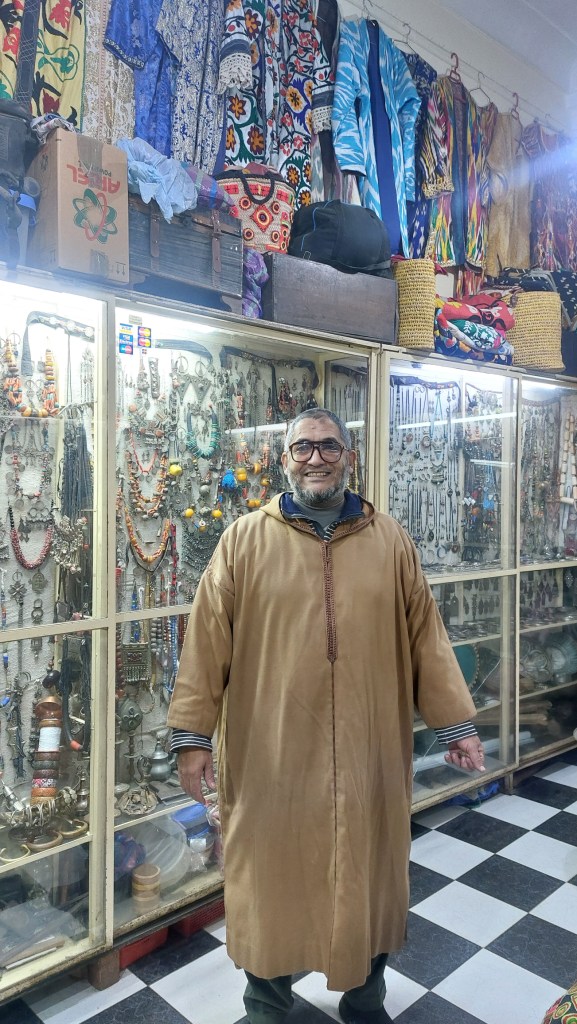
It’s not always a breeze shopping in such a densely packed area, though. The souks get incredibly busy with tourists. You constantly have to dodge motorcycles, donkeys, and vendors with carts. You will probably get lost, but that’s all part of the charm. You eventually find your way out with some effort.
I recommend fully immersing yourself in the experience and enjoying every moment. It will invoke in you the spirit of camel caravans and their ancient trade routes from centuries ago. After all, the souks are one of the main reasons tourists come to Marrakech. Shopping in them is the perfect way to delve into the fascinating culture of Marrakech and pick up a few treasures along the way.
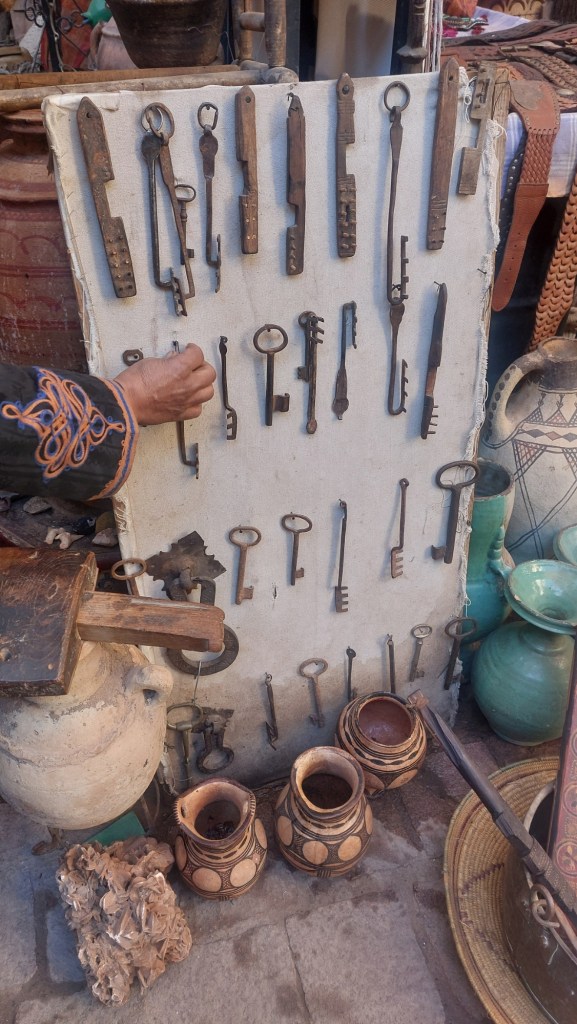
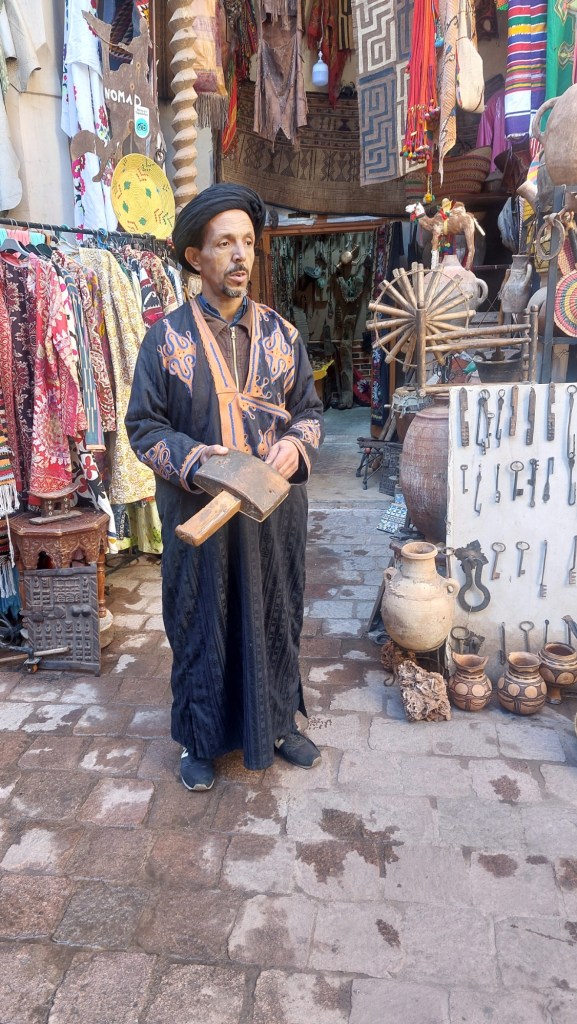
Here are a few helpful tips to help you enjoy your shopping experience in the souks.
- First of all, pace yourself. The souks are very busy and can feel slightly chaotic at times, especially in the heat. Stop regularly for a drink and rehydrate. Rest for a while, and have a spot of lunch on a rooftop terrace. There are plenty inside the souks.
- Be prepared to haggle. It may seem daunting at first, but you’ll soon get the hang of it. In Morocco, bargaining is a way of life, and although it can get frustrating wondering if you’re being ripped off, it’s also rather gratifying if you manage to procure something at a good price. Take time to shop around and walk away if you don’t think you’re being offered a fair price. You will often find yourself being called back, and a realistic price can be reached. If not, the same items will most likely be found for sale in another part of the souks.
- Stay vigilant, and keep your wits about you. Marrakech is a safe city, but pick pocketing can happen like anywhere else in the world. In crowded, narrow streets, keep your possessions safe in a closed bag at the front of your body. Don’t be tempted to take out too much cash at once and leave your passport in a safe wherever possible.
- If you’re lost, look for signs above your head pointing you back to Jamaa El Fna. Having an orange sim is useful but may not always work in the denser parts of the souks. If you need help, ask a shop vendor. They’re more than happy to help, but be aware of opportunists who may try to send you in a different direction.
- This brings me to don’t accept directions from locals who may lead you to a friend or family members’ shop. They get a commission if you buy something. You may find yourself seated, drinking mint tea, and before you know it, there’s a mountain of Berber carpets at your feet.
- Exercise patience. Remember, this is someone’s livelihood, and it’s a different culture to what you may be used to. Wages are not very high for most people in Marrakesh, and tourists with money to spend are fair game for boosting the take-home salary of most vendors. Marrakech was badly affected by the earthquake in 2023, and people’s livelihoods suffered as a result.
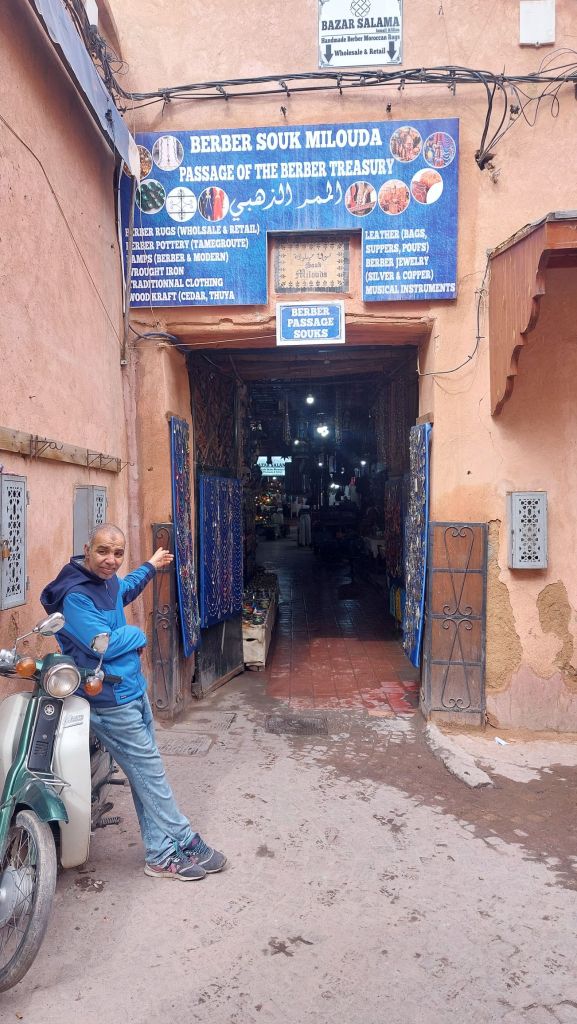
Although the souks may often feel overwhelming, they are an unforgettable shopping experience in Marrakech. The cacophony of colours, pulsating energy, and bustling atmosphere will stay with you for a long time.