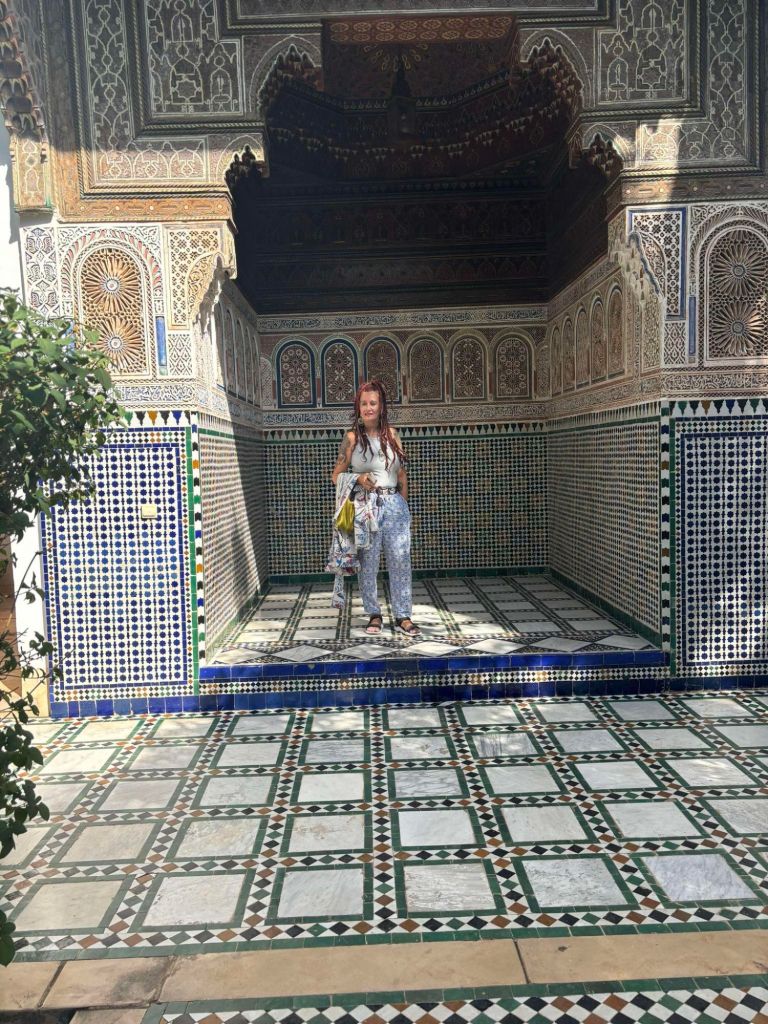
Bahia Palace is a stunning, 19th century palace in Marrakesh.
Image by Freebird Tracey.
It’s definitely a must-see if you’re visiting the city, and it’s quite spectacular.
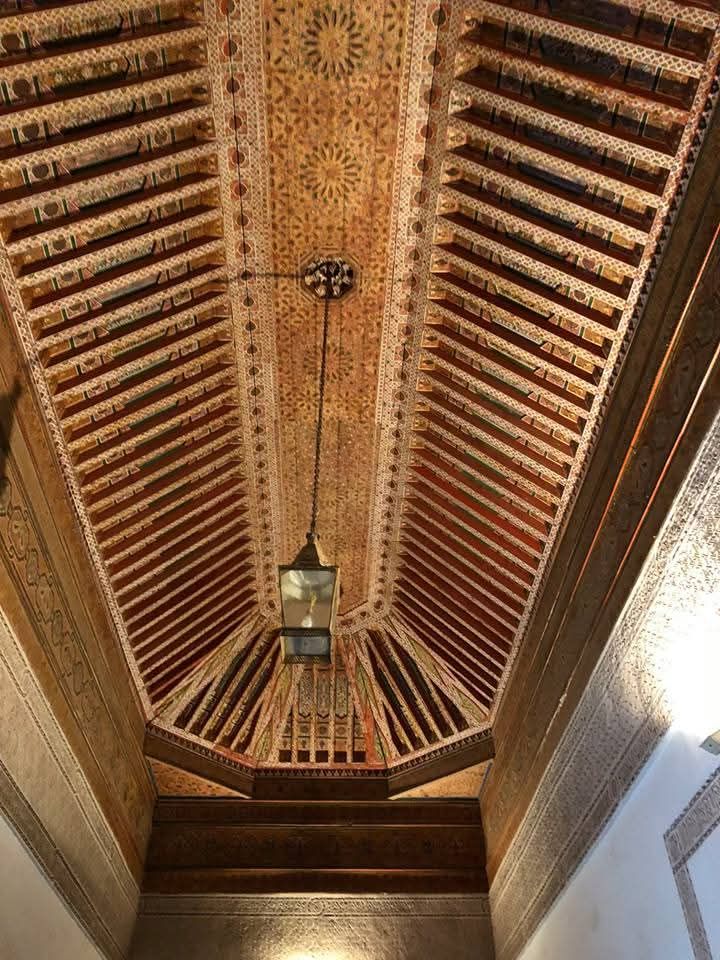
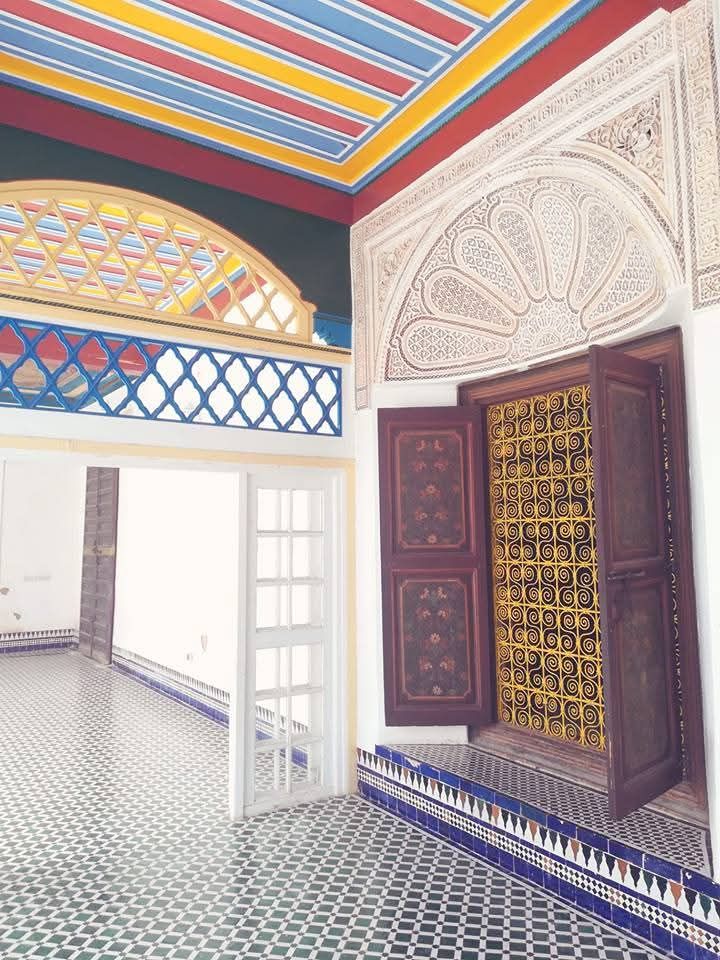
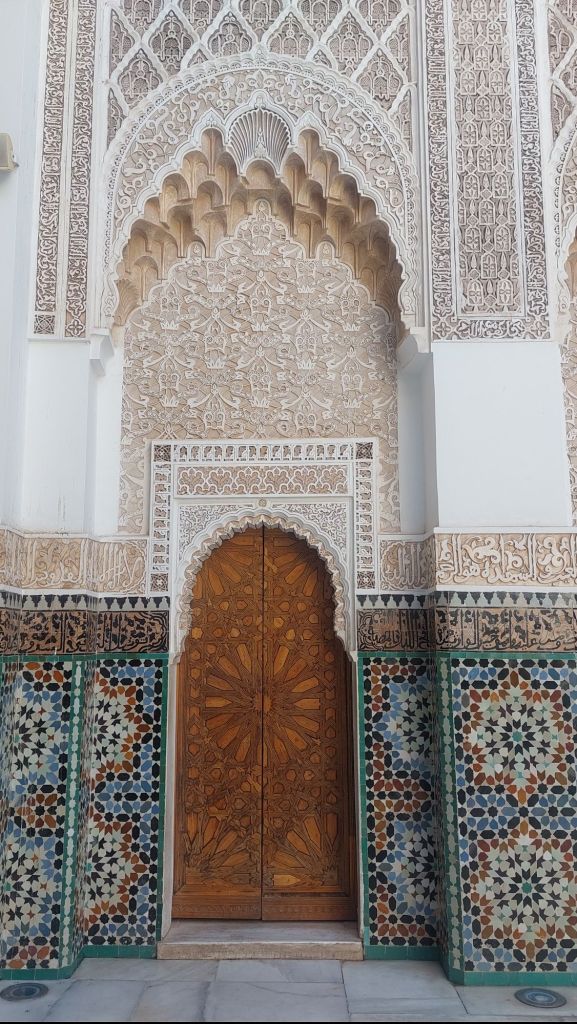
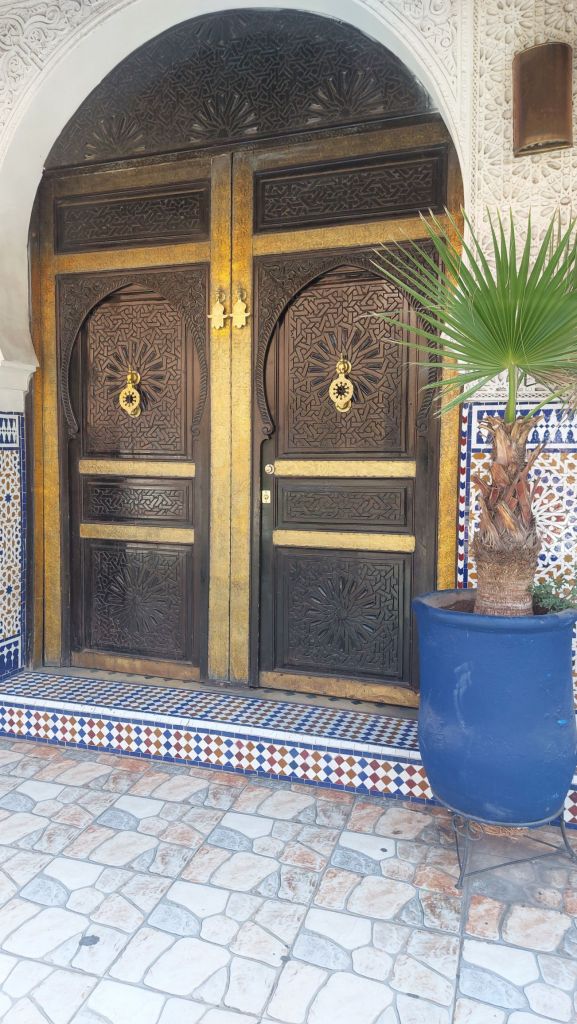
The rooms are decorated with stuccos, paintings, and mosaics to capture the essence of Islamic architecture.
The word Bahia means ‘brilliance’ in Arabic, reflecting the splendour of Islamic art and architecture.
It is necessary to book tickets prior to visiting the palace as queues can be extremely long.
They cost 70 dirhams each, and the palace is open from 8.00am-5.00pm daily.
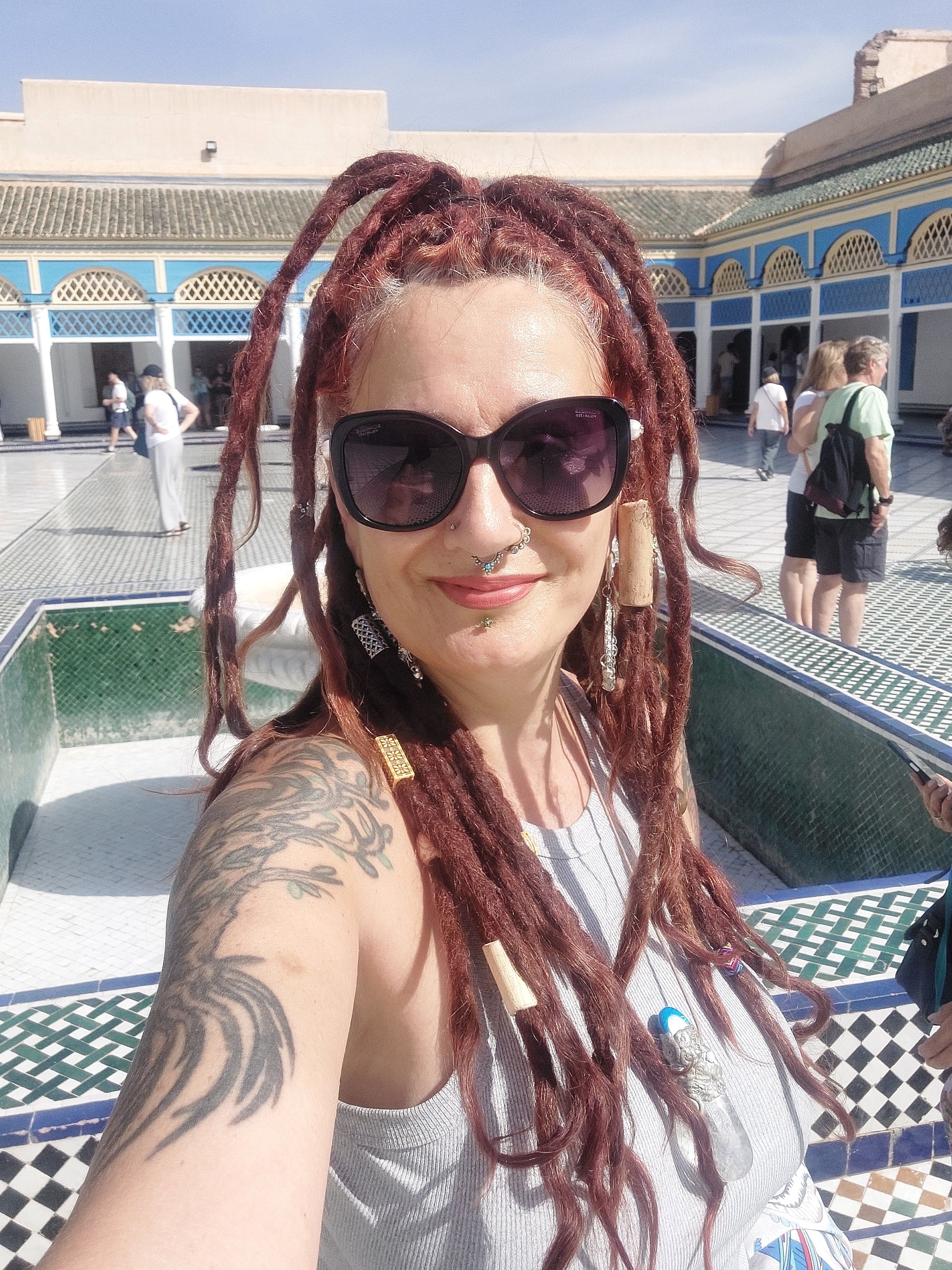
The courtyard is stunning, and all the rooms open out onto it.
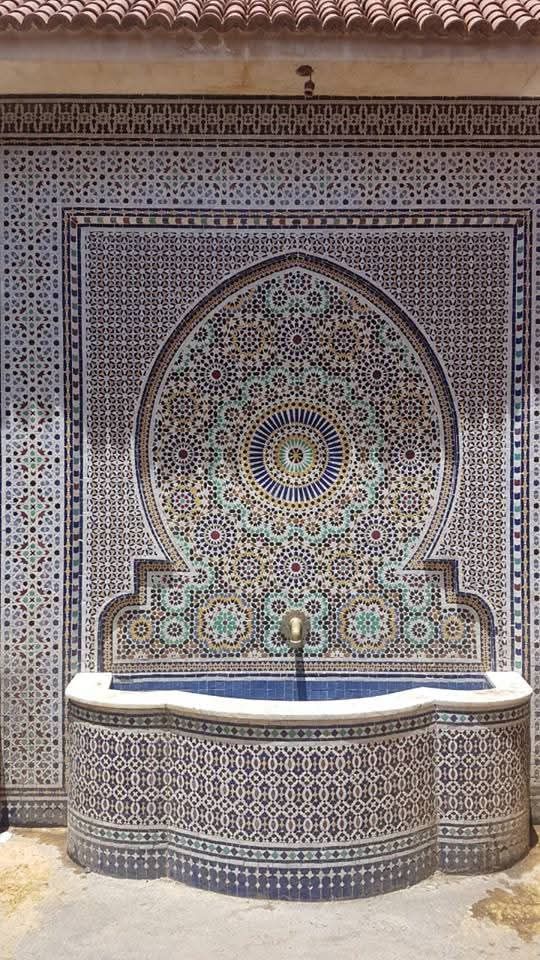
It is rather grand and very spacious with a fountain in the centre and intricate tile work typical of Morroccan culture.
There is also a 2-acre garden surrounding the palace.
There are orange trees lining the route up to the entrance of the palace.
When Morocco gained independence from France in 1956, the Bahia palace was used as a royal residence. This was until King Hassan II transferred it to the custody of the Moroccan Ministry of Culture.
The building then became a cultural icon and tourist attraction.
Bahia Palace is one of the most visited tourist attractions in Marrakech.
It is best to arrive as close to opening time as possible to avoid the crowds.
That way, you can spend time reading about the history of the palace and enjoying the experience.
I would recommend visiting Bahia Palace.
It’s gives you a good understanding of Islamic culture and the fine craftsmanship that defines it.
If you enjoy looking at Islamic architecture, you could also visit Badi Palace in the Kasbah area of the city.
Marrakech has been inhabited for over 1000 years. The first settlers were Berber farmers who had lived on the land since neolithic times.
Morocco took its name from Marrakech, the Amazigh people named the country Murakush, meaning the western kingdom. Later Arab conquerors adapted the name to Morocco.
During the 11th and 12th centuries, the Almoravids were the rulers of Marrakech, founded by Abu Bakr Ibn Umar in 1070.
They constructed an underground water system to supply water to the city canals, which attracted merchants and craftsmen to Marrakech.
They began building riads for the people who were beginning to settle in Marrakech, and it became a real city.
His cousin and successor Yuseff Ibn Tashfin developed Marrakech further, turning it into the Almoravid empire.
He erected mud brick houses, which gave the city its distinctive red colour today.
It was during this period that the Masjid al siquaya mosque was built, and souks or market places sprung up, marking the beginning of urban life in Marrakech.
In the 12th and 13th centuries, the Almohads overthrew the Almoravids and took over the city.
They continued to develop Marrakech even further, painting the walls of the city red and building spectacular palaces and the famous Koutoubia Mosque.
They were intellectuals and artists, and many scholars were attracted to the city.
They introduced education and art to the people, turning the city into a political, economical, and cultural centre.
They improved on the water system by building open air canals, allowing water to flow down from the Atlas mountains.
This gave the city dwellers a better quality of life.
The city soon began to prosper under the rule of the Almohads and became a thriving place for merchants to meet and exchange goods.
In the 13th century, the Merinid Empire took control of Marrakech in 1230 ruling for two centuries.
They built the first madrasa in 1343-9 and used Marrakech as a training ground for heirs to the throne .
Marrakech was the imperial capital of Morocco, but they much preferred the city of Fez, and so consequently, Marrakech was about to go into serious decline.
Fez became the new capital, and Marrakech became the regional capital of the South instead.
Because of this move, Marrakech was left to decay, becoming impoverished and neglected. The buildings were left to crumble, and the city that was once a bustling hive of activity began to die.
From 1578-1603, the Saadian sultans led by Ahmad Al Mansur came to power, restoring the city to its former glory and establishing Marrakech as its capital city.
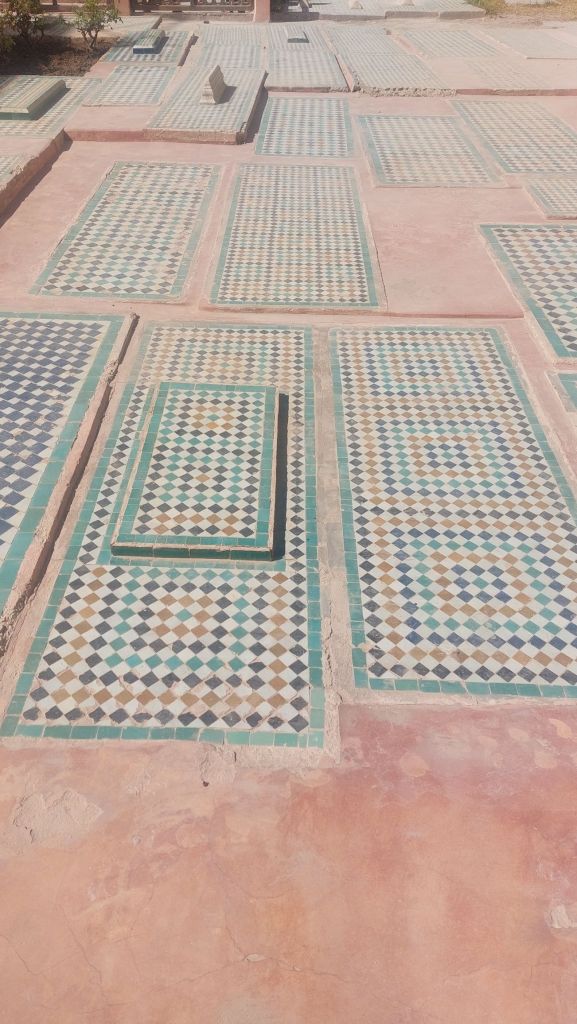
They built the Saadian tombs and El Badi palace, furnishing them with intricate tile work and stucco.
Saadian tombs/image Freebird Tracey El Badi Palace/images Freebird Tracey.
They launched military campaigns against European invasion, and this period of rule became the golden age of literature and art.
The Saads built Bab Doukkala 1557-1571 mosque and Mouassine mosque 1562-72.
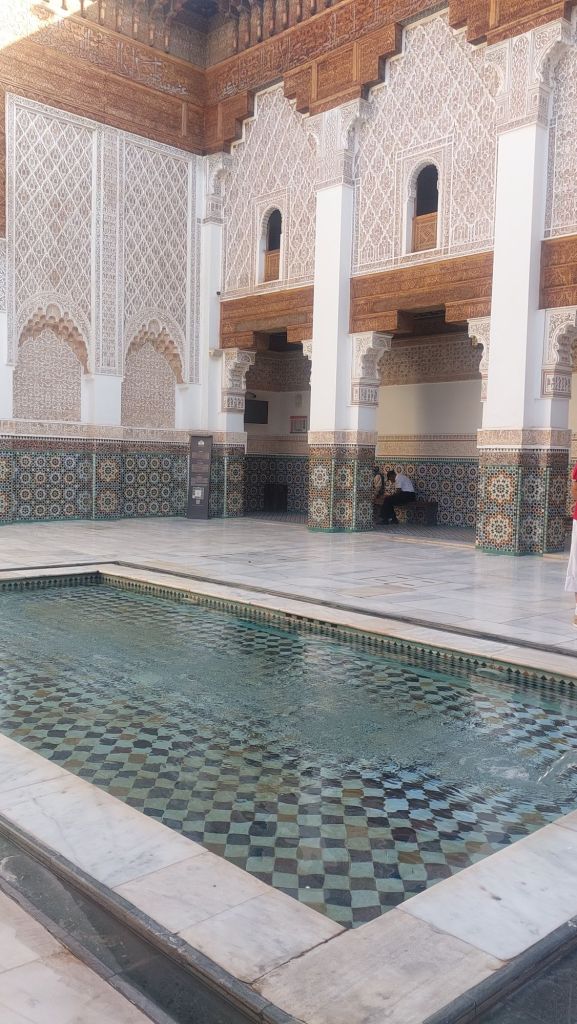
They also built Ben Youssef Madrasa in 1570.
Madrasa Ben Youssef/images Freebird Tracey.
In 1631, rule was passed from the Saadian dynasty to the Alaouite dynasty, which is still the name of the current Morroccan royal family.
The Alaouites promoted trade with the United States and European countries. They improved date palm crops and modernised the army.
They also attempted to take control of the Berber and Bedoin tribes.
They restored the riads and buildings in Marrakech, developing it’s infrastructure.
It was in 1911 that the capital of Morocco became Rabat.
Marrakech became a French protectorate in 1912 when the sultan Abd al-Hafid signed the treaty of Fez.
Although the sultan remained the head of state, the French had a huge influence in developing strong diplomatic and economic relations in trade and tourism.
The French began modernising the city and building new districts whilst aiming to preserve the traditional character of the city.
They encouraged tourism and exporting Moroccan dates and other produce.
In 1956, Morocco gained its independence when the treaty of Fez was passed back.
Throughout history, Marrakech has been a city that has resurged, declined, and resurged once again.
It has fought against several invasions and endured plagues and famines.
In 1982, UNESCO declared Marrakech a UNESCO world heritage site, raising awareness of the cultural heritage of the city.
It is now one of the most popular destinations in the world and receives millions of tourists each year.
Marrakech combines the ancient with modernity perfectly.
Visitors can get a glimpse into the intriguing past of Marrakech as they wander around the preserved walls of the medina.
As they venture into the tree lined avenues of Mohammed V avenue, they are presented with a newer,modern side of Marrakech, a thriving hub of fancy restaurants, bars and boutiques.
Marrakech has an astonishing history, which makes it all the more fascinating. It is well worth taking a tour of the historic buildings in the medina to get a taste of the red city’s intriguing past..
Gueliz area in Marrakech/images Freebird Tracey.
For further information or advice on planning the perfect itinerary, get in touch using the contact details below..
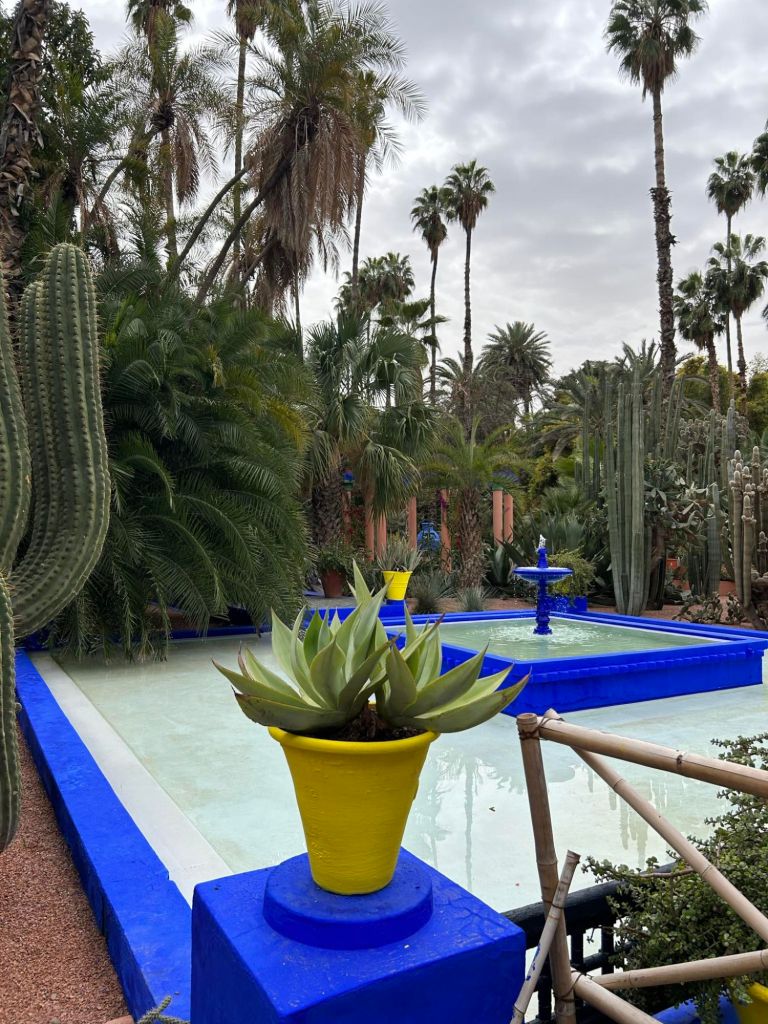
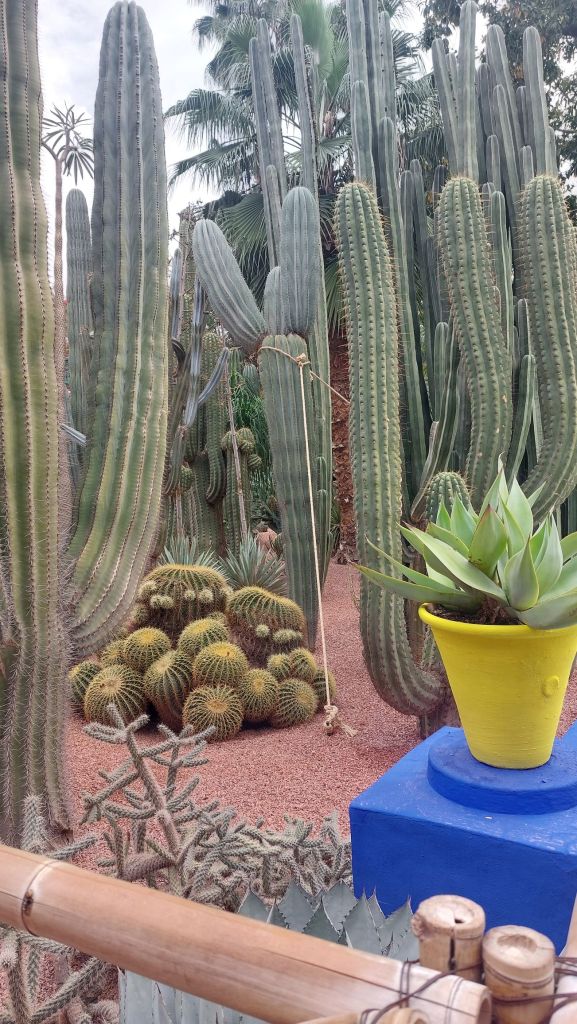
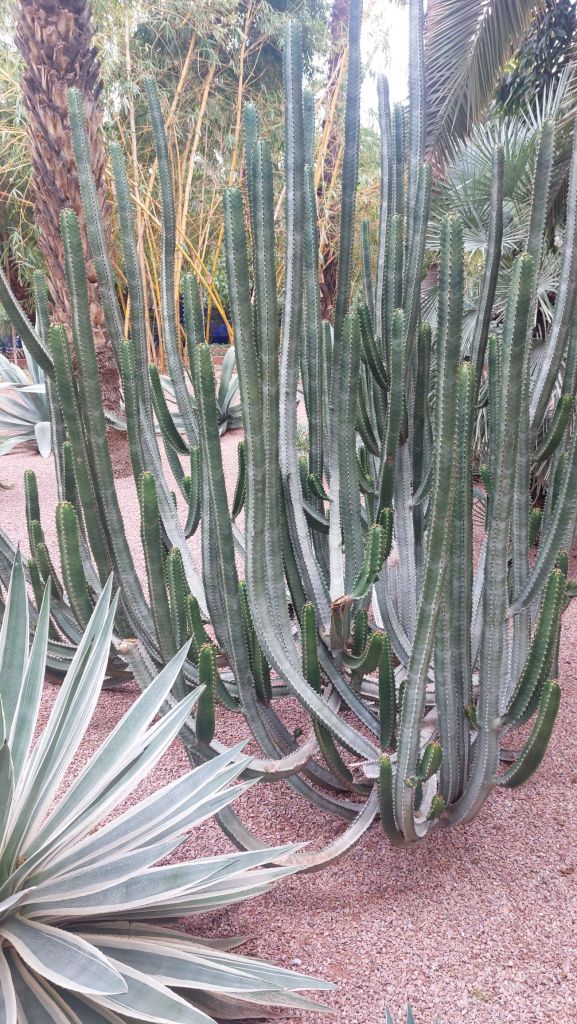
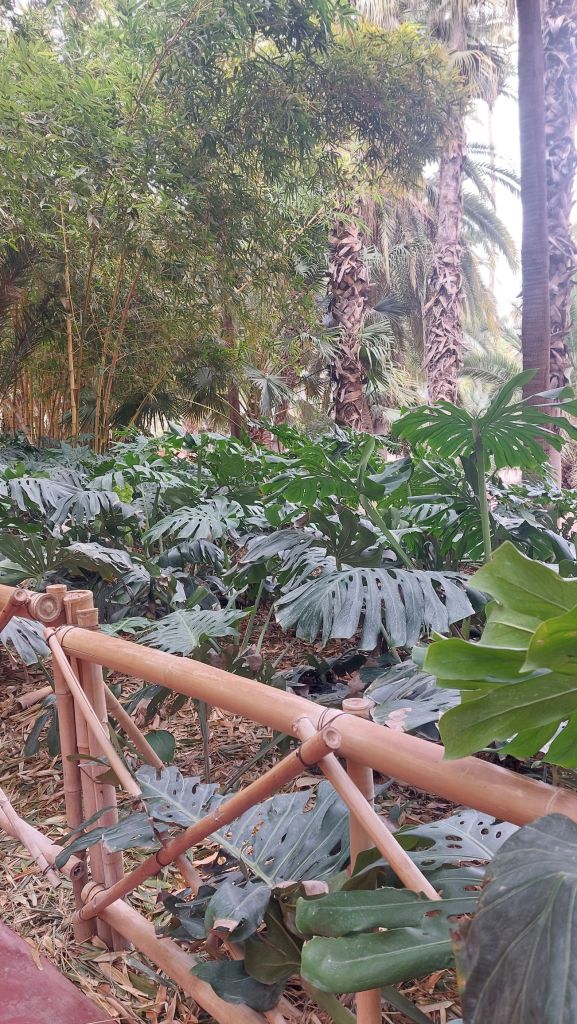
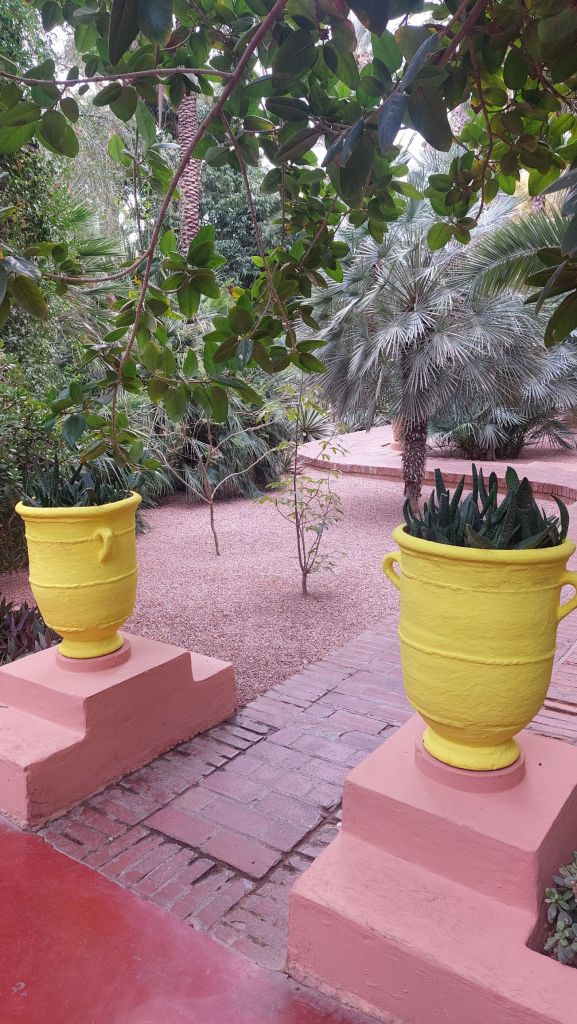
Inside the beautiful Majorelle Garden, there are over 300 stunning plant species from all over the world.
Mexican agave, Chinese windmill palms, African date palms, coconut, and banana trees amongst a labyrinth of pathways.
The incredibly tall bamboo and exotic Cacti species coexist together to create one of the most beautiful gardens in marrakech.
Two acres of botanical landscape gardens.
Originally designed by Jean Majorelle in the 1920s.
After he was forced to abandon his home because of divorce, the fashion designer Yves Saint Laurent took it over with his partner Pierre Berge to save it from hotel development in 1980.
They restored it and made it their home, bringing the garden back to it’s former glory.
For many years the Jardin Majorelle has provided me with an endless source of inspiration, and I have often dreamt of its unique colours – Yves Saint Laurent
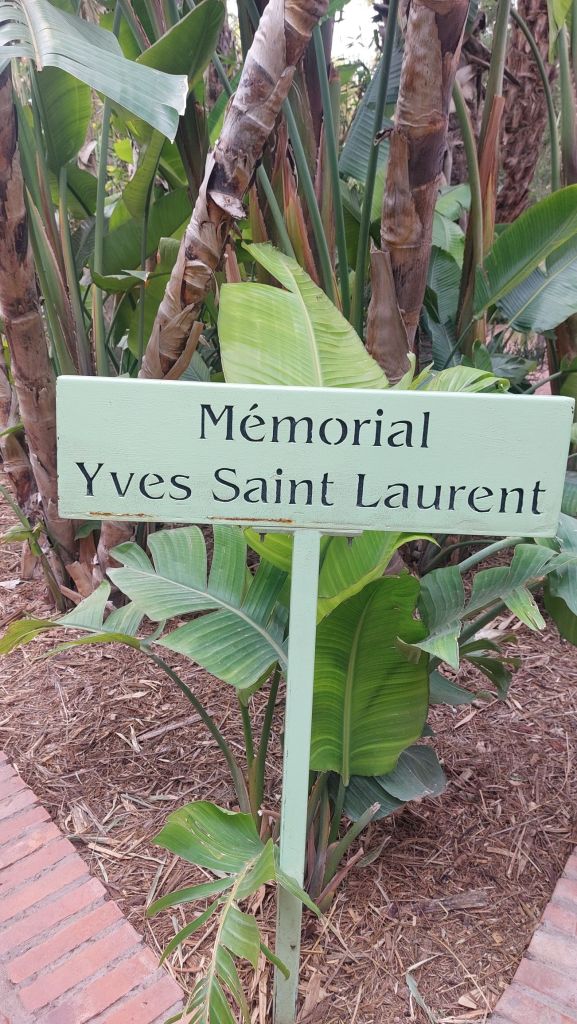
There is a memorial to Yves Saint Laurent and his partner Pierre Berge in the garden.
Majorelle Garden attracts over 900,000 visitors each year, making it a less than tranquil place to sit and reflect.
I would have loved to have sat in quiet contemplation amongst the lush green vegetation, admiring the pop of colour from the bougainvillea, but I was never alone for very long.
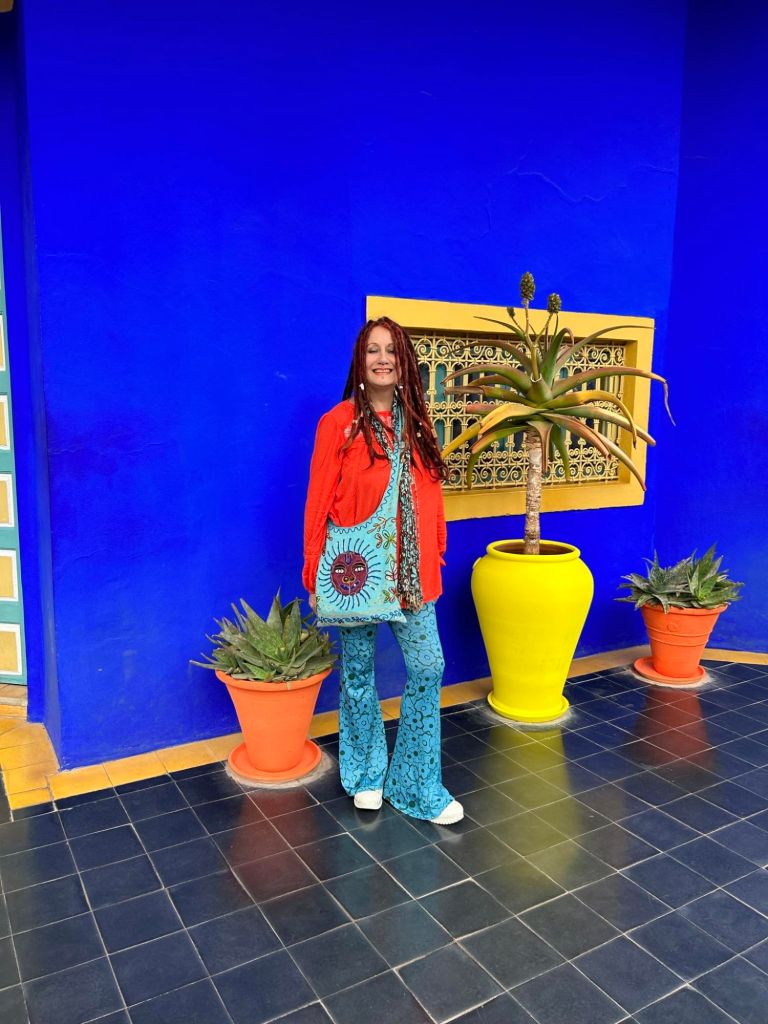
The attractive art deco pavilion with its striking colours of blue and yellow is a popular place for visitors to get their photographs taken.
The colourful pavilion The exotic blue and Islamic green tiles.
There is also a cafe and shop.
I purchased some postcards of Yves Saint Laurents’ yearly ‘Love’ drawings.
I didn’t go to the cafe because there were too many people and the queues were really long.
Yves Saint Laurent early ‘Love’ drawings
The gardens open daily at 8.00am and close at 6.00pm, and the last entry is at 5.30pm.
I would suggest getting there before 10.00 am, preferably at opening time if you want a more peaceful experience.
Luckily, I had prebooked online, so I didn’t have to queue.
I’m thankful that I did because the queues were really long, and it was a very hot day for standing around without any shade.
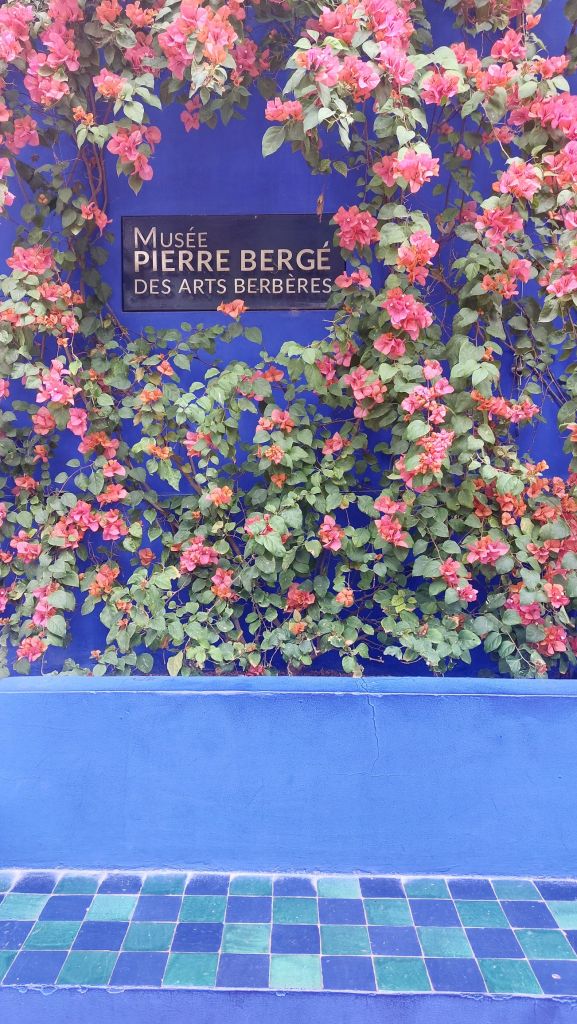
The YSL museum is also part of the visit, along with the Pierre Berge Museum of Berber Arts. It’s worth a look around if you are interested in Berber history.
Opening times are from 9.00 am until 5.30 pm with the last entry at 5.00pm.
You can’t take photographs inside the museum.
The price varies depending on where you purchase tickets from but you can expect to pay approximately €24 to visit everything.
There are plenty of nice restaurants outside the gardens, and I decided to get something to eat and drink in one of those. It was much quieter.
I recommend My Kawa for a nice salad.
There are a few shops across the road from Majorelle Garden selling souvenirs and a few attractive boutiques.
Shopping around Majorelle Garden
Stuff was a bit pricey, but I picked up some nice jasmine oil at a fairly decent price.
Overall, Majorelle Garden was absolutely beautiful. It is colourful and lush with several spots to sit and absorb the exotic sights and sounds.
However, it is incredibly busy with tourists, which detracts from the calm sense of serenity you’d expect to get from such a delightful setting.
It was worth visiting for the wonderful trees and plants and to get some great photos, but unless you go very early during the quiet season, you won’t get a peaceful, relaxing vibe..
Majorelle Garden is located to the north west of Marrakech medina.
An introduction to the red city of Marrakech in North Africa.
If Africa is a peacock, Morocco is its tail
Welcome to my blog featuring everything you need to know about Marrakech.
I include my own personal stories, experiences, and adventures, giving an authentic insight into the red city of Marrakech.
My name is Freebird Tracey, and I’ve been a regular visitor to Marrakech for many years.
As a solo female traveller, I have always felt safe travelling around Marrakech. The friendly locals treat me with respect wherever I go, always helpful and always with a smile.
I believe I have found my happy place in the sunshine amongst the fragrance of orange blossom, the vibrant colours, and the magical sounds of Jamaa El Fna.
Marrakech is a diverse and magical city, steeped in history.
From its beautiful Islamic architecture to the culinary delights and fine craftsmanship on display, there is something to tempt the senses on every corner.
I never get tired of exploring this alluring, magnetising corner of our planet.
There is always something new to see, and it’s full of little surprises.
Marrakech is an assault on the senses..
Allow me to take you on a fascinating journey to North Africa and show you how to make the most of your time in Marrakech.
I will share interesting articles and suggest the best places to eat, including vegetarian and vegan options.
I will tell you where to find cool bars that serve alcohol with live music.
If you’re interested in activities, excursions, or day trips, I will share some of my own personal experiences with you.
I will give you truthful opinions, honest reviews, and provide helpful suggestions to get the most out of your visit.
I share tips on how to stay safe and what to do to make sure you have the best experience whilst visiting Marrakech.
This is a tell-all blog at your fingertips..
So, buckle up and join me on a mind-blowing trip of a lifetime.
Let me introduce you to the sights, sounds, and tastes of the red city.
All beautifully entwined with each other,creating what can only be described as a little piece of heaven here on earth..















 Sounds Of The Souks