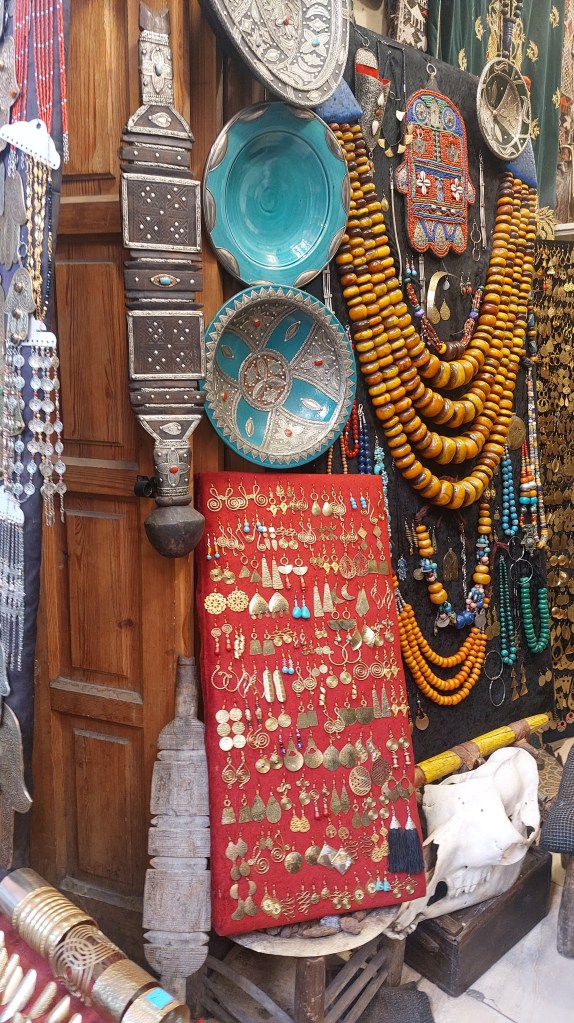
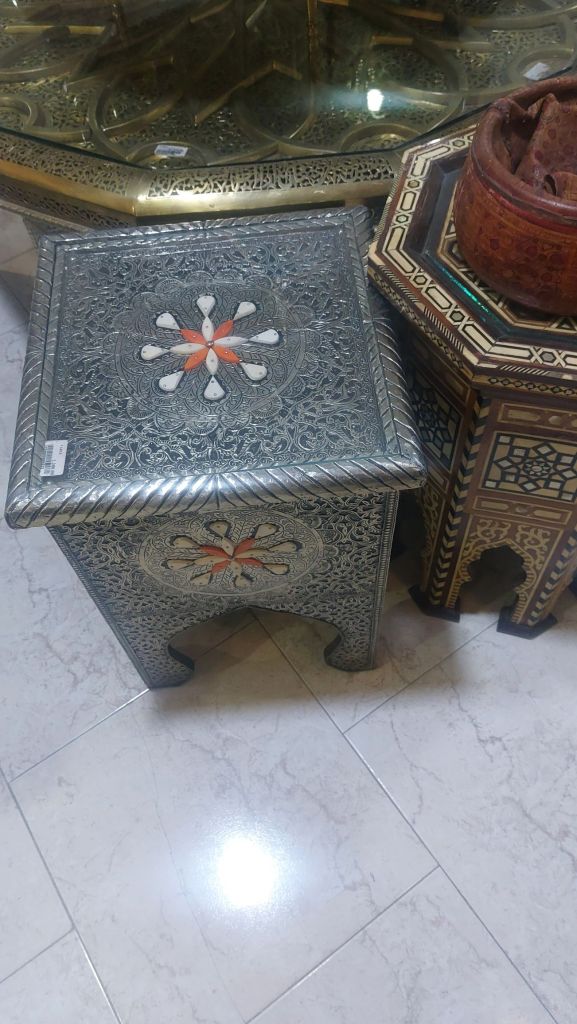
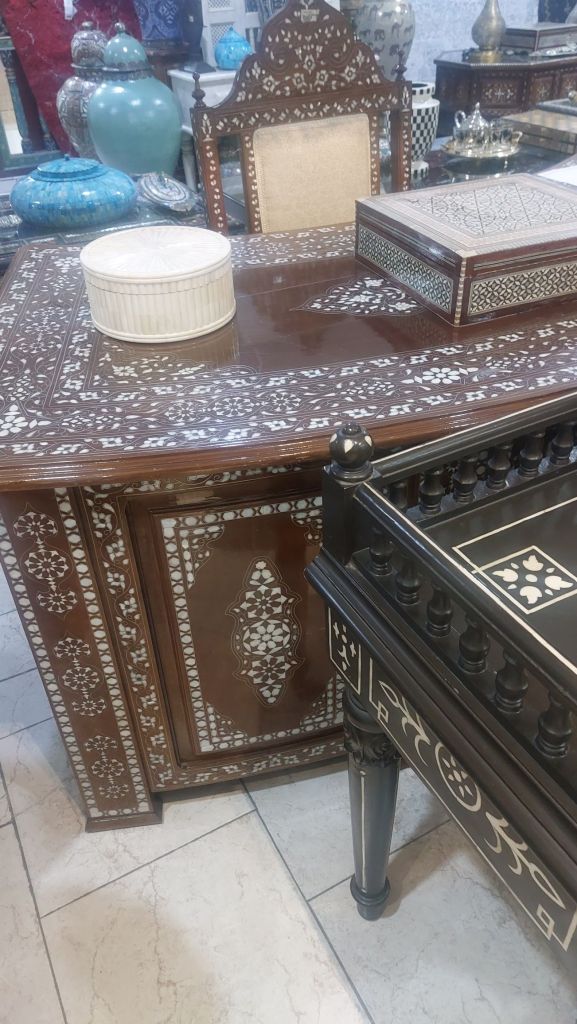
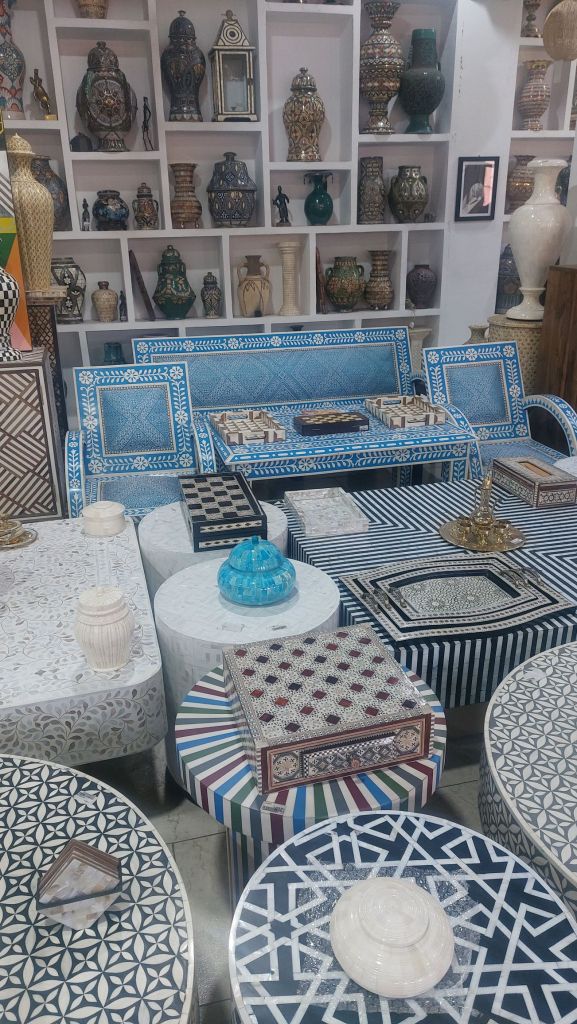
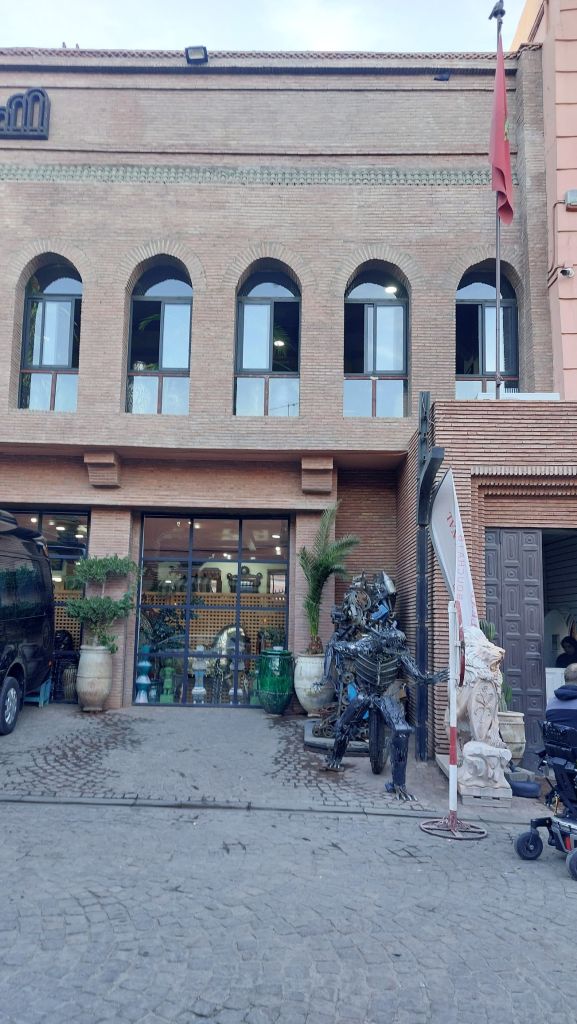
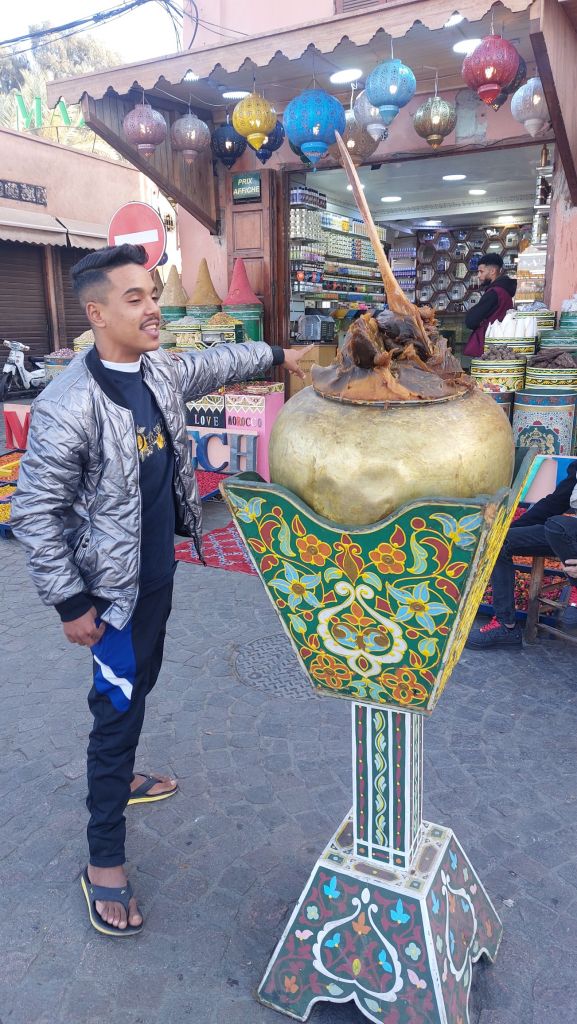
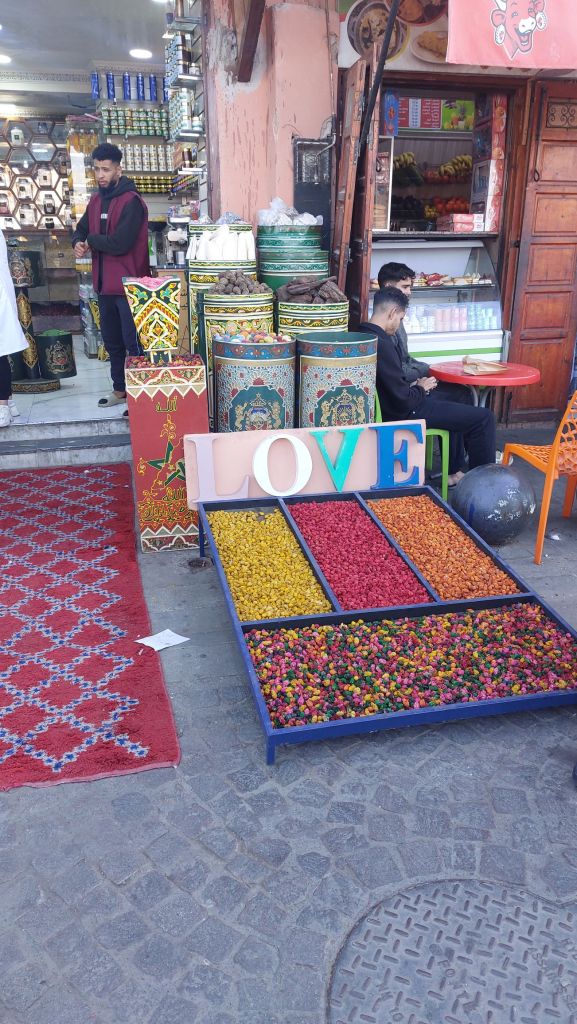
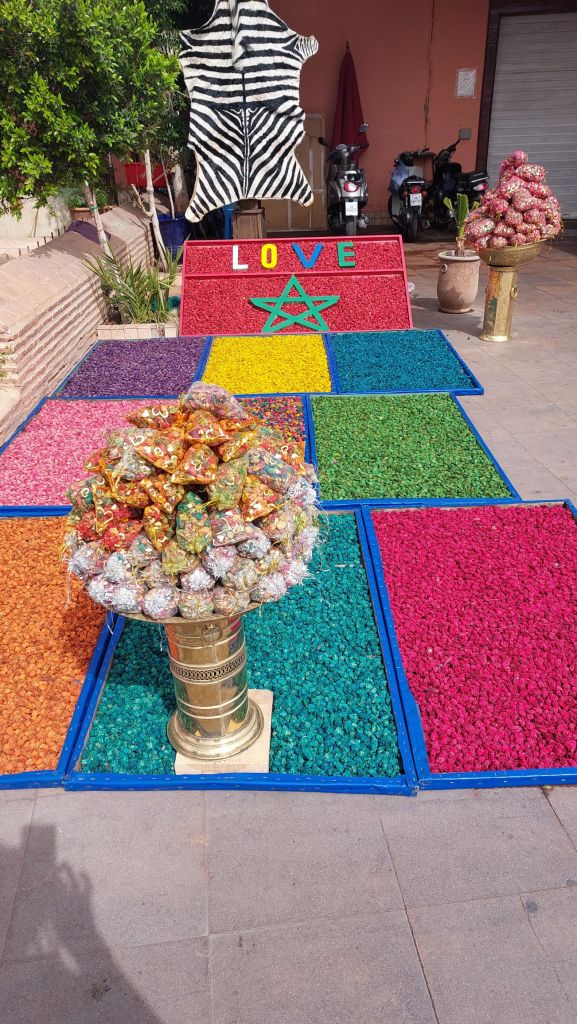
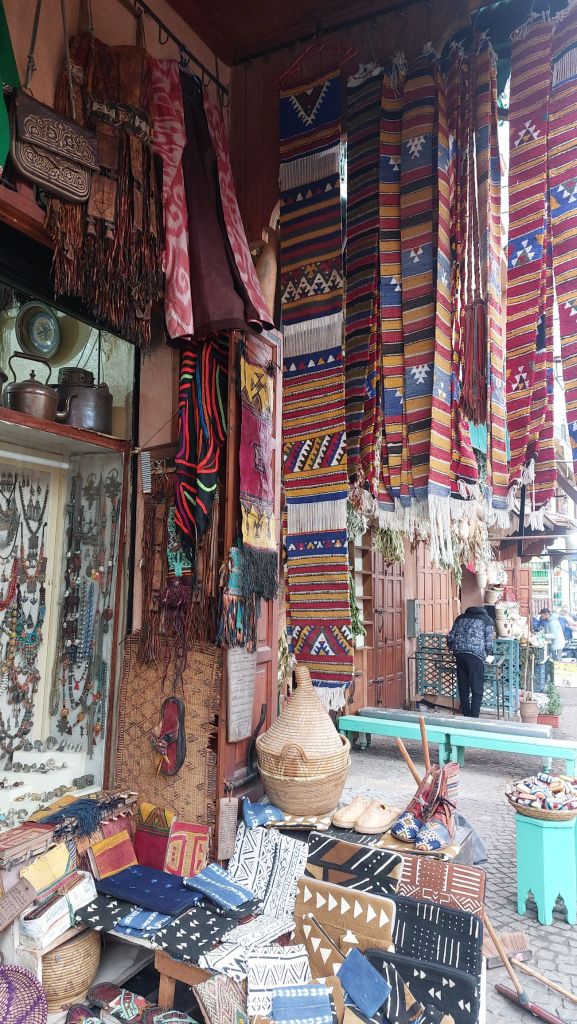
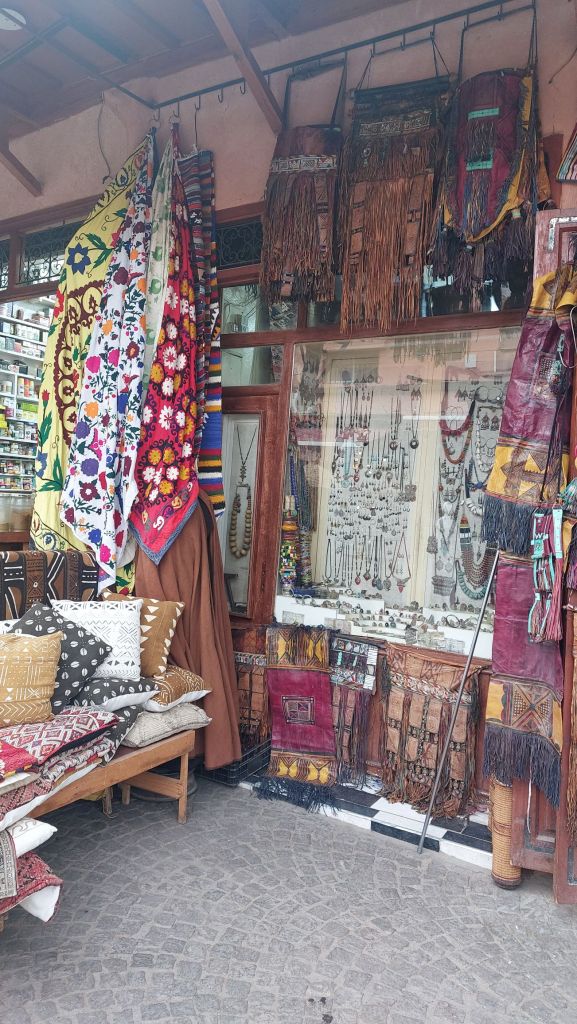
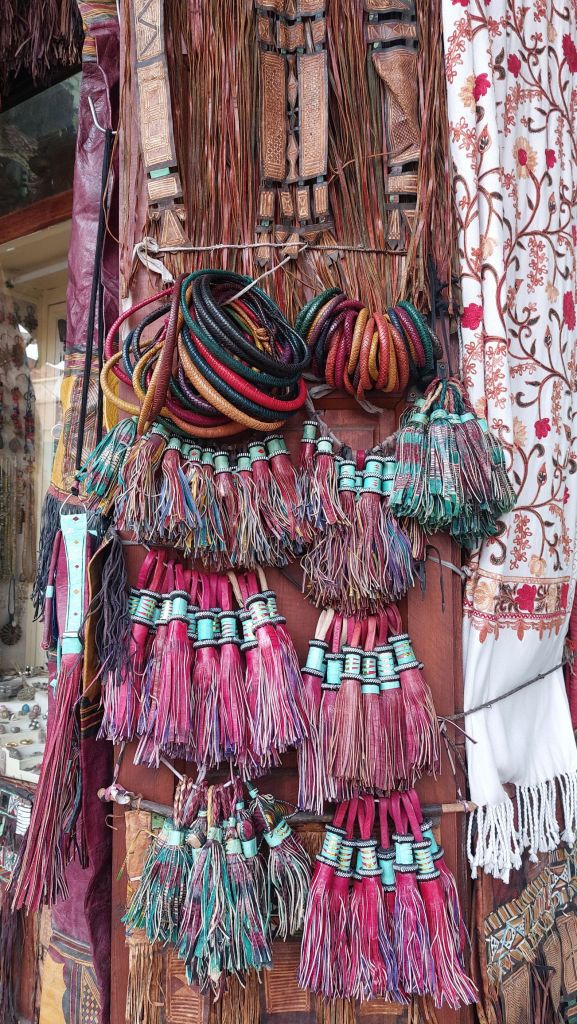
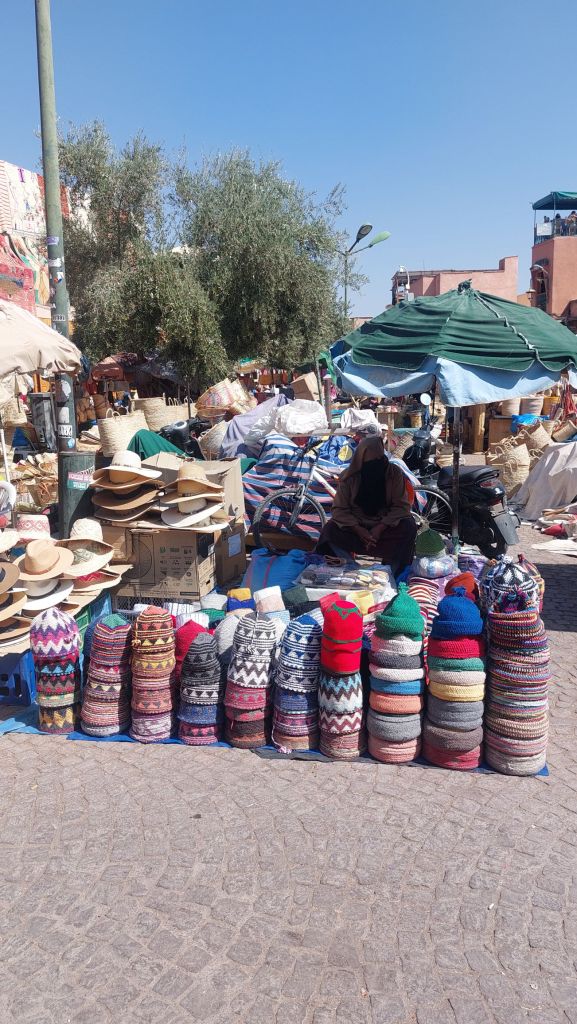
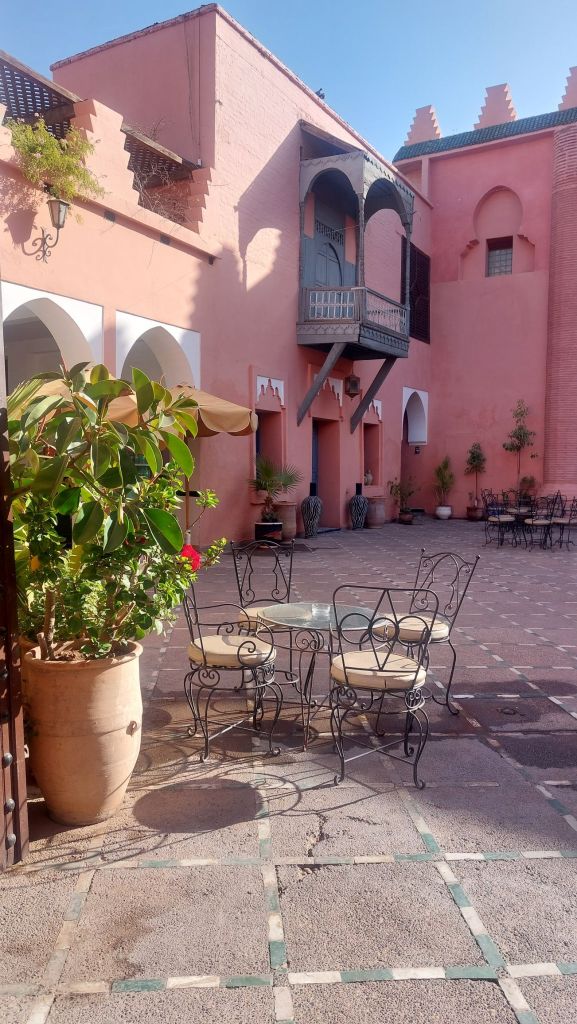
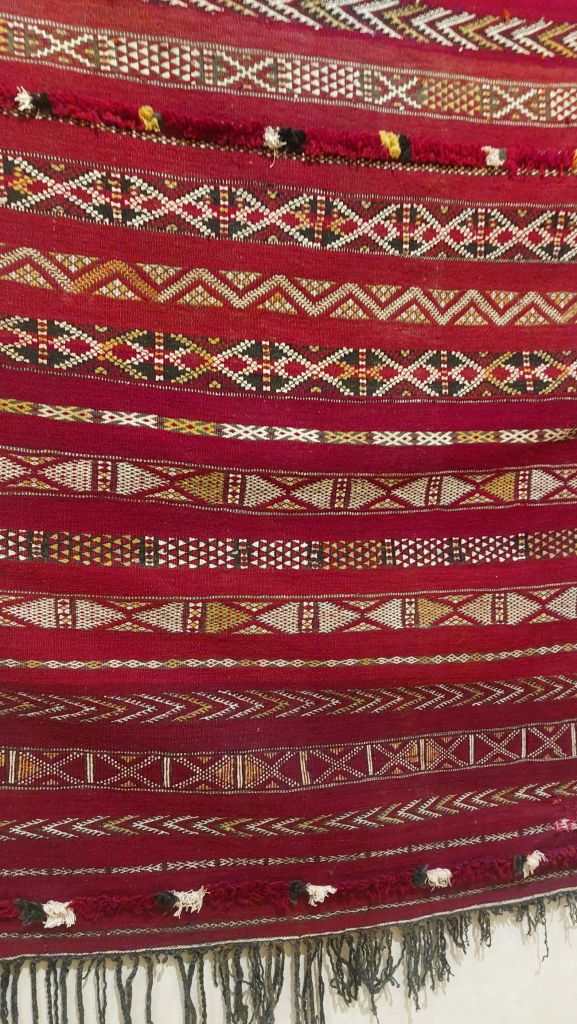
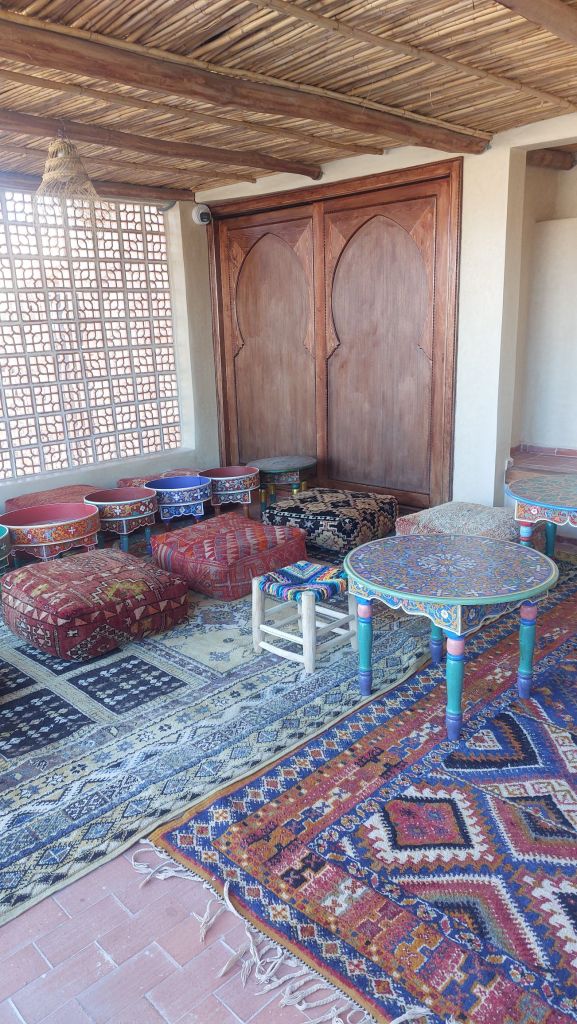
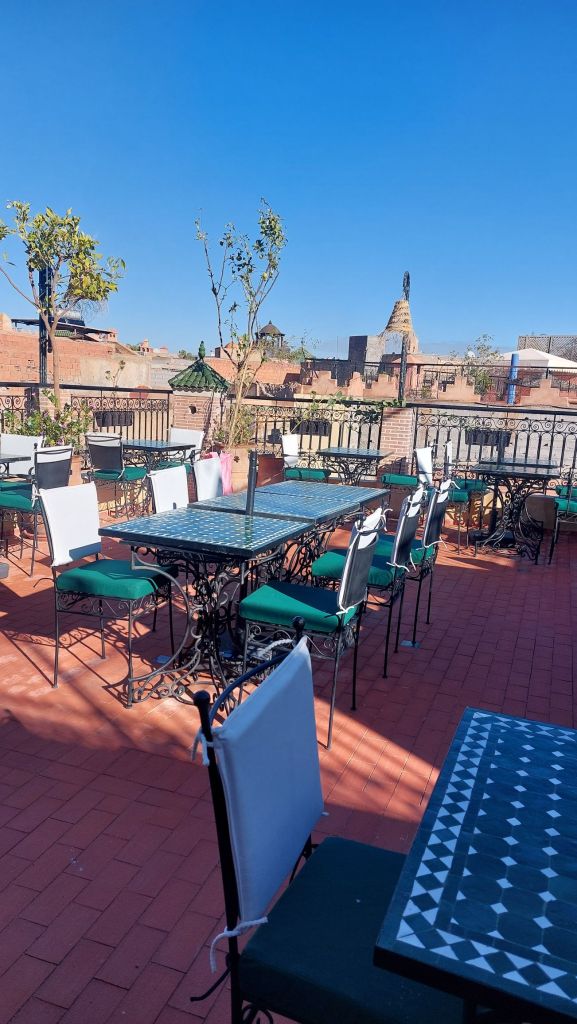
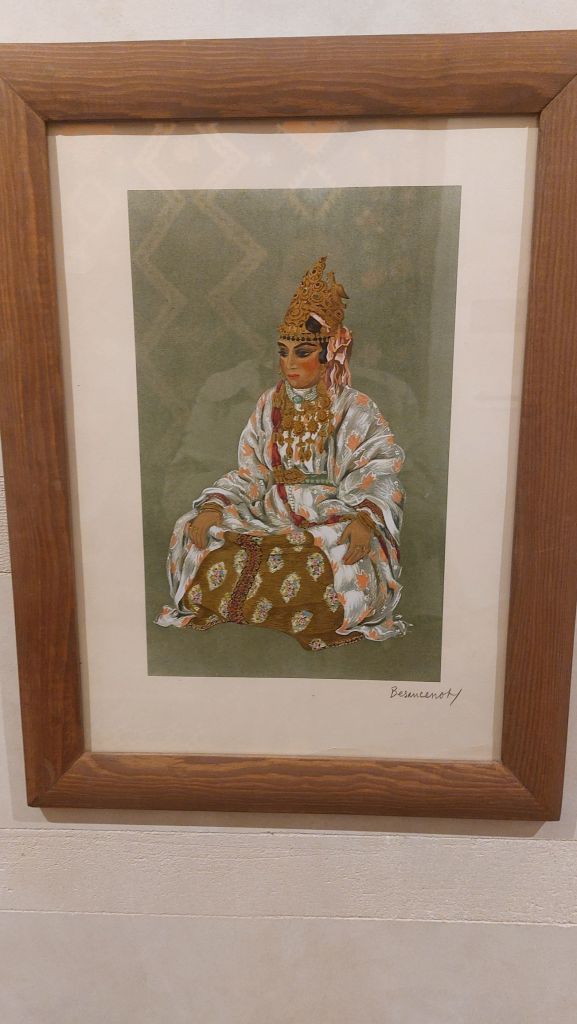
Are you fed up with haggling each time you want to buy something? If so, there is a fixed price store in the Kasbah district where you won’t have to bargain. Here, you will find everything that’s for sale in the souks at a fixed price.
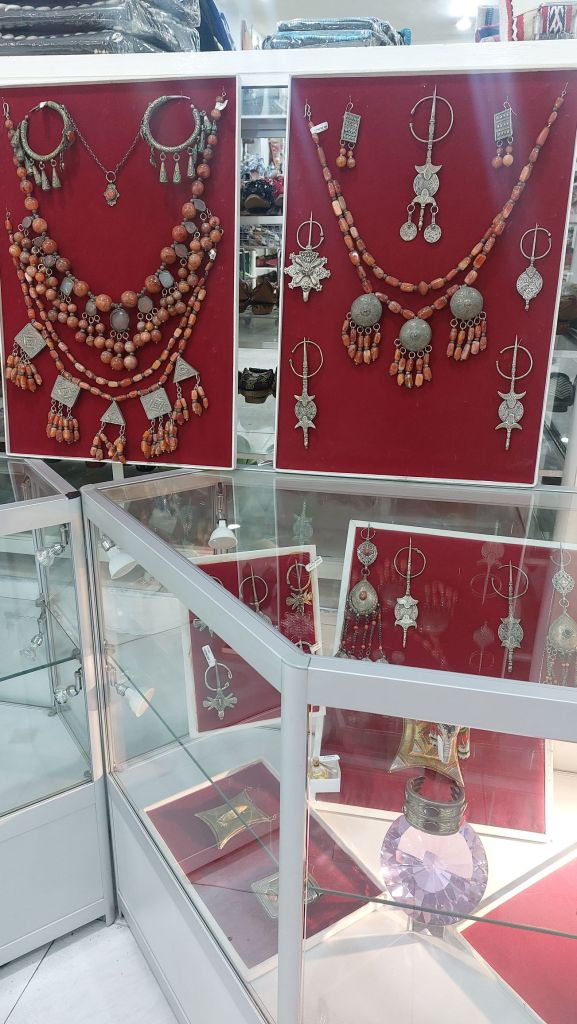
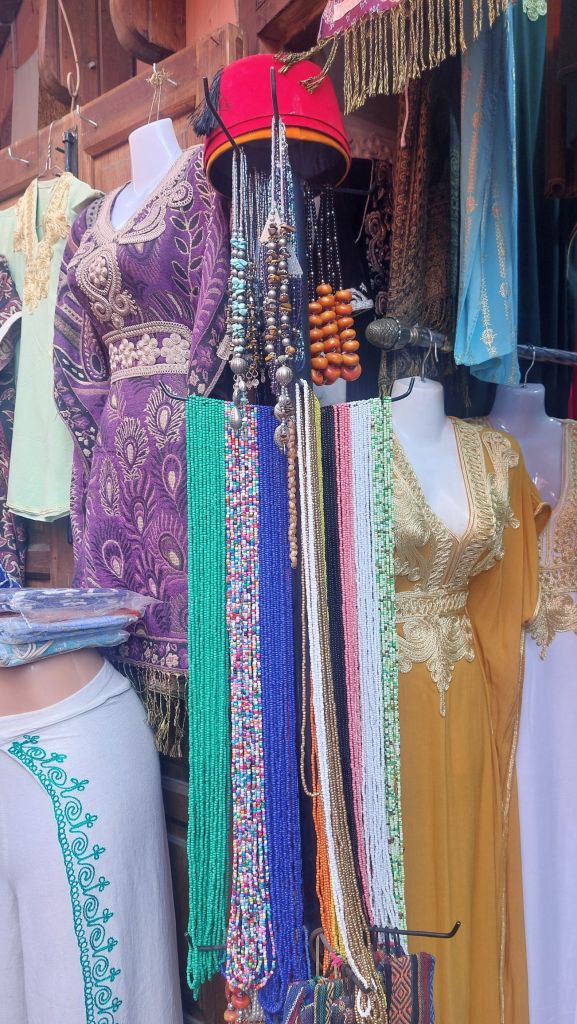
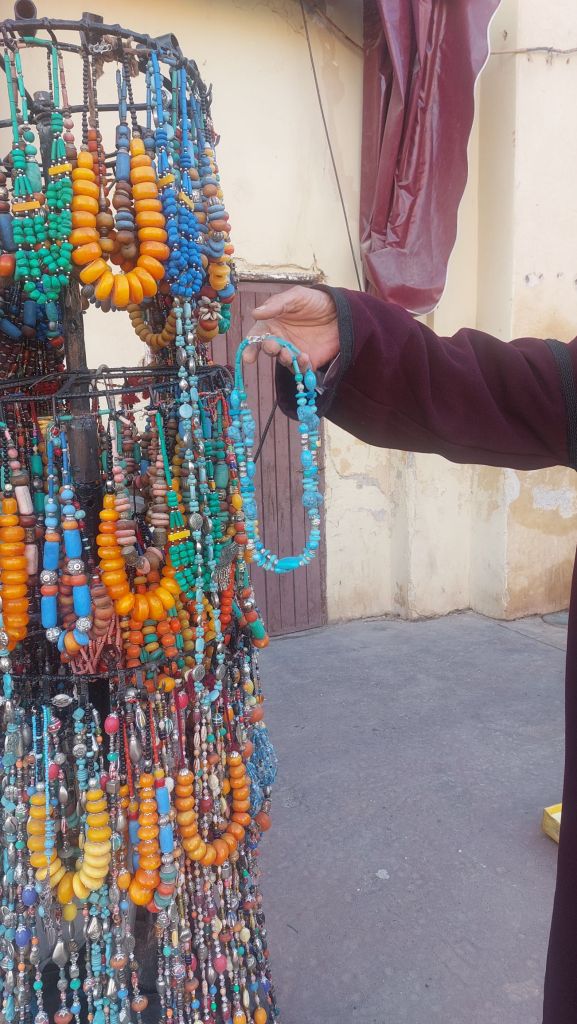
On the ground floor, there are ceramics, jewellery, clothing, footwear, bags, souvenirs, and much more.
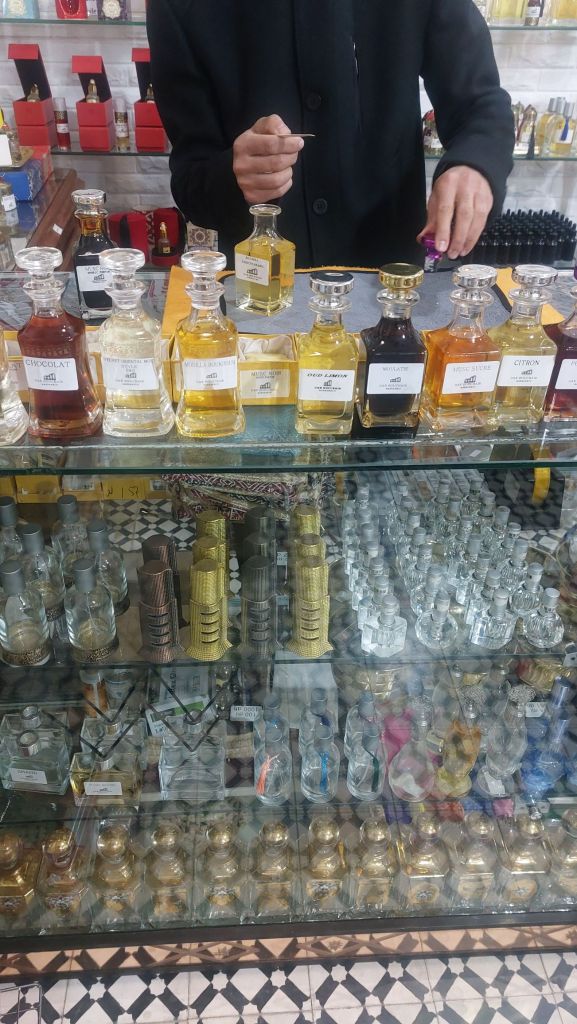
The perfumed oils are of a high quality, and you can create your own signature fragrance by blending several together.
Images by Freebird Tracey.
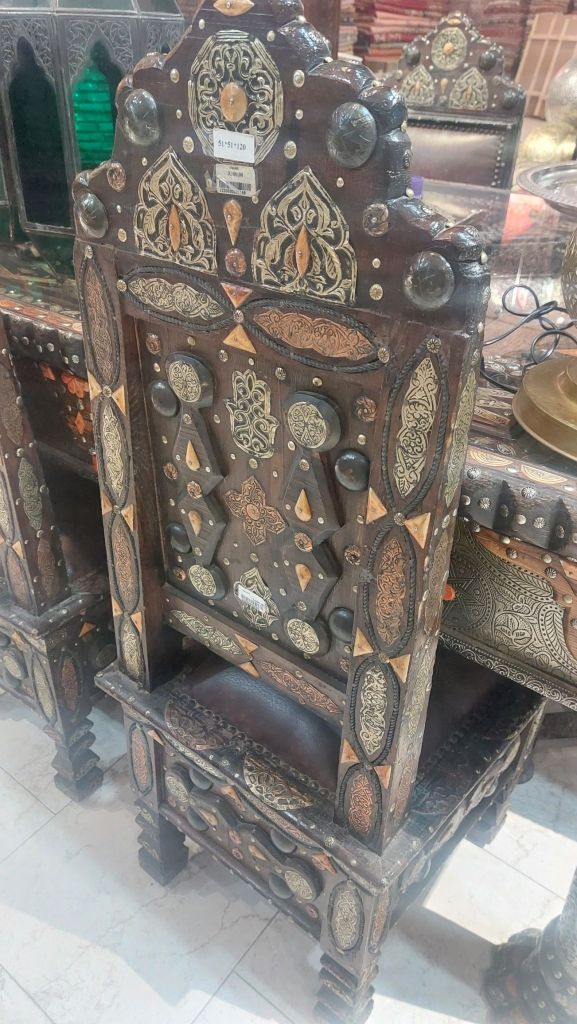
On the first floor, there is handmade furniture, mirrors, vases, and other large items for the home. There is a huge selection of Berber rugs for sale, which can be shipped worldwide. The store is huge. It’s worth visiting just to see the craftsmanship that’s gone into creating everything on the upper floor.
The staff at Dar Bouchaib are helpful. You can wander around the shop without any pressure to buy.
Images by Freebird Tracey.
The Kasbah is an easy 15-minute walk from the main square. There are plenty of shops and restaurants along the way. There are popular sightseeing places in this part of the city, including Saadian tombs and El Badi Palace.
Dar Bouchaib can be found on Rue de La Kasbah Marrakech 40000. It’s open daily from 9.00 am until 8.30 pm. Bank holiday hours may differ, so check first before arriving.
Although a big part of visiting Marrakech is shopping in the souks, sometimes haggling can be stressful. Not knowing how much you should be paying gives vendors the upper hand. Tourists often get overcharged. In contrast, Dar Bouchaib is a relaxed shopping experience with everything under one roof. The prices are fixed and reflect what you should be paying for each item.
Images by Freebird Tracey.
Dar Bouchaib is a few steps away from the popular restaurant Krepchy. Cafe Zeitoune is also close by and a great place for lunch. It’s pedestrianised around the mosque, and there are plenty of benches.
The Kasbah is located in the southern part of Marrakech and is considered the jewel of the old city.
The Kasbah is a quieter part of Marrakech, with fewer tourists than the medina. Staying in the Kasbah, you feel totally immersed in the culture of Marrakech as you rub shoulders with the friendly locals. There are plenty of shops, including a large fixed price store called Dar Bouchaib, selling everything you will find in the souks.
Image by Freebird Tracey.
The Kasbah is home to popular tourist attractions like the Saadian tombs and El Badi Palace.There are a number of good restaurants in the area, many with rooftop terraces to catch the sunset.
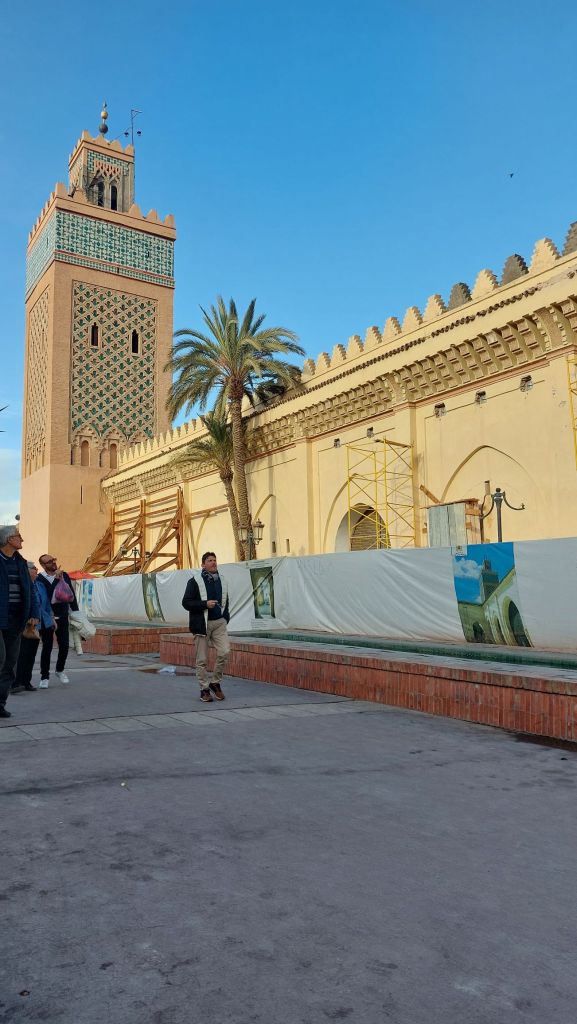
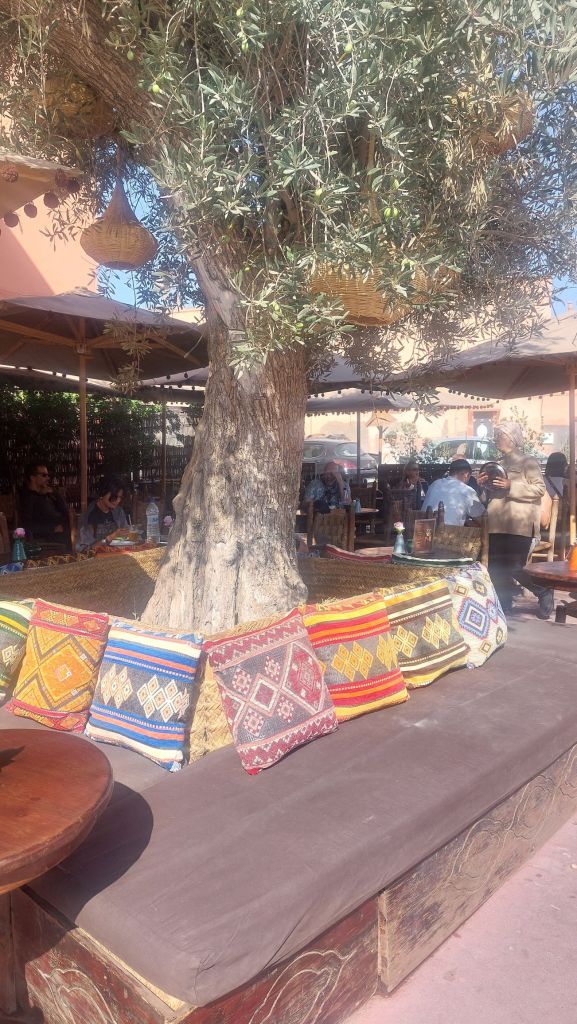
Zeitoune Cafe is a lovely restaurant for a spot of lunch. It’s in a strategic position and overlooks the mosque, making it a nice place to take a break from sightseeing in the area. The Kasbah mosque is the second largest mosque in Marrakech and is also referred to as ‘The Golden Apple Mosque’ it has a minaret reaching 80 metres tall. I enjoyed sitting on colourful cushions outside Zeitoune Cafe with the view of the mosque in front of me. It was a nice way to spend some time in the sunshine people watching.
Image by Freebird Tracey.
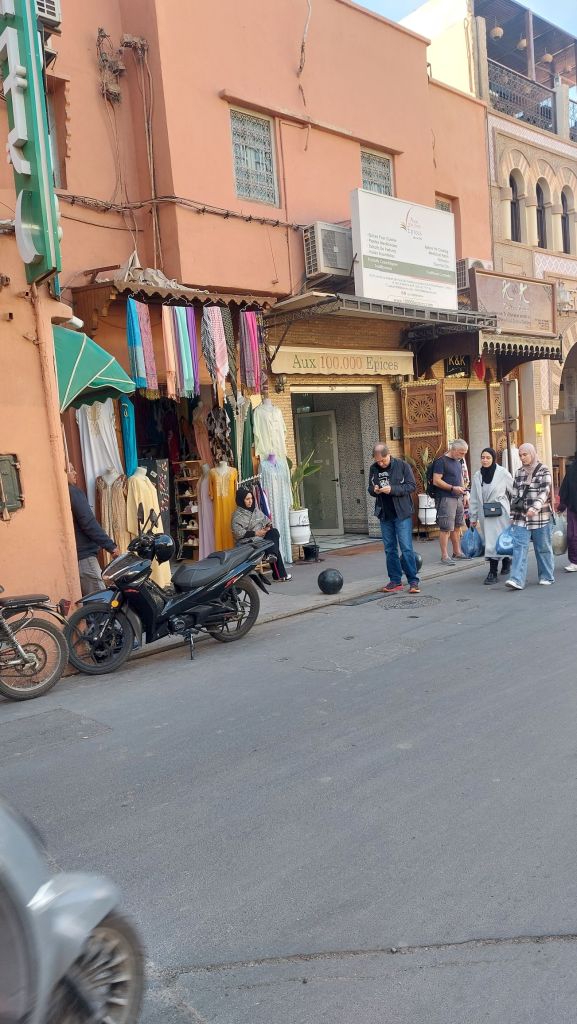
The kasbah is a 20-minute leisurely walk from the main square with plenty to see along the way. There are plenty of shops selling all kinds of stuff, including spices, jewellery, clothing and perfumes.
Images by Freebird Tracey.
In the kasbah, there is a range of budget and high-end accommodation. I stayed at Riad Hikaya and had a really positive experience. The luxurious five-star hotel La Sultana is also in the Kasbah.
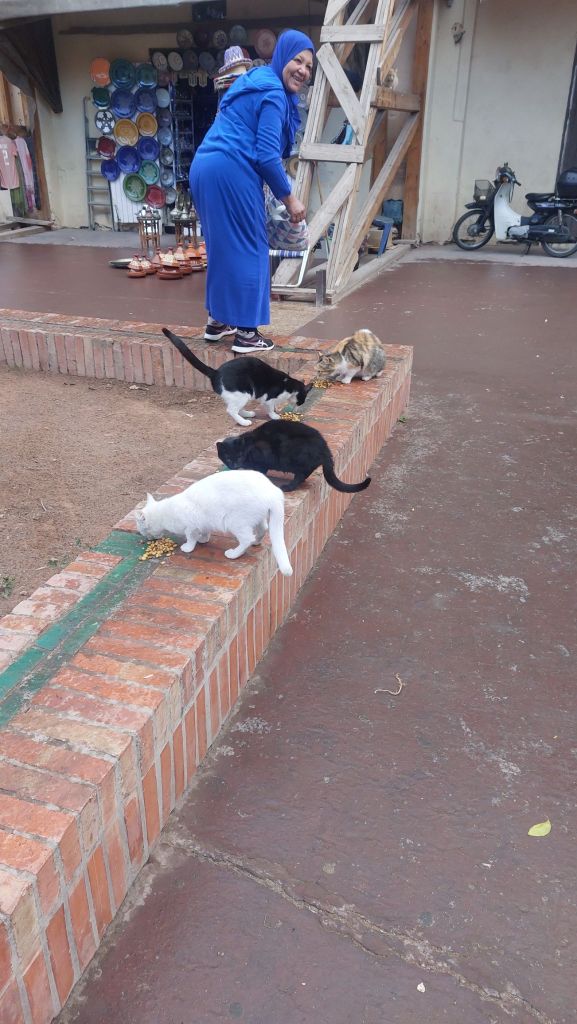
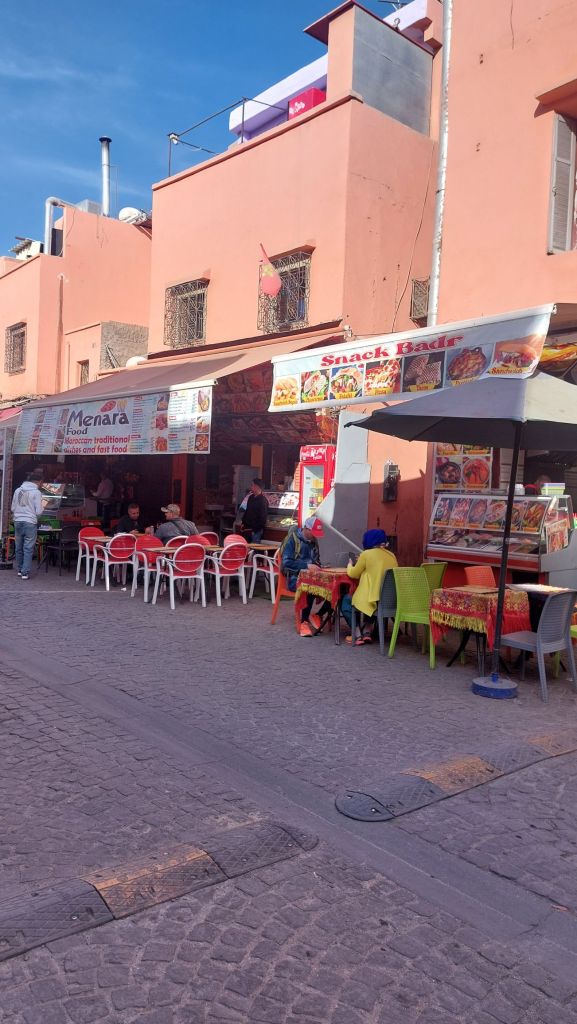
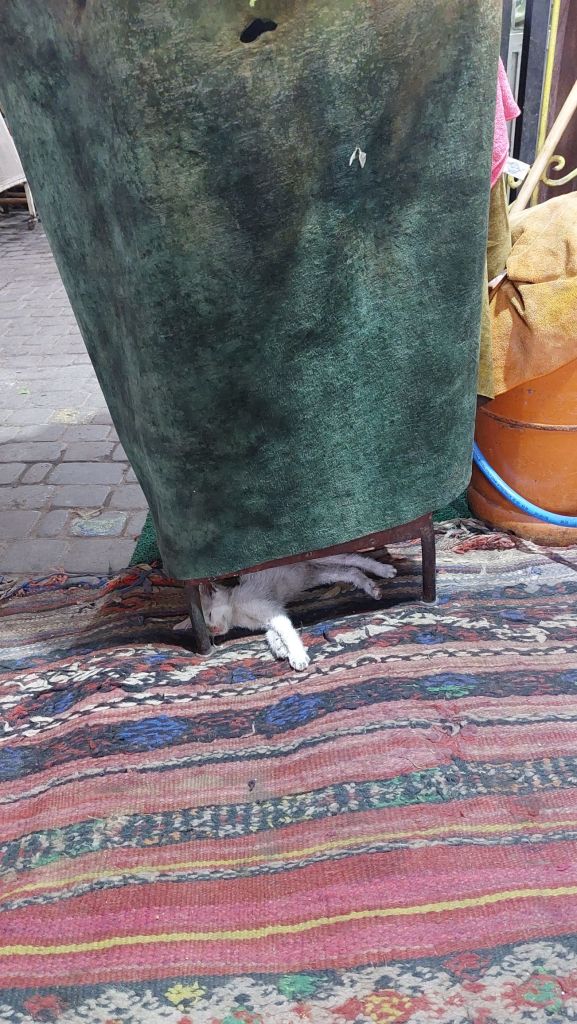
The Kasbah is a quieter neighbourhood than the medina. Parts of it are pedestrianised, and there is less traffic, making it feel less chaotic than the medina. The locals go about their daily business of buying bread, selling clothes,and feeding stray cats. It’s a typical scene of everyday life inside the ochre walls.
The Kasbah has a slower pace of life, and it’s a lot less stressful than the touristy side of Marrakech.
Images by Freebird Tracey.
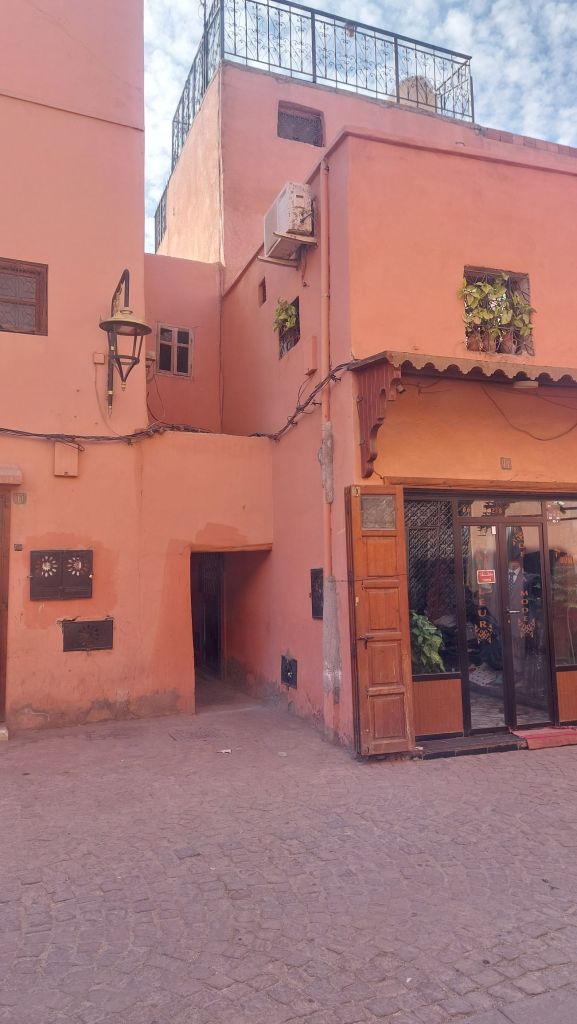
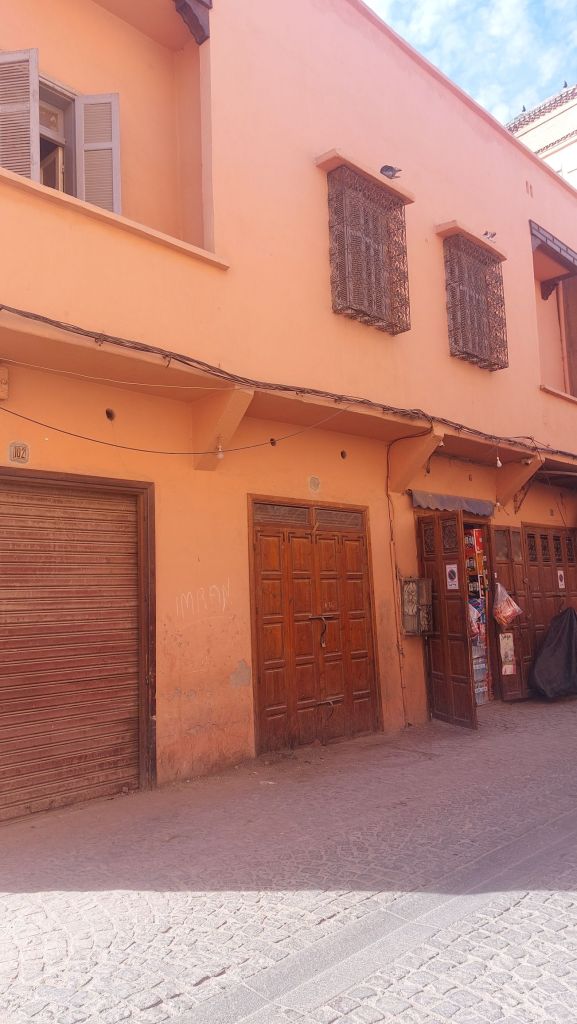
The Kasbah is the historical citadel in Marrakesh with fortified walls. The narrow, winding alleyways make it an exciting place to visit, with their signature red colour glowing in different hues at certain times of the day.
Images by Freebird Tracey.
The famous Bab Agnaou gate provides entry into the Kasbah, and out of the 19 gates around the medina, it’s one of the most ornate. The King’s Palace is also situated inside the walls of the fortress. Therefore, the whole area is heavily guarded, making it a safe place for visiting with children.
Images by Freebird Tracey.
The Kasbah is home to the Clock restaurant with its legendary camel burgers and storytelling evenings. Also, the Kasbah Cafe is a popular place for lunch and dinner. Krepchy does a fantastic breakfast, and the prices are very reasonable. I highly recommend the waffles. There are a few good coffee shops selling decent coffee, such as the popular Nos Nos.
To return from the medina, consider taking a tuk-tuk if the weather is hot. It’s quite an adventure as you rattle along the bumpy streets back into the Kasbah.
Tinsmiths Square and the Jewish quarter known as the Mellah are not far from the Kasbah, and there are plenty of things to see and great places to eat in both areas.
Taxis can pick you up from your accommodation but they may struggle in some of the narrower streets. There is also a taxi rank close to the roundabout near Tinsmiths Square.
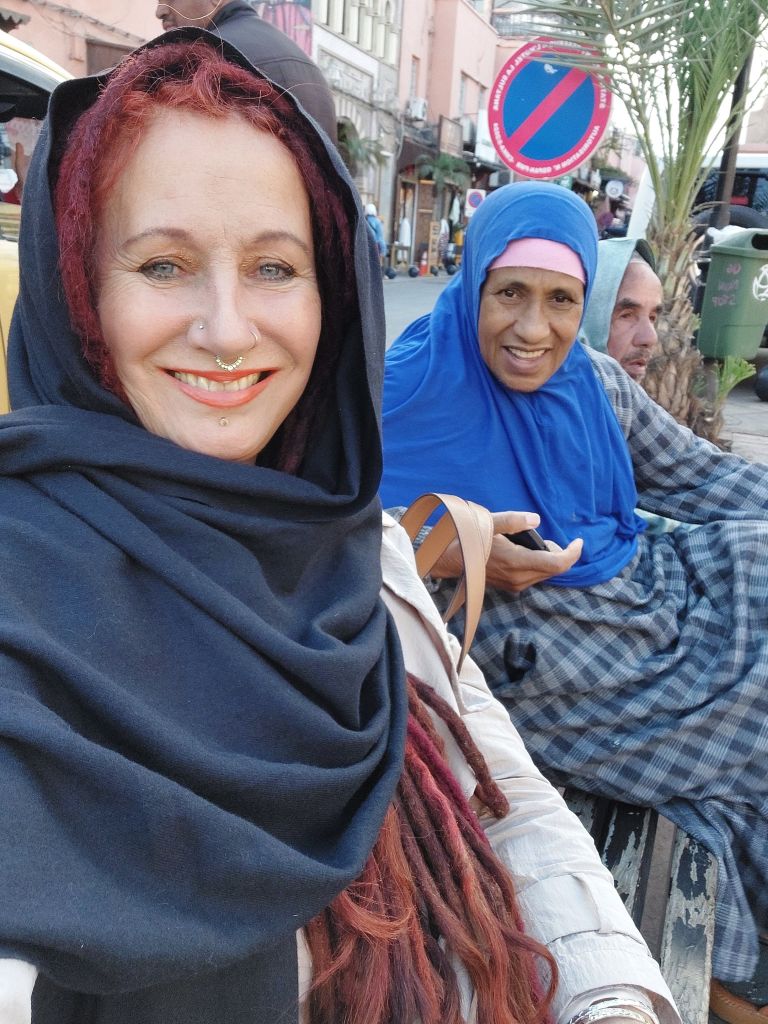
Spending an hour or two in this historical area of Marrakech will add value to your visit. The locals are very friendly, and it’s a pleasure getting the opportunity to sit and chat with them.
I would recommend staying in the kasbah if you prefer a quieter, more authentic experience of Marrakech. It’s further out from the madness of the busy souks and a more relaxed environment.
Tinsmiths Square is located to the south of Jamaa El Fna. It is within the Mellah, the oldest Jewish quarter of Marrakech. This quieter area of Marrakech is often overlooked by tourists.
It is here that skilled artisans make their wares to sell using traditional methods passed down through generations. Beautifully crafted jewellery, lamps, and traditional daggers made from copper and tinplate are skillfully handcrafted in this fascinating area of the city.
Tinsmiths Square presents a calmer alternative to Jamaa El Fna with palm trees lining the pedestrian friendly walkway. It connects the old Jewish district with the Muslim quarter.
Tinsmiths Square is a vibrant area with lots of spice shops, cafes, and restaurants with rooftop terraces. Shops sell intricately carved items made in small workshops. There are several benches around the square to sit and take in the sights and sounds and a fountain in the centre. Fun games occasionally take place, and the square also hosts events.
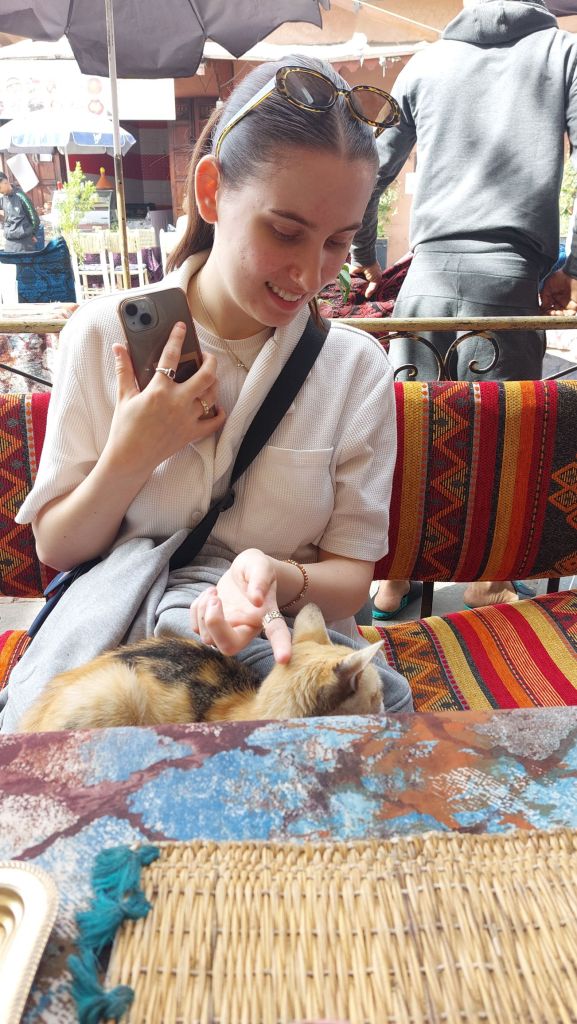
Cats roam freely across the square and are a popular sight, lazing in the plant pots and flower beds. Sometimes, they are quite cheeky and make themselves comfortable on tourist’s laps.
Image by Freebird Tracey.
Place des Ferblantiers is close to popular sightseeing spots like The Bahia Palace, El Badi Palace, and The Saadian Tombs. The Kasbah is just a short walk away.
I love Tinsmiths Square. There are some great cafes and restaurants and I have bought some interesting souvenirs here. There is a great vibe, and the pace is much more relaxed than in the densely packed medina.
Video by Freebird Tracey.
I was spoilt for choice with all the fragrant spice shops in the square selling everything from eucalyptus to argan oil. The friendly vendors happily educate you on what each remedy is used for and what the different types of tea are good for. Browsing leisurely around the spice shops is an explosion of colour and pungent aromas.
Images by Freebird Tracey.
If you want a slower, less touristic place to spend a few hours, don’t miss out on visiting Tinsmiths Square. There are a few budget restaurants, and Medina Mall, which is home to the popular Fluffys dessert cafe, is close to the square.
Tinsmiths Square is an exciting area of Marrakech, and you can get taxis from the taxi rank near the roundabout to get to other areas of the city from here.
The Spice Square, also known as Rahba Kedima, is a smaller market, less densely packed with tourists. It is located at the end of Souk Semmarine and a five minute walk from Jamaa El Fna.
It is here that you will find a wonderful selection of spices, including saffron, cumin, and turmeric. The spices are beautifully displayed in pyramids around the square, and the air is fragrant with the scent of incense. There are dried herbs, oils, potions, dried tea, and the traditional Moroccan lip stain.
The Spice Square is the traditional apothecary of Marrakech and a treasure trove of Moroccan culture.
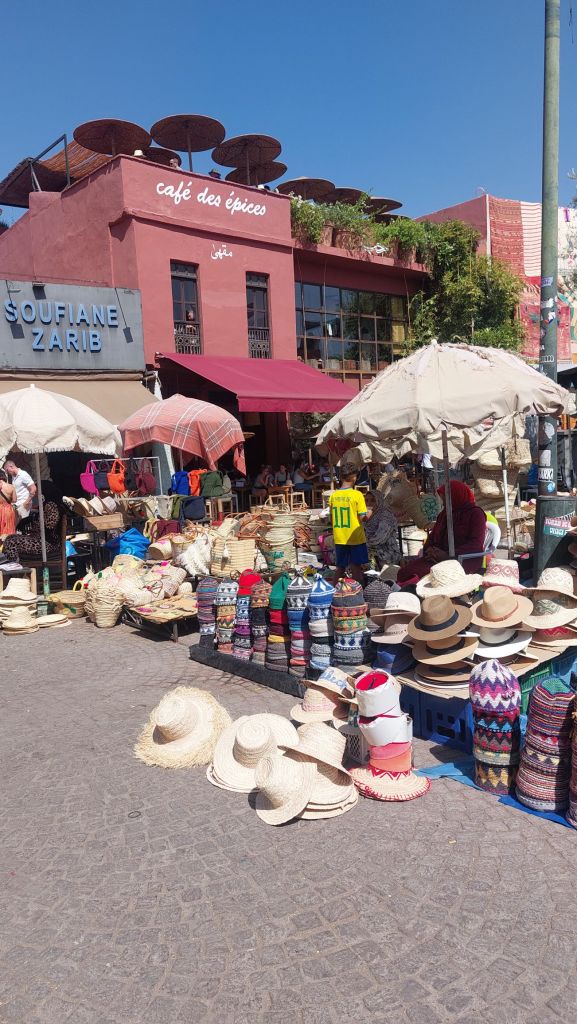
In the Spice Square, you will also find hand woven baskets, straw hats, baby tortoises, and shops selling Amazigh jewellery ,Tuareg leather amulets and beautiful throws and wall hangings. It is a vibrant, colourful market with a less frantic pace than Jamaa El Fna.
Images by Freebird Tracey.
The Spice Square is home to popular restaurants like Cafe Des Espices and Nomad, a well-known restaurant amongst tourists who flock to watch the setting sun from the rooftop terrace.
The Spice Square is not far from the Medersa Ben Youseff and Marrakech museum, so it’s ideal for making it part of your day when visiting both of these attractions.
Until the 20th century, Rahba Kedima was the cities grain market and the place where slaves were sold. It is now the epicentre of the medina where you can pick up the famous Moroccan spice blend ras el hanout and watch the spice sellers who come down from the mountain villages at 4.00 in the afternoon to sell their trade. The smells and colours are heady, as friendly vendors demonstrate the benefits of eucalyptus and other herbal remedies to the tourists.
The Spice Square is a photogenic place where you will be met with a glimpse of trading traditions from the past. It’s the perfect balance between a bustling market experience and a relaxed, more laid-back atmosphere.
Image by Freebird Tracey.
As you meander your way through the busy Semmarine souk, it suddenly opens up to this feast of exotic colours that seem to appear out of nowhere. You will be greeted by a display of tantalising and pungent aromas that have become the essence of Marrakech.
There are a few budget cafes around the spice square that are ideal spots for a pot of mint tea whilst sitting in the sunshine absorbing this sensual experience.
The ruins of an extravagant palace from the Saadian dynasty.
Image by Freebird Tracey.
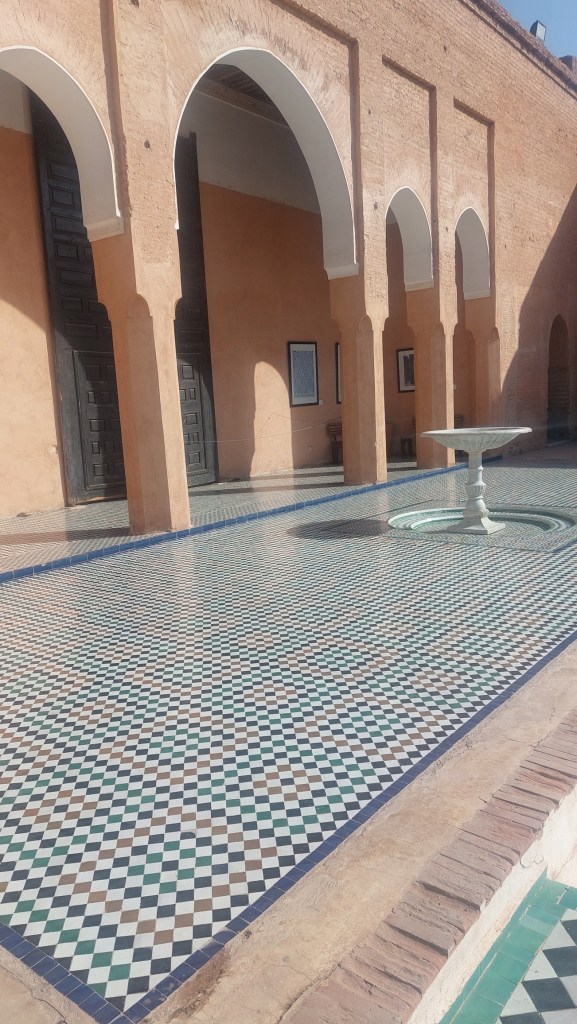
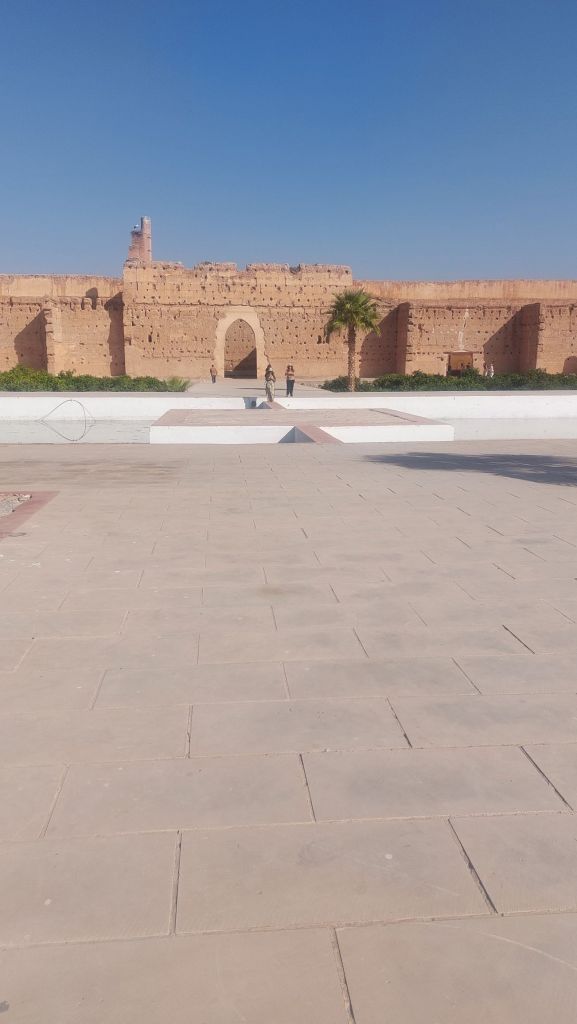
El Badi Palace was built in 1578 by Sultan Ahmad al-Mansour of the Saadian dynasty. The palace was built to showcase the considerable wealth of the Saadian dynasty and was a prime example of Islamic architecture and exquisite craftsmanship.
Using both Moroccan and European influences, the palace was beautifully decorated with intricate mosaic tiles, marble arches, and ornate carvings. There were 300 rooms decorated in gold, turquoise, and crystal. It was also home to the sultans harem, which included over 500 women.
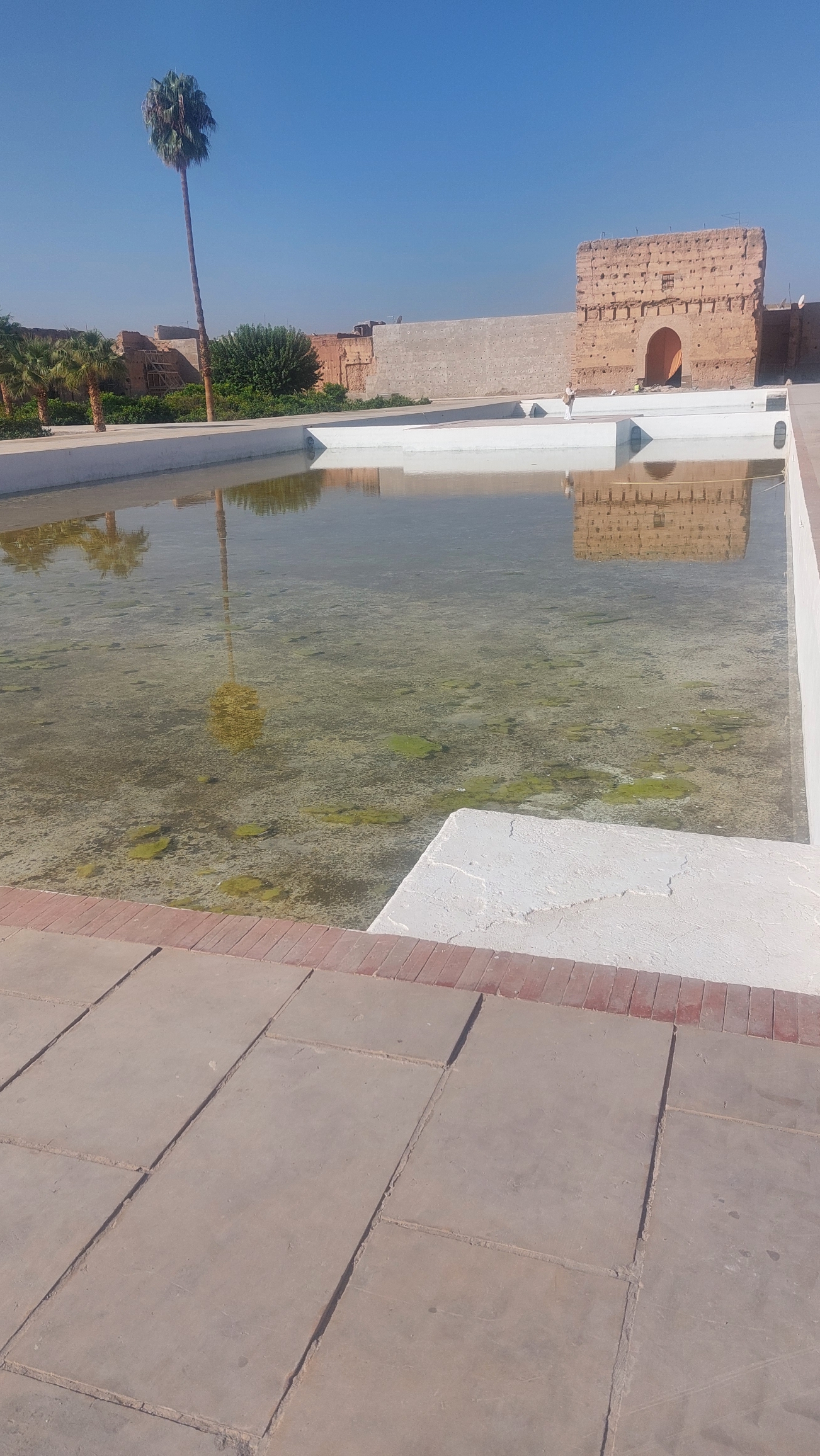
When Meknes became the new capital city, the palace was completely stripped of all its materials and transported there to create a new palace. After the death of Sultan Ahmad al-Mansour in 1603, the palace fell into neglect. Now, only the ruins remain.
El Badi is worth a visit if you want to learn about the history of Marrakech and the elite who ruled centuries ago.There is an interesting exhibition area containing the Almoravid Minbar, which is the finely decorated pulpit that once stood inside the Koutoubia Mosque. The area also hosts temporary art and cultural exhibitions. There are underground chambers that contain information and photographs about the history of the palace.
Image by Freebird Tracey.
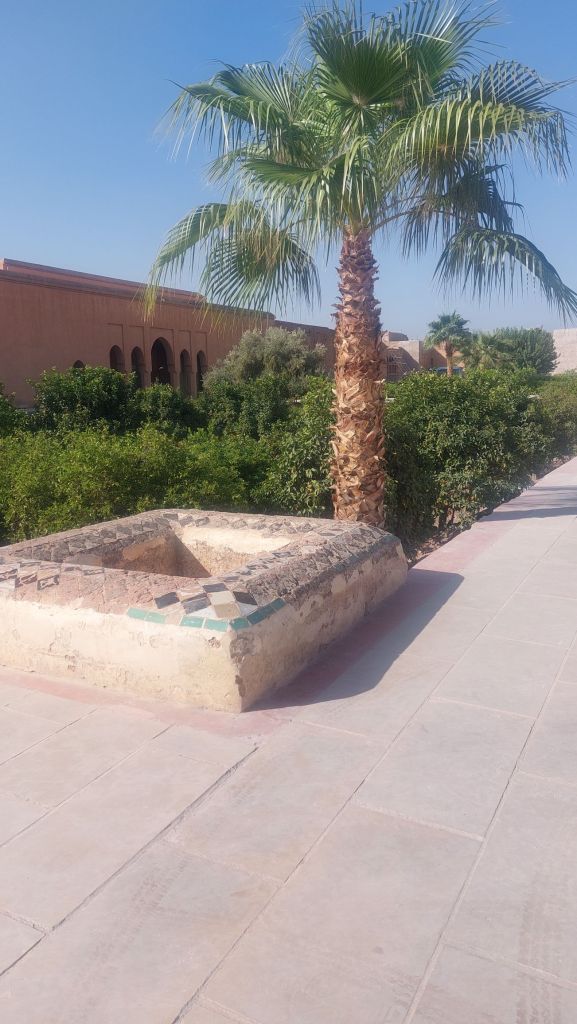
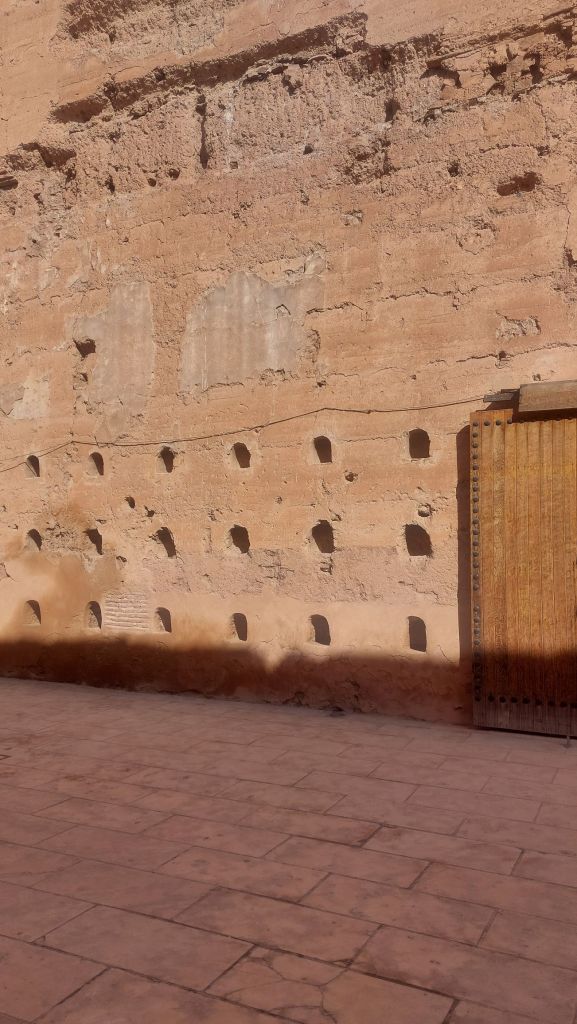
Unfortunately, the palace was badly damaged during the earthquake in 2023, and renovations have taken place to repair the cracks in the walls. It’s still a tranquil place to visit, and the huge courtyard feels very calm and peaceful. The storks nesting on top of the towers give it a mystical atmosphere.
El Badi Palace is situated in the Kasbah district, which is to the south of the city. It is close to the Saadian tombs, an impressive burial site, and another place to visit to get an understanding of the history of Marrakech.
Images by Freebird Tracey.
Visiting this once opulent palace, you get a sense of the wealth and grandeur of the Saadian dynasty. There’s a feeling of tranquillity within its walls, and you appreciate its historical significance.
El Badi Palace is open every day from 9.00am to 5.00pm and costs 100 dirhams to enter.
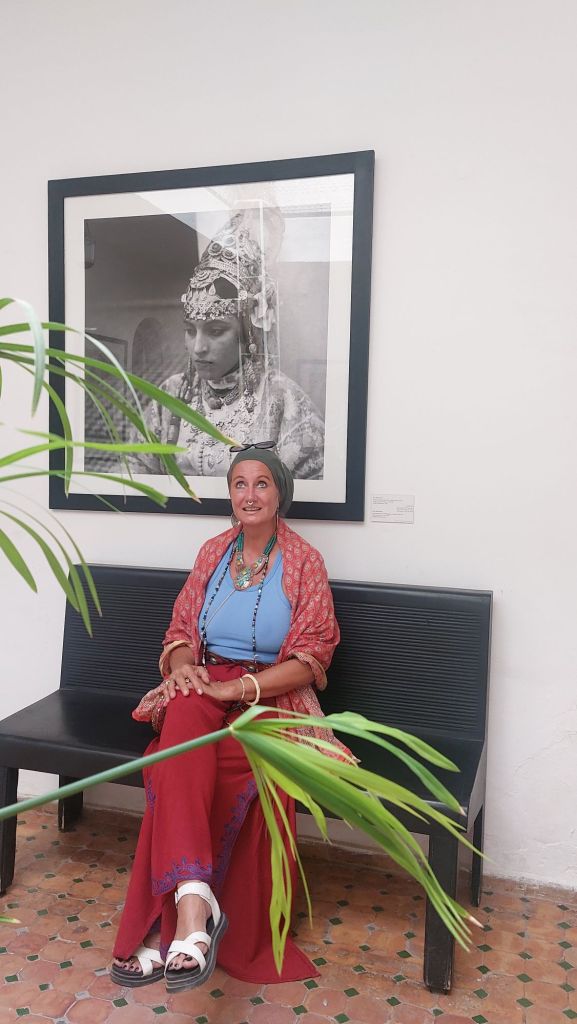
The House of Photography is an important cultural venue in Marrakech. Housed in an old fondouk in the medina, a visit here is a fascinating journey through time.
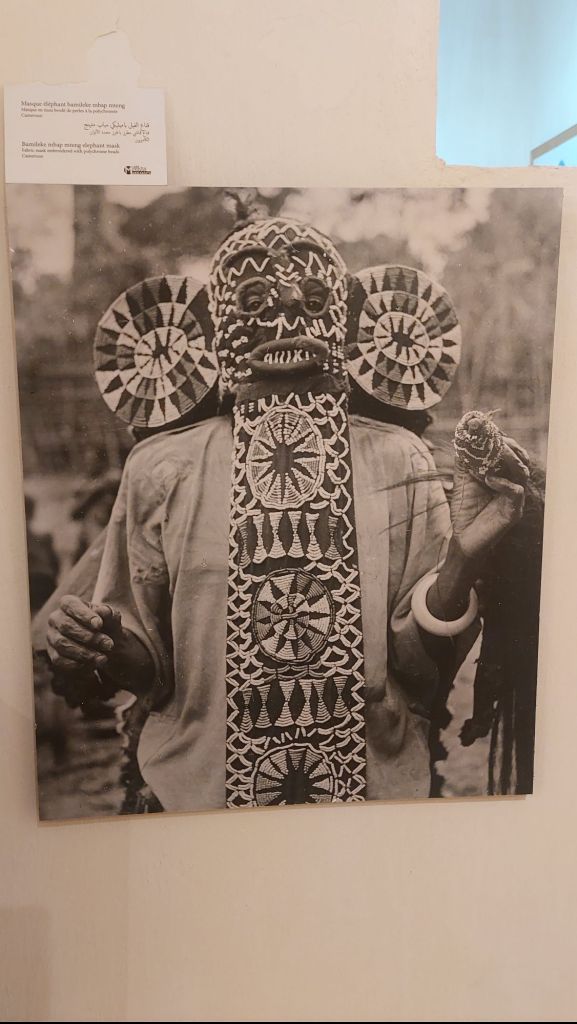
It was established by Patrick Manac’h and Hamid Mergani as a place where old photos taken in Morocco could be displayed for the public to view. It opened its doors to the public in 2009 and is now home to thousands of original documents, photographs, postcards, newspapers, and photographic glass plates.
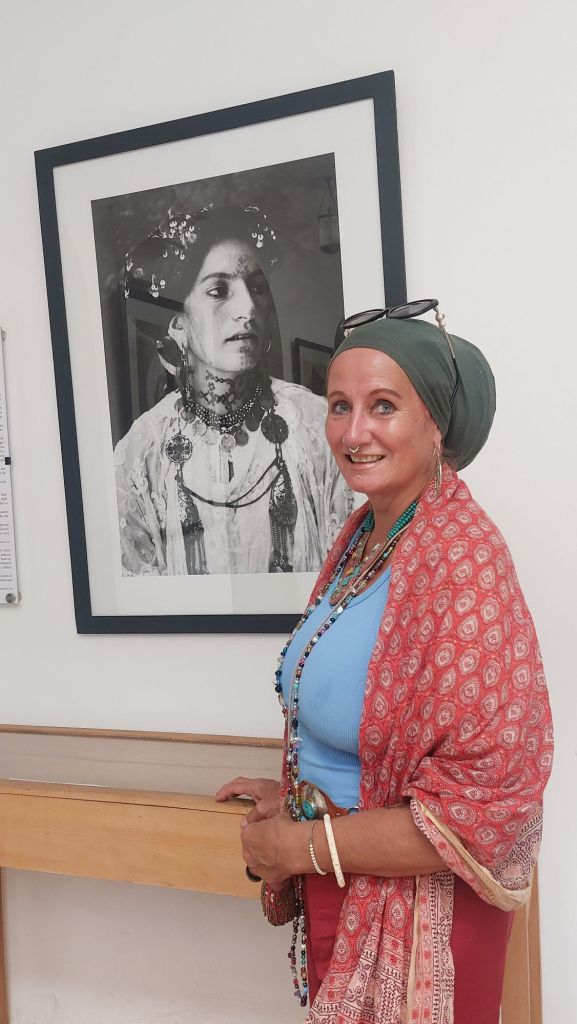
A private collection of 10,000 exhibits from 1879-1960, including contemporary photos from the present, allows visitors an opportunity to get to know the history of the Berber tribes in the high Atlas Mountains.
Image by Freebird Tracey.
The first colour film recorded in the High Atlas Mountains in 1957, called ‘Landscapes and Faces of the High Atlas Mountains’ by Daniel Chicault, is also available for visitors to watch.
The Museum of Photography is incredibly interesting, and the photos on display are well preserved, giving visitors to Marrakech a detailed account of how Berbers lived. I was fascinated by how the women dressed and their incredible hairstyles. Watching the video has broadened my knowledge about the history of Berber culture and their customs. It’s only as recent as the 1950s, yet they survived without electricity or medical care.
The displays stay interesting because they changed them periodically, and at the time I visited, there was one about Berber Jews.
Inside the museum, there is a rooftop cafe serving drinks, including speciality coffee and food. There are views across the rooftops of the medina, and you can see the Atlas mountains in the distance. It can get pretty busy during the lunchtime rush.
You can purchase copies of some of the photographs in the entrance, and the quality of the prints is good. I bought a copy of Un Charmeur de Serpents – vers 1920, and it looks great in a vintage photo frame.
The museum is open daily from 9.00 am until 7.00pm.
The address is 46 rue Ahl Fes, Bin Lafnadek Marrakech 400030, not far from Ben Youssef Madrasa.
Payment is on entry only, and it’s 80 dirhams for adults, 15 years old and under are free. The ticket also permits entry into the museum of music.
Marrakech Museum has a calmer atmosphere than other tourist attractions.
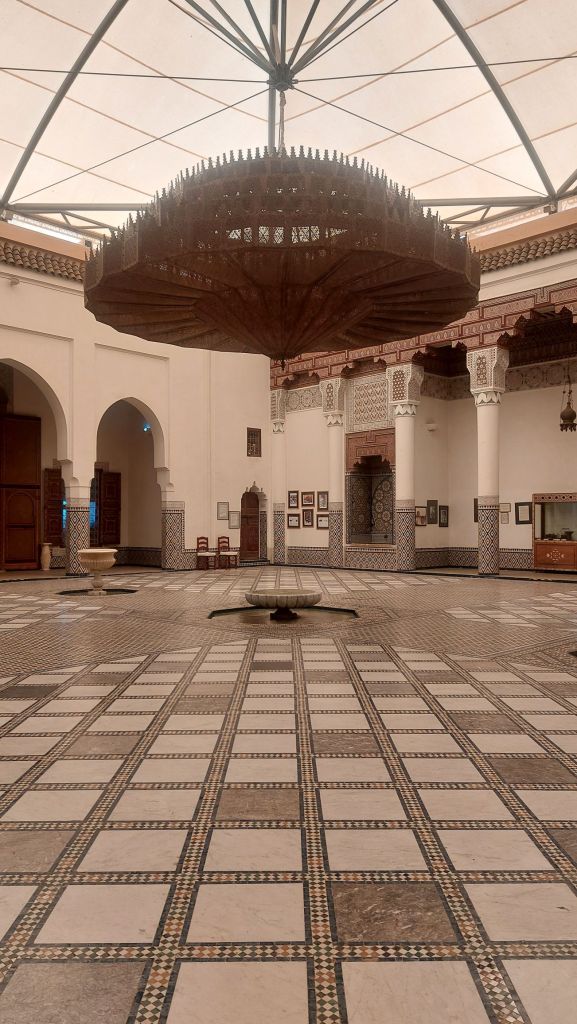
It is undoubtedly one of the most beautiful museums I have ever seen. Literally, next door to Ben youssef Madrasa, it’s in a perfect location for combining both sightseeing attractions.
I had mixed feelings about visiting after reading reviews, suggesting there wasn’t much to see. I was so glad that I did. It was really beautiful inside and held a lot of information about the Amazigh culture and the history of Marrakech.
The museum was once Dar Mnebhi Palace, constructed at the beginning of the 20th century by Mehdi al-Mnebhi. It was renovated by the Omar Benjelloun Foundation and became a museum in 1997.
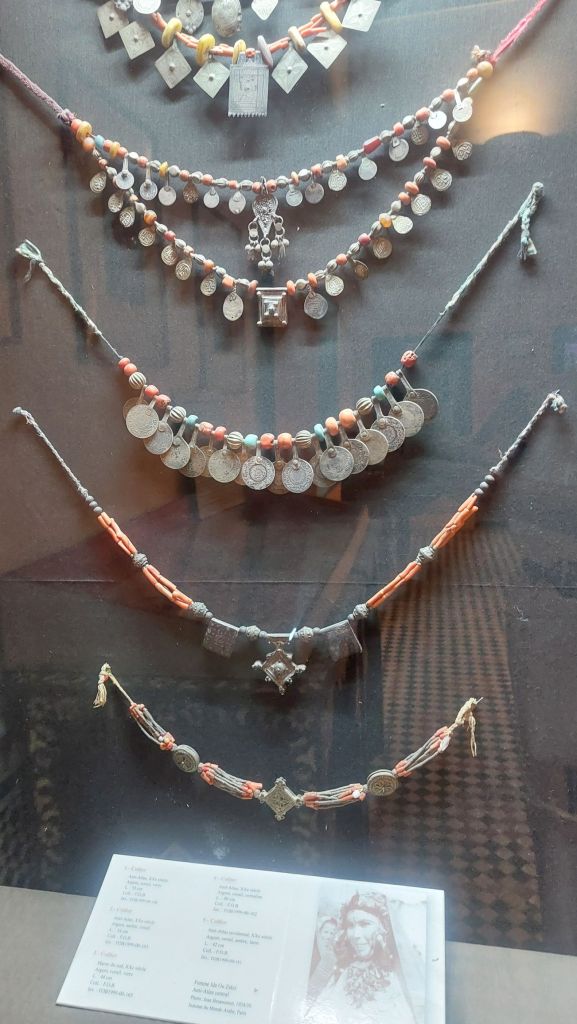
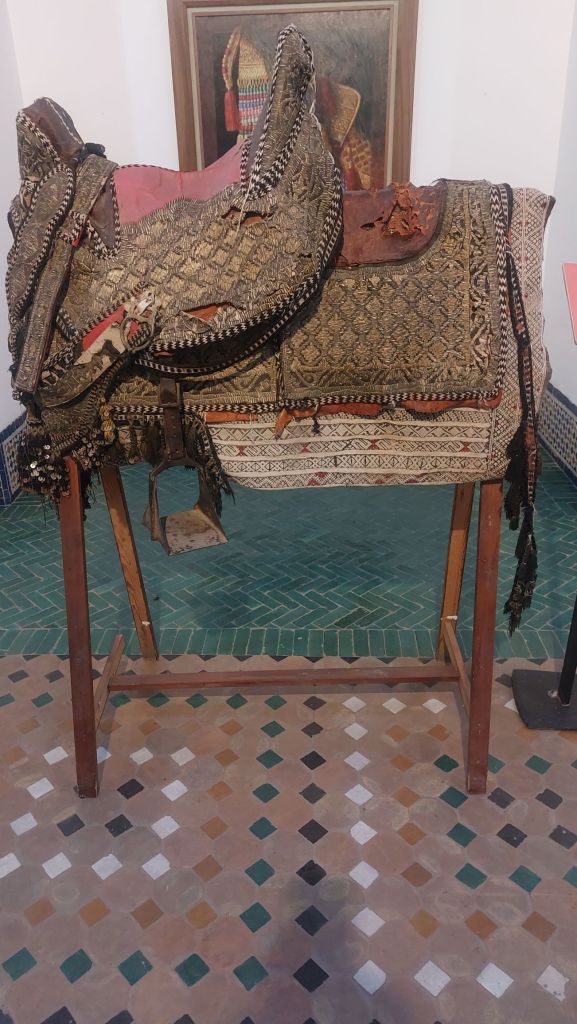
It now houses a selection of art objects, including Berber jewellery, weapons, carpets, costumes, and pottery from Fes. There is also a variety of modern contemporary art that changes regularly to keep it exciting. Regular events and exhibitions are also held here.
Images by Freebird Tracey.
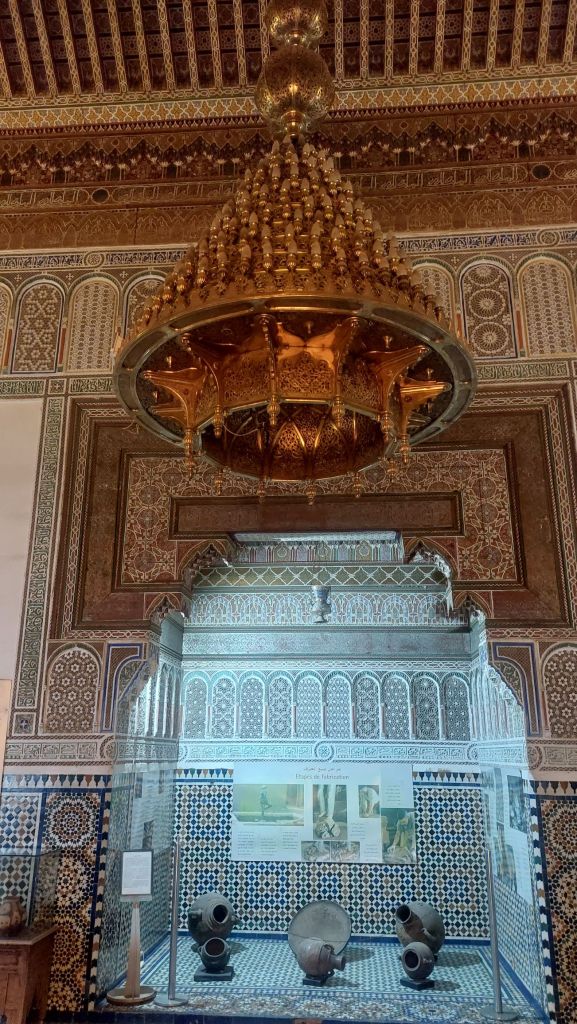
The architecture is stunning with a large courtyard containing a huge central chandelier made up of brass pieces cut into ornate geometric and arabesque motifs.
Images by Freebird Tracey.
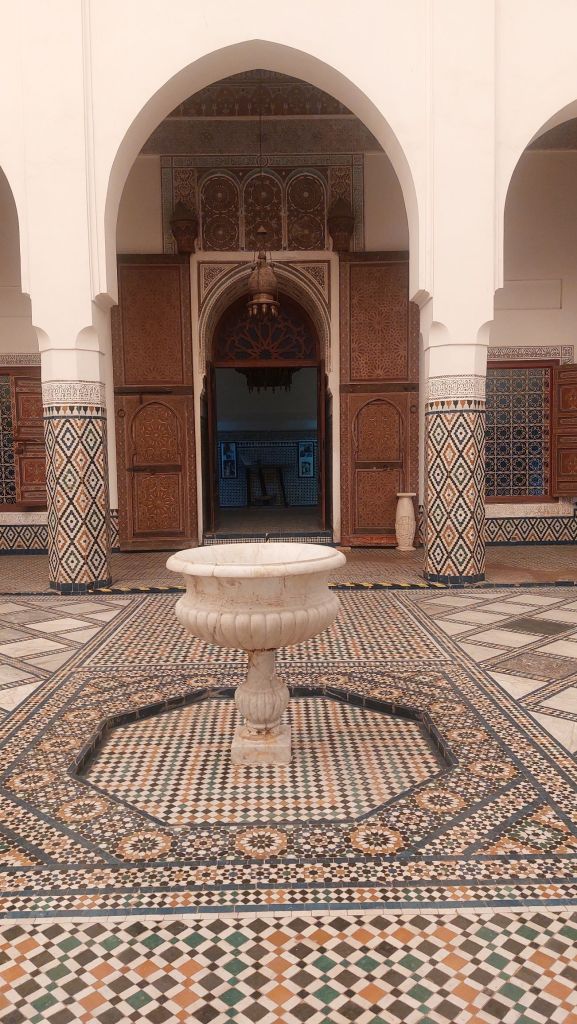
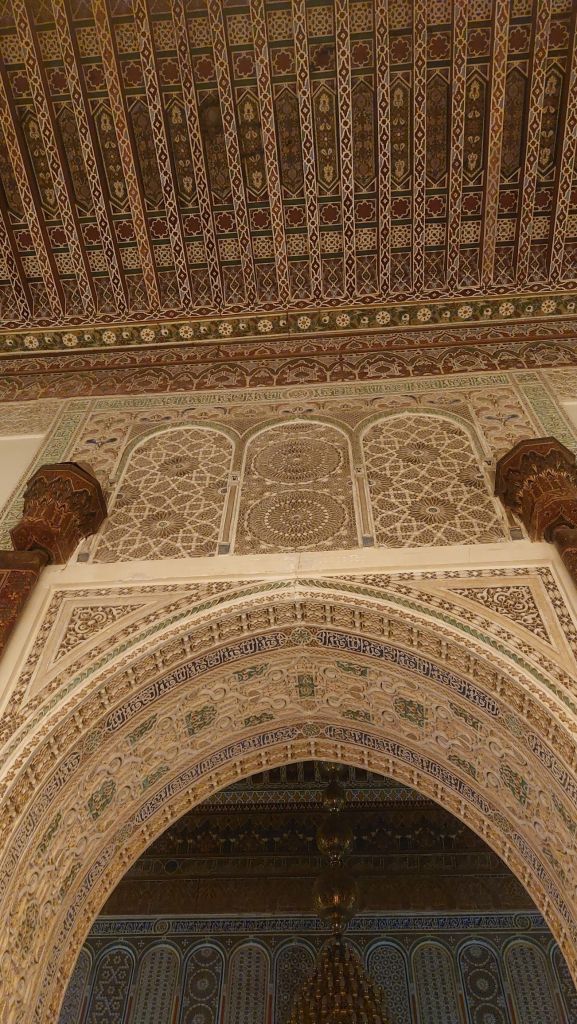
There are fountains with beautiful coloured zellige tiles and rooms that branch off with ornate cedar wood and stucco decoration. There is also a centuries old hammam.
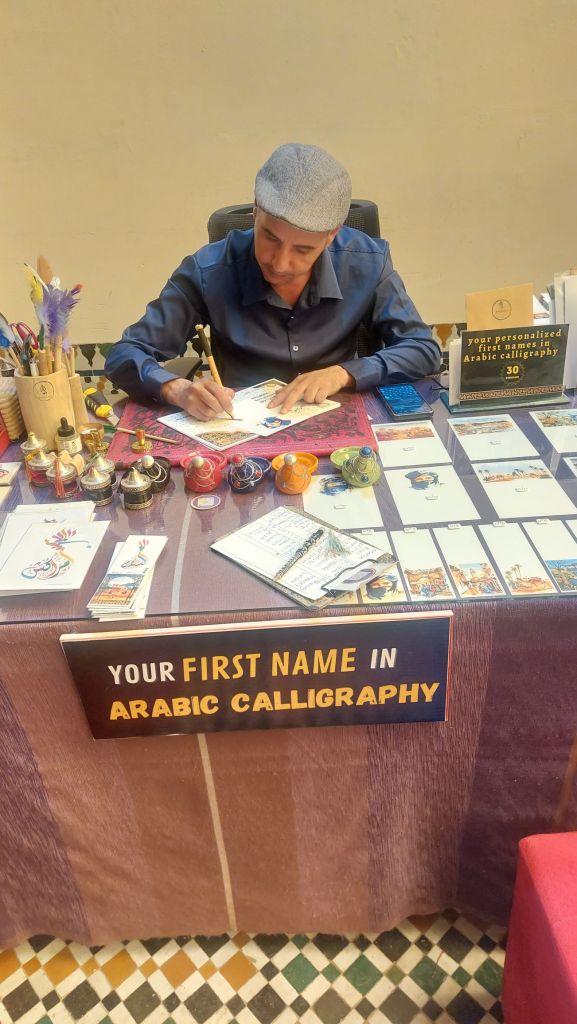
In one corner of the courtyard sits a calligrapher who can write your name in Arabic on a postcard. If you want this as a gift, get him to scribe it before you begin looking around the museum as it takes a little while to dry.
Image by Freebird Tracey.
Outside is a large open courtyard with a cafe where you can have drinks and light snacks. There’s also a small shop selling good quality prints, postcards and other interesting stuff.
I really enjoyed the Marrakech museum. The architecture was beautiful, and I found it more low-key and less crowded than some of the other attractions around Marrakech. I liked the structure of the building from the outside and the typical red coloured clay that glows in different hues in the sunlight.
I would recommend stopping by to explore some of the exhibits in the Marrakech Museum after visiting Ben Youssef Madrasa.There is no cafe within the Madrasa, so it’s a great place to stop and take a break from the heaving number of tourists and spend some time in a calmer environment.
The Marrakech Museum is located at J2H6+VPJ, Place Ben Youssef, Marrakech 40000, and opening hours are 9.30am-6.00pm daily.
There’s a small entry fee of approximately 50 dirhams.
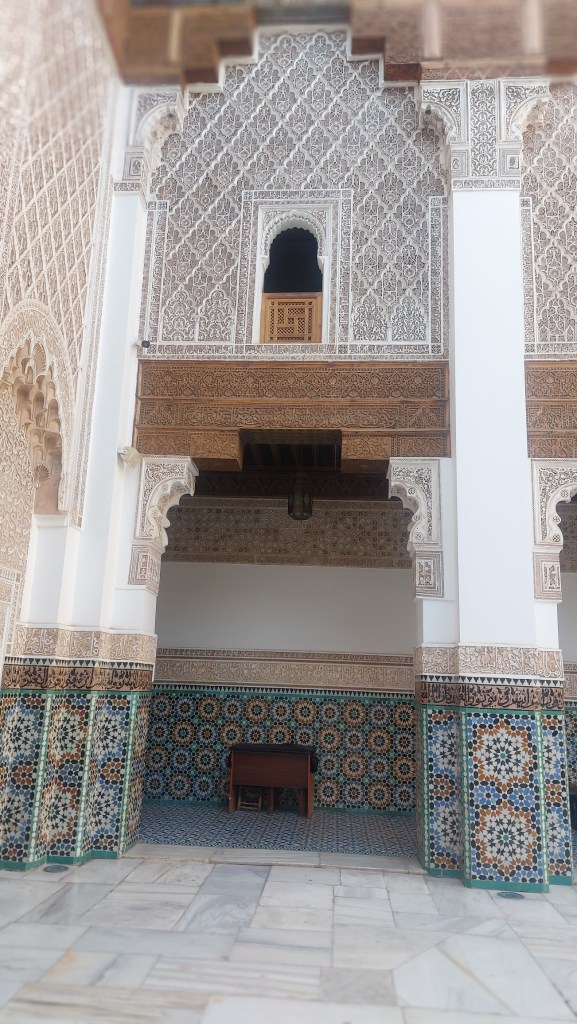
Ben Youssef Madrasa was once the largest and most important Islamic college in Morocco.
It was commissioned by Saadian Sultan, Abdellah al- Ghaleb Assaadi in 1564-65 and named after the adjacent Ben Youseff mosque.
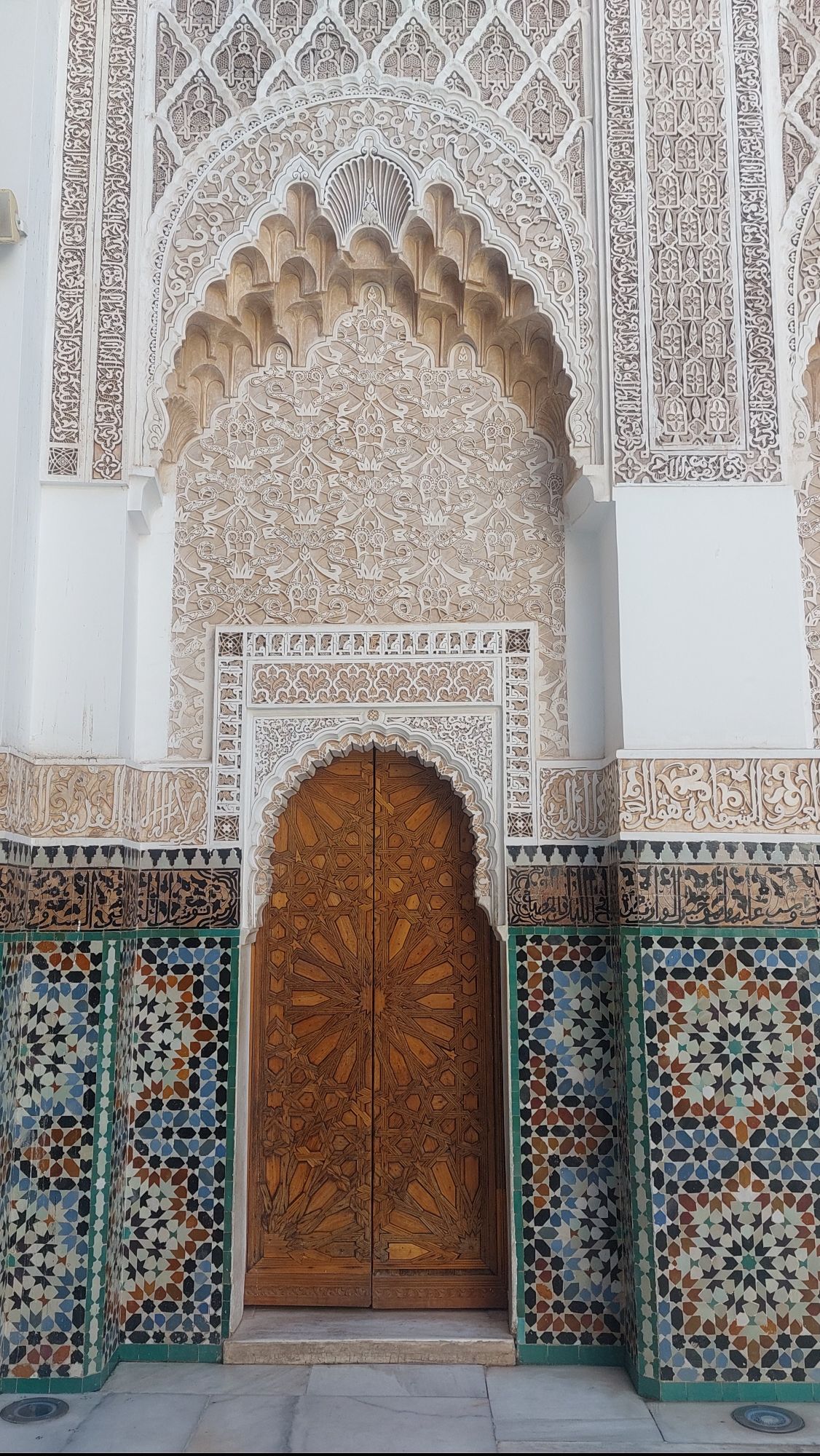
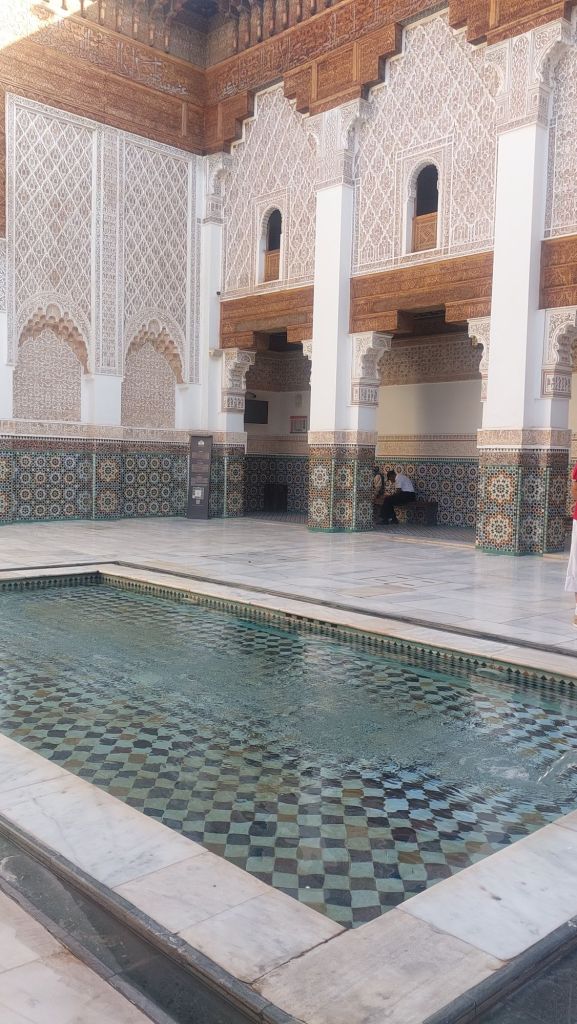
It’s a fascinating place to visit with invaluable historical and cultural significance. The spectacular architecture inside the Madrasa is simply breathtaking and a testimony to the beauty of Islamic art and craftsmanship.
Students who studied at the Madrasa would learn many subjects, including religious science, mathematics, philosophy, and medicine.The Madrasa attracted the best scholars and thinkers from the Arab Muslim world.
Images by Freebird Tracey.
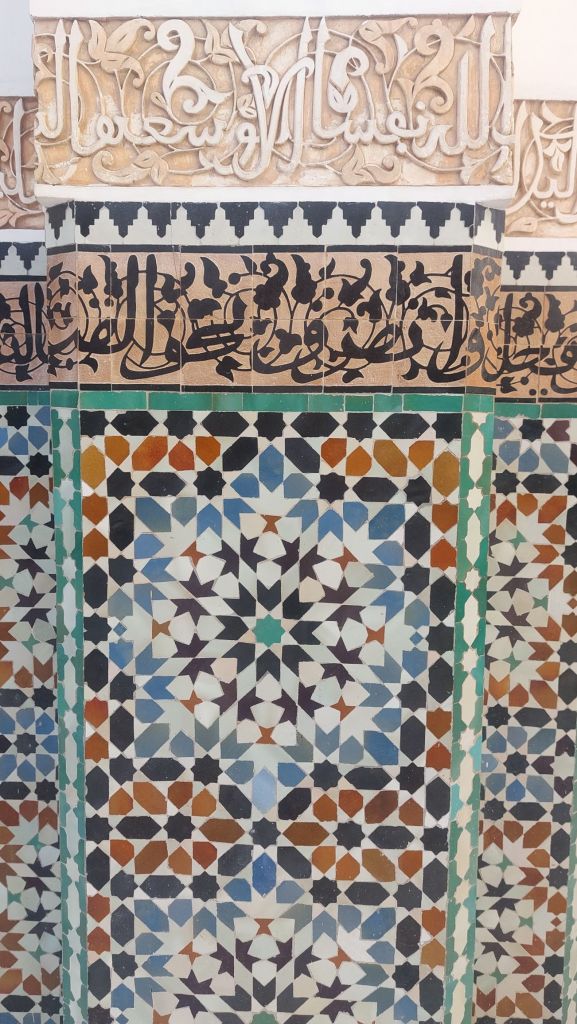
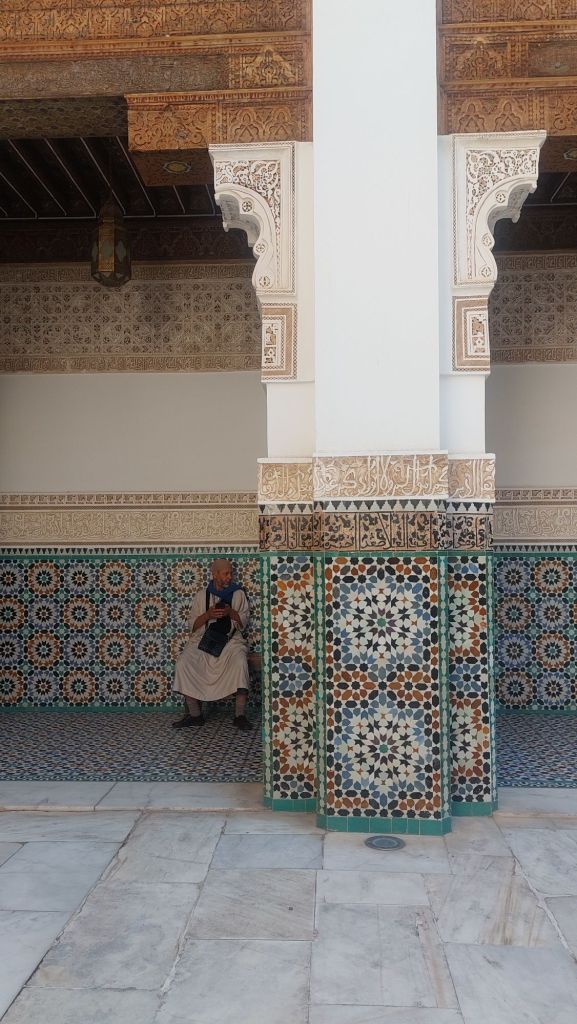
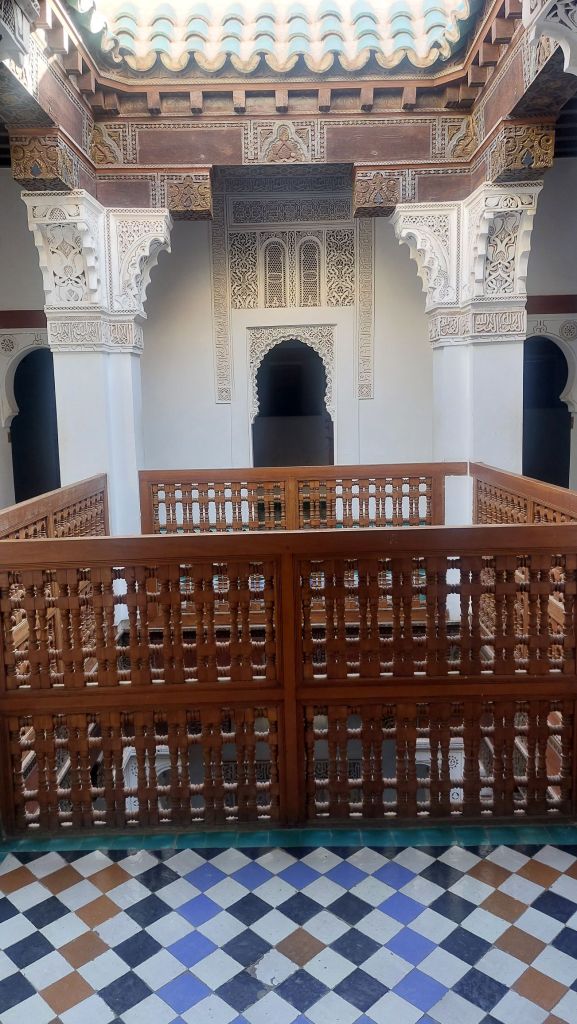
Ben Youseff Madrasa has been beautifully restored. Zellige tiles decorated with floral, geometric motifs and Arabic scripts adorn the walls. Carved cedarwood doors, ceilings, and intricately crafted pillars showcase the quality of the craftsmanship. It’s a prime example of the skill used to create traditional Islamic architecture.
There are approximately 130 dormitories and in it’s heyday as a koranic school, the Madrasa housed around 900 students.The small rooms were just big enough for them to roll out their mats to sleep on.The main focus for each student was study and prayer.
The rooms overlook the large courtyard, and tourists cram inside to have their photos taken standing in the window frames.
Images by Freebird Tracey.
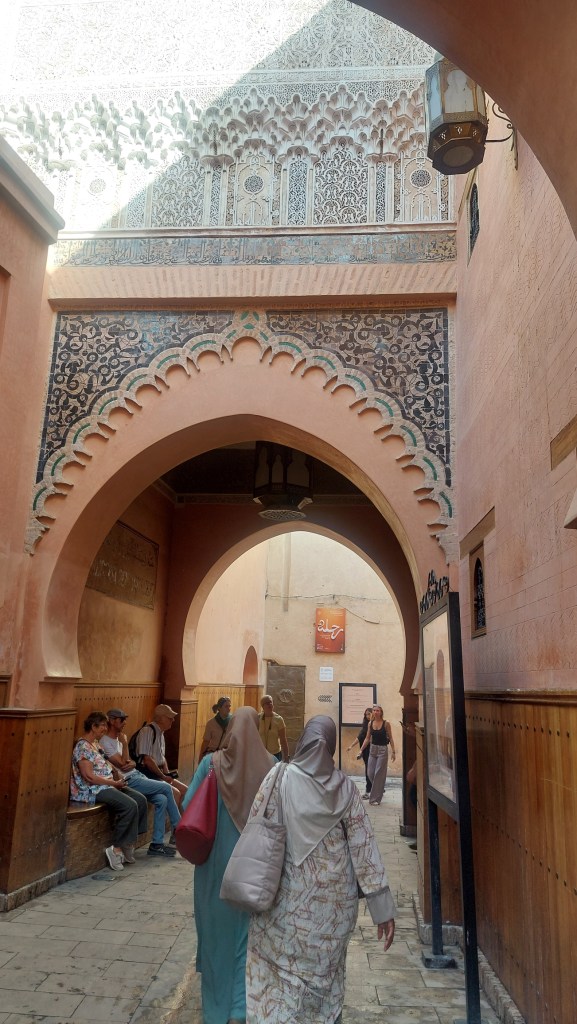
Ben Youseff Madrasa is one of the most touristic sightseeing spots in Marrakech. Due to its popularity, you have to get there early to appreciate the serene environment that the students would have lived in. If you arrive later in the day, expect huge crowds to jostle with each other for perfect photo opportunities.
I visited at opening time, and although there was a small queue of people waiting to enter, it wasn’t too packed with tourists.
Ben Youseff Madrasa is next to Marrakech Museum. The address is Rue Assoual, Marrakech 40000.
Image by Freebird Tracey.
Opening times are 9.00 am until 7.00pm, except on Tuesdays when they close at 4.30 pm. The entrance fee is 70 dirhams.
There are guided tours available to book online. Some include skipping the line entry. I didn’t bother booking a tour. There is information inside the Madrasa, which gave me an idea of what it would have been like to study there. For a more detailed history, a reputable, knowledgeable guide would be helpful.
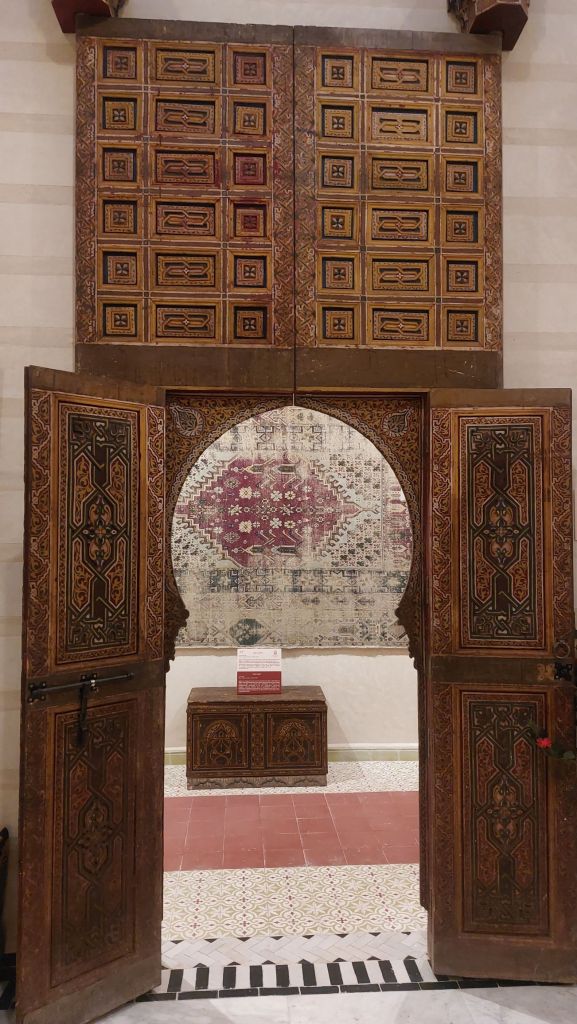
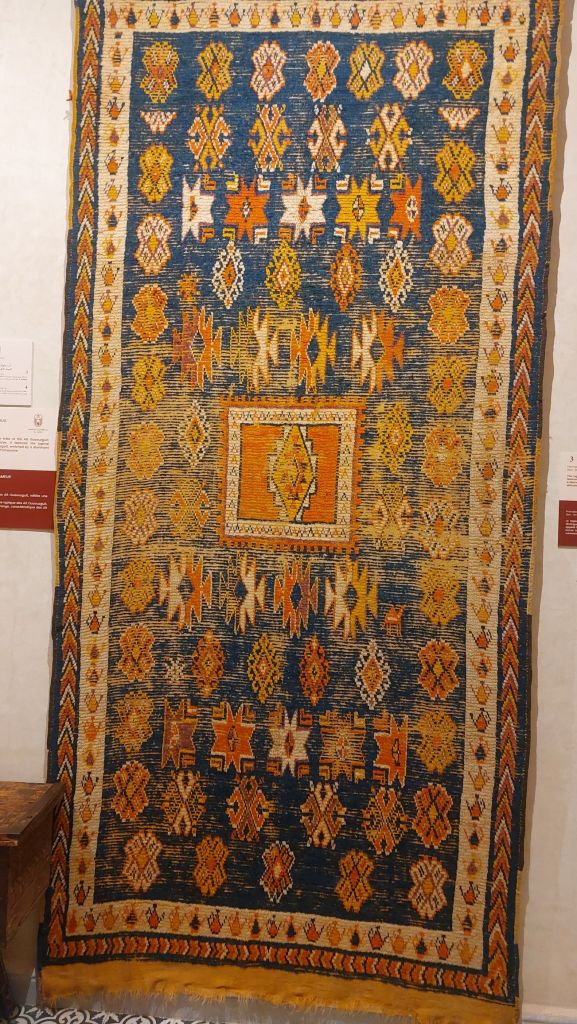
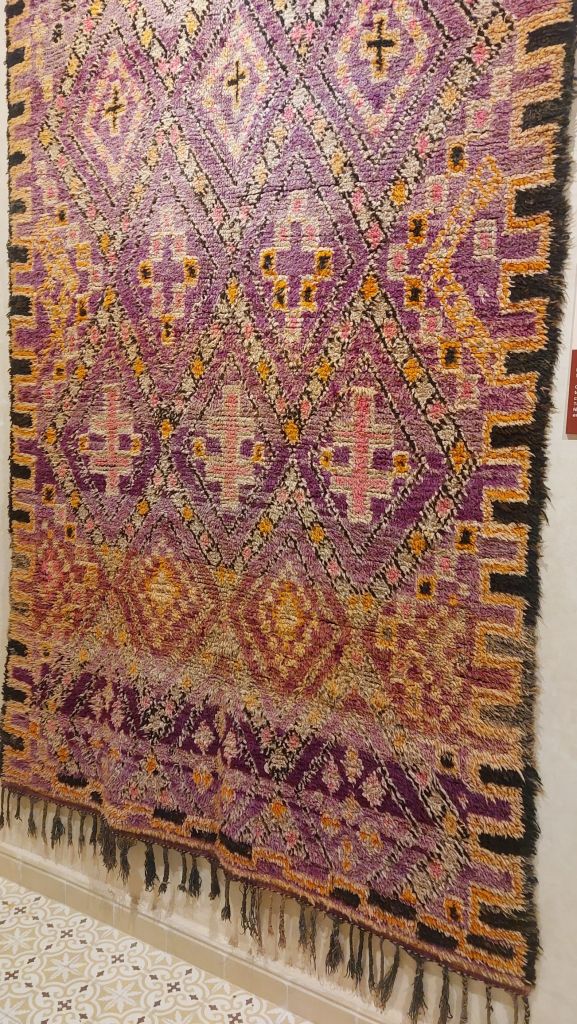
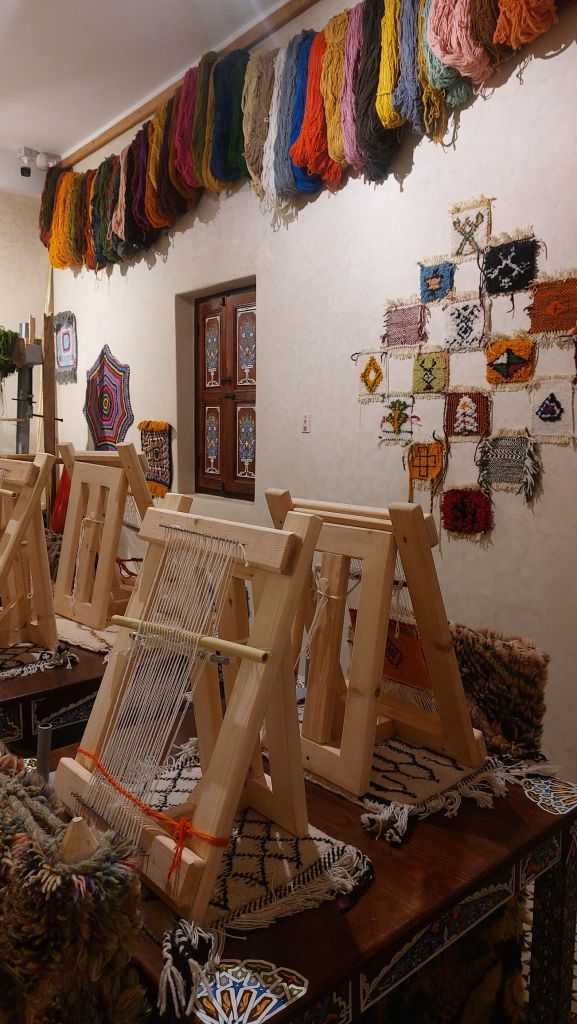
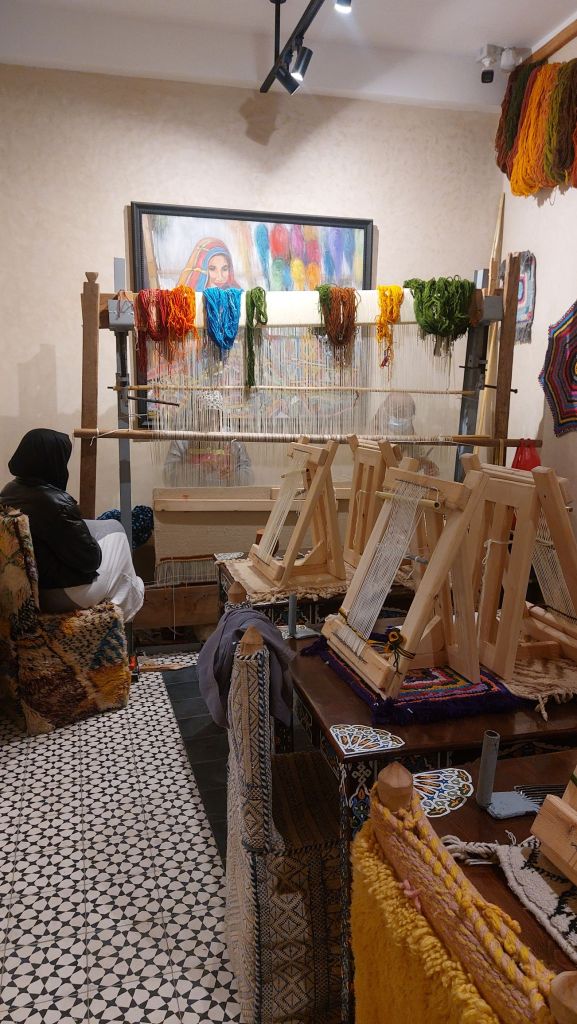
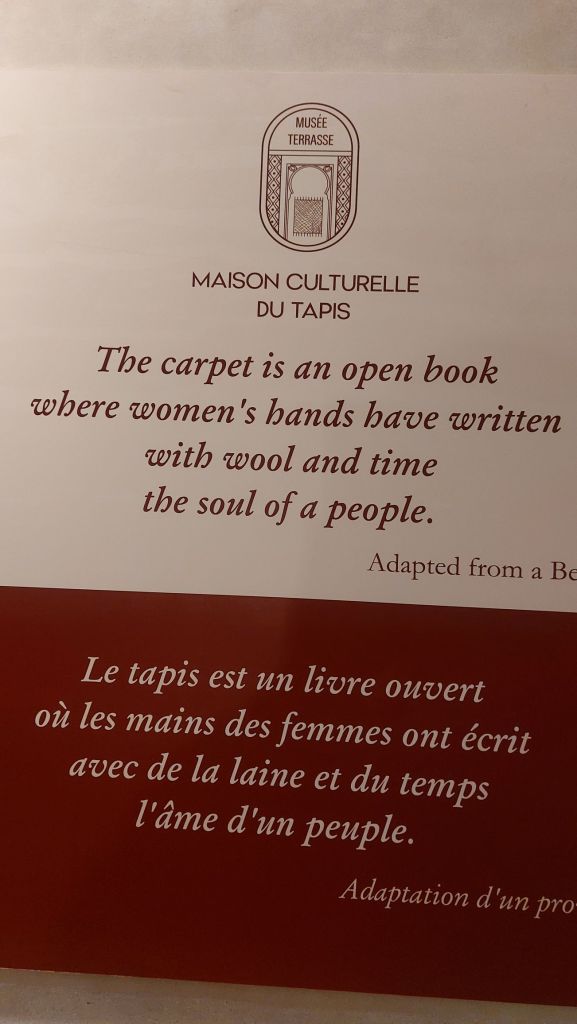
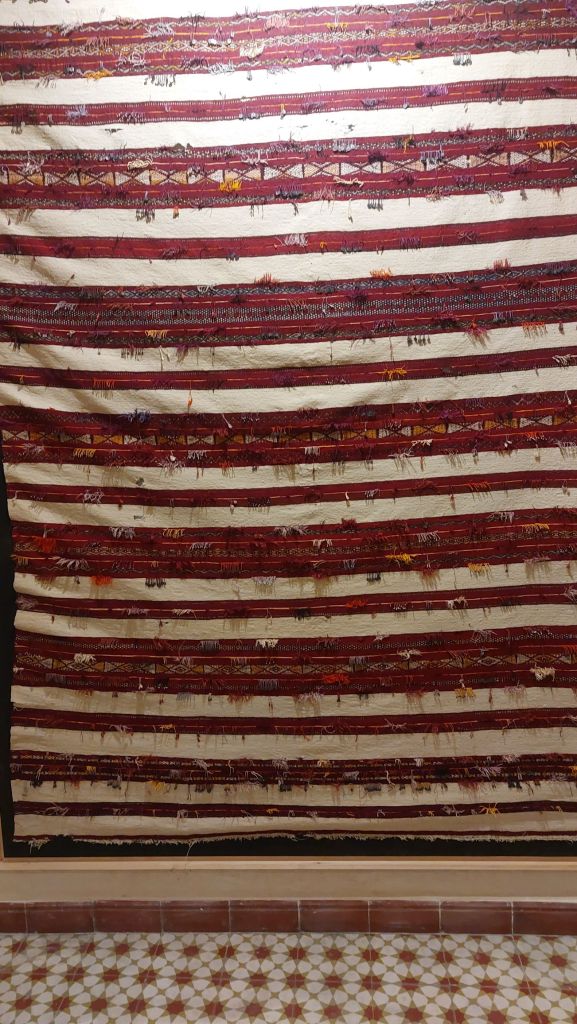
Maison Culturelle du Tapis is tucked away in the souks and a place you must see if you’re in Marrakech. It’s a museum containing a remarkable exhibition of Berber carpets and a journey through the ancestral history of the tribes who created them. Beautiful carpets are draped along the walls of this boutique museum, each one made by different tribes and eras in Moroccan history.
Situated deep within the medina at 16-18 Derb Deffa Ourbaa, it’s slightly hidden, but the vendors in the souk will point you in the right direction if you struggle to find it.
The museum is a fascinating walk through the history of traditional carpet weaving, and some of them on display are generations old. They have been beautifully preserved, and each one is a testimony to Moroccos weaving heritage.
Images by Freebird Tracey.
Every room of this tastefully restored 17th century riad invites you to look at each different region’s identity, from the Atlas Mountains to Rabat. You get to learn the meanings of Berber symbols and the specific colours each tribe used when weaving their carpets. Each carpet is unique and tells its own story.
There are descriptions to help you appreciate the work that goes into creating each piece, including a detailed history about the Berber tribes who produced them. There’s also an interesting video showing you the process of creating the carpets and the history of the Berber women who spend months skillfully weaving each piece.
On the first floor, you will find a workshop where you can have a go at making a small tapestry to take away with you. This is a two hour activity and ideal for families.
Images by Freebird Tracey.
One of the treasures on display in the museum is the Rabat carpet, a symbol of royal elegance renowned for its rich decoration and finery.
The museum also houses a collection of exquisite rare 20th-century carpets and modern contemporary pieces.
Images by Freebird Tracey.
A visit to this delightful place was a nice break for me from the densely packed medina, and I would thoroughly recommend stopping by to have a look around it.
There’s a small shop inside the museum selling rugs, cushion covers, and bags with pieces of woven tapestry stitched into the centre. They are the perfect souvenir or gift to take home with you.
After exploring the museum, you can relax on the pretty rooftop terrace, where you’ll find a nice cafe to have a light snack, homemade pastries, or a drink. The views across the medina from up here are incredible.
Images by Freebird Tracey.
The museum is open from 10.00 am until 6.00pm and there’s a small entrance fee. It’s definitely worth every dirham to delve into the rich, cultural ancestry of the Amazigh and learn about their exceptional carpet weaving skills. Highly recommended.
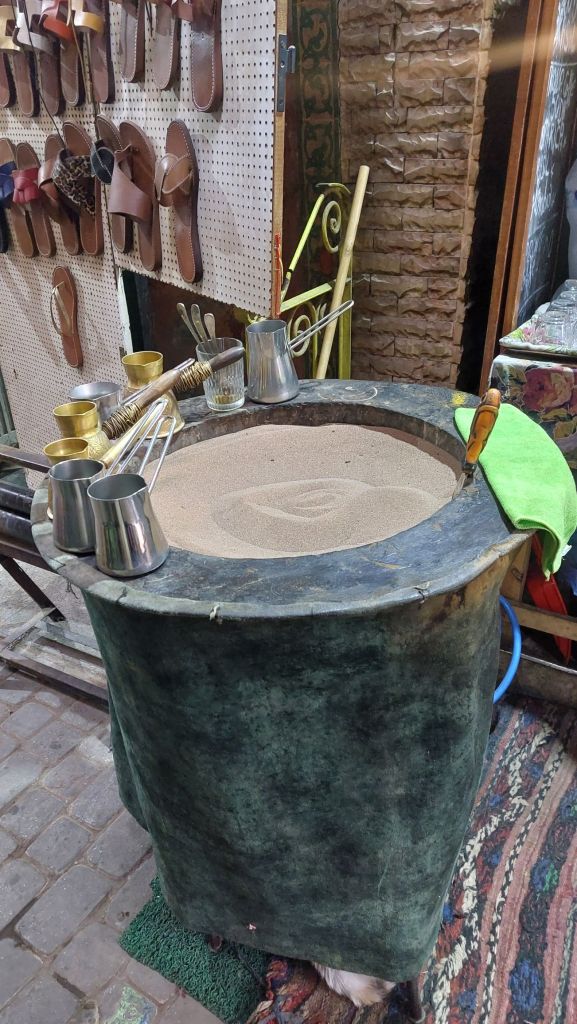
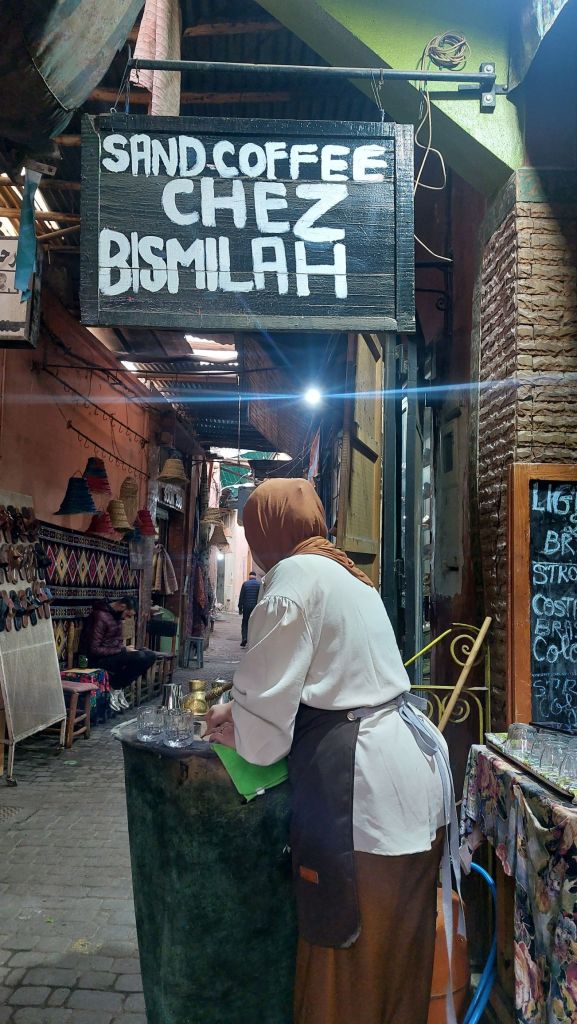
Chez Bismillah Sand Coffee is a hidden gem inside Souk El Kebir. It is here that rich aromatic coffee is brewed using hot saharan sand, gently spiced with a touch of Cardamom, Turmeric, or Cinnamon to give it a distinct flavour.
To make it, the coffee is added to iced water inside small brass pots and then heated by moving it around by hand in hot sand. It’s an ancient technique of brewing coffee that involves no electricity, simply hot Merzouga sand.
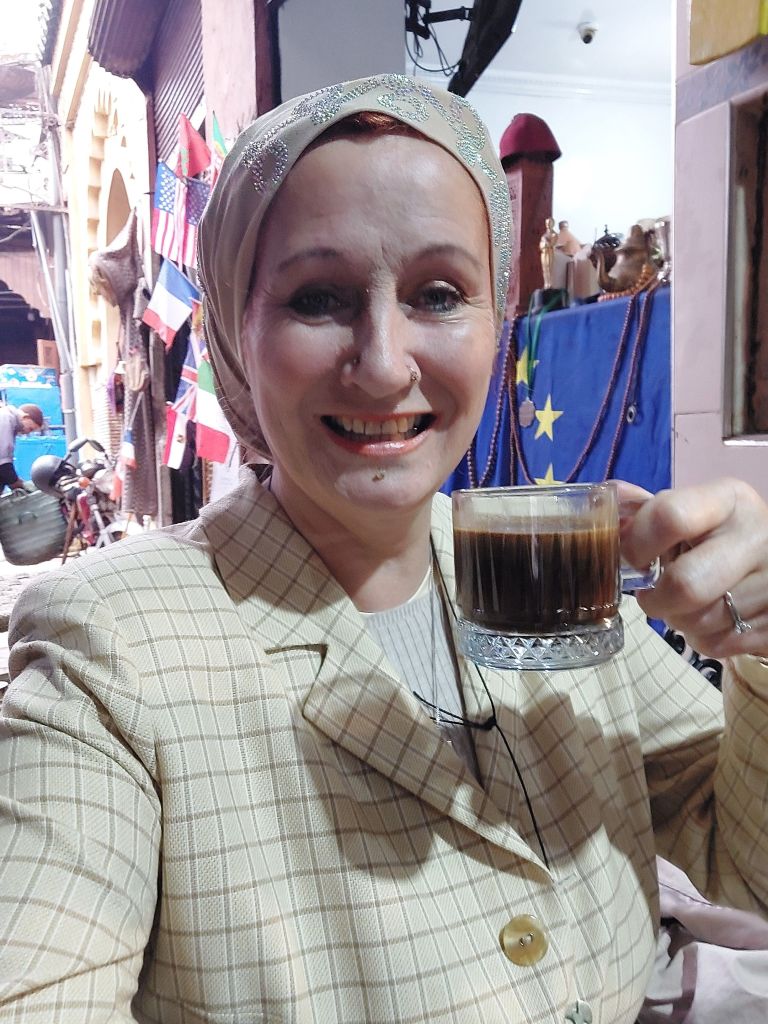
The coffee has a rich, dense, creamy flavour unlike any other coffee found in the medina. It is soothing and velvety.
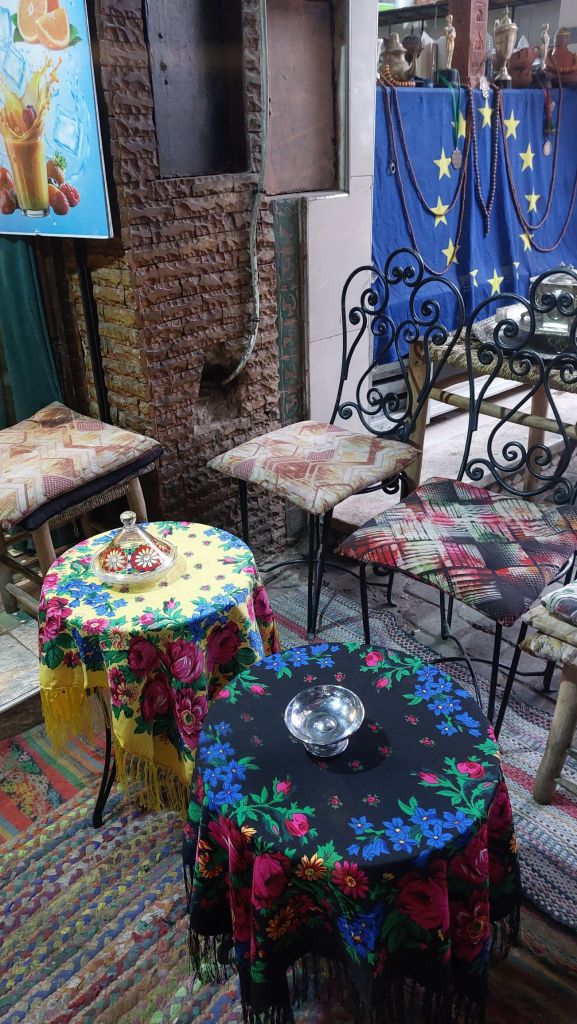
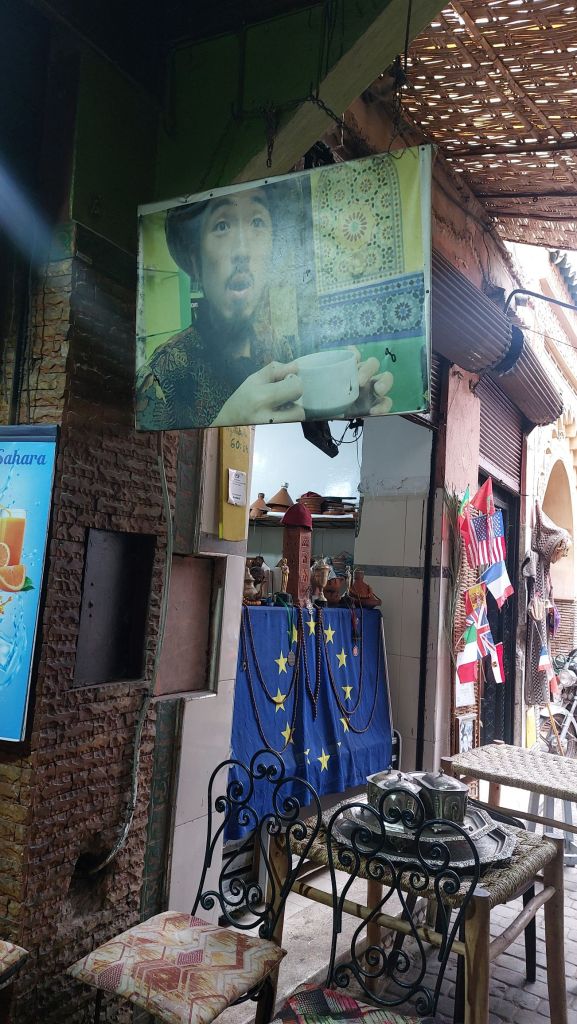
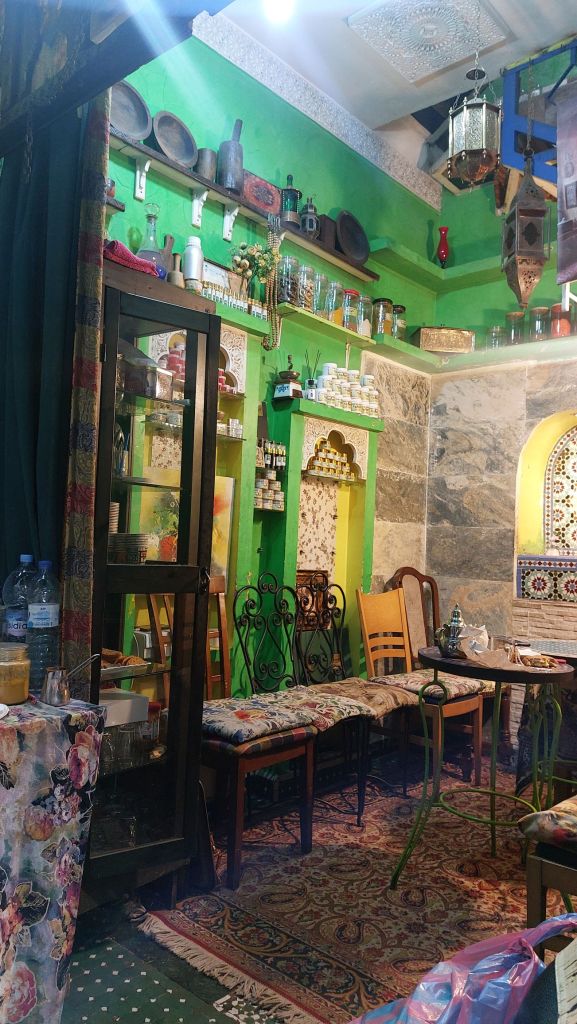
This charming little spot is humble in appearance, cosy and inviting. There is a small rooftop terrace where you can sit and enjoy your coffee in peace, a moment of sheer self-indulgence
Images by Freebird Tracey.
Chez Bismillah offers you a serene refuge where you can sit watching the medina come to life tucked away in a quiet space away from the crowds.
It’s an experience watching the coffee being made from rich arabica and fragrant spices. In moments, it has heated up as if by magic. I savoured its unique taste whilst congratulating myself for finding this amazing discovery in the alleyways of the souks.
Chez Bismillah is a unique experience firmly rooted in place and tradition. The friendly proprietor gives you a glimpse into a past that conjures up images of camel traders selling cloth in the fondouk and stretches of vast desert terrain.
Images by Freebird Tracey.
It’s not just a cup of coffee. It’s an escape from reality, a moment of peace from the hectic rhythm of the busy souks.
Chez Bismillah Sand Coffee can be found at 193 Souk El Kabir, it is open daily from 9.00am until 9.00pm with the exception of Saturday and Sunday when it closes at 7.00pm.