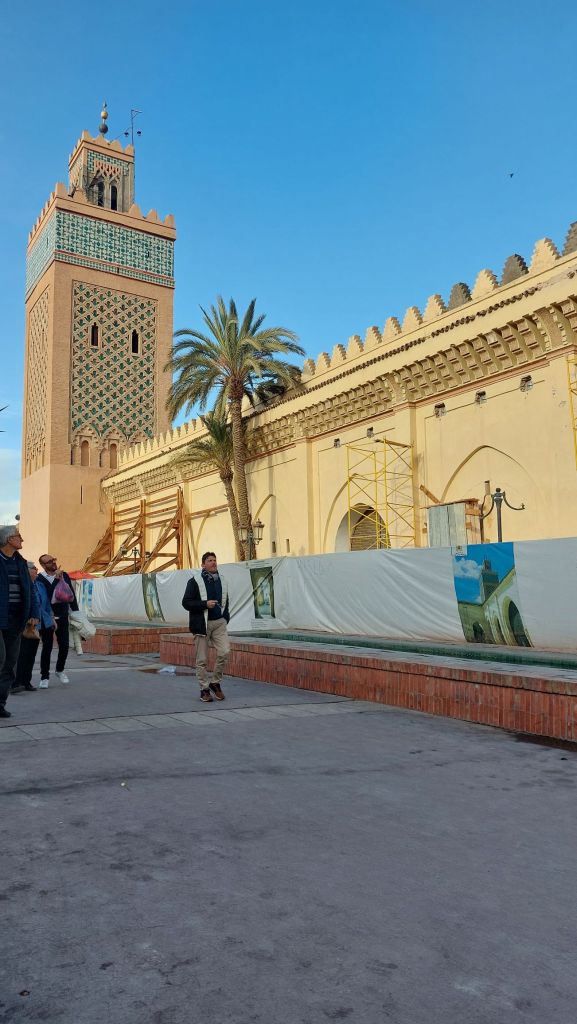
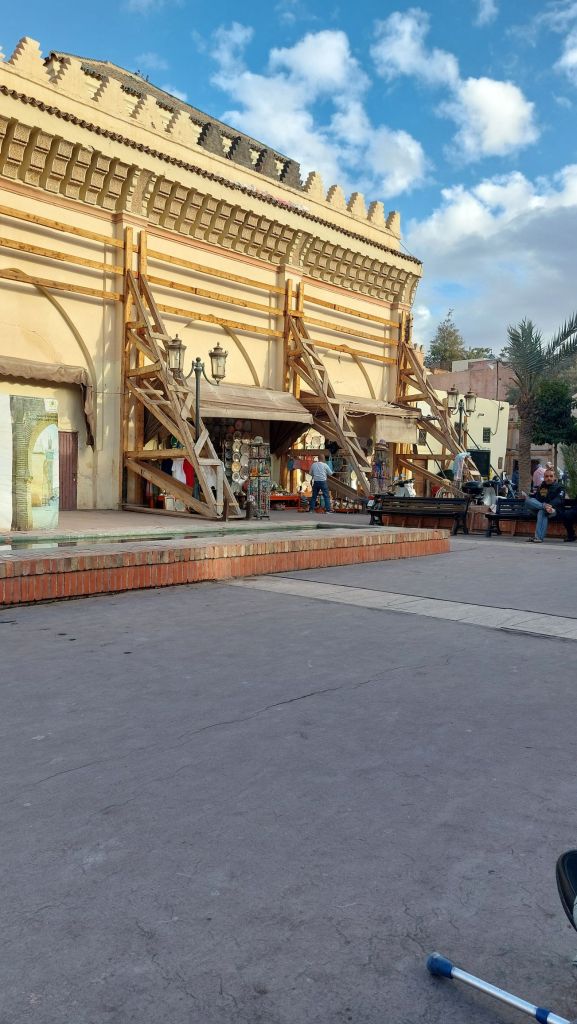
The Kasbah is a quieter part of Marrakech, with fewer tourists than the medina.
Staying in the Kasbah, you feel totally immersed in the culture of Marrakech as you rub shoulders with the friendly locals.
There are plenty of restaurants and shops including a good fixed price store selling everything you will find in the souks at a realistic price.
*See my separate post on Dar Bouchaib.
Images by Freebird Tracey.
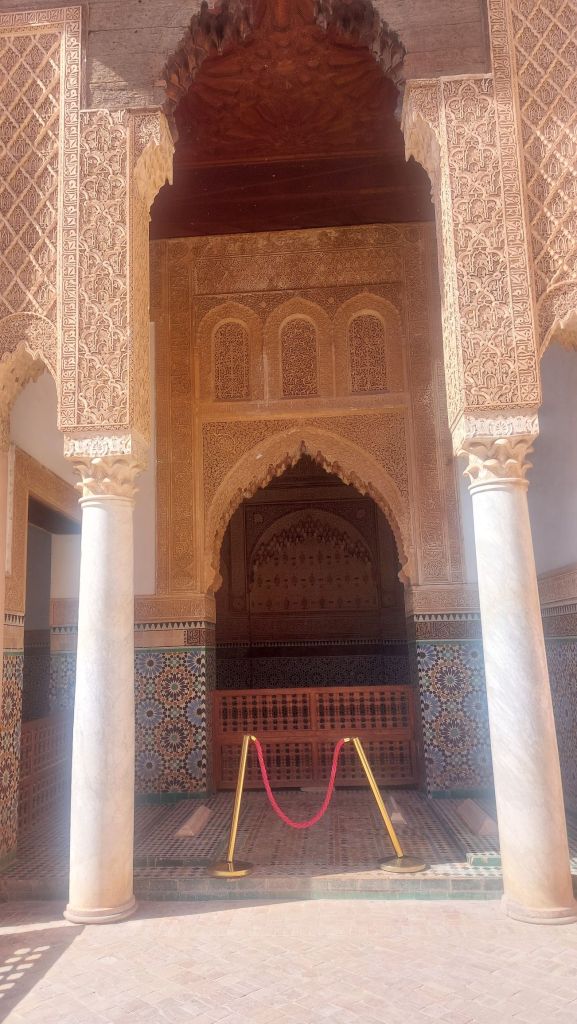
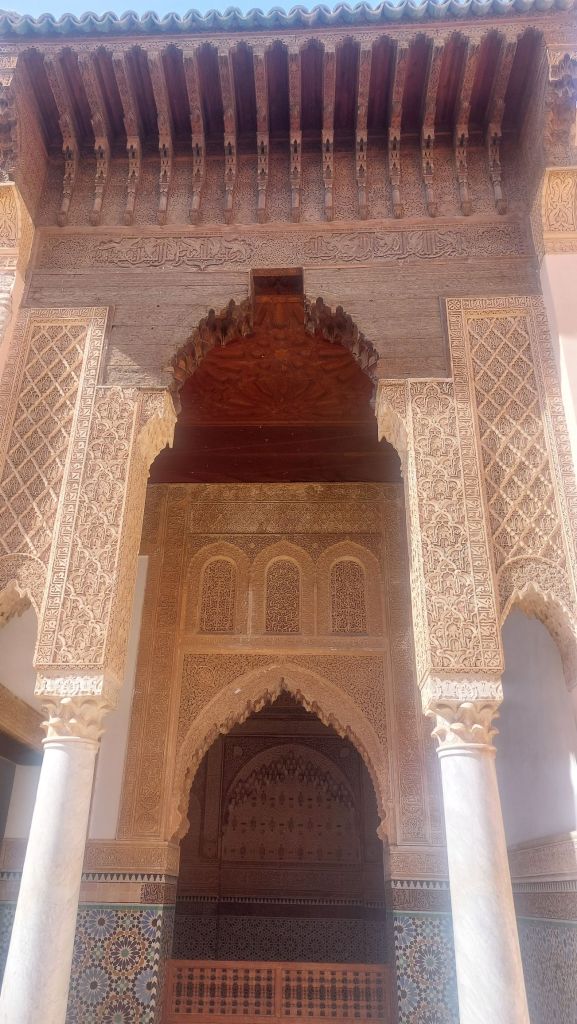
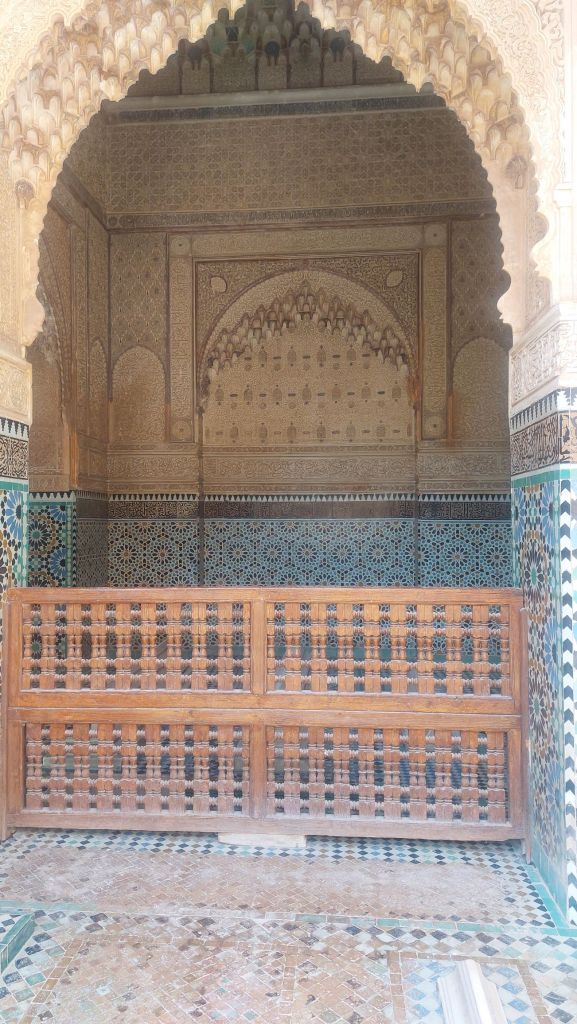
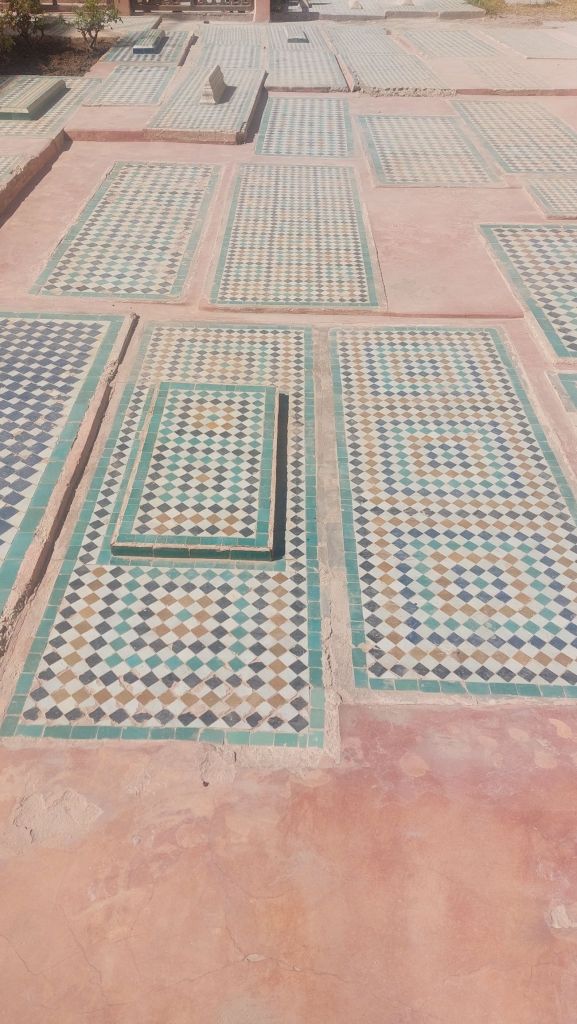
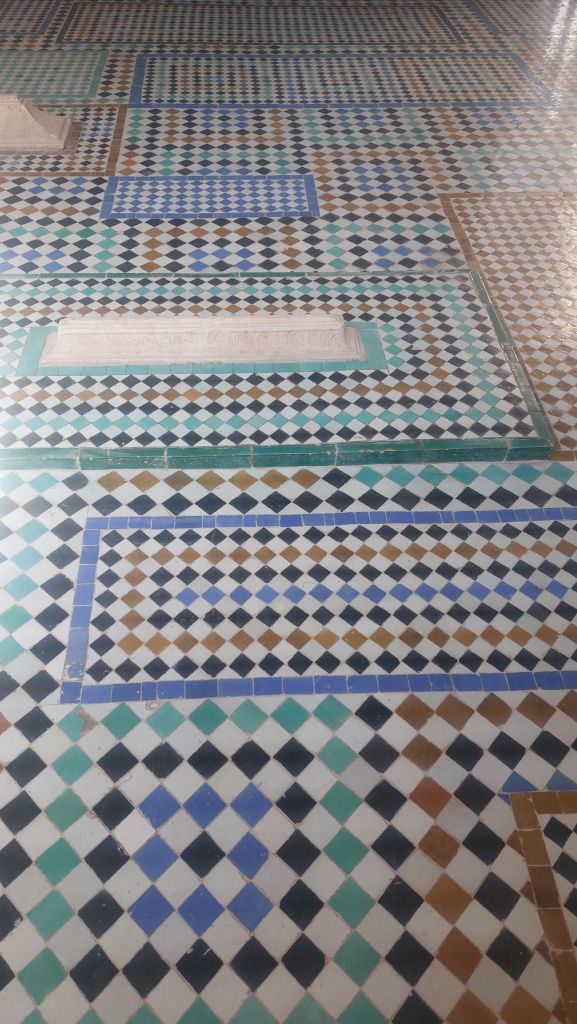
Inside the Kasbah, you can visit tourist attractions like the Saadian tombs and El Badi Palace.
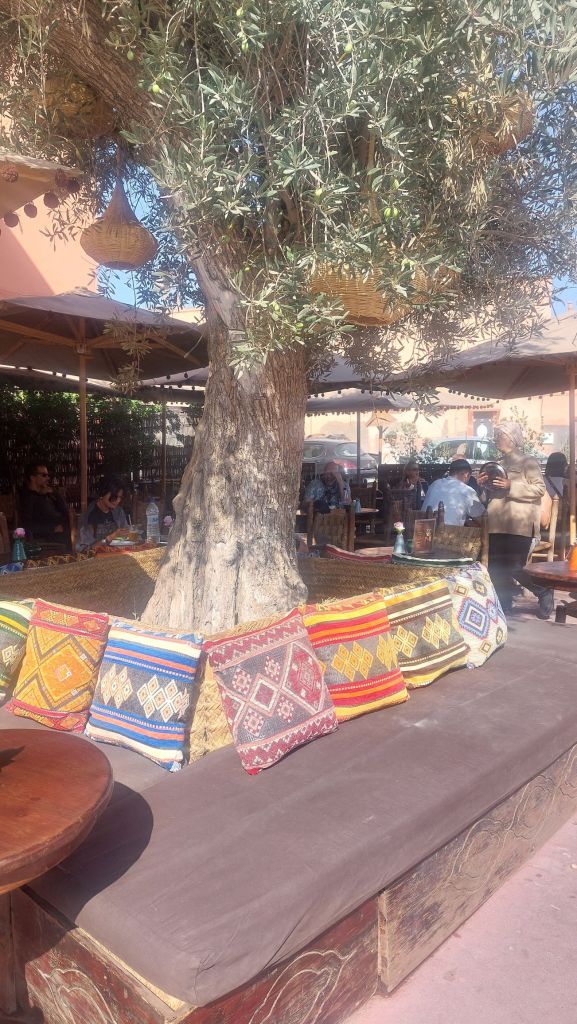
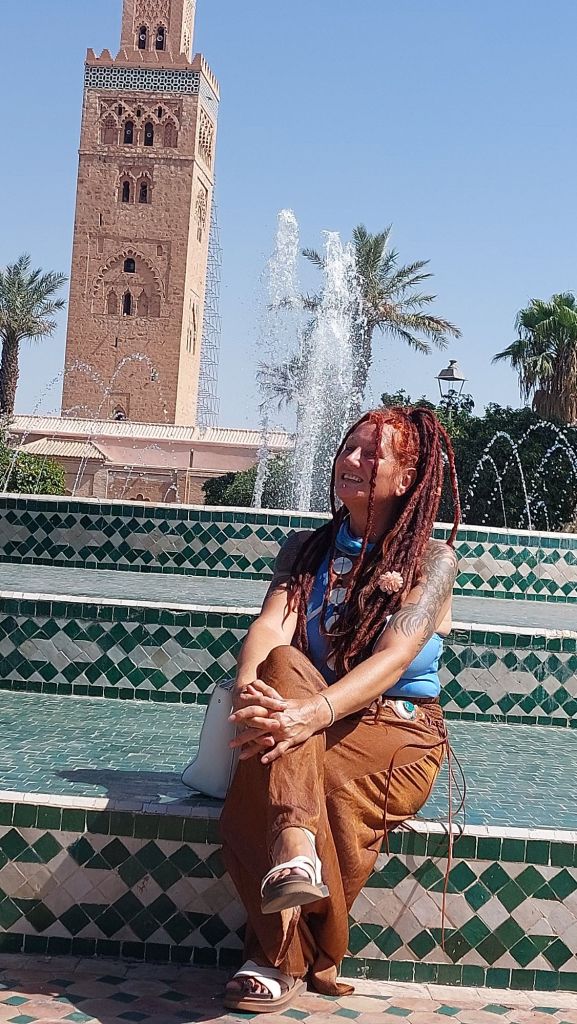
Zeitoune Cafe overlooking the mosque is a lovely spot for lunch or a drink whilst taking a break from sightseeing.
Image by Freebird Tracey.
It is about 15 to 20 minutes leisurely walking from the main square with plenty to see along the way.
There are a range of budget and high-end riads to stay in around the Kasbah.
* See my separate post on Riad Hikaya.
The Kasbah is the historical citadel in Marrakesh with fortified walls.
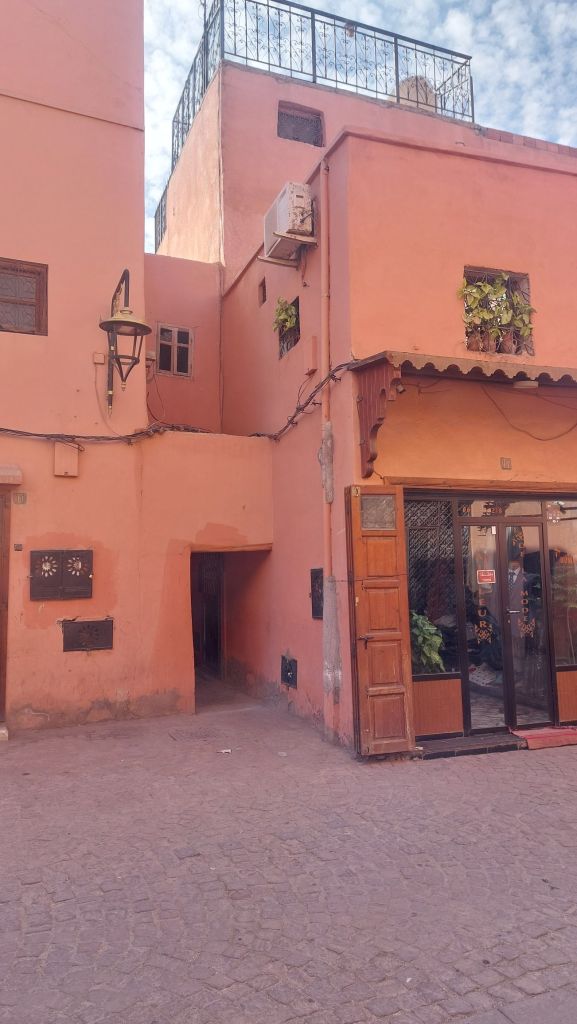
The narrow alleyways make it an exciting place to visit, and there are fewer motorcycles and donkeys trying to negotiate the streets at the same time as you, making it less stressful.
The Kasbah is home to the Clock restaurant and its legendary camel burger and storytelling evenings.
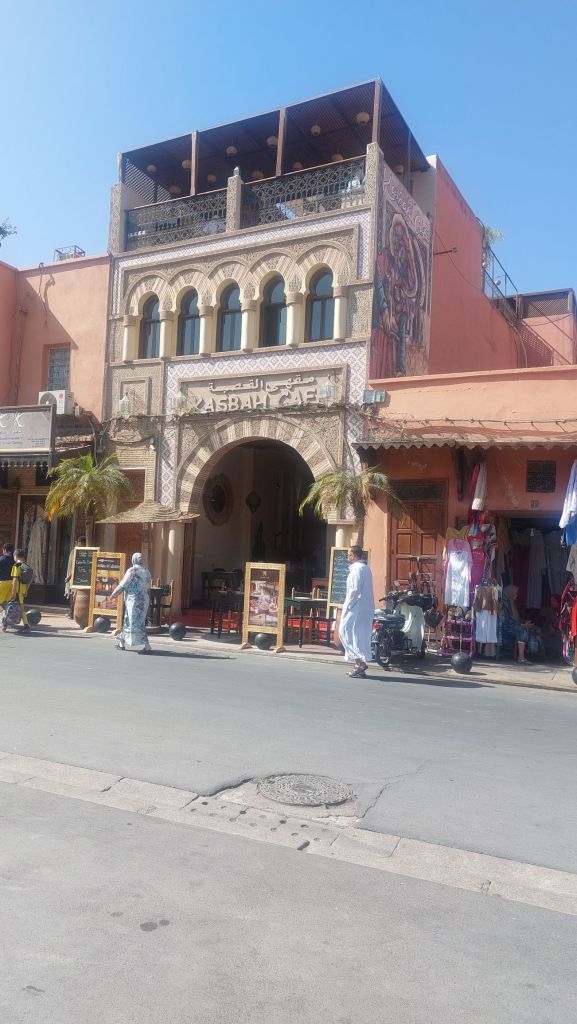
Also, the Kasbah Cafe is a popular place for lunch and dinner.
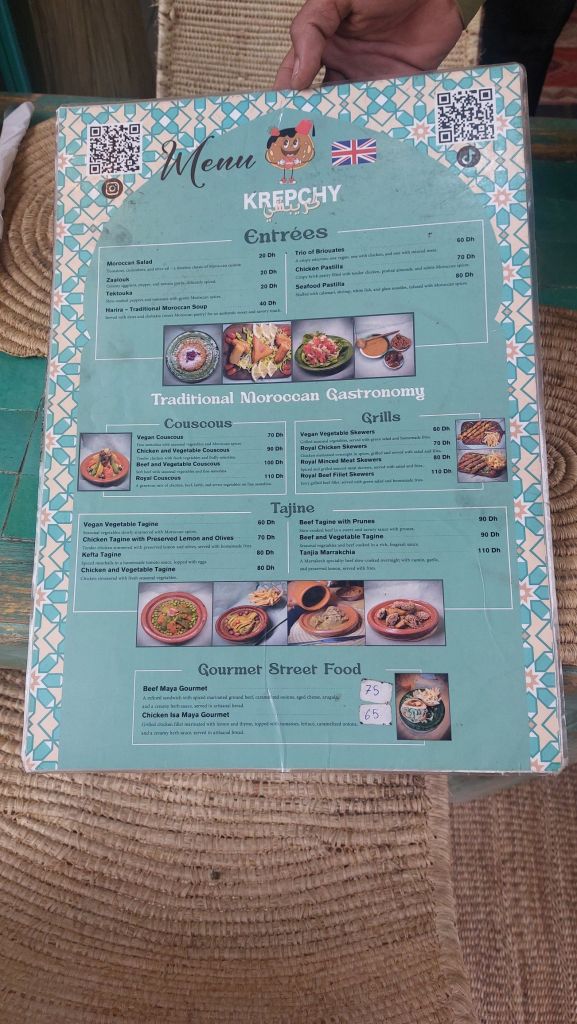
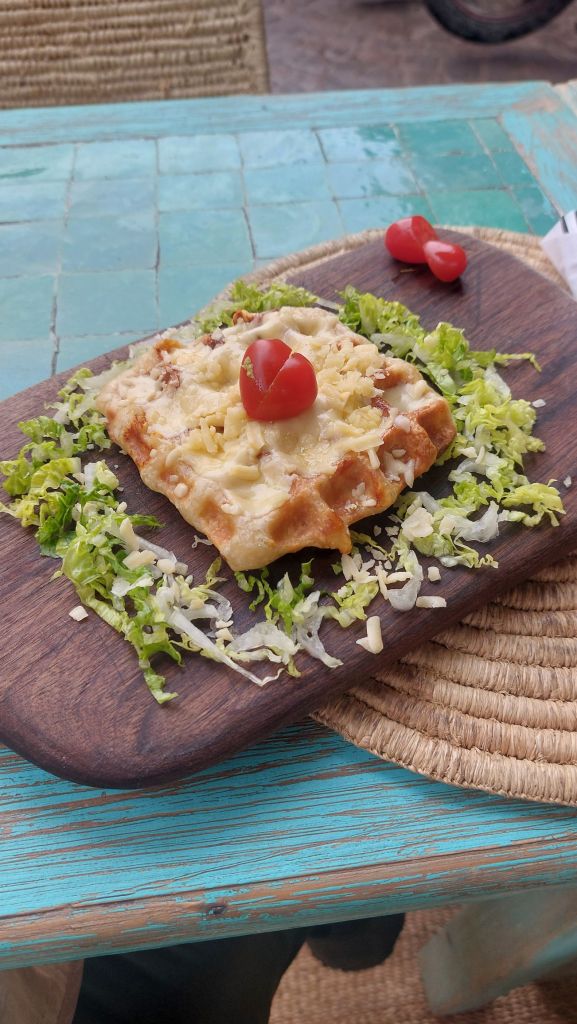
Krepchy does a fantastic breakfast, and the prices are very reasonable.
I highly recommend the waffles.
Images by Freebird Tracey.
Consider taking a tuk-tuk from the main square if the weather is hot.
It’s quite an adventure in itself as you rattle along the bumpy streets.
Spending an hour or two enjoying this interesting area of Marrakech is definitely worth it.
Images by Freebird Tracey.
For details about places to stay or eat in the Kasbah, contact me via the email address below;
A fixed price store selling everything in the Kasbah
If you are fed up with haggling every time you want to buy something, there is a huge store in the Kasbah called Dar Bouchaib.
Here, you will find everything that’s for sale in the souks at a fixed price.
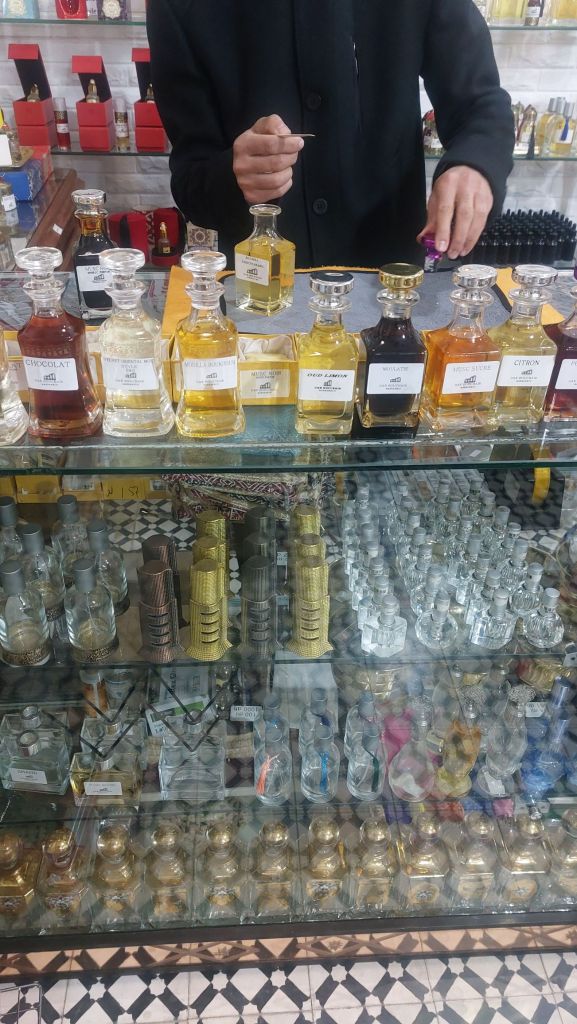
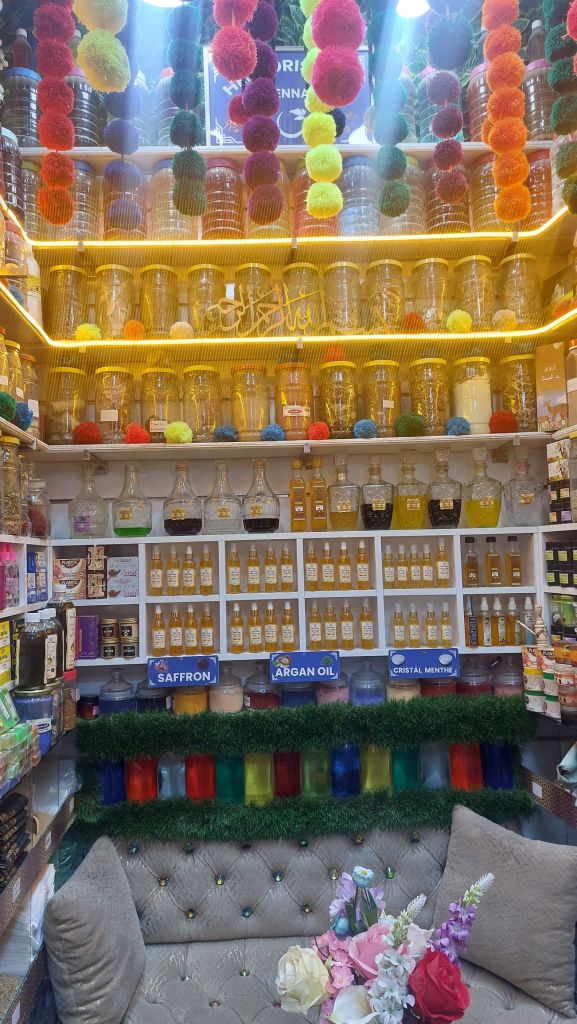
The perfumed oils are of a very high quality, and you can create your own signature fragrance by blending several oils together.
Image by Freebird Tracey.
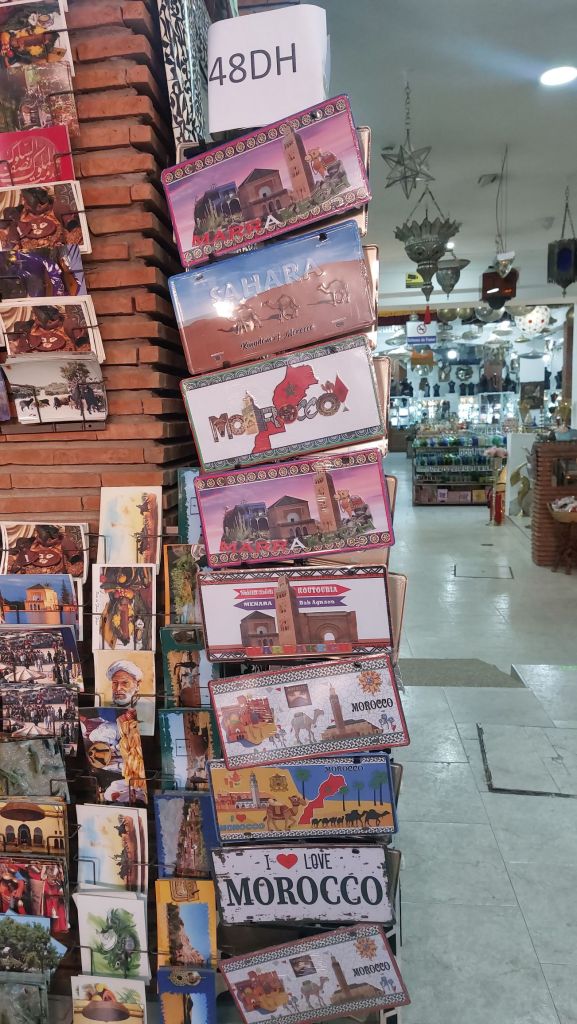
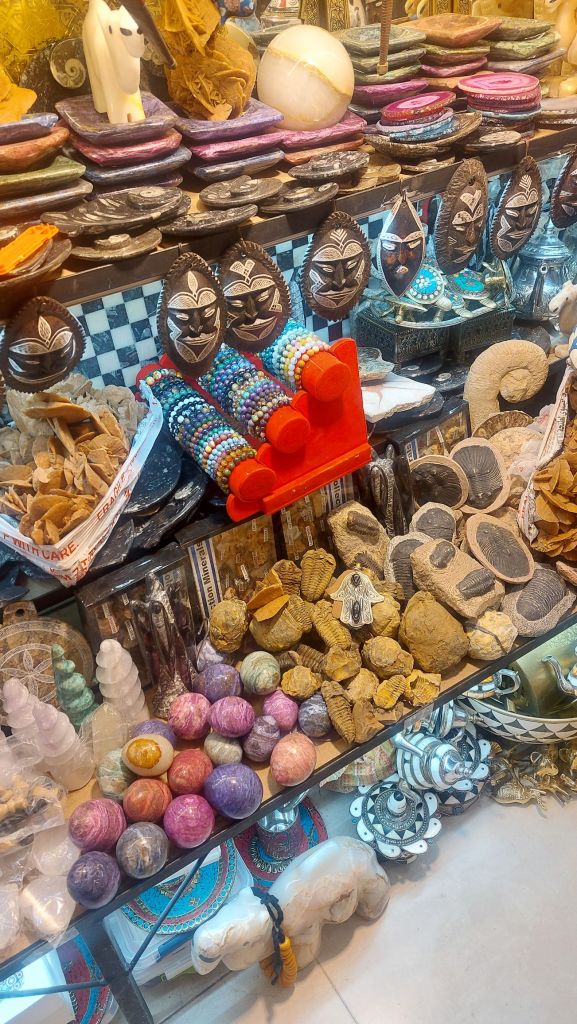
On the ground floor, there are ceramics, jewellery, clothing, footwear, bags, souvenirs, and much more.
Images by Freebird Tracey.
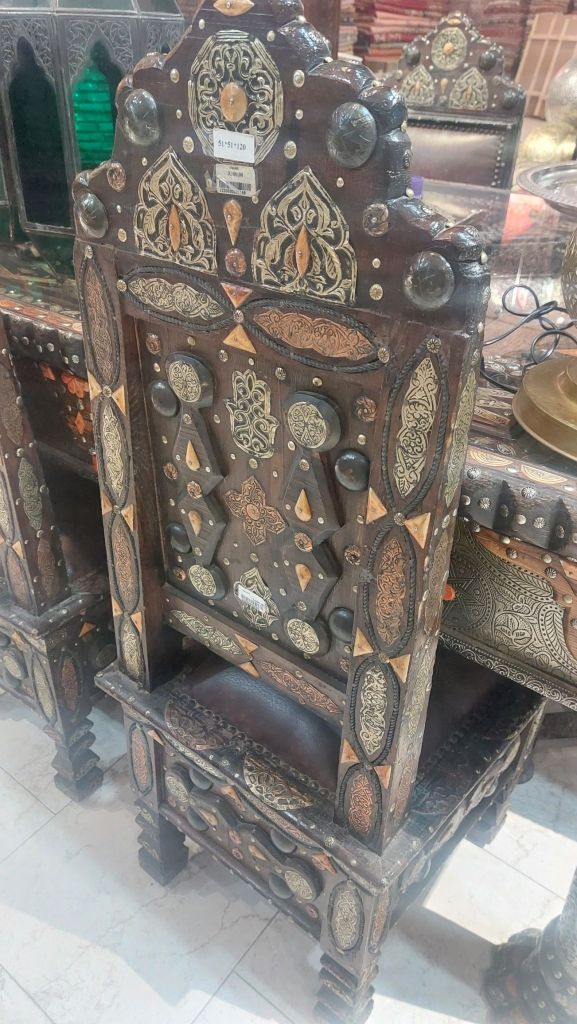
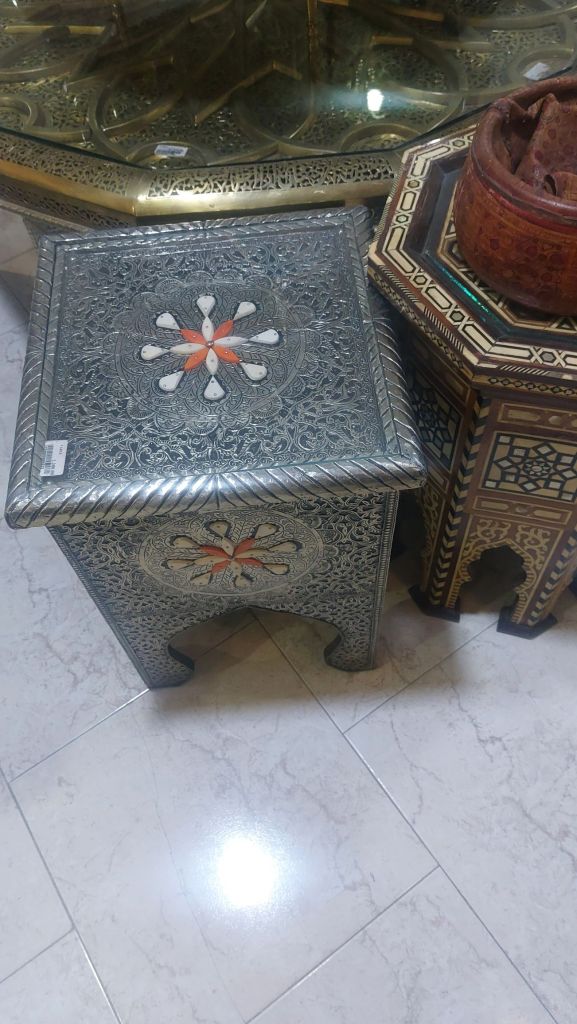
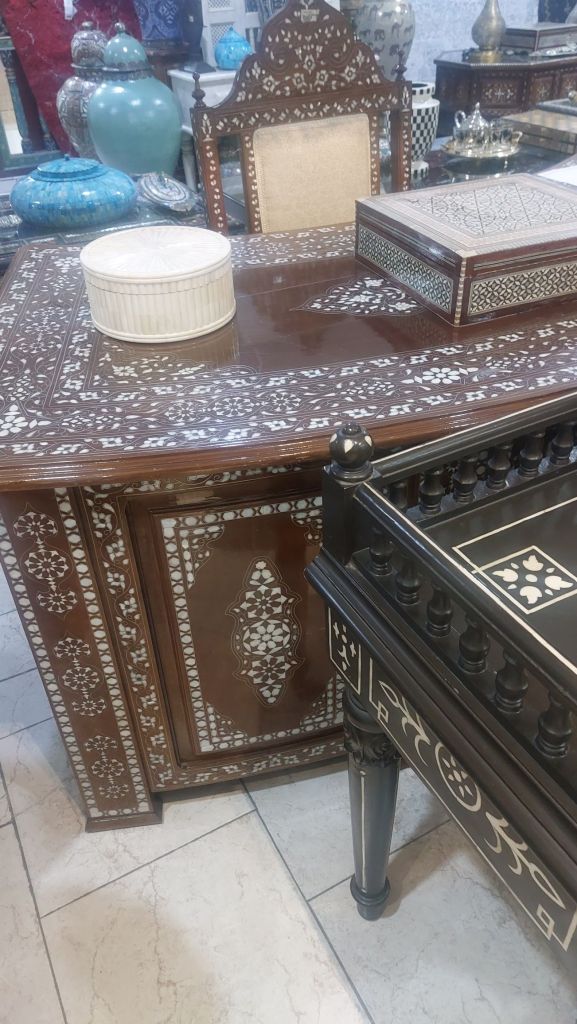
On the first floor, exquisite furniture, mirrors, Berber rugs, and other beautiful handmade pieces to furnish your home with.
They also ship worldwide.
The staff are incredibly helpful and not pushy at all.
The store is huge and worth visiting just to see the craftsmanship and detail that’s gone into creating each piece.
Images by Freebird Tracey.
The Kasbah is a 15 – to 20-minute walk from the main square with plenty of interesting shops and good restaurants along the way.
Here, you will find the Saadian tombs and El Badi Palace.
Dar Bouchaib can be found on;
Rue de La Kasbah,
Marrakech 40000.
Opening times are;
Daily from 9.00 am until 8.30 pm.
Bank holiday hours may differ.
Although part of visiting Marrakech is to enjoy shopping in the souks, sometimes haggling and knowing how much you should be paying for something can become slightly stressful.
Dar Bouchaib is a relaxed shopping experience with everything under one roof.
The prices are fixed and realistic.
Make it part of your visit to the Kasbah area.
You won’t be disappointed.
Images by Freebird Tracey.
For more information, see my other posts or contact me via the email address below..
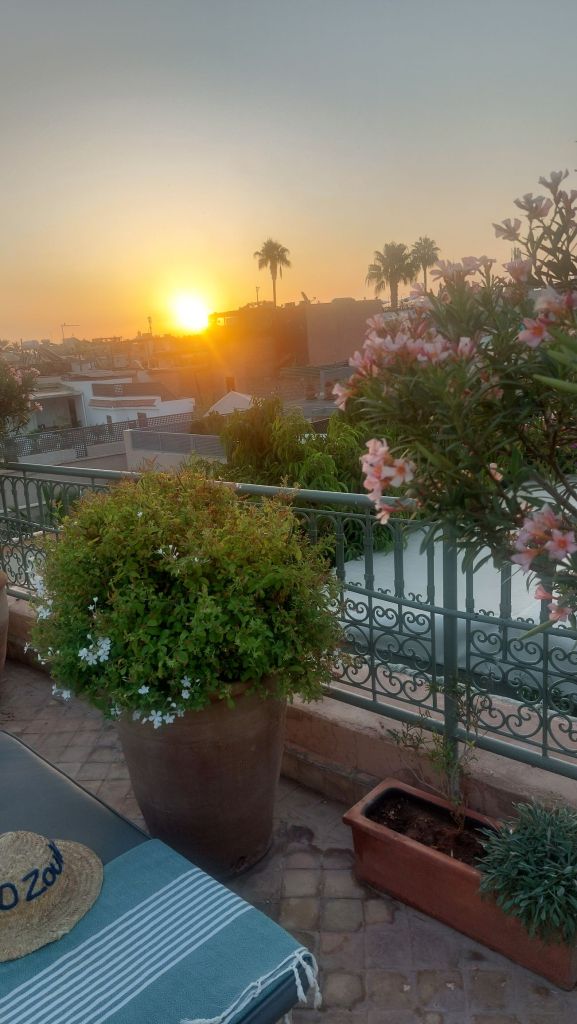
For myself, the perfect day in Marrakech begins by waking up early to watch the sunrise from the rooftop of my riad.
View from the rooftop of Riad Zouhour
Listening to the birds chirping and the sound of the medina waking up.
Watching cats prowling along the rooftops and hearing the clatter of plates as staff in the riad prepare for breakfast.
The first glass of freshly squeezed orange juice hits the spot perfectly.
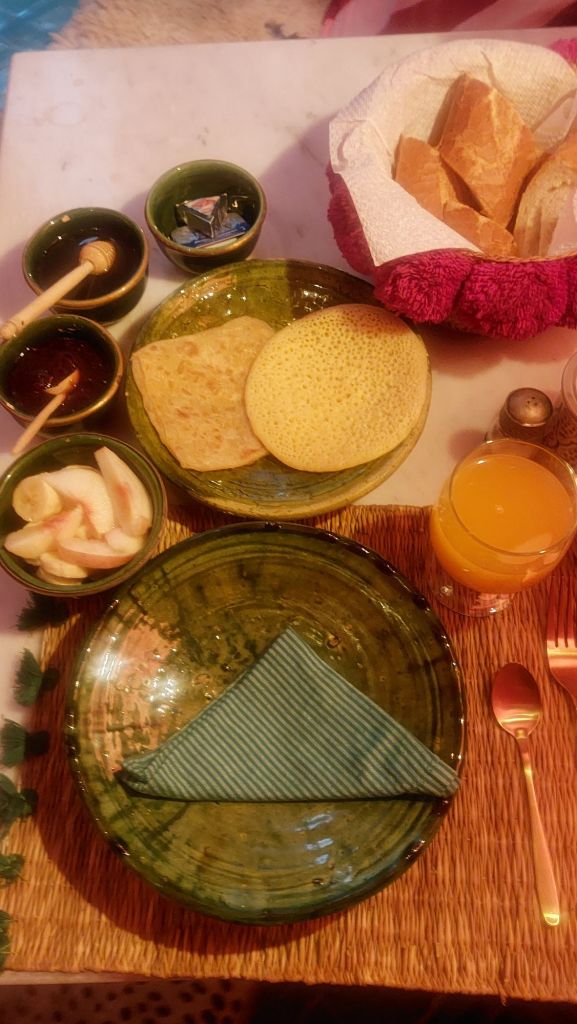
I enjoy a breakfast of pancakes with homemade jam and honey, bread, yoghurt, and fresh fruit.
Traditional riad breakfast.
After a refreshing shower, I head out into the medina for a nice coffee in a cafe on the main square.
Sat outside, I observe the vendors setting up for the day. The entertainers get ready to entice the crowds of tourists and the local ladies on their way to the market for fresh spices.
The medina waking up.
My next destination is the souks for a browse around before they get too busy.
I suggest just after 9.00 am. is the perfect time to go.
Vendors are eager for their first sale of the day, and bargaining is much easier.
The colourful array of beautiful things on offer is a sight to behold.
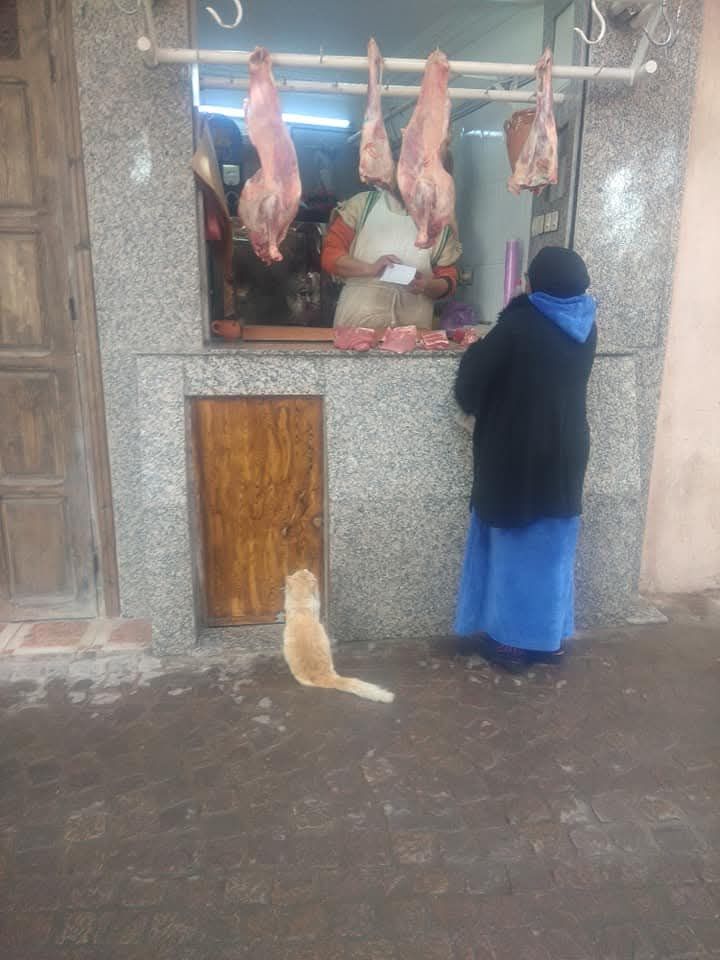
The cats gather for a few morsels off the butcher.
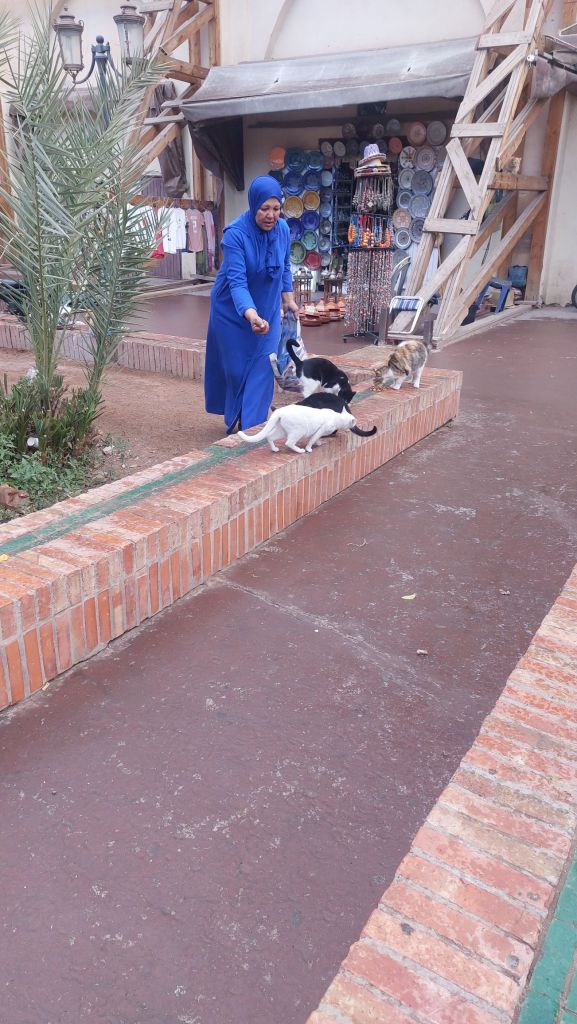
Cats are well looked after in the medina.
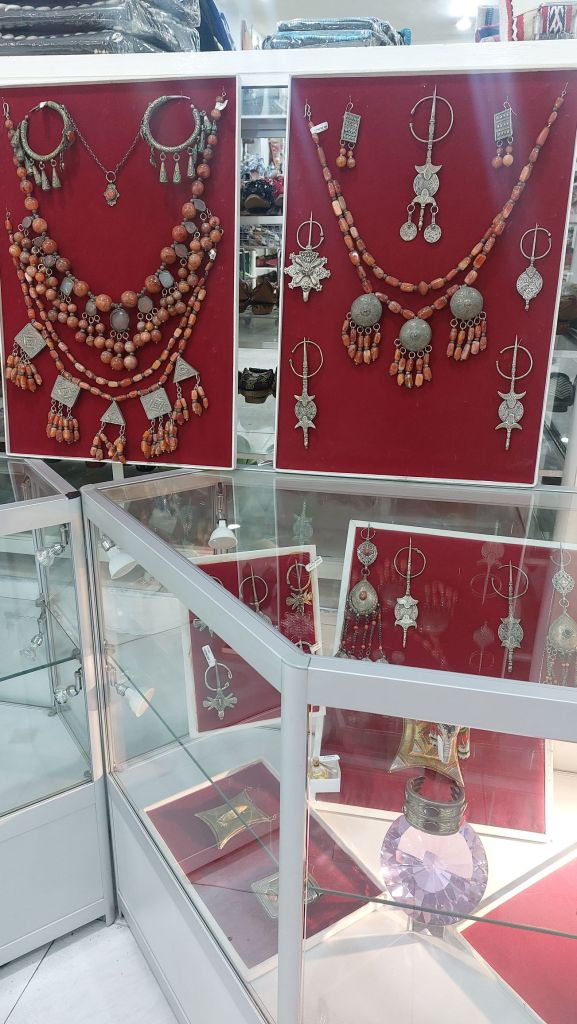
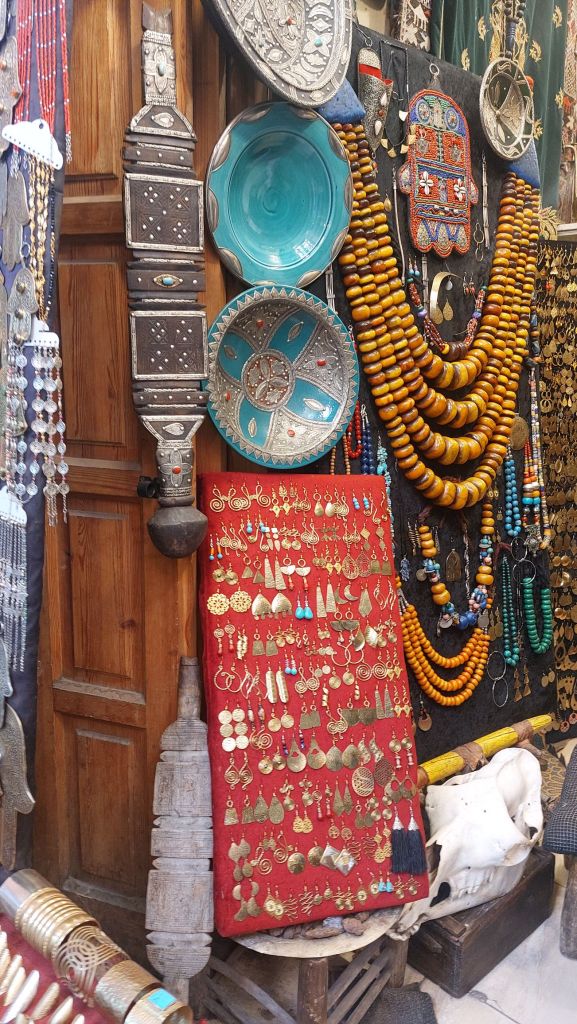
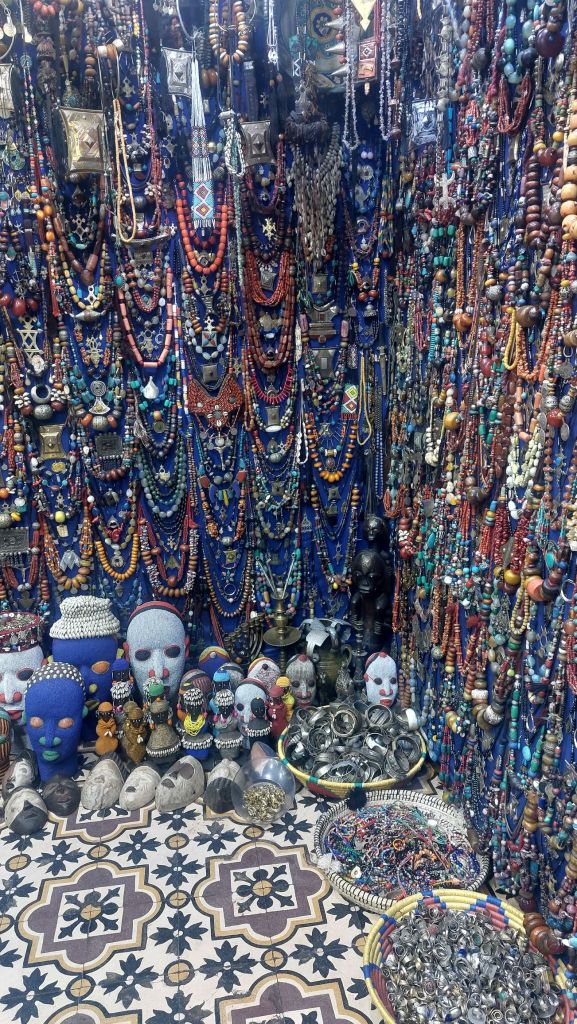
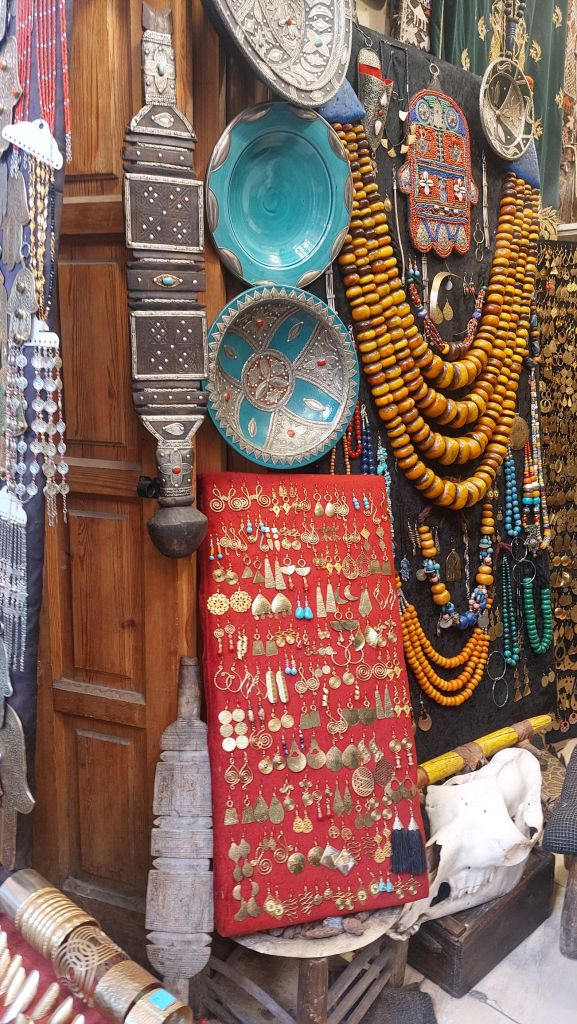
I check out the wonderful Amazigh jewellery, the argan oil, and the beautiful ceramics and mirrors.
Amazigh jewellery in the souks.
I buy one or two keepsakes and then decide it’s time for a snack.
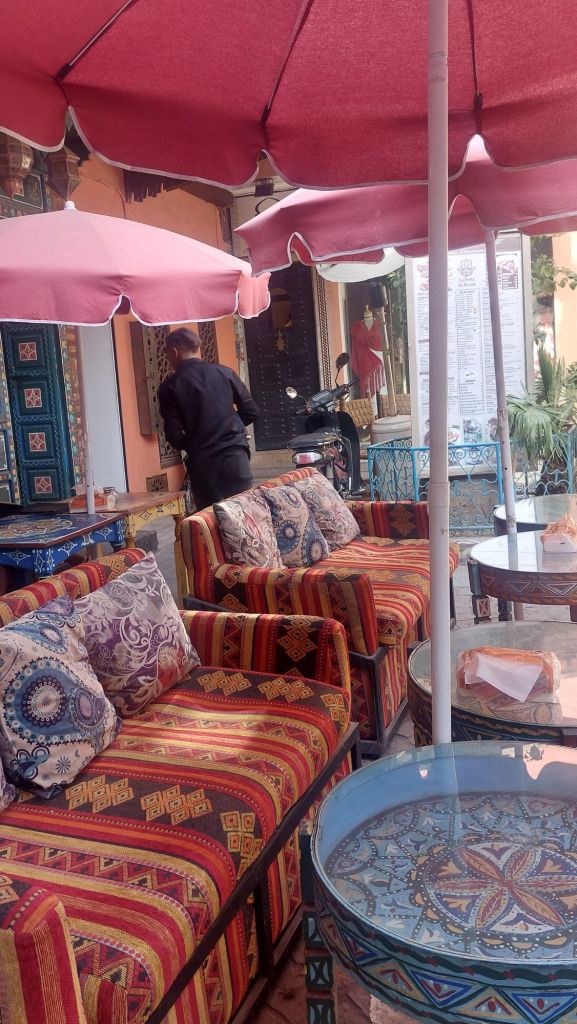
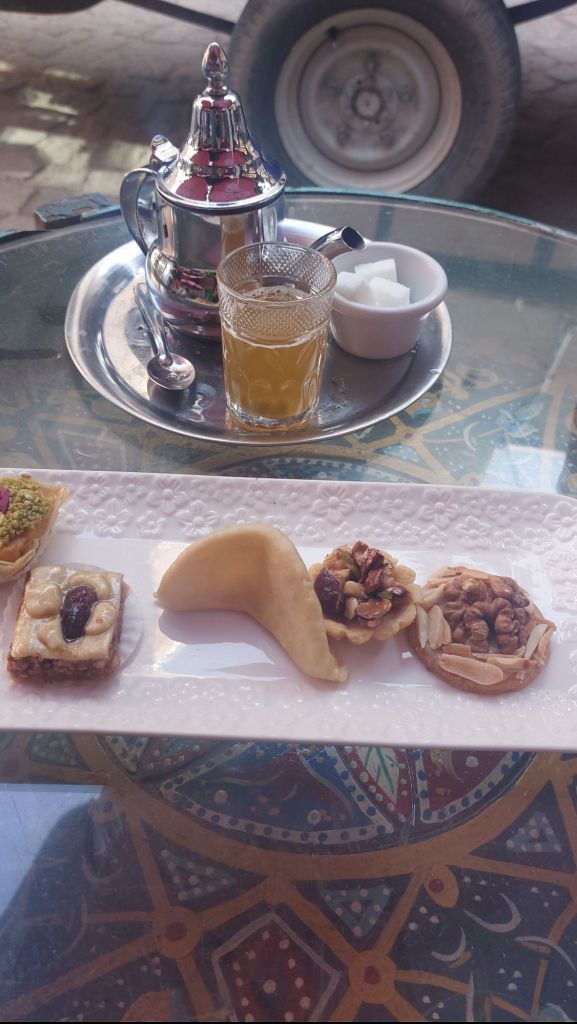
A colourful outdoor cafe calls out to me, and I choose some delicious pastries with a mint tea.
It’s magical watching the world of Marrakech go by.
The motorcycles, the donkeys, all competing for space in the narrow streets.
Tourists wandering about, looking in awe at the beautiful colours around the medina.
After recharging my batteries, it’s time for some sightseeing.
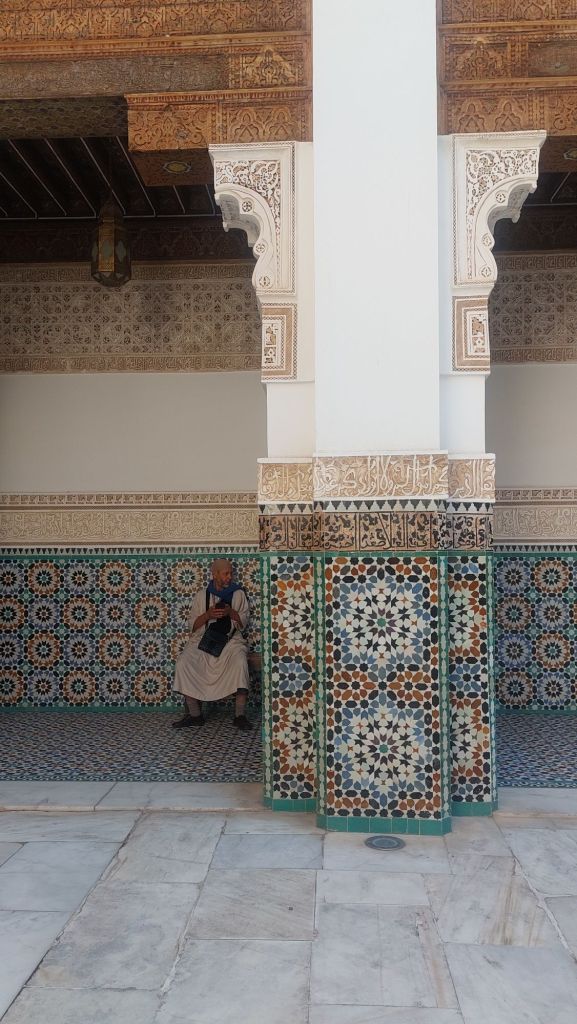
I head towards Madrasa Ben Youssef and get some amazing photos of the stunning architecture.
The incredible Islamic architecture in the Mederssa Ben Youssef .
The medina is beginning to get rather busy, so I make my way to the gardens of the Koutoubia Mosque to sit quietly for a while.
Enjoying the stunning gardens of the Koutoubia Mosque.
Afterwards, I treat myself to a sugarcane juice from a vendor outside.
Sugar cane vendor.
The heat is now quite intense, so I return to the riad for a rest.
I head upstairs onto the rooftop for a rest from the busy medina and a spot of sunbathing.
Enjoying the peace and tranquillity in my riad.
The call to prayer echos across the medina.
I read a book and order myself a glass of mint tea and a dish of olives.
Soon, it’s time to get ready for the evening.
I decide to go to La Pergola rooftop bar for a couple of cocktails.
It’s a lively atmosphere, and there’s a jazz band playing downstairs in the courtyard of Le Bistro Arabe.
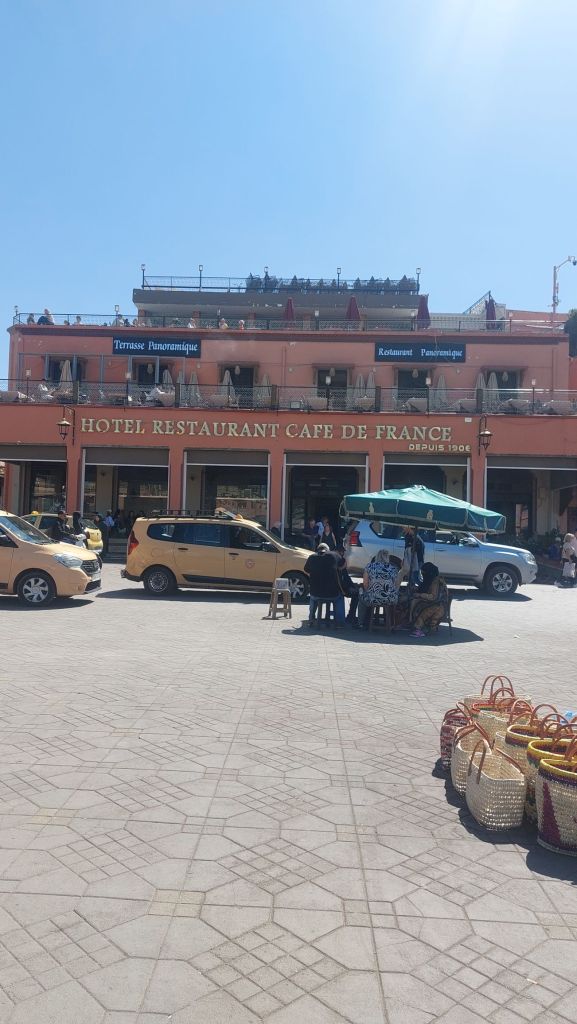
I stop and listen for a while before heading towards Jamaa El Fna.
The energy is electric, food vendors touting for business, dancing, drumming, and crowds of people everywhere.
The smell of food makes me hungry, so I decide to find a nice place to dine.
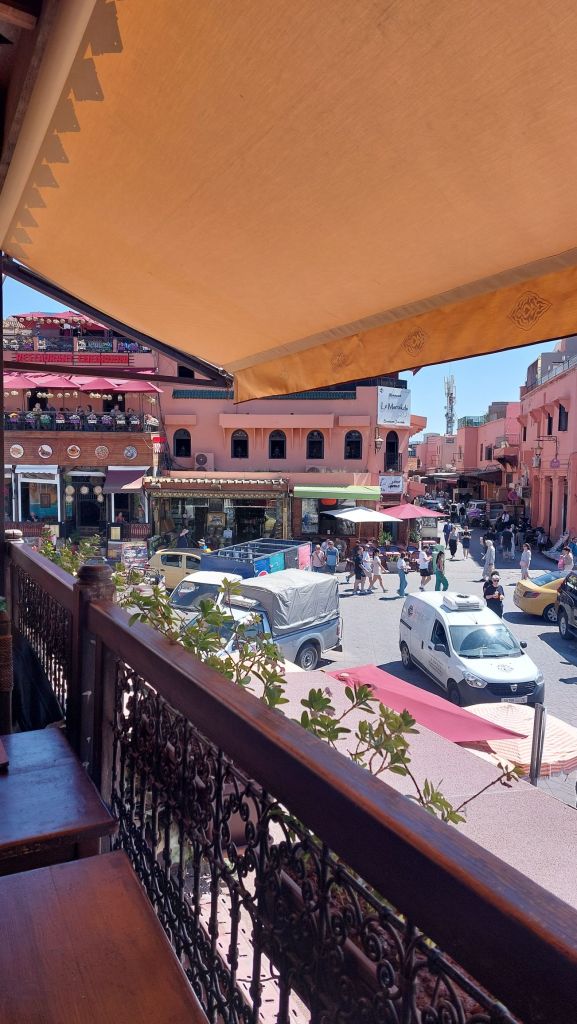
I choose a place overlooking the square and observe the action from above, sat on the rooftop.
I enjoy a traditional tagine, flavourful and aromatic. I’m tempted by the exotic sounding smoothies on the menu and treat myself to one containing dried fruit.
I watch the beautiful sunset and everywhere has a golden glow.
Once dinner is finished, I nip into The Clock, situated in the square to listen to some traditional storytelling.
After an interesting time immersing myself in the culture of Morrocco, I decide to head back to my riad.
I pick up a few souvenirs along the way.
Back at the riad, I sit in the courtyard reflecting on my day.
The staff in the riad are happy to help me decide where to go the following day.
We chat about possibilities, and they help me put together the perfect plan for another day sightseeing.
I have had a perfect day…
I have experienced a different culture, tasted delicious food, watched a magnificent sunset, chatted with the locals, and navigated the maze of the souks successfully.
I have made a mental note of some of the things I want to buy to take home with me, and I look forward to haggling for a fair price before the end of my trip.
I fall asleep, happy and content, ready to do it all again tomorrow..
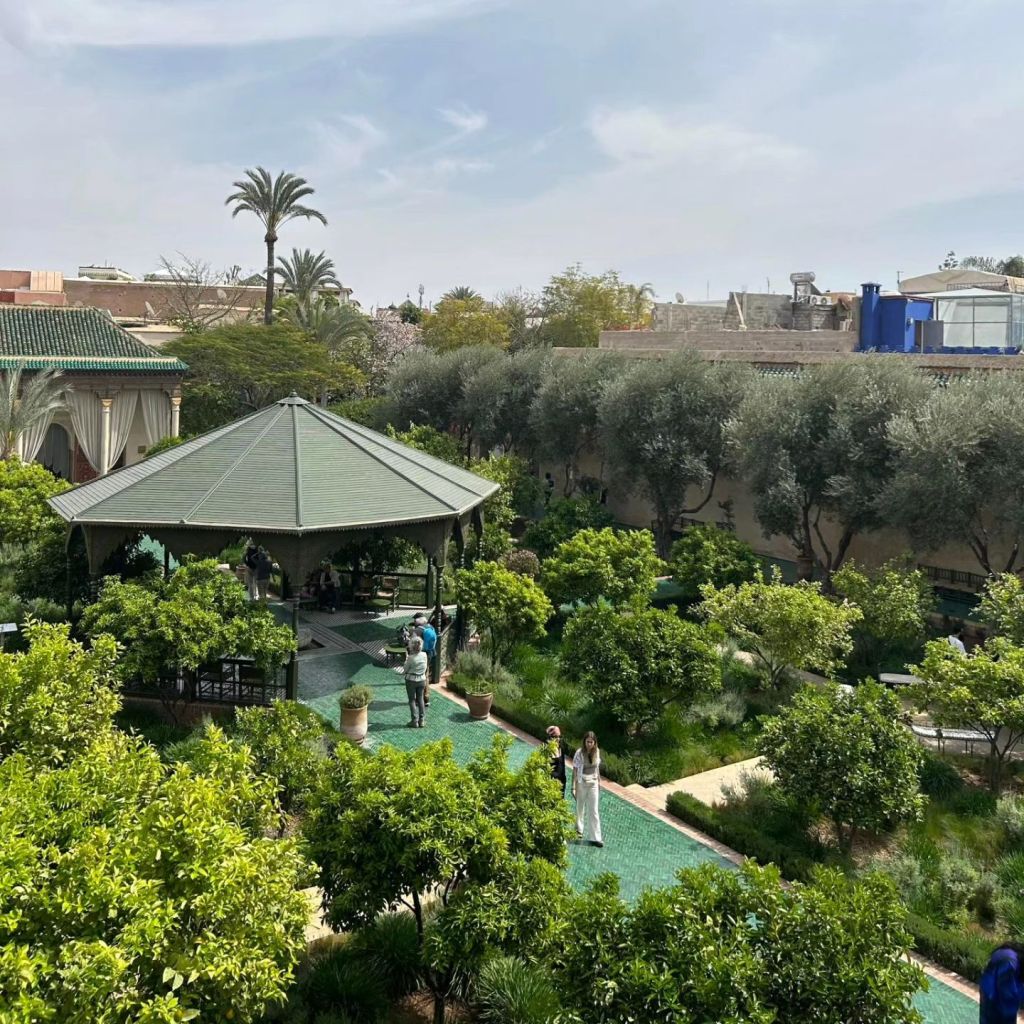
It’s a hidden gem, a peaceful retreat from the madness of the souks, and Jamaa el Fna.
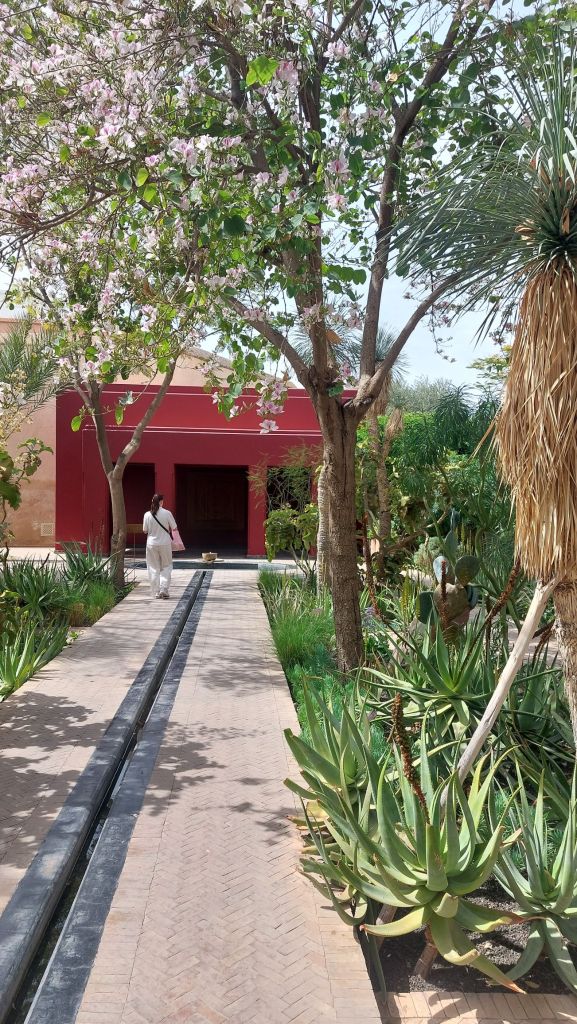
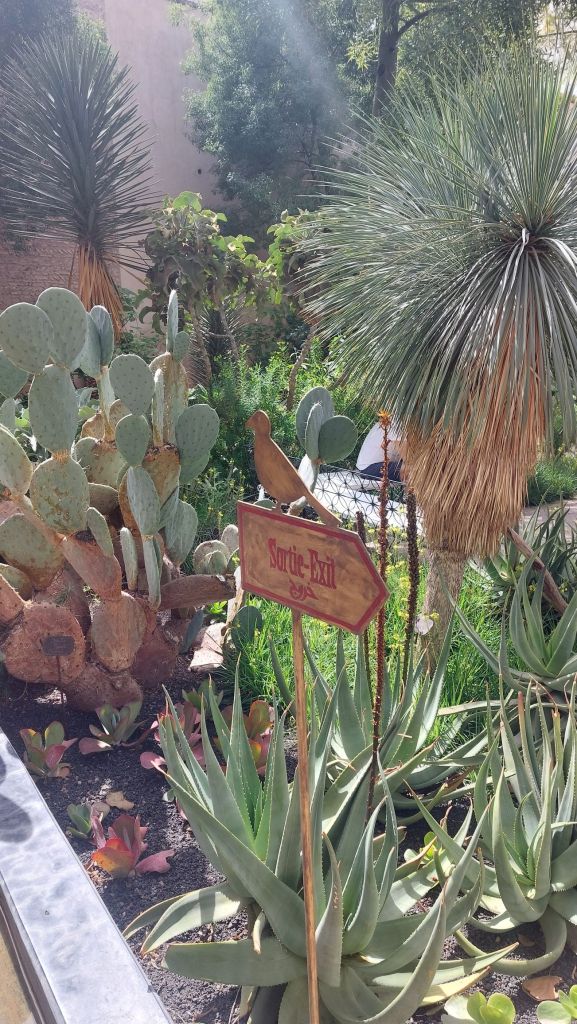
It is a little oasis with exotic plants and flowers where you can sit and enjoy the calm and beautiful surroundings.
There is a beautifully painted pergoda in the centre.
It comprises of two large gardens and one of the highest towers in the medina.
There is a museum, boutique, and two coffee shops on site also.
Le Jardin Secret dates back 400 years ago to the Saadian dynasty and was left to decay before being discovered and renovated in the nineteenth century.
It is the perfect example of Islamic art and architecture, and you can read all about its history inside the museum.
The beautiful gardens of Le Jardin Secret
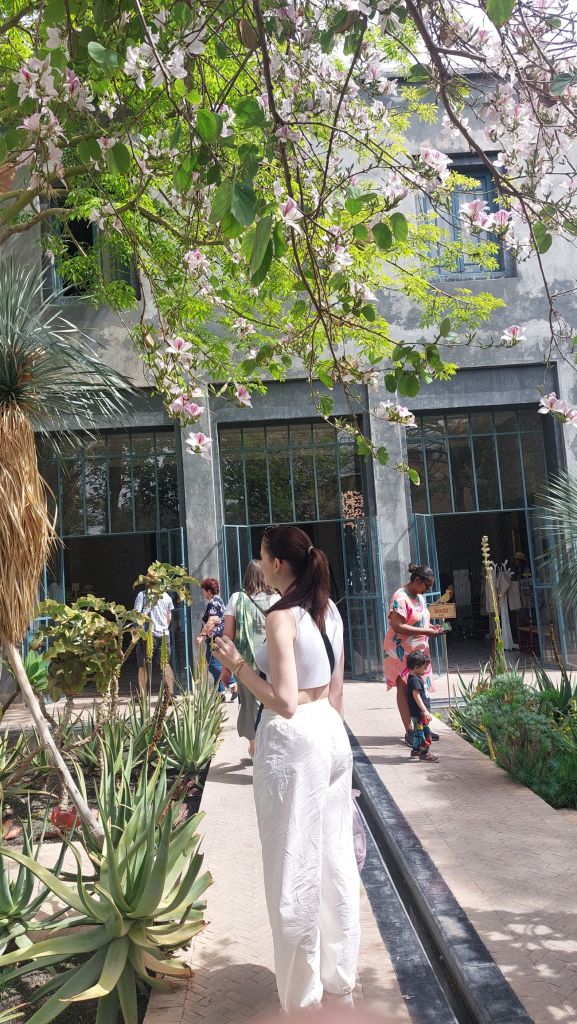
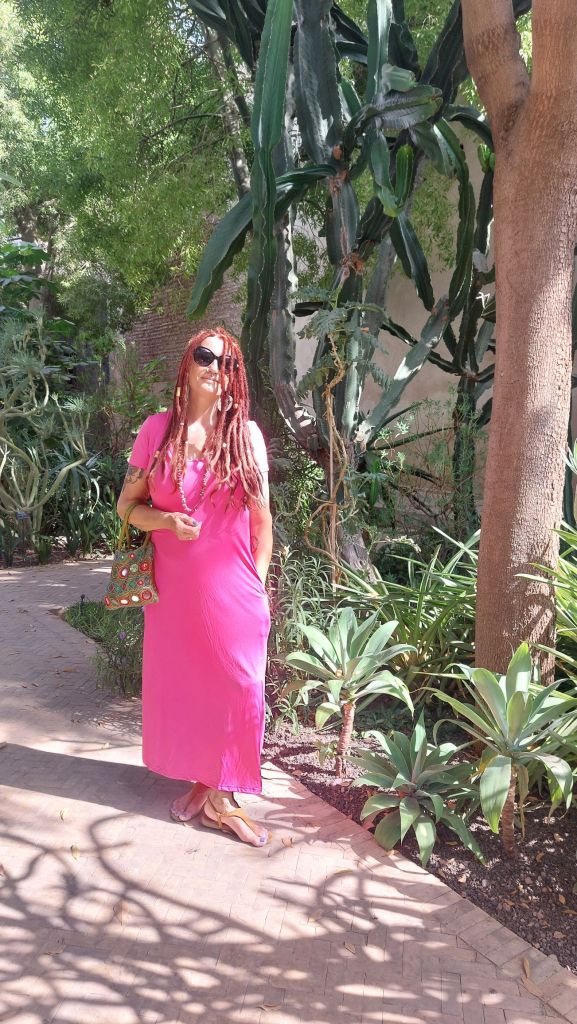
The gardens are simply beautiful with Cacti, palm trees, and other floral plants and shrubs.
The sound of birdsong and toads in the little pond feels like a world away from outside the walls.
As you wander around the tranquil gardens, you forget you are inside the busy medina, dodging motorcycles and donkey carts.
There are plenty of benches dotted around the gardens to sit peacefully and enjoy the tranquillity and beauty surrounding you.
Images by Freebird Tracey.
Le Jardin Secret is located at,
121 Rue Mouassine
Marrakech 40030 Morocco.
Opening times vary depending on the time of the year.
It costs 100 dirhams to enter.
It is wheelchair user-friendly.
The cafe has a nice selection of sandwiches, pizzas, and salads with fruit and vegetable smoothies, hot and cold drinks, and homemade cakes.
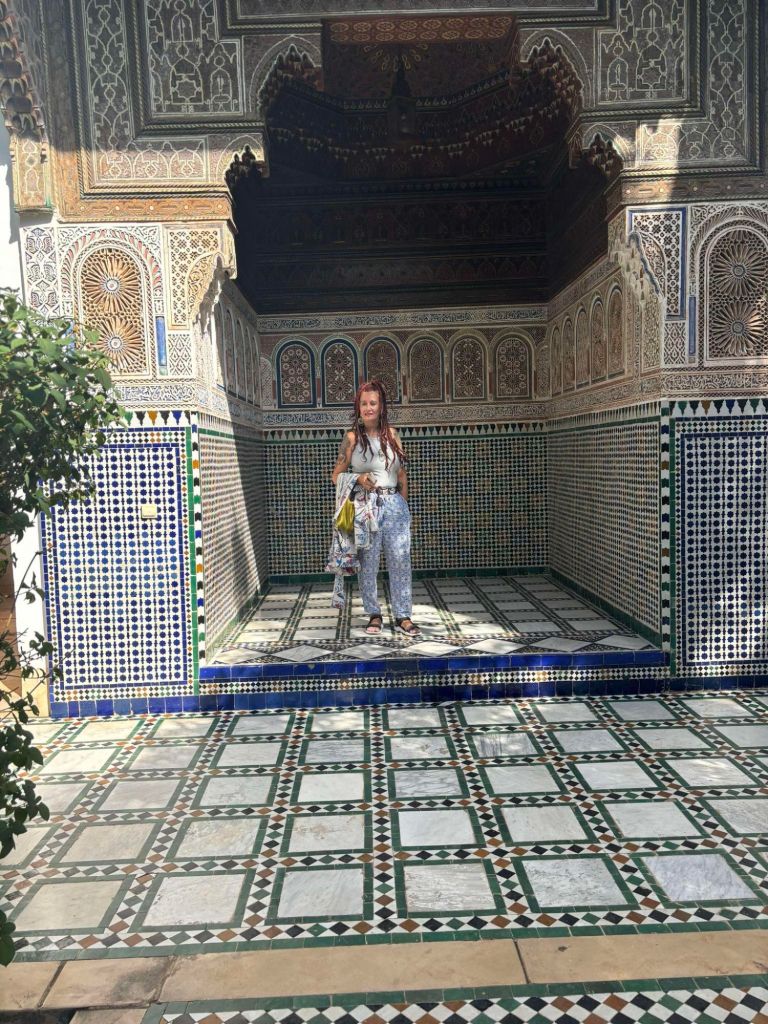
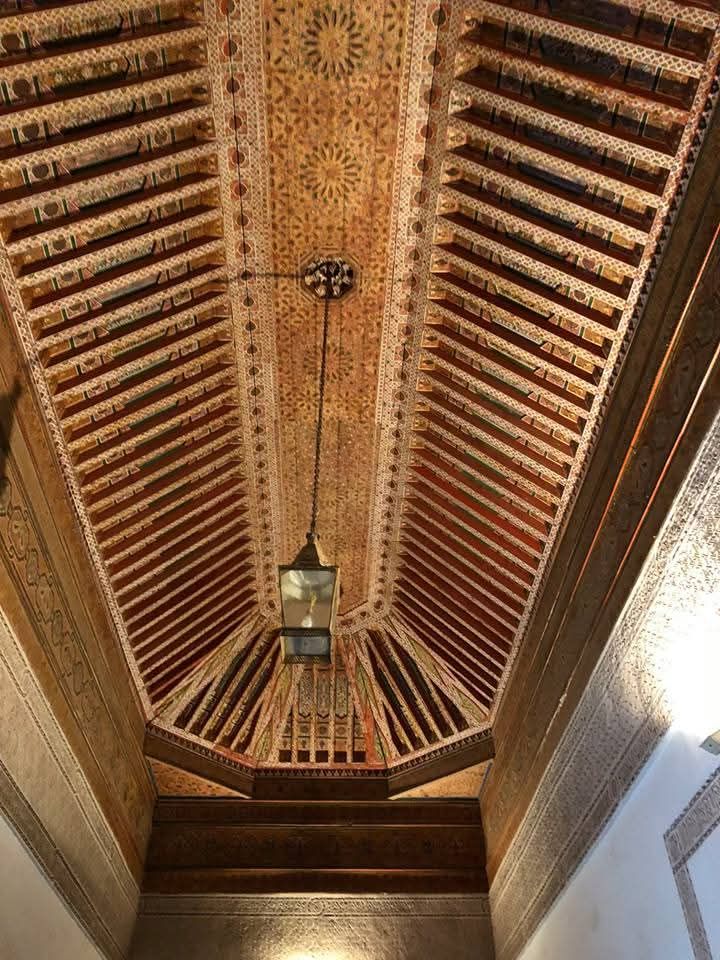
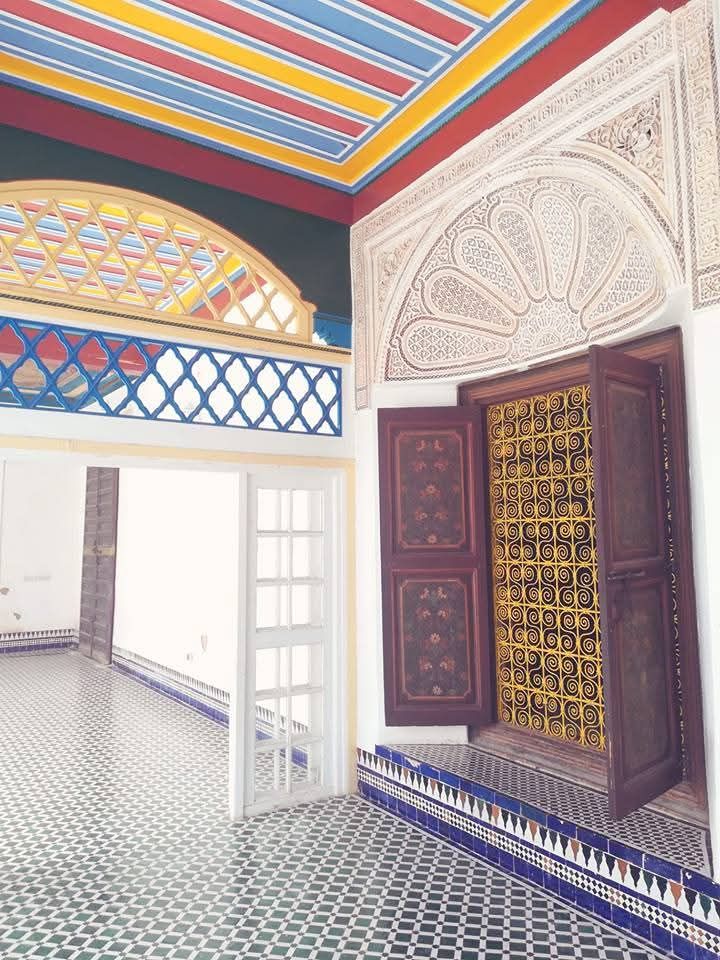
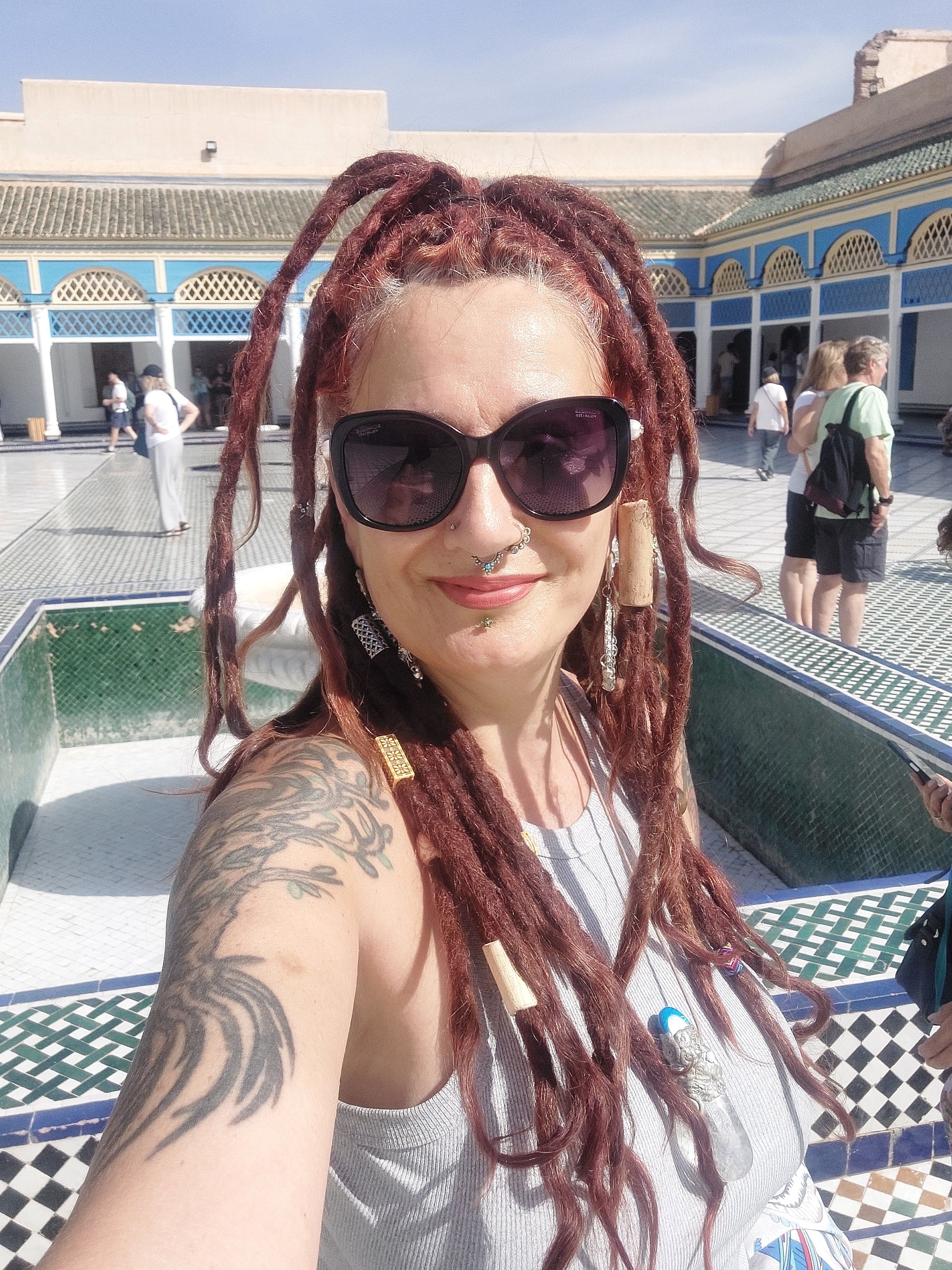
Bahia Palace is a stunning, 19th century palace in Marrakesh.
Image by Freebird Tracey.
It’s definitely a must-see if you’re visiting the city, and it’s quite spectacular.
The rooms are decorated with stuccos, paintings, and mosaics to capture the essence of Islamic architecture.
The word Bahia means ‘brilliance’ in Arabic, reflecting the splendour of Islamic art and architecture.
It is necessary to book tickets prior to visiting the palace as queues can be extremely long.
They cost 70 dirhams each, and the palace is open from 8.00am-5.00pm daily.
The courtyard is stunning, and all the rooms open out onto it.
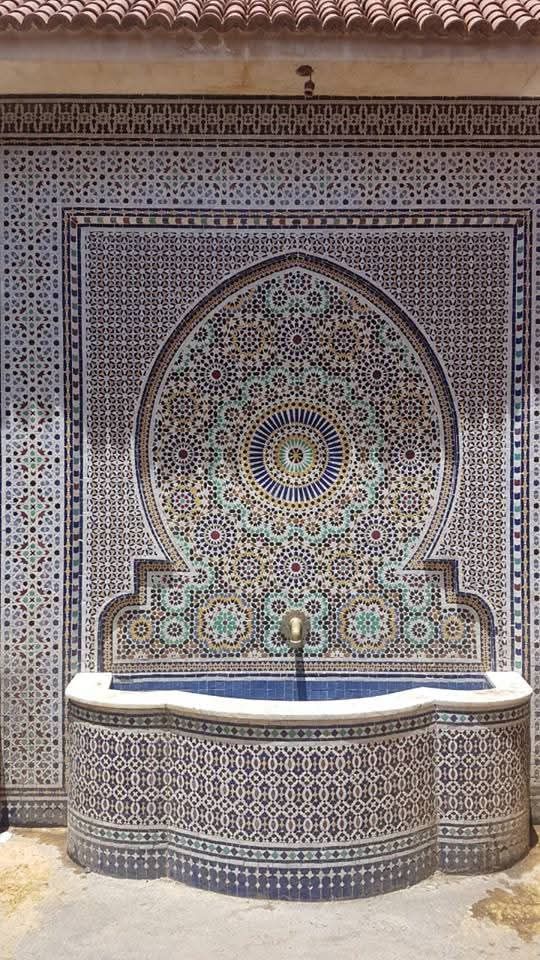
It is rather grand and very spacious with a fountain in the centre and intricate tile work typical of Morroccan culture.
There is also a 2-acre garden surrounding the palace.
There are orange trees lining the route up to the entrance of the palace.
When Morocco gained independence from France in 1956, the Bahia palace was used as a royal residence. This was until King Hassan II transferred it to the custody of the Moroccan Ministry of Culture.
The building then became a cultural icon and tourist attraction.
Bahia Palace is one of the most visited tourist attractions in Marrakech.
It is best to arrive as close to opening time as possible to avoid the crowds.
That way, you can spend time reading about the history of the palace and enjoying the experience.
I would recommend visiting Bahia Palace.
It’s gives you a good understanding of Islamic culture and the fine craftsmanship that defines it.
If you enjoy looking at Islamic architecture, you could also visit Badi Palace in the Kasbah area of the city.
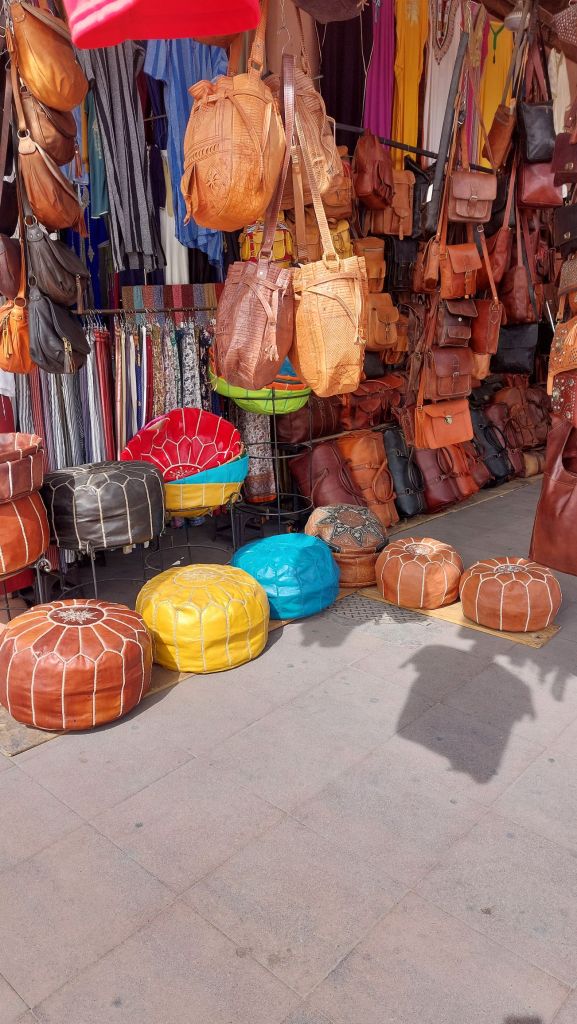
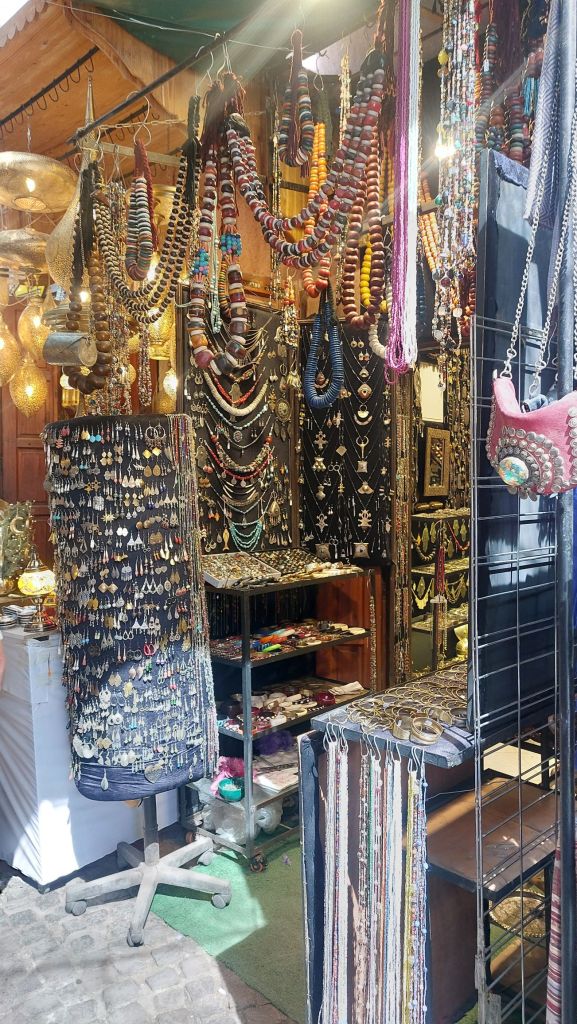
Browsing around the busy souks in the medina is an exciting experience.
Berber jewellery in the souks.
There is everything that you could possibly dream of.
As you meander through the maze of colourful alleyways, be prepared for a complete assault on the senses.
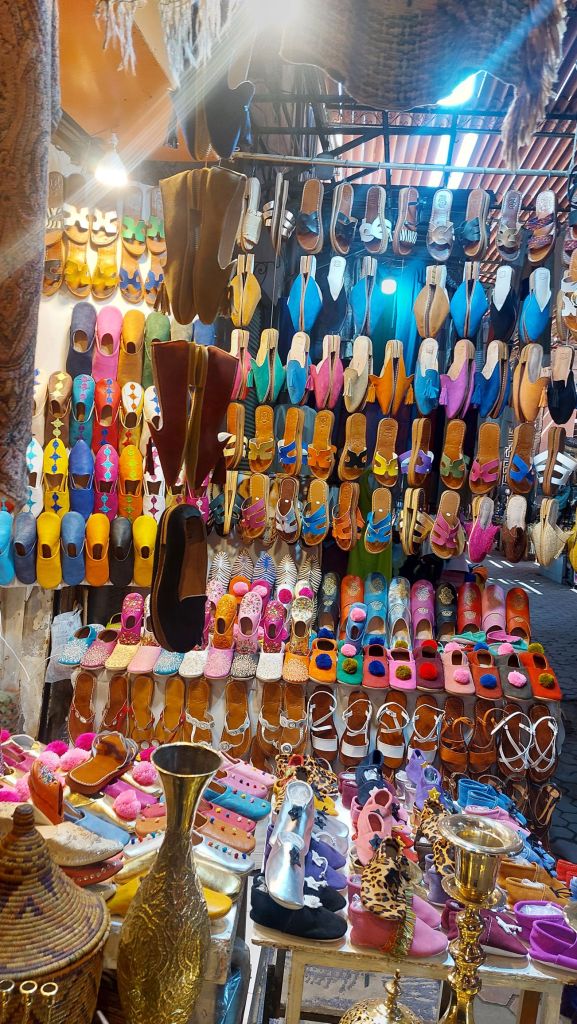
From beautiful jewellery to exotic spices, leather shoes and bags, to Morroccan lamps and ceramics.
Traditional Morroccan Babouches.
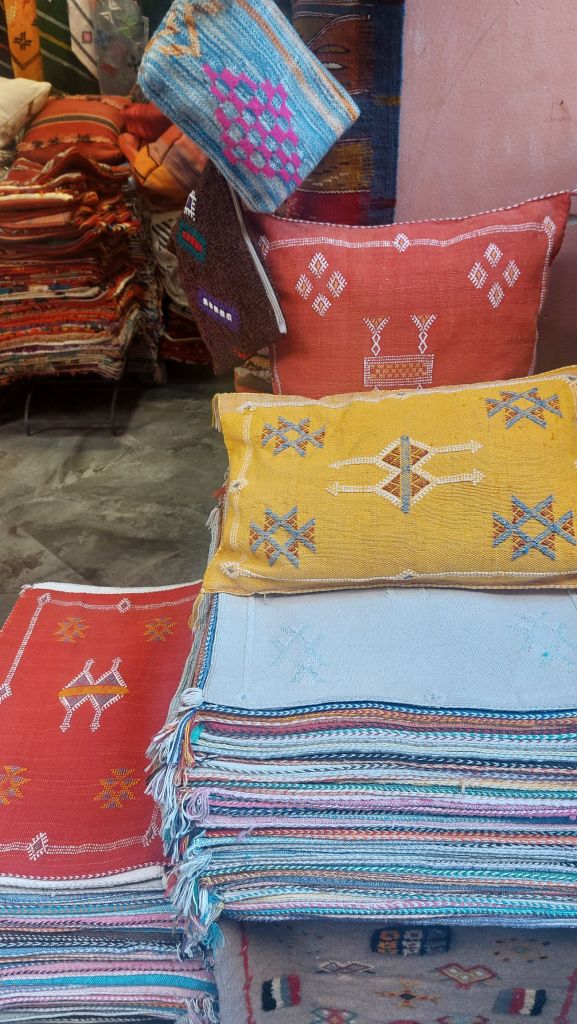
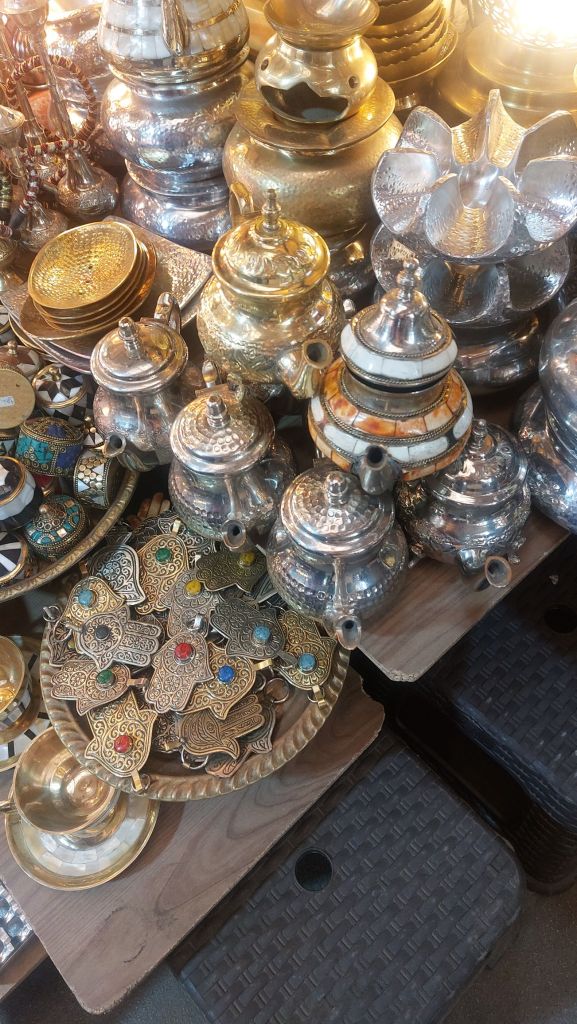
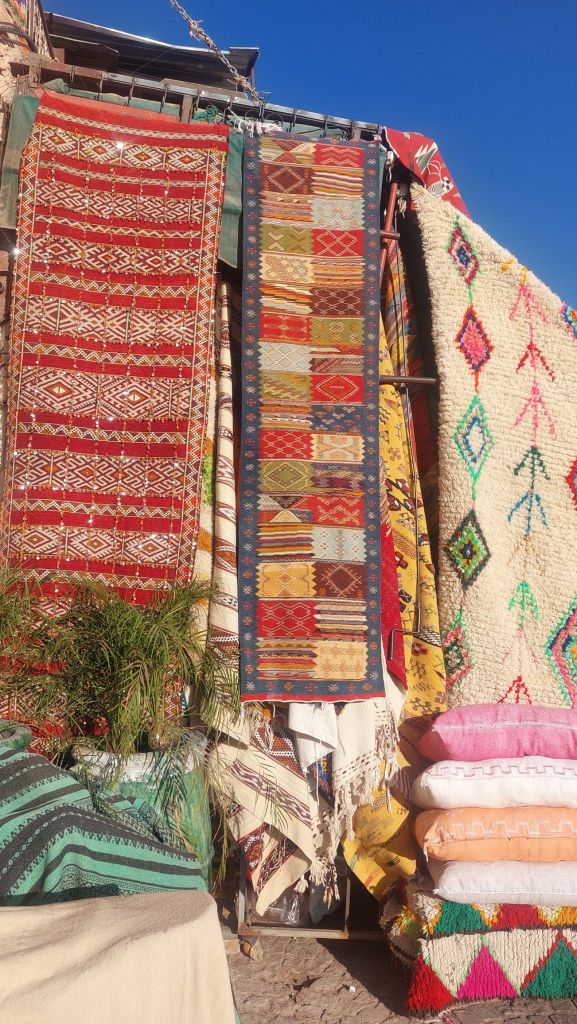
The craftsmanship is astonishing, and you can find areas that are dedicated to certain products, such as leather goods and handmade Berber rugs or cushion covers.
It’s a lovely experience watching the locals making their goods to sell, and there is also the opportunity to have a go at making things yourself, such as a pair of babouche shoes to take home.
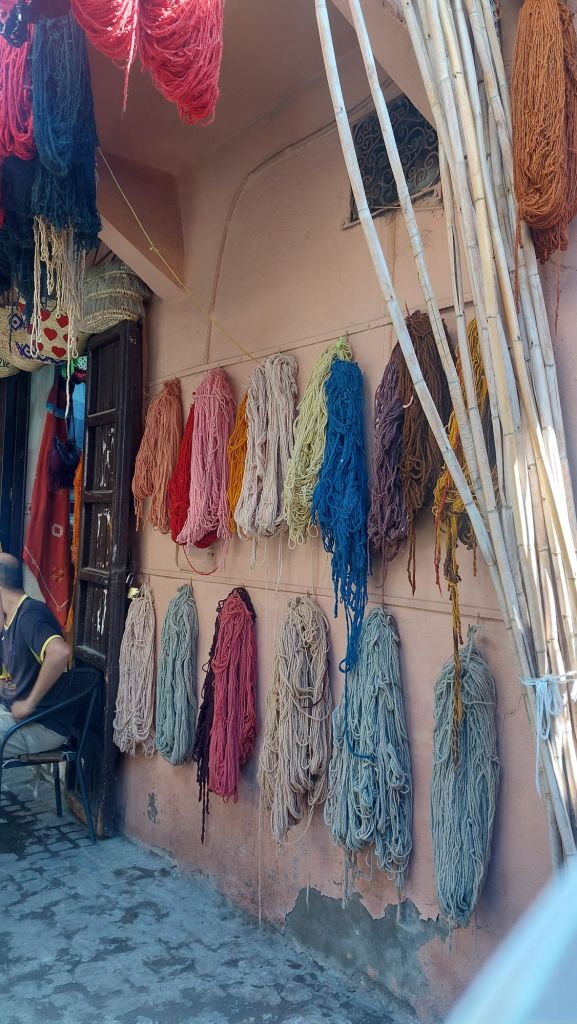
Berber rugs are beautifully displayed, and the assortment of colours and patterns are a feast for the eyes.
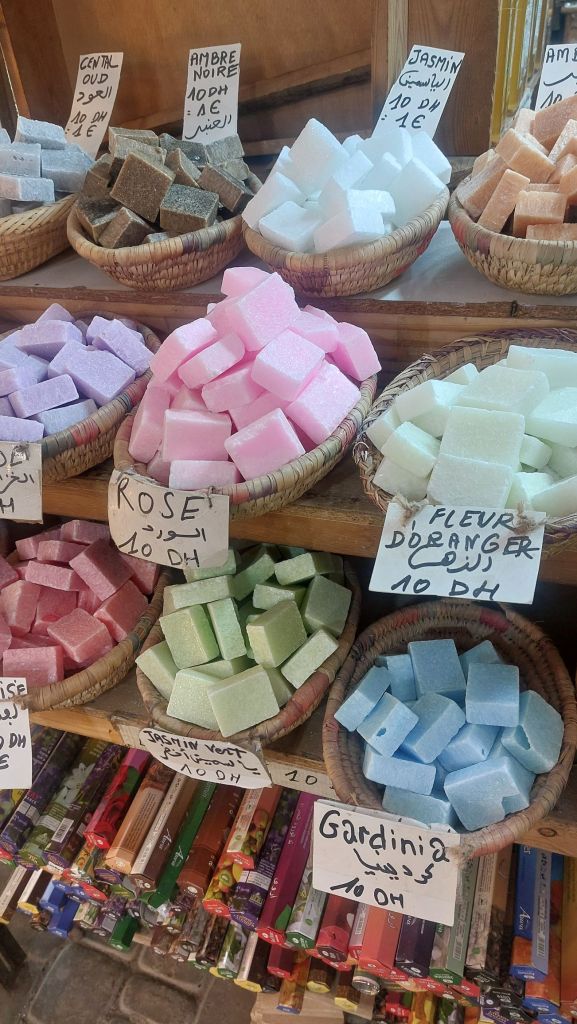
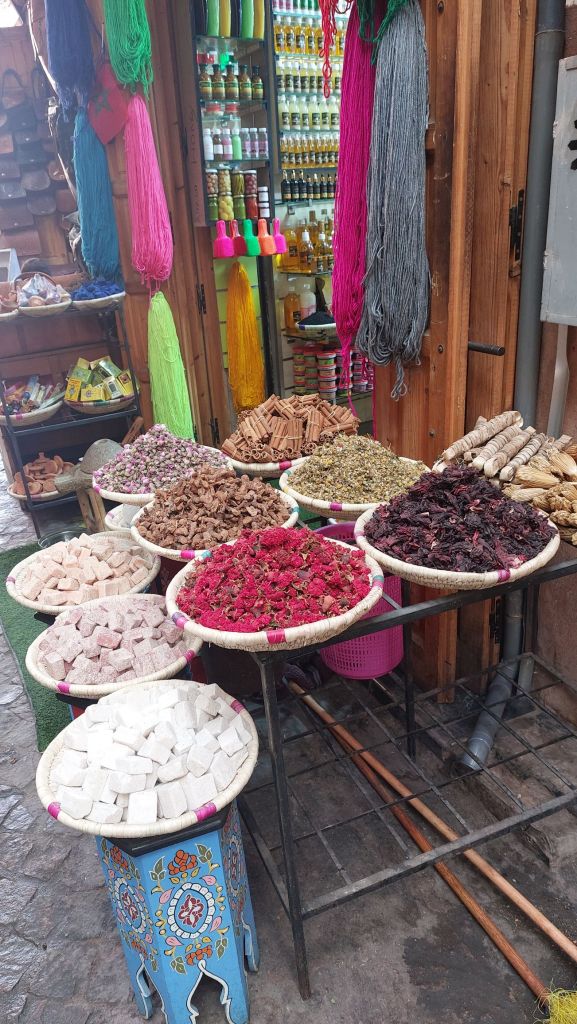
Argan oil and morroccan black soap, orange blossom oil, and gardenia float on the gentle breeze.
Oils and perfumes for sale in the souks.
Wooden boxes ornately decorated with mother of pearl, chess sets, and traditional toys tempt you for the perfect souvenir to take back for family and friends.
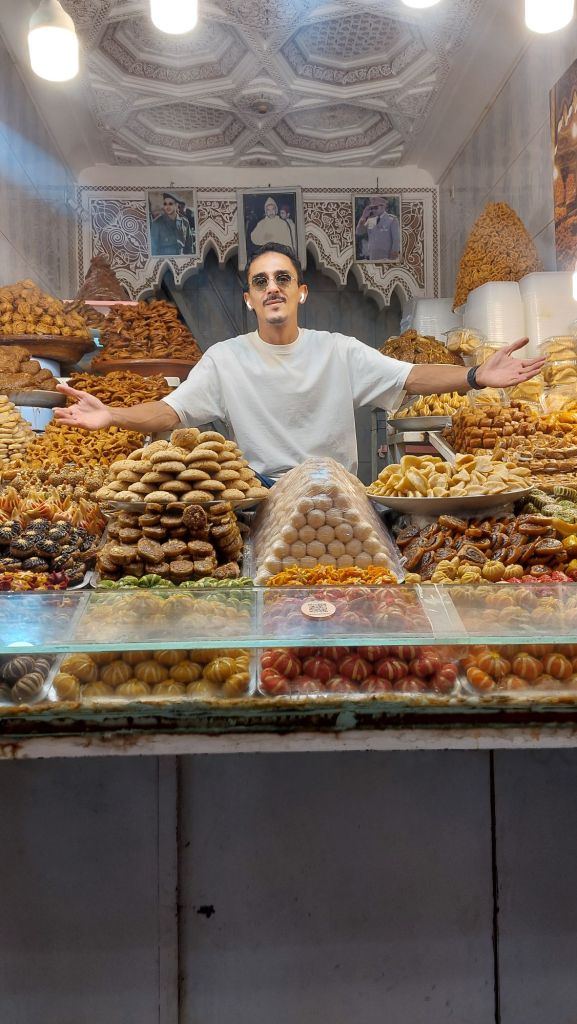
Then there’s the nuts, sweets, and pastries.
Traditional sweets for sale in the souks.
The olives and exotic fruits.
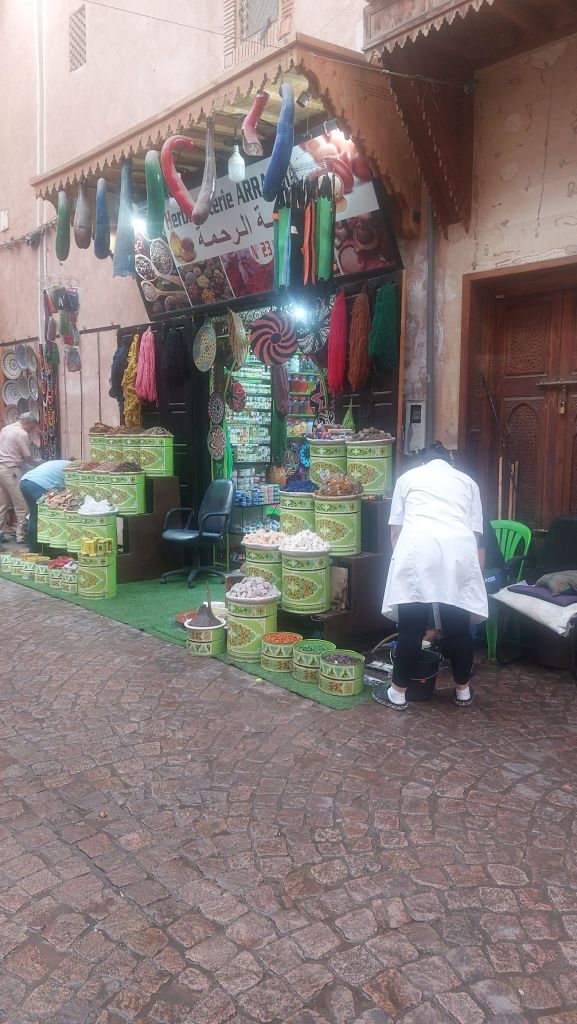
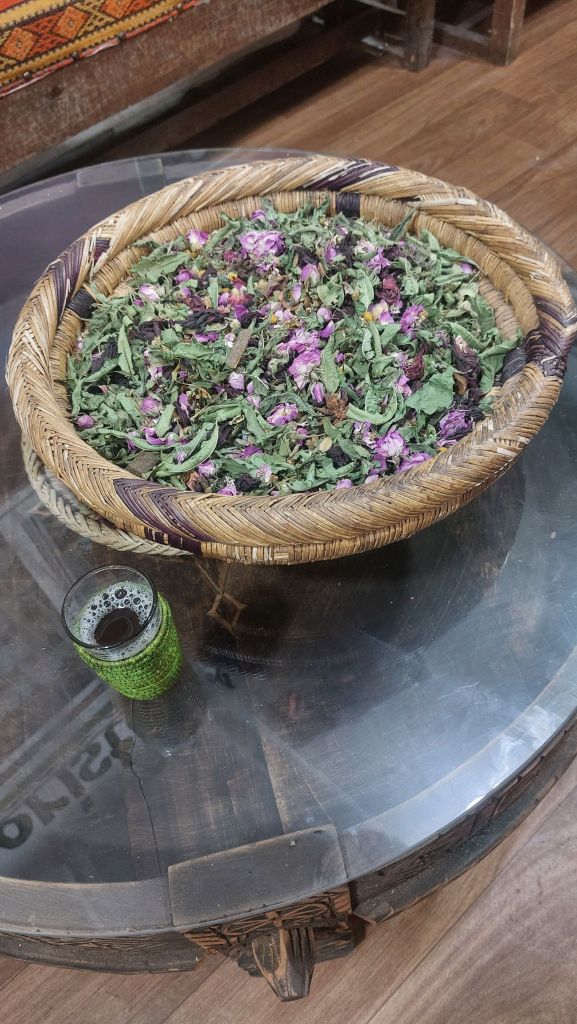
The medicinal herbs and spices, a cacophony of colours and fragrances.
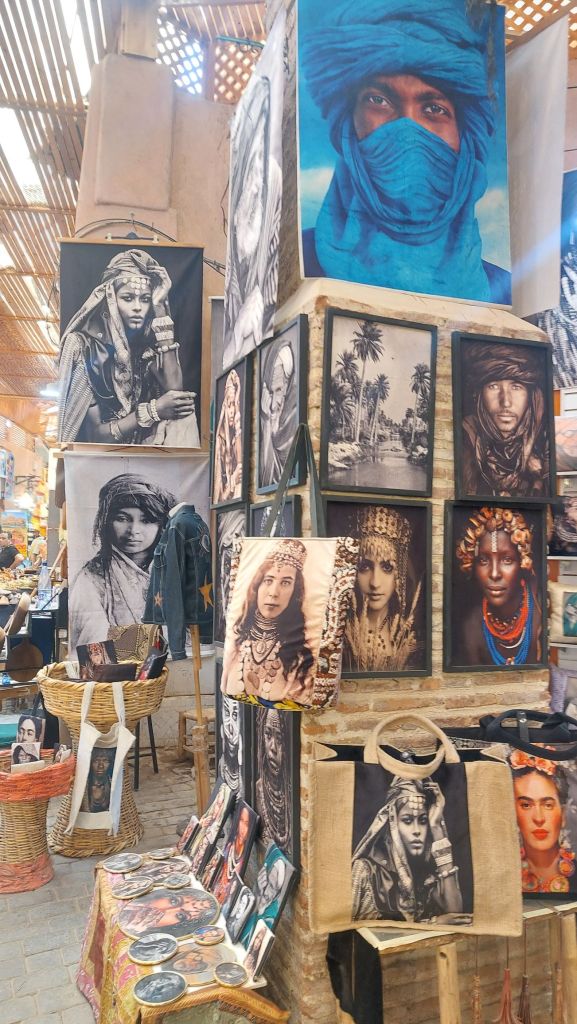
Paintings and prints of traditional Morroccan doors and Berber people.
Hand painted pictures for sale.
For the person who loves shopping, Marrakech is an absolute delight.
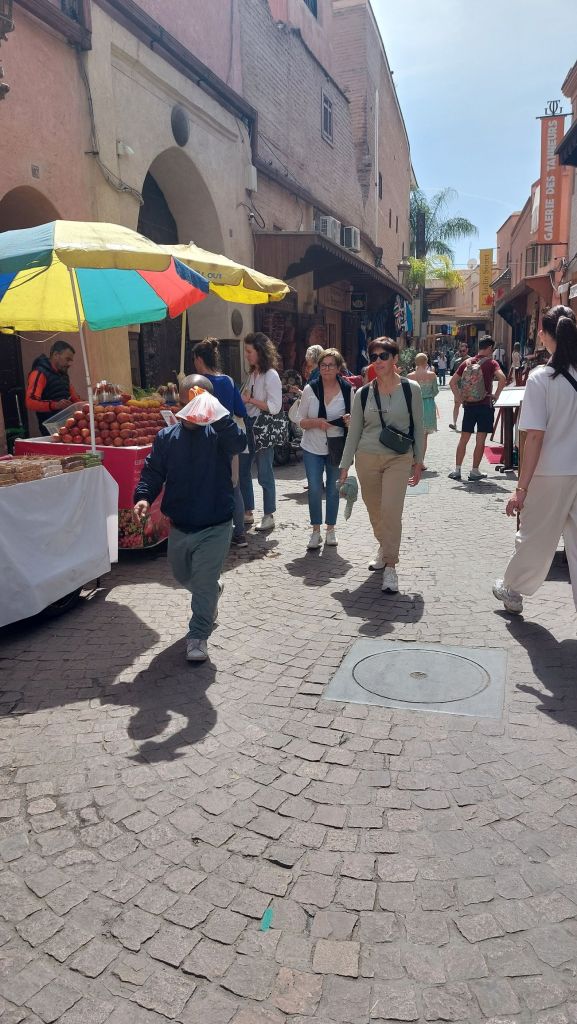
The souks are crowded and busy.
You have to dodge motorcycles and donkeys, vendors with carts, and tourists looking for the perfect gift.
You can expect to get lost, but that’s all part of the experience.
No one went into the souks and was never heard from again…
So, if you’re coming to Marrakech for the vibrant abundance of enticing goods on sale around the medina, fully immerse yourself in the experience and enjoy every minute.
It’s an unforgettable experience, one which will envoke the spirit of camel caravans and ancient trade routes from centuries ago.
A few helpful tips to make the most of your shopping experience:
Pace yourself.
The souks are very busy with motorcycles, donkeys, and tourists. It can feel slightly chaotic at times, especially in the heat.
Stop for a drink and rehydrate.
Rest for a while, try a spot of lunch on the rooftop of a cafe.
Be prepared to haggle. It may seem daunting at first, but you’ll soon get the hang of it.
Stay vigilant, and keep your wits about you.
Marrakech is a safe city, but pick pocketing can happen just like anywhere else in the world.
In crowded, narrow streets, keep your possessions safe in a closed bag at the front of your body.
If you’re lost, try to use Google maps or look for signs above your head pointing you back to Jamaa El Fna.
If you need help or advice, ask a shop vendor or try calling the riad you are staying in.
They may offer to collect you.
Don’t be tempted to accept directions from locals who may lead you to a friend or family members’ shop so they can get commission.
You may struggle to get away, and you may find yourself seated and drinking mint tea before you know it.
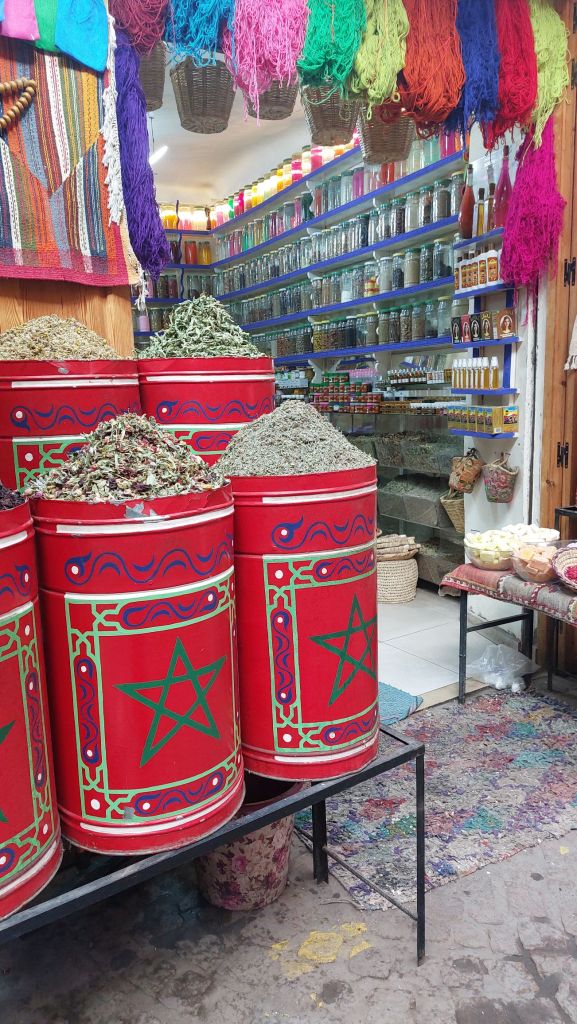
Colourful spice drums in the medina.
Take time to shop around and walk away if you don’t think you’re being offered a fair price.
You will usually find yourself being called back, and a good price reached.
If not, the same items will most likely be found on sale elsewhere in the souks.
Exercise patience.
Remember, this is someone’s livelihood, and it’s a different culture to what you may be used to.
Wages are not very high for most people in Marrakesh, and tourists with money to spend are fair game for boosting the take-home salary of most vendors.
After all, they too have mouths to feed..
Although the souks can be overwhelming, they are an unforgettable shopping experience.
You will be dazzled by the vast number of weird and wonderful items on display.
The sights, sounds, and smells will stay with you a long time after you leave this fascinating city.
If you’re staying in the medina, you can get to most places relatively quickly by walking.
If this is not easy for you or the heat is a bit much, the other option is to take a tuk- tuk.
Most riads can organise a pick-up point and give the driver directions to where you need to go.
It’s a fun way to get around, and some of them are rather elaborately decorated.
They rattle through the souks, competing with the motorcycles, donkeys, and pedestrians.
Another option is to take a taxi.
Check with your hotel or riad beforehand, and find out how much you should be paying to travel the distance you want to go.
It’s not uncommon for taxi drivers to try to charge more, so stick to your guns and, if necessary, walk away.
There are plenty of drivers available, and they are all competing with each other for fares, so you don’t have to put up with being ripped off.
I only used taxis to get from the medina to Jardin Majorelle and Gueliz. It was a warm day, and I didn’t feel like walking in the sun.
After a little polite negotiation, there were no problems, and I paid the correct fare, give or take a few dirhams.
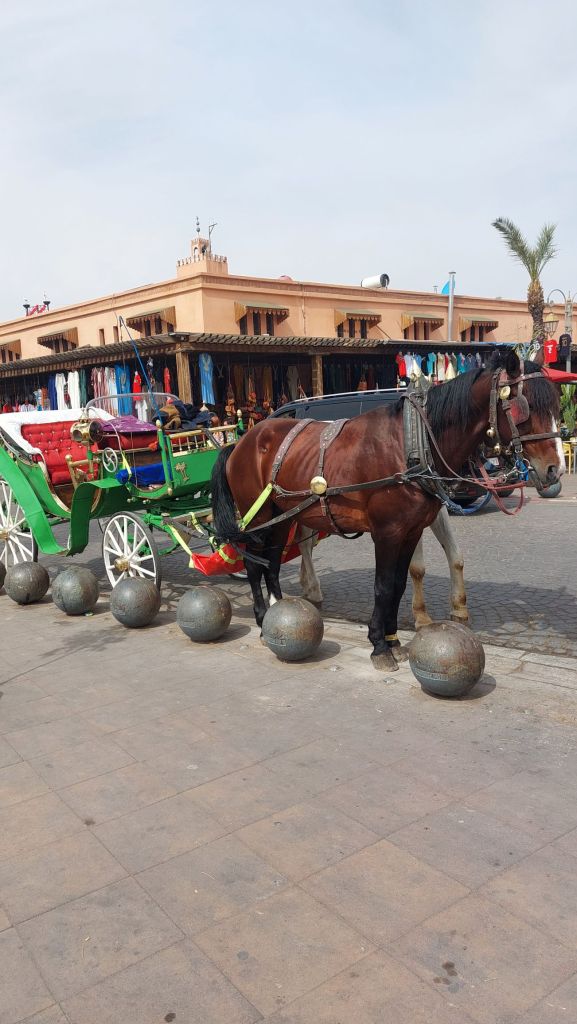
There are many tourists who pay to see the city on horse-drawn carriages.
Horse-drawn carriage in Marrakech
The horses are taken into the chaotic traffic, and I’ve witnessed a few upsetting incidents where they’ve been hit by a car.
There doesn’t appear to be any rules on the roads, and they’re pretty crazy. The horses look scared and I’ve seen them freeze in the centre of the traffic.
It’s a personal decision if you want to take a ride in a horse-drawn carriage. However, I would suggest only going around the medina walls and during the evening.
It’s quieter for the horses than the madness of the busy main roads in the exhausting heat.
Part of the fun in Marrakesh is walking from A to B..
There are so many interesting things to see and you miss so much if you don’t walk.
I especially enjoyed walking through the kasbah, seeing the locals going about their business and getting a feel for the real Marrakech.
There are also walking tours around Marrakech, which you can book.
These tours take you around the tourist hot spots, usually in a group of people.
NB. There are separate tours for food sampling.
It’s also possible to hire a bicycle if you’re brave enough.
Check out Cafe Pikala for bicycle hire. It’s very popular.
The Alsa bus runs around Marrakech for about 2 dirhams. The numbers 1 and 16 will ferry you between the medina and Gueliz.
For venturing further, there are trains going to places like Casablanca daily.
There is a good service, and prices and times can be found online.
A rest in the shade after walking around Marrakech
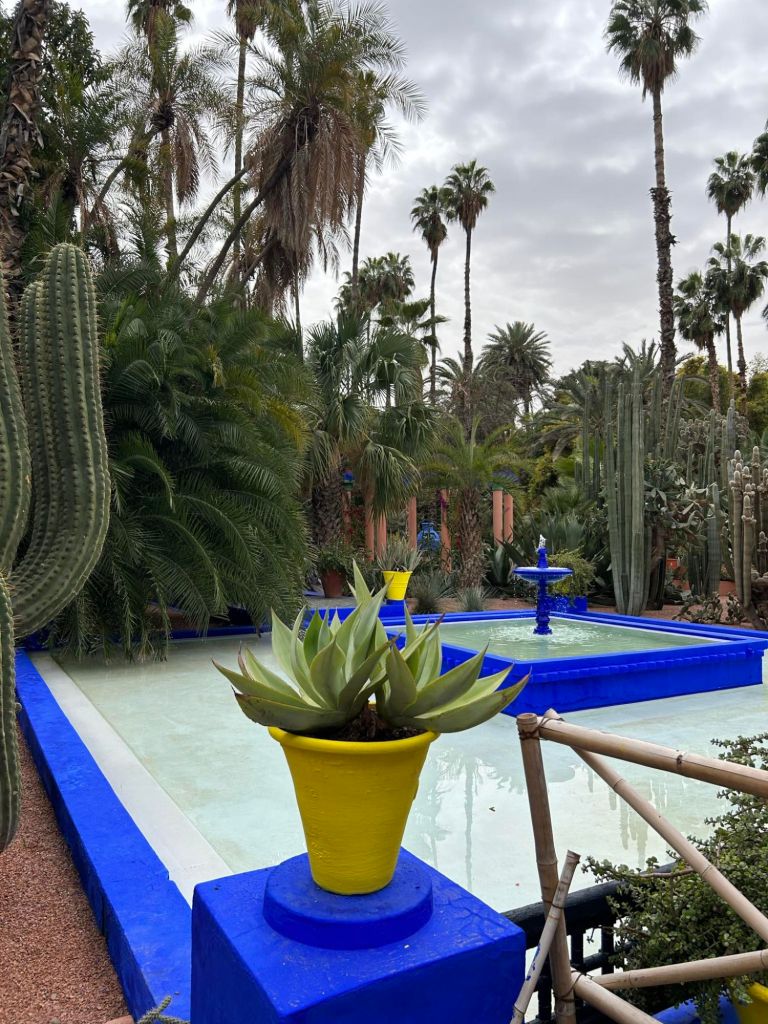
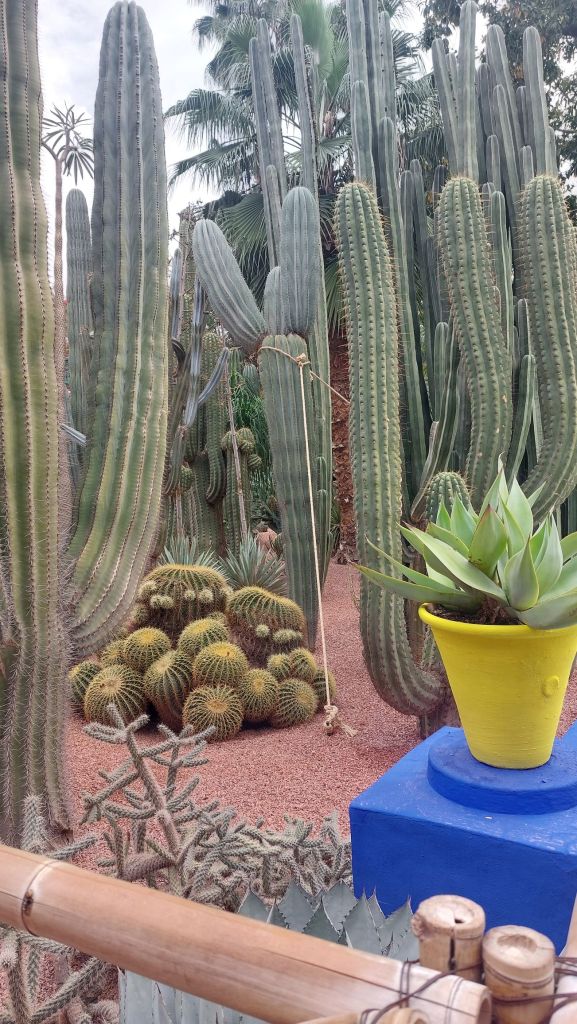
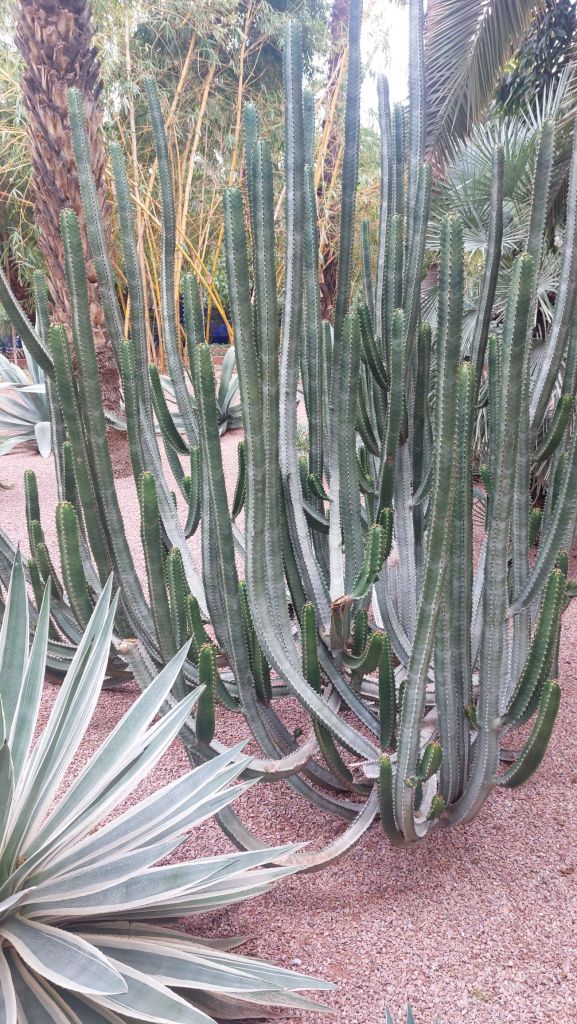
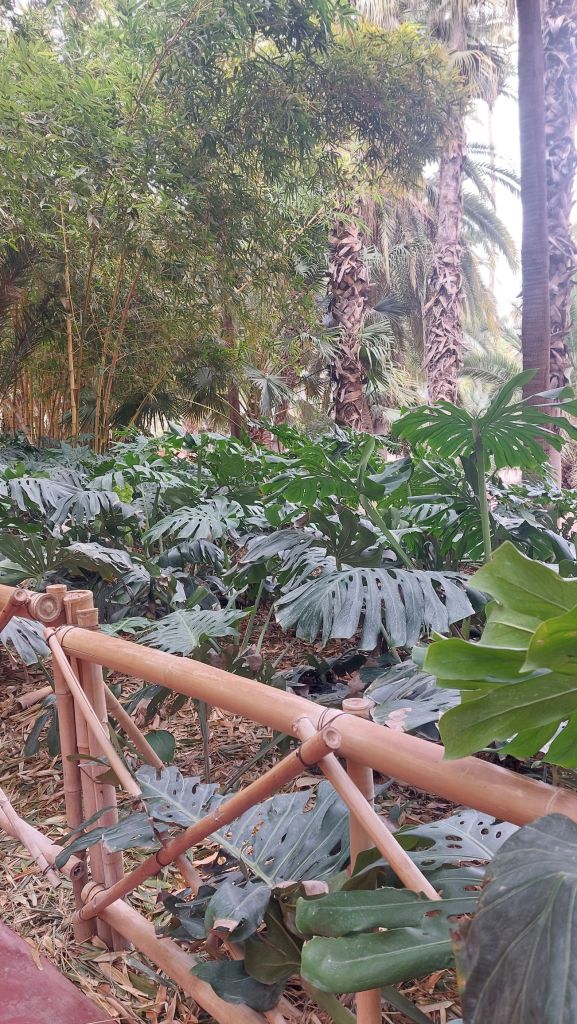
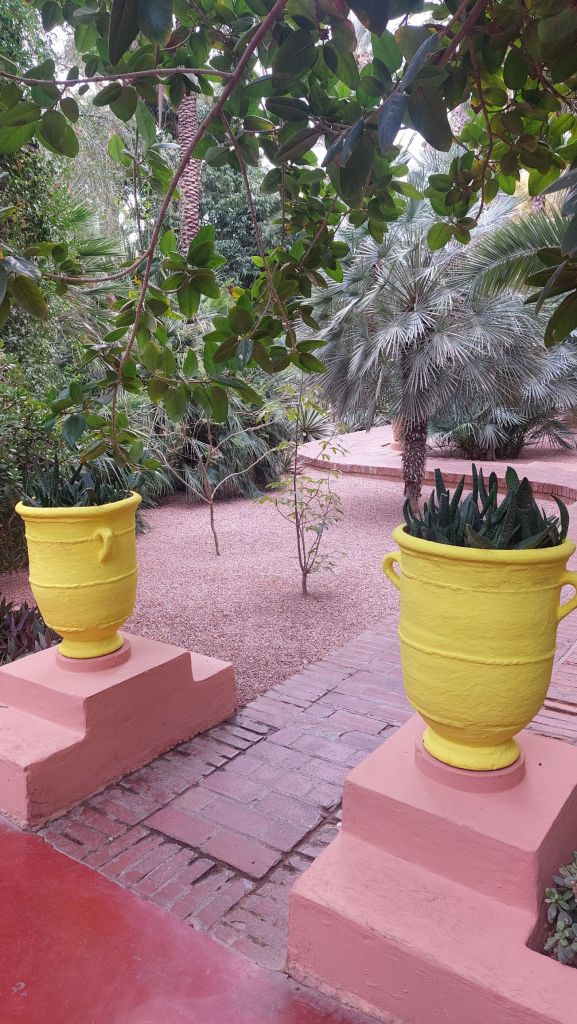
Inside the beautiful Majorelle Garden, there are over 300 stunning plant species from all over the world.
Mexican agave, Chinese windmill palms, African date palms, coconut, and banana trees amongst a labyrinth of pathways.
The incredibly tall bamboo and exotic Cacti species coexist together to create one of the most beautiful gardens in marrakech.
Two acres of botanical landscape gardens.
Originally designed by Jean Majorelle in the 1920s.
After he was forced to abandon his home because of divorce, the fashion designer Yves Saint Laurent took it over with his partner Pierre Berge to save it from hotel development in 1980.
They restored it and made it their home, bringing the garden back to it’s former glory.
For many years the Jardin Majorelle has provided me with an endless source of inspiration, and I have often dreamt of its unique colours – Yves Saint Laurent
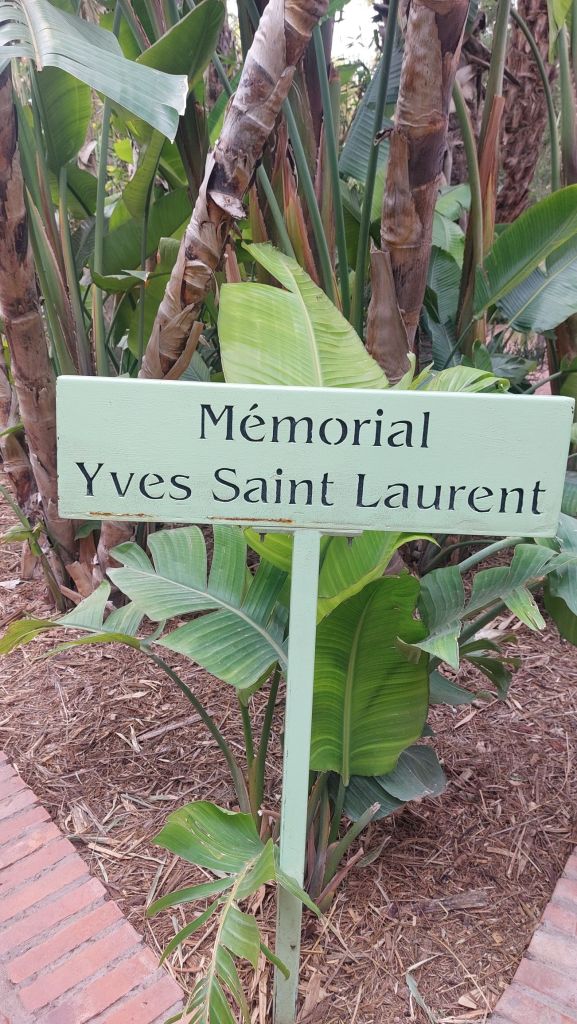
There is a memorial to Yves Saint Laurent and his partner Pierre Berge in the garden.
Majorelle Garden attracts over 900,000 visitors each year, making it a less than tranquil place to sit and reflect.
I would have loved to have sat in quiet contemplation amongst the lush green vegetation, admiring the pop of colour from the bougainvillea, but I was never alone for very long.
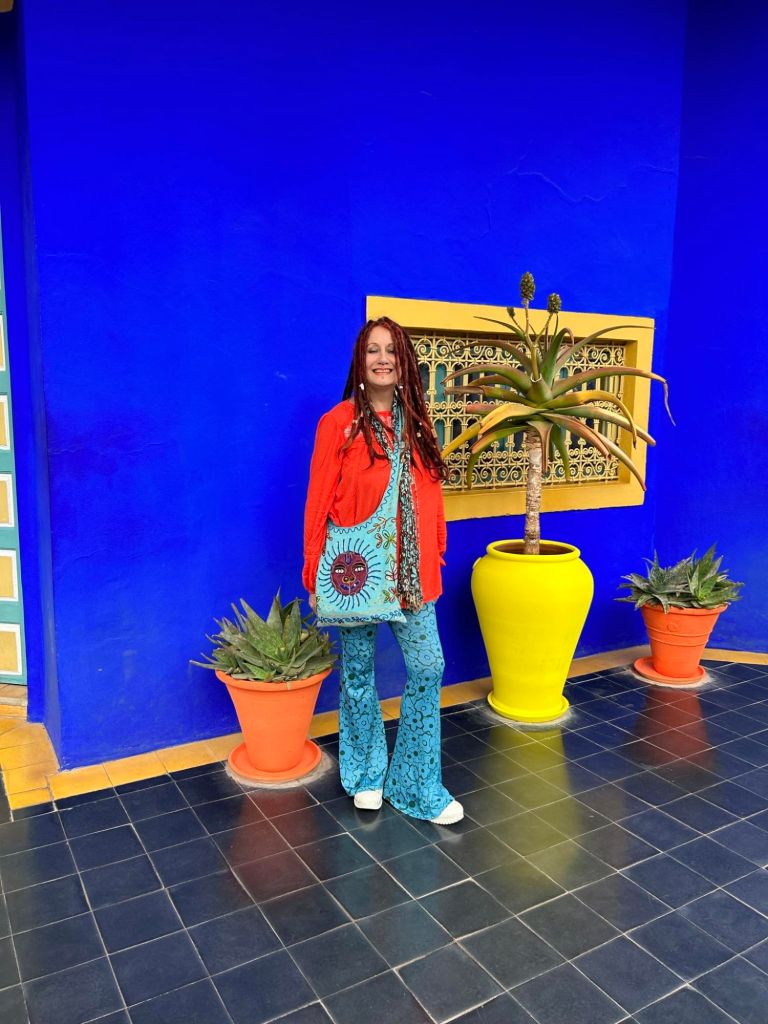
The attractive art deco pavilion with its striking colours of blue and yellow is a popular place for visitors to get their photographs taken.
The colourful pavilion The exotic blue and Islamic green tiles.
There is also a cafe and shop.
I purchased some postcards of Yves Saint Laurents’ yearly ‘Love’ drawings.
I didn’t go to the cafe because there were too many people and the queues were really long.
Yves Saint Laurent early ‘Love’ drawings
The gardens open daily at 8.00am and close at 6.00pm, and the last entry is at 5.30pm.
I would suggest getting there before 10.00 am, preferably at opening time if you want a more peaceful experience.
Luckily, I had prebooked online, so I didn’t have to queue.
I’m thankful that I did because the queues were really long, and it was a very hot day for standing around without any shade.
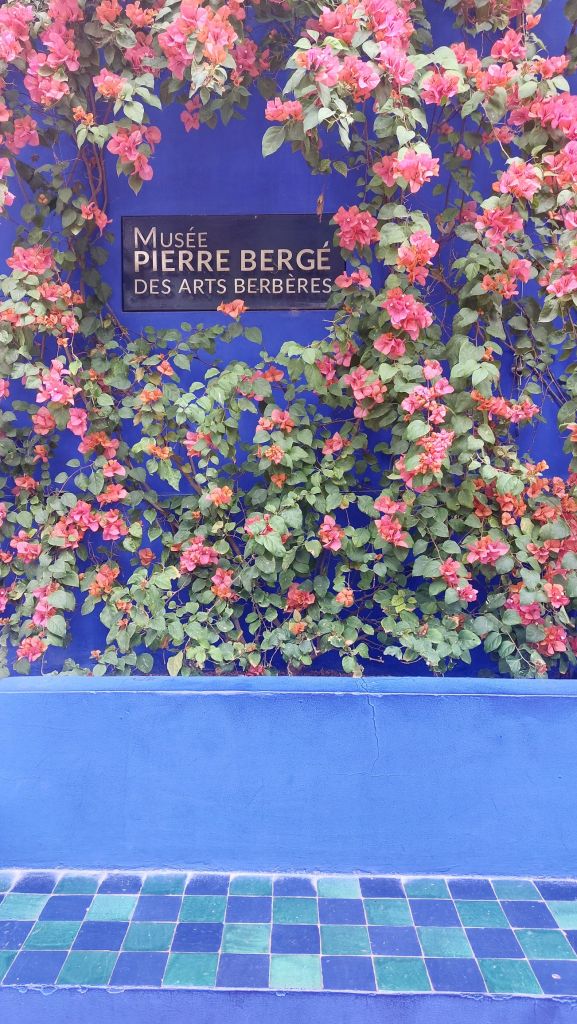
The YSL museum is also part of the visit, along with the Pierre Berge Museum of Berber Arts. It’s worth a look around if you are interested in Berber history.
Opening times are from 9.00 am until 5.30 pm with the last entry at 5.00pm.
You can’t take photographs inside the museum.
The price varies depending on where you purchase tickets from but you can expect to pay approximately €24 to visit everything.
There are plenty of nice restaurants outside the gardens, and I decided to get something to eat and drink in one of those. It was much quieter.
I recommend My Kawa for a nice salad.
There are a few shops across the road from Majorelle Garden selling souvenirs and a few attractive boutiques.
Shopping around Majorelle Garden
Stuff was a bit pricey, but I picked up some nice jasmine oil at a fairly decent price.
Overall, Majorelle Garden was absolutely beautiful. It is colourful and lush with several spots to sit and absorb the exotic sights and sounds.
However, it is incredibly busy with tourists, which detracts from the calm sense of serenity you’d expect to get from such a delightful setting.
It was worth visiting for the wonderful trees and plants and to get some great photos, but unless you go very early during the quiet season, you won’t get a peaceful, relaxing vibe..
Majorelle Garden is located to the north west of Marrakech medina.











































 Sounds Of The Souks