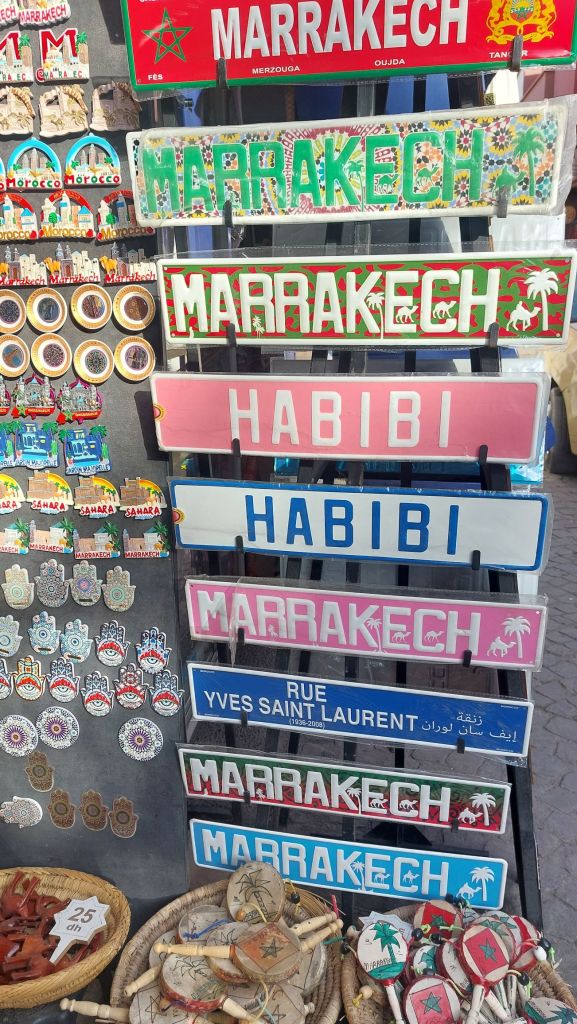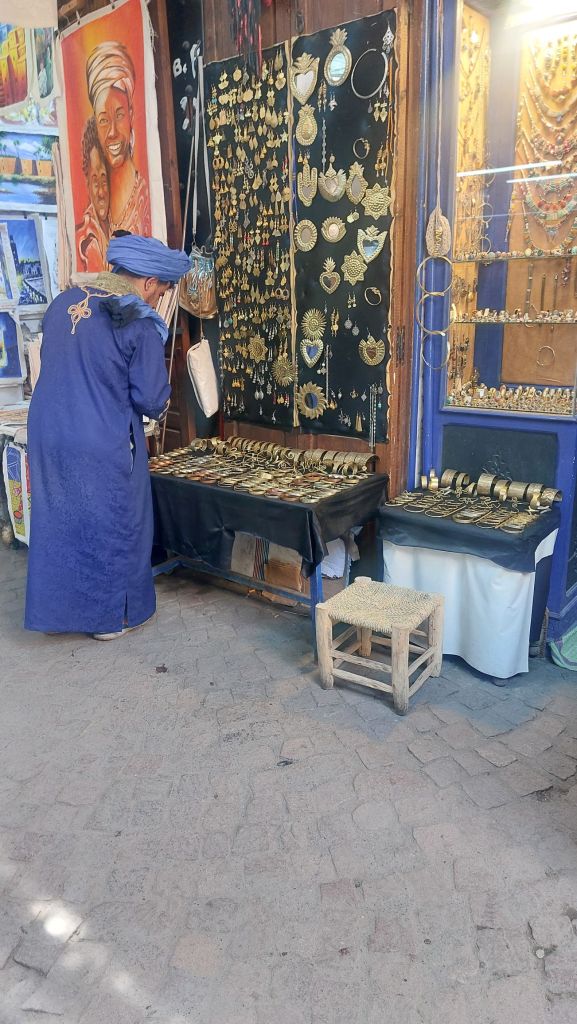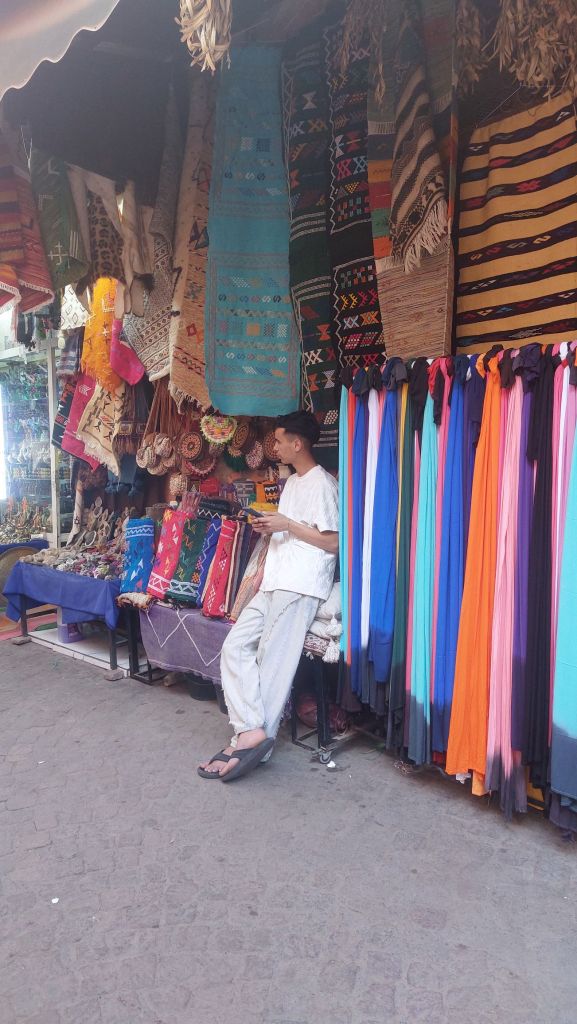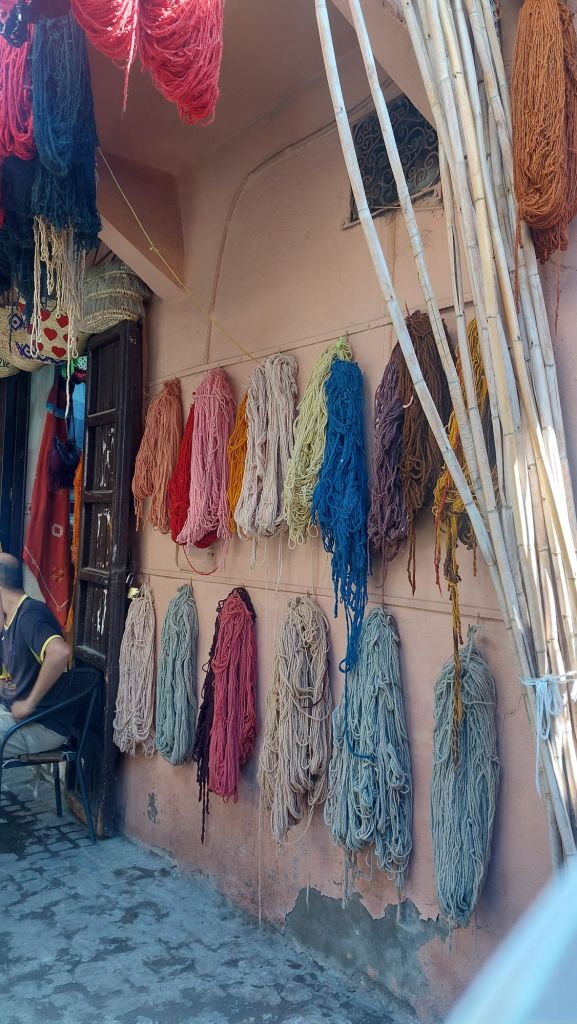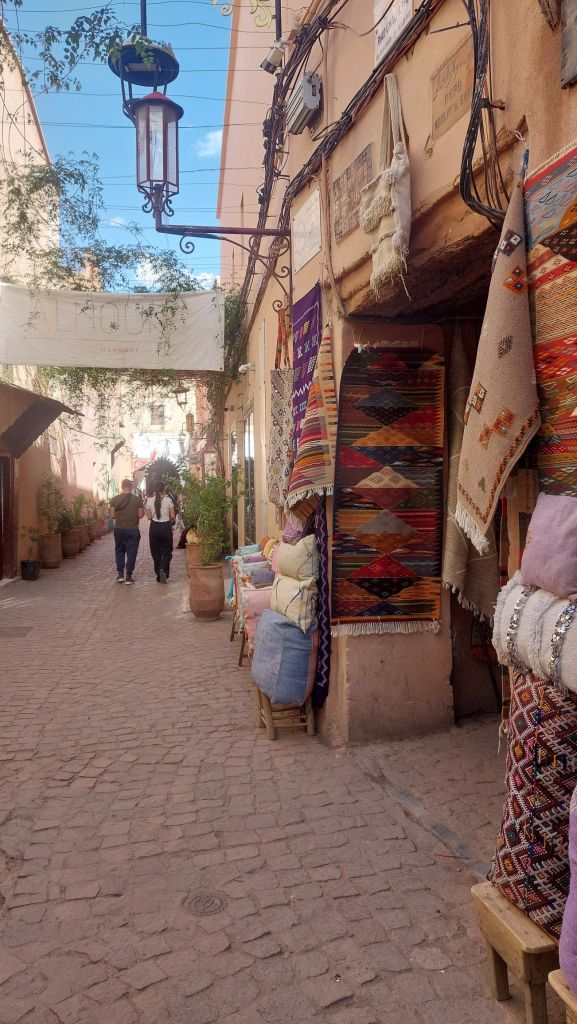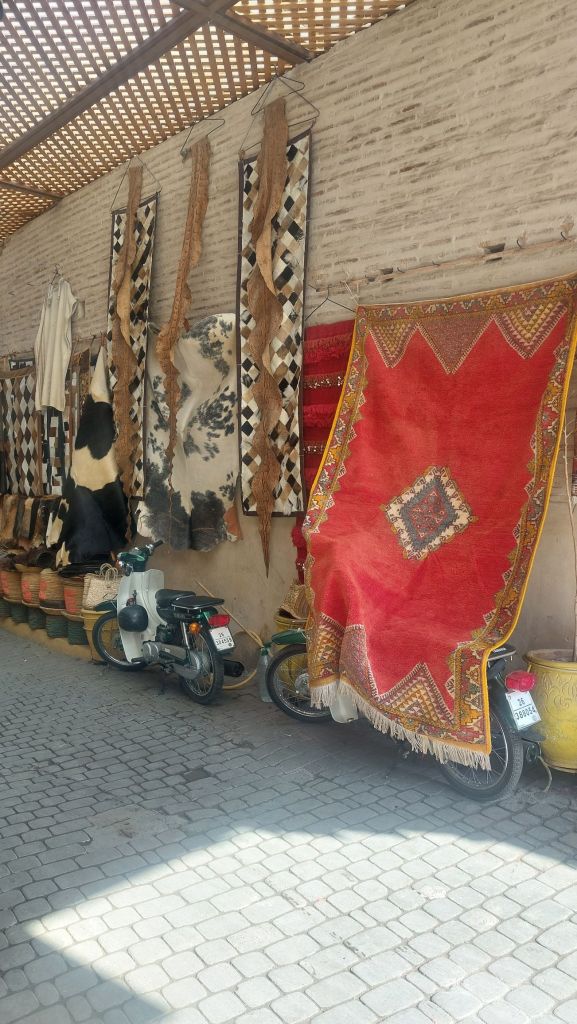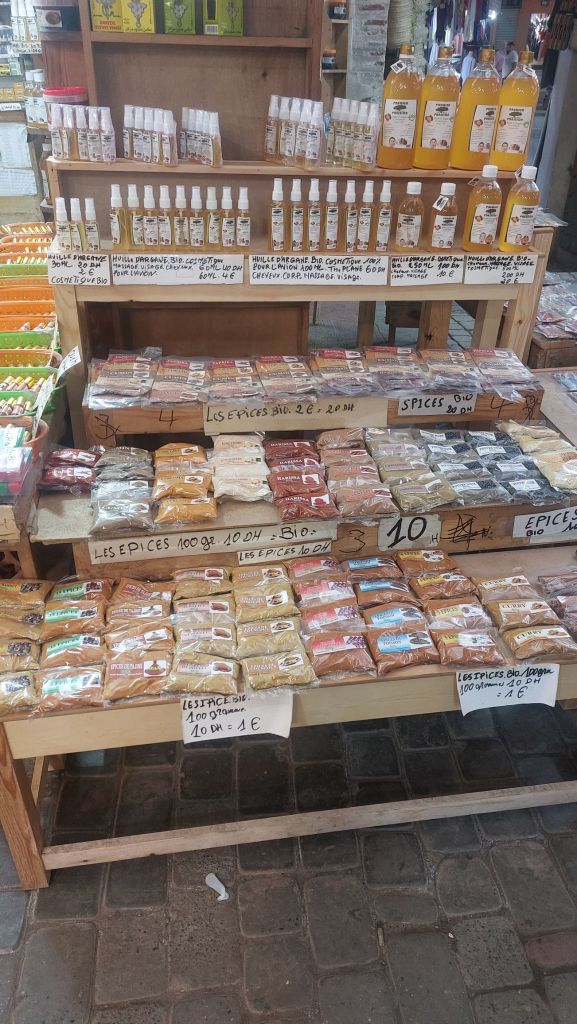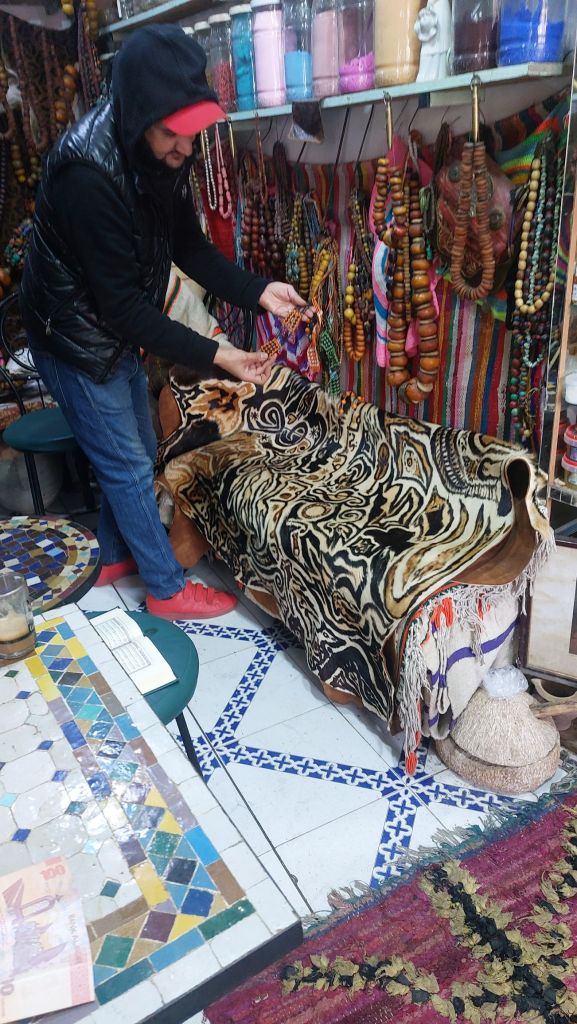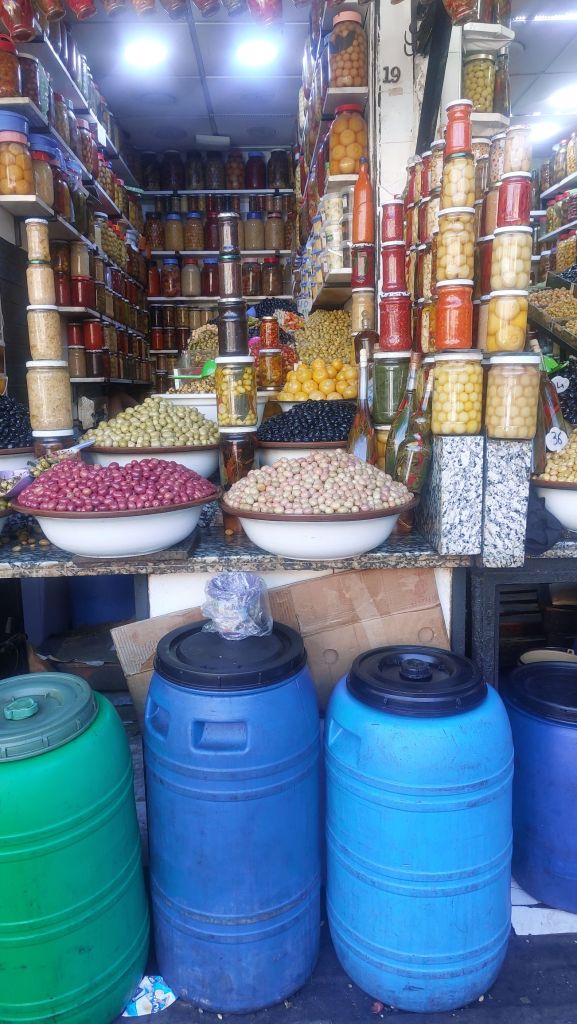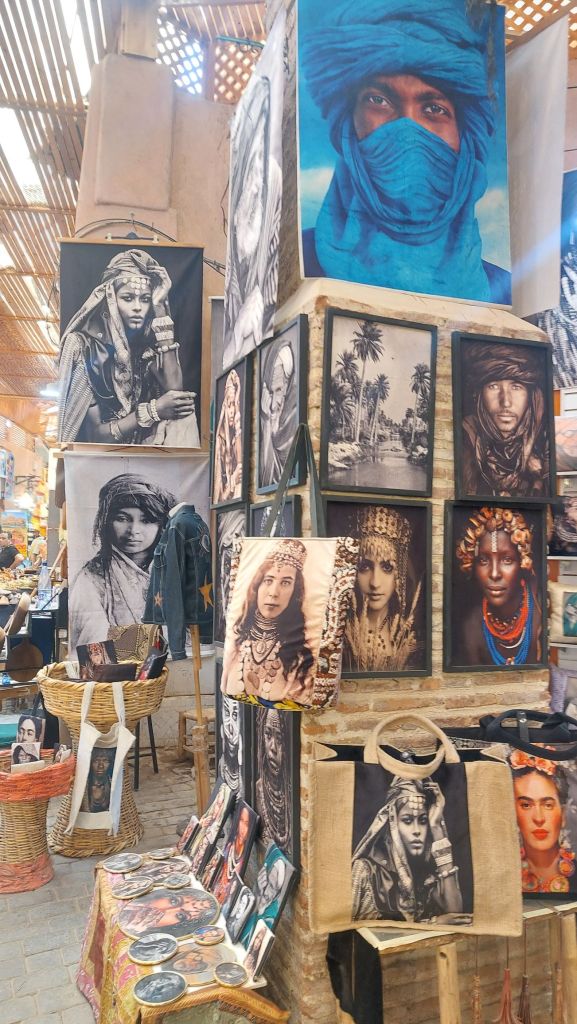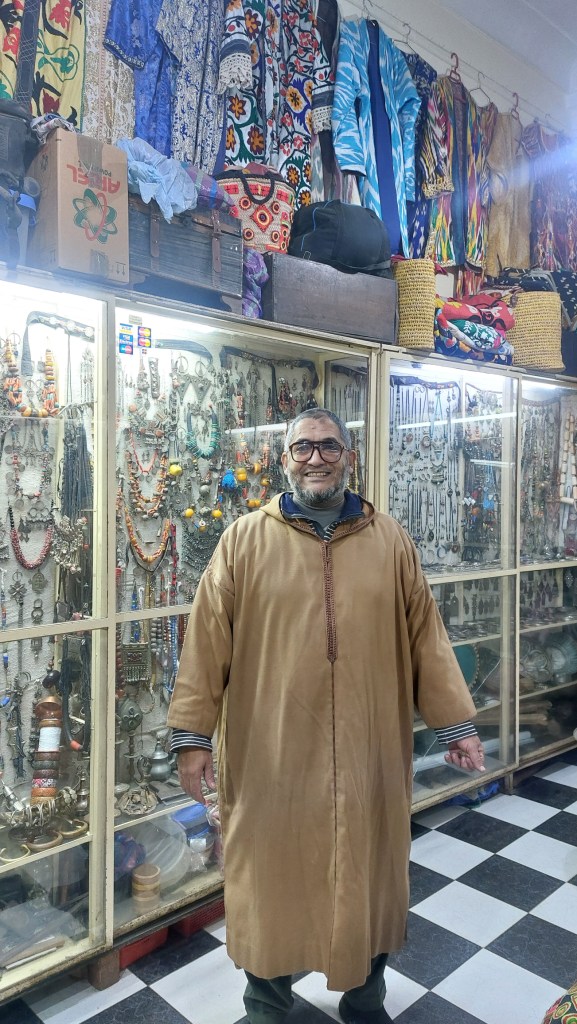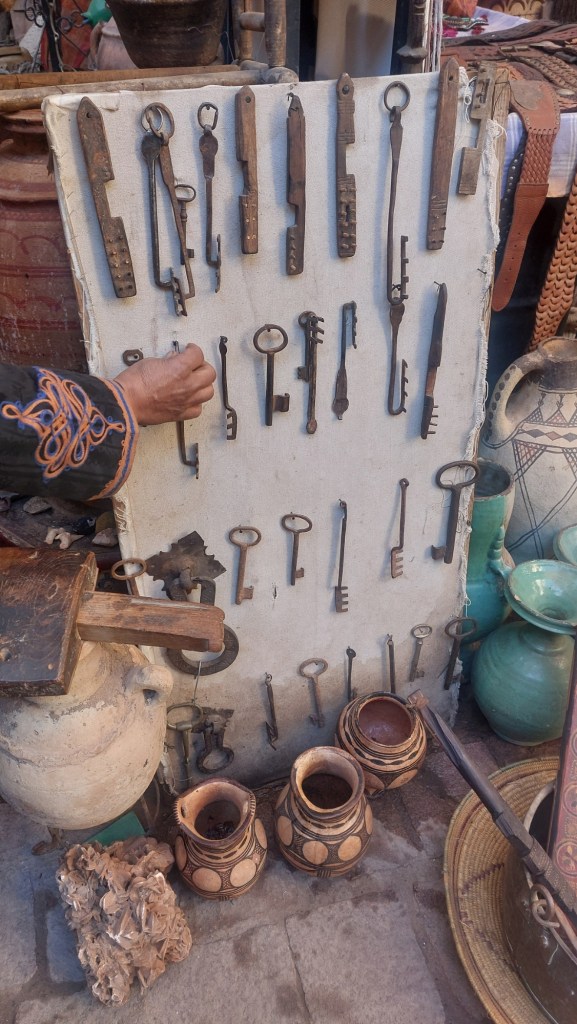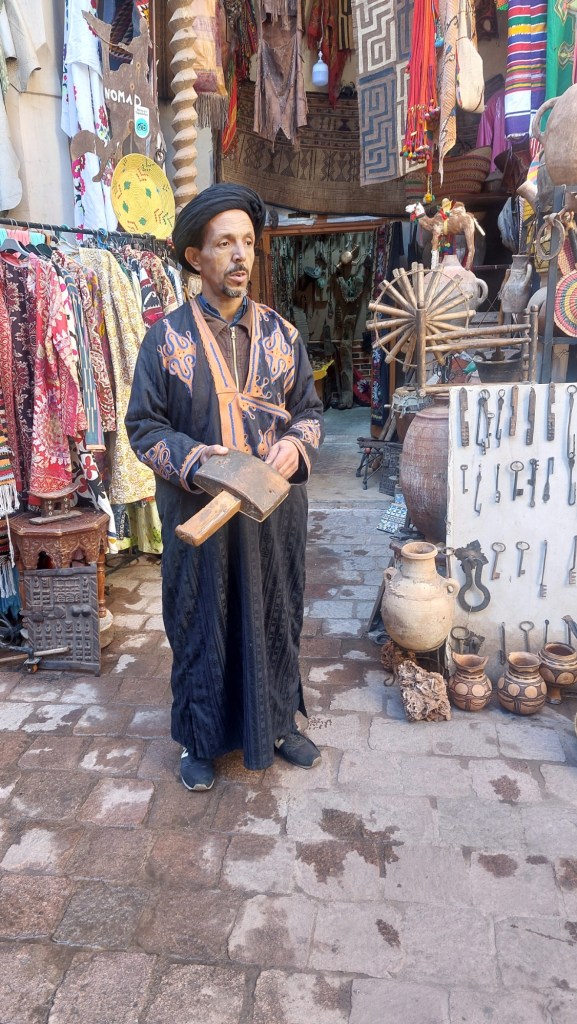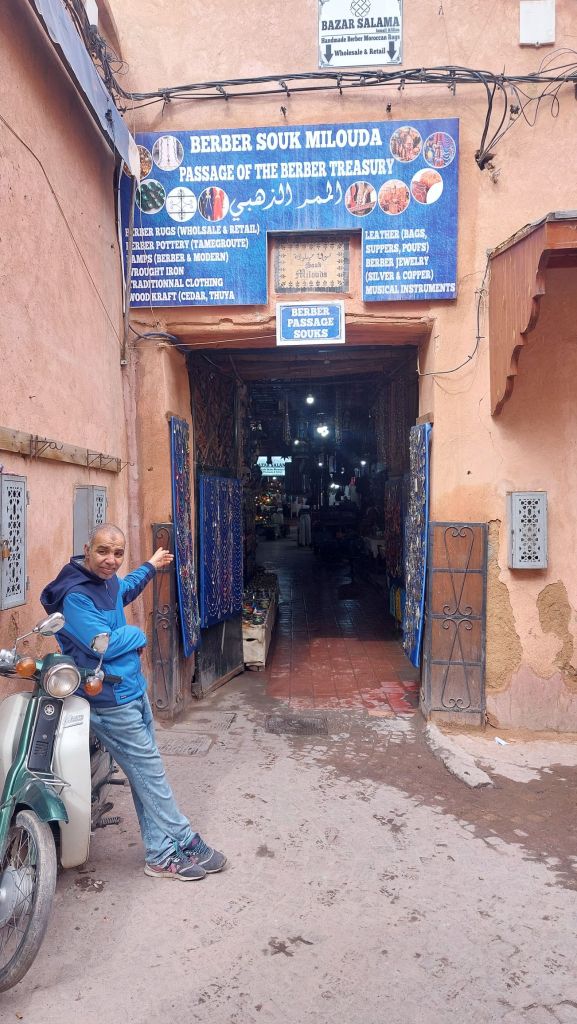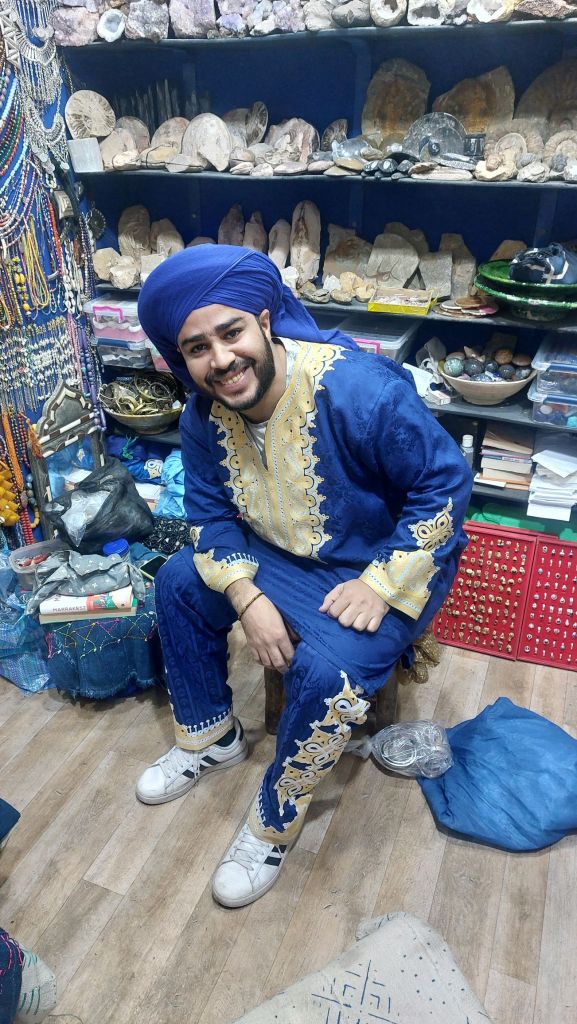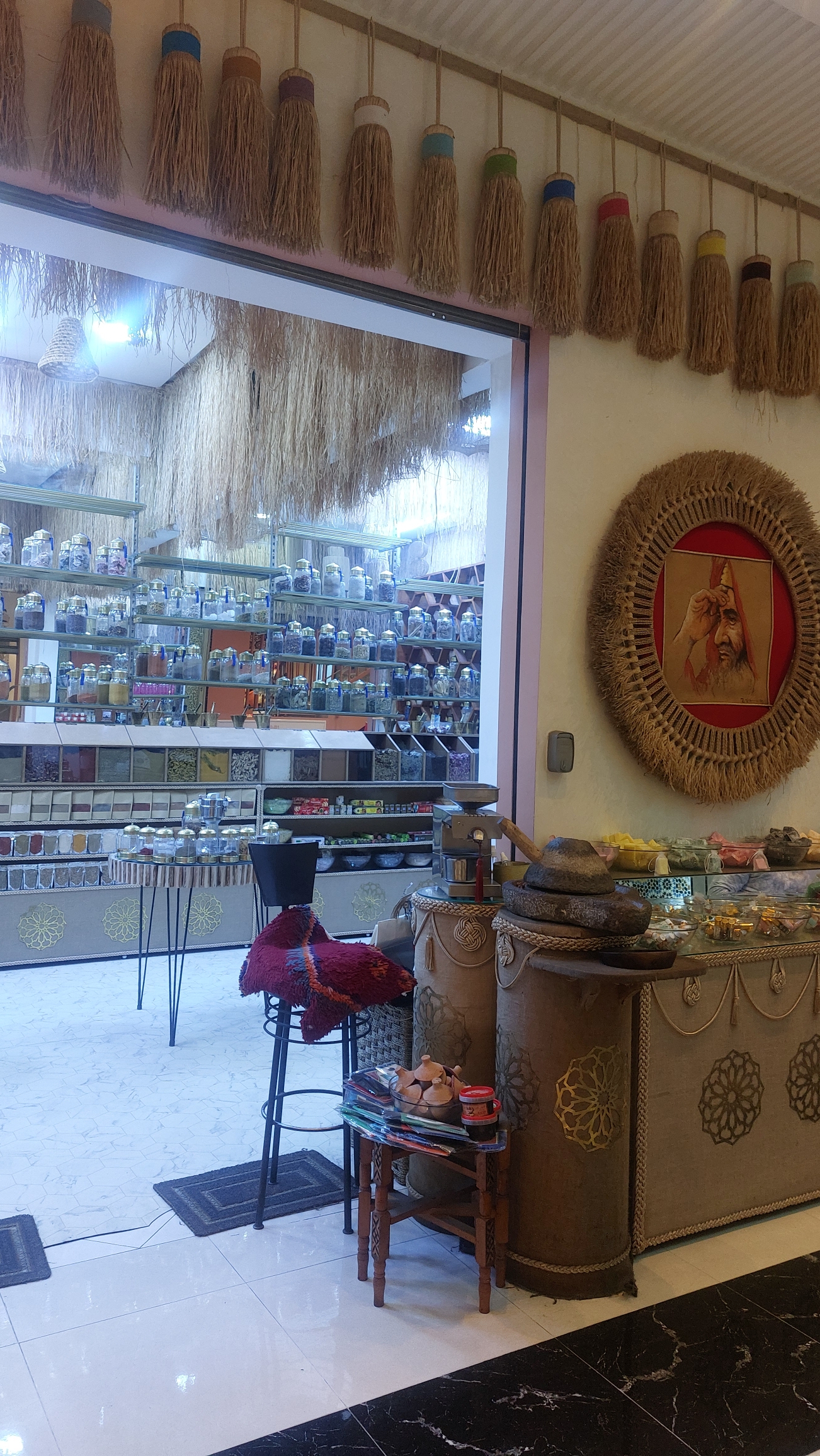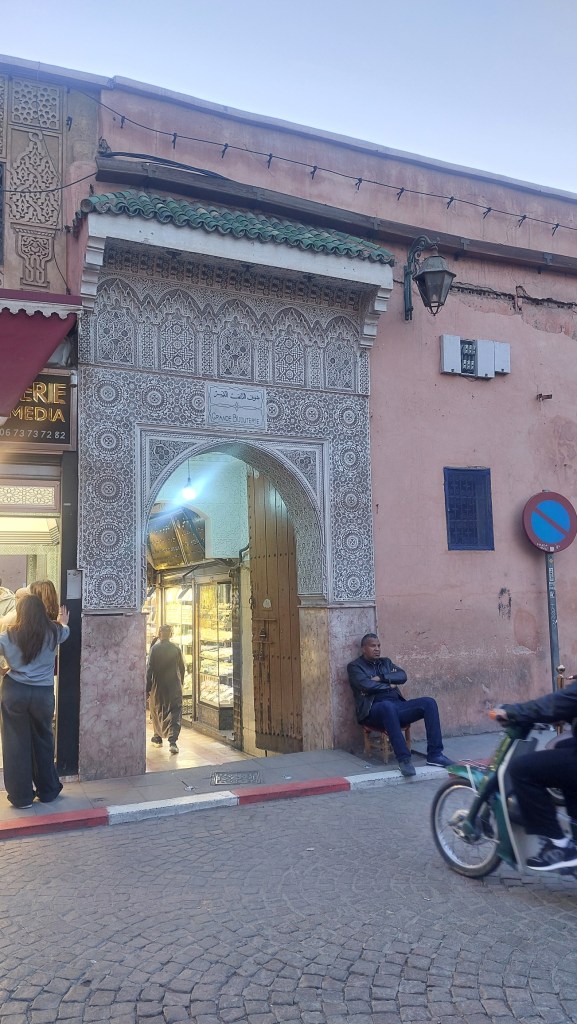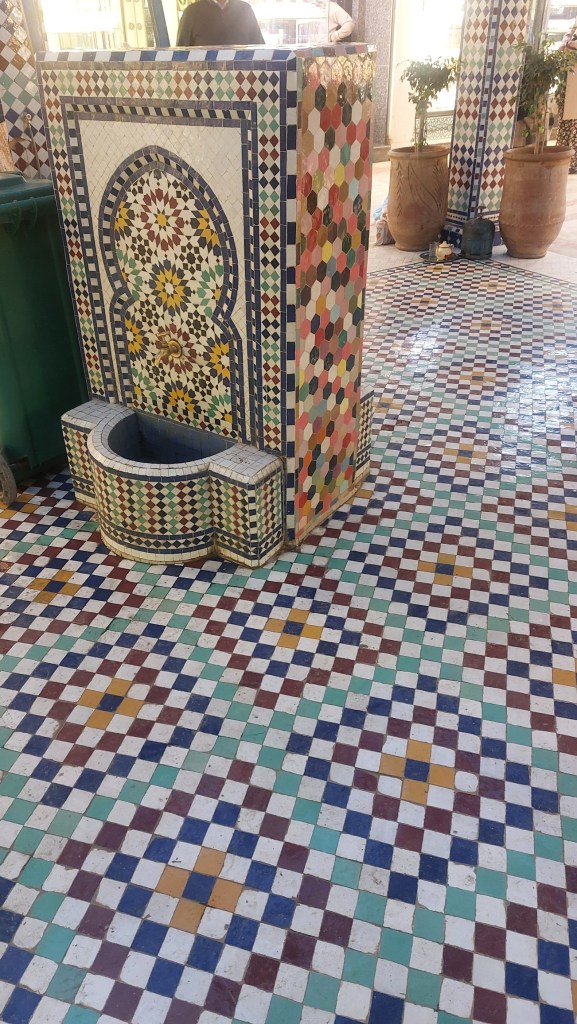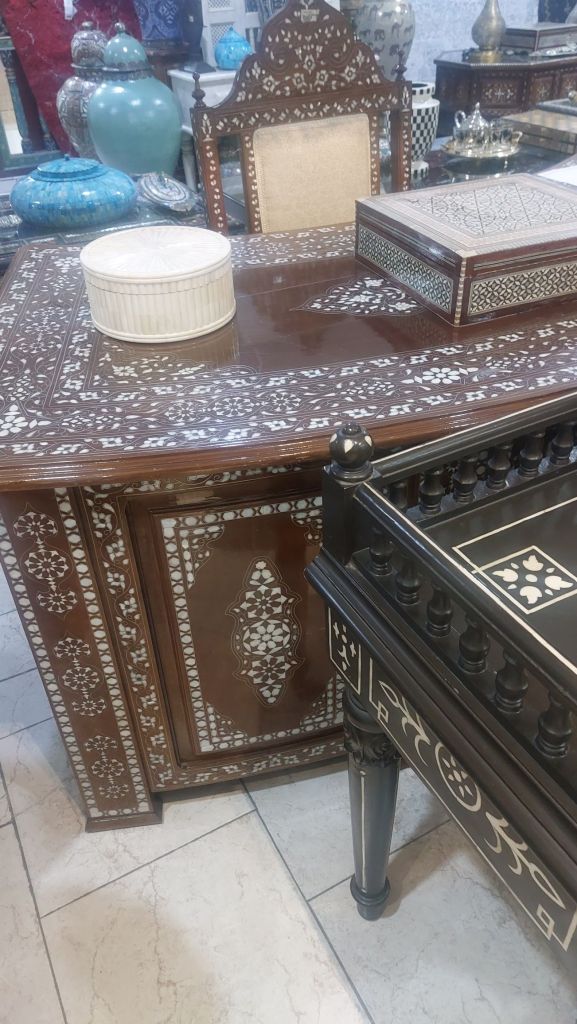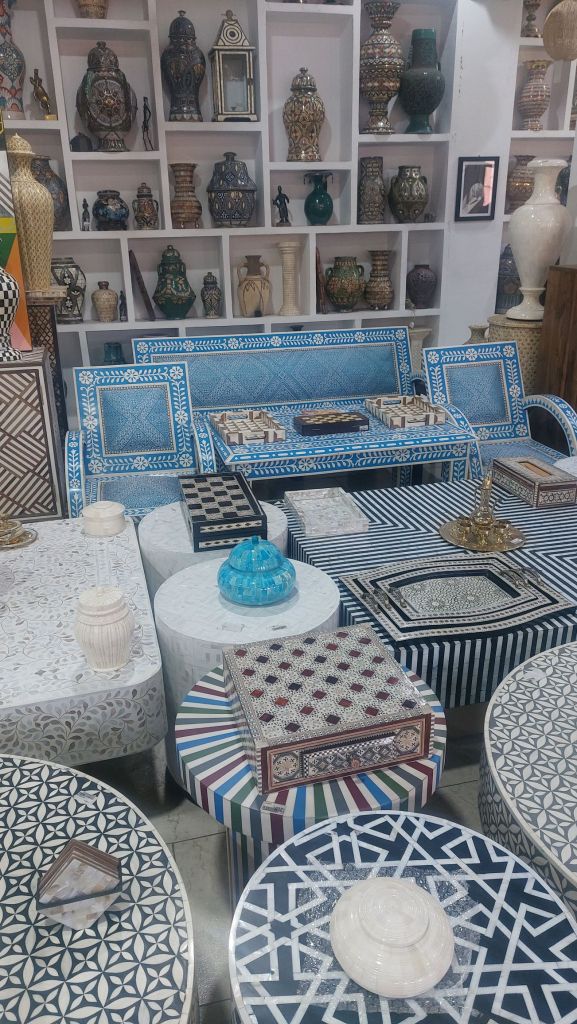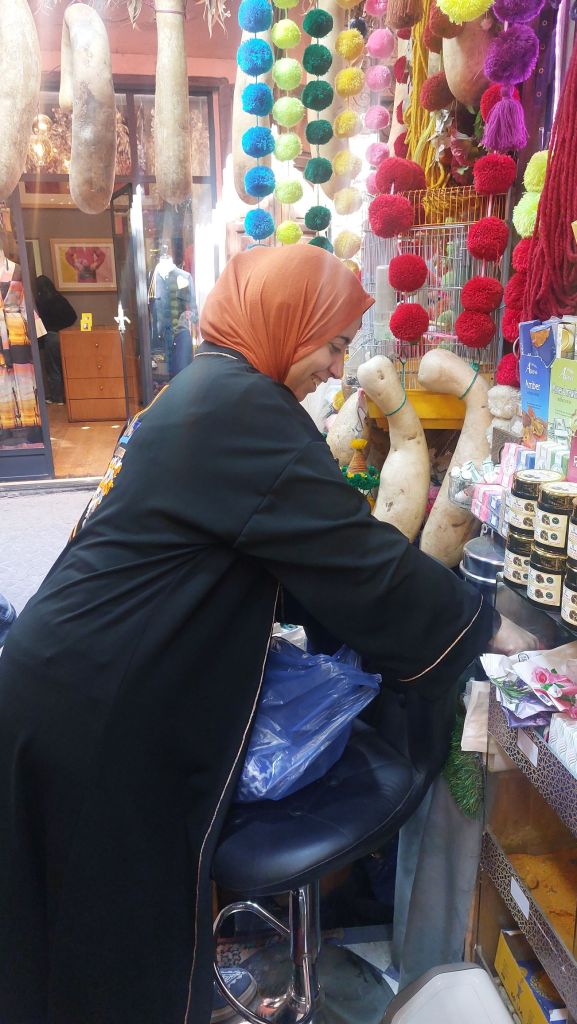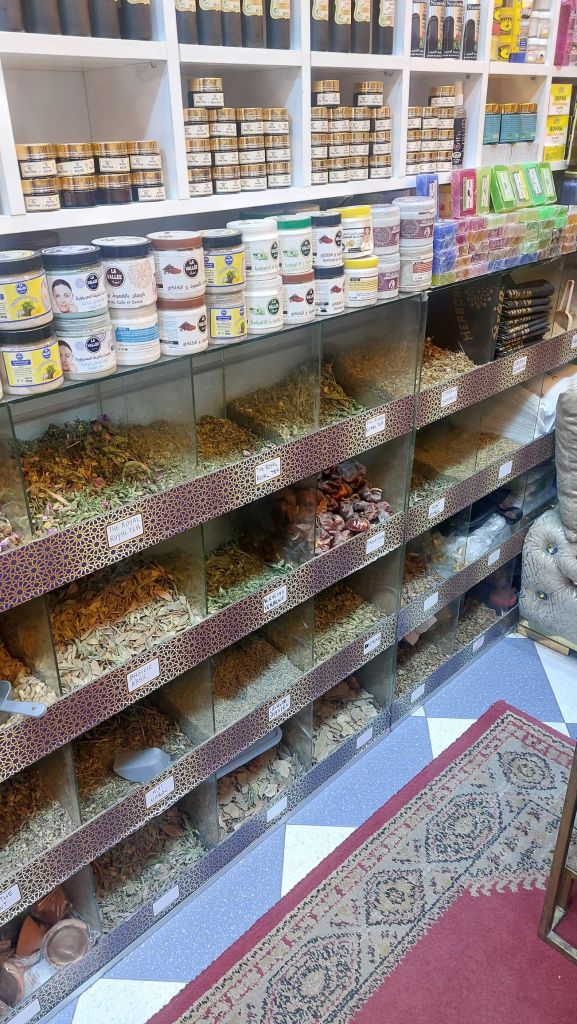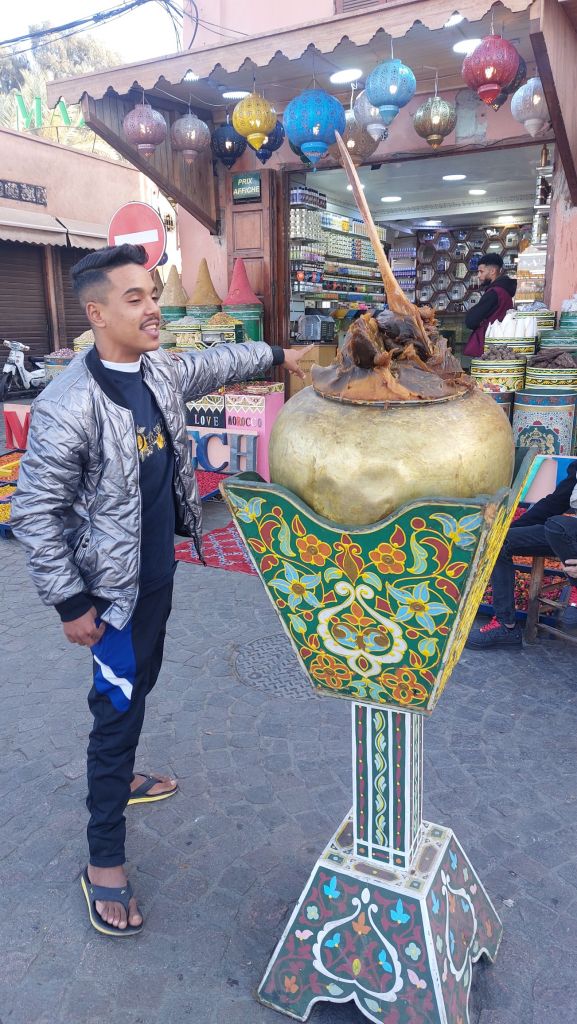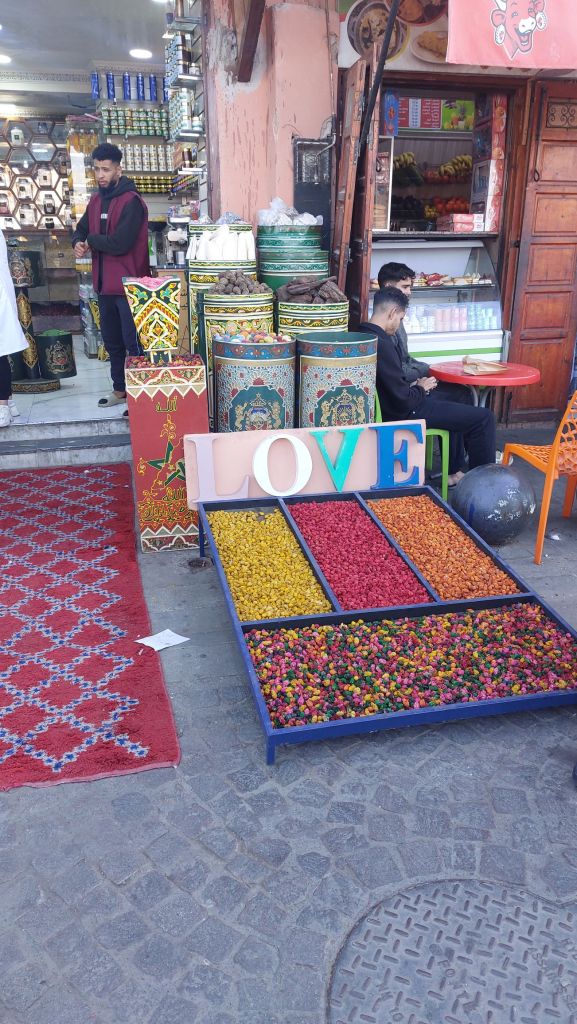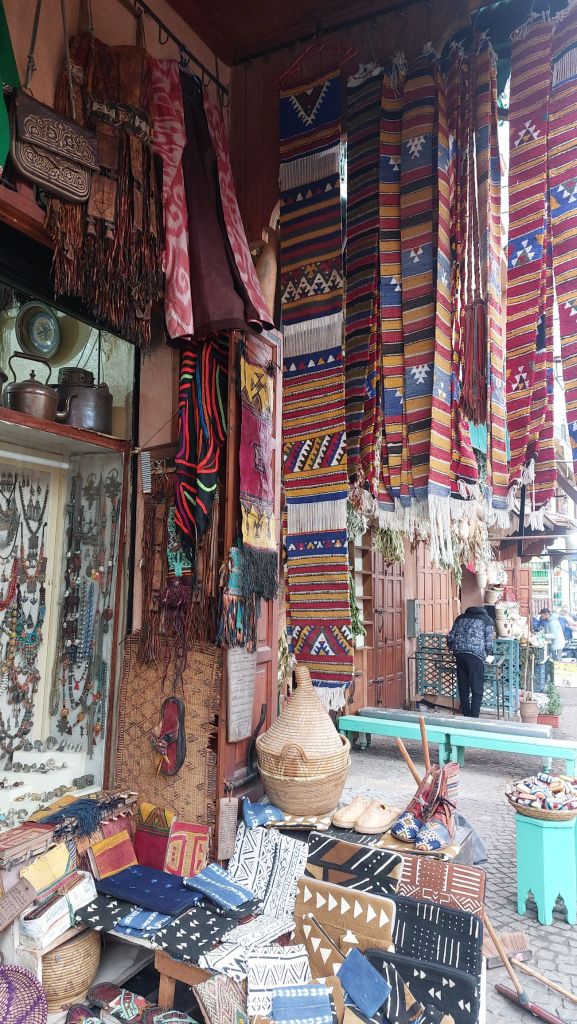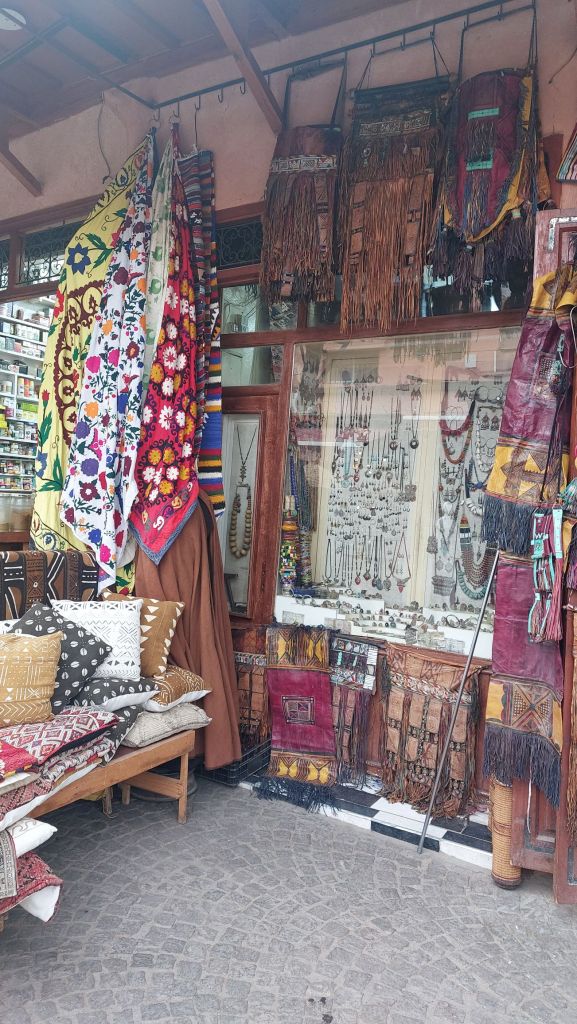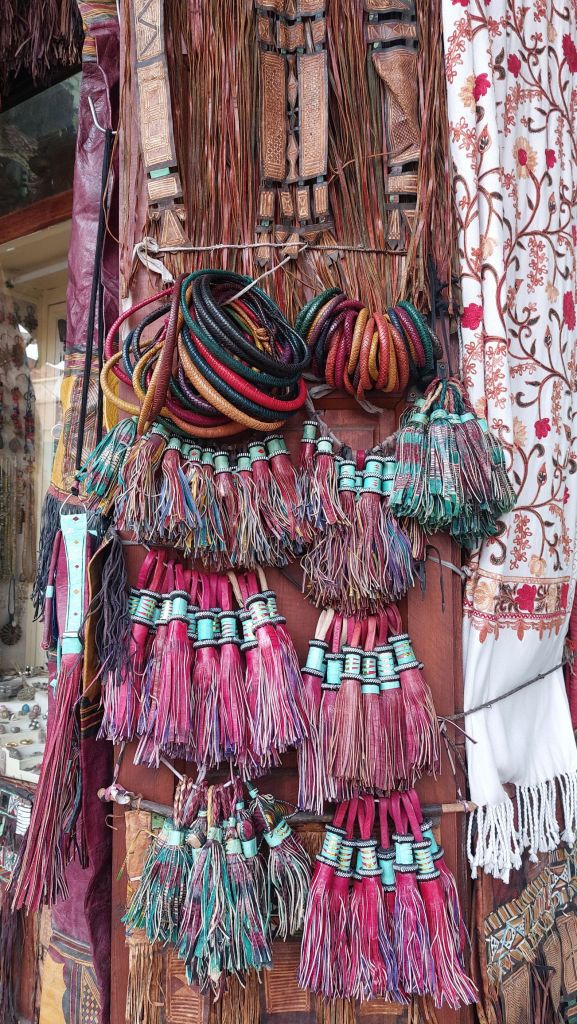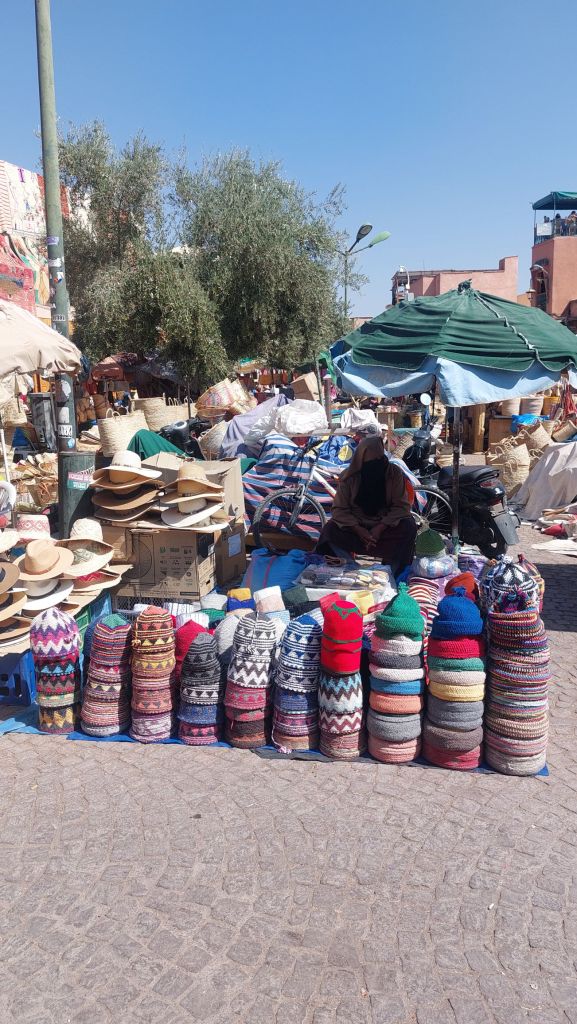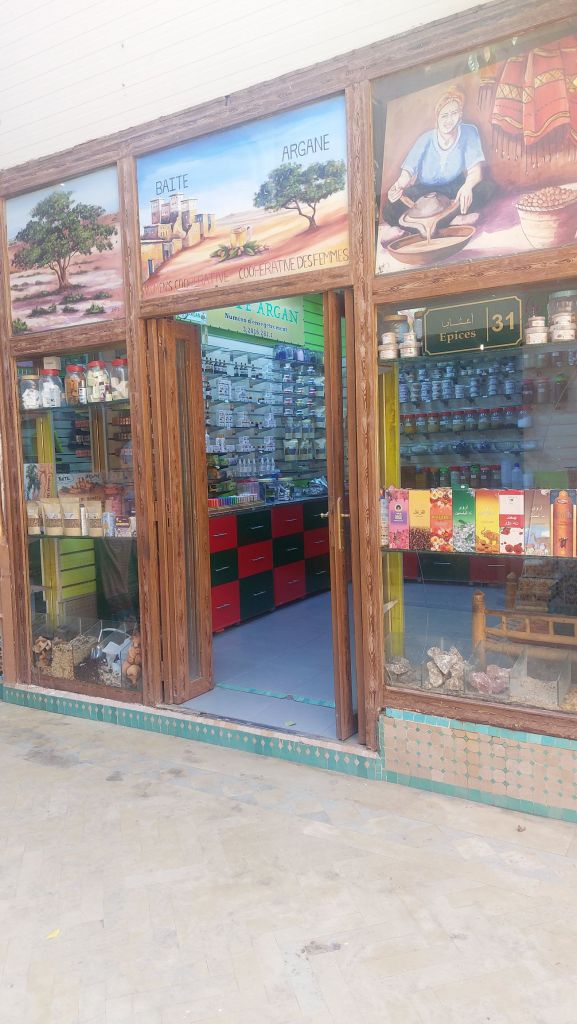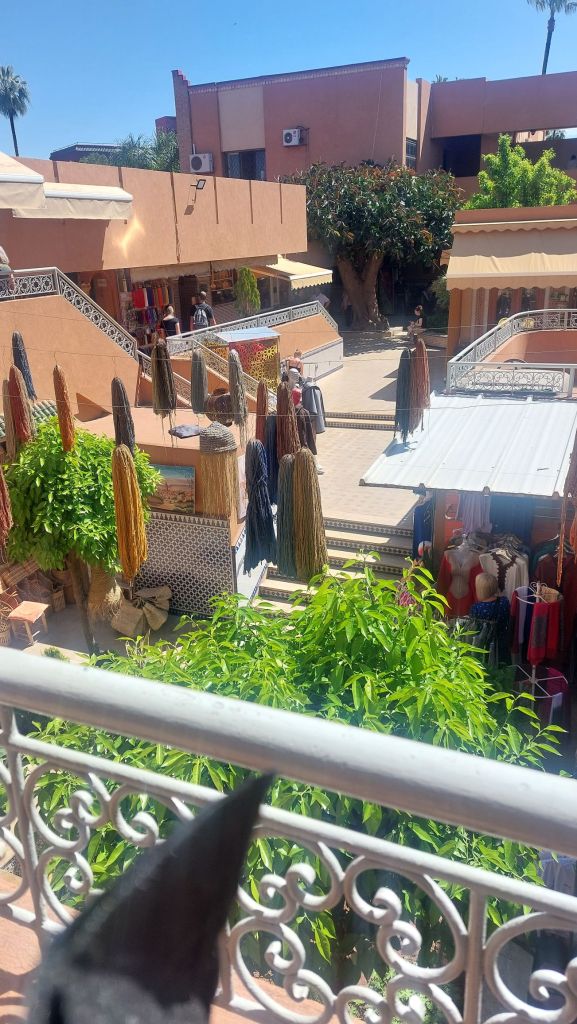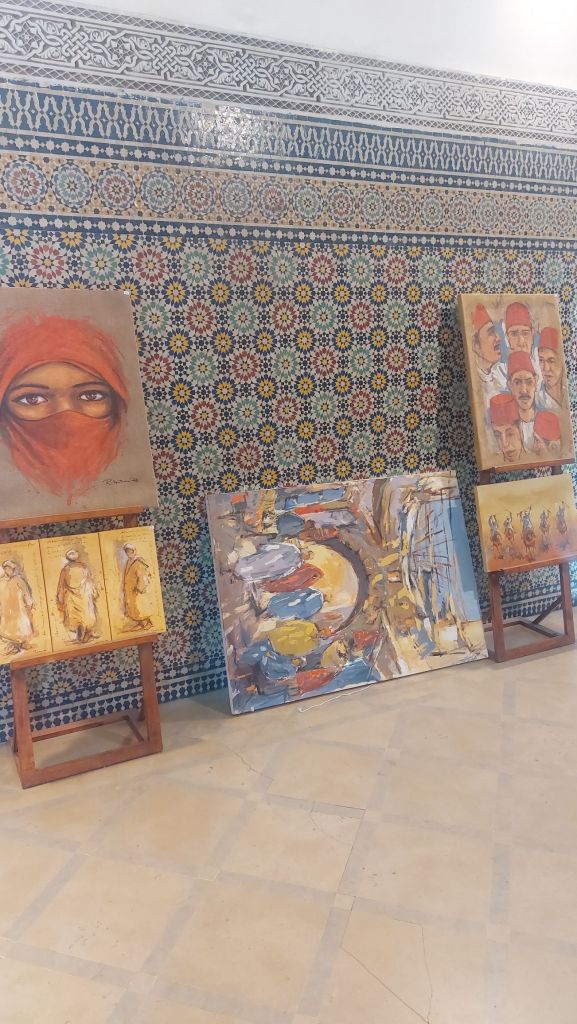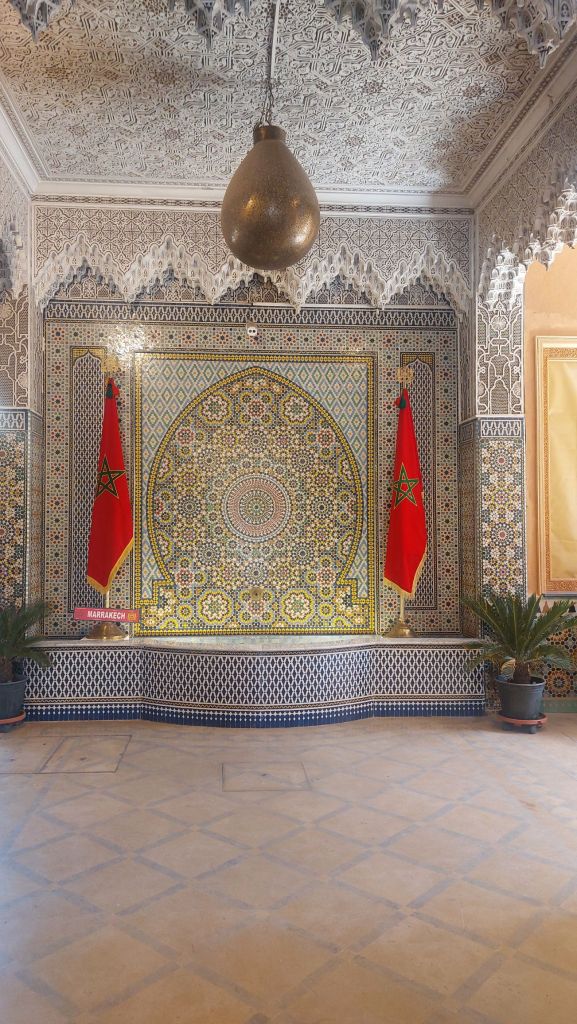
The Spice Square, also known as Rahba Kedima, is a smaller market, less densely packed with tourists.
It is located at the end of Souk Semmarine and a five minute walk from Jamaa El Fna.
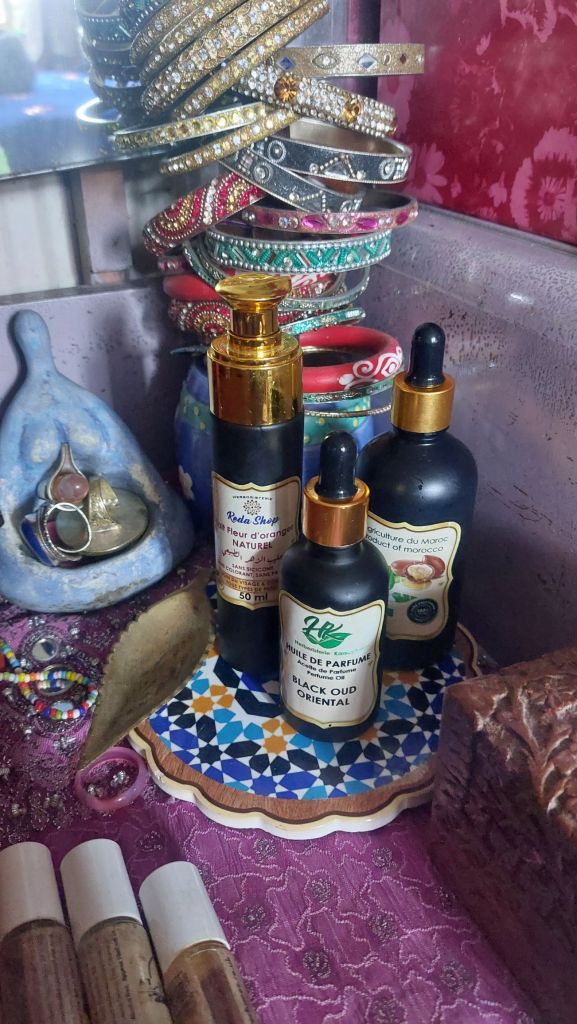
It is here that you will find a wonderful selection of spices, including saffron, cumin, and turmeric.
The spices are beautifully displayed in pyramids around the square, and the air is fragrant with the scent of incense.
There are dried herbs, oils, potions, tea, and the traditional Moroccan lip stain.
The Spice Square is the traditional apothecary of Marrakech and a treasure trove of Moroccan culture.
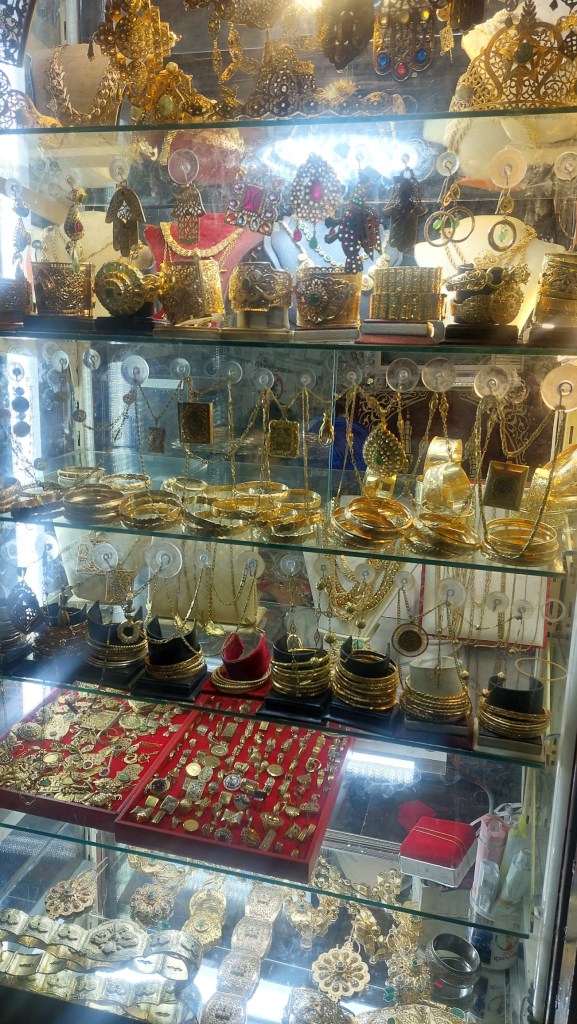
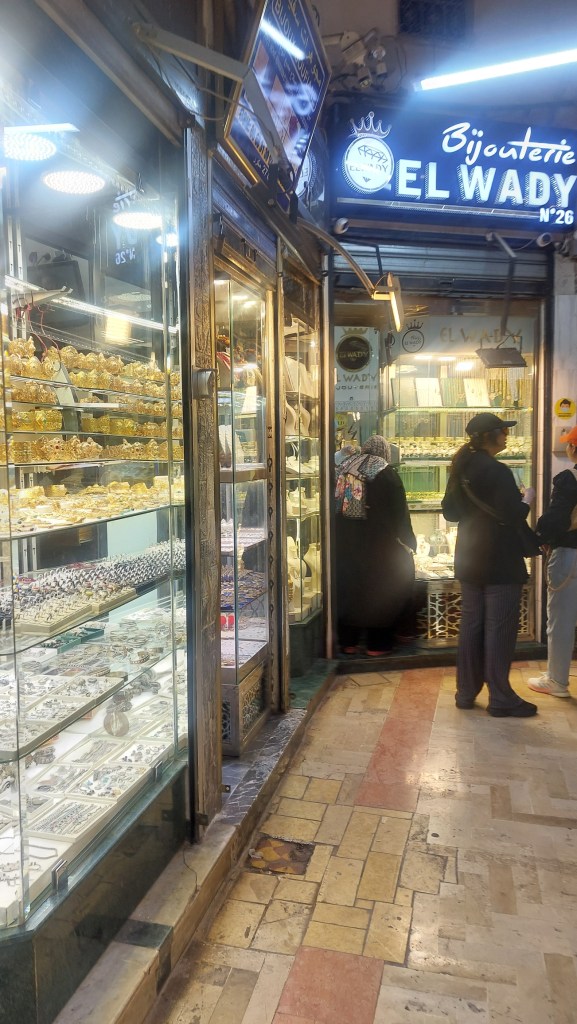
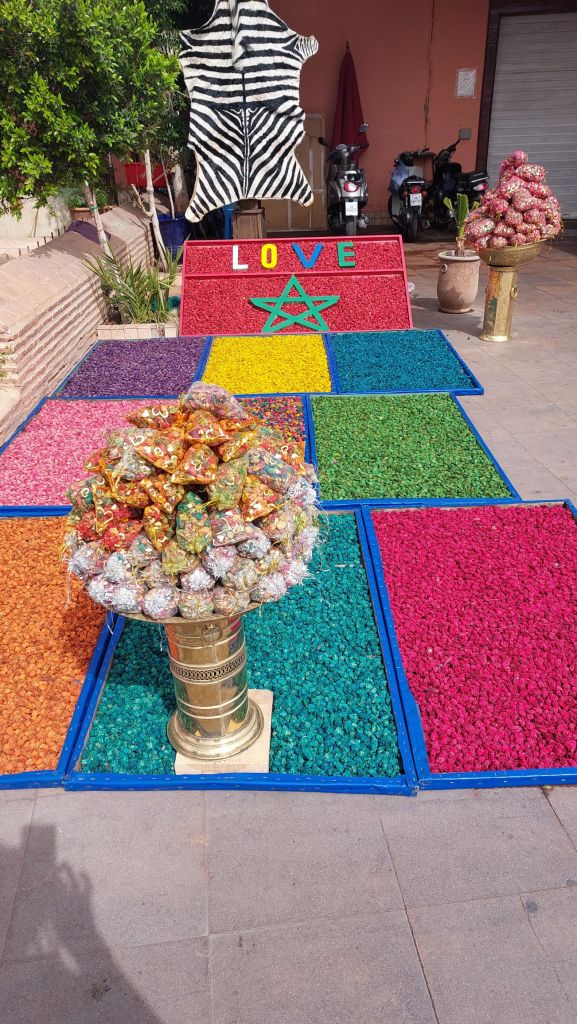
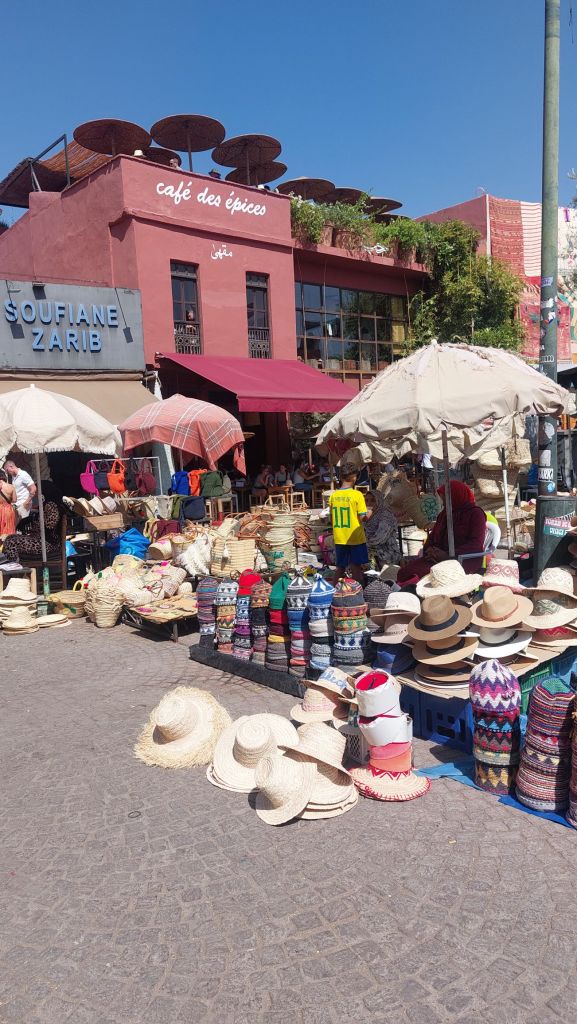
In the Spice Square, you will also find hand woven baskets, hats, baby tortoises, and a range of shops selling Amazigh jewellery and other stuff.
Images by Freebird Tracey.
It is a vibrant, colourful market with a less frantic pace than Jamaa El Fna.
It is home to popular restaurants like the Cafe Des Espices, a rooftop restaurant that overlooks the market.
Nomad is also in close proximity to the Spice Square.
The Spice Square is not far from the Medersa Ben Youseff and Marrakech museum, so it’s ideal for making it part of your day when visiting both of these attractions.
Until the 20th century, Rahba Kedima was the cities grain market and the place where slaves were sold.
It is now the epicentre of the medina where you can pick up the famous Moroccan spice blend ras el hanout and watch the spice sellers who come down from the mountain villages at 4.00 in the afternoon to sell their trade to the professionals.
The smells and colours are heady with friendly vendors, demonstrating the benefits of eucalyptus.
The Spice Square is a photogenic place where you will be met with a glimpse of trading traditions from the past.
It’s the perfect balance between a bustling market experience and a relaxing, more laid-back atmosphere.
This quieter area of Marrakech is often overlooked by tourists.
Tinsmiths Square is located to the south of Jamaa El Fna.
It is within the Mellah, the oldest Jewish quarter of Marrakech.
It is here that skilled artisans make their wares to sell using traditional methods passed down through generations.
Beautifully crafted jewellery, lamps, and traditional daggers made from copper and tinplate are skillfully handcrafted in this fascinating area of the city.
Tinsmiths Square presents a calmer alternative to Jamaa El Fna with palm trees lining the pedestrian friendly walkway.
It connects the old Jewish district with the Muslim quarter.
Tinsmiths Square is a colourful, vibrant area with lots of spice shops, rooftop restaurants, and shops selling intricately carved items made in small workshops.
There are comfortable benches around the square to sit and take in the sights and sounds of authentic life here and a central fountain.
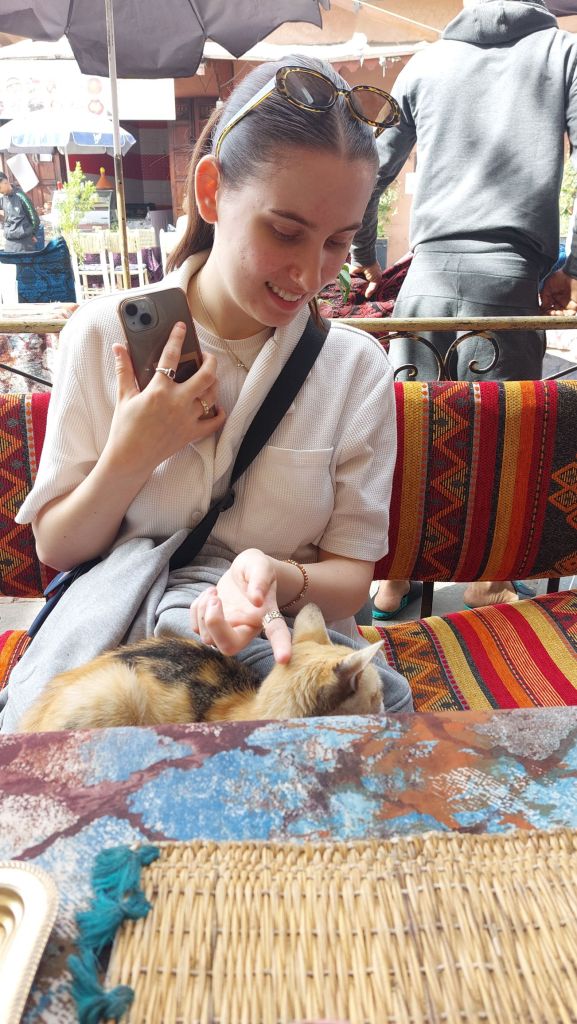
Cats roam freely across the square and are a popular sight, lazing in the plant pots and flower beds.
Sometimes, they are quite cheeky and make themselves comfortable on tourist’s laps.
Image by Freebird Tracey.
Fun games occasionally take place, and the square sometimes hosts events.
Place des Ferblantiers is close to popular sightseeing spots like The Bahia Palace, El Badi Palace, and The Saadian Tombs.
The Kasbah is just a short walk away.
I love Tinsmiths Square.
There are some great cafes and restaurants and I have bought some perfect souvenirs here.
There is a great vibe, and the pace is much more relaxed than in the densely packed medina.
Video by Freebird Tracey.
I was spoilt for choice with all the fragrant spice shops selling everything from eucalyptus to argan oil.
Images by Freebird Tracey.
I even found a street vendor selling the tastiest dates I’d ever tried.
If you want a feeling of authentic life in Marrakech and a slower, less touristic place to spend a few hours, don’t miss out on visiting Tinsmiths Square.
I have featured a few articles in my blog recommending places to dine in this area and places of interest to visit.
A fixed price store in the Kasbah selling everything.
If you are fed up with haggling every time you want to buy something, there is a fixed price store in the Kasbah called Dar Bouchaib.
Here, you will find everything that’s for sale in the souks but at a fixed price.
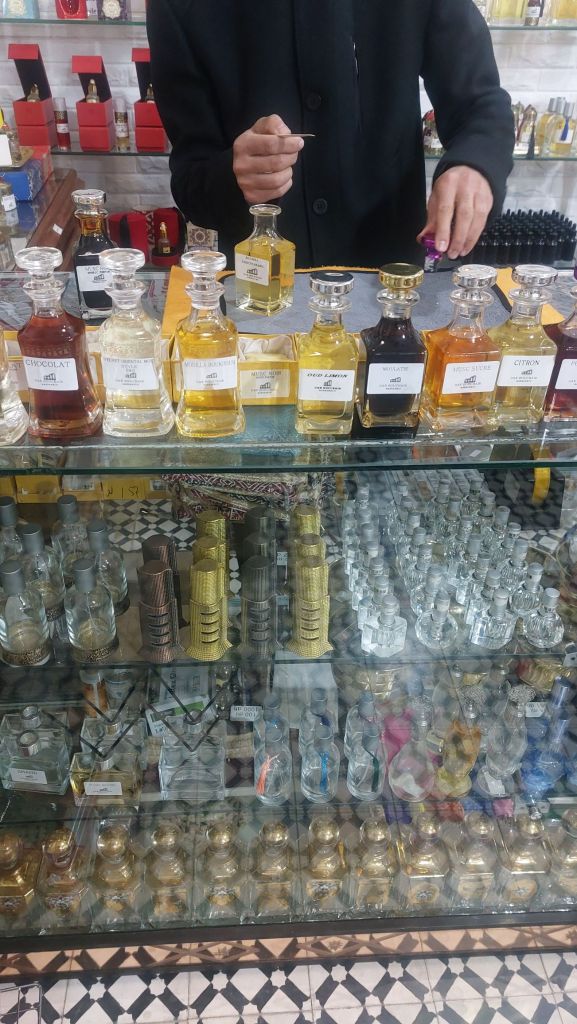
The perfumed oils are of a very high quality, and you can create your own signature fragrance by blending several oils together.
Image by Freebird Tracey.
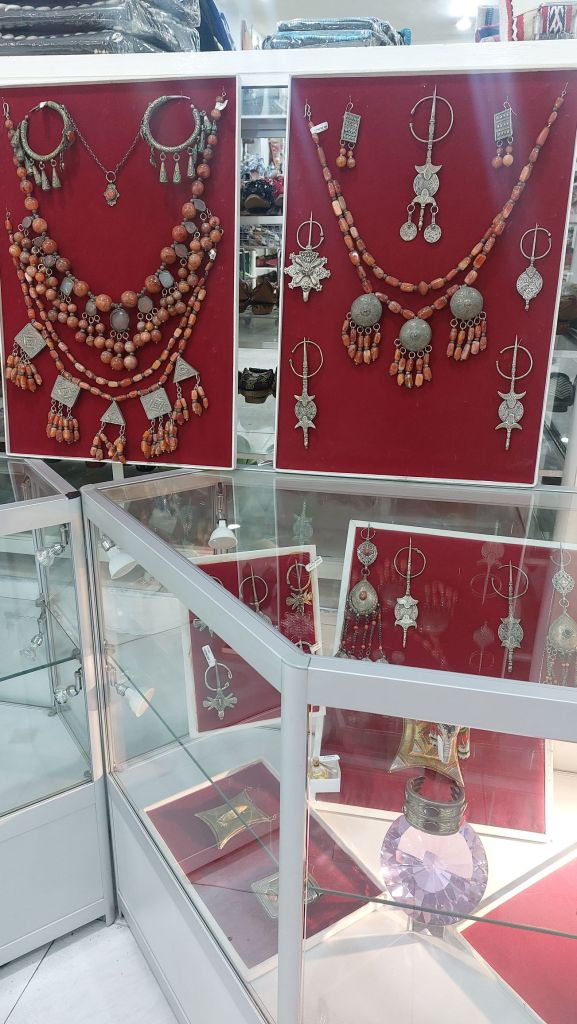
On the ground floor, there are ceramics, jewellery, clothing, footwear, bags, souvenirs, and much more.
Images by Freebird Tracey.
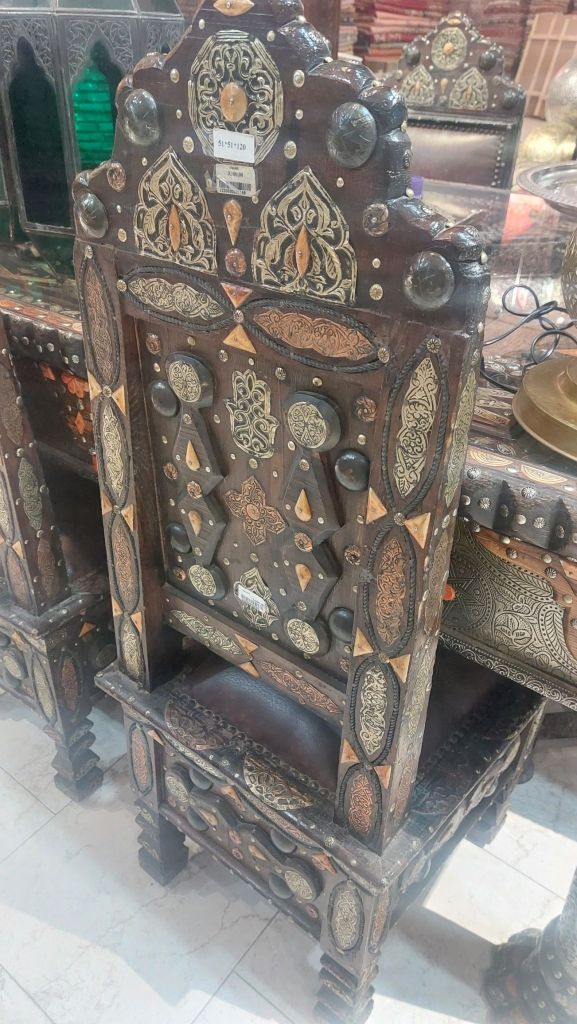
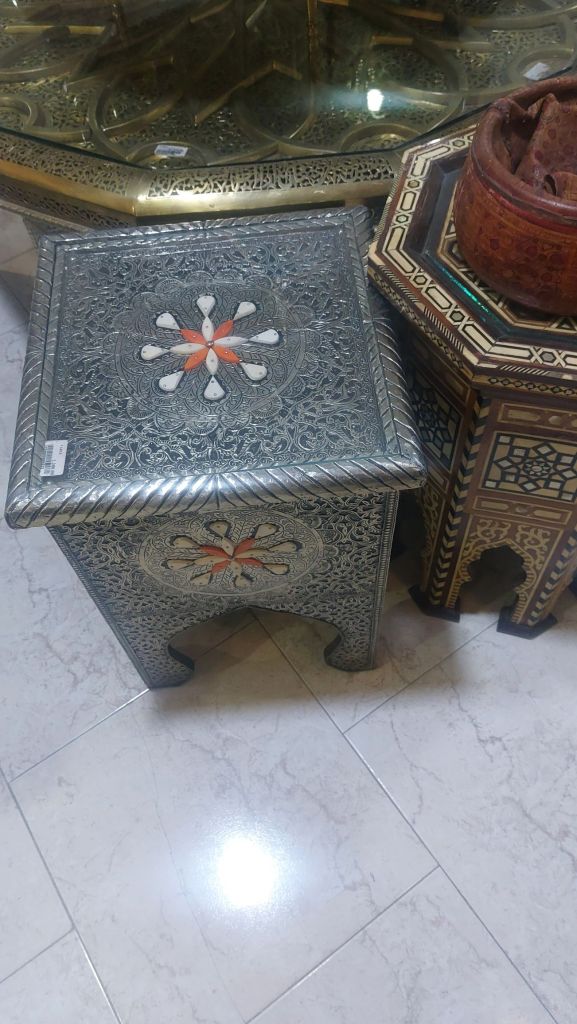
On the first floor, exquisite furniture, mirrors, Berber rugs, and other beautiful handmade pieces to furnish your home with.
They also ship worldwide.
The staff are incredibly helpful, and you can wander around the shop leisurely without any pressure to buy.
The store is huge and worth visiting just to see the craftsmanship and detail that’s gone into creating the furniture and mirrors on the upper floor.
Images by Freebird Tracey.
The Kasbah is a 15 – to 20-minute walk from the main square with plenty of interesting shops and good restaurants along the way.
Here, you will find the Saadian tombs and El Badi Palace.
Dar Bouchaib can be found on;
Rue de La Kasbah,
Marrakech 40000.
Opening times are;
Daily from 9.00 am until 8.30 pm.
Bank holiday hours may differ.
Although part of visiting Marrakech is to enjoy shopping in the souks, sometimes haggling and knowing how much you should be paying for something can become slightly stressful.
Dar Bouchaib is a relaxed shopping experience with everything under one roof.
The prices are fixed and reflect what you should be paying for each item.
There is also a massive selection of wonderful Berber rugs for sale in the store.
Make it part of your visit to the Kasbah area.
You won’t be disappointed.
Images by Freebird Tracey.
Dar Bouchaib is a few steps away from Krepchy.
If you’re sightseeing in the kasbah, I would recommend taking a look around this impressive store.
You may find something interesting to take home with you.
A look at how you can spend a typical day in the red city.
Image by Freebird Tracey.
The perfect day in Marrakech begins by waking up early to watch the sunrise from the rooftop of my riad.
I listen to the birds singing in the courtyard and hear the sound of the medina as it gradually comes to life.
I watch cats prowl along the rooftops, and below me, I can hear the clattering of plates as staff prepare a delicious breakfast.
The first glass of freshly squeezed orange juice hits the spot perfectly.
I enjoy a breakfast of msemen pancakes with homemade jam, amlou, and honey.
Fresh fruit, yoghurt, and eggs.
Image by Freebird Tracey.
After a refreshing shower, I head out into the medina for a glass of atay in a cafe overlooking the main square.
Sat outside, I observe the vendors setting up for the day.
The entertainers are getting ready to entice the crowds of tourists, and the local ladies are on their way to the market for fresh herbs and spices.
Images by Freebird Tracey.
My next destination is the souks before they get too busy.
Vendors are eager for their first sale of the day, and bargaining is much easier early in the morning.
The colourful array of things on offer is a sight to behold.
Images by Freebird Tracey.
Cats gather for a few morsels off the butcher, and locals toss a few titbits for them to eat.
They vye with each other for the perfect spot in which to laze around in the sunshine.
Image by Freebird Tracey.
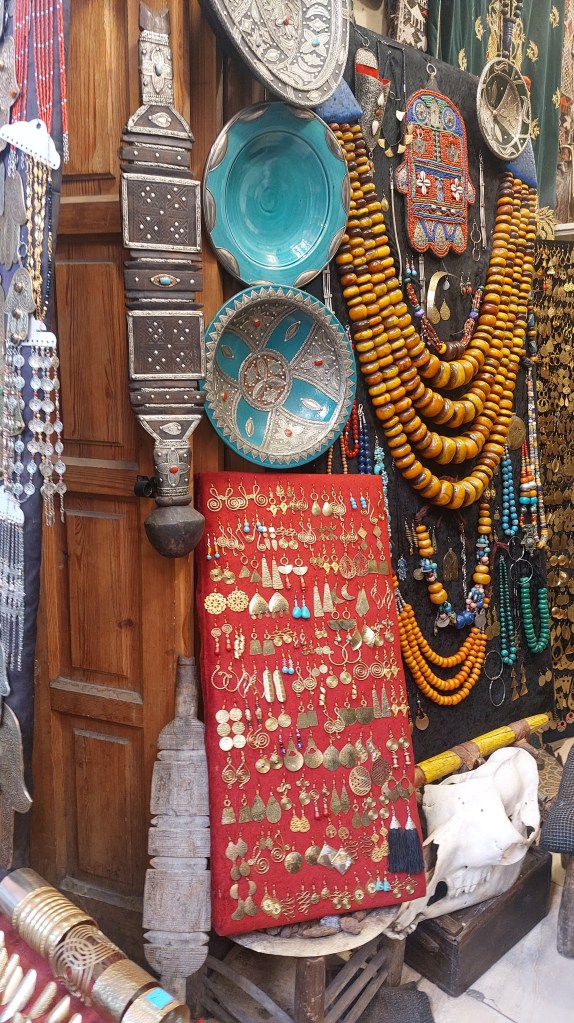
I check out the wonderful Amazigh jewellery, the argan oil, and the beautiful ceramics and mirrors on display in the narrow alleyways.
At the same time, I dodge motorcycles and donkey carts as they make their way to wherever they’re going.
Images by Freebird Tracey.
I buy one or two souvenirs, promise to go back for other things, and then decide it’s time for a light snack.
A cafe with colourful outdoor seating calls out to me, and I choose a selection of delicious pastries with a pot of mint tea.
I sit for a while people watching and enjoy the scenes as they unfold around me.
Images by Freebird Tracey.
It’s fascinating watching daily life go by in the medina.
Tourists look in awe at the beautiful things for sale, and vendors call out to them with their friendly banter.
After recharging my batteries, it’s time to do some sightseeing.
I head towards Madrasa Ben Youssef and take the opportunity to get some photos of the stunning architecture.
Images by Freebird Tracey.
The medina is beginning to get very busy, so I make my way to the gardens of the Koutoubia Mosque to sit quietly for a while.
I take in the beautiful surroundings and relax amongst the beautiful trees and plants.
I watch the fountain.
It feels cool and refreshing as it sprays up into the air beside me.
Image by Freebird Tracey.
Afterwards, I treat myself to a sugarcane juice from a vendor outside.
It’s an acquired taste but goes down well as the day is steadily getting warmer.
Image by Freebird Tracey.
The heat is becoming quite intense, so I return to my riad for a rest.
I make my way up onto the rooftop for a spot of sunbathing.
Image by Freebird Tracey.
The call to prayer echos across the medina.
A familiar sound that echos across Marrakech five times a day.
I read a book and order myself a cold drink which arrives with olives.
Soon, it’s time to get ready for the evening.
I decide to go to La Pergola rooftop bar for a couple of cocktails.
Image by Freebird Tracey.
It’s a lively atmosphere, and there are lots of people enjoying a drink and chatting.
Afterwards, I head towards Jamaa El Fna.
The energy is electric.
Food vendors touting for business, dancing, drumming, and crowds of tourists gather to witness the spectacle.
The smell of food cooking makes me feel hungry, so I decide to find a nice place to dine.
I choose a place that has a rooftop overlooking the square to watch the sunset.
Image by Freebird Tracey.
I enjoy a traditional tagine, which is flavourful and aromatic.
I’m tempted by the exotic sounding smoothies on the menu and treat myself to one containing dried fruit.
I watch the beautiful sunset and everywhere has a golden glow.
I am satisfied and content, but the evening is still young.
I take a leisurely walk to The Clock, situated in the kasbah to listen to some traditional storytelling.
After an interesting time immersing myself in the culture of Morrocco, I decide to head back to my riad.
I pick up a few more souvenirs along the way.
Image by Freebird Tracey.
Back at the riad, I sit in the courtyard reflecting on my day.
Image by Freebird Tracey.
I ask the staff for suggestions for the next day.
We chat about possibilities, and they help me put together a few ideas.
I have had a perfect day..
I have experienced a different culture, tasted delicious food, watched a magnificent sunset, chatted with friendly locals, and navigated my way through the maze of souks without getting too lost.
I fall asleep.
I am tired but happy and ready to do it all again tomorrow.
There is everything that you could possibly dream of buying in the wonderful souks of Marrakech.
As you meander through the maze of colourful alleyways, be prepared for a complete assault on the senses.
From beautiful jewellery to exotic spices, leather shoes and bags, to Morroccan lamps and ceramics.
It’s all here crammed into narrow alleyways and calling out to be bought and taken back home with you.
Images by Freebird Tracey.
The skilled craftsmanship is astonishing, and you can find areas dedicated to making and selling different things.
There is a separate place for leather goods, a place where metal workers make beautiful Moroccan lamps and metal sculptures.
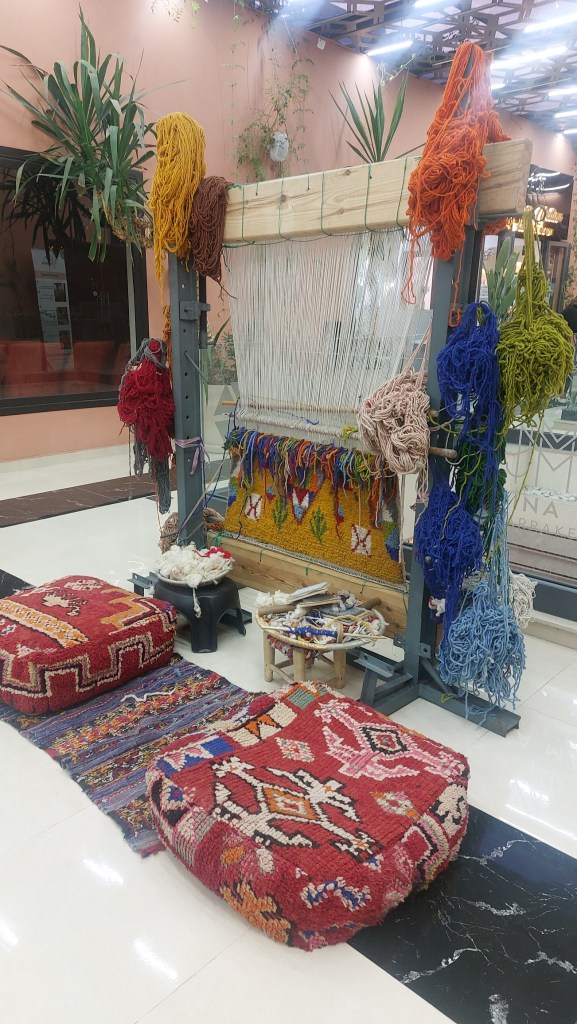
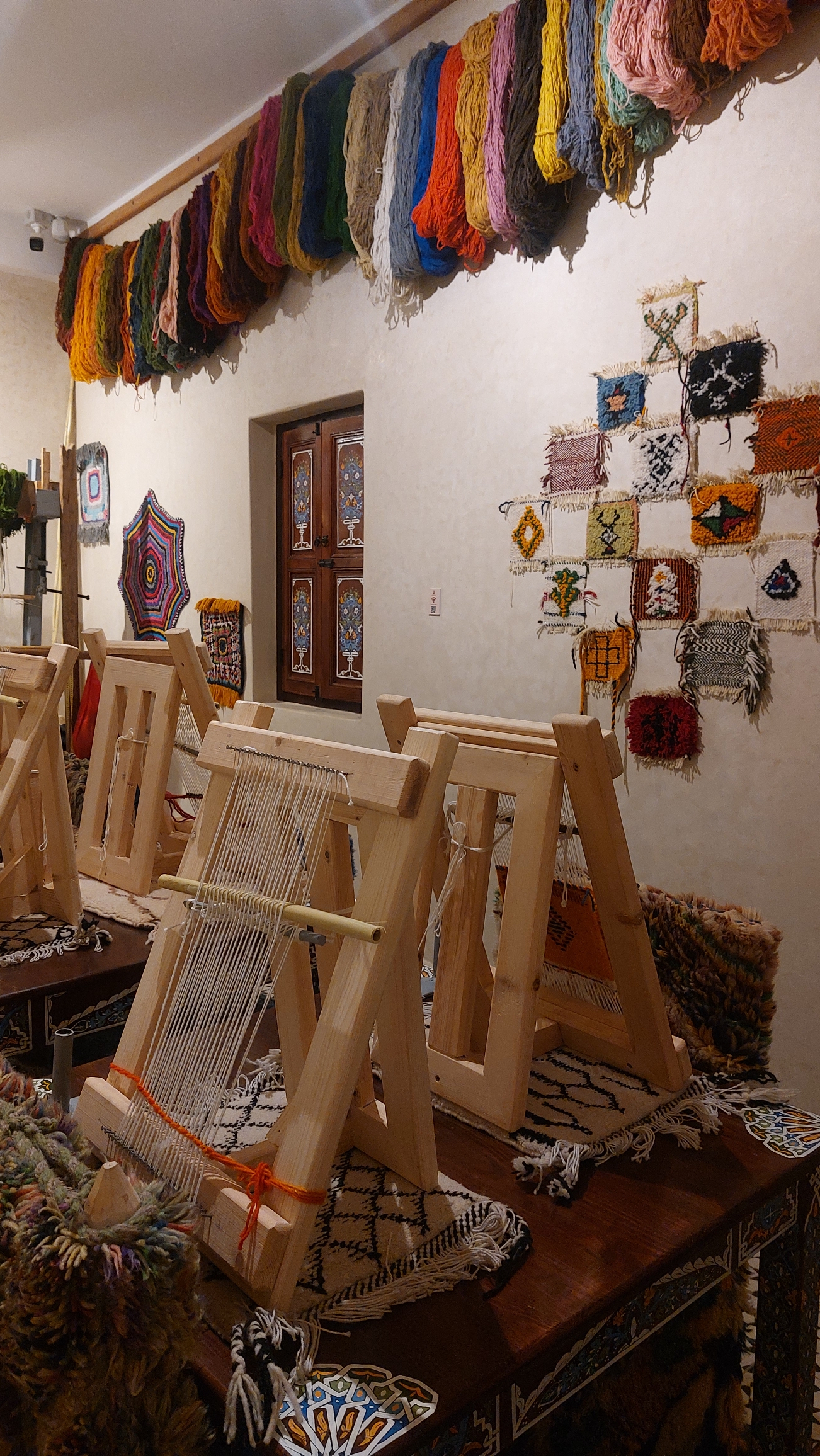
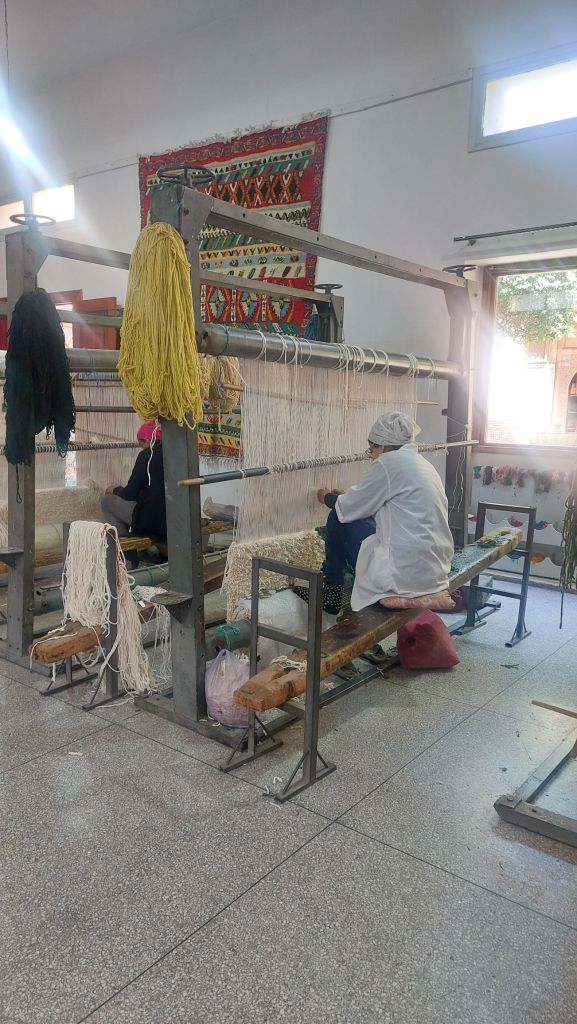
An area where wooden things are handmade and rug weaving is demonstrated.
Images by Freebird Tracey.
It’s a lovely experience watching the locals make their goods to sell, and there is also the opportunity to have a go at making things yourself, such as a pair of babouche shoes.
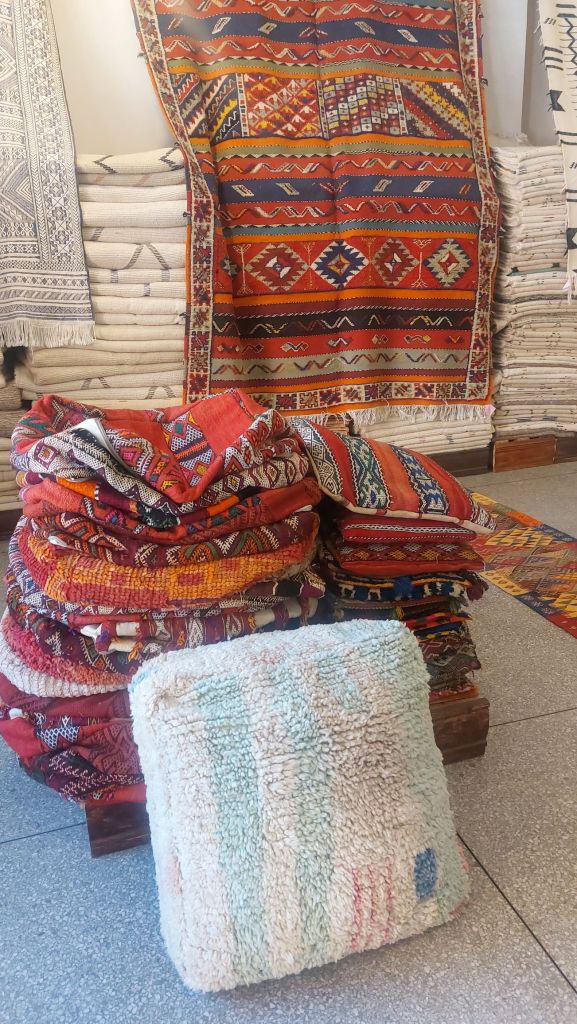
Berber rugs hang proudly around the medina. Each colour and pattern is a feast for the eyes.
Image by Freebird Tracey.
Argan oil and morroccan black soap, orange blossom oil, and gardenia float on the gentle breeze.
The smell is so fragrant in the souks.
Images by Freebird Tracey.
Wooden boxes ornately decorated with mother of pearl, chess sets, and traditional toys tempt you for the perfect souvenir to take back for your family and friends.
Images by Freebird Tracey.
The soft furnishings such as cushion covers made from cactus silk are eye-catching and colourful.
Image by Freebird Tracey.
Then there’s the nuts, sweets, and pastries for sale.
Moroccan sweets are a delicacy, and you’ll find yourself spoilt for choice.
Image by Freebird Tracey.
The medicinal herbs and spices are a cacophony of colours and fragrances.
Fresh olives with a hint of spice pop with colour.
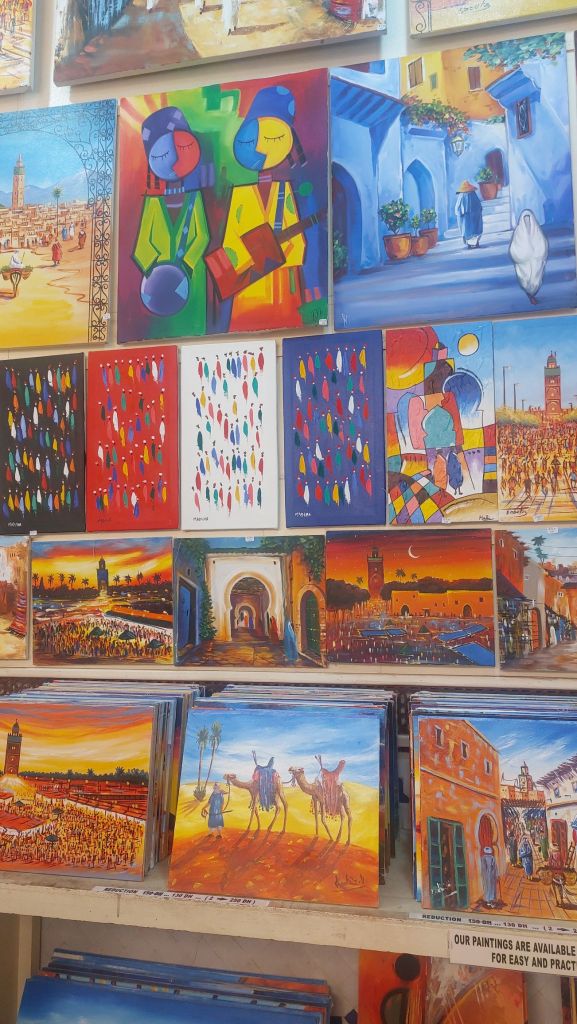
Paintings and prints of traditional Morroccan doors, Amazigh people and camels crossing the Sahara desert.
Images by Freebird Tracey.
For people who love to shop until they drop like I do, Marrakech is an absolute delight.
It’s not all fun and laughs, though.
The souks are incredibly busy with tourists.
You also have to dodge motorcycles, donkeys, and vendors with carts.
You can expect to get lost, but that’s all part of the experience.
No one went into the souks and was never heard from again…
So, fully immerse yourself in the experience and enjoy every minute.
It’s unforgettable.
It will invoke the spirit of camel caravans and ancient trade routes from centuries ago in you.
A way to fully delve into the wonderful culture of Marrakech.
Images by Freebird Tracey.
Here are a few helpful tips to help you enjoy the souks.
First of all, pace yourself.
The souks are very busy and can feel slightly chaotic at times, especially in the heat.
Stop for a drink and rehydrate.
Rest for a while, and try a spot of lunch on a rooftop cafe. There are plenty inside the souks.
Be prepared to haggle. It may seem daunting at first, but you’ll soon get the hang of it.
Stay vigilant, and keep your wits about you.
Marrakech is a safe city, but pick pocketing can happen just like anywhere else in the world.
In crowded, narrow streets, keep your possessions safe in a closed bag at the front of your body.
If you’re lost, look for signs above your head pointing you back to Jamaa El Fna.
Having an orange sim is useful but may not always work in the denser parts of the souks.
If you need help, ask a shop vendor. They’re usually more than happy to help you.
Don’t be tempted to accept directions from locals who may lead you to a friend or family members’ shop so that they can get commission if you buy something.
You may struggle to get away, and you may find yourself seated and drinking mint tea before you know it.
Take time to shop around and walk away if you don’t think you’re being offered a fair price.
You will usually find yourself being called back, and a realistic price can often be reached.
If not, the same items will most likely be found on sale elsewhere in the souks.
Exercise patience.
Remember, this is someone’s livelihood, and it’s a different culture to what you may be used to.
Wages are not very high for most people in Marrakesh, and tourists with money to spend are fair game for boosting the take-home salary of most vendors.
Image by Freebird Tracey.
Although the souks can often feel overwhelming, they are an unforgettable shopping experience.
You will be dazzled by the number of weird and wonderful items on display.
The sights, sounds, and smells will stay with you a long time after you leave this fascinating city.
Berber rugs are handmade by the indigenous Amazigh people of Morocco.
They are made from the wool of sheep in the high Atlas Mountains.
Each type of rug tends to vary in thickness, and the pattern also differs depending on which tribe or village has made it.
For example, Kilim Berber rugs have no pile and are relatively fine in texture.
They are handcrafted using techniques passed down through generations using natural materials renowned for their durability and luxurious feel.
Hand-knotting is a long and laborious process.
To create a single rug takes about one to two months, with four weavers working on a rug at a time.
There are several steps that go into making a beautiful Berber rug..
1. Shearing the Sheep
Shearing the sheep is the first step in making a Berber rug. This is done by hand, using a special shearing knife.
The sheep are first restrained, and then the knife is used to remove the wool from their body in one long strip.
The wool is then sorted and cleaned.
It is usually the job of the men to shear the sheep, taking care not to injure them or spread infection.
The women are responsible for washing the sheared wool.
2. Carding.
Carding is the process of aligning the wool fibers so the weavers can spin them into yarn. To card the wool, the fibres are first combed in one direction, and then the wool is brushed in the opposite direction.
This helps to loosen the fibers and align them in the same direction.
Once the fibers are aligned, the weavers can then spin them into yarn. Carding is an essential step in making a Berber rug, as it helps to ensure that the rug is strong and durable.
The process of carding also helps to give the rug its unique texture.
The women are often responsible for this process.
3. Spinning the wool into yarn.
To spin the wool into yarn, Amazigh women use something called a drop spindle.
This simple tool consists of a shaft with a weight at the bottom.
The wool is attached to the shaft, and then the shaft is twirled between the women’s hands.
As the shaft is twirled, the wool is wrapped around it, creating the yarn.
4. Weaving the rug.
The weavers use a technique called continuous knotting to create intricate patterns.
This method of knotting allows the weaver to create a rug that is incredibly durable and will last for many years. The process begins with the weaver tying knots in the woollen yarn.
The yarn is then dyed using natural dyes from plants, spices, and fruits, which give the rugs their characteristic colours.
Once the yarn is dyed, the weaver begins weaving it into a rug using a loom.
The loom is a wooden frame that the weaver uses to create the rug’s design. The weaver ties the yarn around the looms warp threads, which are the vertical threads that run through the loom.
The weaver then weaves the weft threads, which are the horizontal threads, over and under the warp threads.
The weaver can create various patterns by changing the direction of the weft threads.
Image by Freebird Tracey.
Once the rug is complete, the weaver cuts the rug from the loom and ties the ends of the rug together. The rug is then completed.
Making a Berber rug is a long, laborious task, and the women of the village who weave them rarely get anything near the price they’re sold for.
Husbands load them onto the back of a donkey and take them to a buyer who gives him a fraction of their value.
Berber rugs are beautiful and give a home a wonderful boho vibe.
They are hard-wearing and last a lifetime.
Images by Freebird Tracey.
It’s important when visiting Marrakech to make sure you’re purchasing a genuine Berber rug.
There are a few scams, so be mindful before you get whisked away to a shop by a friendly local, promising you the best quality and prices.
Les Nomads de Marrakech has a great reputation and can ship rugs back home for you.
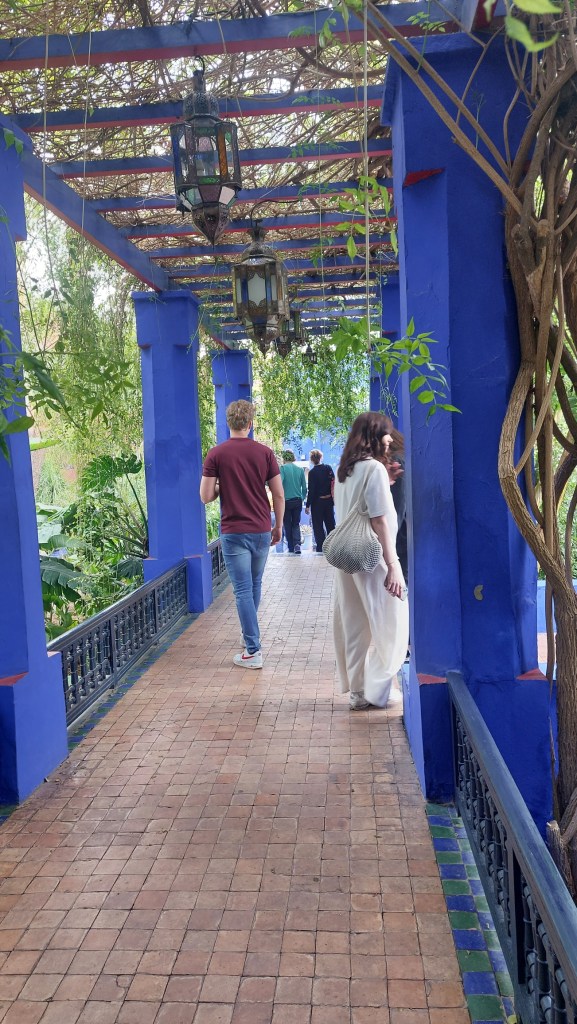
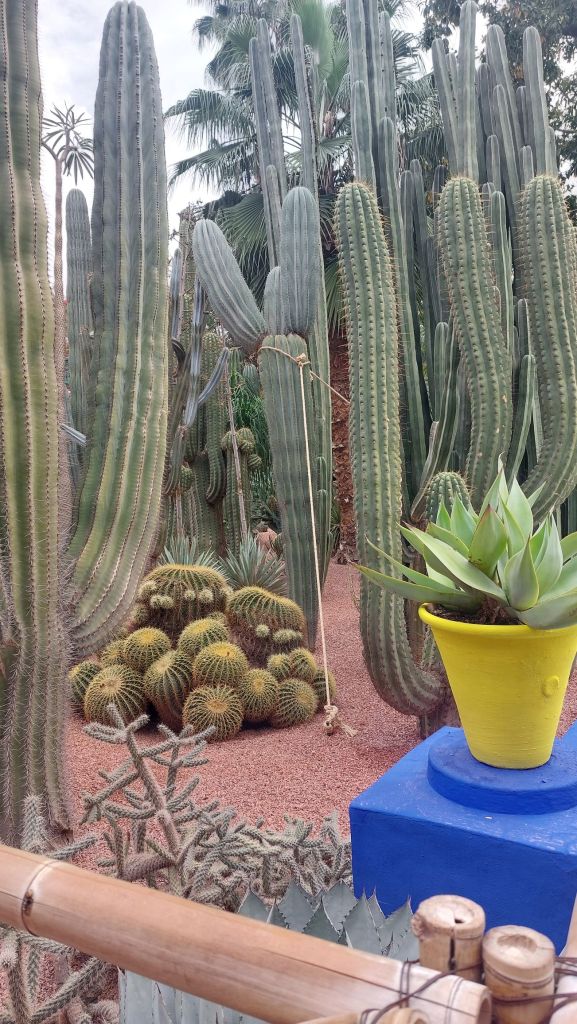
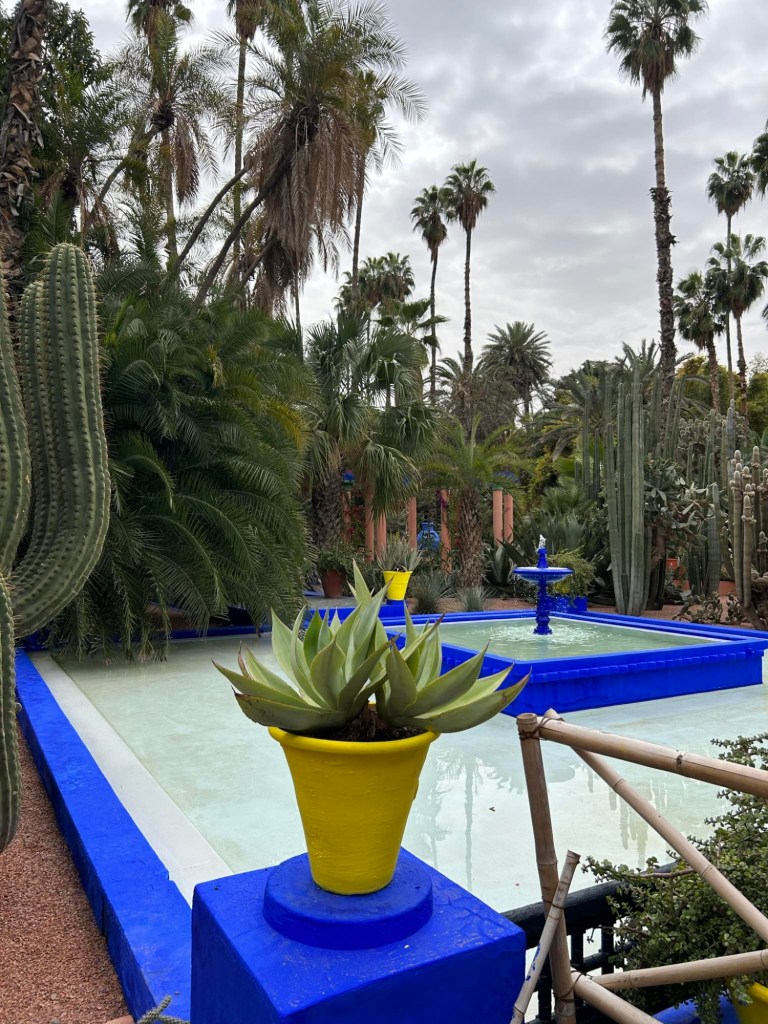
Inside the beautiful Majorelle Garden, there are over 300 stunning plant species from all over the world.
Mexican agave, Chinese windmill palms, African date palms, coconut, and banana trees amongst a labyrinth of pathways.
The incredibly tall bamboo and exotic Cacti species coexist together to create one of the most beautiful gardens in marrakech.
Images by Freebird Tracey.
These stunning gardens were originally designed by Jean Majorelle in the 1920s.
After he was forced to abandon his home because of divorce, the fashion designer Yves Saint Laurent took it over with his partner Pierre Berge to save it from hotel development in 1980.
Together, they restored it and made it their home, bringing the garden back to it’s former glory.
For many years the Jardin Majorelle has provided me with an endless source of inspiration, and I have often dreamt of its unique colours – Yves Saint Laurent
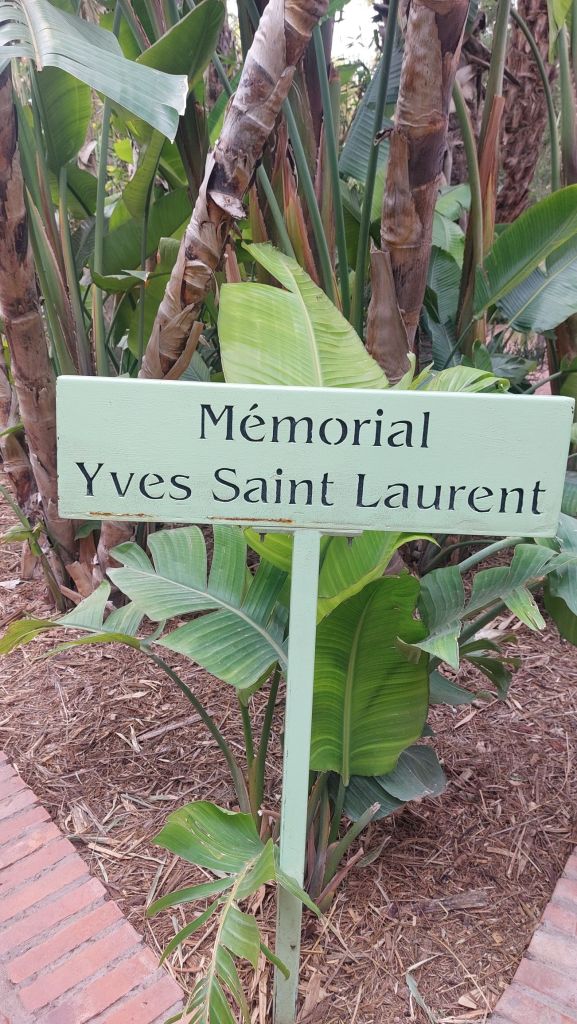
There is a memorial to Yves Saint Laurent and his partner Pierre Berge in the garden.
Image by Freebird Tracey.
Majorelle Garden attracts over 900,000 visitors each year, making it one of the most touristic attractions in Marrakech.
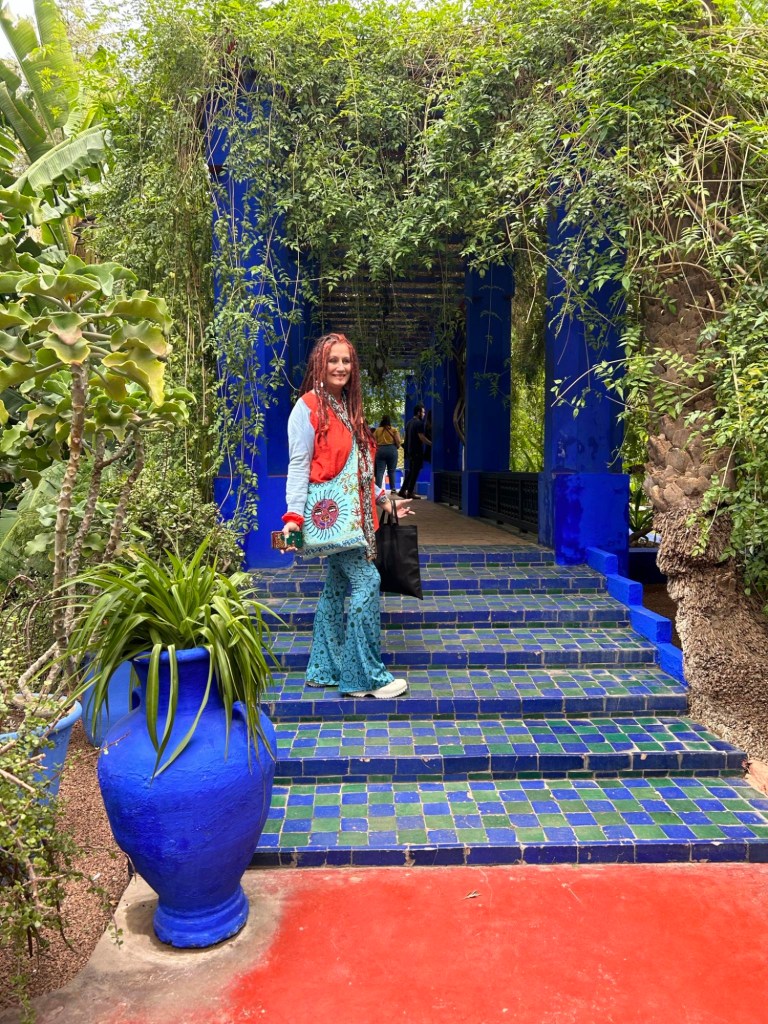
I would have loved to have sat in quiet contemplation amongst the lush green vegetation, admiring the pop of colour from the bougainvillaea, but I was never alone for too long.
It’s a busy place, and tourists queue to enter constantly throughout the day.
Despite its beauty, there are swarms of people who flock to spend time here, and it’s not particularly peaceful.
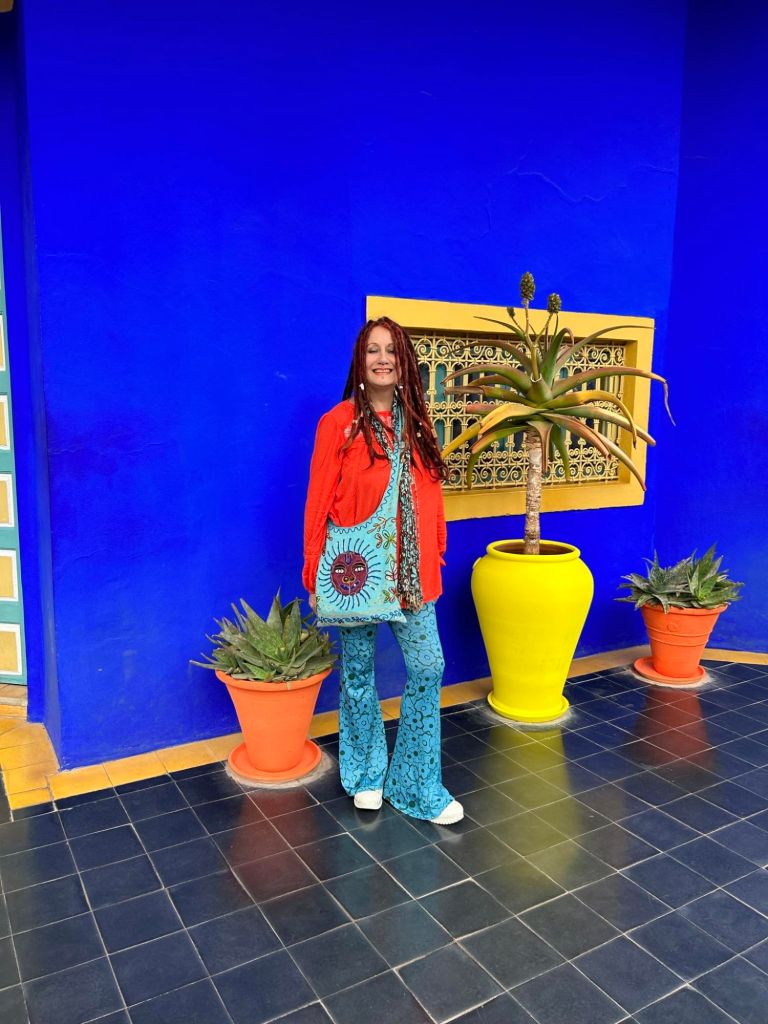
The attractive art deco pavilion with its striking colours of blue and yellow is a popular place for visitors to get their photographs taken.
Tourists queue for the perfect instagrammable shot.
Images by Freebird Tracey
There is also a cafe and shop on site.
I purchased some postcards of Yves Saint Laurents’ yearly ‘Love’ drawings.
They are a small souvenir from my visit.
Images by Freebird Tracey.
The gardens open daily at 8.00am and close at 6.00pm, the last entry is at 5.30pm.
I would suggest getting there before 10.00 am, preferably at opening time if you want a more peaceful experience.
Luckily, I had prebooked online, so I didn’t have to queue.
I recommend booking online to guarantee entry.
I’m thankful that I did because the queues were already really long, and it was a very hot day for standing around without any shade.
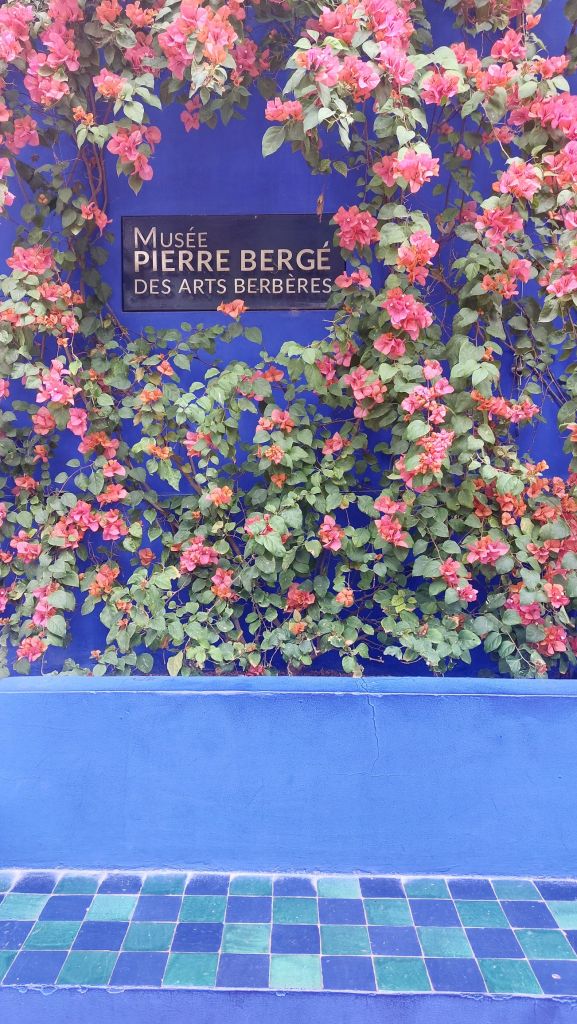
The YSL museum is also part of the visit, along with the Pierre Berge Museum of Berber Arts.
It’s worth a look around if you are interested in the history of Amazigh culture.
Photography is not allowed inside these museums, though.
Image by Freebird Tracey.
Opening times for the museum are from 9.00 am until 5.30 pm with the last entry at 5.00pm.
The price varies depending on where you purchase tickets from but you can expect to pay approximately €24 to visit everything.
There are plenty of nice restaurants outside the gardens, and I decided to get something to eat and drink in one of those instead.
It was much quieter.
I recommend My Kawa for a nice salad.
There are a few shops across the road from Majorelle Garden selling souvenirs and a few attractive boutiques.
Images by Freebird Tracey.
Stuff was a bit pricey being a touristic area, but I picked up some nice jasmine oil.
Overall, Le Jardin Marjorelle was absolutely beautiful.
It is colourful and lush with several spots to sit and take in the splendid surroundings.
However, the number of tourists detract from the calm sense of serenity you’d expect to get from such a delightful setting.
It was worth visiting to see the beautifully landscaped gardens with their wonderful trees and plants and to get some great photos.
Unless you go very early during the quiet season, though, you won’t find a peaceful, relaxing atmosphere.
Le Jardin Marjorelle is located to the north west of Marrakech medina.
It can be reached by taxi from the main square, Jamaa El Fna, or is a steady 30-minute walk.
Calling all coffee lovers,this place is an absolute gem.
Image by Freebird Tracey.
With over 200 different coffees to choose from, Bacha Coffee is a coffee lovers paradise.
From the exuberant interior with beautifully tiled floors and exotic plants to the finely dressed waiters in their elegant uniforms, Bacha Coffee is a wonderful experience.
The service is impeccable, and the coffee from all over the world is incredible.
Image by Freebird Tracey.
Visiting Bacha Coffee is an absolute treat.
You do have to wait quite a long time for a table, but you can wander around the museum with its beautiful garden and Islamic architecture whilst you wait.
Images by Freebird Tracey.
You are given a bleeper to notify you when your table is ready.
Once you are seated inside, you are free to take your time to paw over the extensive menu. The choice of coffee available makes it incredibly difficult to choose.
I eventually decided to go with a Caribbean coffee from the Blue Mountains, and it didn’t disappoint.
It was smooth aromatic and had a subtly sweet flavour.
Images by Freebird Tracey.
It came served in beautiful little cups with fresh cream, chocolate chips, vanilla pods, and an assortment of other delights to enhance the taste of the coffee.
I also had a slice of cake, which was delicately spiced and tasted wonderful.
My tastebuds were in heaven.
I now wish to try every coffee on the menu, so I’ve promised myself I will go back again and again until I have.
That’s a lot of coffee.
Image by Freebird Tracey.
The only downside to Bacha Coffee is that due to its popularity, the queues can be very long.
I suggest arriving early around 9.30 am when they first open and join the queue outside.
It’s worth the wait for the quality of food being served and the stunning decor.
The breakfast is excellent, and I will definitely be trying it next time I visit.
Hopefully, I can make my way through the hundreds of coffees on offer from around the world.
I’m certainly up for trying.
Bacha Coffee is worth visiting just to capture those perfect Instagram photos regardless of the excellent food and coffee.
Image by Freebird Tracey.
There is also a shop where you can buy coffee and other beautiful things like cups and condiment containers to take home with you.
It’s the perfect gift for someone special.
Image by Freebird Tracey.
Opening hours are,
Tuesday-Sunday 10.00am-6.00pm
The address is,
Dar el Bacha, Rte Sidi
Abdelaziz Marrakech 40000
Morocco
Bacha Coffee is in a nice area of Marrakech surrounded by plenty of good shops.
I would recommend anyone visiting Marrakech to come and see for themselves.