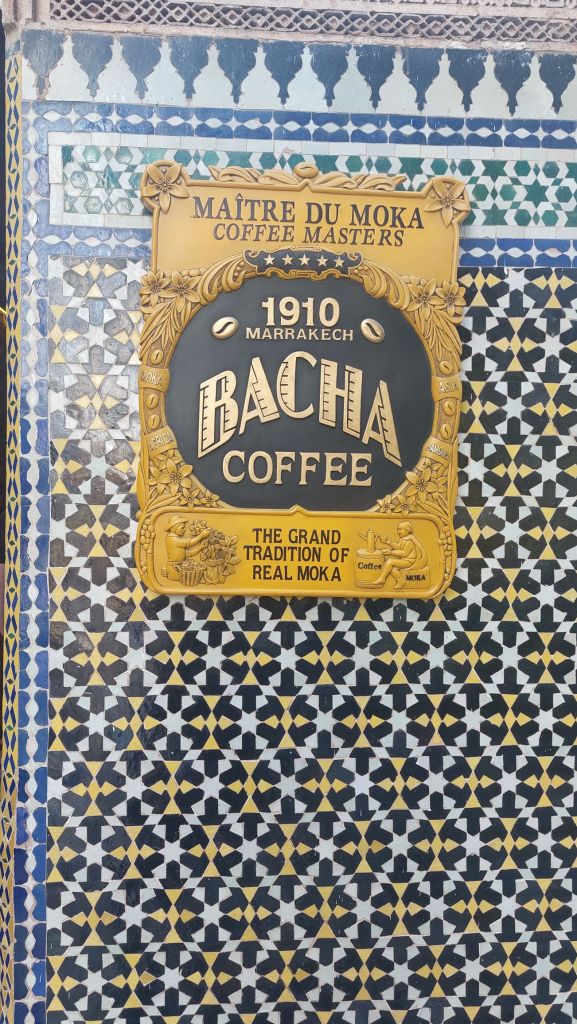
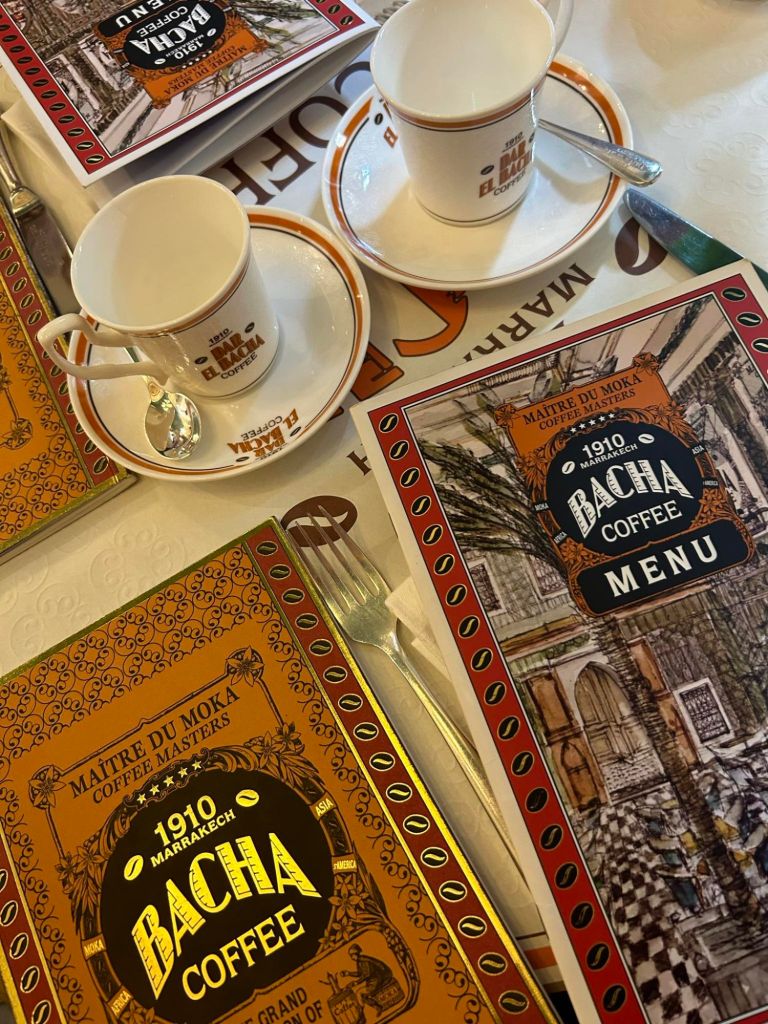
With over 200 different coffees to choose from, Bacha Coffee is a coffee lovers paradise.
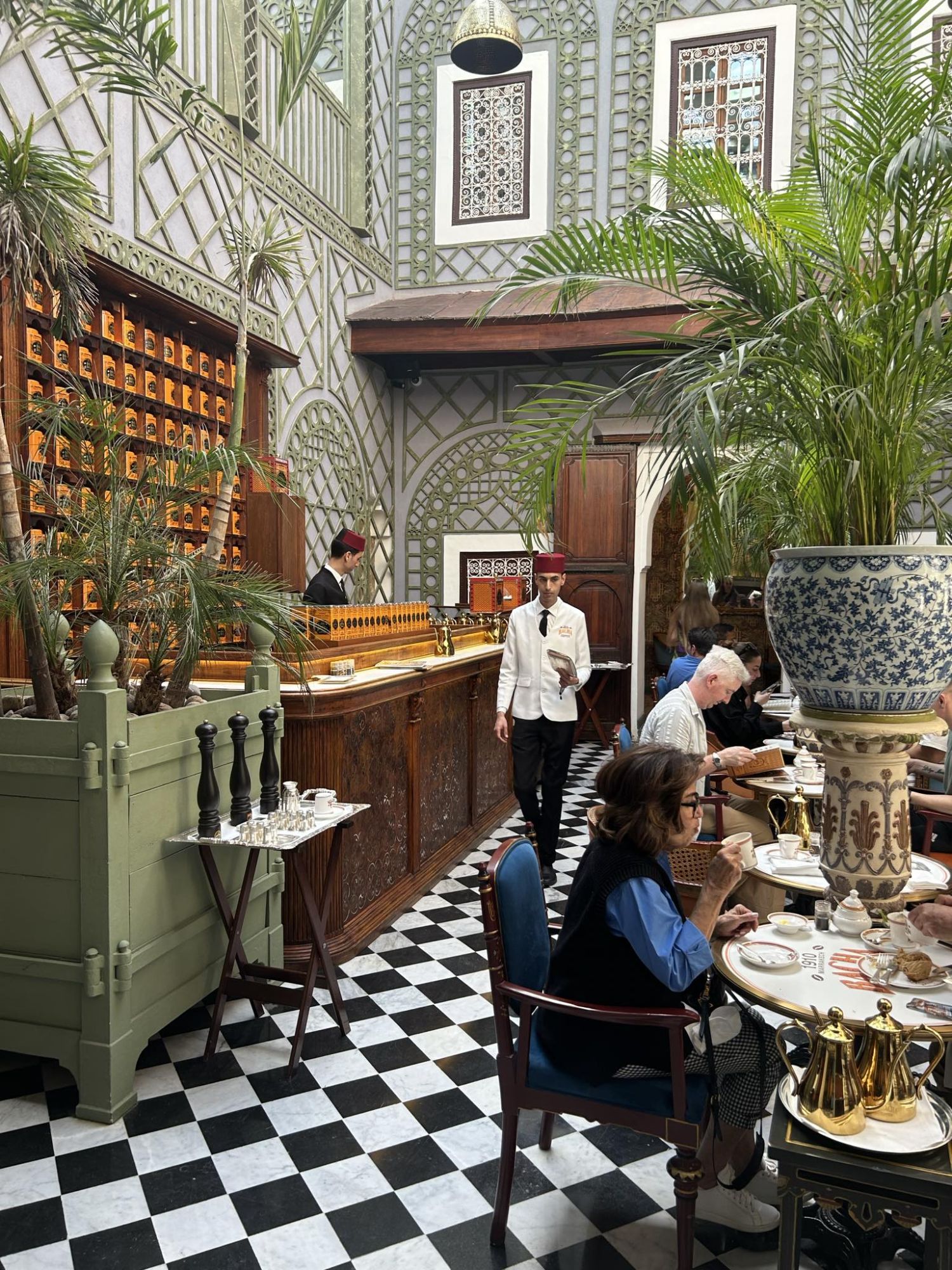
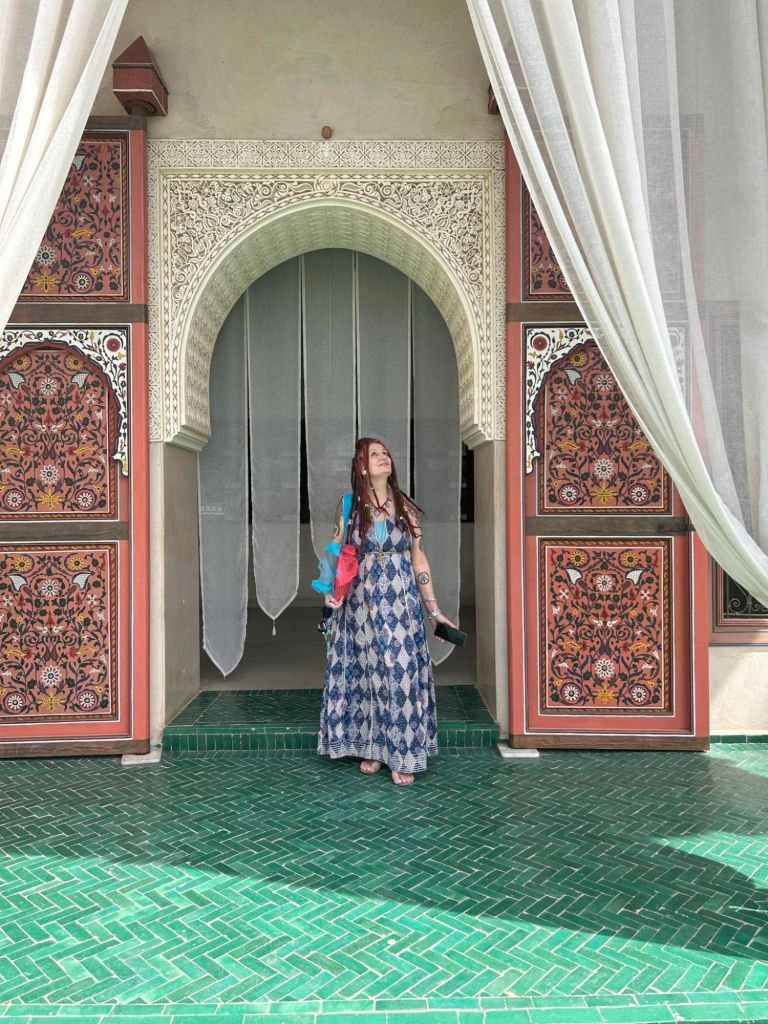
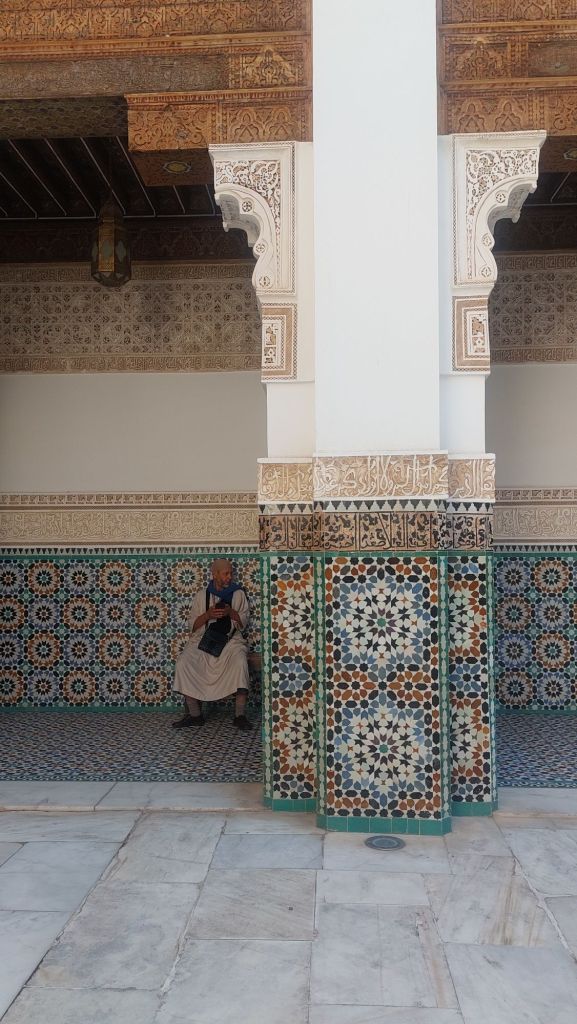
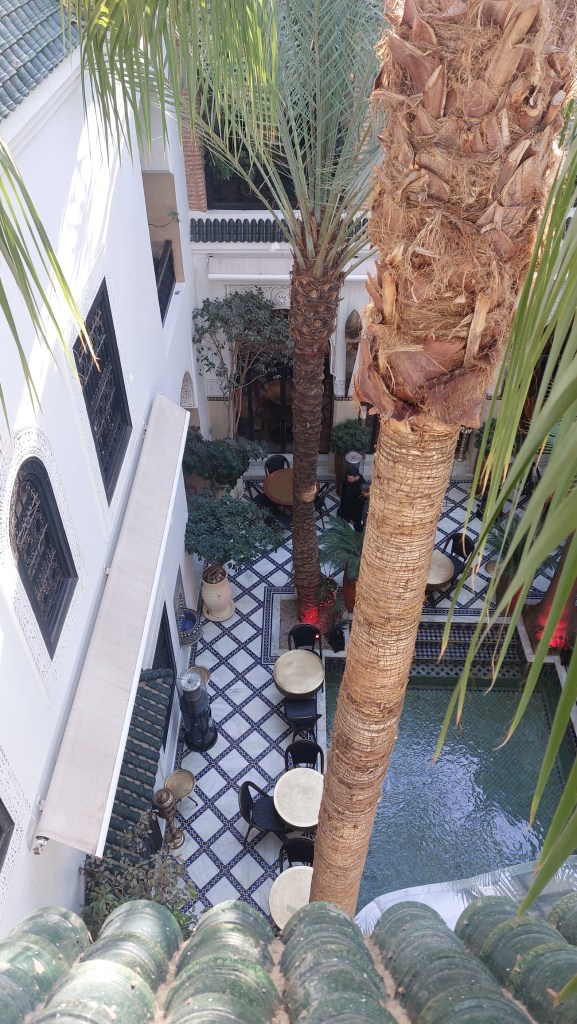
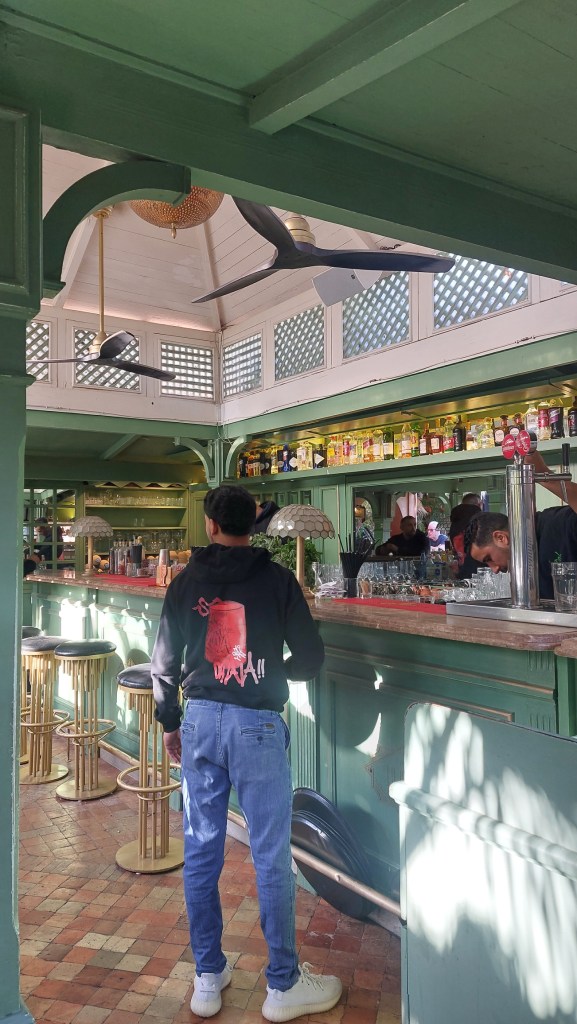
From the flamboyant interior with tiled floors and exotic plants to the finely dressed waiters in their elegant uniforms, Bacha Coffee is an experience.
Image by Freebird Tracey.
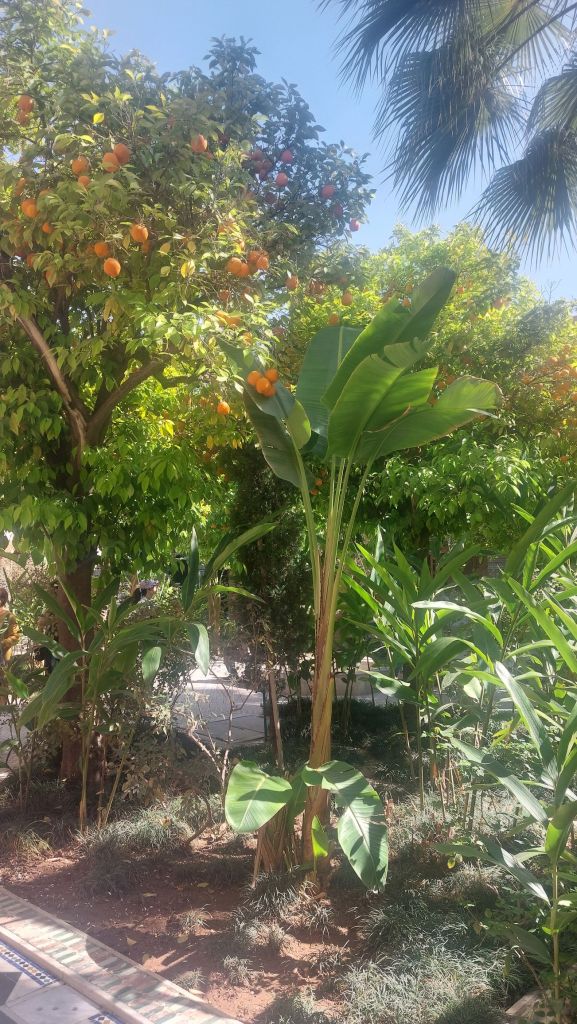
A visit to Bacha Coffee is a treat. You have to wait for a table, but you can look around the museum whilst you wait. The gardens and architecture are lovely, and time passes quickly. You are given a bleeper to notify you when your table is ready.
Images by Freebird Tracey.
Once seated inside, you can take your time to paw over the menu. There are over 200 coffees from all corners of the world. The menu is descriptive, and the hardest part is choosing.
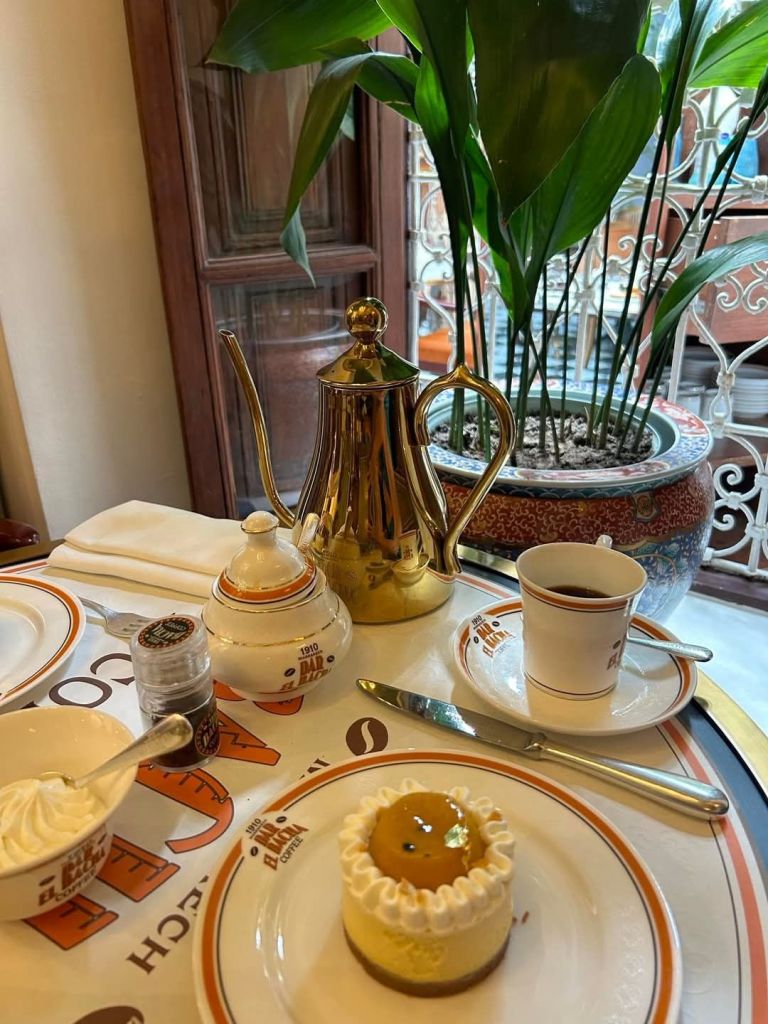
I decided to try a Caribbean coffee from the Blue Mountains. It was smooth and aromatic with a subtly sweet flavour.
Images by Freebird Tracey.
The coffee is accompanied by fresh cream, chocolate chips, and vanilla pods to enhance the taste. I had a slice of cake, which was delicately spiced and complimented the coffee perfectly. My tastebuds were in heaven.
I wish to try every coffee on the menu, so I’ve promised myself I will go back again until I have. That’s a lot of visits to Bacha Coffee.
Image by Freebird Tracey.
The only downside to Bacha Coffee is that the queues are long. I suggest arriving at 9.30 before they open and joining the queue outside. It’s worth the wait. The breakfast is excellent.
Bacha Coffee is worth visiting to capture perfect Instagram photos regardless of the excellent food and coffee.
Image by Freebird Tracey.
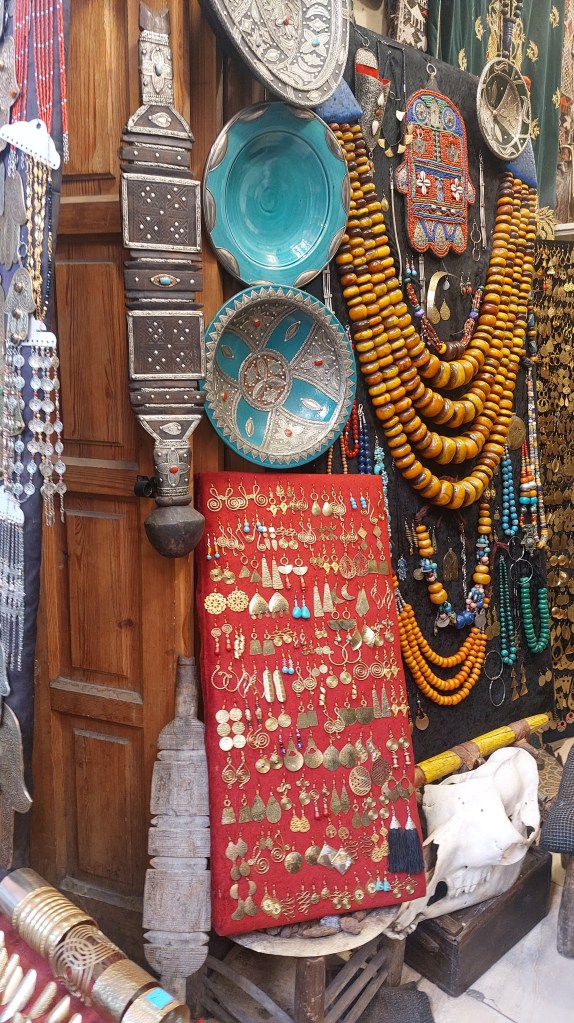
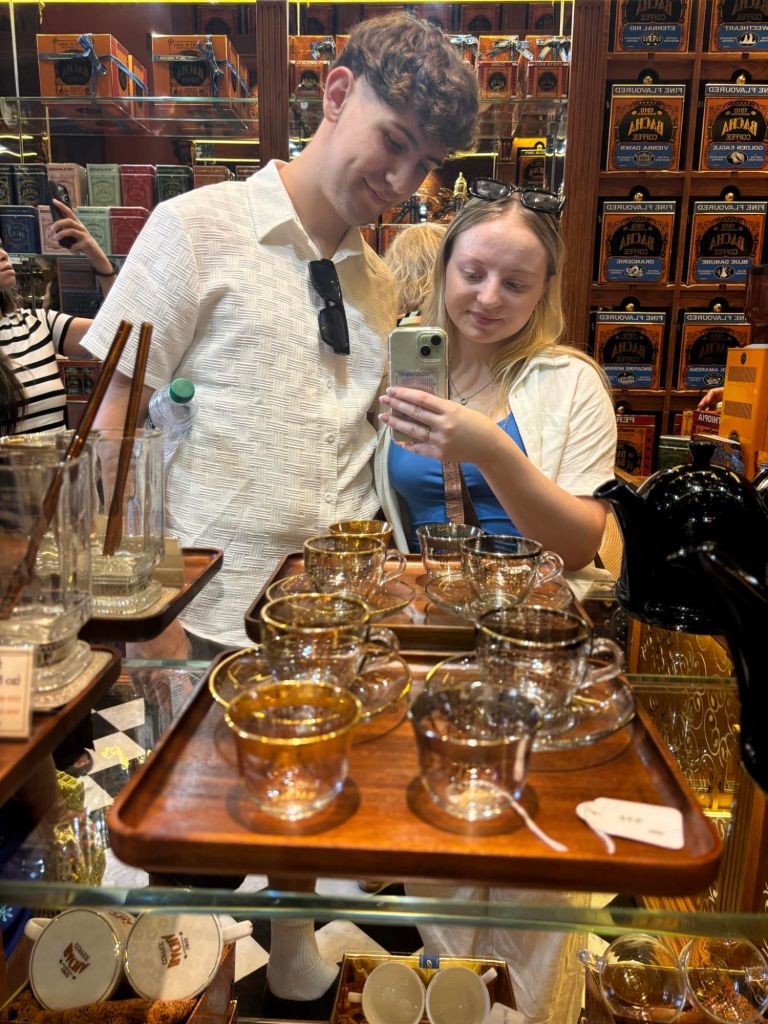
There is a shop where you can purchase coffee and the cups and saucers used in the restaurant. They also sell the containers they use for condiments, amongst other things. These make the perfect gift for someone special.
Image by Freebird Tracey.
The opening hours are Tuesday-Sunday 10.00am-6.00pm
The address is Dar el Bacha, Rte Sidi Abdelaziz Marrakech 40000 Morocco
Bacha Coffee is in a nice area of Marrakech surrounded by plenty of shops and good restaurants. I enjoyed my visits. The service is impeccable, and the coffee speaks for itself.
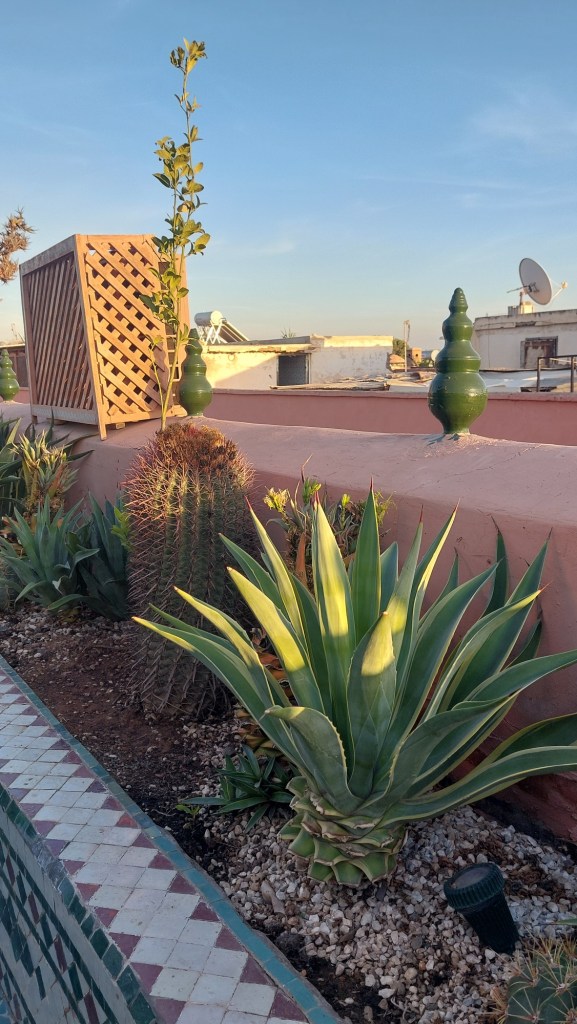
The perfect day in Marrakech begins watching the sunrise on a rooftop terrace in my riad. I can hear birds singing in the courtyard below. I hear the sound of the medina as it gradually wakes up and comes back to life. I watch cats prowl along the rooftops. Below me, I hear the clattering of plates as staff prepare breakfast.
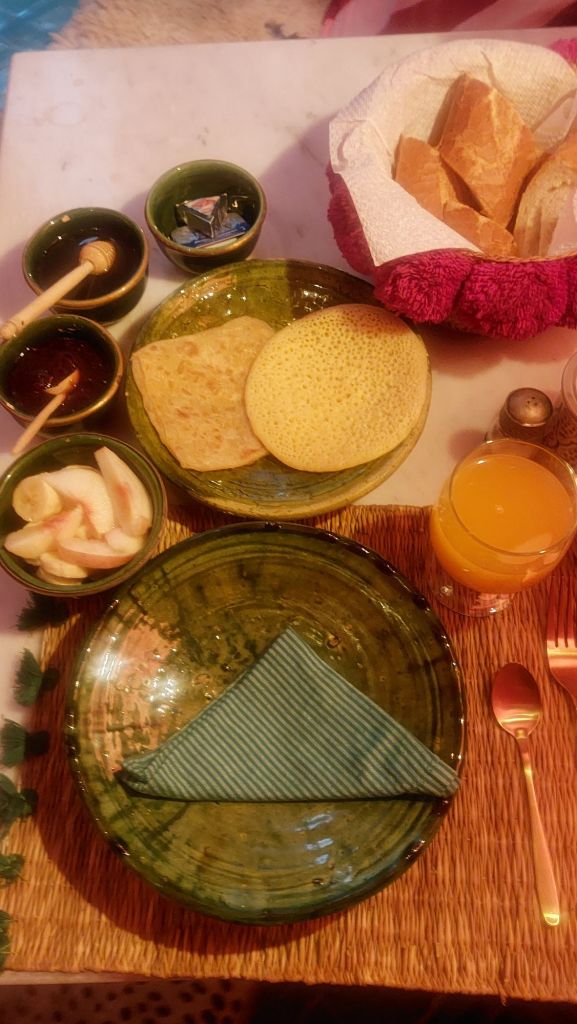
A glass of freshly squeezed orange juice hits the spot perfectly. I enjoy a breakfast of msemen pancakes with homemade jam, amlou, and honey.
Image by Freebird Tracey.
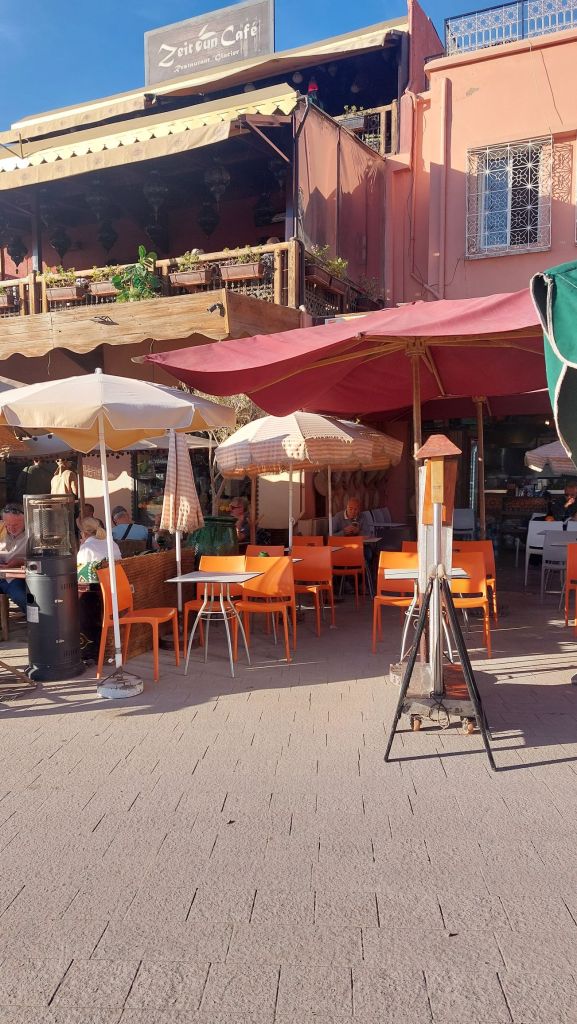
After my shower, I head out into the medina for a glass of mint atay. I sit outside a cafe overlooking the main square. I observe the vendors setting up their stalls for the day. The street entertainers are ready to entice crowds of tourists. The local ladies pass by on their way to the market for fresh herbs and spices.
Images by Freebird Tracey.
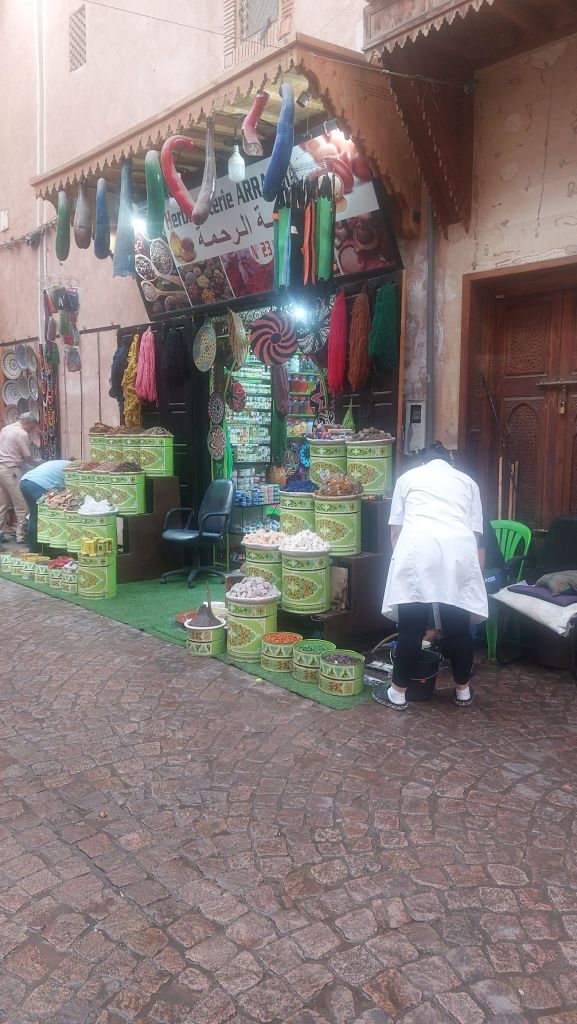
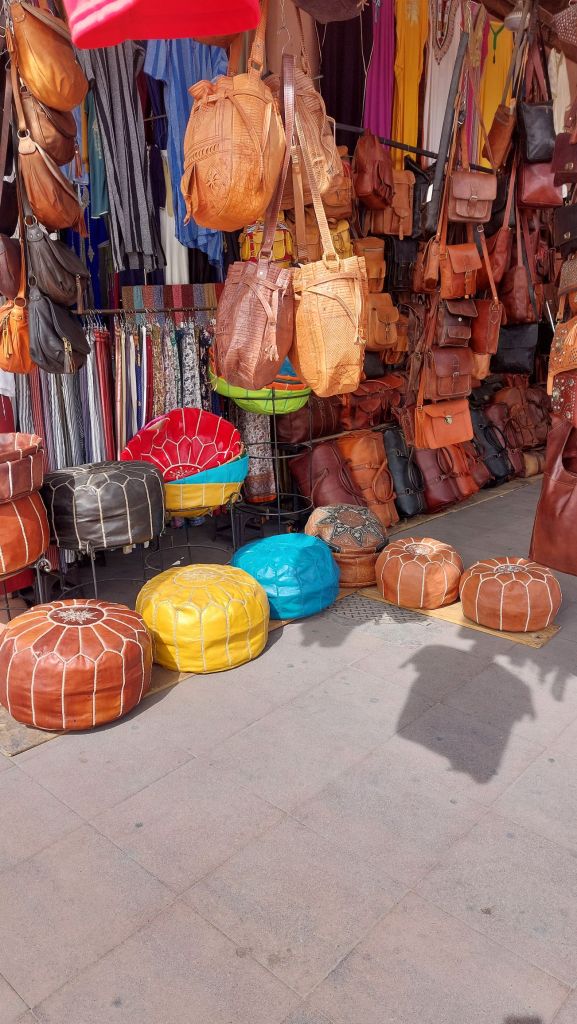
My next destination is the souks before they get busy. Vendors are eager for their first sale of the day, and bargaining is easier early in the morning. The array of things on offer is a sight to behold.
Images by Freebird Tracey.
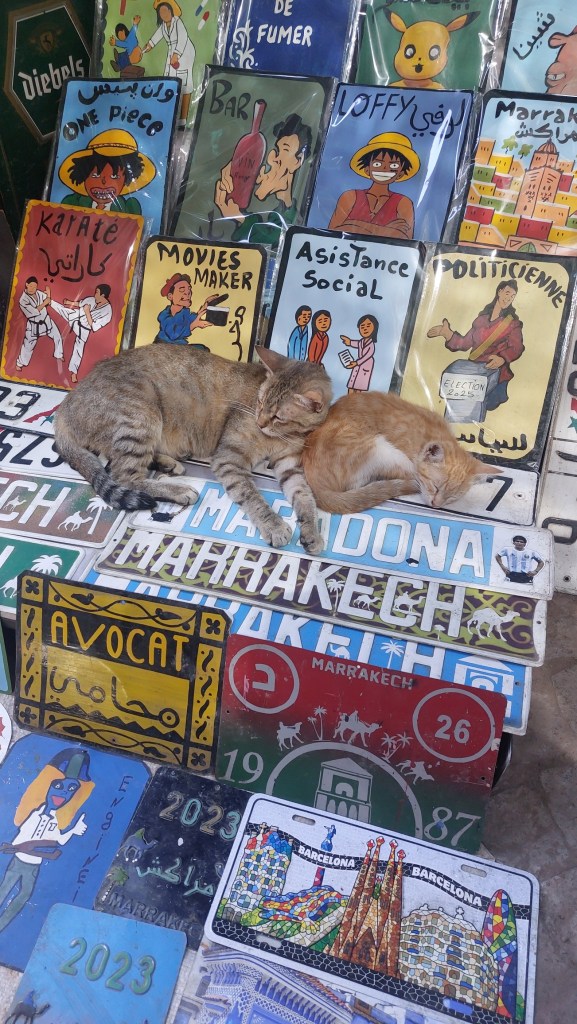
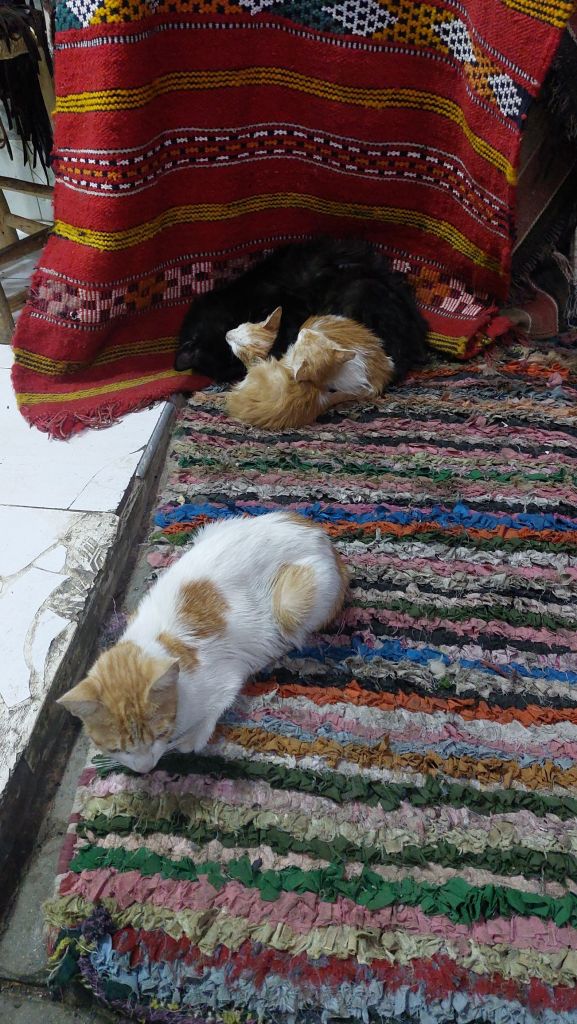
Cats gather for a few morsels off the butcher, and locals toss titbits for them to eat. They vye with each other for the perfect spot to laze in the sunshine.
Images by Freebird Tracey.
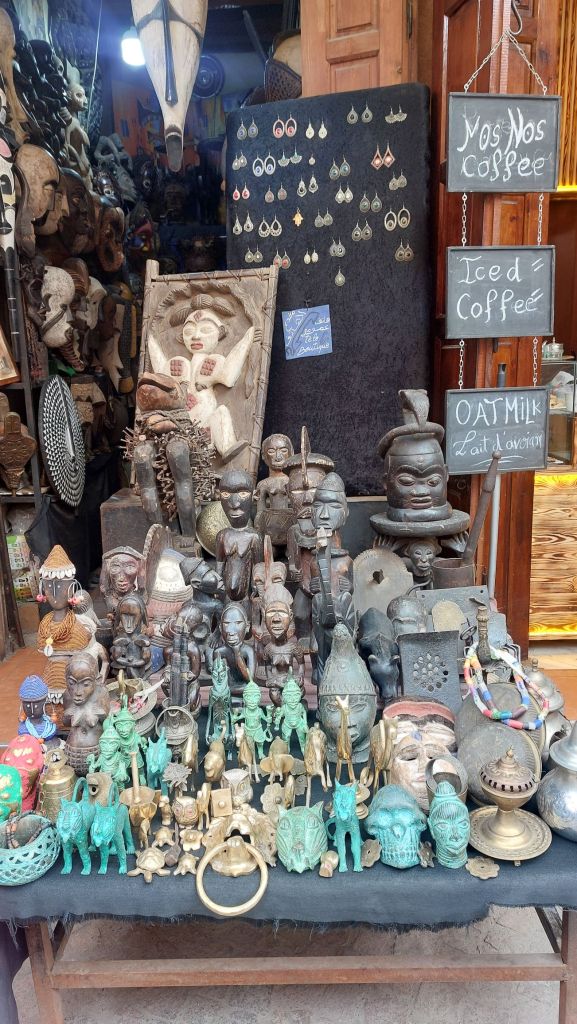
I check out the Amazigh jewellery, the argan oil, and the beautiful ceramics on display. At the same time, I dodge motorcycles and donkey carts as they make their way through the narrow alleyways. I buy a few souvenirs and then decide it’s time for a light snack.
Images by Freebird Tracey.
A cafe with colourful outdoor seating looks inviting. I order a selection of Morroccan pastries and a pot of mint tea. I sit for a while people watching, enjoying the scenes that are unfolding around me. It’s fascinating watching daily life in the medina. Tourists look in awe at things for sale, and vendors call out to them with friendly banter.
Image by Freebird Tracey.
After recharging my batteries, it’s time to do some sightseeing. I head towards Madrasa Ben Youssef for an opportunity to get some photos of the stunning architecture. I learn the history of one of the most important koranic colleges in Morocco.
Image by Freebird Tracey.
Afterwards, I make my way to the gardens of the Koutoubia Mosque. The medina is getting busy, and I want to sit somewhere less crowded.
I relax amongst the beautiful trees, admiring the most famous landmark in Marrakech. As I sit near the fountain, it feels cool and refreshing as it sprays into the air.
Image by Freebird Tracey.
I treat myself to a sugarcane juice from a vendor. It goes down well, and the day is getting steadily warmer.
Image by Freebird Tracey.
By now, the heat is quite intense, so I return to my riad for a rest. I make my way onto the rooftop terrace to sunbathe and read a book. The call to prayer echos across the medina. It’s a familiar sound that can be heard in Marrakech five times a day.
Image by Freebird Tracey.
Soon, it’s time to get ready for dinner.
I go to La Pergola rooftop bar for a couple of cocktails beforehand. It’s a lively atmosphere. There are people enjoying a drink and chatting with friends.
Images by Freebird Tracey.
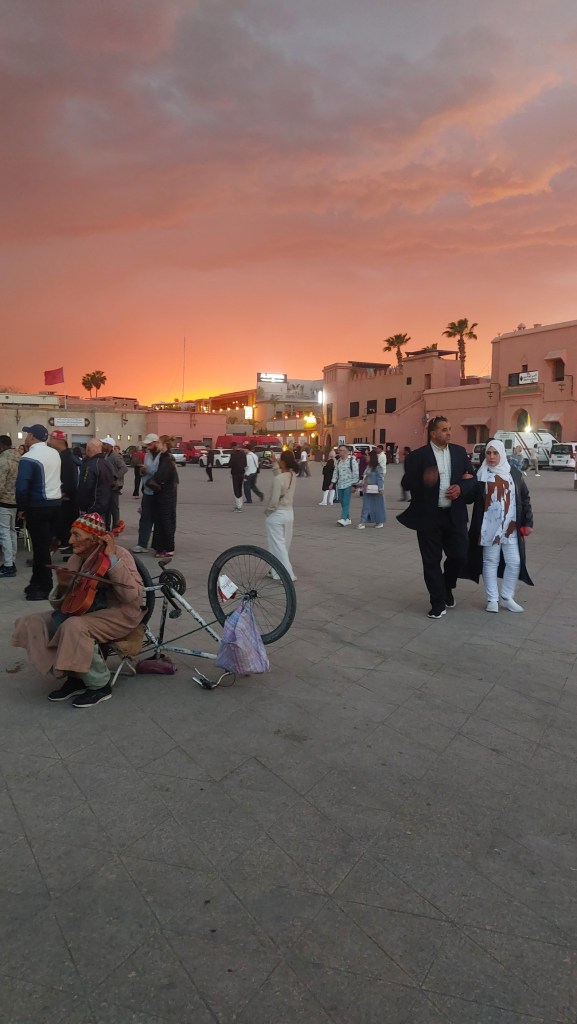
Next, it’s time to head towards Jamaa El Fna. The energy is electric. Food vendors are touting for business. There are dancers, drumming, and gambling games. Crowds of tourists gather to witness the spectacle. The smell of food cooking makes me hungry. I decide to find a nice place to dine.
I choose a place that has a rooftop terrace overlooking the square. It’s a perfect spot to watch the sunset. As the sun slowly disappears behind the Koutoubia Mosque, it’s a spectacular sight. Everywhere has a golden glow.
Image by Freebird Tracey.
I order a traditional tagine, which is flavourful and aromatic. I’m tempted by the exotic fruit smoothies on the menu. I treat myself to one containing dried fruit, and it’s delicious.
The evening is still young, so I take a leisurely walk to the kasbah. I spend the rest of my evening at the famous Clock listening to some live music and traditional storytelling.
Image by Freebird Tracey.
After immersing myself in the culture of Morrocco, I head back to my riad. I sit in the peaceful courtyard reflecting on the day I’ve had.
I have learnt some history about the culture of Marrakech. I have tasted delicious food. I watched a beautiful sunset and chatted with friendly locals. I have successfully navigated my way through the souks without getting too lost. I also have some nice souvenirs to take home.
I fall asleep. It’s been a perfect day, and I’m ready to do it all again tomorrow.
Shopping in the medina is a fascinating experience, but it can be overwhelming at times. I soon realised that taking a regular break and pacing myself was the best way to enjoy the experience.
Navigating the maze of alleyways in the souks is exciting. There is so much more to them than beautiful leather goods and Moroccan lamps, though.
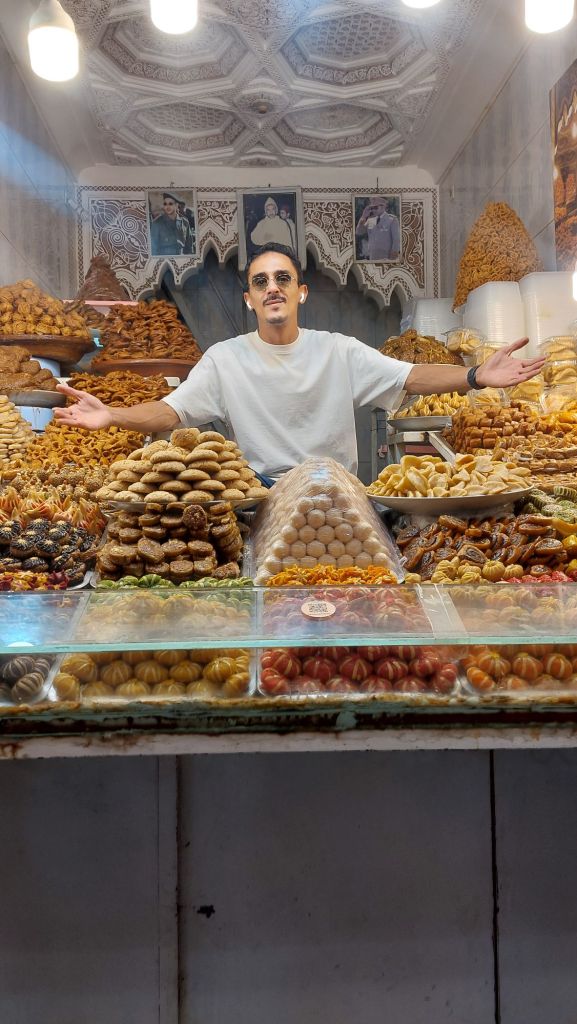
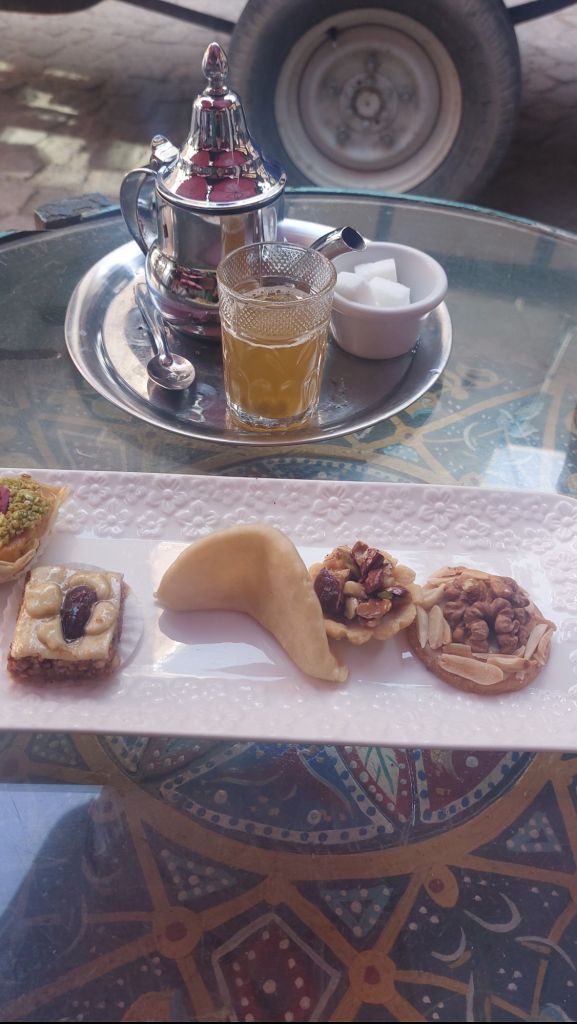
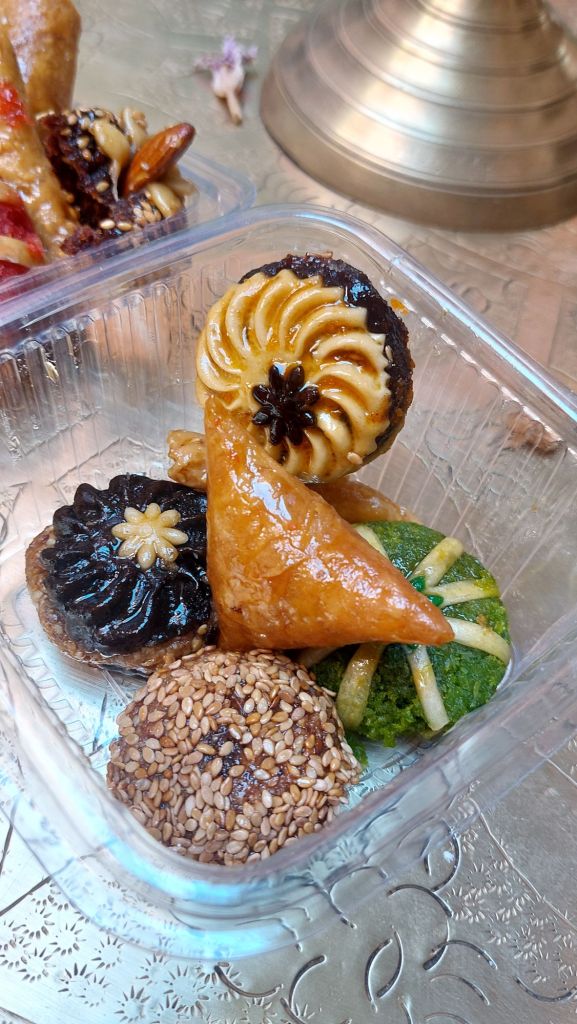
There are delicious sweets and pastries waiting to be sampled. These compliment the taste of traditional mint tea known as atay perfectly.
There are so many different pastries to choose from. I decided to treat myself to a selection to find out which ones are my favourite. I enjoyed the taste of the almond pastries most of all.
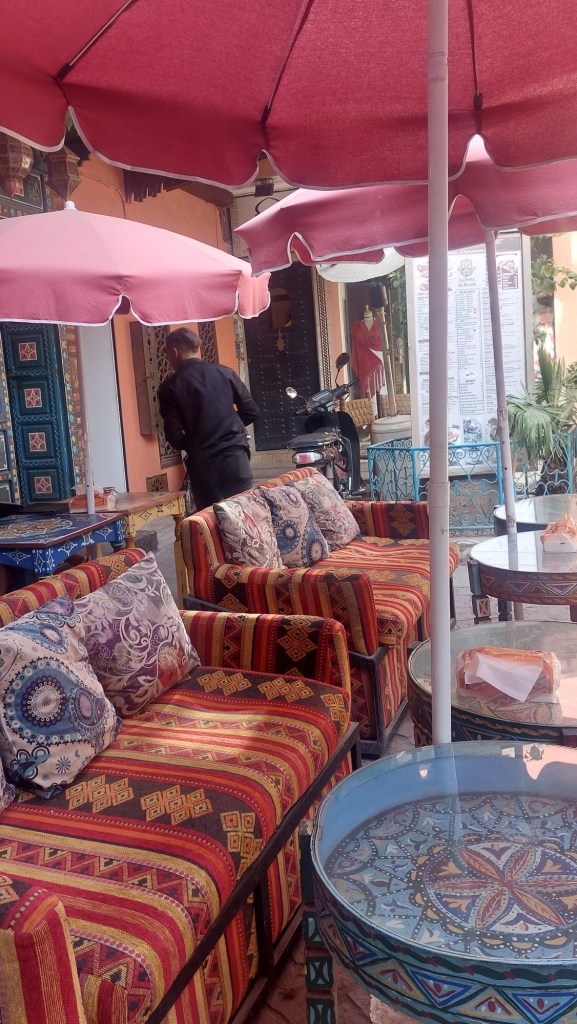
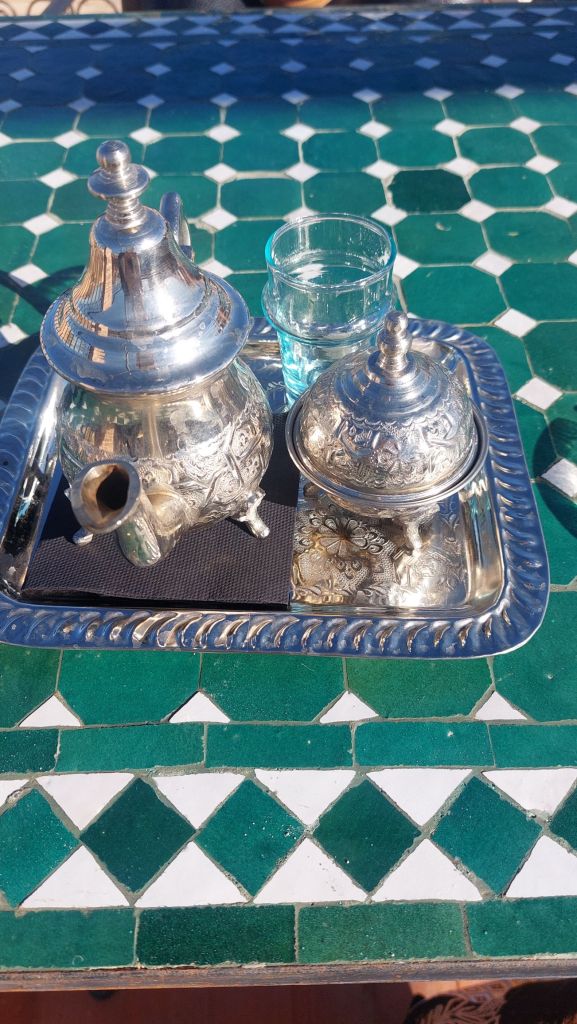
Traditional mint tea is very hydrating. Sitting in a colourful, boho nook drinking mint tea is a perfect way to take time out from the hectic rhythm of the souks.
Images by Freebird Tracey.
If you are shopping in the souks, I recommend that you pace yourselves and take some time to enjoy the experience. Sitting outside a cute little tea shop is the perfect way to do that.
There are plenty of places around the medina selling mint tea with traditional sweets and pastries. Part of the pleasure of exploring is finding these hidden gems.
Image by Freebird Tracey.
A few places I recommend are,
Medina Kawa Marrakech.
La Patisserie de la Terracce Spices
Boughaz Coffee in the Kasbah.
Marrakech has an abundant supply of sweets and pastries, and I suggest trying Baclava. It’s a sweet pastry made of layers of flaky phyllo dough filled with chopped nuts like walnuts, pistachios, or almonds. It’s sweetened with honey and flavoured with spices like cinnamon and lemon juice. This was one of my many favourites.
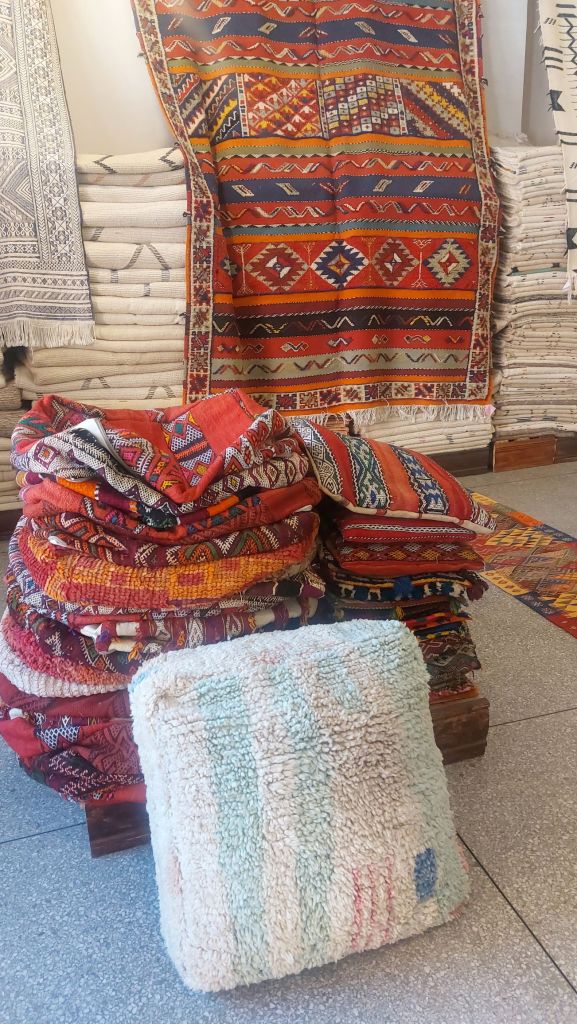
Berber rugs are handmade by the indigenous Amazigh people of Morocco.
They are made from the wool of sheep in the high Atlas Mountains. Each type of rug tends to vary in thickness, and the pattern also differs depending on which tribe or village has made it.
Kilim Berber rugs have no pile and are relatively fine in texture.They are handcrafted using techniques passed down through generations. To create them natural materials renowned for their durability and luxurious feel are used. Hand-knotting is a long and laborious process. To create a single rug takes around one to two months, with four weavers working on one rug at a time.
There are several steps that go into making a beautiful Berber rug.
1. Shearing the Sheep
Shearing the sheep is the first step in making a Berber rug. This is done by hand, using a special shearing knife. The sheep are first restrained, and then the knife is used to remove the wool from their body in one long strip. The wool is then sorted and cleaned. It is usually the job of the men to shear the sheep, taking care not to injure them or spread infection. The women are responsible for washing the sheared wool.
2. Carding.
Carding is the process of aligning the wool fibers so the weavers can spin them into yarn. To card the wool, the fibres are first combed in one direction, and then the wool is brushed in the opposite direction.This helps to loosen the fibers and align them in the same direction. Once the fibers are aligned, the weavers can then spin them into yarn.Carding is an essential step in making a Berber rug, as it helps to ensure that the rug is strong and durable. The process of carding also helps to give the rug its unique texture. Women are responsible for this process.
3. Spinning the wool into yarn.
To spin the wool into yarn, Amazigh women use something called a drop spindle. This simple tool consists of a shaft with a weight at the bottom. The wool is attached to the shaft, and then the shaft is twirled between the women’s hands. As the shaft is twirled, the wool is wrapped around it, creating the yarn.
4. Weaving the rug.
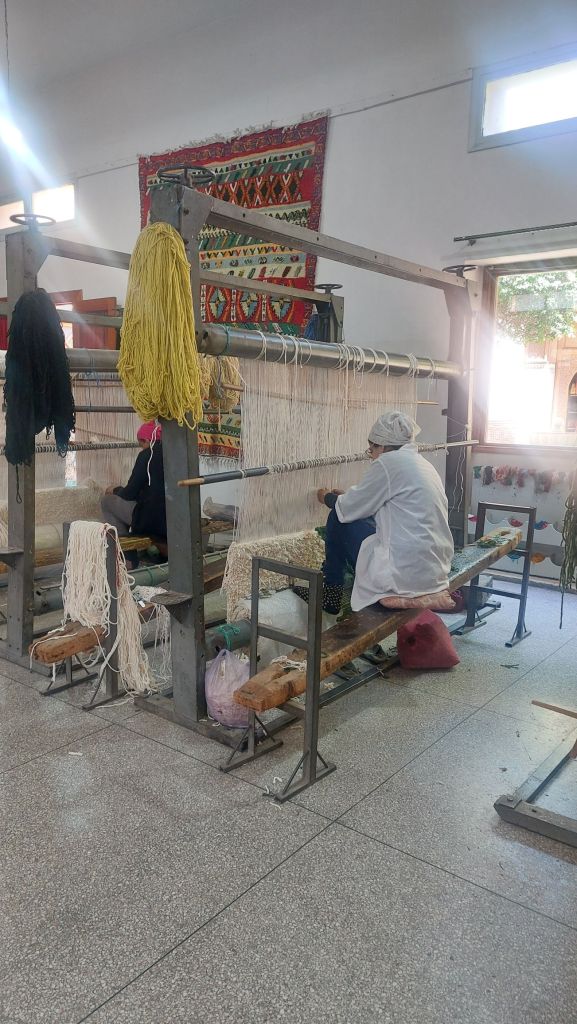
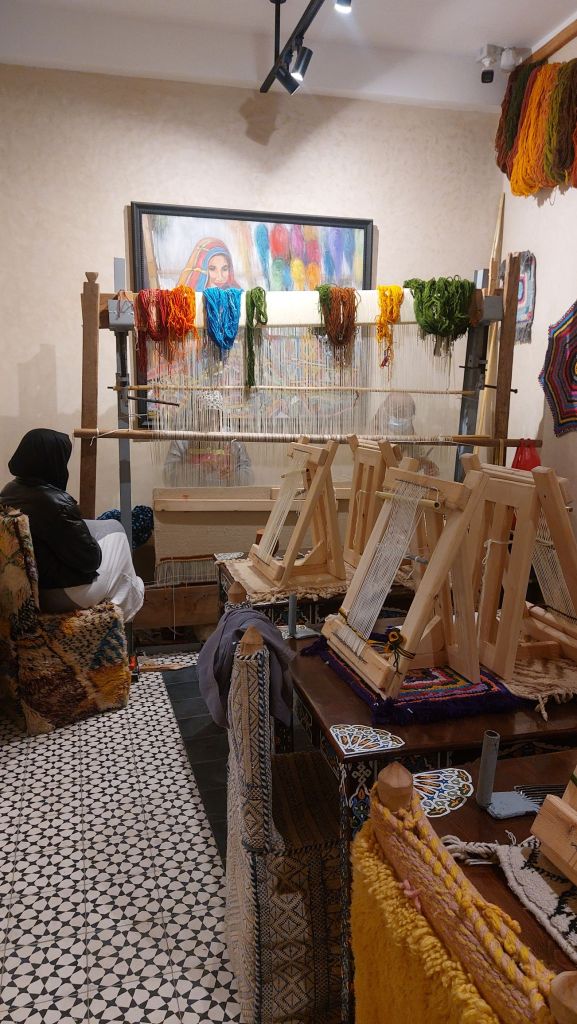
The village women are responsible for weaving the rugs. Weavers use a technique called continuous knotting to create intricate patterns. This method of knotting allows the weaver to create a rug that is durable and will last for many years.The process begins by the weaver tying knots in the woollen yarn.The yarn is then dyed using natural dyes from plants, spices, and fruits. This gives the rugs their characteristic colours. Once the yarn has been dyed, the weaver begins weaving it into a rug using a loom.The loom is a wooden frame that the weaver uses to create the rugs design. The weaver ties the yarn around the looms warp threads, which are the vertical threads that run through the loom. The weaver then weaves the weft threads, which are the horizontal threads, over and under the warp threads.The weaver can create various patterns by changing the direction of the weft threads. Once the rug is complete, the weaver cuts the rug from the loom and ties the ends of the rug together. The rug is now finished.
Image by Freebird Tracey.
Making a Berber rug is a long, laborious task. The women of the village who weaved them rarely get anything near the price they’re eventually sold for. Their husbands load the rugs onto the back of a donkey and take them to a buyer. The buyer gives him a fraction of their value.
Efforts are being made to make sure that ethical practices are being implemented. Many organizations now work directly with Berber artisans to eliminate middlemen, ensuring women receive fair payment for their work. More women are forming cooperatives to manage the entire process, increasing their income.
Images by Freebird Tracey.
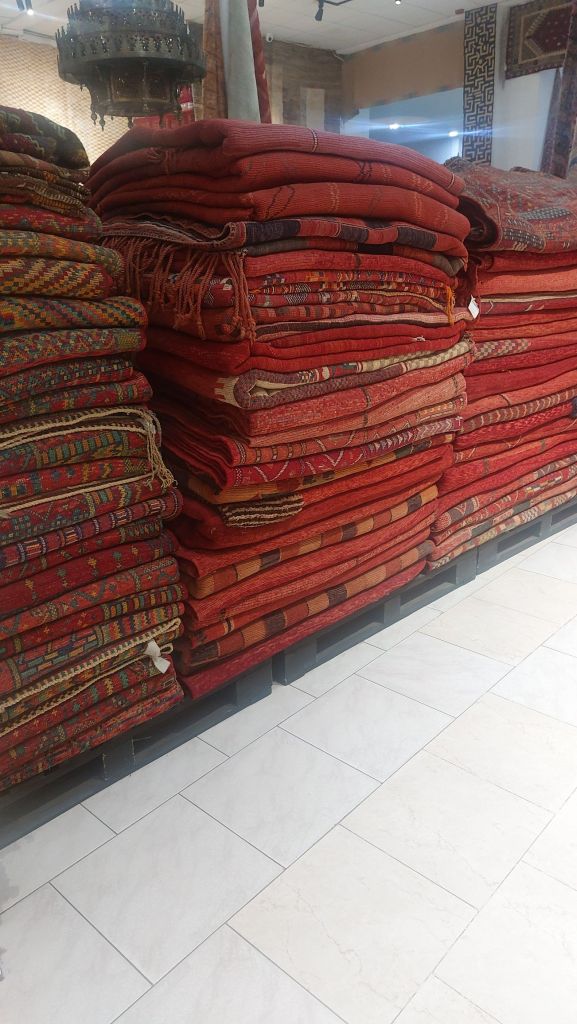
Berber rugs are beautiful and give a home a wonderful boho vibe. They are hard-wearing and last a lifetime. It’s important when visiting Marrakech to make sure you’re purchasing a genuine Berber rug. There are a few scams, so be mindful. Before you get taken to a shop where you’re promised the best quality and price, do your research.
Les Nomads de Marrakech has a great reputation and can ship rugs back home for you. This is their address, Bennahid #40 Derb Zaouiat Lahdar, Marrakesh 40030, Morocco.
Dar Bouchaib in the Kasbah is a fixed price store that also ships rugs worldwide and has a huge selection.
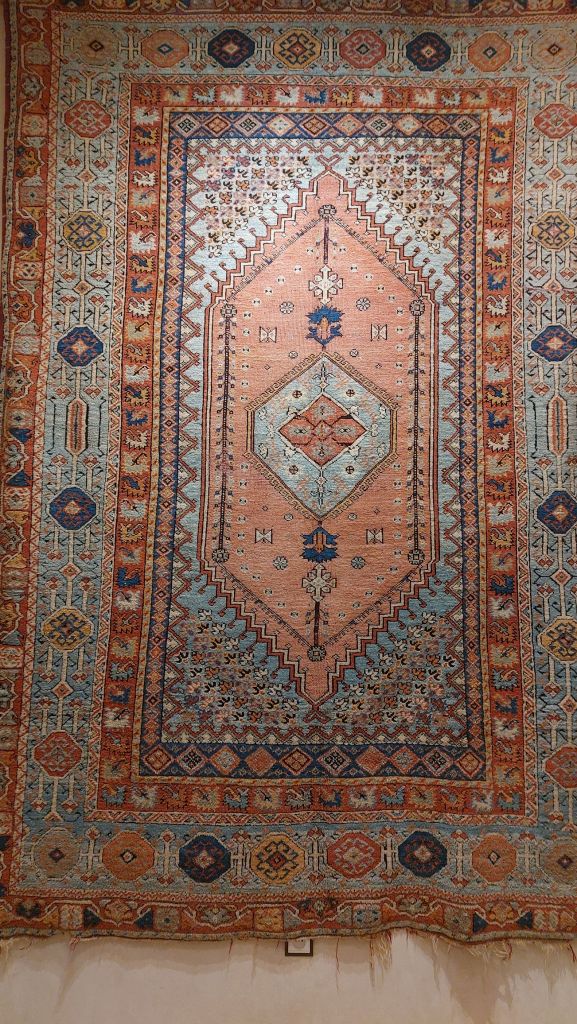
To find out more about the history of Berber rugs, there is a carpet museum in the souks called The Maison Culturelle du Tapis. It’s worth visiting to learn more about how they’re made. They also have some beautiful vintage rugs on display.