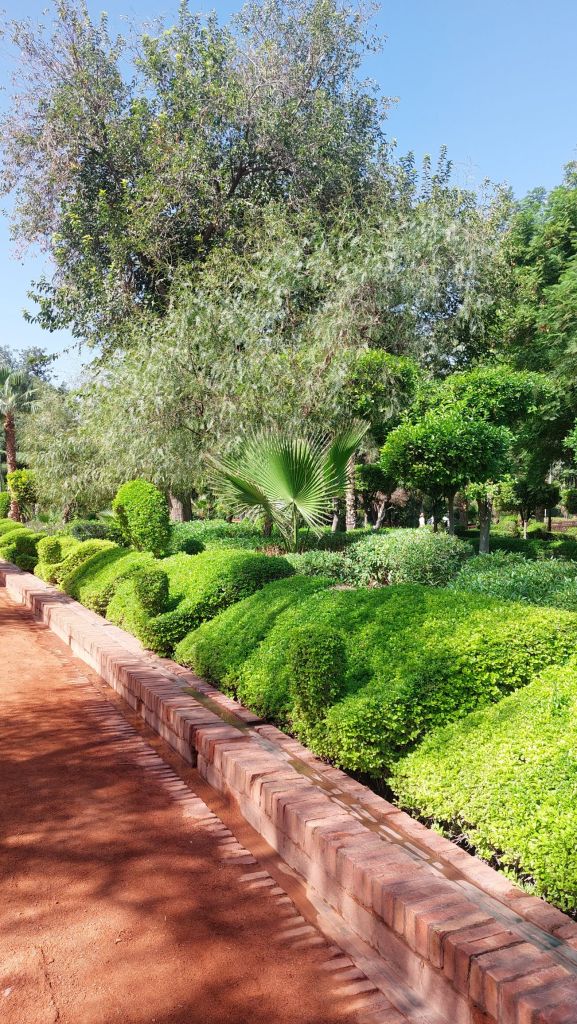
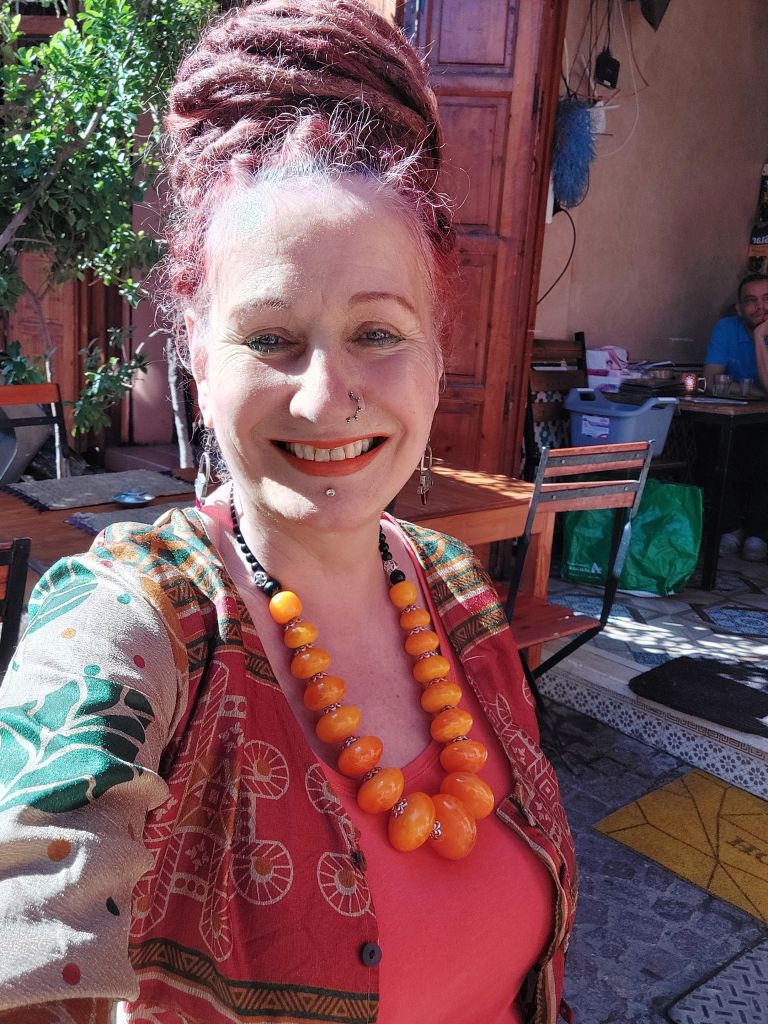
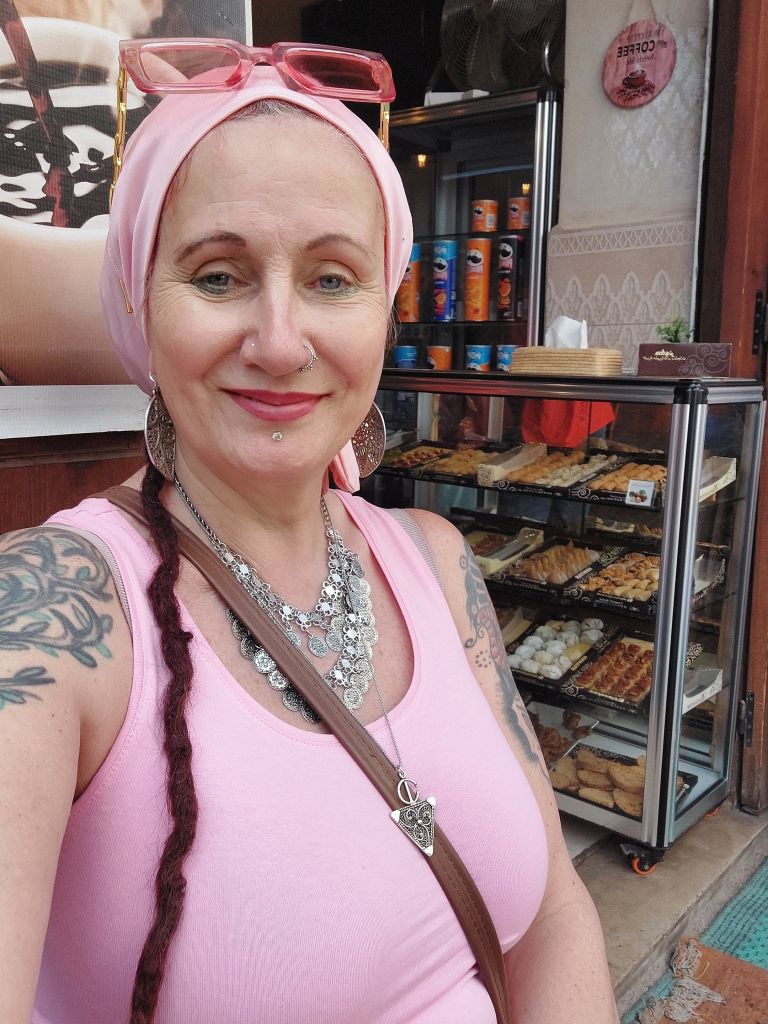
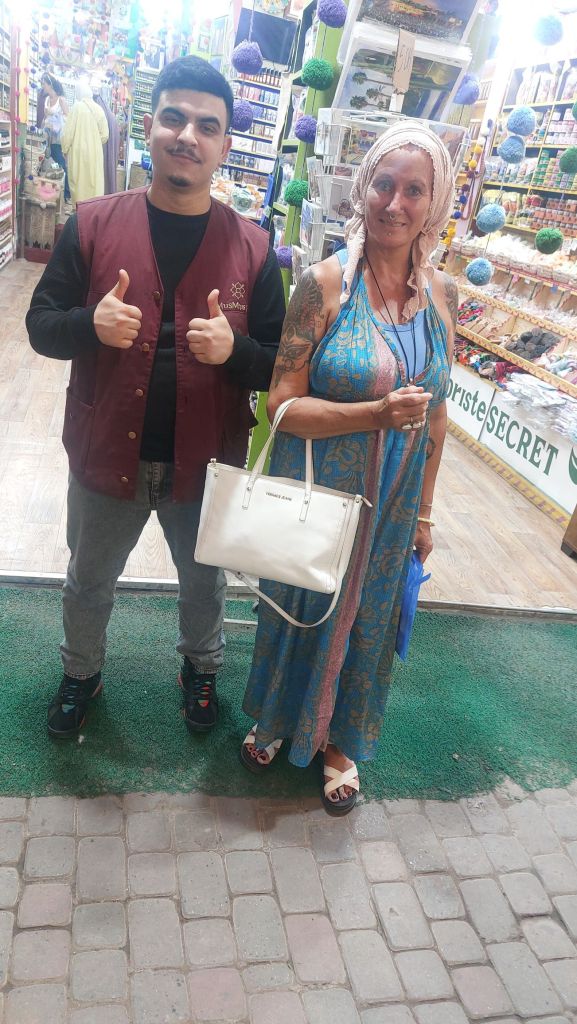
A fingertip tour around the red city, including everything you need to know.
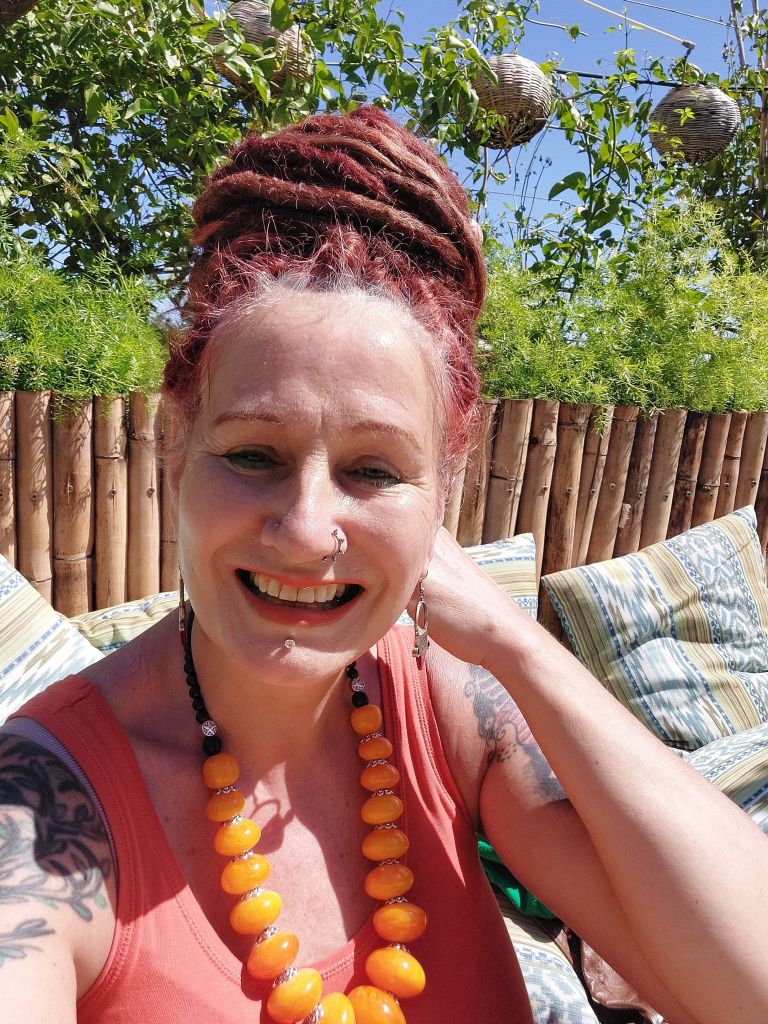
Image by Freebird Tracey.
If Africa is a peacock, then Morocco is its tail.
Welcome to my blog featuring everything you may wish to know about the historical city of Marrakech.
My aim is to help people discover the wonders of this magical city. To introduce them to it’s charm and allure. I would like to share my own experiences and adventures with you. Hopefully, it will be a useful guide for first-time visitors and perhaps even seasoned travellers. Being a solo female traveller, for women travelling to Marrakech alone, this blog is also for you.
I always feel safe visiting Marrakech. The locals are very hospitable. They always have huge smiles on their faces, and nothing is too much trouble for them. For me, this is what makes Marrakech such a special place.
I have found my ‘happy place’ in the sunshine. The fragrant orange blossom, the vibrant colours, and the magical sights and sounds of Jamaa El Fna are like nowhere else on earth.
Marrakech is a diverse city, steeped in history and culture. From its intricate Islamic architecture to traditional culinary delights. From skilled craftsmanship to the colourful items for sale in the souks. There is something to tempt your senses around every corner. I never get tired of exploring this captivating part of our planet. There is always something new to see, and it’s full of surprises.
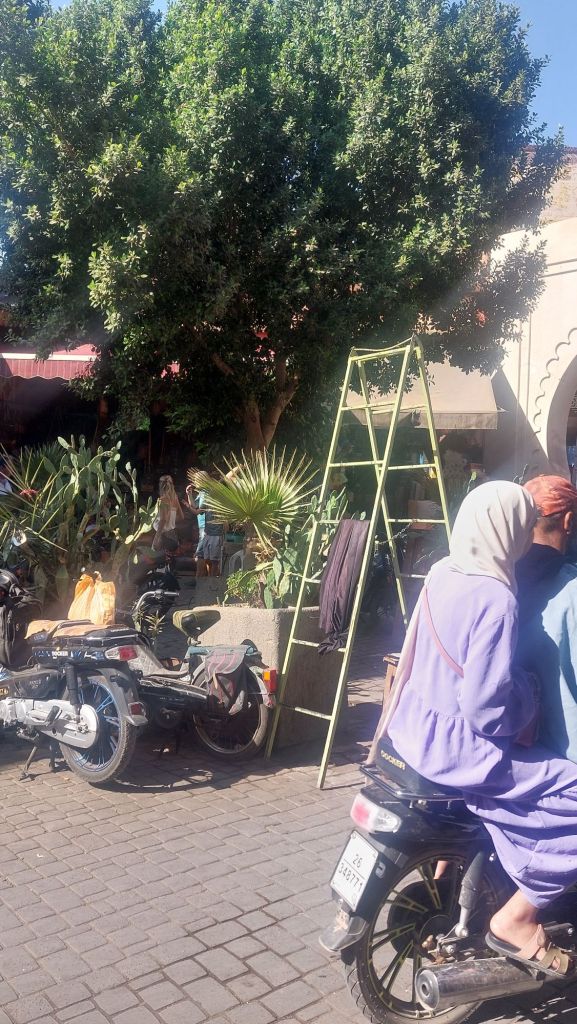
The sound of the souks stays with you a lifetime. The friendly banter from the vendors, donkeys naying, tuk-tuks, and motorcycles rattling through the narrow alleyways. The sound of street food sizzling as the call to prayer echos across the city. This experience stays firmly imprinted in your memory. I love the energy of Marrakech. It’s an assault on the senses.
Image by Freebird Tracey.
This blog will transport you to North Africa. To the famous red city of Marrakech. To the home of one of the oldest indigenous people in the world, the Amazigh.
My focus is on the medina, the ancient walled city, including the kasbah and the mellah. Together, we will explore the main square called Jamaa El Fnaa, the heartbeat of Marrakech. For first-time visitors, it can feel a little bit daunting. Marrakesh can be overwhelming. This was my inspiration for writing this blog.
I begin by touching on the history and culture of Marrakech. Knowing something about the place you’re visiting gives you a better idea of what to expect.
I give valuable tips, including ways you can travel to Marrakech on a budget. How to stay safe, ways to get around, scams to avoid, and many more.
I suggest ideas on how you can spend your time in Marrakech. This includes popular excursions, popular activities, and day trips.
There is a section featuring riads in the medina. This is accommodation I have stayed in, including luxury and budget friendly riads.
Next, I will share some of the best places to eat, including vegetarian and vegan options. I will also tell you where to find cool bars that serve alcohol in the medina.
Finally, there are a few articles highlighting things that might interest you about Marrakech. This includes customs and traditions.
Keep my blog close to hand. Use it as a reference guide before and during your visit to this UNESCO world heritage site. I hope you will find it helpful when planning your own visit to Marrakech.
Now that I’ve given you an outline of my blog, it’s time to buckle your seatbelts. Come and join me on a mind-blowing trip of a lifetime. Let me introduce you to the sights, sounds, and tastes of Marrakech. Every one of them perfectly entwined to create a little piece of heaven here on earth.
Marrakech has been inhabited for over 1000 years Morocco took its name from Marrakech.The first settlers were Berber farmers who had lived on the land since neolithic times.The Amazigh people named the country Murakush, meaning the Western kingdom, later Arab conquerors adapted the name to Morocco.
During the 11th and 12th centuries, the Almoravids were the rulers of Marrakech, founded by Abu Bakr Ibn Umar in 1070, they began constructing an underground water system to supply water to the city canals, which attracted merchants and craftsmen to Marrakech.They built riads for the people who were beginning to settle in Marrakech, and it became a real city. His cousin and successor Yuseff Ibn Tashfin developed Marrakech even further, turning it into the Almoravid empire.He erected mud brick houses, giving the city its prominent,distinctive red colour its famous for today.
Image by Freebird Tracey.
It was during this period that the Masjid al siquaya mosque was built, and market places called souks began to spring up, marking the beginning of urban life in Marrakech.
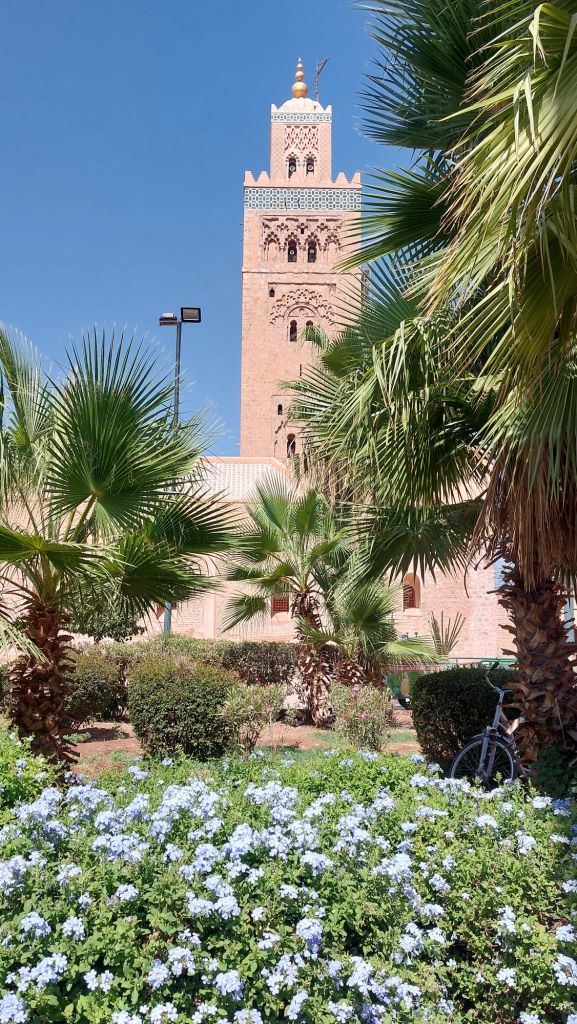
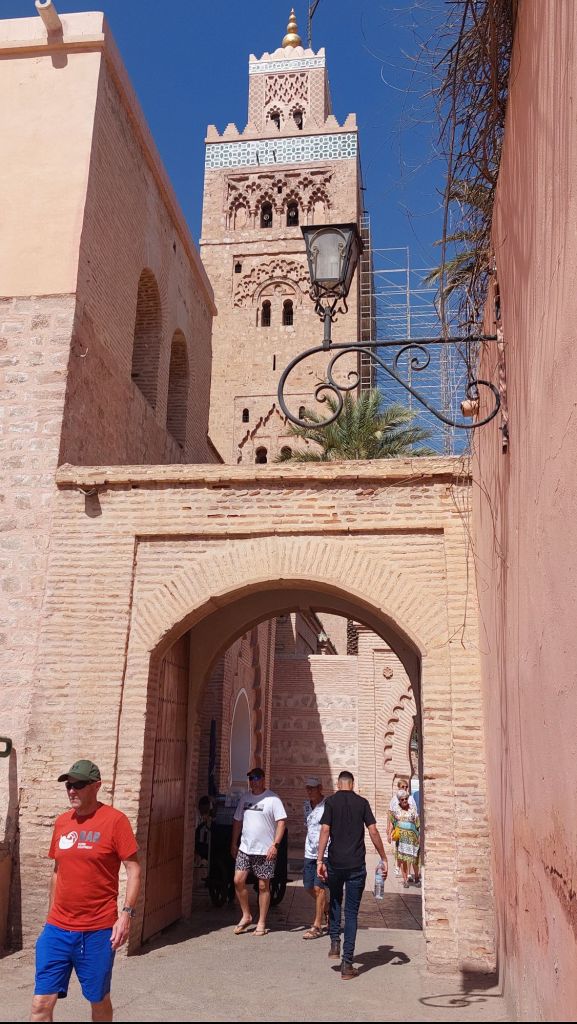
In the 12th and 13th centuries, the Almohads overthrew the Almoravids and took over the city.They continued to develop Marrakech even further, painting the walls of the city red and building spectacular palaces and the famous Koutoubia Mosque, which is the largest mosque in Marrakech and a significant landmark.
Image by Freebird Tracey.
They were intellectuals and artists, and many scholars were attracted to the affluent city. They also introduced education and art, turning it into a political, economical, and cultural centre. They also began improving on the original water system by building open air canals, which allowed water to flow down from the high Atlas mountains. This gave people a better quality of life, and they began to flourish. The city soon began to prosper under the rule of the Almohads and became a thriving place for merchants to meet and exchange goods.
Image by Freebird Tracey.
In the 13th century, the Merinid Empire took control of Marrakech in 1230 ruling for two centuries.They built the first madrasa in 1343-9 and used Marrakech as a training ground for heirs to the throne. Marrakech was the imperial capital of Morocco, but the Merinids decided that they preferred the city of Fes, which resulted in Marrakech going into serious decline. Fes soon became the new capital city, and Marrakech became the regional capital of the South instead.
Because of the move to Fes, Marrakech was practically abandoned and left to decay, becoming impoverished and neglected. The buildings were left to crumble, and the city that was once a bustling hive of activity began to die.
From 1578-1603, the Saadian Sultans led by Ahmad Al Mansur came to power. They restored the forgotten city to its former glory and breathed new life into it, reastablishing Marrakech into a capital city once again.They built the Saadian tombs and El Badi palace, furnishing them with intricate zellige tilework work and stucco decoration.
Images by Freebird Tracey.
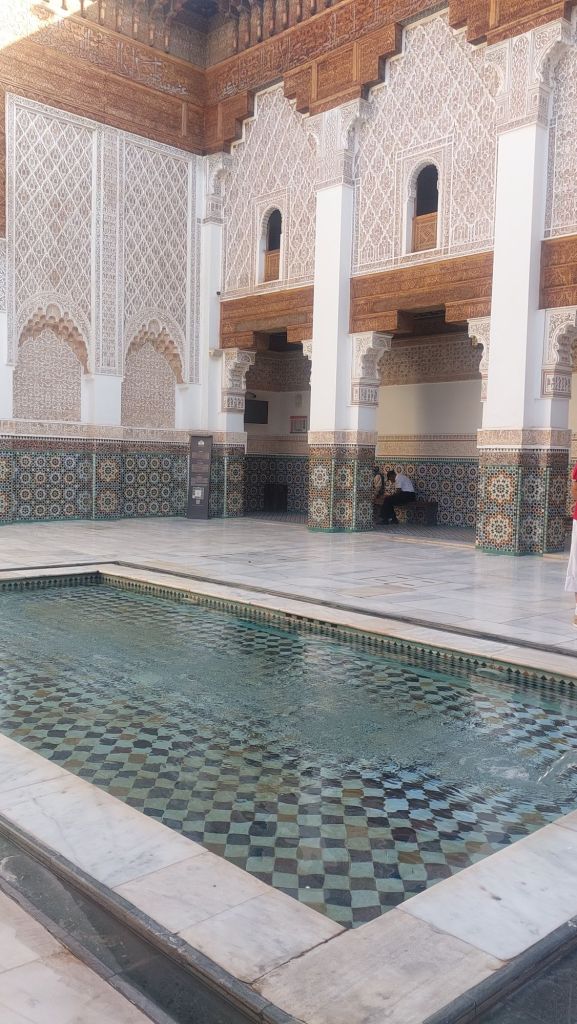
They launched military campaigns against European invasion, and this period of rule became the golden age of literature and art. The Saads built Bab Doukkala mosque in 1557-1571 and Mouassine mosque in 1562-72.They also built the Ben Youssef Madrasa in 1570.
Images by Freebird Tracey.
In 1631, rule was passed from the Saadian dynasty to the Alaouite dynasty, which is still the name of the current Morroccan royal family. The Alaouites promoted trade with the United States and other European countries. They improved date palm crops and modernised the army. They also attempted to take control of the Berber and Bedoin tribes. They restored the riads and buildings in Marrakech, redeveloping it’s infrastructure after years of decline.
It was in 1911 that the capital of Morocco became Rabat.
Marrakech became a French protectorate in 1912 when the sultan Abd al-Hafid signed the treaty of Fes. Although the sultan remained the head of state, the French had a huge influence in developing strong diplomatic and economic relations in both trade and tourism. The French began modernising the city and building new districts whilst still aiming to preserve the traditional character of the city. They encouraged tourism and the export of Moroccan dates and other produce. In 1956, the treaty of Fes was passed back, and Morocco gained its independence again.
Throughout its history, Marrakech has been a city that has resurged, declined, and resurged once again.It has fought against several invasions and endured plagues and famines.
In 1982, UNESCO declared Marrakech a UNESCO world heritage site, raising awareness of the cultural heritage of the city. It is now one of the most popular destinations in the world and receives millions of tourists each year.
Marrakech combines the ancient with modernity. Visitors can get a glimpse into its intriguing past as they wander around the preserved walls of the medina. As they venture into the tree lined avenues of Mohammed V avenue, they are presented with a newer,modern side of Marrakech, a thriving hub of fancy restaurants, bars and boutiques.
The city is developing fast and attracting tourism at an exceptionally high rate. Despite this, it still continues to retain its culture, customs, and historical significance.
In Marrakech, you will often hear the word Berber. The Amazigh, also known as Berbers, is an indigenous group native to North Africa, with a history stretching back thousands of years.They have lived across a vast region that encompasses modern-day Morocco, Algeria, Tunisia, Libya, Mali, and Niger.
The Berbers made a huge contribution to the region’s cultural and technological heritage, including the creation of the Khettara system, an ancient water management technique involving a network of underground tunnels that channel water from mountain aquifers to arid lands. This enabled farming and agriculture to thrive in a harsh environment. The Berbers existed as a totally self-sufficient community thriving long before the arrival of foreign empires.
Over the centuries, the Berbers faced numerous challenges, including invasions and exploitation by foreign powers.During the Ottoman era, slave traders targeted Berber communities, kidnapping many women to become slaves, throwing their society into complete chaos. The Berbers became known for their resistance, with some tribes turning to piracy as a way to survive and out of defiance against foreign powers. Barbary pirates became infamous for raiding ships and coastal towns, which led to conflicts during the Barbary Wars.
Despite all these challenges, the Berber culture has continued to endure, holding on to its distinct language, culture, and identity through sheer resilience.
The history of Amizigh is now taught in schools and is officially known as the second language in Morocco, next to Arabic. Moroccan people are proud of their heritage and its rich culture, but they had to fight for the right to have it recognised. The name Berber comes from the roman word ‘Barbaric’ and is now considered offensive to use it to describe the indigenous people of North Africa. The name Amazigh, which means ‘free people’, is now used instead. Over 90% of the general population of Morocco has indigenous Berber DNA, and Marrakech is one of the most culturally Amazigh cities in Morocco alongside Agadir.
It is possible for visitors to Marrakech to take a trip into the Atlas Mountains to observe the ancient customs and lifestyle of the Amazigh. A stay in a Berber home is an unforgettable experience and a way to really get to know the history of Morrocco. In the Atlas mountains, life continues in very much the same way as it always has. Visitors to villages like Imlil get the opportunity to eat a home cooked meal with an Amazigh family and witness their day-to-day life, which isn’t an easy one. This fascinating experience can be booked online or through your accommodation.
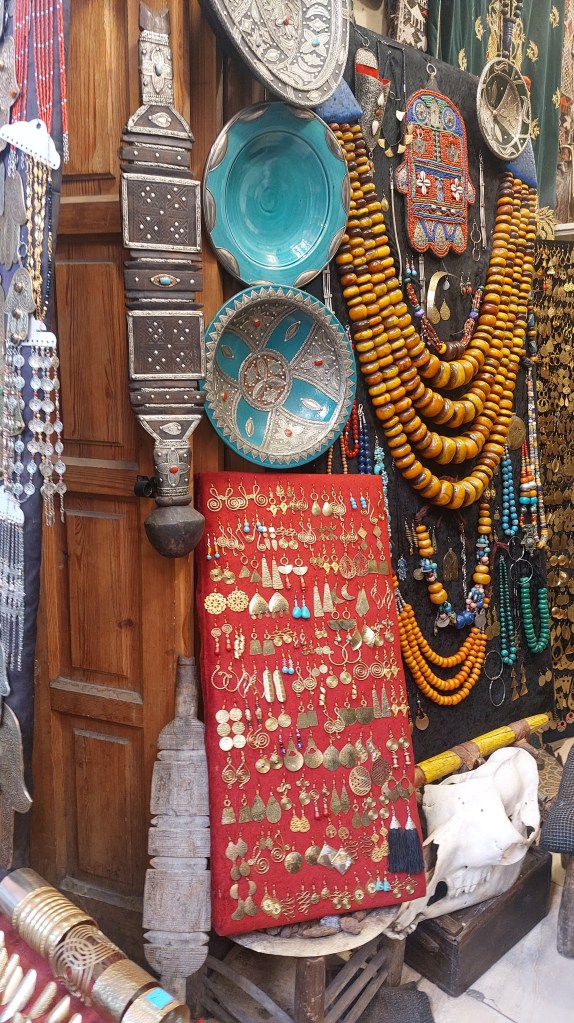
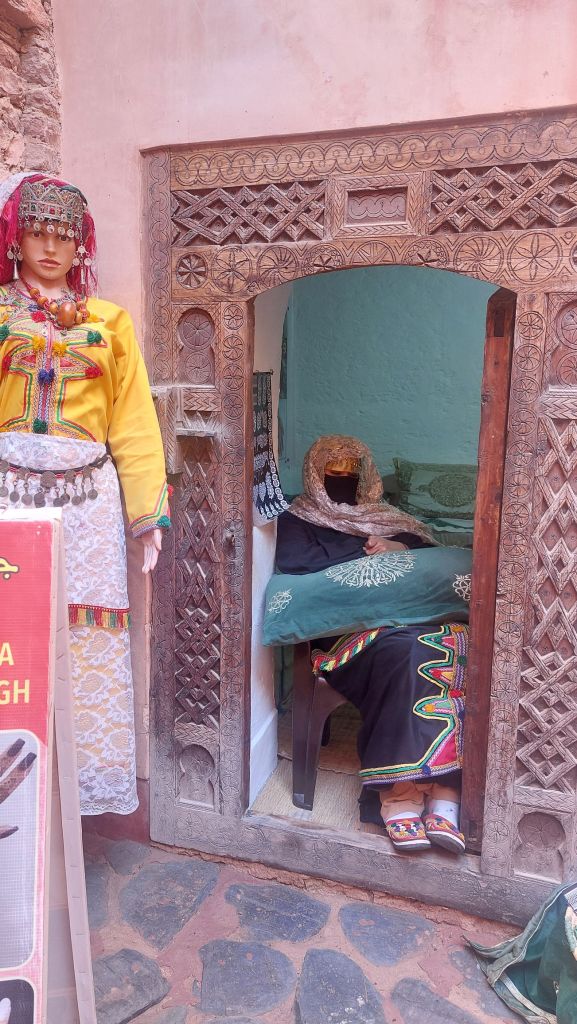
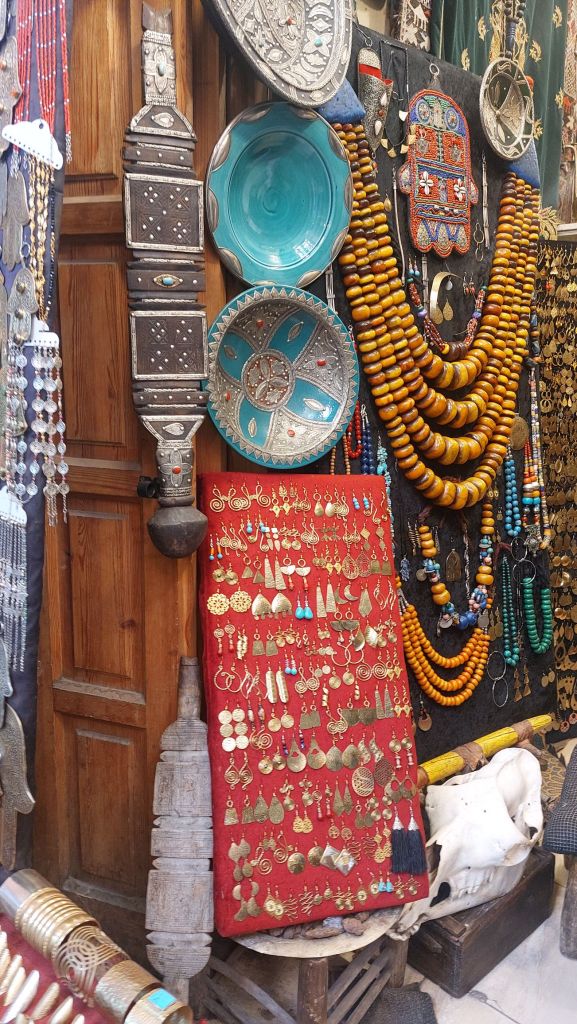
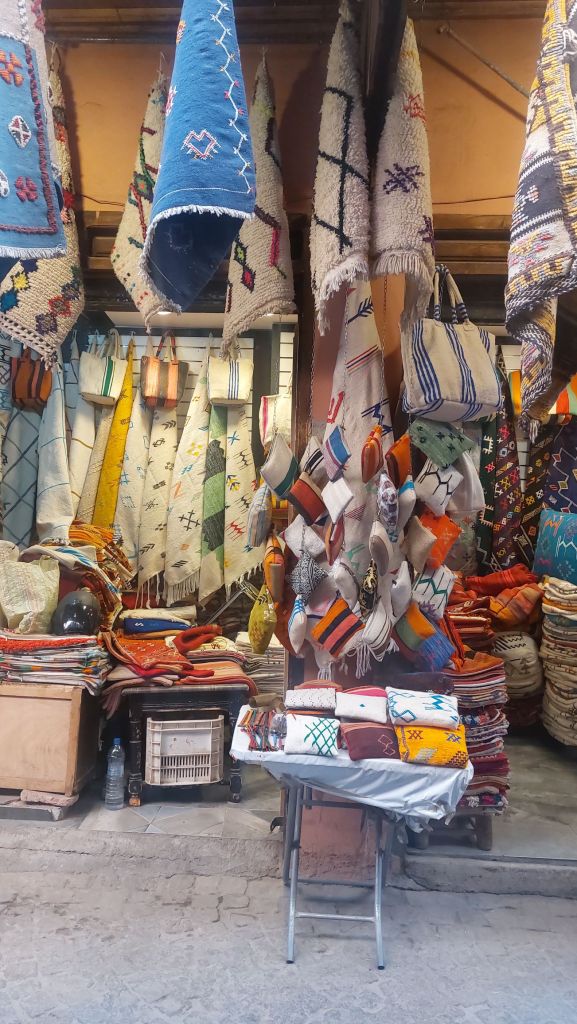
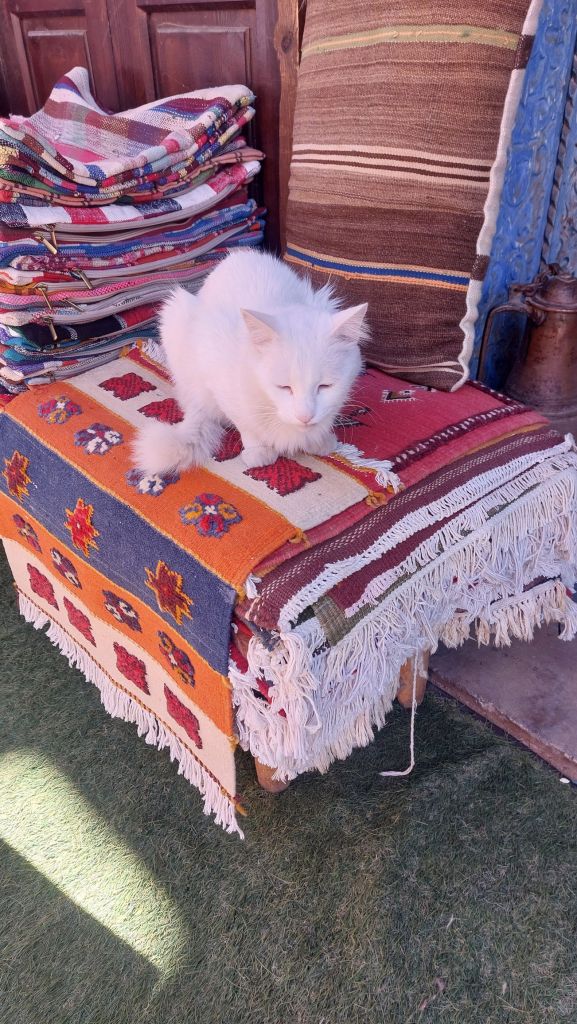
There is beautiful jewellery and rugs made by the Amazigh for sale in the medina. The art of carpet weaving by Amazigh women is demonstrated, and tourists get to appreciate the work that goes into producing these beautiful high-quality masterpieces
Images by Freebird Tracey.
To learn more about Amazigh culture, visit the museum of photography or Marrakech museum. Both places will give you a deeper insight into the history and customs of Amazigh culture.
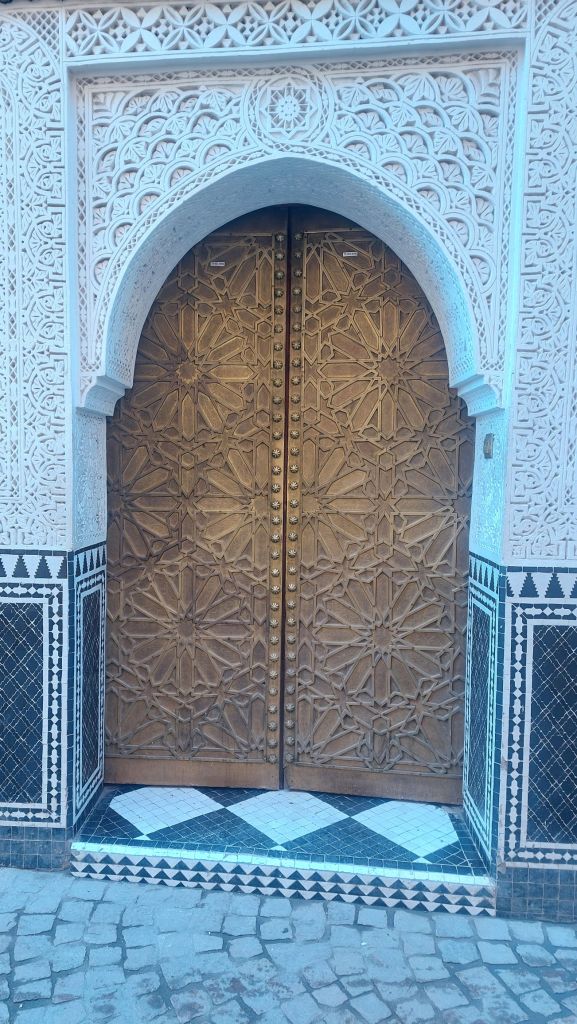
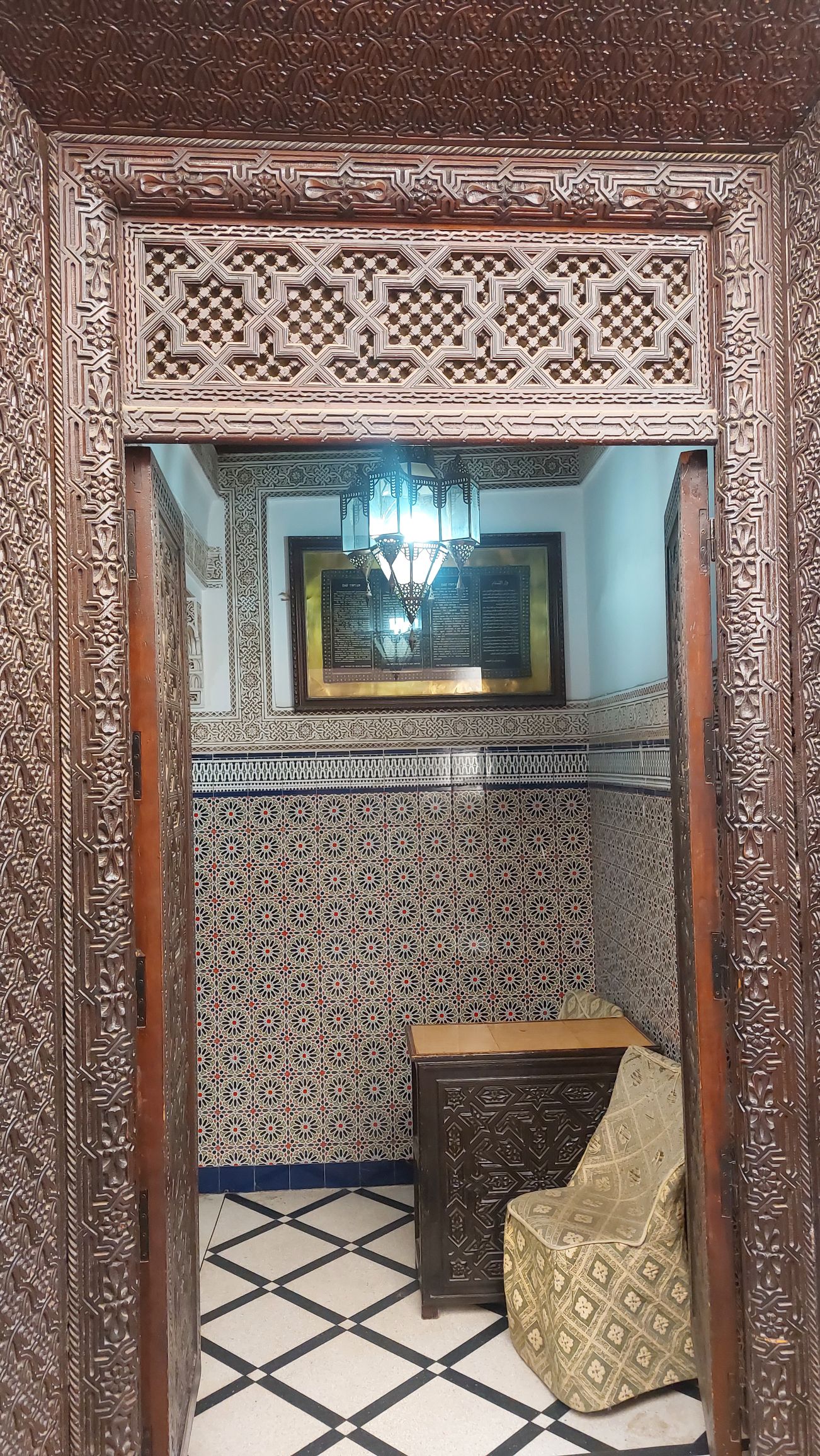
The beautiful Islamic architecture found in Marrakech is a testimony to its wealth of history and culture. From intricately carved wooden doors to geometric mosaic tiles and tadelakt, Marrakech has some of the finest examples of Islamic architecture in Morocco.You can’t help but be impressed by the attention to detail as you wonder around the medina.
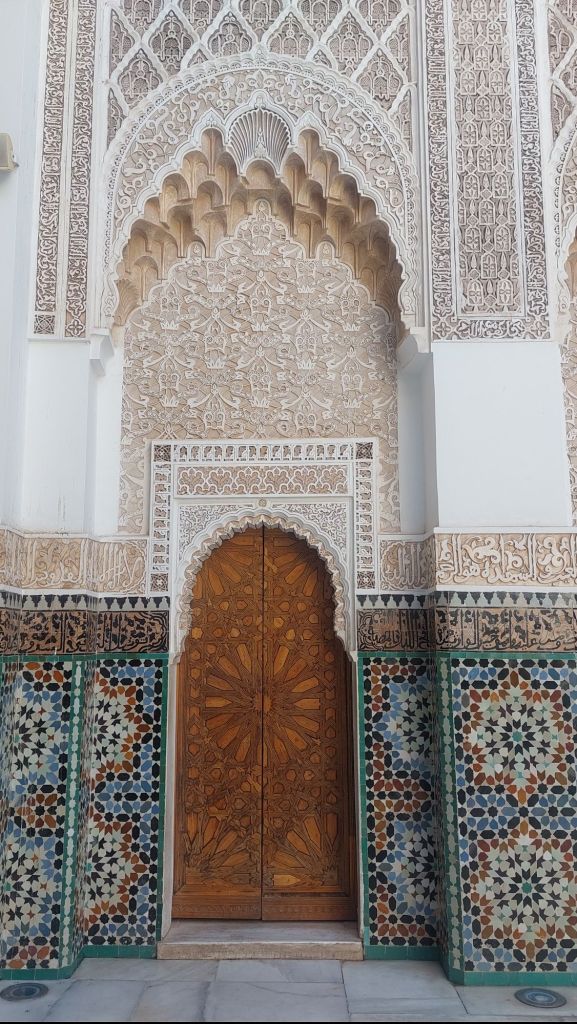
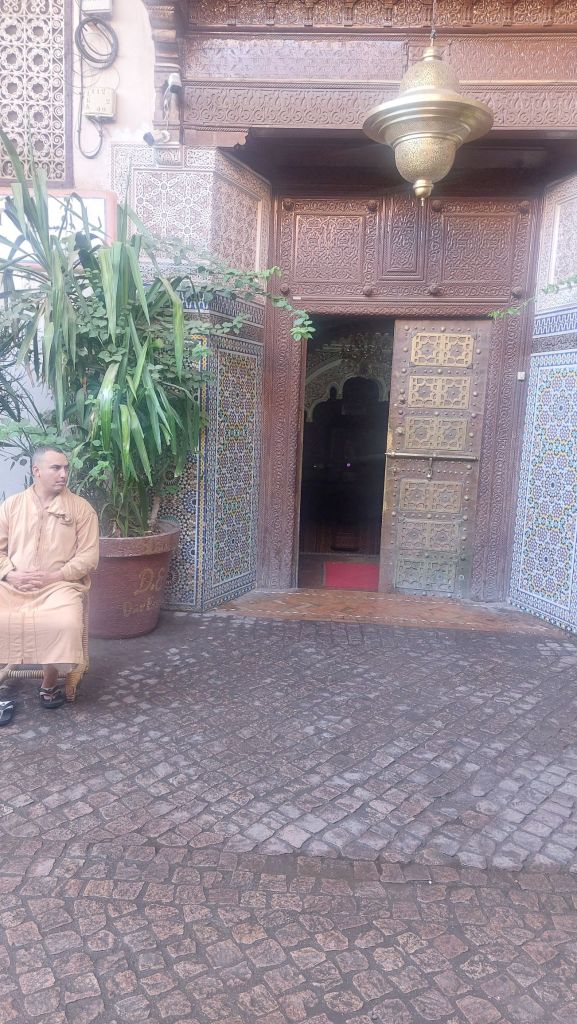
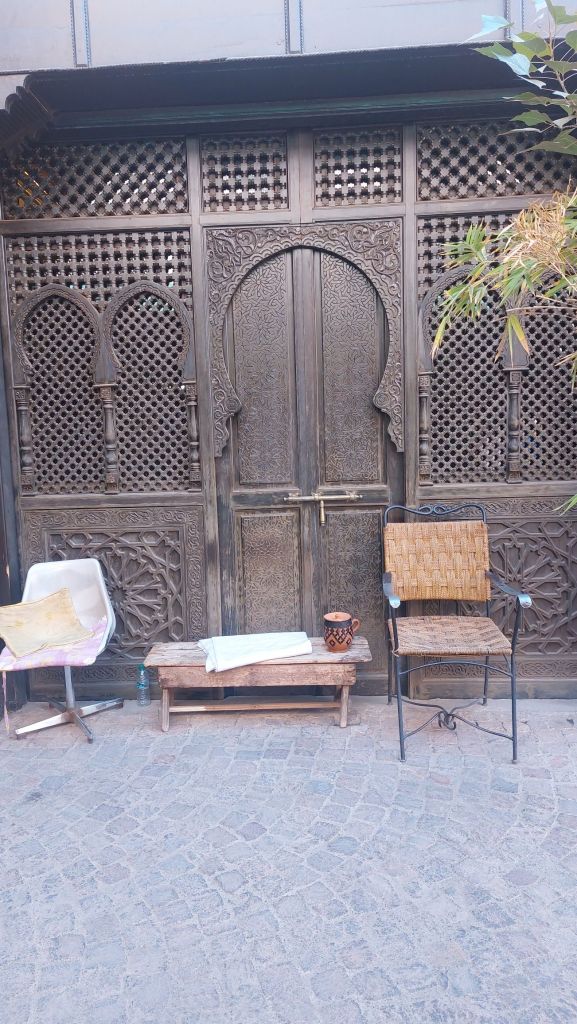
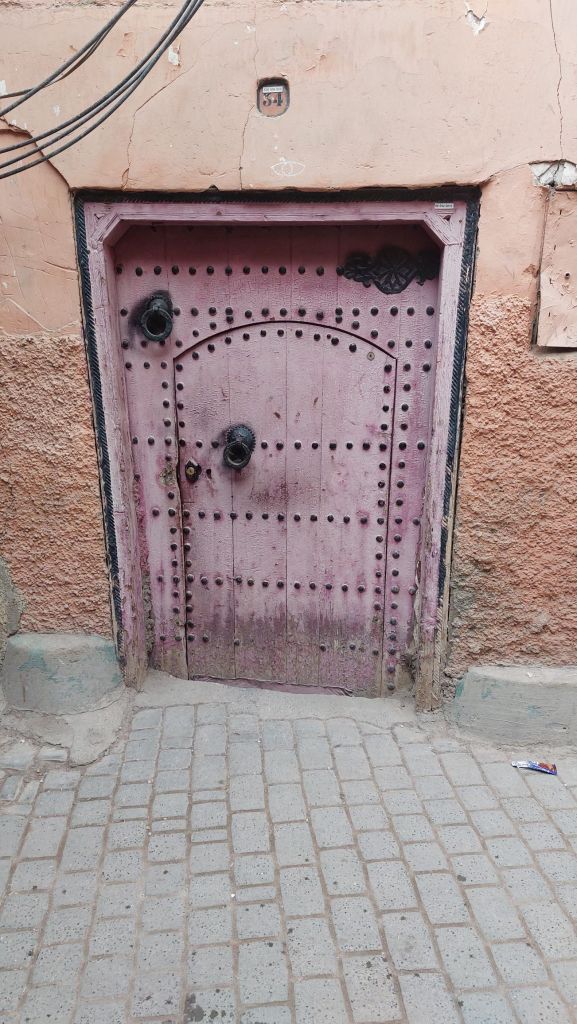
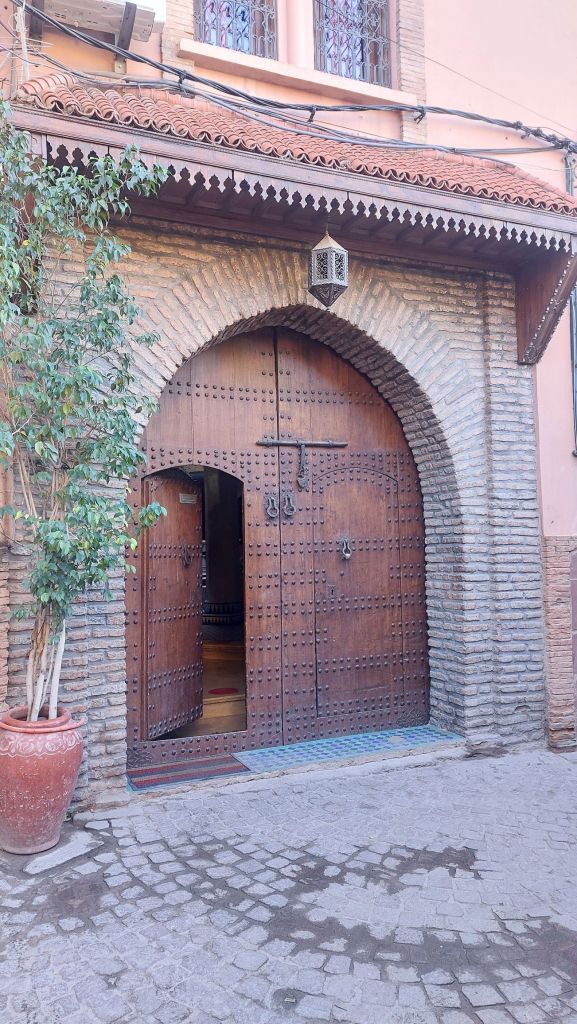
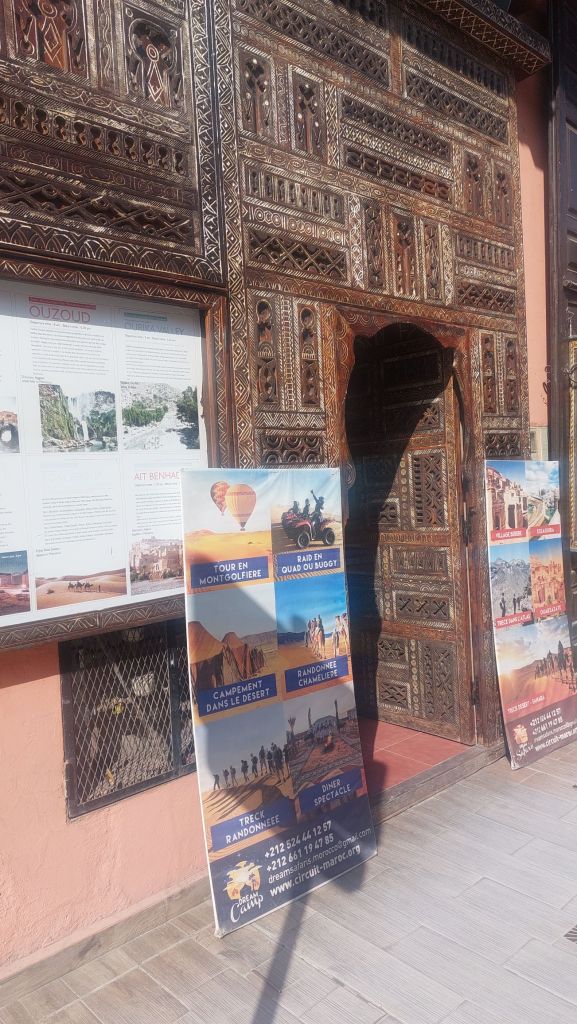
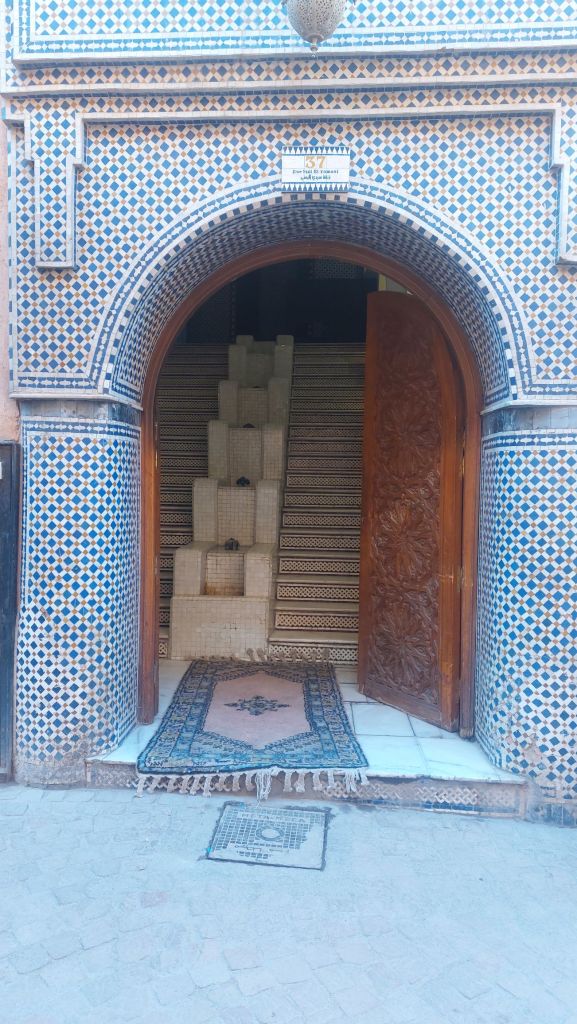
Large wooden doors exquisitely carved out of Cedar wood appear out of nowhere as you pass through the winding alleyways.
Images by Freebird Tracey.
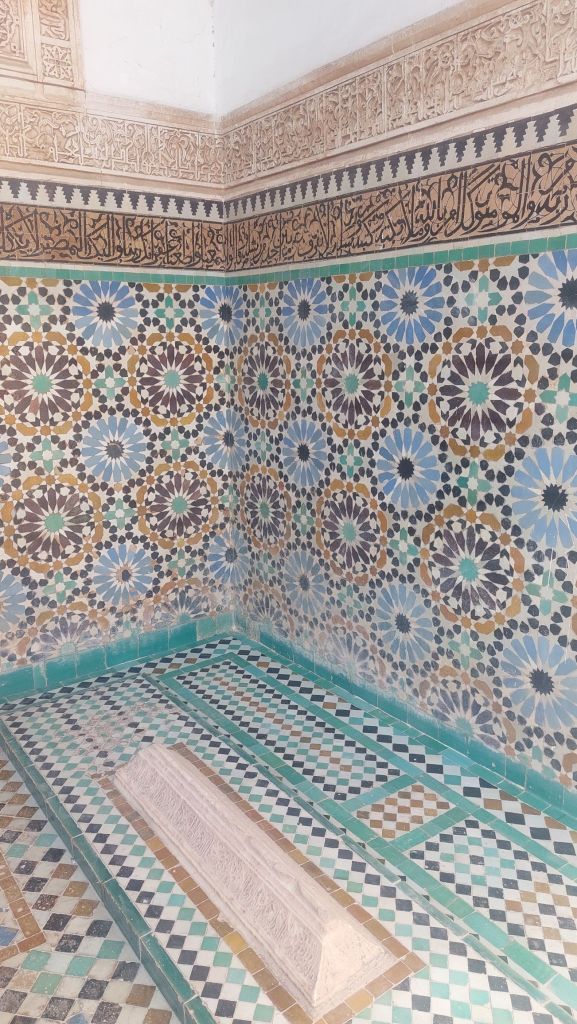
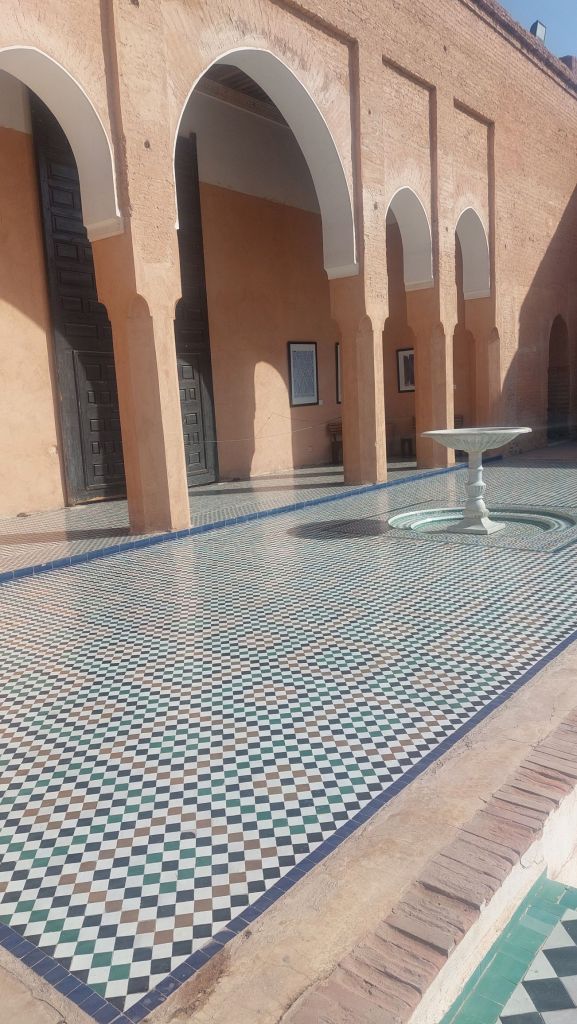
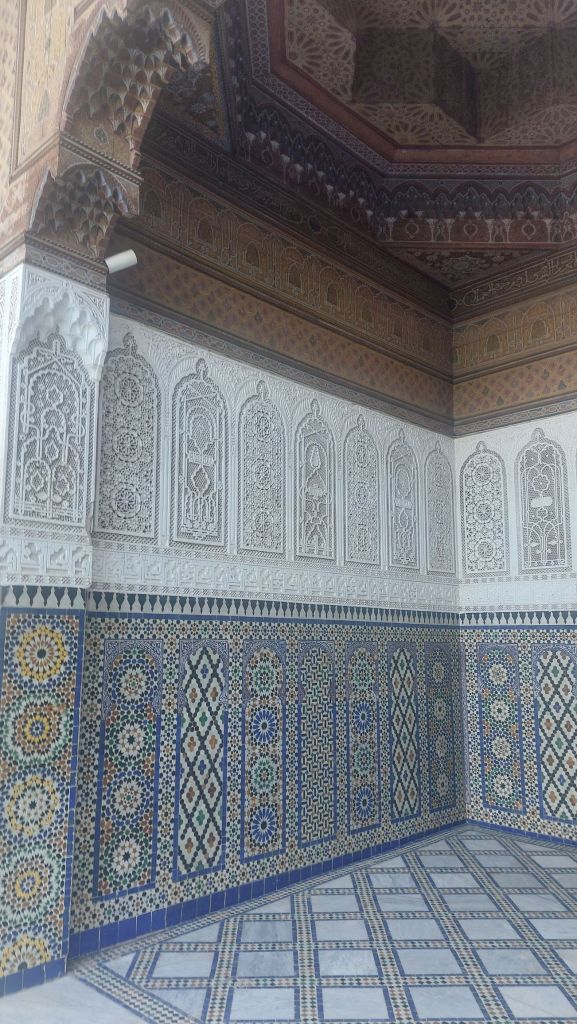
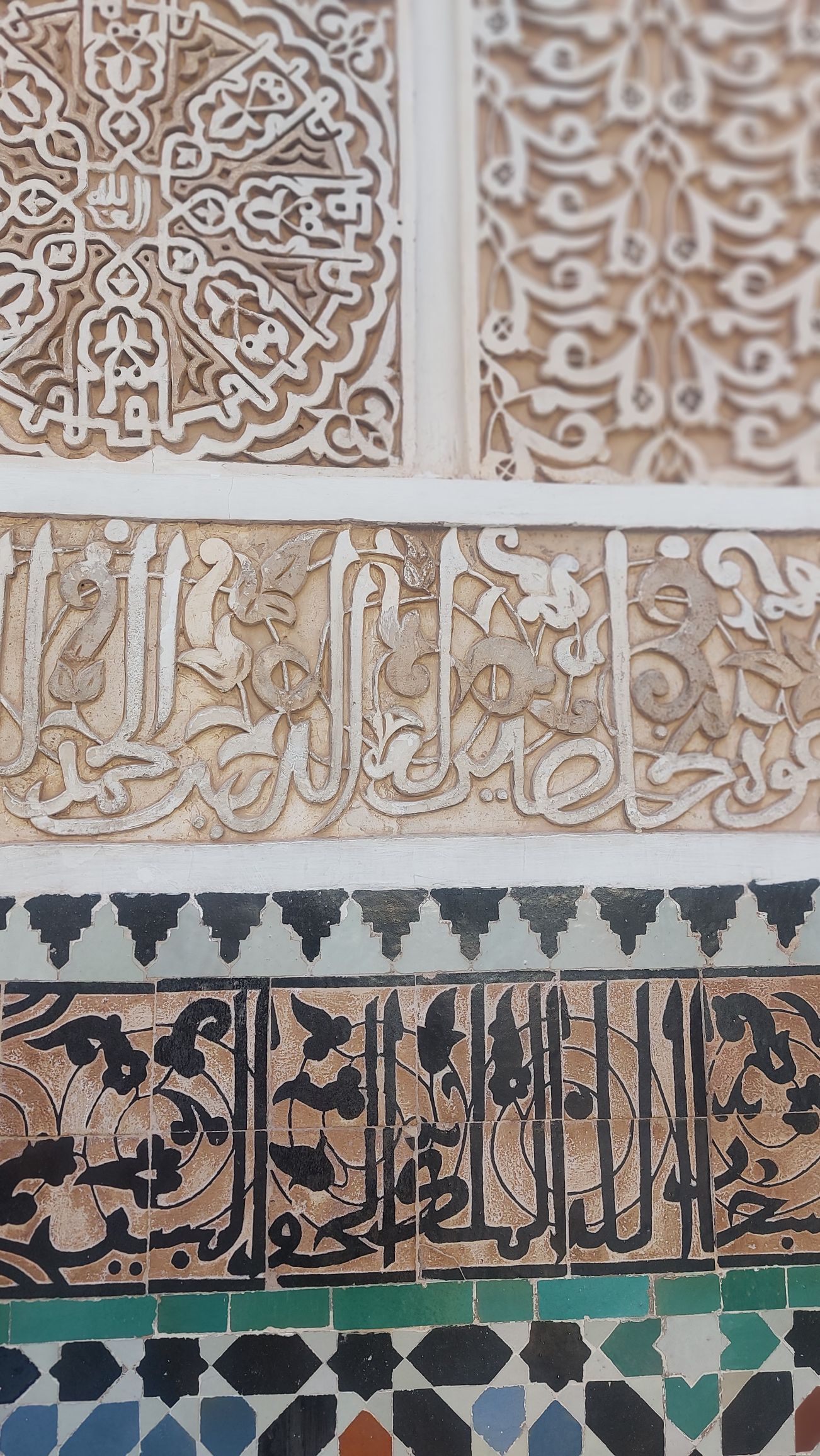
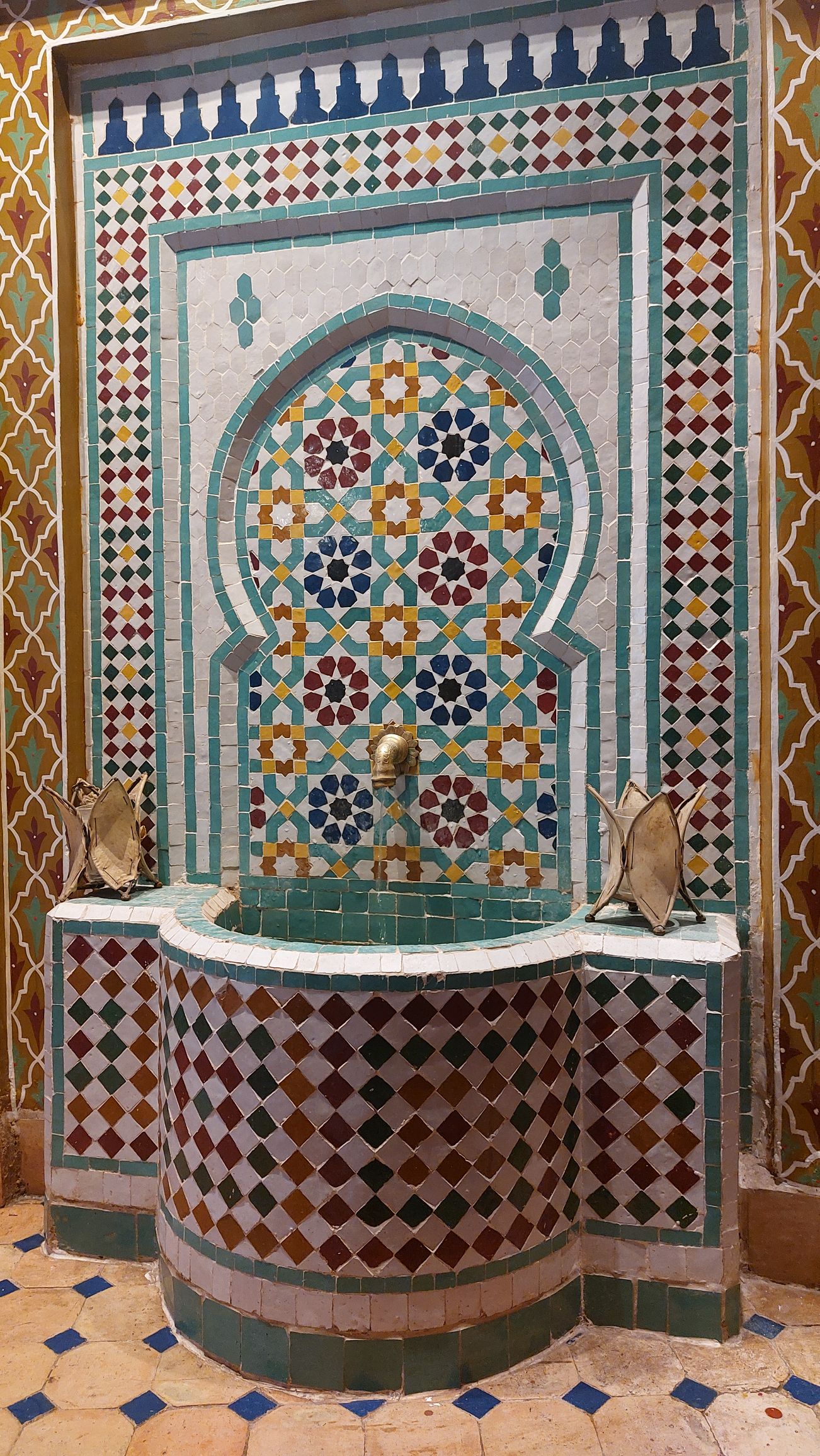
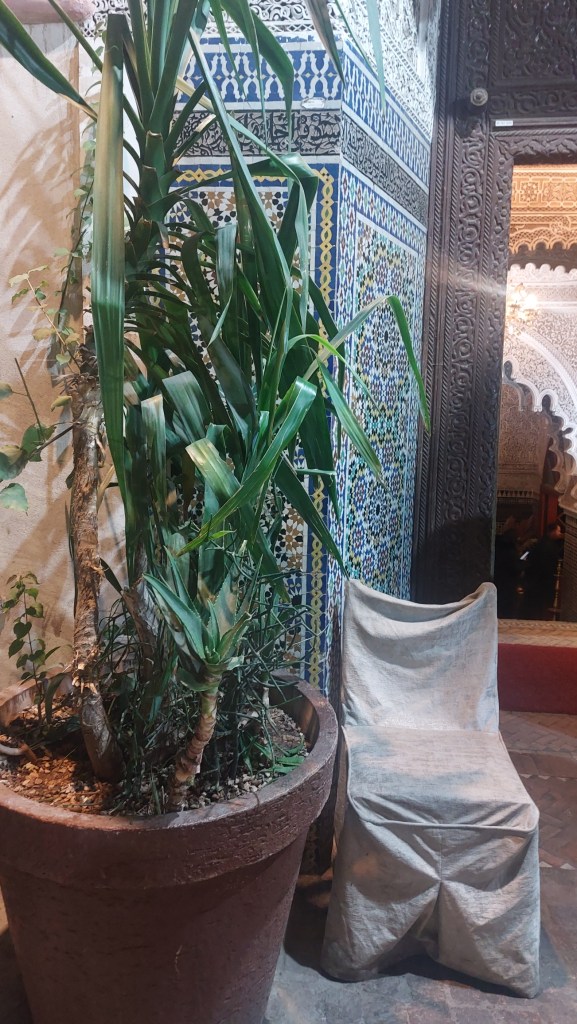
Zellige tiles originating from the 10th century form geometric mosaics decorating the floors, walls, and fountains. A skill which has passed down from generation to generation.
Images by Freebird Tracey.
Islamic architecture in Morocco follows the spiritual principle of Tawhid, the unity of God. There are handcarved stucco panels with expertly applied fine details, including floral motifs and calligraphy from Nakshi and Kufic Arabic scripts. These are set against a backdrop of peace and tranquillity.
Image by Freebird Tracey.
The use of symmetry, repeated geometric patterns, and balanced proportions reflect divine order and infinity. The use of geometry and proportion symbolizes universal harmony. Calligraphy enshrines verses from the Qur’an, which merges both word and form together. Light also plays a sacred role. As it filters through lattice screens called mashrabiyas and central courtyards, it evokes the essence of divine presence.
Image by Freebird Tracey.
Islamic architecture blends together Arab, Amazigh, Andalusian and Sub Saharan influences. Perfect examples can be seen at the Koutoubia Mosque, Ben Youseff Madrasa, Bahia Palace, Saadian tombs, and El Badi Palace.
Image by Freebird Tracey.
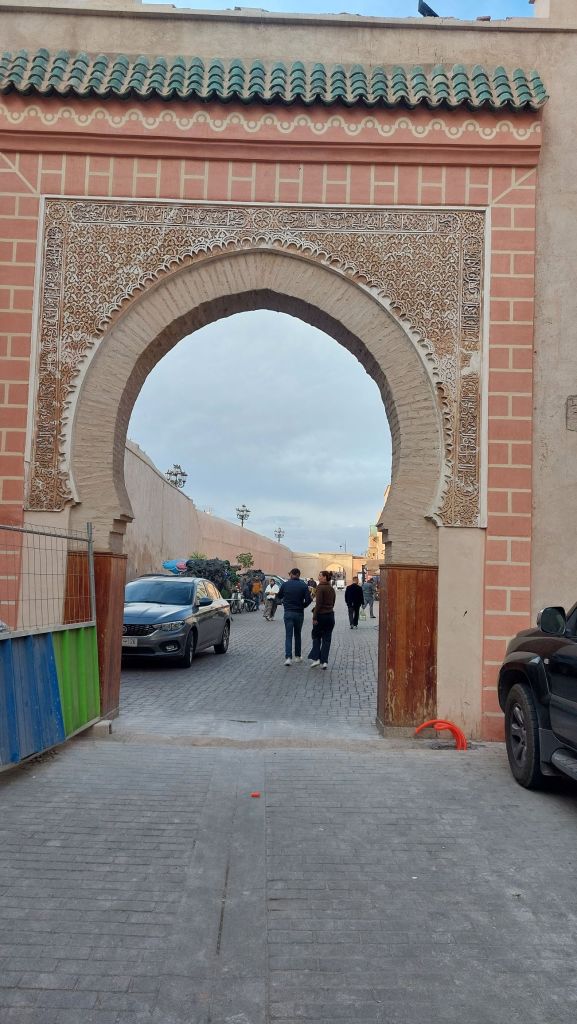
Bab Agnaou gate is one of 19 splendid arched gates into the city showcasing intricate carvings.
Hammams, which were constructed centuries ago, reflect the scale of precision and sheer brilliance of Islamic architecture. Exploring these beautiful places is a journey through the history and culture of Marrakech. You will be spellbound by the beauty of the tiled fountains with their original zellige tilework in the courtyards of riads. Original water features have been restored and strategically situated around the medina.
Image by Freebird Tracey.
There are two knockers on the magnificent wooden doors. One which is strictly for family members and one for guests to use. This is in order to shield and protect the women of the household from the gaze of male strangers.
Images by Freebird Tracey.
There are places all around the medina where you will want to take photographs of the beautiful work local artisans left the world as their legacy.
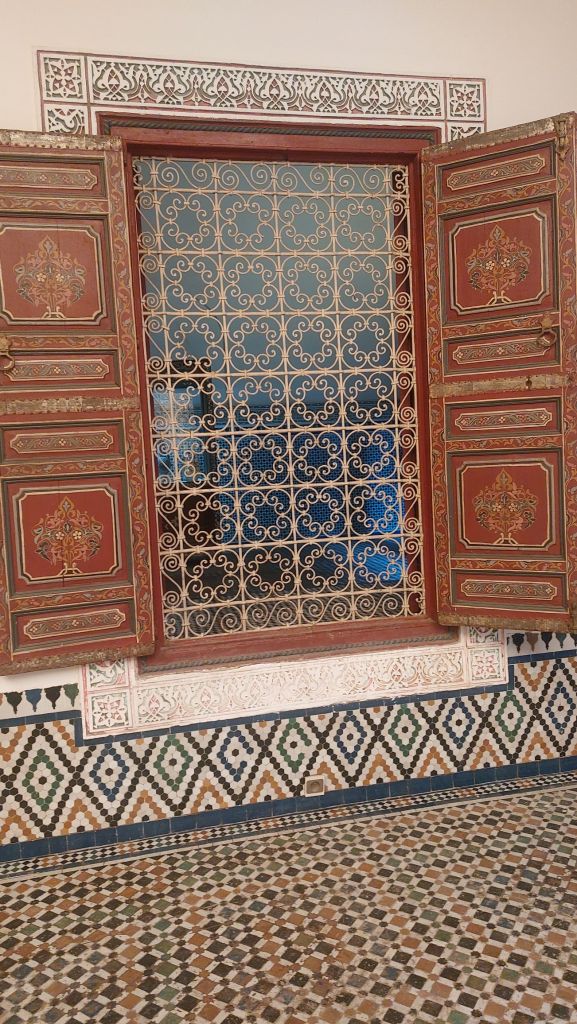
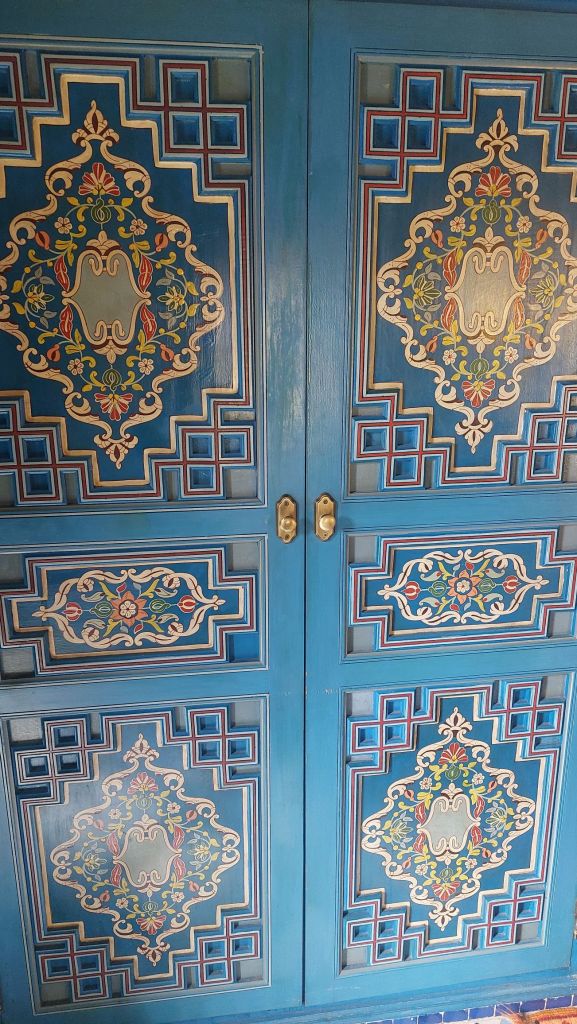
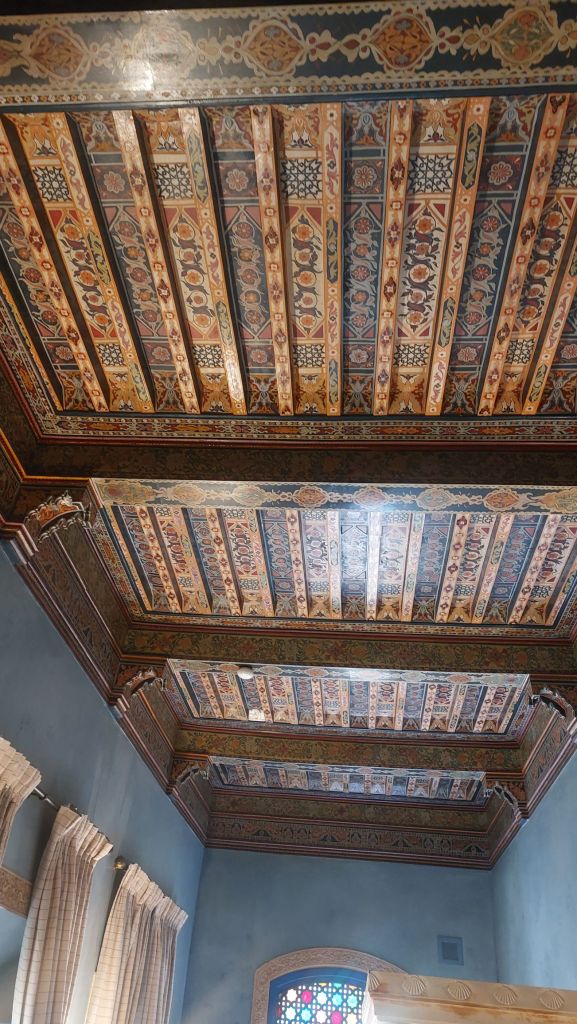
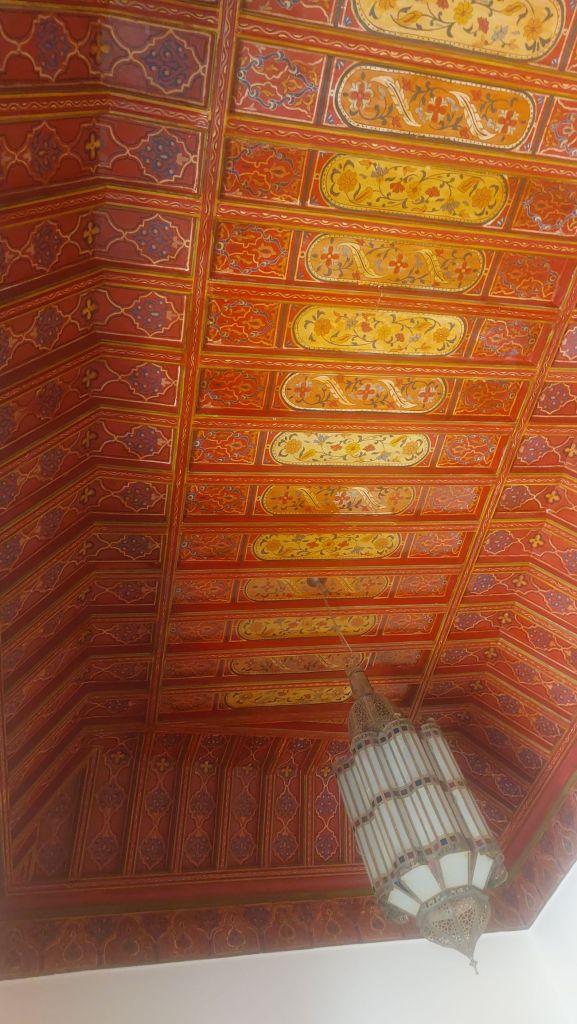
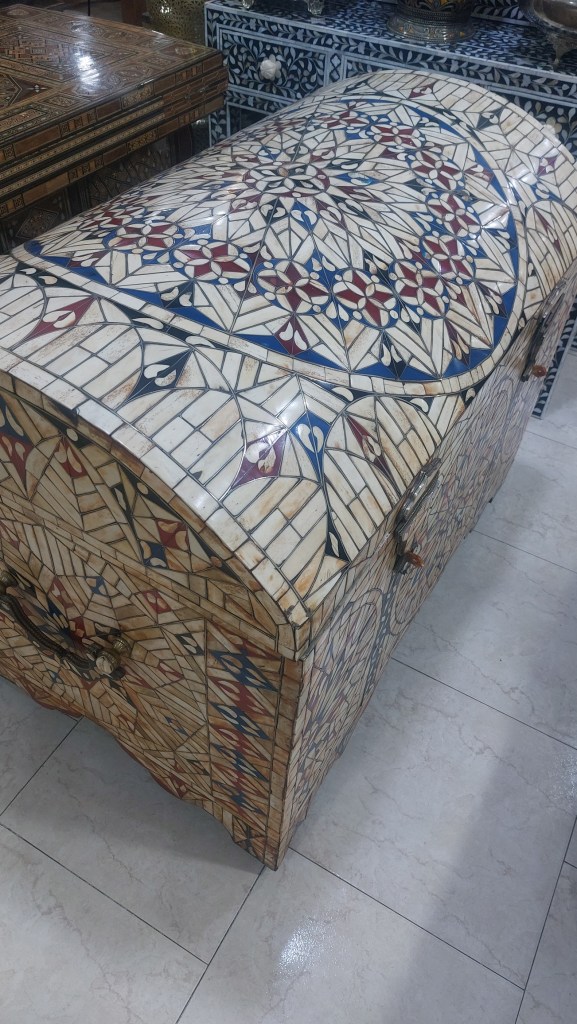
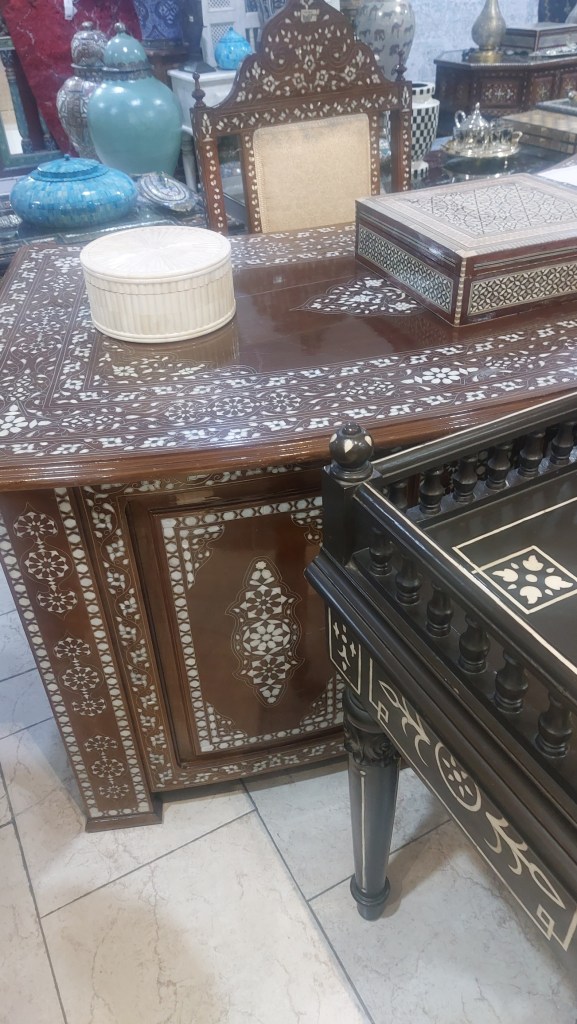
The remarkable skills of trained craftsmen are evident inside traditional riads. Unique pieces of handmade furniture, beautifully painted doors, and splendid ceilings demonstrate the skill involved.
Images by Freebird Tracey.
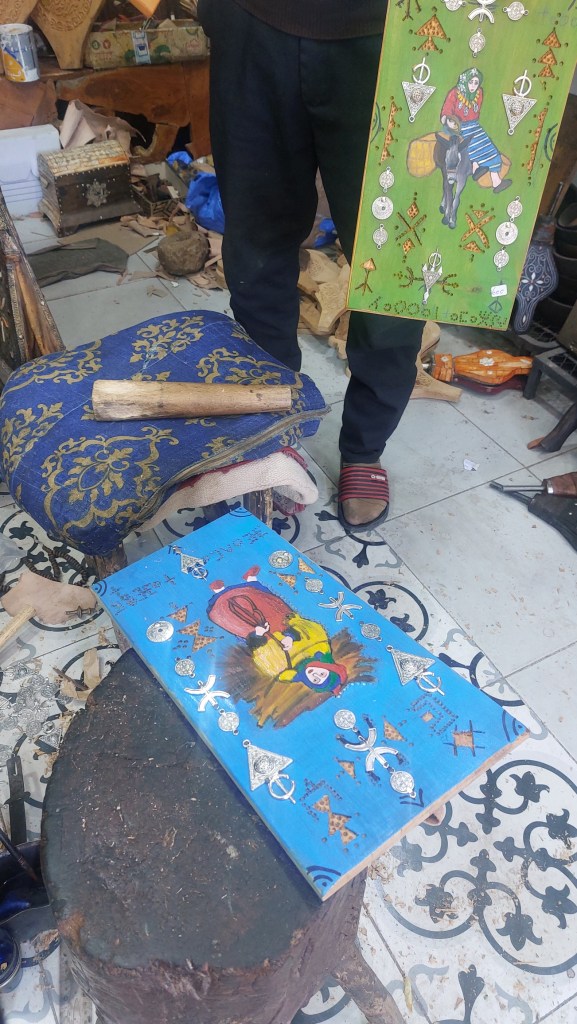
You can find people creating things in Marrakech using the same techniques that generations before them had used. At Ensemble Artisanal Craft Complex near Cyber Park, you can see the artisans busy at work. Here, they teach young apprentices the art passed down by their ancestors.
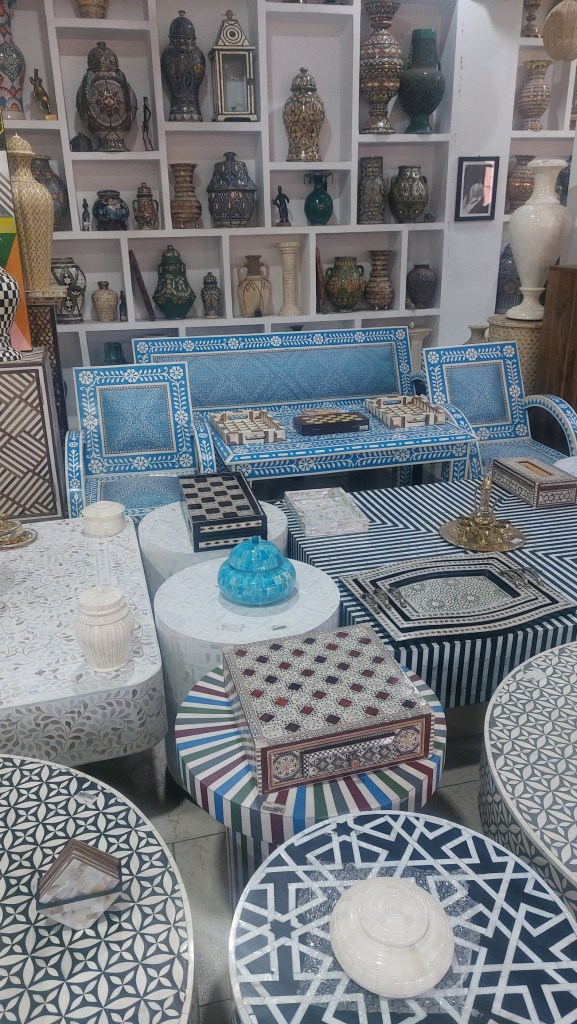
Around the medina, you will find carefully designed wooden chess sets and wooden boxes ornately inlaid with Mother of pearl. In Tinsmiths Square, metal workers are busy crafting traditional Morroccan lamps and mirrors.
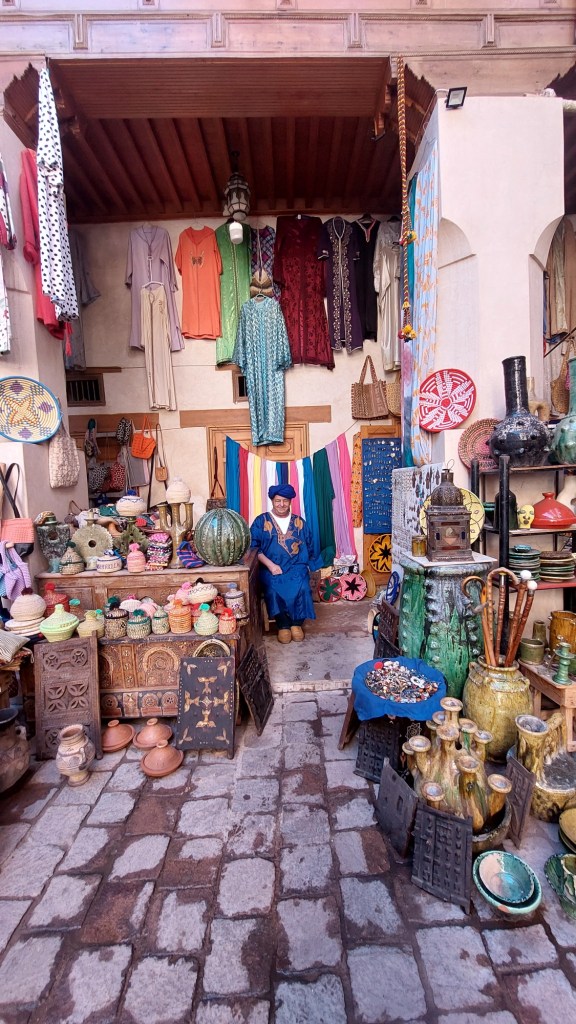
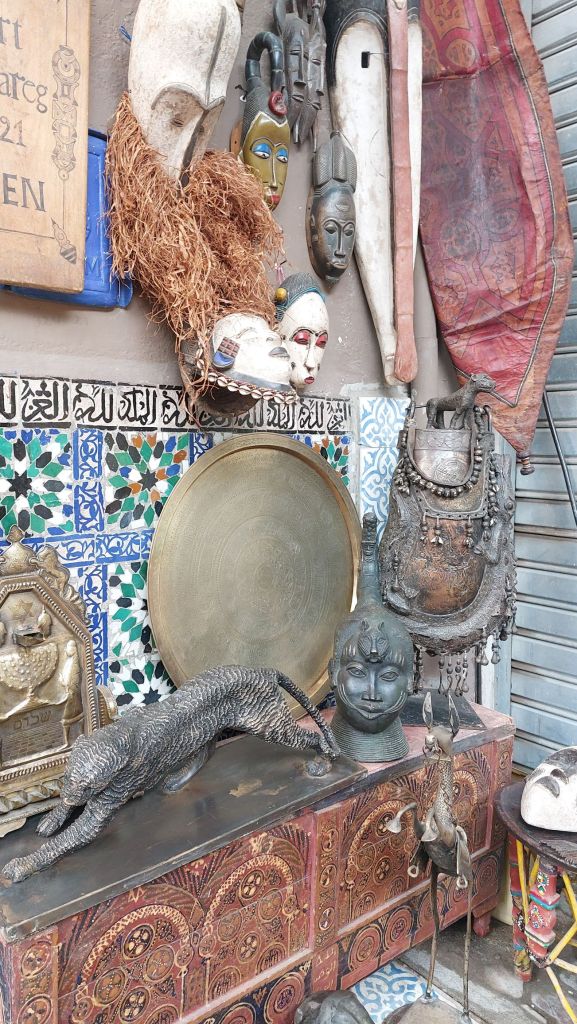
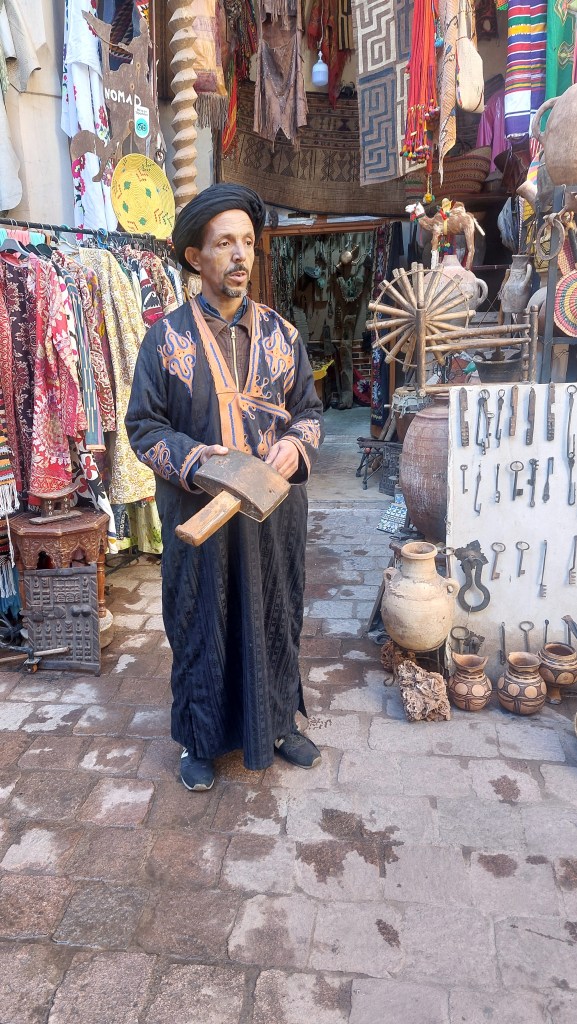
As you wander through the souks, you are presented with examples of beautifully crafted items for sale. The amount of work that has gone into creating each piece is phenomenal.
Images by Freebird Tracey.
The roots of Moroccan architecture originate from the Amazigh and Arab culture. Styles have evolved from one dynasty to the other, including the Almoravids, the Almohads, and the Marinids.
Nowadays, architects are using a combination of old and modern designs in their construction of buildings. This has led to a new style. It’s still characteristic of the old medina, but introduces newer, environmentally friendly buildings. They continue to incorporate the traditional zellige tilework in order to pay homage to the history and culture of the city. Riads are restored as close to their original appearance as possible. Some are modern and contemporary, which some tourists find appealing.
I personally love the rustic charm of the older riads. The ones that evoke images of a world gone by. Those riads clinging to remnants of the past. The ones telling the story of an ancient culture which, if you look closely, is still very much alive today.
How To Immerse yourself in the culture of Marrakech.
Image by Freebird Tracey.
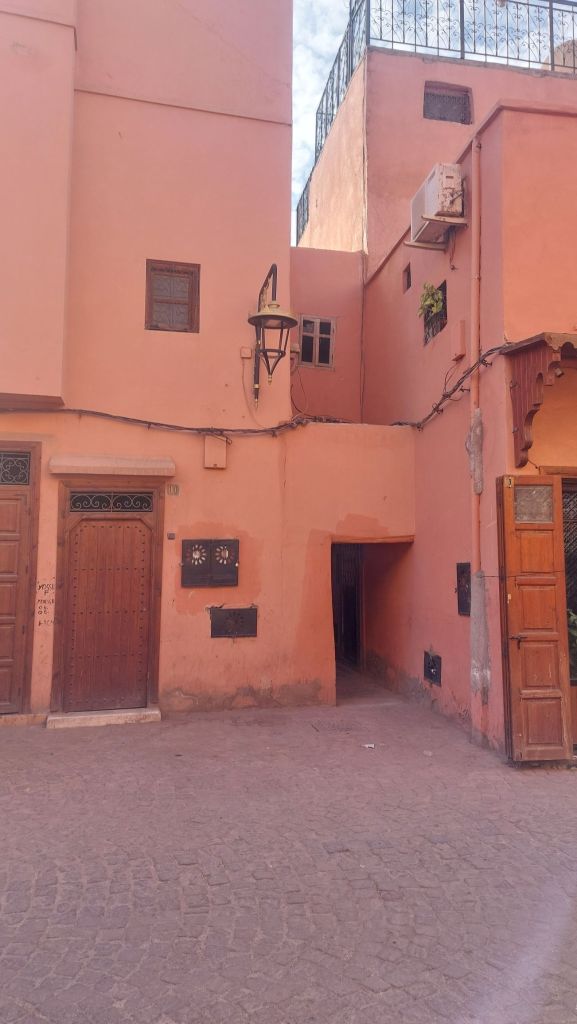
If you want a taste of authentic Moroccan life, spending time in a riad will give you one. From the outside, riads appear unassuming. This is because in Islam, people do not like to display their wealth. Homes are discreetly hidden behind red clay walls. This prevents poor people from focusing on their hardship because in the eyes of God, everyone is equal.
Entering a riad is like finding yourself in a different world altogether. Most visitors are speechless once they walk through the large wooden door. Having found their way through the dark, narrow alleyways, seeing the glorious vision that appears before them is worth the effort.
Image by Freebird Tracey.
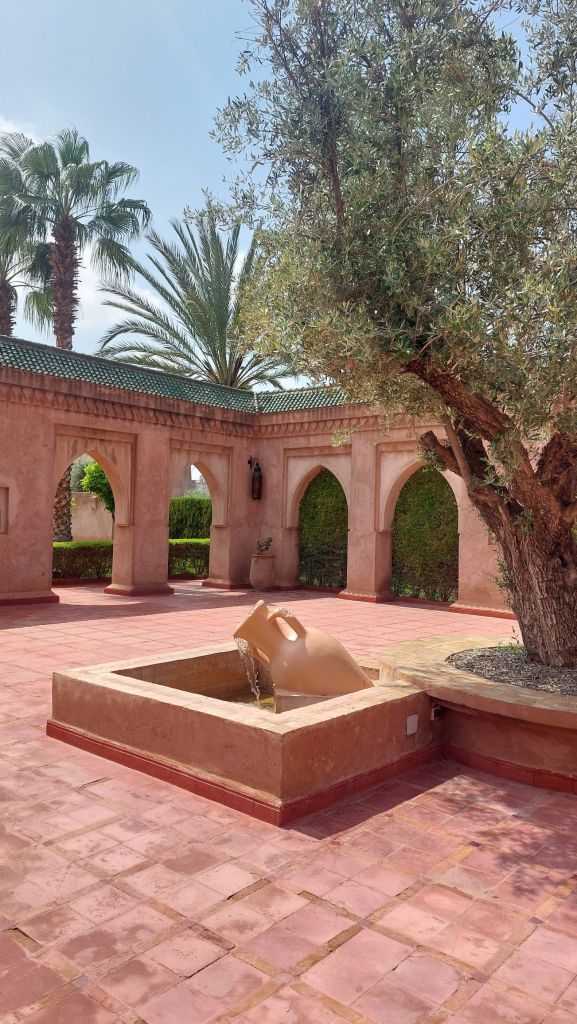
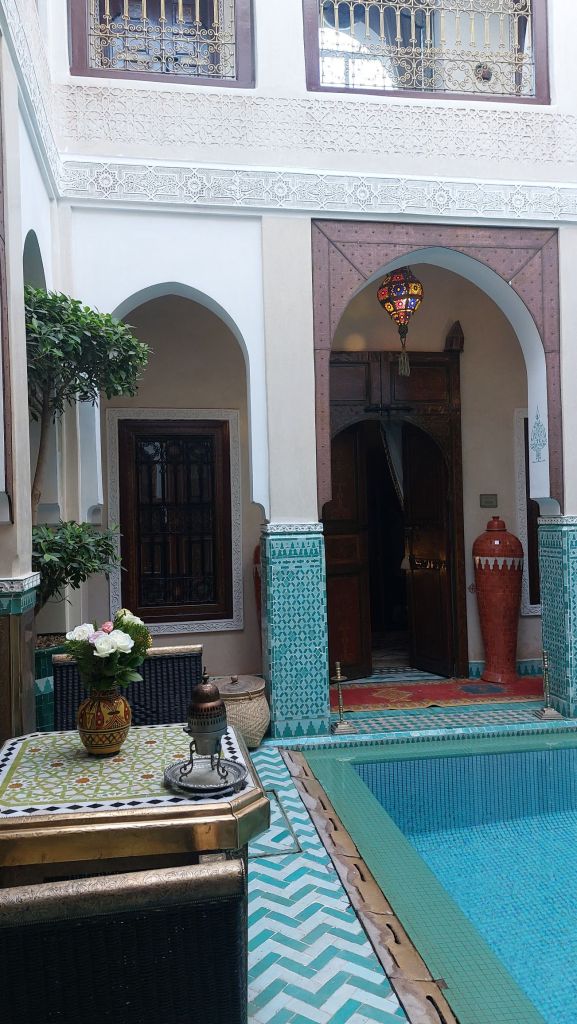
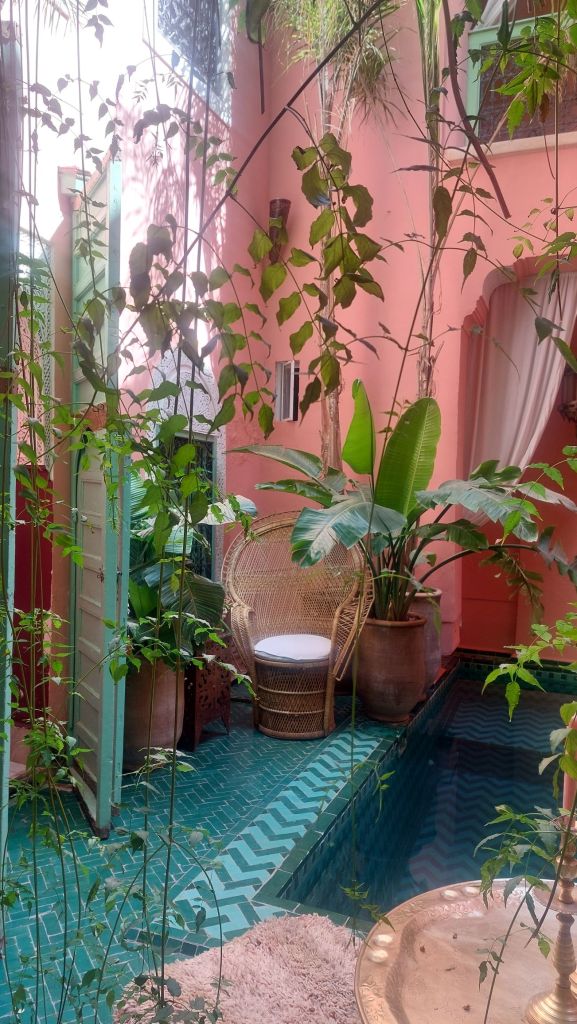
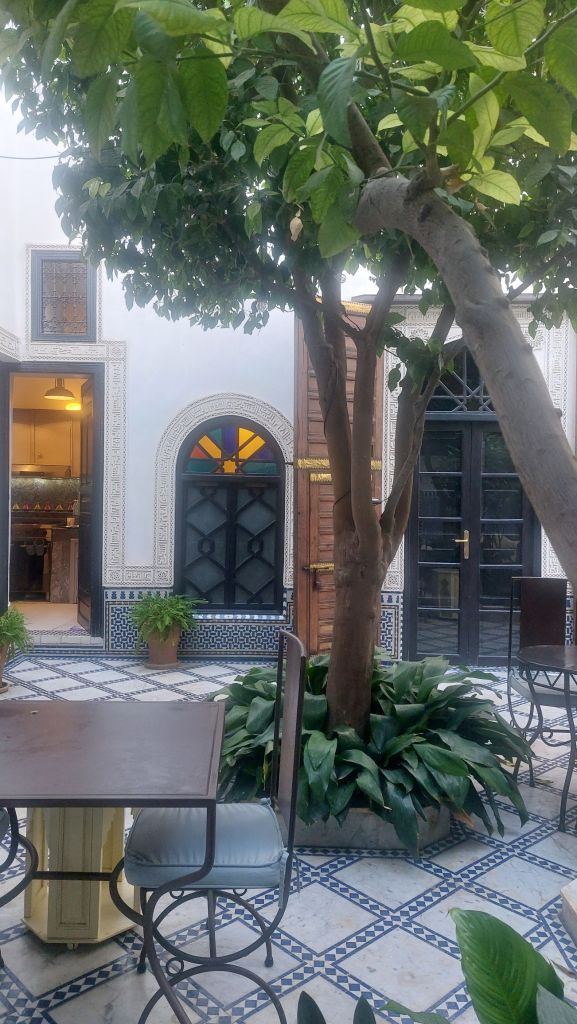
Riads are the homes once owned by the well-to-do of Marrakech.Whole families lived inside them. They offered a private, secluded space, especially for the women of the family. Traditionally, riads are built around a central courtyard with the windows facing inwards. Many courtyards have citrus and palm trees in the centre, reaching up through the open rooftop. There is often a small ornate pool for cooling off in, and many still have their original fountains.
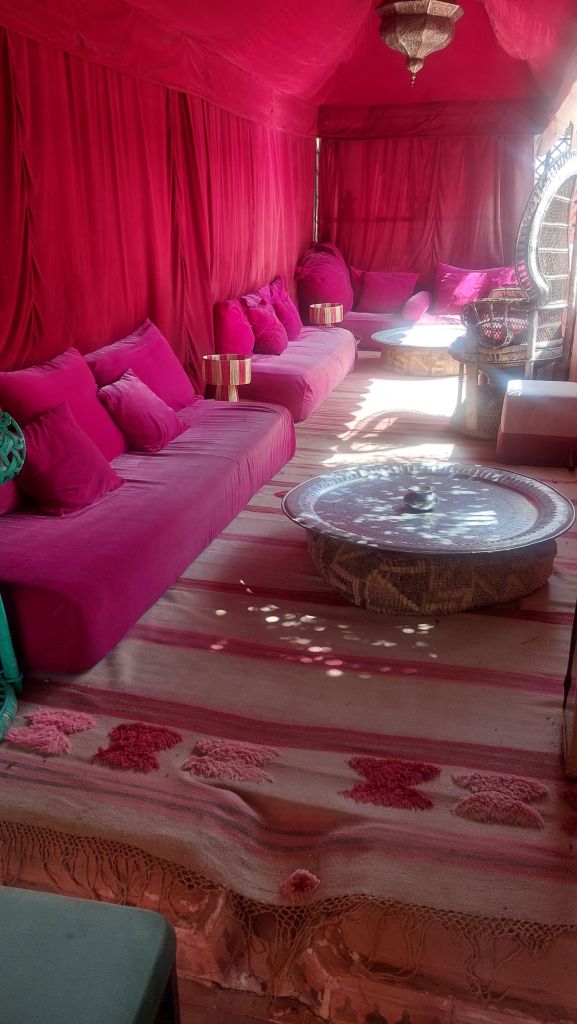
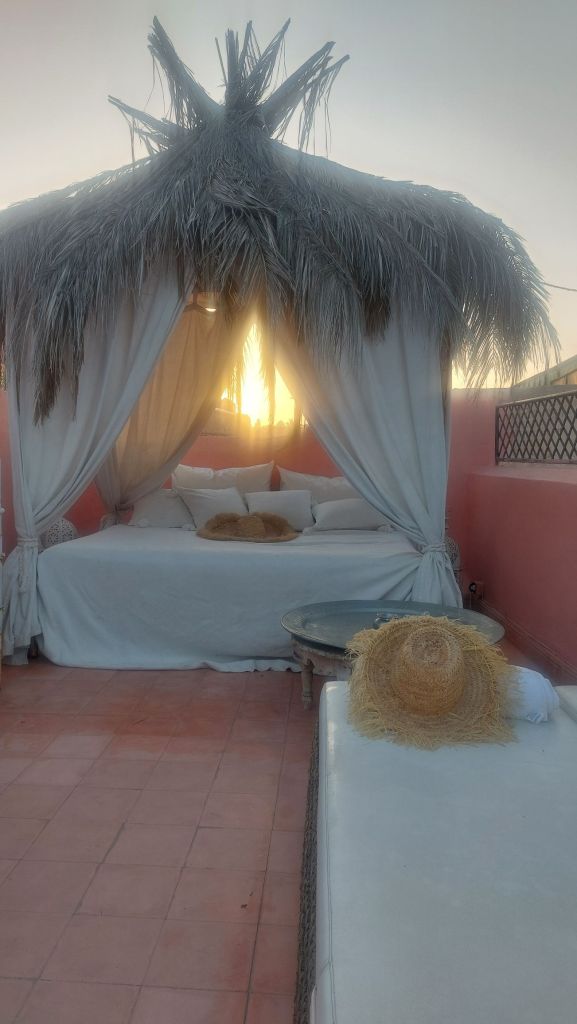
The rooftop can be reached by climbing steep tiled steps. Here, you are greeted by colourful seating in the shade where you can escape from the heat. Rooftop gardens are home to lush foliage where you can relax and admire the views over the medina. You can see the snowcapped Atlas Mountains in the distance.
Image by Freebird Tracey.
The interior rooms are traditionally decorated in Moroccan lamps and Berber artefacts. These include colourful Berber rugs, cushions, and handcrafted furniture. It’s a cacophony of vibrant colours. A heady fragrance of orange blossom promotes an inviting, cosy feeling inside the walls of the riad.
Many riads around the medina have been purchased by Westerners. They have been restored and revived to appeal to the ever growing influx of tourists. Some of them still have their original zellige tilework. Staying in one of these is like being immersed in a tale from ‘1001 nights’. The latticed windows tell the story of past harems. These kept the women of the household secluded and private
High-end riads have become grand and luxurious. They offer a spa like experience with a hammam and massage service. Some of these were once former palaces.
Rooms in a riad are notably dark inside. This keeps them cool in summer when temperatures can exceed 47° celsius. There is air conditioning in most riads. Extra thick blankets are available during the winter months.
Staying in a traditional riad is an experience. Waking up to the sound of birds singing in the trees and water burbling from the fountain is such a wonderful start to the day. The early morning sunshine reflecting off the tiled floors puts you in a happy mood.
Images by Freebird Tracey.
Most riads cook delicious home cooked food for their guests. Many of them also offer cooking lessons. You are taught how to make traditional Morroccan food. They also provide their guests with a hearty breakfast. This is sweeter than we are used to in the west. Traditional msemen pancakes with amlou are my favourite.
Image by Freebird Tracey.
The atmosphere inside a riad is tranquil. On the rooftop, you will hear the mystical call to prayer from the Koutoubia mosque. If you’re staying near Jamaa El Fna, you can hear the gnawa musicians and the drumming in the distance. In the evening, as you watch the sunset, you are overcome with a feeling of inner peace and stillness. This calm, serenity is a far cry from what is happening outside the big wooden door of the riad.
Image by Freebird Tracey.
I like having what I call, ‘a riad experience.’ Enjoying the culture of Marrakech like a local. Whether it’s a former palace or a small family owned riad. Staying in a riad is the perfect introduction to the history and culture of Marrakech. It’s an intimate experience. The staff are friendly and helpful. They can organise tours and activities for you. Most riads I have stayed in have felt as though I was staying with a family. It’s a blissful experience.
Marrakech is an all year round destination. It has a high desert climate, so it has pleasant weather most of the time.
During the summer months, temperatures can reach a staggering 45°C or higher, which a lot of visitors find unbearably hot. The winter months can be moderately warm and sunny, feeling chillier in the evenings.
The best time to go is during the spring, from March till May or in autumn, from September till November. Springtime sees warm, sunny weather, and you can still dine on the rooftops in the evening. However, I would recommend taking a lightweight jacket or jumper to throw on because the temperature can drop after sunset.
Image by Freebird Tracey.
March is the wettest month experiencing 12mm of rain over a day and the occasional storm. Be prepared by carrying an umbrella and wearing sensible footwear.
June is the driest month with 1mm of rainfall over one day, but temperatures in June and July do soar, and it can become exceedingly hot. This makes excursions and sightseeing activities more uncomfortable if you’re not used to walking around in that kind of heat.
Suncream is essential whichever time of year you decide to visit because you can not underestimate the power of the hot Moroccan sun. Carrying bottled water with you is important too so that you don’t become dehydrated.
If you prefer going when there are fewer tourists, I would suggest January to February. The climate is still warm and sunny, with average highs of 19°C and lows of 6°C in the evening. This would be an ideal time to visit if you’re put off by huge crowds of tourists and long queues at popular sightseeing destinations.
Another thing to consider is that Ramadan takes place between February and April, so some stores and restaurants may be closed. Many do stay open, but the vibe can feel different due to the locals fasting throughout the day.
I choose to visit in March, late September, or early October.
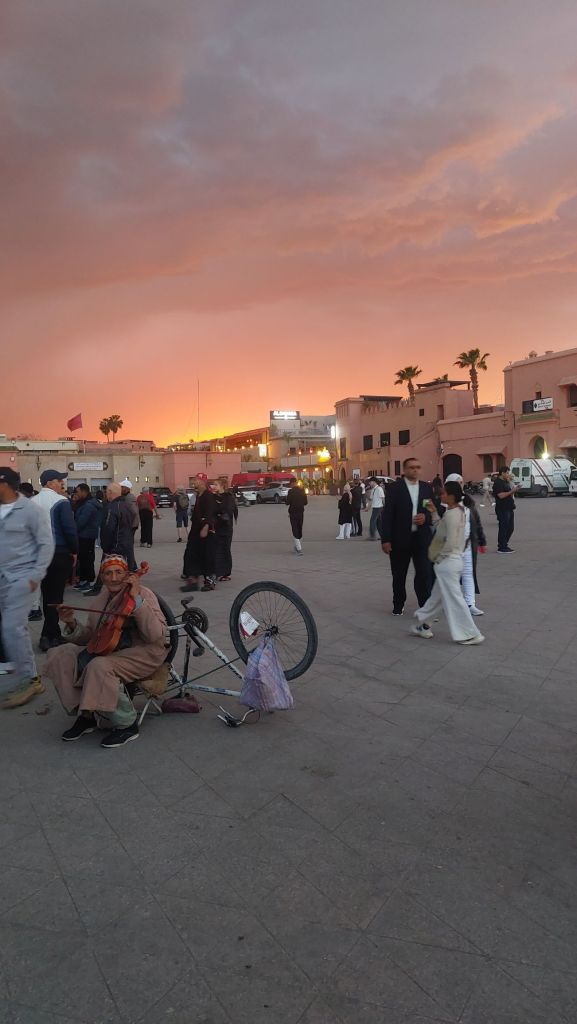
In springtime, the Jacaranda trees along the main roads in Gueliz look really beautiful, and the air is really fragrant at this time of year. March can be quite hot, and heavy thunderstorms are also frequent. The sky can look very dramatic and holds its own kind of beauty just before a storm breaks over the city.
Image by Freebird Tracey.
Springtime can still be very busy with tourists, and the souks are bustling with life. For me, that is part of the fun, but for some people, the crowds can be too much.
Images by Freebird Tracey.
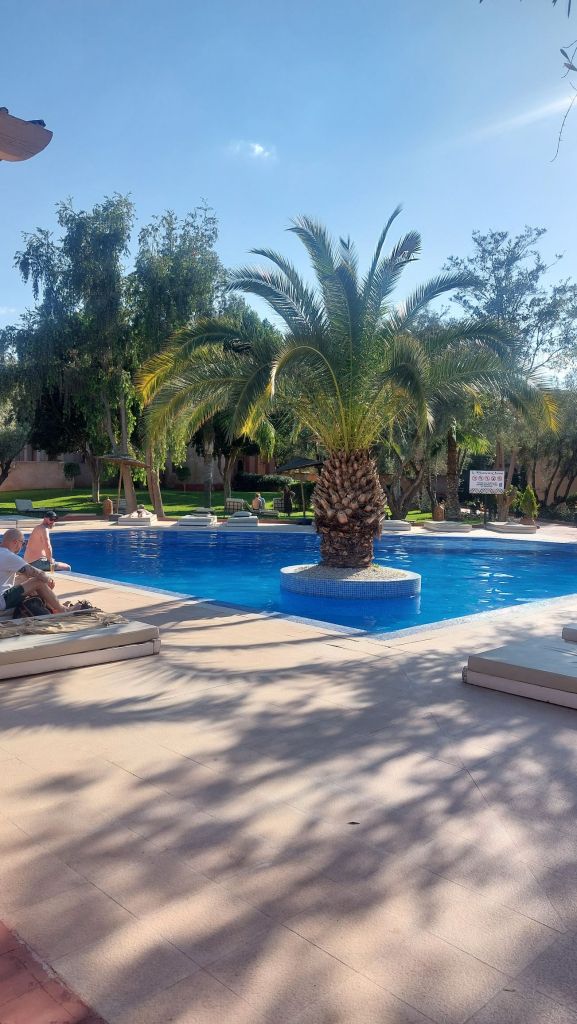
September can be humid. I found it challenging to walk around the palaces and stand in long queues between 3.00pm and 7.00pm, when it becomes particularly warm and sticky, so try to get most of your sightseeing done in the early morning. Afternoons can be a good time to relax by the pool or take a nap until the temperature cools down.
Image by Freebird Tracey.
If you do decide to visit during the summer months, here are a few suggestions to help you cope with the heat.
Plan to visit tourist attractions in the morning as soon as they open. If you pre book, you will avoid waiting in long queues in the heat, and there will be fewer people around.
Pace yourself. You don’t have to rush around. Many places stay open quite late in the evening. Alternate between sightseeing and finding places in the shade to have a long rest with a cool drink to avoid too much sun exposure. There are plenty of beautiful spots with banana trees and beautiful tall palms to relax beneath.
Wear natural fibres like cotton or linen clothing. They are breathable and perfect for wearing in hot weather. Choose loose clothing that covers your arms and shoulders. They allow the air to circulate and help to evaporate sweat, keeping you cooler.
Remember to stay hydrated. Carry bottled water at all times to keep yourself from dehydrating.There are plenty of little kiosks dotted around the medina selling reasonably priced water. Check the seals before purchasing for peace of mind.
Plan to do more during the evening when it’s cooler. Some of the tours begin later in the day, and trips to Agafay desert begin just before sunset, and it’s a wonderful experience at this time of evening. The square comes alive at dusk, so most of the souks are still trading until late.
Wear high factor sunblock and keep your head covered. The sun can be pretty fierce, even as early as March.
Visit the water slides of Oasiria. It’s a fun activity and the perfect way to stay cool. Visiting the Sahara desert will be blisteringly hot in summertime. Consider going in the cooler months when days are still warm but not unbearable, but remember, evenings get cold in the desert.
Marrakech is a wonderful city all year round. If you follow these simple tips, you should have an enjoyable visit whichever time of year you decide to travel. It’s about carefully planning your trip.
Consider what it is you want from your experience. Are you put off by crowds of tourists all crammed into the souks at the same time as you? Can you handle the extreme heat, or would you prefer cooler temperatures in December or January?
Whichever time you decide to travel to Marrakech, the locals are always smiling and friendly. There’s always lots do and see, including a day trip to Essaouira on the coast, visiting Ouzoud to see the second largest waterfall in Africa and many other exciting places.
I’ve put together a few useful tips to help your trip run smoothly.
Marrakech is a cash society. Although many cafes and restaurants take cards, cash is often the preferred method of payment. In the main square called Jamaa El Fna, you will need cash to purchase almost everything.There are plenty of 🏧 machines located around the city. I use the one outside the post office where the horse and carriages stand, close to the taxi rank. The exchange rate is good, and it is always working.
You can get cash at the airport, but the exchange rate isn’t great. There are also plenty of places to exchange money around the city. It’s advisable to carry a small amount of cash with you for tipping, small purchases in the souks, and picking up a bottle of water.
Ask for your accommodation to organise a taxi when you arrive in Marrakech. The cost goes onto your final bill when you check out, and you won’t have to worry about exchanging money in the airport.
You will probably need a SIM card. I got an Orange SIM in the airport, and they put it into my phone for me. This saved me any hassle, and I had data from the moment I arrived in Marrakech. Having data gave me reassurance as a solo female traveller.I could use Google maps to find my way around the medina, which was helpful if I got lost. It’s worth noting that Google Maps may not work in some of the denser areas of the souks, though.
Tipping is not customery in Marrakesh, but the food and service are usually very good, so it’s nice to be nice. I leave a small tip of approximately 20-30 dirhams.
Allegedly, you can drink the tap water in Marrakech, but I wouldn’t recommend it. Some tourists use a GRAYL water bottle, which takes out the bad stuff, but it doesn’t change the taste of the water. I prefer to air on the side of caution. There are plenty of places selling bottled water around the medina, and riads or hotels also stock some.
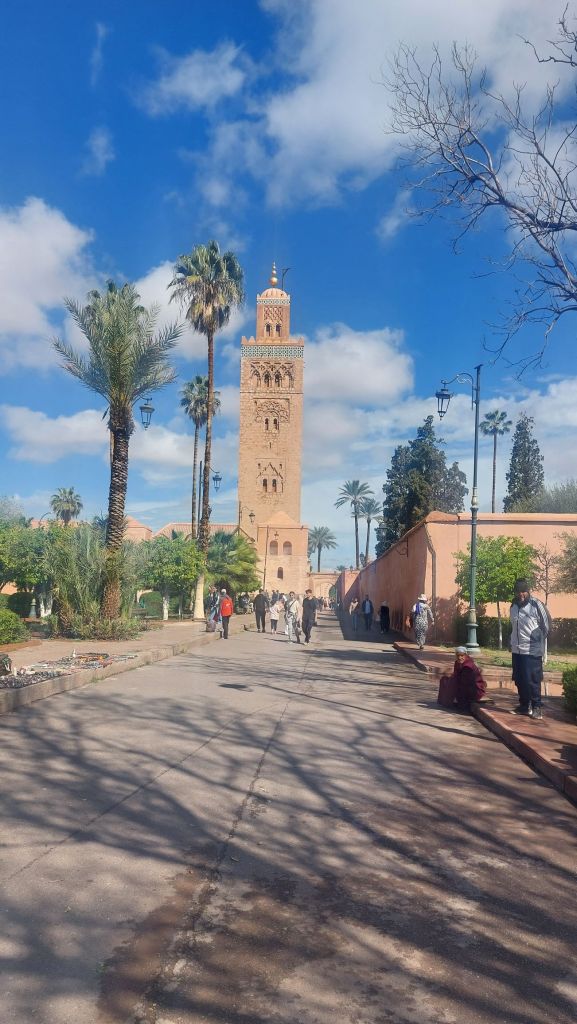
Non Muslims can’t go inside the Mosques, with the exception of Hassan ll Mosque in Casablanca. However, Koutoubia Mosque has the most beautiful gardens, which are well worth a visit. They are open to everyone, and particularly nice in the evening when they’re lit up. They are well maintained and it’s a peaceful environment to spend some time relaxing.
Image Freebird Tracey.
Some tourist attractions get incredibly busy, so try to arrive at opening time for the best experience. Places like Bacha Coffee can have up to 2 hours waiting time to be seated, so come early and join the queue outside before they open. The same applies to Bahia Palace and the Madrasa Ben Youseff. If you want the perfect photo opportunity, get there early. Shopping in the souks early in the morning is more favourable. They are less crammed with tourists, and you avoid the mid afternoon heat.
Although Marrakech is an Islamic city, it’s fairly relaxed and liberal. However,out of respect for the culture, it’s considered appropriate to cover your shoulders when visiting certain religious places. Aim to dress modestly without exposing too much flesh, and you’ll have a great experience. In clubs around the Gueliz area of the city, it’s acceptable to wear flimsier clothing.
Marrakech is a dry city. However, there are bars and clubs that cater to Western tourists. There are a few nice bars selling alcohol and cocktails around the medina, such as La Pergola and Kabana rooftop bar. Gueliz and Hivenage is the newer part of the city with plenty of clubs and bars if you want a night out with alcohol and lively entertainment. It’s forbidden to consume alcohol in the medina unless you’re in a place that is licensed to sell it.
If you get tired of haggling in the souks, there is an artisans market called Ensemble Artisanal Craft Complex. The prices are slightly higher but you can buy beautifully handcrafted items without having to bargain for them. There is also a fixed price store in the Kasbah called Dar Bouchaib.
People in Marrakesh are often camera shy. It’s best not to take photographs of them unless they specifically say you can. Be prepared to have to pay for the privilege, though.
Most travellers are discouraged from starting conversations about the King of Morocco. Try sticking to conversations about the history of Marrakech and Amazigh culture. The locals will love telling you all about their heritage.
There are a few scams going on in the main square, but it’s mainly opportunists trying to make a few dirhams. I haven’t had any problems, but just like anywhere else in the world, it can happen. Just be mindful and keep your wits about you so that you don’t fall prey to anything.
Marrakech is a safe city. However, exercise caution with your personal belongings in crowded areas. Keep your personal items in front of you, and don’t carry large amounts of money around. Make use of a safe if there is one in your accommodation or only take out enough money for each day.
The Souks close at 10.00 pm, so be careful if you’re walking around the medina after that, especially if you’re a solo female traveller. I haven’t experienced anything unpleasant, but it can still feel rather unnerving walking back to your riad through the dark alleyways late at night.
I hope these nuggets of advice will help you to have the best experience possible during your visit to Marrakech.
Safety tips for women travelling alone to Marrakech.
Image by Freebird Tracey.
Marrakech is safe for women who travel alone.
The overall crime rate is low, and most female travellers have a wonderful experience. However, there are certain things to take into consideration to help you feel confident and comfortable during your visit.
Women in Marrakech dress modestly. How you want to be treated will depend on how you present yourself. Although Marrakech is a Muslim city, it is quite liberal and used to tourists, but showing too much flesh would be considered inappropriate.Whilst you’re not expecting to adopt the hijab, you will certainly be regarded favourably if you dress slightly more conservatively especially in religious places sacred to the Islamic faith.
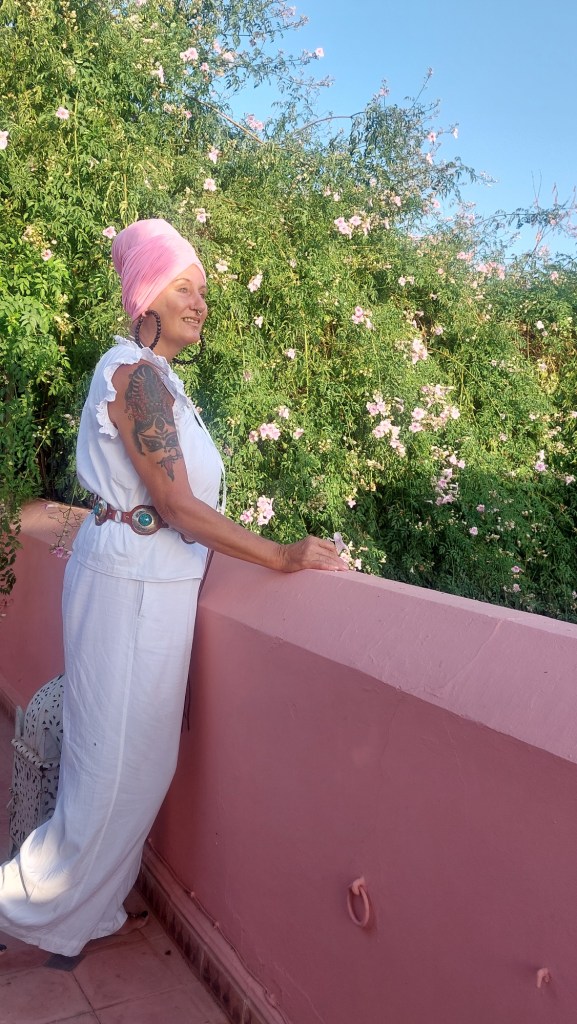
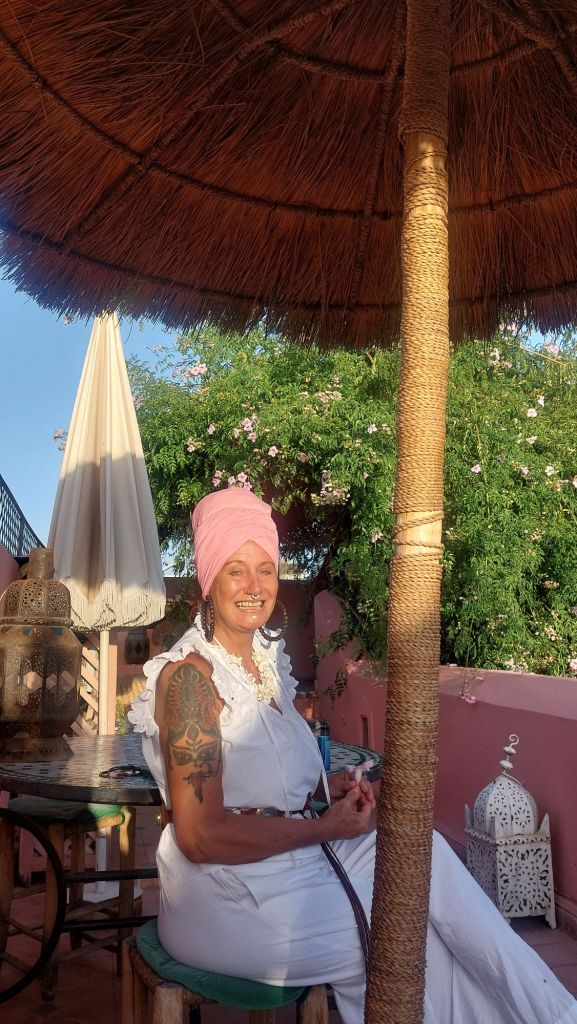
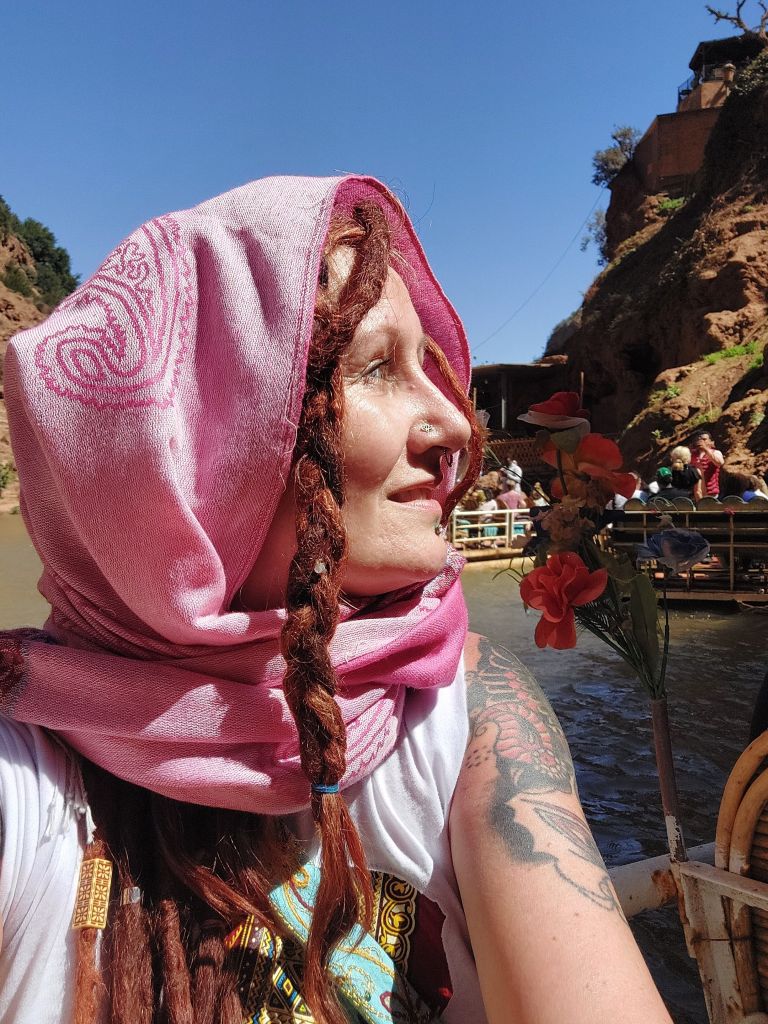
Wear dresses below the knees. Silk, rayon, or cotton dresses are perfect and keep you cool at the same time. Palazzo trousers are also very comfortable and elegant. I like to wear turbans, I love the fact that my hair is tucked away, keeping me cool and looking modest at the same time. Many tourists continue to wear the same style of clothing that they would back at home, so it’s really a matter of choice. I would certainly encourage dressing appropriately if you’re visiting religious sites, just as a matter of respect. You’ll notice how much a small gesture like this makes the locals happy.
Image by Freebird Tracey.
The people in Marrakesh are friendly and hospitable. However, there may be times when you will be asked if you need help to find your riad or the main square. Simply decline the offer politely and go about your business.
When shopping in the medina, stand your ground when negotiating for something. Show the vendors that you are confident and not be afraid to walk away if you’re not happy with the price. They may try to drive a harder bargain if they see a woman unaccompanied and you don’t have to put up with this. Shop around or visit a fixed price store or Ensemble Artisanal Craft Complex, and you won’t have to bargain.
Some men will cat call you or make comments, which may feel slightly intrusive. Ignore them and move away. They are usually harmless, but if anyone trys to follow you, find the nearest shop vendor or closest restaurant to sit in. If they still persist, threaten to find a police officer. It’s rare that this happens, and there are police everywhere around Marrakech, making sure that tourists are not hassled in any way.
Knowing a few words in Arabic or French is always useful. Non merci or La Shukran means no thank you and will automatically bring a smile to the locals’ faces. It also comes in useful for shaking off food sellers and henna ladies in the main square.
I have never felt uncomfortable as a solo female traveller in Marrakech. There are plenty of us about wandering through the souks and enjoying the tourist hot spots.
Consider joining a guided tour of the medina if you’re feeling anxious about exploring by yourself, especially if it’s your first time. There are evening tours, street food tours, and plenty of registered guides available for visiting the local attractions.
Marrakech is a great place for a solo female traveller to visit. In fact, I consider it much safer than many other countries I have been to. The locals can’t wait to tell you all about their fascinating city, and they’re some of the most hospitable people I have ever met. Just educate yourself a little about the cultural norms and differences in Morocco and respect the local customs and traditions, and you should be perfectly safe.
Marrakech is very touristy, so there are always crowds of people wherever you go.Just be extra vigilant in busy, congested areas with your belongings, the same way you would be anywhere else in the world.
If you want to feel less isolated as a solo female traveller, there are a few excellent hostels in Marrakech that attract a lot of solo travellers. They are great places to stay and they can organise tours where you will meet other like-minded people.
Lastly, relax and trust that the people of Marrakech are helpful and kind. You will definitely have an exciting time.
Visiting Marrakech doesn’t have to break the bank.
Morrocco is a relatively cheap country to visit. It’s all about careful planning and putting together the right itinerary before you go. I have compiled a few ideas and suggestions to help you enjoy your trip without having to spend a ridiculous amount of cash.
1.
Book your flight early. The earlier you book, the cheaper it is. Download an airline app and keep an eye on the cost of flights. Book out of season when it’s less busy.
2.
If you book your accommodation directly through the riad or hotel, it is often much cheaper.
3.
Use public transport in Marrakech. The buses are an excellent way to get a taste of local life. They are extremely cheap and reliable. The price is set, and you will avoid being privy to scams from the local taxi drivers.
4.
Marrakech is a bustling metropolis with so much going on around the main square. Consider spending time with a pot of traditional mint tea and observing the spectacle from a rooftop terrace. You won’t be disappointed. The sights, sounds, and smells will keep you entertained for ages.
5.
Visit the wonderful Koutoubia Mosque gardens. The mosque is out of bounds for non Muslims. However, the gardens are absolutely delightful and free to visit. Consider picking up a few delicious snacks beforehand, such as Baclava cake and sugar cane juice and sitting in the beautiful garden. Despite its proximity to the chaos of Jamaa El Fna, it is a peaceful environment. It’s especially lovely during the evening when the lights come on.
6.
There are plenty of excellent cafes and restaurants which are great value for money. Henna Art Cafe is superb and has a very pretty interior. I have eaten here numerous times and highly recommend the food. Terrace Bakchich in the souks is another budget friendly restaurant cafe with excellent food. Trying the street food is another option and very popular amongst tourists. Check how busy places are to get an idea of the quality of food being served. The spleen sandwich is a traditional meal in Marrakech served by street vendors. Also consider trying the delicious sweets and pastries for sale inside the souks.
7.
Try a public hammam. Public baths are very cheap in comparison to the more upmarket ones and the best way to experience the local culture. You can purchase black soap and essential oils in the souks for pennies. You will need your own towel in public hammams.
8.
Visit the souks. This is by far the most exciting part of any trip to Marrakech. Experience the vibrant colour and the lively atmosphere as people haggle with the locals for a bargain. You may get lost in the maze of alleyways, but that’s all part of the fun. There are souks for different things like leather goods and metalwork, and you will see incredible artisans at work crafting all kinds of things.
9.
Visit the Mellah, the old Jewish quarter, and see the Bab Mellah spice market. It’s an assault on the senses discovering all the different spices and their fragrances. You may be offered mint tea whilst you are given a lesson on what each spice is used for.
10.
Walk around the Kasbah. This is where you will experience the more authentic part of Marrakech. There are more locals here and they are very friendly. There are some nice spots to grab a smoothie, and the shops are slightly cheaper here.
11.
Visit Cyber Park. This is a very well maintained place with beautiful native trees and plants. Relax for an hour or so in this peaceful environment away from the chaotic busy medina. Listen to the birds singing and read the interesting facts that are dotted around the park.
12.
Take a 25-minute walk or the number 16 bus from the medina to Gueliz. Wonder around the upmarket boutiques and stores on Mohammed V Avenue and see how modernity and ancient coexist in harmony together in Marrakech.
13.
Spend some time in Tinsmiths Square. This is a less touristic square than Jamaa El Fnaa, and there is plenty to see going on. There are budget friendly cafes and restaurants and plenty of souvenir shops.
14.
Admire the beautiful Islamic craftsmanship in the medina. There are stunning examples of intricately carved wooden doors and 19 impressive entrances into the medina, including Bab Agnaou, Bab Doukala, and Bab El Khemis. Some date back as far as the Almohad dynasty. It’s a perfect photo opportunity.
Images by Freebird Tracey.
Marrakech is a walkable city, and you can spend many an hour wandering about discovering what makes Marrakech so magical. It’s a destination that is great for everyone, including those on a tight budget. With some careful planning, you can put together an exciting itinerary and have a truly wonderful experience that doesn’t need to cost much.
There are plenty of parents choosing Marrakech as a holiday destination with children. It is a safe city with a low crime rate, central to areas like Essaouira on the Atlantic coast, and easily affordable. With some careful planning and being aware of the pros and cons, travelling to Marrakech as a family can be a fun and rewarding experience.
The following list contains everything parents should know before booking a holiday in Marrakech. I include safety tips and the best time to visit. I offer suggestions to help parents put an itinerary together that the whole family will enjoy. There are a few snippets of useful information to make travelling with children a success.Knowing these things will allow families to get the most out of their holiday stressfree.
Image by Freebird Tracey.
Marrakech is touristy. The medina is incredibly busy, and the souks can be overwhelming. Instead of using a stroller, consider a child carrier in the narrow alleyways. If that’s not possible, plan to visit early in the morning when it’s quieter. Mornings in the main square are also less chaotic. After dusk, the square comes alive, and the crowds swell. This can be overstimulating for young children. Plan to venture out early to avoid the mayhem.
When considering a stay in a riad, choose a room on the ground floor facing the courtyard. This is more suitable for young children. There are a lot of steep steps up to the rooftop terrace, which may also be problematic. There is often a small pool in the centre of the courtyard, so parents with young children will need to keep a close watch over their infants. Riads are ancient structures, and soundproofing isn’t great. This could make you feel conscious of other guests hearing your children. There is the option of booking a whole riad for your family and although it’s pricier, you won’t have to worry about keeping your children quiet. The Kasbah district is less busy if you do decide to stay in a traditional riad. There are a number of hotels and apartments in Gueliz and Hivernage, which may be a better choice for younger children. The Palmerai has resorts that specifically cater to families of all ages. These offer facilities like spas, gyms and swimming pools. Many resorts are all-inclusive.
The weather in Marrakech can be extremely hot, especially during the summer months when temperatures can exceed 40° Winter is an excellent time for visiting with children. The temperature is still warm and sunny, turning cooler in the evening. There are fewer tourists at this time of year, making it easier to visit popular sightseeing attractions. Springtime is also a good time to travel to Marrakech but gets much busier than winter.
When the weather is hot, consider visiting water parks like Oasiria, Eden Aquapark, and Aqua Mirage. Some resorts offer day passes, and you can take advantage of their facilities, including the swimming pools. I recommend La Maison Des Oliviers in Agdal.
There are a number of gardens around Marrakech where children can let off steam. Cyber Park is a beautiful quiet space, and Koutoubia Mosque has a peaceful garden, especially during the evening. Both are free to enter. Amina Garden is a magical garden where nature and art meet. It’s a stunning botanical garden with paintings by Picasso. Entrance fees start at €3 and it’s a fun day out for all the family.
The food in Marrakech is diverse. There are plenty of European and international dishes available in most restaurants. For picky eaters, there are popular chain restaurants like McDonald’s, KFC, Burger King, Pizza Hut, and Domino’s strategically positioned throughout the city.
Keeping children hydrated is important. There are a number of shops selling bottled water around Marrakech. Do not offer children tap water. Although it is said to be safe to drink, it doesn’t taste very pleasant, and I wouldn’t risk it.
Remember to pack some medication in case your children feel unwell. There are plenty of chemists in Marrakech, but by being prepared before you travel, you save yourself any hassle if your child does pick up a cold. Plasters and antiseptic cream may come in handy also.
Whichever time of year you visit Marrakech, apply high factor sunscreen on your children. You can not underestimate the power of the African sun. I have been sunburnt in March.
There are enclosed shopping malls like Menara Mall and Eden Mall. These are home to popular highstreet chain stores and cooler places to shop if the weather is hot. There is also a Carrefour supermarket for any provisions you may run out of.
Taxis don’t insist on you wearing seatbelts, and tuk-tuks don’t have them. Check the seatbelts work before accepting a ride in a taxi because the roads in Marrakech are chaotic.
Moroccan people adore children. Don’t be surprised if they offer them gifts. They may ask you if they can kiss your child or touch their heads. Occasionally, they just do it without asking for permission. This is a cultural thing, and to Westerners, they may appear to be crossing boundaries. If it makes you feel uncomfortable, politely ask them not to do it. The family is the most important thing to Moroccan people, and children are viewed as gifts.
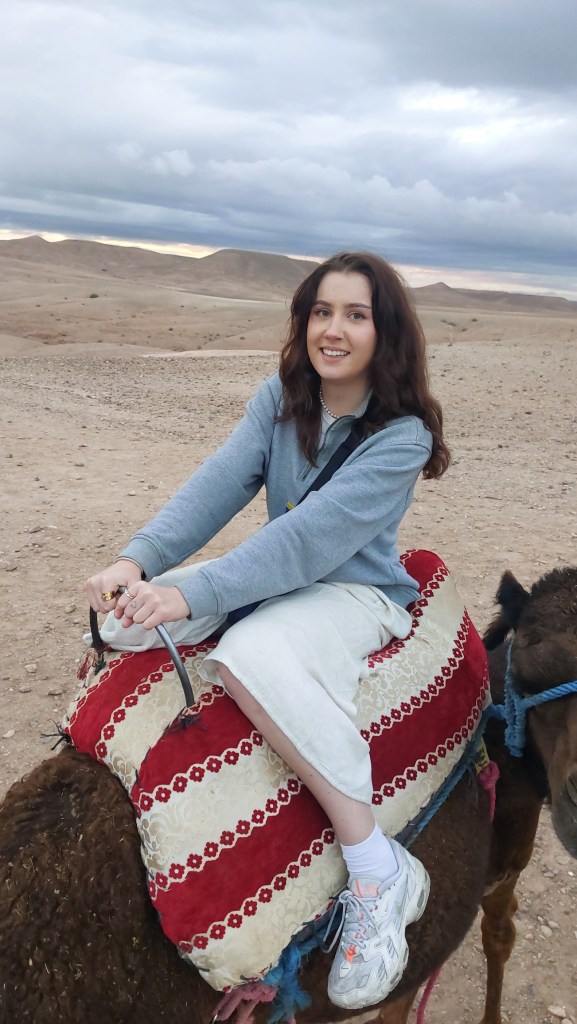
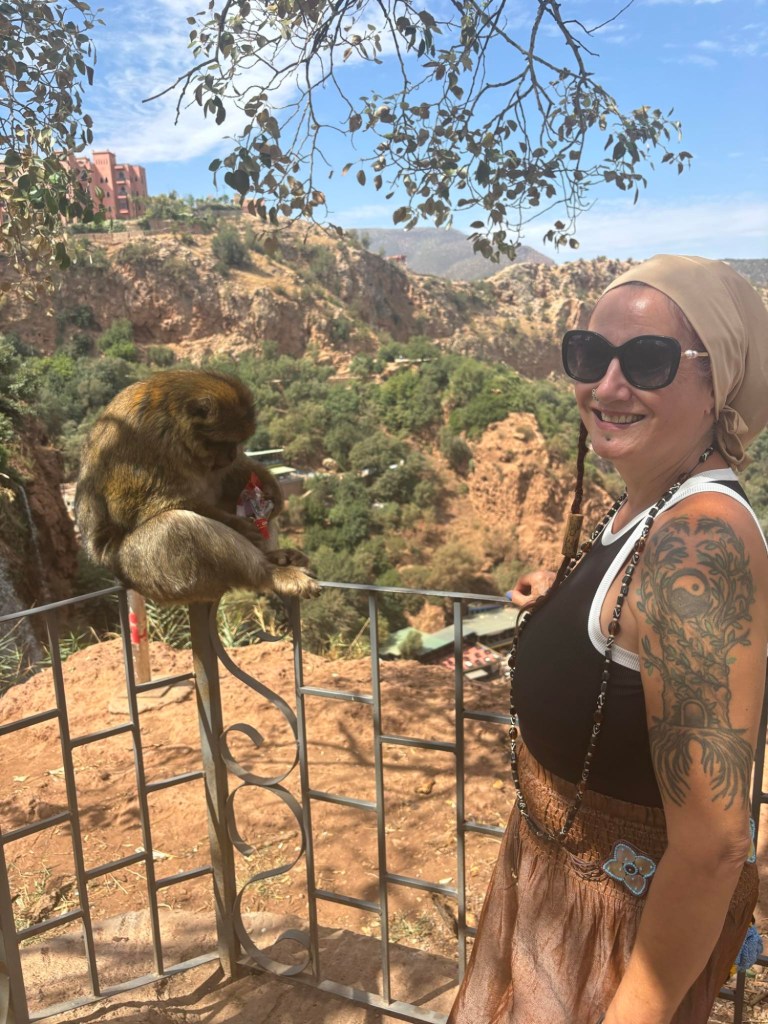
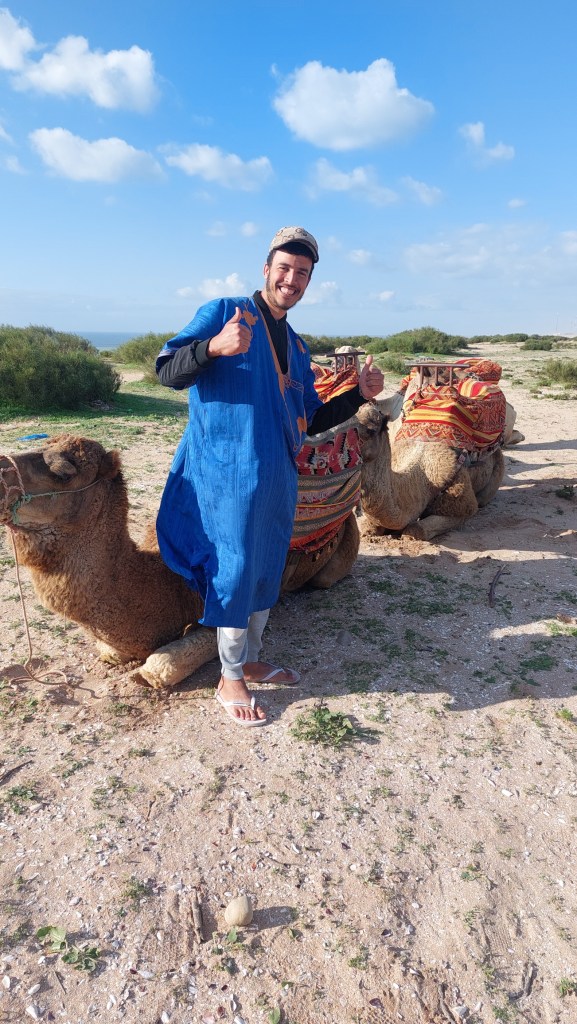
The coastal city of Essaouira is a 2.5-hour drive from Marrakech. It is a quieter relaxed city on the Atlantic coast. Essaouira is a great day trip from Marrakech if the weather is hot. Known as the windy city, it’s a good place to take children to escape the heat. Day trips can be booked through Get Your Guide and other tour companies. Your accommodation may also be able to organise a trip for you. Imlil in the Atlas mountains is cooler than Marrakech, and there are several hiking trails for older children. Ourika Valley is a nice day out, and Ouzoud Waterfall is a popular day trip from Marrakech. Children will enjoy seeing the Barbary Macaque monkeys in their natural habitat where they should be. If children want to experience a camel ride, there is Agafay desert and the Palmerai.
Image by Freebird Tracey.
Marrakech is an exciting destination for all age groups. As long as you do some research beforehand, including writing down the names and addresses of places to eat. Planning an itinerary will save little legs from getting too tired.This will make travelling with young children easier and more enjoyable for you. Bringing a lightweight stroller can be helpful in eliminating the stress caused by long queues at passport control. You will also be doing a lot of walking, and it will come in handy when your child gets tired.
Finally, try to steer clear of the monkeys and snakes in the main square. Children are often seen as a target to get parents to pay for photos.