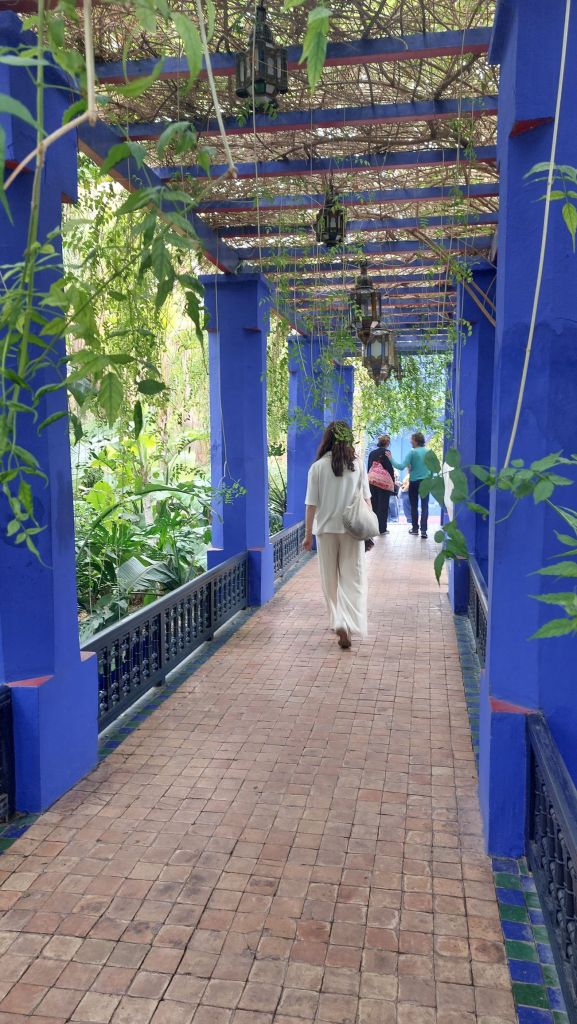
Category: Things you should know about Marrakech

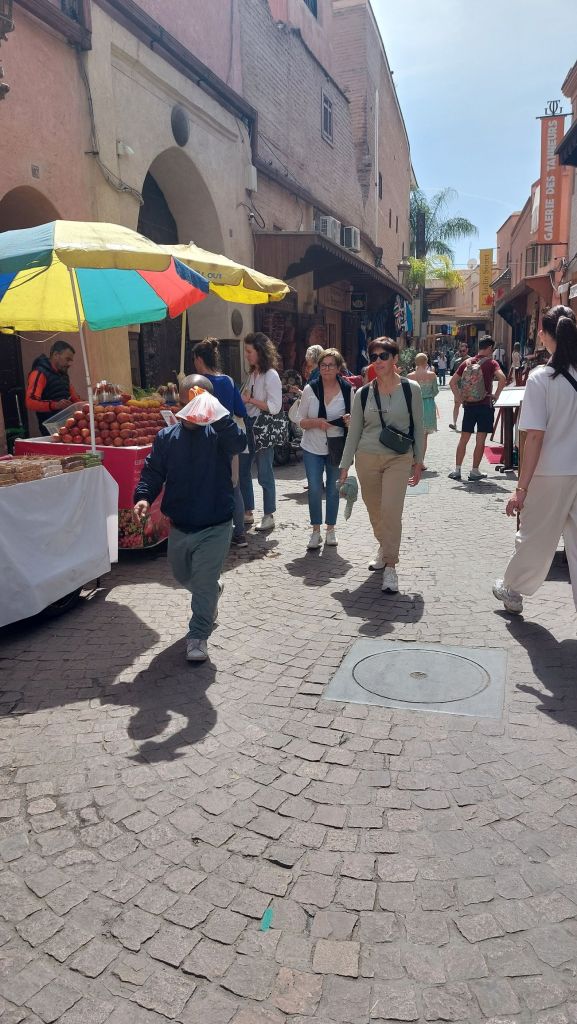
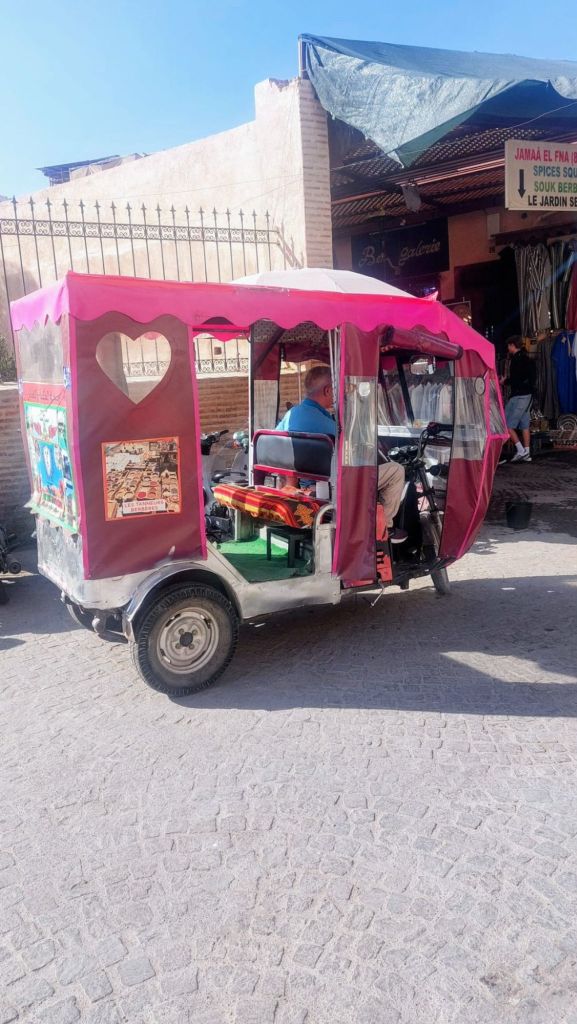
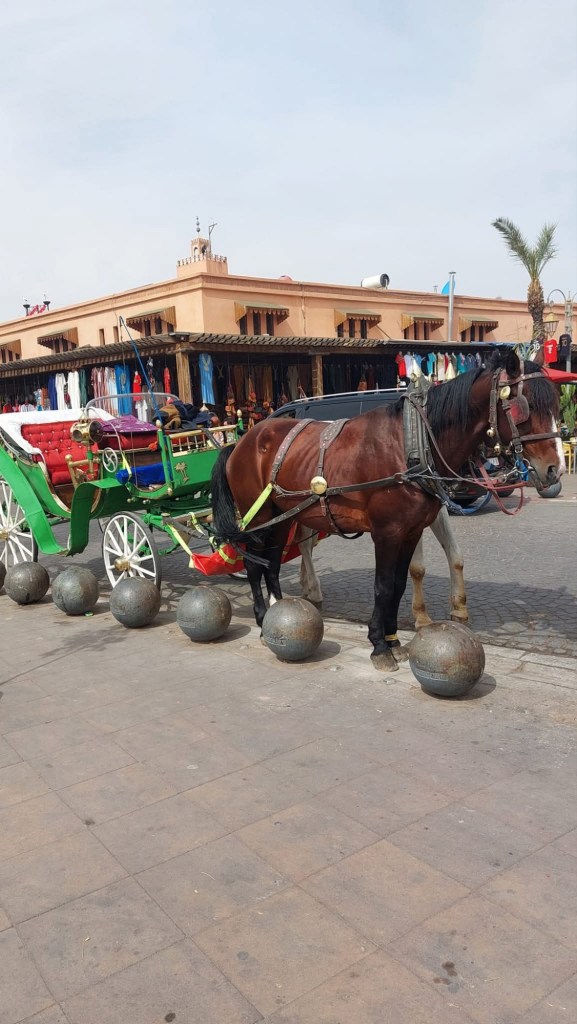
An exploration of The Red City known as Marrakech.
  • How I Spend The Perfect Day In Marrakech.

    A look at how you can spend a typical day in the red city.

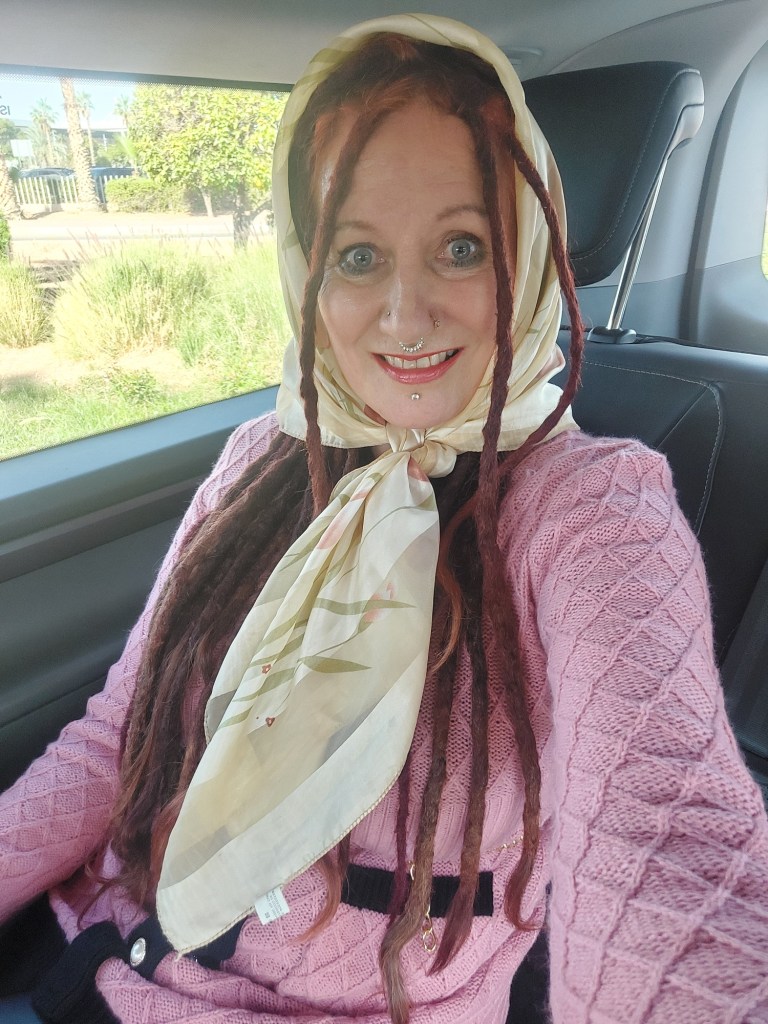
    Image by Freebird Tracey.

    The perfect day in Marrakech begins by waking up early to watch the sunrise from the rooftop of my riad.

    I listen to the birds singing in the courtyard and hear the sound of the medina as it  gradually comes to life.

    I watch cats prowl along the rooftops, and below me, I can hear the clattering of plates as staff prepare a delicious breakfast.

    The first glass of freshly squeezed orange juice hits the spot perfectly.

    I enjoy a breakfast of msemen pancakes with homemade jam, amlou, and honey.

    Fresh fruit, yoghurt, and eggs.

    Image by Freebird Tracey.

    After a refreshing shower, I head out into the medina for a glass of atay in a cafe overlooking the main square.

    Sat outside, I observe the vendors setting up for the day.

    The entertainers are getting ready to entice the crowds of tourists, and the local ladies are on their way to the market for fresh herbs and spices.

    Images by Freebird Tracey.

    My next destination is the souks before they get too busy.

    Vendors are eager for their first sale of the day, and bargaining is much easier early in the morning.

    The colourful array of things on offer is a sight to behold.

    Images by Freebird Tracey.

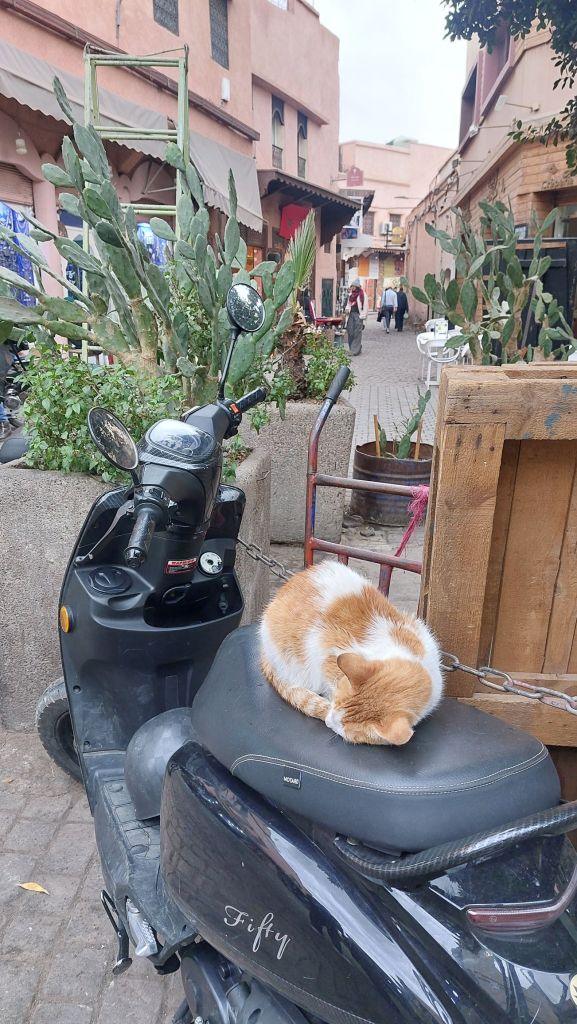
    Cats gather for a few morsels off the butcher, and locals toss a few titbits for them to eat.

    They vye with each other for the perfect spot in which to laze around in the sunshine.

    Image by Freebird Tracey.

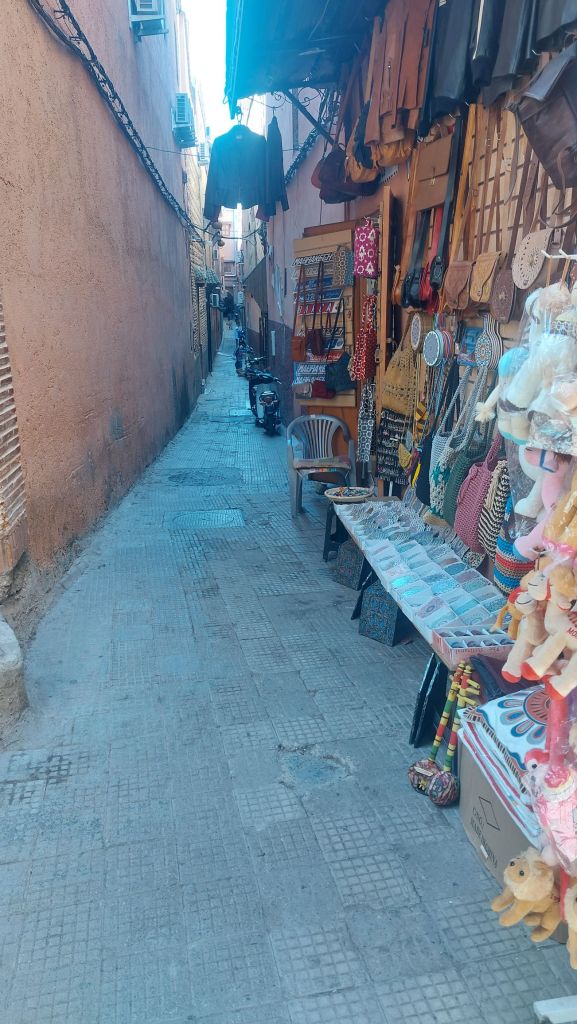
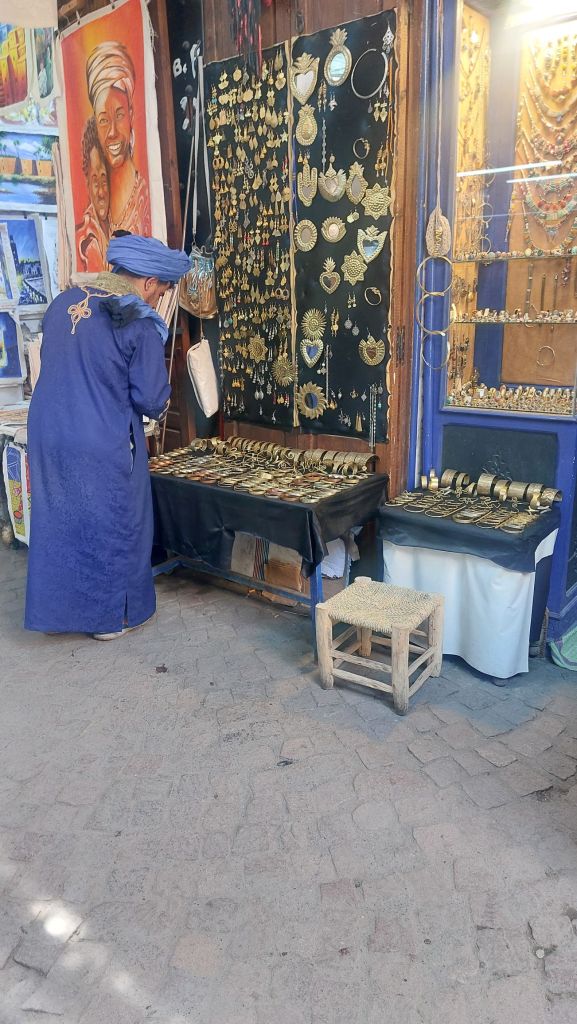
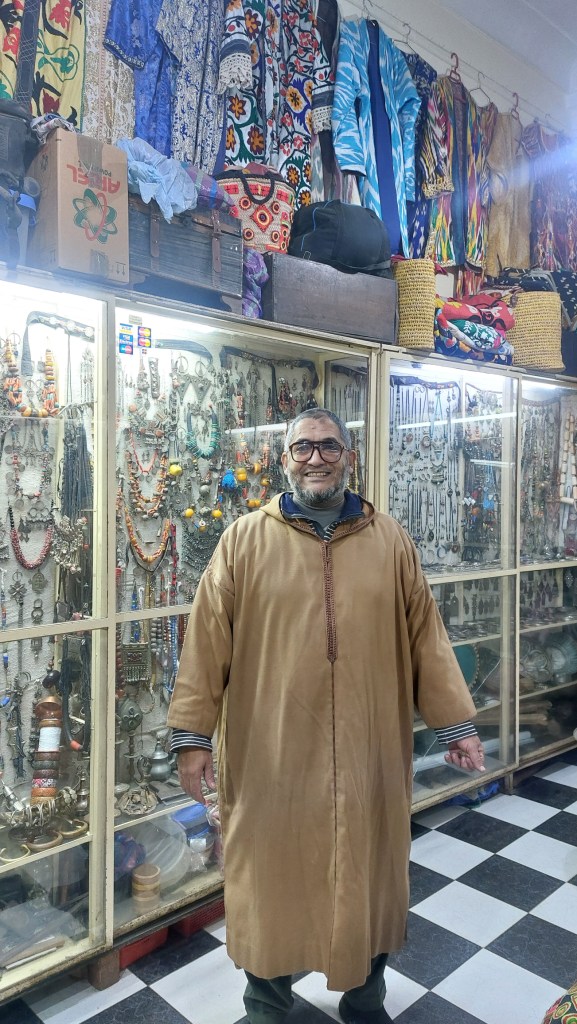
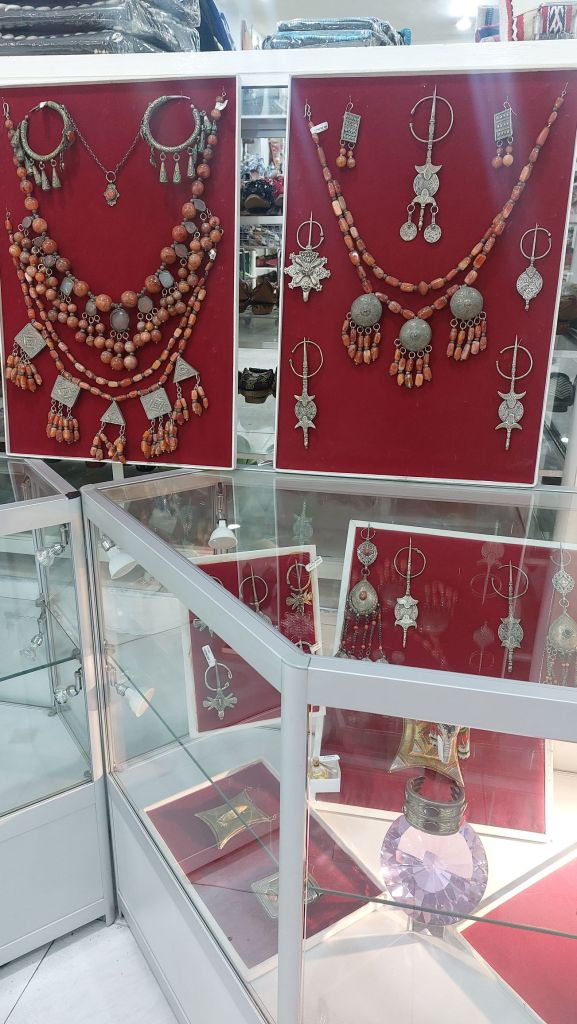
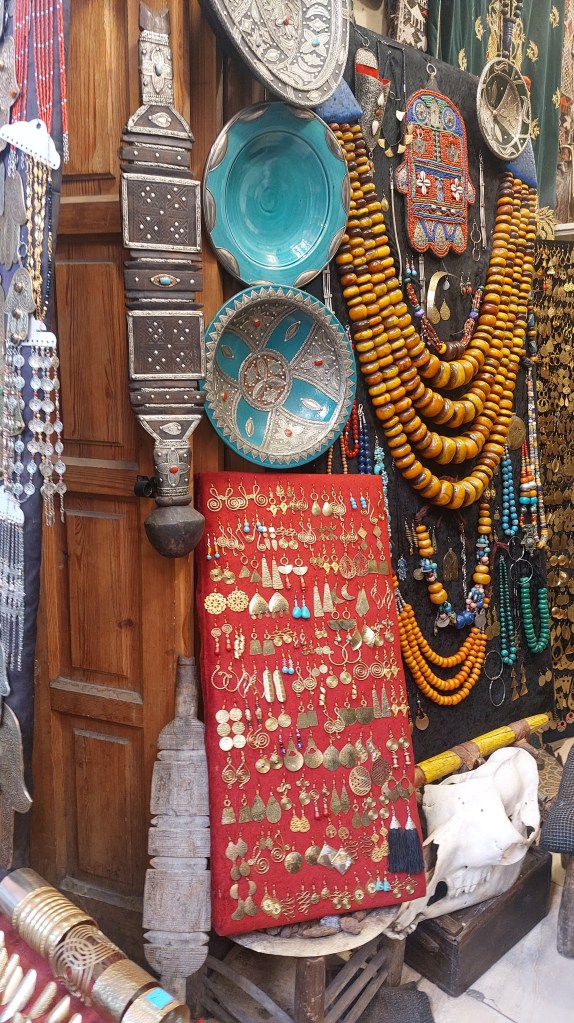
    I check out the wonderful Amazigh jewellery, the argan oil, and the beautiful ceramics and mirrors on display in the narrow alleyways.

    At the same time, I dodge motorcycles and donkey carts as they make their way to wherever they’re going.

    Images by Freebird Tracey.

    I buy one or two souvenirs, promise to go back for other things, and then decide it’s time for a light snack.

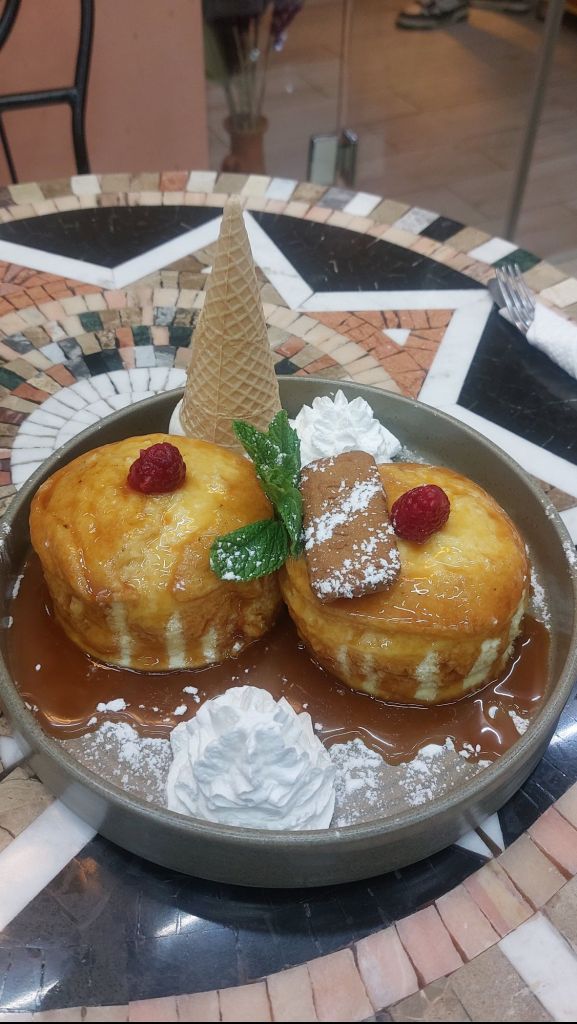
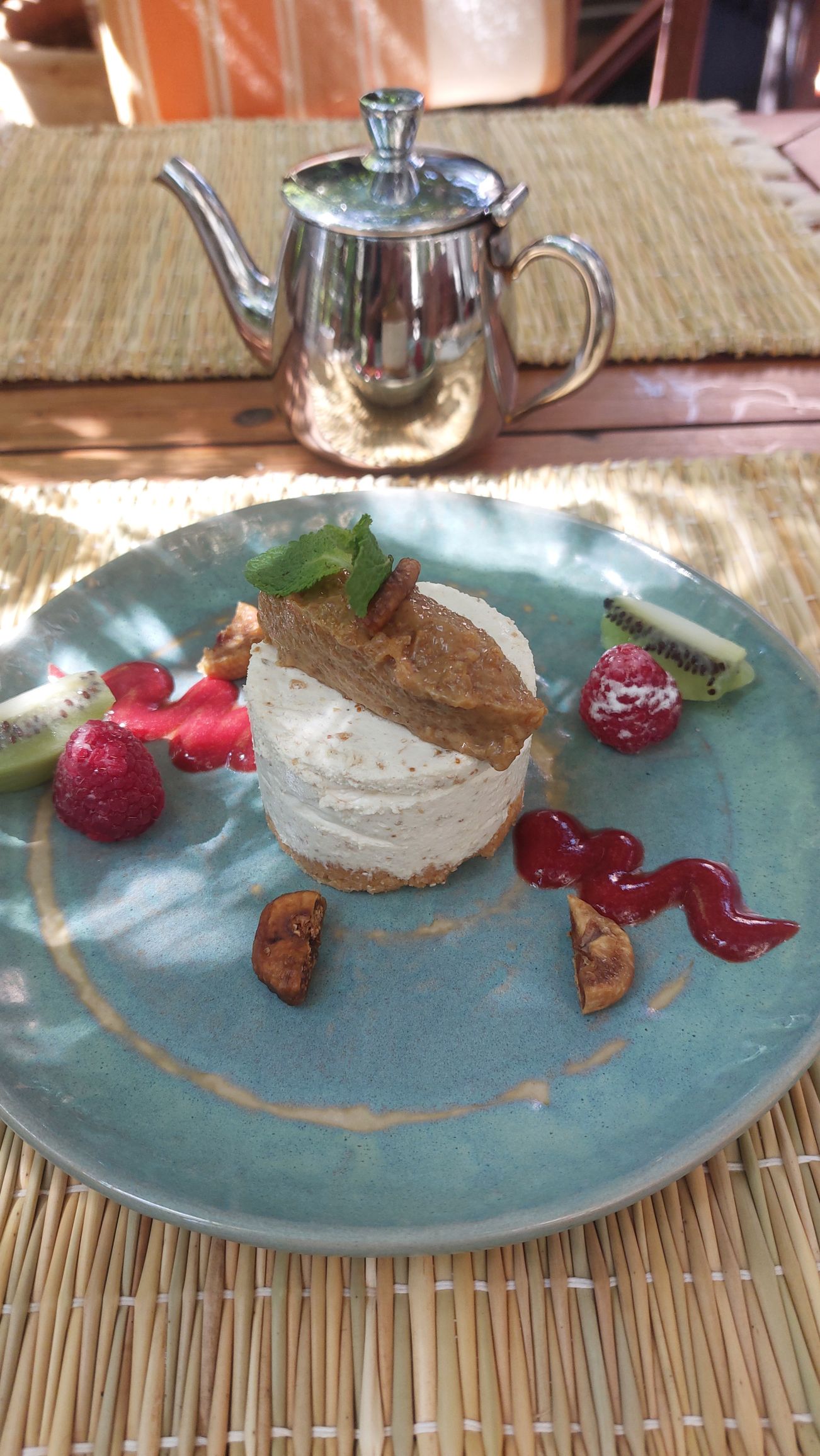
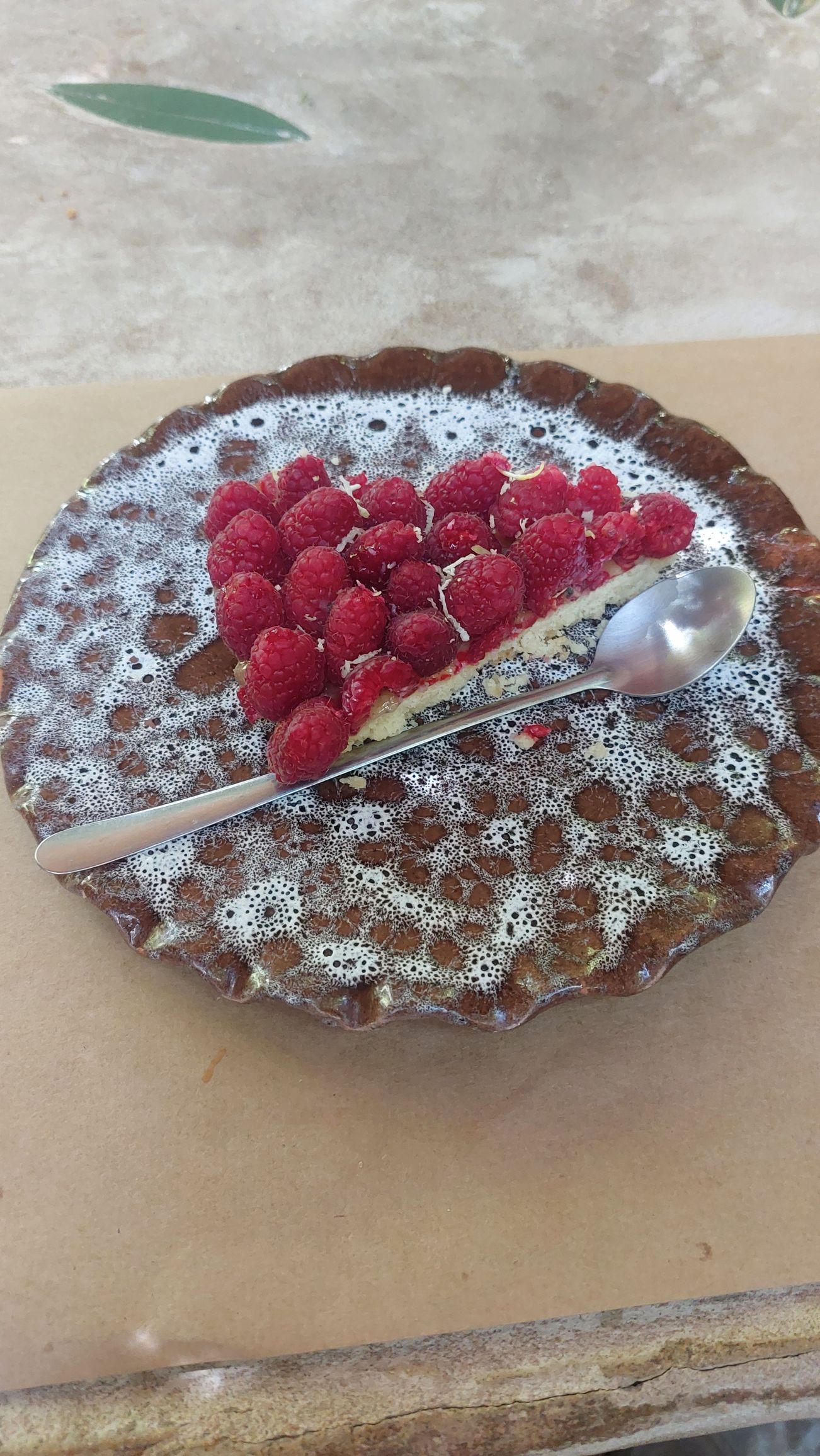
    A cafe with colourful outdoor seating calls out to me, and I choose a selection of delicious pastries with a pot of mint tea.

    I sit for a while people watching and enjoy the scenes as they unfold around me.

    Images by Freebird Tracey.

    It’s fascinating watching daily life go by in the medina.

    Tourists look in awe at the beautiful things for sale, and vendors call out to them with their friendly banter.

    After recharging my batteries, it’s time to do some sightseeing.

    I head towards Madrasa Ben Youssef and take the opportunity to get some photos of the stunning architecture.

    Images by Freebird Tracey.

    The medina is beginning to get very busy, so I make my way to the gardens of the Koutoubia Mosque to sit quietly for a while.

    I take in the beautiful surroundings and relax amongst the beautiful trees and plants.

    I watch the fountain.

    It feels cool and refreshing as it sprays up into the air beside me.

    Image by Freebird Tracey.

    Afterwards, I treat myself to a sugarcane juice from a vendor outside.

    It’s an acquired taste but goes down well as the day is steadily getting warmer.

    Image by Freebird Tracey.

    The heat is becoming quite intense, so I return to my riad for a rest.

    I make my way up onto the rooftop for a spot of sunbathing.

    Image by Freebird Tracey.

    The call to prayer echos across the medina.

    A familiar sound that echos across Marrakech five times a day.

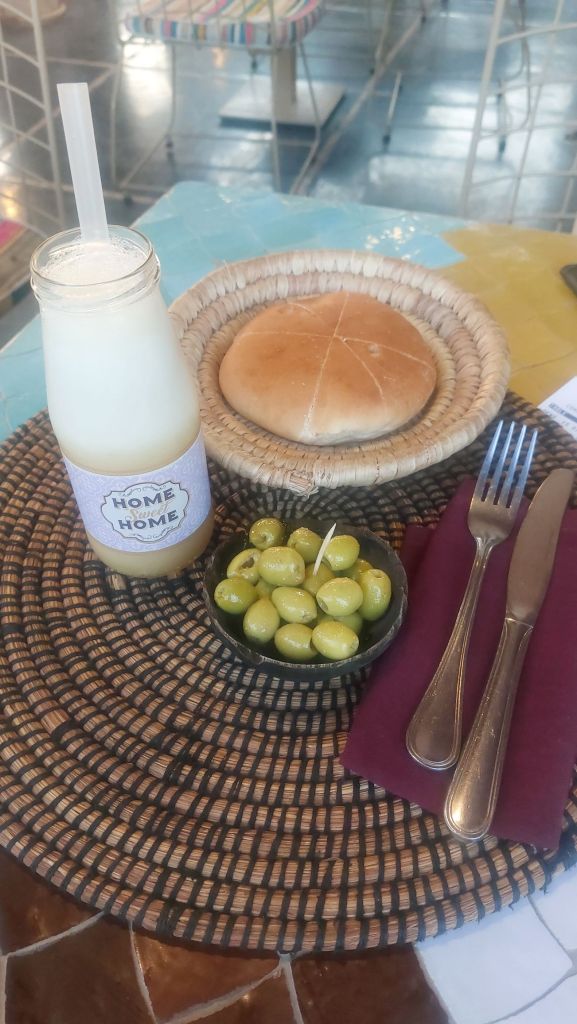
    I read a book and order myself a cold drink which arrives with olives.

    Soon, it’s time to get ready for the evening.

    I decide to go to La Pergola rooftop bar for a couple of cocktails.

    Image by Freebird Tracey.

    It’s a lively atmosphere, and there are lots of people enjoying a drink and chatting.

    Afterwards, I head towards Jamaa El Fna.

    The energy is electric.

    Food vendors touting for business, dancing, drumming, and crowds of tourists gather to witness the spectacle.

    The smell of food cooking makes me feel hungry, so I decide to find a nice place to dine.

    I choose a place that has a rooftop overlooking the square to watch the sunset.

    Image by Freebird Tracey.

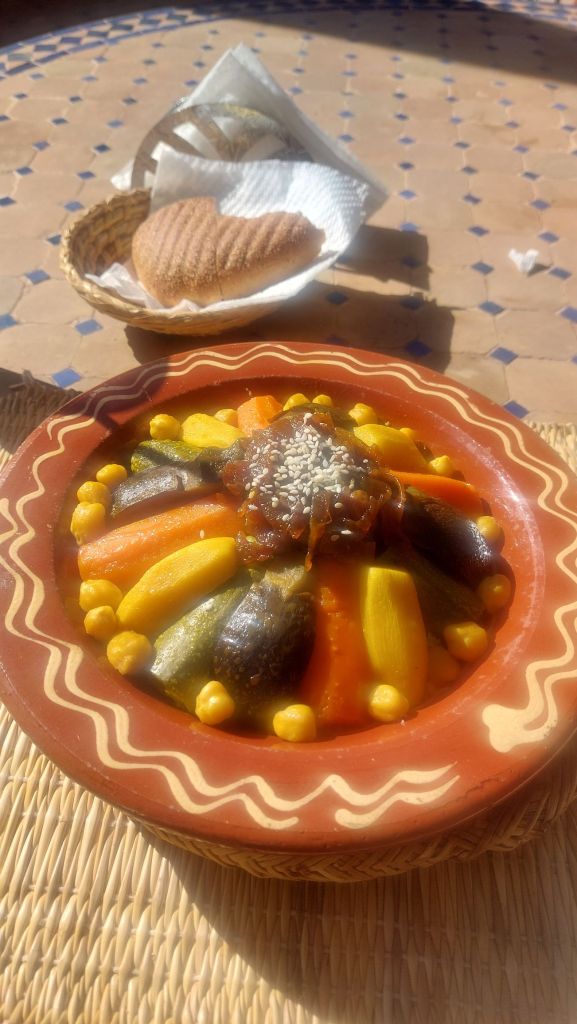
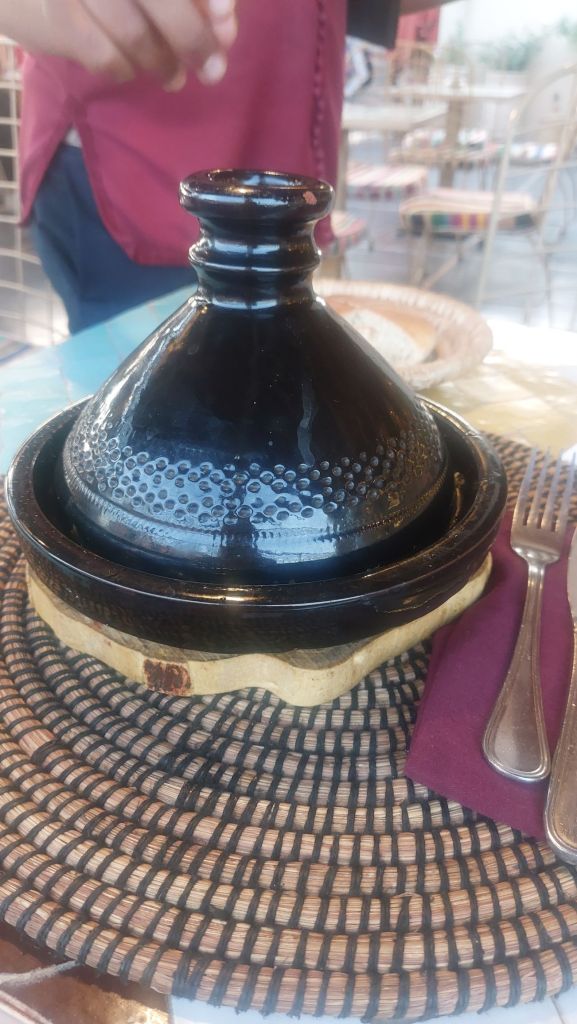
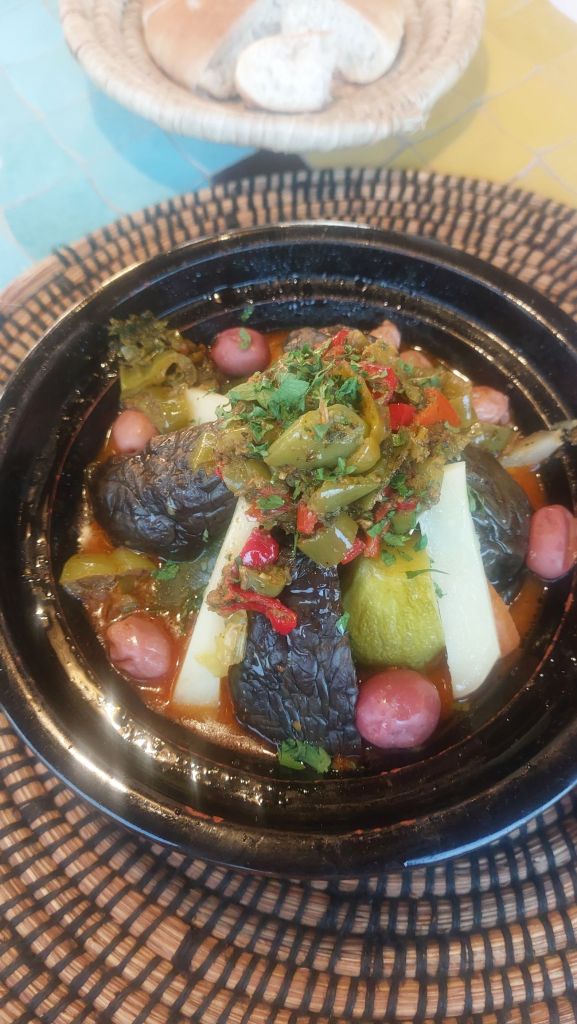
    I enjoy a traditional tagine, which is flavourful and aromatic.

    I’m tempted by the exotic sounding smoothies on the menu and treat myself to one containing dried fruit.

    I watch the beautiful sunset and everywhere has a golden glow.

    I am satisfied and content, but the evening is still young.

    I take a leisurely walk to The Clock, situated in the kasbah to listen to some traditional storytelling.

    After an interesting time immersing myself in the culture of Morrocco, I decide to head back to my riad.

    I pick up a few more souvenirs along the way.

    Image by Freebird Tracey.

    Back at the riad, I sit in the courtyard reflecting on my day.

    Image by Freebird Tracey.

    I ask the staff for suggestions for the next day.

    We chat about possibilities, and they help me put together a few ideas.

    I have had a perfect day..

    I have experienced a different culture, tasted delicious food, watched a magnificent sunset, chatted with friendly locals, and navigated my way through the maze of souks without getting too lost.

    I fall asleep.

    I am tired but happy and ready to do it all again tomorrow.

    Image by Freebird Tracey.
    (more…)
  • Healthy Juice And Smoothies In Marrakech.

    A wonderful alternative way to hydrate yourself.

    Image by Freebird Tracey.

    Marrakech is a smoothie lover’s dream come true.

    Smoothies can be found everywhere in Marrakesh. They are one of the healthiest, most vibrant, refreshing drinks in the medina.

    Using the freshest fruit from the local market and packed with nutritional goodness, smoothies are the perfect start to the day.

    There is no shortage of exotic fruits and vegetables in Marrakech.

    The markets are alive with colour.

    I regularly go for detoxifying smoothies for their positive health benefits and as a pick me up after a long, hot day exploring the medina.

    Image by Freebird Tracey.

    Literally, everything goes into making a perfect smoothie, and in Marrakech, they seem to have perfected the art.

    Fresh fruit, dried nuts, spiralina, cucumber, avocado, berries, banana, and spinach are just some of the healthy ingredients that are blended together to make the perfect smoothie.

    Images by Freebird Tracey.

    Fresh juice is also a popular choice amongst tourists who need something to quench their thirst in the hot African sun.

    Freshly squeezed lemon juice is tangy and exhilarating.

    Served with fresh mint, it’s both aromatic and a real taste sensation.

    Image by Freebird Tracey.

    Orange juice made from freshly picked oranges off the trees around the medina is a breakfast staple.

    It is sunshine in a glass.

    Mixed fruit juice is a favourite sold by the vendors in the main square.

    Image by Freebird Tracey.

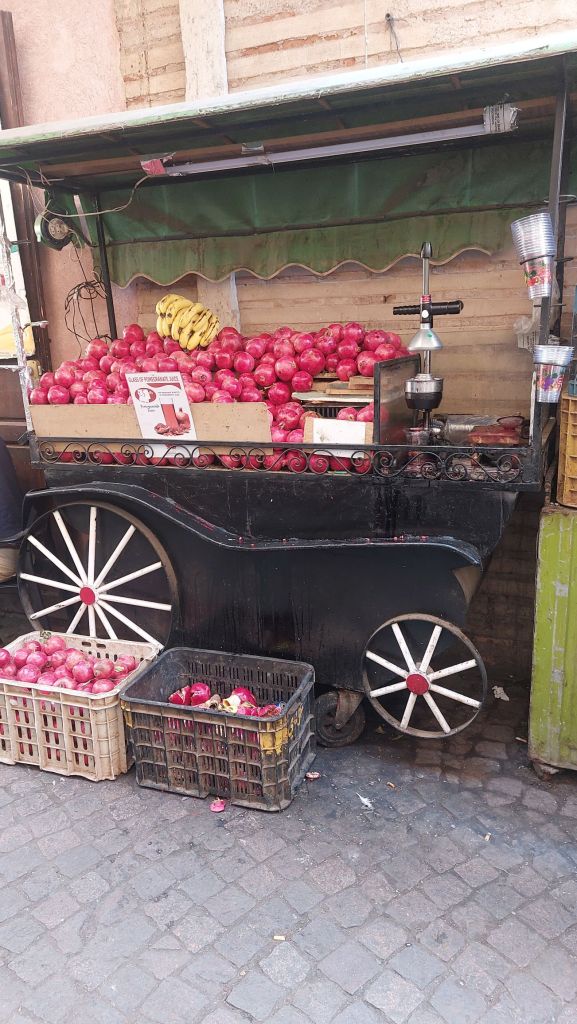
    My absolute favourite is the freshly squeezed pomegranate juice.

    It is a refreshing tonic and gives me a boost of energy. 

    I was flagging in the heat during a hike around Ouzoud Waterfall, and pomegranate juice instantly hit the spot.

    I felt revitalised again..

    Image by Freebird Tracey.

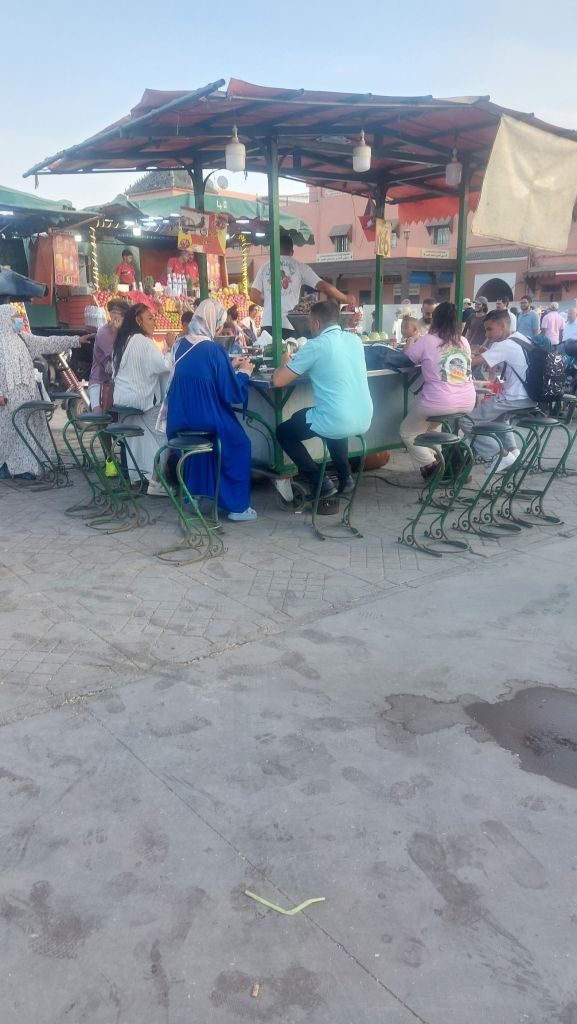
    The fruit juice vendors in the main square call you over to sample their mango and pineapple juice.

    They use carefully crafted banter to draw you towards them with many competing for business.

    They have a selection of exotic fruits to try, and it’s exciting watching them make it for you.

    Images by Freebird Tracey.

    There are a few places I can recommend where you can enjoy a refreshing juice or healthy smoothie..

    Pikala Cafe has an excellent choice, and it’s a great little spot.

    I have written a separate post about Pikala Cafe.

    Image by Freebird Tracey.

    Le Ferme Medina.

    Henna Art Cafe. 

    La Famille (vegetarian restaurant)

    All offer comfortable, attractive surroundings for a peaceful break from sightseeing and a pleasant way to get some vitamin C.

    There are also plenty of rooftop restaurants around the main square to enjoy a well-deserved rest whilst sipping a refreshing cold juice or fruit smoothie and watching the action from above.

    Sugarcane juice is widely available around the medina, also.

    It is important to stay hydrated whilst out and about in the medina.

    The temperature is very warm and humid.

    I can not underestimate the power of a bottle of water, and you should always carry one with you, but for a healthy, refreshing treat, consider trying some of the wonderful juices and smoothies also.

    The vitamins and minerals are necessary to function for the hectic, busy schedule you may have planned.

    Remember, there may still be a high sugar content, so moderation is key.

    It’s all about balance..

    Image by Freebird Tracey.
    (more…)
  • Which Clothing Should I Pack For A Visit To Marrakech?

    A useful guide for choosing the correct clothing for your trip.

    Image by Freebird Tracey.

    Marrakech can get very hot in summer, and temperatures  can exeed 40° Celsius.

    Even the cooler months can feel warm and humid, especially walking around the busy souks and popular points of interest.

    Marrakech is also a conservative city with a majority Muslim population.

    The locals are extremely hospitable, but respect is a big thing in Marrakech.

    So, what should you wear to feel comfortable yet still appear respectable?

    For female visitors, I would suggest palazzo trousers.

    These are flowing and elegant, keeping you nice and cool.

    They pair well with smart cotton blouses and can be worn underneath a silk kimono, adding a touch of glamour.

    Image by Freebird Tracey.

    Lightweight cotton or linen trousers also look smart, and neutral colours give a sophisticated, modest appearance.

    Image by Freebird Tracey.

    Silk (including recycled sari silk) maxi dresses are very versatile and keep you cool. They can be worn with a drawstring sari petticoat underneath for modesty if the dress is sheer.

    Image by Freebird Tracey.

    Linen is perfect and always looks polished.

    It may get slightly creased, so I would suggest bringing along a portable steamer. They’re a life-saver and take up very little space in your suitcase.

    However, most accommodations have an ironing and laundry service at your disposal.

    Cotton tee-shirts and blouses are ideal and can look very flattering with the right accessories.

    Image by Freebird Tracey.

    Yoga pants are also perfect for a day exploring.

    They are loose fitting and comfortable.

    Headscarves are fashionable and can be used as a head covering whilst visiting some of the religious sights or as a convenient wrap around for covering your shoulders.
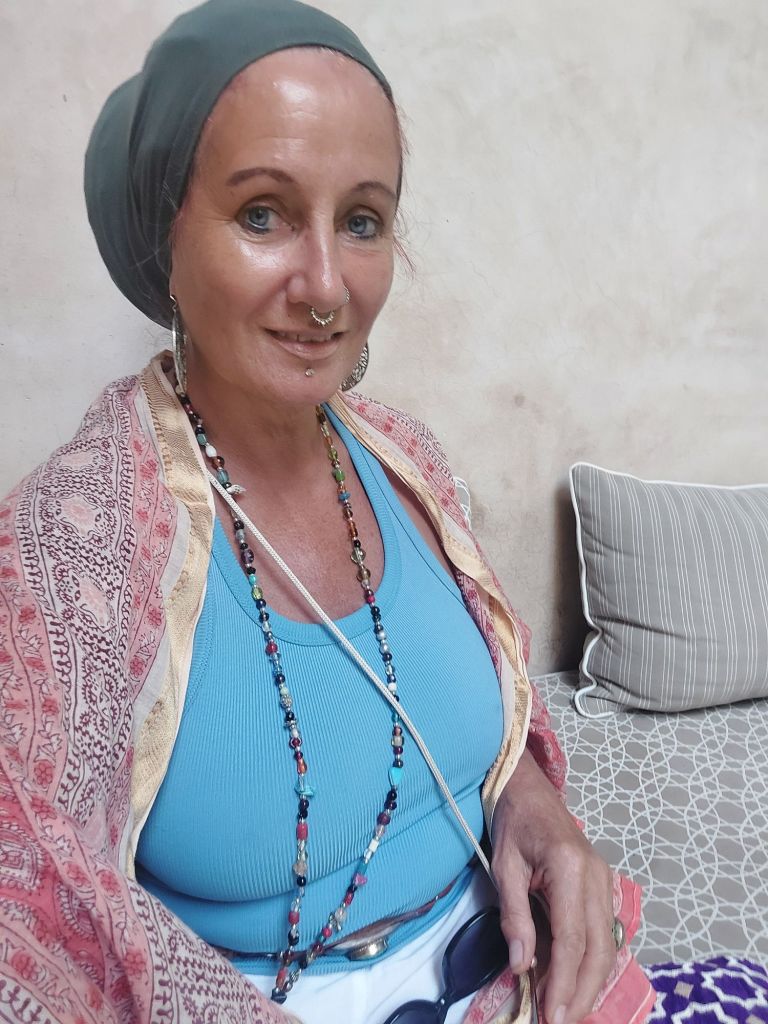
    Image by Freebird Tracey.

    I like to wear turbans to cover my locs.

    They keep my head and neck cool, and at the same time, I feel well put together.

    Silk scarves roll up really small and fit perfectly in your bag.

    They are versatile and can be used as a hair tie, head covering, or pretty accessory.

    Marrakech is definitely more liberal than other morroccan cities. However, exposing too much flesh is definitely frowned upon.

    You may attract unwanted attention from both males and females, spoiling your overall experience by making you feel self-conscious.

    How you present yourself will determine the kind of experience you have in Marrakesh.

    In your hotel or riad, it’s perfectly acceptable to wear shorts and swimwear for sunbathing, so pack those items of clothing also.

    Males can wear knee-length shorts with linen or cotton short-sleeved shirts to look smart yet casual.

    Many high-end restaurants won’t accept men wearing sandals, but smart leather sliders are deemed acceptable.

    Image by Freebird Tracey.

    Linen or cotton long trousers for men are ideal and keep the body cool.
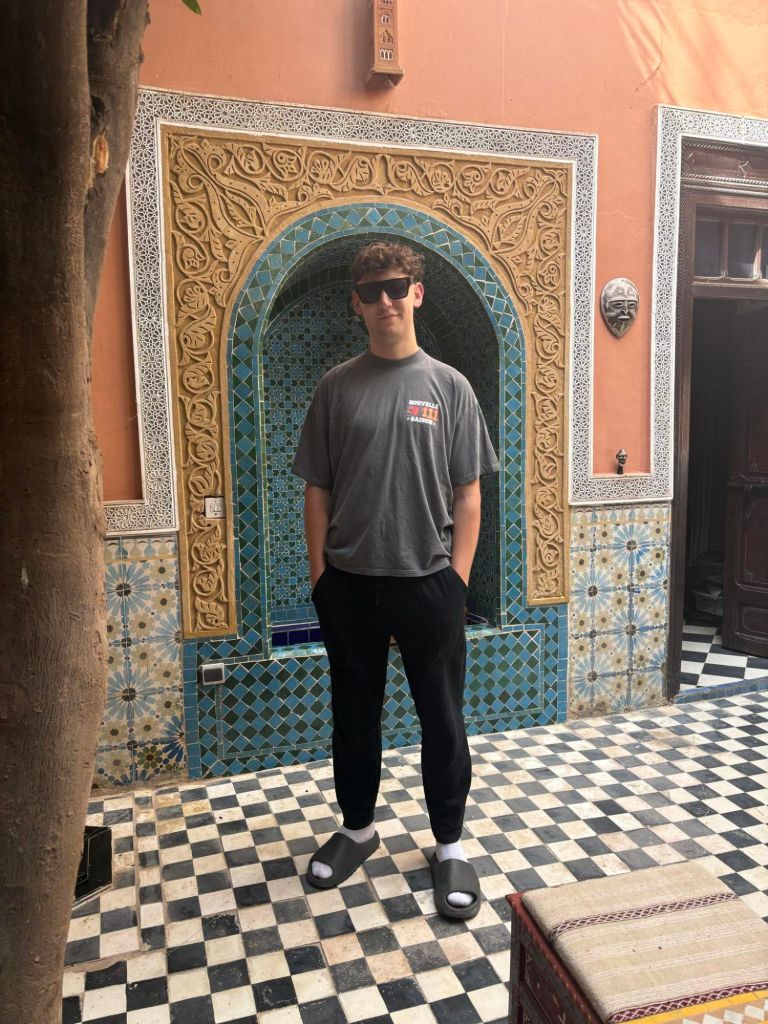
    Men’s clothing is definitely more liberal than females.

    They don’t invite the same attention but are still expected to dress for the occasion when visiting certain establishments.

    I wouldn’t advise a male to walk around without a shirt on.

    That is best left for beach holidays..

    So, to summarise, staying smartly dressed whilst comfortable is the only thing men need to consider.

    On the other hand, women are expected to respect the cultural norms of the country unless they’re going to the clubs in the Gueliz or Hivenage part of Marrakech.

    It’s acceptable to dress more provocatively if you’re having a night out there.

    You can still look and feel good in appropriate clothing.

    It’s about choosing nice accessories to elevate your outfit.

    Marrakech has no shortage of beautiful jewellery and handbags.

    Regarding footwear, there is a lot of walking around the medina, so comfortable footwear is certainly essential.

    Trainers, pumps, or sandals are all acceptable.

    A little tip I found useful is to take a couple of outfits in my travel bag, and once I arrived, I bought the rest of my clothing in the souks.

    It wasn’t too expensive, and I felt as if I blended in with the locals better.

    I enjoyed wearing the traditional Moroccan dresses, kaftans, and djellabas.

    Image by Freebird Tracey.

    Finally, I have never needed to take a warm coat to Marrakech.

    Depending on the season and whether you plan a trip into the Atlas mountains or not, a lightweight weatherproof jacket is enough

    I usually take a shawl or cardigan, and it’s always been  sufficient for cooler evenings.

    Winter in Marrakech is better suited to layers.

    A trip to Agafay desert can get very blustery whilst watching the sunset in the open air.

    A thin thermal skin worn underneath a long dress or trousers is usually enough to protect from the drop in temperature.

    I wore long sleeved tee-shirts underneath my dresses during the evenings.

    A comfortable hoodie can also be useful.

    Keeping your eyes on the weather forecast before travelling will also help you to plan accordingly for your trip.

    So, to summarise,

    Wearing comfortable clothing suitable for a day exploring the medina and tourist hot spots is the most important thing to consider.

    You will walk a lot, and it can get humid.

    To discourage unwanted attention and negative vibes from the locals, female travellers should refrain from dressing too provocatively.

    Unless they’re in the bars and clubs, which are more liberally minded.

    Choosing natural fibres is the best way to stay cool, and long, loose-fitting garments are ideal because they look modest and feminine.

    Lastly, don’t forget to bring the sunscreen.

    You don’t want to walk around looking like a lobster.

    Image by Freebird Tracey.
    (more…)
  • Jamaa El Fna At Night.

    Sunset in the main square.

    Image by Freebird Tracey.

    The main square comes alive after dusk.

    If you think that the main square in Marrakech is a busy place during the daytime, be prepared for a surprise once the sun begins to set.

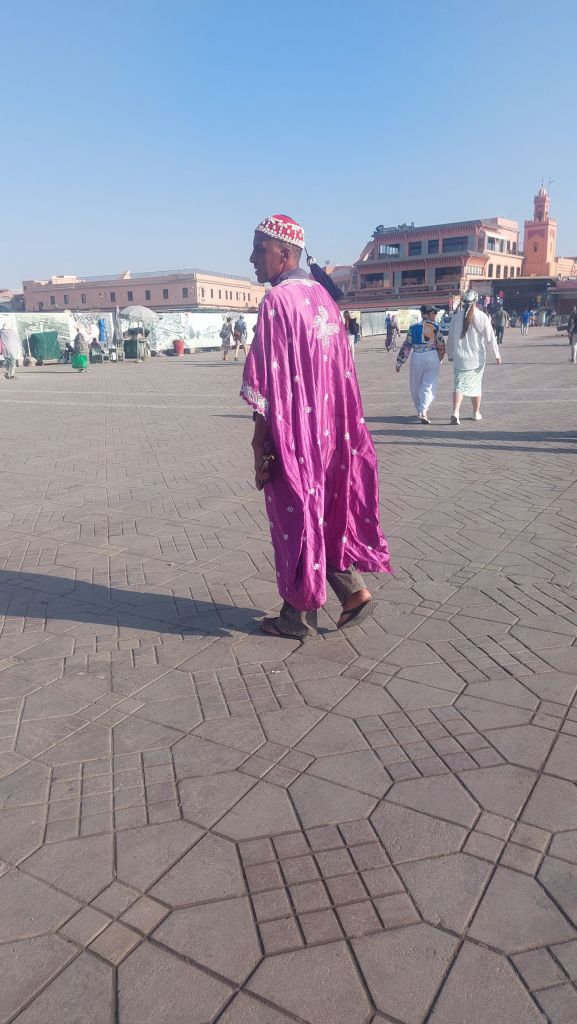
    Gone are the snake charmers and monkeys on chains,  replaced by food vendors, henna ladies, street musicians, and dancers.

    Images by Freebird Tracey.

    The scene is organised chaos and a complete sensory overload.

    The sights, sounds, and smells are not for the faint-hearted.

    The drumming becomes intense, and the square takes on the appearance of a huge fair ground with thousands of people congregating.

    People from Marrakech and beyond come together to meet each other, alongside tourists all vying for space to watch the spectacle unfold.

    The atmosphere is electric and vibrates with a magnetic energy.

    Street vendors pursue potential customers with menus as they try to navigate their way through the crowds.

    They hop in front of you, and you have to dodge them like you are part of some assault course.

    Images by Freebird Tracey

    Sometimes, they can be very persistent, and you can feel pretty intimidated.

    Camel head and fresh snails may not be your thing, and you have to be quite firm when telling them you’ve already eaten.

    Although the scene is very intense, it is magical and exciting.

    I really enjoyed myself, but other people were saying that they felt overwhelmed.

    They preferred sitting on the edge of the square, sipping mint tea, and observing from a safe distance.

    It is unlike anything else you may have experienced.

    There is so much to see. There are games being played, and a few little scams take place to trick you into coughing up a few dirhams.

    Locals hang around the cafe de France, chatting with each other over coffee.

    Youths play football against the walls of the medina.

    Sugarcane and fresh juice are sold from vending carts by lively vendors in high spirits.

    Bemused onlookers sit observing everything outside restaurants or from the rooftops around the square as the Koutoubia mosque rings out the call to prayer.

    As the sun sets, the crowds flock, and the atmosphere becomes electrifying.

    The square is transformed into a social hub where anything and everything takes place.

    It’s an incredible experience.

    The bright lights dazzle from the food vendors, and beautiful Morroccan lamps sit for sale on blankets lighting the way, giving off a wonderful glow.

    The scent of fragrant incense competes with the aroma of sheeps head cooking, floating through the air on the breeze.

    Tourists tempted to try a traditional bowl of snails queue to sample this culinary delight.

    Drums beat, belly dancers perform to curious onlookers and acrobats show off their skills to the gathering crowd.

    You can not escape the craziness.

    It draws you in.

    It is the heartbeat of the city.

    Image by Freebird Tracey.

    Jamaa El Fna magnetises you.

    The sheer chaos is a complete assault on the senses in every way possible.

    Image by Freebird Tracey.

    Just be mindful when stopping to take photos.

    Someone in the thick of the action is eagle eyed and continuously watching for interested tourists who have stopped to watch.

    They will spring upon you from out of nowhere, cap in hand for a donation.

    After sunset, it’s as though the whole of Morrocco has come out to play in Jamaa El Fna, and they are determined to have a good time.

    It is truly a spectacle to behold.

    Lively, colourful, aromatic, and noisy.

    Be sure to visit and become a part of what makes Marrakech so unique.

    It’s certainly an eye-opener.

    Although it’s mostly safe around the square, exercise the usual caution in large crowded areas and try to avoid obvious scams.

    (more…)
  • Shopping In The Souks.

    The bustling souks in Marrakech are exciting.

    Image by Freebird Tracey.

    There is everything that you could possibly dream of buying in the wonderful souks of Marrakech.

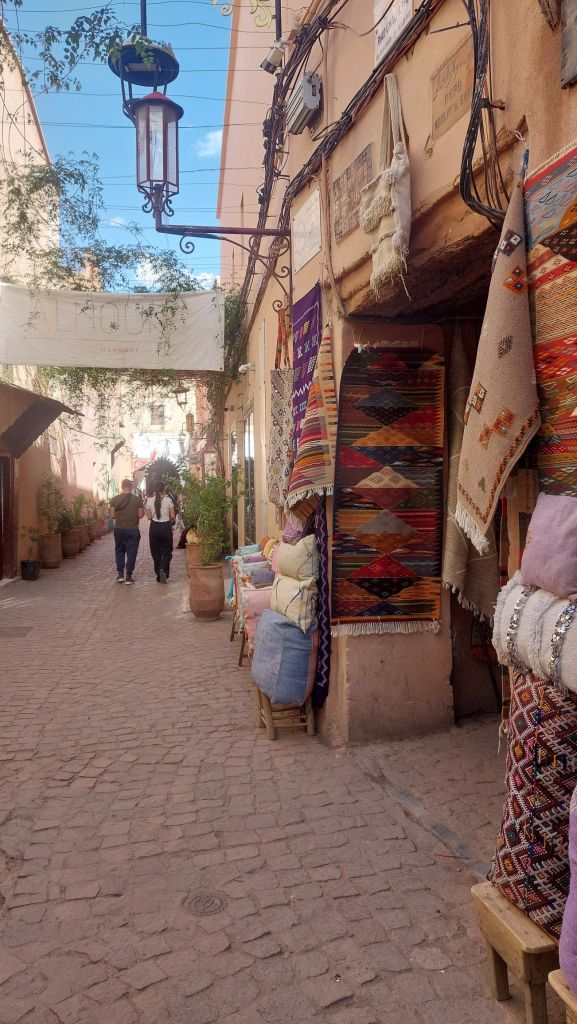
    As you meander through the maze of colourful alleyways, be prepared for a complete assault on the senses.

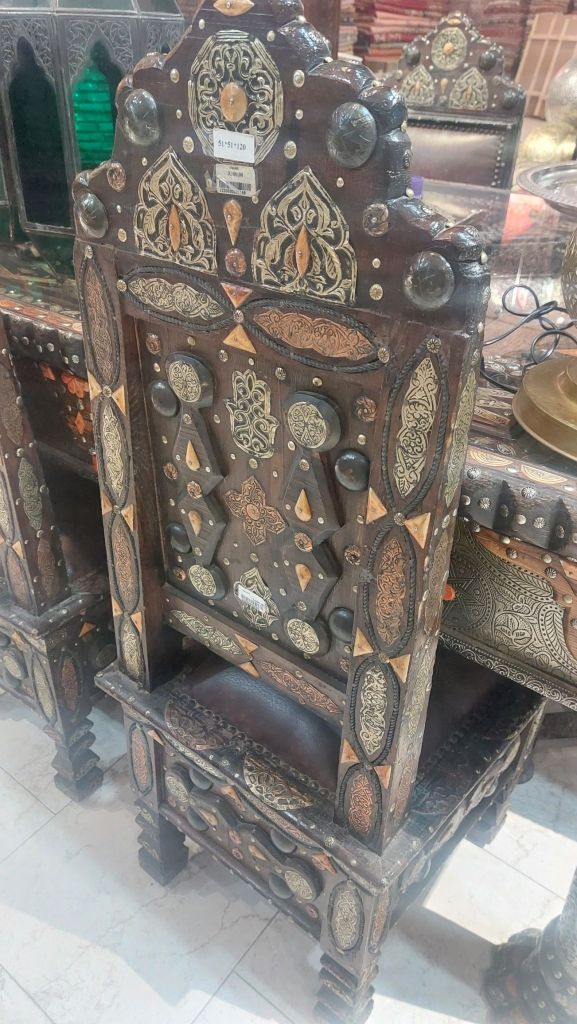
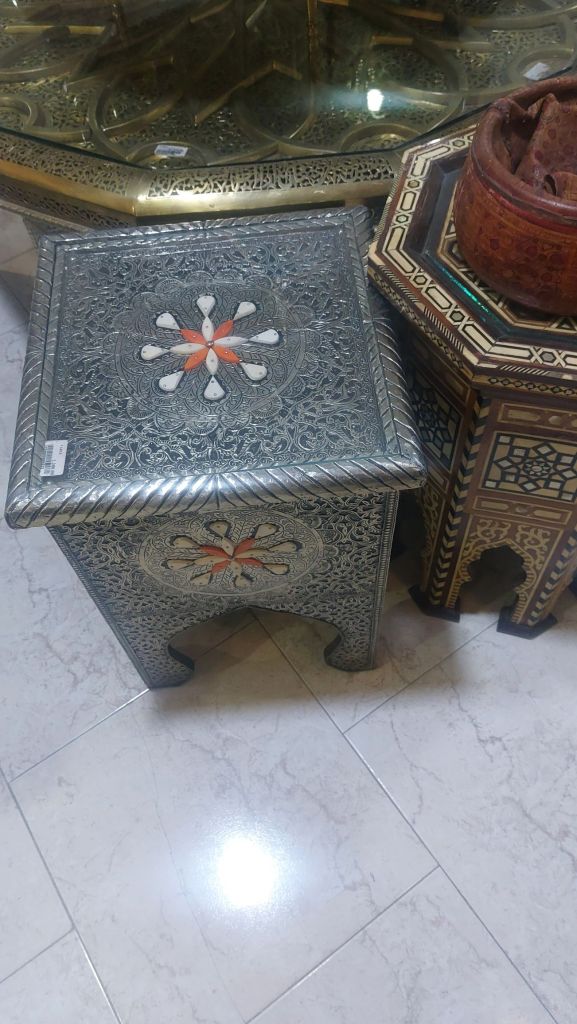
    From beautiful jewellery to exotic spices, leather shoes and bags, to Morroccan lamps and ceramics.

    It’s all here crammed into narrow alleyways and calling out to be bought and taken back home with you.

    Images by Freebird Tracey.

    The skilled craftsmanship is astonishing, and you can find areas dedicated to making and selling different things.

    There is a separate place for leather goods, a place where metal workers make  beautiful Moroccan lamps and metal sculptures.

    An area where wooden things are handmade and rug weaving is demonstrated.

    Images by Freebird Tracey.

    It’s a lovely experience watching the locals make their goods to sell, and there is also the opportunity to have a go at making things yourself, such as a pair of babouche shoes.

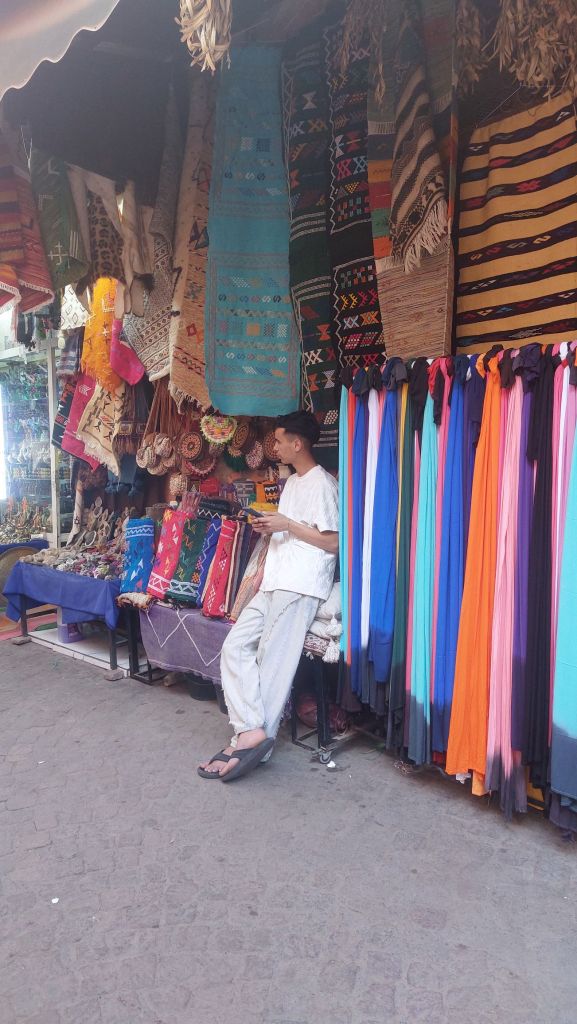
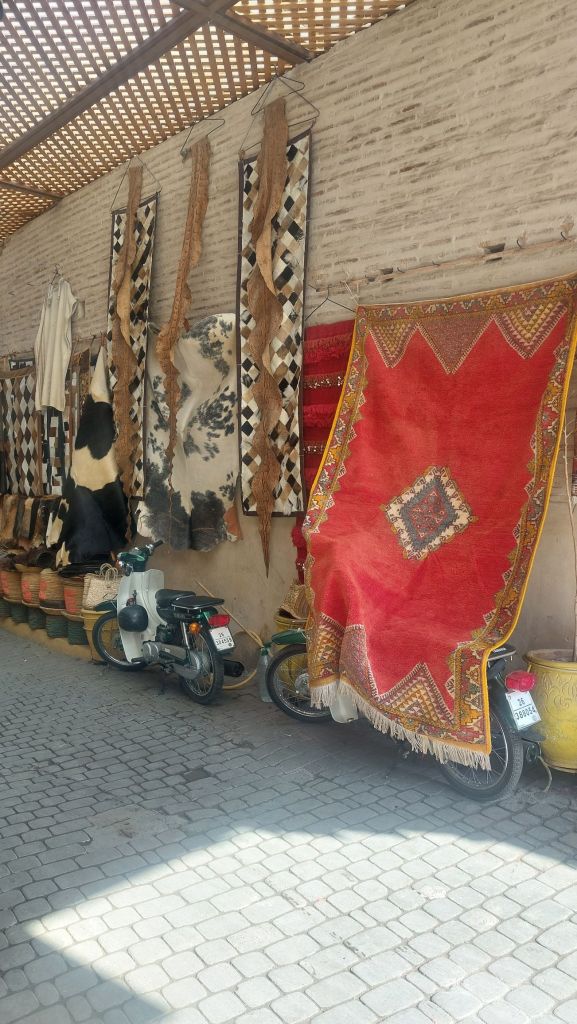
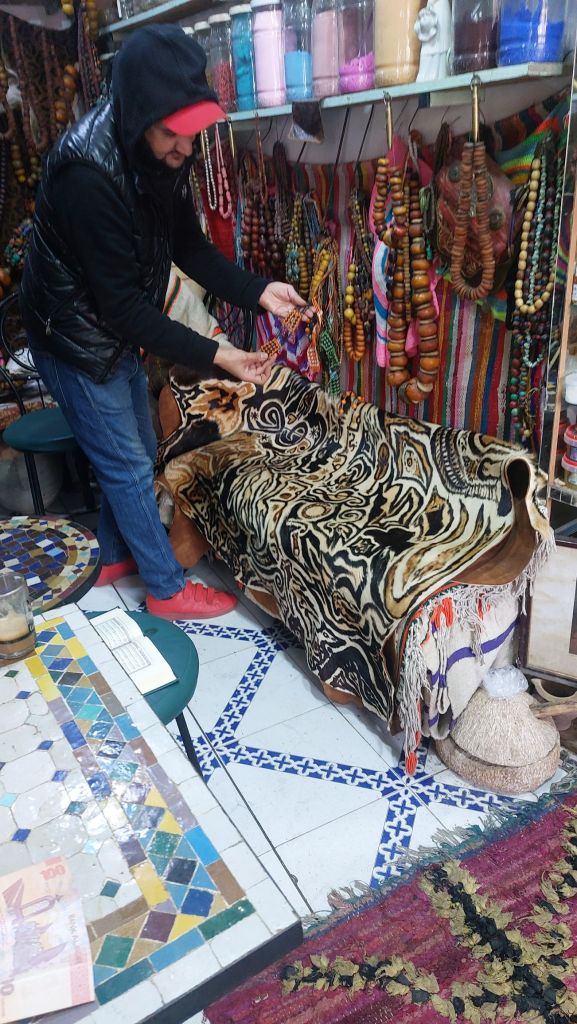
    Berber rugs hang proudly around the medina. Each colour and pattern is a feast for the eyes.

    Image by Freebird Tracey.

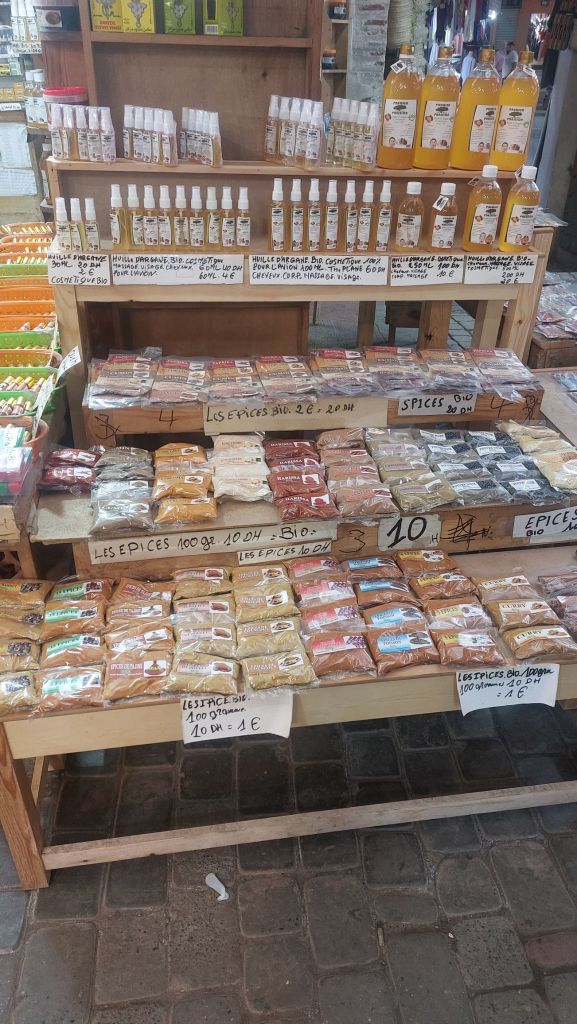
    Argan oil and morroccan black soap, orange blossom oil, and gardenia float on the gentle breeze.

    The smell is so fragrant in the souks.

    Images by Freebird Tracey.

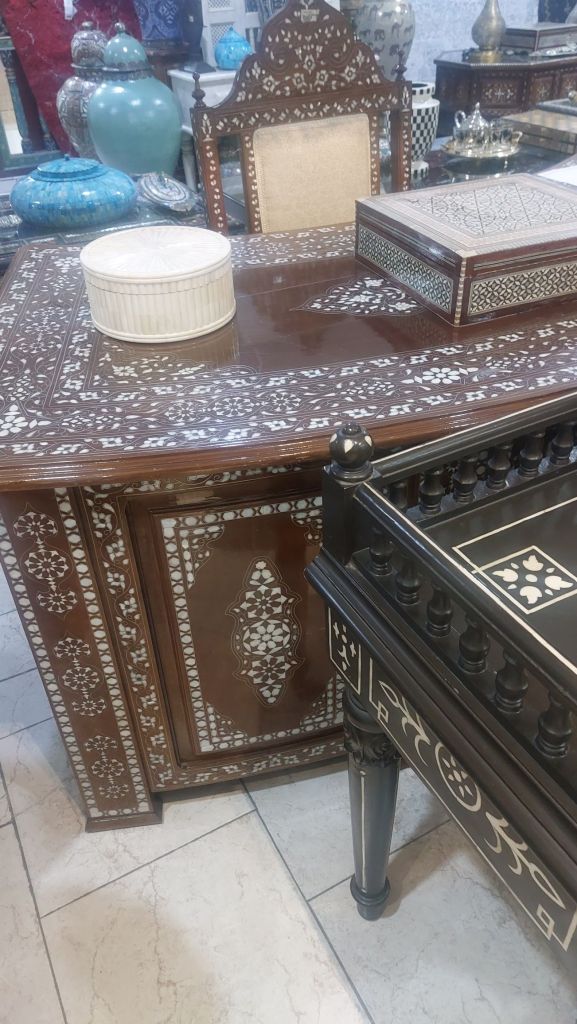
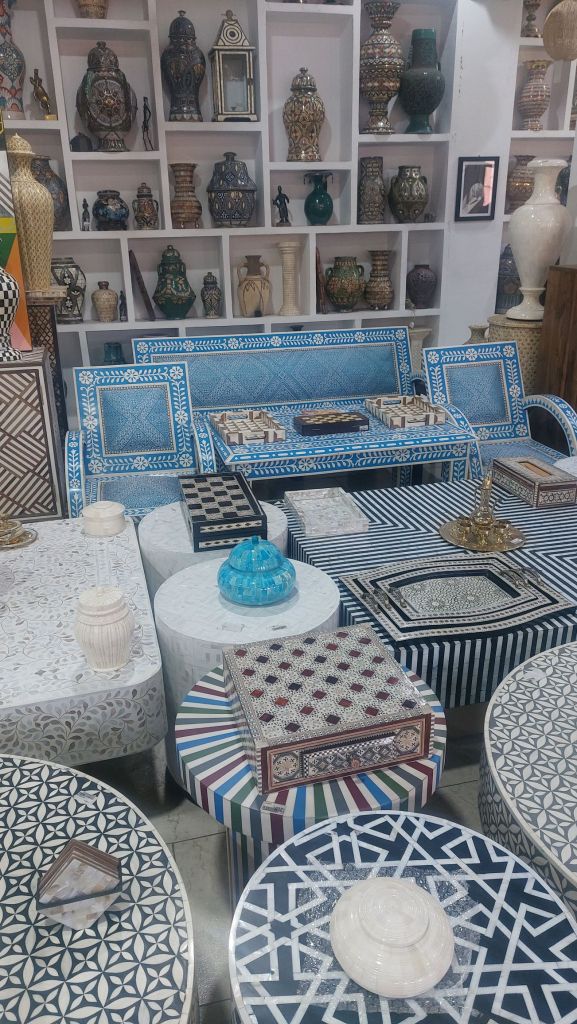
    Wooden boxes ornately decorated with mother of pearl, chess sets, and traditional toys tempt you for the perfect souvenir to take back for your family and friends.

    Images by Freebird Tracey.

    The soft furnishings such as cushion covers made from cactus silk are eye-catching and colourful.

    Image by Freebird Tracey.

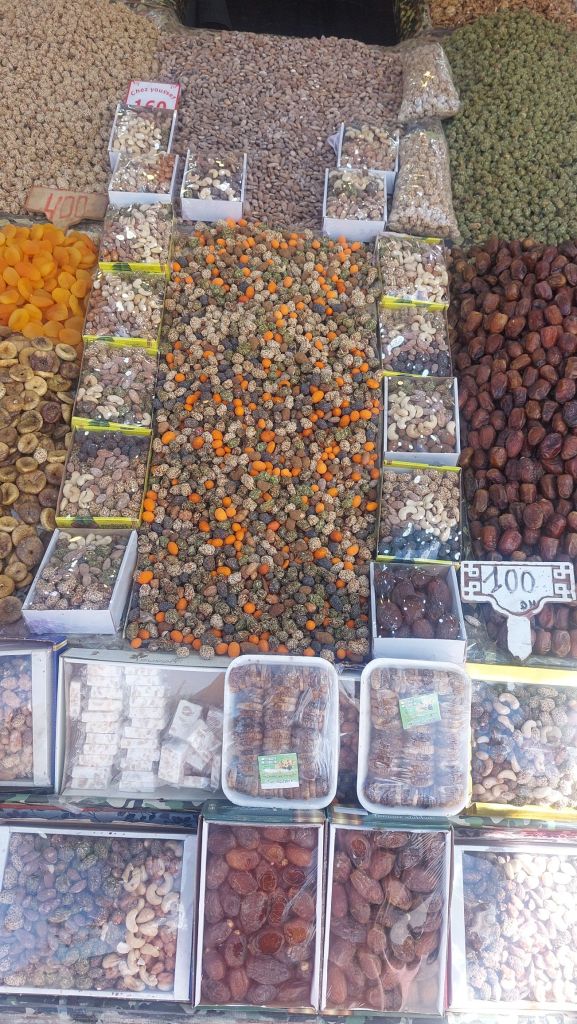
    Then there’s the nuts, sweets, and pastries for sale.

    Moroccan sweets are a delicacy, and you’ll find yourself spoilt for choice.

    Image by Freebird Tracey.

    The medicinal herbs and spices are a cacophony of colours and fragrances.

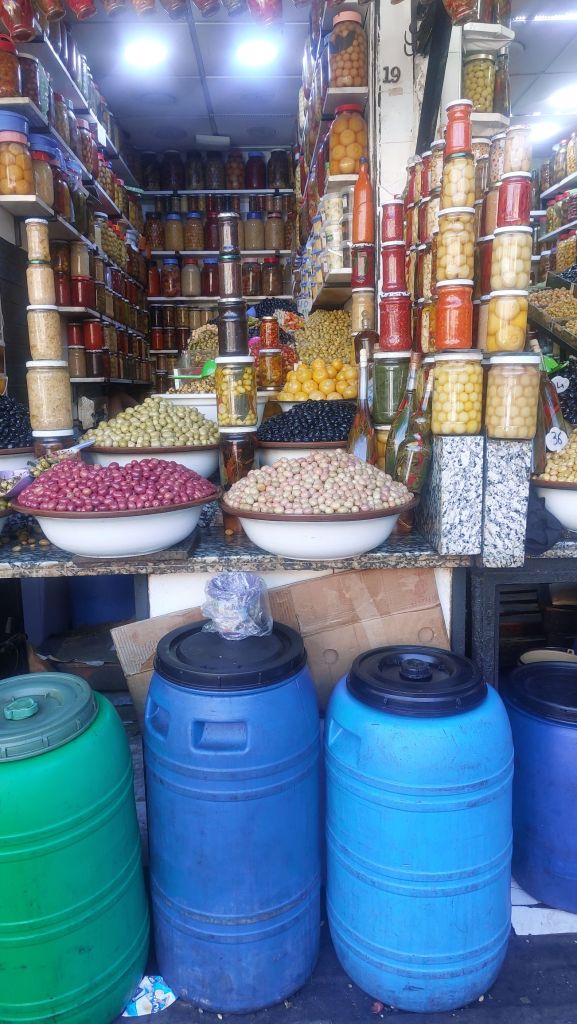
    Fresh olives with a hint of spice pop with colour.

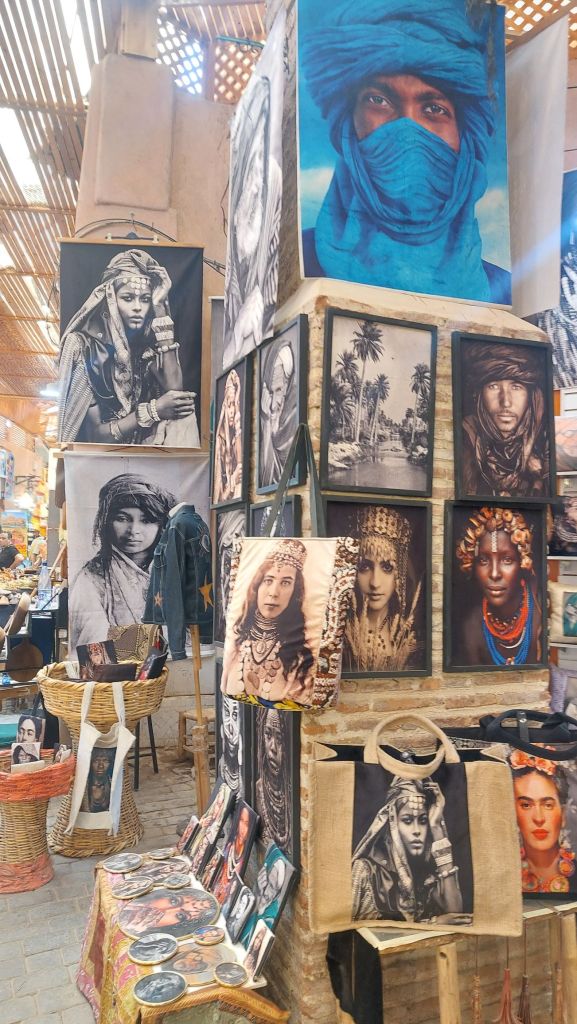
    Paintings and prints of traditional Morroccan doors, Amazigh people and camels crossing the Sahara desert.

    Images by Freebird Tracey.

    For people who love to  shop until they drop like I do, Marrakech is an absolute delight.

    It’s not all fun and laughs, though.

    The souks are incredibly busy with tourists.

    You also have to dodge motorcycles, donkeys, and vendors with carts.

    You can expect to get lost, but that’s all part of the experience.

    No one went into the souks and was never heard from again…

    So, fully immerse yourself in the experience and enjoy every minute.

    It’s unforgettable.

    It will invoke the spirit of camel caravans and ancient trade routes from centuries ago in you.

    A way to fully delve into the wonderful culture of Marrakech.

    Images by Freebird Tracey.

    Here are a few helpful tips to help you enjoy the souks.

    First of all, pace yourself.

    The souks are very busy and can feel slightly chaotic at times, especially in the heat.

    Stop for a drink and rehydrate.

    Rest for a while, and try a spot of lunch on a rooftop cafe. There are plenty inside the souks.

    Be prepared to haggle. It may seem daunting at first, but you’ll soon get the hang of it.

    Stay vigilant, and keep your wits about you.

    Marrakech is a safe city, but pick pocketing can happen just like anywhere else in the world.

    In crowded, narrow streets, keep your possessions safe in a closed bag at the front of your body.

    If you’re lost, look for signs above your head pointing you back to Jamaa El Fna.

    Having an orange sim is useful but may not always work in the denser parts of the souks.

    If you need help, ask a shop vendor. They’re usually more than happy to help you.

    Don’t be tempted to accept directions from locals who may lead you to a friend or family members’ shop so that they can get commission if you buy something.

    You may struggle to get away, and you may find yourself seated and drinking mint tea before you know it.

    Take time to shop around and walk away if you don’t think you’re being offered a fair price.

    You will usually find yourself being called back, and a realistic price can often be reached.

    If not, the same items will most likely be found on sale elsewhere in the souks.

    Exercise patience.

    Remember, this is someone’s livelihood, and it’s a different culture to what you may be used to.

    Wages are not very high for most people in Marrakesh, and tourists with money to spend are fair game for boosting the take-home salary of most vendors.

    Image by Freebird Tracey.

    Although the souks can often feel overwhelming, they are an unforgettable shopping experience.

    You will be dazzled by the number of weird and wonderful items on display.

    The sights, sounds, and smells will stay with you a long time after you leave this fascinating city.

    Image by Freebird Tracey.
    (more…)
  • Atay And Moroccan Pastries.

    Marrakech is known for its delicious sweets and pastries.

    Image by Freebird Tracey.

    Colourful, boho decor and tempting pastries are the perfect way to take a much needed breather from the chaos of the souks.

    Shopping in the medina is a fascinating experience, but it can be overwhelming at times.

    I realised that taking a break and pacing myself was the best way to thoroughly enjoy the experience.

    Navigating the maze of alleyways in the souks is exciting, and there is so much more to them than beautiful leather goods and Moroccan lamps.

    I especially love the sweets and pastries on offer.

    They are absolutely delicious and compliment the taste of traditional mint tea known as atay perfectly.

    There are so many pastries to choose from, and I decided to treat myself to a selection to see which my favourites are.

    The tea is very hydrating, and I especially enjoyed the taste of the almond pastries most of all.

    Images by Freebird Tracey.

    If you are shopping for gifts  in the souks, I would highly recommend that you take some time out to rest and pace yourself.

    Sitting outside a cute little tea shop selling something nice and light like a few Moroccan pastries is perfect.

    Image by Freebird Tracey.

    It’s a good way to engage in the culture of Marrakech by observing everything going on around you.

    Watching vendors calling out to tourists and bargaining the price of their wares is fun.

    Friendly waiters buzz around serving their customers with a big smile.

    Image by Freebird Tracey.

    There are plenty of places in the medina offering mint tea, traditional sweets, and pastries.

    The sweets are an absolute treat, but you will be spoilt for choice.

    Images by Freebird Tracey.

    Part of the pleasure of exploring the medina is finding hidden gems.

    Places where you can sit and gather yourself before venturing back out into the crowds of tourists.

    Marrakech has an abundant supply of delicious sweets and pastries.

    They’re a light snack that won’t spoil your appetite for lunch or dinner.

    A few suggestions of places to try are,

    . Medina Kawa Marrakech.

    . La Patisserie de la Terracce Spices

    . Boughaz Coffee in the Kasbah.

    Check out my separate article about traditional Morroccan mint tea.

    Image by Freebird Tracey.
    (more…)
  • Traditional Moroccan Berber Rugs.

    A look at how Berber rugs are made.

    Image by Freebird Tracey.

    Berber rugs are handmade by the indigenous Amazigh people of Morocco.

    They are made from the wool of sheep in the high Atlas Mountains.

    Each type of rug tends to vary in thickness, and the pattern also differs depending on which tribe or village has made it.

    For example, Kilim Berber rugs have no pile and are relatively fine in texture.

    They are handcrafted using techniques passed down through generations using natural materials renowned for their durability and luxurious feel.

    Hand-knotting is a long and laborious process.

    To create a single rug takes about one to two months, with four weavers working on a rug at a time.

    There are several steps that go into making a beautiful Berber rug..

    1. Shearing the Sheep

    Shearing the sheep is the first step in making a Berber rug. This is done by hand, using a special shearing knife.

    The sheep are first restrained, and then the knife is used to remove the wool from their body in one long strip.

    The wool is then sorted and cleaned.

    It is usually the job of the men to shear the sheep, taking care not to injure them or spread infection.
    The women are responsible for washing the sheared wool.
    2. Carding.


    Carding is the process of aligning the wool fibers so the weavers can spin them into yarn.
    To card the wool, the fibres are first combed in one direction, and then the wool is brushed in the opposite direction.

    This helps to loosen the fibers and align them in the same direction.

    Once the fibers are aligned, the weavers can then spin them into yarn.
    Carding is an essential step in making a Berber rug, as it helps to ensure that the rug is strong and durable.

    The process of carding also helps to give the rug its unique texture.

    The women are often responsible for this process.

    3. Spinning the wool into yarn.


    To spin the wool into yarn, Amazigh women use something called a drop spindle.

    This simple tool consists of a shaft with a weight at the bottom.

    The wool is attached to the shaft, and then the shaft is twirled between the women’s hands.

    As the shaft is twirled, the wool is wrapped around it, creating the yarn.

    4. Weaving the rug.

    The weavers use a technique called continuous knotting to create intricate patterns.

    This method of knotting allows the weaver to create a rug that is incredibly durable and will last for many years.
    The process begins with the weaver tying knots in the woollen yarn.

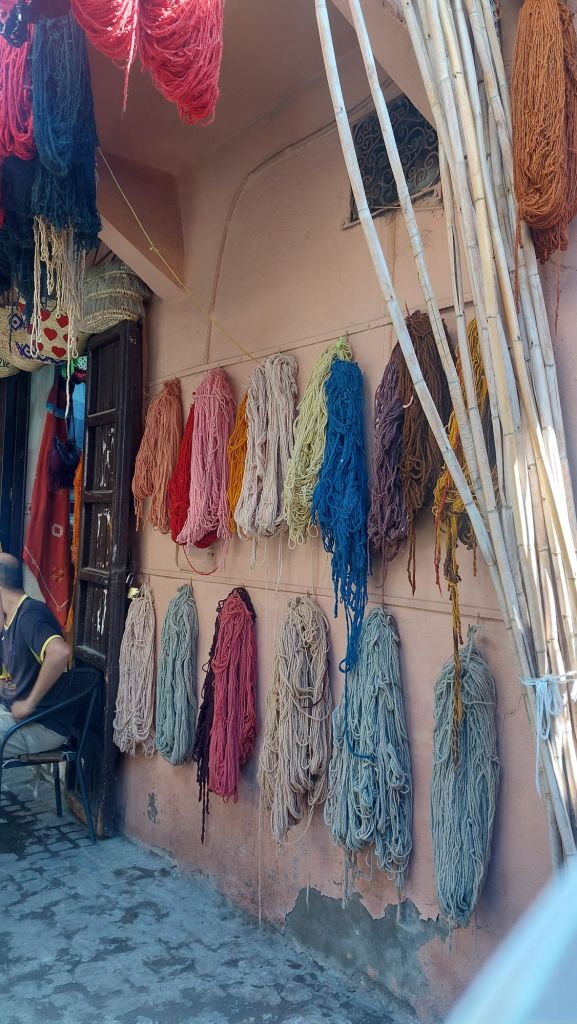
    The yarn is then dyed using natural dyes from plants, spices, and fruits, which give the rugs their characteristic colours.

    Once the yarn is dyed, the weaver begins weaving it into a rug using a loom.

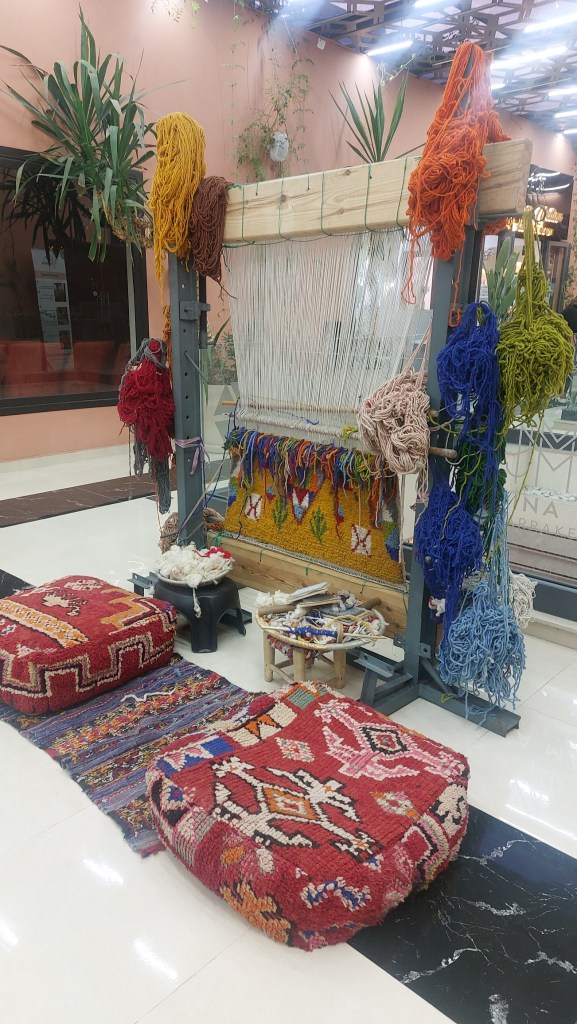
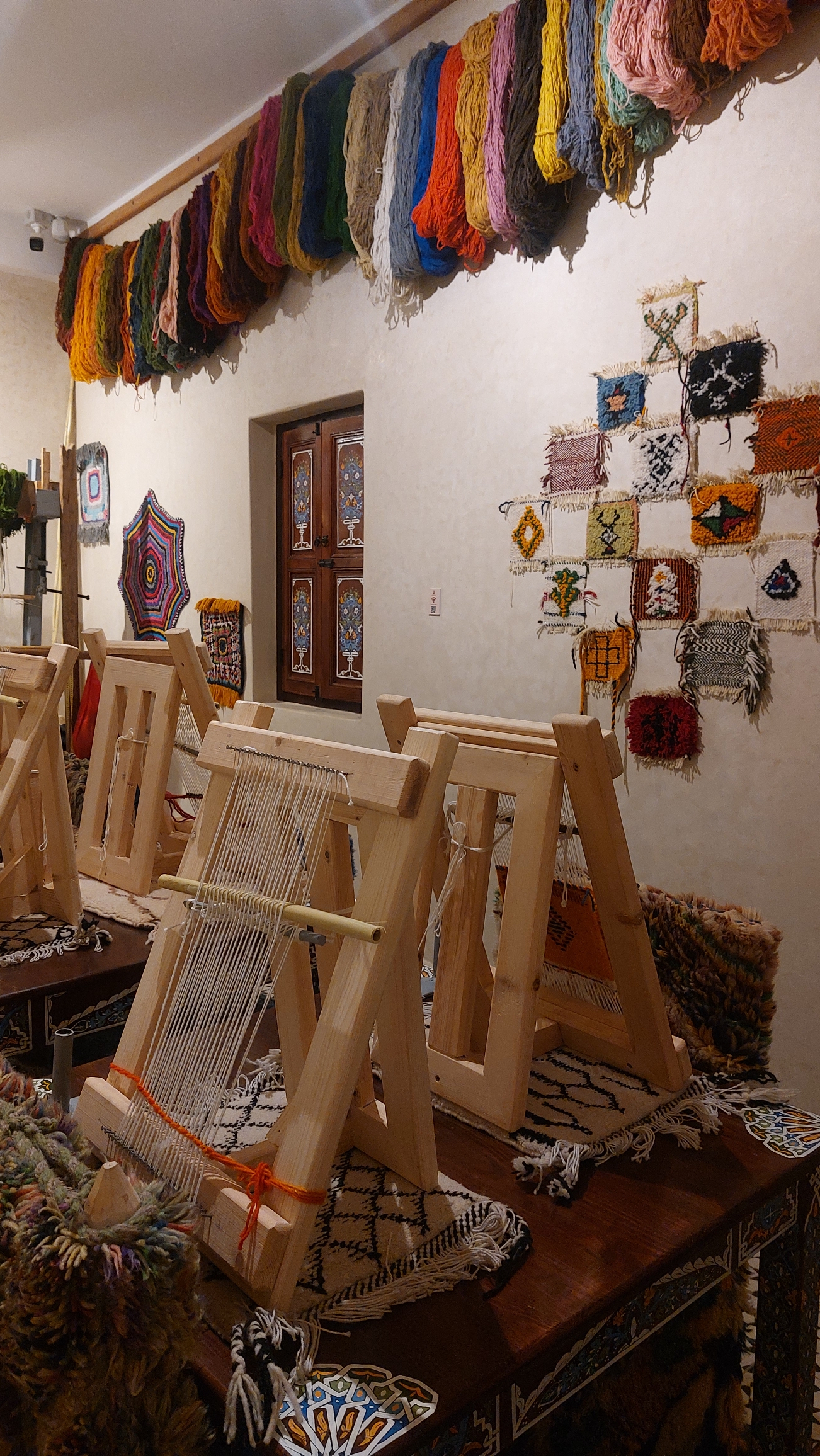
    The loom is a wooden frame that the weaver uses to create the rug’s design.
    The weaver ties the yarn around the looms warp threads, which are the vertical threads that run through the loom.

    The weaver then weaves the weft threads, which are the horizontal threads, over and under the warp threads.

    The weaver can create various patterns by changing the direction of the weft threads.

    Image by Freebird Tracey.

    Once the rug is complete, the weaver cuts the rug from the loom and ties the ends of the rug together. The rug is then completed.

    Making a Berber rug is a long, laborious task, and the women of the village who weave them rarely get anything near the price they’re sold for.

    Husbands load them onto the back of a donkey and take them to a buyer who gives him a fraction of their value.

    Berber rugs are beautiful and give a home a wonderful boho vibe.

    They are hard-wearing and last a lifetime.

    Images by Freebird Tracey.

    It’s important when visiting Marrakech to make sure you’re purchasing a genuine Berber rug.

    There are a few scams, so be mindful before you get whisked away to a shop by a friendly local, promising you the best quality and prices.

    Les Nomads de Marrakech has a great reputation and can ship rugs back home for you.

    This is their address..

    Bennahid #40 Derb Zaouiat Lahdar, Marrakesh 40030, Morocco.

    Dar Bouchaib in the Kasbah is a fixed price store that also ships rugs and has a huge selection.

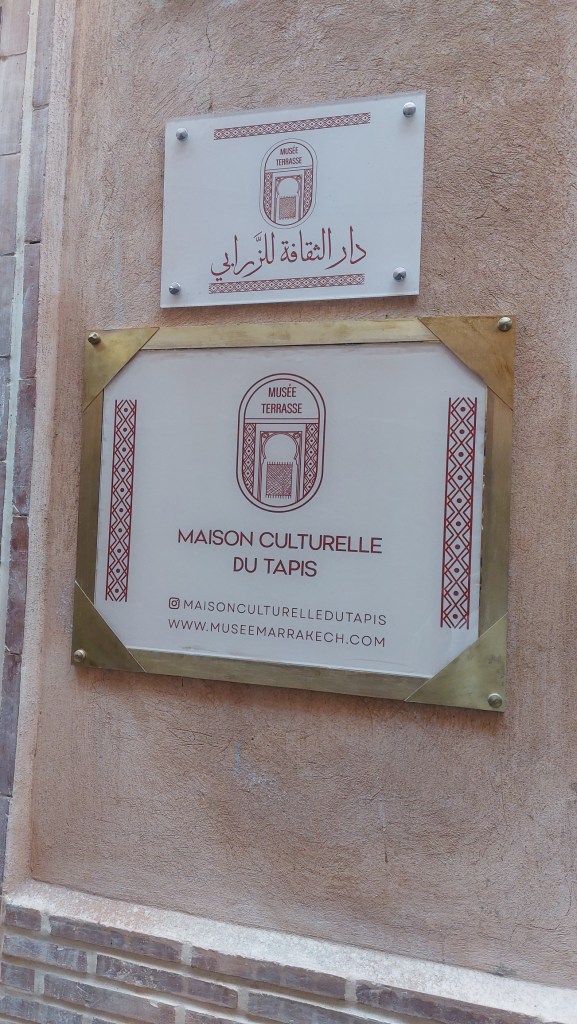
    There is also a carpet museum in the souks, and it’s well worth a visit to learn more about how they’re made.

    They have some beautiful vintage rugs on display.

    I have written an article about this fascinating place.

    Images by Freebird Tracey.
    (more…)
  • The History Of Marrakech.

    A brief glimpse into the history of the red city.

    Image by Freebird Tracey.

    Marrakech has been inhabited for over 1000 years.

    The first settlers were Berber farmers who had lived on the land since neolithic times.

    Morocco took its name from Marrakech.

    The Amazigh people named the country Murakush, meaning the Western kingdom. Later Arab conquerors adapted the name to Morocco.

    During the 11th and 12th centuries, the Almoravids were the rulers of Marrakech, founded by Abu Bakr Ibn Umar in 1070.

    They constructed an  underground water system to supply water to the city canals, which attracted merchants and craftsmen to Marrakech.

    They began building riads for the people who were beginning to settle in Marrakech, and it became a real city.

    His cousin and successor Yuseff Ibn Tashfin developed Marrakech further, turning it into the Almoravid empire.

    He erected mud brick houses, which gave the city its distinctive red colour today.

    Image by Freebird Tracey.

    It was during this period that the Masjid al siquaya mosque was built, and souks or market places sprung up, marking the beginning of urban life in Marrakech.

    In the 12th and 13th centuries, the Almohads overthrew the Almoravids and took over the city.

    They continued to develop Marrakech even further, painting the walls of the city red and building spectacular palaces and the famous Koutoubia Mosque, which is the largest mosque in Marrakech and a significant landmark.

    Image by Freebird Tracey.

    They were intellectuals and artists, and many scholars were attracted to the city.

    They introduced education and art to the people, turning the city into a political, economical, and cultural centre.

    They improved on the water system by building open air canals, allowing water to flow down from the Atlas mountains.

    This gave the city dwellers a better quality of life.

    The city soon began to prosper under the rule of the Almohads and became a thriving place for merchants to meet and exchange goods.

    Image by Freebird Tracey.

    In the 13th century, the Merinid Empire took control of Marrakech in 1230 ruling for two centuries.

    They built the first madrasa in 1343-9 and used Marrakech as a training ground for heirs to the throne.

    Marrakech was the imperial capital of Morocco, but the Merinids much preferred the city of Fez, which resulted in Marrakech going into serious decline.

    Fez became the new capital, and Marrakech became the regional capital of the South instead.

    Because of this move to Fez, Marrakech was left to decay, becoming impoverished and neglected.

    The buildings were left to crumble, and the city that was once a bustling hive of activity began to die.

    From 1578-1603, the Saadian  Sultans led by Ahmad Al Mansur came to power.

    They restored the city to its former glory and established Marrakech as its capital city.

    They built the Saadian tombs and El Badi palace, furnishing them with intricate tile work and stucco.

    Images by Freebird Tracey.

    They launched military campaigns against European invasion, and this period of rule became the golden age of literature and art.

    The Saads built Bab Doukkala mosque in 1557-1571 and Mouassine mosque in 1562-72.

    They also built the Ben Youssef Madrasa in 1570.

    Images by Freebird Tracey.

    In 1631, rule was passed from the Saadian dynasty to the Alaouite dynasty, which is still the name of the current Morroccan royal family.

    The Alaouites promoted trade with the United States and European countries.

    They improved date palm crops and modernised the army.

    They also attempted to take control of the Berber and Bedoin tribes.

    They restored the riads and buildings in Marrakech, redeveloping it’s infrastructure.

    It was in 1911 that the capital of Morocco became Rabat.

    Marrakech became a French protectorate in 1912 when the sultan Abd al-Hafid signed the treaty of Fez.

    Although the sultan remained the head of state, the French had a huge influence in developing strong diplomatic and economic relations in trade and tourism.

    The French began modernising the city and building new districts whilst aiming to preserve the traditional character of the city.

    They encouraged tourism and exporting Moroccan dates and other produce.

    In 1956, Morocco gained its independence when the treaty of Fez was passed back.

    Throughout history, Marrakech has been a city that has resurged, declined, and resurged once again.

    It has fought against several invasions and endured plagues and famines.

    In 1982, UNESCO declared Marrakech a UNESCO world heritage site, raising awareness of the cultural heritage of the city.

    It is now one of the most popular destinations in the world and receives millions of tourists each year.

    Marrakech combines the ancient with modernity perfectly.

    Visitors can get a glimpse into the intriguing past of Marrakech as they wander around the preserved walls of the medina.

    As they venture into the tree lined avenues of Mohammed V avenue, they are presented with a newer,modern side of Marrakech, a thriving hub of fancy restaurants, bars and boutiques.

    Marrakech has an astonishing history, which makes it all the more fascinating.

    It is well worth taking a tour of the historic buildings in the medina to get a taste of the red city’s intriguing past..

    Images by Freebird Tracey.
    (more…)
  • Visiting Marrakech On A Budget.

    Helpful ideas if you want to visit Marrakech on a shoestring.

    Image by Freebird Tracey.

    Visiting Marrakech doesn’t have to break the bank

    In fact, Morrocco is a relatively cheap country to visit in comparison to many others.

    It’s all about careful planning and putting together the right itinerary for your trip before you go.

    I have compiled a few ideas and suggestions to help you enjoy your trip without having to spend a ridiculous amount of cash.

    1.

    Book your flight early.

    The earlier you book, the cheaper it is. Download an airline app and keep an eye on the cost of flights. Book out of season when it’s less busy.

    2.

    If you book your accommodation directly through the riad or hotel, it is often much cheaper.

    3.

    Use public transport in Marrakech. The buses are an excellent way to get a taste of local life. They are extremely cheap and reliable. The price is set, and you will avoid being privy to scams from the local taxi drivers.

    4.

    Marrakech is a bustling metropolis with so much going on around the main square. Consider spending time with a pot of traditional mint tea and observing the spectacle from a rooftop. You won’t be disappointed. The sights, sounds, and smells will keep you entertained for ages.

    5.

    Visit the wonderful Koutoubia Mosque gardens. The mosque is out of bounds for non Muslims. However, the gardens are absolutely delightful and free to visit. Consider picking up a few delicious snacks such as Baclava cake and a sugar cane juice and sitting in the beautiful garden. Despite its proximity to the chaos of Jamaa El Fna, it is peaceful. It’s especially lovely during the evening when the lights come on.

    6.

    There are plenty of excellent cafes and restaurants which are great value for money.

    Henna Art Cafe is superb and has a very pretty interior( see my separate article about Henna Art Cafe). I have eaten here numerous times and highly recommend the food.

    Cafe des Espices is also excellent if you’re prepared to wait for seating. The views are great from the rooftop, and I particularly love their choice of salads.

    Street food is another option and very popular amongst tourists. Check how busy places are to get an idea of the quality of food being served.

    Consider trying the delicious sweets and pastries for sale inside the souks.

    7.

    Try a public hammam.

    I have a separate post describing what a hammam is, and it’s a must do if you’re visiting Marrakech.

    Public baths are very cheap in comparison to the more upmarket ones and the best way to experience the local culture.

    You can purchase black soap and other essentials for taking in with you in the souks for pennies.

    8.

    Visit the souks. This is by far the most exciting part of any trip to Marrakech.

    Experience the colour and the lively atmosphere as people haggle with the locals for a bargain.

    You may get lost in the maze, but that’s all part of the fun. You will find your way out eventually.

    There are souks for many different things, and you will see incredible artisans at work crafting all kinds of things.

    9.

    Visit the Mellah, the old Jewish quarter, and see the Bab Mellah spice market. It’s an assault on the senses discovering all the different spices and their fragrances. You may be offered mint tea whilst you are given a lesson on what each spice is used for. It’s very educational, and to purchase a couple of things is fairly cheap.

    10.

    Walk around the Kasbah. This is where you will experience the more authentic part of Marrakech. There are more locals here and they are very friendly. It’s a way to feel the more authentic side of Marrakech, and there are some nice spots to grab a coffee and people watch.

    11.

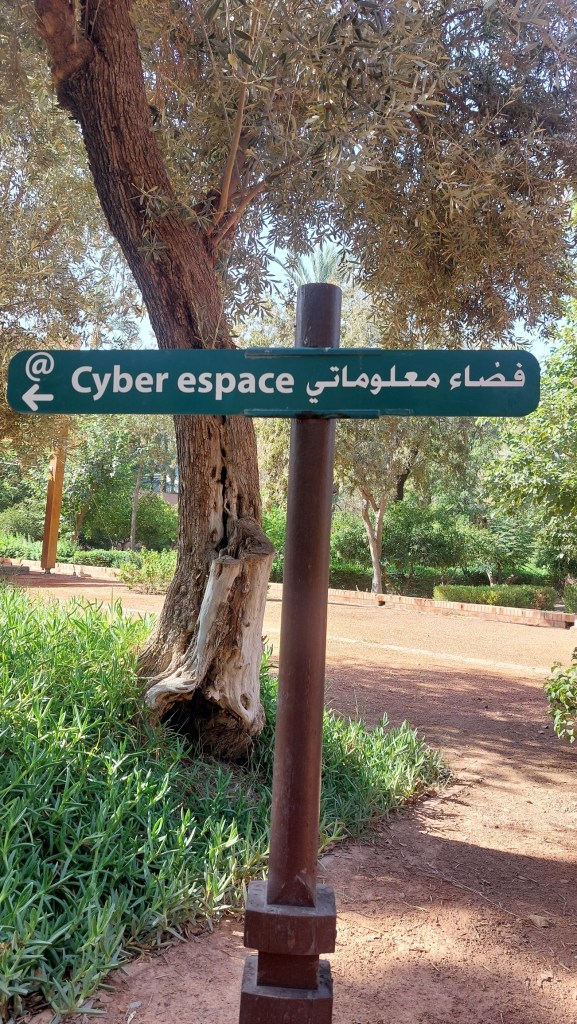
    Visit Cyber Parc, Arsat Moulay Abdeslam. This is a very well maintained place with beautiful native trees and plants. Relax for an hour or so in this peaceful environment away from the chaotic busy medina. Listen to the birds singing and read the interesting facts dotted about here and there.

    12.

    Take a 25-minute walk or the number 16 bus from the medina to Gueliz. Wonder around the upmarket boutiques and stores on Mohammed V Avenue and see how modernity and ancient coexist in harmony together in Marrakech.

    13.

    Spend some time in Tinsmiths Square. This is a less touristic square than Jamaa El Fnaa, and there is plenty to see going on. There are budget friendly cafes and restaurants and plenty of souvenir shops.

    Image by Freebird Tracey.

    Marrakech is a walkable city, and you can spend many an hour wandering about discovering what makes Marrakech so magical.

    It’s a destination that is great for everyone, including those on a tight budget.

    With some careful planning, you can put together an exciting itinerary and have a truly wonderful experience.

    Image by Freebird Tracey.
    (more…)
  • The Amazigh.

    A brief history of the indigenous people of North Africa.

    Image by Freebird Tracey.

    Berbers, also known as  Amazigh, are an indigenous group native to North Africa, with a history stretching back thousands of years.

    They have lived across a vast region encompassing modern-day Morocco, Algeria, Tunisia, Libya, Mali, and Niger.

    The Berbers made a huge contribution to the region’s cultural and technological heritage, including the creation of the Khettara system.

    This ancient water management technique involves a network of underground tunnels that channel water from mountain aquifers to arid lands, enabling agriculture in harsh environments.

    The Berbers’ innovations in architecture, trade, and agriculture meant they had a self-sufficient community that was thriving long before the arrival of foreign empires.
    Over the centuries, the Berbers faced numerous challenges, including invasions and exploitation by foreign powers.

    During the Ottoman era, slave traders targeted Berber communities, kidnapping many women and  throwing their society into chaos.

    The Berbers became known for their resistance to foreign domination, with some groups turning to piracy as a form of survival and defiance. 

    Barbary pirates became infamous for raiding European ships and coastal towns, leading to conflicts with European powers and even the young United States during the Barbary Wars. Despite these challenges, the Berber culture has endured, holding on to its distinct language, customs, and identity through resilience.

    The name Berber comes from the word ‘Barbaric’ and is now considered offensive.

    The indigenous people have adopted the name Amazigh, which means ‘ free people’

    Amizigh is now taught in schools and is officially known as the second language in Morocco, next to Arabic.

    It is possible for visitors to Marrakech to take a trip into the Atlas Mountains to observe the ancient customs and lifestyle of the Amazigh.

    A stay in a Berber family lodge is an unforgettable experience and a way to really get to know the history of Morrocco.

    You will get the chance to eat a home cooked meal with an Amazigh family and see how they live.

    This wonderful experience can be booked online or through your riad or hotel on arrival.

    There is a lot of beautiful  jewellery and rugs made by the Amazigh people for sale in the medina.

    Images by Freebird Tracey.

    Over 90% of the general population of Morocco has indigenous Berber DNA, and Marrakech is one of the most culturally Amazigh cities in Morocco.

    To learn more about Amazigh culture, visit the museum of photography or Marrakech museum.

    Both places are fascinating and gave me a deeper insight into the history of Amazigh culture.

    Image by Freebird Tracey.
    (more…)