Tag: Amazigh culture

An exploration of The Red City known as Marrakech.
  • RIAD BOHEMIAN JUNGLE.

    The Bohemian Jungle is a beautifully choreographed riad, close to the spice square in Marrakech.
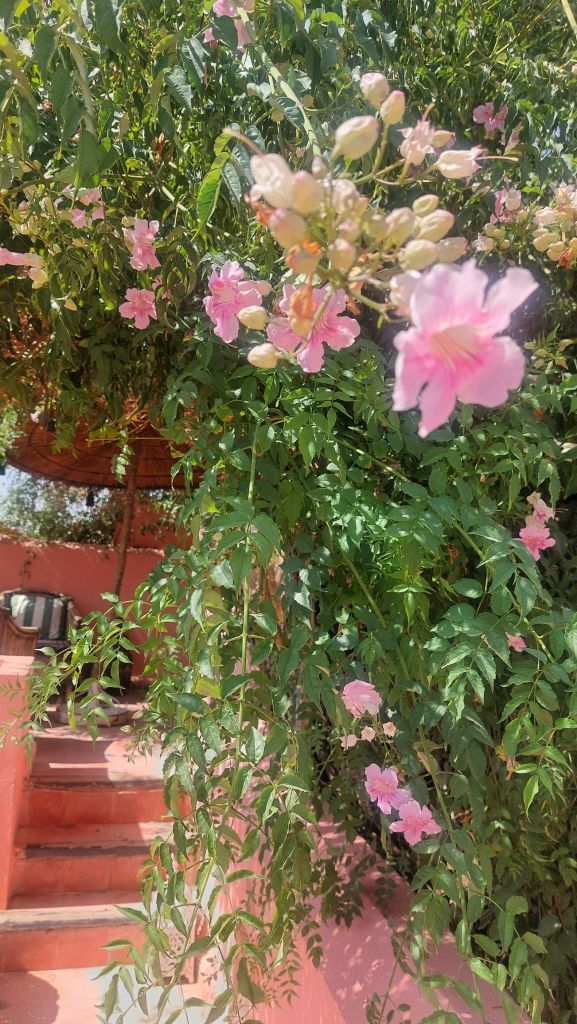
    It exudes charm and authenticity.

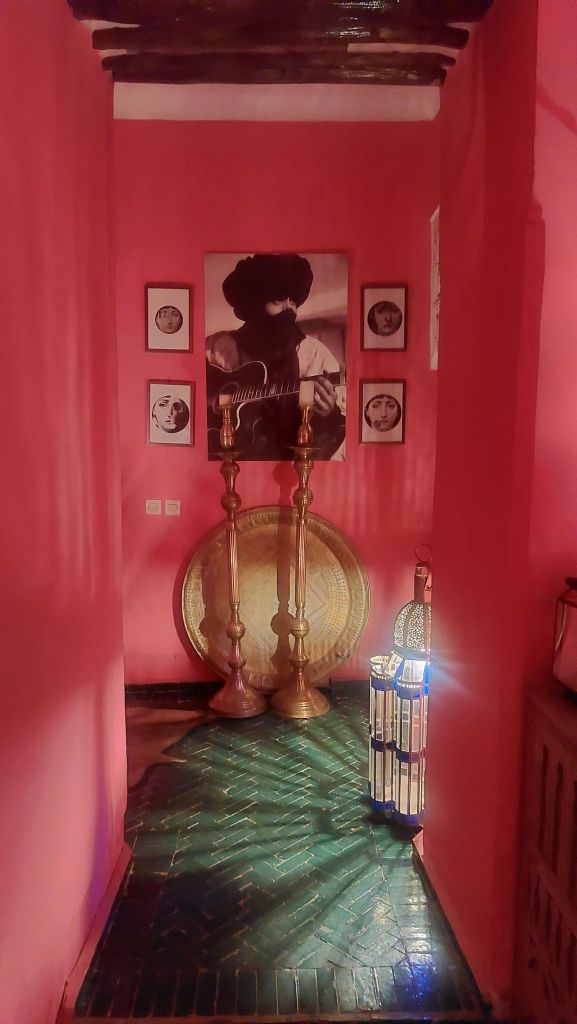
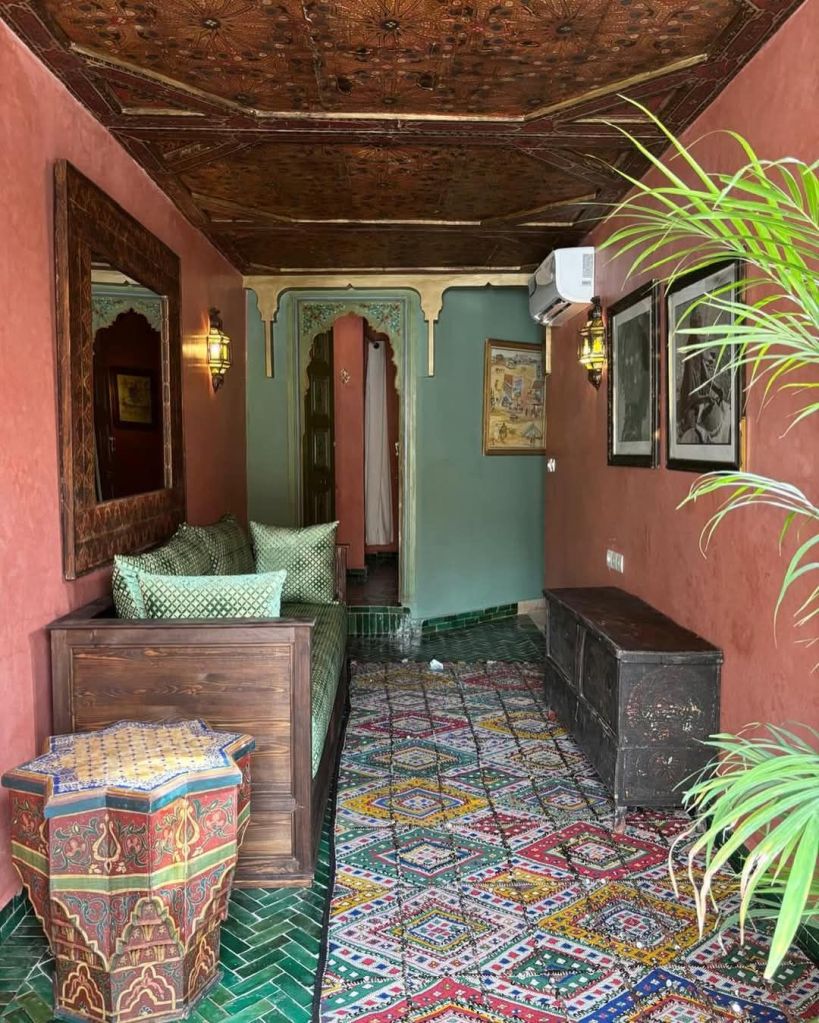
    The interior decor is simply captivating, with several tastily put-together nooks and crannies to sit and take in its splendour.
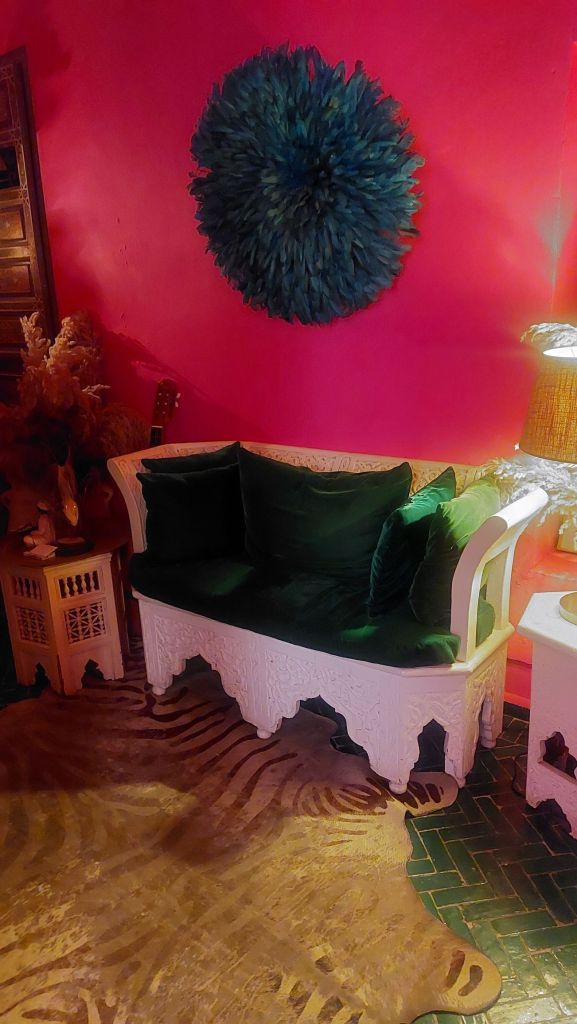
    Interior of the Bohemian Jungle/ Images Freebird Tracey.

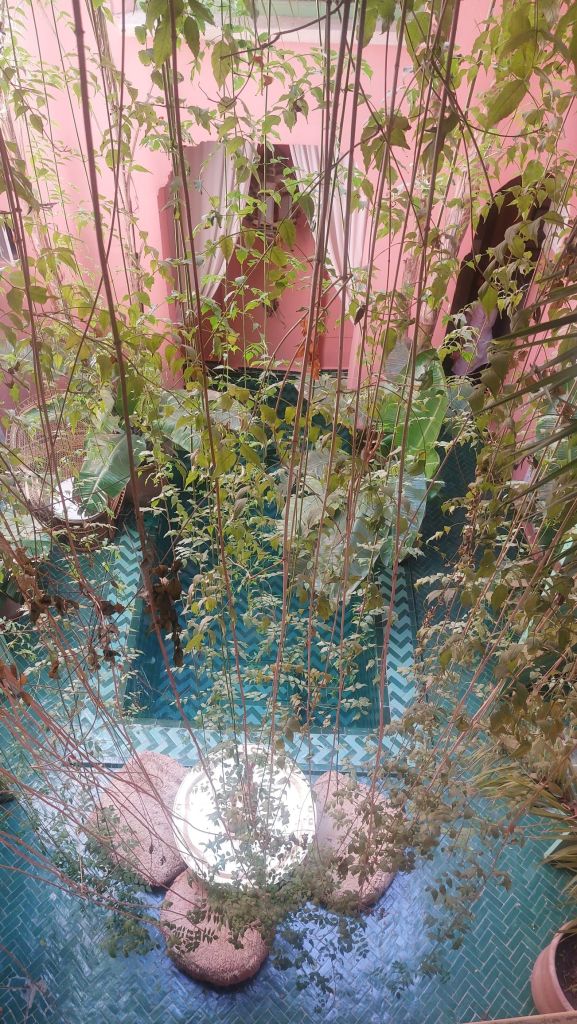
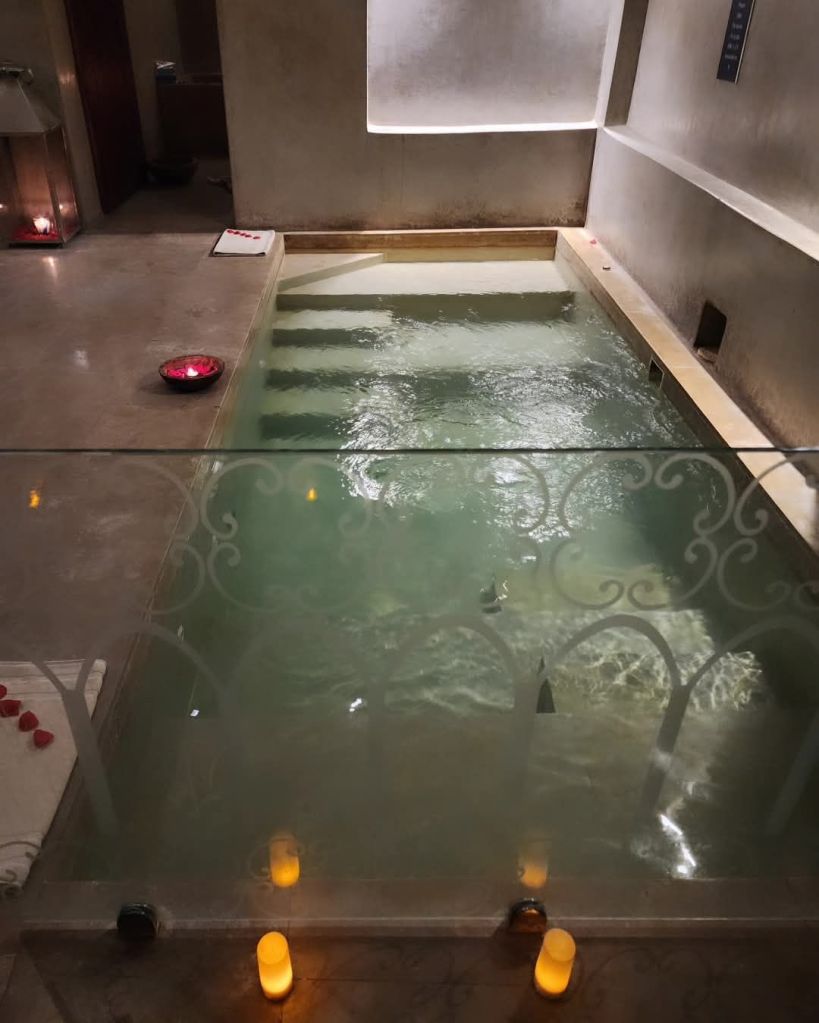
    The little pool in the centre of the courtyard is ideal for cooling off in.

    The green tiles and exotic plants make it a stunning focal point of the riad.
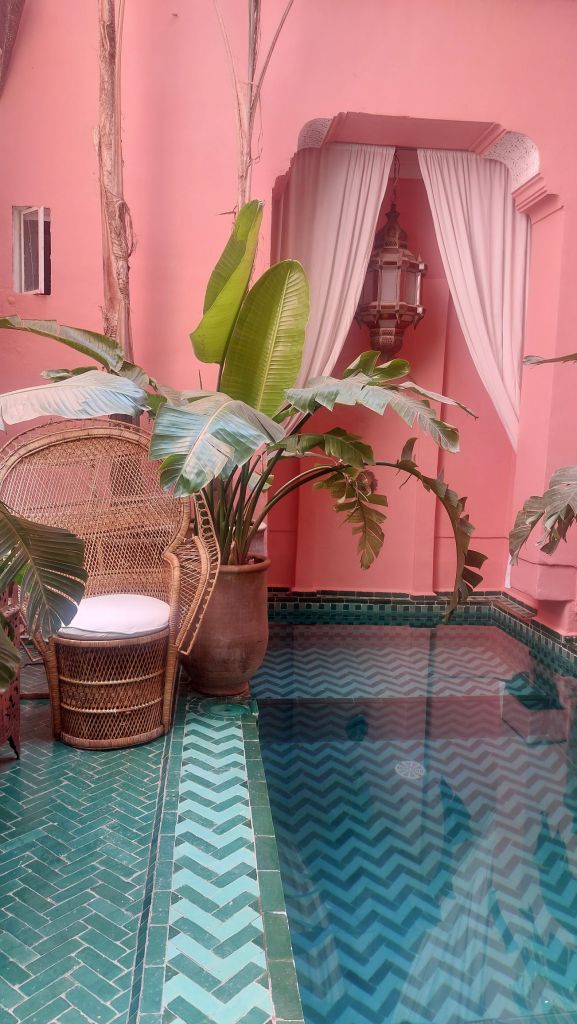
    Interior pool/images Freebird Tracey.

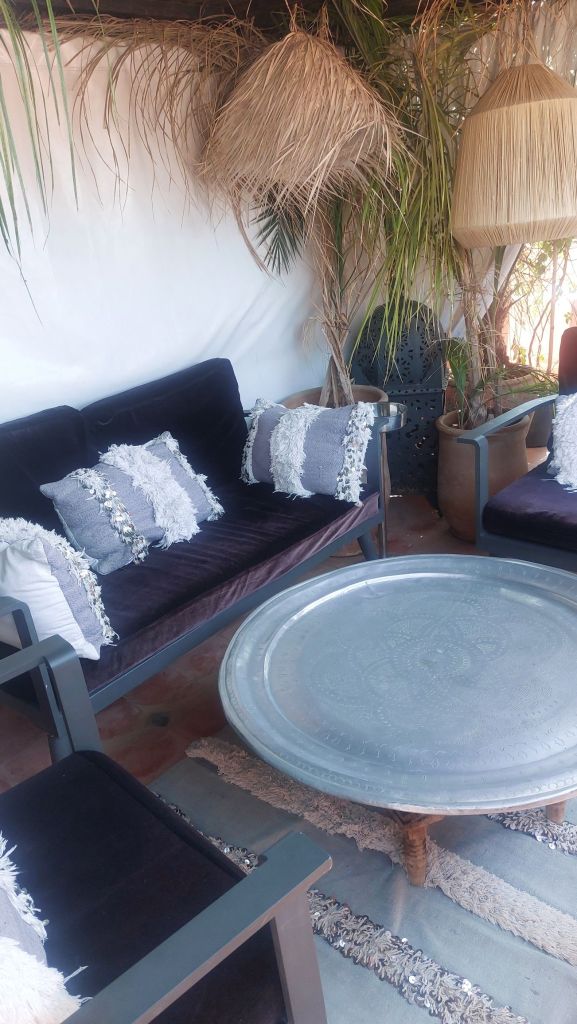
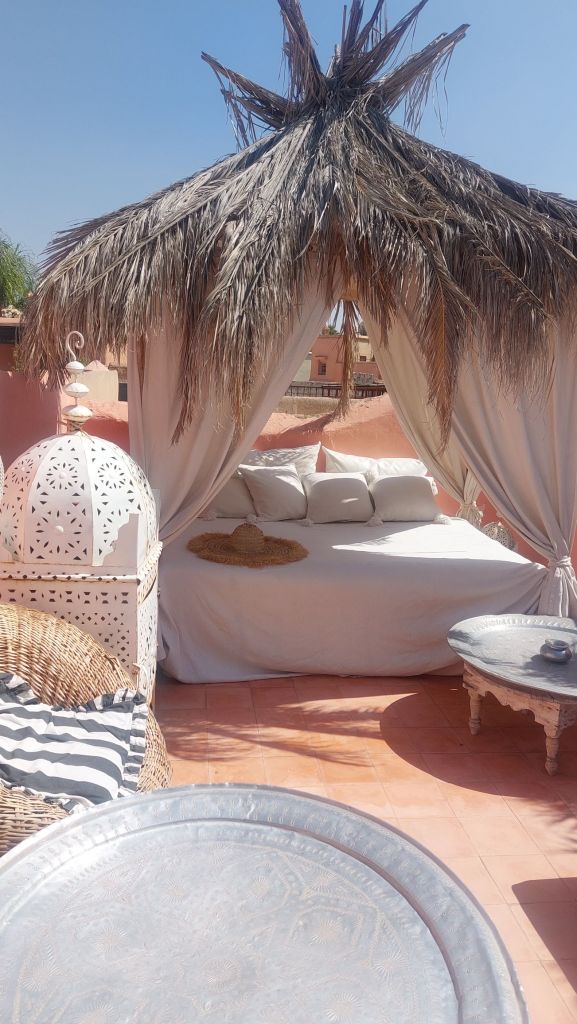
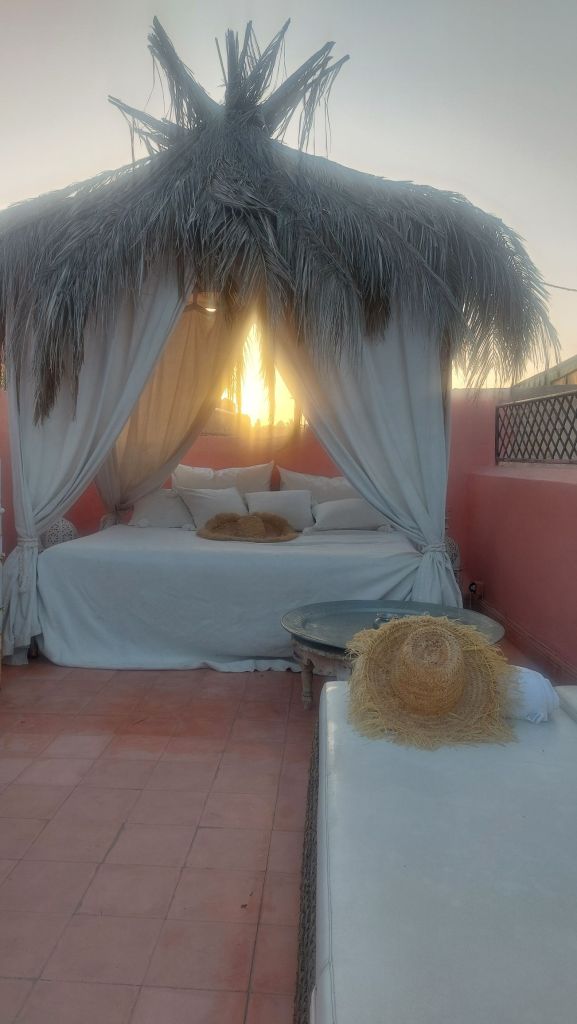
    The rooftop is magical. Surrounded by pretty, draping flowers, plants, and lanterns.

    There are several areas to hang out in.

    A balinese bed for relaxing on and a cerise, romantic boudoir area, where the staff play traditional tuareg music.

    There are areas to catch a spot of sunshine and places to sit where you are shaded.

    This is perfect for when the hot morroccan sun reaches its highest temperature in the day.

    Photos of the rooftop at the Bohemian Jungle/image Freebird Tracey.

    The staff are relaxed and friendly, and the vibe is laid back and chilled.

    The riad is run by three professional, yet charismatic young men from the Sahara region.

    Their knowledge of the area is invaluable, and they enjoy sharing a little piece of their fascinating culture with guests.

    The breakfasts are varied and wholesome, consisting of a mix of traditional pancakes, honey, and jam.

    Fresh bread, fruit, yoghurt, and eggs.

    Fresh orange juice and coffee.

    Image Freebird Tracey.

    When you arrive at the riad, you are treated to the complimentary mint tea and biscuits, whilst you are given useful advice and a map to help you navigate the souks.

    This is helpful for finding your way back to the riad.

    The fragrance inside is intoxicating.

    Orange blossom and cinnamon oil gently floats on the air, the lamps glow, and  Berber music plays subtly in the background.

    I never wanted to leave..

    I was so happy sitting in the riad, taking in the beauty and experiencing the wonder of such a magnificent place..

    Riad Bohemian Jungle gets booked up quickly.

    If you are looking for TVs and a modern approach to your trip to Marrakech, you won’t find it here.

    Riad Bohemian Jungle is all about experiencing true, authentic riad culture, lost in time with the distant echos of camel traders and a strong spirit of the past.

    It is close to the Madrasa Ben Youssef, Marrakech museum, and several nice shops and restaurants.

    The address is;

    Derb al Maada

    Hay azbezte

    39 Medina, Medina 40030

    Marrakech, Morrocco.

    Excursions to the Sahara desert and other popular places of interest can also be arranged by this riad.

    They are good value for money and well organised.

    Enjoying a moment of tranquillity at the Bohemian Jungle.
    Sunrise from the rooftop of the Bohemian Jungle/image Freebird Tracey.
    (more…)
  • TRADITIONAL BERBER RUGS.

    A look at how Berber rugs are made.

    A woman weaving a Berber rug.

    Berber rugs are handmade by the indigenous Amazigh people of Morocco.

    They are made from the wool of sheep in the high Atlas Mountains.

    Each type of rug tends to vary in thickness depending on which tribe has made it, so that they are suitable for the environment where they are used.

    For example, Kilim Berber rugs have no pile and are relatively fine in texture.

    They are handcrafted using techniques passed down through generations using natural materials renowned for their durability and luxurious feel.

    Hand-knotting is a long and laborious process.

    To create a single rug takes about one to two months, with four weavers working on a rug at a time.

    Here are the steps taken to make a beautiful Berber rug.

    1. Shearing the Sheep

    Shearing the sheep is the first step in making a Berber rug. This is done by hand, using a special shearing knife. The sheep are first restrained, and then the knife is used to remove the wool from their body in one long strip. The wool is then sorted and cleaned.

    It is usually the job of the men to shear the sheep, taking care not to injure them or spread infection.

    The women are responsible for washing the sheared wool.

    2. Carding
    Carding is the process of aligning the wool fibers so the weavers can spin them into yarn.
    To card the wool, the fibres are first combed in one direction, and then the wool is brushed in the opposite direction. This helps to loosen the fibers and align them in the same direction. Once the fibers are aligned, the weavers can then spin them into yarn.
    Carding is an essential step in making a Berber rug, as it helps to ensure that the rug is strong and durable. The process of carding also helps to give the rug its unique texture.

    The women are often responsible for this process.

    3. Spinning into Yarn

    To spin the wool into yarn, Amazigh women use a drop spindle.

    This simple tool consists of a shaft with a weight at the bottom. The wool is attached to the shaft, and then the shaft is twirled between the woman’s hands. As the shaft is twirled, the wool is wrapped around it, creating the yarn.

    4. Weaving the Berber Rug

    The weavers use a technique called continuous knotting to create intricate patterns.

    This method of knotting allows the weaver to create a rug that is incredibly durable and will last many years.
    The process begins with the weaver tying knots in the woollen yarn.

    The yarn is then dyed using natural dyes from plants, spices, and fruits, which give the rugs their characteristic colours.

    Once the yarn is dyed, the weaver begins weaving it into the rug using a loom.

    The loom is a wooden frame that the weaver uses to create the rug’s design.

    The weaver ties the yarn around the looms warp threads, which are the vertical threads that run through the loom.

    The weaver then weaves the weft threads, which are the horizontal threads, over and under the warp threads.

    The weaver can create various patterns by changing the direction of the weft threads.

    Once the rug is complete, the weaver cuts the rug from the loom and ties the ends of the rug together. The rug is then completed.

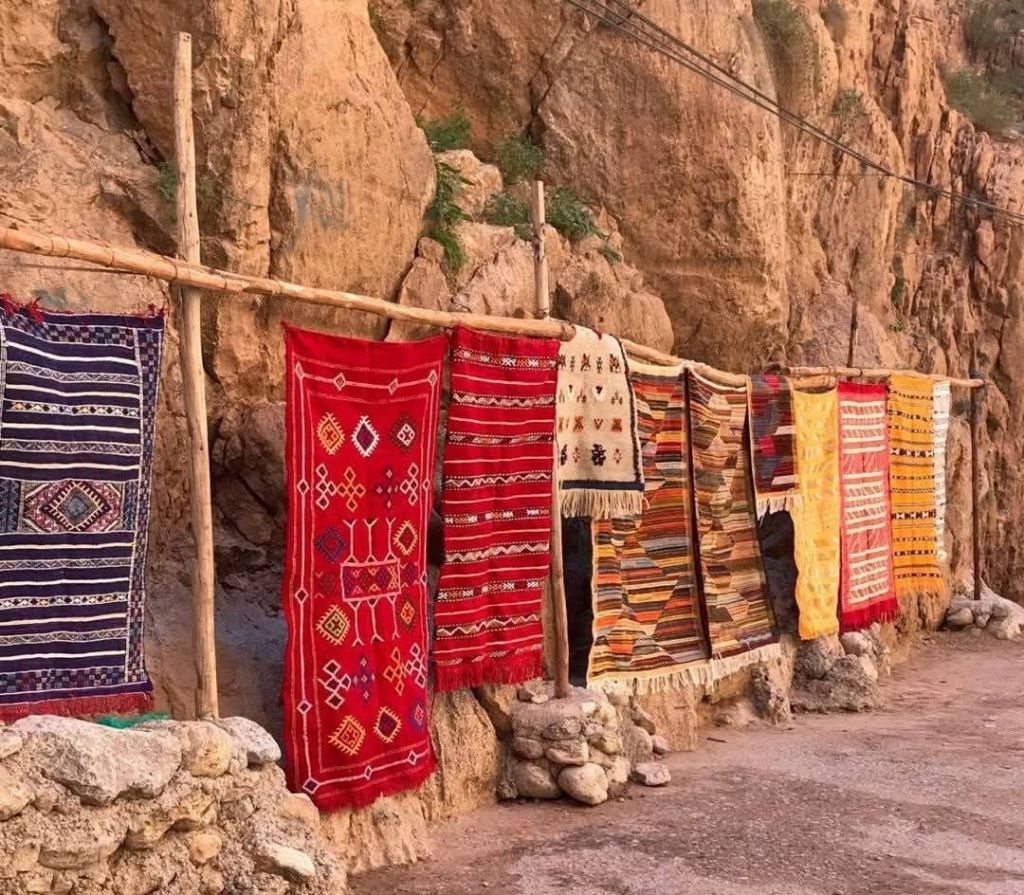
    Berber rugs are beautiful and give a home a wonderful boho vibe.

    It’s important when visiting Marrakech to make sure you’re purchasing a genuine Berber rug.

    There are a few scams, so be aware before you get whisked away to a shop by a friendly local.

    Les Nomads de Marrakech has a great reputation and can ship rugs back home for you.

    This is their address..

    Bennahid #40 Derb Zaouiat Lahdar, Marrakesh 40030, Morocco

    Beautiful Berber rugs.

    For more information or help with planning the perfect itinerary, please contact me using the email address below.

    (more…)
  • THE AMAZIGH PEOPLE.

    A brief history of the indigenous people of Morocco.

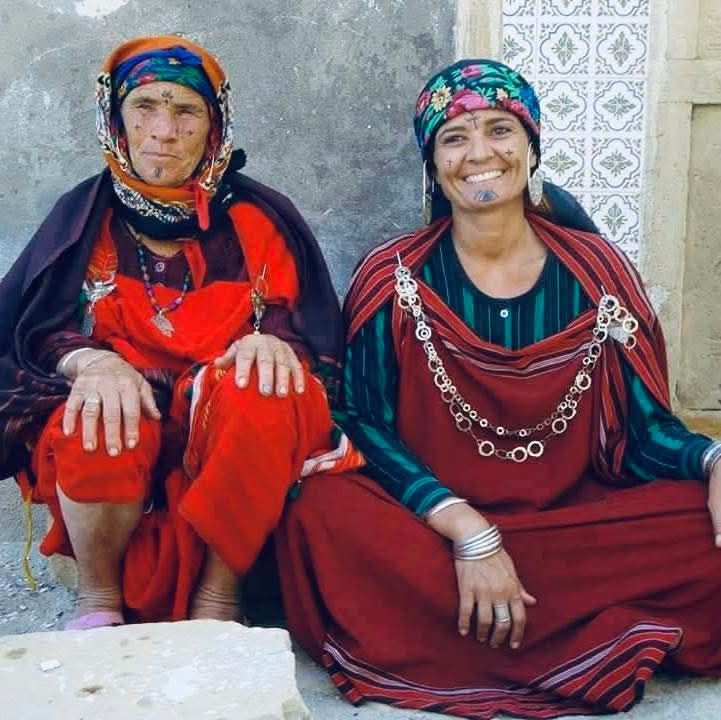
    An Amazigh Woman displaying her Headdress.

    The Berbers, also known as the Amazigh, are an indigenous group native to North Africa, with a history stretching back thousands of years.

    They have lived across a vast region encompassing modern-day Morocco, Algeria, Tunisia, Libya, Mali, and Niger.

    The Berbers made a huge contribution to the region’s cultural and technological heritage, including the creation of the Khettara system.

    This ancient water management technique involves a network of underground tunnels that channel water from mountain aquifers to arid lands, enabling agriculture in harsh environments.

    The Berbers’ innovations in architecture, trade, and agriculture meant they had a self-sufficient community that was thriving long before the arrival of foreign empires.

    Over the centuries, the Berbers faced numerous challenges, including invasions and exploitation by foreign powers. During the Ottoman era, slave traders targeted Berber communities, kidnapping many women and  throwing their society into chaos.

    The Berbers became known for their resistance to foreign domination, with some groups turning to piracy as a form of survival and defiance. 

    Barbary pirates became infamous for raiding European ships and coastal towns, leading to conflicts with European powers and even the young United States during the Barbary Wars. Despite these challenges, the Berber culture has endured, holding on to its distinct language, customs, and identity through resilience.

    The name Berber comes from the word ‘Barbaric’ and is now considered offensive.

    The indigenous people have adopted the name Amazigh, which means ‘ free people’

    Amizigh is now taught in schools and is officially known as the second language in Morocco, next to Arabic.

    It is possible for visitors to Marrakech to take a trip into the Atlas Mountains to observe the ancient customs and lifestyle of the Amazigh.

    A stay in a Berber family lodge is an unforgettable experience and a way to really get to know the history of Morrocco.

    You will get the chance to eat a home cooked meal with an Amazigh family and see how they live.

    This wonderful experience can be booked online or through your riad or hotel on arrival.

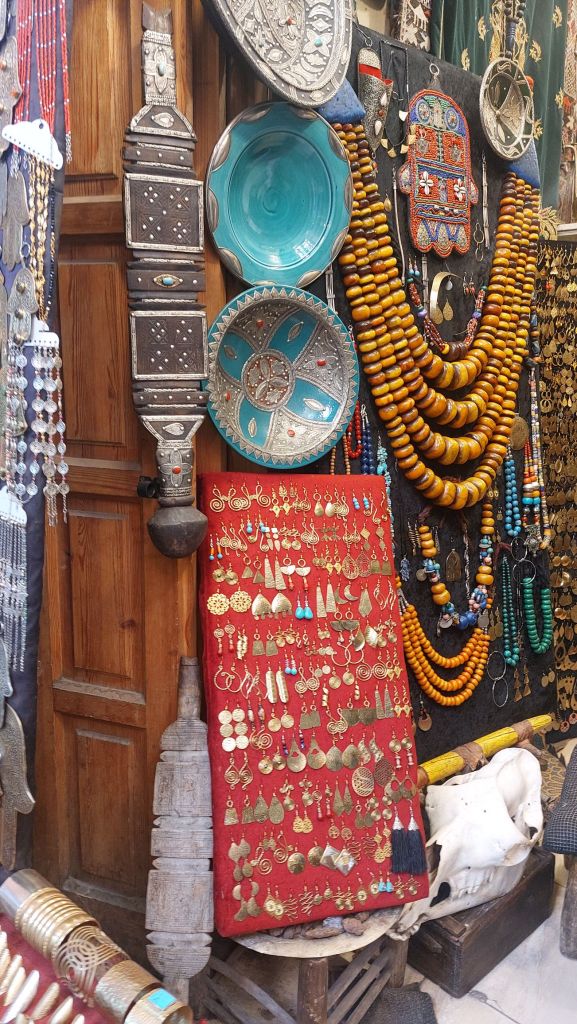
    The Souks sell beautiful Berber jewellery and rugs made by the Berber ladies.

    Images Freebird Tracey.

    See my separate post on Berber rugs.

    Beautiful Amazigh Women.

    For more information contact

    (more…)
  • A TRADITIONAL MORROCCAN HAMMAM.

    Experience a true taste of Marrakechi culture.

    One thing that is central to Morroccon culture is the Hammam.

    A Hammam is similar to a Roman bath and dates back centuries in morrocco.

    It was a ritualistic cleansing that people did before prayers, and many Hammams can be found near a mosque.

    Before homes had plumbing, a Hammam was a place local people could come to get cleansed.

    Seperated by gender, they were a space for people to socialise, relax, and detoxify.

    During a treatment, morroccan black soap is used to scrub the body.

    It is a grainy soap made from olive oil and macerated olives, perfect for exfoliating the dead skin cells.

    The scrubbing is quite vigorous.

    This is followed by buckets of water being thrown over you to wash off the black soap.

    A clay called Rassoul clay from the Atlas mountains is used to cover the body as it’s rich in minerals like silica,magnesium, and calcium.

    After this, your whole body is lathered thoroughly, including your hair with a gentler soap or gel.

    The next treatment is an all-over massage using exquisite oils like rose oil or argan oil..

    The treatment always begins in a dry steam room.

    Relaxing in heat opens the pores and prepares the body for the scrubbing.

    Once the treatment is finished,  you can relax in a separate area with mint tea and morroccan pastries..

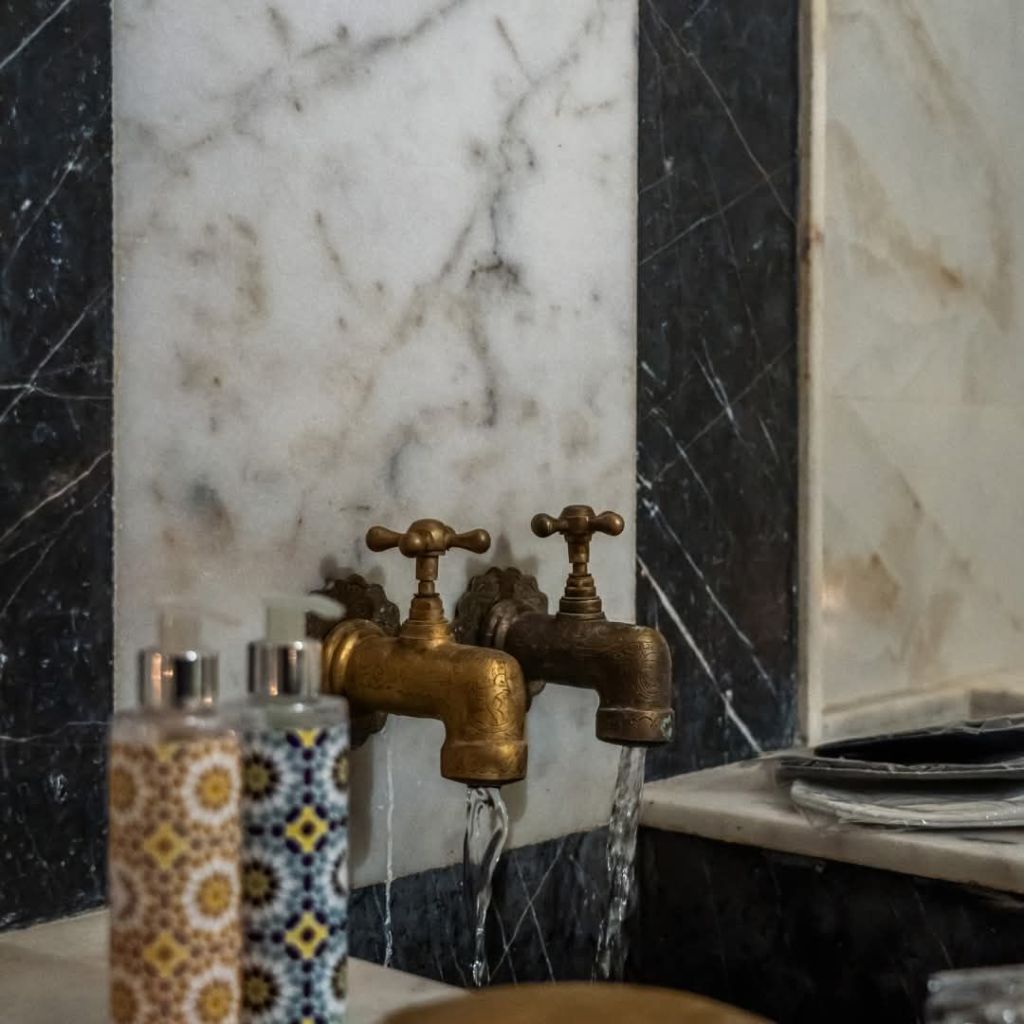
    The fragrance of incense wafting around the room adds to the ambience.

    There are two types of Hammam in Marrakesh.

    The public or private hammam.

    The public Hammam is a true taste of Morroccan life, with many local people bathing together and chatting in their native language.

    In a public Hammam, you have to take your own soap, towel, and oils in.

    These are much less expensive.

    The private Hammams provide you with everything you need, including disposable underwear, a bathrobe, and sandles.

    Treatment options vary, including the length of the treatment and the type of massage and oils you prefer.

    You can relax for as long as you want to after the treatment has finished.

    The underwear for women is very flimsy, and some women ask for the male underwear instead.

    Nubies can feel slightly vulnerable or uncomfortable being so exposed with just a disposable thong hiding your modesty.

    The rooms are dimly lit, and the women known as Kassalas working in the hammam are very professional.

    Most women do get over their initial shyness pretty quickly.

    Hammam Mouassine is the oldest Hammam in Marrakesh. It opened in 1562 and can be found by the Mouassine fountain, close to the secret garden.

    Many riads have a Hammam room and offer this service.

    Other popular hammams are,

    . Hammam de la rose.

    . Mamounia Hamman..

    . Les Bains Ziani.

    Palm oil is often used to wash people’s hair, so if you don’t agree with the use of it,  check beforehand.

    Experiencing a traditional Hammam is a welcome break from the chaotic souks and Jamaa El Fna.

    It’s a relief from the baking heat of the morroccan sun and a chance to slow down the manic pace for an hour or so.

    Many tourists feel unsure about wearing virtually nothing in front of strangers, but this is an ancient ritual that has been part of Morroccan culture for centuries.

    Visitors to Marrakech have said that they experienced the most invigorating and relaxing time in a hammam and would definitely do it again.

    I would recommend paying a little bit more for a private Hammam if it’s your first time.

    However, if you want a taste of authentic Marrakechi life, go for a public hammam.

    You can buy Morroccan black soap and other toiletries you’ll need inside the souks, near the spice square.

    You can book a Hammam through Get Your Guide or Viator.

    Riads organise their own..

    Don’t forget a towel, bathrobe and fresh underwear..

    For more information;

    (more…)
  • THINGS TO CONSIDER WHEN YOU VISIT MARRAKECH.

    A few helpful tips you may find useful before arriving in Marrakesh.

    Marrakech is a cash society. Although many cafes and restaurants take cards, cash is often the preferred method of payment.

    In the main square called Jamaa El Fna, you will need cash to purchase almost everything.

    There are 🏧 machines located around the city.

    I use the one outside the post office near where the horse and carriages stand, close to the taxi rank.

    The exchange rate is good, and it was always working.

    You can get cash at the airport, but the exchange rate isn’t great.

    There are also plenty of places to exchange money around the city.

    It’s advisable to always carry a small amount of cash with you.

    It’s useful for tipping, small purchases in the souks, and picking up a bottle of water.

    Something you may want to consider if you don’t wish to get any cash at the airport is..

    Make sure to organise a taxi to your hotel or riad in advance.

    Most accommodations will do this for you when you book, and it’s prepaid.

    You will probably need a SIM card.

    I got an Orange SIM in the airport, and they put it into my phone for me.

    This saved me any hassle, and I had data from the moment I arrived.

    Having data gave me reassurance as a solo traveller.

    I could use Google maps in the souks, which was helpful in case I got lost.

    Tipping is not customery in Marrakesh, but the food and service are usually exceptionally good.

    So it’s nice to be nice.

    I generally leave a small tip of approximately 20-30 dirhams.

    You can drink the tap water allegedly.

    Personally, I didn’t.

    I preferred to air on the side of caution, plus it doesn’t taste that good.

    There are plenty of places selling bottled water around the medina, and riads or hotels also sell water.

    Non Muslims can’t go inside the Mosques, with the exception of Hassan ll Mosque in Casablanca.

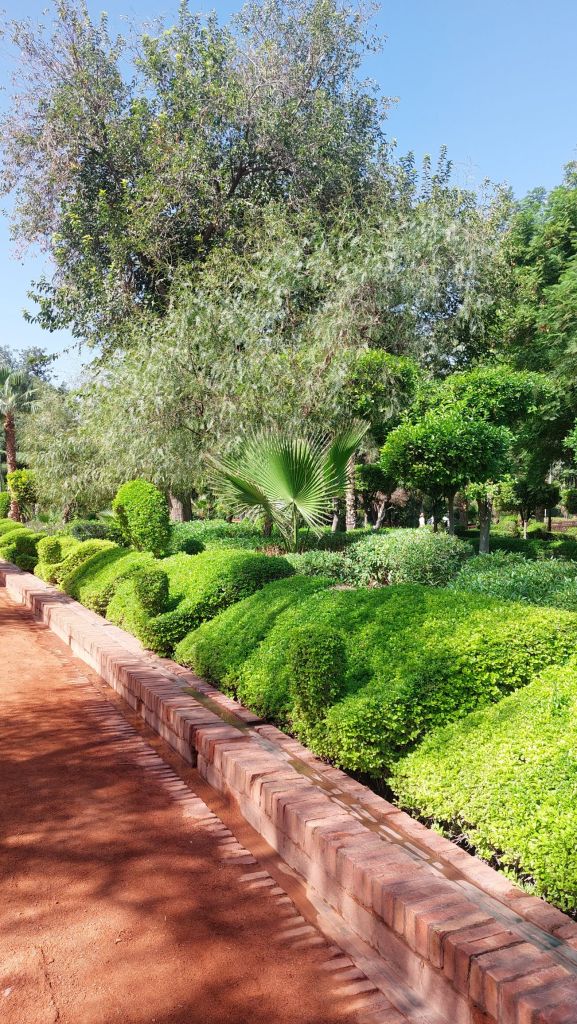
    Koutoubia Mosque has the most beautiful gardens, which are well worth a visit. They are open to everyone, and particularly nice in the evening when they’re lit up.

    Image Freebird Tracey.

    Some tourist attractions get incredibly busy, so try to arrive at opening times for the best experience.

    The same applies to shopping in the souks.

    Aim to arrive at places like Bacha Coffee and Bahia Palace for around 9.30.am.

    Although Marrakech is an Islamic city, it’s fairly relaxed and liberal.

    However, out of respect for the culture of your hosting country, it’s appropriate to cover your shoulders when visiting certain religious places.

    Aim to dress modestly without exposing too much flesh, and you’ll have a great experience.

    NB: See my separate post on what to wear when visiting Marrakech.

    Marrakech is a dry city. However, there are bars and clubs that cater to Western tourists.

    There are a few nice bars selling alcohol and cocktails around the medina, such as Le Pergola and Kabana rooftop bar.

    Gueliz and Hivenage have plenty of clubs and bars if you want a night out with alcoholic beverages and entertainment.

    Some high-end riads and hotels will have alcohol also.

    It’s forbidden to consume alcohol in the medina unless you’re in a place that is licensed to sell it.

    If you get tired of haggling in the souks, there is an artisans market.

    The prices are slightly higher but you can simply buy the products without having to bargain for them.

    People in Marrakesh can be quite camera shy.

    It’s best not to take photographs unless they specifically say you can.

    Be prepared to have to pay for the privilege, too.

    Most travellers are discouraged from starting conversations about the King of Morocco.

    Try sticking to conversations about the history of Marrakech and Amazigh culture.

    The locals will love telling you all about it..

    There are a few scams going on in the square, but it’s mainly opportunists trying to make a dirhams.

    I haven’t had any problems myself, but just keep your wits about you and don’t fall prey to anything.

    Marrakech is relatively safe, but just like anywhere else in the world, exercise caution with your personal belongings in crowded areas.

    Keep your personal items in front of you and don’t carry large amounts of money around.

    The Souks close around 9.00 to 10.00 pm, so be careful if you’re walking around after that, especially if you’re a solo female traveller.

    I haven’t experienced anything unpleasant, but it can feel rather unnerving in the dark alleyways after dark.

    NB: See my separate post about solo female travellers in Marrakech.

    Happy travels.

    (more…)