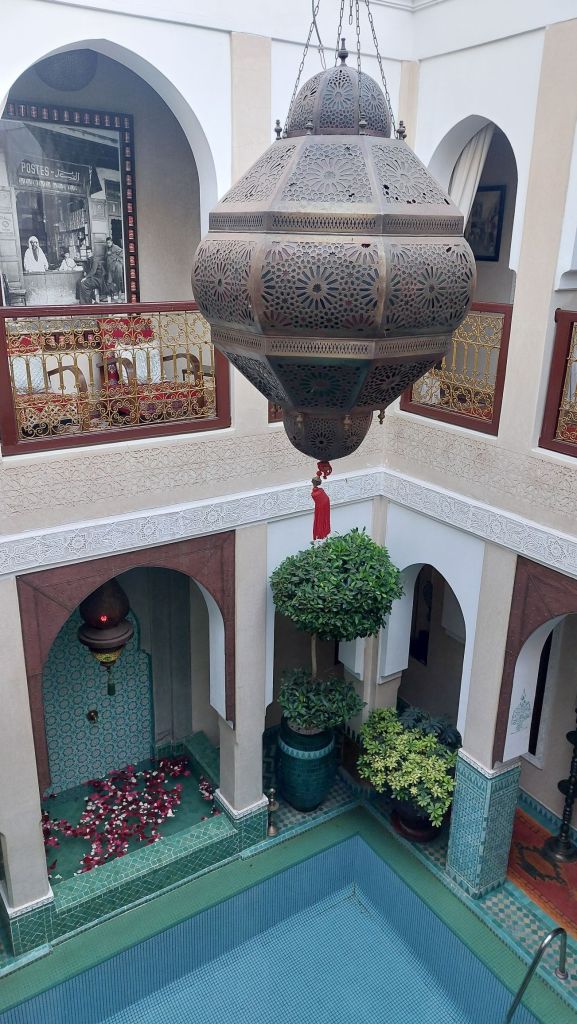
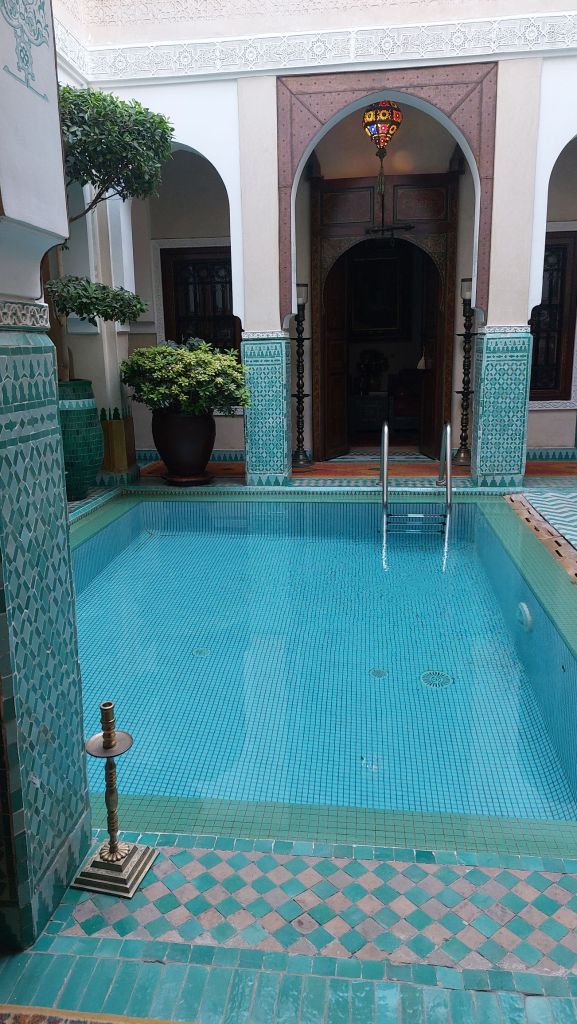
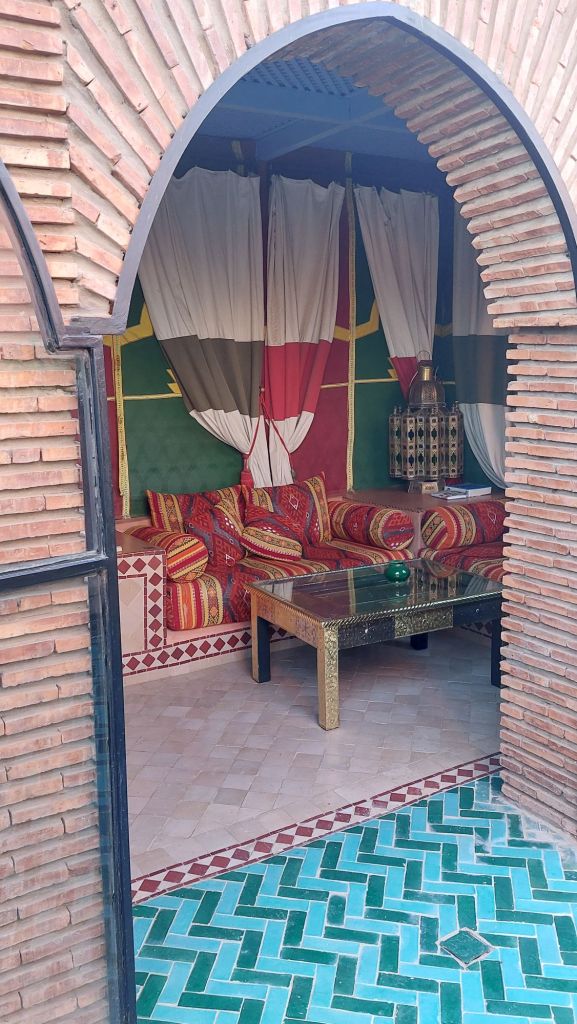
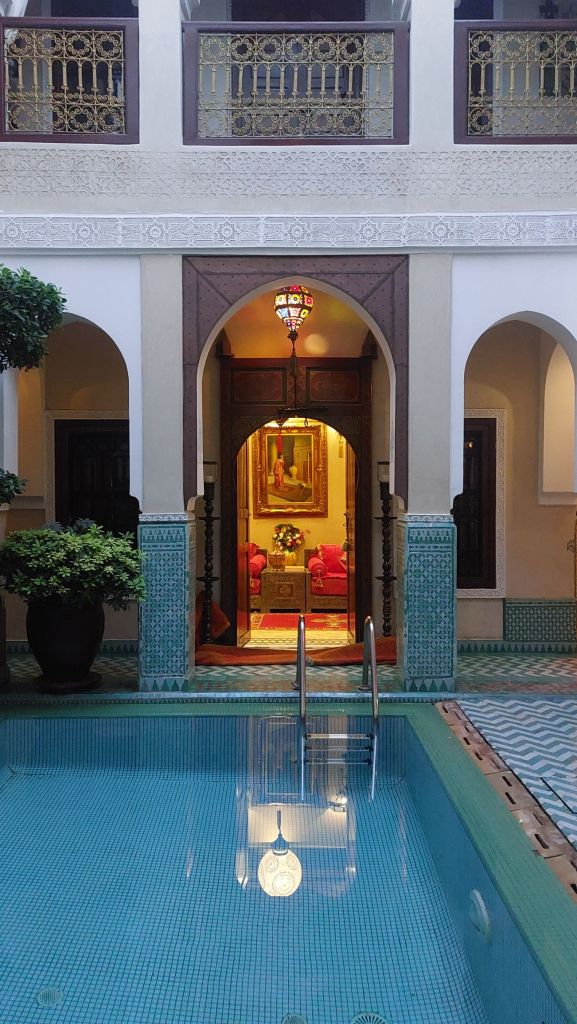
Riad Hikaya is a beautifully restored riad in the Kasbah district of Marrakech.
Image by Freebird Tracey.
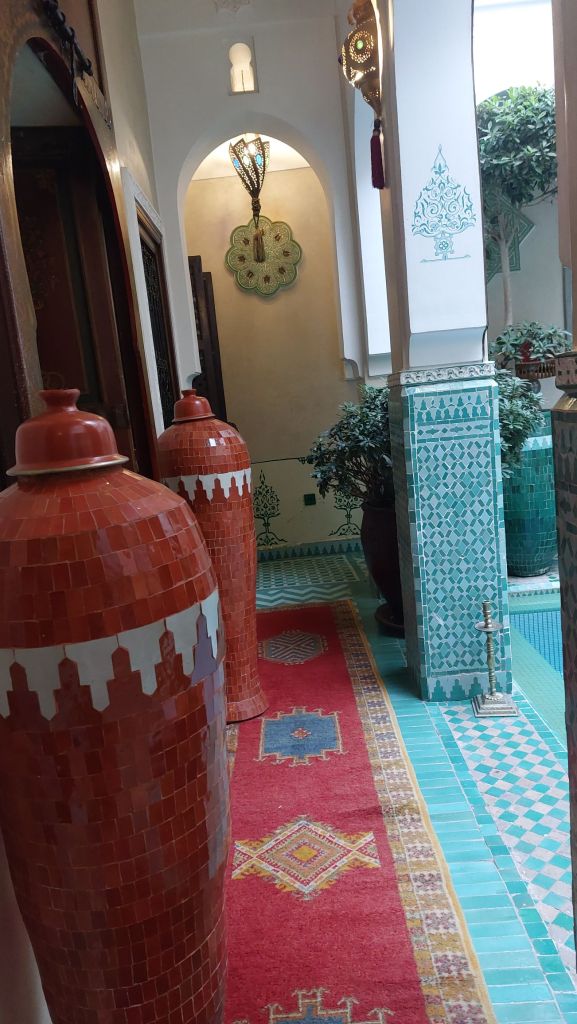
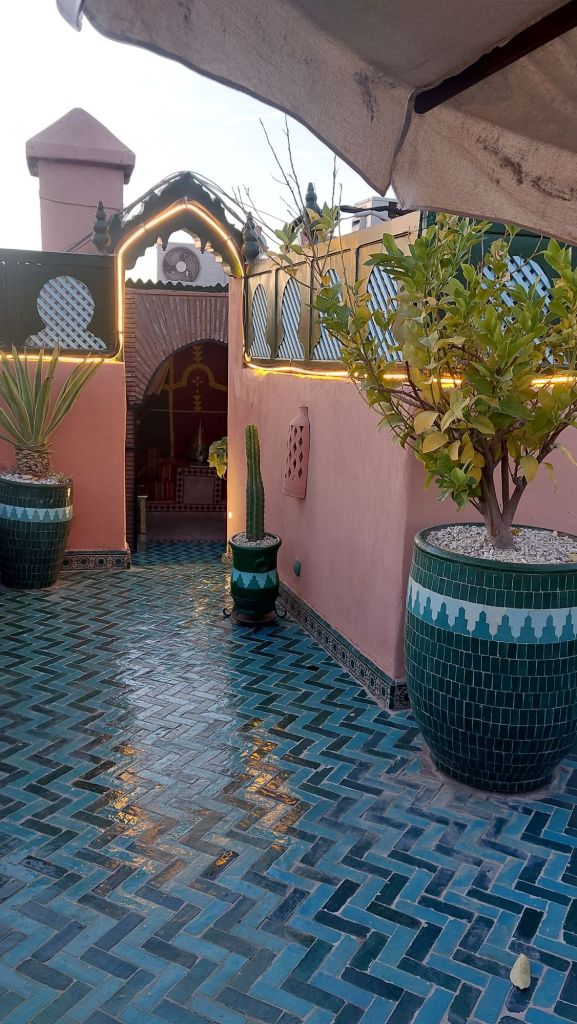
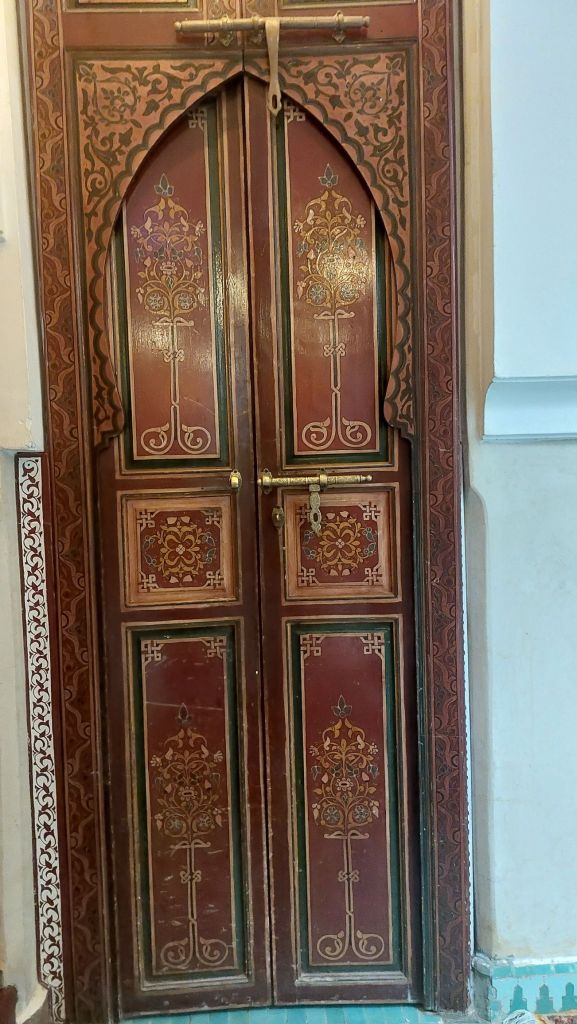
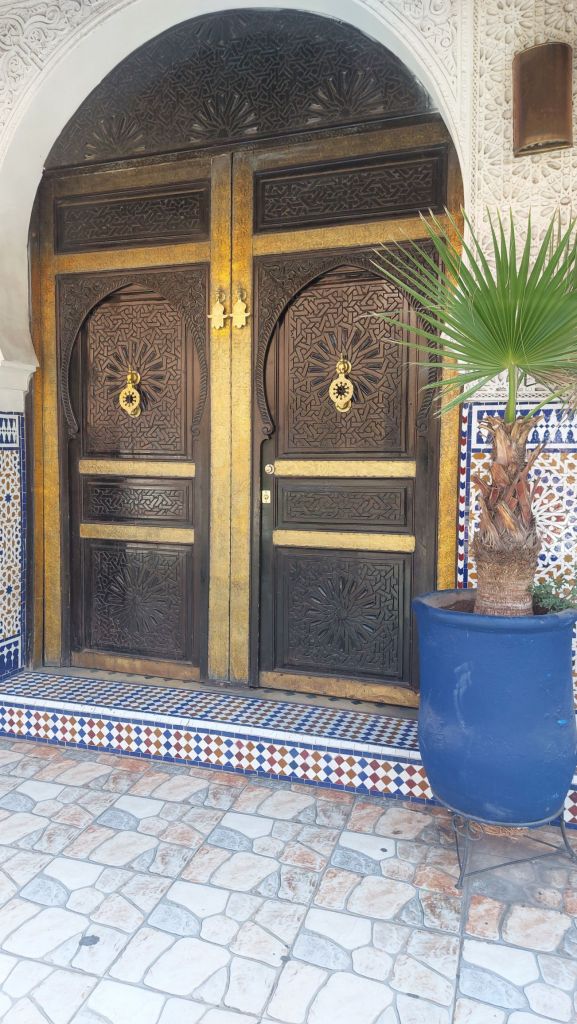
It was purchased by an Englishman who spent 15 years restoring it because everything inside the riad is handmade.
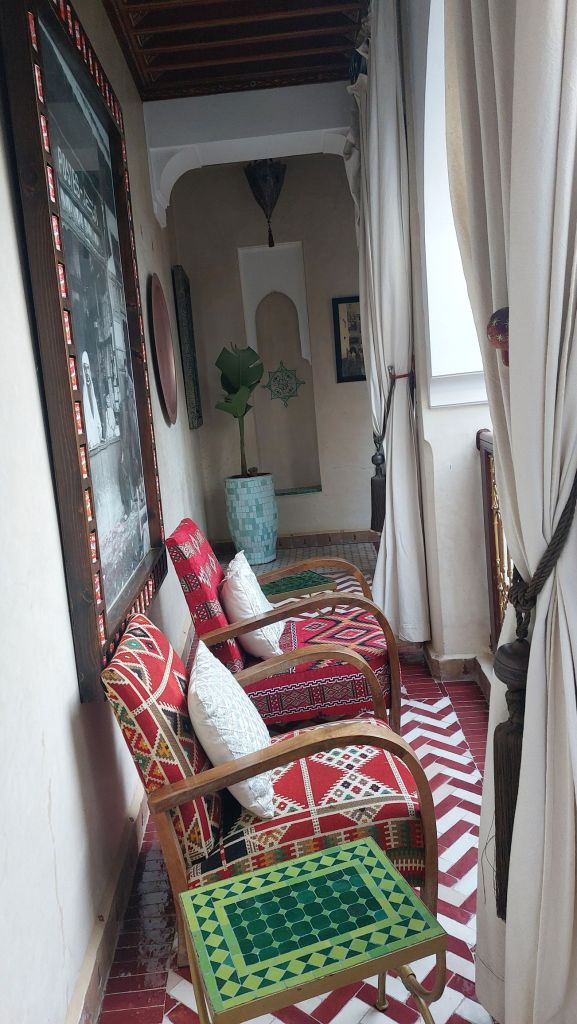
It is captivating and very pleasing to the eye.
Images by Freebird Tracey.
Riad Hikaya is not a budget riad.
However, considering its aesthetics and the professionalism of the staff, it’s worth paying a little extra for.
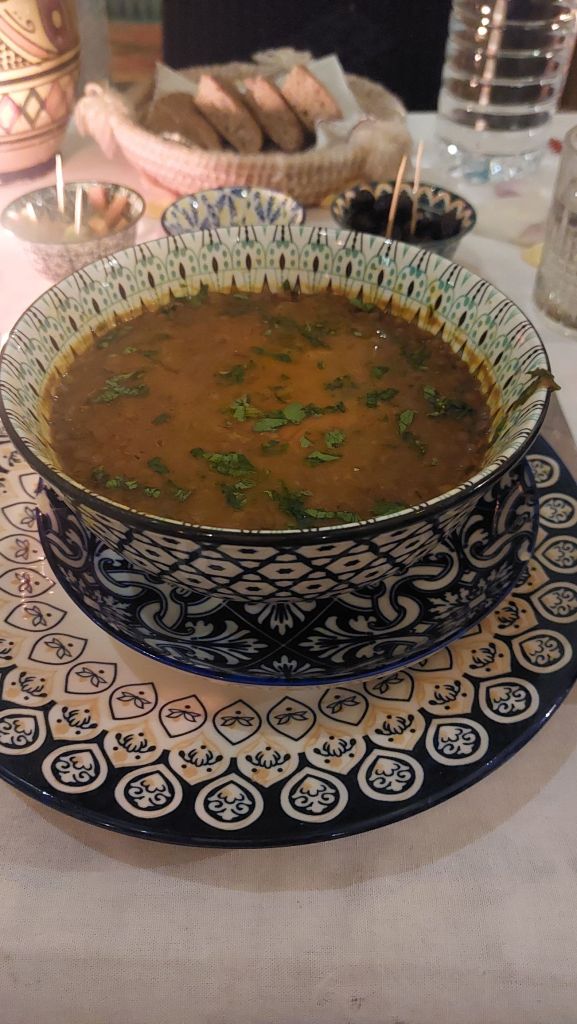
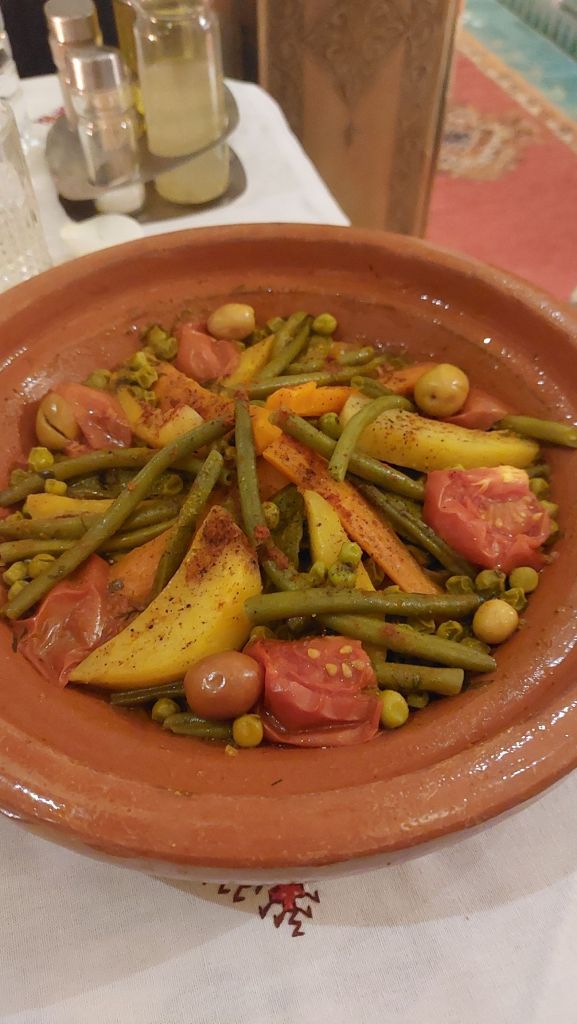
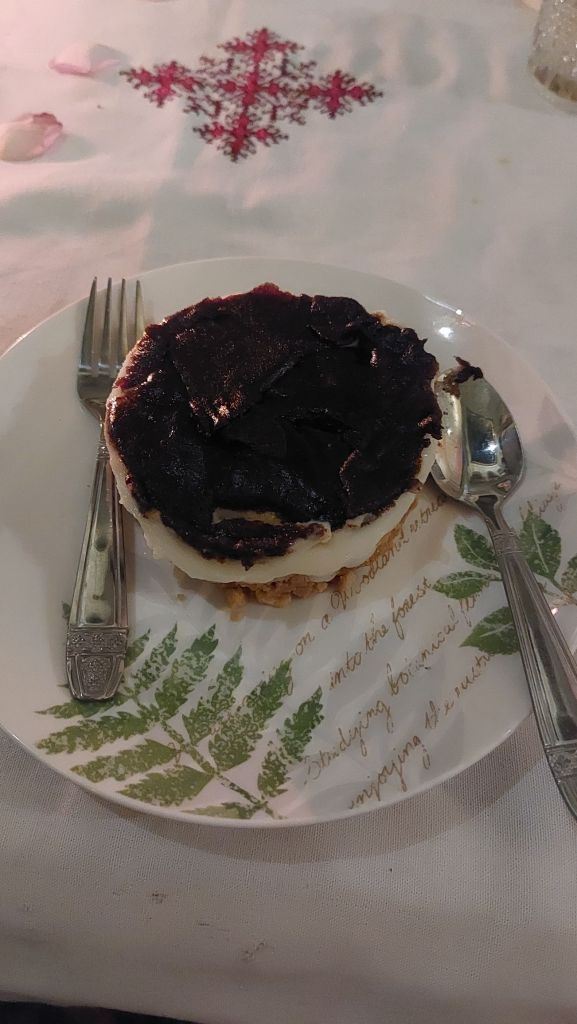
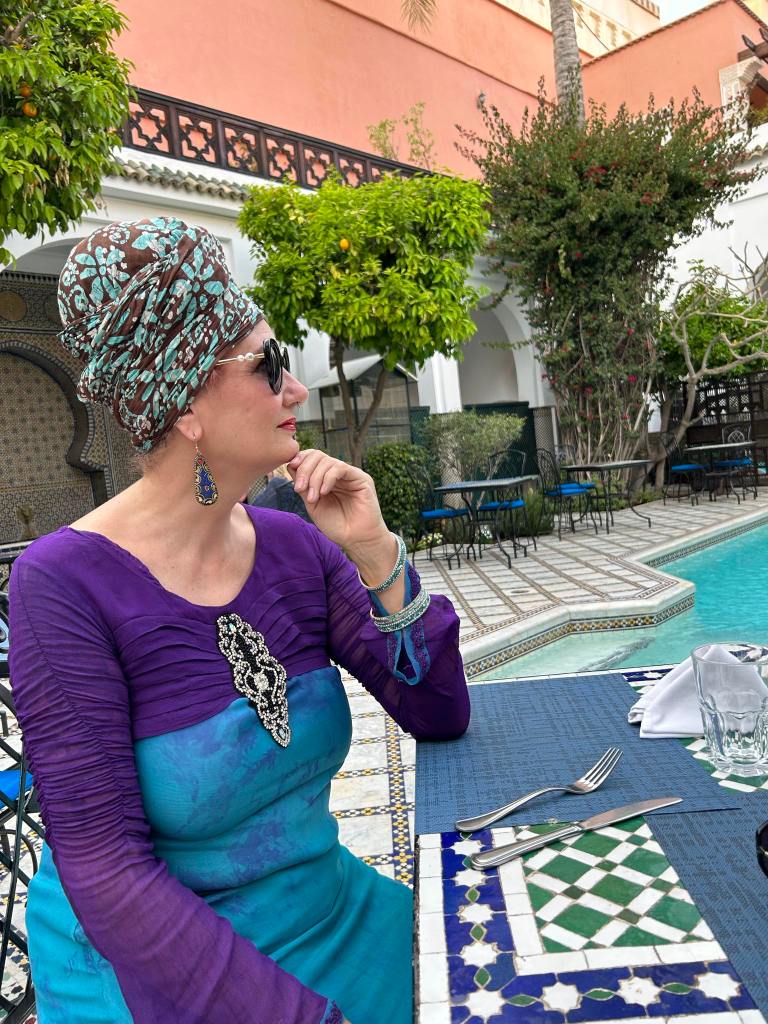
The breakfasts were very good and I ate there one evening and the meal was delicious.
Images by Freebird Tracey.
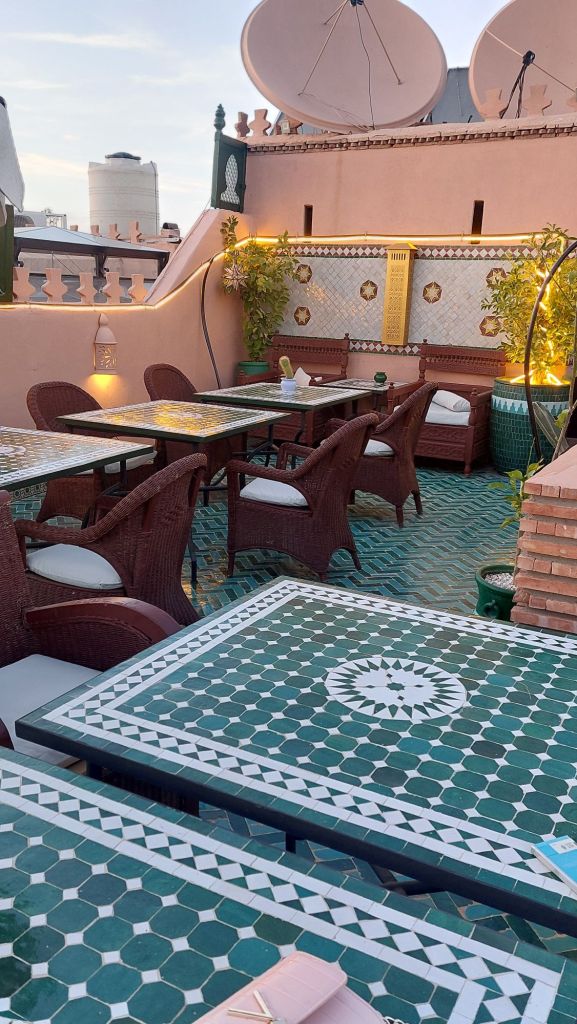
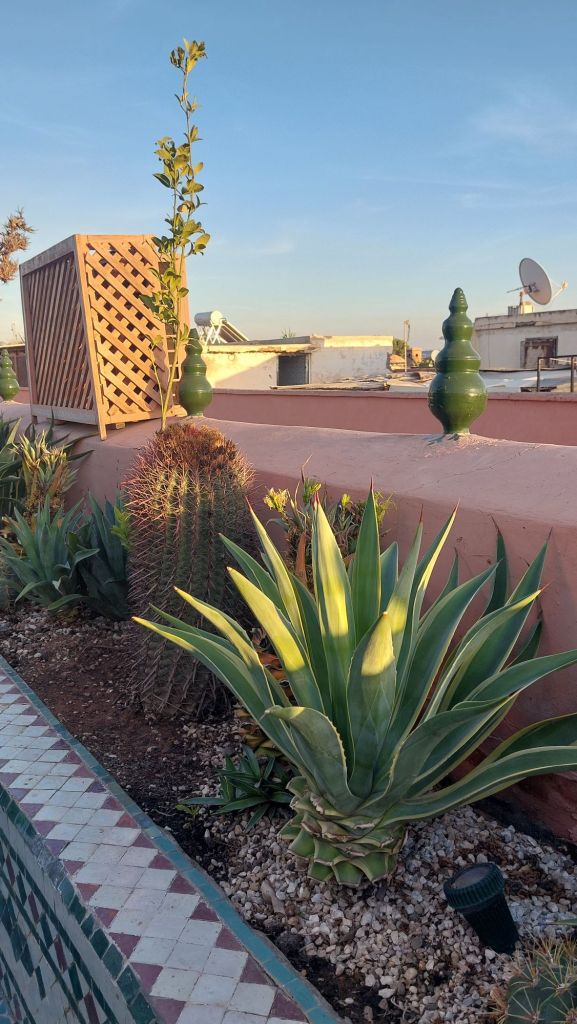
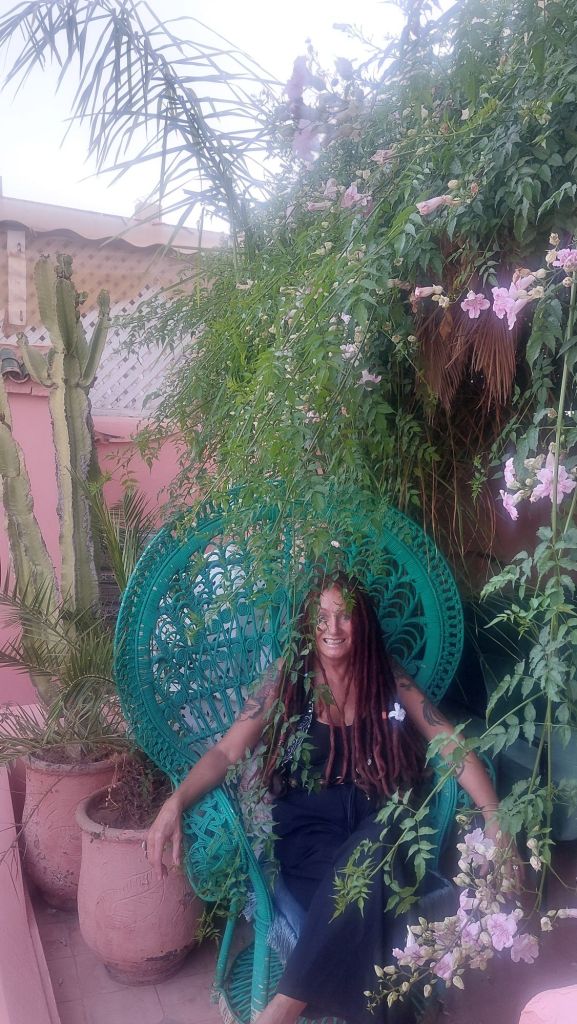
There is a beautiful rooftop with several places to sit in the shade or soak up some of the hot, morroccan sun.
Images by Freebird Tracey.
The Kasbah is a great place to stay with more of an authentic feel about it.
There are plenty of good restaurants, including The Clock, which is across the road from Riad Hikaya.
There are shops and attractions such as El Badi Palace and the Saadian tombs to explore.
I enjoyed staying amongst the locals in Kasbah, and it was a nice 15 – to 20-minute walk to the main square Jamaa El Fna.
Riad Hikaya was a good choice, I loved the large copper bathtub in my room and the total piece and quiet the riad provided me with.
If you’re looking for a lively scene, this place may not be for you. But if you want to disconnect from the busy touristic areas for a while, it’s a perfect retreat.
Images by Freebird Tracey.
For more information about here or other places to stay in Marrakech, drop me a message.
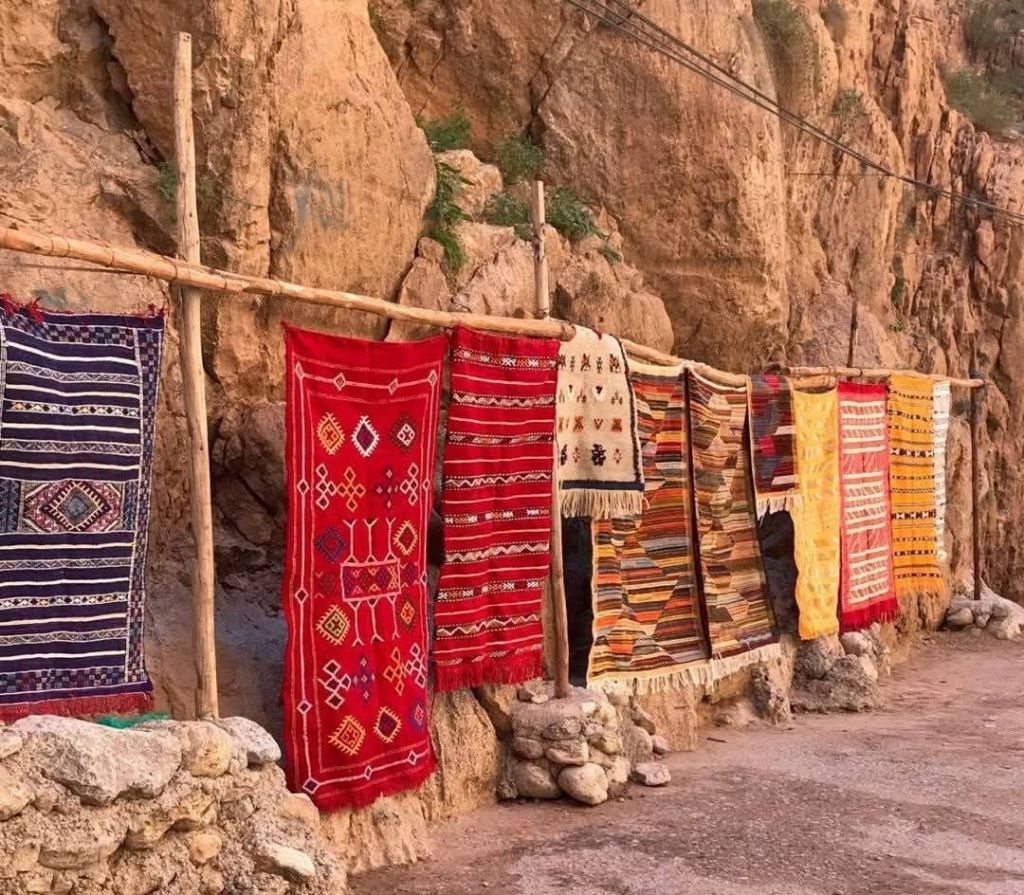
Berber rugs are handmade by the indigenous Amazigh people of Morocco.
They are made from the wool of sheep in the high Atlas Mountains.
Each type of rug tends to vary in thickness depending on which tribe has made it, so that they are suitable for the environment where they are used.
For example, Kilim Berber rugs have no pile and are relatively fine in texture.
They are handcrafted using techniques passed down through generations using natural materials renowned for their durability and luxurious feel.
Hand-knotting is a long and laborious process.
To create a single rug takes about one to two months, with four weavers working on a rug at a time.
Here are the steps taken to make a beautiful Berber rug.
1. Shearing the Sheep
Shearing the sheep is the first step in making a Berber rug. This is done by hand, using a special shearing knife. The sheep are first restrained, and then the knife is used to remove the wool from their body in one long strip. The wool is then sorted and cleaned.
It is usually the job of the men to shear the sheep, taking care not to injure them or spread infection.
The women are responsible for washing the sheared wool.
2. Carding Carding is the process of aligning the wool fibers so the weavers can spin them into yarn. To card the wool, the fibres are first combed in one direction, and then the wool is brushed in the opposite direction. This helps to loosen the fibers and align them in the same direction. Once the fibers are aligned, the weavers can then spin them into yarn. Carding is an essential step in making a Berber rug, as it helps to ensure that the rug is strong and durable. The process of carding also helps to give the rug its unique texture.
The women are often responsible for this process.
3. Spinning into Yarn
To spin the wool into yarn, Amazigh women use a drop spindle.
This simple tool consists of a shaft with a weight at the bottom. The wool is attached to the shaft, and then the shaft is twirled between the woman’s hands. As the shaft is twirled, the wool is wrapped around it, creating the yarn.
4. Weaving the Berber Rug
The weavers use a technique called continuous knotting to create intricate patterns.
This method of knotting allows the weaver to create a rug that is incredibly durable and will last many years. The process begins with the weaver tying knots in the woollen yarn.
The yarn is then dyed using natural dyes from plants, spices, and fruits, which give the rugs their characteristic colours.
Once the yarn is dyed, the weaver begins weaving it into the rug using a loom.
The loom is a wooden frame that the weaver uses to create the rug’s design.
The weaver ties the yarn around the looms warp threads, which are the vertical threads that run through the loom.
The weaver then weaves the weft threads, which are the horizontal threads, over and under the warp threads.
The weaver can create various patterns by changing the direction of the weft threads.
Once the rug is complete, the weaver cuts the rug from the loom and ties the ends of the rug together. The rug is then completed.
Berber rugs are beautiful and give a home a wonderful boho vibe.
It’s important when visiting Marrakech to make sure you’re purchasing a genuine Berber rug.
There are a few scams, so be aware before you get whisked away to a shop by a friendly local.
Les Nomads de Marrakech has a great reputation and can ship rugs back home for you.
A brief history of the indigenous people of North Africa.
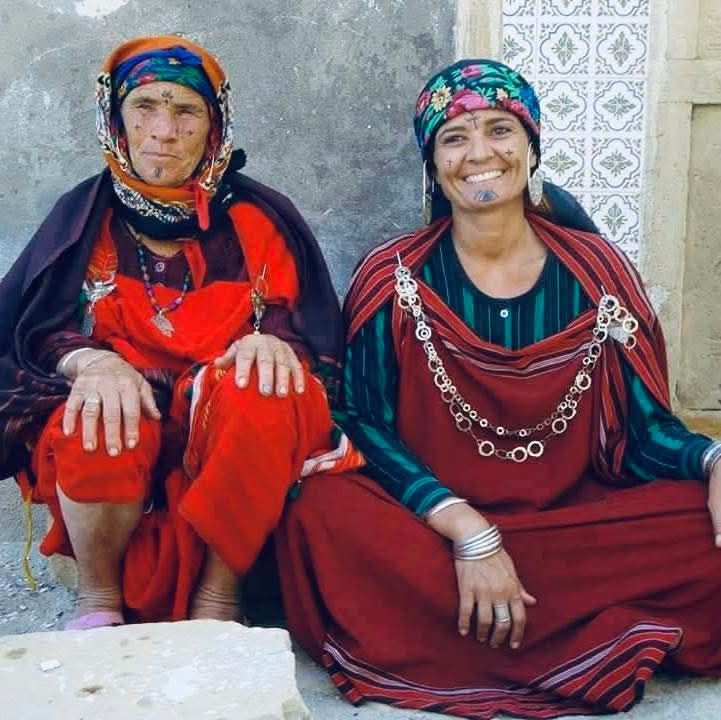
An Amazigh Woman displaying her Headdress.
The Berbers, also known as the Amazigh, are an indigenous group native to North Africa, with a history stretching back thousands of years.
They have lived across a vast region encompassing modern-day Morocco, Algeria, Tunisia, Libya, Mali, and Niger.
The Berbers made a huge contribution to the region’s cultural and technological heritage, including the creation of the Khettara system.
This ancient water management technique involves a network of underground tunnels that channel water from mountain aquifers to arid lands, enabling agriculture in harsh environments.
The Berbers’ innovations in architecture, trade, and agriculture meant they had a self-sufficient community that was thriving long before the arrival of foreign empires.
Over the centuries, the Berbers faced numerous challenges, including invasions and exploitation by foreign powers. During the Ottoman era, slave traders targeted Berber communities, kidnapping many women and throwing their society into chaos.
The Berbers became known for their resistance to foreign domination, with some groups turning to piracy as a form of survival and defiance.
Barbary pirates became infamous for raiding European ships and coastal towns, leading to conflicts with European powers and even the young United States during the Barbary Wars. Despite these challenges, the Berber culture has endured, holding on to its distinct language, customs, and identity through resilience.
The name Berber comes from the word ‘Barbaric’ and is now considered offensive.
The indigenous people have adopted the name Amazigh, which means ‘ free people’
Amizigh is now taught in schools and is officially known as the second language in Morocco, next to Arabic.
It is possible for visitors to Marrakech to take a trip into the Atlas Mountains to observe the ancient customs and lifestyle of the Amazigh.
A stay in a Berber family lodge is an unforgettable experience and a way to really get to know the history of Morrocco.
You will get the chance to eat a home cooked meal with an Amazigh family and see how they live.
This wonderful experience can be booked online or through your riad or hotel on arrival.
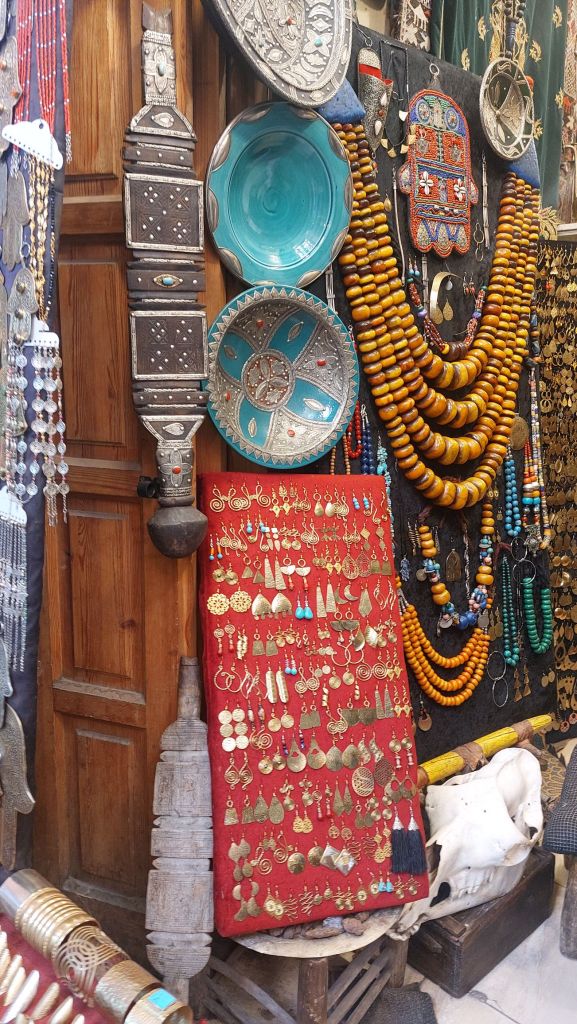
The Souks sell beautiful Berber jewellery and rugs made by the Berber ladies.
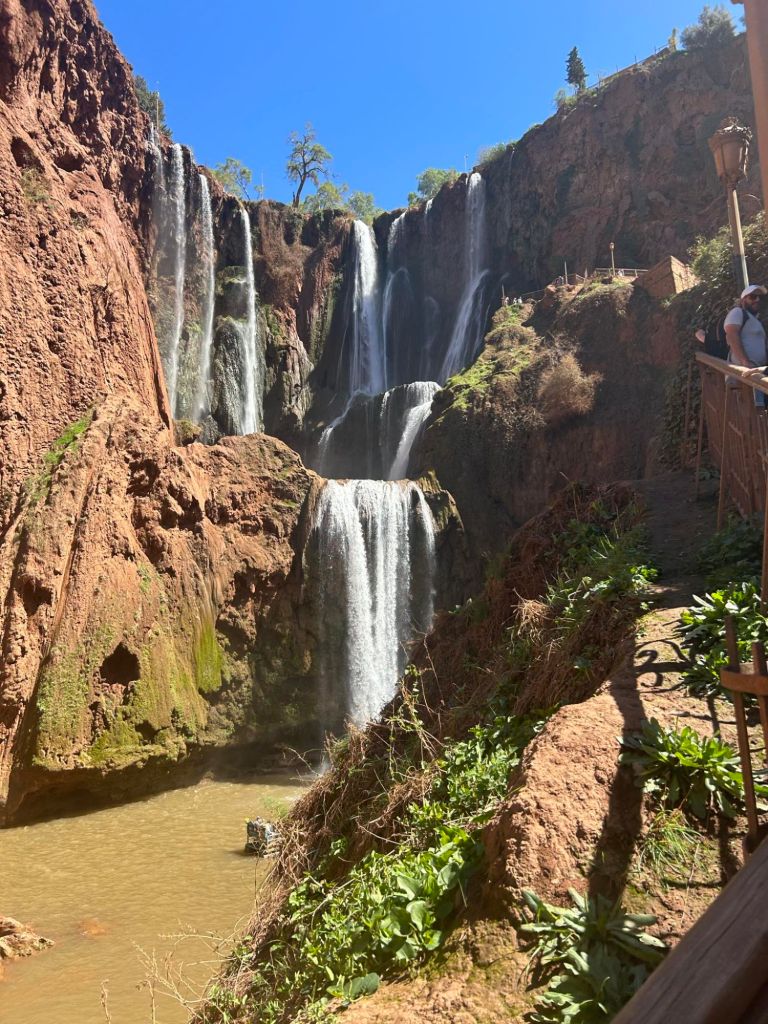
For a great day out, take a trip to Ouzoud to see the spectacular waterfall.
The second largest waterfall in Africa, it is well worth the three hour drive through the stunning Atlas Mountains to see it.
I met my driver at Cafe de France, and after picking up a few more passengers, we were on our way.
The mini bus had air conditioning and was pretty comfortable. We drove for around one and a half hours, then stopped for a toilet break and a drink.
There was a small cooperative selling Argan oil, but I didn’t bother going in.
Soon, we were on our way again, and believe me, the views of the Atlas Mountains were astonishing.
On arrival, we were introduced to our guide, who spoke several different languages, and we set off walking through the lush vegetation.
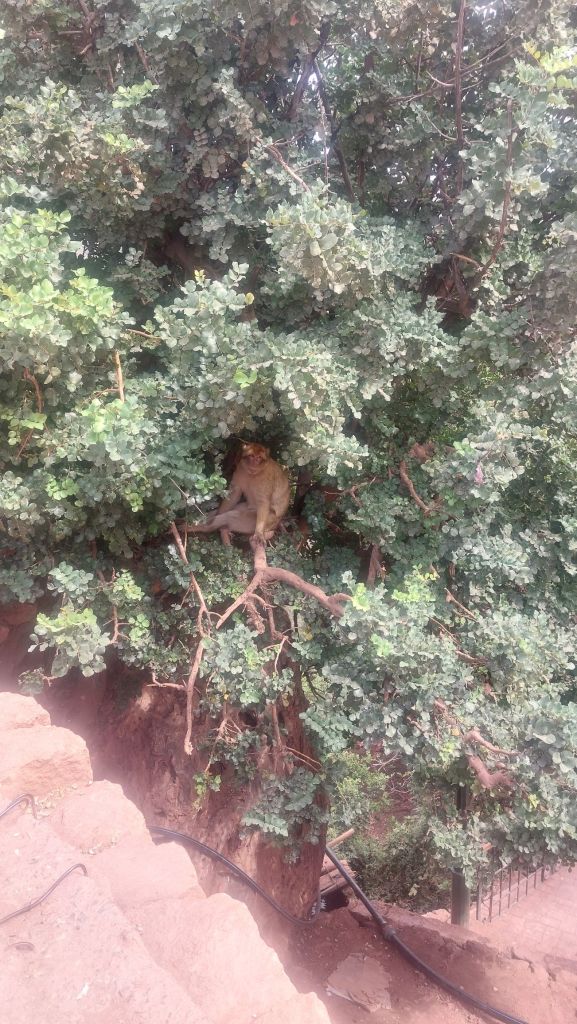
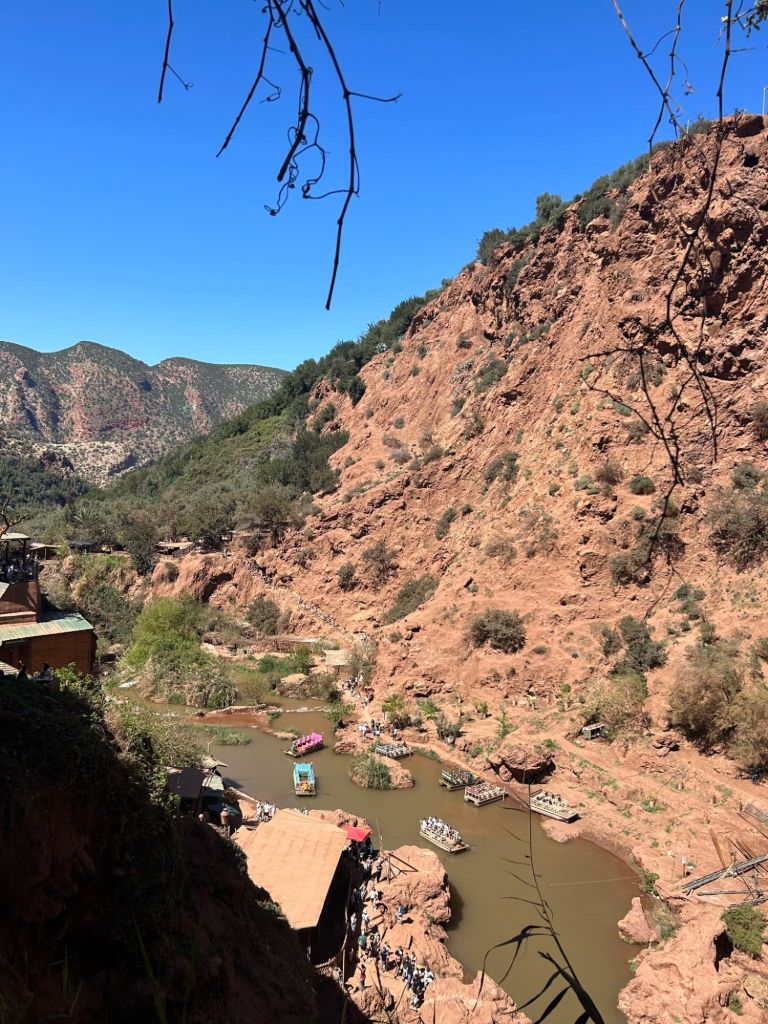
We rambled through the olive groves as the cheeky wild Barbary macaque monkeys played hide and seek in the trees with us.
A monkey hiding in the tree
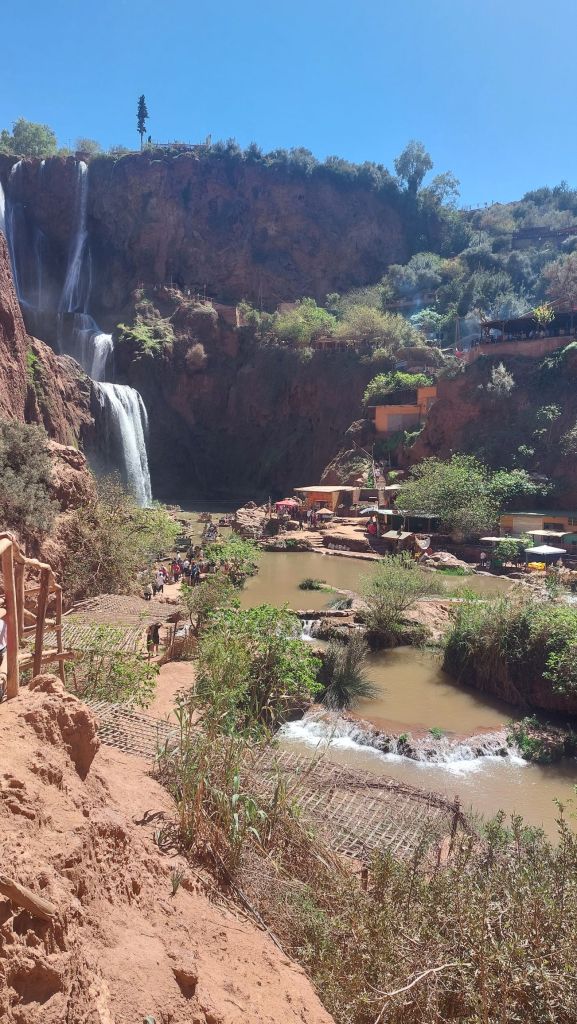
The waterfall was visible from different angles with plenty of viewing points to take photographs or rest.
The waterfalls plunge 110 metres into the canyon below, making it a breathtaking sight.
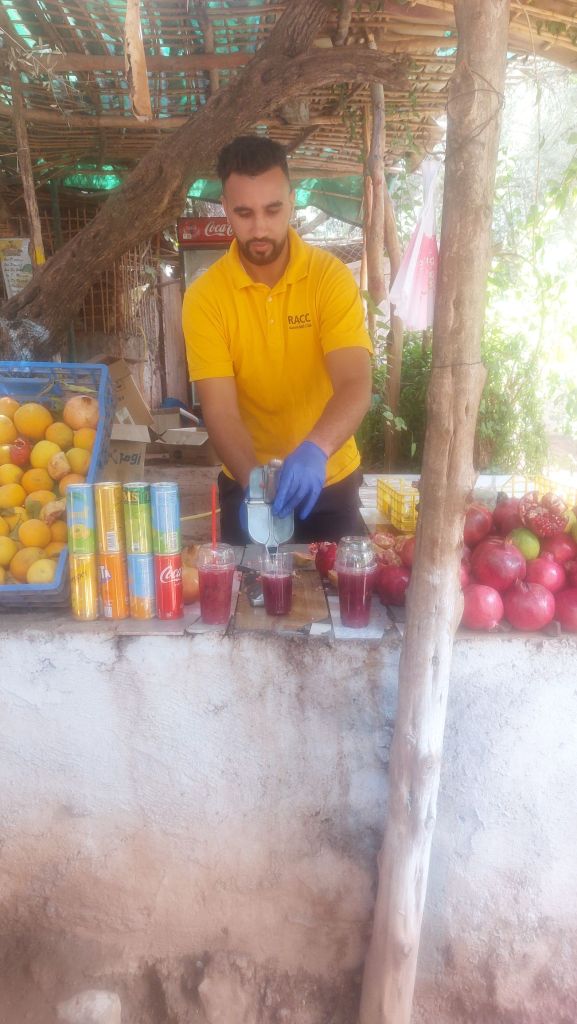
We stopped for a freshly squeezed pomegranate juice before continuing our way down to the boats.
Making pomegranate juice
A boat ride up to the waterfall is part of the itinerary if you book a tour.
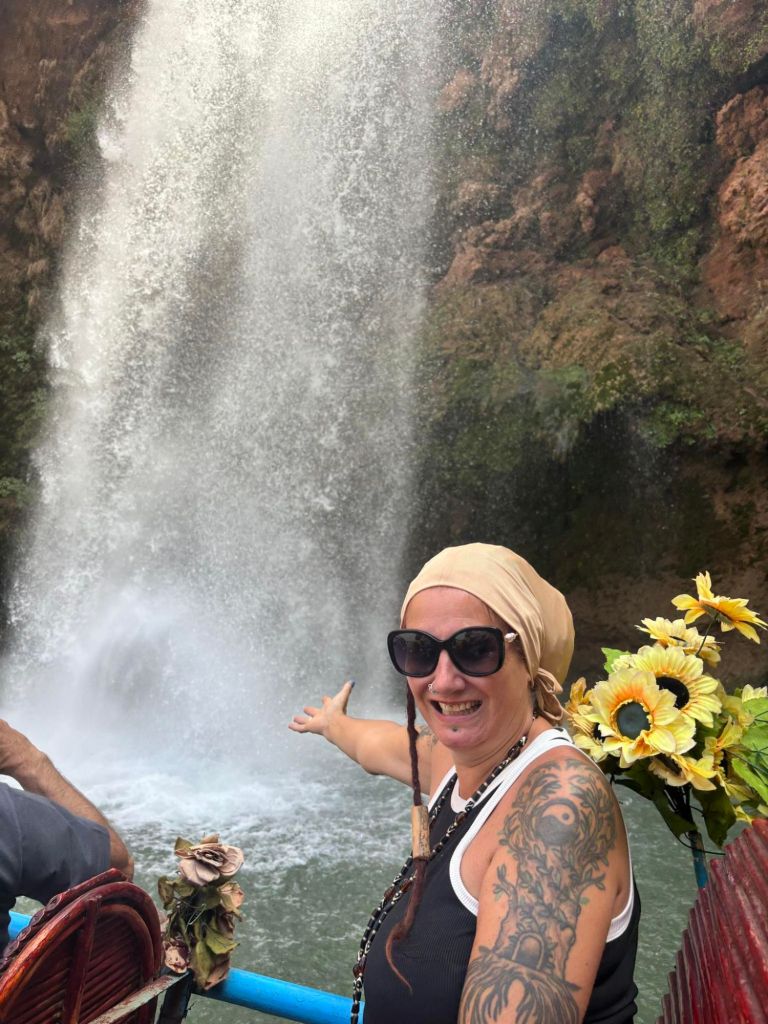
The boats are colourfully decorated, and we were taken right up against the waterfall.
It was an amazing experience.
The feeling of the cool water spraying our faces was a welcome relief from the heat, and we had the opportunity to take plenty of photos up close.
Rowing up to the waterfall
We were dropped off on the opposite side and then had quite a steep climb up to the restaurants.
I was able to get a table overlooking the waterfall, and the view was absolutely stunning.
I had a simple three course meal consisting of a starter, which was a small salad with fresh bread and olives, followed by a vegetable tagine and fruit for dessert.
Views from the restaurant
The meal was finished off with a glass of Morroccan whisky or mint tea as we know it.
The meal cost around 150 dirhams and was fairly good value. It was very tasty and filling enough for a light lunch.
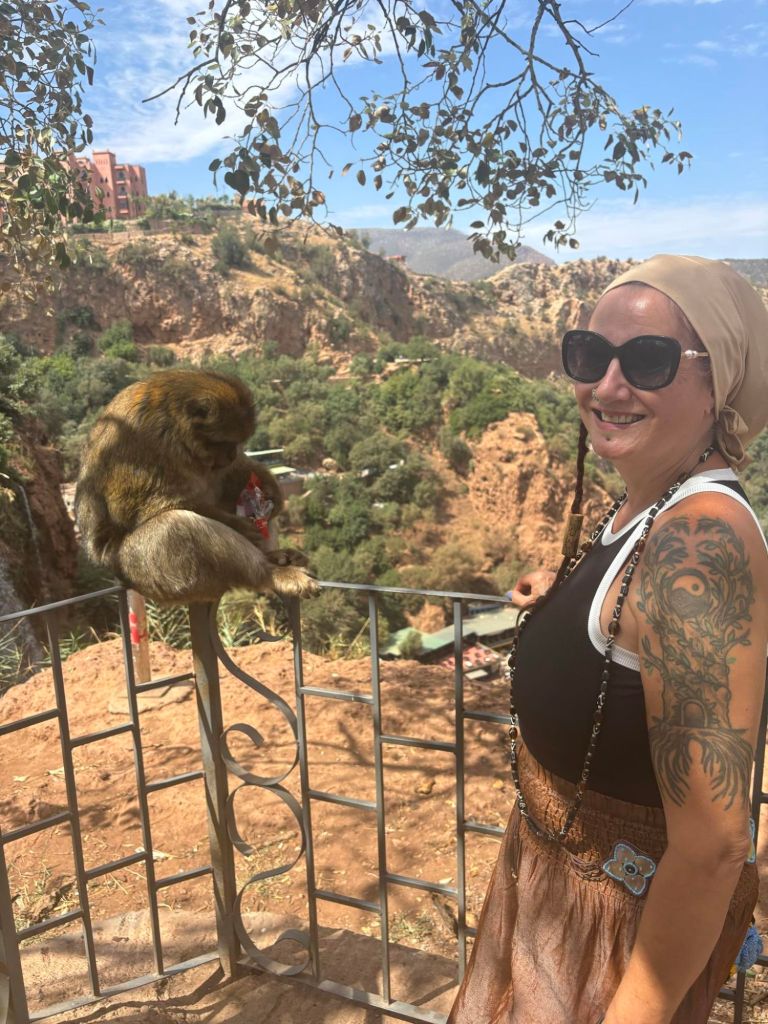
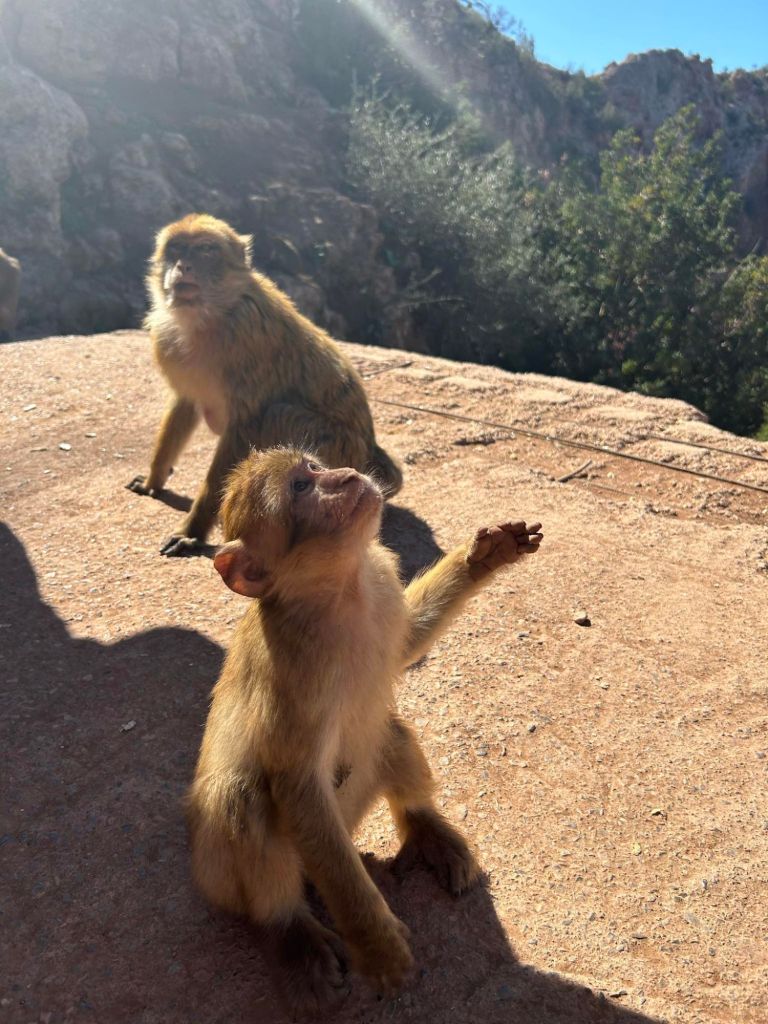
After lunch, we made our way up some more steps, stopping off to feed the monkeys at the top.
The monkeys of Ouzoud
Finally, we were reunited with our driver and set off back for Marrakech.
We arrived back in the early evening, giving me plenty of time to freshen up and go out again for an evening meal.
Overall, the trip to Ouzoud was well worth the six hours travelling.
It was absolutely beautiful, and sitting above the waterfall looking down whilst eating lunch was the highlight of the trip for me.
The monkeys were very amusing, and I had to keep hold of my sunglasses to stop them from stealing them.
The guide was so helpful and looked after everyone really well. Many morroccans speak five languages, and it’s very impressive.
I highly recommend going to Ouzoud if you visit Marrakech. It’s a wonderful day trip.
If you have mobility issues, it may be challenging because there are a lot of steps, and it can be quite a steep climb from the bottom backup.
There’s a fair amount of walking involved.
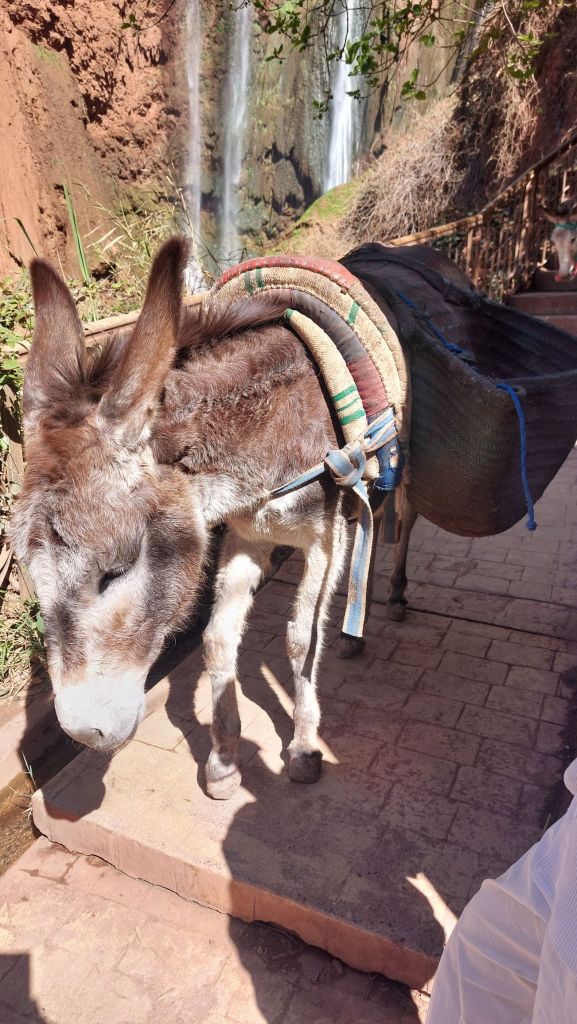
Some people were taken back up on Donkeys.
Hard-working donkeys
I booked my trip with Get Your Guide, and it was reasonably priced.
The lunch was separate, and you paid after the meal.
Your riad or hotel can also organise day trips for you, but it sometimes works out slightly more expensive.
An introduction to the red city of Marrakech in North Africa.
If Africa is a peacock, Morocco is its tail
Welcome to my blog featuring everything you need to know about Marrakech.
I include my own personal stories, experiences, and adventures, giving an authentic insight into the red city of Marrakech.
My name is Freebird Tracey, and I’ve been a regular visitor to Marrakech for many years.
As a solo female traveller, I have always felt safe travelling around Marrakech. The friendly locals treat me with respect wherever I go, always helpful and always with a smile.
I believe I have found my happy place in the sunshine amongst the fragrance of orange blossom, the vibrant colours, and the magical sounds of Jamaa El Fna.
Marrakech is a diverse and magical city, steeped in history.
From its beautiful Islamic architecture to the culinary delights and fine craftsmanship on display, there is something to tempt the senses on every corner.
I never get tired of exploring this alluring, magnetising corner of our planet.
There is always something new to see, and it’s full of little surprises.
Marrakech is an assault on the senses..
Allow me to take you on a fascinating journey to North Africa and show you how to make the most of your time in Marrakech.
I will share interesting articles and suggest the best places to eat, including vegetarian and vegan options.
I will tell you where to find cool bars that serve alcohol with live music.
If you’re interested in activities, excursions, or day trips, I will share some of my own personal experiences with you.
I will give you truthful opinions, honest reviews, and provide helpful suggestions to get the most out of your visit.
I share tips on how to stay safe and what to do to make sure you have the best experience whilst visiting Marrakech.
This is a tell-all blog at your fingertips..
So, buckle up and join me on a mind-blowing trip of a lifetime.
Let me introduce you to the sights, sounds, and tastes of the red city.
All beautifully entwined with each other,creating what can only be described as a little piece of heaven here on earth..







 Sounds Of The Souks