Tag: Berber culture

Exploring The Red City Of Marrakech.
  • Ouzoud Waterfall.

    A day trip to North Africa’s second largest waterfall.  
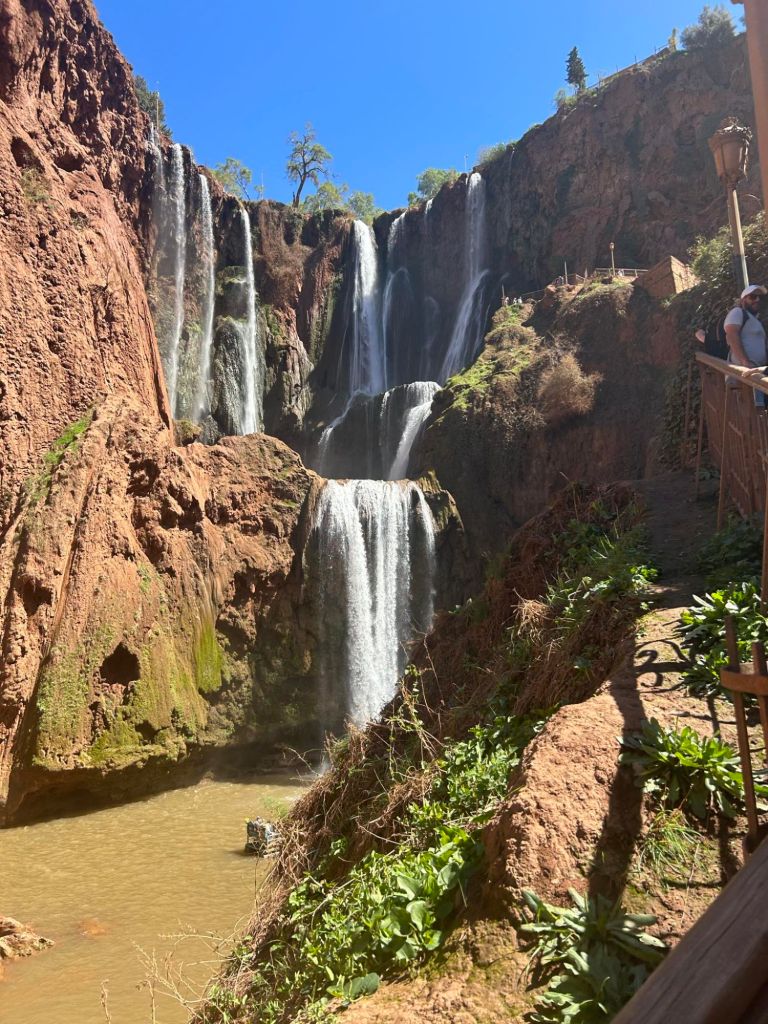
    Image by Freebird Tracey.

    Ouzoud Falls is the collective name for several waterfalls in the province of Azilal.

    The waterfall is the second largest in Africa, and it is well worth the three hour drive through the stunning Atlas Mountains to see it.

    I met my driver at Cafe de France, and after picking up a few more passengers, we were on our way. The mini bus had air conditioning and comfortable seating.

    We drove for approximately one and a half hours, then stopped for a toilet break. There was a small women’s cooperative selling Argan oil for people who were interested.

    Soon, we were on our way again, and the views of the Atlas Mountains were simply breathtaking. It was a really scenic drive, helping the time pass quickly.

    When we arrived at Ouzoud, we were introduced to our guide and immediately set off walking. We rambled through the olive groves, and the cheeky Barbary macaque monkeys played hide and seek in the trees with us.

    The waterfall is visible from different angles with plenty of viewing points. It plunges 110 metres into the canyon below, and the red sandstone cliffs are a picturesque contrast against the lush green vegetation.
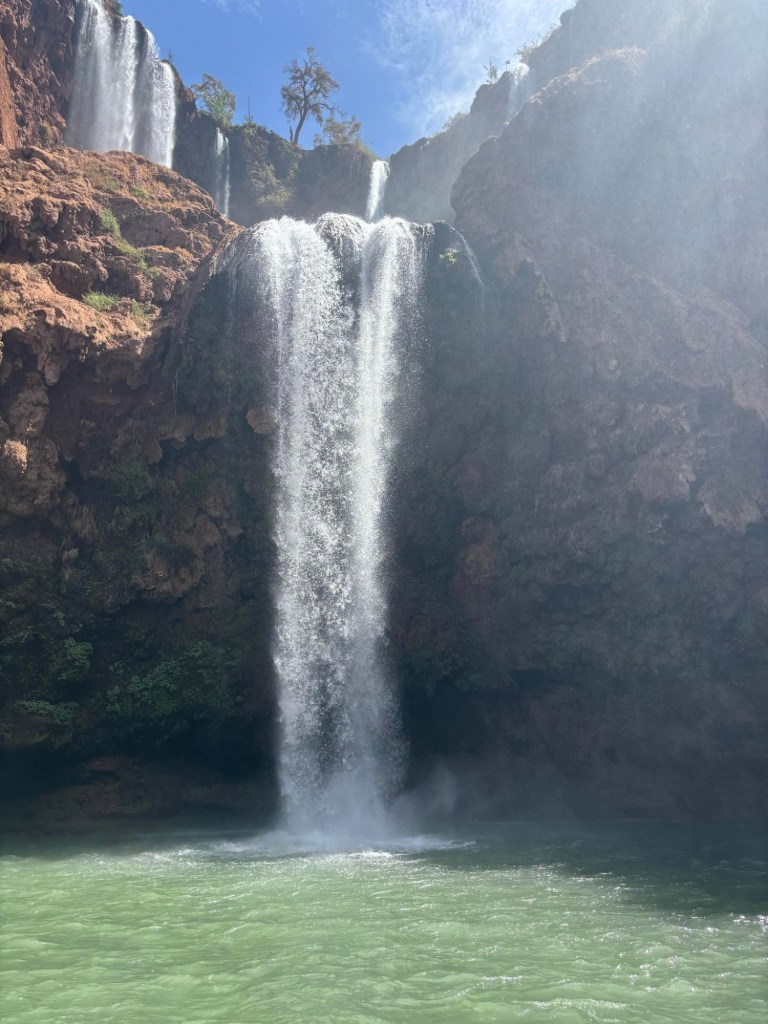
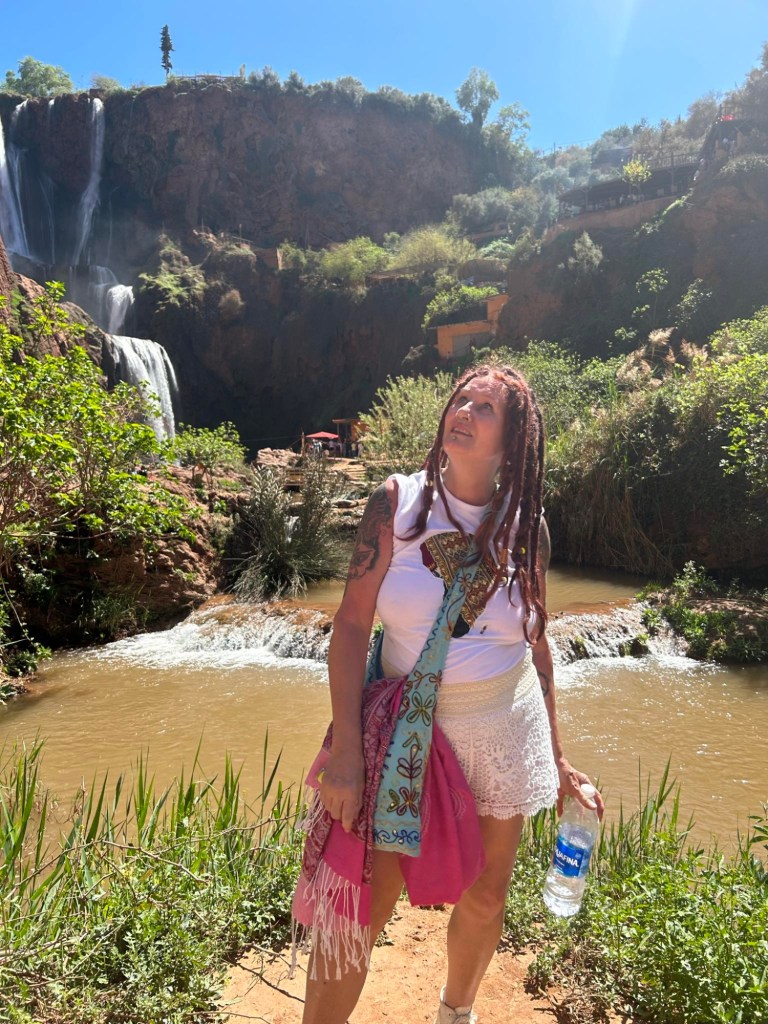
    Images by Freebird Tracey.

    The hike around the waterfall is moderately strenuous, and their are occasional places to purchase fruit juice and take a rest. It was hot,and I was grateful for the chance to stop and recuperate for a while.
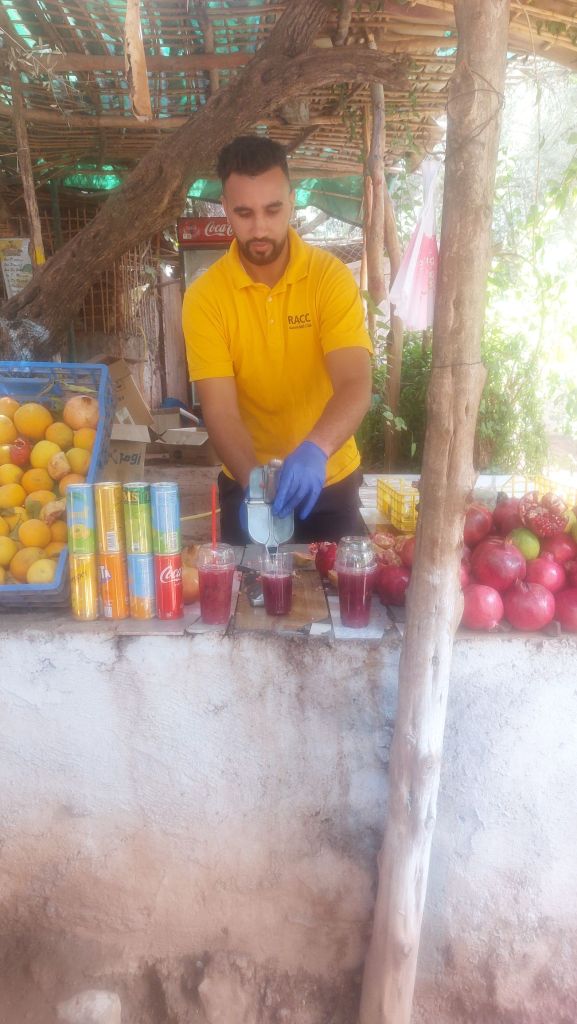
    Image by Freebird Tracey.

    A boat ride is part of the itinerary if you book a tour. The boats are vibrantly decorated and take to the water beneath the falls for a really close-up shot. It was an amazing experience. The feeling of the cool water spraying my face was a welcome relief from the heat.

    Image by Freebird Tracey.

    Once the boat drops you off on the opposite side, it’s quite a steep climb up to get to the restaurants. I was lucky enough to get a table that overlooked the waterfall, and the view was incredible.

    I ate a three course meal that included a small salad with bread and olives, followed by a tagine and fruit for dessert. It was pleasant looking down on the boats and seeing people having fun in the water whilst eating my lunch.
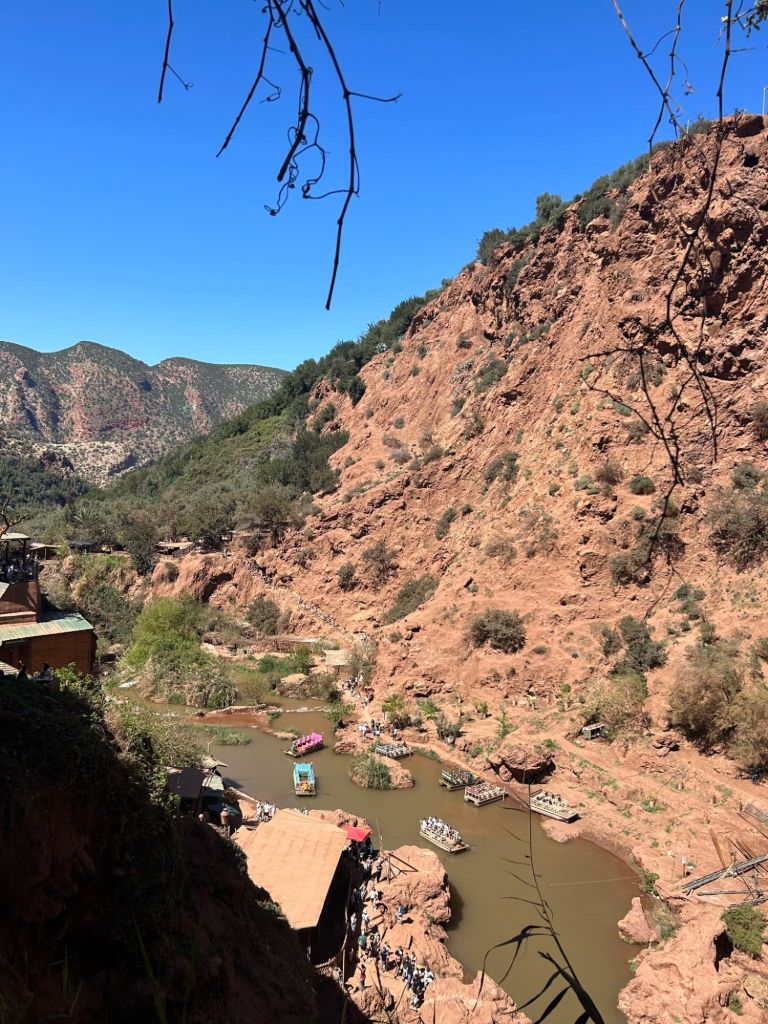
    Image by Freebird Tracey.

    The meal cost around 150 dirhams. It was nothing spectacular, just a simple lunch in the most gorgeous of settings, but the portion was adequate.

    After lunch, I walked further up a steep incline,where a lot more monkeys were gathered waiting for tourists to feed them. I fed a few of them with some food given to me by our guide.

    Image by Freebird Tracey.

    The final part of the walk took me past a few souvenir stalls and a shop selling drinks and ice cream. Eventually, I made it back to the car park where the journey began.

    The group was reunited with the driver, and then it was time to set off back to Marrakech. We stopped again for a toilet break midway through the journey, and it was early evening when I arrived back at the main square.

    In my opinion, the trip to Ouzoud was definitely worth the six hours of travelling.

    The highlight for me was sitting above the waterfall  eating my lunch and looking at the spectacular view. The monkeys were also very amusing.

    There is a fair amount of walking in the heat, and some of it is steep, but I was able to take my time, and the guide was really patient and kind. The walk was worth every moment to see the waterfall from all its vantage points.

    Some people in the group who were struggling went up on Donkeys, so that’s an option if you have limited mobility.

    I booked my trip with Get Your Guide and found it good value for money for such a great day out. It included the journey in an air-conditioned vehicle, the tour, and the boat ride. The lunch was separate. Your accommodation can also organise a trip to Ouzoud for you.
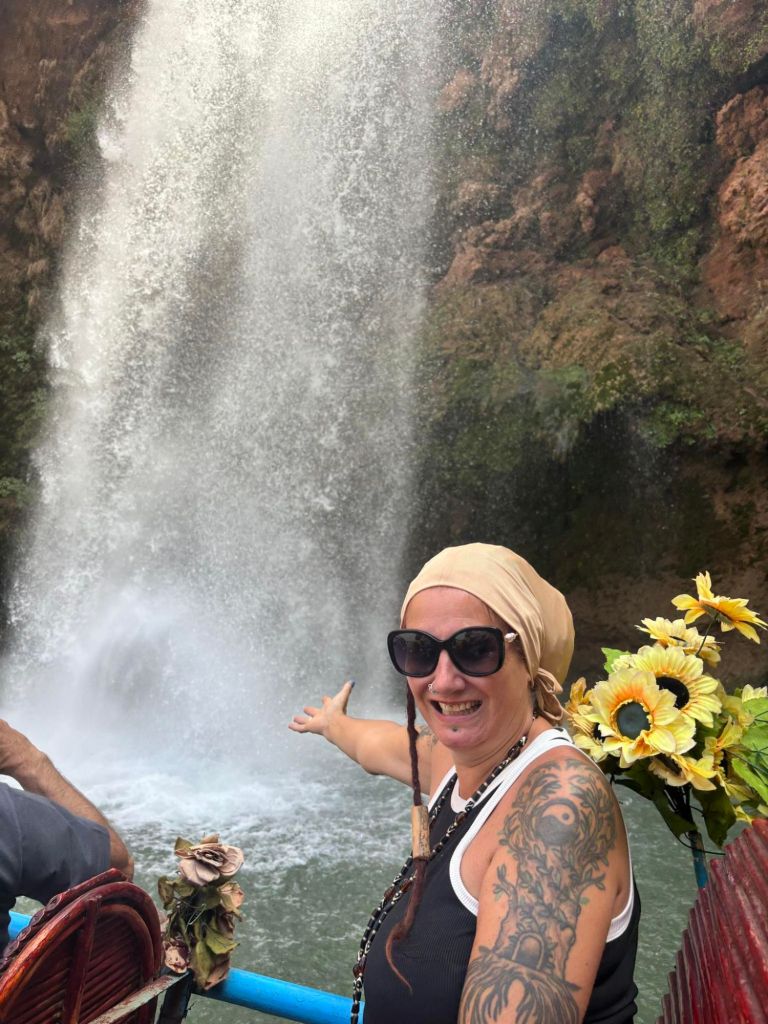
    Image by Freebird Tracey.
    (more…)
  • Riad Bohemian Jungle.

    A riad conjuring up Tales of Arabian Nights.

    Image by Freebird Tracey.

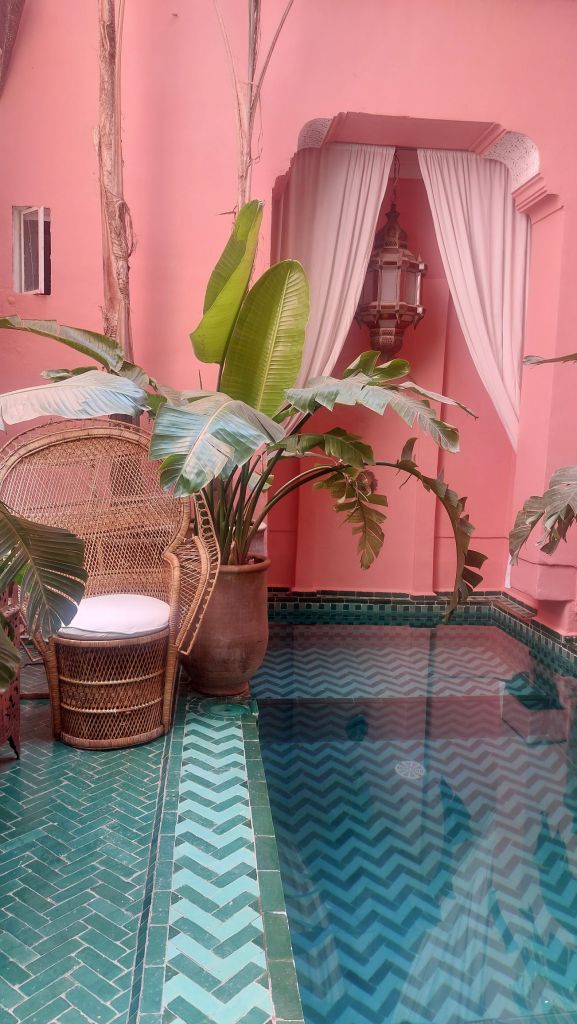
    The Bohemian Jungle is a beautifully choreographed riad, close to the spice square in Marrakech. Straight out of a tale from Arabian Nights, the Bohemian Jungle exudes charm and authenticity.

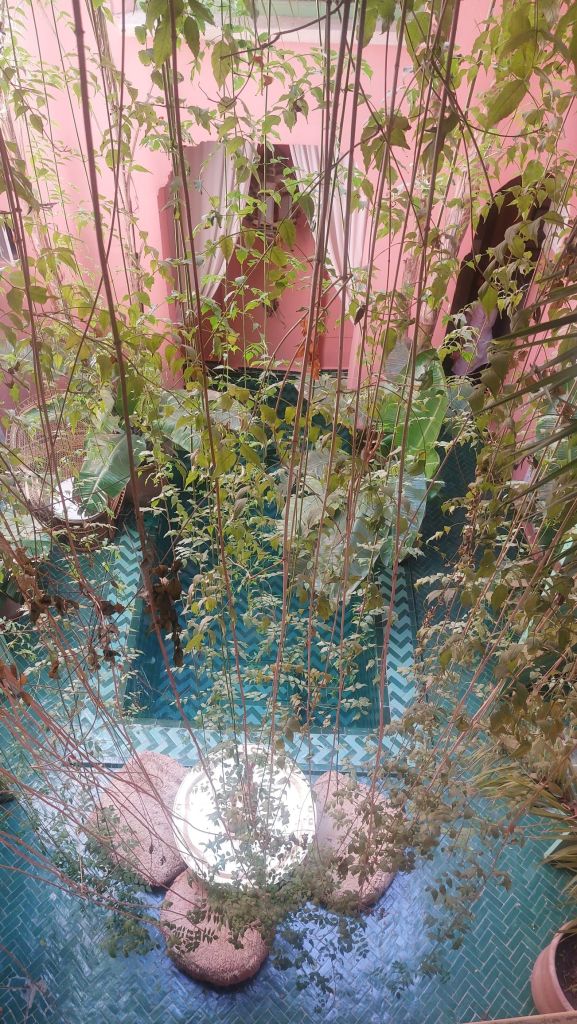
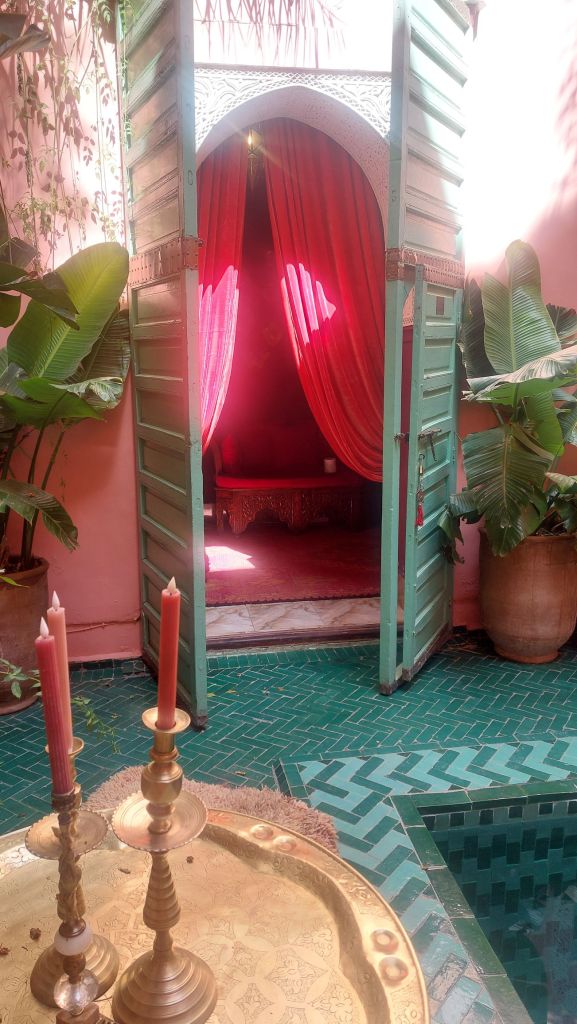
    The interior is captivating, with several nooks and crannies to sit taking in its splendour. The little pool in the centre of the courtyard is ideal for cooling off in. The green zellige tiles and exotic plants are attractive focal points of the riad.

    Images by Freebird Tracey.

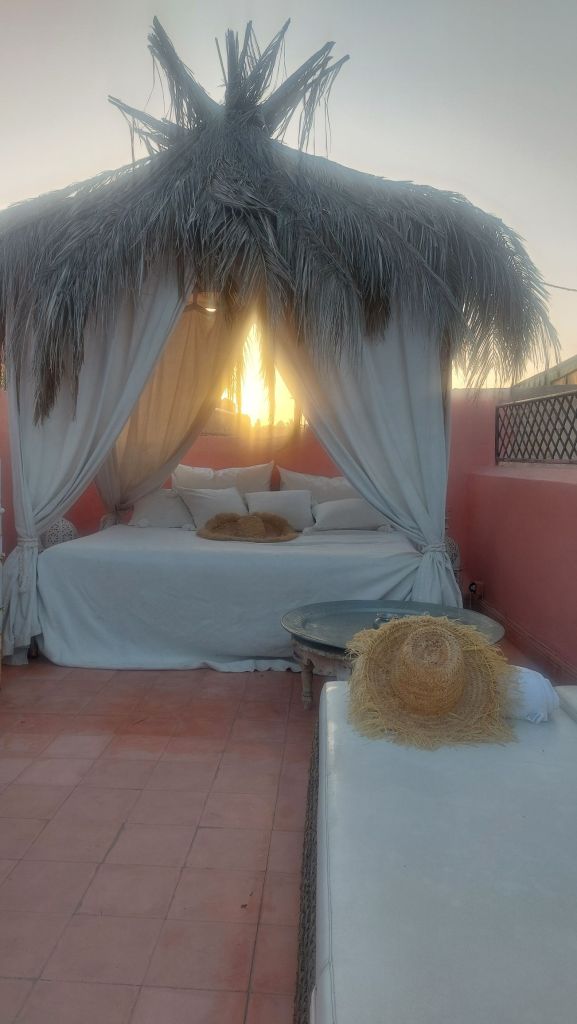
    The rooftop is decadent.  There are pretty pink flowers, which drape over the wall into the courtyard below. Plants and moroccan lamps are carefully situated amongst colourful seating areas. There’s a balinese bed and a cerise boudoir area, where staff play traditional tuareg music for their guests.

    There are areas to sit in the shade and relax with a book. Perfect for when the hot African sun reaches its  highest temperature in the day. The riad lives up to its name. It certainly is a jungle.

    Images by Freebird Tracey.

    The riad is managed by young men from the Sahara desert, and they enjoy sharing their fascinating Amazigh culture with guests.

    The breakfasts vary each day. They consist of traditional pancakes, fresh bread, fruit, yoghurt, and eggs.

    When you arrive at the riad, you are treated to the complimentary mint tea and biscuits.You are given useful advice and a map to help you navigate the souks.This is helpful for finding your way back to the riad.

    Image by Freebird Tracey.

    The fragrance inside the riad is intoxicating. Orange blossom and cinnamon oil float on the air throughout the day. In the evening, the lamps glow, and traditional music plays quietly in the background. I never wanted to go out. I was happy sitting in the riad, experiencing the captivating surroundings.

    Image by Freebird Tracey.

    Riad Bohemian Jungle gets booked up quickly, and it’s easy to see why.

    If you are looking for TVs or a modern contemporary style of accommodation, you won’t find it here. This is an eclectic, boho environment that lives up to its name. Riad Bohemian Jungle is all about experiencing true, authentic riad culture. Lost in time with the distant echos of camel traders and a strong spirit of the past.

    It is close to the Madrasa Ben Youssef, Marrakech museum, and the Spice square. The vegetable market is near the Bohemian Jungle, and there are plenty of popular restaurants in the vicinity.

    The address is, Derb al Maada Hay azbezte 39 Medina, Medina 40030 Marrakech, Morrocco.

    Excursions to the Sahara desert and other popular places of interest can be arranged by this riad. They are good value for money and well organised.

    Image by Freebird Tracey.
    (more…)
  • Moroccan Berber Rugs.

    A look at how Berber rugs are made.

    Image by Freebird Tracey.

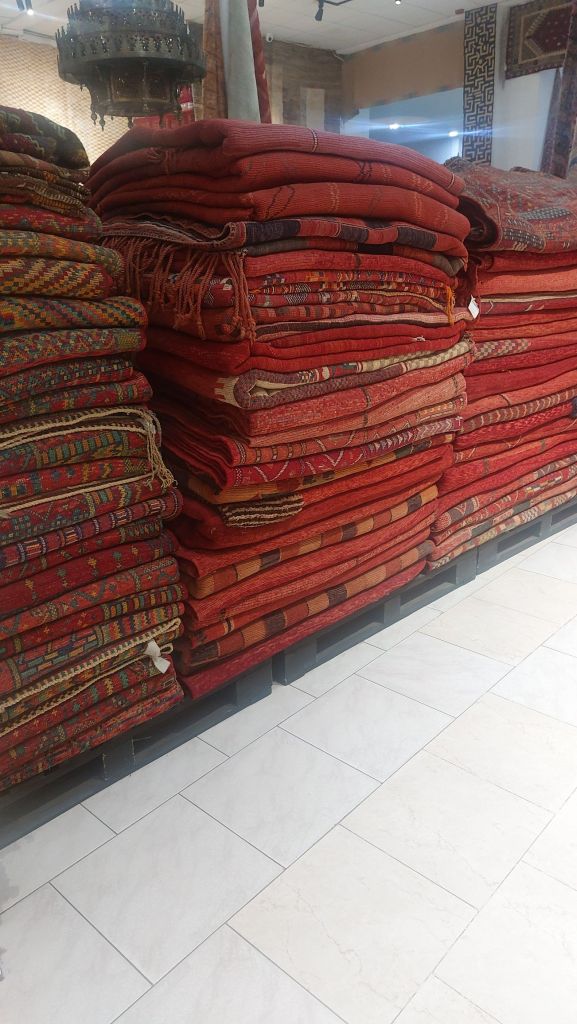
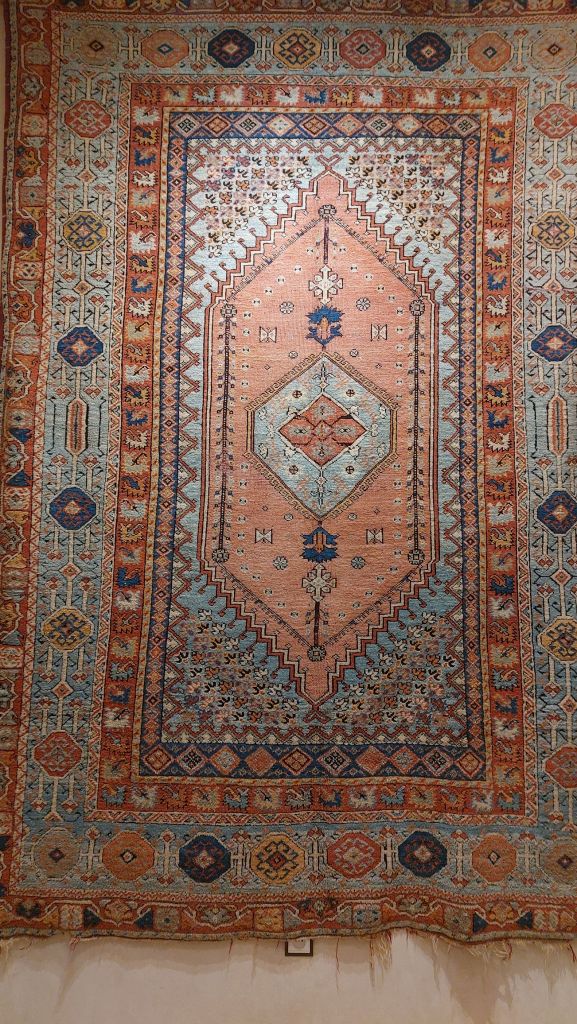
    Berber rugs are handmade by the indigenous Amazigh people of Morocco.

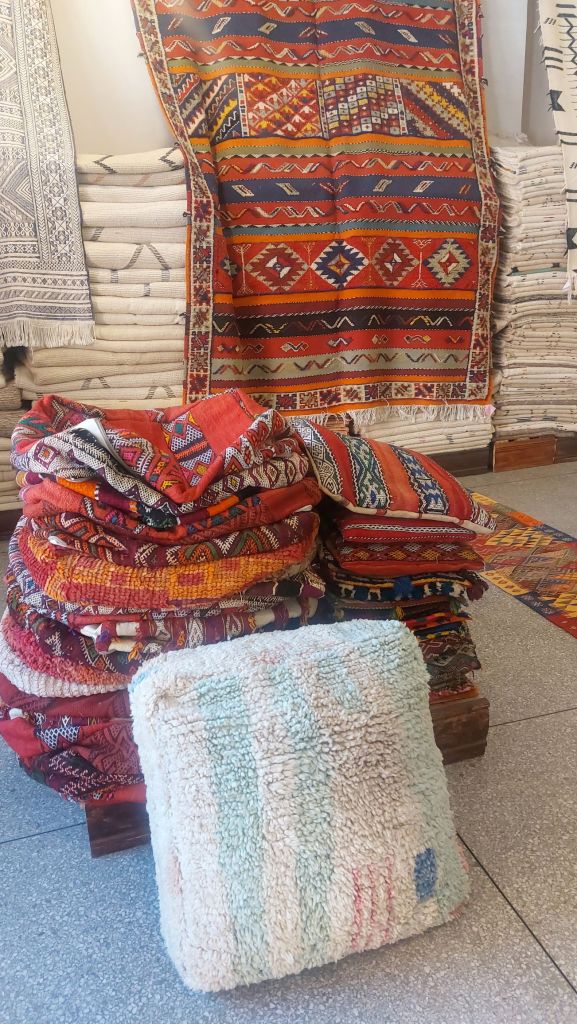
    They are made from the wool of sheep in the high Atlas Mountains. Each type of rug tends to vary in thickness, and the pattern also differs depending on which tribe or village has made it.

    Kilim Berber rugs have no pile and are relatively fine in texture.They are handcrafted using techniques passed down through generations.  To create them natural materials renowned for their durability and luxurious feel are used. Hand-knotting is a long and laborious process. To create a single rug takes around one to two months, with four weavers working on one rug at a time.

    There are several steps that go into making a beautiful Berber rug.

    1. Shearing the Sheep

    Shearing the sheep is the first step in making a Berber rug. This is done by hand, using a special shearing knife. The sheep are first restrained, and then the knife is used to remove the wool from their body in one long strip. The wool is then sorted and cleaned. It is usually the job of the men to shear the sheep, taking care not to injure them or spread infection. The women are responsible for washing the sheared wool.

    2. Carding.


    Carding is the process of aligning the wool fibers so the weavers can spin them into yarn. To card the wool, the fibres are first combed in one direction, and then the wool is brushed in the opposite direction.This helps to loosen the fibers and align them in the same direction. Once the fibers are aligned, the weavers can then spin them into yarn.Carding is an essential step in making a Berber rug, as it helps to ensure that the rug is strong and durable. The process of carding also helps to give the rug its unique texture. Women are responsible for this process.

    3. Spinning the wool into yarn.


    To spin the wool into yarn, Amazigh women use something called a drop spindle. This simple tool consists of a shaft with a weight at the bottom. The wool is attached to the shaft, and then the shaft is twirled between the women’s hands. As the shaft is twirled, the wool is wrapped around it, creating the yarn.

    4. Weaving the rug.

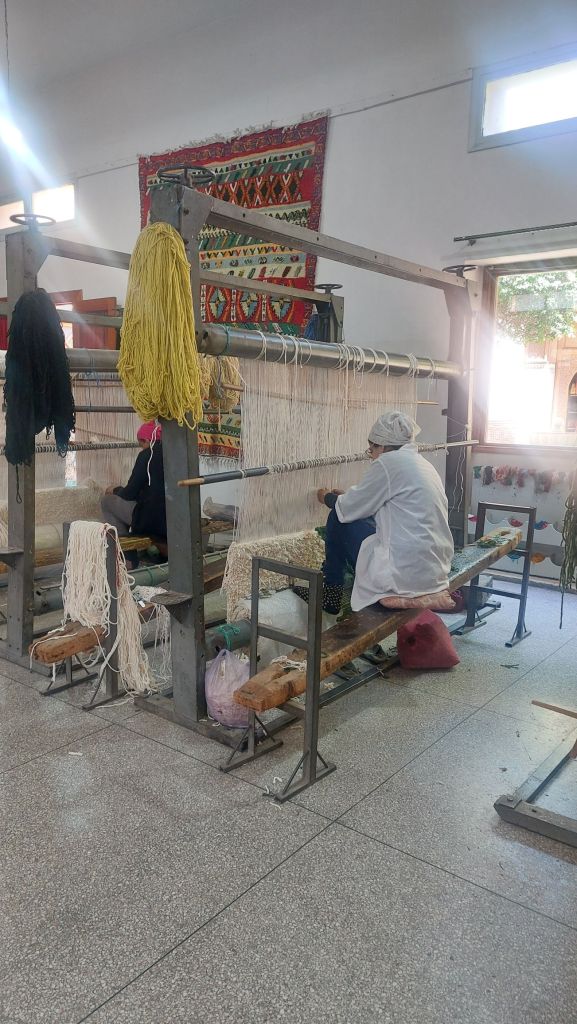
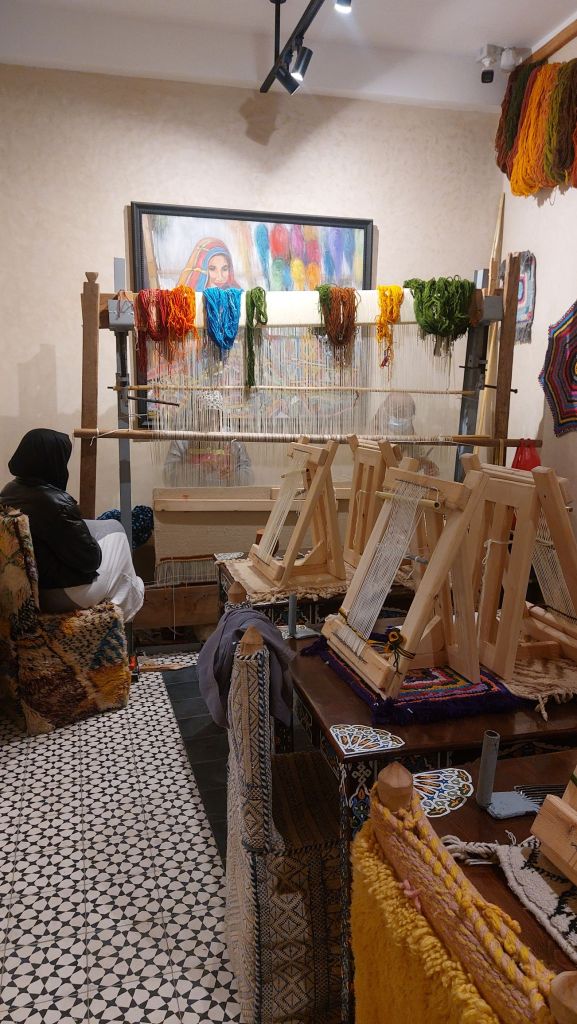
    The village women are responsible for weaving the rugs. Weavers use a technique called continuous knotting to create intricate patterns. This method of knotting allows the weaver to create a rug that is durable and will last for many years.The process begins by the weaver tying knots in the woollen yarn.The yarn is then dyed using natural dyes from plants, spices, and fruits. This gives the rugs their characteristic colours. Once the yarn has been dyed, the weaver begins weaving it into a rug using a loom.The loom is a wooden frame that the weaver uses to create the rugs design. The weaver ties the yarn around the looms warp threads, which are the vertical threads that run through the loom. The weaver then weaves the weft threads, which are the horizontal threads, over and under the warp threads.The weaver can create various patterns by changing the direction of the weft threads. Once the rug is complete, the weaver cuts the rug from the loom and ties the ends of the rug together. The rug is now finished.

    Image by Freebird Tracey.

    Making a Berber rug is a long, laborious task. The women of the village who weaved them rarely get anything near the price they’re eventually sold for. Their husbands load the rugs onto the back of a donkey and take them to a buyer. The buyer gives him a fraction of their value.

    Efforts are being made to make sure that ethical practices are being implemented. Many organizations now work directly with Berber artisans to eliminate middlemen, ensuring women receive fair payment for their work. More women are forming cooperatives to manage the entire process, increasing their income.

    Images by Freebird Tracey.

    Berber rugs are beautiful and give a home a wonderful boho vibe. They are hard-wearing and last a lifetime. It’s important when visiting Marrakech to make sure you’re purchasing a genuine Berber rug. There are a few scams, so be mindful. Before you get taken to a shop where you’re promised the best quality and price, do your research.

    Les Nomads de Marrakech has a great reputation and can ship rugs back home for you. This is their address, Bennahid #40 Derb Zaouiat Lahdar, Marrakesh 40030, Morocco.

    Dar Bouchaib in the Kasbah is a fixed price store that also ships rugs worldwide and has a huge selection.

    To find out more about the history of Berber rugs, there is a carpet museum in the souks called The Maison Culturelle du Tapis. It’s worth visiting to learn more about how they’re made. They also have some beautiful vintage rugs on display.

    Image by Freebird Tracey.
    (more…)