How To Immerse yourself in the culture of Marrakech.
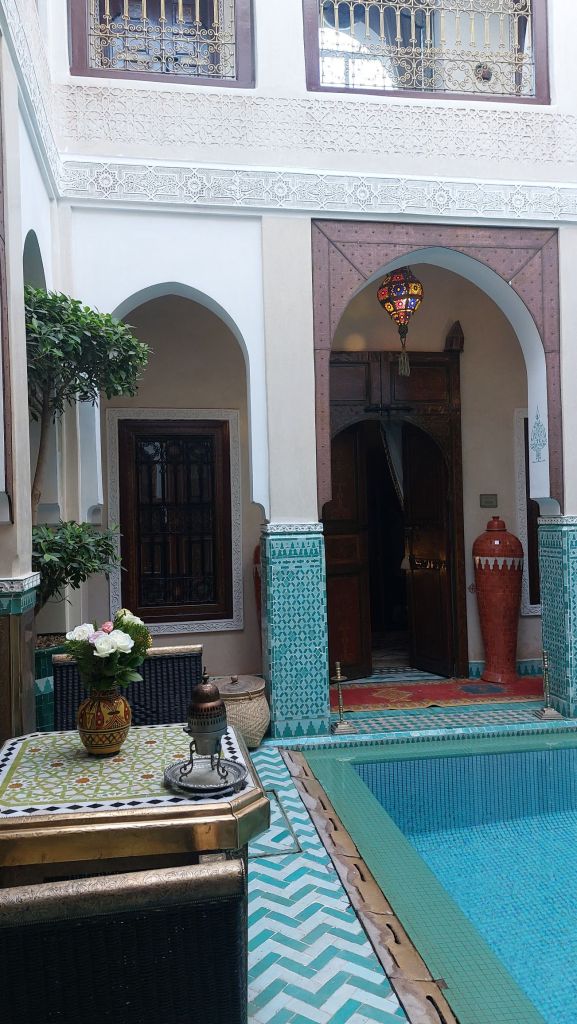
If you want a taste of authentic Moroccan life, spending time in a riad will give you one. From the outside, riads appear unassuming. This is because in Islam, people do not like to display their wealth. Homes are discreetly hidden behind red clay walls. This prevents poor people from focusing on their hardship because in the eyes of God, everyone is equal.
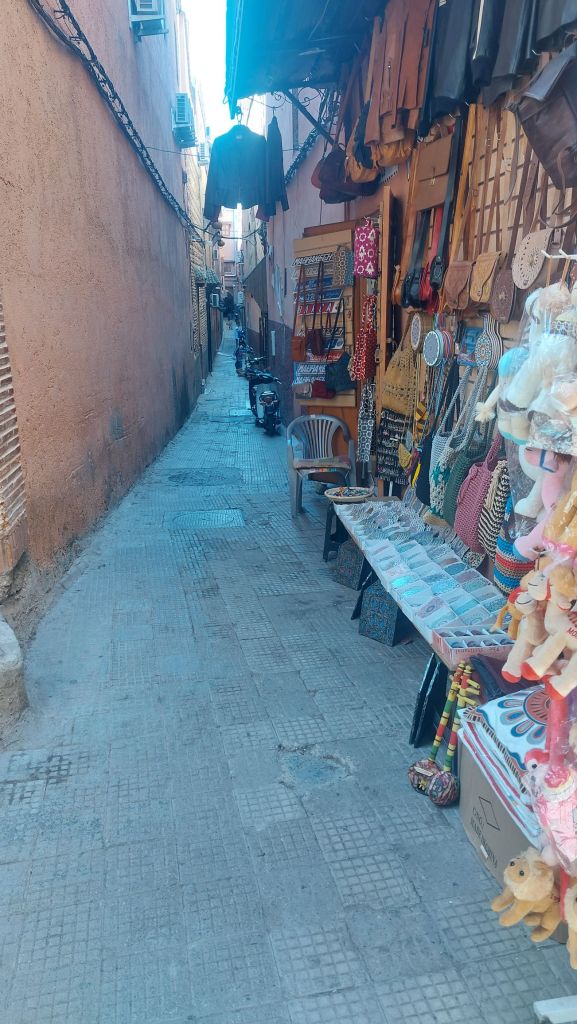
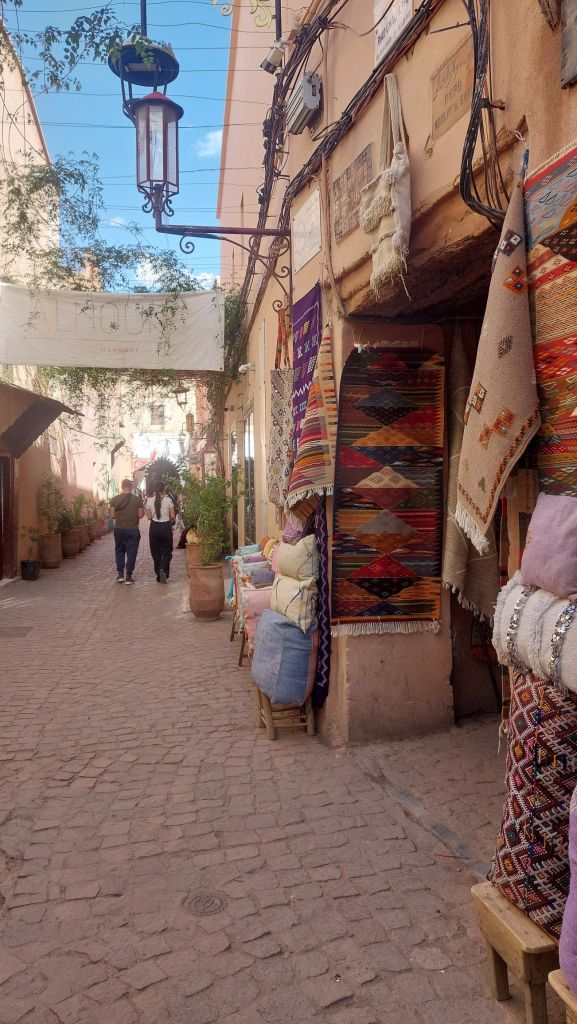
Entering a riad is like finding yourself in a different world altogether. Most visitors are speechless once they walk through the large wooden door. Having found their way through the dark, narrow alleyways, seeing the glorious vision that appears before them is worth the effort.
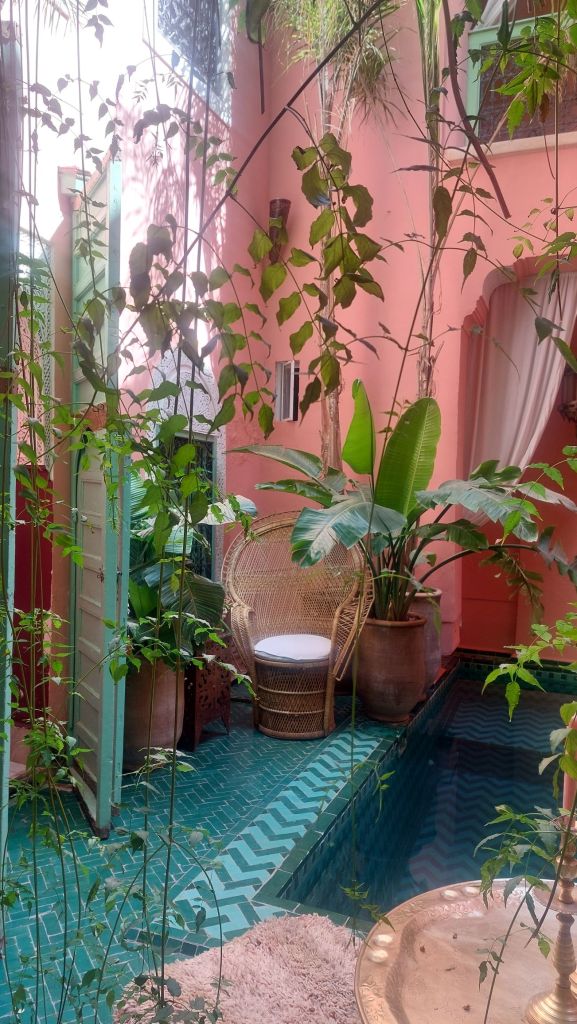
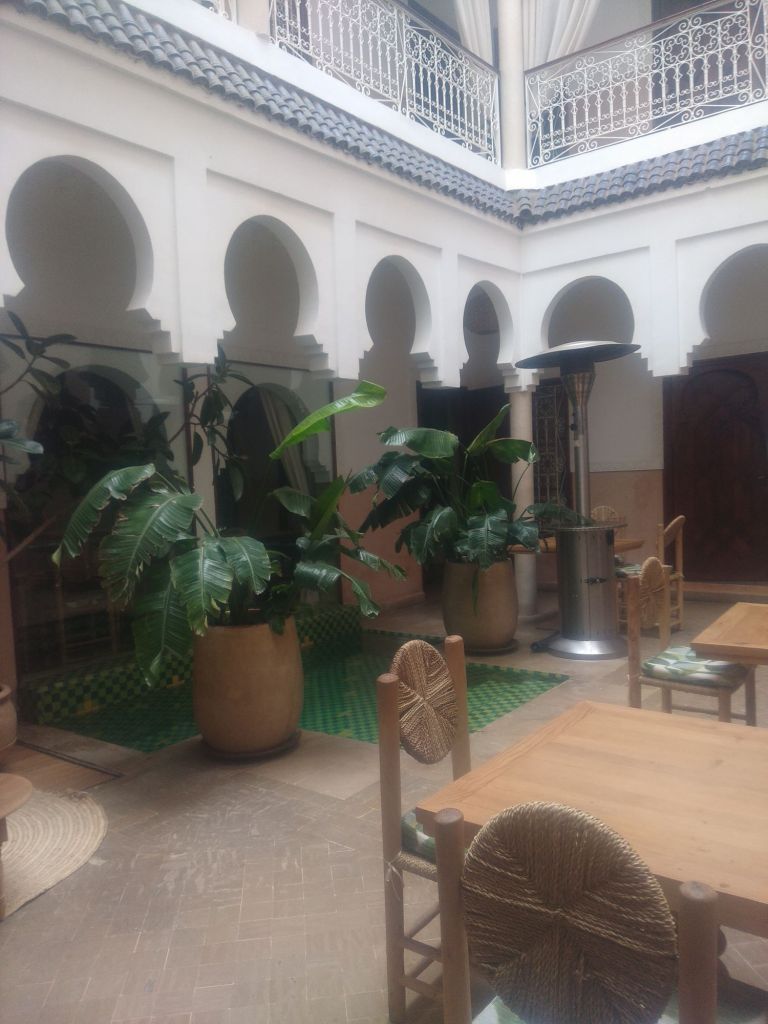
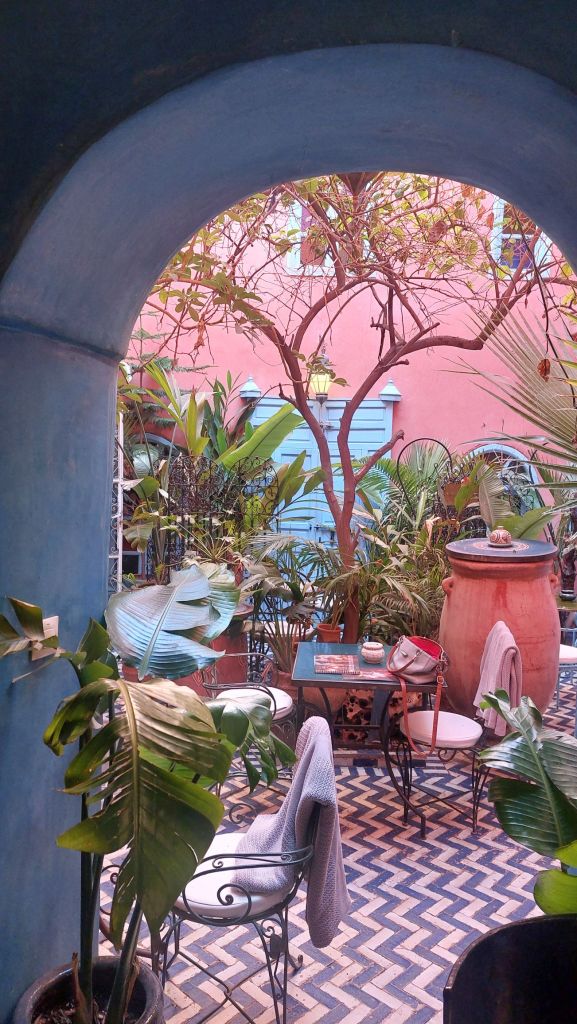
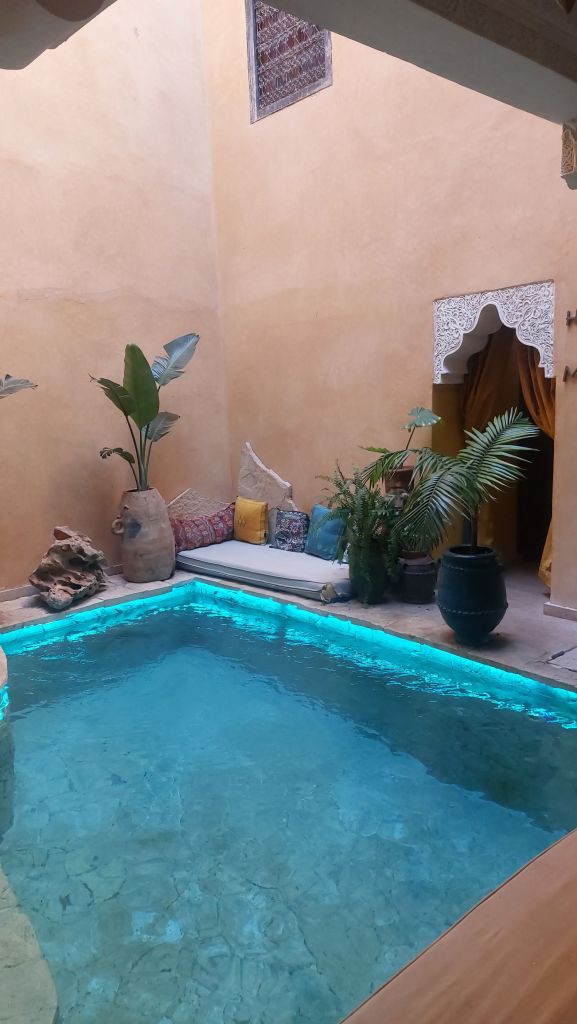
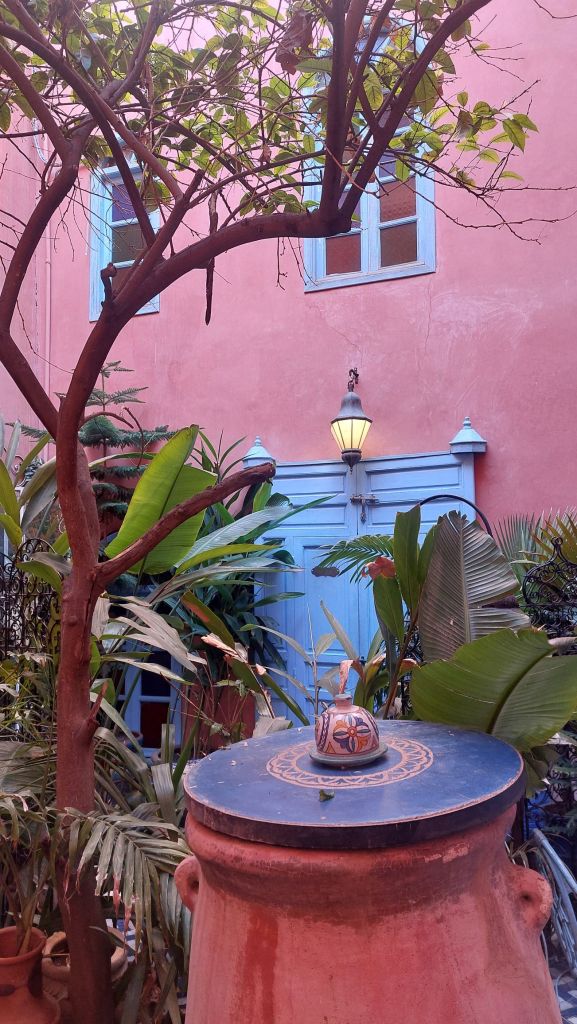
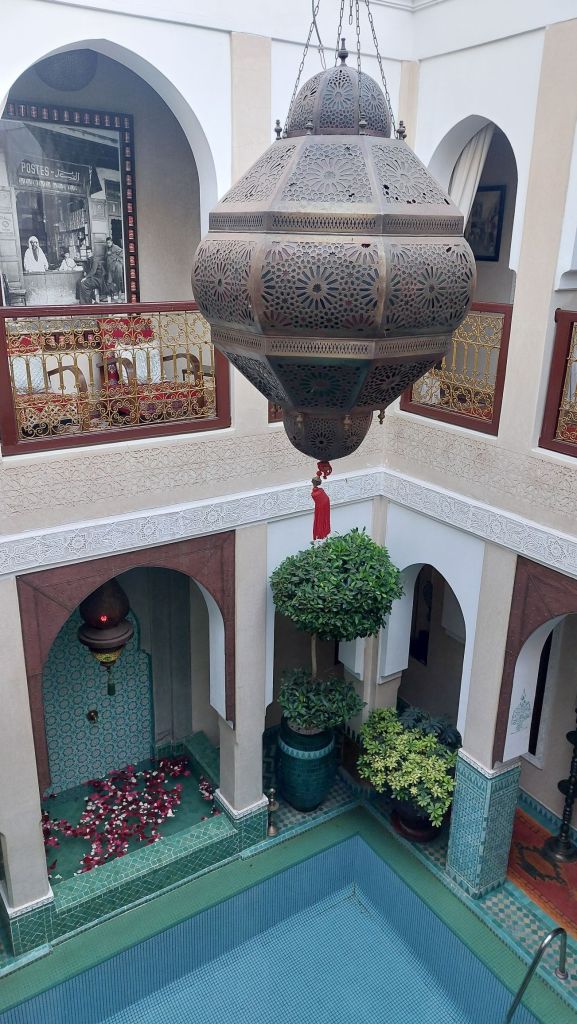
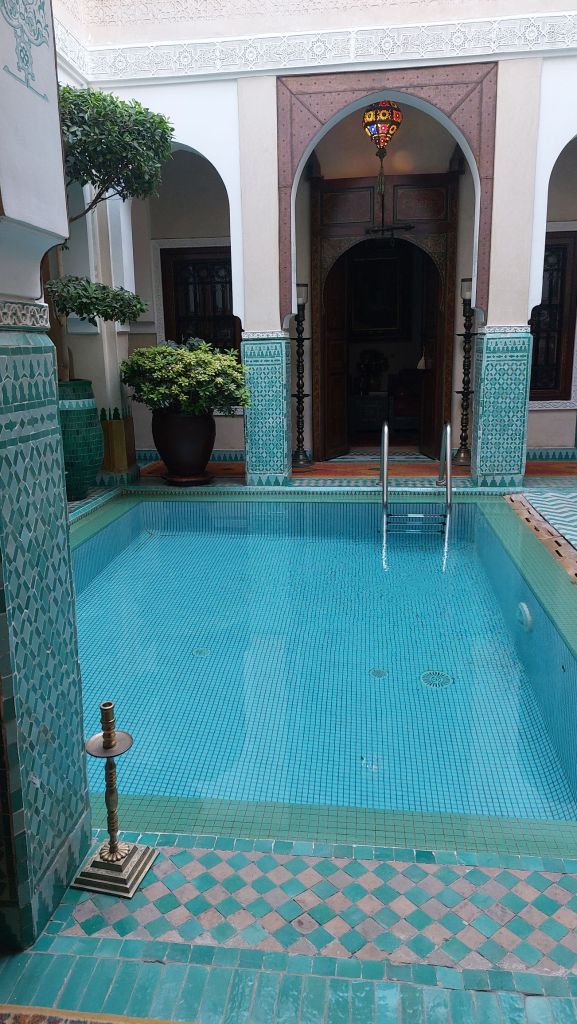
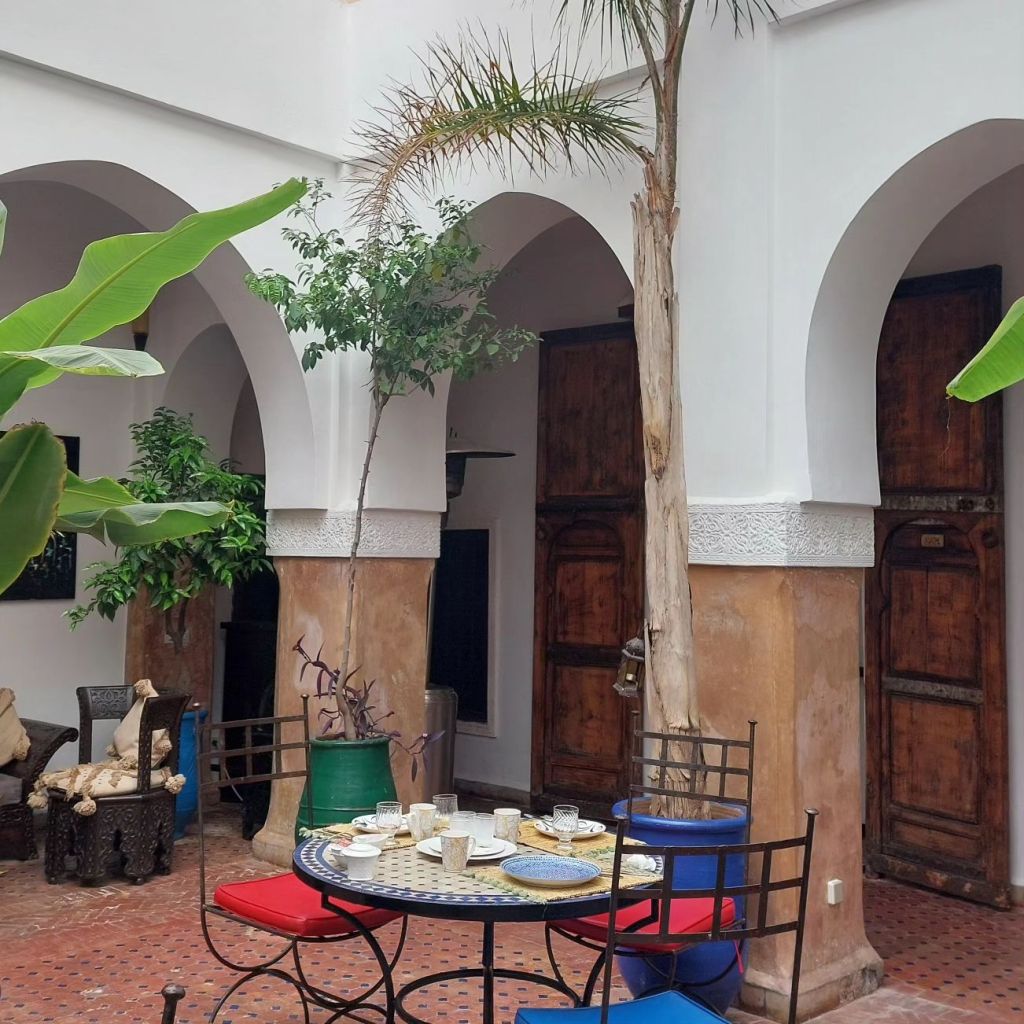
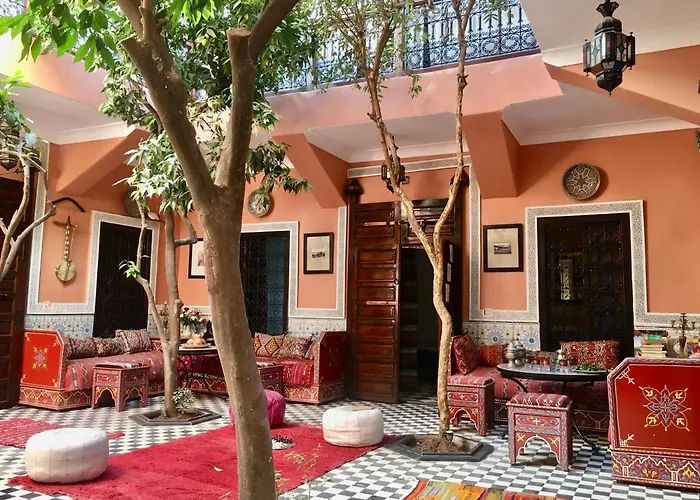
Riads are the homes once owned by the well-to-do of Marrakech.Whole families lived inside them. They offered a private, secluded space, especially for the women of the family. Traditionally, riads are built around a central courtyard with the windows facing inwards. Many courtyards have citrus and palm trees in the centre, reaching up through the open rooftop. There is often a small ornate pool for cooling off in, and many still have their original fountains.
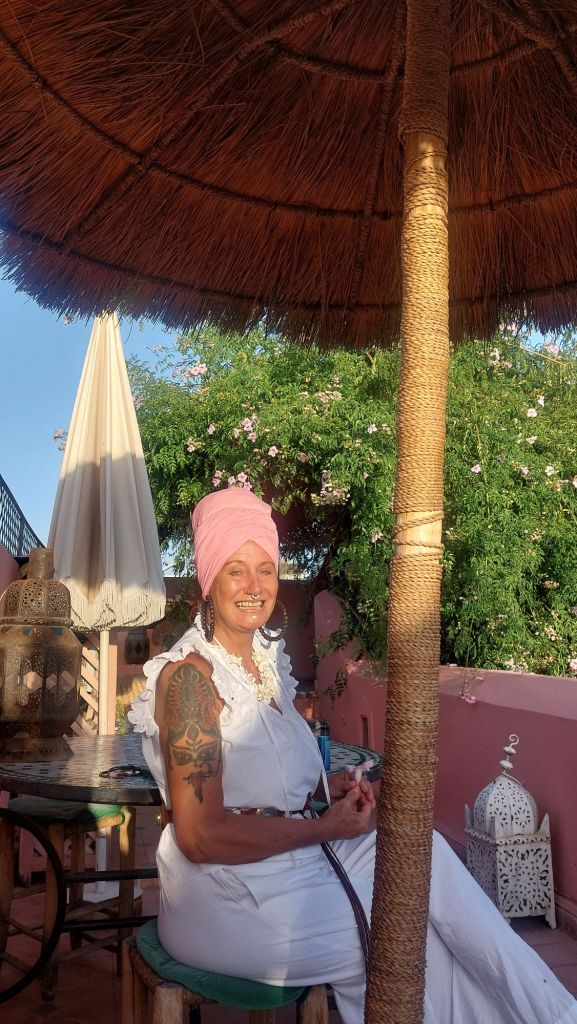
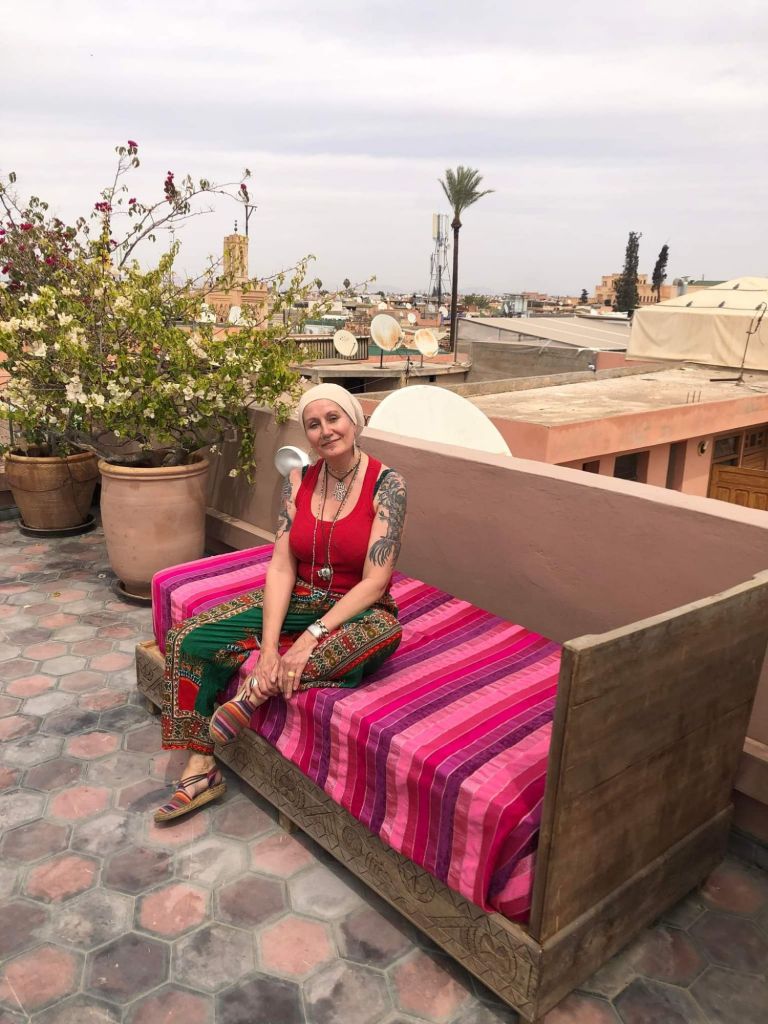
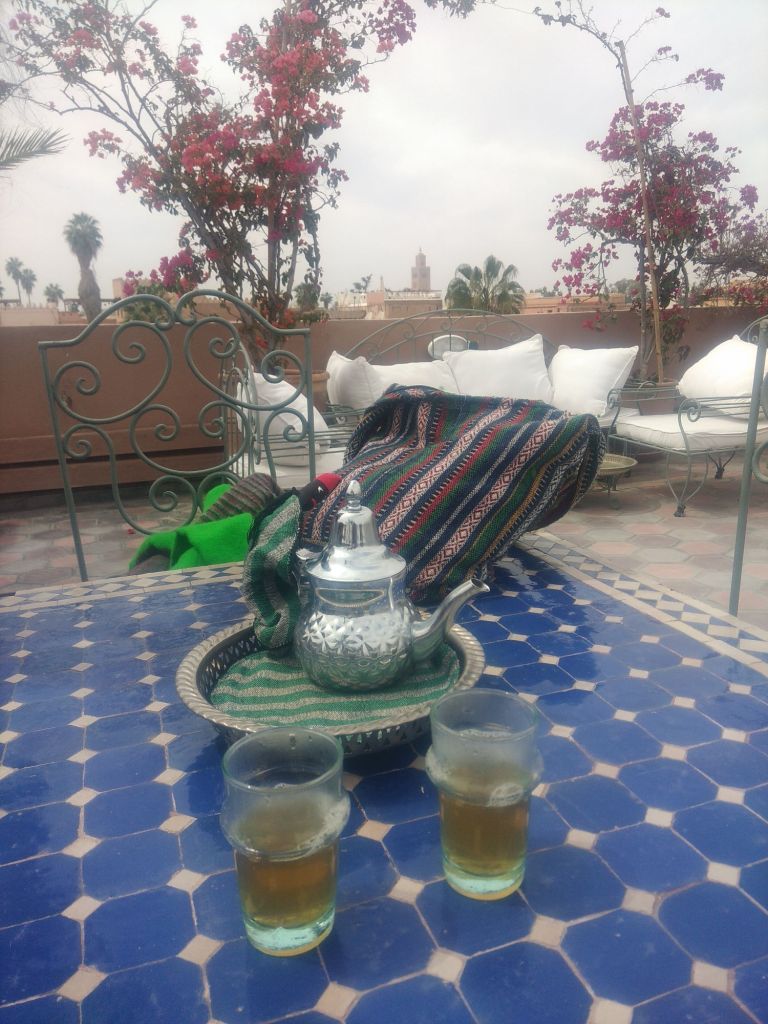
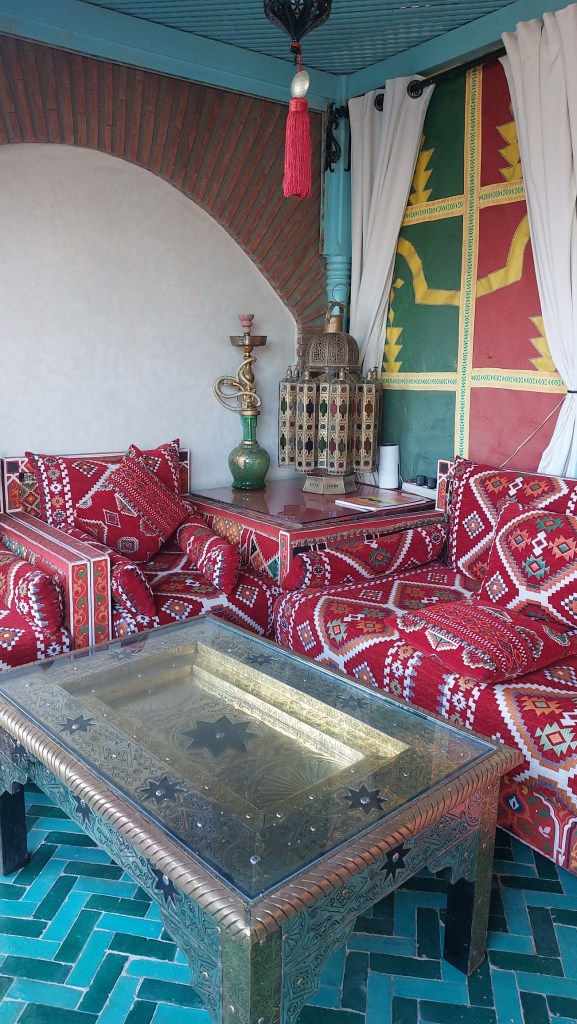
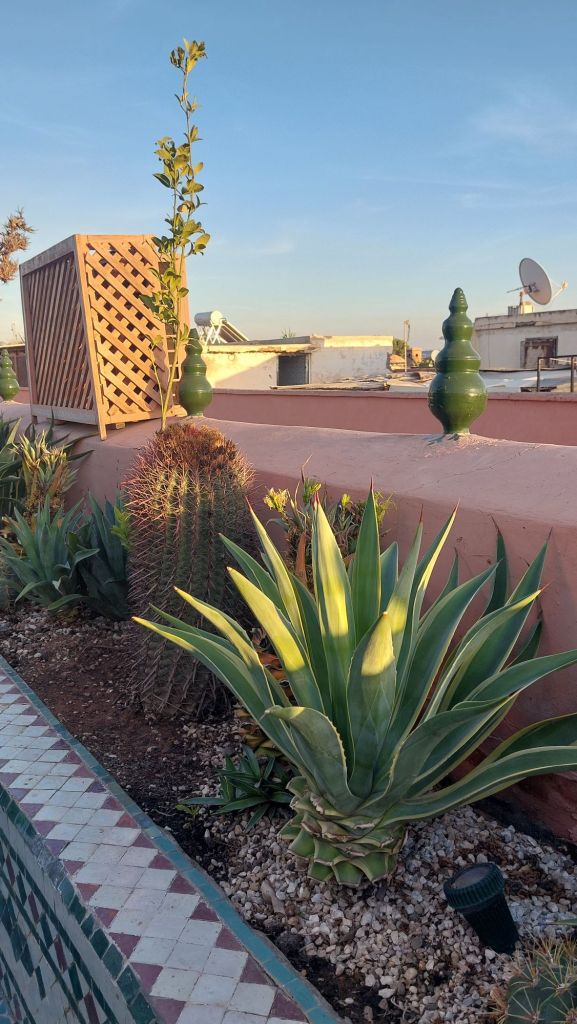
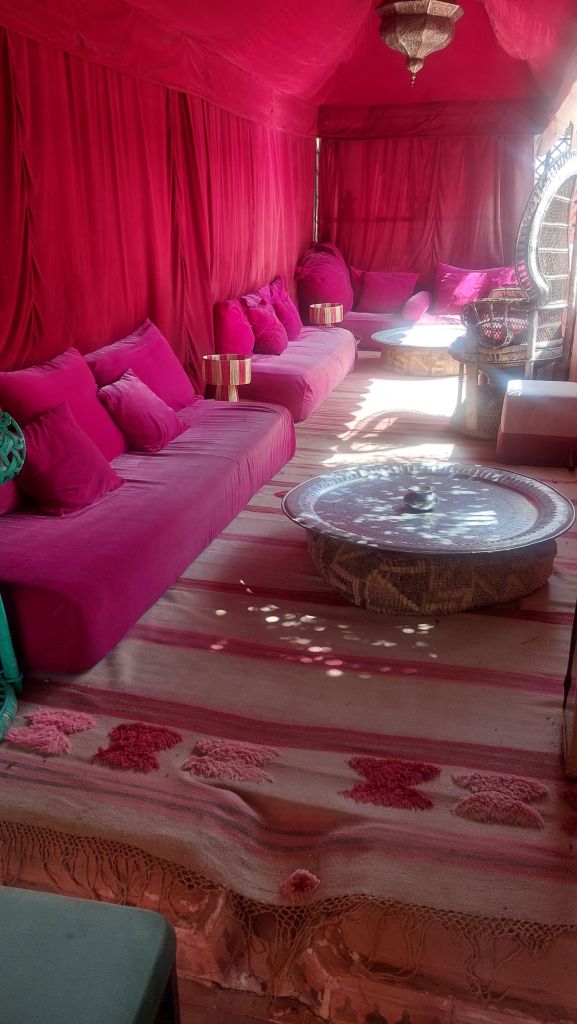
The rooftop can be reached by climbing steep tiled steps. Here, you are greeted by colourful seating in the shade where you can escape from the heat. Rooftop gardens are home to lush foliage where you can relax and admire the views over the medina. You can see the snowcapped Atlas Mountains in the distance.

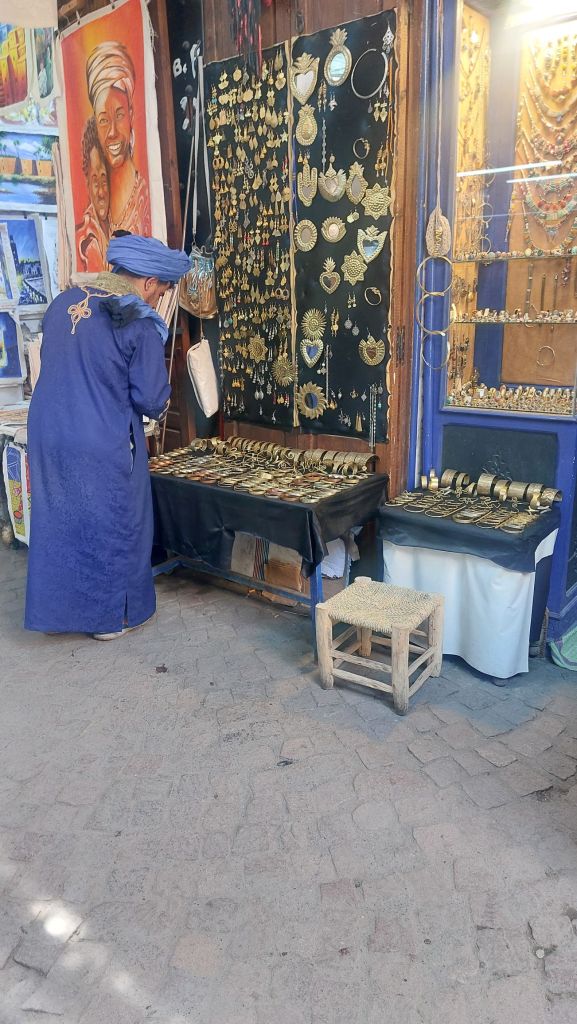
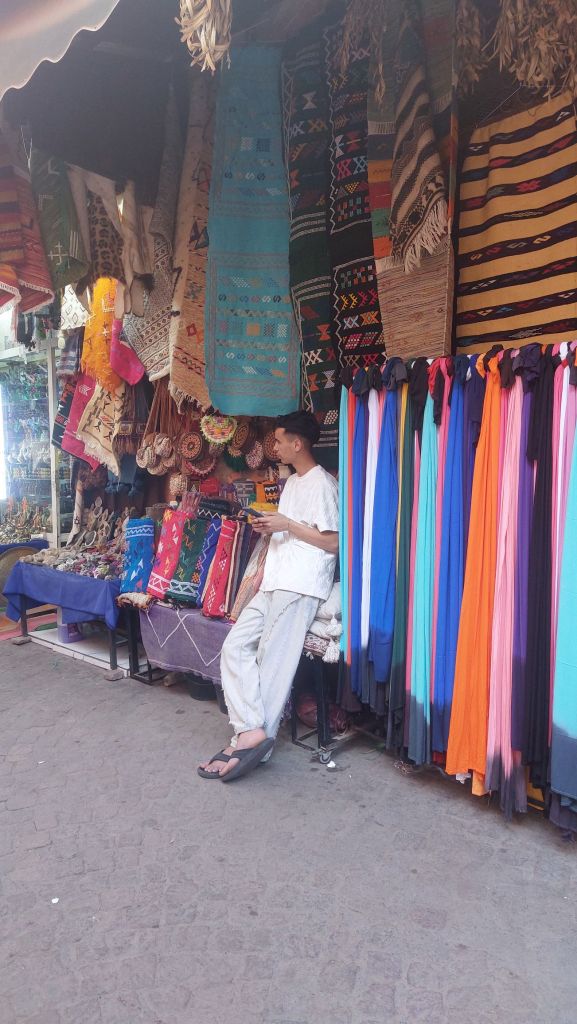
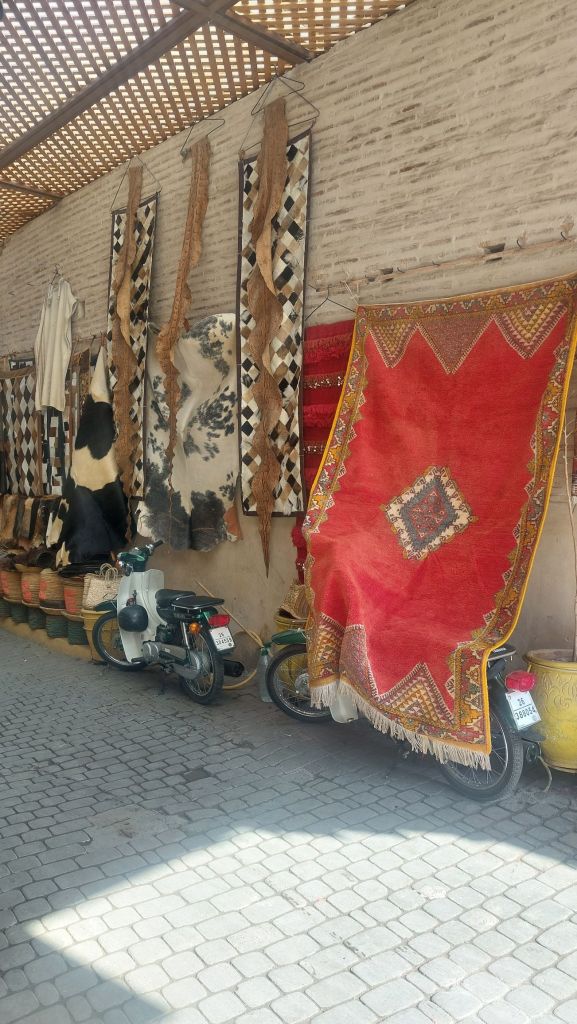
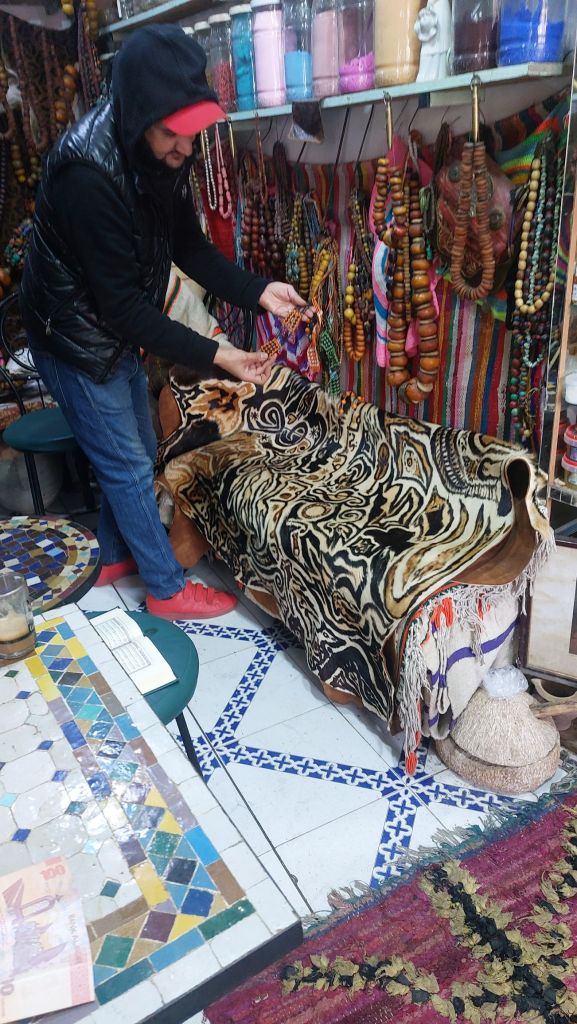
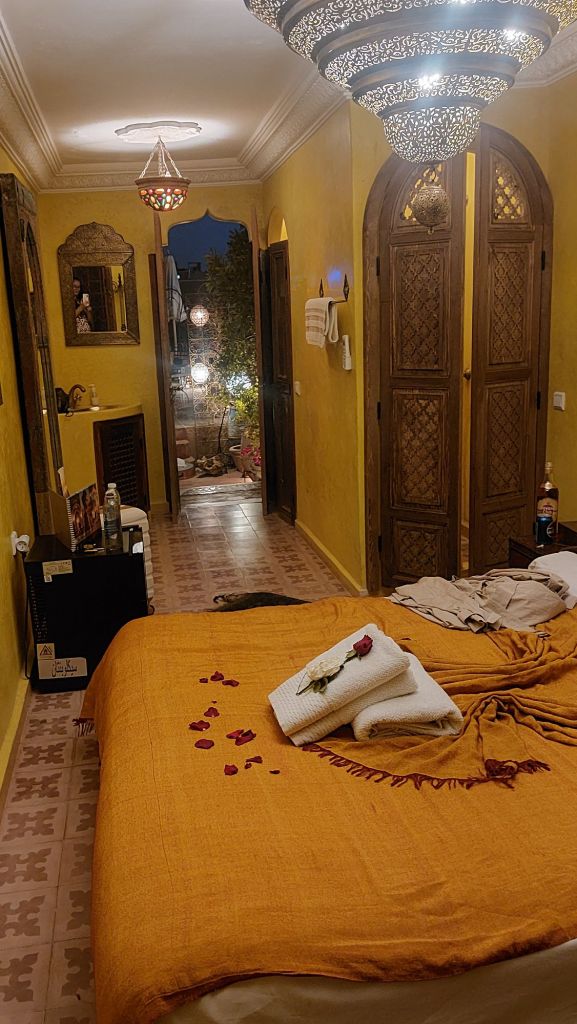
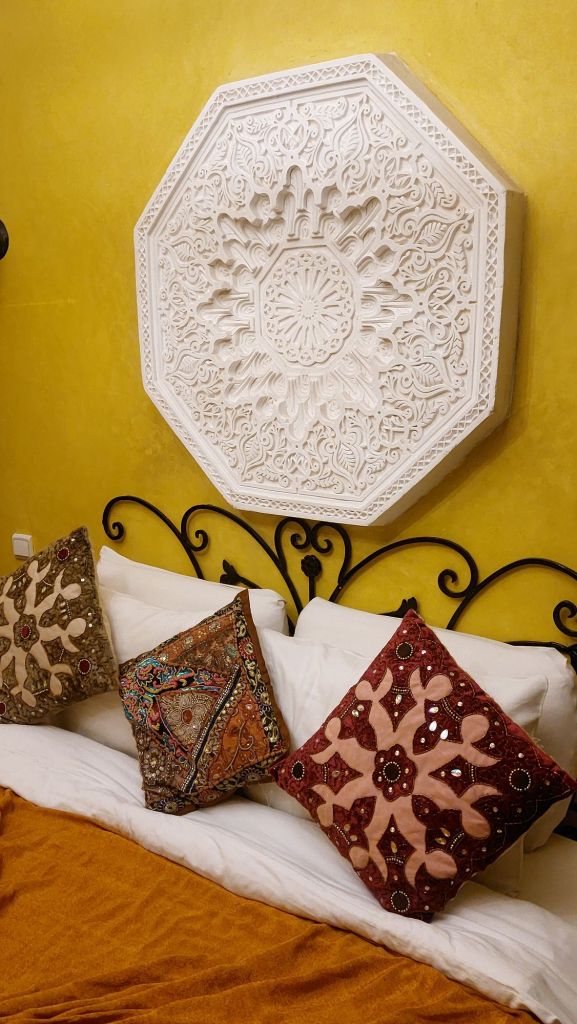
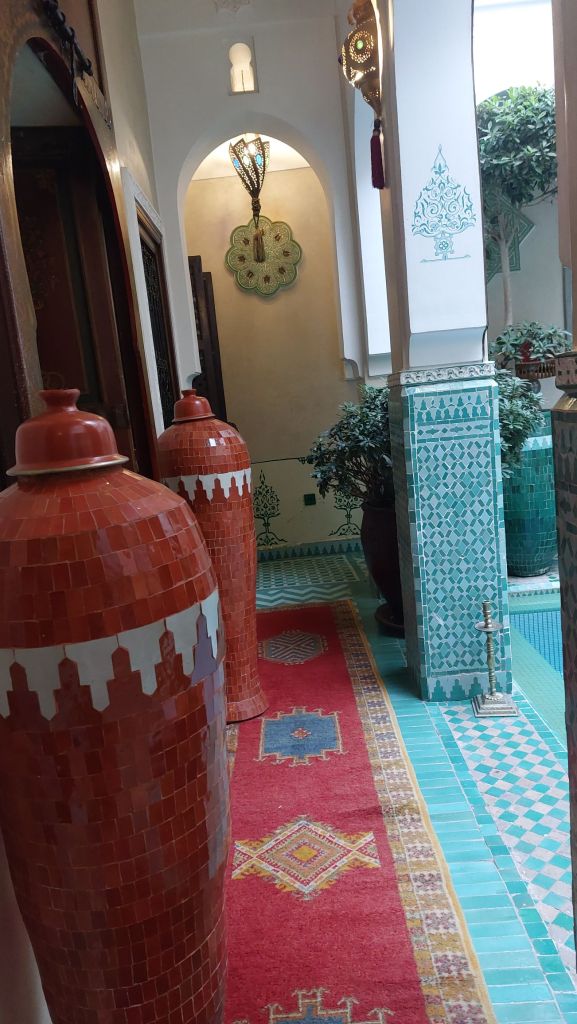
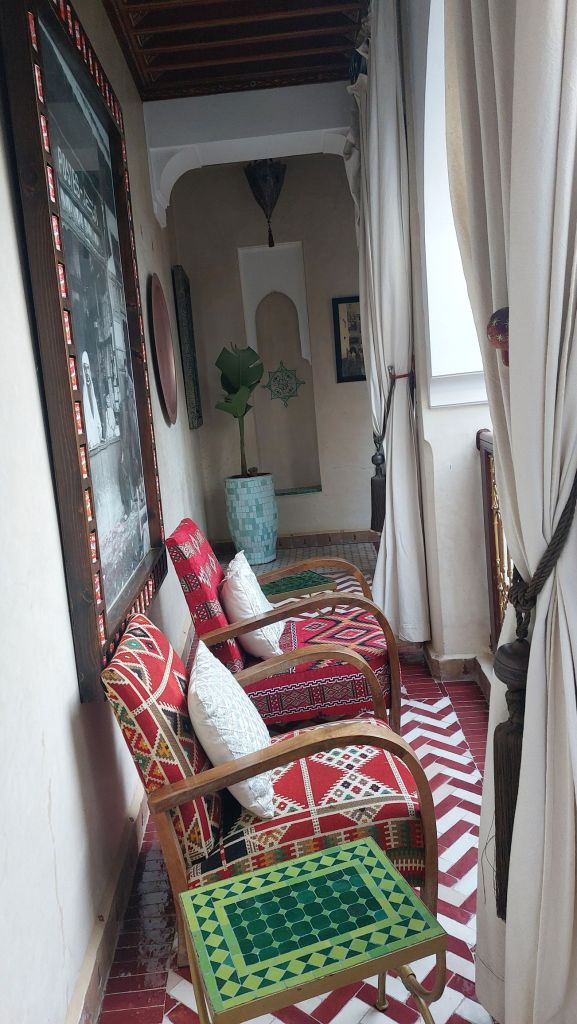
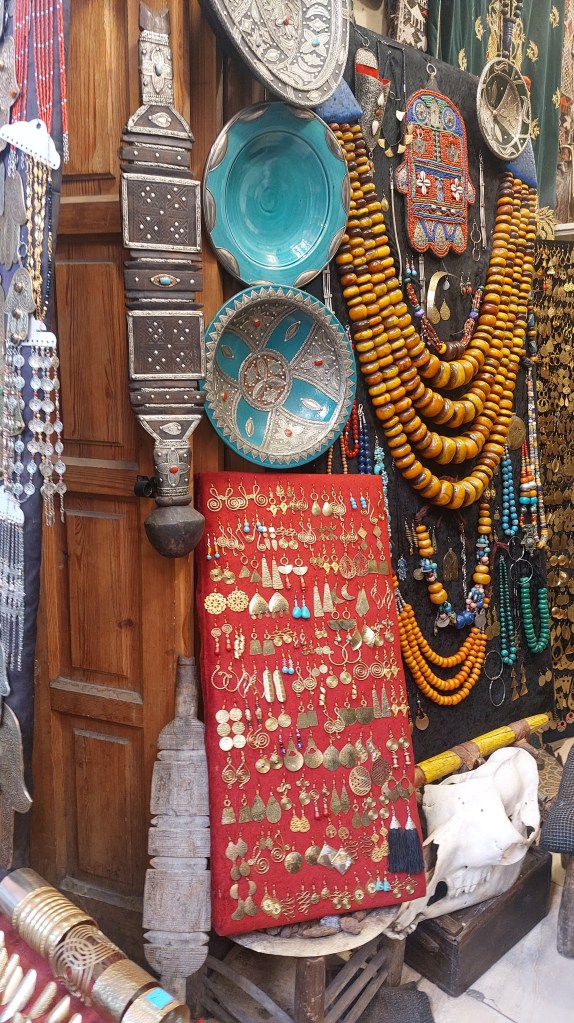
The interior rooms are traditionally decorated in Moroccan lamps and Berber artefacts. These include colourful Berber rugs, cushions, and handcrafted furniture. It’s a cacophony of vibrant colours. A heady fragrance of orange blossom promotes an inviting, cosy feeling inside the walls of the riad.
Many riads around the medina have been purchased by Westerners. They have been restored and revived to appeal to the ever growing influx of tourists. Some of them still have their original zellige tilework. Staying in one of these is like being immersed in a tale from ‘1001 nights’. The latticed windows tell the story of past harems. These kept the women of the household secluded and private
High-end riads have become grand and luxurious. They offer a spa like experience with a hammam and massage service. Some of these were once former palaces.
Rooms in a riad are notably dark inside. This keeps them cool in summer when temperatures can exceed 47° celsius. There is air conditioning in most riads. Extra thick blankets are available during the winter months.
Staying in a traditional riad is an experience. Waking up to the sound of birds singing in the trees and water burbling from the fountain is such a wonderful start to the day. The early morning sunshine reflecting off the tiled floors puts you in a happy mood.
Most riads cook delicious home cooked food for their guests. Many of them also offer cooking lessons. You are taught how to make traditional Morroccan food. They also provide their guests with a hearty breakfast. This is sweeter than we are used to in the west. Traditional msemen pancakes with amlou are my favourite.
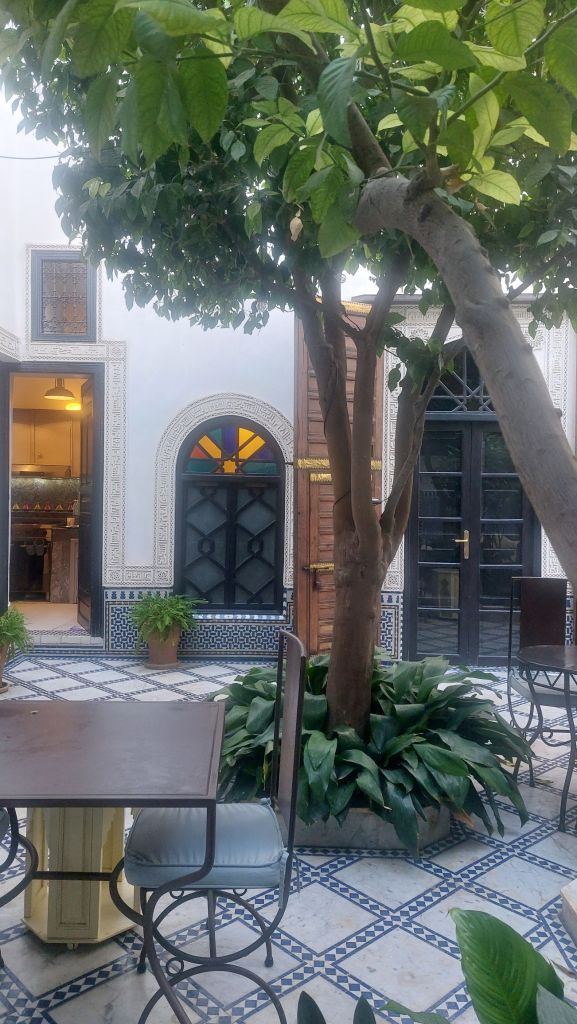
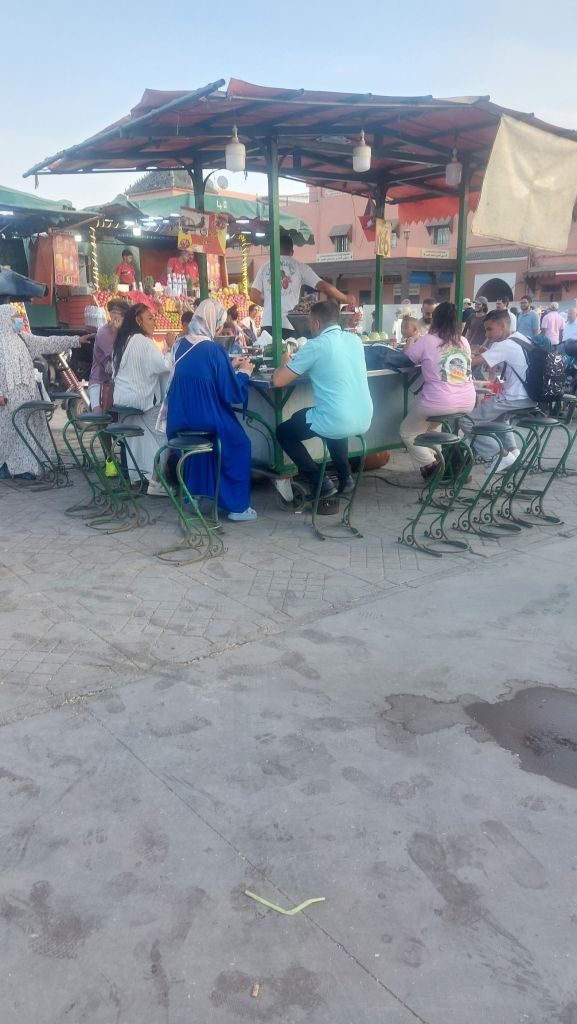
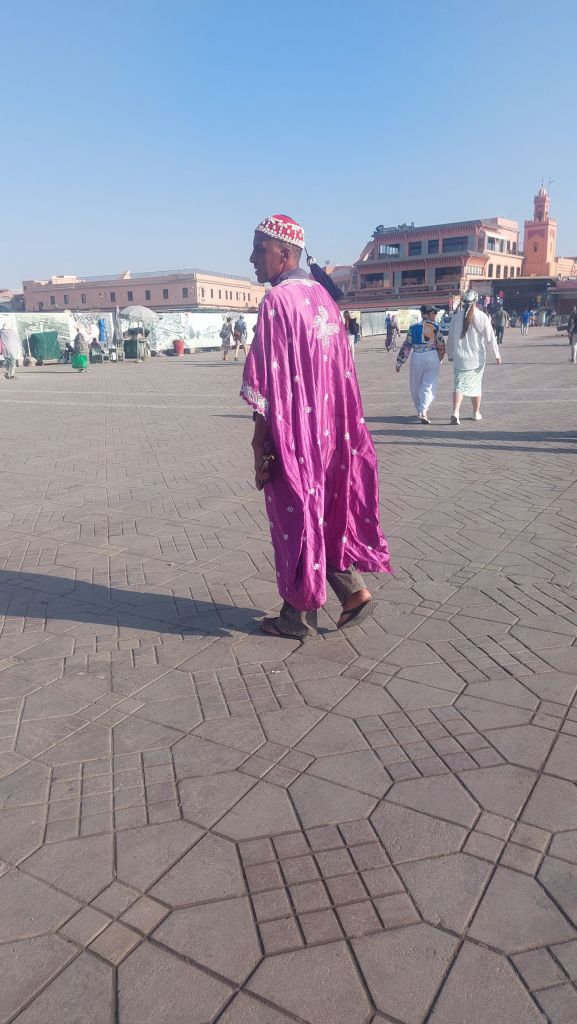
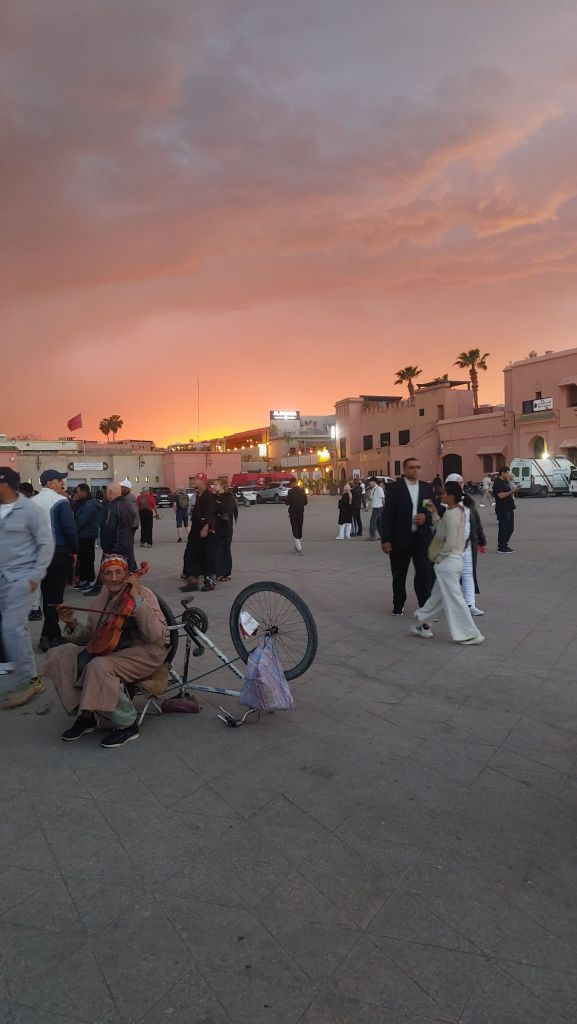
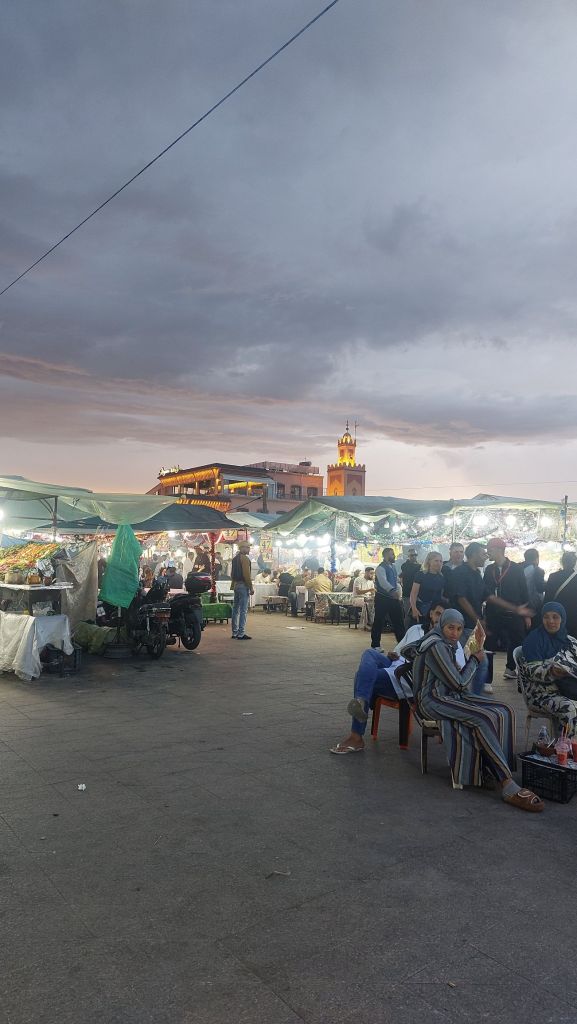
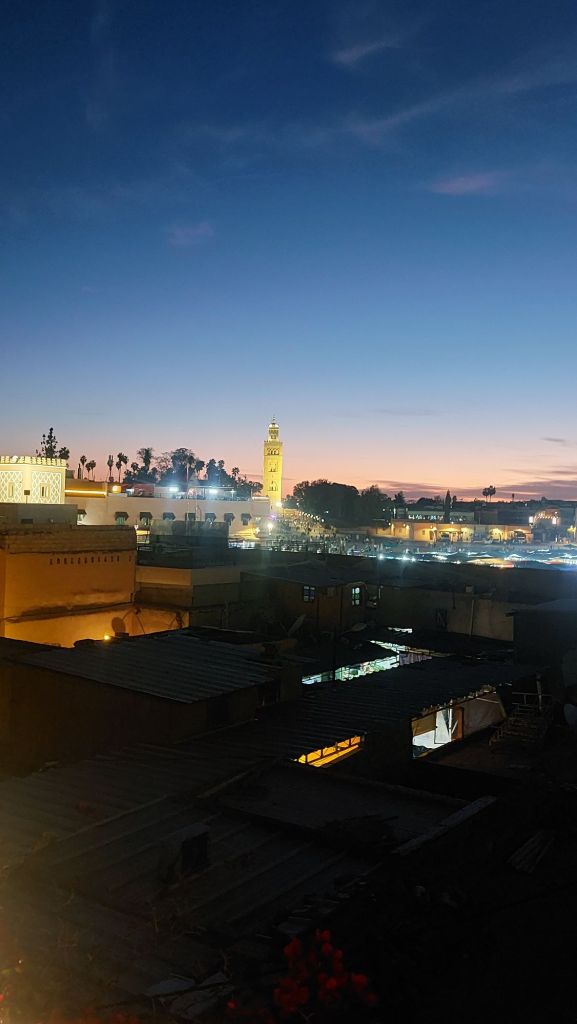
The atmosphere inside a riad is tranquil. On the rooftop, you will hear the mystical call to prayer from the Koutoubia mosque. If you’re staying near Jamaa El Fna, you can hear the gnawa musicians and the drumming in the distance. In the evening, as you watch the sunset, you are overcome with a feeling of inner peace and stillness. This calm, serenity is a far cry from what is happening outside the big wooden door of the riad.
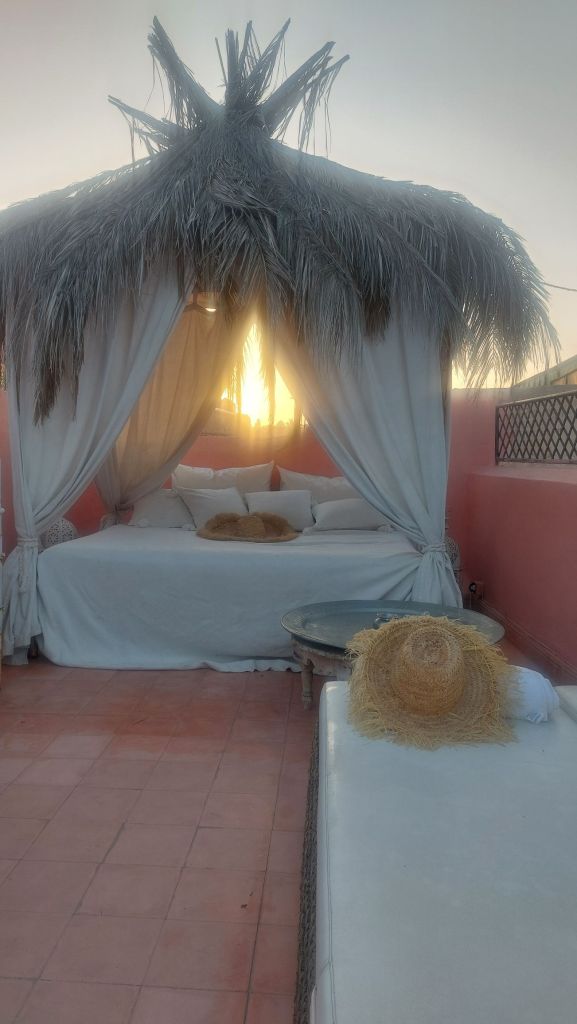
I like having what I call, ‘a riad experience.’ Enjoying the culture of Marrakech like a local. Whether it’s a former palace or a small family owned riad. Staying in a riad is the perfect introduction to the history and culture of Marrakech. It’s an intimate experience. The staff are friendly and helpful. They can organise tours and activities for you. Most riads I have stayed in have felt as though I was staying with a family. It’s a blissful experience.