El Badi Palace was built in 1578 by Sultan Ahmad al-Mansoor of the Saadian dynasty.
The palace was built to showcase the considerable wealth of the Saadian dynasty and was a prime example of Islamic architecture and exquisite craftsmanship.
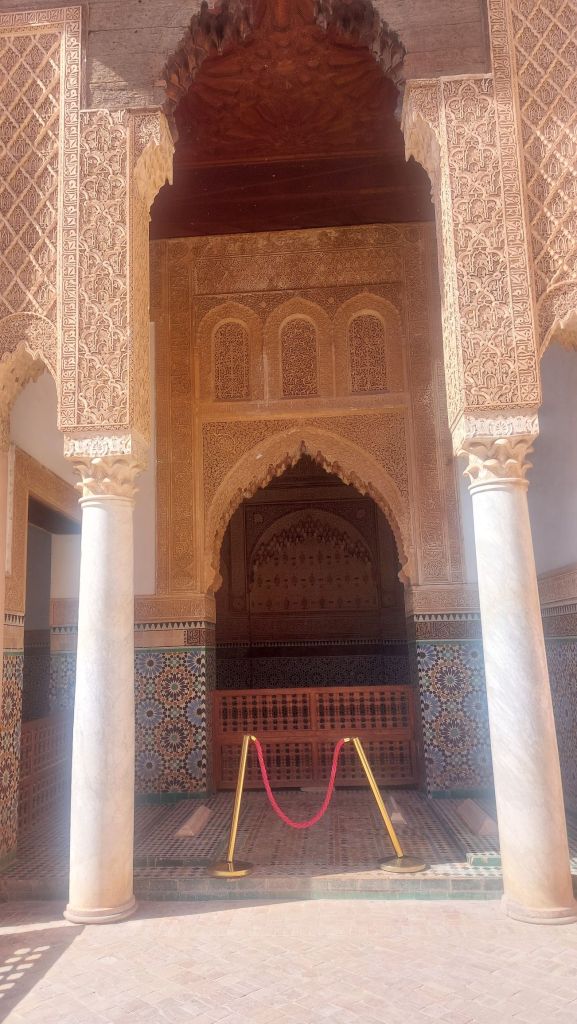
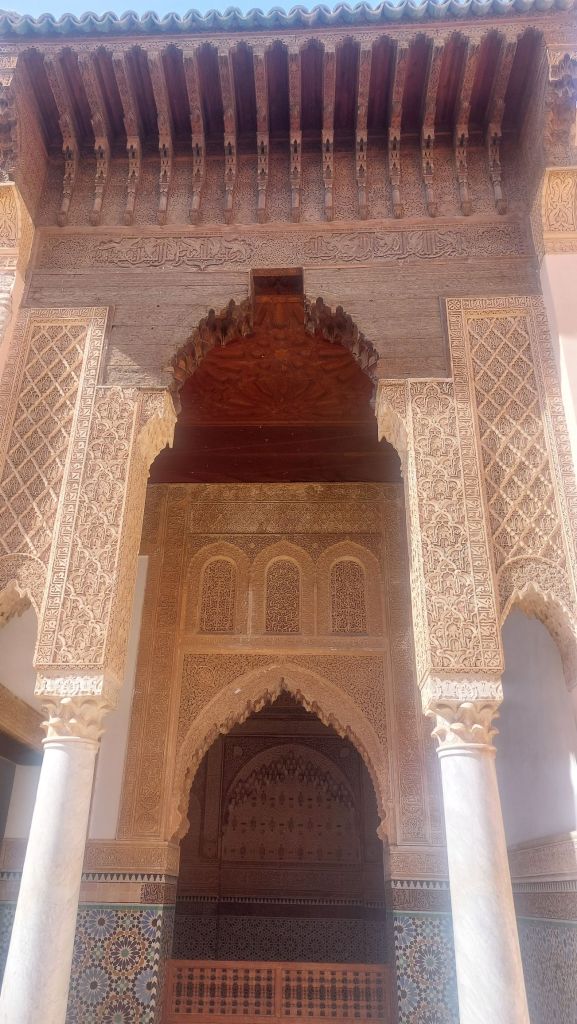
Using both Moroccan and European influences, the palace was beautifully decorated with intricate mosaic tiles, marble arches, and ornate carvings.
The palace was home to the sultans harem and included over 500 women.
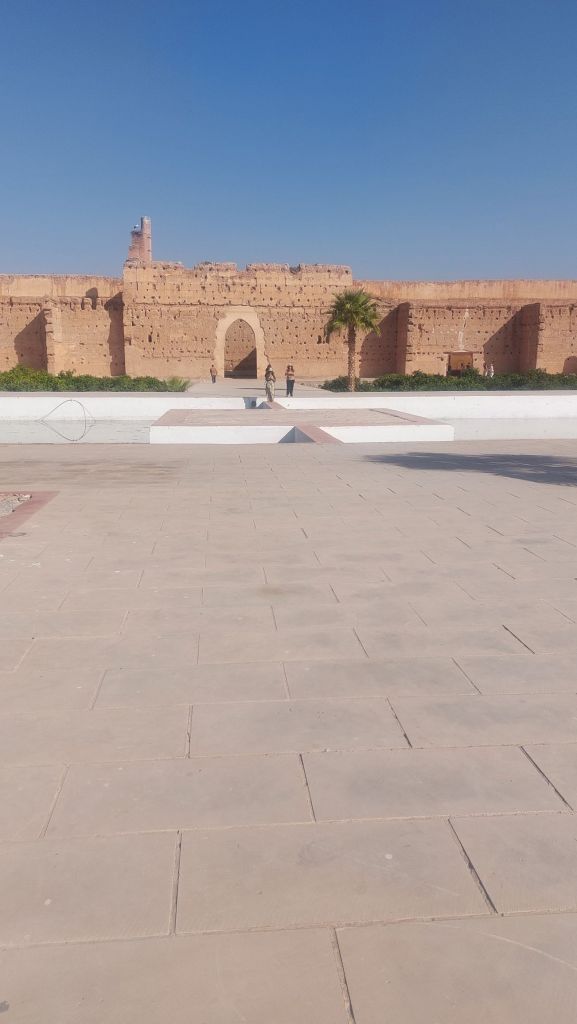
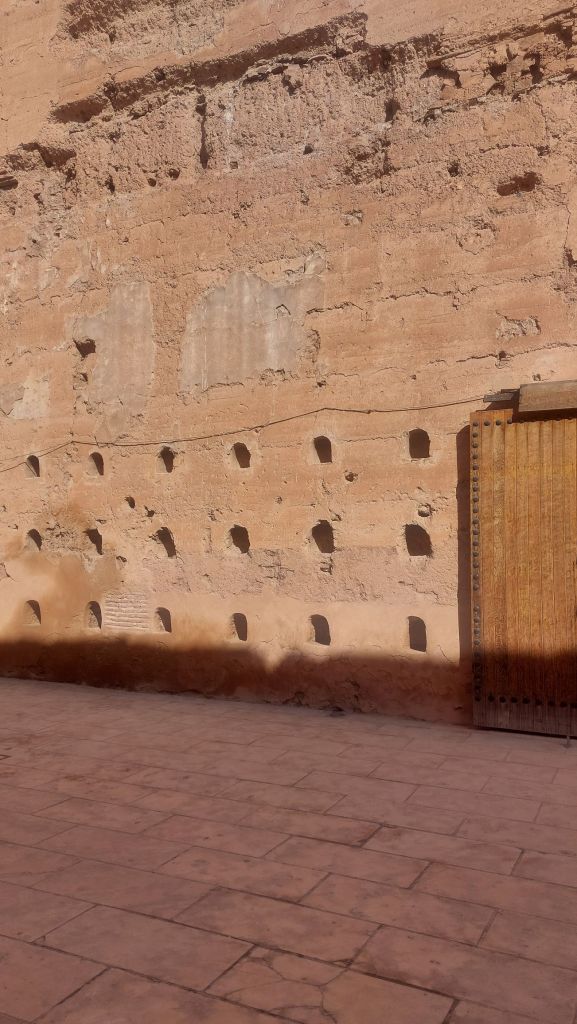
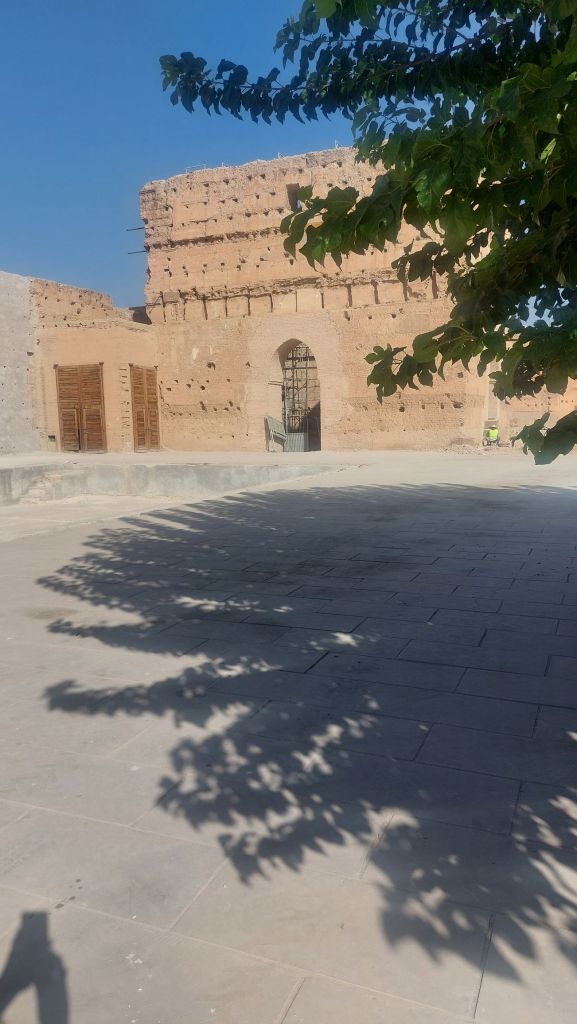
Now, only the ruins remain.
After Sultan Ahmad al-Mansoor died in 1603, the palace fell into neglect and was subsequently stripped away with the materials being used for other buildings in Morocco.
The palace is certainly worth a visit if you want to learn about the history of Marrakech and the ruling elite centuries ago.
The exhibition space contains the Almoravid Minbar, which is a finely decorated pulpit that once stood in the Koutoubia Mosque.
It also hosts temporary art and cultural exhibitions.
The underground chambers contain information and photographs about the palaces history.
Image by Freebird Tracey.
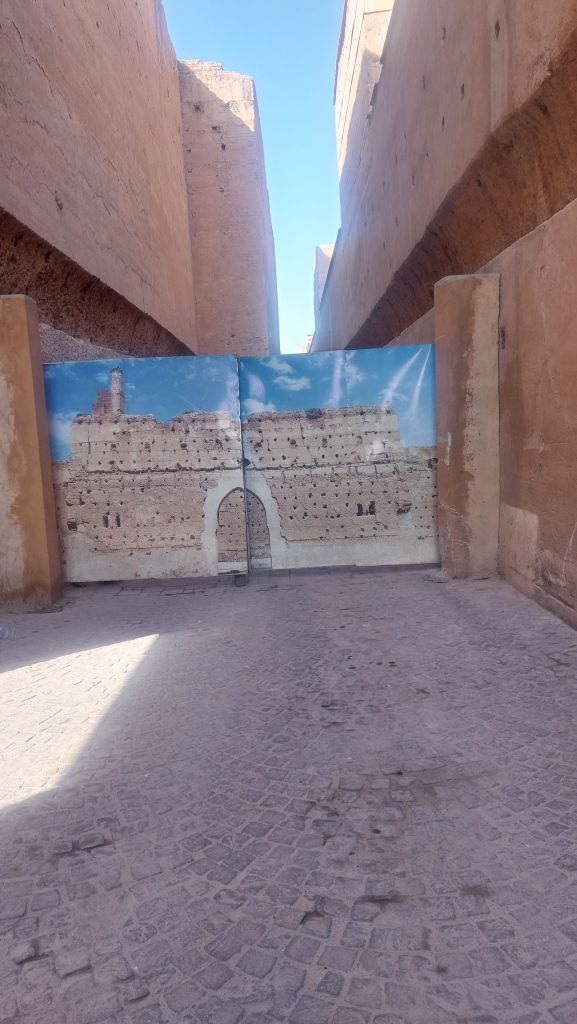
The palace was badly damaged during the earthquake in 2023, and renovations have taken place to repair the cracks in the walls.
El Badi Palace is situated in the Kasbah district of Marrakech and a popular tourist attraction.
The courtyards are impressive, and the nesting storks on the towers give it a magical feel.
Images by Freebird Tracey.
You get a sense of the grandeur of the Saadian dynasty, and there’s a feeling of peace and tranquillity within the walls of the once opulent palace.
El Badi Palace is open every day from 9.00am to 5.00pm and costs 100 dirhams to enter.
Images by Freebird Tracey.
For more information, contact me via the email address below;
Marrakech is a culinary delight for all foodies out there.
Image by Freebird Tracey.
The streets are abundant with fresh, seasonal vegetables and fruit.
Herbs and spices galore.
The aromatic aroma of street food fills the air, tempting the tastebuds.
Fine restaurants with impeccable service, in beautiful surroundings, call out to you to come inside and sample their cuisine.
But where do you start?
What do you order?
If you’re anything like me, you may want to fully immerse yourself in the culture of places you’re visiting.
I particularly enjoy sampling the signature dishes of a region and eating the same food that locals do.
It’s a way to get to know the culture, and food is a big part of life in Morrocco.
The locals are very hospitable people and often invite tourists home for a meal with their family.
With an overwhelming choice of food to choose from, you may need a little help to decide what to try..
Images by Freebird Tracey.
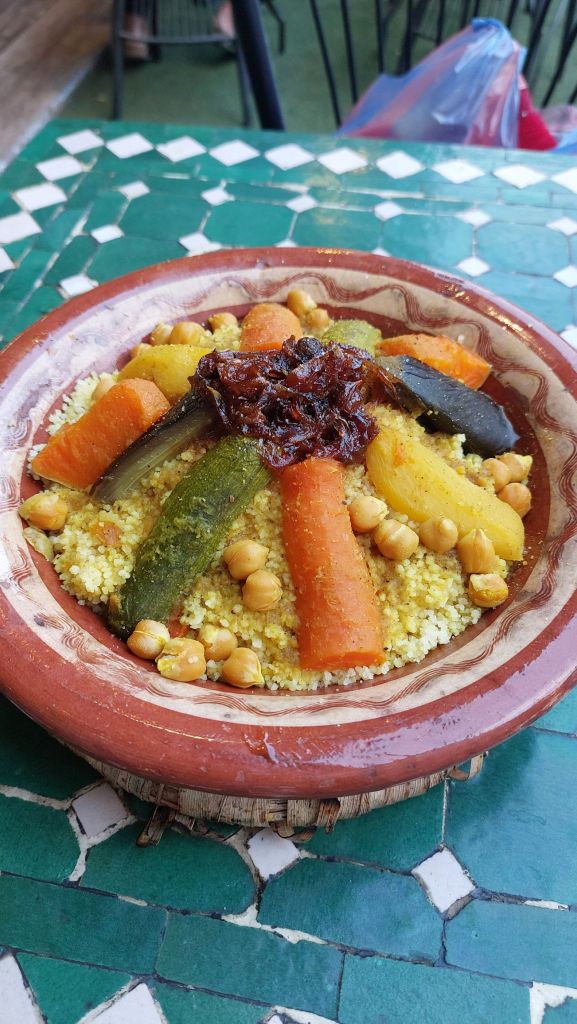
The two most popular dishes in Marrakesh are tagine and couscous.
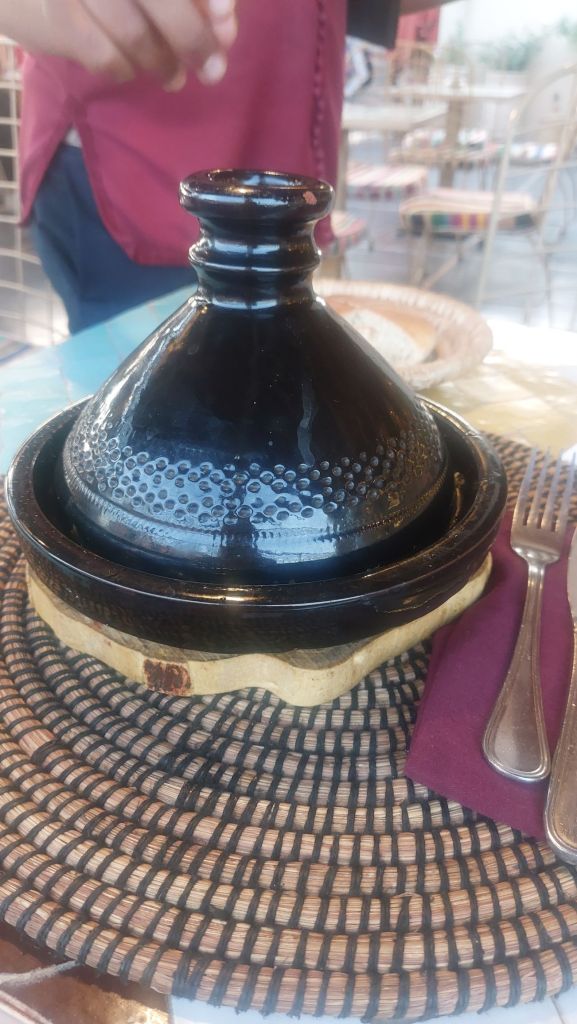
Tagine is the name of the clay or ceramic pot that the dish is cooked in.
It consists of layers of fresh vegetables,with meat in the centre.
Chicken or lamb is the most popular.
Often, dates, olives, fresh lemon, and spices are added for flavour, and everyone has their own personal recipe for making a tagine.
Chicken tagine/image Freebird Tracey.
Couscous is a grain made from semolina and served with meat and vegetables.
It is eaten religiously on Fridays.
In Jamaa El Fna, you will find sheeps head and snails for sale.
Tourists are targeted by street food vendors to try snails, and those who actually do say that they quite enjoyed the experience.
Apparently, broth they’re cooked in is quite tasty, and although it’s an unusual tasting dish, it’s not inedible.
Sheeps head is for the brave amongst us, but it appears to be popular in the main square and a regular sight on display.
The locals sit at street stalls eagerly munching on the spit roasted mutton, enjoying every morsel.
Snails in a broth/image Freebird Tracey.
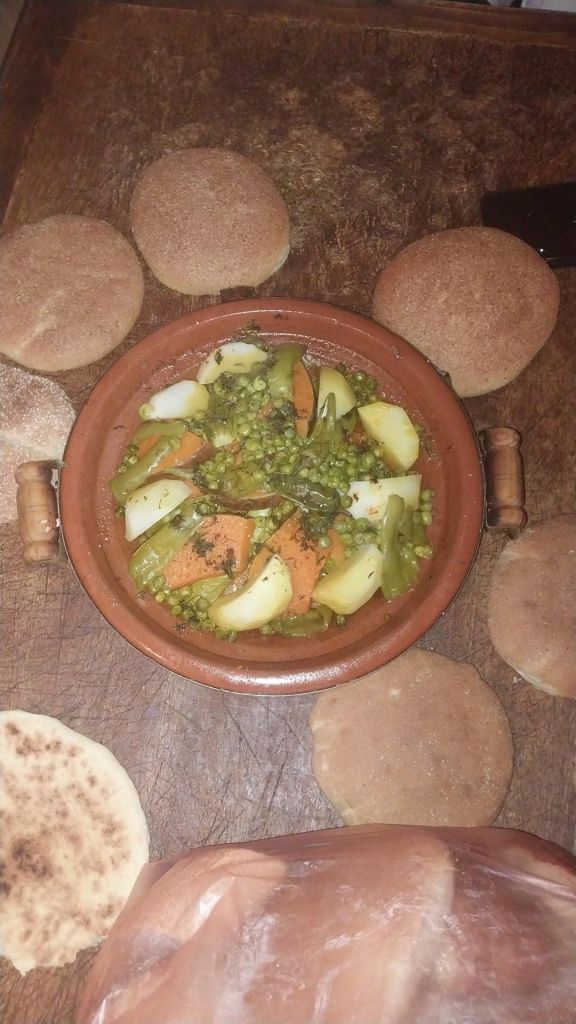
Every dish is served with traditional bread in Marrakech. It is freshly baked each morning and delicious served warm.
Tangier is also a popular dish.
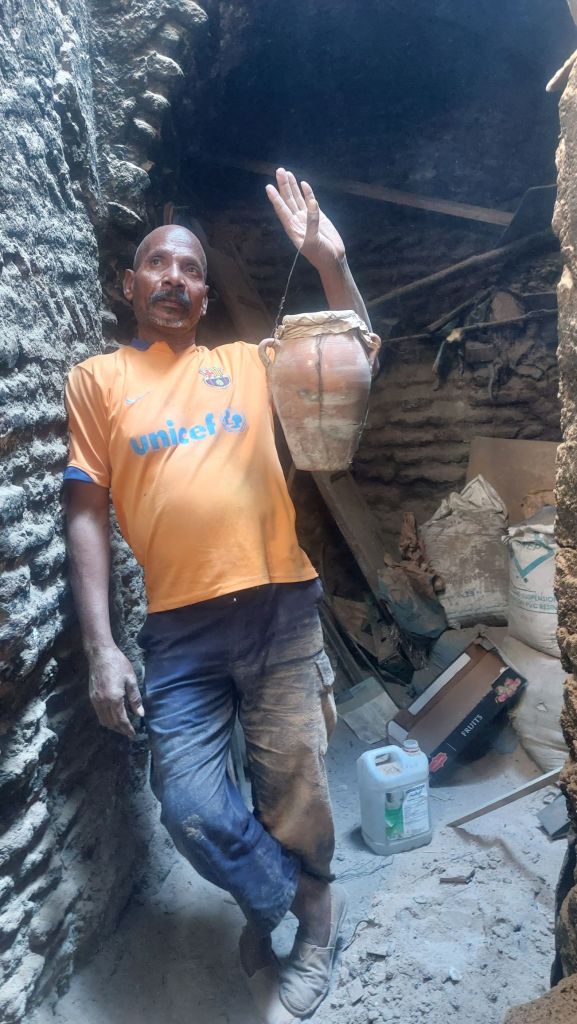
It is meat (usually lamb), cooked very slowly in the embers of the local hammam.
Traditionally, the tangier is taken to the hammam early in the morning and left to cook throughout the day.
It is then collected and served for dinner with vegetables or bread.
The meat is incredibly tender and falls off the bone.
Tangier cooking in the Hammam/image Freebird Tracey.
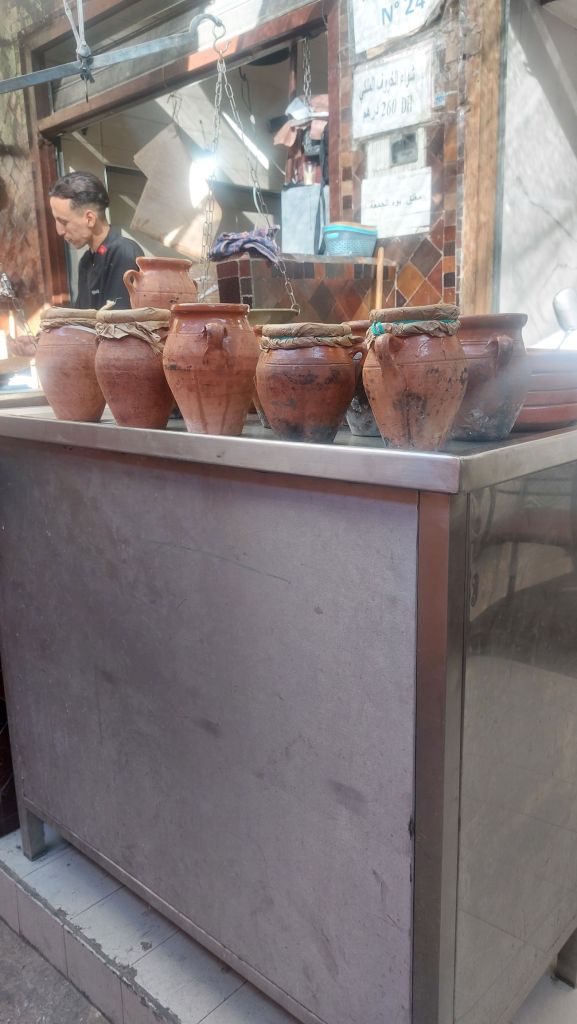
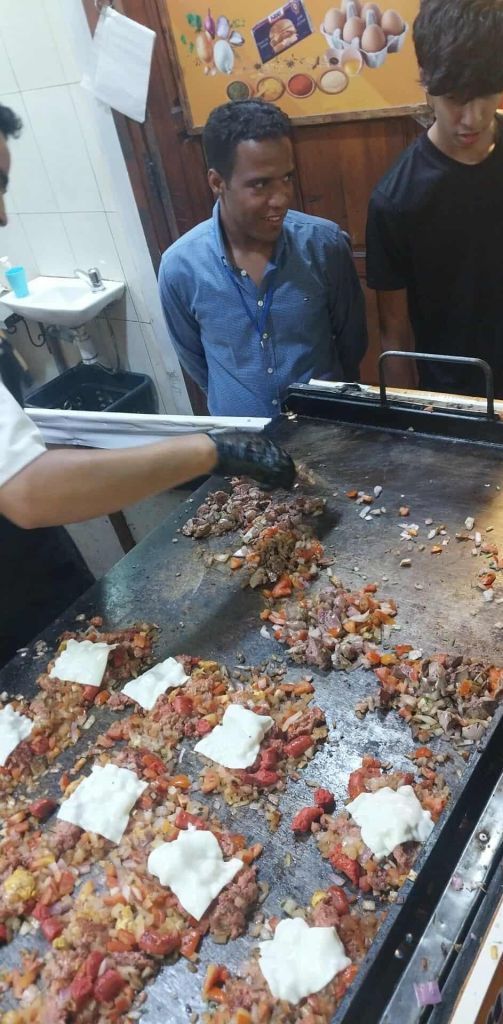
There are plenty of street food vendors in the medina, tucked away in the souks.
They serve really good quality food and it’s cheap.
There is a row of street food vendors who only sell tangiers, and this is very popular with locals and tourists alike.
Image by Freebird Tracey.
Taking a street food tour is a great way to get to try the best places. There are several tours available during the daytime or evening.
Street food vendor in the medina/image by Freebird Tracey.
Marrakech caters to vegetarians and vegans also, with a good choice of quality food including excellent salads, delicious vegetable tagine and couscous.
Images by Freebird Tracey.
Several Italian restaurants in the medina offer excellent pizzas and pasta dishes if you fancy a change from morroccan food.
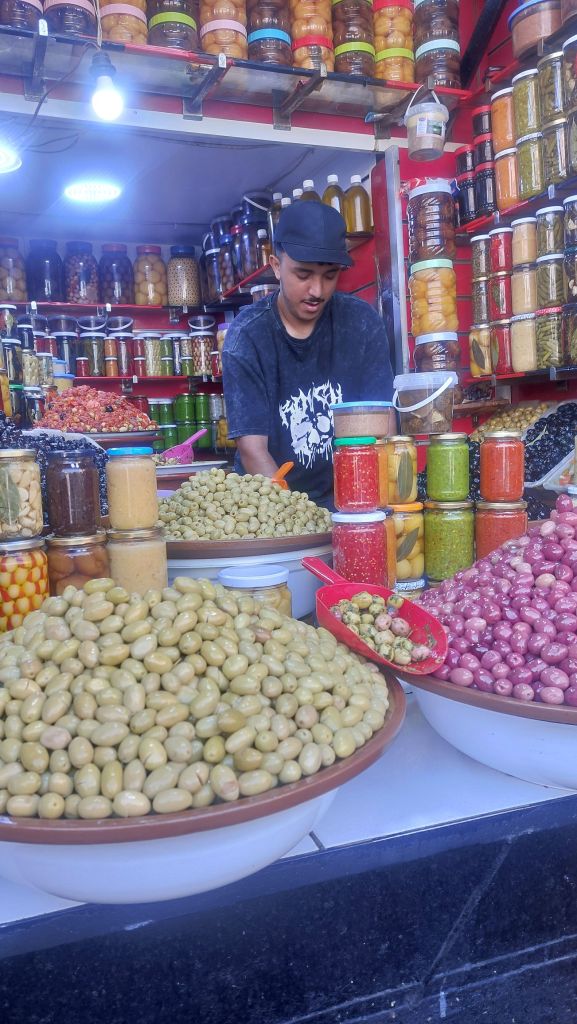
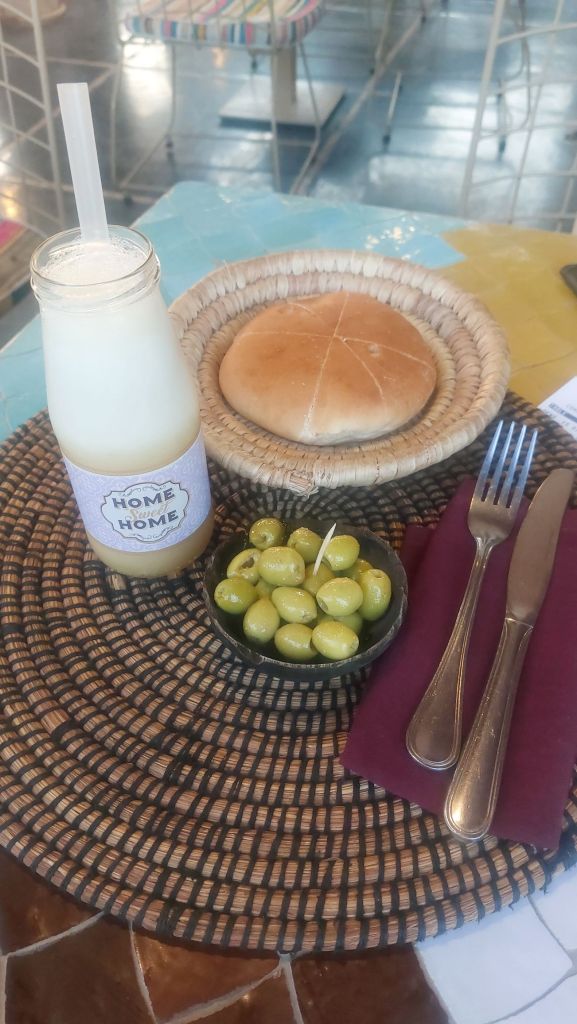
Olives are served with tea and other beverages as a complimentary side.
They can be spicy or plain, always fresh, and the perfect aperitif.
They are deliciously fresh when bought straight from the vendors themselves.
Complimentary olives/image Freebird Tracey.
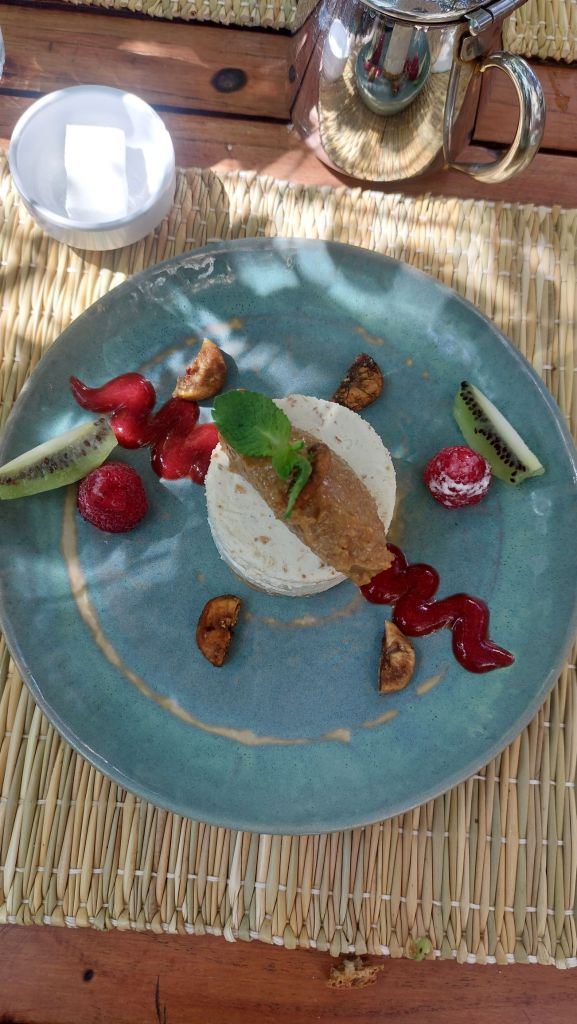
The sweets and pastries in Marrakech are incredibly good, and the desserts served after the main course of a meal are beautiful.
The choice on most menus is really good and varied.
There’s no point watching your waistline here..
Dates are hugely popular, and medjool dates are known as ‘ fruits of the King’, so make sure to try some.
You won’t be disappointed.
Fresh fruit is for sale everywhere around the medina and incorporated into tantalising sweet dishes that make your mouth water.
NB: I have a separate post about smoothies and juices in Marrakesh.
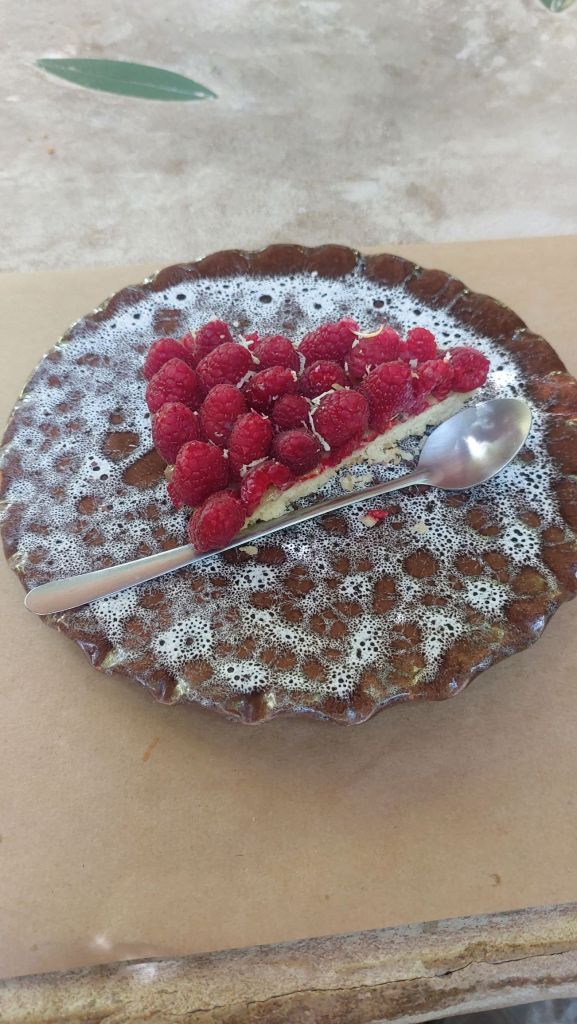
Beautiful cheesecake and sweets in Marrakesh/image Freebird Tracey.
Marrakech is a dream come true for people who love their food.
With so much to choose from and so many different dishes and flavours to try, you would need months to eat your way through it all.
Not only is there a great variety of interesting and tasty food, but it’s beautifully presented too.
Imagine sitting in the most beautiful setting, next to exotic plants, and trickling fountains.
That’s my experience of eating in Marrakesh..
112 Tea House/image Freebird Tracey.
For more information on places to dine, use the email address below.
A brief history of the indigenous people of North Africa.
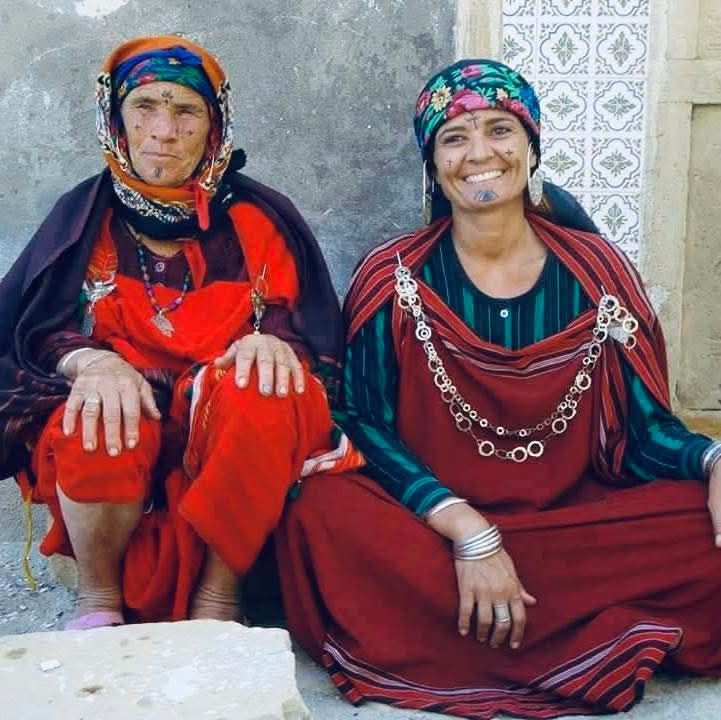
An Amazigh Woman displaying her Headdress.
The Berbers, also known as the Amazigh, are an indigenous group native to North Africa, with a history stretching back thousands of years.
They have lived across a vast region encompassing modern-day Morocco, Algeria, Tunisia, Libya, Mali, and Niger.
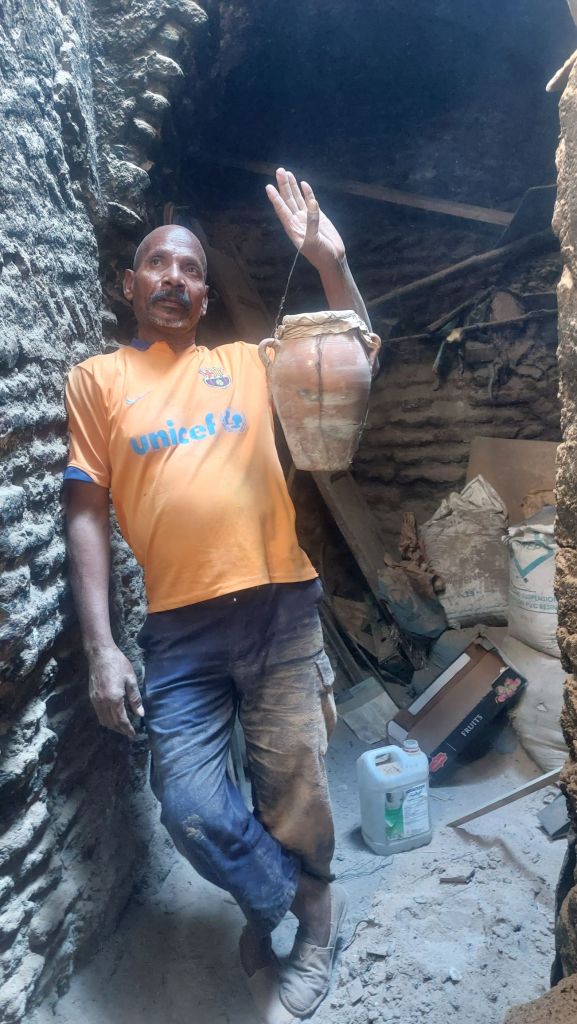
The Berbers made a huge contribution to the region’s cultural and technological heritage, including the creation of the Khettara system.
This ancient water management technique involves a network of underground tunnels that channel water from mountain aquifers to arid lands, enabling agriculture in harsh environments.
The Berbers’ innovations in architecture, trade, and agriculture meant they had a self-sufficient community that was thriving long before the arrival of foreign empires.
Over the centuries, the Berbers faced numerous challenges, including invasions and exploitation by foreign powers. During the Ottoman era, slave traders targeted Berber communities, kidnapping many women and throwing their society into chaos.
The Berbers became known for their resistance to foreign domination, with some groups turning to piracy as a form of survival and defiance.
Barbary pirates became infamous for raiding European ships and coastal towns, leading to conflicts with European powers and even the young United States during the Barbary Wars. Despite these challenges, the Berber culture has endured, holding on to its distinct language, customs, and identity through resilience.
The name Berber comes from the word ‘Barbaric’ and is now considered offensive.
The indigenous people have adopted the name Amazigh, which means ‘ free people’
Amizigh is now taught in schools and is officially known as the second language in Morocco, next to Arabic.
It is possible for visitors to Marrakech to take a trip into the Atlas Mountains to observe the ancient customs and lifestyle of the Amazigh.
A stay in a Berber family lodge is an unforgettable experience and a way to really get to know the history of Morrocco.
You will get the chance to eat a home cooked meal with an Amazigh family and see how they live.
This wonderful experience can be booked online or through your riad or hotel on arrival.
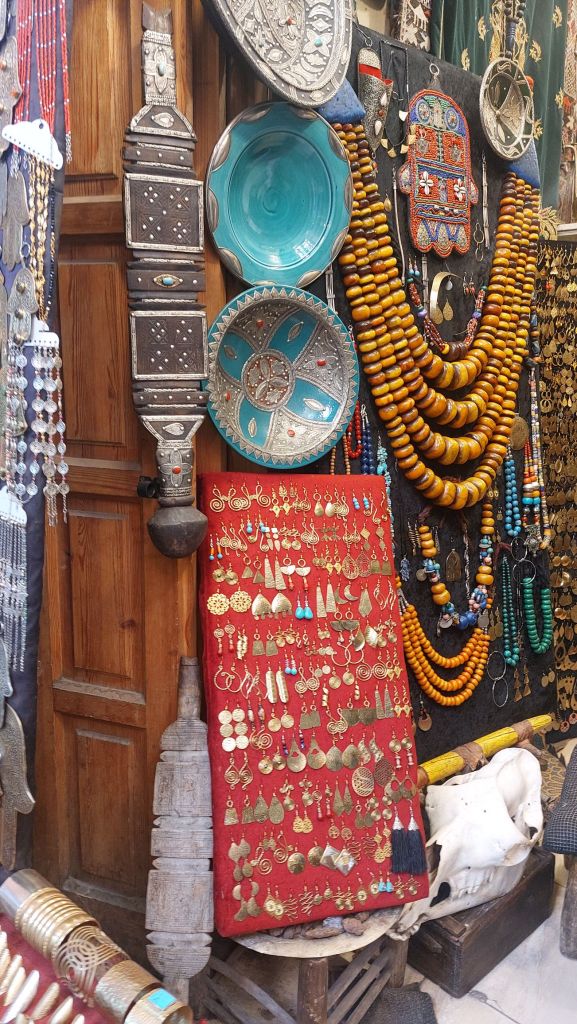
The Souks sell beautiful Berber jewellery and rugs made by the Berber ladies.
A list of my favourite and challenging things in Marrakech.
Colourful Babouches
Marrakech is ‘my happy place’. It’s a city of contrasts, from the ancient walls of the medina to the plush bars and clubs of Hivernage in the new part of the city.
Visitors may find the experience to be an assault on the senses.
The lively sounds, sights, and smells can be a complete overload on the senses and somewhat overwhelming to the most seasoned traveller.
However, don’t let that put you off coming to Marrakech.
You do become accustomed to it, and it’s part of the charm of Marrakech.
I have made a list of the 5 things that I myself love and hate about this fascinating city to help you get the most out of your visit.
Here are the 5 things I hate about Marrakech.
1.
If you’re an animal lover, you might find the hustlers in the main square too much to cope with.
The monkeys on chains and the snakes (which you are encouraged to have a photo taken with) are difficult to accept.
Don’t encourage this.
The monkies have been brought down from the Atlas mountains, and although people need to make a living, they clearly don’t want to be there.
Then there are the horses, taking tourists through busy traffic and the donkeys pulling carts through narrow alleyways full of motorbikes and tourists.
The horses seem to be looked after, but the traffic is horrendous, and I’ve witnessed accidents where they’ve been clipped by passing motorists.
The donkeys look overworked and neglected.
It’s the culture of the city, but very different from what I’m used to.
I avoided eye contact with the snake charmers and monkeys in the square, and they stopped approaching me eventually.
There are a lot of stray dogs and cats, but they are looked after by the locals, and many of the cats have been rehomed by the owners of the riads.
They are regularly fed, and the people in Marrakesh are kind and caring as a rule.
If you are an animal lover, you may find Marrakech a bit of a culture shock to begin with.
I joined Brooke, a sanctuary, for working animals abroad when I arrived home.
I can’t change how people earn their money, but I can help to educate them.
2.
Queueing at the airport.
Be prepared to stand in line for up to 2 hours on arrival. The process is slow, so get used to it.
Take a snack and keep a drink readily available. You will most likely need it.
You can pay extra for the fast- track service, but it may cost you around €230 for the first person and €190 for the second person.
Tip: Try to visit the bathroom before the plane lands and consider choosing a seat near the exit.
Get off the plane and boot it to passport control as quickly as you can.
3.
Marrakech is touristy.
The narrow alleys of the Souks can be very crowded most of the time.
Don’t expect to get anywhere quickly because you and hundreds of other tourists will be browsing around the shops at the same time.
Marrakech is one of the most popular tourist destinations, and it will certainly feel as though they’re all there at the same time as you.
Tip: Plan to visit in January or November to avoid the crowds.
It is still sunny but much cooler than during the summer months.
There are fewer people around the tourist attractions, so you will get that perfect photo opportunity.
Tip: Don’t try taking photographs of the local people or vendors. They don’t feel comfortable about it and may even expect a payment from you.
4.
The smell of fumes from the motorcycles in the souks.
Everyone in Marrakech seems to own a motorcycle, and they all appear to be riding them at the same time.
The souks are full of motorcycles and tuk-tuks, giving off clouds of fumes as they hurtle past.
This can get stuck in the back of your throat, causing you to feel a little bit nauseous occasionally.
There is little you can do to change this, but I recommend doing your shopping in the souks early in the morning before they get busy.
Around 9.00 is an ideal time.
There are a lot of vehicles on the roads, and it can be chaotic at times.
Pollution is fairly bad, so just be aware of this if you struggle with asthma or other breathing issues.
5.
The street vendors in the main square can be rather persistent.
During the evening, the main square opens up becoming a meeting place for thousands of people.
This includes the locals and tourists alike, and it gets incredibly busy.
The food stalls are all in competition with each other, and vendors can follow you persistently with a menu to get your custom.
Some of them can be very persuasive, even pushing the boundaries of what’s considered to be harassment
It can be very overwhelming, and it’s often difficult to remain calm in those kinds of situations
The henna ladies are also demanding your custom.
It’s not uncommon for them to take hold of your hand and begin applying henna on them without your consent.
Tip: If you’re not interested, try not to make eye contact with any of the vendors.
Saying “ La Shukran” which means no thank you in Arabic, is a helpful way to discourage unwanted attention.
It’s important to remember, every one is simply trying to make a living.
Marrakech was badly affected by the devastating earthquake in 2023, and many people have lost their livelihoods and homes.
Whilst it’s difficult to cope with the constant barage of vendors vying for your custom, it’s worth remembering their own struggle to survive.
Marrakech is certainly a different way of life from what you may be used to and a culture shock to many first-time visitors.
So now I’ve told you about a few of the things I find challenging in Marrakech, I would like to tell you about what keeps me going back time and time again…
A lovely man shows me inside the Hammam/image by Freebird Tracey.
Marrakech is definitely my ‘happy place’
I am absolutely in love with this city.
Here’s why…
1.
The people are wonderful.
You can expect to encounter the friendliest and most welcoming people you have ever met.
They are constantly smiling and can’t wait to tell you all about their beautiful city.
They are multi-lingual, and many people speak up to 5 different languages.
They love to teach you about the Amazigh culture, the indigenous tribes of North Africa.
It’s absolutely fascinating, and it’s possible to stay with Amazigh people in the Atlas mountains during your trip.
The level of service in restaurants is astonishing, and the riad owners go out of their way to make sure that your stay is nothing short of perfect.
I highly recommend staying in a riad at least once.
They are traditional Moroccan houses with a central indoor garden or courtyard. The views over the rooftops of the medina are stunning, and listening to the birds singing in the morning is delightful.
They are a haven of peace and tranquillity after the exhilaration outside.
NB: I have a separate post about staying in a traditional riad.
2.
The vibrant colours and wonderful craftsmanship.
If, like myself, you are drawn to beautiful colours and intricate designs, you will be in paradise in the Souks.
You will find an assortment of fine jewellery, inticately designed Berber rugs, wood carvings, and a vast array of other wonderfully crafted products
You will be blown away by the artisans, creating wonderfully curated pieces of work in front of you, and the displays of various items at a decent price.
Wherever you look, you will notice something that catches your eye.
Just be prepared to barter.
3.
The food is delicious.
There are some amazing places to dine in Marrakech, and the food is of an incredibly high standard.
There are good quality vegetarian restaurants and cafes, and many cater for vegans and people with gluten intolerance.
The food in Marrakech is diverse, and you can find dishes to suit everyone’s palate from all over the world.
I found delicious Italian restaurants that made the most wonderful pizzas and pasta dishes.
The signature dish of Marrakech is Tagine.
Tagine is the name of the clay pot used to cook the dish in
It’s cooked very slowly, resulting in the most decadent, mouthwatering flavours.
Choose from meat or vegetable tagine, you won’t be disappointed.
There are some more unusual options, such as sheep’s head and snails found around the square.
This seemed to be more popular amongst curious tourists and locals than those people who prefer fine dining.
Overall, I was very impressed with the amount of variety on offer and the stunning restaurant settings.
I also recommend visiting Bacha Coffee ( see my separate post)
There are hundreds of different coffees to choose from and a nice selection of cakes, pastries, and other light snacks.
You do have to wait for a table, but you get to look around the museum and enjoy the lush garden whilst waiting.
4.
The architecture is absolutely stunning.
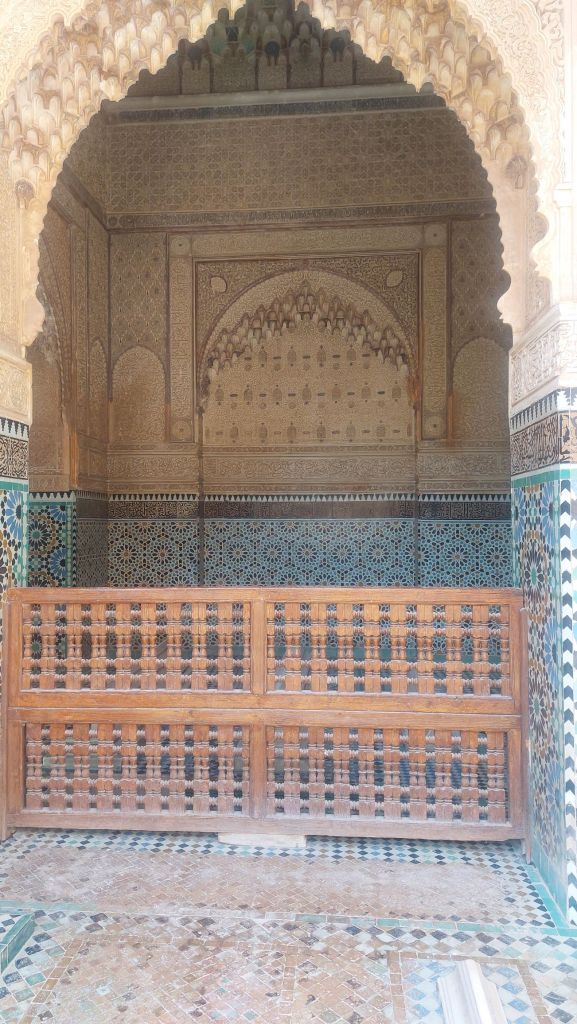
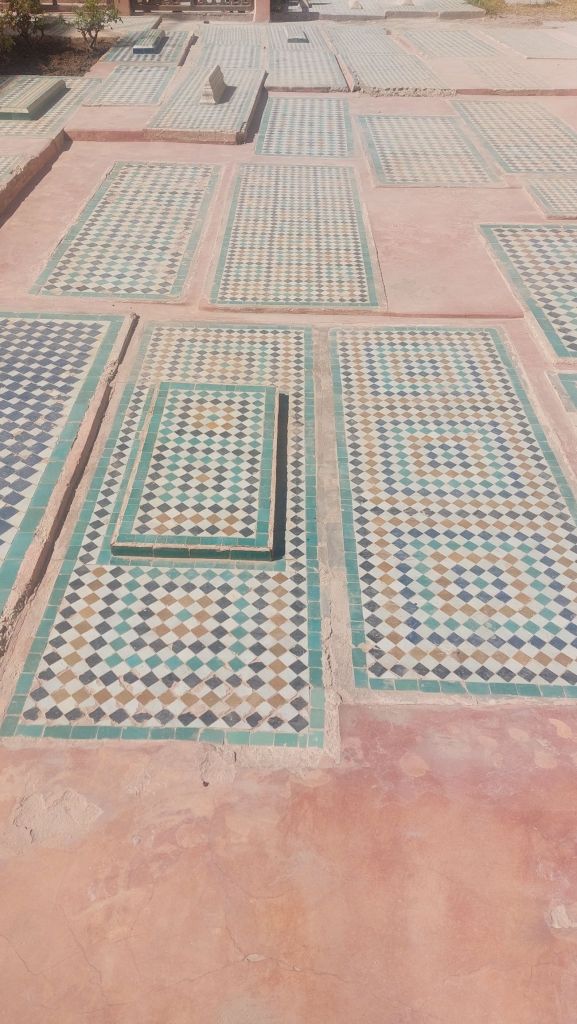
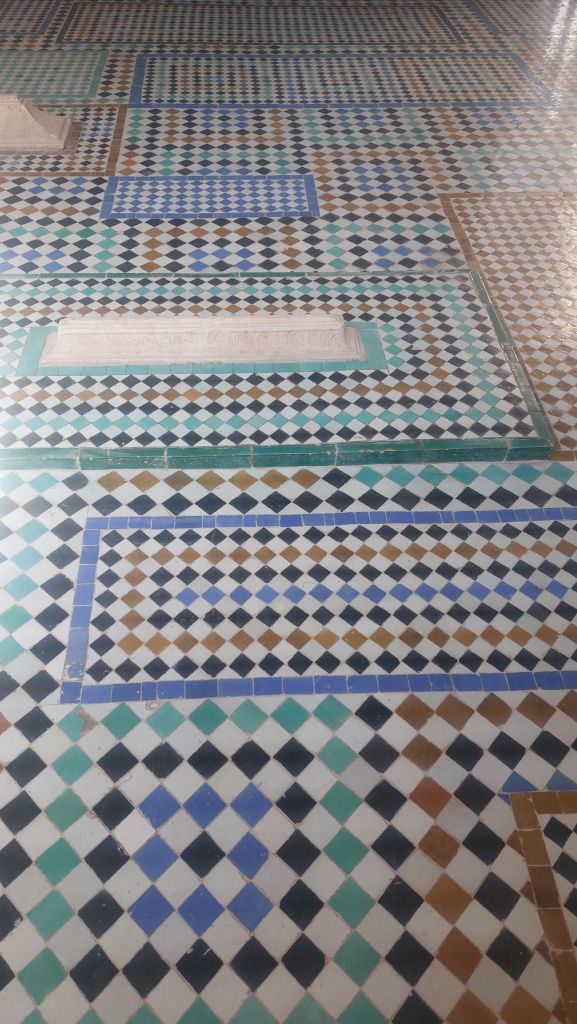
There are so many interesting places to visit, and the intricacy of the tile work is absolutely astonishing.
Islamic craftsmanship with its symmetry and attention to detail is beautiful, and I was spellbound.
The lush gardens are also breathtaking and a welcome respite from the hustle and bustle of the Souks.
I recommend visiting these places to get an idea of how exceptional everything truly is,
. Bahia Palace.
. Madrasa Ben Youssef.
. The saadian Tombs.
. The Koutoubia Mosque.
. The Secret Garden.
. Bacha Museum.
Marrakech is steeped in history, and there is something exciting to see for every visitor.
5.
Marrakech is a great starting place for visiting other places
I took a wonderful trip out to the Agafay desert, and it was absolutely magical.
I had dinner in the desert watching the sunset it was unforgettable..
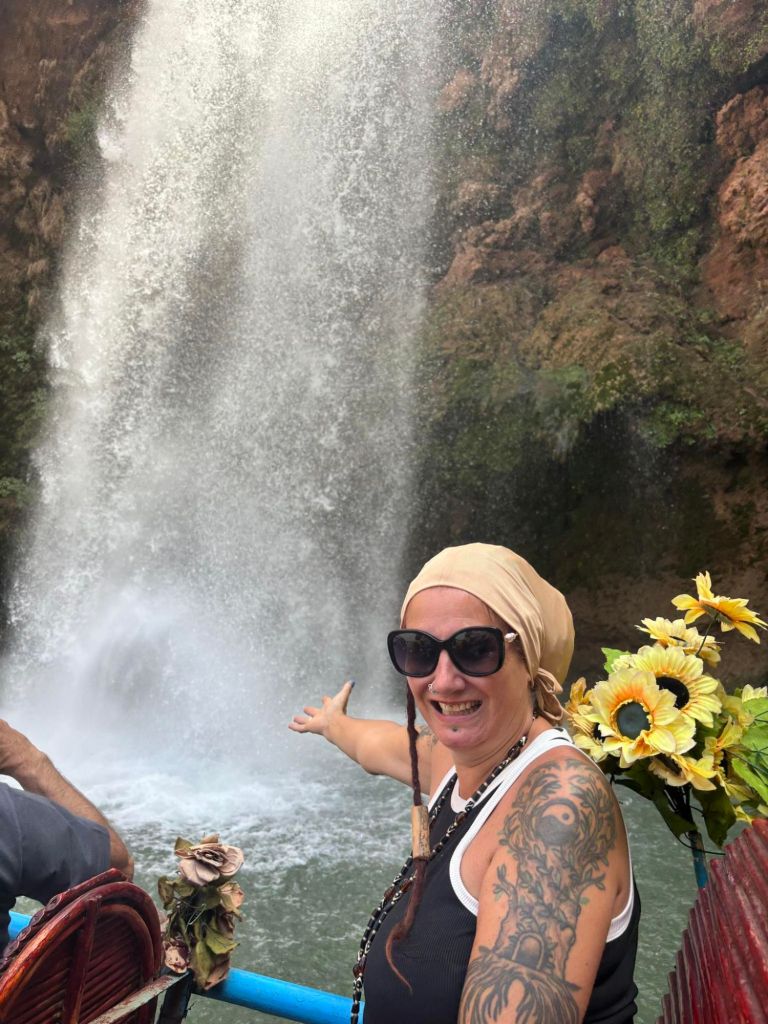
There are trips to Ouzoud to see the second largest waterfall in North Africa and experience the monkeys.
You can also take a train to Casablanca or visit Essaouira for the day.
If you wish, you can venture into the Sahara desert if you have about 3 days to spare. It’s a very popular destination amongst tourists.
Tours are very well organised, and the tour guides are incredibly knowledgeable and helpful. They go out of their way to make sure you have the best experience.
Riads or hotels are happy to help you organise your trip, but you can also check other popular online sights for price comparison.
Ouzoud Waterfall.
There are many different reasons why I love Marrakech, I have listed only a few.
Here are a few other things to take into consideration..
Marrakech is a safe place to visit, especially for solo female travellers.
Although it is mainly an Islamic city, it is relatively liberal.
I would always encourage showing a little bit of respect regarding your dress code. Wearing a loose cover around your shoulders when visiting religious sites is advisable.
Marrakech can reach temperatures of 50° in the summer, which is incredibly hot, so bare that in mind when choosing when to go.
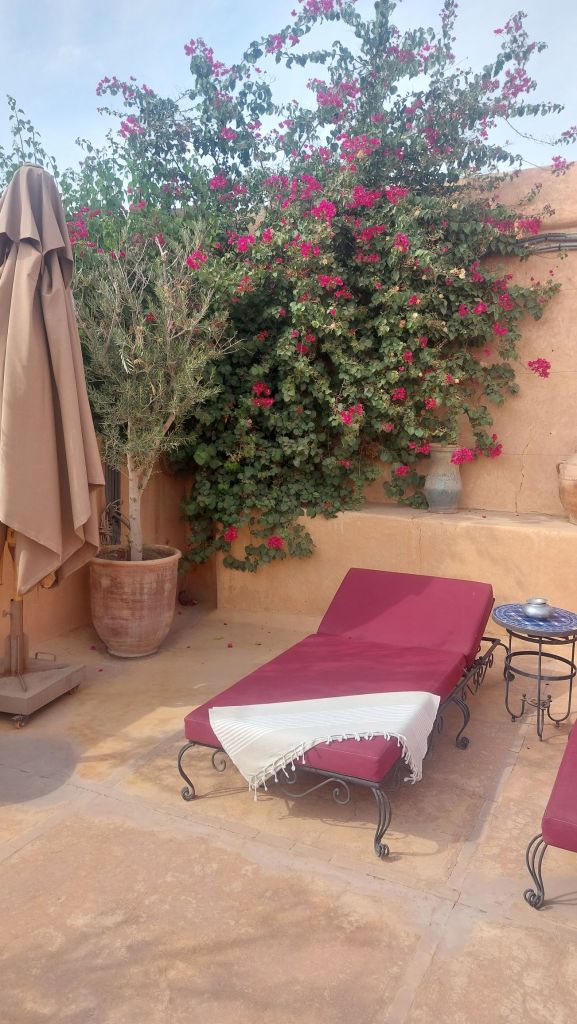
Riads and hotels have places for you to sunbathe, and it is acceptable to wear shorts and bathing suits there..
If you’re looking for a place that is a combination of many different things, from the ancient to modernity,
A place that is diverse and can often feel like an organised chaos, yet perfectly functional,
A place that will transport you to the world of 1001 Nights,
Then Marrakech is for you.
I would recommend doing your research before visiting. Watch YouTube videos and read travel blogs.
Arm yourself with plenty of knowledge before you arrive so that you will know what to expect.
That way, you will have an unforgettable experience and come away with memories of places and people that will stay with you forever.
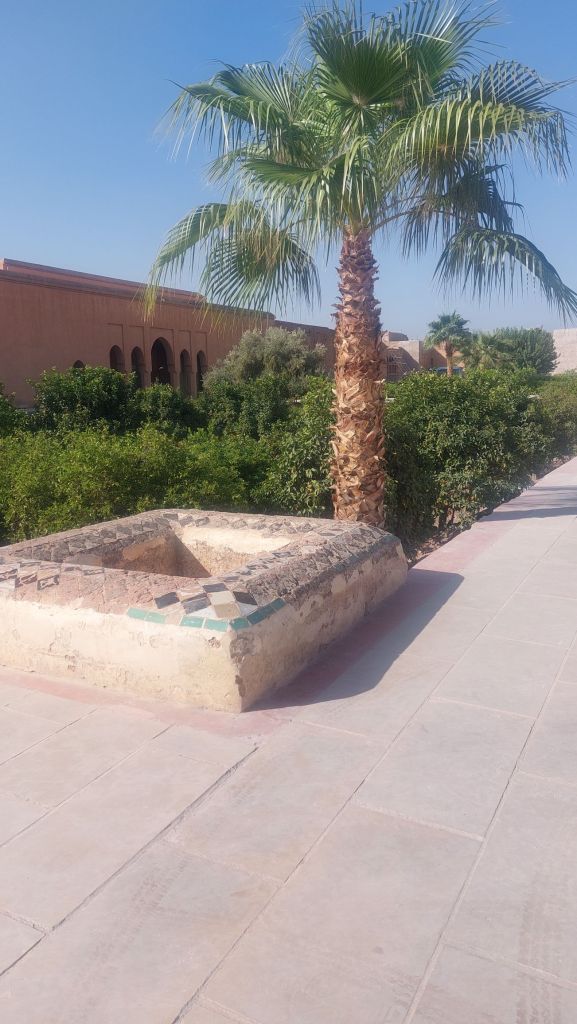
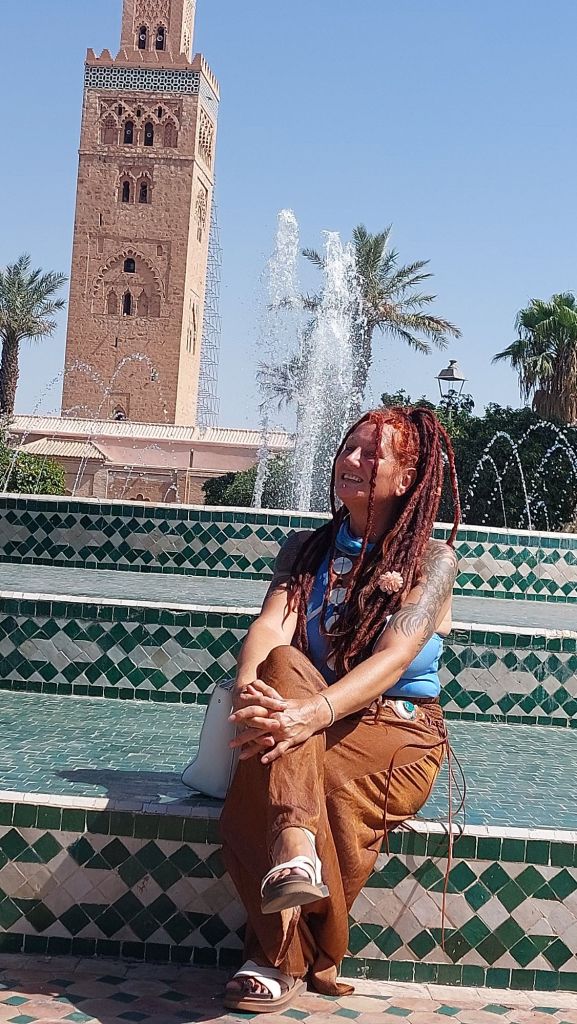
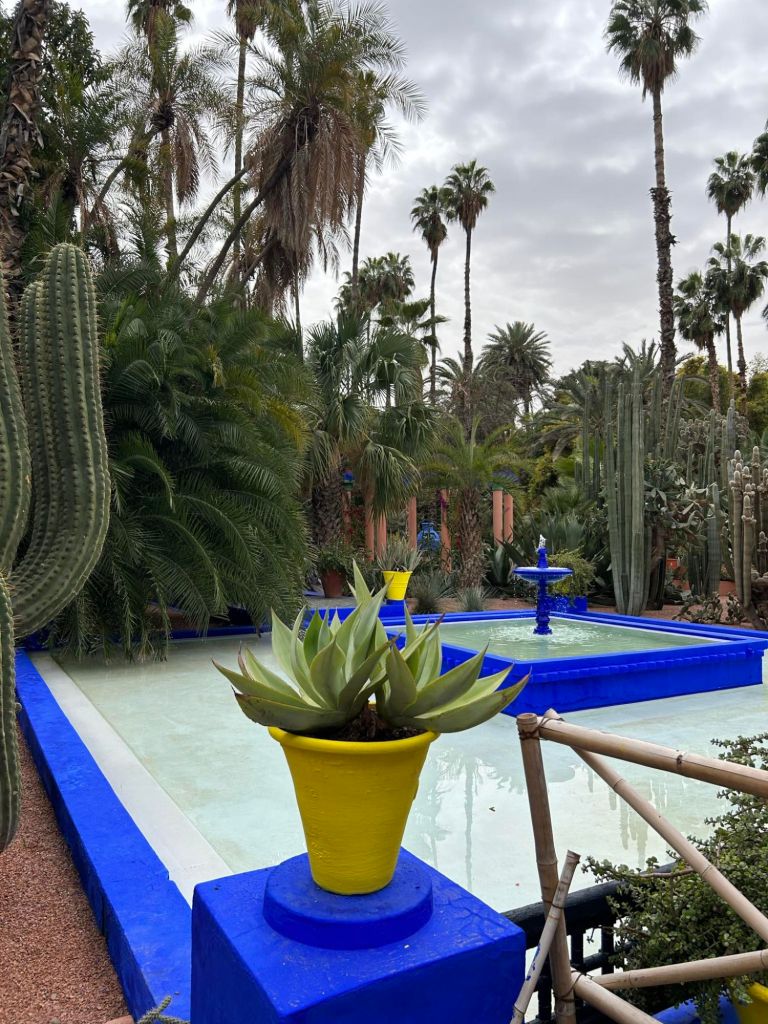
Intricately tiled fountain.
Continue reading for more information about the places mentioned in this post..
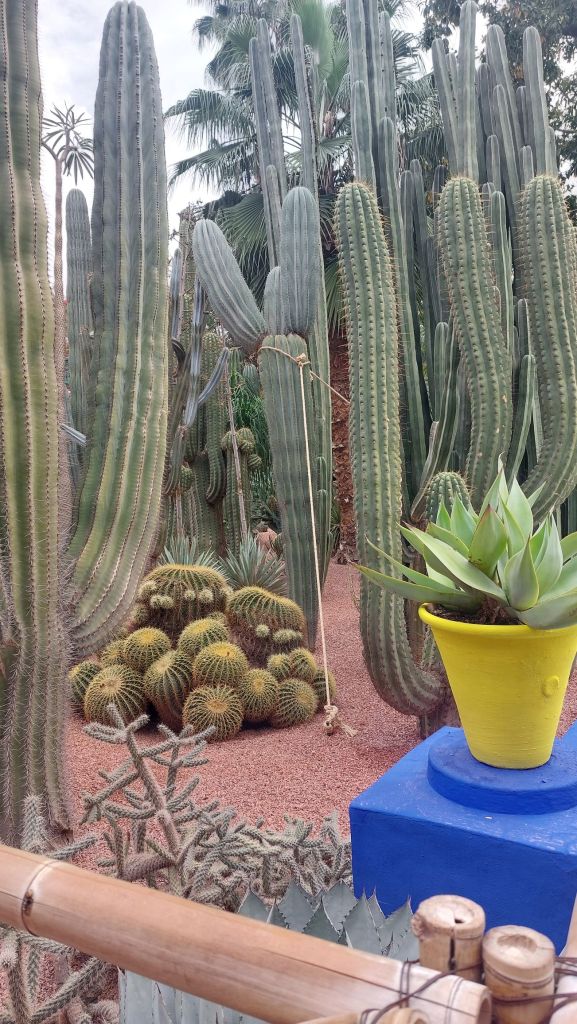
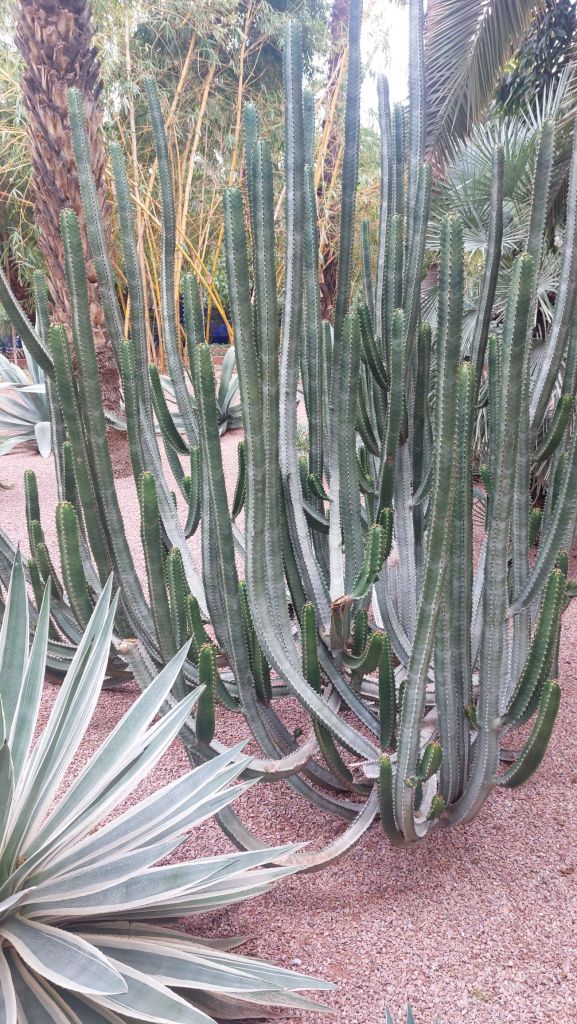
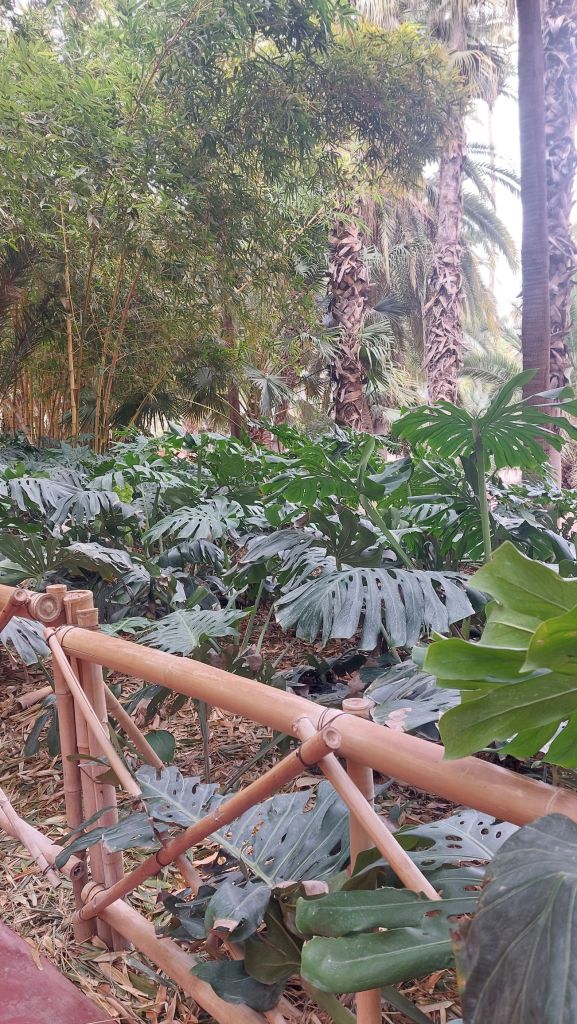
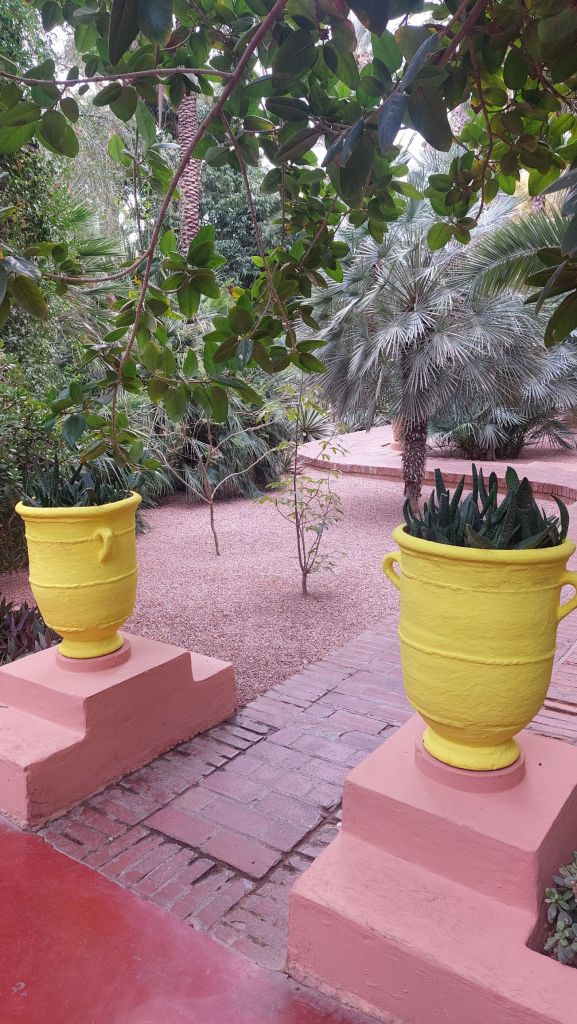
Inside the beautiful Majorelle Garden, there are over 300 stunning plant species from all over the world.
Mexican agave, Chinese windmill palms, African date palms, coconut, and banana trees amongst a labyrinth of pathways.
The incredibly tall bamboo and exotic Cacti species coexist together to create one of the most beautiful gardens in marrakech.
Two acres of botanical landscape gardens.
Originally designed by Jean Majorelle in the 1920s.
After he was forced to abandon his home because of divorce, the fashion designer Yves Saint Laurent took it over with his partner Pierre Berge to save it from hotel development in 1980.
They restored it and made it their home, bringing the garden back to it’s former glory.
For many years the Jardin Majorelle has provided me with an endless source of inspiration, and I have often dreamt of its unique colours – Yves Saint Laurent
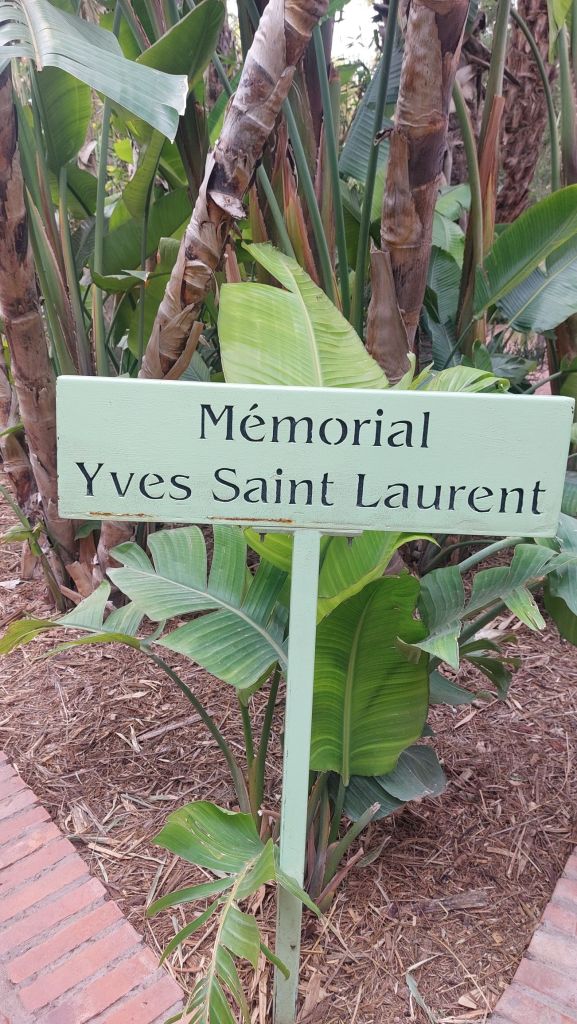
There is a memorial to Yves Saint Laurent and his partner Pierre Berge in the garden.
Majorelle Garden attracts over 900,000 visitors each year, making it a less than tranquil place to sit and reflect.
I would have loved to have sat in quiet contemplation amongst the lush green vegetation, admiring the pop of colour from the bougainvillea, but I was never alone for very long.
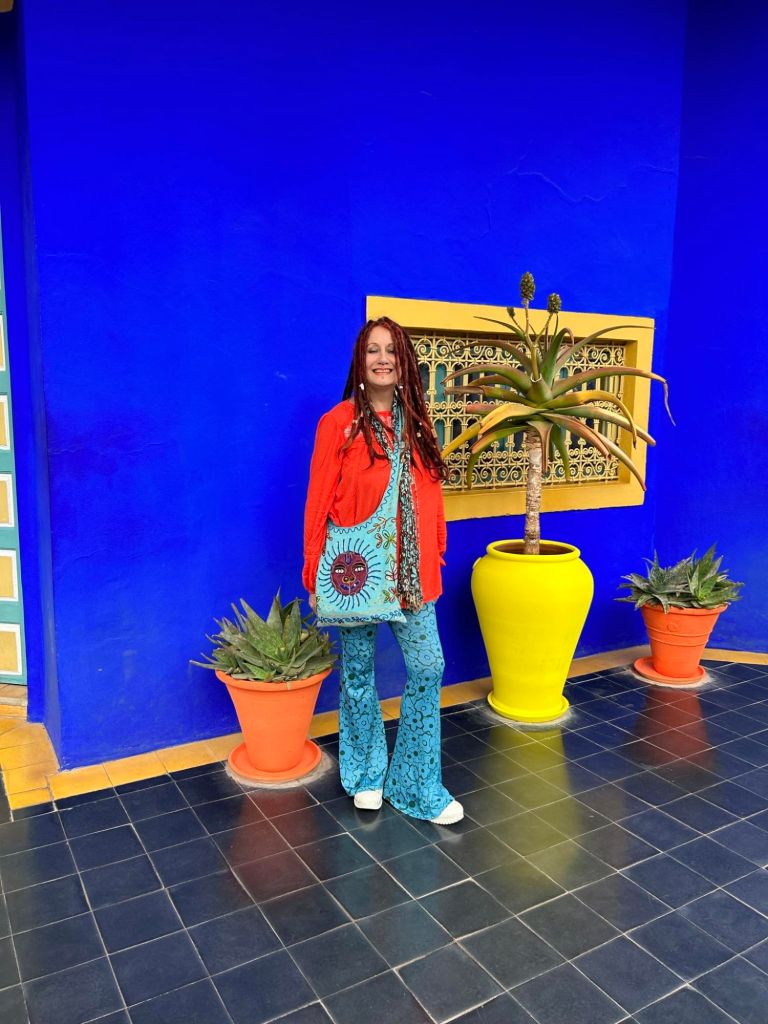
The attractive art deco pavilion with its striking colours of blue and yellow is a popular place for visitors to get their photographs taken.
The colourful pavilion The exotic blue and Islamic green tiles.
There is also a cafe and shop.
I purchased some postcards of Yves Saint Laurents’ yearly ‘Love’ drawings.
I didn’t go to the cafe because there were too many people and the queues were really long.
Yves Saint Laurent early ‘Love’ drawings
The gardens open daily at 8.00am and close at 6.00pm, and the last entry is at 5.30pm.
I would suggest getting there before 10.00 am, preferably at opening time if you want a more peaceful experience.
Luckily, I had prebooked online, so I didn’t have to queue.
I’m thankful that I did because the queues were really long, and it was a very hot day for standing around without any shade.
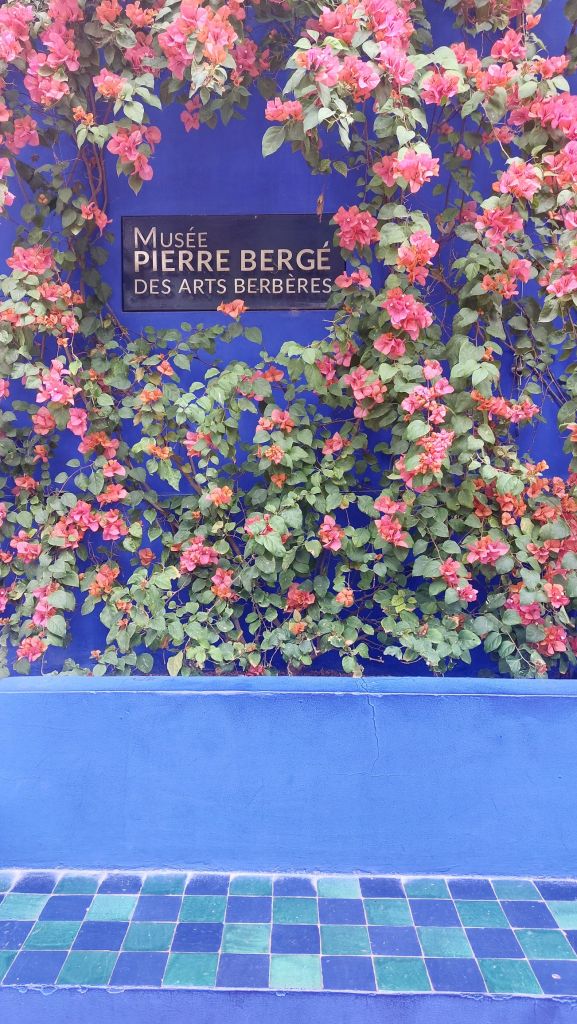
The YSL museum is also part of the visit, along with the Pierre Berge Museum of Berber Arts. It’s worth a look around if you are interested in Berber history.
Opening times are from 9.00 am until 5.30 pm with the last entry at 5.00pm.
You can’t take photographs inside the museum.
The price varies depending on where you purchase tickets from but you can expect to pay approximately €24 to visit everything.
There are plenty of nice restaurants outside the gardens, and I decided to get something to eat and drink in one of those. It was much quieter.
I recommend My Kawa for a nice salad.
There are a few shops across the road from Majorelle Garden selling souvenirs and a few attractive boutiques.
Shopping around Majorelle Garden
Stuff was a bit pricey, but I picked up some nice jasmine oil at a fairly decent price.
Overall, Majorelle Garden was absolutely beautiful. It is colourful and lush with several spots to sit and absorb the exotic sights and sounds.
However, it is incredibly busy with tourists, which detracts from the calm sense of serenity you’d expect to get from such a delightful setting.
It was worth visiting for the wonderful trees and plants and to get some great photos, but unless you go very early during the quiet season, you won’t get a peaceful, relaxing vibe..
Majorelle Garden is located to the north west of Marrakech medina.
Camels, sunsets, and a fire show that left me speechless.
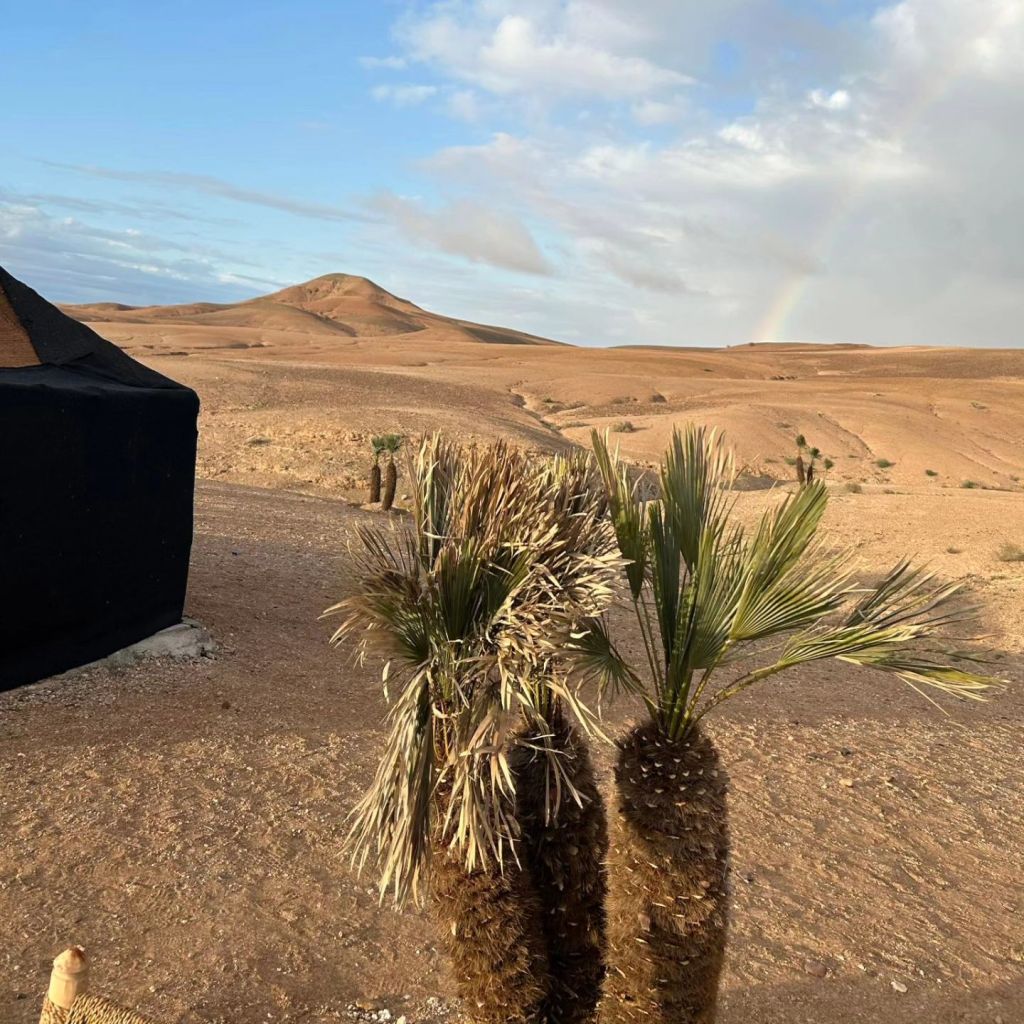
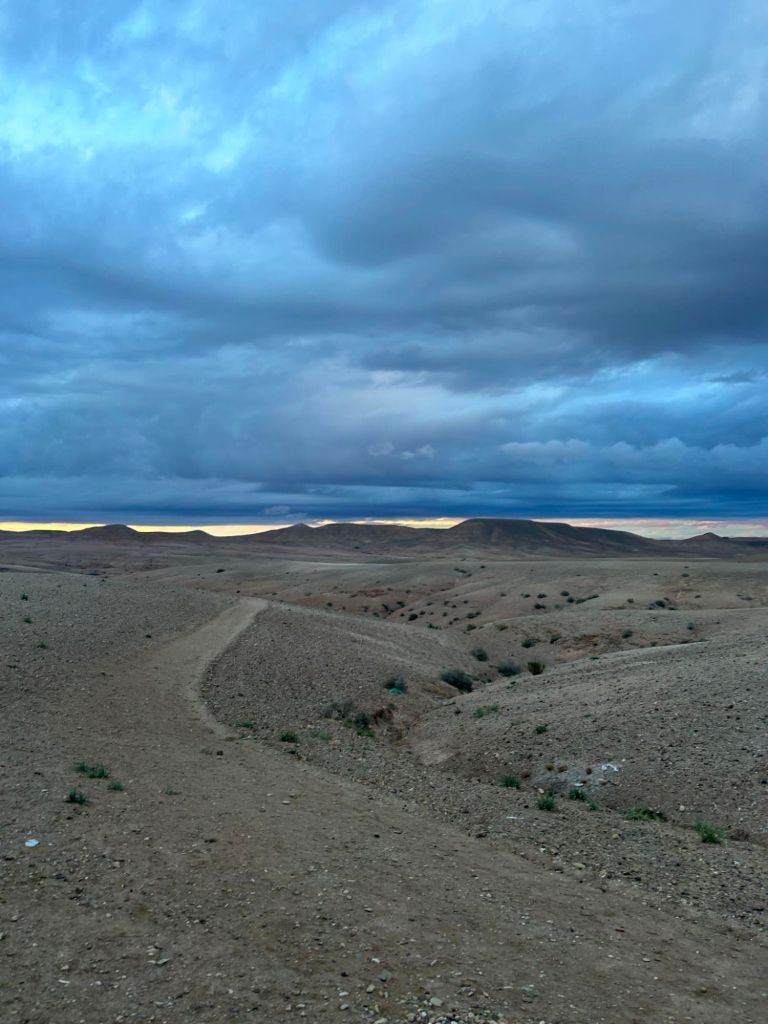
Stunning scenery at Agafay desert
We met our tour guide near Jamaa El Fna at 6.00pm and boarded our air-conditioned mini bus.
The journey took around 45 minutes in total even though we seemed to be driving across the gravelly desert for what seemed like ages.
There were camels with their young calfs dotted about, looking fairly nonplussed at the convoy of tourists driving past slowly.
On arrival, we could hear music playing from our camp a short distance away from where we were parked.
Our guide led us to tables overlooking the vast expansive desert. The panoramic view was absolutely breathtaking..
We could see for miles.
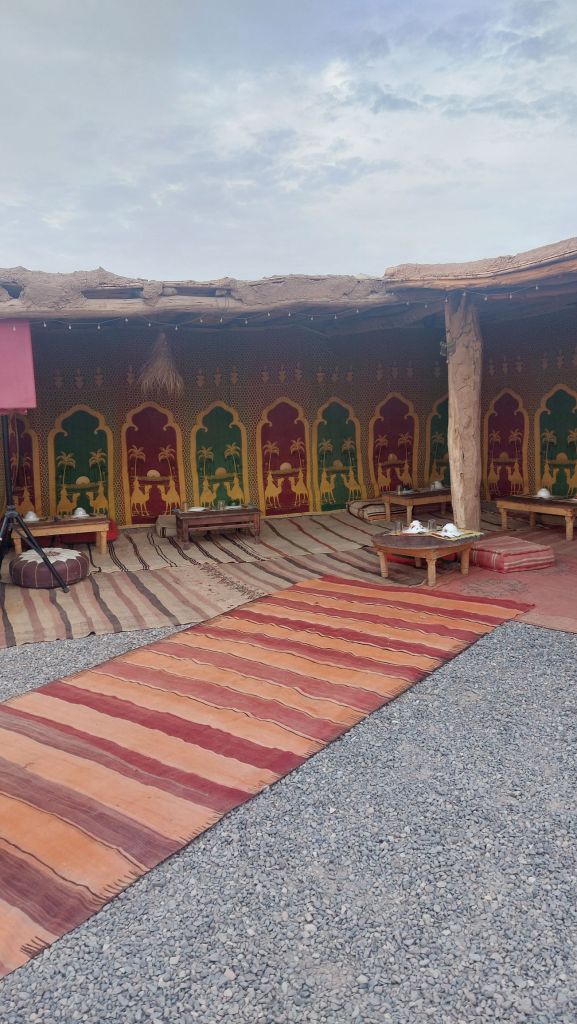
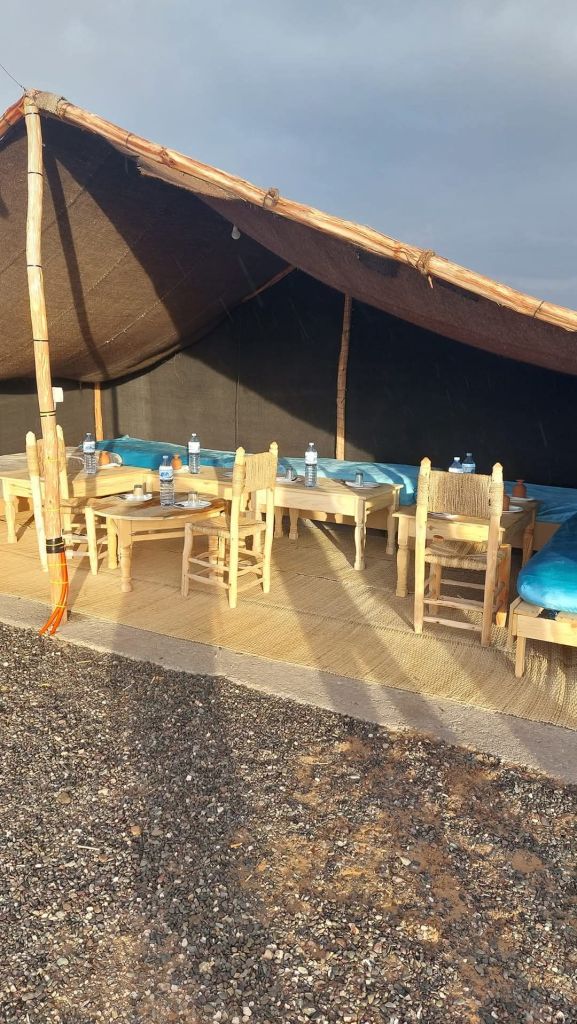
Images of our camp at Agafay desert
Our camp was really pretty, with colourful seats and rugs scattered everywhere.
There was a Berber tent for us to shelter in, and we could also eat inside there if we wanted to since it was slightly windy.
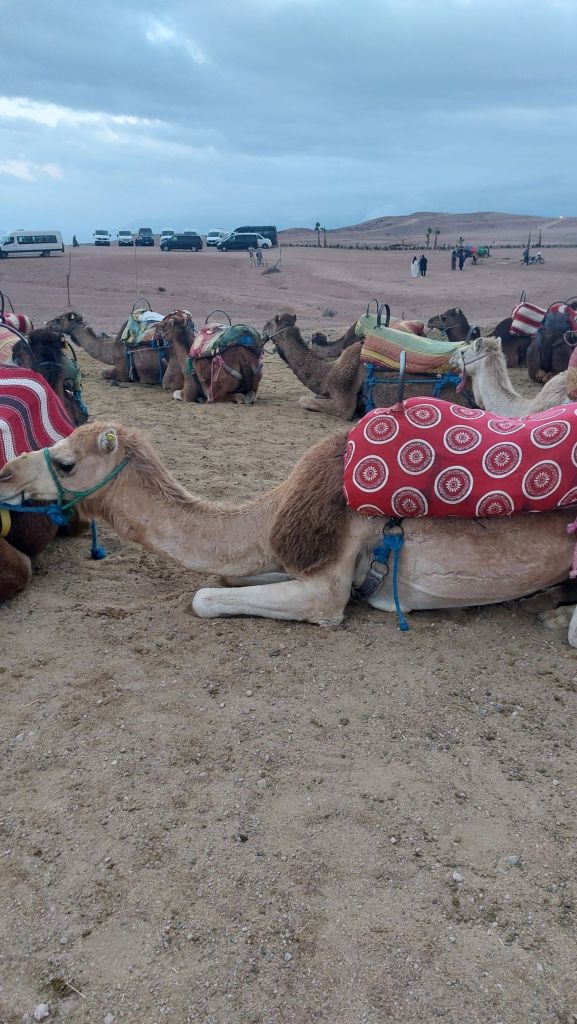
After a hot, sweet mint tea, we all took the optional camel ride..
All aboard the camels
It was rather a scary experience because my camel came untied and got a bit frisky with the one in front.
After he was reattached, we continued a bit further for a short while before turning around and heading back to disembark.
That was also something of a nerve-wracking experience.
I wobbled about on my camels back as he dropped down to the ground in the most undignified manner.
I probably wouldn’t do that part of the trip again, but everyone else seemed to really enjoy it.
Immediately after we got off the camels, our meal was presented to us.
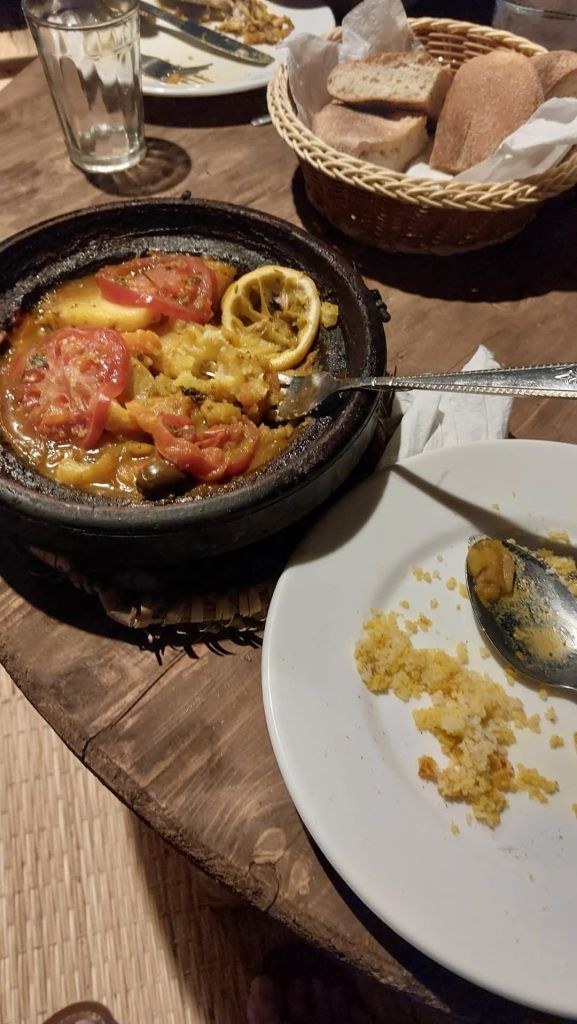
It was a three course meal consisting of vegetable soup with traditional Morroccan bread, a delicious tagine followed by cakes and fruit for dessert.
Fresh food cooked beautifully in Agafay desert.
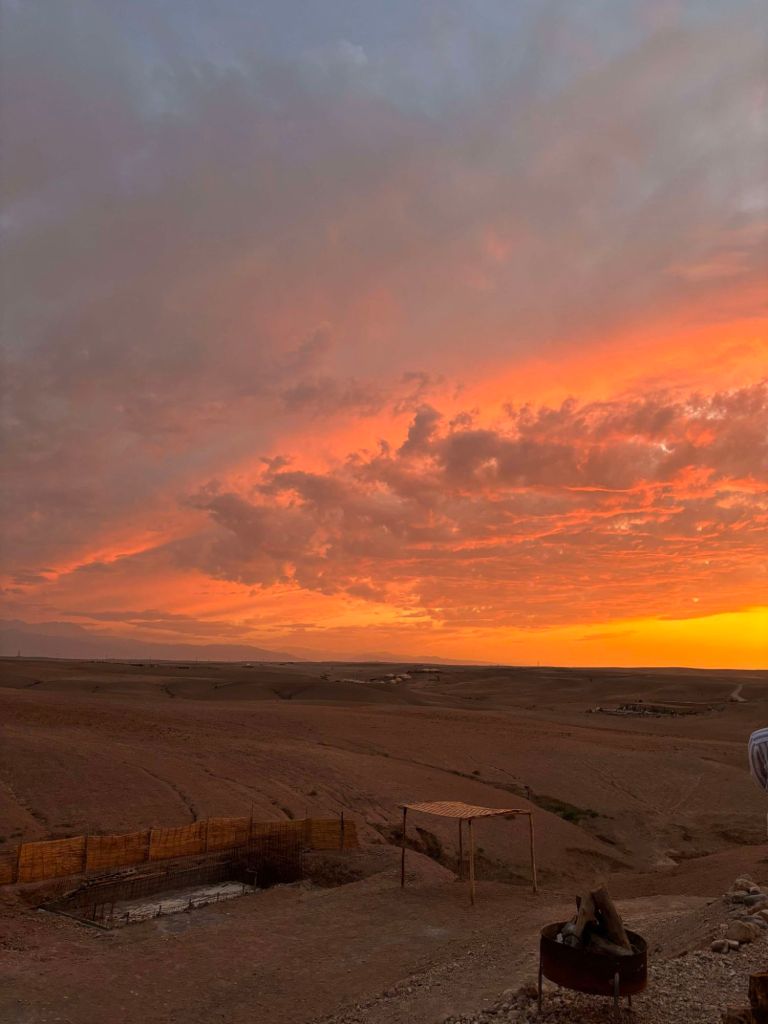
We ate watching the beautiful golden sun go down. The sky was fiery red.
It was absolutely stunning.
I can honestly say it was one of the most beautiful sunsets I have ever seen.
A spectacular sunset
We ate our meal, with traditional musicians playing their instruments around the tables.
It was very entertaining.
Traditional musicians entertaining visitors.
As soon as dinner was over, more merriment began..
The dubious tourists were pulled into a circle and were soon snaking around the campfires and attempting to mimic the traditional Berber dancing.
The atmosphere was incredible.
Everyone was out of their seats, clapping and enjoying themselves.
The stars came out, and the campfires roared.
The temperature had cooled down, but we were soon nice and warm again.
After the lively display of Berber dancing had finished, we all sat down to catch our breath once more.
The air was full of laughter, and spirits were high.
Soon, the grand finale was about to begin..
A spectacular light show in the middle of the desert.
It was completely dark by now, and the visual effects were totally hypnotising.
Everyone looked on in awe at the amazing pyrotechnic display.
It was the highlight of the whole evening.
We were completely blown away, watching the flames leaping about against the back drop of the vast dark desert.
I certainly wasn’t expecting anything quite as fantastic as that!
The fire display brought the evening in Agafay desert to a close.
It had been a wonderful evening.
We had tasty food, the entertainment was a lot of fun, the fire display was incredible, and the camel ride was rather… interesting!
Everyone was able to participate in what turned out to be a very enjoyable time.
We were taken back to our meeting point near Jamaa El Fna.
The cost of the excursion was well worth the money, and I would highly recommend it.
I booked my trip through Get Your Guide.
I believe there are a few different desert camps.
Some have better facilities than others, and some include a different itinerary. The cost varies, so do check what activities you are getting before you book.
Hotels and riads can also organise the trip for you, if you prefer, although you may pay slightly more.
It is also possible to book an overnight stay at Agafay luxury camp.
There is a swimming pool and other amenities with a more luxurious touch.
Check Booking.com or look for reputable online sites for details about staying there.
There are a few things to consider if you plan to visit Agafay desert camp..
Take a warm sweater or blanket, the evenings drop cooler, and you may find the wind is a little bit blustery in some camps.
There are plenty of toilet facilities but take some tissue with you in case there isn’t any. You may also want to take some hand sanitiser.
There are vegetarian options available. I had vegetable tagine, and the other people in my group had chicken.
The guides are excellent at their job.
I have been several times and they always find us at the end of the evening. No one gets left behind.
Some tours visit an Argan Cooperative on the way to the desert.
I really enjoyed this and purchased some argan oil for my skin. It was a decent quality oil and lasted me ages.
The tour usually finishes around 9.30-10.00.
I went in March and September and enjoyed it both times.
Despite it being Ramadan in March, I was impressed how well I was looked after.
I think I may take a journey to the Sahara desert next.



























 Sounds Of The Souks