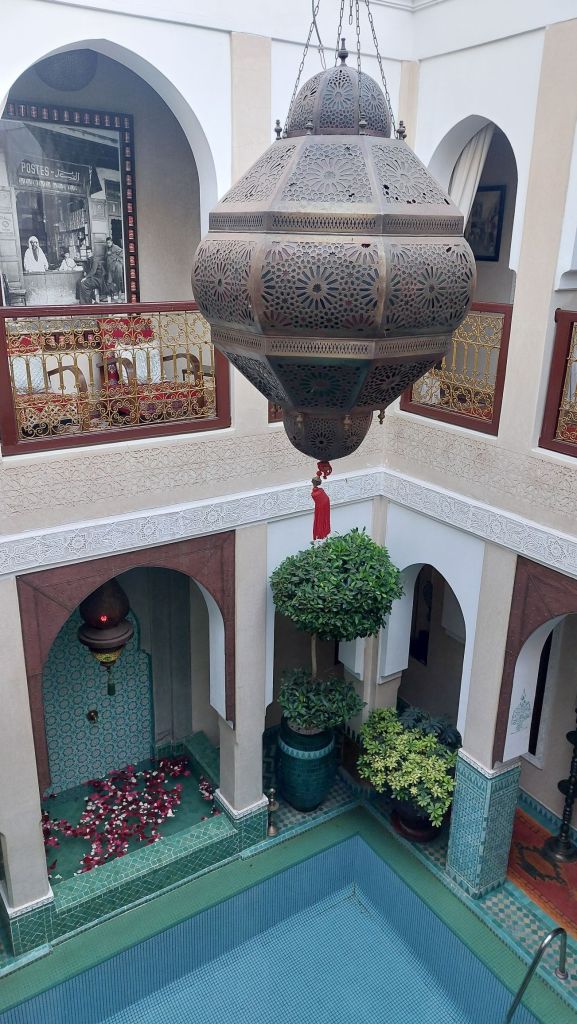
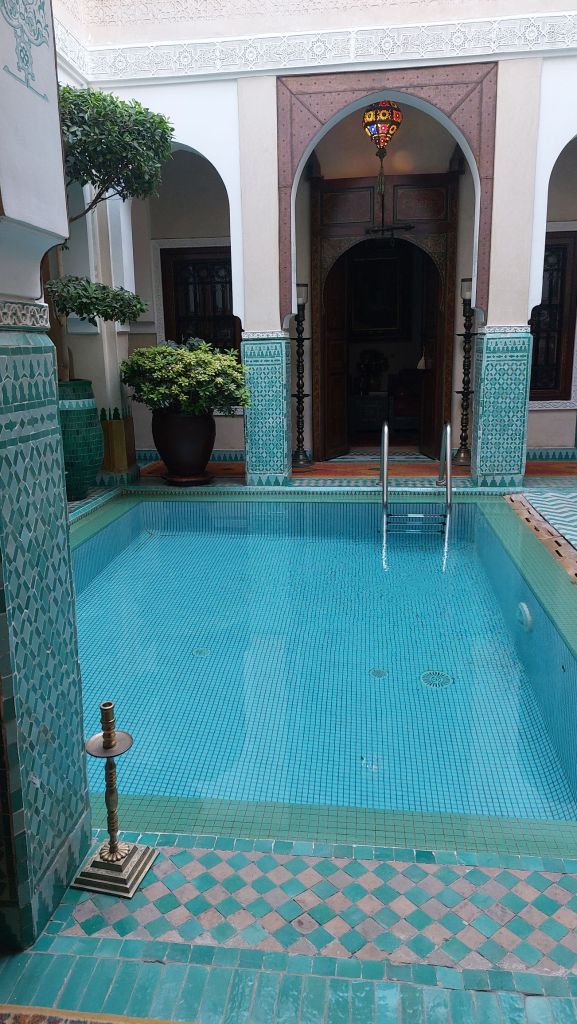
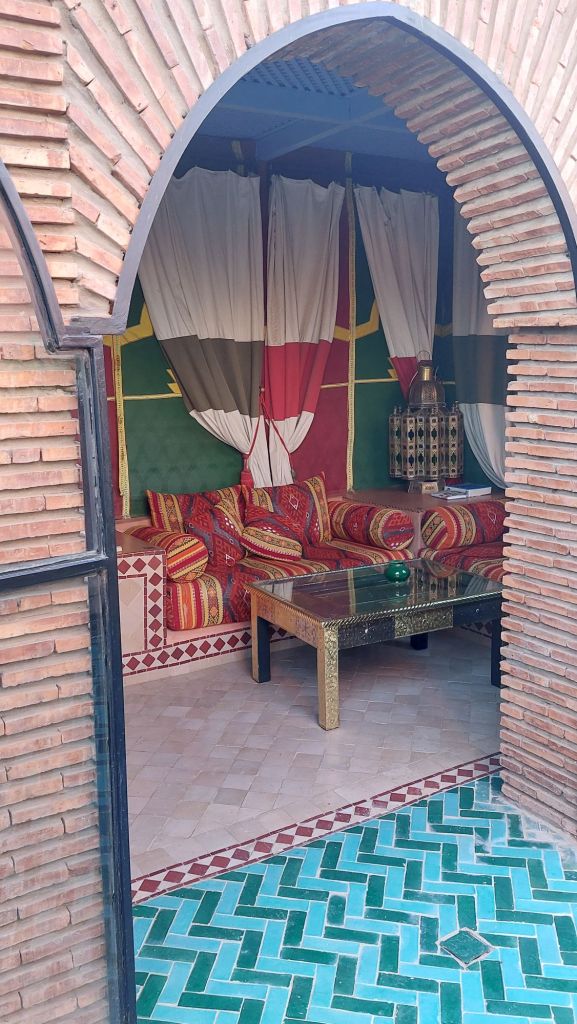
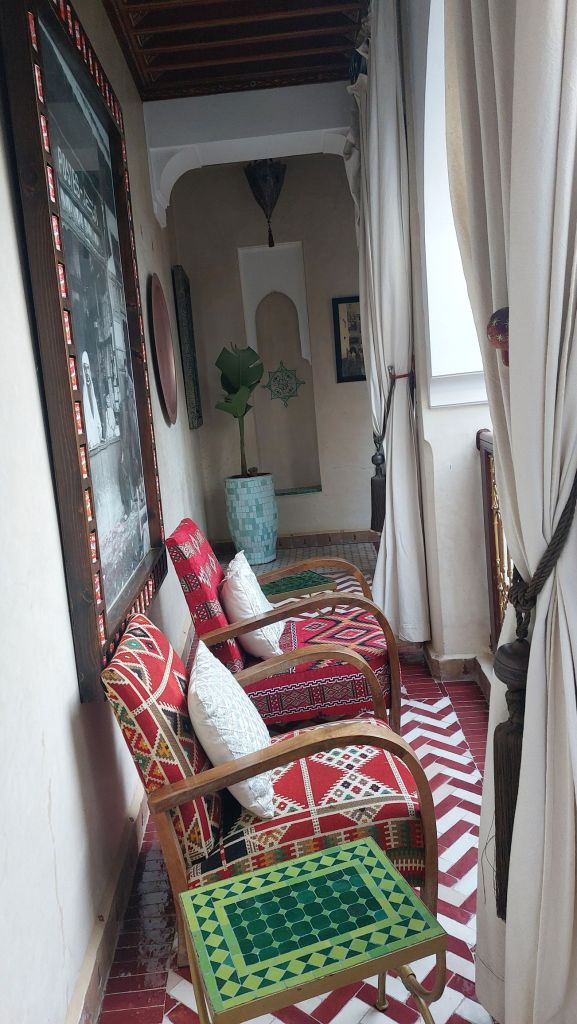
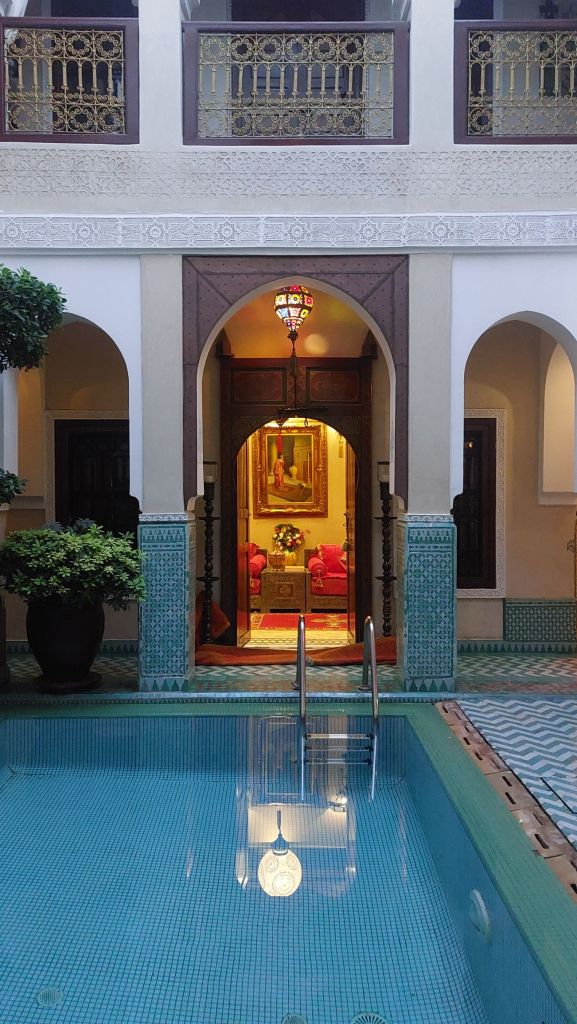
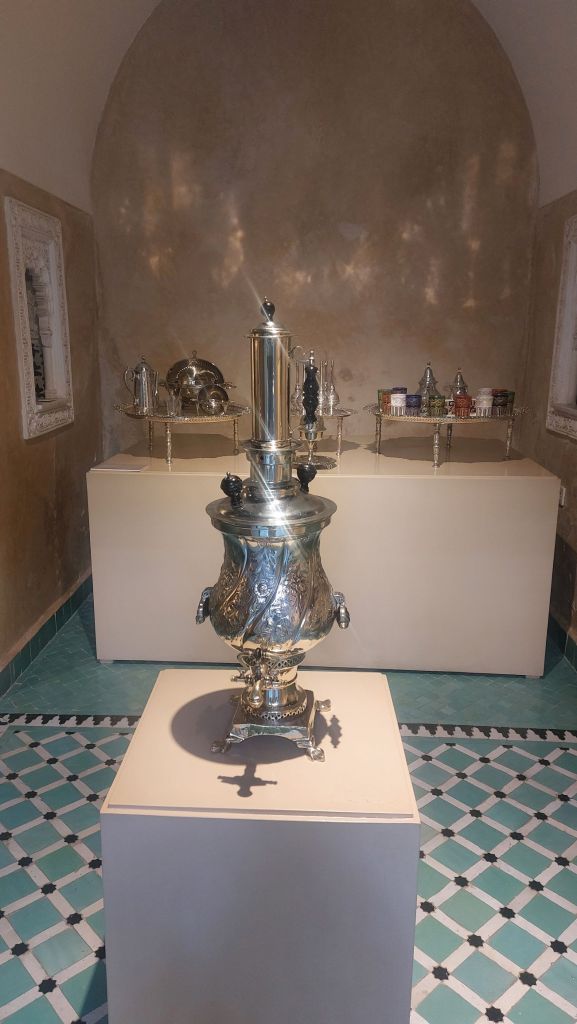
Riad Hikaya is a beautifully restored riad in the Kasbah district of Marrakech.
Image by Freebird Tracey.
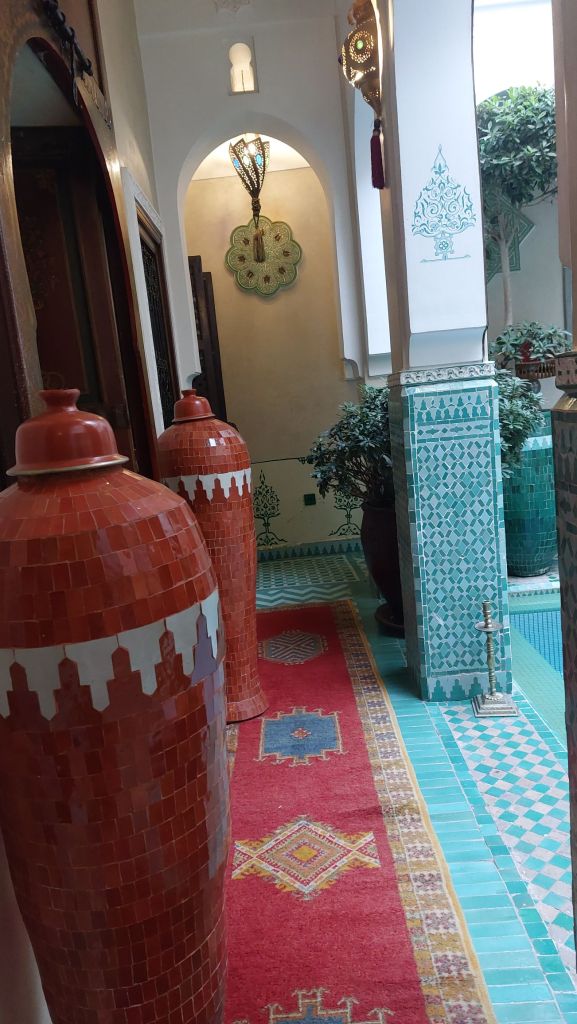
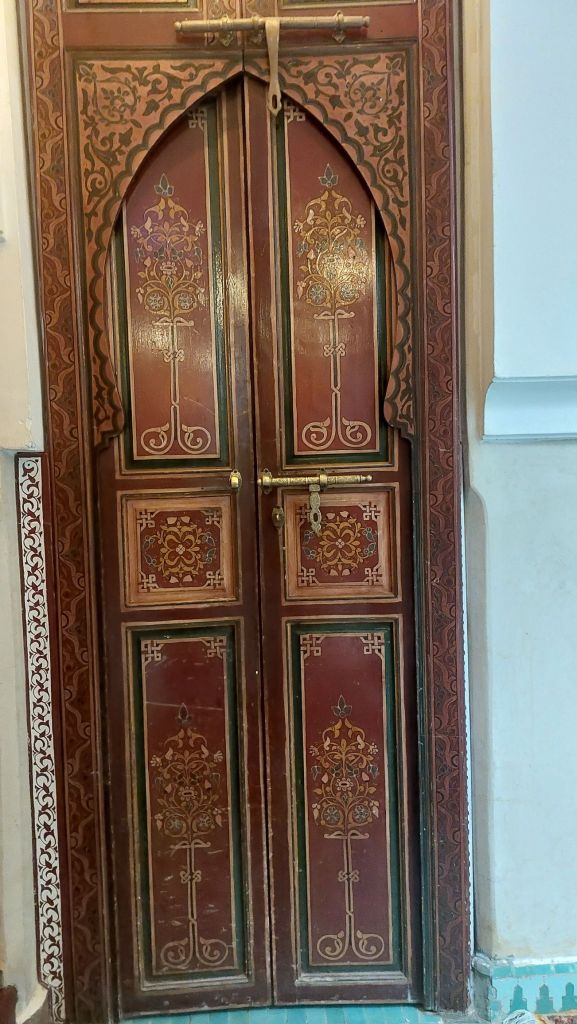
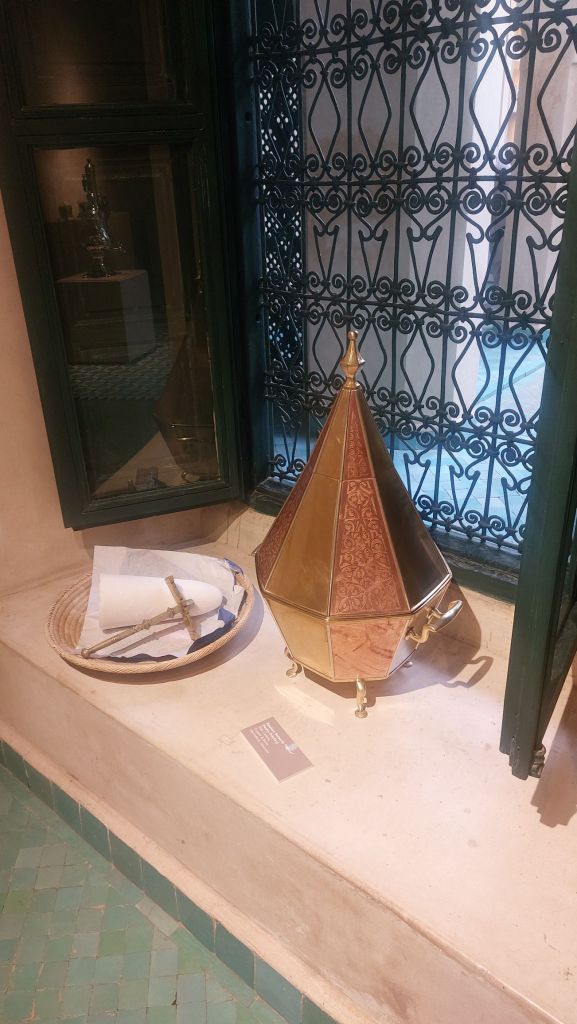
It was purchased by an Englishman who spent 15 years restoring it because everything inside the riad is handmade.
It is captivating and very pleasing to the eye.
Images by Freebird Tracey.
Riad Hikaya is not a budget riad.
However, considering its aesthetics and the professionalism of the staff, it’s worth paying a little extra for.
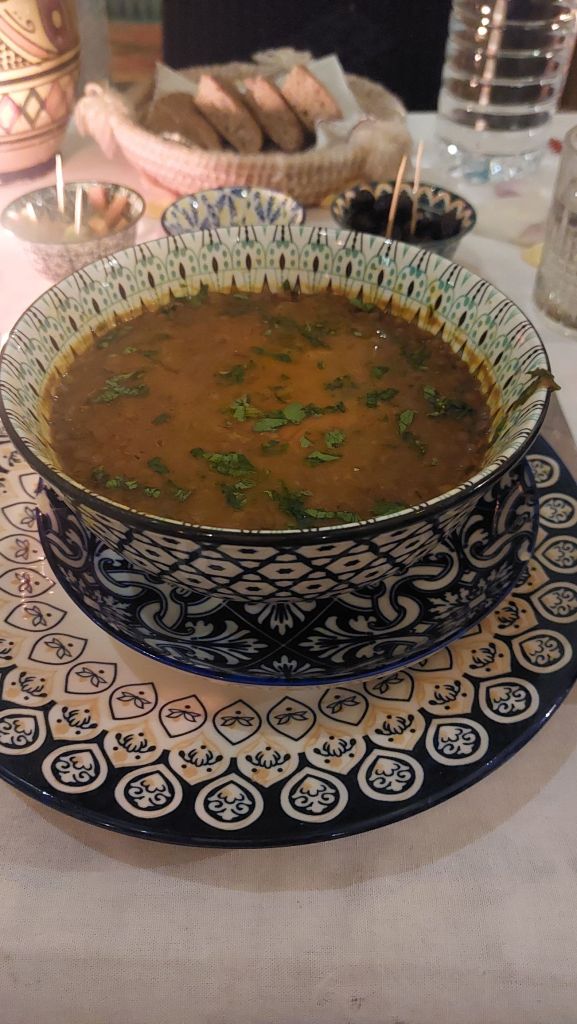
The breakfasts were very good and I ate there one evening and the meal was delicious.
Images by Freebird Tracey.
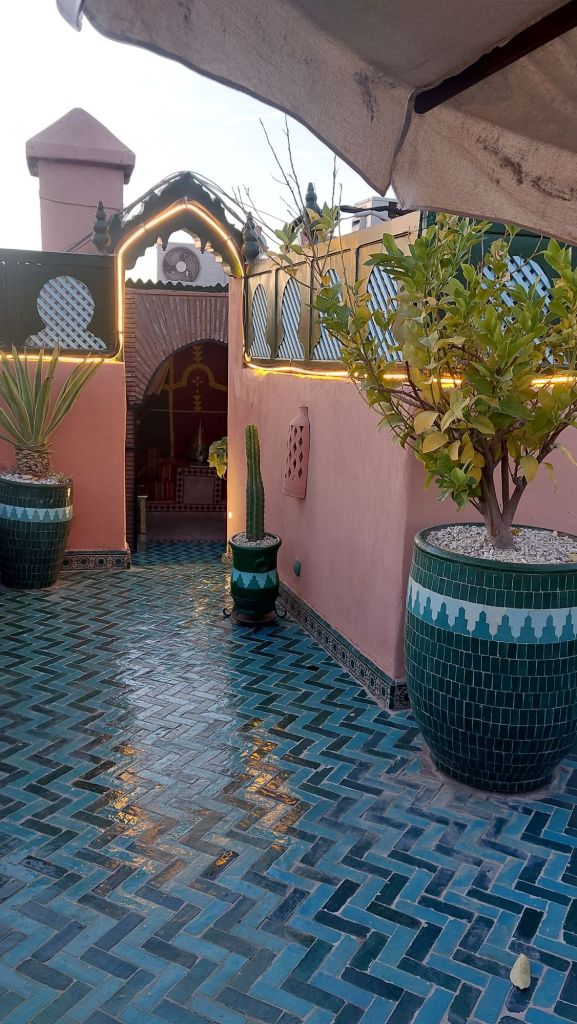
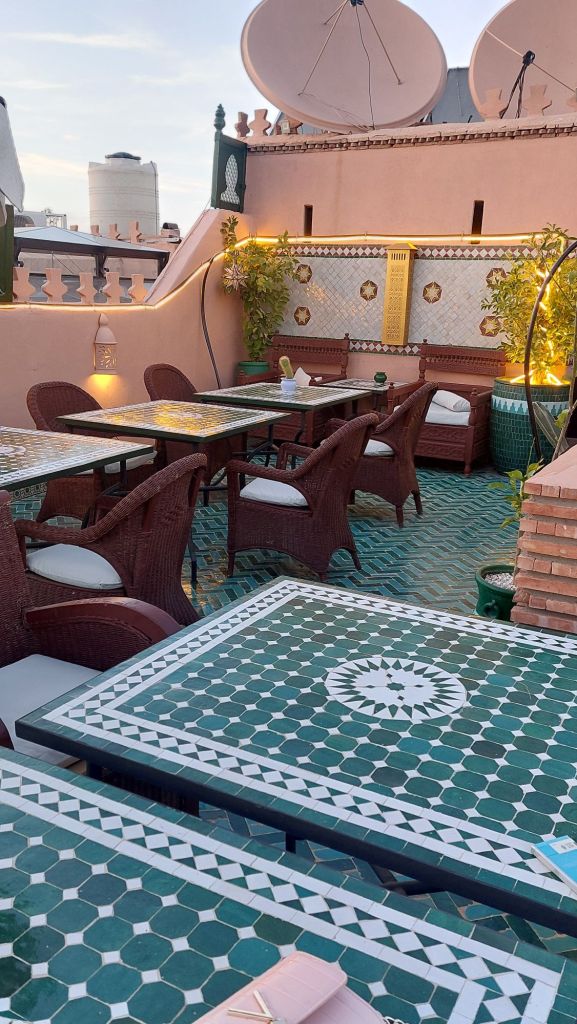
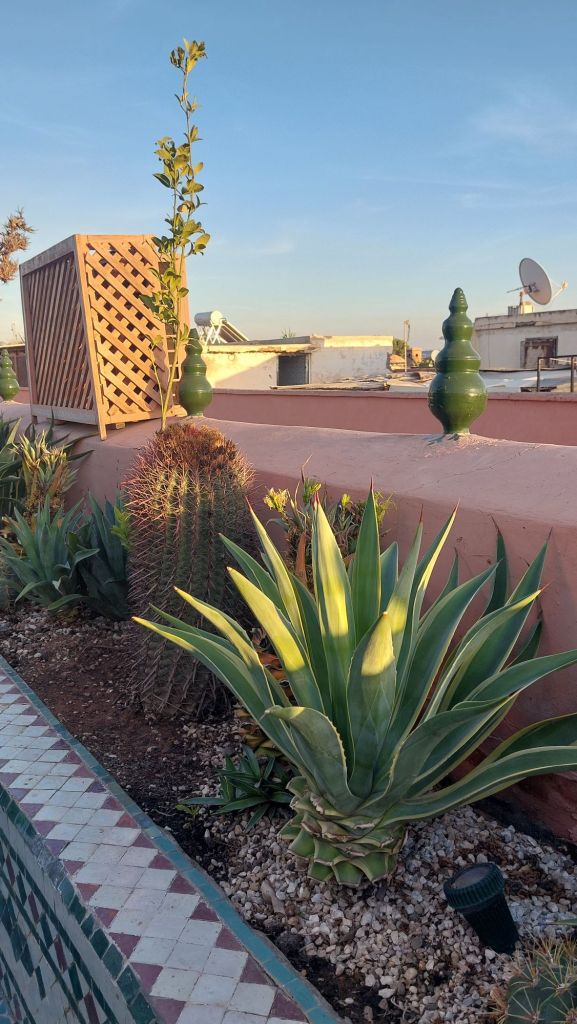
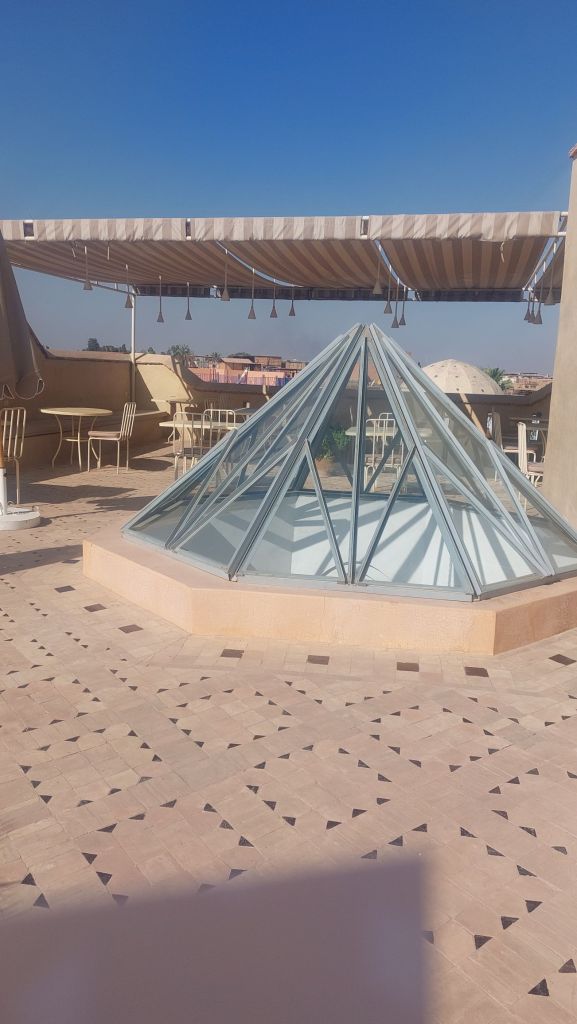
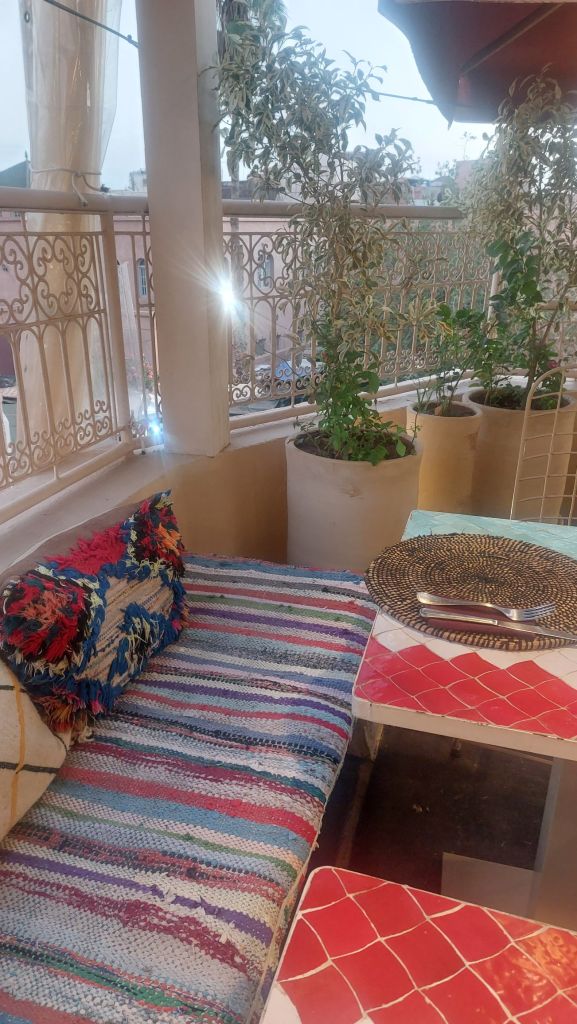
There is a beautiful rooftop with several places to sit in the shade or soak up some of the hot, morroccan sun.
Images by Freebird Tracey.
The Kasbah is a great place to stay with more of an authentic feel about it.
There are plenty of good restaurants, including The Clock, which is across the road from Riad Hikaya.
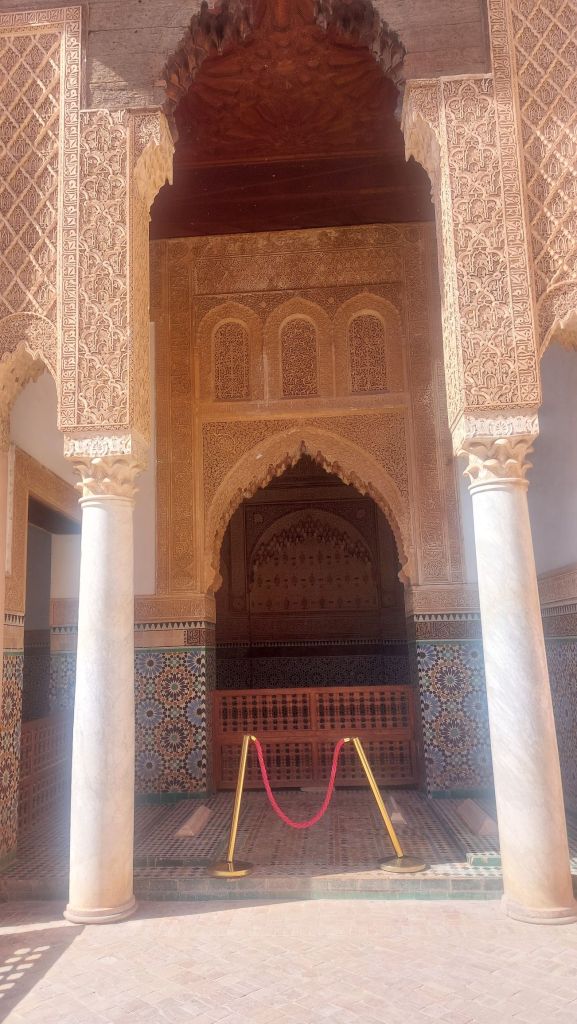
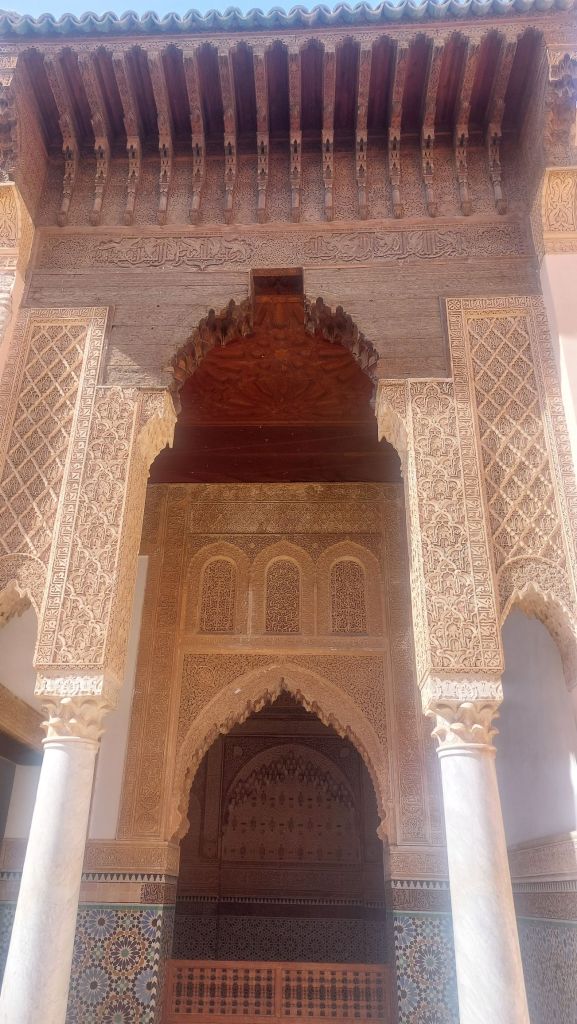
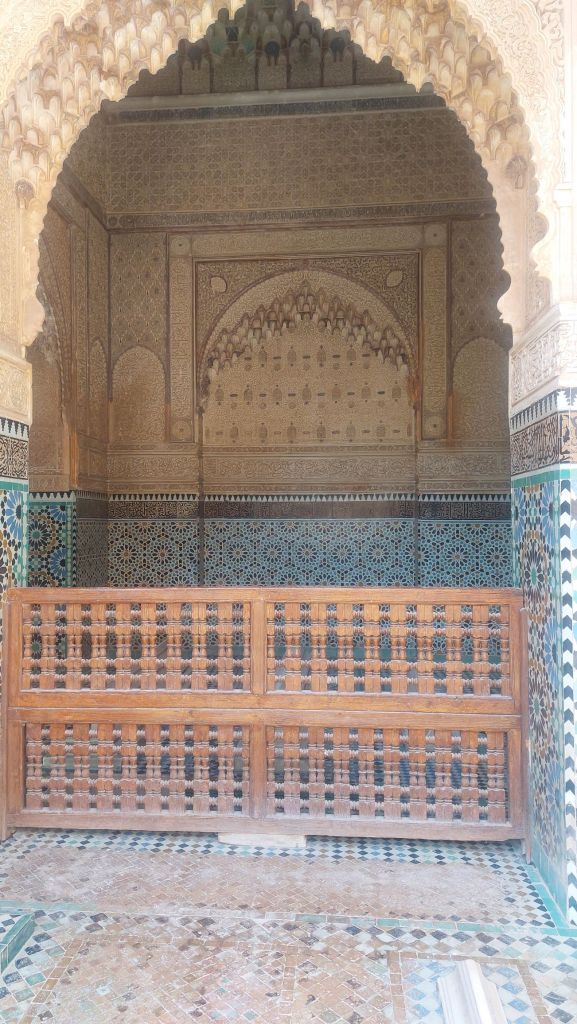
There are shops and attractions such as El Badi Palace and the Saadian tombs to explore.
I enjoyed staying amongst the locals in Kasbah, and it was a nice 15 – to 20-minute walk to the main square Jamaa El Fna.
Riad Hikaya was a good choice, I loved the large copper bathtub in my room and the total piece and quiet the riad provided me with.
If you’re looking for a lively scene, this place may not be for you. But if you want to disconnect from the busy touristic areas for a while, it’s a perfect retreat.
Images by Freebird Tracey.
For more information about here or other places to stay in Marrakech, drop me a message.
A fixed price store selling everything in the Kasbah
If you are fed up with haggling every time you want to buy something, there is a huge store in the Kasbah called Dar Bouchaib.
Here, you will find everything that’s for sale in the souks at a fixed price.
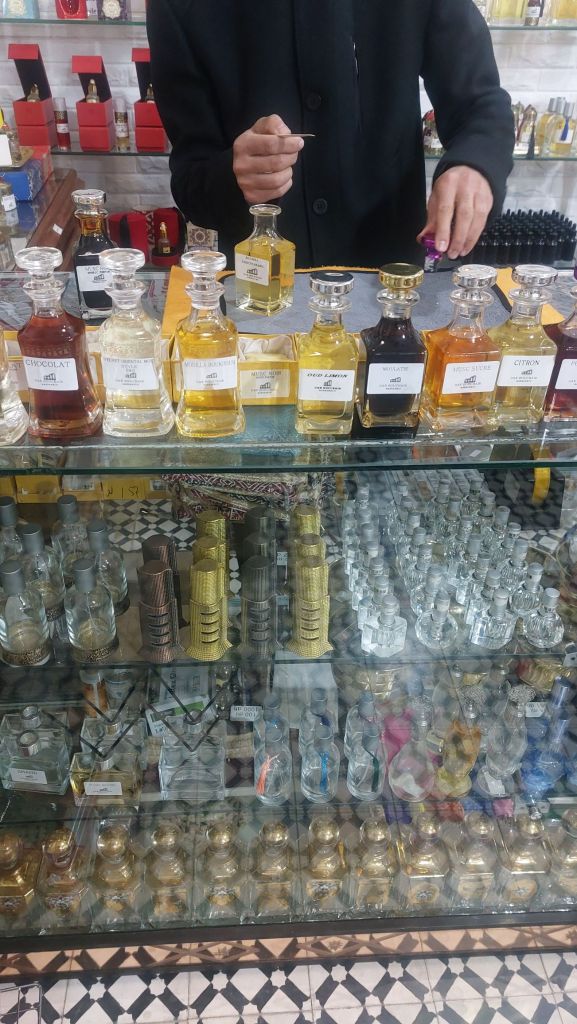
The perfumed oils are of a very high quality, and you can create your own signature fragrance by blending several oils together.
Image by Freebird Tracey.
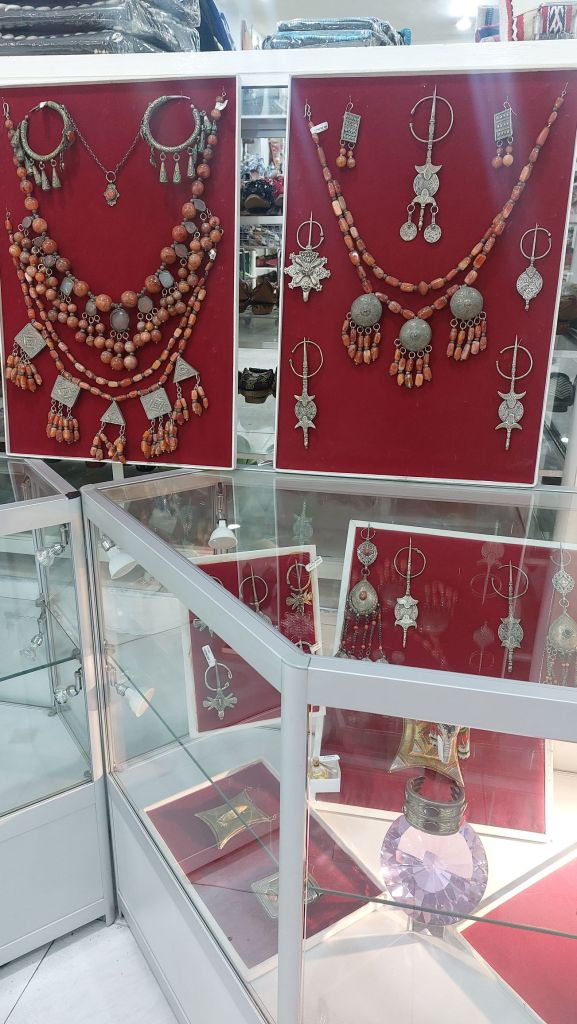
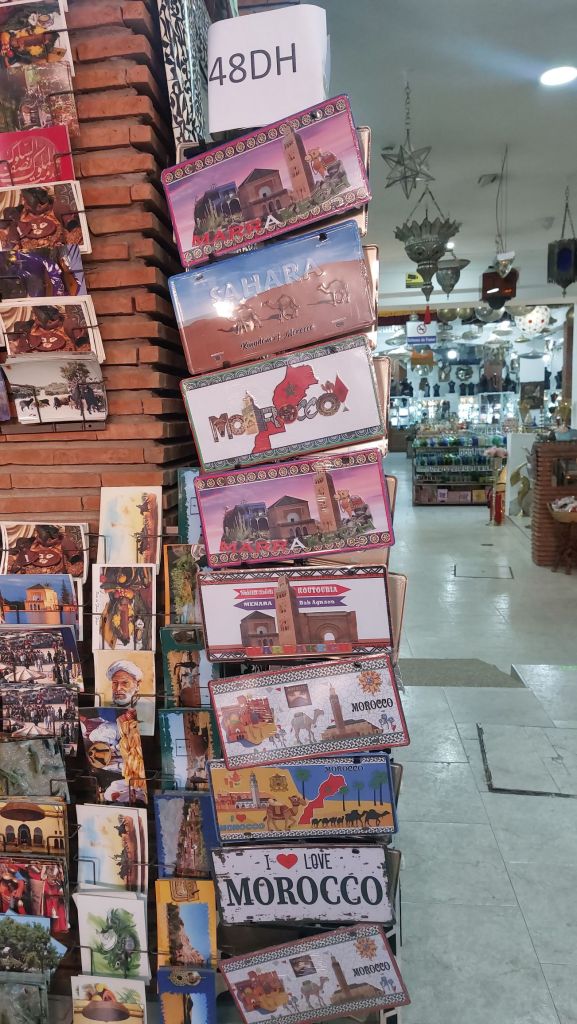
On the ground floor, there are ceramics, jewellery, clothing, footwear, bags, souvenirs, and much more.
Images by Freebird Tracey.
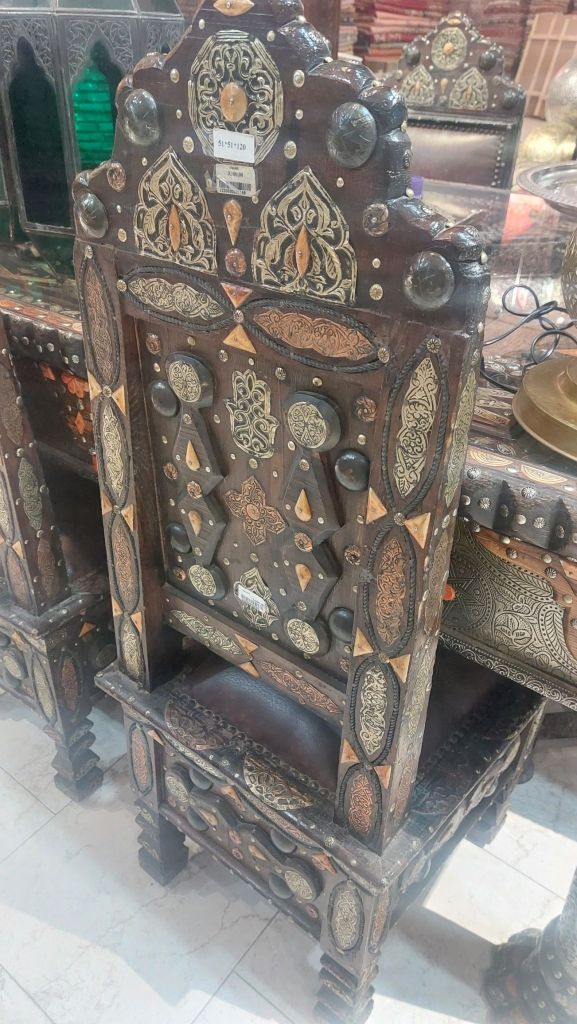
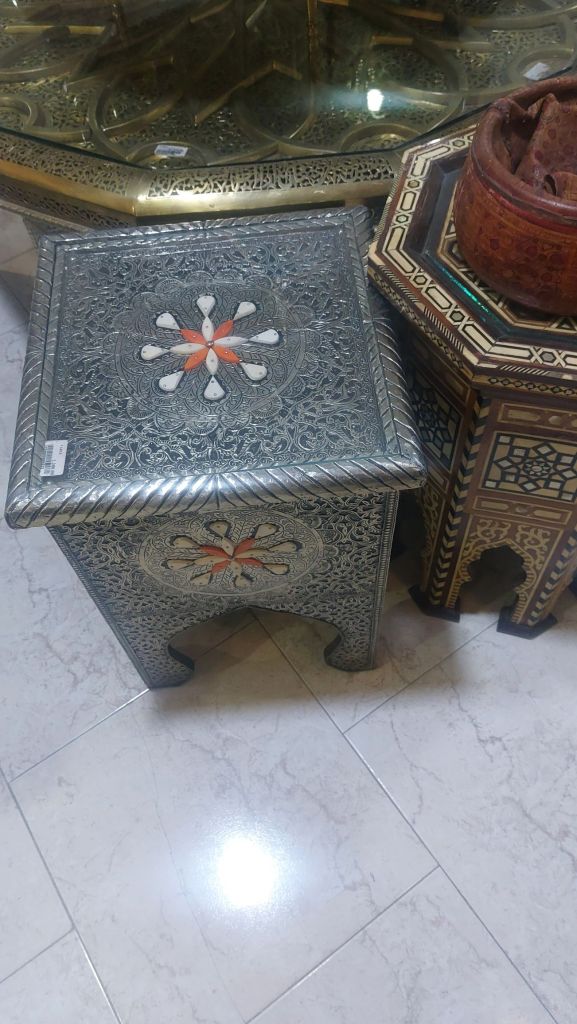
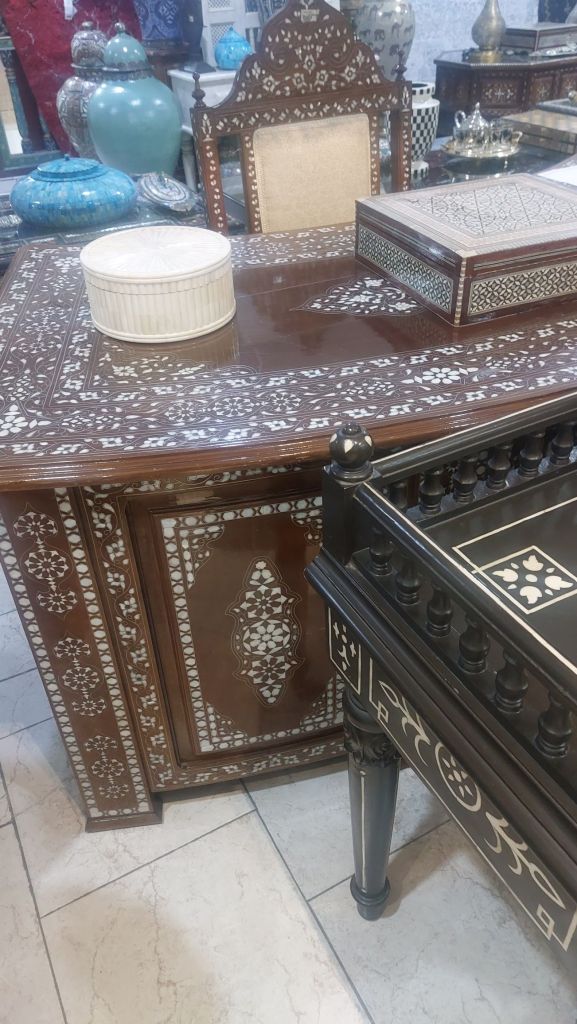
On the first floor, exquisite furniture, mirrors, Berber rugs, and other beautiful handmade pieces to furnish your home with.
They also ship worldwide.
The staff are incredibly helpful and not pushy at all.
The store is huge and worth visiting just to see the craftsmanship and detail that’s gone into creating each piece.
Images by Freebird Tracey.
The Kasbah is a 15 – to 20-minute walk from the main square with plenty of interesting shops and good restaurants along the way.
Here, you will find the Saadian tombs and El Badi Palace.
Dar Bouchaib can be found on;
Rue de La Kasbah,
Marrakech 40000.
Opening times are;
Daily from 9.00 am until 8.30 pm.
Bank holiday hours may differ.
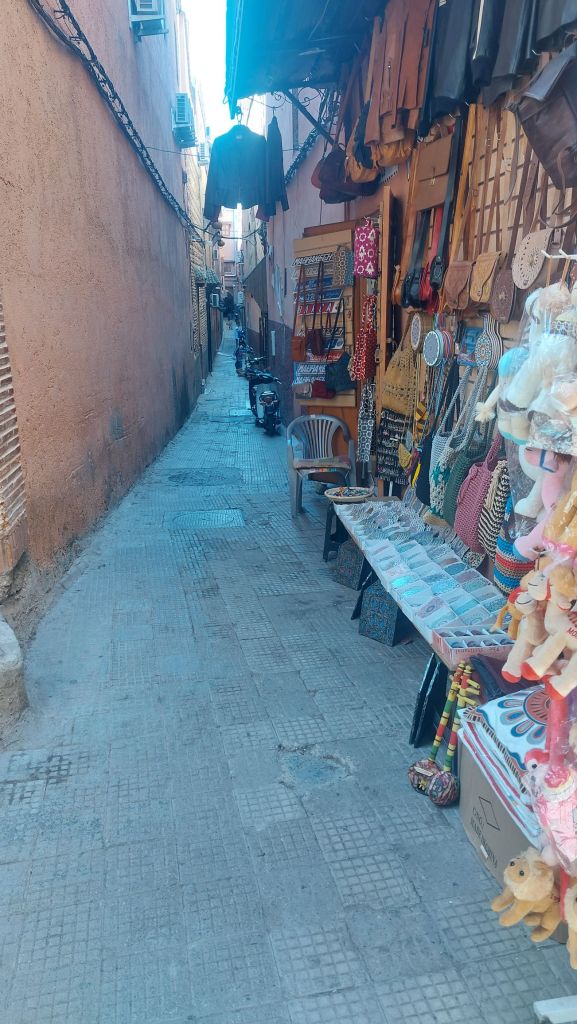
Although part of visiting Marrakech is to enjoy shopping in the souks, sometimes haggling and knowing how much you should be paying for something can become slightly stressful.
Dar Bouchaib is a relaxed shopping experience with everything under one roof.
The prices are fixed and realistic.
Make it part of your visit to the Kasbah area.
You won’t be disappointed.
Images by Freebird Tracey.
For more information, see my other posts or contact me via the email address below..
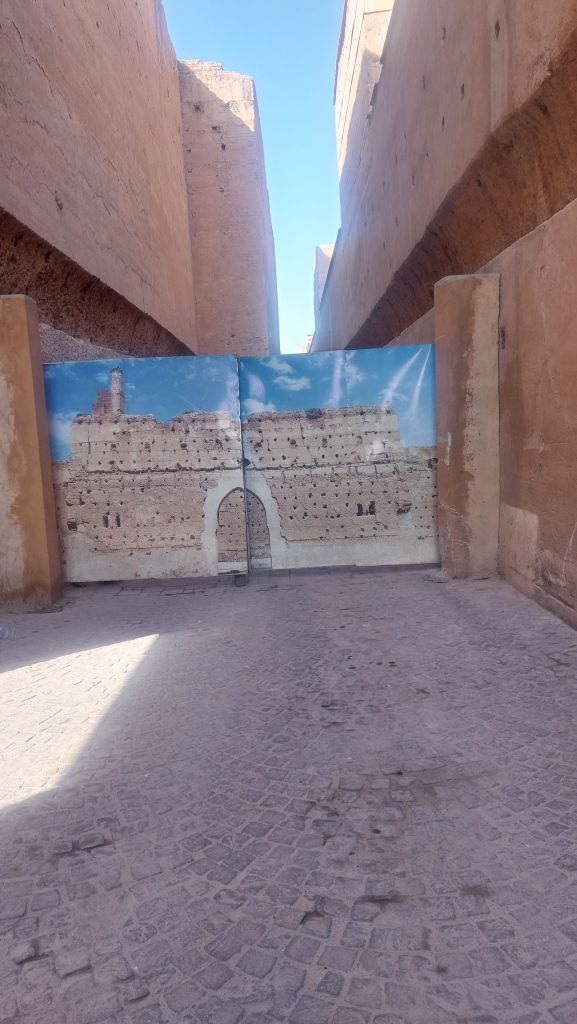
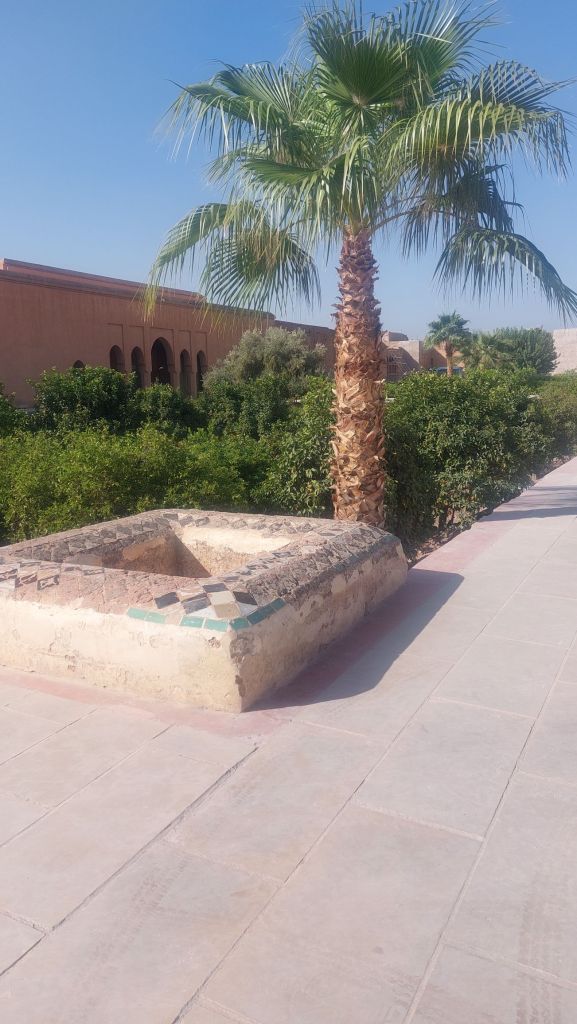
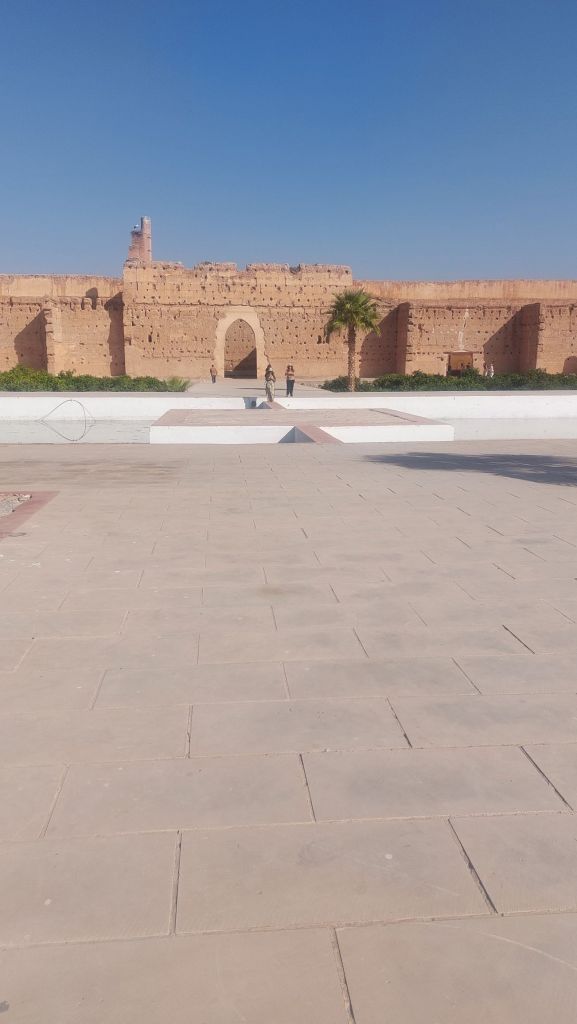
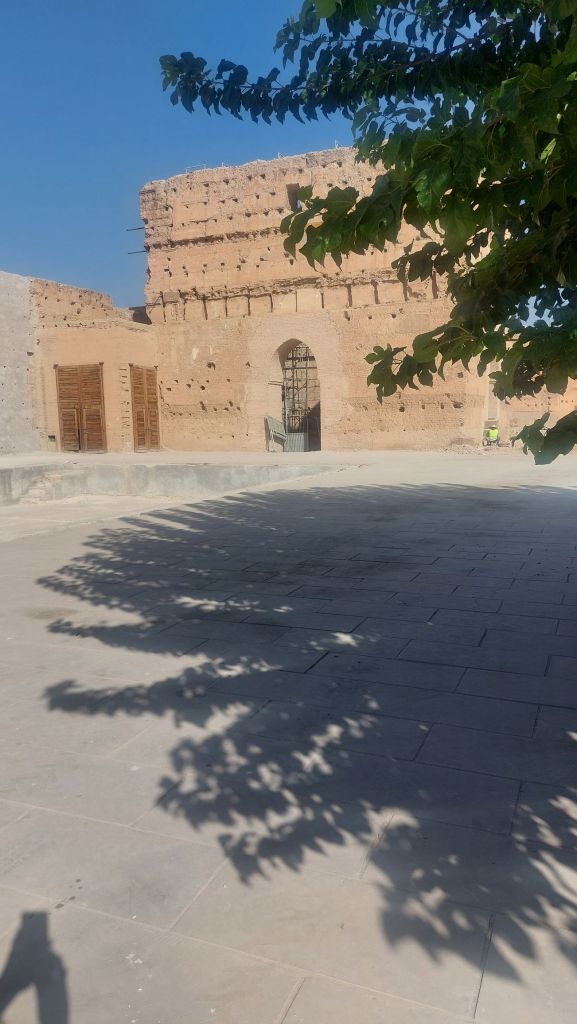
El Badi Palace was built in 1578 by Sultan Ahmad al-Mansoor of the Saadian dynasty.
The palace was built to showcase the considerable wealth of the Saadian dynasty and was a prime example of Islamic architecture and exquisite craftsmanship.
Using both Moroccan and European influences, the palace was beautifully decorated with intricate mosaic tiles, marble arches, and ornate carvings.
The palace was home to the sultans harem and included over 500 women.
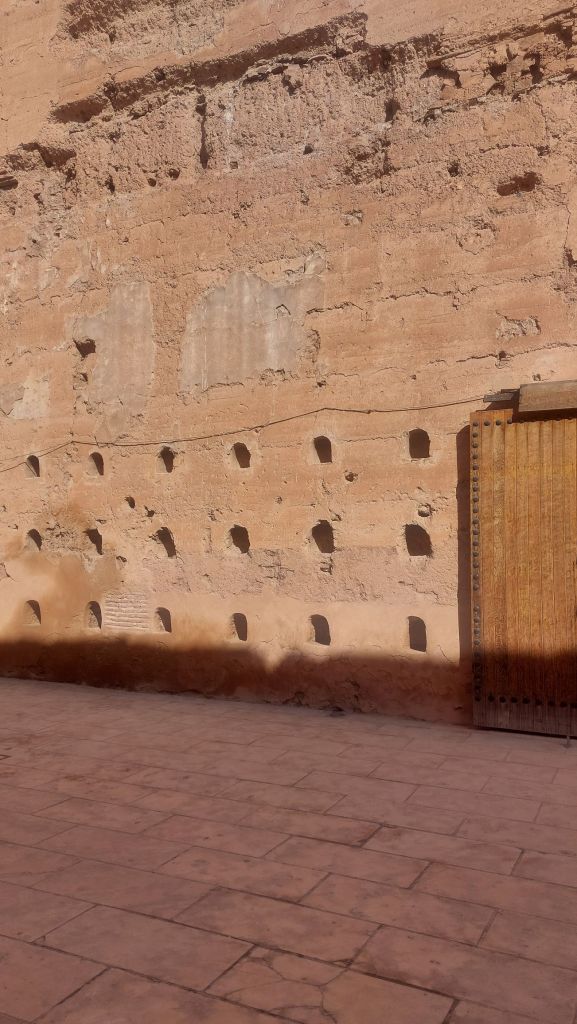
Now, only the ruins remain.
After Sultan Ahmad al-Mansoor died in 1603, the palace fell into neglect and was subsequently stripped away with the materials being used for other buildings in Morocco.
The palace is certainly worth a visit if you want to learn about the history of Marrakech and the ruling elite centuries ago.
The exhibition space contains the Almoravid Minbar, which is a finely decorated pulpit that once stood in the Koutoubia Mosque.
It also hosts temporary art and cultural exhibitions.
The underground chambers contain information and photographs about the palaces history.
Image by Freebird Tracey.
The palace was badly damaged during the earthquake in 2023, and renovations have taken place to repair the cracks in the walls.
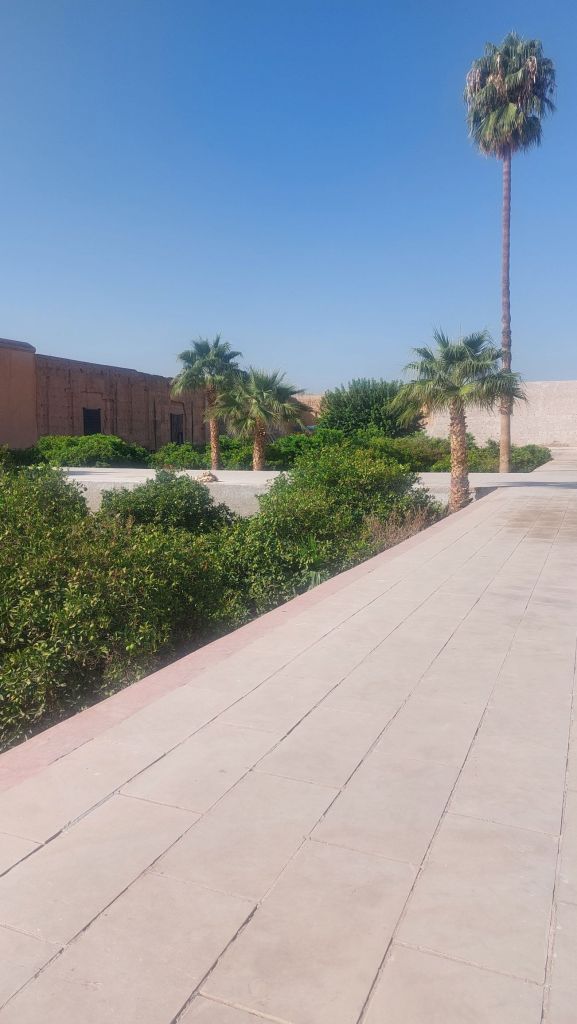
El Badi Palace is situated in the Kasbah district of Marrakech and a popular tourist attraction.
The courtyards are impressive, and the nesting storks on the towers give it a magical feel.
Images by Freebird Tracey.
You get a sense of the grandeur of the Saadian dynasty, and there’s a feeling of peace and tranquillity within the walls of the once opulent palace.
El Badi Palace is open every day from 9.00am to 5.00pm and costs 100 dirhams to enter.
Images by Freebird Tracey.
For more information, contact me via the email address below;
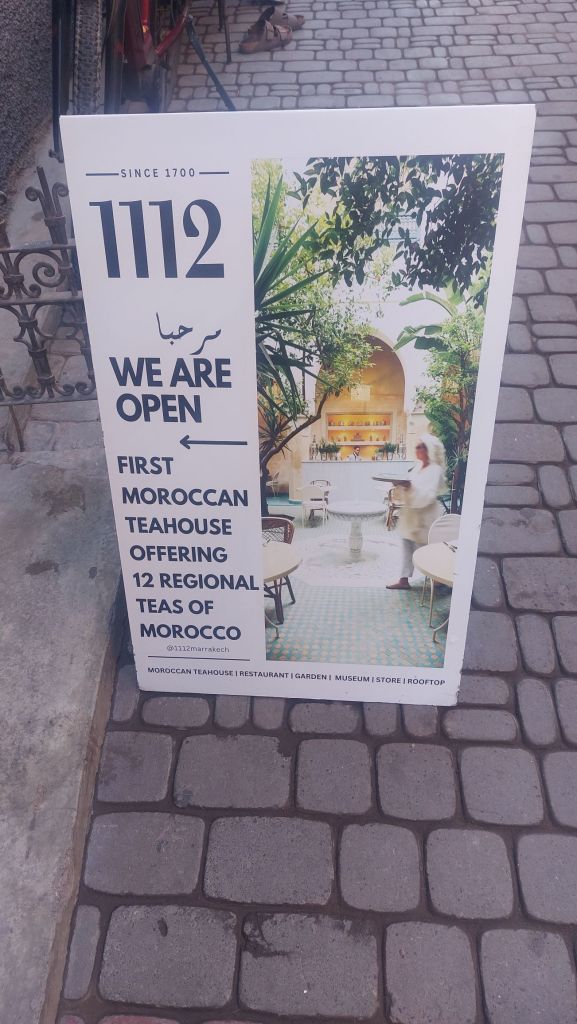
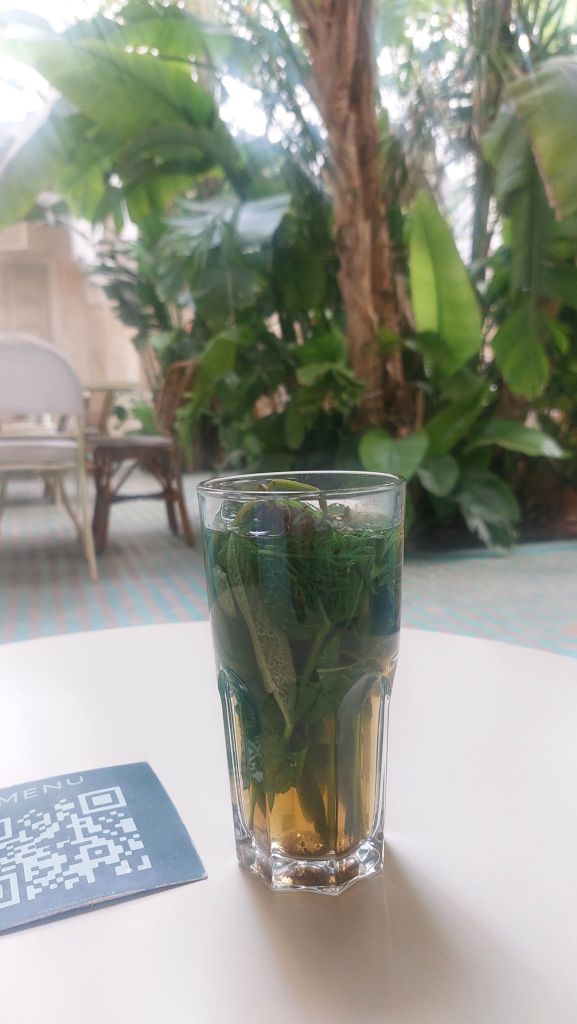
It is the first Moroccan tea house in marrakech, serving 12 teas from the 12 areas of Morrocco.
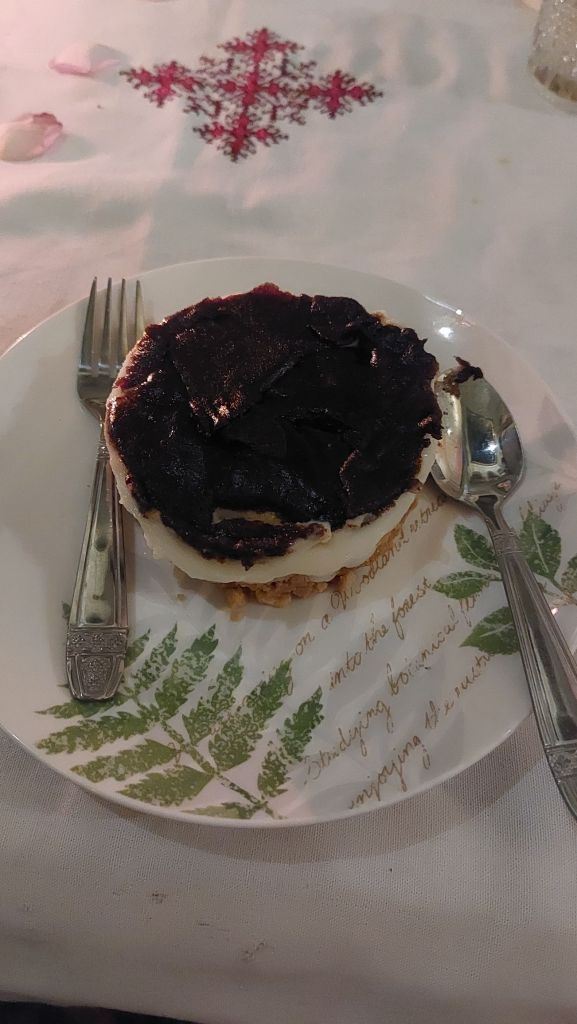
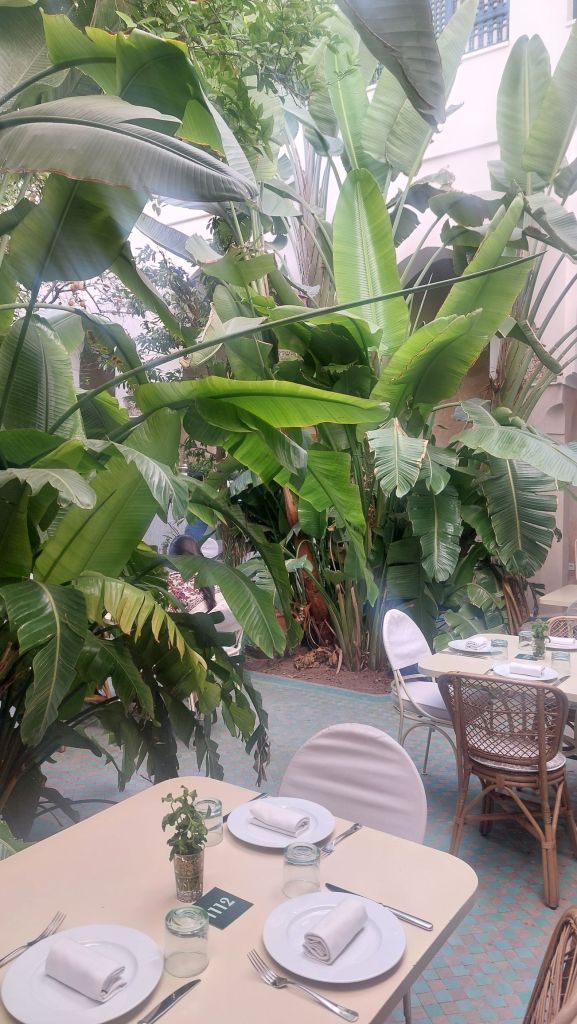
Set inside a former riad, it is a beautiful place to come and sample the 12 delicious teas on offer, along with modern oriental cakes.
They serve breakfast and lunch.
The food is nicely presented with table service, tasty and varied.
There is a selection of light snacks available on the menu also.
Images by Freebird Tracey.
The name 1112 signifies the date 1700 in the gregorian calendar and is etched into the wooden ceiling of the riad.
The riad was beautifully restored by a morroccan family who have been renowned for their expertise in the restoration of such properties since the 1990s.
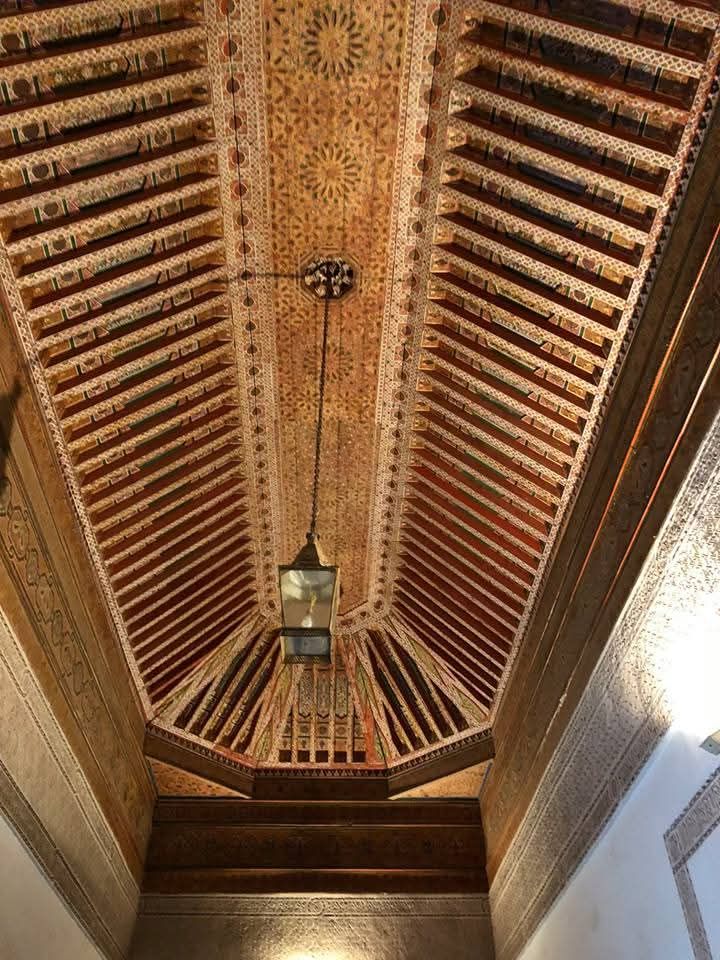
The architecture is beautiful. Wooden ceilings, intricate tile work, and exotic plants make it a delightful environment for sitting and reflecting on the past history of the importance of tea in Morrocco.
There are interesting facts about the introduction of tea into Morocco and a shop selling nicely packaged tea if you’re looking for a gift to take home with you.
Images by Freebird Tracey.
1112 has a nice rooftop.
After exploring the museum, it is worthwhile taking a look around this exquisite riad and savouring the whole experience.
Kafe Merstan restaurant and rooftop terrace is located near the spice square and vegetable market in the medina.
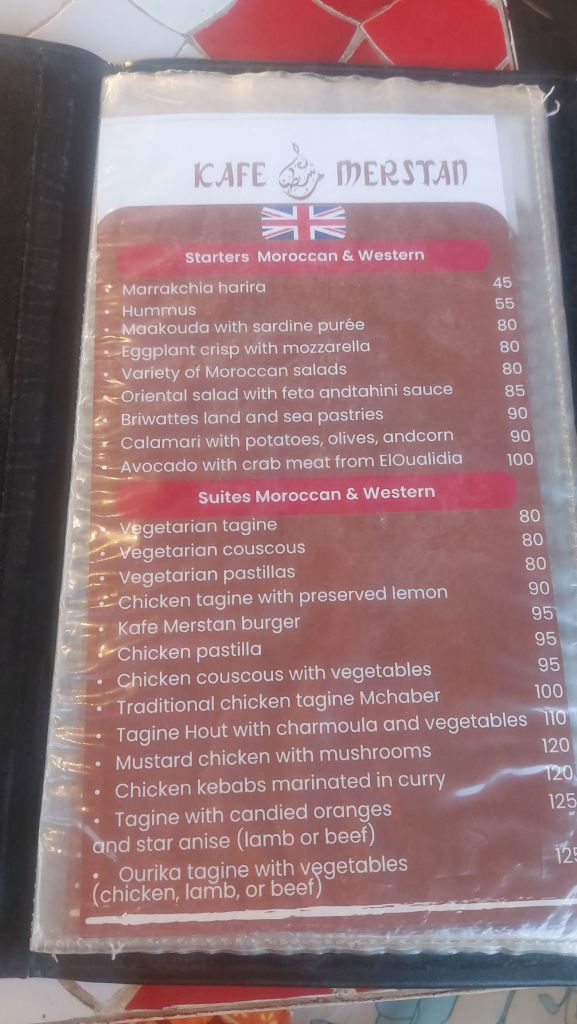
They serve traditional Morroccan food, and prices are very reasonable.
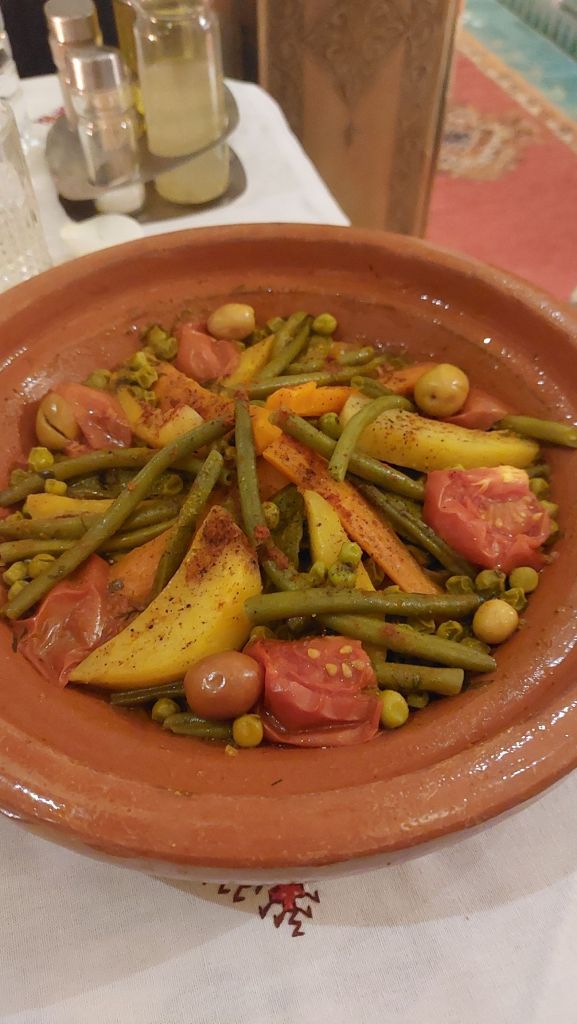
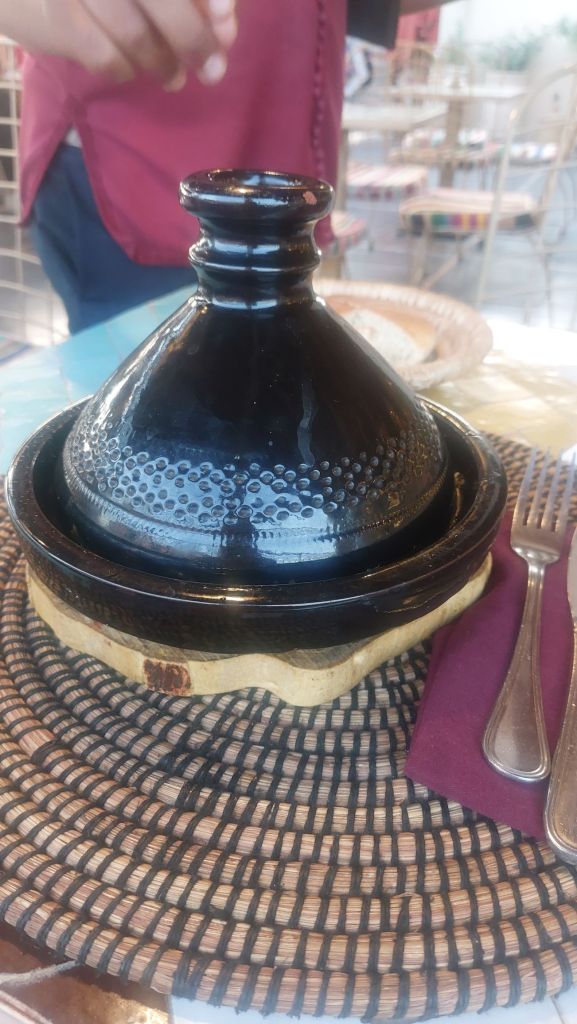
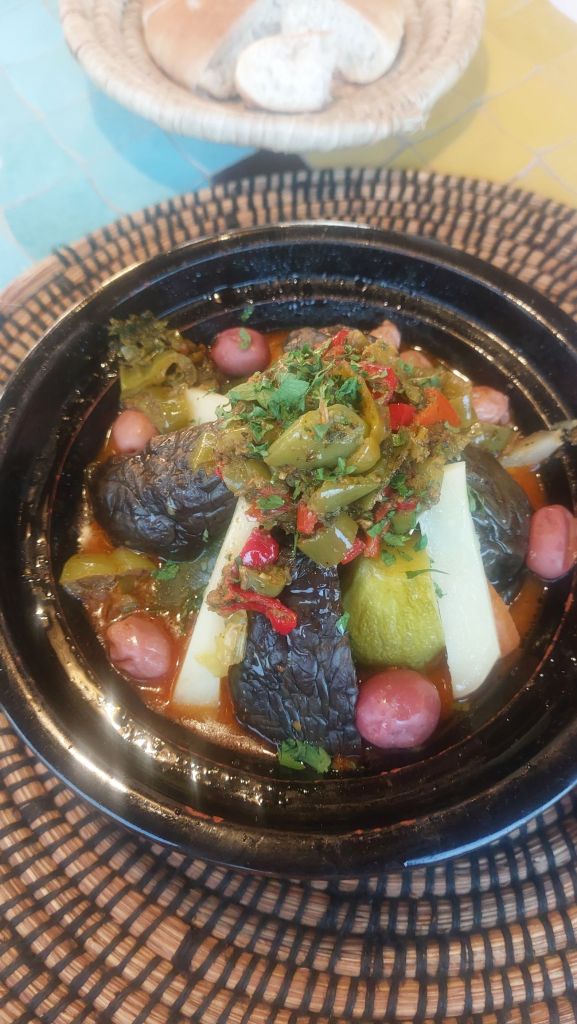
I had one of the tastiest tagines here, and the overall quality of the food was good.
Image by Freebird Tracey.
It’s popular during sunset, and tourists arrive to watch the sun go down from the rooftop.
It’s quite spectacular and can get quite busy at this time of evening.
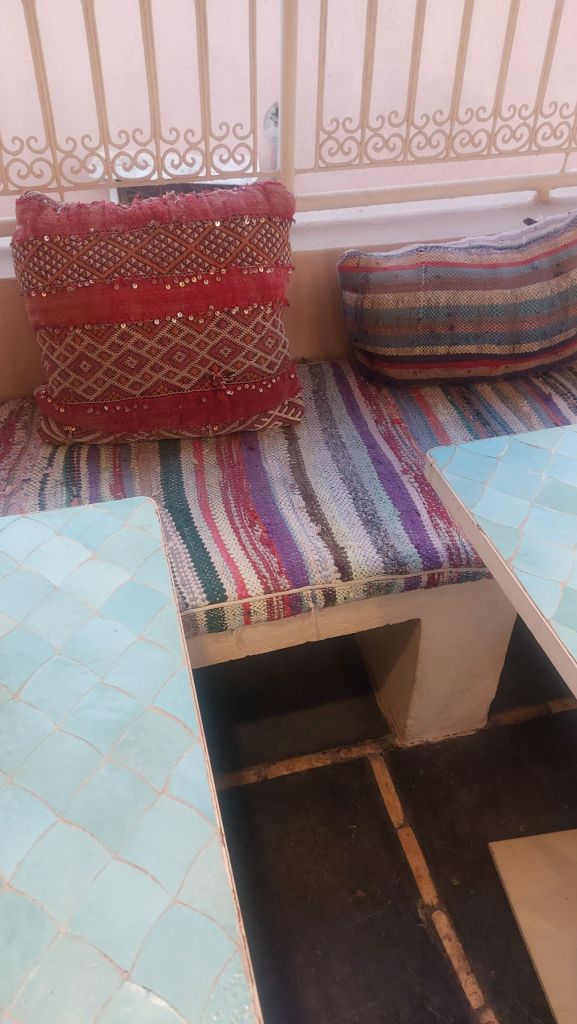
The interior is traditional with a fairly modern twist.
Images by Freebird Tracey.
It’s a no frills restaurant, and the price reflects this.
Seating is upstairs on the rooftop, so people with mobility issues may not find it easy.
Payment is by card or cash. However, there’s a minimum of 200 MAD for card payment.
They will accept less but expect a few grumbles of disapproval.
The address for Kafe Merstan is 2 Souk Chaaria Kast Benahid, Marrakech 40000.
Opening hours are 12.00 until
10.00pm.
The restaurant is close to the Madrasa Ben Youssef and Museum of Marrakech, so it’s in a strategic position and ideal for taking a break from sightseeing.
Kafe Merstan offers a good selection of vegetarian dishes, including a very tasty vegetable pastilla.
Image by Freebird Tracey.
For more details about places to eat in Marrakesh, contact me via the email address below;
Marrakech is a safe place for travellers with a relatively low crime rate.
Image by Freebird Tracey.
Like any other destination, there are several things to be mindful of as a first-time visitor to the red city.
There are a few potential scams that visitors for the first time to Marrakech should know about.
.The road is closed.
This is a regular scam that can leave tourists confused.
You’re trying to locate your riad or a point of interest, and someone (usually a young male) tells you that the road ahead is closed.
He asks you your destination and offers to escort you via an alternative route.
Before you know it, you’re wandering endlessly through the souks until you arrive at his friends shop.
You’re still lost, and now you’re being offered mint tea whilst his friend brings out a multitude of exotic spices or rugs.
The male who took you there gets a commission if you cave in and buy something in order to get away.
If you’re approached in this way, a firm no thank you or La shoukran usually does the trick.
If he is very persistent, head to a nearest trader, and ask their advice about whether the road is closed or not.
Make your boundaries clear but remain polite and try not to get too impatient.
It can be difficult if you’re tired or overwhelmed, but showing your weakness will only show how vulnerable you are feeling, and you may become a target for more opportunists.
. I can take you to your riad.
When you first arrive in the medina, you are faced with a maze of alleyways and tunnels.
Often, your riad will be tucked away inside the souks or down one of these alleyways, hidden from view.
A tourist who looks as though they’re lost will invite the so-called ‘ helpful guide’ to your side who can show you exactly where you need to go.
He will escort you, taking the long route to your riad, and then demand a payment from you.
He may become quite persistent and insult you if you refuse to cough up.
I was taken off guard seconds away from my riad.
A young male basically nudged me along the narrow alleyway shoulder to shoulder. He demanded a payment, holding his hand out as I knocked on the door of my riad.
I told him I wasn’t lost and knew where I was going and that I hadn’t requested his help. He was quite cross with me and began insulting me in Arabic.
I stood my ground and ignored him until I was let inside my riad.
This can feel somewhat intimidating, but don’t give in.
Marrakech has a good police presence, and, in the worst case scenario, threatening them with this often does the trick.
.Over inflated prices for tourists.
There is a price for the attractions around the medina for tourists and a price for Moroccan residents.
This happens in many countries nowadays and you can’t protest much about it.
On the other hand, prices for street food and things you might wish to purchase in the souks are often much higher than they should be.
Learn to bargain with the salesperson, try dropping around 25%, and eventually, the pair of you will reach a price you’re both happy with.
Haggling is an art form, and it takes time to feel confident, but it’s a way of life in Marrakesh and can be quite a rewarding experience when you think you’ve managed to buy something for a fair price.
If you’re not happy, shop around. There are plenty of places selling the same goods around the souks.
. Gambling games in Jamaa El Fna.
During the evening, when the square comes to life, there are a few pockets of entertainment where gambling games take place.
These are scams that involve the winners working with the person in charge of the game.
They impersonate curious onlookers and ask to take part. They win and a prize is exchanged.
These are not genuine participants, and the likelihood of you winning a cash prize is virtually nil.
. Unofficial tour guides.
Some tourists mentioned being approached by unofficial tour guides whilst visiting some of the attractions around the medina.
Males who begin by asking where you’re from, then following you around telling you a brief history of the place.
After a short while, they ask for a fee for their time.
If you want a genuine tour guide, check the website of the attraction you’re visiting or Get Your Guide. Booking. Com also offers attractions with a guided tour and transport. Payment is upfront, and guides are very knowledgeable.
Marrakech is an amazing destination with so much to see and do.
I have pointed out a few negatives that you should be aware of.
You may not experience any of these things.
Locals are very friendly, and tourists are accepted and made to feel very welcome.
My advice is to make your boundaries clear from the start, get yourself some data with an Orange SIM for negotiating your way around the medina, and learn a few words of Arabic or French to help you say no thank you.
Like anywhere else in the world, keep your wits about you in crowded places, and stay calm.
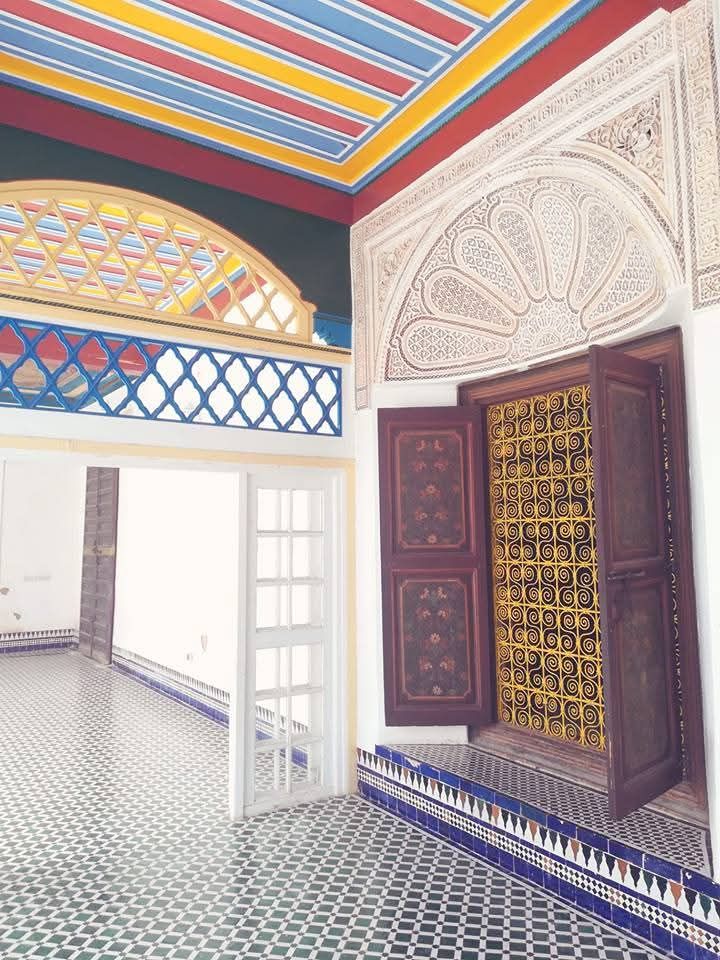
Bahia Palace is a stunning, 19th century palace in Marrakesh.
Image by Freebird Tracey.
It’s definitely a must-see if you’re visiting the city, and it’s quite spectacular.
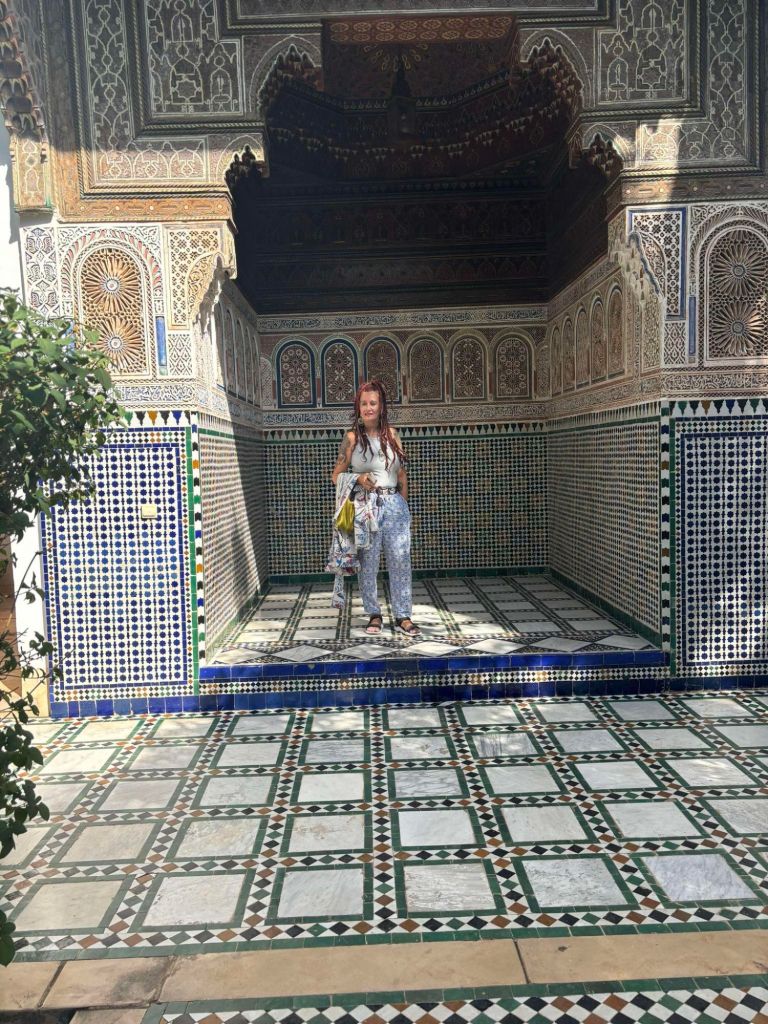
The rooms are decorated with stuccos, paintings, and mosaics to capture the essence of Islamic architecture.
The word Bahia means ‘brilliance’ in Arabic, reflecting the splendour of Islamic art and architecture.
It is necessary to book tickets prior to visiting the palace as queues can be extremely long.
They cost 70 dirhams each, and the palace is open from 8.00am-5.00pm daily.
The courtyard is stunning, and all the rooms open out onto it.
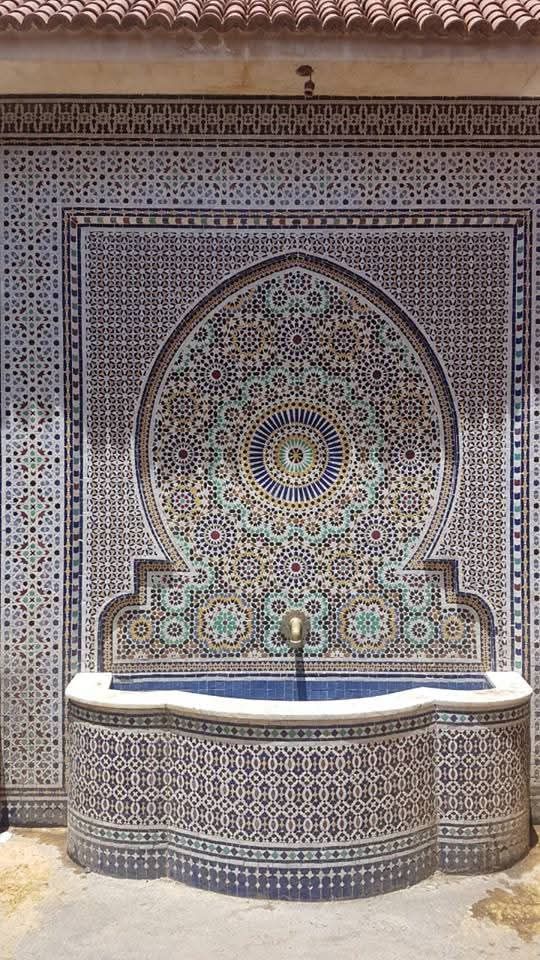
It is rather grand and very spacious with a fountain in the centre and intricate tile work typical of Morroccan culture.
There is also a 2-acre garden surrounding the palace.
There are orange trees lining the route up to the entrance of the palace.
When Morocco gained independence from France in 1956, the Bahia palace was used as a royal residence. This was until King Hassan II transferred it to the custody of the Moroccan Ministry of Culture.
The building then became a cultural icon and tourist attraction.
Bahia Palace is one of the most visited tourist attractions in Marrakech.
It is best to arrive as close to opening time as possible to avoid the crowds.
That way, you can spend time reading about the history of the palace and enjoying the experience.
I would recommend visiting Bahia Palace.
It’s gives you a good understanding of Islamic culture and the fine craftsmanship that defines it.
If you enjoy looking at Islamic architecture, you could also visit Badi Palace in the Kasbah area of the city.
One of the most refreshing, healthy drinks in and around the medina, smoothies can be found everywhere in Marrakesh.
Using the freshest fruit from the local market and packed with nutritional goodness, smoothies are the perfect start to the day.
I regularly choose the detoxifying smoothie for its positive health benefits and as a pick me up after a long, hot day exploring the medina.
Literally, everything goes into making a perfect smoothie, and in Marrakech, they seem to have perfected the art.
Fresh fruit, dried nuts, spiralina, cucumber, avocado, berries, banana, and spinach are just some of the ingredients that go into making the perfect smoothie.
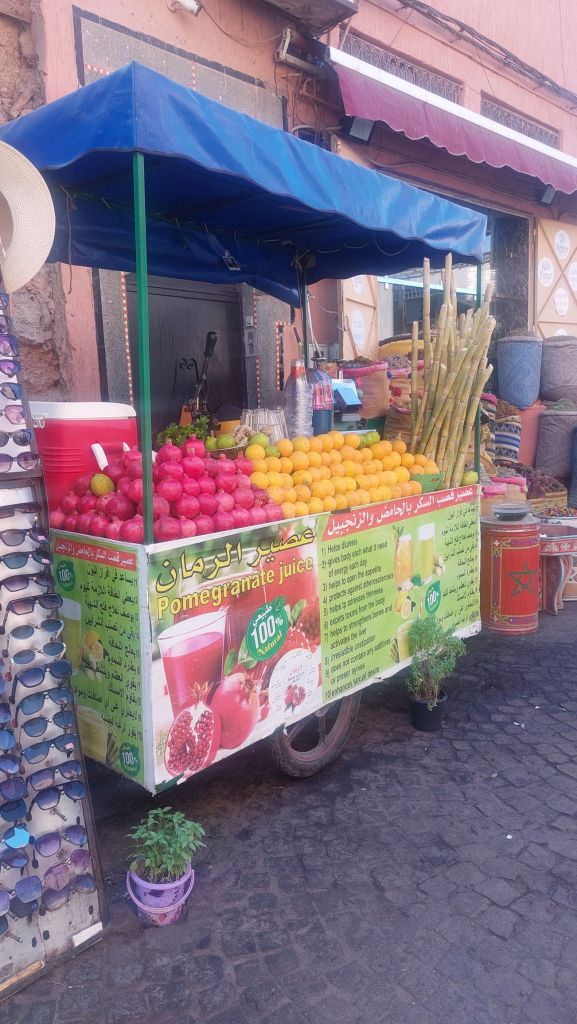
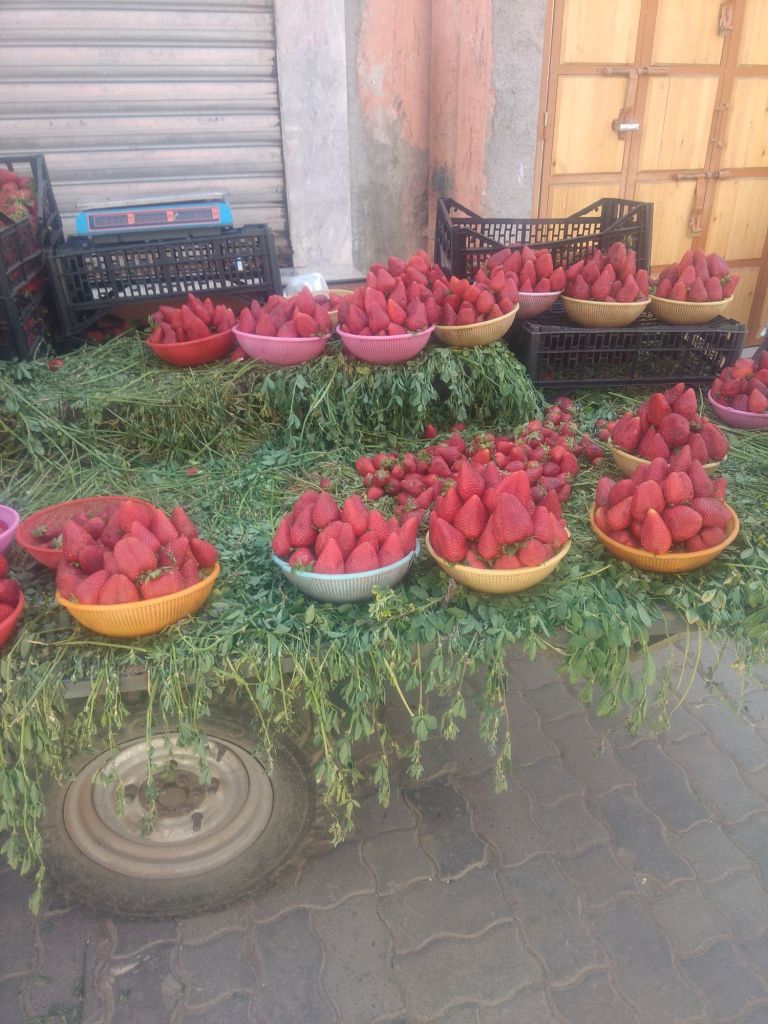
Pomegranate juice is refreshing in a hot climate like Marrakech. Fresh strawberries for sale in the medina.
Fresh juice is also a popular choice amongst tourists who need something to quench their thirst in the heat of the day.
Freshly squeezed lemon juice is tangy and exhilarating.
Served with fresh mint, it’s both aromatic and tasty.
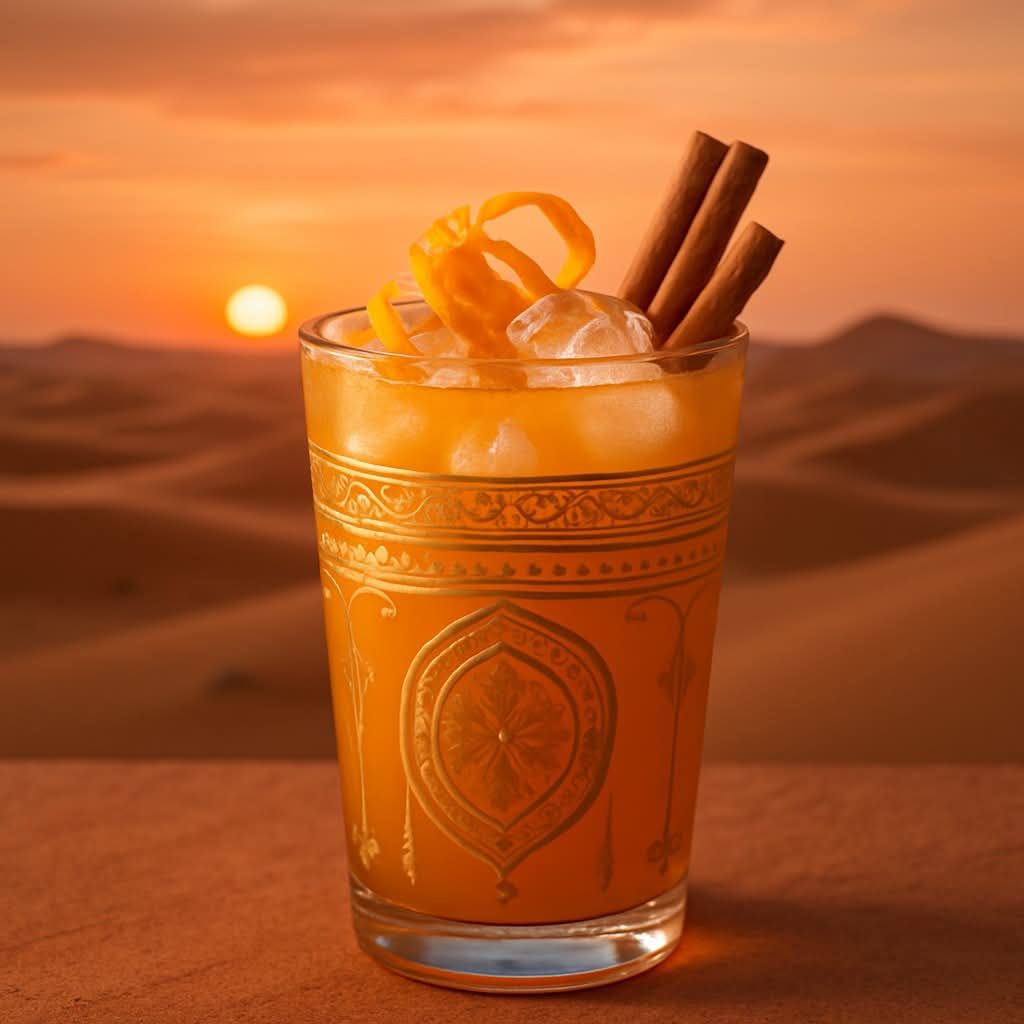
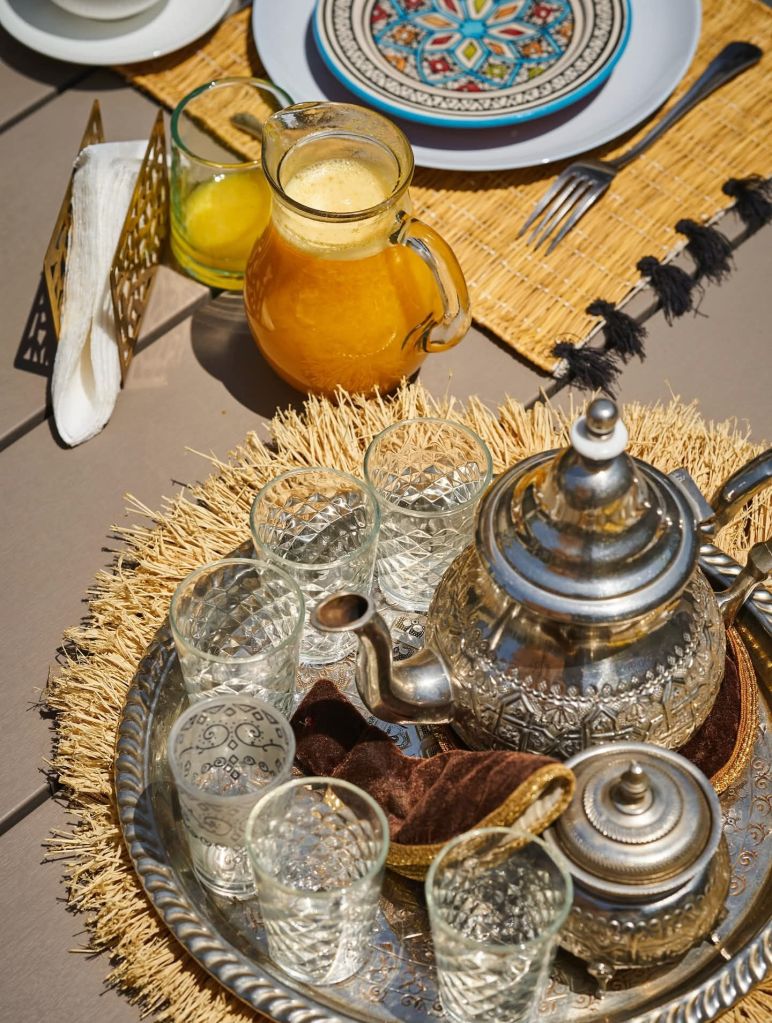
Orange juice made from the oranges on the trees around the medina is a breakfast staple.
It is sunshine in a glass.
My absolute favourite juice was the freshly squeezed pomegranate juice.
It was a refreshing tonic and gave me a burst of energy.
I was flagging in the heat during a hike around Ouzoud Waterfall, and it instantly hit the spot.
Making pomegranate juice at Ouzoud Waterfall.
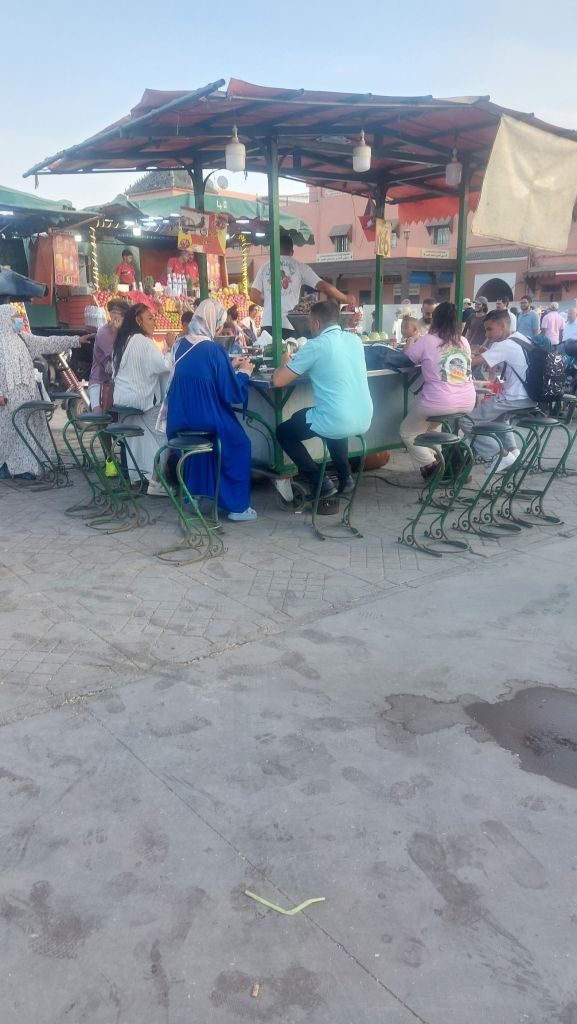
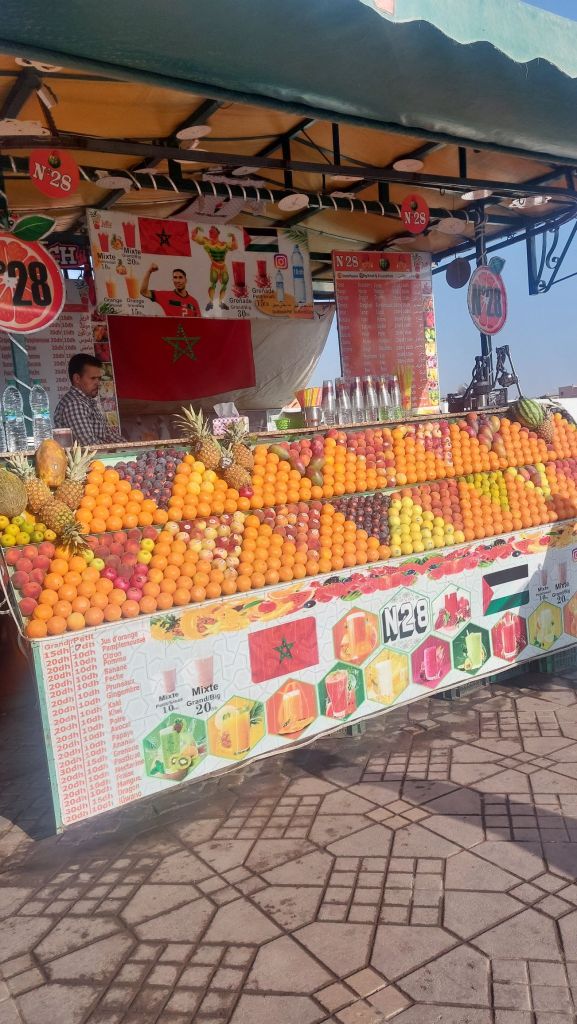
The fruit juice vendors in the main square call you over to sample their mango and pineapple juice.
They offer a selection of different fruits to try, and it’s exciting watching them make it for you.
They are constantly trying to get your attention and offer you their service. There is so much competition.
Juice vendors in Jamaa el Fna.
There are a few places I can recommend…
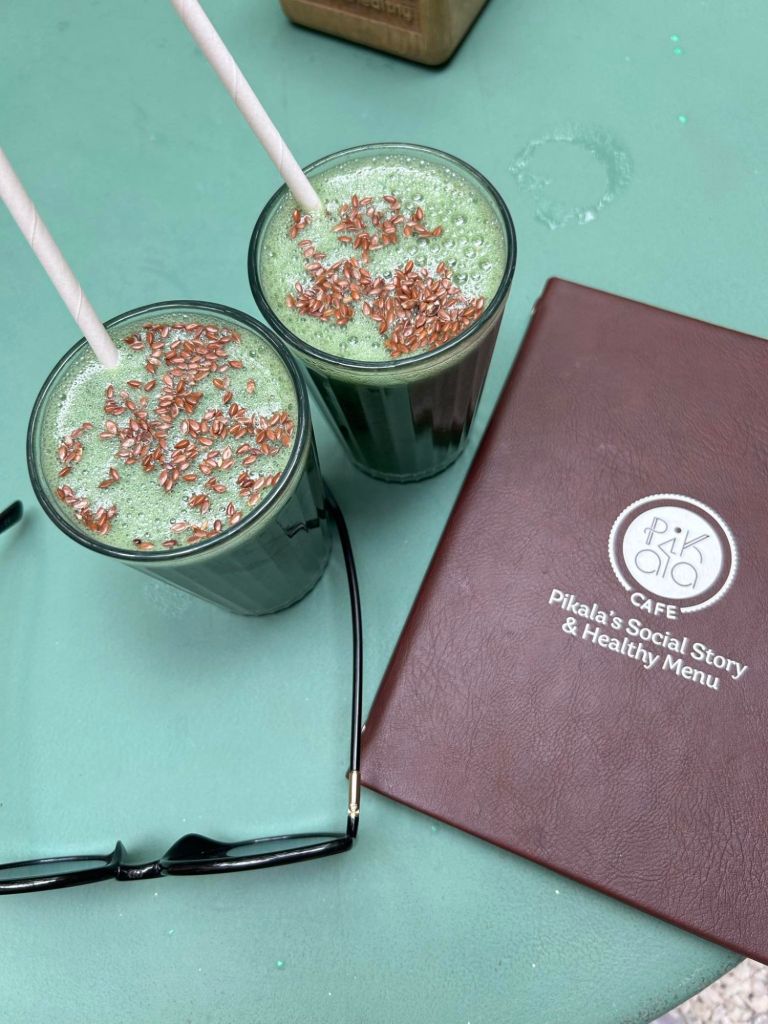
Pikala Cafe has an excellent choice of delicious, healthy juices and smoothies.
( See my separate post about Pikala Cafe).
Detox smoothies in Pikala Cafe.
Also,
Le Ferme Medina.
Henna Art Cafe.
La Famille (vegetarian restaurant)
There are also plenty of rooftop restaurants around the main square to enjoy a well-deserved rest whilst sipping a refreshing cold juice or fruit smoothie and watching the action from above.
It is important to stay hydrated whilst out and about in the medina.
The temperature is very warm and humid.
Whilst I can not underestimate the power of a bottle of water and it being a necessity, it’s worth trying the fresh juice as a healthy alternative.
The vitamins and minerals are necessary to function for the hectic, busy schedule you may have planned.
Smoothies are a perfect way to give you a boost, and they taste delicious.




















 Sounds Of The Souks