Tag: Souks

Exploring The Red City Of Marrakech.
  • Is Marrakech Safe For Solo Female Travellers?

    Safety tips for women travelling alone to Marrakech.
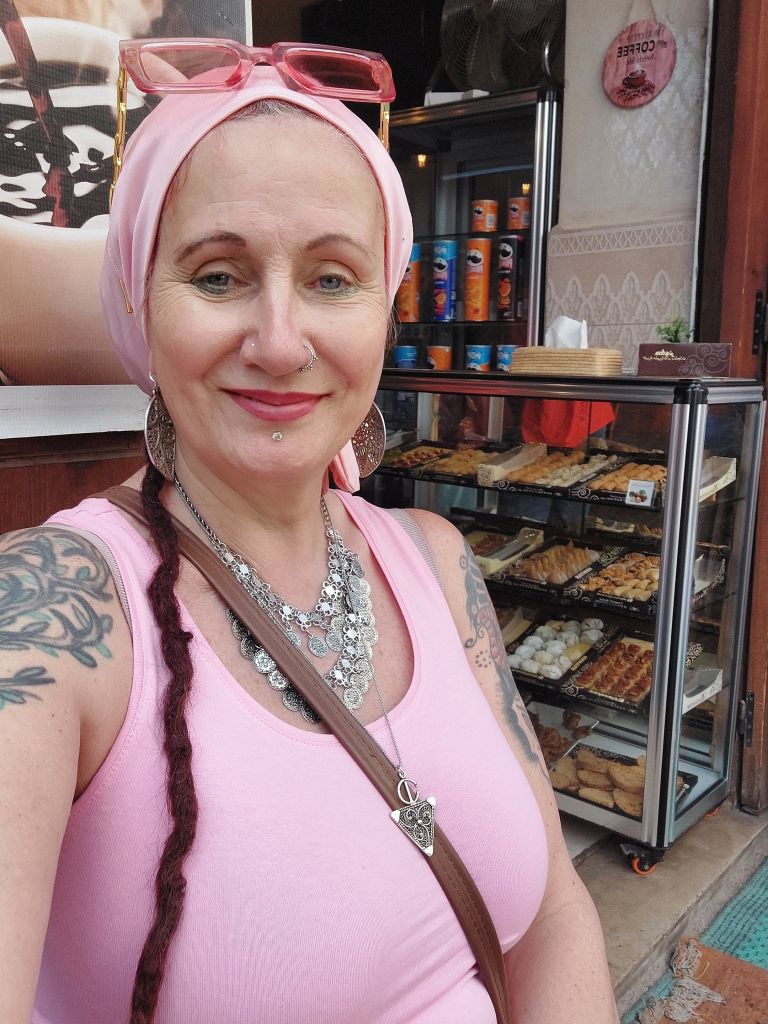
    Image by Freebird Tracey.

    Marrakech is safe for women who travel alone.

    The overall crime rate is low, and most female travellers have a wonderful experience. However, there are certain things to take into consideration to help you feel confident and comfortable during your visit.

    Women in Marrakech dress modestly. How you want to be treated will depend on how you present yourself. Although Marrakech is a Muslim city, it is quite liberal and used to tourists, but showing too much flesh would be considered inappropriate.Whilst you’re not expecting to adopt the hijab, you will certainly be regarded favourably if you dress slightly more conservatively especially in religious places sacred to the Islamic faith.

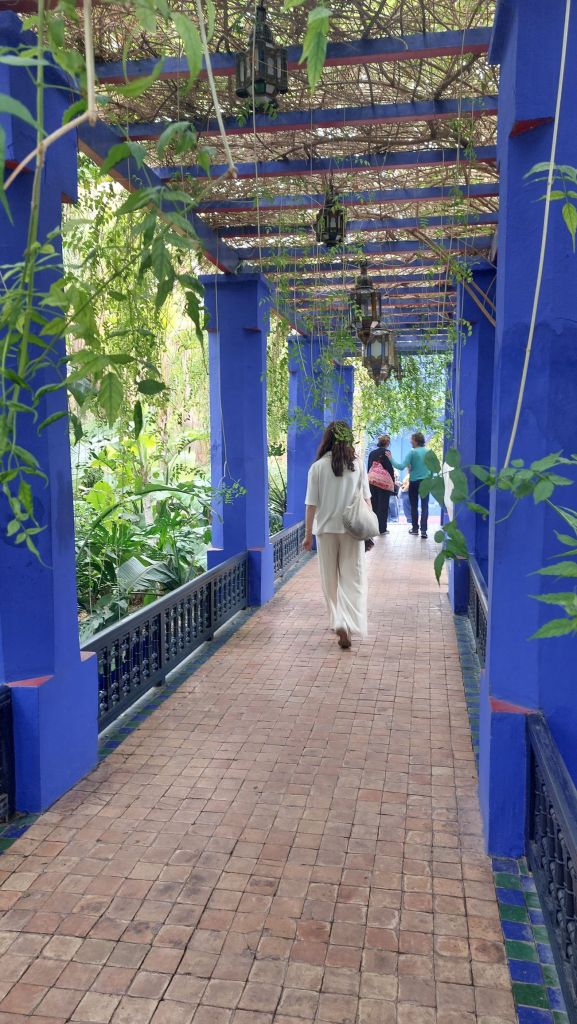
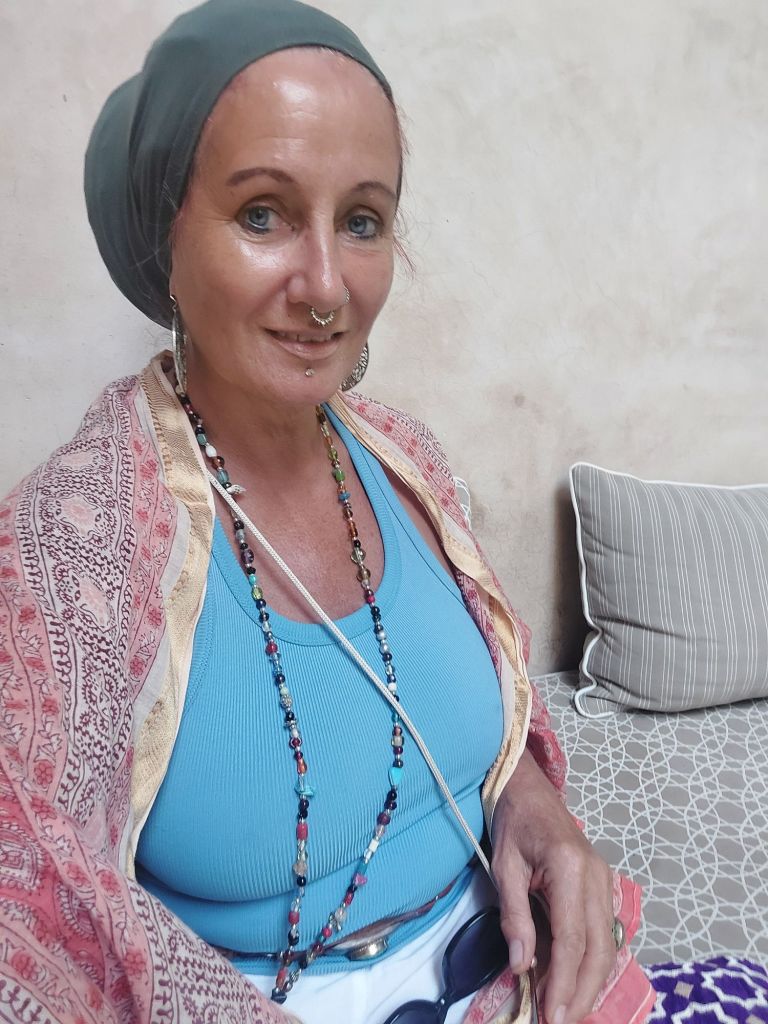
    Wear dresses below the knees. Silk, rayon, or cotton dresses are perfect and keep you cool at the same time. Palazzo trousers are also very comfortable and elegant. I like to wear turbans, I love the fact that my hair is tucked away, keeping me cool and looking modest at the same time. Many tourists continue to wear the same style of clothing that they would back at home, so it’s really a matter of choice. I would certainly encourage dressing appropriately if you’re visiting religious sites, just as a matter of respect. You’ll notice how much a small gesture like this makes the locals happy.
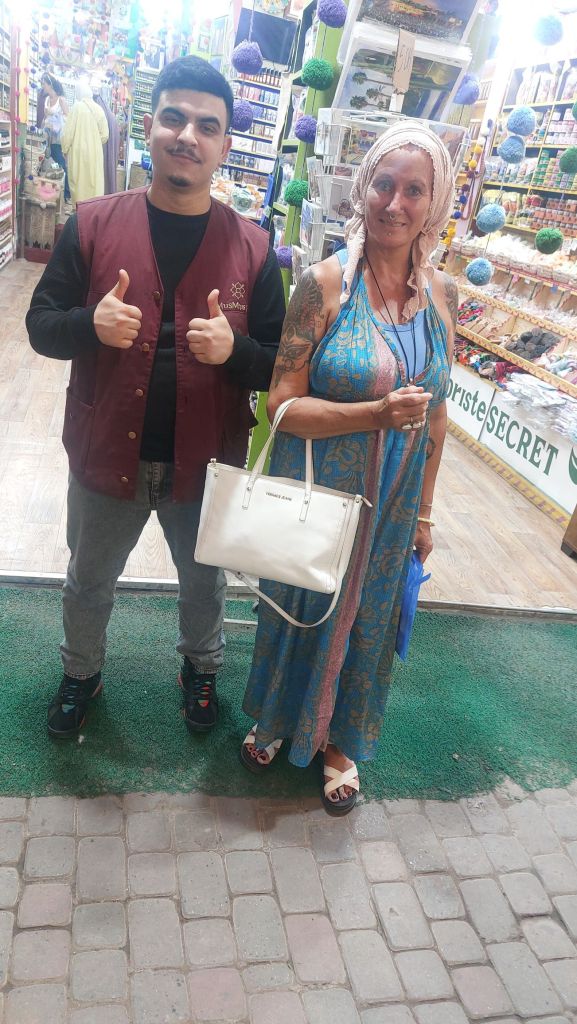
    Image by Freebird Tracey.

    The people in Marrakesh are friendly and hospitable. However, there may be times when you will be asked if you need help to find your riad or the main square. Simply decline the offer politely and go about your business.

    When shopping in the medina, stand your ground when negotiating for something. Show the vendors that you are confident and not be afraid to walk away if you’re not happy with the price. They may try to drive a harder bargain if they see a woman unaccompanied and you don’t have to put up with this. Shop around or visit a fixed price store or Ensemble Artisanal Craft Complex, and you won’t have to bargain.

    Some men will cat call you or make comments, which may feel slightly intrusive. Ignore them and move away. They are usually harmless, but if anyone trys to follow you, find the nearest shop vendor or closest restaurant to sit in. If they still persist, threaten to find a police officer. It’s rare that this happens, and there are police everywhere around Marrakech, making sure that tourists are not hassled in any way.

    Knowing a few words in Arabic or French is always useful. Non merci or La Shukran means no thank you and will automatically bring a smile to the locals’ faces. It also comes in useful for shaking off food sellers and henna ladies in the main square.

    I have never felt uncomfortable as a solo female traveller in Marrakech. There are plenty of us about wandering through the souks and enjoying the tourist hot spots.

    Consider joining a guided tour of the medina if you’re feeling anxious about exploring by yourself, especially if it’s your first time. There are evening tours, street food tours, and plenty of registered guides available for visiting the local attractions.

    Marrakech is a great place  for a solo female traveller to visit. In fact, I consider it much safer than many other countries I have been to. The locals can’t wait to tell you all about their fascinating city, and they’re some of the most hospitable people I have ever met. Just educate yourself a little about the cultural norms and differences in Morocco and respect the local customs and traditions, and you should be perfectly safe.

    Marrakech is very touristy, so there are always crowds of people wherever you go.Just be extra vigilant in busy, congested areas with your belongings, the same way you would be anywhere else in the world.

    If you want to feel less isolated as a solo female traveller, there are a few excellent hostels in Marrakech that attract a lot of solo travellers. They are great places to stay and they can organise tours where you will meet other like-minded people.

    Lastly, relax and trust that the people of Marrakech are helpful and kind. You will definitely have an exciting time.
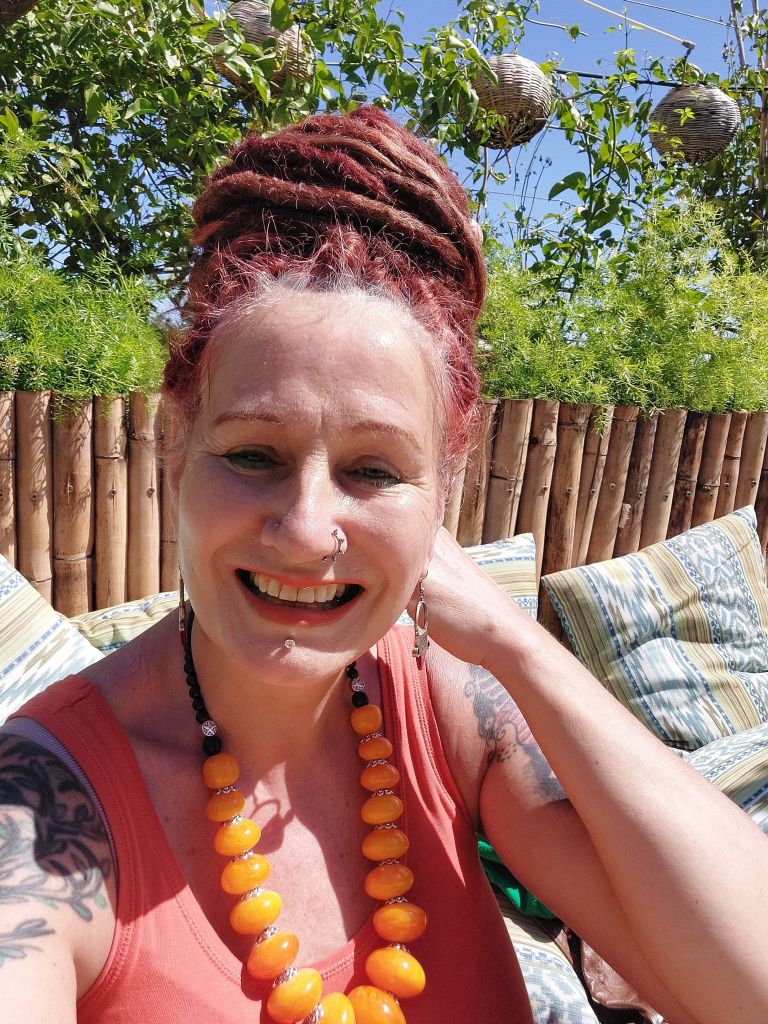
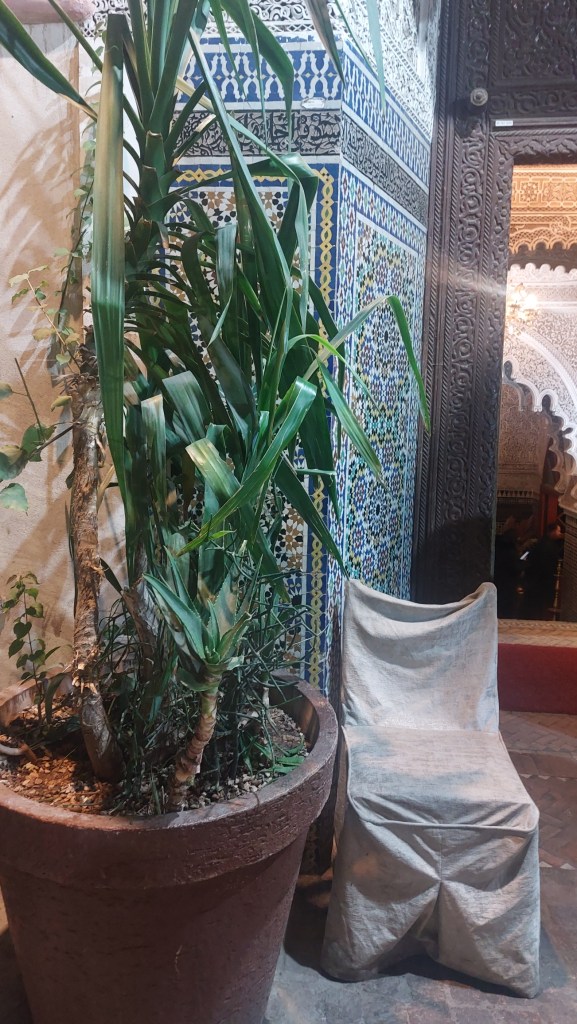
    Image by Freebird Tracey.
    (more…)
  • Is Marrakech Budget Friendly?

    How to enjoy Marrakech on a budget.

    Image by Freebird Tracey.

    Visiting Marrakech doesn’t have to break the bank.

    Morrocco is a relatively cheap country to visit. It’s all about careful planning and putting together the right itinerary before you go. I have compiled a few ideas and suggestions to help you enjoy your trip without having to spend a ridiculous amount of cash.

    1.

    Book your flight early. The earlier you book, the cheaper it is. Download an airline app and keep an eye on the cost of flights. Book out of season when it’s less busy.

    2.

    If you book your accommodation directly through the riad or hotel, it is often much cheaper.

    3.

    Use public transport in Marrakech. The buses are an excellent way to get a taste of local life. They are extremely cheap and reliable. The price is set, and you will avoid being privy to scams from the local taxi drivers.

    4.

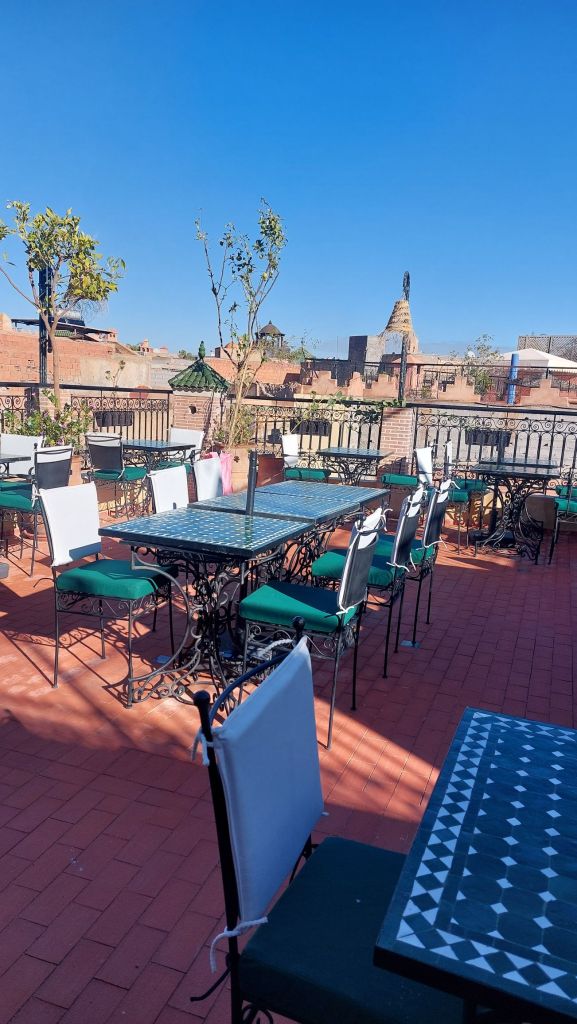
    Marrakech is a bustling metropolis with so much going on around the main square. Consider spending time with a pot of traditional mint tea and observing the spectacle from a rooftop terrace. You won’t be disappointed. The sights, sounds, and smells will keep you entertained for ages.

    5.

    Visit the wonderful Koutoubia Mosque gardens. The mosque is out of bounds for non Muslims. However, the gardens are absolutely delightful and free to visit. Consider picking up a few delicious snacks beforehand, such as Baclava cake and  sugar cane juice and sitting in the beautiful garden. Despite its proximity to the chaos of Jamaa El Fna, it is a peaceful environment. It’s especially lovely during the evening when the lights come on.

    6.

    There are plenty of excellent cafes and restaurants which are great value for money. Henna Art Cafe is superb and has a very pretty interior. I have eaten here numerous times and highly recommend the food. Terrace Bakchich in the souks is another budget friendly restaurant cafe with excellent food. Trying the street food is another option and very popular amongst tourists. Check how busy places are to get an idea of the quality of food being served. The spleen sandwich is a traditional meal in Marrakech served by street vendors. Also consider trying the delicious sweets and pastries for sale inside the souks.

    7.

    Try a public hammam. Public baths are very cheap in comparison to the more upmarket ones and the best way to experience the local culture. You can purchase black soap and essential oils in the souks for pennies. You will need your own towel in public hammams.

    8.

    Visit the souks. This is by far the most exciting part of any trip to Marrakech. Experience the vibrant colour and the lively atmosphere as people haggle with the locals for a bargain. You may get lost in the maze of alleyways, but that’s all part of the fun. There are souks for different things like leather goods and metalwork, and you will see incredible artisans at work crafting all kinds of things.

    9.

    Visit the Mellah, the old Jewish quarter, and see the Bab Mellah spice market. It’s an assault on the senses discovering all the different spices and their fragrances. You may be offered mint tea whilst you are given a lesson on what each spice is used for.

    10.

    Walk around the Kasbah. This is where you will experience the more authentic part of Marrakech. There are more locals here and they are very friendly. There are some nice spots to grab a smoothie, and the shops are slightly cheaper here.

    11.

    Visit Cyber Park. This is a very well maintained place with beautiful native trees and plants. Relax for an hour or so in this peaceful environment away from the chaotic busy medina. Listen to the birds singing and read the interesting facts that are dotted around the park.

    12.

    Take a 25-minute walk or the number 16 bus from the medina to Gueliz. Wonder around the upmarket boutiques and stores on Mohammed V Avenue and see how modernity and ancient coexist in harmony together in Marrakech.

    13.

    Spend some time in Tinsmiths Square. This is a less touristic square than Jamaa El Fnaa, and there is plenty to see going on. There are budget friendly cafes and restaurants and plenty of souvenir shops.

    14.

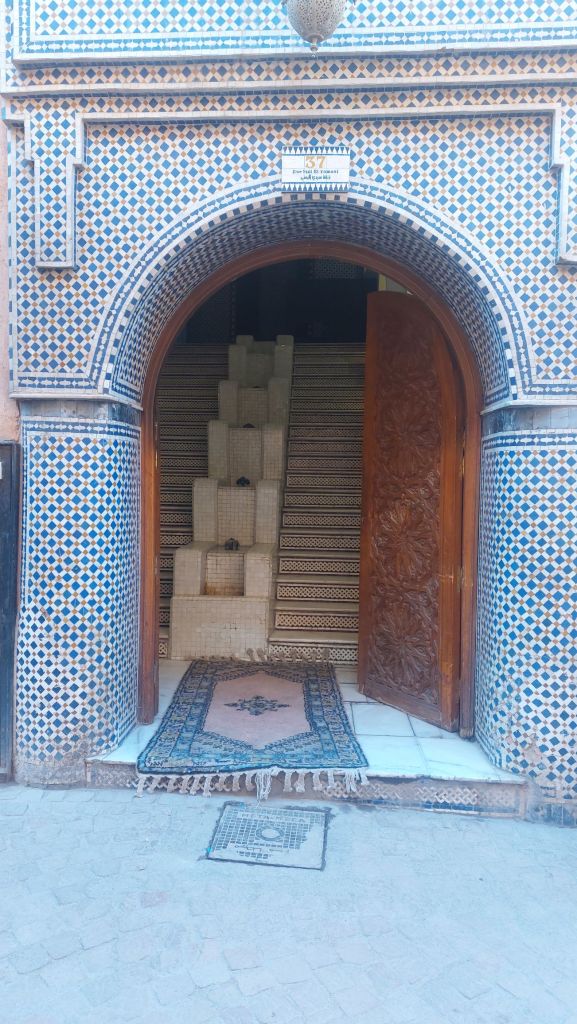
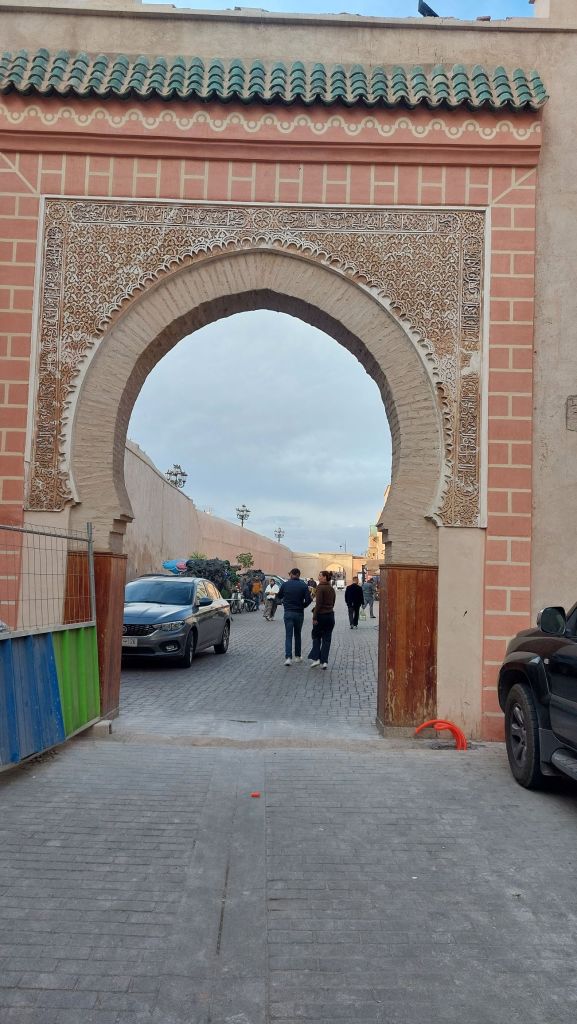
    Admire the beautiful Islamic craftsmanship in the medina. There are stunning examples of intricately carved wooden doors and 19 impressive entrances into the medina, including Bab Agnaou, Bab Doukala, and Bab El Khemis. Some date back as far as the Almohad dynasty. It’s a perfect photo opportunity.

    Images by Freebird Tracey.

    Marrakech is a walkable city, and you can spend many an hour wandering about discovering what makes Marrakech so magical. It’s a destination that is great for everyone, including those on a tight budget. With some careful planning, you can put together an exciting itinerary and have a truly wonderful experience that doesn’t need to cost much.

    Image by Freebird Tracey.
    (more…)
  • The Best Clothing To Take To Marrakech.

    Helpful tips to help you decide what clothes to pack .

    Image by Freebird Tracey.

    Marrakech can get very hot in summer, and temperatures can exeed 40° Celsius.

    Even the cooler months can feel warm and humid, especially walking around the busy souks and popular points of interest.Marrakech is also a conservative city with a majority Muslim population. The locals are extremely hospitable, but respect is a big thing in Marrakech.

    So, what should you wear to feel comfortable yet still appear respectable?

    For female visitors, I would suggest palazzo trousers. These are flowing and elegant, keeping you nice and cool.They pair well with smart cotton blouses and can be worn underneath a silk kimono, adding a touch of glamour.Lightweight cotton or linen trousers also look smart, and neutral colours give a sophisticated, modest appearance.

    Image by Freebird Tracey.

    Silk (including recycled sari silk) maxi dresses are very versatile and keep you cool. They can be worn with a drawstring sari petticoat underneath for modesty if the dress is sheer. Linen is perfect and always looks polished.It can get slightly creased, so I would suggest bringing along a portable steamer. They’re a life-saver and take up very little space in your suitcase.However, most accommodation has an ironing and laundry service at your disposal.

    Cotton tee-shirts and blouses are ideal and can look very flattering with the right accessories. Loose yoga pants are also perfect for a day exploring. They help you to stay cool and comfortable.

    Headscarves look fashionable and can be used as a head covering whilst visiting  religious sites or as a convenient wrap around for covering your shoulders.

    Image by Freebird Tracey.

    I like to wear turbans to cover my locs.They keep my head and neck cool, and at the same time, I feel put together and tidy. Silk scarves can be rolled up really small and fit perfectly in your bag. They are versatile and can be used as a hair tie, head covering, or pretty accessory.

    Marrakech is definitely more liberal than other morroccan cities. However, exposing too much flesh is definitely frowned upon. You may attract unwanted attention from both males and females, spoiling your overall experience and making you feel self-conscious.How you present yourself will determine the kind of experience you have in Marrakesh.

    In your accommodation, it’s perfectly acceptable to wear shorts and swimwear for sunbathing, so pack those items of clothing also.

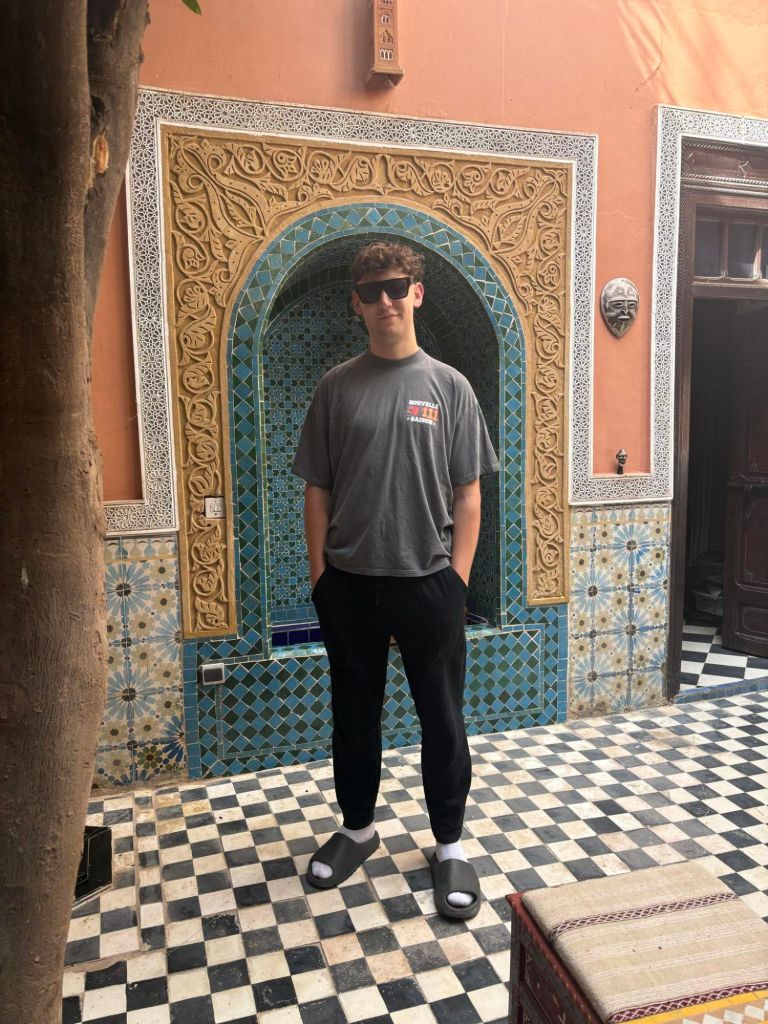
    Males can wear knee-length shorts with linen or cotton short-sleeved shirts to look smart yet casual.Many high-end restaurants won’t accept men wearing sandals, but smart leather sliders or mules are usually acceptable. Linen or cotton long trousers for men are ideal and keep the body cool.

    Image by Freebird Tracey.

    Men’s clothing is definitely more liberal than females. They don’t encourage the same kind of attention, but they are still expected to dress smartly when visiting certain places. I certainly wouldn’t advise a male to walk around without a shirt on, especially when visiting sacred places in Marrakech. That is something I would leave for a beach holiday. Appearing smartly dressed whilst feeling cool and comfortable is the only thing men need to consider.

    On the other hand, women are expected to respect the cultural norms of the country unless they’re going to the clubs in the Gueliz or Hivenage part of the city. It’s acceptable to dress a little more provocatively if you’re having a night out there.

    You can still look and feel good in appropriate clothing. It’s about choosing nice accessories to elevate your outfit. Marrakech has no shortage of beautiful jewellery and handbags.

    Regarding footwear, there is a lot of walking around the medina, so comfortable footwear is certainly essential.Trainers, pumps, or sandals are all acceptable.

    A little tip I found useful is to take  only a couple of outfits in my travel bag, and once I arrived, I bought the rest of my clothing in the souks. It wasn’t too expensive, and I felt as if I blended in with the locals better.I quite enjoyed wearing the traditional Moroccan dresses, kaftans, and djellabas for a change.

    Image by Freebird Tracey.

    I have never needed to take a warm coat to Marrakech.

    Depending on the season and whether you plan a trip into the Atlas mountains or the Sahara desert, a lightweight weatherproof jacket is usually enough. I find that a shawl or cardigan has always been sufficient for cooler evenings.

    Winter in Marrakech is better suited to layers. A thin thermal skin that can be worn underneath a long dress or trousers is usually enough to protect from the drop in temperature. I also wear long sleeved tee-shirts underneath my dresses during the evenings. A comfortable hoodie or sweater can also come in handy. A trip to Agafay desert can get very blustery whilst watching the sunset in the open air.

    Keeping your eyes on the weather forecast before travelling will also help you to plan accordingly for your trip. If part of your itinerary includes a night in the Sahara desert, be aware that nighttime can be extremely cold.

    So, to summarise,

    Wearing comfortable clothing suitable for a day exploring the medina and tourist hot spots is the most important thing to consider. You will walk a lot, and it can get humid.

    To discourage unwanted attention from the locals, female travellers might prefer to dress more modestly unless they’re in the bars and clubs, which are more liberally minded. Choosing natural fibres is the best way to stay cool, and long, loose-fitting garments are ideal because they look modest and feminine.

    Lastly, don’t forget to bring the sunscreen.You don’t want to walk around looking like a lobster, and you can never underestimate the power of the hot Moroccan sun.

    Image by Freebird Tracey.
    (more…)
  • What Is The Food Like In Marrakech?

    A look at popular food choices in Marrakech.

    Image by Freebird Tracey.

    The famous red city is a culinary delight for foodies. The streets are abundant with fresh, seasonal vegetables and fruit. There are herbs and spices galore in colourful barrels everywhere you look. The fragrance of street food fills the air, tempting your tastebuds. Restaurants with  decadent surroundings call out to you to sample their cuisine.

    But where do you start and what should you order?

    Like me, you may want to fully immerse yourself in the culture of a country you’re visiting. I enjoy sampling the signature dishes of places I visit and eating the food that the locals do. It’s the best way to get to know the culture, and food is a big part of life in Morrocco.

    Moroccan people are known for their hospitality and often invite tourists home for a meal with their family. If you get the chance to go do it. It’s a way to understand the people and their culture. Plus, there’s nothing better than traditional food homecooked by a local family.

    So,with an overwhelming choice of food to choose from, you may need a little help deciding what to try. I’ve put together a few ideas for you to choose from.

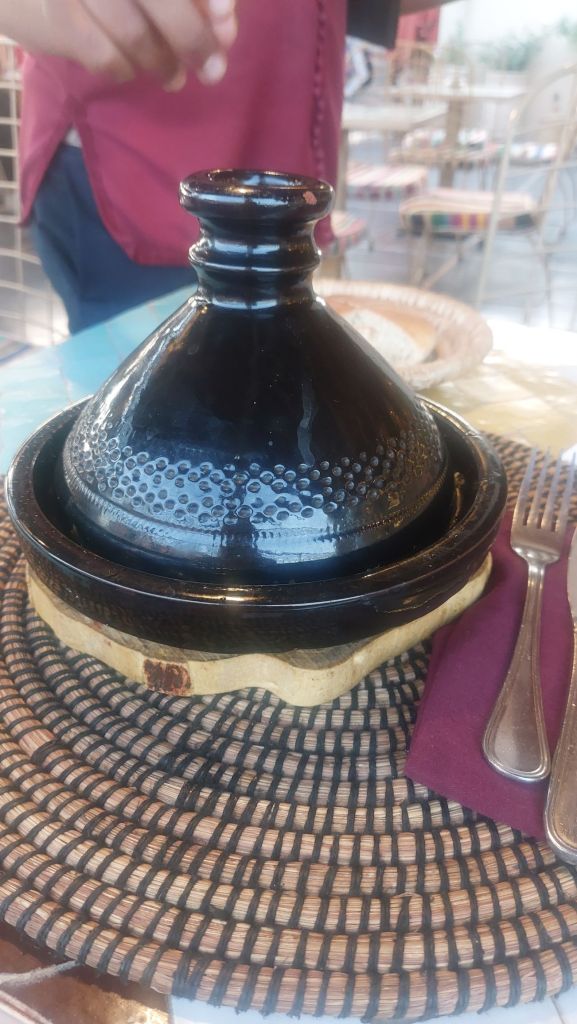
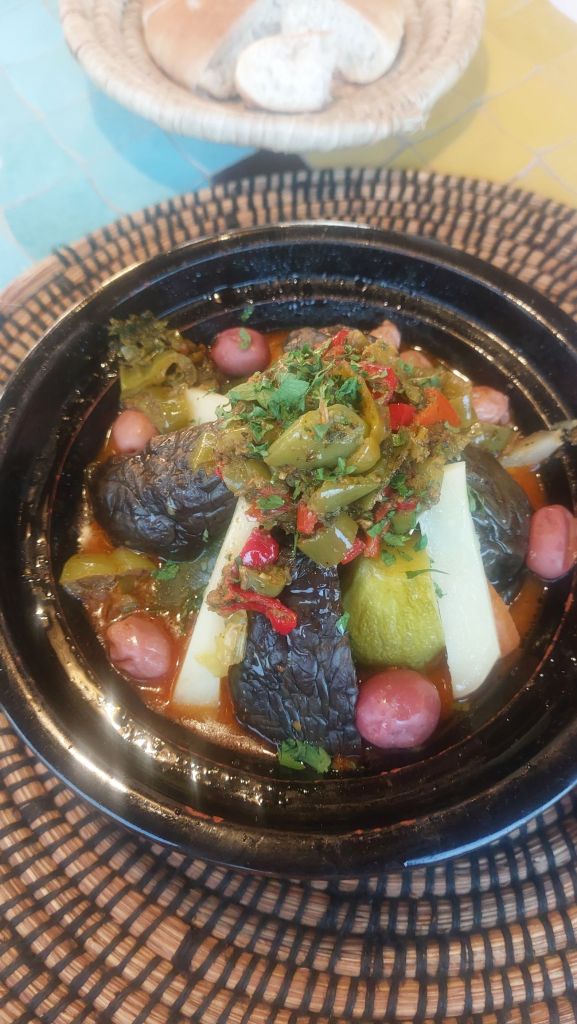
    The two most popular dishes in Marrakesh are tagine and couscous.Tagine is the name of the clay pot that the dish is cooked in. It consists of layers of fresh vegetables,with meat in the centre. Chicken or lamb is the most popular meat used. Dates, olives, preserved lemon, and spices such as the Moroccan spice blend ras el hanout are added to give the tagine flavour. Everyone has their own personal recipe for making a tagine, and they differ in each restaurant. However, they all use the same principle of layering the vegetables into a pyramid around the meat.

    Images by Freebird Tracey.

    Couscous is a grain made from semolina and served with meat and vegetables. It is eaten religiously on Fridays and a staple dish in Morocco and other North African countries. Couscous is finely textured and often served with harissa sauce to make the consistency less dry.

    In Jamaa El Fna, you will find sheeps head and snails. Tourists are encouraged by  street food vendors to try a dish of snails, and those who do have said that they quite enjoyed the experience. Apparently, the broth that they’re cooked in tastes of aniseed, and although an unusual tasting dish, it’s not inedible. Many tourists actually liked them.

    Video by Freebird Tracey.
    Image by Freebird Tracey.

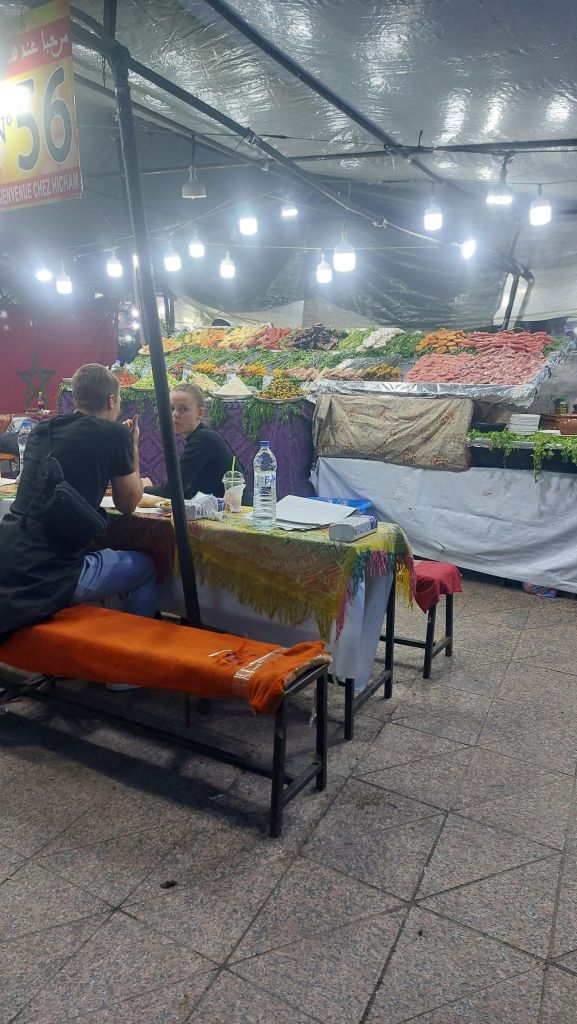
    Sheeps head is for the brave amongst us. It’s a regular sight on display in the main square during the evening. Locals sit at stalls alongside tourists next to the  charcoaled heads eating spit roasted mutton and sausages. The open-air restaurants are very popular, and the aroma of food can be smelt all around the main square.

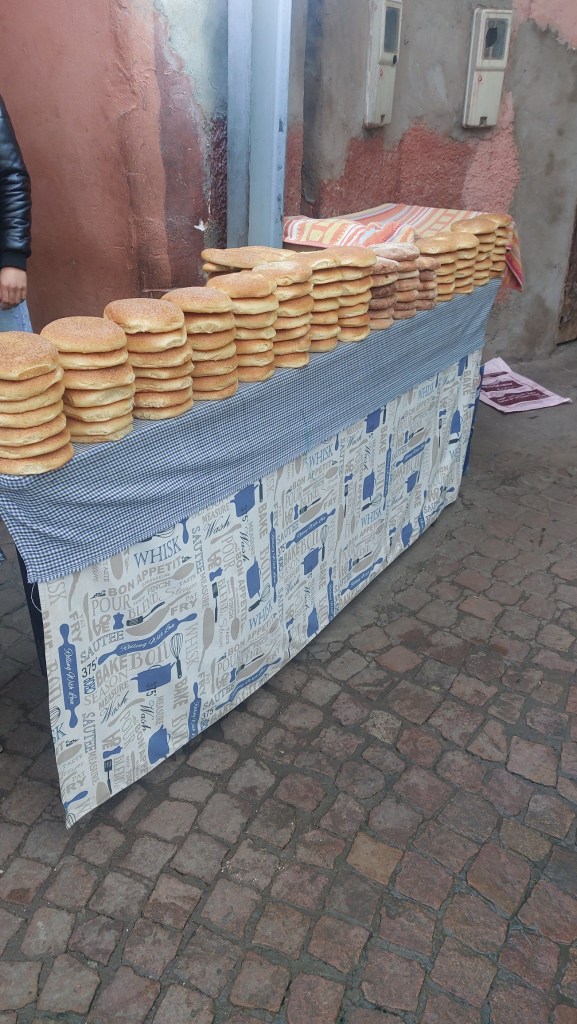
    In Marrakech, each meal is served with traditional bread. It is freshly baked every morning in communal ovens called Ferrans. Khobz is a traditional round crusty flatbread and used in place of cutlery to scoop up the food.

    Image by Freebird Tracey.

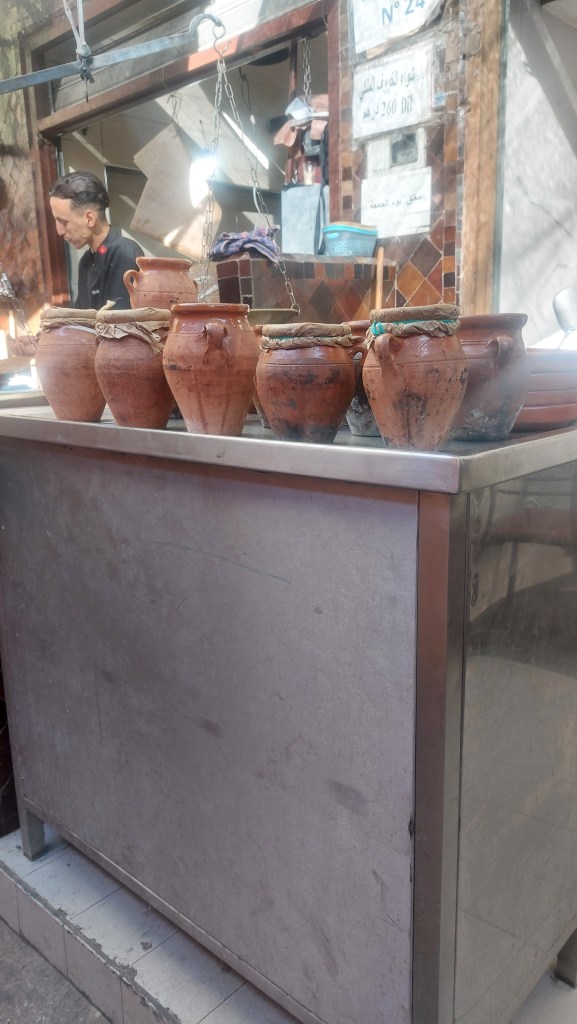
    Tangia is also a popular dish. It is meat (usually lamb), cooked very slowly in the embers of the local hammam. Traditionally, the tangia is taken to the hammam early in the morning and left to cook throughout the day. It is then collected and served for dinner with vegetables or bread. The meat is incredibly tender and simply falls off the bone. There is a row of street vendors dedicated to selling tangias in the medina. This is very popular with locals and tourists alike. The area gets very busy with people queueing for a vessel of succulent lamb or beef.

    Images by Freebird Tracey.

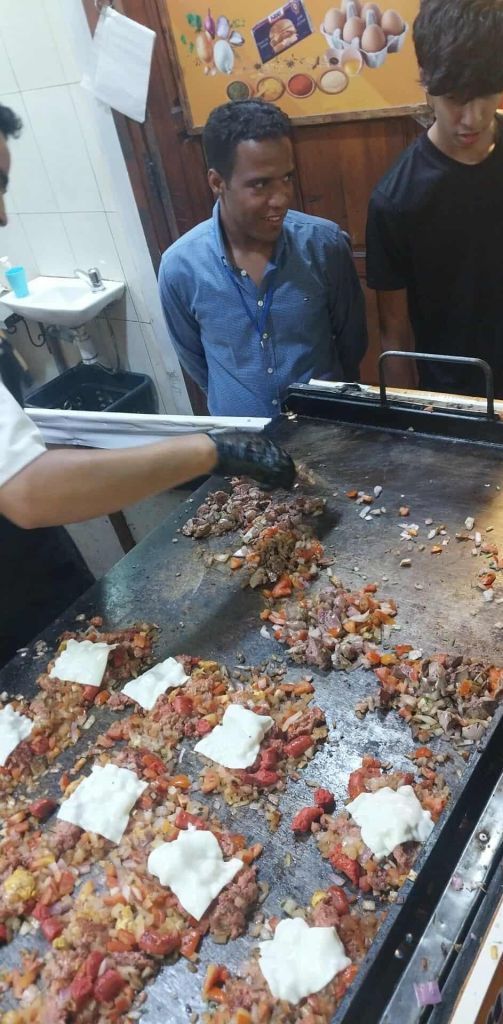
    There are plenty of street food vendors tucked away in the souks. They sell really good quality food and it’s cheap. Ideal for travellers on a tighter budget. Taking a street food tour is a great way to try all the best places serving traditional local food. There are several tours available during the daytime or evening. Tourists get the chance to sample authentic Moroccan cuisine with a registered guide. Delicacies like the spleen sandwich and Tripe are something that you may be introduced to during a street food tour. Remember to go with an empty stomach because there’s so much food to get through.

    Image by Freebird Tracey.

    Marrakech also caters to people who are vegetarians and vegans. There is a good choice of food, including salad,vegetable tagine, pastilla, and couscous. Most dishes can be adapted for people who don’t eat meat. There are a few excellent vegetarian restaurants in the medina, and more are opening as tourism grows.

    Images by Freebird Tracey.

    Pigeon is also eaten in Marrakech and traditionally used for the filling in Pastilla. There are camel burgers available at The Clock restaurant in the kasbah if you want to try something different.

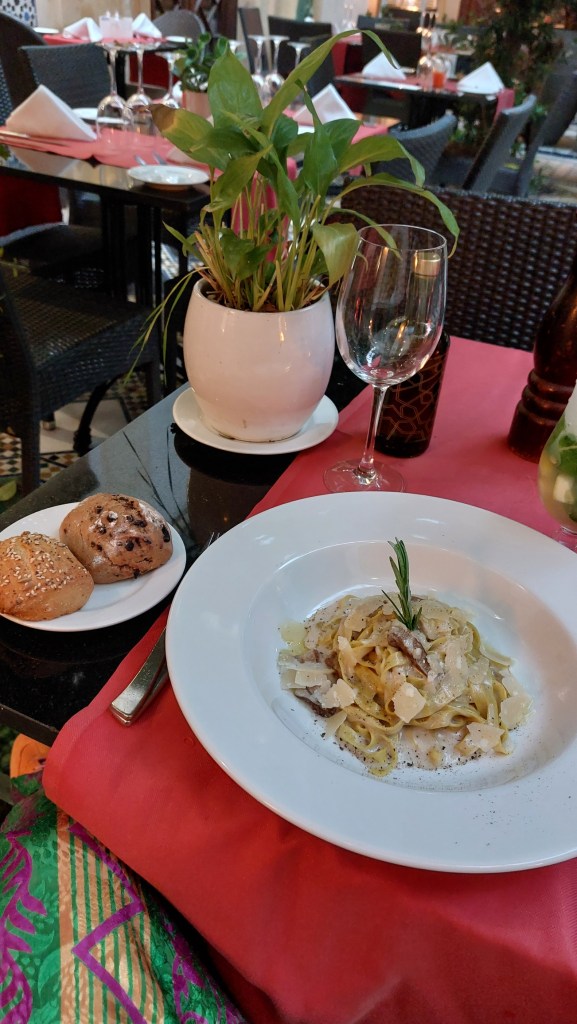
    Italian restaurants in the medina offer excellent pizzas and pasta dishes if you fancy a change from morroccan food. I recommend Pepe Nero or Limoni Italian Restaurant.

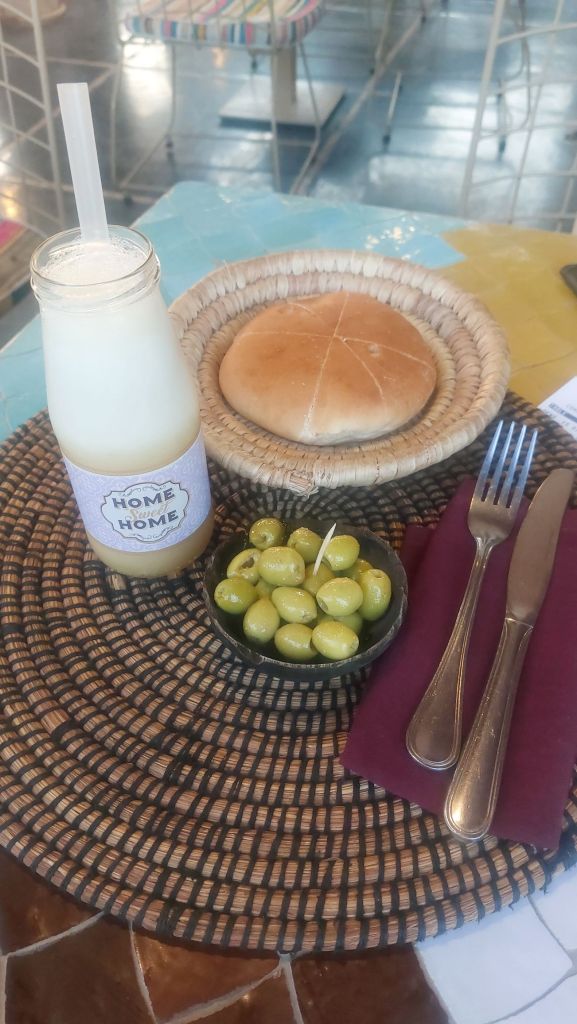
    Olives are served with most beverages as a complimentary side dish in Marrakech. They are either lightly spiced or plain. They are really fresh when you buy them straight off the vendors in the souks. Don’t hesitate to try some. They are delicious.

    Image by Freebird Tracey.

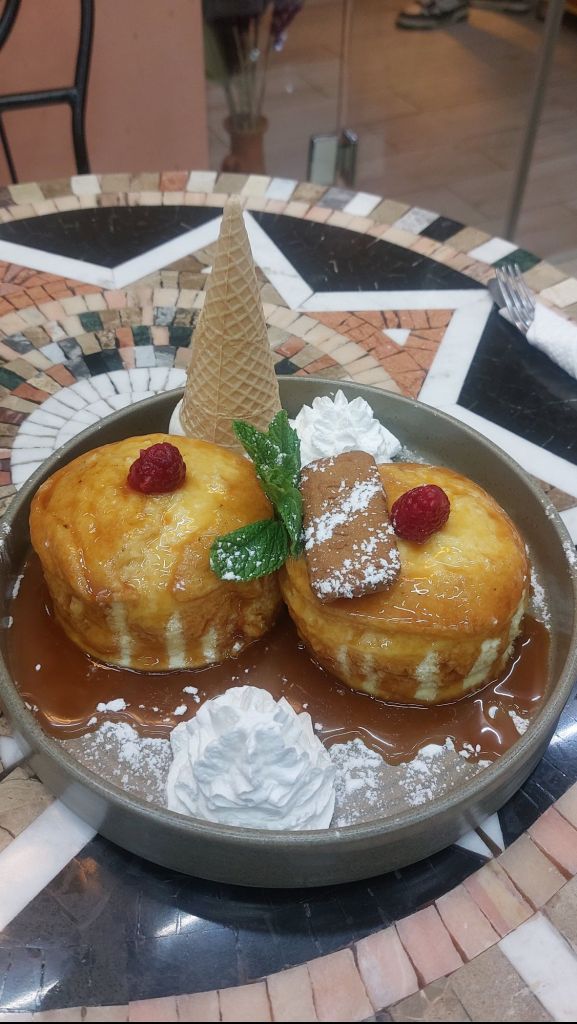
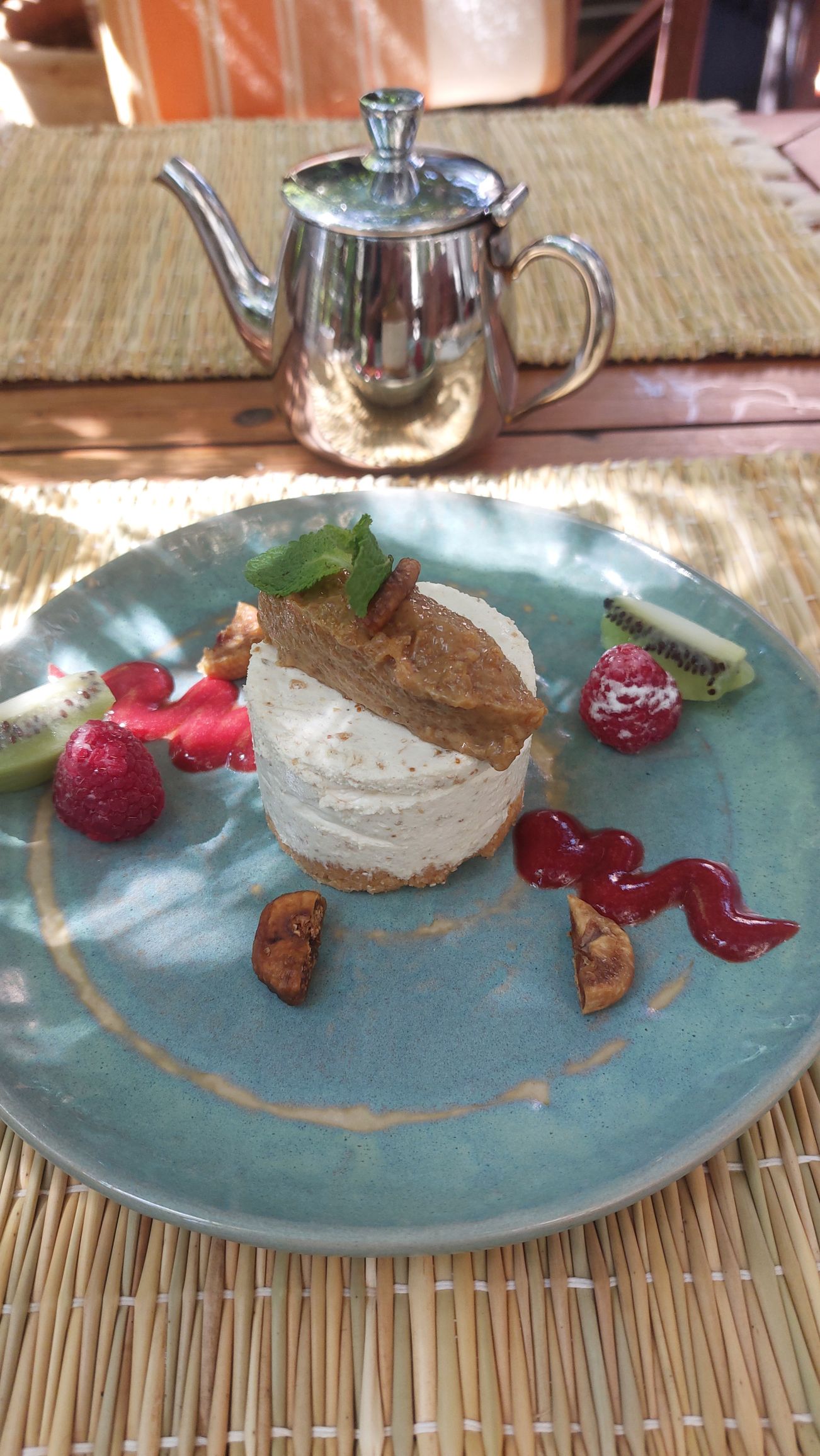
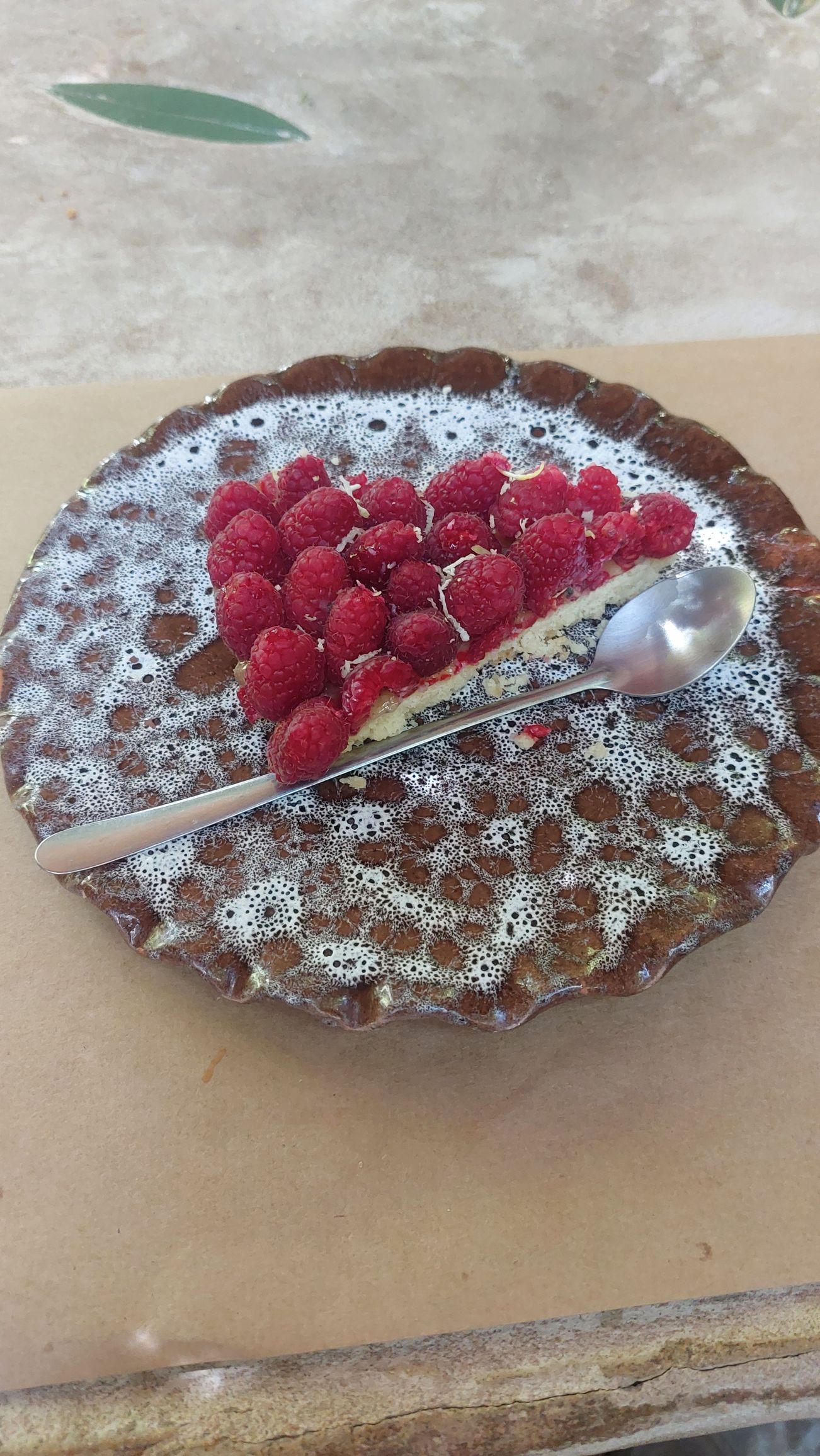
    The sweets and pastries in Marrakech are really good. Baclava is a traditional sweet and popular with the tourists. Moroccans have a sweet tooth as you will gather from the breakfasts high in carbohydrates and cakes. The choice of deserts on the menu in restaurants is really creative. There’s no point watching your waistline in Marrakech.

    Images by Freebird Tracey.

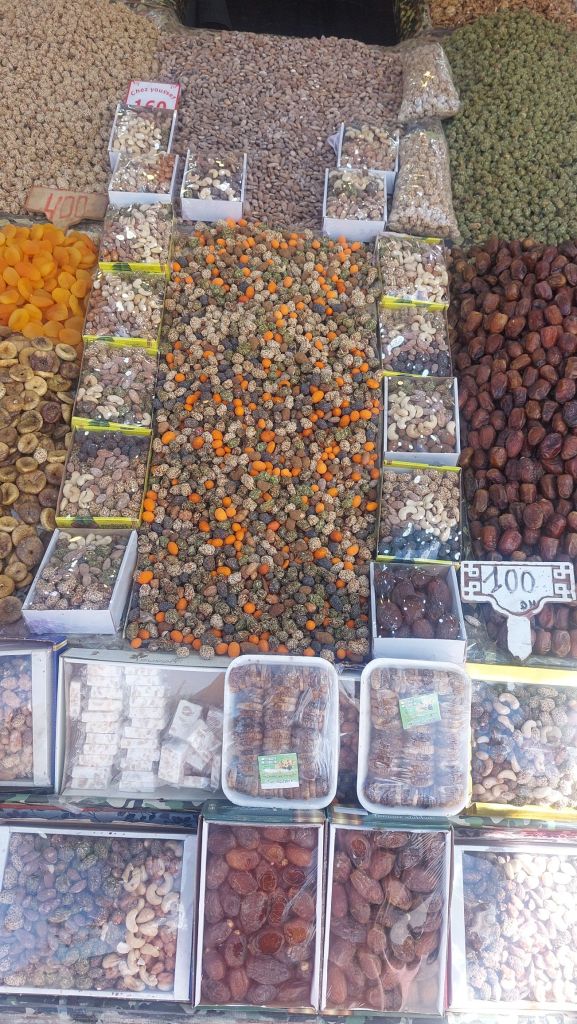
    Dates are a hugely popular snack in Marrakech, and medjool dates known as ‘The King of Dates’ are widely available around the medina. Make sure to try some. You won’t be disappointed with the soft caramaly taste.

    Image by Freebird Tracey.

    Fresh fruit is sold everywhere in Marrakesh. It’s used in tantalising sweet dishes and refreshing smoothies that make your mouth water. Sugarcane and pomegranate juice is a favourite of mine and only costs a few dirhams.

    Marrakech is a dream come true for people who love their food. With so much to choose from, you would need months to eat your way through it all. Not only is there a great variety, but it’s beautifully presented too. Imagine sitting in a tranquil setting next to exotic plants, with the sound of birds and trickling fountains. Or on a rooftop terrace at dusk watching the sunset as you tuck into a plate of delicious food. Those are memorable experiences of eating in Marrakesh.

    Image by Freebird Tracey.

    Be open to getting out of your comfort zone and give some of the traditional Moroccan dishes a go. You may be pleasantly surprised. If you’re not adventurous, many restaurants serve European, Mediterranean cuisine. The choice is endless.

    Image by Freebird Tracey.
    (more…)
  • Shopping In The Souks.

    A guide to stressfree shopping in Marrakech.

    Image by Freebird Tracey.

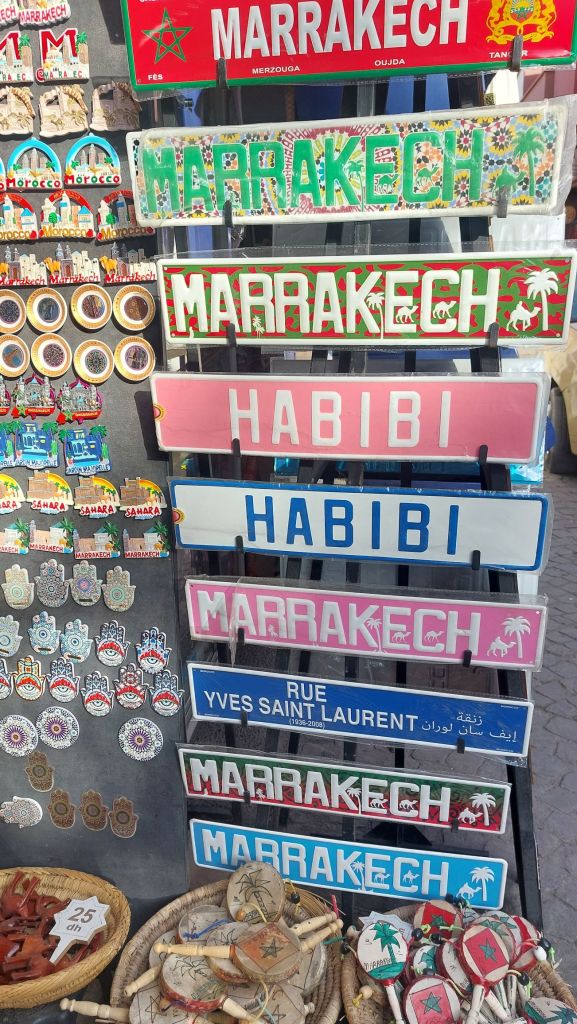
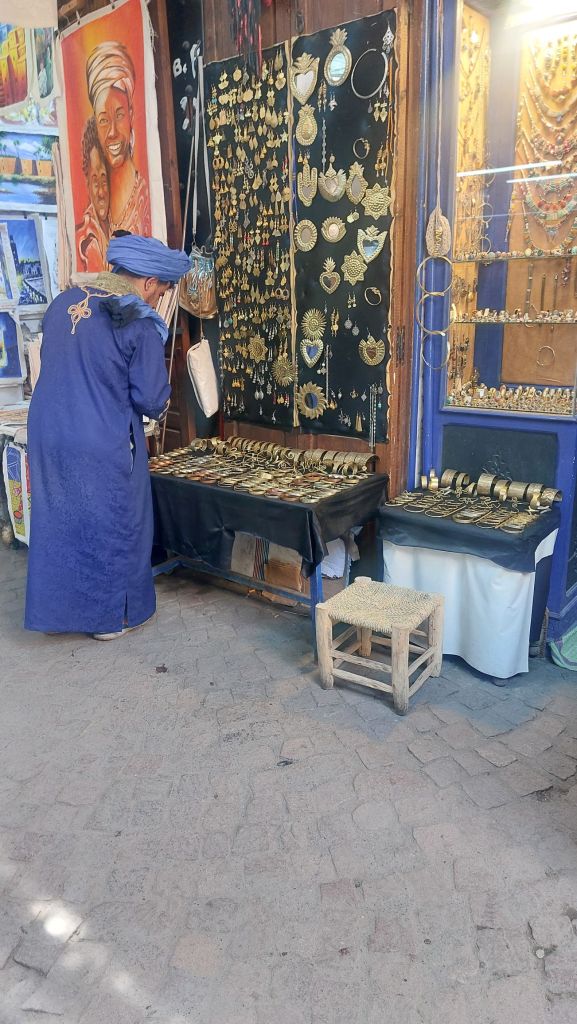
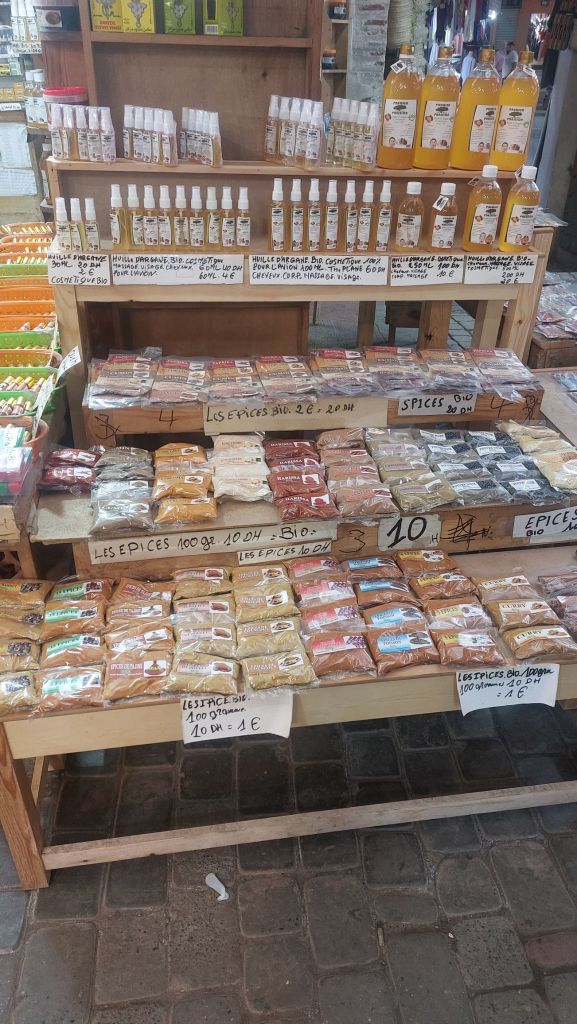
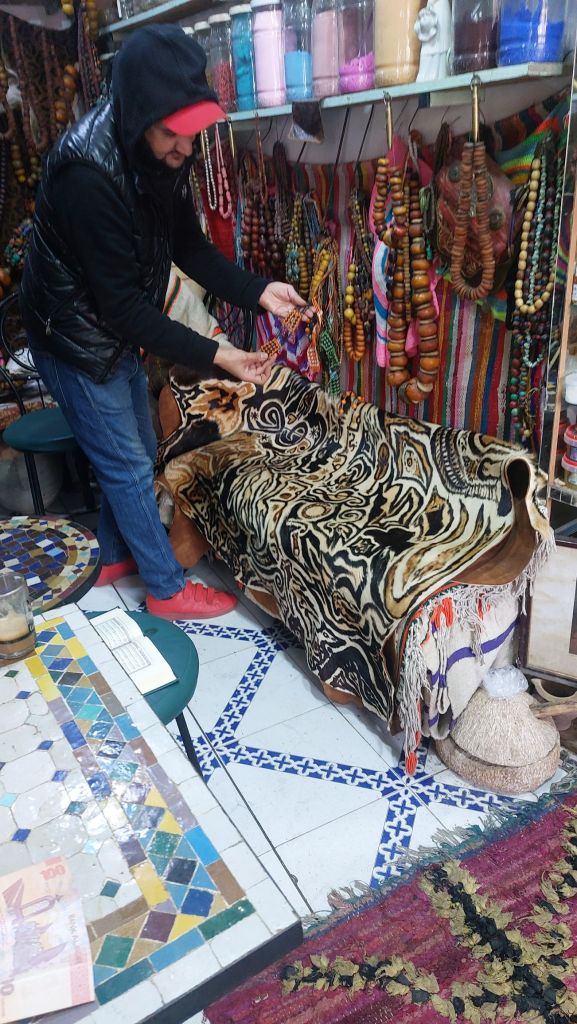
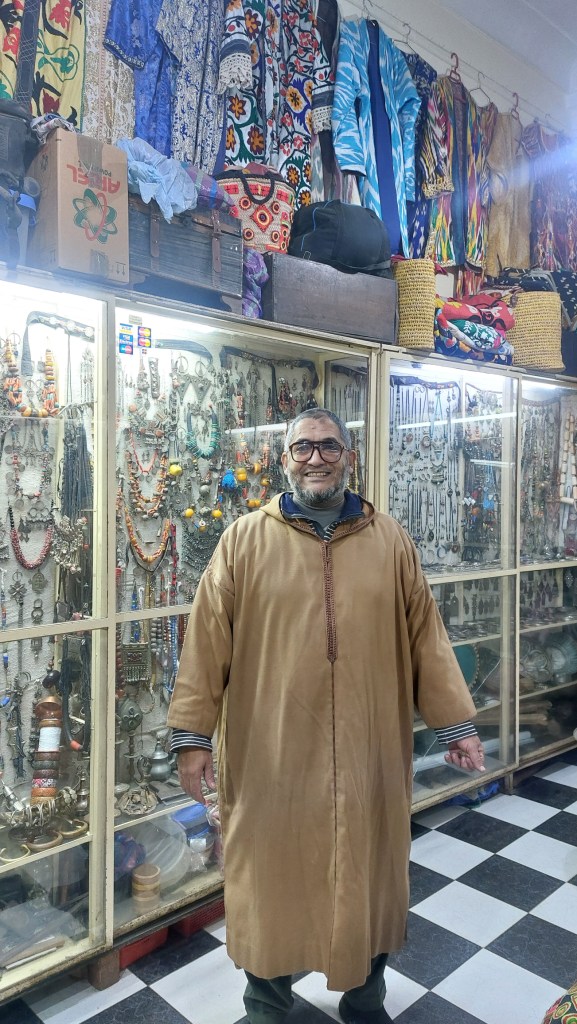
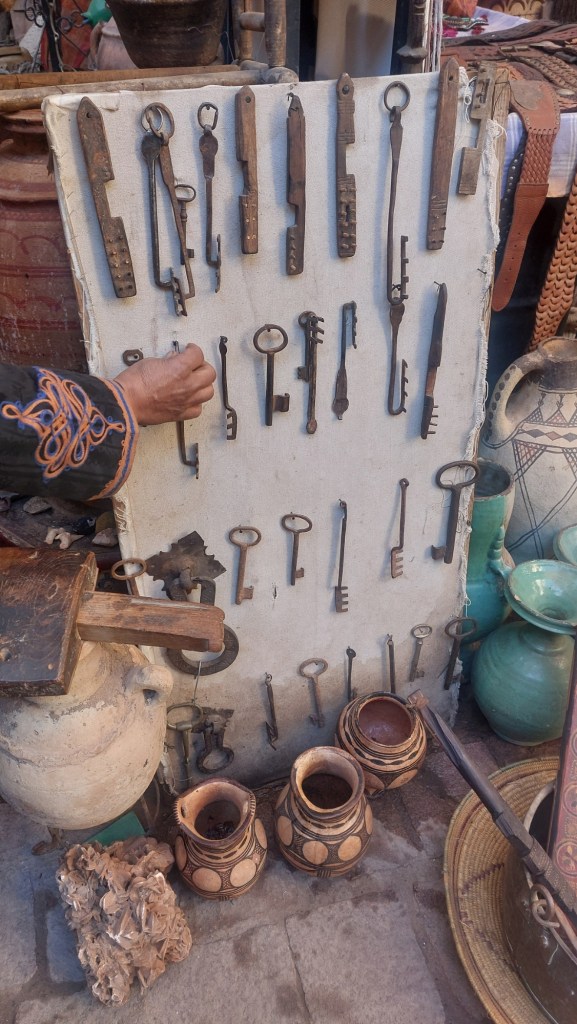
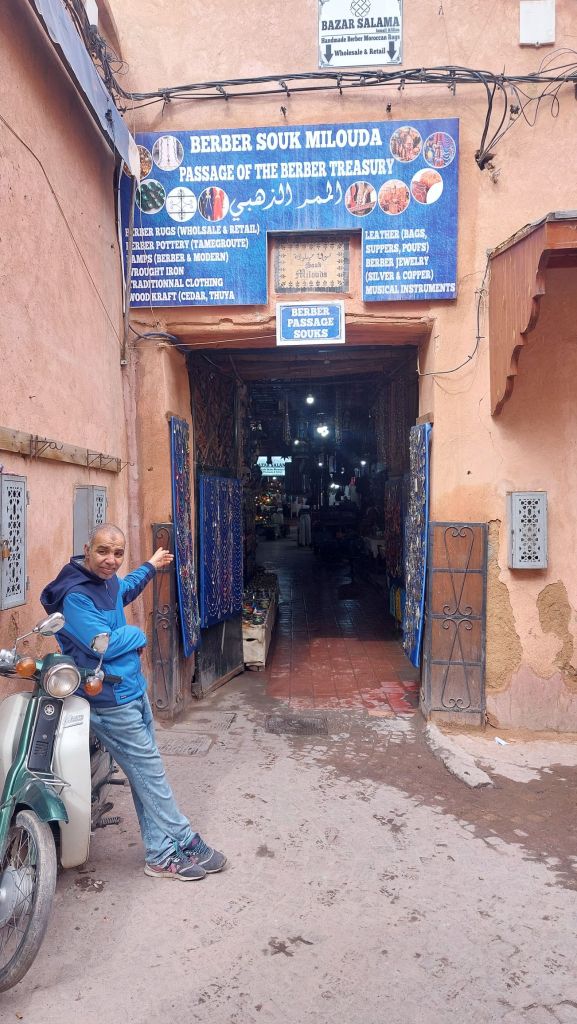
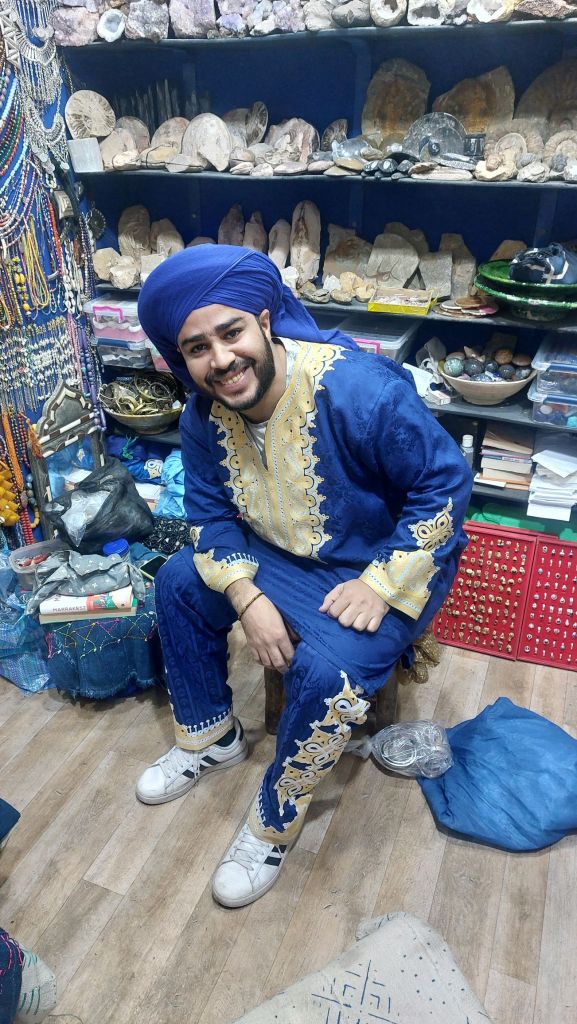
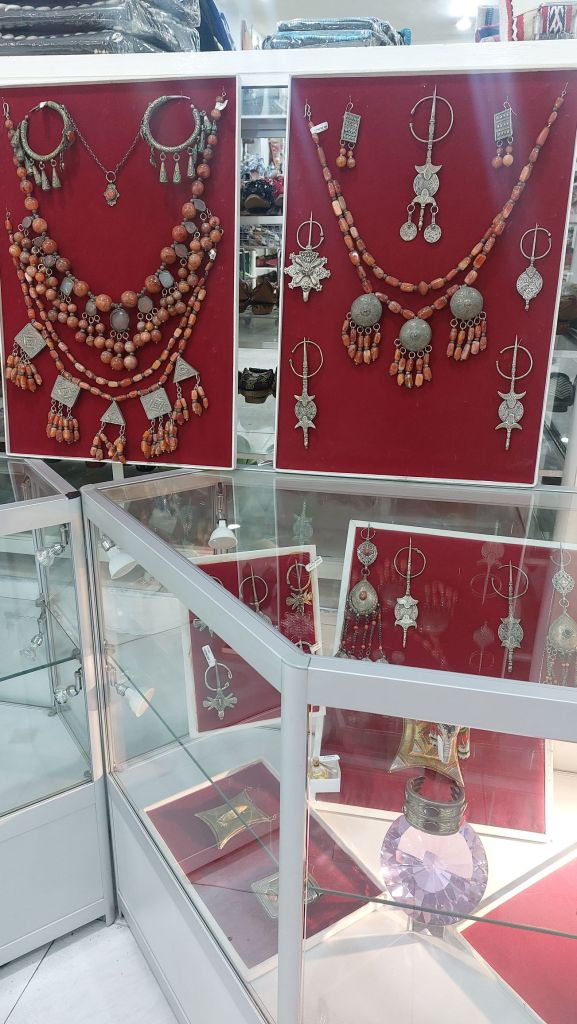
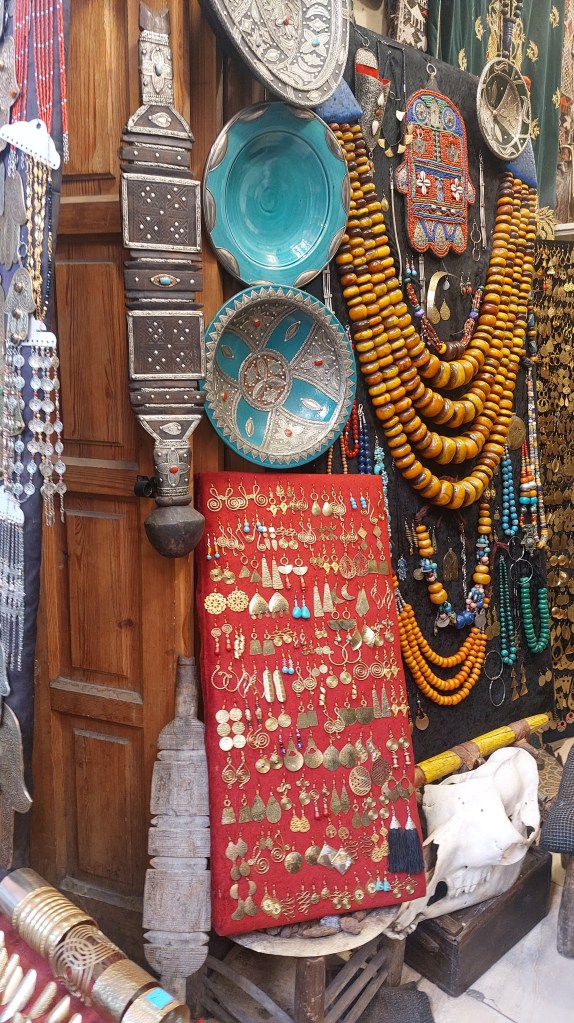
    The sound of the souks is something you will never forget. There is everything you could dream of buying in the colourful bazaars around Marrakech medina. As you meander through the maze of winding alleyways, prepare yourself for a complete overload on the senses. You will be dazzled by everything from beautiful Amazigh jewellery to exotic spices, leather goods, Morroccan lamps, and pretty ceramics. It’s all there waiting for you  inside the vibrant souks.

    Images by Freebird Tracey.

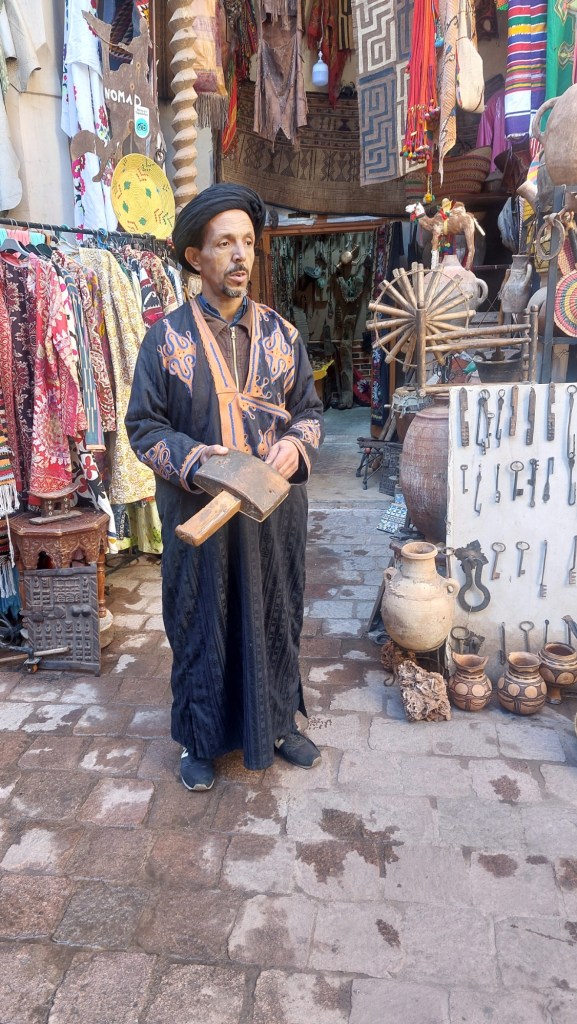
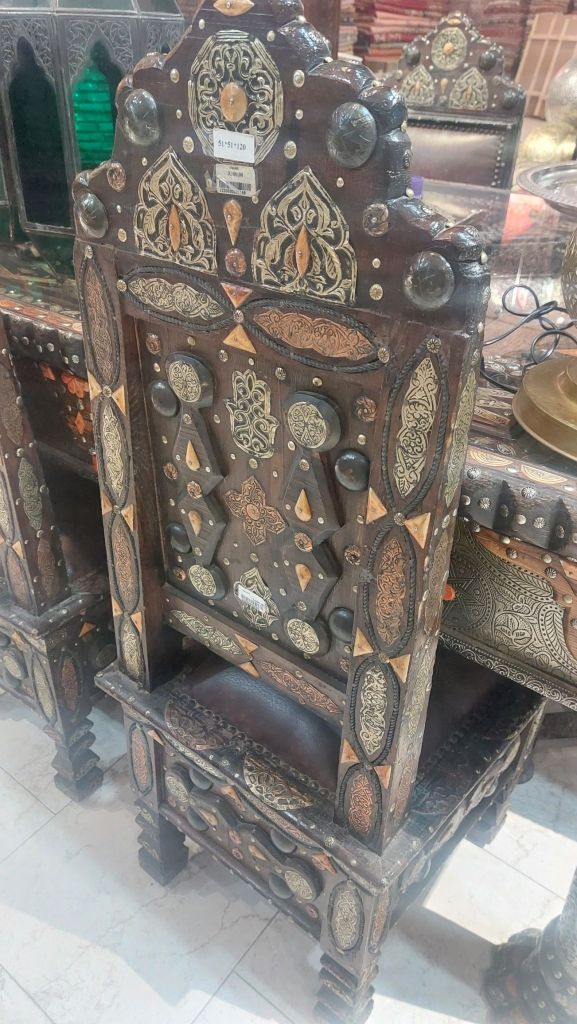
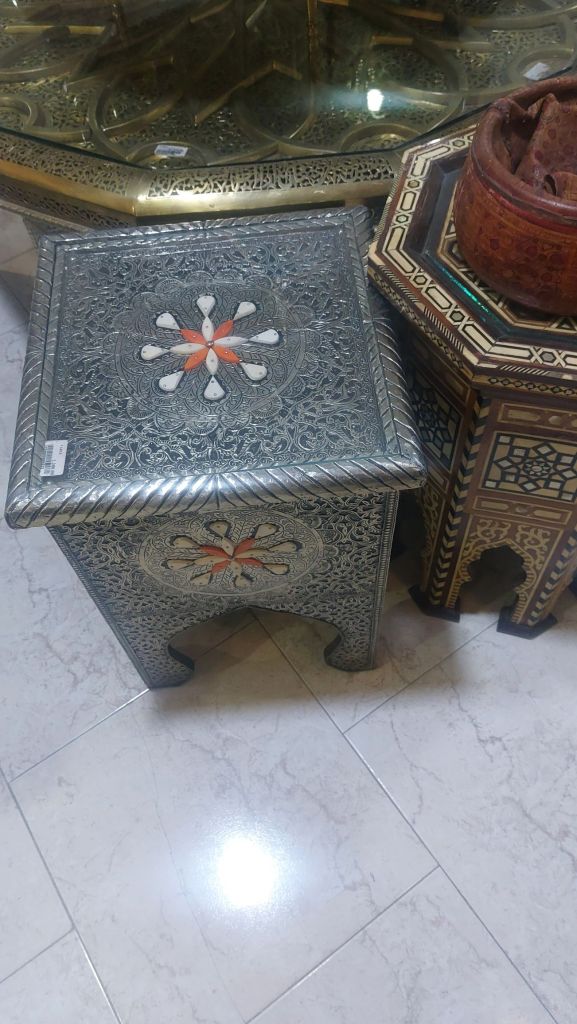
    Within each bustling area, skilled craftsmen are busy at work, and there are souks dedicated to creating and selling different items.There is an area for leather goods, a place where metal workers make Moroccan lamps and metal sculptures and areas where handmade wooden things are meticulously created. The art of rug weaving is demonstrated, and you may even get the chance to have a go.

    Images by Freebird Tracey.

    It’s interesting watching the locals make their wares to sell and seeing silver and copper bangles being engraved with your Arabic name on them. There is also an opportunity to have a go at making a pair of traditional Morroccan shoes known as babouches.

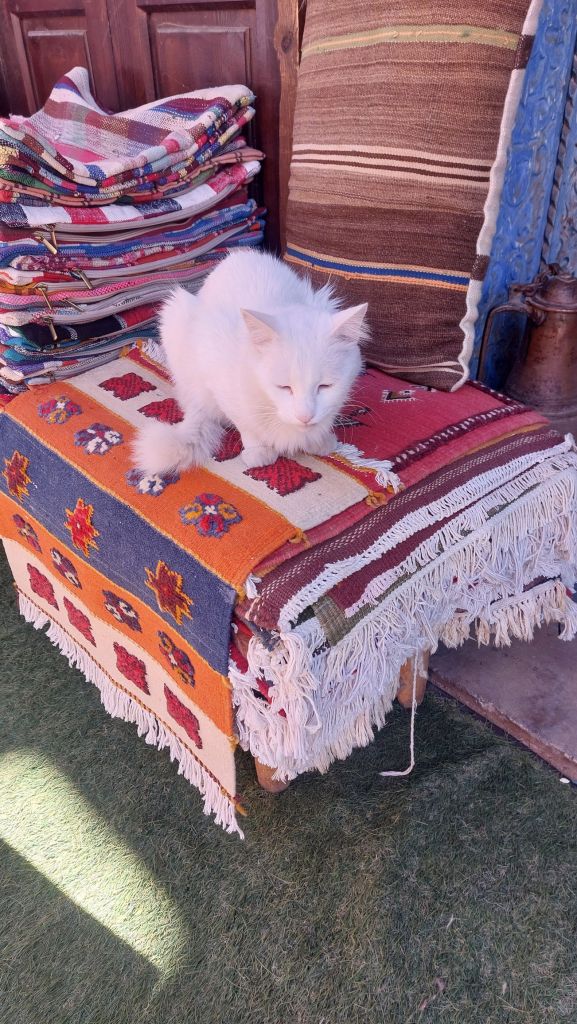
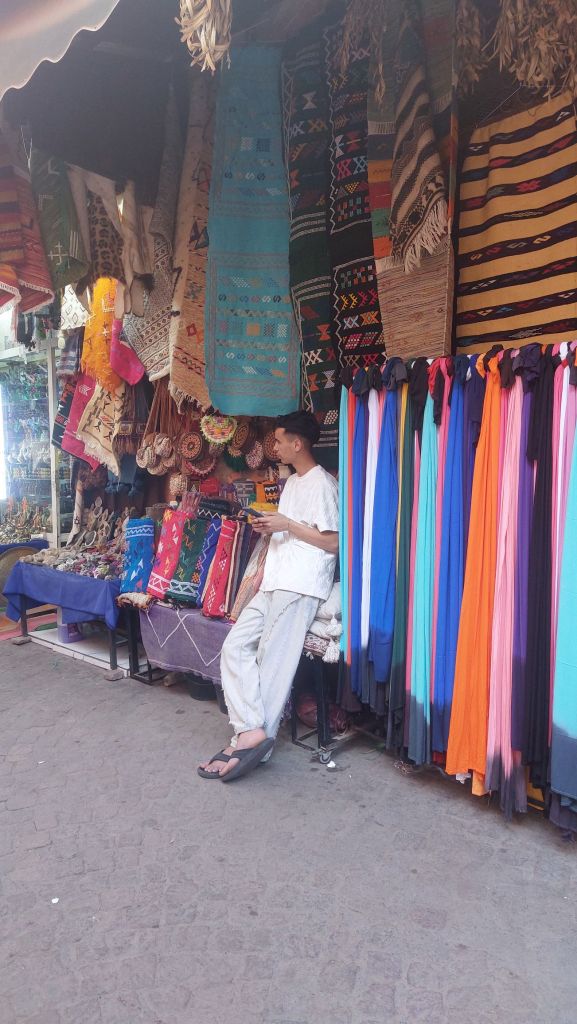
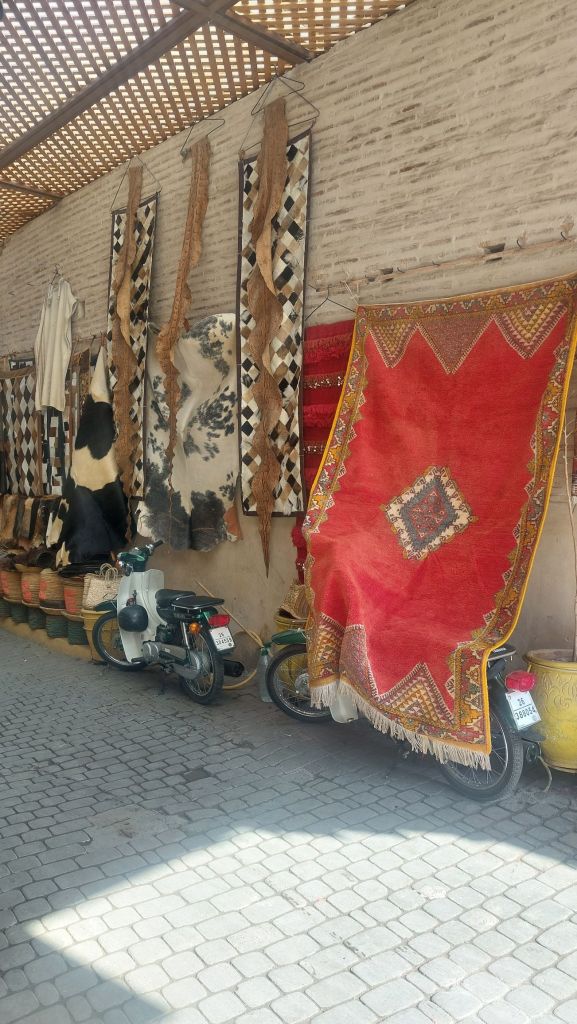
    Berber rugs hang proudly around the medina. Each colour and pattern tells the story of the villagers who worked tirelessly to create them in the Atlas mountains.

    Image by Freebird Tracey.

    You will find argan oil and morroccan black soap, orange blossom oil, and gardenia.The subtle fragrance floats past you, only shattered by the fumes of motorcycles as they drive through. It’s a heady combination of spices, incense, and day to day life in Marrakech.

    Image by Freebird Tracey.

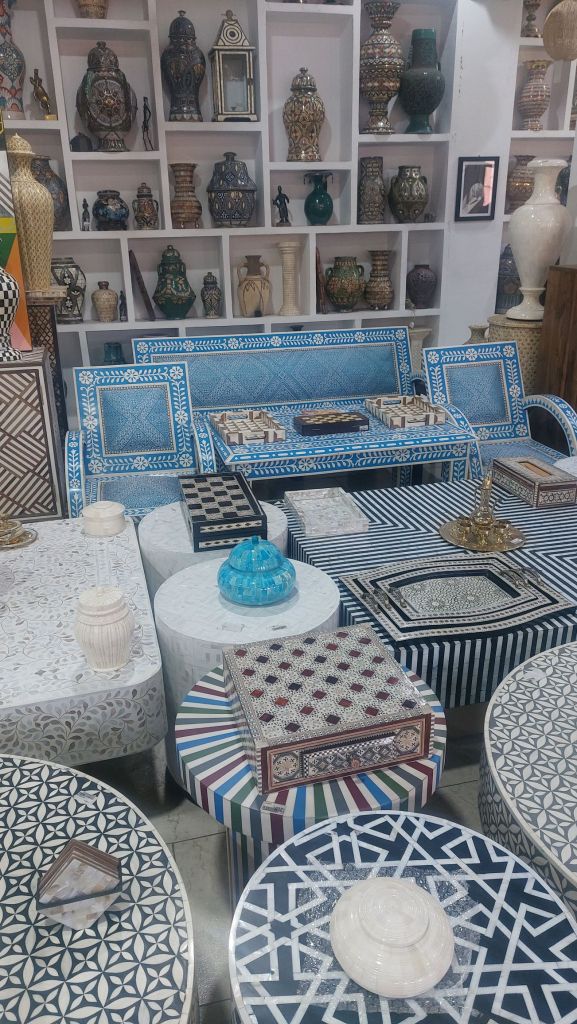
    Wooden boxes ornately decorated with mother of pearl,chess sets, cuddly toys, and traditional teapots tempt you as you search the souks for  souvenirs. You learn the art of haggling for the best prices.

    Image by Freebird Tracey.

    Cushion covers made from cactus silk are eye-catching. The only problem is choosing your favourite colours, patterns, and textures and wandering how you’ll fit them into your luggage.

    Image by Freebird Tracey.

    Moroccan sweets are a delicacy. You’ll find yourself spoilt for choice with the amount of nuts and pastries for sale around the medina.

    The medicinal herbs and spices are a cacophony of colours and fragrances. You draw closer to look, and a friendly vendor sticks a piece of eucalyptus under your nose. Before you know it, your eyes are watering, and you’re reaching for a tissue.

    Fresh olives pop with colour. Their subtle spice dances on your tongue, and you have to buy some because they’re addictive. One or two is never enough to satisfy.

    Image by Freebird Tracey.

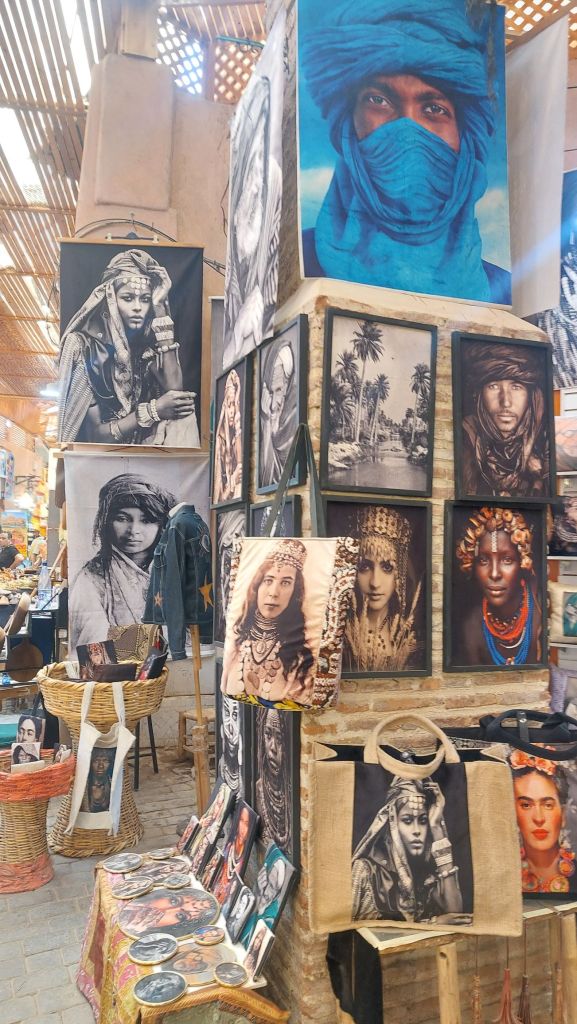
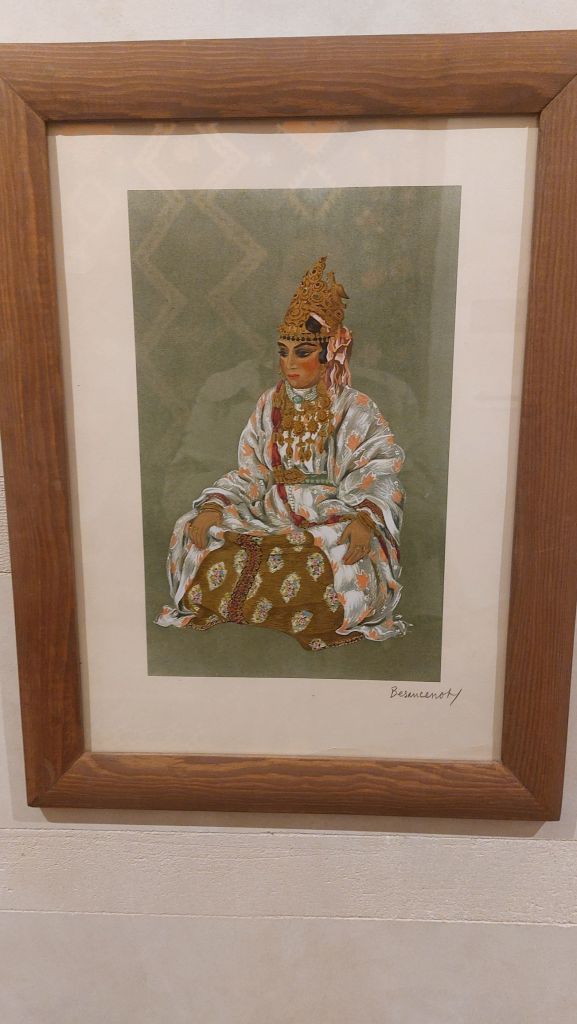
    Paintings of Morroccan doors, Amazigh people and camels crossing the Sahara desert are displayed on walls  and hang strategically outside shop doorways.

    Image by Freebird Tracey.

    For people who love to shop until they drop, the souks are a dream come true. The lively rhythm and friendly banter  is a magical experience.

    Image by Freebird Tracey.

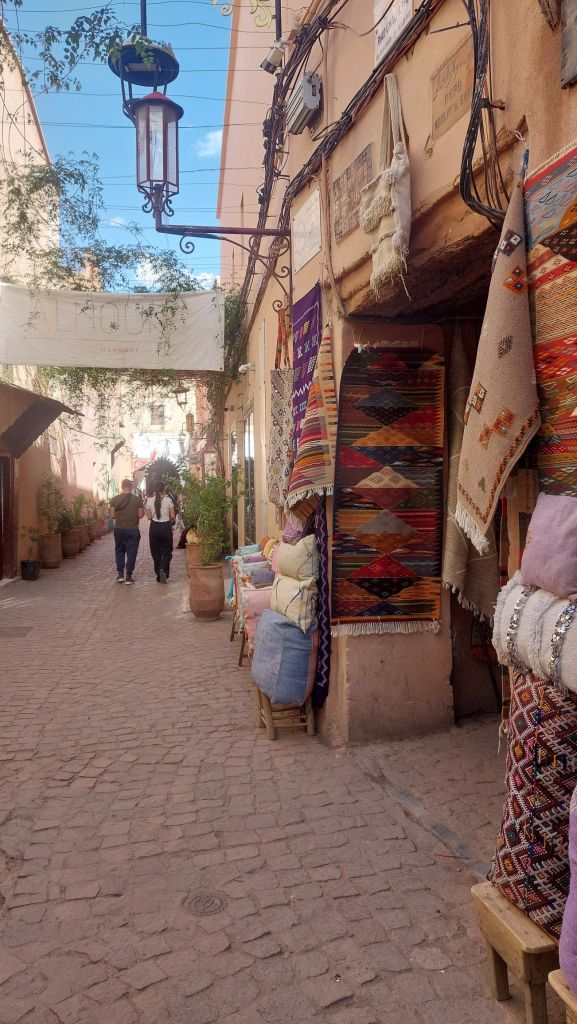
    It’s not always a breeze shopping in such a densely packed area, though. The souks get incredibly busy with tourists. You constantly have to dodge motorcycles, donkeys, and vendors with carts. You will probably get lost, but that’s all part of the charm. You eventually find your way out with some effort.

    I recommend fully immersing yourself in the experience and enjoying every moment. It will invoke in you the spirit of camel caravans and their ancient trade routes from centuries ago. After all, the souks are one of the main reasons tourists come to Marrakech. Shopping in them is the perfect way to delve into the fascinating culture of Marrakech and pick up a few treasures along the way.

    Here are a few helpful tips to help you enjoy your shopping experience in the souks.

    • First of all, pace yourself. The souks are very busy and can feel slightly chaotic at times, especially in the heat. Stop regularly for a drink and rehydrate. Rest for a while, and have a spot of lunch on a rooftop terrace. There are plenty inside the souks.
    • Be prepared to haggle. It may seem daunting at first, but you’ll soon get the hang of it. In Morocco, bargaining is a way of life, and although it can get frustrating wondering if you’re being ripped off, it’s also rather gratifying if you manage to procure something at a good price. Take time to shop around and walk away if you don’t think you’re being offered a fair price. You will often find yourself being called back, and a realistic price can be reached. If not, the same items will most likely be found for sale in another part of the souks.
    • Stay vigilant, and keep your wits about you. Marrakech is a safe city, but pick pocketing can happen like anywhere else in the world. In crowded, narrow streets, keep your possessions safe in a closed bag at the front of your body. Don’t be tempted to take out too much cash at once and leave your passport in a safe wherever possible.
    • If you’re lost, look for signs above your head pointing you back to Jamaa El Fna. Having an orange sim is useful but may not always work in the denser parts of the souks. If you need help, ask a shop vendor. They’re more than happy to help, but be aware of opportunists who may try to send you in a different direction.
    • This brings me to don’t accept directions from locals who may lead you to a friend or family members’ shop. They get a commission if you buy something. You may find yourself seated, drinking mint tea, and before you know it, there’s a mountain of Berber carpets at your feet.
    • Exercise patience. Remember, this is someone’s livelihood, and it’s a different culture to what you may be used to. Wages are not very high for most people in Marrakesh, and tourists with money to spend are fair game for boosting the take-home salary of most vendors. Marrakech was badly affected by the earthquake in 2023, and people’s livelihoods suffered as a result.
    Image by Freebird Tracey.

    Although the souks may often feel overwhelming, they are an unforgettable shopping experience in Marrakech.  The cacophony of colours,  pulsating energy, and bustling atmosphere will stay with you for a long time.
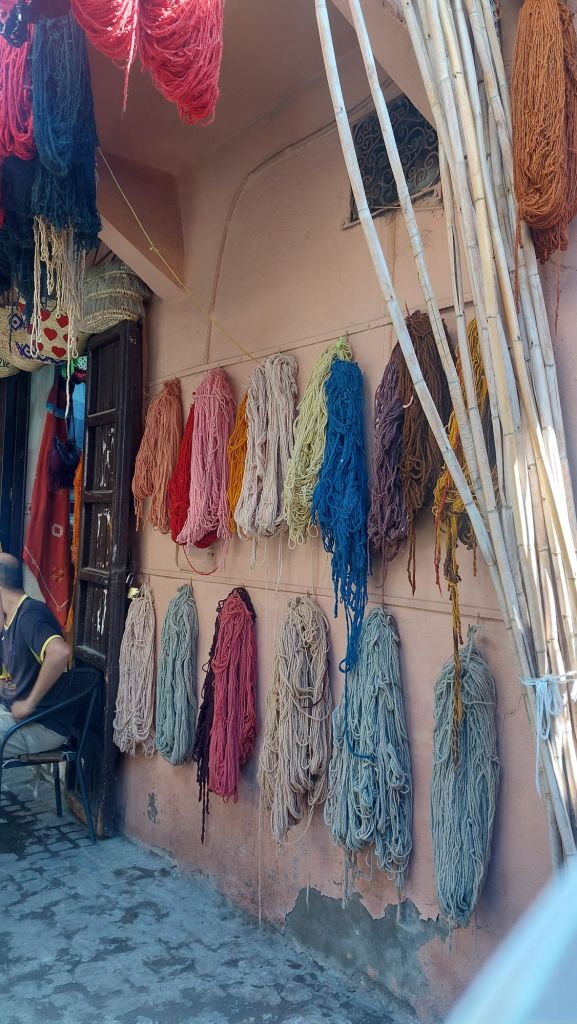
    Image by Freebird Tracey.
    (more…)
  • Herboristerie Reda

    A small apothecary in the souks.

    Image by Freebird Tracey.

    There is nothing better than taking the fragrance of Marrakech home with you. For me, it’s a way to relive  the happy experiences of my time there.

    You can find plenty of places in the souks that sell argan oil, perfumes, shampoos, and body wash. The heady fragrance of orange blossom, oud, and jasmine oil entices you to buy something. It’s a constant reminder of your fragrant riad. However, not all argan oil  for sale in the souks will be genuine. There are inferior quality products sold at high prices, so you need to be mindful.

    Argan oil cooperatives are the best places for buying genuine products. However, if you don’t get an opportunity to visit them, where should you go?

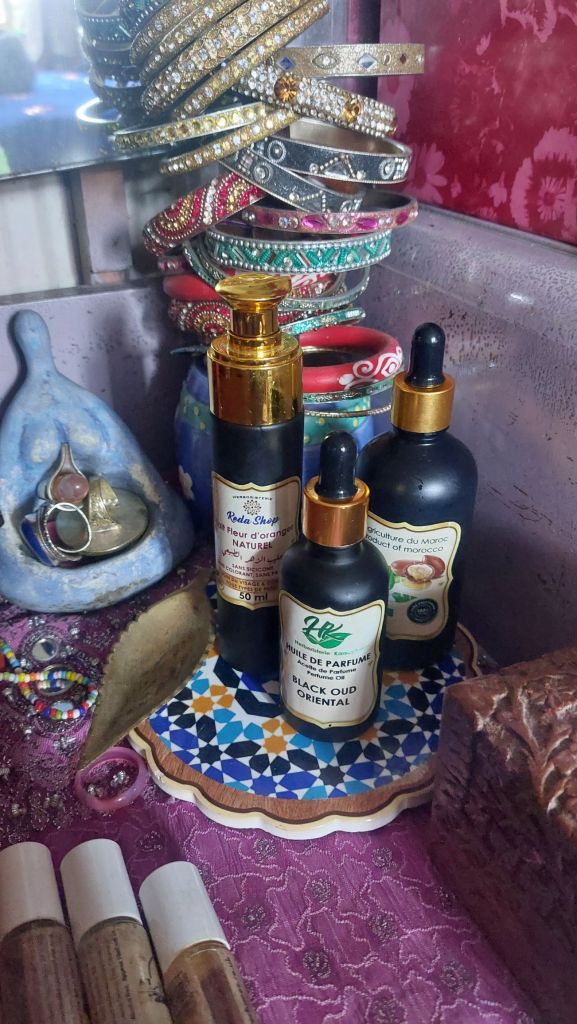
    Herboristerie Reda stocks everything, including Argan oil, and the quality of their products is very good. I have purchased many of their perfumed body oils. The products are genuine and reasonably priced.

    The address is 48.Derb Sidi, Boulfdail.Marrakech 40000.

    Image by Freebird Tracey.

    I spent a lot of time testing the oils to see which ones I liked, and I didn’t feel pressured into buying anything. The woman in the shop was called Hanane, and she was helpful and kind. She speaks several languages, and it was a lovely human experience meeting her.

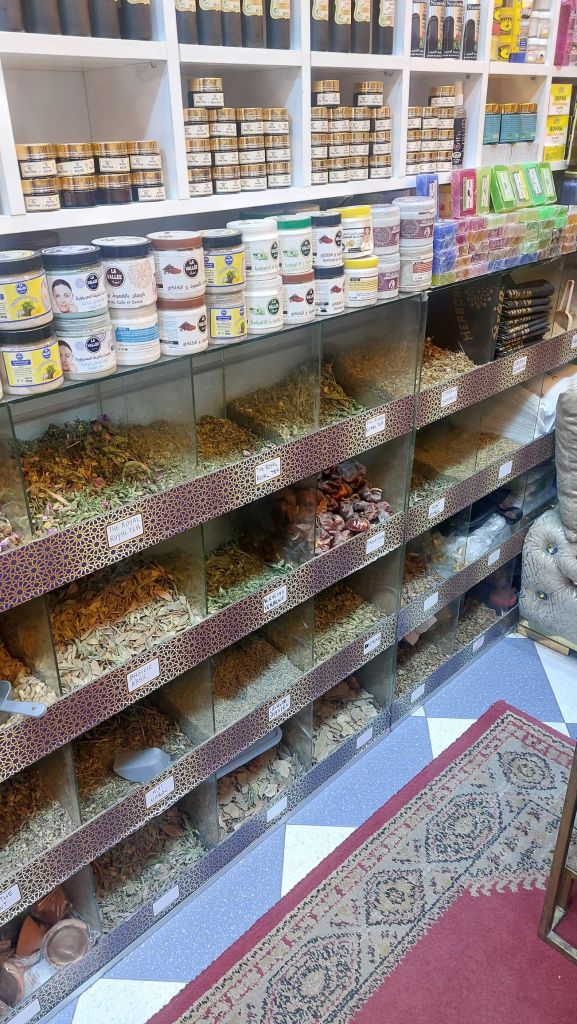
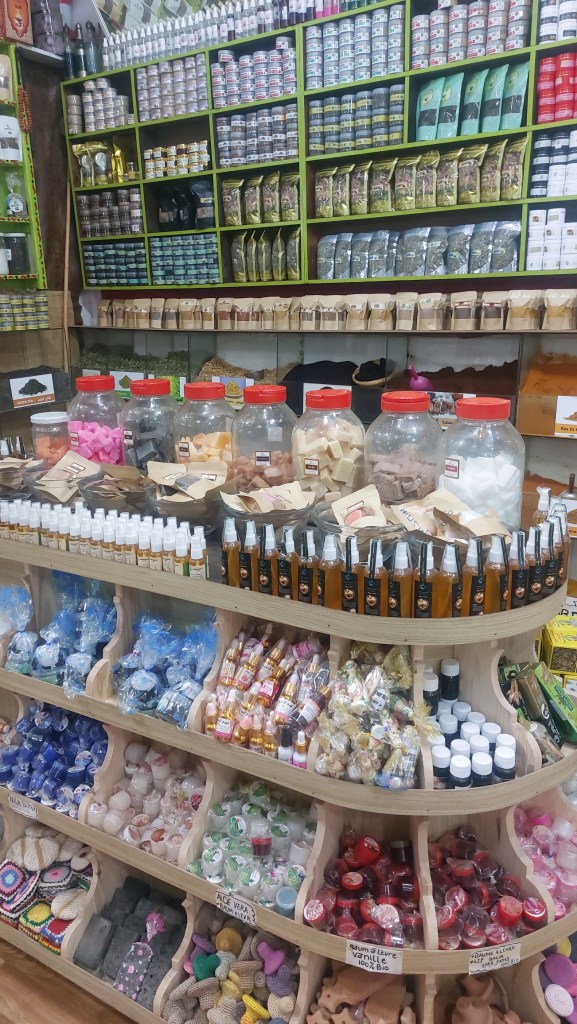
    They stock a large selection of products, including soap, fragrant body creams, perfumed oils, and products for use in a hammam. You can also purchase herbs and spices, including Saffron. They have herbal teas and medicinal ointments. It’s a little apothecary in the souks.

    Images by Freebird Tracey.

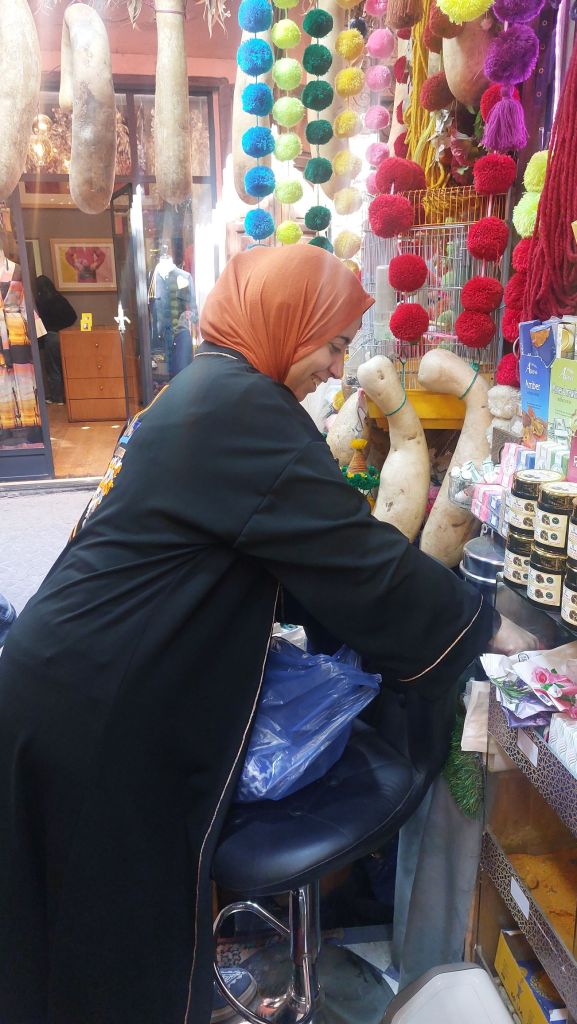
    The shop front is used to advertise an annual Gourd Festival. It’s decorated in striking colours with gourds and garlands hanging in the entrance.

    I have bought oils from other retailers in the souks, but it’s not long before the fragrance wears off. The oils from Herboristerie Reda last ages on the  skin and smell amazing.

    Herboristerie Reda is open from 9.00 am until 10.00pm every day.

    This will be my go-to shop for fragrant gardenia and other essential oils from now on. It’s a treasure trove of magic potions in the medina.

    Image by Freebird Tracey.
    (more…)
  • Dar Bouchaib.

    A fixed price store in the Kasbah.

    Are you fed up with haggling each time you want to buy something? If so, there is a fixed price store in the Kasbah district where you won’t have to bargain. Here, you will find everything that’s for sale in the souks at a fixed price.

    On the ground floor, there are ceramics, jewellery, clothing, footwear, bags, souvenirs, and much more.

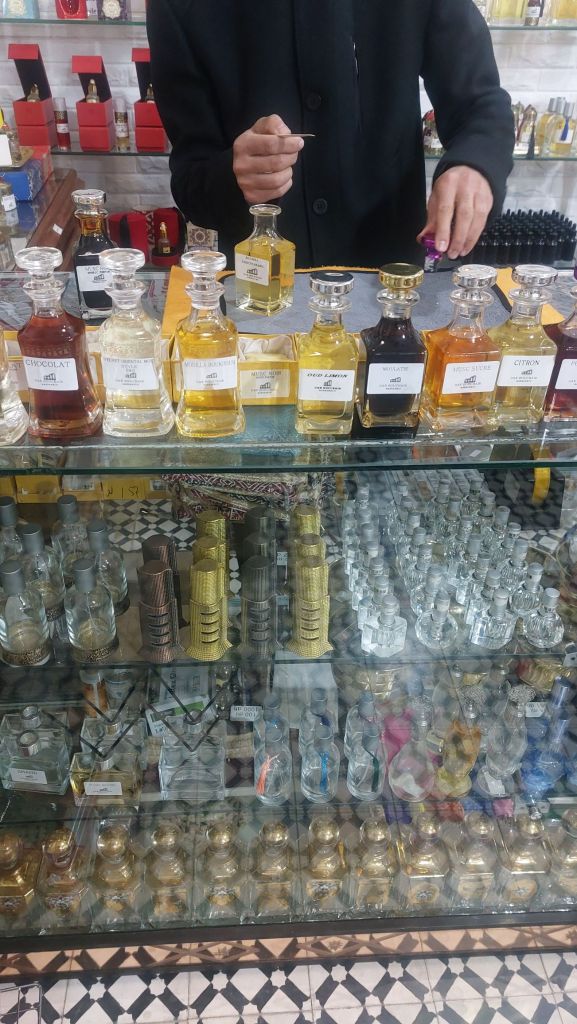
    The perfumed oils are of a high quality, and you can create your own signature fragrance by blending several together.

    Images by Freebird Tracey.

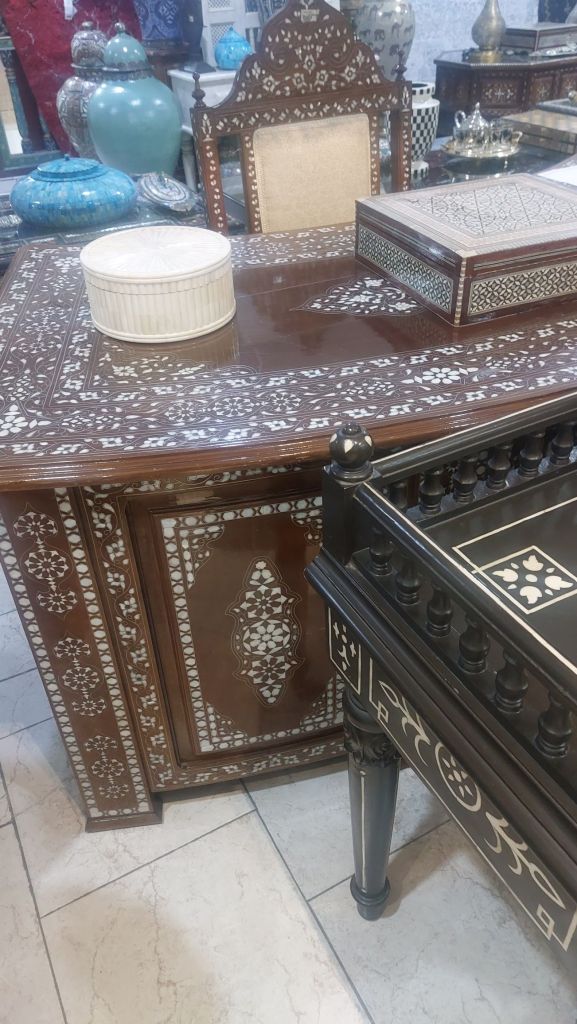
    On the first floor, there is handmade furniture, mirrors, vases, and other large items for the home. There is a huge selection of Berber rugs for sale, which can be shipped worldwide. The store is huge. It’s worth visiting just to see the craftsmanship that’s gone into creating everything on the upper floor.

    The staff at Dar Bouchaib are helpful. You can wander around the shop without any pressure to buy.

    Images by Freebird Tracey.

    The Kasbah is an easy 15-minute walk from the main square. There are plenty of shops and  restaurants along the way. There are popular sightseeing  places in this part of the city, including Saadian tombs and El Badi Palace.

    Dar Bouchaib can be found on Rue de La Kasbah Marrakech 40000. It’s open daily from 9.00 am until 8.30 pm. Bank holiday hours may differ, so check first before arriving.

    Although a big part of visiting Marrakech is shopping in the souks, sometimes haggling can be stressful. Not knowing how much you should be paying gives vendors the upper hand. Tourists often get overcharged. In contrast, Dar Bouchaib is a relaxed shopping experience with everything under one roof. The prices are fixed and reflect what you should be paying for each item.

    Images by Freebird Tracey.

    Dar Bouchaib is a few steps away from the popular restaurant Krepchy. Cafe Zeitoune is also close by and a great place for lunch. It’s pedestrianised around the mosque, and there are plenty of benches.

    Image by Freebird Tracey.
    (more…)
  • The Hammam.

    An ancient Moroccan bathing ritual.

    Image by Freebird Tracey.

    One thing that is central to Morroccon culture is the hammam.

    A hammam is similar to a Roman bath and dates back centuries in morrocco. It is a ritualistic cleansing that people do before prayer. This is the reason many hammams can be found near a mosque.

    Before homes had plumbing, a  communal hammam was the place where Moroccan people went to bathe. They were a sacred space where people gathered to socialise and relax, separated by gender.

    Image by Freebird Tracey.

    Hammams are still widely used in Morocco today. They’ve become increasingly popular with tourists who wish to learn more about the country’s fascinating culture.

    The treatment always begins in a dry steam room. Heat opens up your pores and prepares your body for scrubbing. Morroccan black soap is used to scrub your body vigorously. It is a grainy soap made from olive oil and macerated olives, perfect for exfoliating and removing dead skin cells.

    Traditionally, scrubbing is followed by throwing buckets of water over you to wash off the black soap. In a public hammam, buckets of cold and hot water are thrown simultaneously, which can be very invigorating.

    In some of the luxurious private hammams, Rassoul clay from the  high Atlas mountains is used to cover your body. It contains rich minerals such as silica, magnesium, and calcium, which is good for the skin. Next, your body and hair are lathered with a gentle soap or gel to wash off any residue. This is the final part of the cleansing ritual.

    Once your body and hair are thoroughly exfoliated and clean, you receive a massage using  fragrant oils such as rose or argan oil. This is an intensely relaxing experience.

    Once the treatment is over, you are encouraged to relax with a pot of mint tea and morroccan pastries. The fragrant incense filling the room induces a calm and relaxing ambience.

    There are two options for experiencing a hammam in Marrakech. One is a public hammam, and the other is a private one.

    A public hammam is a true taste of Morroccan life, where local people bathe together chatting in darija,the Arabic dialect spoken in Morocco. Sometimes, women take their children in, and the atmosphere is friendly and welcoming. When you use a public hammam, you have to purchase your own soap and oils to take in. Using a public hammam is less expensive and one of the best ways to immerse yourself in the life of local people in Marrakesh. Public hammams are perfect for travellers on a budget, but don’t expect any frills. However, they are up close and personal to the customs and traditions of Moroccan people.

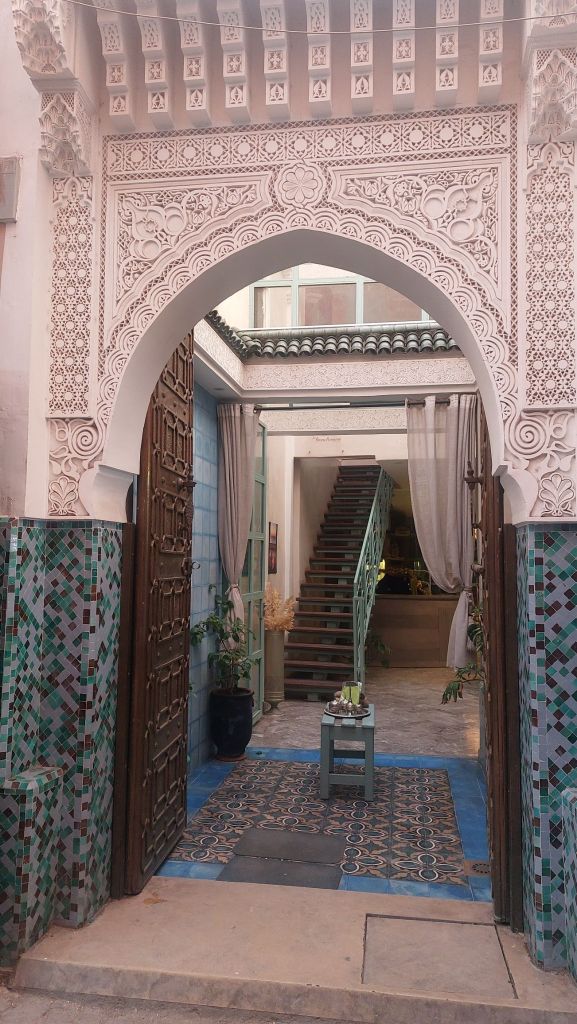
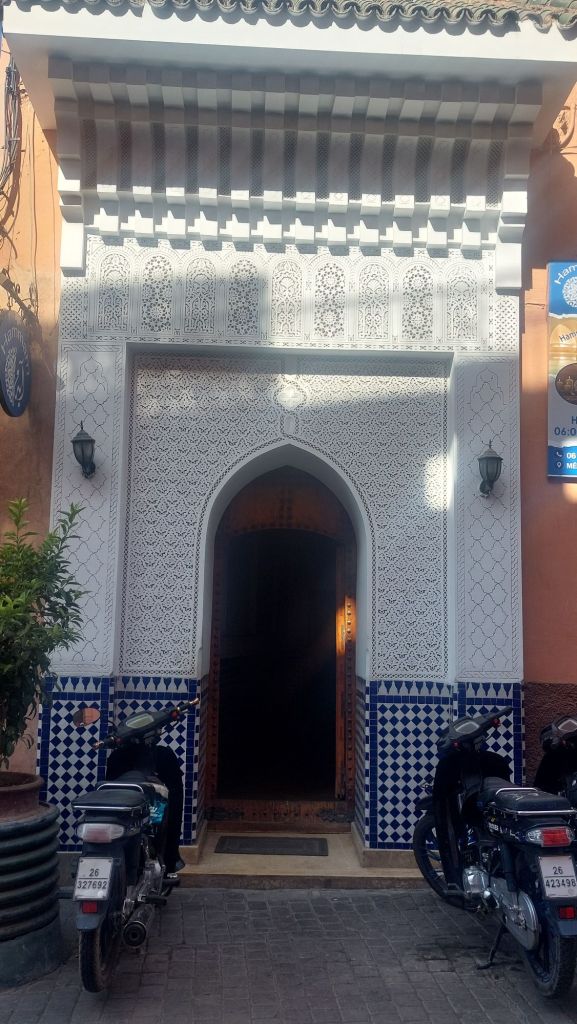
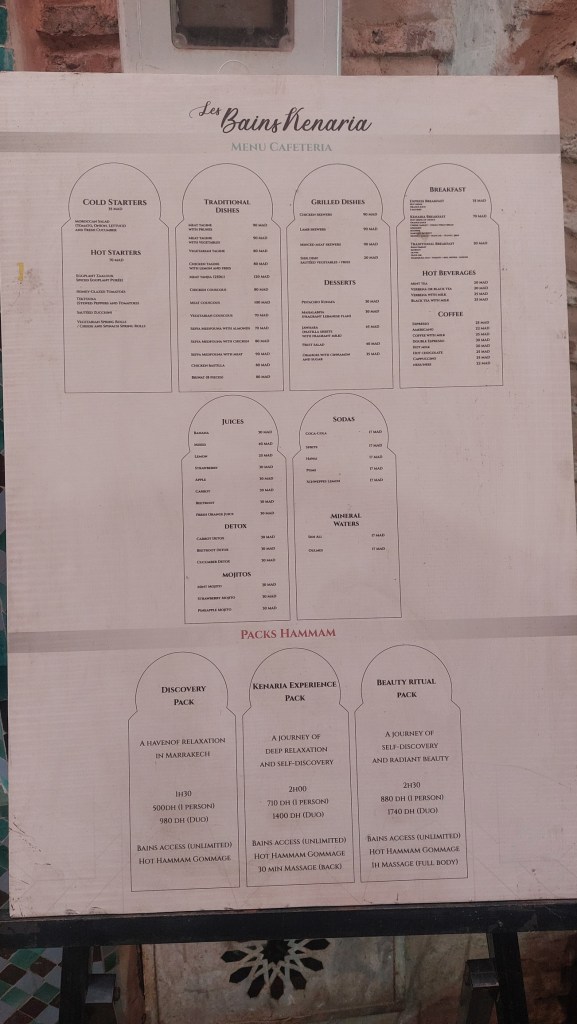
    On the other hand, private hammams provide you with everything you need. This includes soaps, massage oils, disposable underwear, a bathrobe, and sandals. Treatment options will vary, from the length of treatment to which kind of massage you prefer. You also get to choose which oils you would like. Interior decor can be quite luxurious, including exotic plants and comfortable couches to relax on. You are welcome to stay for as long as you want once the treatment is finished and some hammams serve food. Les Bains Kenaria is a prime example of a hammam with tranquil surroundings and good food.

    It’s worth pointing out that the underwear given to women is very flimsy. Some women ask for the male underwear instead. Nubies sometimes feel vulnerable in front of strangers with only a thong hiding their modesty. However, the rooms inside the hammam are dimly lit, and the Kassalas working there are very discreet. Most women soon get over their initial shyness.

    Hammam Mouassine is the oldest hammam in the city of Marrakesh. It opened in 1562 and can be found by the Mouassine fountain, close to the secret garden. Many riads also have a hammam, and this service is available for guests to book.

    Here are a few hammams in Marrakech you might wish to visit,

    . Hammam de la rose.

    . Mamounia Hamman..

    . Les Bains Ziani.

    . Les Bains Kenaria.

    Palm oil is sometimes used when washing hair, so if you don’t agree with the use of it, check beforehand.

    Visiting a hammam has been an ancient ritual that has been part of Morroccan culture for centuries. Experiencing a traditional hammam is a break from the chaotic souks and Jamaa El Fna. It can be a relief from the baking heat in Marrakech and a chance to slow down from the manic pace.  Tourists who visit a hammam come away feeling refreshed, invigorated, and relaxed. Some tourists even become hooked, expressing it’s an unusual experience,difficult to describe in words, but they feel amazing afterwards and can not wait to go again.

    Images by Freebird Tracey.

    If possible, I recommend paying a bit more for a private hammam, especially if it’s your first time. You feel less self-conscious because they’re similar to spa treatments in the West. It’s possible to book this kind of hammam through Get Your Guide, and they can come and collect you so you know where to go.
    If you want a taste of true Marrakchi life head for a public hammam. They’re budget friendly, and you can buy Morroccan black soap and other items you’ll need in the souks or the spice square. Don’t forget to take a towel, bathrobe and some fresh underwear in with you.
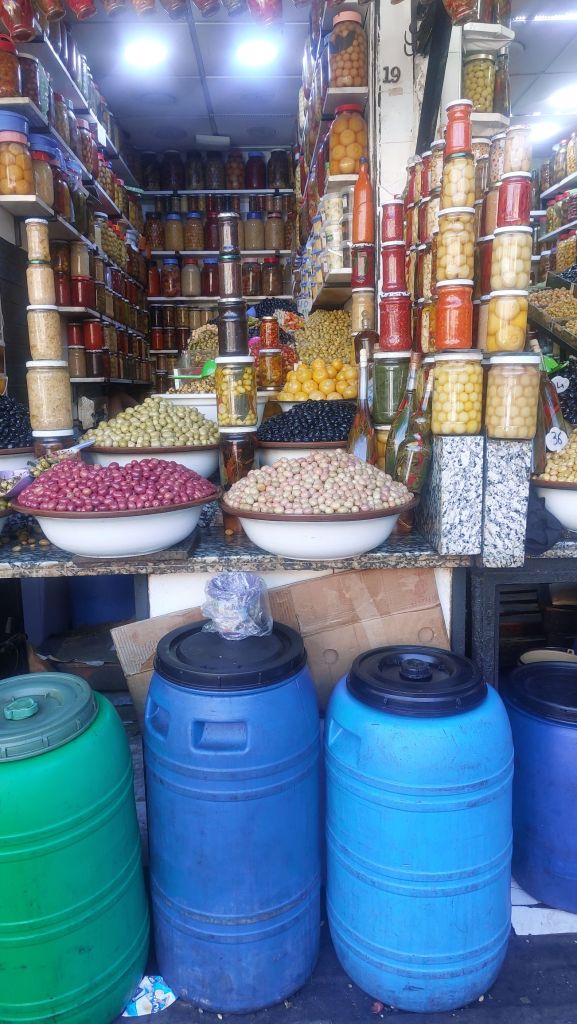
    Image by Freebird Tracey.
    (more…)
  • Maison Culturelle Du Tapis.

    Learn about the history of Berber carpet weaving.

    Image by Freebird Tracey.

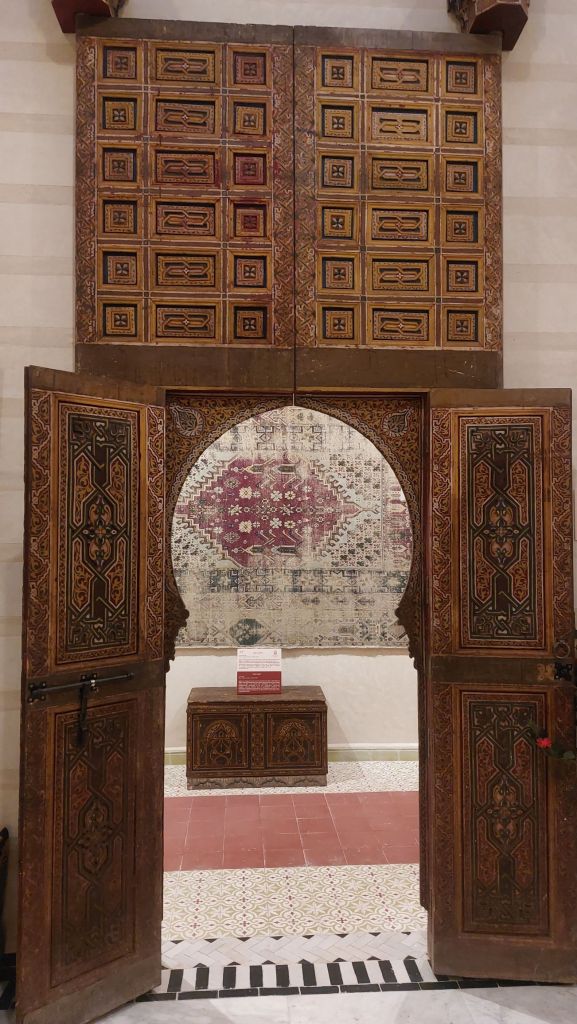
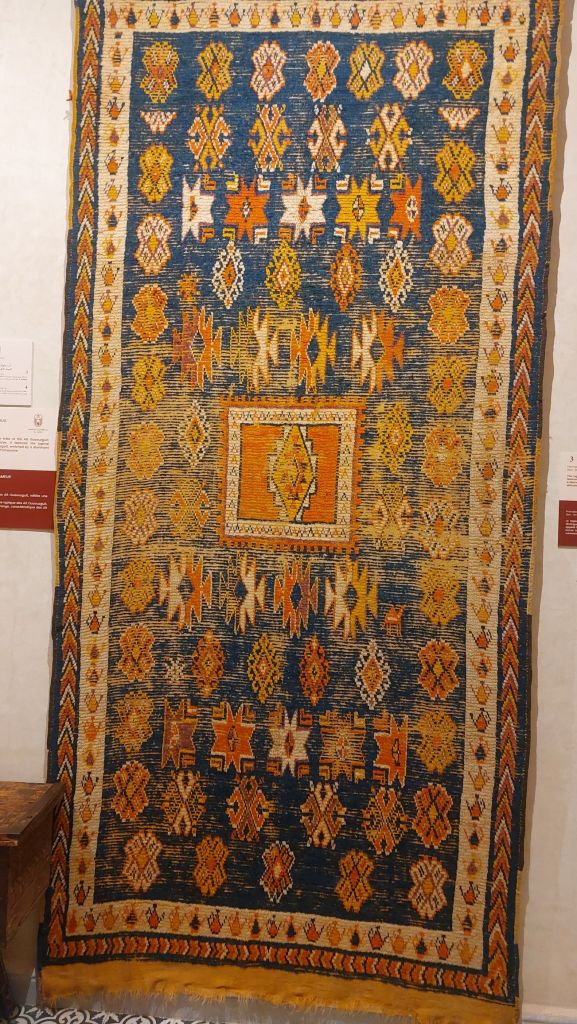
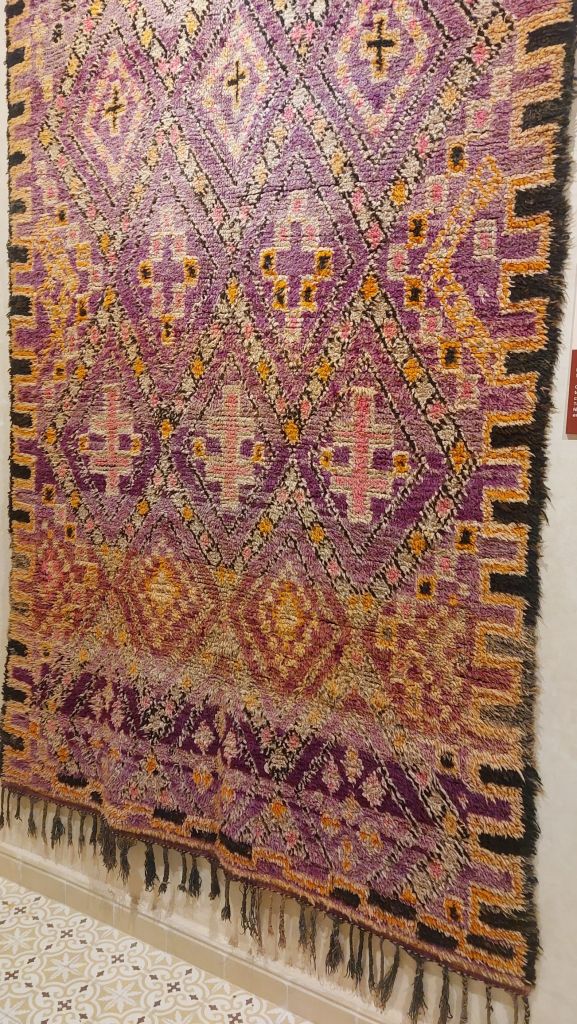
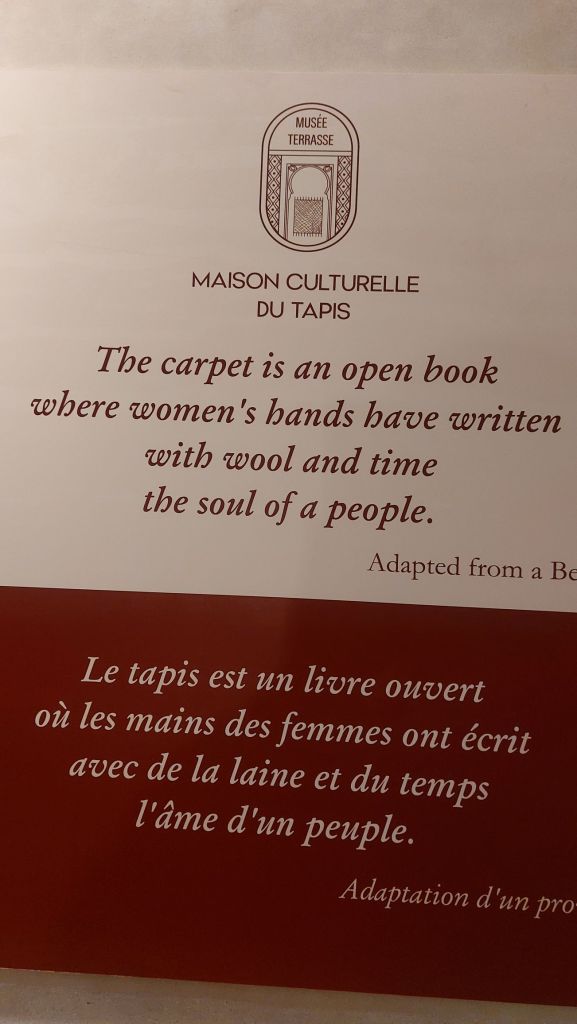
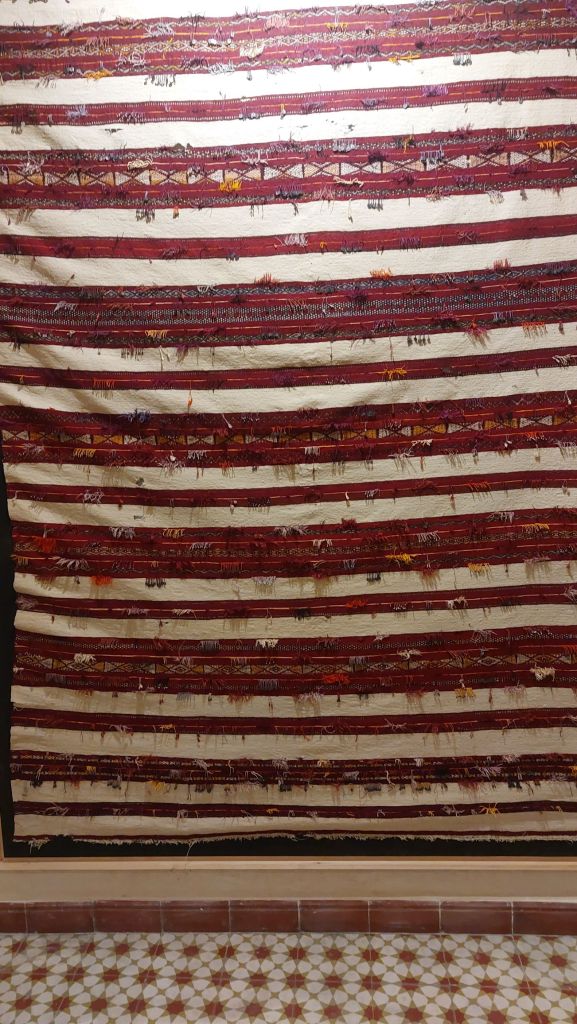
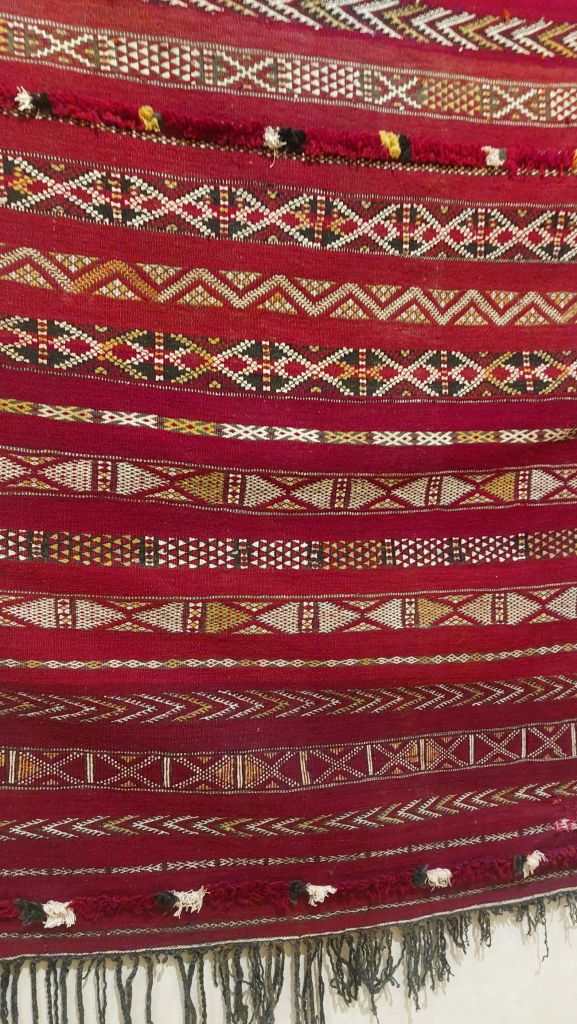
    Maison Culturelle du Tapis is tucked away in the souks and a place you must see if you’re in Marrakech. It’s a museum containing a remarkable exhibition of Berber carpets and a journey through the ancestral history of the tribes who created them. Beautiful carpets are draped along the walls of this boutique museum, each one made by different tribes and eras in Moroccan history.

    Situated deep within the medina at 16-18 Derb Deffa Ourbaa, it’s slightly hidden, but the vendors in the souk will point you in the right direction if you struggle to find it.

    The museum is a fascinating walk through the history of traditional carpet weaving, and some of them on display are generations old. They have been beautifully preserved, and each one is a testimony to Moroccos weaving heritage.

    Images by Freebird Tracey.

    Every room of this tastefully restored 17th century riad invites you to look at each different region’s identity, from the Atlas Mountains to Rabat. You get to learn the meanings of Berber symbols and the specific colours each tribe used when weaving their carpets. Each carpet is unique and tells its own story.

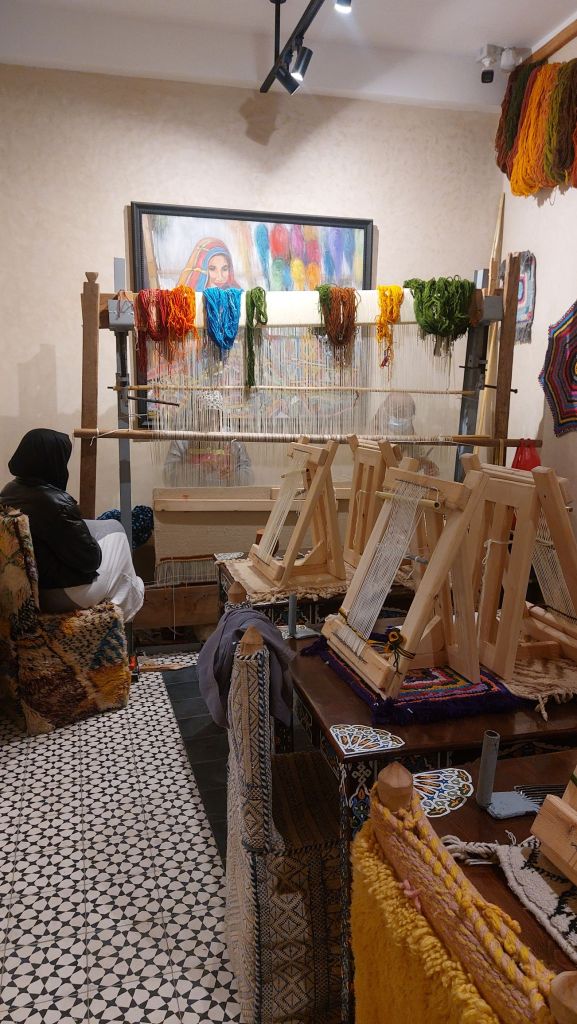
    There are descriptions to help you appreciate the work that goes into creating each piece, including a detailed history about the Berber tribes who produced them. There’s also an interesting video showing you the process of creating the carpets and the history of the Berber women who spend months skillfully weaving each piece.

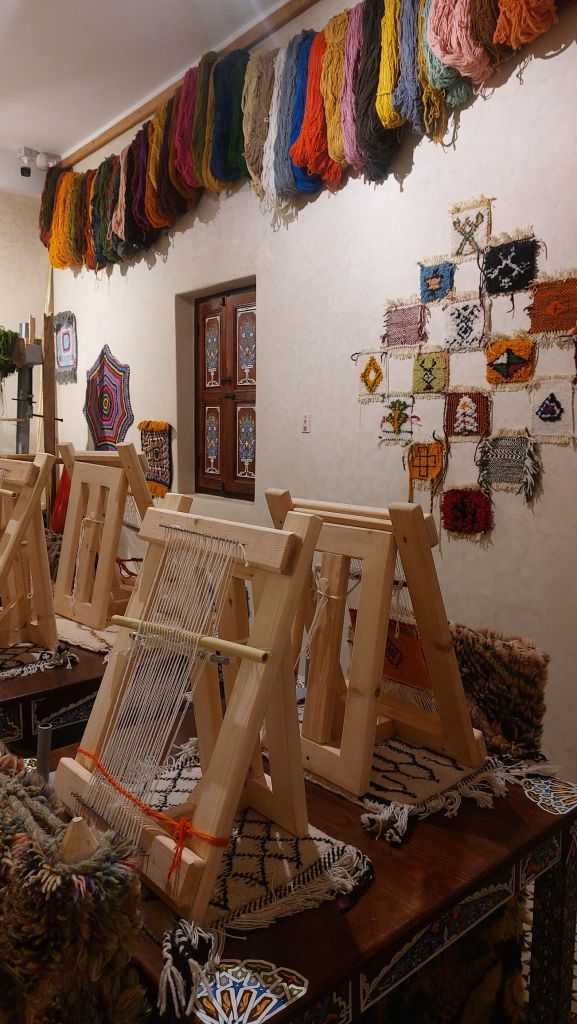
    On the first floor, you will find a workshop where you can have a go at making a small tapestry to take away with you. This is a two hour activity and ideal for families.

    Images by Freebird Tracey.

    One of the treasures on display in the museum is the Rabat carpet, a symbol of royal elegance renowned for its rich decoration and finery.

    The museum also houses a collection of exquisite rare 20th-century carpets and modern contemporary pieces.

    Images by Freebird Tracey.

    A visit to this delightful place was a nice break for me from the densely packed medina, and I would thoroughly recommend stopping by to have a look around it.

    There’s a small shop inside the museum selling rugs, cushion covers, and bags with   pieces of woven tapestry stitched into the centre. They are the perfect souvenir or gift to take home with you.

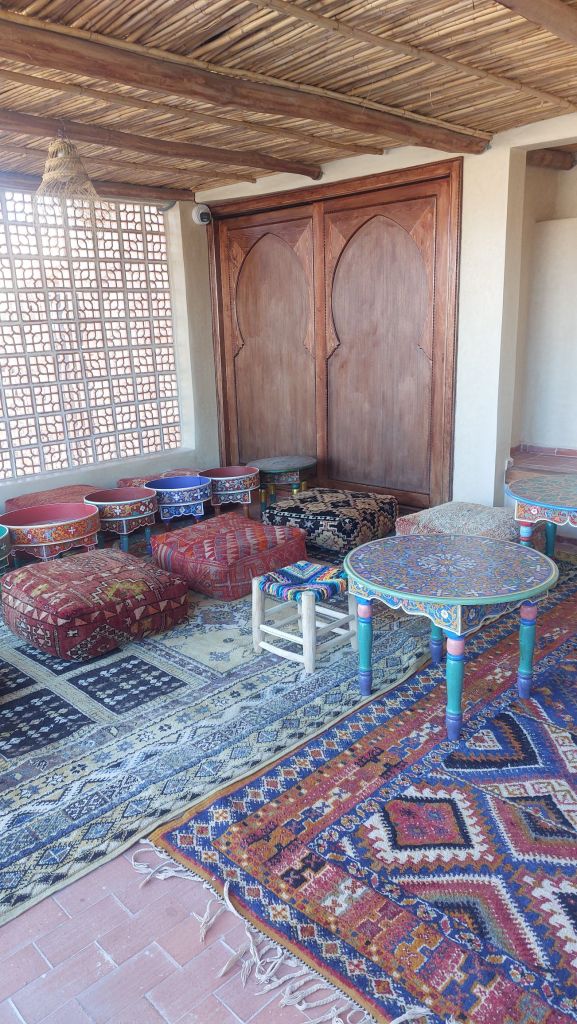
    After exploring the museum, you can relax on the pretty rooftop terrace, where you’ll find a nice cafe to have a light snack, homemade pastries, or a drink. The views across the medina from up here are incredible.

    Images by Freebird Tracey.

    The museum is open from 10.00 am until 6.00pm and there’s a small entrance fee. It’s definitely worth every dirham to delve into the rich, cultural ancestry of the Amazigh and learn about their exceptional carpet weaving skills. Highly recommended.

    Image by Freebird Tracey.
    (more…)
  • Chez Bismillah Sand Coffee.

    Taste traditional Saharan Coffee. 

    Image by Freebird Tracey.

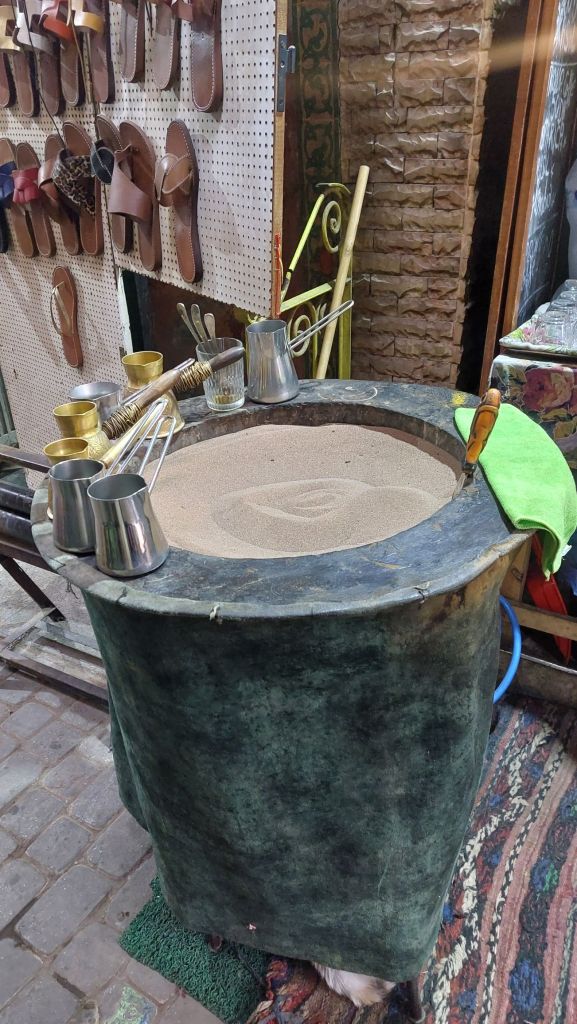
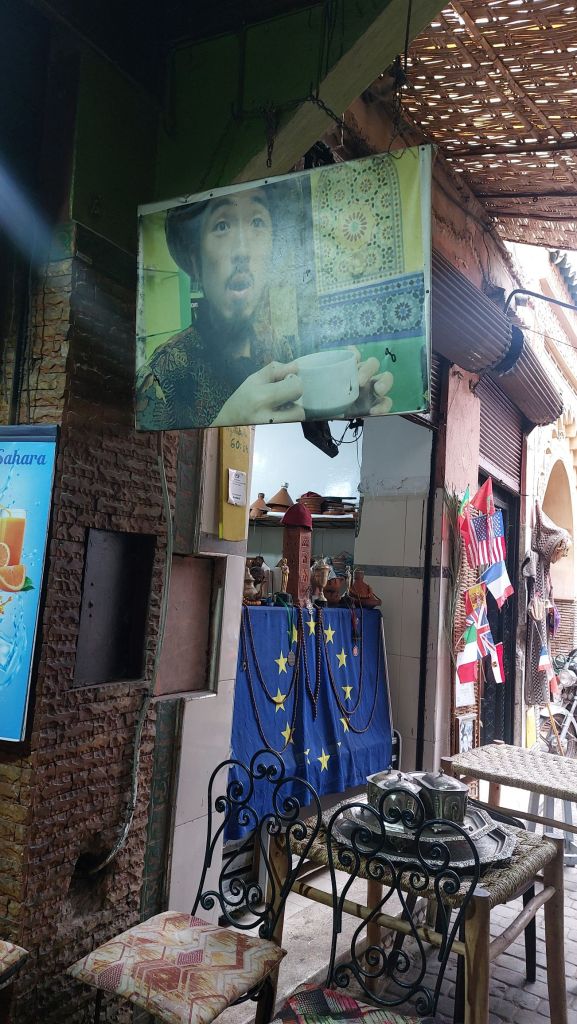
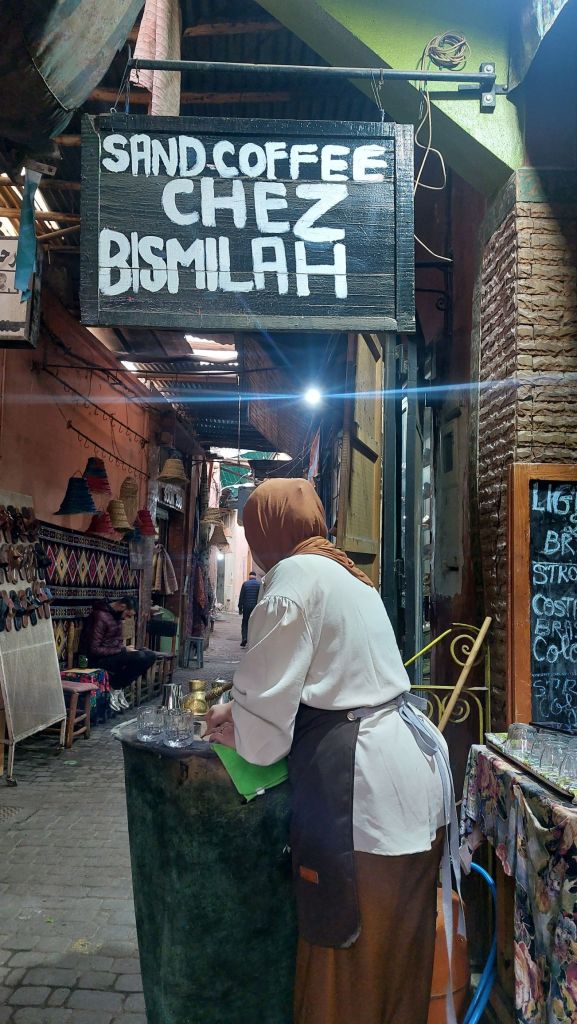
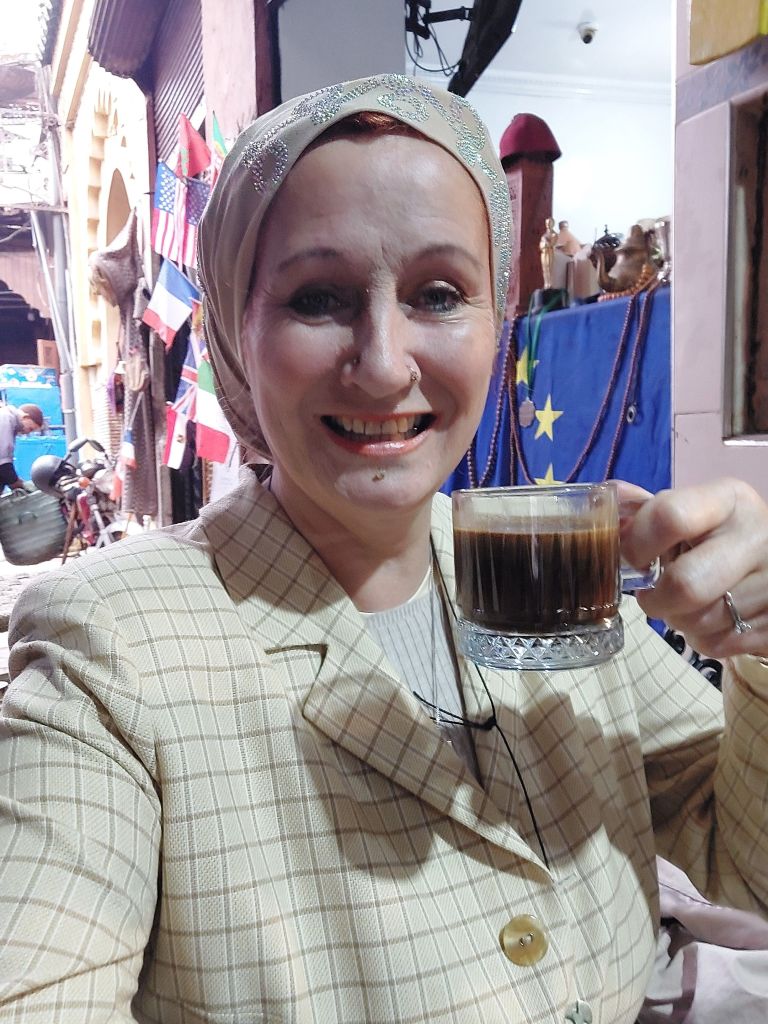
    Chez Bismillah Sand Coffee is a hidden gem inside Souk El Kebir. It is here that rich aromatic coffee is brewed using hot saharan sand, gently spiced with a touch of Cardamom, Turmeric, or Cinnamon to give it a distinct flavour.

    To make it, the coffee is added to iced water inside small brass pots and then heated by moving it around by hand in hot sand. It’s an ancient technique of brewing coffee that involves no electricity, simply hot Merzouga sand.

    The coffee has a rich, dense, creamy flavour unlike any other coffee found in the medina. It is soothing and velvety.

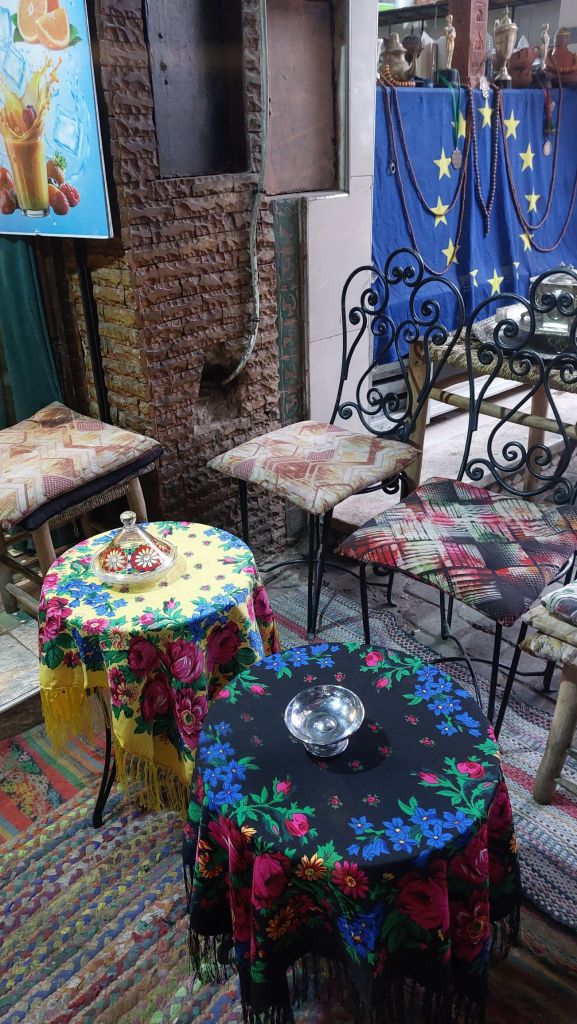
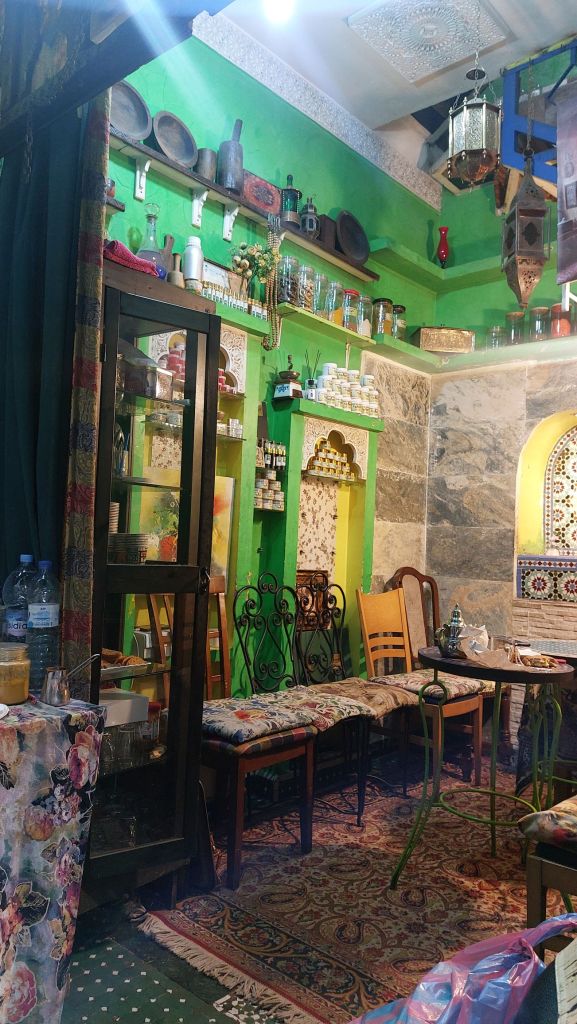
    This charming little spot is humble in appearance, cosy and inviting. There is a small rooftop terrace where you can sit and enjoy your coffee in peace, a moment of sheer self-indulgence

    Images by Freebird Tracey.

    Chez Bismillah offers you a serene refuge where you can sit watching the medina come to life tucked away in a quiet space away from the crowds.

    It’s an experience watching the coffee being made from rich arabica and fragrant spices. In moments, it has heated up as if by magic. I savoured its unique taste whilst congratulating myself for finding this amazing discovery in the alleyways of the souks.

    Chez Bismillah is a unique experience firmly rooted in place and tradition. The friendly proprietor gives you a glimpse into a past that conjures up images of camel traders selling cloth in the fondouk and stretches of vast desert terrain.

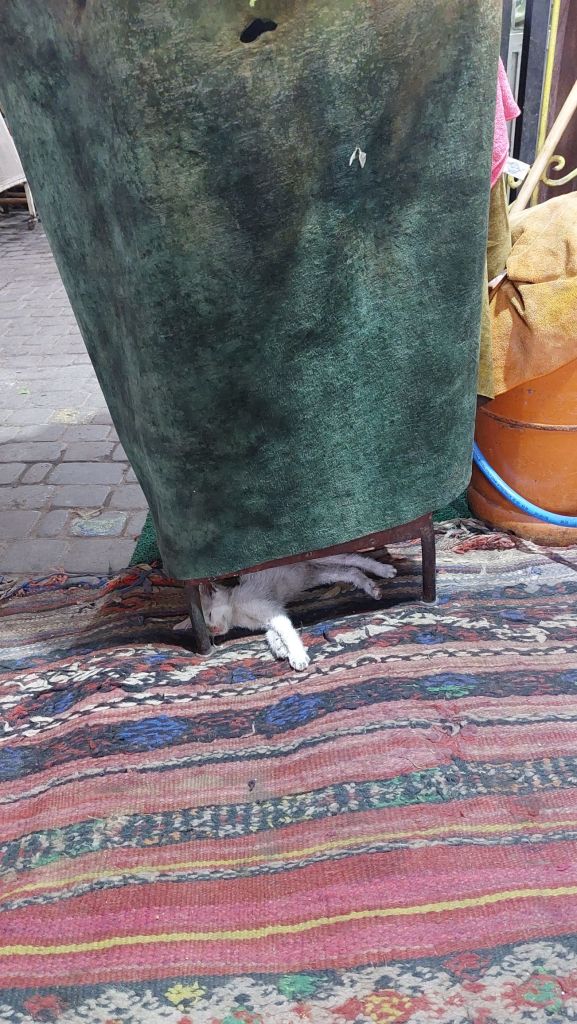
    Images by Freebird Tracey.

    It’s not just a cup of coffee. It’s an escape from reality, a moment of peace from the hectic rhythm of the busy souks.

    Chez Bismillah Sand Coffee can be found at 193 Souk El Kabir, it is open daily from 9.00am until 9.00pm with the exception of Saturday and Sunday when it closes at 7.00pm.

    (more…)