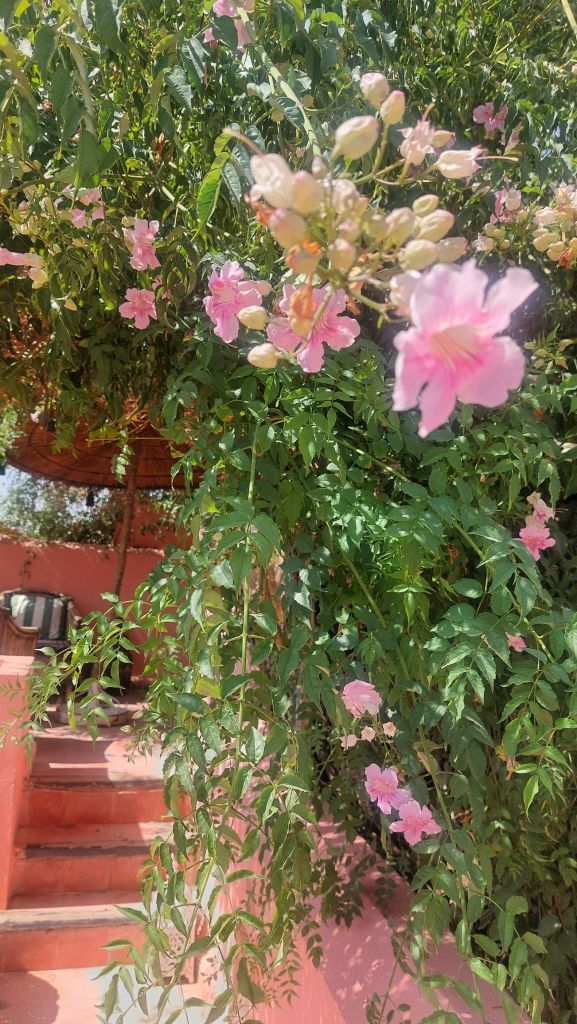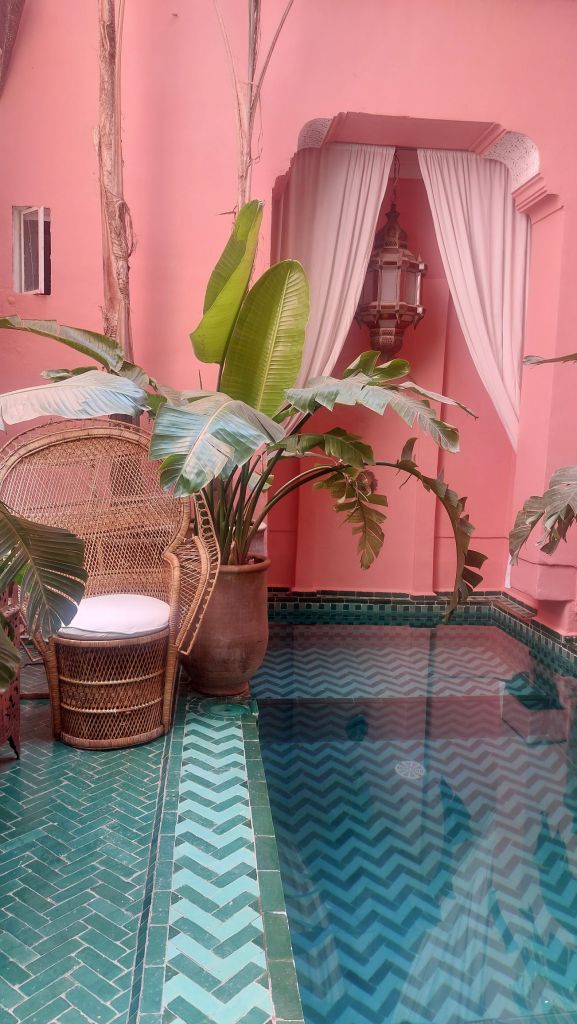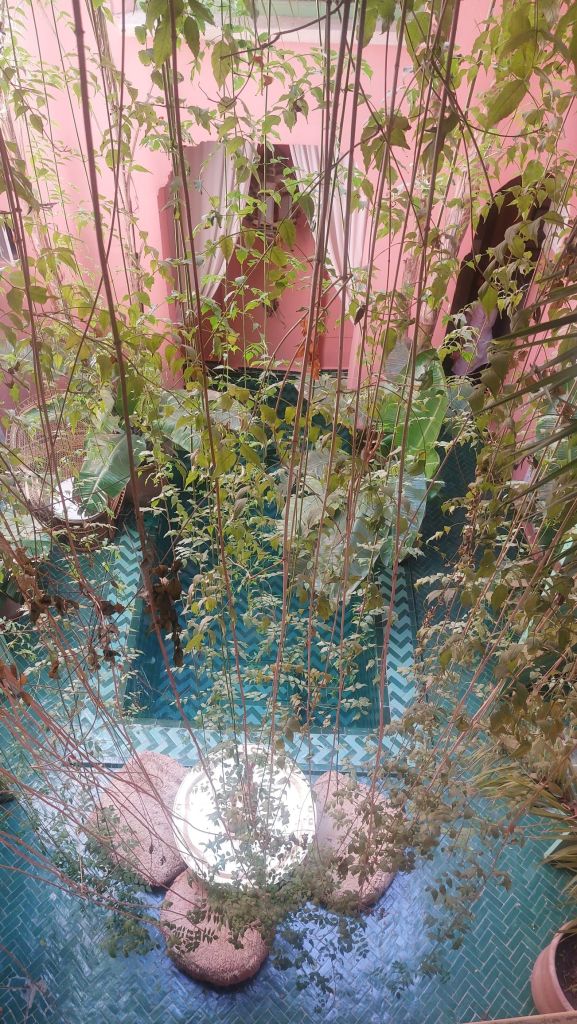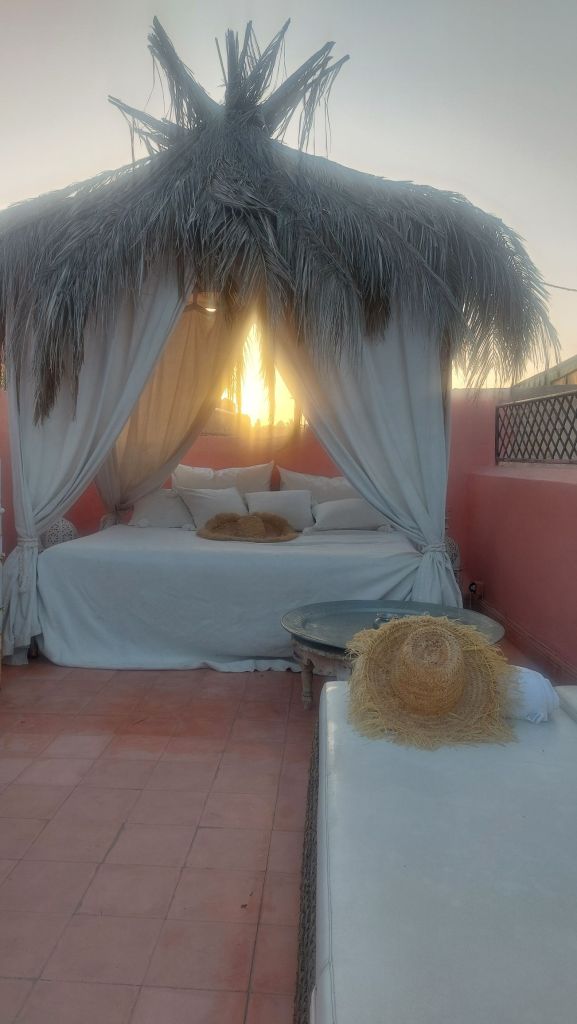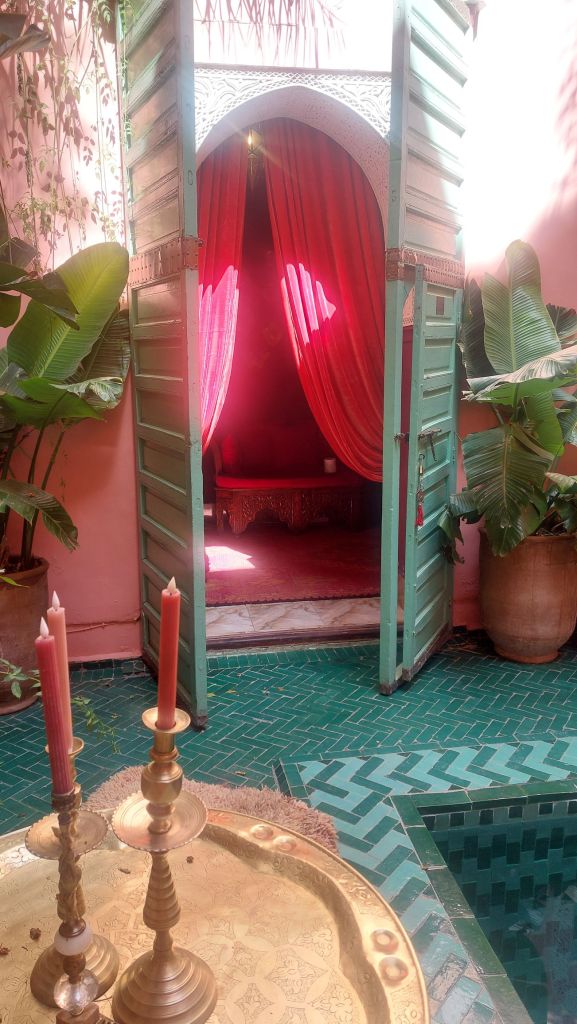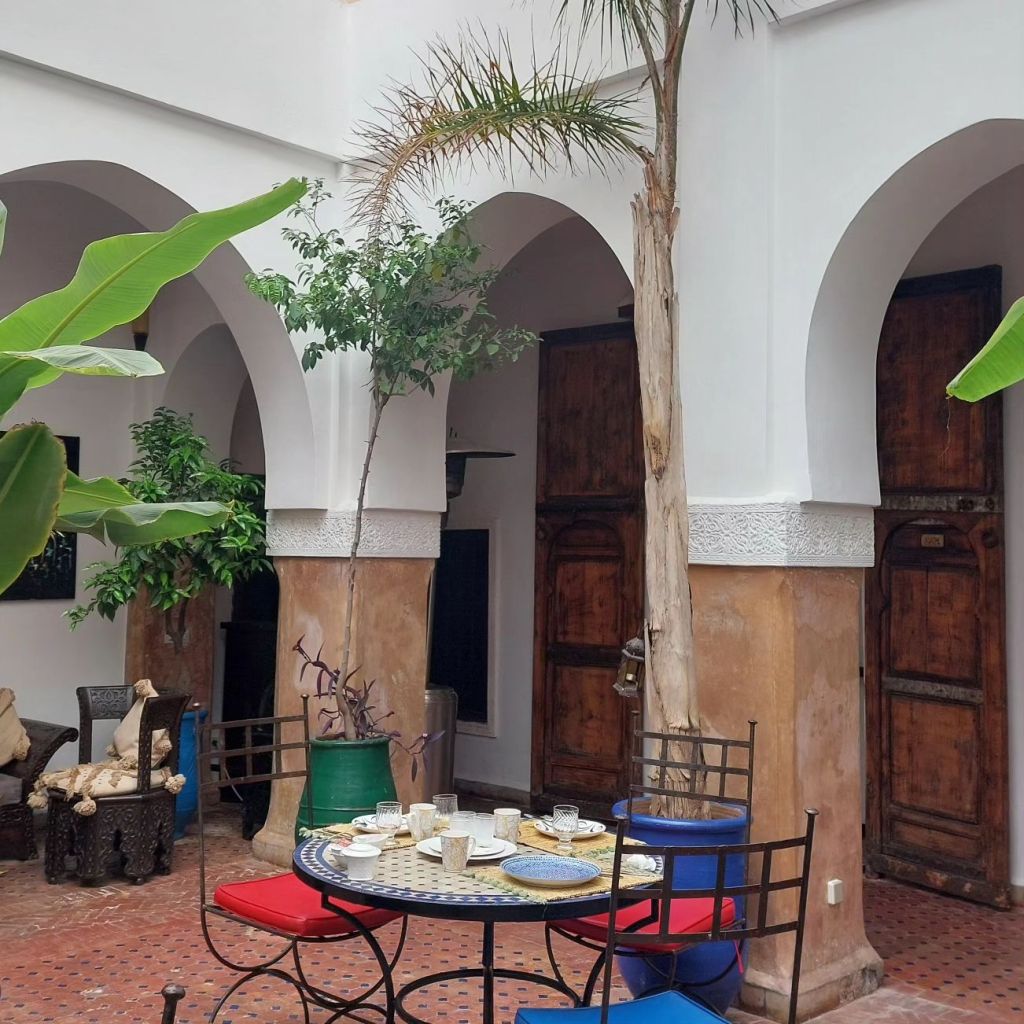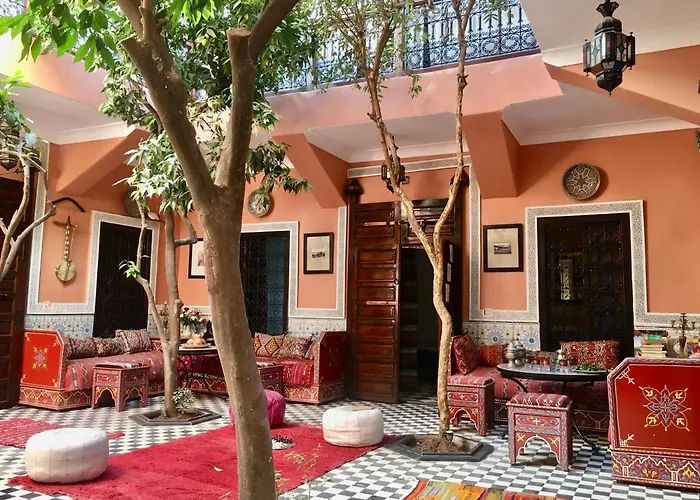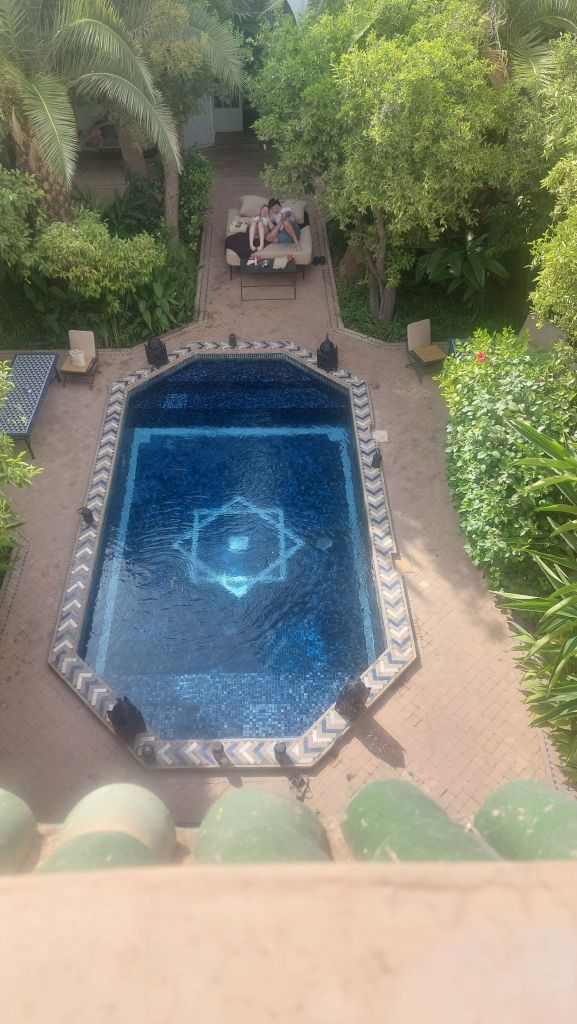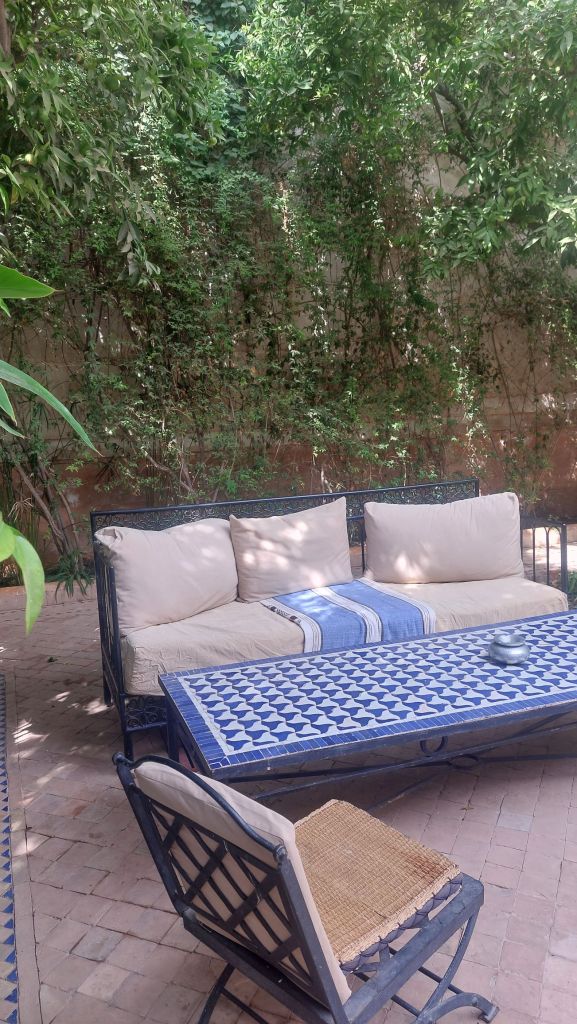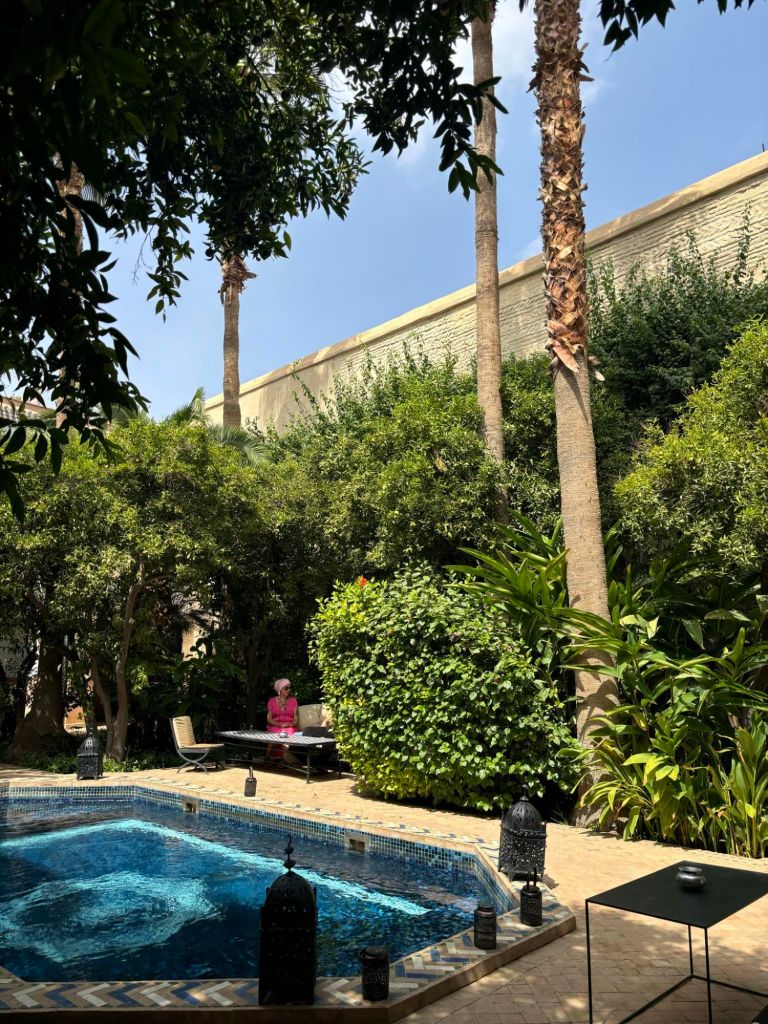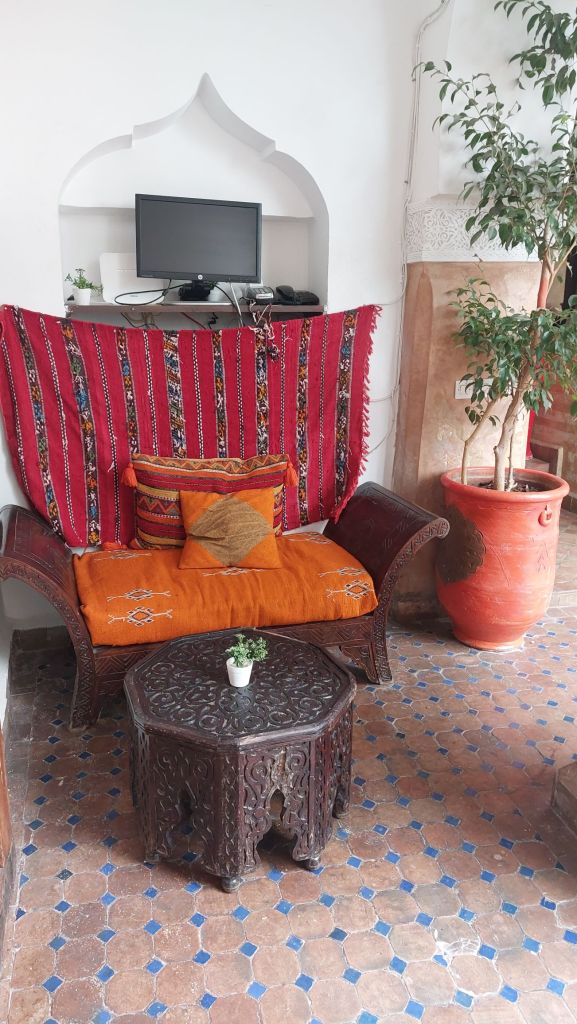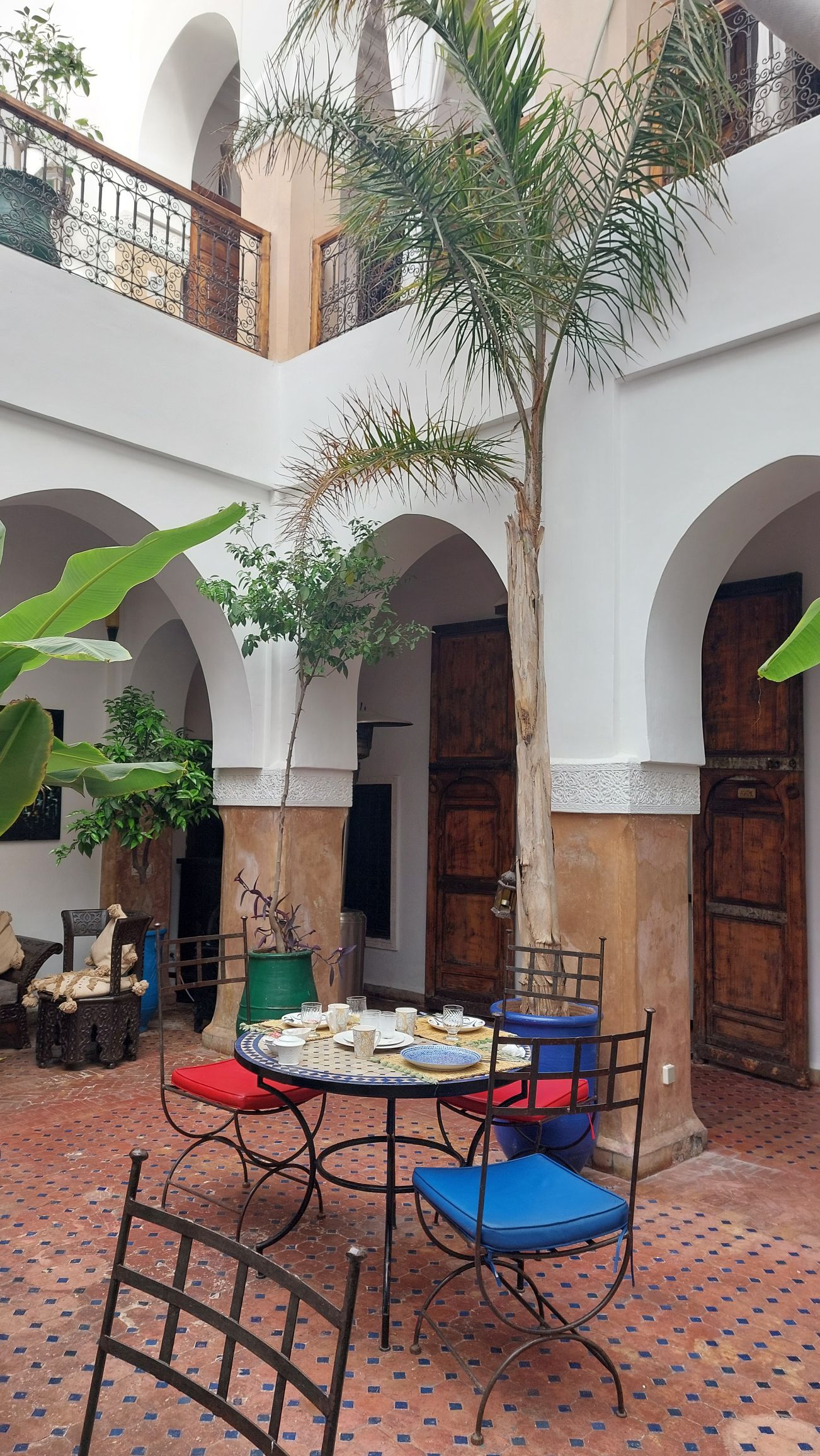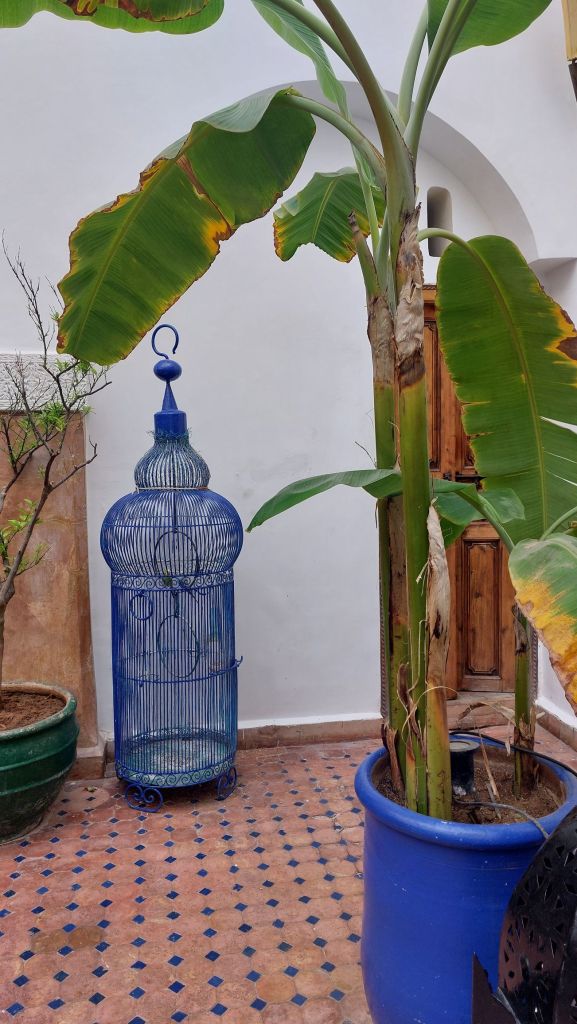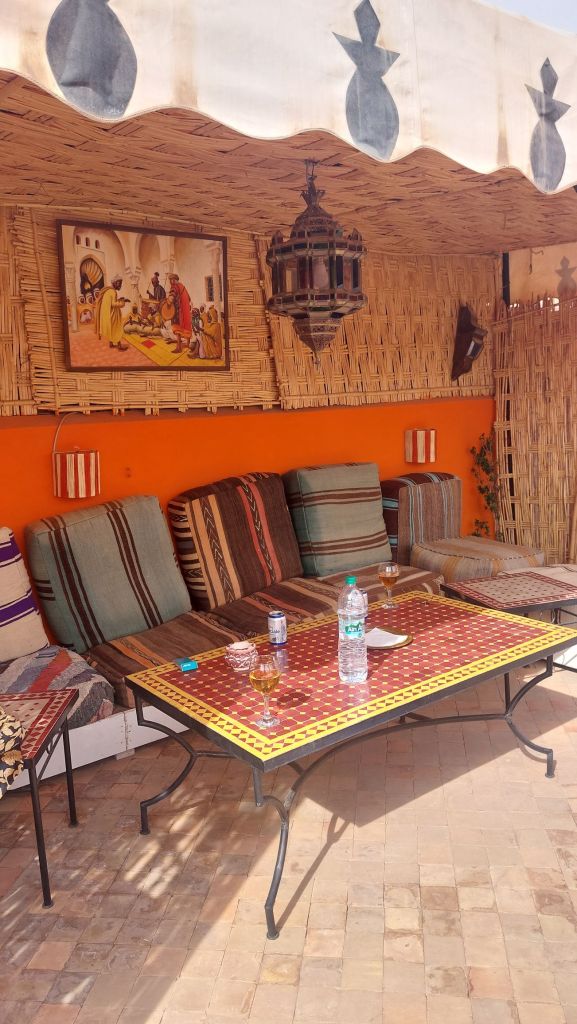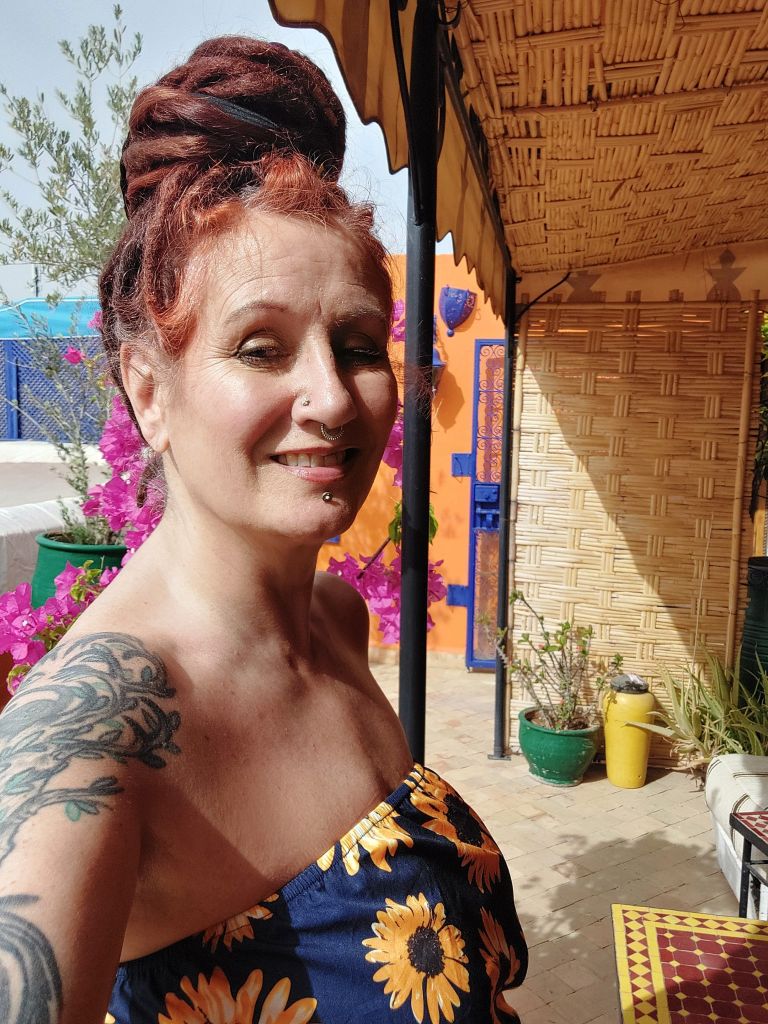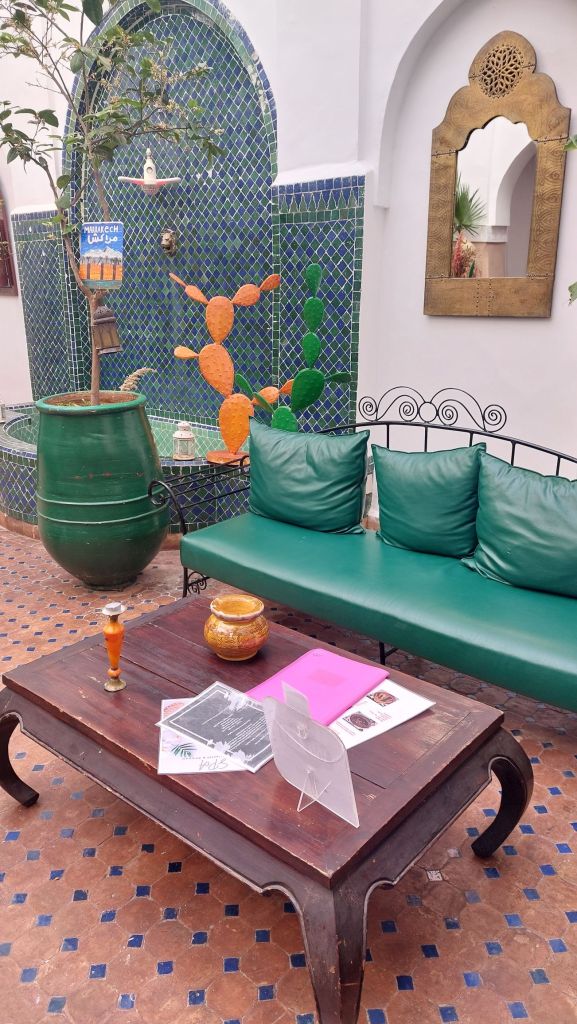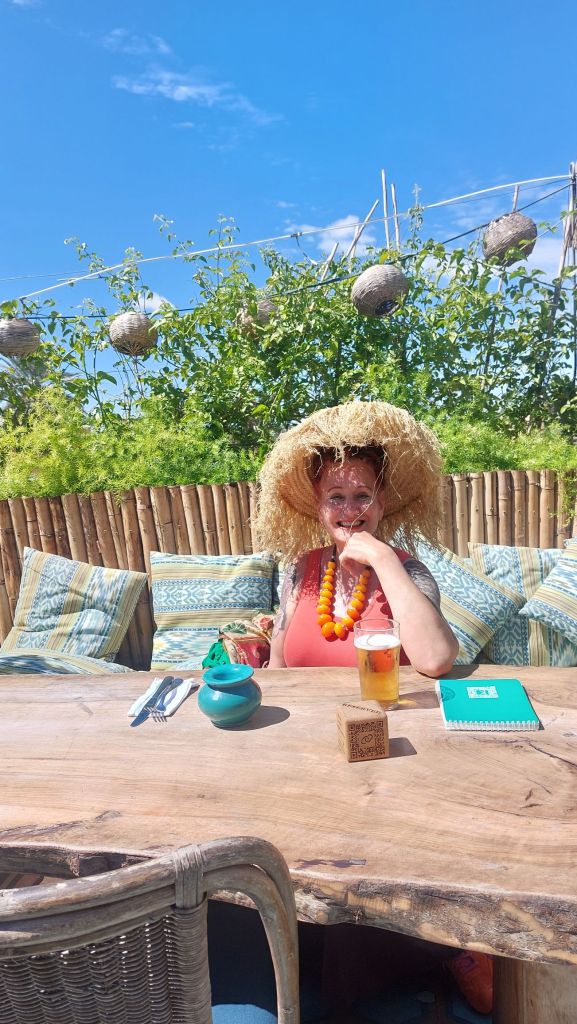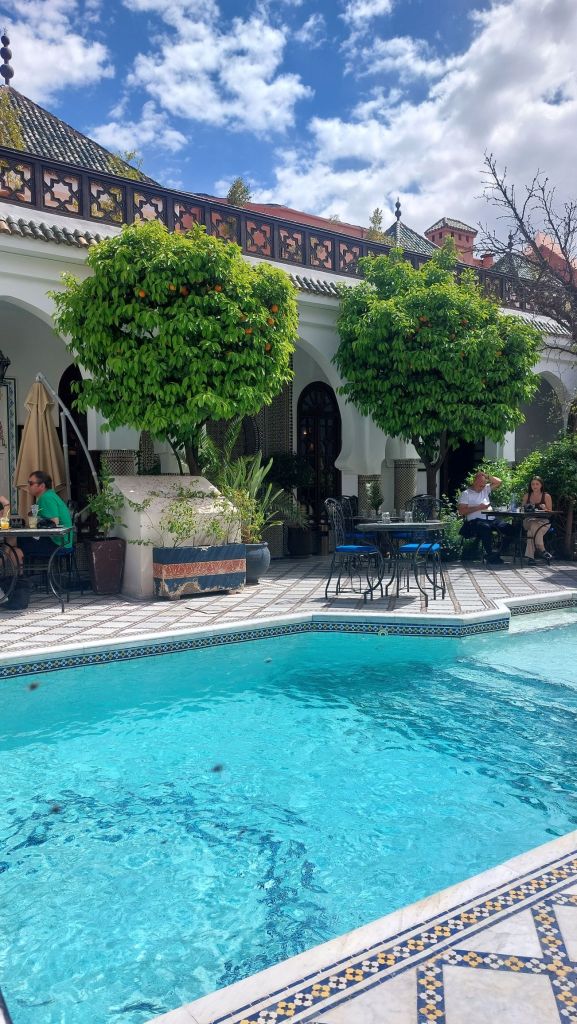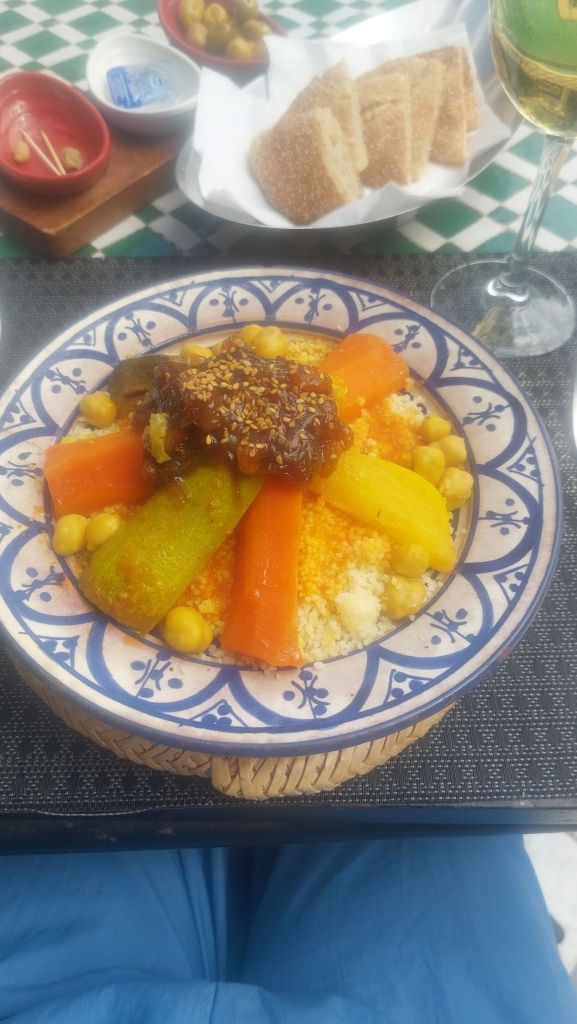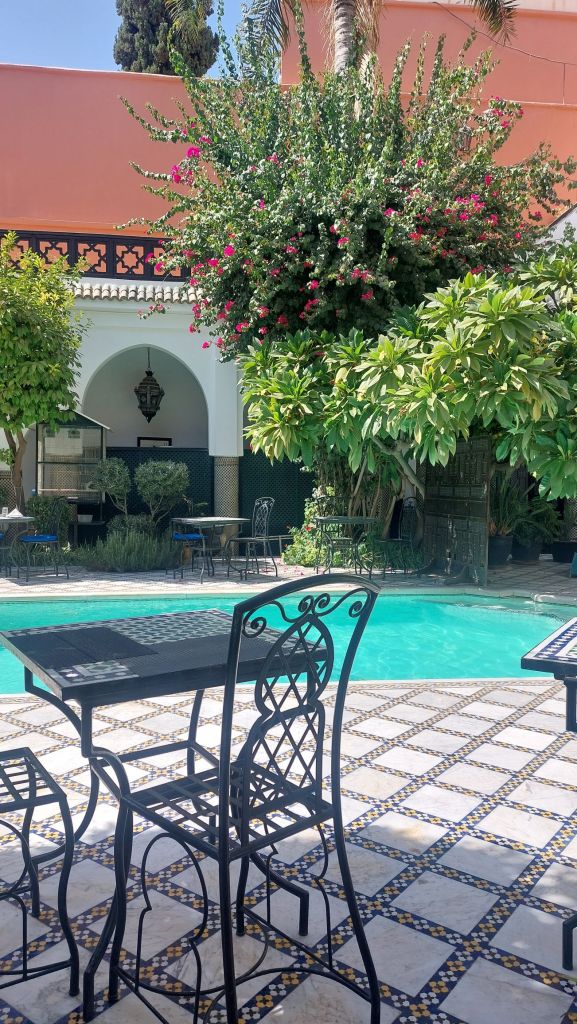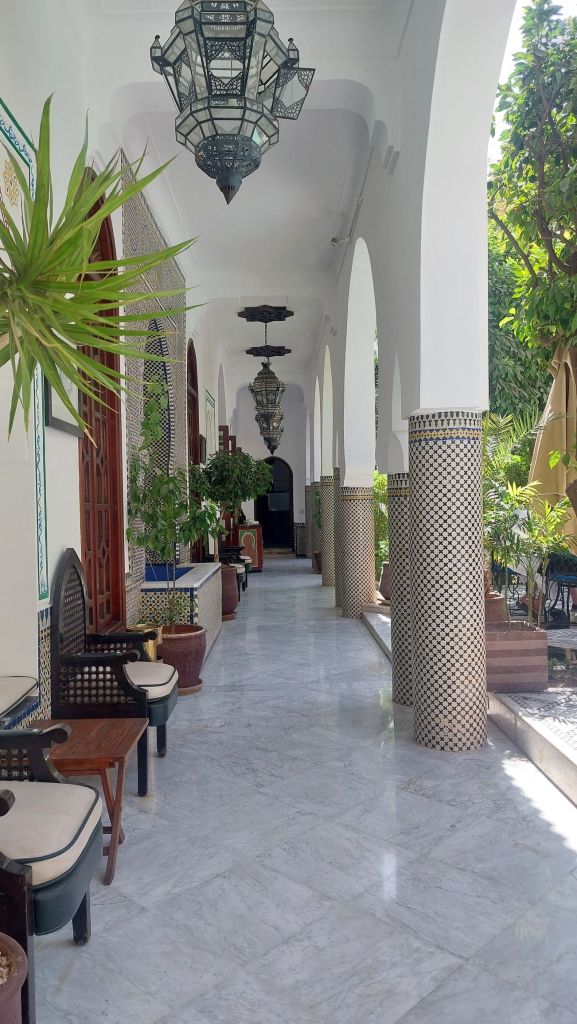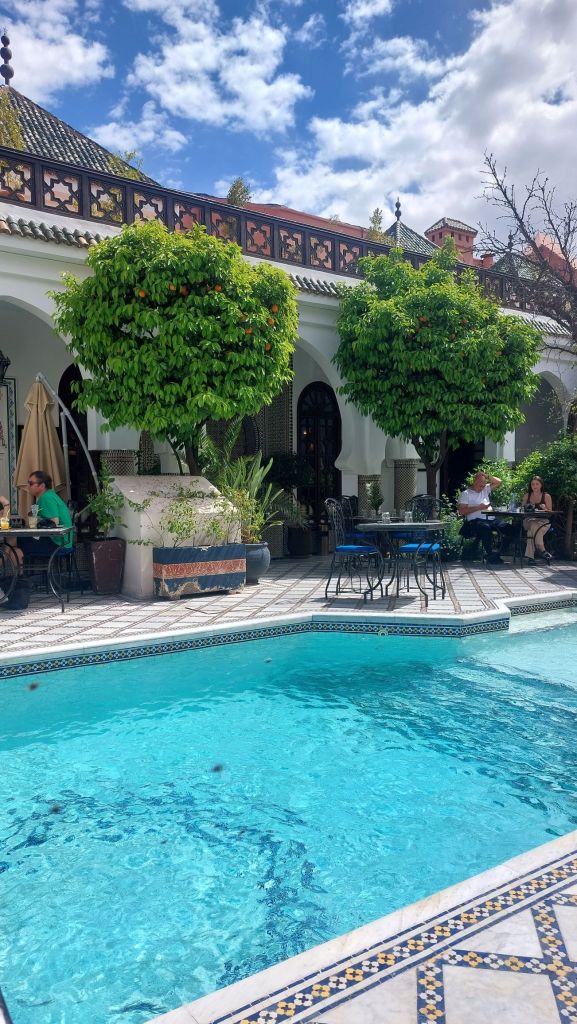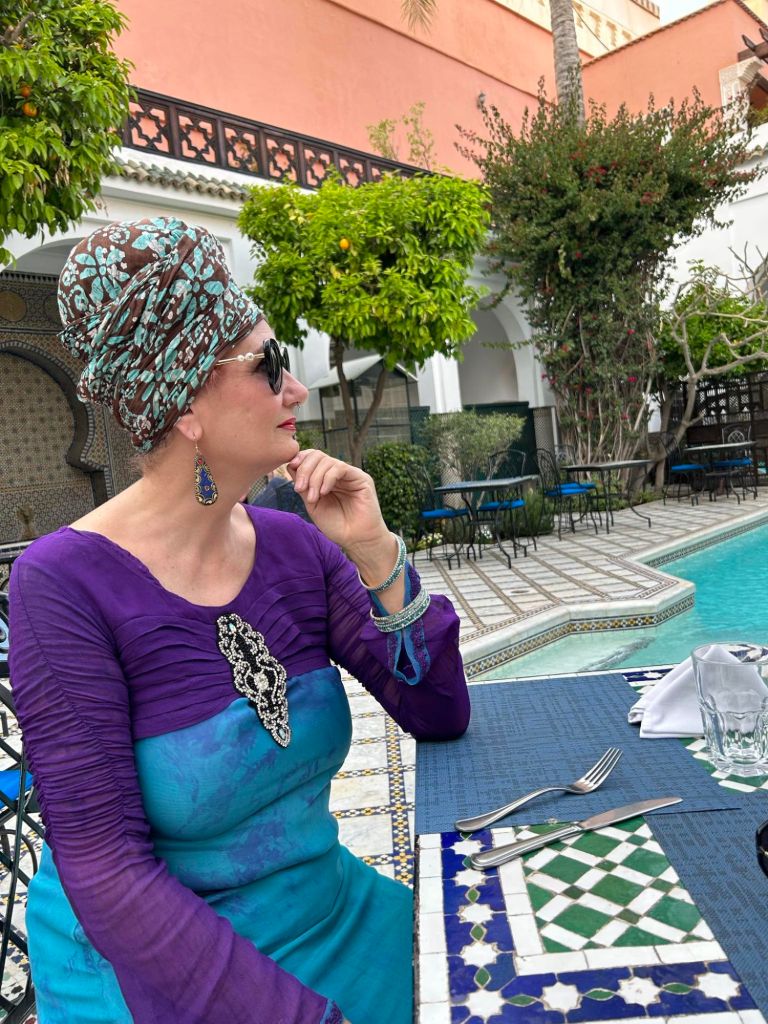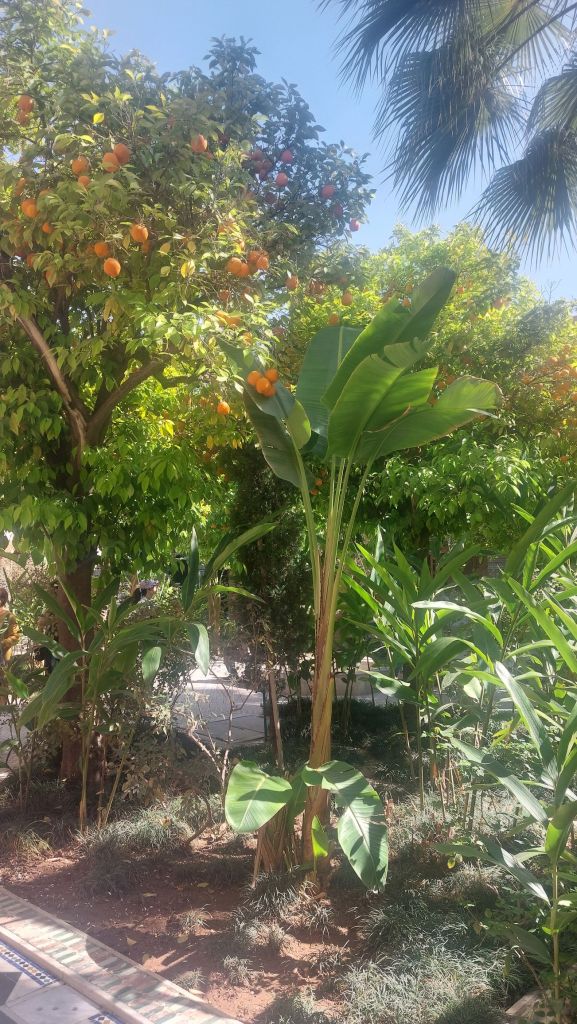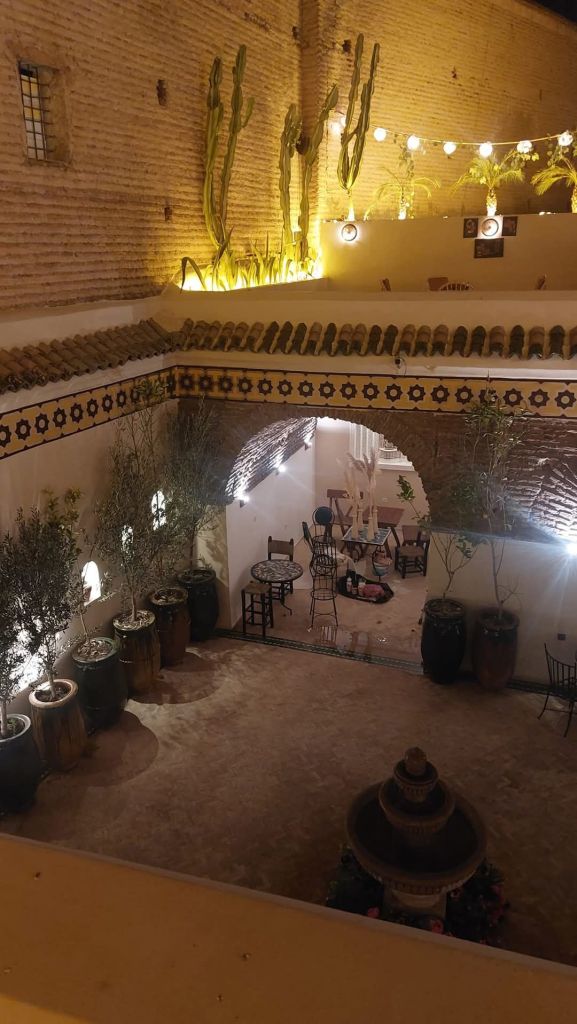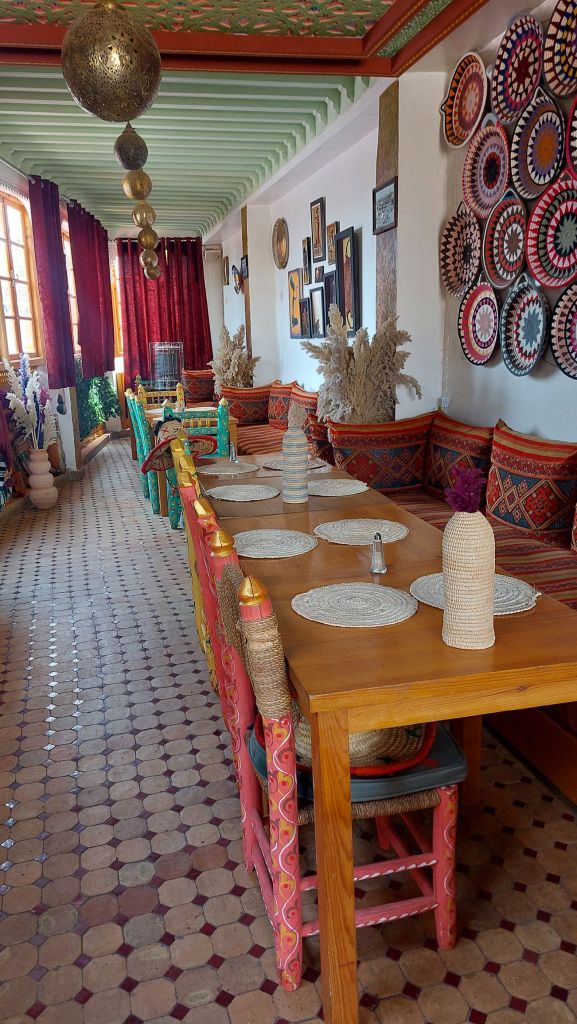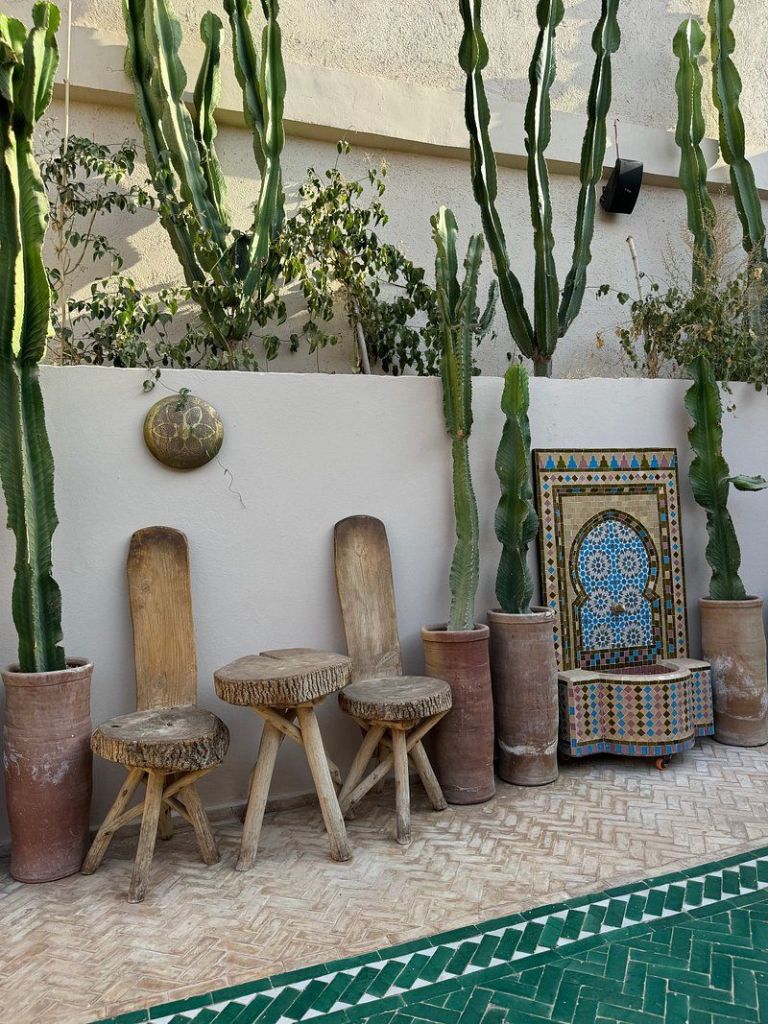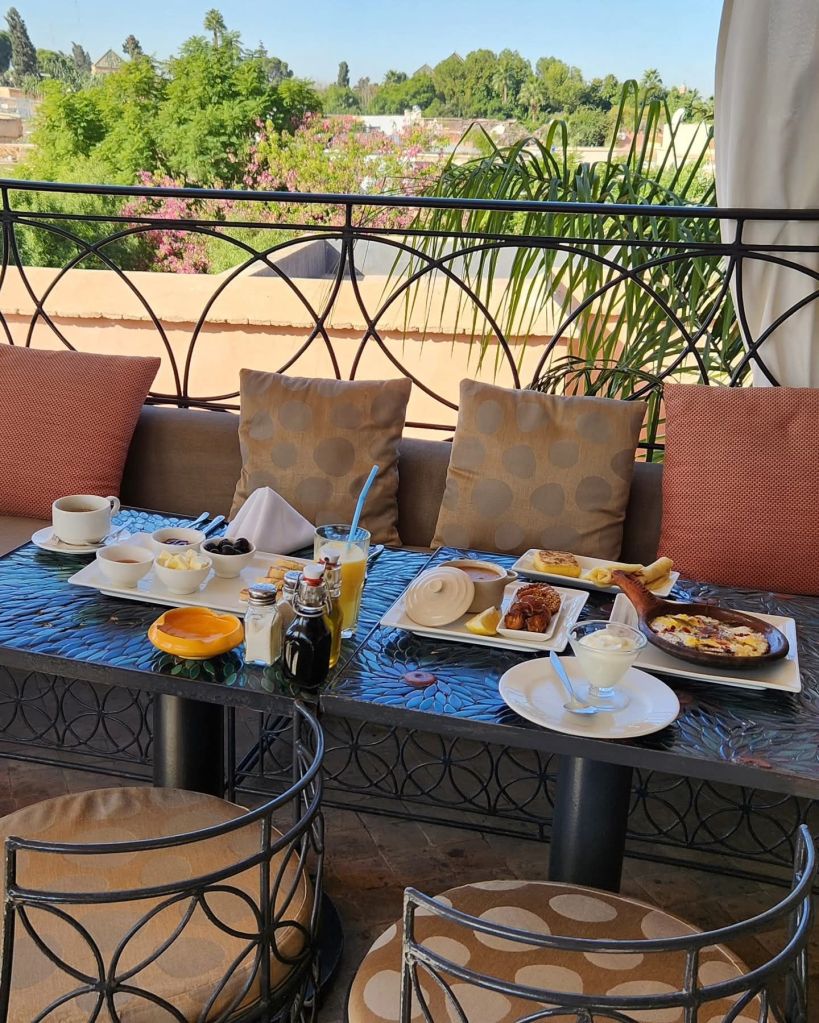
Riad Laila is a stunning riad with the most beautiful courtyard.
It is larger than most riads, and the pretty garden is full of exotic plants, mandarin trees, and hibiscus.
There is a large swimming pool for guests to enjoy.
The rooms are tastefully furnished, modern, and luxurious.
Riad Laila was recently renovated and refurbished.
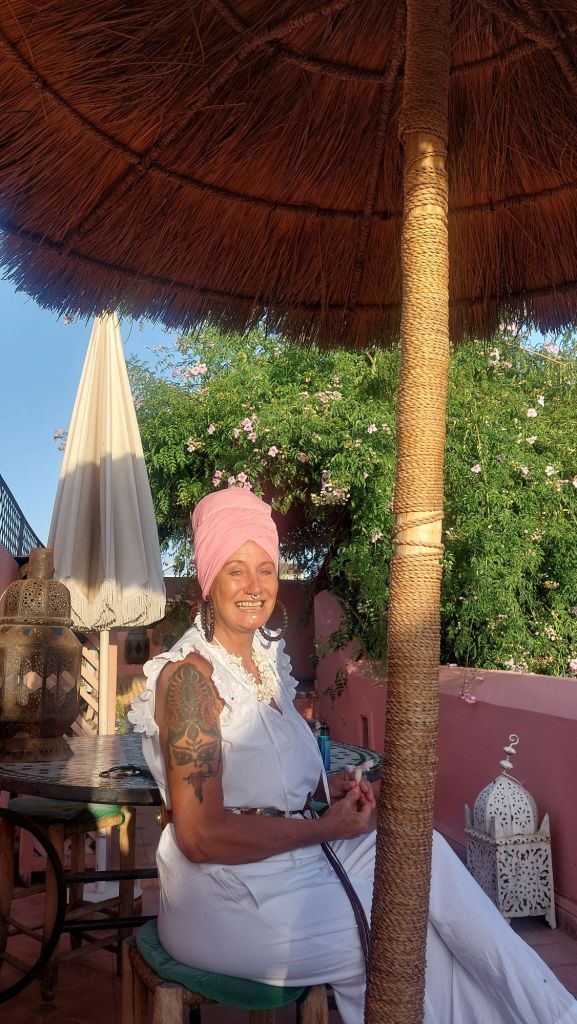
The rooftop is very pretty and a great spot for sunbathing or relaxing with a refreshing mint tea looking at the views over the medina.
Images by Freebird Tracey.
Riad Laila is the perfect riad for people who are looking for a luxurious spa like experience in Marrakech.
The staff exude professionalism and wear uniforms.
They keep a keen eye on the guests, and the place is run with an air of precision.
Everything is spotlessly clean. It’s a place where you can spend ages just relaxing by the pool in peace and tranquillity reading a book.
Images by Freebird Tracey.
Riad Laila is a high-end accommodation at the most northern side of the medina.
It is close to the bus station and around a 25-minute walk from the centre.
The Jardin Majorelle is a short walk away.
Raid Laila was lovely for a couple of days, but I did miss the charm of a traditional family run riad inside the medina.
It all depends on what kind of experience you’re looking for.
If it’s a complete, restorative setting in beautiful surroundings, Riad Laila is ideal.
There is food served at the riad, but the vegetarian options appeared to be limited at the time I stayed there.
My overall impression was that everything felt slightly clinical and lacked the laid-back, homely feel that Marrakech is known for.
However, if you’re looking for a complete break away from the excitement and sensory overload of the medina, Riad Laila is a good choice of accommodation.
It is visually appealing and has one of the nicest gardens boasting 840m2.
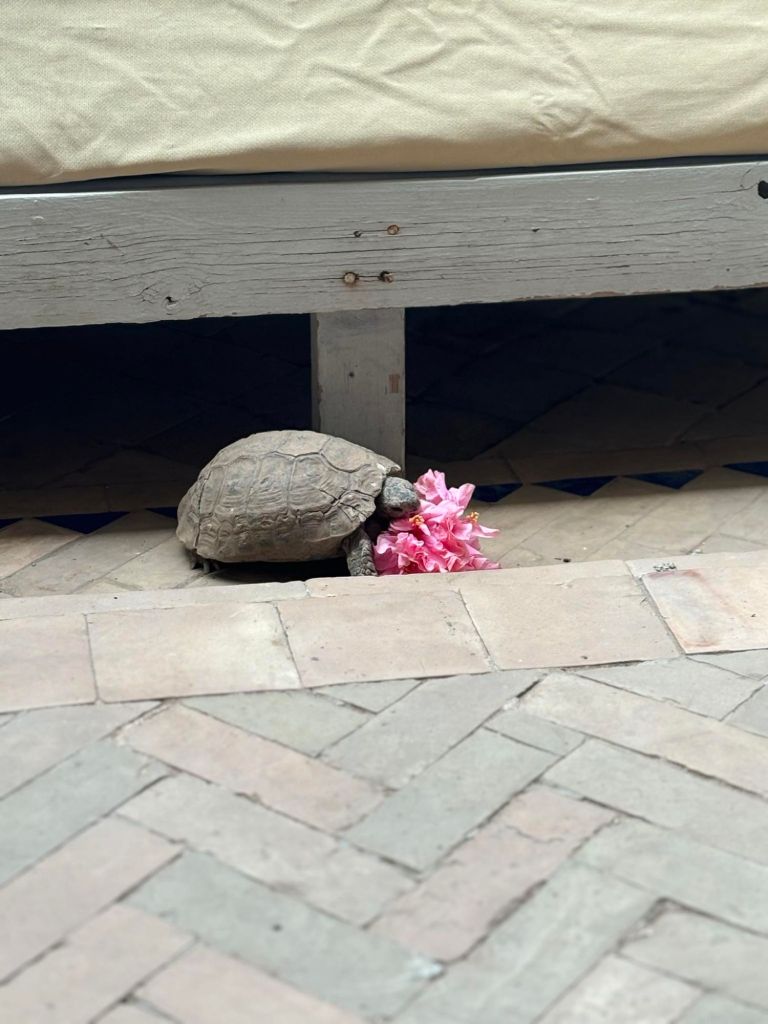
They have a resident tortoise called Laila who loves you to feed her hibiscus flowers.
Image by Freebird Tracey.
The surrounding streets are very quiet, so I preferred taking a taxi to the main square in the evening.
It’s a long walk in the heat also, but taxis are readily available.
Riad Dombaraka has a beautiful courtyard with a small pool for guests to cool down in.
The plants are green and lush, and listening to the birds singing amongst the foliage is a blissful experience.
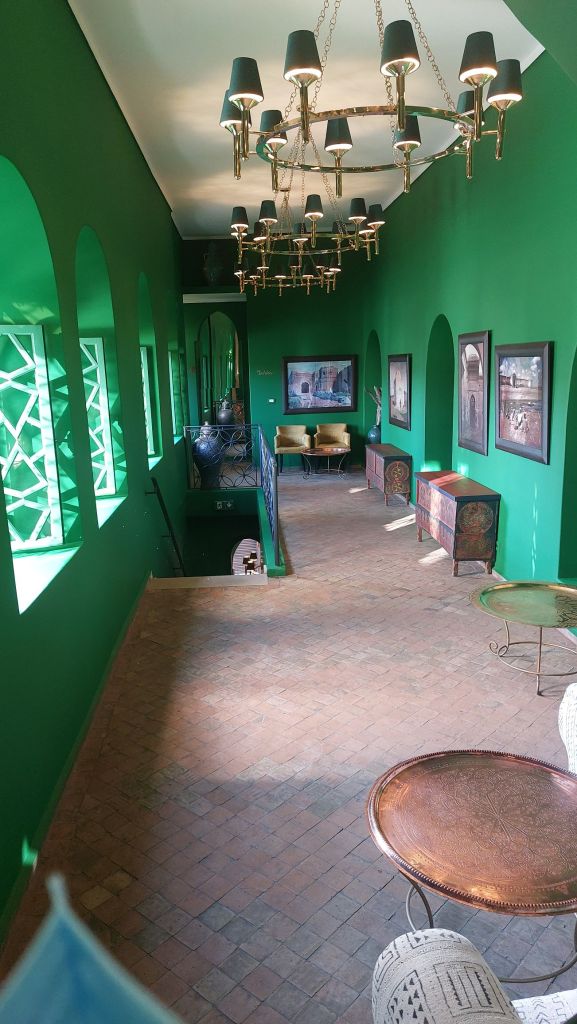
Every inch of riad Dombaraka is tastefully decorated with beautiful paintings and elegant furniture.
It feels as though you are staying in a royal palace.
Images by Freebird Tracey.
The rooms are large and decorated with interesting African artefacts, and the bed was really comfortable.
The rooftop is spacious with great views across the rooftops of the city.
It’s great for sunbathing with plenty of spaces to sit and sunbeds for soaking up some of the hot, morroccan sun.
Image by Freebird Tracey.
There is a wonderful library with an assortment of books for guests to read, and it’s furnished with tasteful Moroccan furniture.
Image by Freebird Tracey.
The riad is kept spotlessly clean, and the staff are very friendly.
They appear happy to be a part of this wonderfully peaceful environment.
Riad Dombaraka is owned by a French woman called Dominique, who gives her guests the warmest welcome when they arrive.
She suggests nice places to eat and visit and orders tuktuks to take you through the souks.
The riad is a hidden gem, located down a few winding alleyways.
There are locals selling vegetables and fish, giving a true picture of morroccan life, but I always felt safe.
There is evidence of the 2023 earthquake that took place in Marrakech and work going on to restore the area to its former glory.
The breakfast at Riad Dombaraka was lovely.
It consisted of traditional Morroccan food, including msemen pancakes, eggs, fresh fruit, and yoghurt.
There was plenty of variety, and it was very filling.
The coffee was real coffee and gave me the boost I need to motivate me in the morning.
Riad Dombaraka is not considered to be budget accommodation, but it is definitely good value for money.
It is an elegant riad, quite luxurious, yet maintains its traditional character and charm.
Guests are offered gratuitous fresh water and regularly asked if they would like a pot of mint tea.
Relaxing by the pool, listening to the sound of music playing in the background and birds singing, you would never know the craziness of the Souks are literally a stones throw away outside the door.
Images by Freebird Tracey.
Behind the door of riad Dombaraka, the scene is serene and tranquil.
I highly recommend Riad Dombaraka.
It’s far enough from the stimulating Jamaa El Fna, yet everything is within easy walking distance.
Riad Persephone is a large riad located very close to the Jamaa El Fna.
It has a pretty courtyard with lots of beautiful plants everywhere and a large swimming pool.
The colour of the walls is painted in a lovely cobalt blue like that of Jardin Marjorelle and works really well against the lush green foliage and tiled flooring.
The rooftop is large with plenty of seating and a warm jacuzzi for guests to use.
Lit up in the evening, the rooftop looks incredibly pretty.
Images by Freebird Tracey.
The square is visible from the rooftop, and you can hear the lively sounds of everything going on until late at night.
I chose a room on the rooftop. It was exceptionally pretty and decorated in a beautiful Saffron colour.
Images by Freebird Tracey.
For some people, the close proximity to the main square may be perfect.
If you’re a light sleeper, you may find the early morning call to pray rather loud, and the noise from the busy square may be a bit problematic late at night.
The sound of the food stalls being dismantled can be heard until the early hours of the morning.
I would recommend taking ear plugs.
Riad Persephone has a rustic charm, and some areas are a little bit tired and in need of a face-lift.
However, if you prefer a traditional style of riad, this is what you will get but at a high-end price.
This is largely due to its strategic location and the view of Jamaa El Fnaa from the rooftop.
The riad offers activities for guests, such as quad biking and a visit to Agafay desert.
There is also a hammam.
Riad Persephone is situated close to some popular restaurants, including Le Salama and L’Mdina.
It is a vibrant and colourful riad with cosy little nooks to sit and relax in.
Images by Freebird Tracey
If you’re looking for a traditional riad with pretty surroundings, Riad Persephone is a good choice of accommodation.
It all depends on whether you want to be overlooking the action in the main square or not.
For many people, this is a bonus.
Other people may prefer a quieter, relaxing atmosphere on the rooftop listening to the sound of nature.
Overall, Riad Persephone is aesthetically pretty and very comfortable.
Be mindful. There are a lot of steps up to the rooftop, so people with mobility issues may struggle.
Berber rugs are handmade by the indigenous Amazigh people of Morocco.
They are made from the wool of sheep in the high Atlas Mountains.
Each type of rug tends to vary in thickness, and the pattern also differs depending on which tribe or village has made it.
For example, Kilim Berber rugs have no pile and are relatively fine in texture.
They are handcrafted using techniques passed down through generations using natural materials renowned for their durability and luxurious feel.
Hand-knotting is a long and laborious process.
To create a single rug takes about one to two months, with four weavers working on a rug at a time.
There are several steps that go into making a beautiful Berber rug..
1. Shearing the Sheep
Shearing the sheep is the first step in making a Berber rug. This is done by hand, using a special shearing knife.
The sheep are first restrained, and then the knife is used to remove the wool from their body in one long strip.
The wool is then sorted and cleaned.
It is usually the job of the men to shear the sheep, taking care not to injure them or spread infection.
The women are responsible for washing the sheared wool.
2. Carding.
Carding is the process of aligning the wool fibers so the weavers can spin them into yarn. To card the wool, the fibres are first combed in one direction, and then the wool is brushed in the opposite direction.
This helps to loosen the fibers and align them in the same direction.
Once the fibers are aligned, the weavers can then spin them into yarn. Carding is an essential step in making a Berber rug, as it helps to ensure that the rug is strong and durable.
The process of carding also helps to give the rug its unique texture.
The women are often responsible for this process.
3. Spinning the wool into yarn.
To spin the wool into yarn, Amazigh women use something called a drop spindle.
This simple tool consists of a shaft with a weight at the bottom.
The wool is attached to the shaft, and then the shaft is twirled between the women’s hands.
As the shaft is twirled, the wool is wrapped around it, creating the yarn.
4. Weaving the rug.
The weavers use a technique called continuous knotting to create intricate patterns.
This method of knotting allows the weaver to create a rug that is incredibly durable and will last for many years. The process begins with the weaver tying knots in the woollen yarn.
The yarn is then dyed using natural dyes from plants, spices, and fruits, which give the rugs their characteristic colours.
Once the yarn is dyed, the weaver begins weaving it into a rug using a loom.
The loom is a wooden frame that the weaver uses to create the rug’s design. The weaver ties the yarn around the looms warp threads, which are the vertical threads that run through the loom.
The weaver then weaves the weft threads, which are the horizontal threads, over and under the warp threads.
The weaver can create various patterns by changing the direction of the weft threads.
Image by Freebird Tracey.
Once the rug is complete, the weaver cuts the rug from the loom and ties the ends of the rug together. The rug is then completed.
Making a Berber rug is a long, laborious task, and the women of the village who weave them rarely get anything near the price they’re sold for.
Husbands load them onto the back of a donkey and take them to a buyer who gives him a fraction of their value.
Berber rugs are beautiful and give a home a wonderful boho vibe.
They are hard-wearing and last a lifetime.
Images by Freebird Tracey.
It’s important when visiting Marrakech to make sure you’re purchasing a genuine Berber rug.
There are a few scams, so be mindful before you get whisked away to a shop by a friendly local, promising you the best quality and prices.
Les Nomads de Marrakech has a great reputation and can ship rugs back home for you.