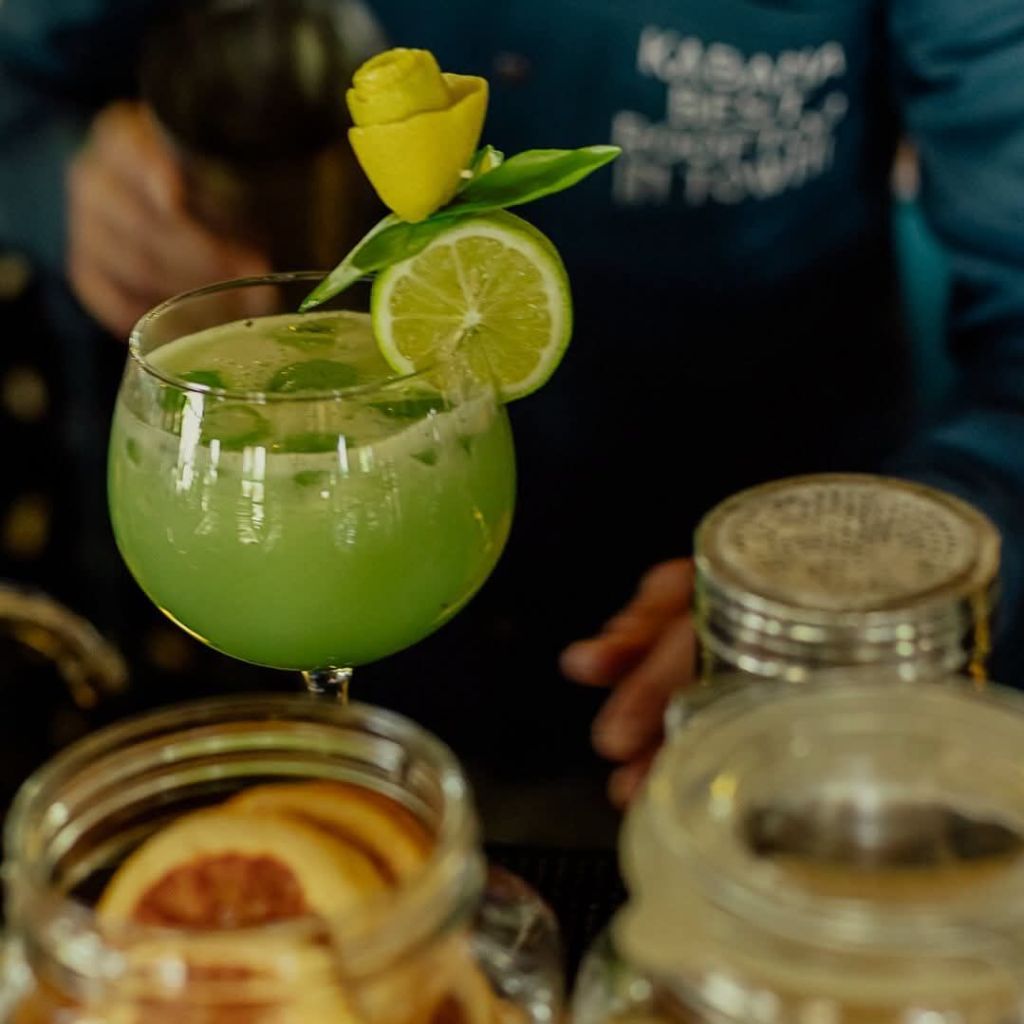
Kabana Rooftop Bar is a lively, popular place serving a wide range of cocktails and other alcoholic beverages.
Image by Freebird Tracey.
They also have a good selection of dishes on the menu to suit all palates.
You enter the bar via steps, and from the road, it looks rather unassuming.
Entrance to Kabana rooftop bar.
Once inside, it’s tastefully decorated with lanterns hanging everywhere and music playing on a large television screen.
It’s a very busy venue, and booking is essential to be guaranteed a seat.
The bar is huge, and you can either sit inside or outside, where most people prefer to hang out.
Selection of alcoholic beverages at the bar.
I took my son for his birthday meal and he chose the steak. He said it was cooked to perfection.
Other people had mixed reviews, saying waiting times were long and that it was pricey for food and drinks.
The food is Mediterranean inspired, and they also have a sushi menu.
It was always full, and on the occasions we simply visited for cocktails, we couldn’t always be guaranteed a seat on the rooftop for a cocktail.
However, after waiting for approximately 30 minutes inside the bar area, we eventually got a place.
There is table service.
The unisex bathroom is a treat, beautifully decorated, modern, and traditional.
Kabana rooftop bar seems to be one of the more popular places for drinks in the medina and lacked authenticity for me.
The surroundings were nice with plenty of greenery, and the lanterns looked very pretty after dark.
There is a view of Koutoubia Mosque from the rooftop, but it’s slightly shielded because drinking alcohol with the Mosque in full view is prohibited in Islamic culture.
View of Koutoubia Mosque.
Kabana rooftop bar has a very cosmopolitan vibe, attracting all age groups.
It is situated at the gate of the medina and open daily from,
11.00am-2.00am
They play DJ sets, and it’s a vibrant setting with a more relaxed dress code.
It is not an intimate place for a romantic meal, in my opinion, and I found it difficult to have a conversation amidst the crowds of people and loud music.
However, there are plenty of traditional, authentic places in the medina to dine out if you prefer a quieter environment.
Kabana is a cocktail bar similar to the places in the new town, with the same energy but within walking distance for those people staying in the medina.
It’s definitely worth a visit.
The address is,
Kissariat Ben Khalid R’mila,
1 Rue Fatima Zahra,
40000 Marrakech Morocco.
A refreshing cocktail inside the Kabana rooftop bar. (more…)
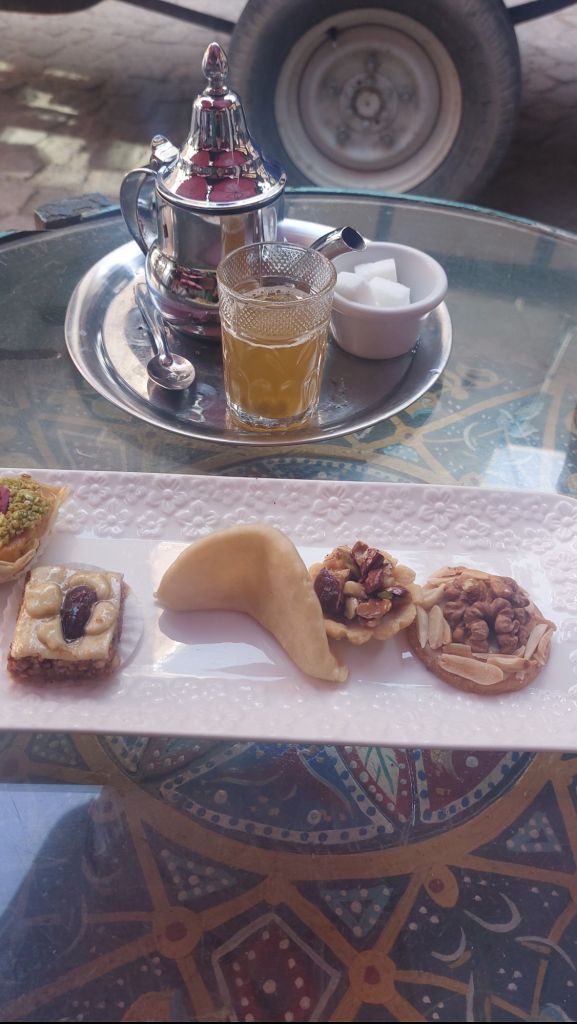
Marrakech is full of delightful little places to sit, and people watch whilst sipping traditional mint tea known as atay.
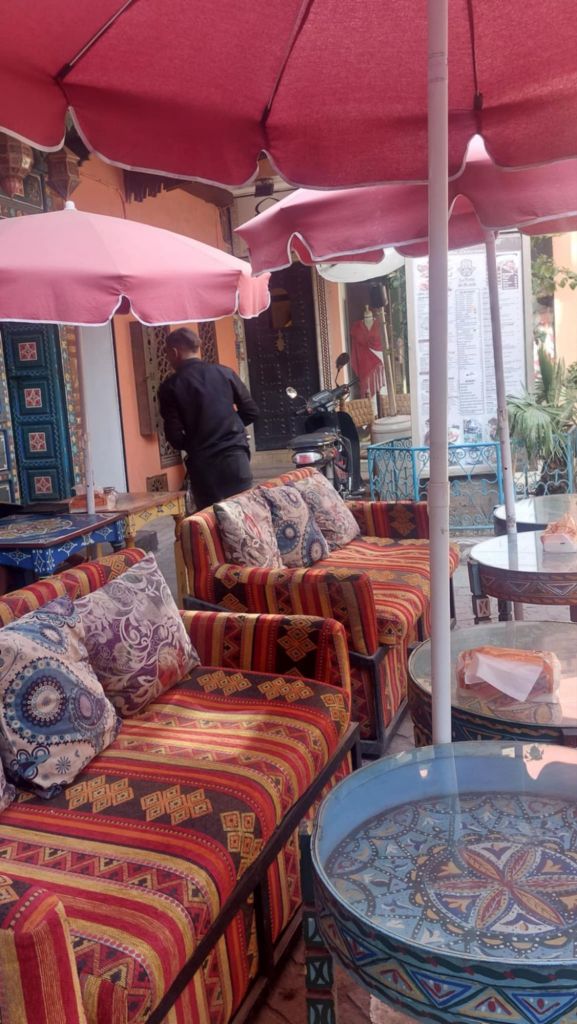
A pretty little spot inside the medina.
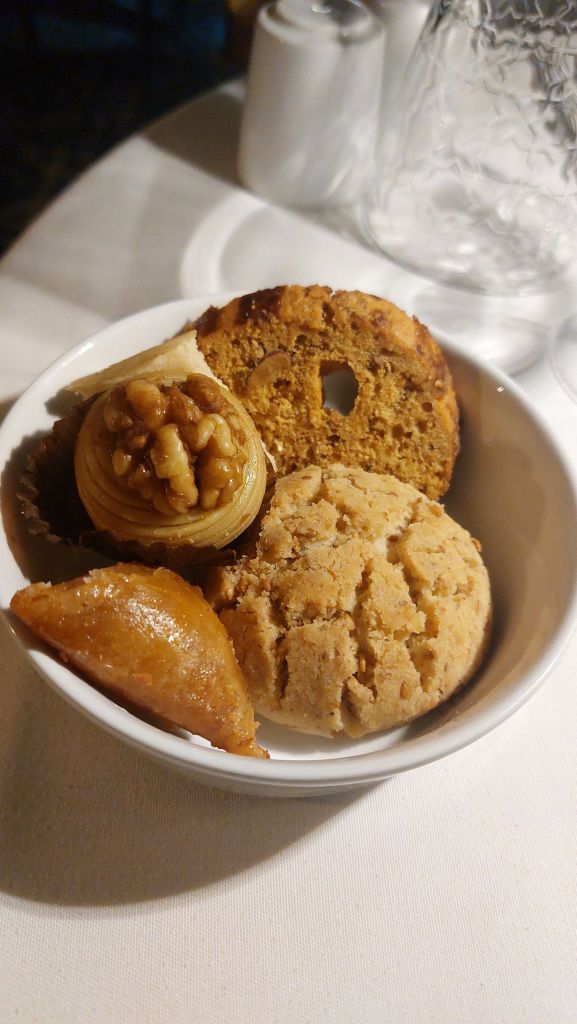
The colourful, boho decor and tempting pastries are the perfect way to take a much needed breather from the chaos of the souks.
Shopping in the medina is a fascinating experience, but it can be overwhelming.
I found out that taking a break and pacing myself was the best way to thoroughly enjoy my time looking around and navigating the maze of the souks.
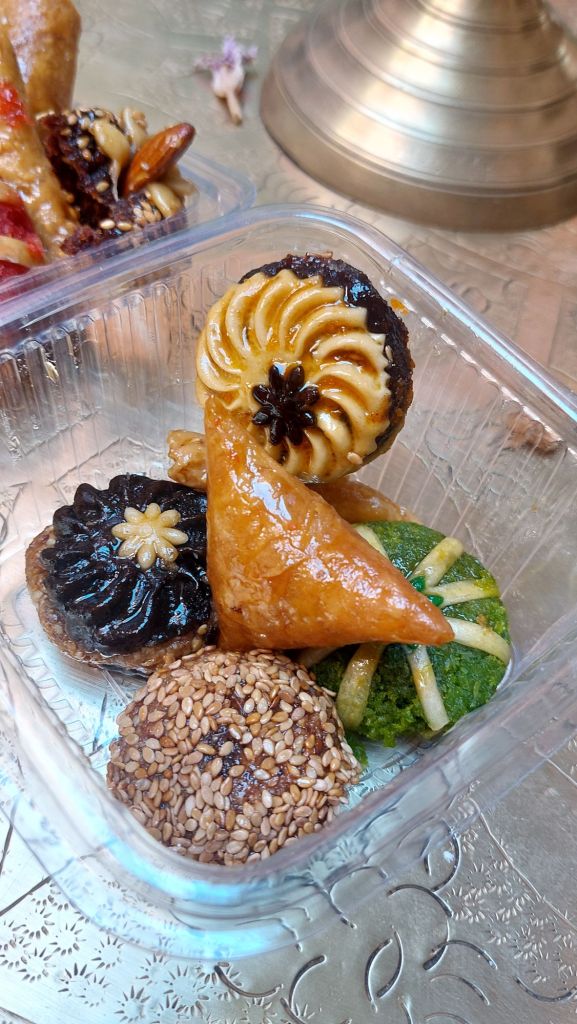
I especially loved the sweets and pastries on offer. They were absolutely delicious and complimented the refreshing mint tea perfectly.
There were so many to choose from, and I decided to treat myself to a selection of smaller pastries to see which were my favourites.
A tasty snack inside the medina.
If you are shopping for gifts or spending time in the colourful, vibrant souks, I would highly recommend that you take some time out to rest and pace yourself.
Sitting outside a cute little tea shop and sampling something light and tasty is a great way to engage in the culture of Morrocco and its people.
Enjoying a breather from shopping.
There are plenty of places offering mint tea and pastries dotted in and around the main square.
The sweets are an absolute treat, but you will be spoilt for choice.
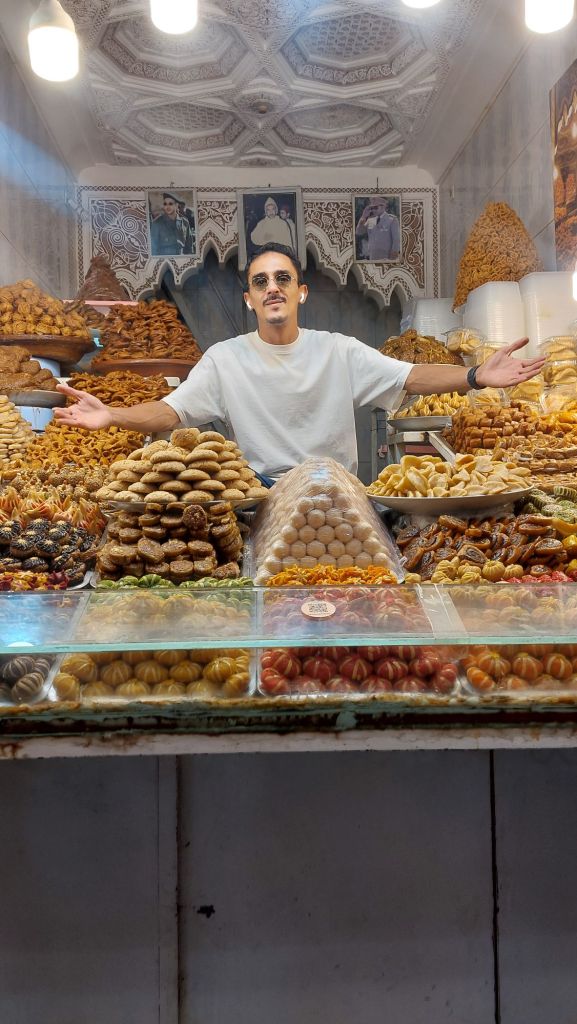
The choice of delicious treats on offer in the souks.
Part of the pleasure of exploring the medina is finding hidden gems where you can sit and gather yourself before venturing further.
Marrakech is known for its delicious pastries, and they’re a nice snack that won’t spoil your appetite for later in the day.
Watching the world go by in the medina.
A few suggestions are,
. Medina Kawa Marrakech.
. La Patisserie de la Terracce Spices
. Boughaz Coffee in the Kasbah.
Also, check out my blog post about traditional Morroccan mint tea.
Riad Lea, as it is also known, is a traditional mid priced riad only 10 minutes walk away from the main square.
There are 5 suites, and they are authentically decorated and comfortable.
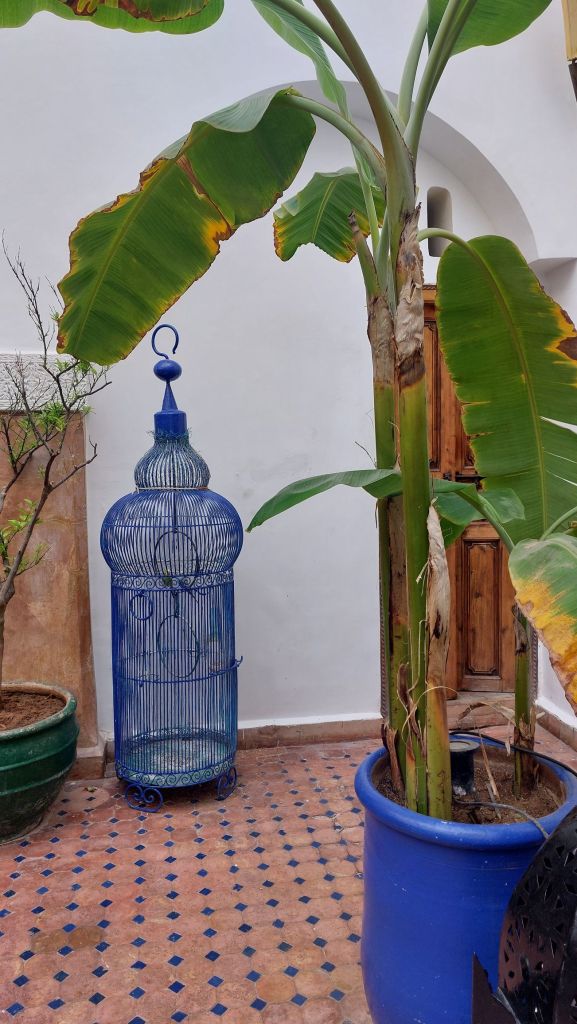
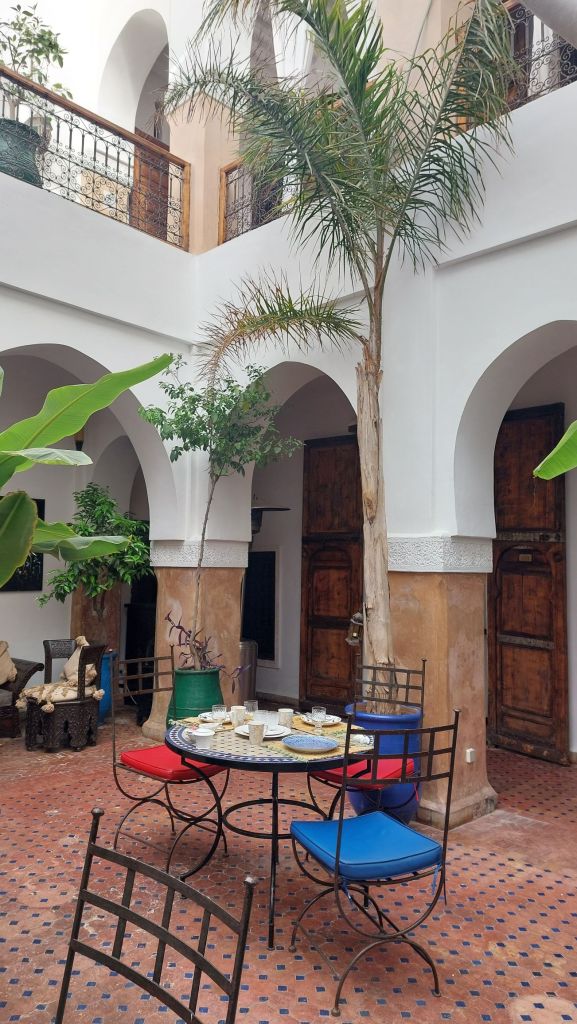
The courtyard is peaceful with the sound of birds chirping.
It’s a nice place to sit and cool down after a busy morning exploring the city in the heat.
Image by Freebird Tracey.
The rooftop is a great place for a spot of sunbathing, and there is also a jacuzzi.
Image by Freebird Tracey.
The staff at Riad Lea were especially attentive. They couldn’t do enough for their guests.
They even offered me some of their food they were breaking their fast with during Ramadan.
It’s the little touches like this that make a traditional riad such a charming place to stay. There are more modern riads, but it’s the personal touches that stand out for me.
The staff at Riad Lea made sure that their guests felt comfortable and happy.
There was a lovely atmosphere in the riad, and everyone seemed to be having a great experience.
Reaching the riad was like heading down a hobbit hole, and the doorway was not made for tall people, but once you got used to it, you soon remembered to duck.
The breakfast at Riad Lea was a typical Morroccan breakfast, but as good as I’ve had in the more expensive riads.
I loved their homemade yoghurt and msemen pancakes.
The walk to the main square was enjoyable, passing by lots of interesting little shops and restaurants on the way.
I enjoyed my stay at Riad Lea. It’s not a fancy 5 star accommodation, but it’s good value for money.
It was clean, I had everything I needed, and the staff were a credit to the riad.
Riad Lea can be found at,
41 Derb Sidi Bou
Amar Marrakech 40000.
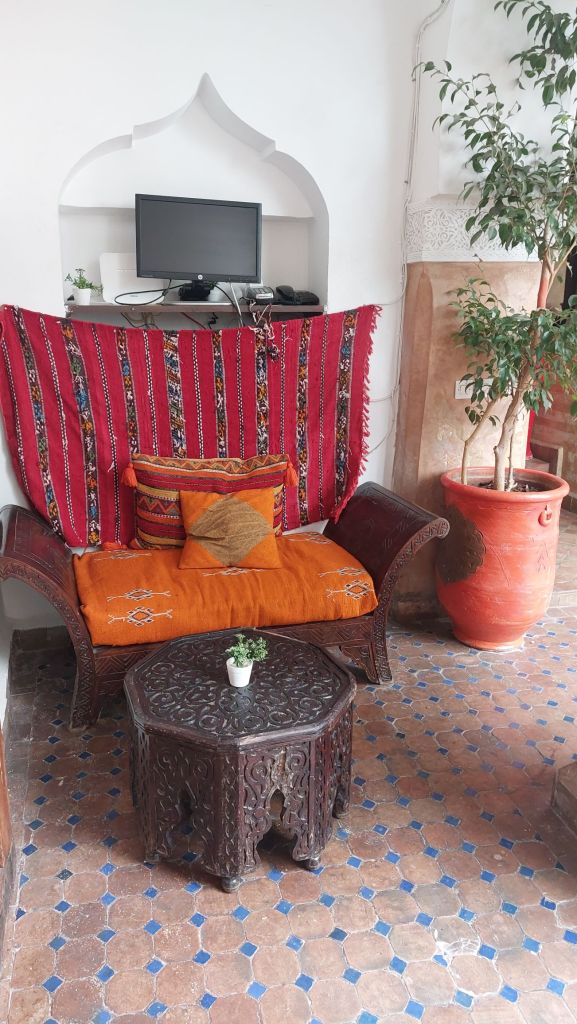
Courtyard at Riad Lea.
For more information about places to stay, contact me via the email address below;
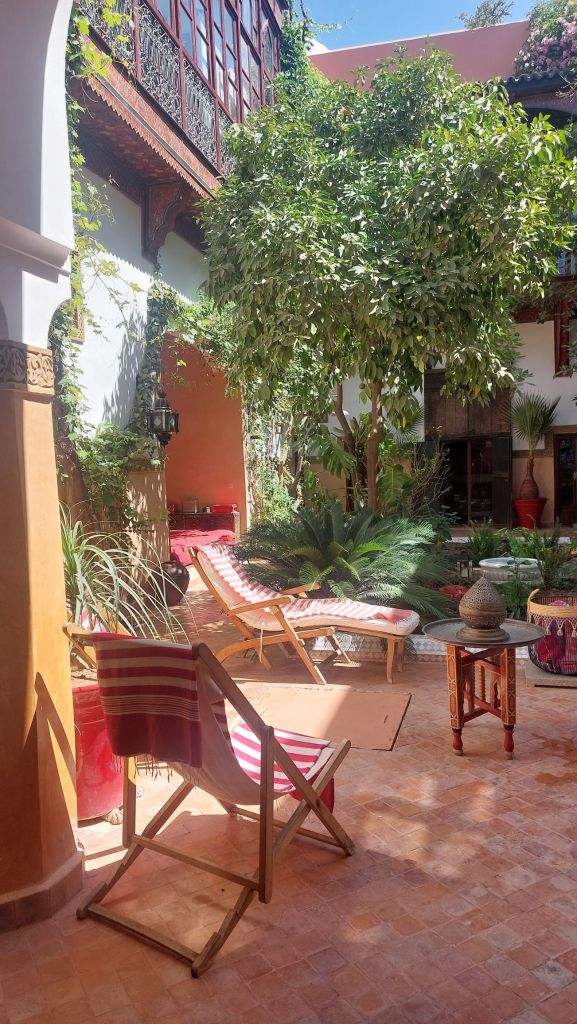
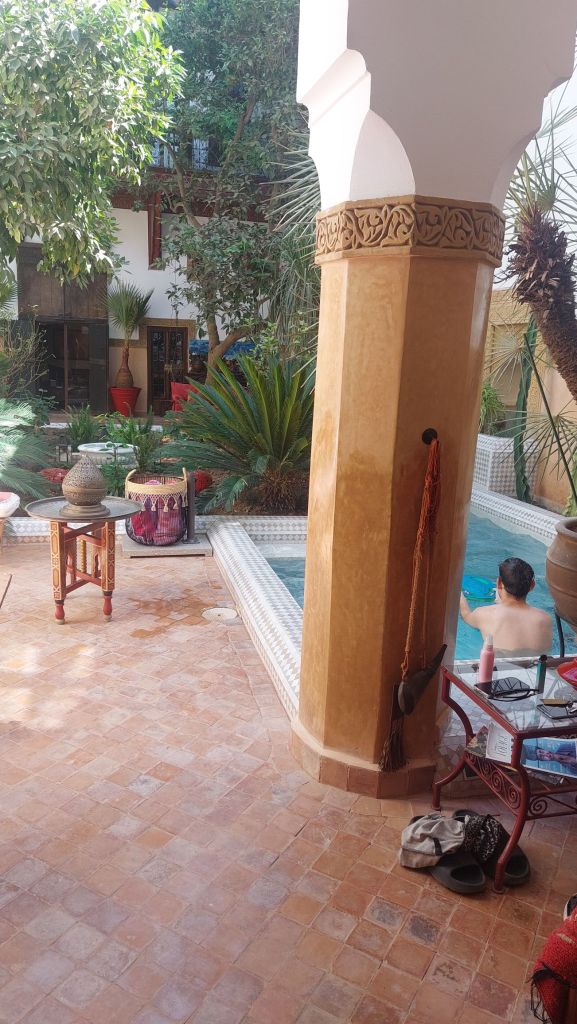
It has a beautiful courtyard with a small pool for guests to cool down in.
The plants are exquisite, and listening to the birds singing amongst the foliage is blissful.
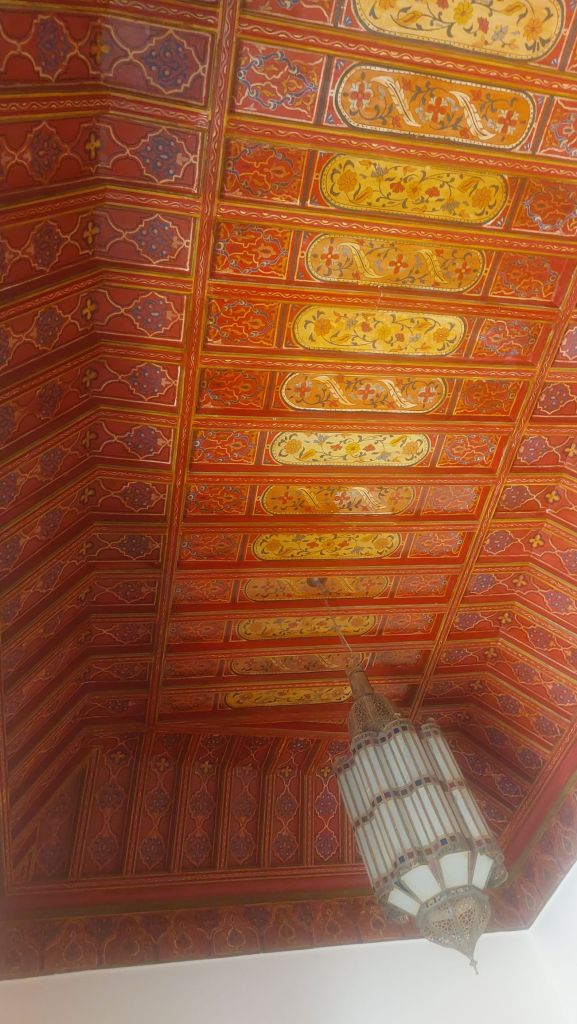
Every inch of riad Dombaraka is tastefully decorated with beautiful paintings and furniture.
It feels as if you are staying in a royal palace.
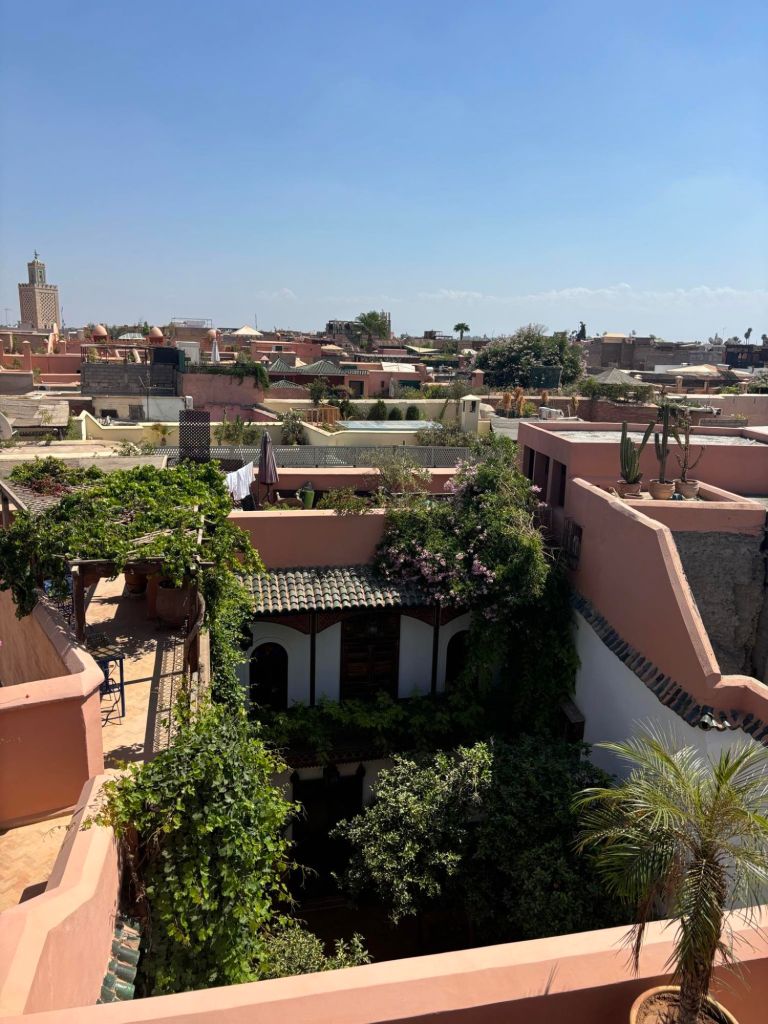
The rooftop is spacious with great views. It’s great for sunbathing with plenty of spaces to sit soaking up the hot, morroccan sun.
View from the rooftop.
There is a wonderful library with an assortment of books and fine furnishings.
The library.
The riad is kept spotlessly clean, and the staff are friendly and happy as they go about their job.
Riad Dombaraka is owned by a French woman called Dominique, who gives her guests the warmest welcome on arrival.
She suggests places to eat and visit, also arranging transport through the souks in order for the guests to get to them.
I always felt safe and well looked after.
The breakfast was lovely. It was traditional Morroccan food with plenty of variety and very filling.
Riad Dombaraka is not particularly budget accommodation, but it is definitely good value for money.
It is an elegant riad whilst maintaining its traditional character and charm.
Guests are offered fresh water for free and regularly asked if they would like a pot of mint tea.
Relaxing by the pool, listening to soft music and birds singing, you would never know the craziness of the Souks are literally a stones throw away outside the door.
The courtyard.
Outside the riad door, there is still evidence of the earthquake in 2023.
There are locals selling vegetables and fish, giving a true picture of morroccan life.
Inside the riad, you experience a whole different world. One of decadence and serenity.
I highly recommend Riad Dombaraka.
It is absolutely stunning, and guests are treated well.
It’s like staying in a warm, homely environment, and the food is delicious.
The address is,
47.Derb El Qadi medina. Medina Azbezt 40030
Images by Freebird Tracey.
For information on places to stay or eat in Marrakech, contact me:
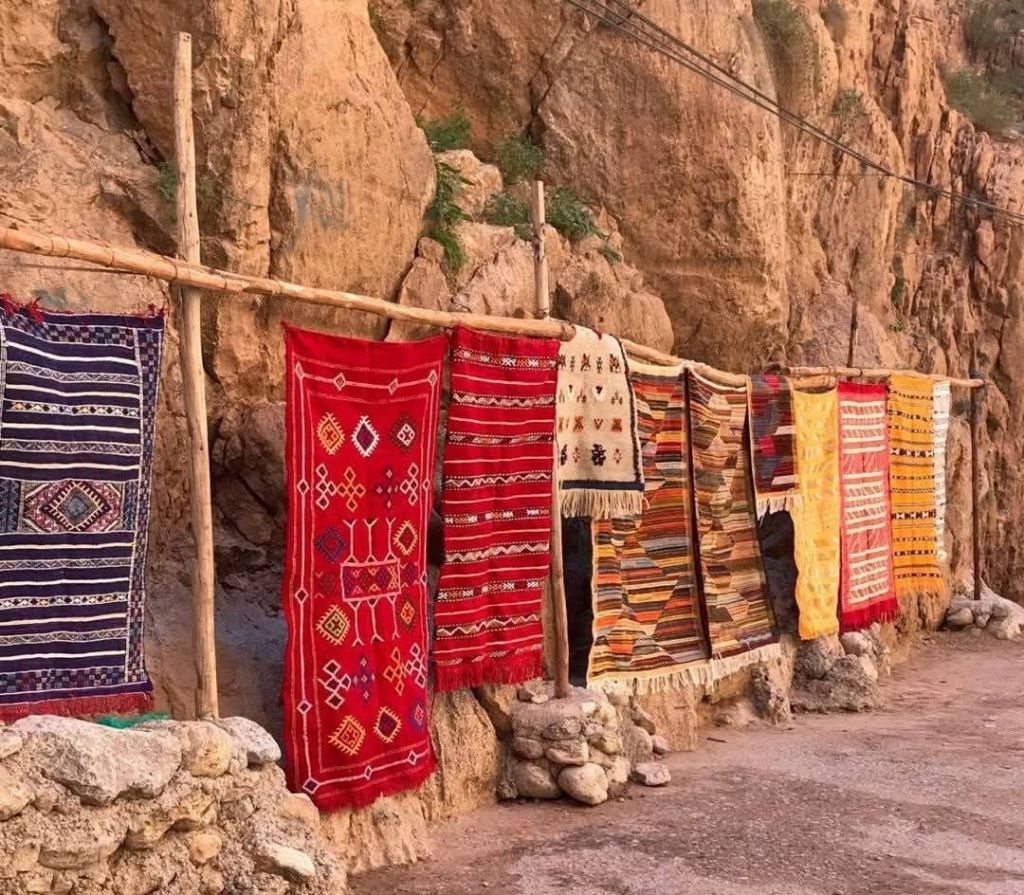
Berber rugs are handmade by the indigenous Amazigh people of Morocco.
They are made from the wool of sheep in the high Atlas Mountains.
Each type of rug tends to vary in thickness depending on which tribe has made it, so that they are suitable for the environment where they are used.
For example, Kilim Berber rugs have no pile and are relatively fine in texture.
They are handcrafted using techniques passed down through generations using natural materials renowned for their durability and luxurious feel.
Hand-knotting is a long and laborious process.
To create a single rug takes about one to two months, with four weavers working on a rug at a time.
Here are the steps taken to make a beautiful Berber rug.
1. Shearing the Sheep
Shearing the sheep is the first step in making a Berber rug. This is done by hand, using a special shearing knife. The sheep are first restrained, and then the knife is used to remove the wool from their body in one long strip. The wool is then sorted and cleaned.
It is usually the job of the men to shear the sheep, taking care not to injure them or spread infection.
The women are responsible for washing the sheared wool.
2. Carding Carding is the process of aligning the wool fibers so the weavers can spin them into yarn. To card the wool, the fibres are first combed in one direction, and then the wool is brushed in the opposite direction. This helps to loosen the fibers and align them in the same direction. Once the fibers are aligned, the weavers can then spin them into yarn. Carding is an essential step in making a Berber rug, as it helps to ensure that the rug is strong and durable. The process of carding also helps to give the rug its unique texture.
The women are often responsible for this process.
3. Spinning into Yarn
To spin the wool into yarn, Amazigh women use a drop spindle.
This simple tool consists of a shaft with a weight at the bottom. The wool is attached to the shaft, and then the shaft is twirled between the woman’s hands. As the shaft is twirled, the wool is wrapped around it, creating the yarn.
4. Weaving the Berber Rug
The weavers use a technique called continuous knotting to create intricate patterns.
This method of knotting allows the weaver to create a rug that is incredibly durable and will last many years. The process begins with the weaver tying knots in the woollen yarn.
The yarn is then dyed using natural dyes from plants, spices, and fruits, which give the rugs their characteristic colours.
Once the yarn is dyed, the weaver begins weaving it into the rug using a loom.
The loom is a wooden frame that the weaver uses to create the rug’s design.
The weaver ties the yarn around the looms warp threads, which are the vertical threads that run through the loom.
The weaver then weaves the weft threads, which are the horizontal threads, over and under the warp threads.
The weaver can create various patterns by changing the direction of the weft threads.
Once the rug is complete, the weaver cuts the rug from the loom and ties the ends of the rug together. The rug is then completed.
Berber rugs are beautiful and give a home a wonderful boho vibe.
It’s important when visiting Marrakech to make sure you’re purchasing a genuine Berber rug.
There are a few scams, so be aware before you get whisked away to a shop by a friendly local.
Les Nomads de Marrakech has a great reputation and can ship rugs back home for you.
Marrakech has been inhabited for over 1000 years. The first settlers were Berber farmers who had lived on the land since neolithic times.
Morocco took its name from Marrakech, the Amazigh people named the country Murakush, meaning the western kingdom. Later Arab conquerors adapted the name to Morocco.
During the 11th and 12th centuries, the Almoravids were the rulers of Marrakech, founded by Abu Bakr Ibn Umar in 1070.
They constructed an underground water system to supply water to the city canals, which attracted merchants and craftsmen to Marrakech.
They began building riads for the people who were beginning to settle in Marrakech, and it became a real city.
His cousin and successor Yuseff Ibn Tashfin developed Marrakech further, turning it into the Almoravid empire.
He erected mud brick houses, which gave the city its distinctive red colour today.
It was during this period that the Masjid al siquaya mosque was built, and souks or market places sprung up, marking the beginning of urban life in Marrakech.
In the 12th and 13th centuries, the Almohads overthrew the Almoravids and took over the city.
They continued to develop Marrakech even further, painting the walls of the city red and building spectacular palaces and the famous Koutoubia Mosque.
They were intellectuals and artists, and many scholars were attracted to the city.
They introduced education and art to the people, turning the city into a political, economical, and cultural centre.
They improved on the water system by building open air canals, allowing water to flow down from the Atlas mountains.
This gave the city dwellers a better quality of life.
The city soon began to prosper under the rule of the Almohads and became a thriving place for merchants to meet and exchange goods.
In the 13th century, the Merinid Empire took control of Marrakech in 1230 ruling for two centuries.
They built the first madrasa in 1343-9 and used Marrakech as a training ground for heirs to the throne .
Marrakech was the imperial capital of Morocco, but they much preferred the city of Fez, and so consequently, Marrakech was about to go into serious decline.
Fez became the new capital, and Marrakech became the regional capital of the South instead.
Because of this move, Marrakech was left to decay, becoming impoverished and neglected. The buildings were left to crumble, and the city that was once a bustling hive of activity began to die.
From 1578-1603, the Saadian sultans led by Ahmad Al Mansur came to power, restoring the city to its former glory and establishing Marrakech as its capital city.
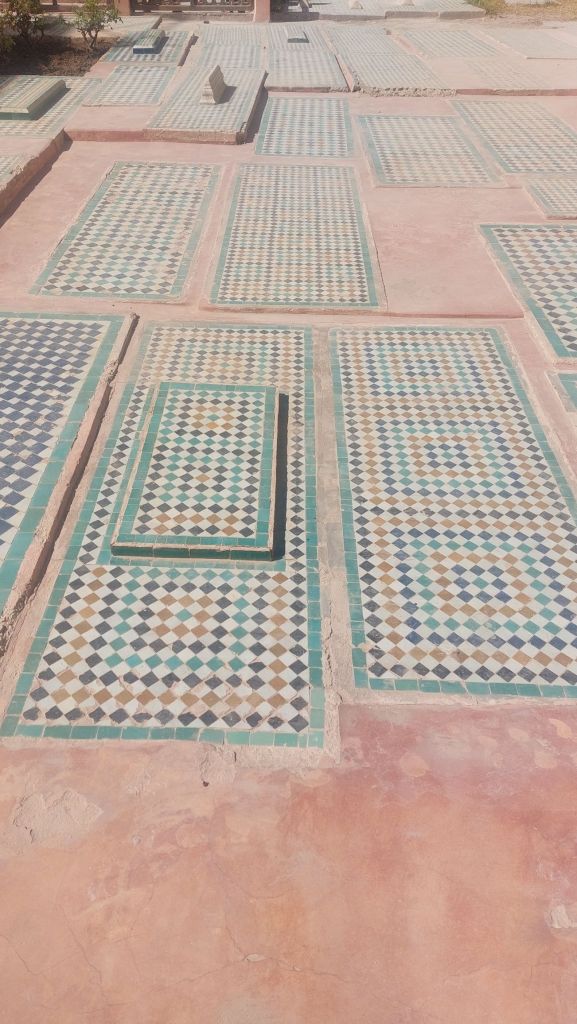
They built the Saadian tombs and El Badi palace, furnishing them with intricate tile work and stucco.
Saadian tombs/image Freebird Tracey El Badi Palace/images Freebird Tracey.
They launched military campaigns against European invasion, and this period of rule became the golden age of literature and art.
The Saads built Bab Doukkala 1557-1571 mosque and Mouassine mosque 1562-72.
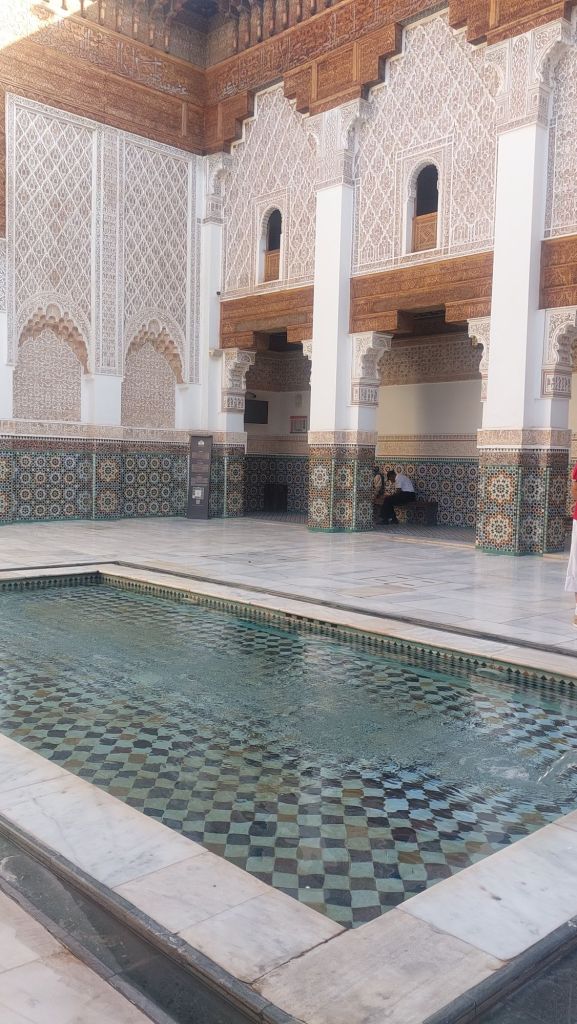
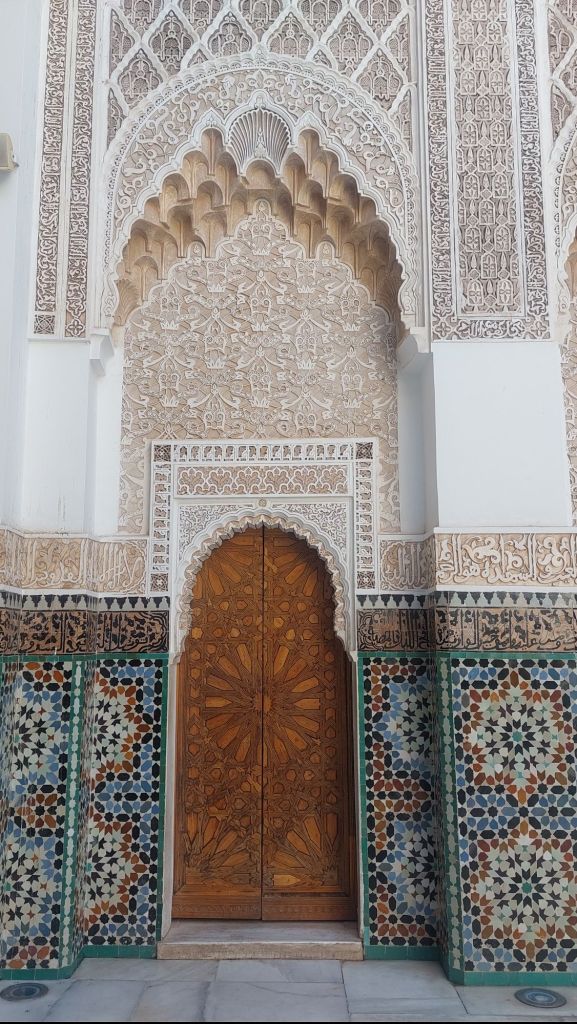
They also built Ben Youssef Madrasa in 1570.
Madrasa Ben Youssef/images Freebird Tracey.
In 1631, rule was passed from the Saadian dynasty to the Alaouite dynasty, which is still the name of the current Morroccan royal family.
The Alaouites promoted trade with the United States and European countries. They improved date palm crops and modernised the army.
They also attempted to take control of the Berber and Bedoin tribes.
They restored the riads and buildings in Marrakech, developing it’s infrastructure.
It was in 1911 that the capital of Morocco became Rabat.
Marrakech became a French protectorate in 1912 when the sultan Abd al-Hafid signed the treaty of Fez.
Although the sultan remained the head of state, the French had a huge influence in developing strong diplomatic and economic relations in trade and tourism.
The French began modernising the city and building new districts whilst aiming to preserve the traditional character of the city.
They encouraged tourism and exporting Moroccan dates and other produce.
In 1956, Morocco gained its independence when the treaty of Fez was passed back.
Throughout history, Marrakech has been a city that has resurged, declined, and resurged once again.
It has fought against several invasions and endured plagues and famines.
In 1982, UNESCO declared Marrakech a UNESCO world heritage site, raising awareness of the cultural heritage of the city.
It is now one of the most popular destinations in the world and receives millions of tourists each year.
Marrakech combines the ancient with modernity perfectly.
Visitors can get a glimpse into the intriguing past of Marrakech as they wander around the preserved walls of the medina.
As they venture into the tree lined avenues of Mohammed V avenue, they are presented with a newer,modern side of Marrakech, a thriving hub of fancy restaurants, bars and boutiques.
Marrakech has an astonishing history, which makes it all the more fascinating. It is well worth taking a tour of the historic buildings in the medina to get a taste of the red city’s intriguing past..
Gueliz area in Marrakech/images Freebird Tracey.
For further information or advice on planning the perfect itinerary, get in touch using the contact details below..
Camels, sunsets, and a fire show that left me speechless.
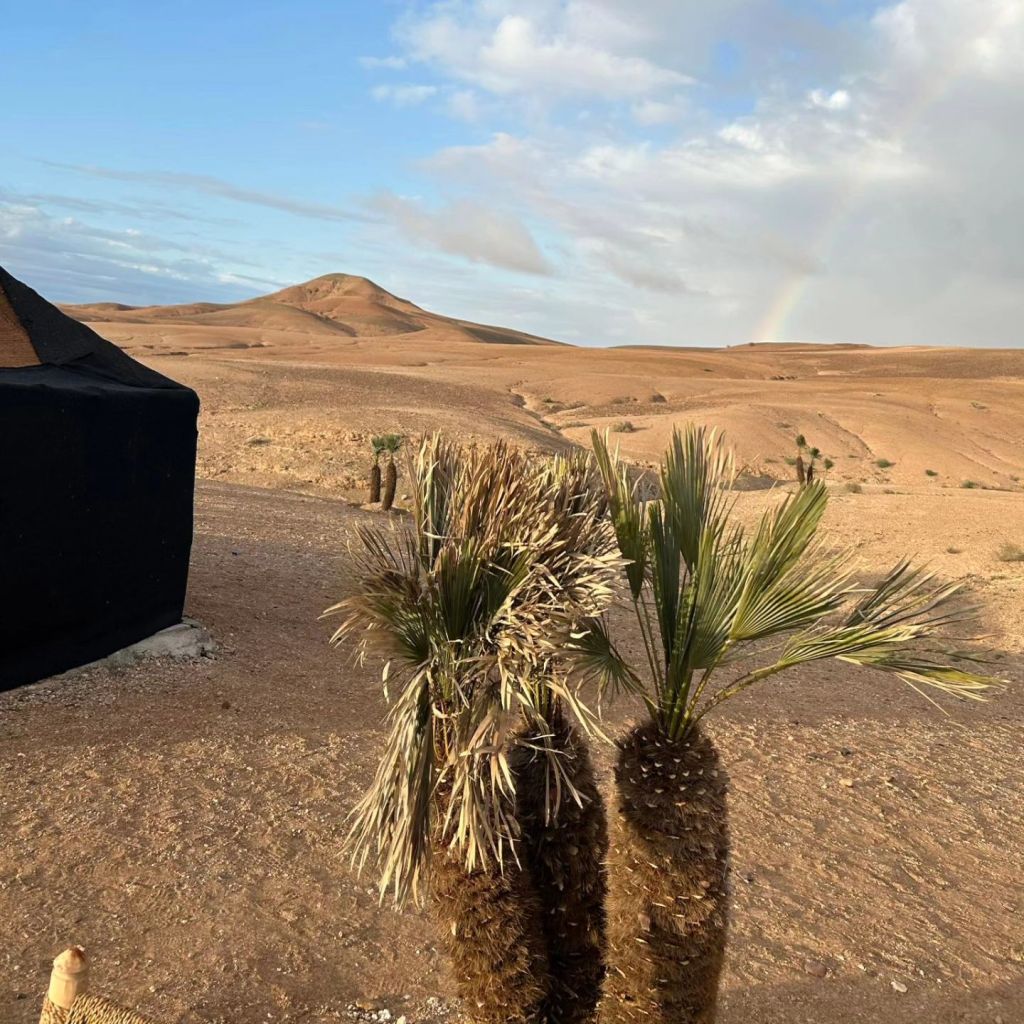
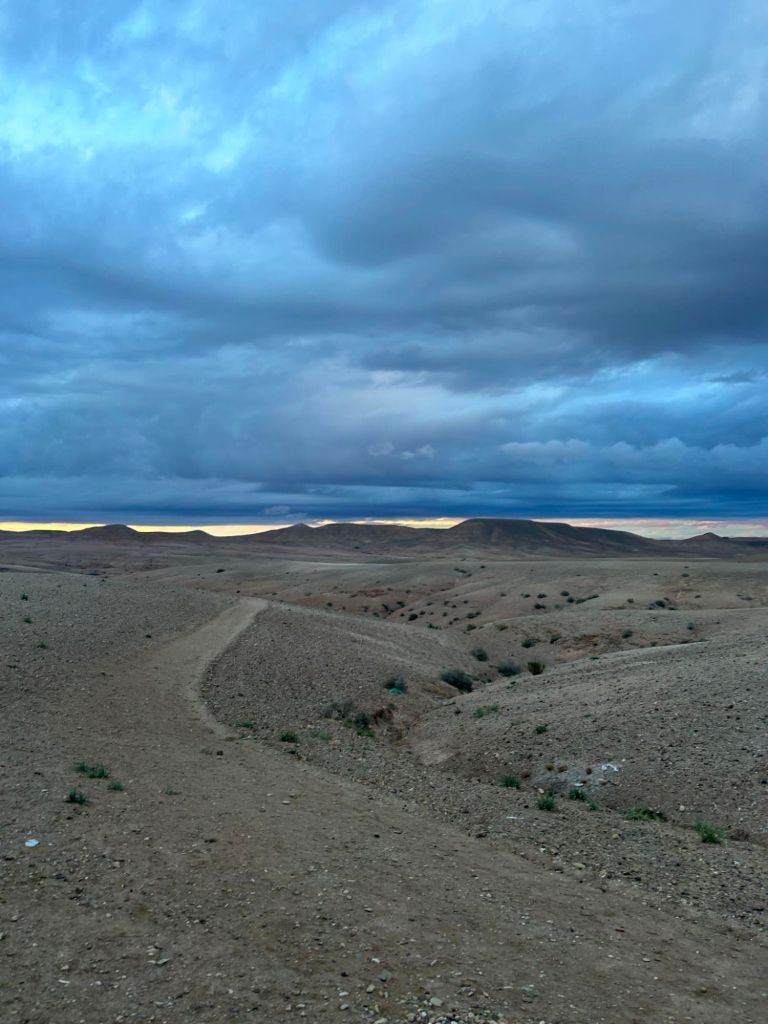
Stunning scenery at Agafay desert
We met our tour guide near Jamaa El Fna at 6.00pm and boarded our air-conditioned mini bus.
The journey took around 45 minutes in total even though we seemed to be driving across the gravelly desert for what seemed like ages.
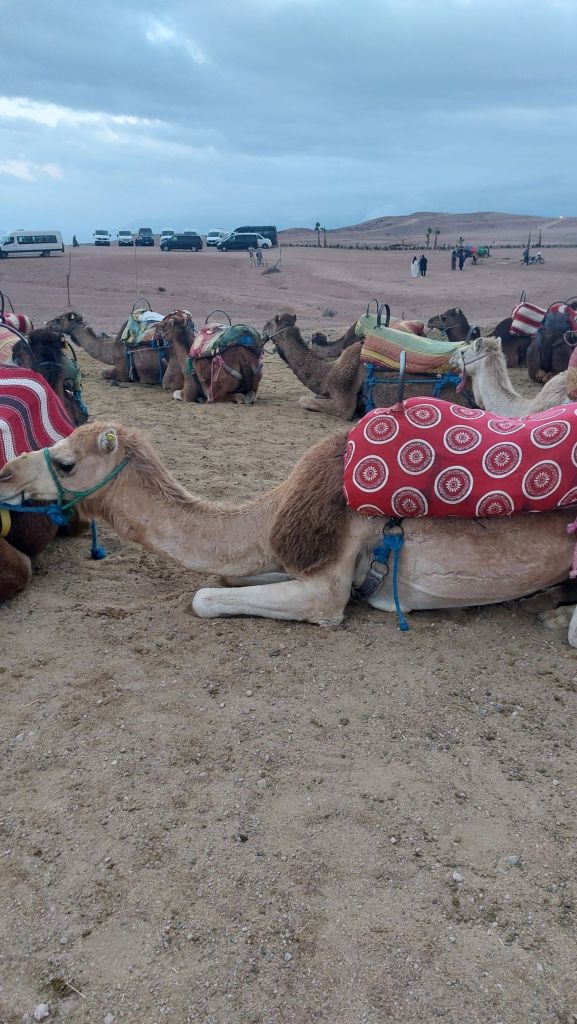
There were camels with their young calfs dotted about, looking fairly nonplussed at the convoy of tourists driving past slowly.
On arrival, we could hear music playing from our camp a short distance away from where we were parked.
Our guide led us to tables overlooking the vast expansive desert. The panoramic view was absolutely breathtaking..
We could see for miles.
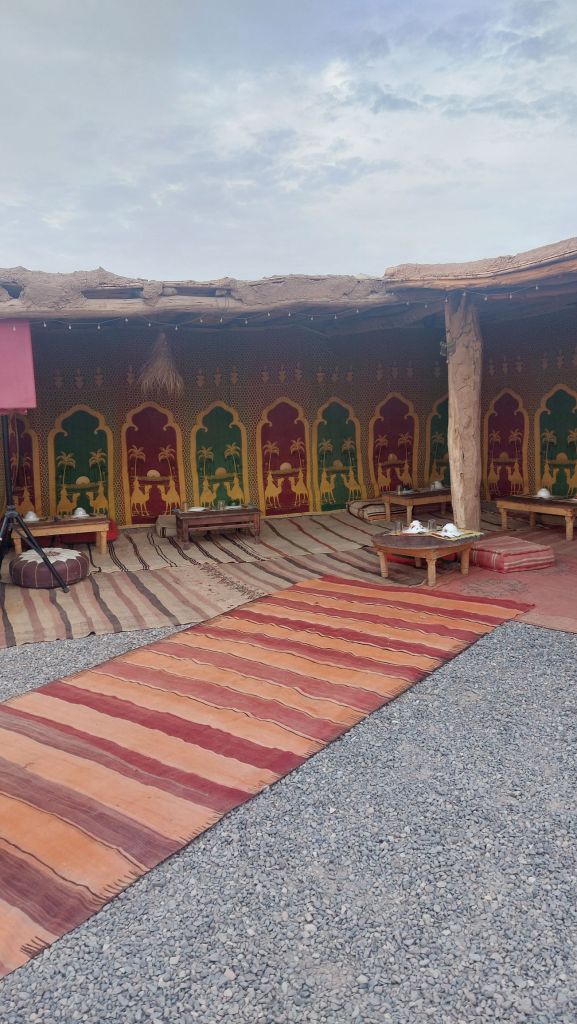
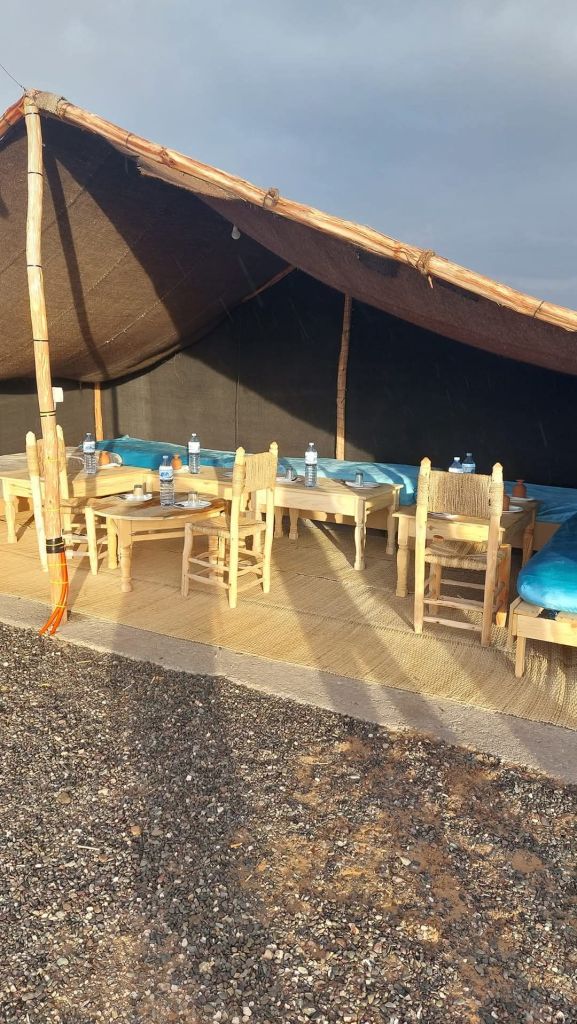
Images of our camp at Agafay desert
Our camp was really pretty, with colourful seats and rugs scattered everywhere.
There was a Berber tent for us to shelter in, and we could also eat inside there if we wanted to since it was slightly windy.
After a hot, sweet mint tea, we all took the optional camel ride..
All aboard the camels
It was rather a scary experience because my camel came untied and got a bit frisky with the one in front.
After he was reattached, we continued a bit further for a short while before turning around and heading back to disembark.
That was also something of a nerve-wracking experience.
I wobbled about on my camels back as he dropped down to the ground in the most undignified manner.
I probably wouldn’t do that part of the trip again, but everyone else seemed to really enjoy it.
Immediately after we got off the camels, our meal was presented to us.
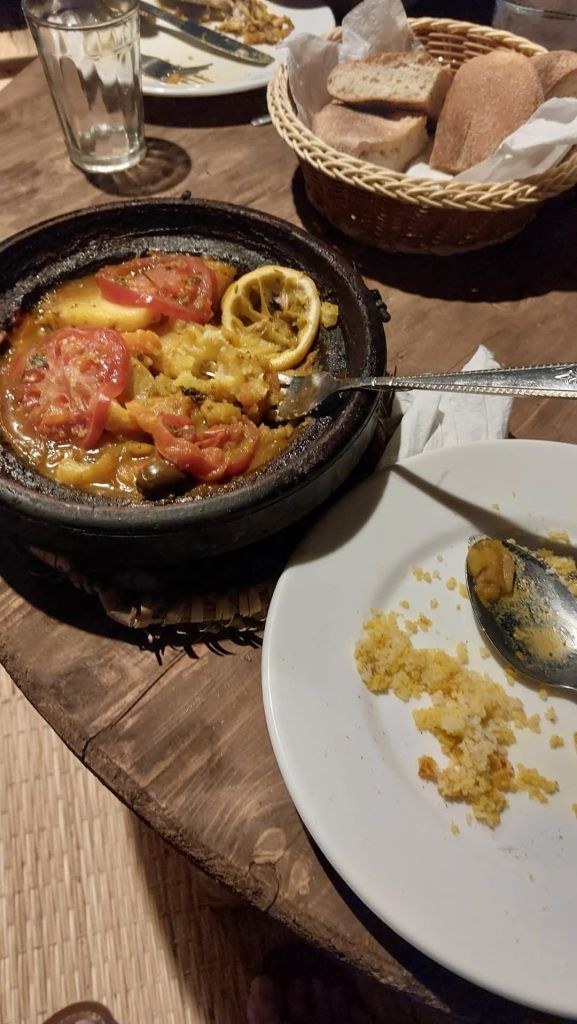
It was a three course meal consisting of vegetable soup with traditional Morroccan bread, a delicious tagine followed by cakes and fruit for dessert.
Fresh food cooked beautifully in Agafay desert.
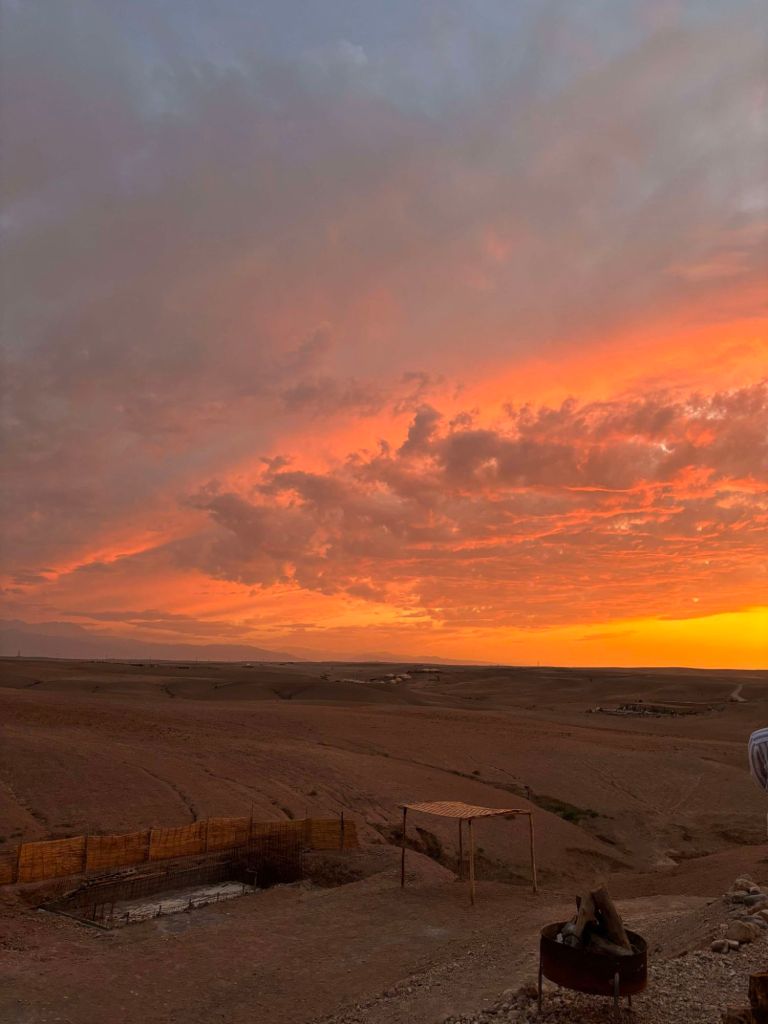
We ate watching the beautiful golden sun go down. The sky was fiery red.
It was absolutely stunning.
I can honestly say it was one of the most beautiful sunsets I have ever seen.
A spectacular sunset
We ate our meal, with traditional musicians playing their instruments around the tables.
It was very entertaining.
Traditional musicians entertaining visitors.
As soon as dinner was over, more merriment began..
The dubious tourists were pulled into a circle and were soon snaking around the campfires and attempting to mimic the traditional Berber dancing.
The atmosphere was incredible.
Everyone was out of their seats, clapping and enjoying themselves.
The stars came out, and the campfires roared.
The temperature had cooled down, but we were soon nice and warm again.
After the lively display of Berber dancing had finished, we all sat down to catch our breath once more.
The air was full of laughter, and spirits were high.
Soon, the grand finale was about to begin..
A spectacular light show in the middle of the desert.
It was completely dark by now, and the visual effects were totally hypnotising.
Everyone looked on in awe at the amazing pyrotechnic display.
It was the highlight of the whole evening.
We were completely blown away, watching the flames leaping about against the back drop of the vast dark desert.
I certainly wasn’t expecting anything quite as fantastic as that!
The fire display brought the evening in Agafay desert to a close.
It had been a wonderful evening.
We had tasty food, the entertainment was a lot of fun, the fire display was incredible, and the camel ride was rather… interesting!
Everyone was able to participate in what turned out to be a very enjoyable time.
We were taken back to our meeting point near Jamaa El Fna.
The cost of the excursion was well worth the money, and I would highly recommend it.
I booked my trip through Get Your Guide.
I believe there are a few different desert camps.
Some have better facilities than others, and some include a different itinerary. The cost varies, so do check what activities you are getting before you book.
Hotels and riads can also organise the trip for you, if you prefer, although you may pay slightly more.
It is also possible to book an overnight stay at Agafay luxury camp.
There is a swimming pool and other amenities with a more luxurious touch.
Check Booking.com or look for reputable online sites for details about staying there.
There are a few things to consider if you plan to visit Agafay desert camp..
Take a warm sweater or blanket, the evenings drop cooler, and you may find the wind is a little bit blustery in some camps.
There are plenty of toilet facilities but take some tissue with you in case there isn’t any. You may also want to take some hand sanitiser.
There are vegetarian options available. I had vegetable tagine, and the other people in my group had chicken.
The guides are excellent at their job.
I have been several times and they always find us at the end of the evening. No one gets left behind.
Some tours visit an Argan Cooperative on the way to the desert.
I really enjoyed this and purchased some argan oil for my skin. It was a decent quality oil and lasted me ages.
The tour usually finishes around 9.30-10.00.
I went in March and September and enjoyed it both times.
Despite it being Ramadan in March, I was impressed how well I was looked after.
I think I may take a journey to the Sahara desert next.
























 Sounds Of The Souks