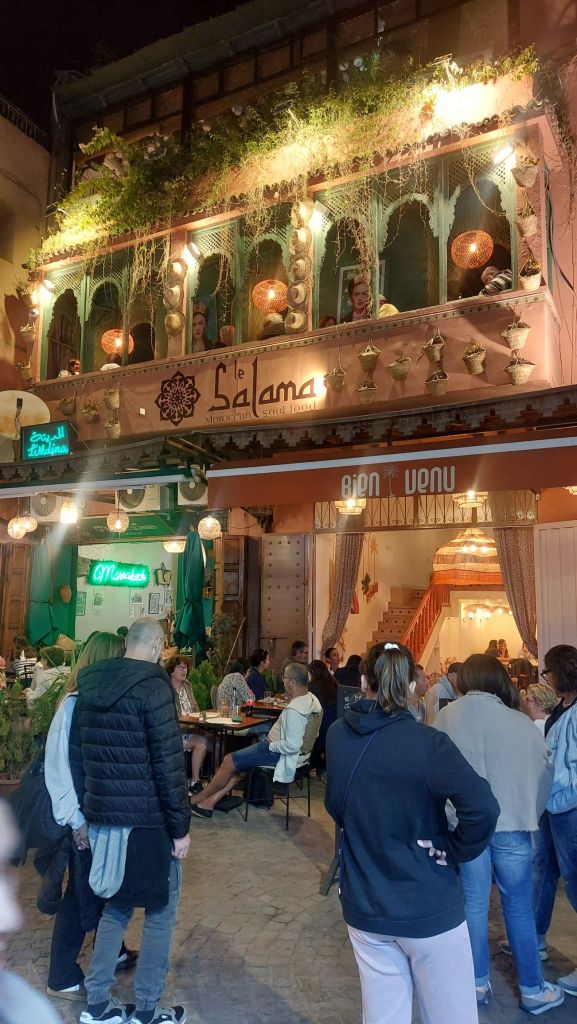
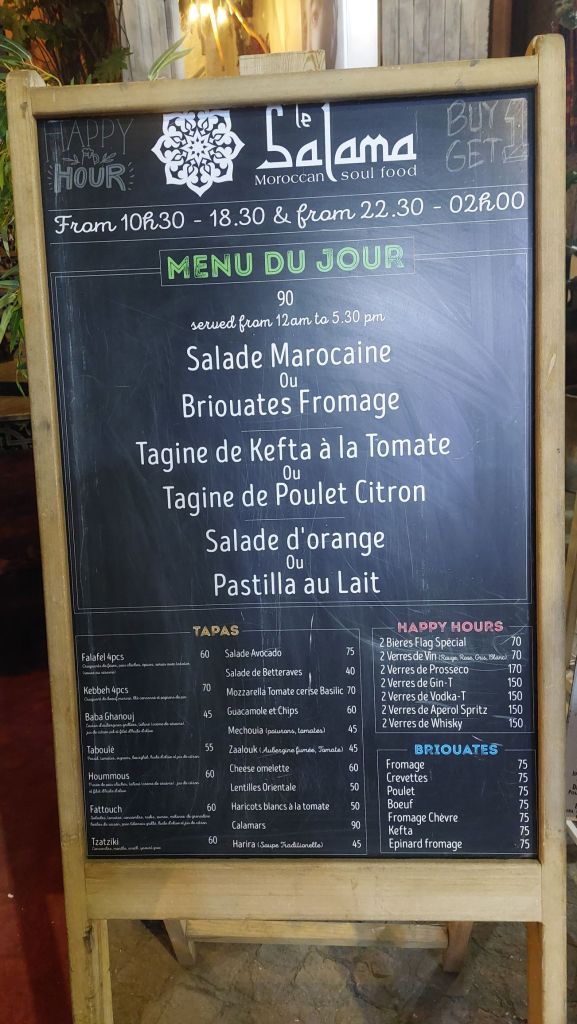
Le Salama is a modern restaurant with a lively atmosphere. There is a popular rooftop area that gets very busy with tourists.I recommend booking in advance. I tried to get a seat, and it was virtually impossible.
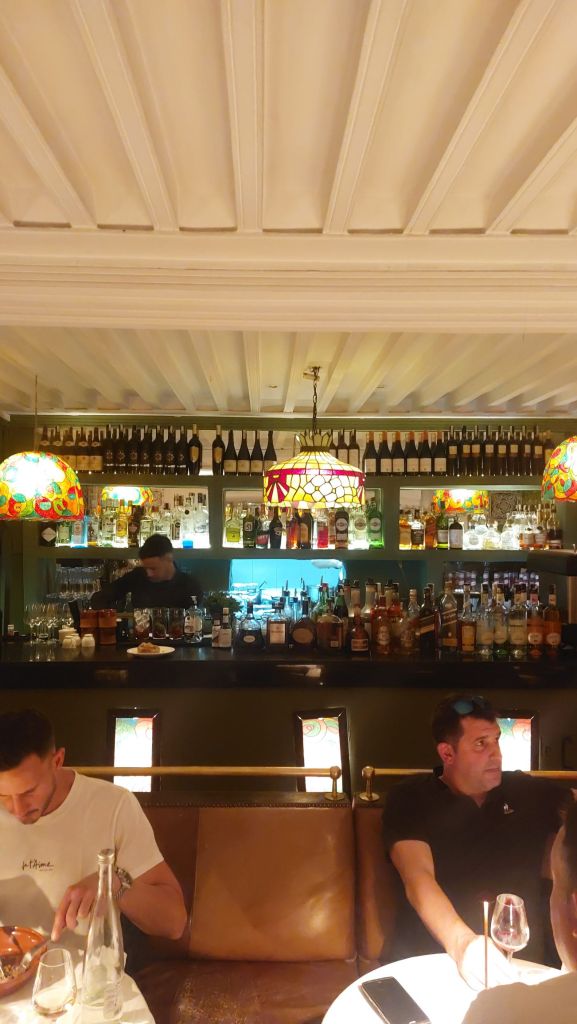
Inside the restaurant, the decor is traditionally Morroccan with an al fresco vibe. There are beautiful plants throughout, and it feels as though you are sitting somewhere in nature.
There are two bars serving a range of alcoholic and non alcoholic drinks.
Image by Freebird Tracey.
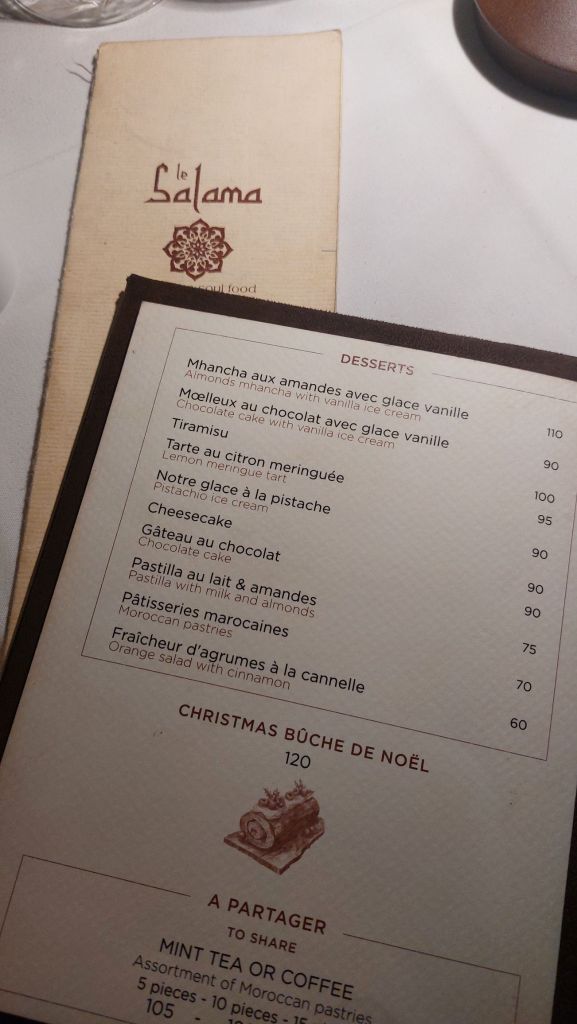
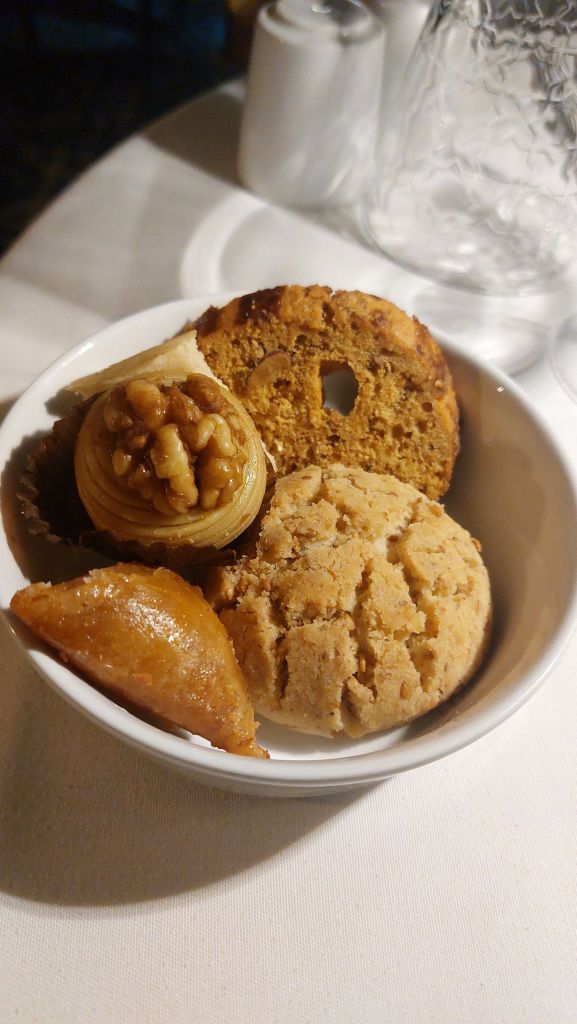
I ordered a plate of delicious Morroccan pastries with a cold glass of Casablanca beer. Other diners were enjoying a variety of dishes from the menu. The food looked appealing. I decided to book a table on the rooftop terrace for the following evening.
Images by Freebird Tracey.
At 9.00pm each evening, the entertainment begins. Belly dancers perform around the tables, encouraging diners to participate. It was fun to watch everyone having a good time.
Video by Freebird Tracey.
I have to admit that the service was slightly slow. However, it was Ramadan, so exceptions have to be made during this month.
Being a solo female traveller, I didn’t feel conspicuous at all. The waiters were polite and helpful. The fact I only ordered dessert and one drink wasn’t an issue. I didn’t feel pressured to leave, and I was free to enjoy the live entertainment.
Le Salama is steps away from Jamaa El Fna. It’s the perfect place to grab a bite to eat and recharge your batteries. The architecture of the restaurant from outside is interesting.
Image by Freebird Tracey.
Le Salama can be found on 40 rue des banques, and it’s open until 2.00 a.m. They serve a good range of cocktails and are open for lunch and dinner. They also have a children’s menu.
Pepe Nero is a popular Italian restaurant tucked away on a quiet street in the medina. They also cook delicious Moroccan cuisine.
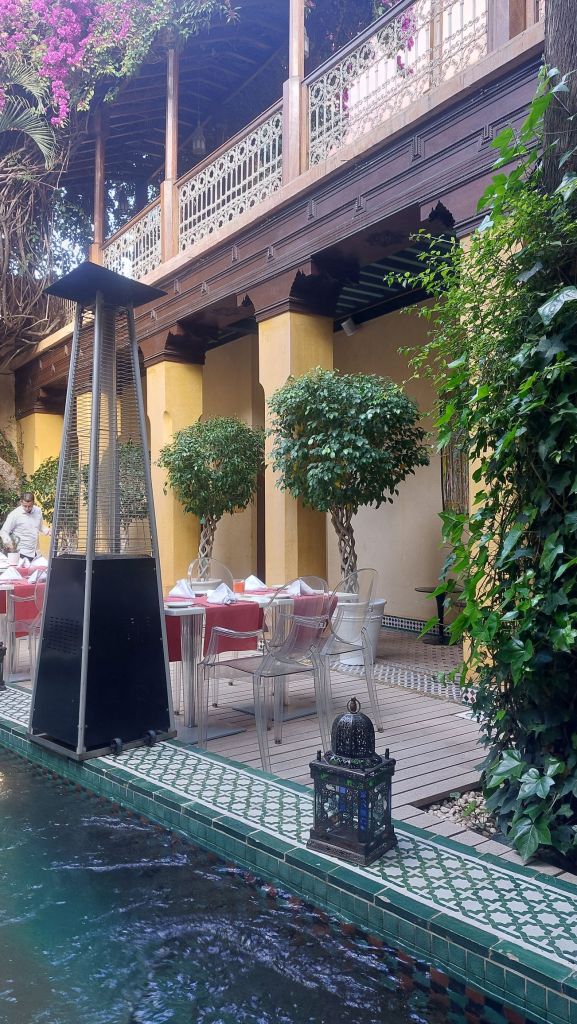
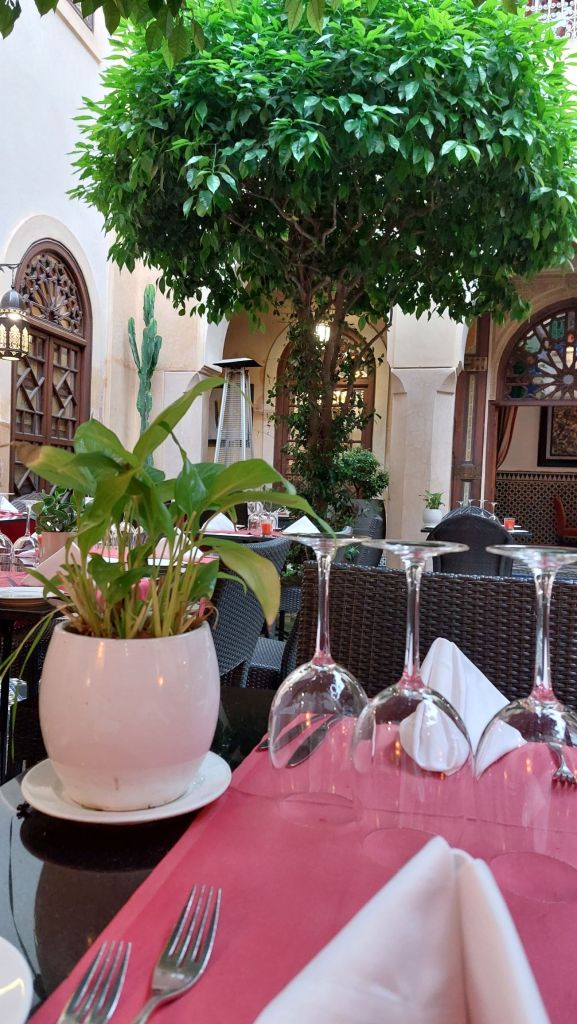
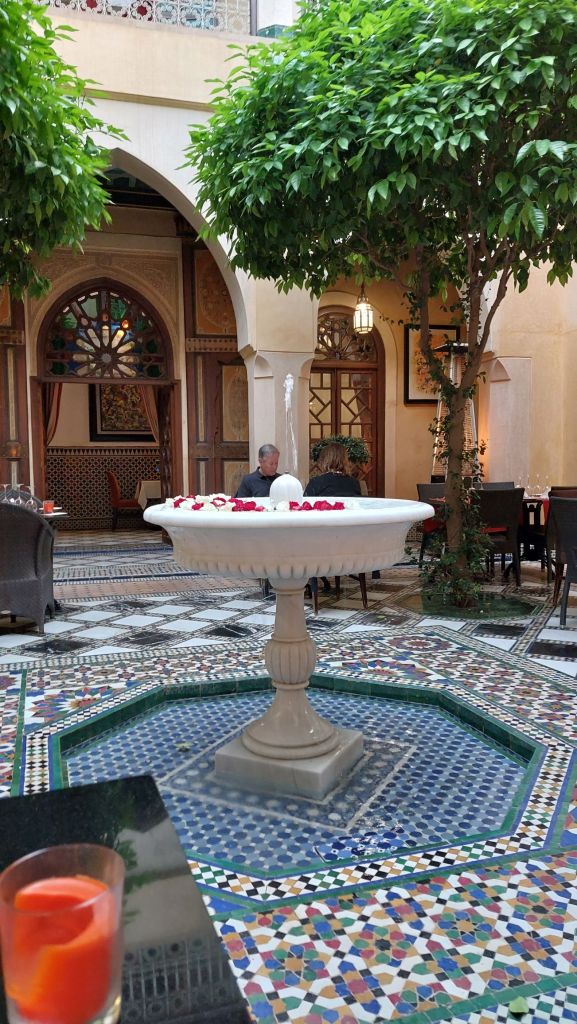
Inside the restaurant, there are two pretty courtyards surrounded by lush green foliage and ornate trickling fountains.
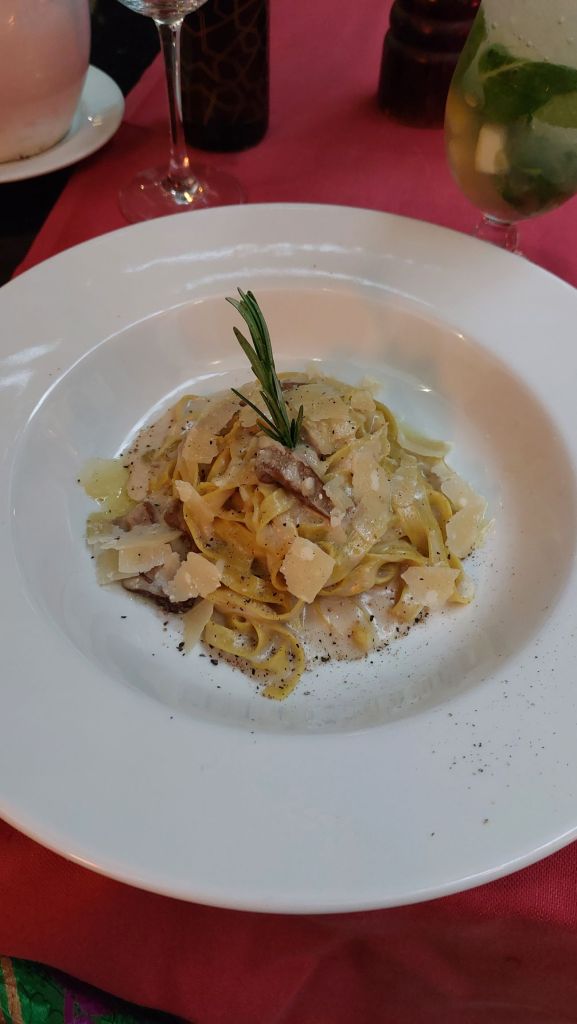
I ate here several times and enjoyed the food immensely on each occasion. The menu is creative. They prepare interesting pasta dishes suitable for vegetarians. I had pasta with truffle, and it was beautifully presented and cooked to perfection.
Images by Freebird Tracey.
The restaurant serves alcohol, including a selection of good wine, cocktails, and spirits.
The ambience inside the restaurant is relaxing. It can get livelier in the evening, but it never becomes too noisy. Despite the tempo of the music, I never had to raise my voice to be heard. The atmosphere is still conducive to a romantic, intimate dining experience.
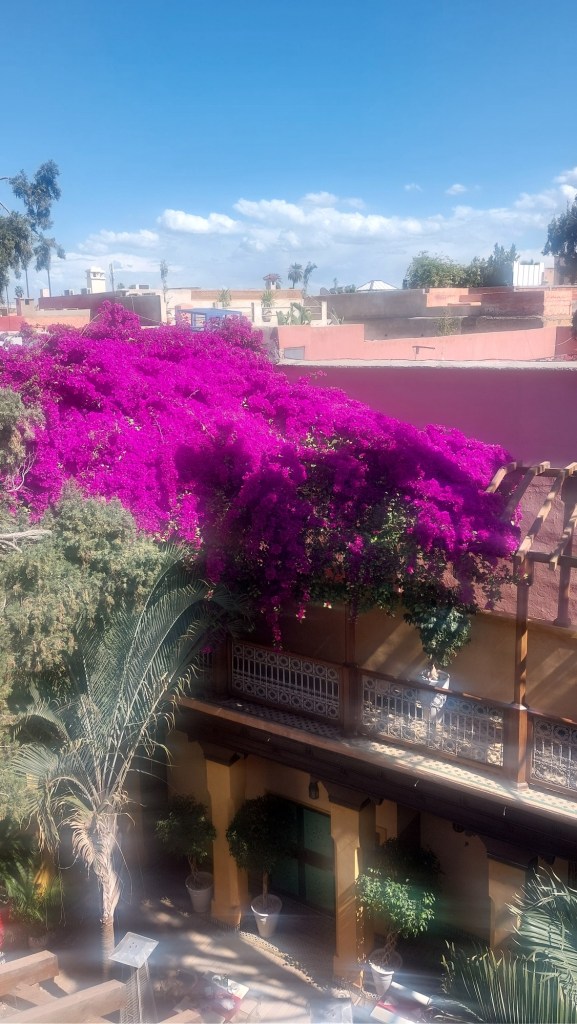
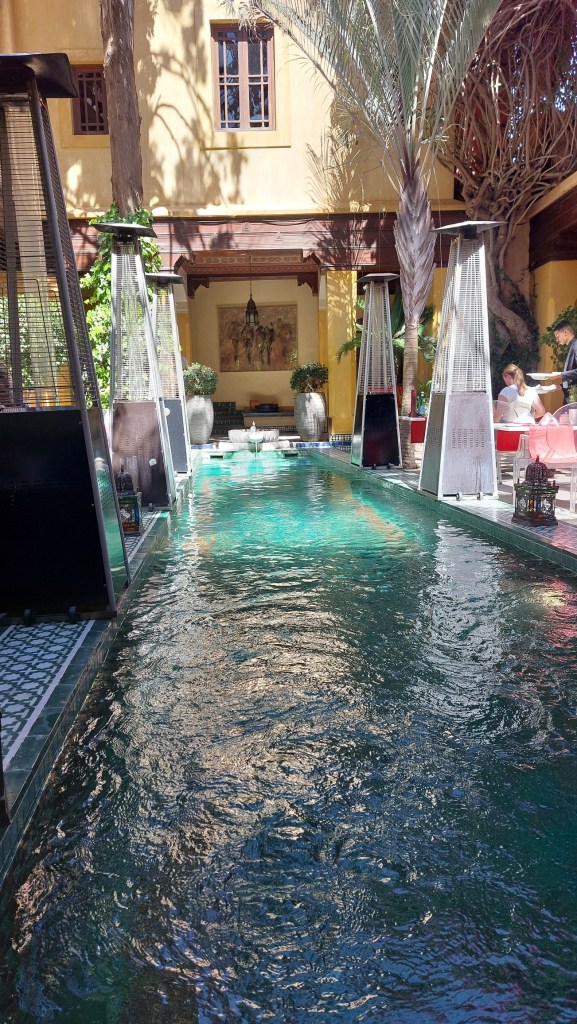
Pepe Nero is open for lunch and dinner. As well as two courtyards, there is a nice enclosed dining space. Guests can sit inside or around the pool where bougainvillaea drapes down the wall.
Images by Freebird Tracey.
The staff at Pepe Nero are professional and friendly. They are knowledgeable about the food on the menu and help you to make the right choice.
At Pepe Nero, excellent food, elegant surroundings, and friendly service ensure guests receive the perfect dining experience.
The address is 17 Derb Cherkaoul Marrakech 40000 Morocco. Opening hours for the restaurant are 1.00pm until 4.00pm then, 6.00pm until 11.30 daily.
There is a small car park close to the restaurant.
Booking is advisable as this is a popular restaurant and can get busy, especially during the evening.
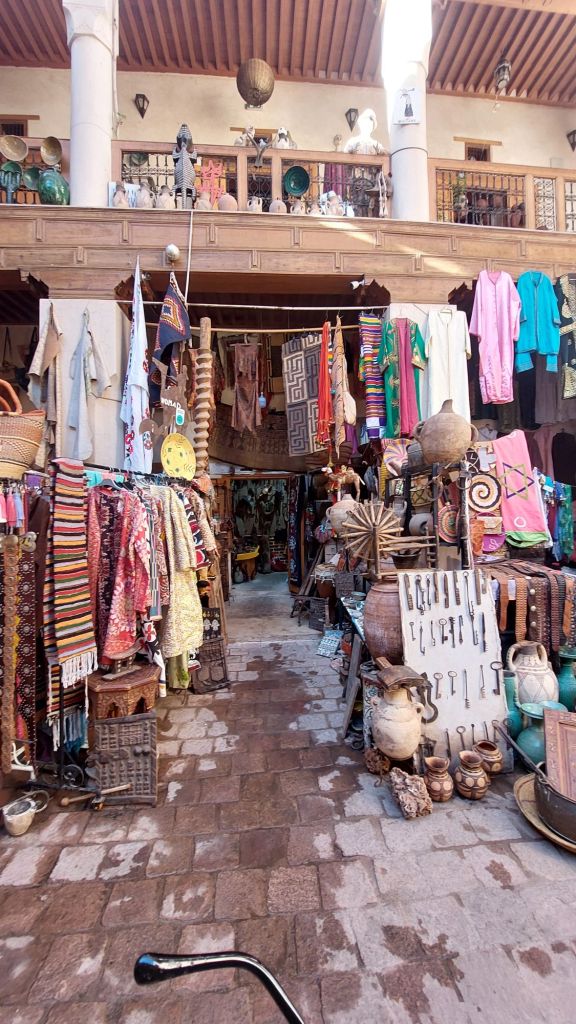
Shopping in the medina is a fascinating experience, but it can be overwhelming at times. I soon realised that taking a regular break and pacing myself was the best way to enjoy the experience.
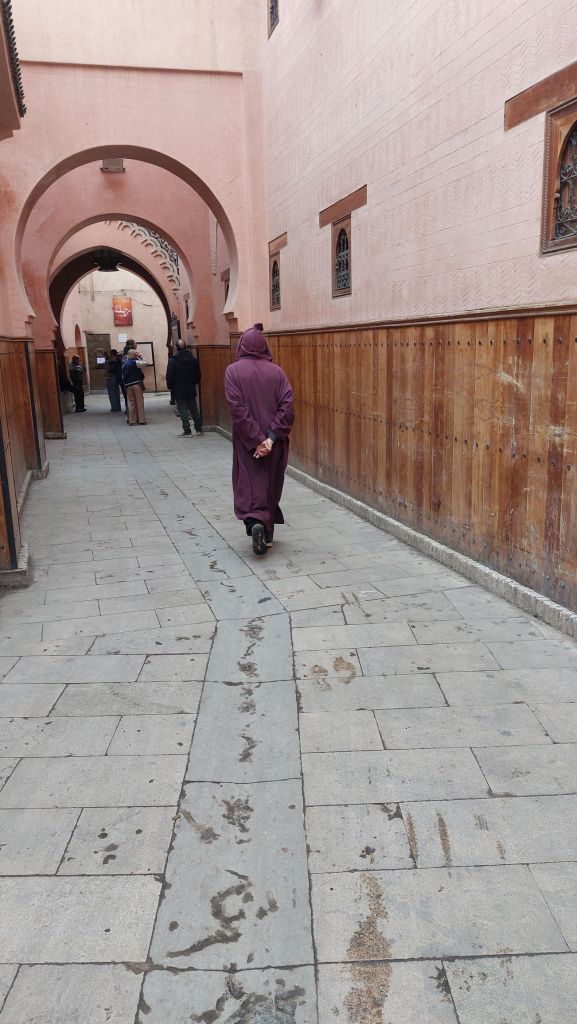
Navigating the maze of alleyways in the souks is exciting. There is so much more to them than beautiful leather goods and Moroccan lamps, though.
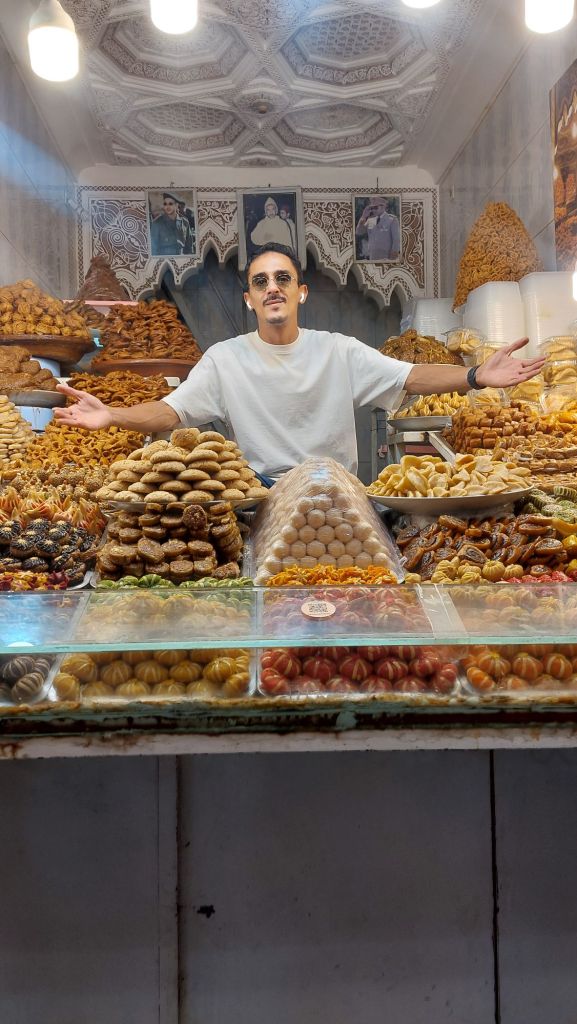
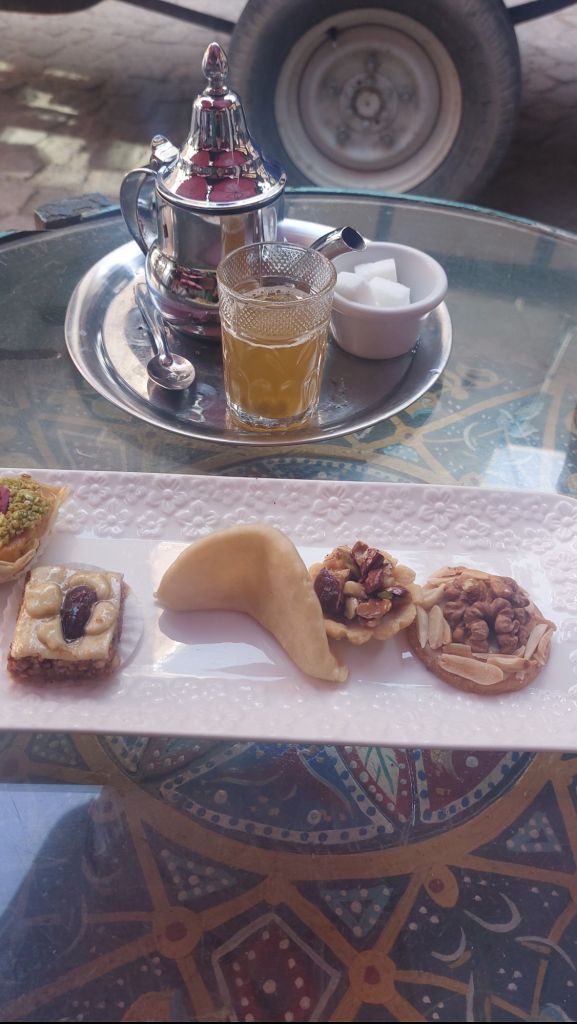
There are delicious sweets and pastries waiting to be sampled. These compliment the taste of traditional mint tea known as atay perfectly.
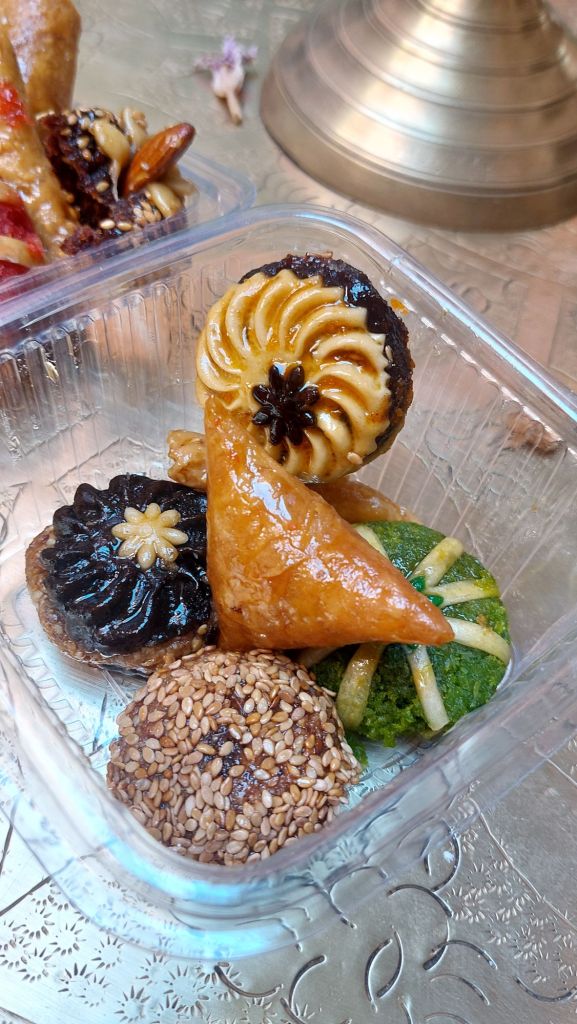
There are so many different pastries to choose from. I decided to treat myself to a selection to find out which ones are my favourite. I enjoyed the taste of the almond pastries most of all.
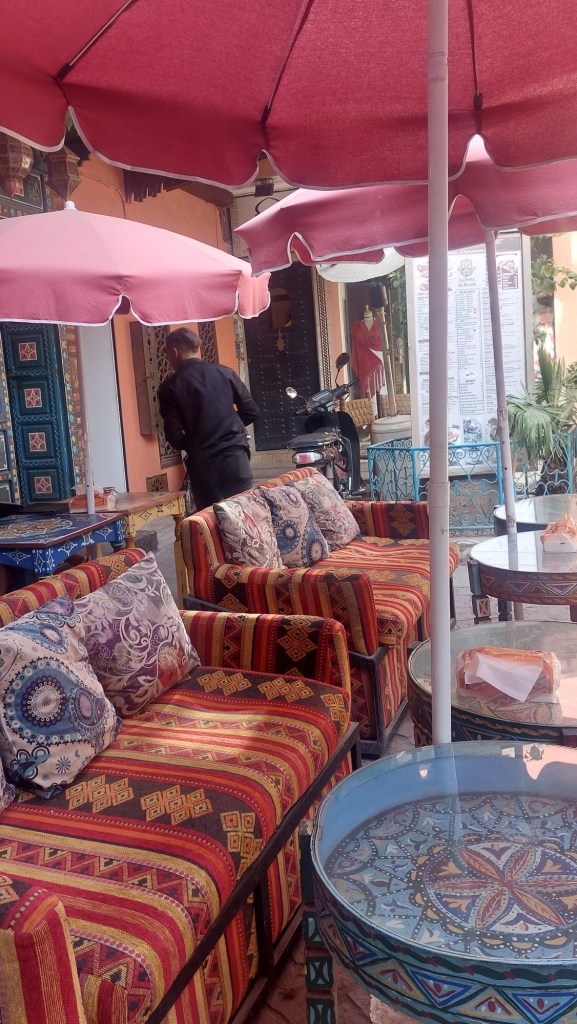
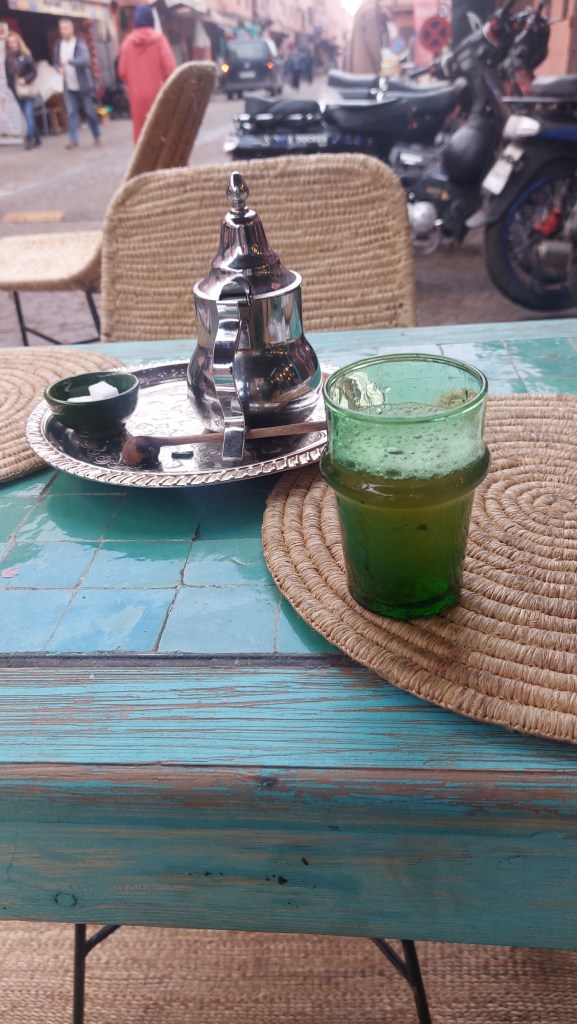
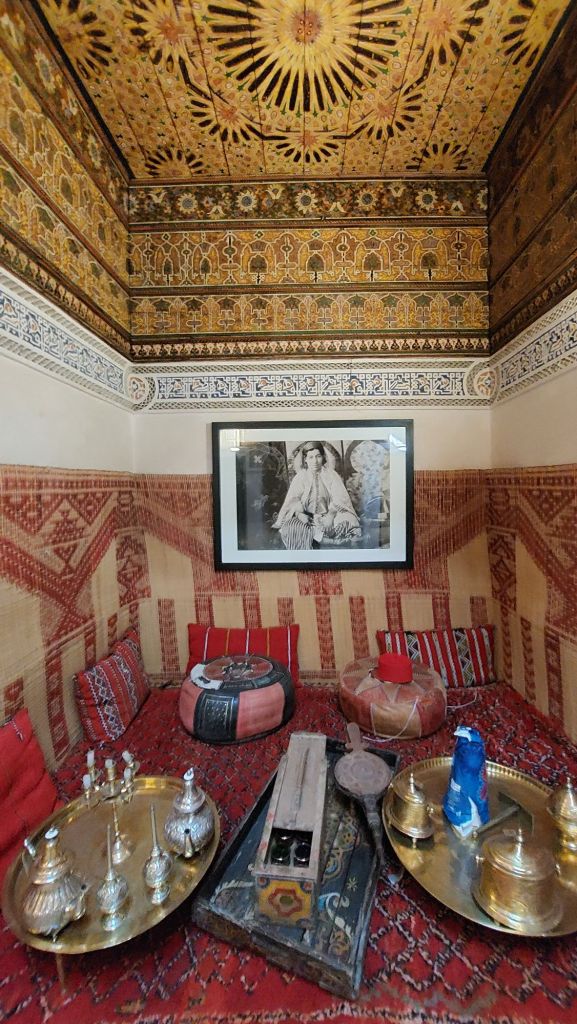
Traditional mint tea is very hydrating. Sitting in a colourful, boho nook drinking mint tea is a perfect way to take time out from the hectic rhythm of the souks.
Images by Freebird Tracey.
If you are shopping in the souks, I recommend that you pace yourselves and take some time to enjoy the experience. Sitting outside a cute little tea shop is the perfect way to do that.
There are plenty of places around the medina selling mint tea with traditional sweets and pastries. Part of the pleasure of exploring is finding these hidden gems.
Image by Freebird Tracey.
A few places I recommend are,
Medina Kawa Marrakech.
La Patisserie de la Terracce Spices
Boughaz Coffee in the Kasbah.
Marrakech has an abundant supply of sweets and pastries, and I suggest trying Baclava. It’s a sweet pastry made of layers of flaky phyllo dough filled with chopped nuts like walnuts, pistachios, or almonds. It’s sweetened with honey and flavoured with spices like cinnamon and lemon juice. This was one of my many favourites.
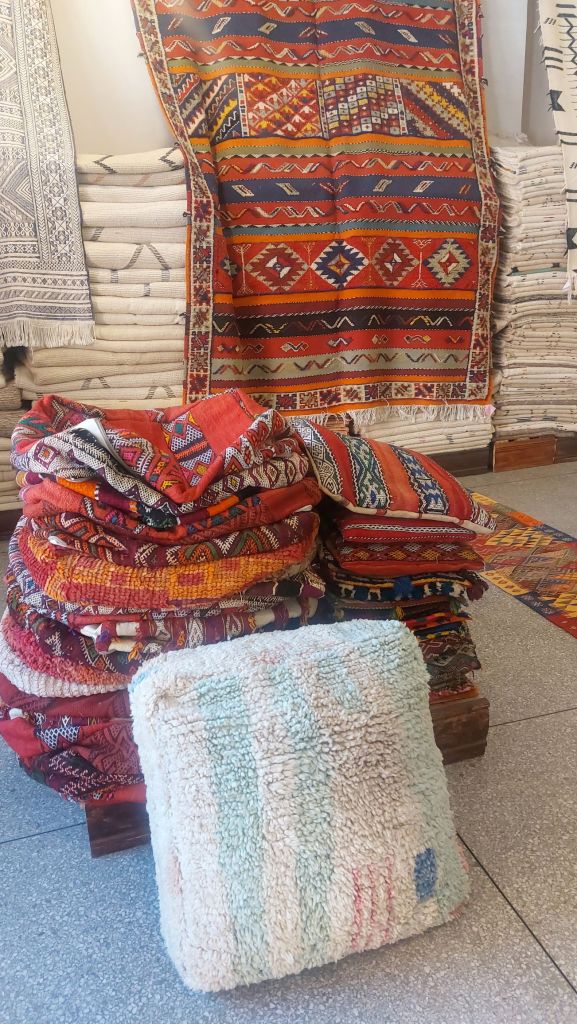
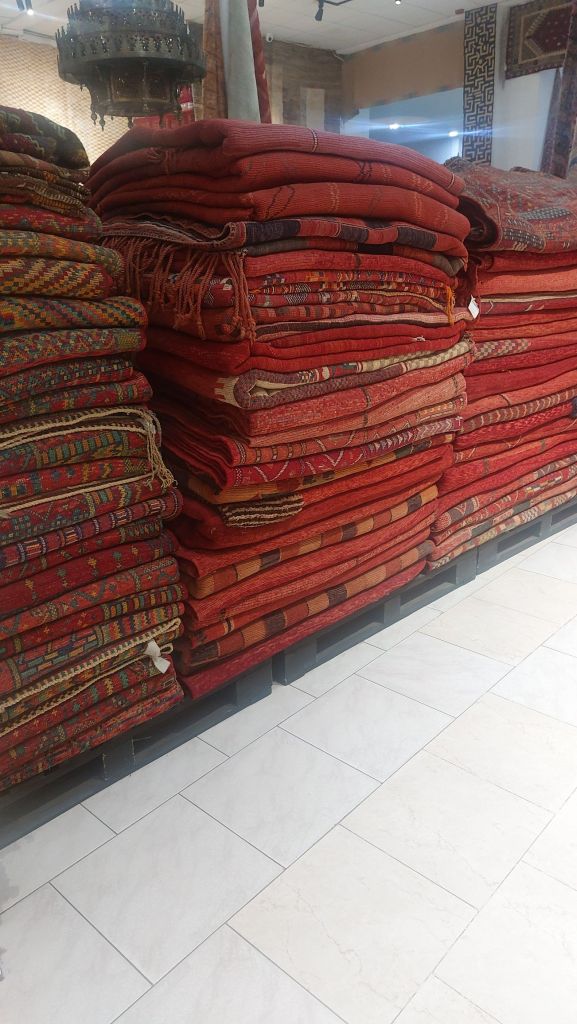
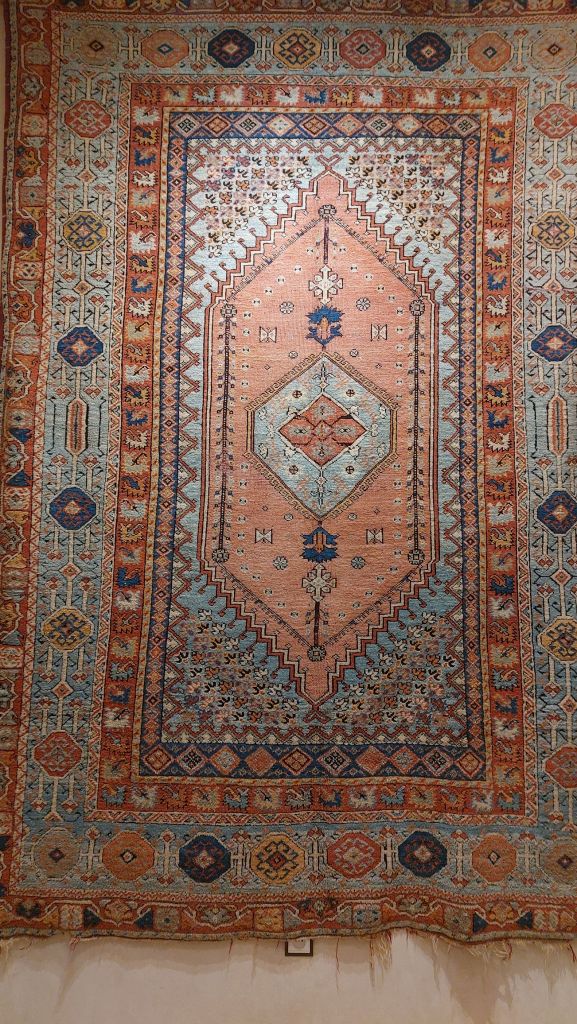
Berber rugs are handmade by the indigenous Amazigh people of Morocco.
They are made from the wool of sheep in the high Atlas Mountains. Each type of rug tends to vary in thickness, and the pattern also differs depending on which tribe or village has made it.
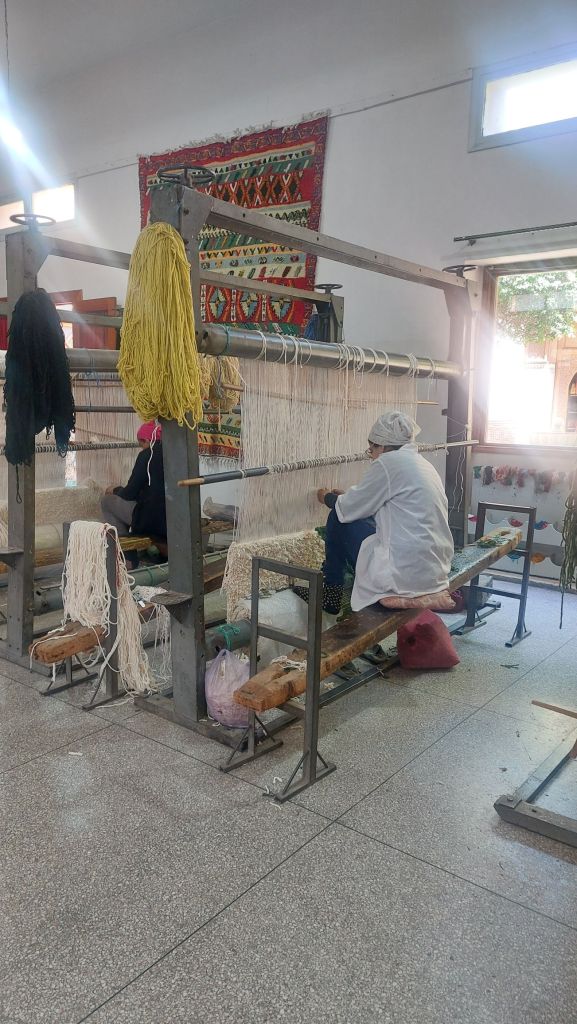
Kilim Berber rugs have no pile and are relatively fine in texture.They are handcrafted using techniques passed down through generations. To create them natural materials renowned for their durability and luxurious feel are used. Hand-knotting is a long and laborious process. To create a single rug takes around one to two months, with four weavers working on one rug at a time.
There are several steps that go into making a beautiful Berber rug.
1. Shearing the Sheep
Shearing the sheep is the first step in making a Berber rug. This is done by hand, using a special shearing knife. The sheep are first restrained, and then the knife is used to remove the wool from their body in one long strip. The wool is then sorted and cleaned. It is usually the job of the men to shear the sheep, taking care not to injure them or spread infection. The women are responsible for washing the sheared wool.
2. Carding.
Carding is the process of aligning the wool fibers so the weavers can spin them into yarn. To card the wool, the fibres are first combed in one direction, and then the wool is brushed in the opposite direction.This helps to loosen the fibers and align them in the same direction. Once the fibers are aligned, the weavers can then spin them into yarn.Carding is an essential step in making a Berber rug, as it helps to ensure that the rug is strong and durable. The process of carding also helps to give the rug its unique texture. Women are responsible for this process.
3. Spinning the wool into yarn.
To spin the wool into yarn, Amazigh women use something called a drop spindle. This simple tool consists of a shaft with a weight at the bottom. The wool is attached to the shaft, and then the shaft is twirled between the women’s hands. As the shaft is twirled, the wool is wrapped around it, creating the yarn.
4. Weaving the rug.
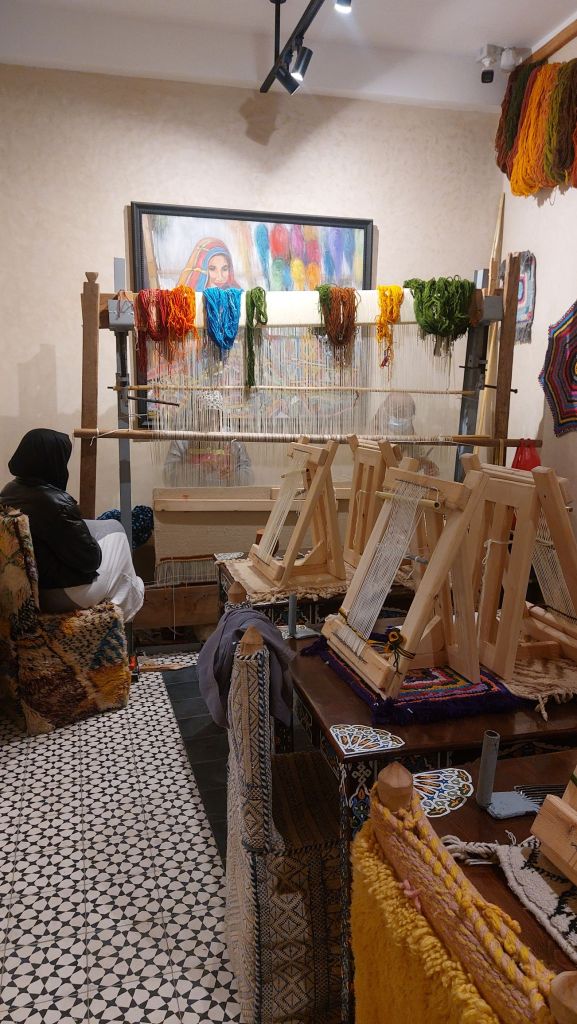
The village women are responsible for weaving the rugs. Weavers use a technique called continuous knotting to create intricate patterns. This method of knotting allows the weaver to create a rug that is durable and will last for many years.The process begins by the weaver tying knots in the woollen yarn.The yarn is then dyed using natural dyes from plants, spices, and fruits. This gives the rugs their characteristic colours. Once the yarn has been dyed, the weaver begins weaving it into a rug using a loom.The loom is a wooden frame that the weaver uses to create the rugs design. The weaver ties the yarn around the looms warp threads, which are the vertical threads that run through the loom. The weaver then weaves the weft threads, which are the horizontal threads, over and under the warp threads.The weaver can create various patterns by changing the direction of the weft threads. Once the rug is complete, the weaver cuts the rug from the loom and ties the ends of the rug together. The rug is now finished.
Image by Freebird Tracey.
Making a Berber rug is a long, laborious task. The women of the village who weaved them rarely get anything near the price they’re eventually sold for. Their husbands load the rugs onto the back of a donkey and take them to a buyer. The buyer gives him a fraction of their value.
Efforts are being made to make sure that ethical practices are being implemented. Many organizations now work directly with Berber artisans to eliminate middlemen, ensuring women receive fair payment for their work. More women are forming cooperatives to manage the entire process, increasing their income.
Images by Freebird Tracey.
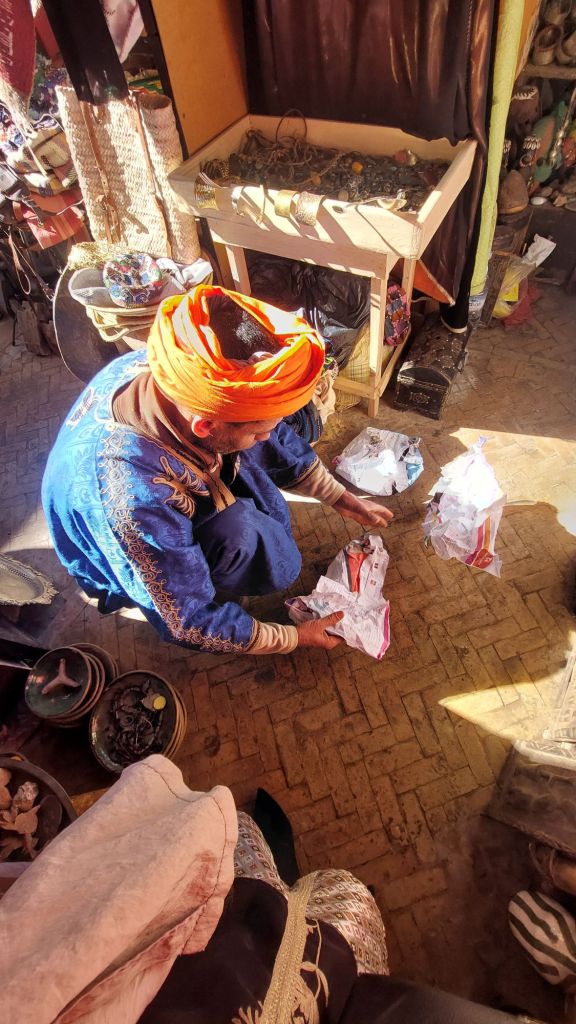
Berber rugs are beautiful and give a home a wonderful boho vibe. They are hard-wearing and last a lifetime. It’s important when visiting Marrakech to make sure you’re purchasing a genuine Berber rug. There are a few scams, so be mindful. Before you get taken to a shop where you’re promised the best quality and price, do your research.
Les Nomads de Marrakech has a great reputation and can ship rugs back home for you. This is their address, Bennahid #40 Derb Zaouiat Lahdar, Marrakesh 40030, Morocco.
Dar Bouchaib in the Kasbah is a fixed price store that also ships rugs worldwide and has a huge selection.
To find out more about the history of Berber rugs, there is a carpet museum in the souks called The Maison Culturelle du Tapis. It’s worth visiting to learn more about how they’re made. They also have some beautiful vintage rugs on display.
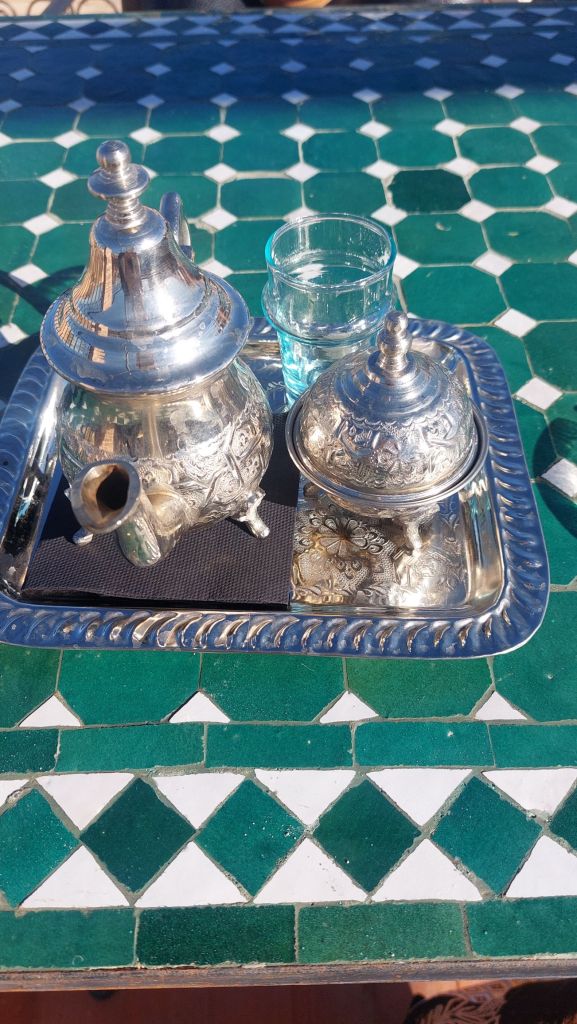
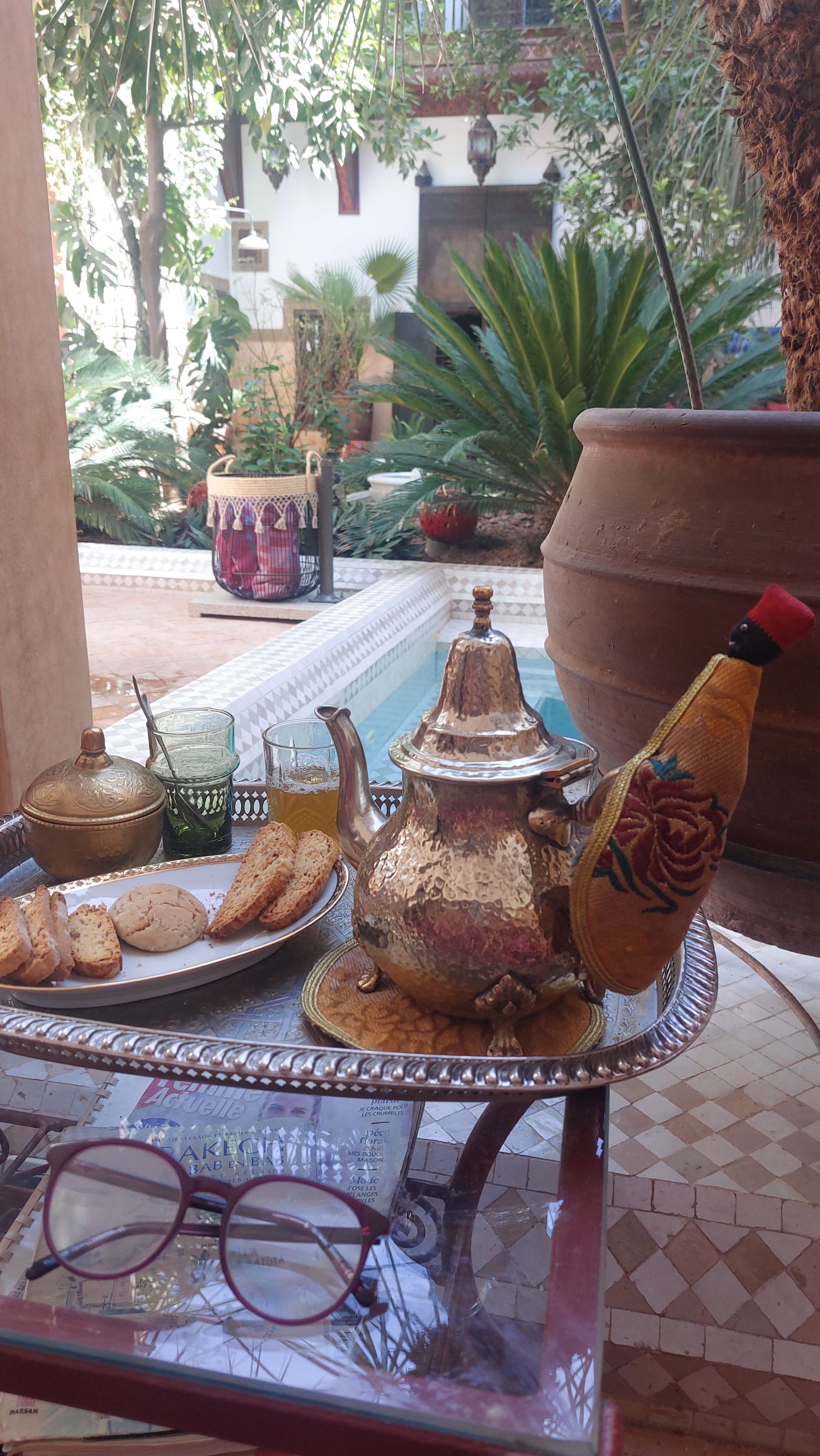
After the painstakingly long queues at Marrakech airport, you finally arrive at your riad. At this point, you’re feeling overwhelmed and dishevelled. The manager gives you the warmest welcome and guides you into the tranquil courtyard. You sit down on colourful cushions, listening to the sound of trickling water. Suddenly, you’re presented with an ornate silver tray containing a teapot and colourful glasses. This is accompanied by a dish of olives and homemade biscuits. You begin to unwind.
The tea is poured, holding the teapot higher and higher. You watch with amazement as the tea finds its way perfectly into the little glasses. Not a drop is spilt. This is a traditional Morroccan greeting for visitors. The higher up the teapot is held, the more respect the guest is being shown. The tea also becomes aerated, making it cooler to drink.
The fragrant aroma of fresh mint fills the air around you. Soon, you are feeling relaxed and becoming accustomed to your new surroundings.
Video by Freebird Tracey.
Once you have finished your tea, the panic of trying to locate the riad disappears as if by magic. The image of dragging your luggage through dark, narrow alleyways starts to become a distant memory.
Image by Freebird Tracey.
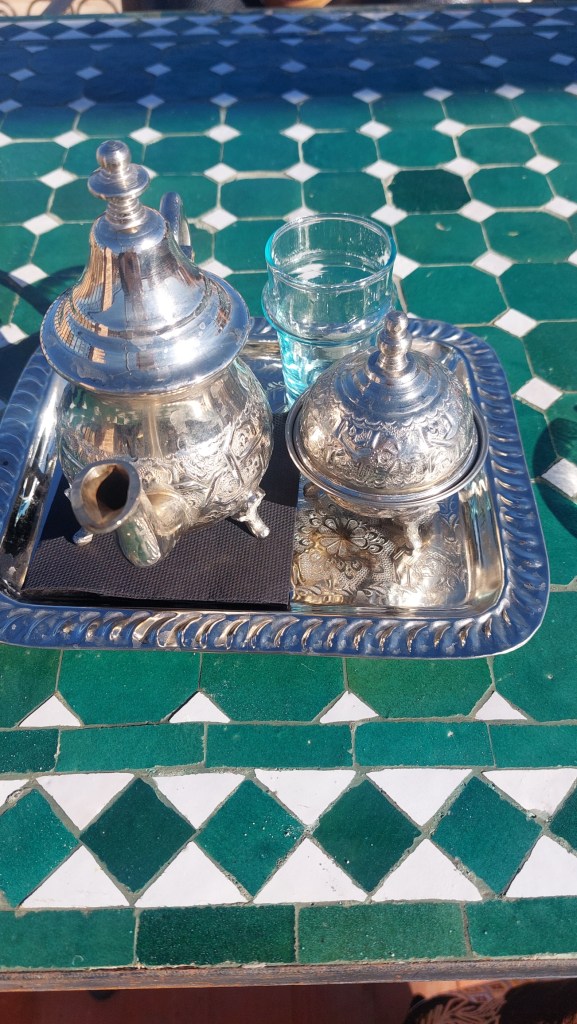
Mint tea is served everywhere in Marrakech. It’s a customary drink that locals enjoy whilst chatting with their friends in cafes. Drinking mint tea is a central part of Moroccan social life. It is known as atay in Moroccan darija. It is also called ‘Morroccan Whisky’ by the locals in Morocco.
Image by Freebird Tracey.
The tea is made using gunpowder green tea and spearmint leaves. It is sweetened with sugar cubes before serving. Moroccans like their tea sweet, so if you don’t, ask to have the sugar cubes separately.
Moroccan mint tea has many health benefits. It improves digestion, helps to improve oral health, is a natural decongestant, and provides antioxidants that support good mental well-being, skincare, and alertness.
Fresh mint is sold all around the medina, and the familiar smell is noticeable when you walk past. It’s an aroma you will come across a lot in Marrakech.
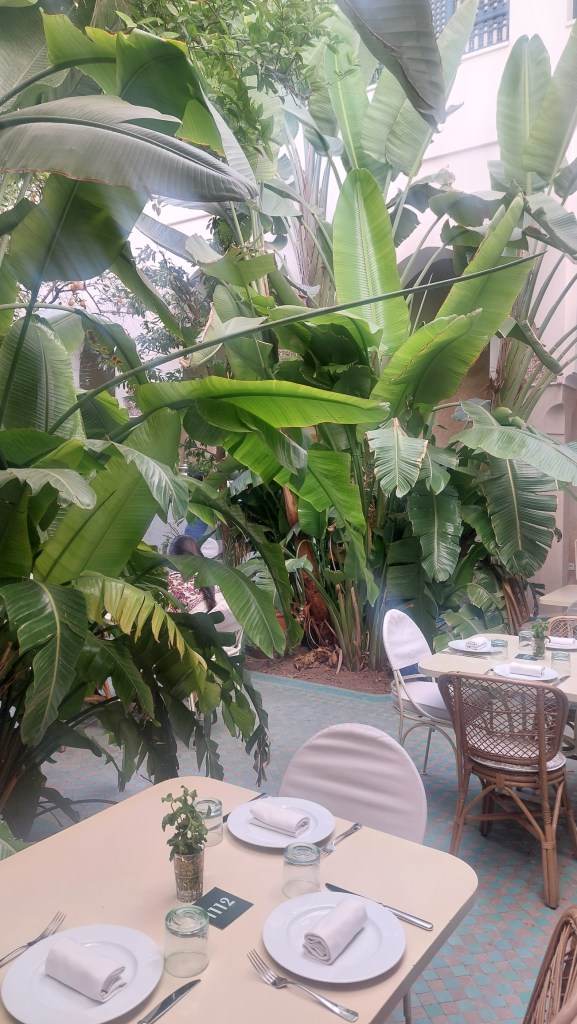
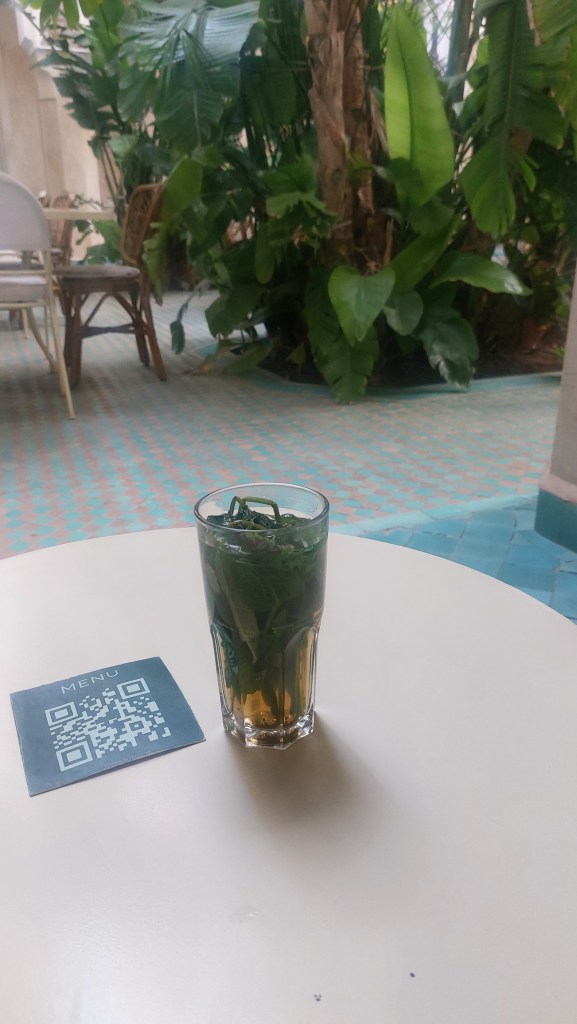
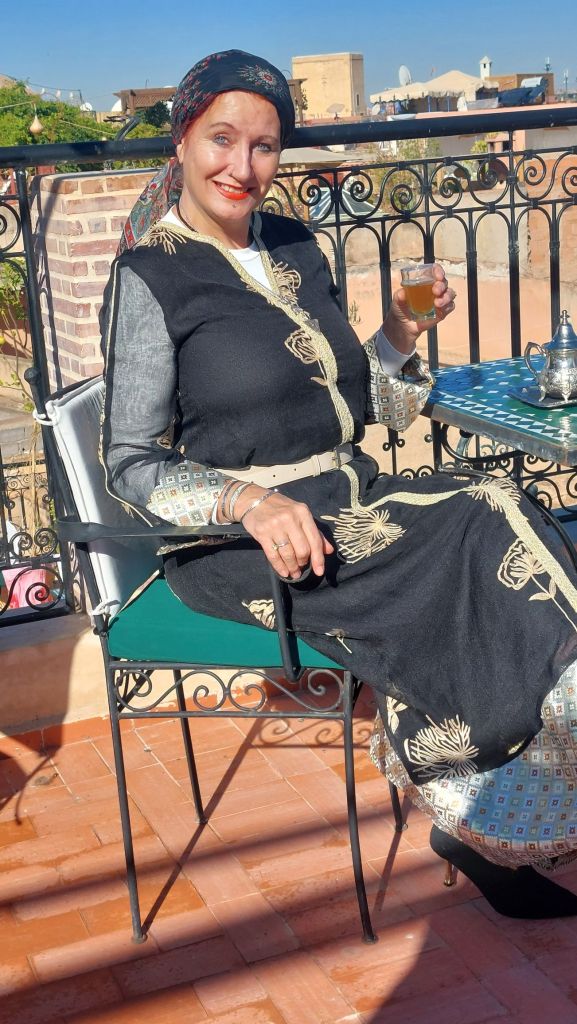
Sipping mint tea overlooking the square from a rooftop terrace is a nice way to experience Marrakech. There is also a tea house that I highly recommend called 1112 Moroccan Tea House. It’s situated in a beautifully restored riad, and it’s the first Moroccan tea house in Marrakech.
Images by Freebird Tracey.
Drinking atay is a big part of Moroccan culture. You will be offered tea in spice shops, in Berber carpet shops, and friendly locals will want to share it with you. It’s practically a ritual in Marrakech.
You can purchase the pretty glasses in the souks, along with ornate silver teapots. They make perfect gifts for taking home with you.
December in Marrakesh can still be warm and sunny. This time of year can be easier for people who don’t enjoy the stifling heat in the summer months. If you also want to avoid huge crowds of tourists, you might prefer the winter months
There is a possibility of more rain during the winter, and evenings can get chilly, but packing the right clothing will ensure that you still have a great experience.
In the medina, riads have air conditioning and will supply their guests with extra warm blankets to keep them warm and cosy.
When sightseeing,wearing several light layers and carrying a weatherproof jacket and umbrella will make sure you’re equipped for clement weather.
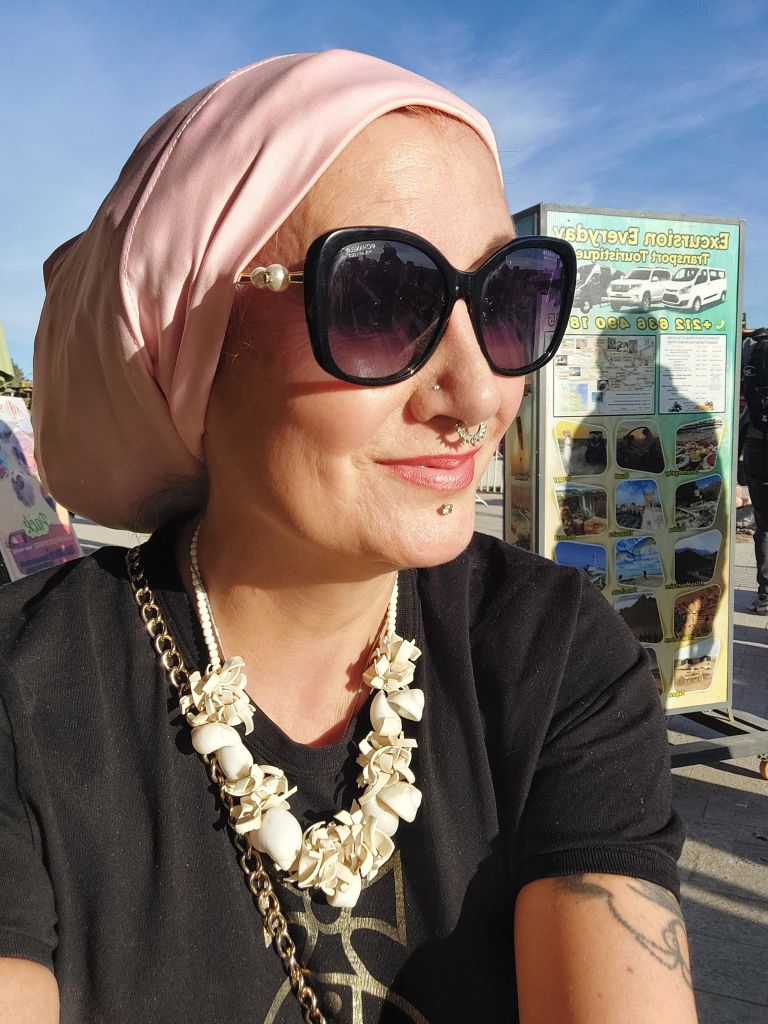
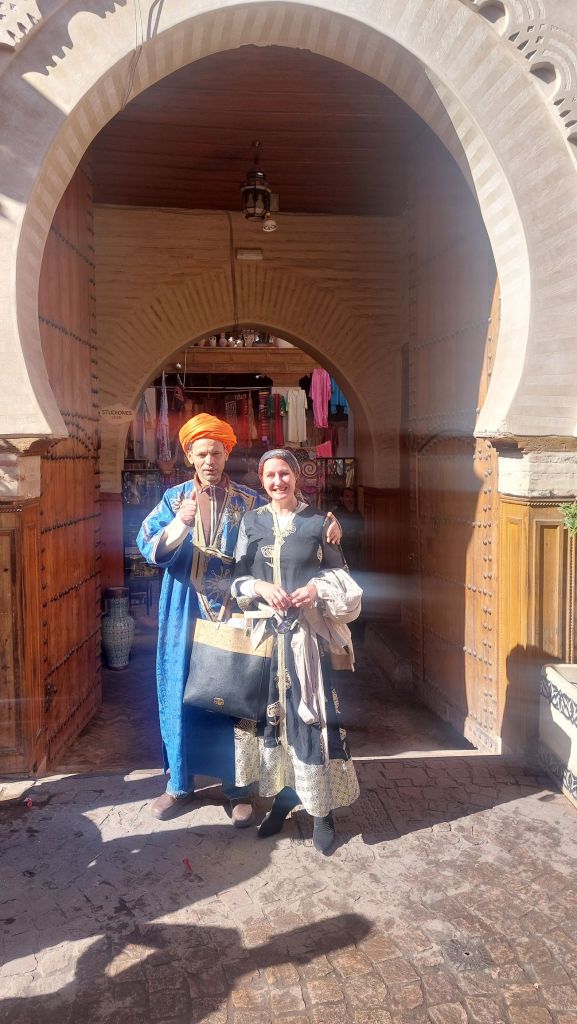
I went to Marrakech in December, and it was still warm and sunny most days, turning chillier after sunset. I still had a brilliant time. Vendors in the souks were easier to haggle with because of fewer tourists. I managed to bag a few good deals to take home with me.
Images by Freebird Tracey.
During the low season, the price of flights is often cheaper, and accommodation is easier to find for a good price.
If you’re planning a day excursion into the Atlas mountains, they do get snow. Check places like Ourika Valley or Imlil are safe to travel to before booking. The train to Casablanca is always operational, and buses to Essaouira still run for an alternative day trip if it’s too dangerous to go hiking in more remote areas.
I was surprised at how often I was able to sit outside and people watch in Jamaa El Fna in December. Some days were bright and sunny, and some were cloudy with slightly a cool temperature. I never felt cold.
Marrakech in December/image by Freebird Tracey.
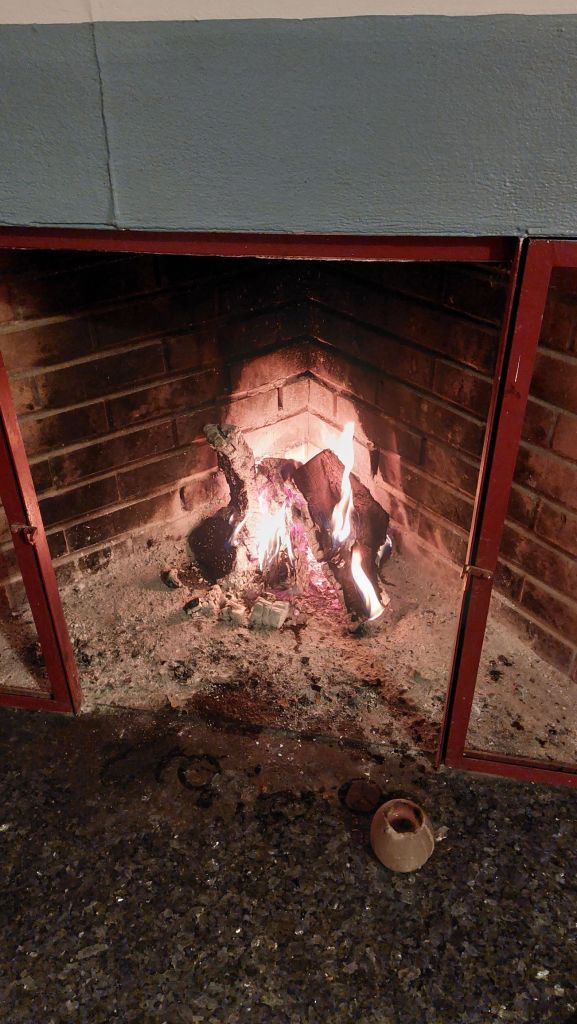
Some restaurants I visited, such as The Clock in the Kasbah, had roaring fires during the evenings. This created a cosy atmosphere.
Occasionally, Marrakech can experience more rainfall than usual. If you don’t want to get caught out, take an umbrella out with you.
If it rains, there are plenty of interesting museums, so don’t be disheartened if you’re caught in a storm. There’s always plenty to do. Tailor your itinerary to suit the climate and keep an eye on the weather forecast daily.
Spend time in places such as the Museum of Photography, the Berber Carpet Museum, and the Museum of Mouassine Music to keep yourself entertained.
Image by Freebird Tracey.
I would definitely go again during winter. It helped me to cope with the gloomy, grey days in the UK by breaking up the long winter. I enjoyed shopping whilst it was quieter and shorter queues into most of the attractions. In addition, the airport was quiet, and I got through passport control really quickly.