A brief history of the indigenous people of North Africa.
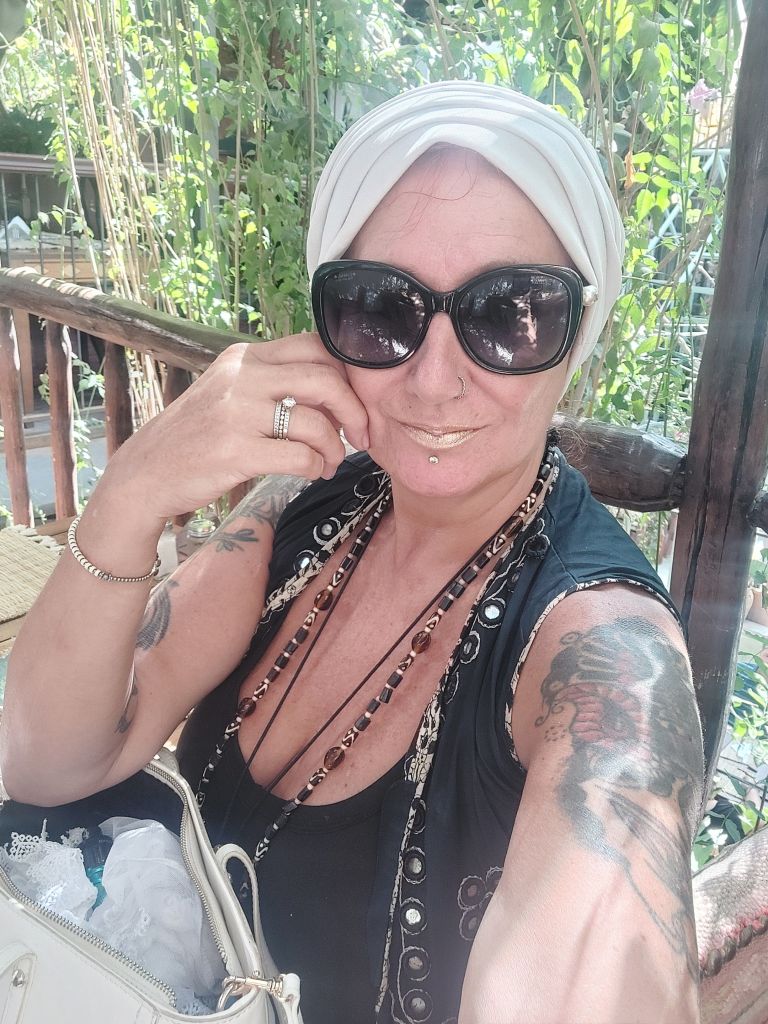
Image by Freebird Tracey.
Berbers, also known as Amazigh, are an indigenous group native to North Africa, with a history stretching back thousands of years.
They have lived across a vast region encompassing modern-day Morocco, Algeria, Tunisia, Libya, Mali, and Niger.
The Berbers made a huge contribution to the region’s cultural and technological heritage, including the creation of the Khettara system.
This ancient water management technique involves a network of underground tunnels that channel water from mountain aquifers to arid lands, enabling agriculture in harsh environments.
The Berbers’ innovations in architecture, trade, and agriculture meant they had a self-sufficient community that was thriving long before the arrival of foreign empires. Over the centuries, the Berbers faced numerous challenges, including invasions and exploitation by foreign powers.
During the Ottoman era, slave traders targeted Berber communities, kidnapping many women and throwing their society into chaos.
The Berbers became known for their resistance to foreign domination, with some groups turning to piracy as a form of survival and defiance.
Barbary pirates became infamous for raiding European ships and coastal towns, leading to conflicts with European powers and even the young United States during the Barbary Wars. Despite these challenges, the Berber culture has endured, holding on to its distinct language, customs, and identity through resilience.
The name Berber comes from the word ‘Barbaric’ and is now considered offensive.
The indigenous people have adopted the name Amazigh, which means ‘ free people’
Amizigh is now taught in schools and is officially known as the second language in Morocco, next to Arabic.
It is possible for visitors to Marrakech to take a trip into the Atlas Mountains to observe the ancient customs and lifestyle of the Amazigh.
A stay in a Berber family lodge is an unforgettable experience and a way to really get to know the history of Morrocco.
You will get the chance to eat a home cooked meal with an Amazigh family and see how they live.
This wonderful experience can be booked online or through your riad or hotel on arrival.
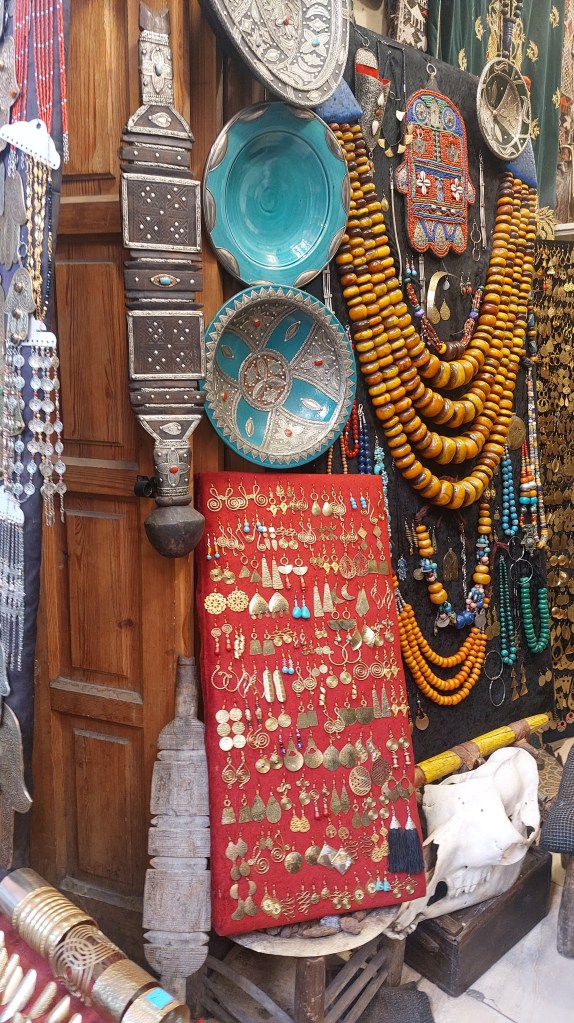
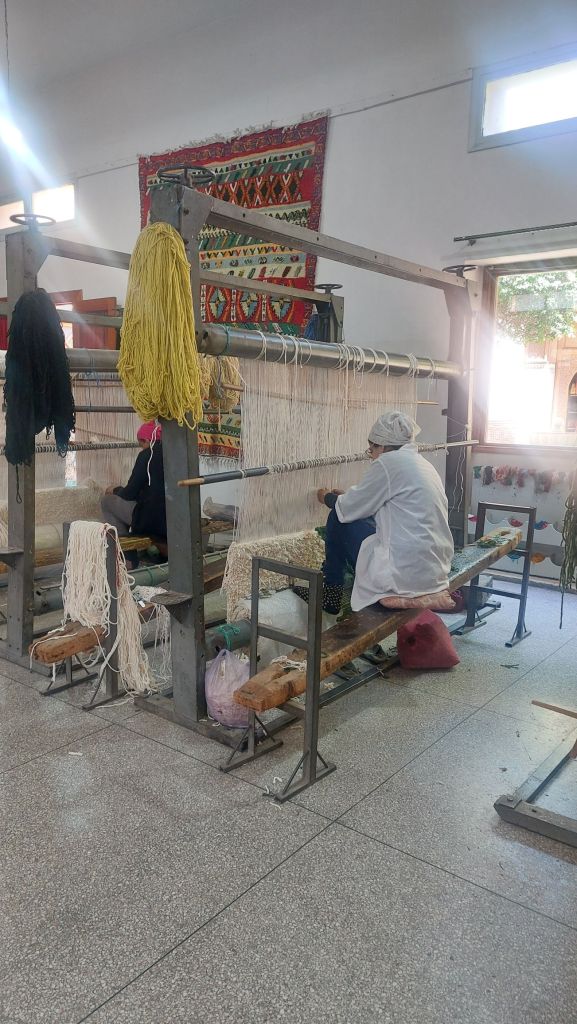
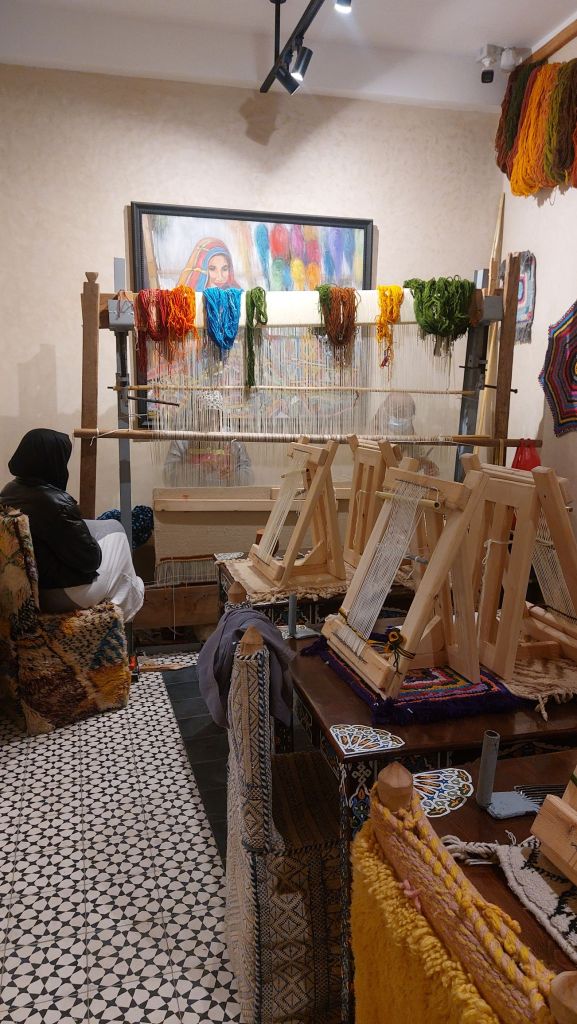
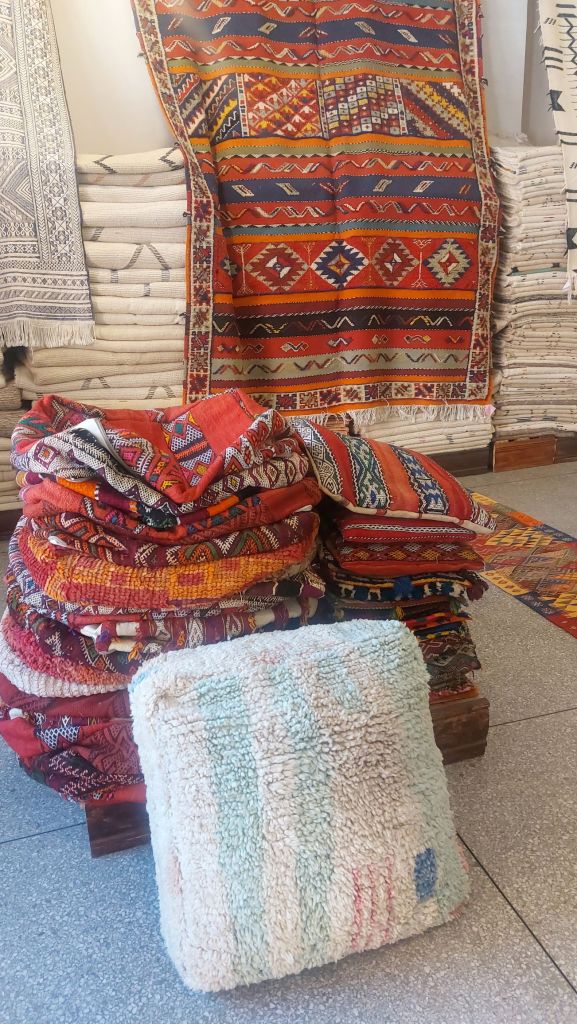
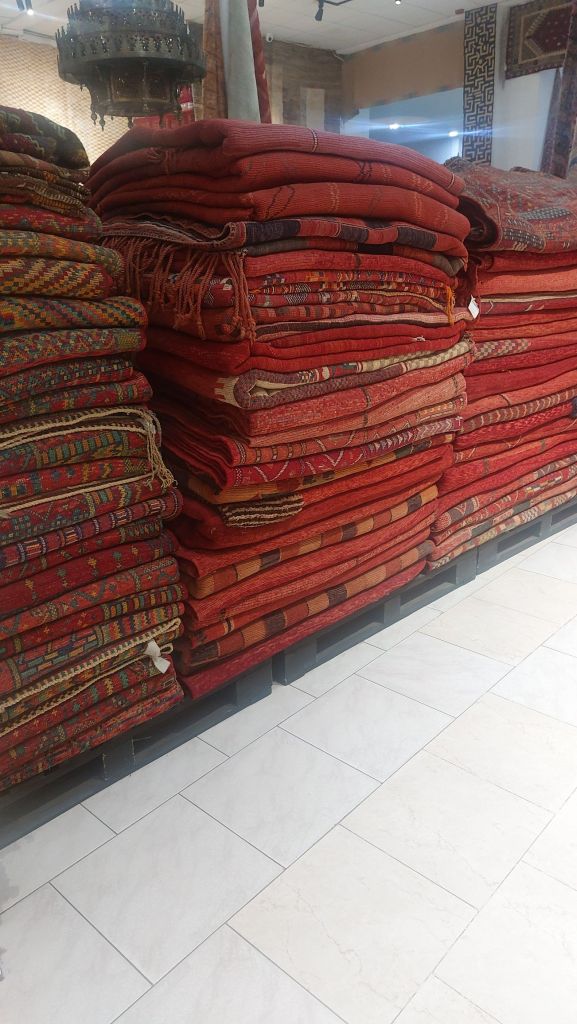
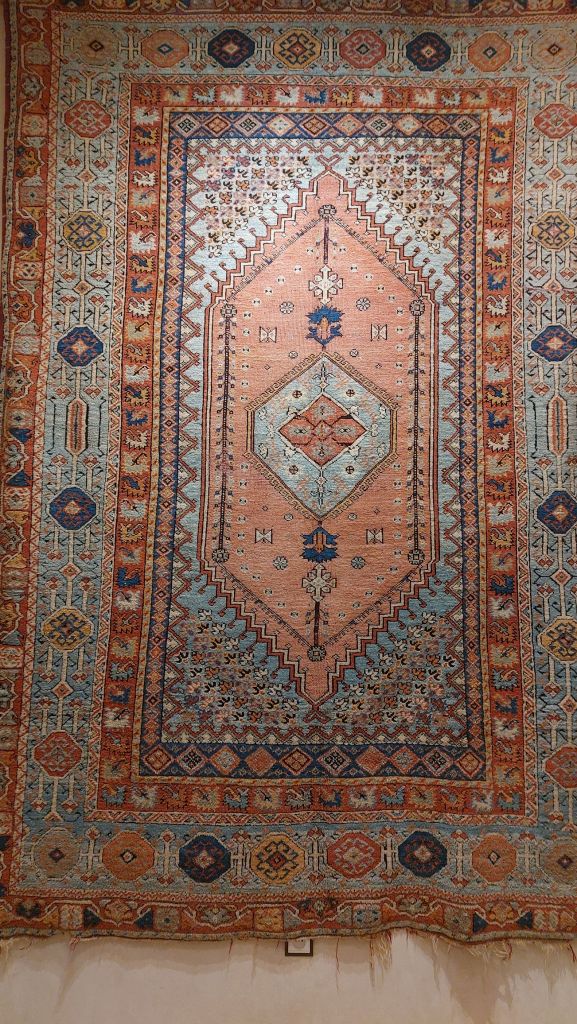
There is a lot of beautiful jewellery and rugs made by the Amazigh people for sale in the medina.
Images by Freebird Tracey.
Over 90% of the general population of Morocco has indigenous Berber DNA, and Marrakech is one of the most culturally Amazigh cities in Morocco.
To learn more about Amazigh culture, visit the museum of photography or Marrakech museum.
Both places are fascinating and gave me a deeper insight into the history of Amazigh culture.
Helpful advice for visiting Marrakesh for the first time.
Image by Freebird Tracey.
I’ve put together a few useful tips to help your trip run smoothly.
Marrakech is a cash society. Although many cafes and restaurants take cards, cash is often the preferred method of payment.
In the main square called Jamaa El Fna, you will need cash to purchase almost everything.
There are plenty of 🏧 machines located around the city.
I use the one outside the post office where the horse and carriages stand, close to the taxi rank.
The exchange rate is good, and it was usually working.
You can get cash at the airport, but the exchange rate isn’t great.
There are also plenty of places to exchange money around the city.
It’s advisable to carry a small amount of cash with you for tipping, small purchases in the souks, and picking up a bottle of water.
Something you may want to consider if you don’t have cash at the airport is to ask your accommodation to organise a taxi to your hotel or riad in advance.
Most accommodations will do this for you when you book. It’s prepaid, so you won’t have to worry.
You will probably need a SIM card.
I got an Orange SIM in the airport, and they put it into my phone for me.
This saved me any hassle, and I had data from the moment I arrived in Marrakech.
Having data gave me reassurance as a solo female traveller.
I could use Google maps in the medina, which was helpful in case I got lost.
It’s worth noting that Google Maps may not work in some areas of the souks, though.
Tipping is not customery in Marrakesh, but the food and service are usually very good, so it’s nice to be nice.
I generally leave a small tip of approximately 20-30 dirhams.
You can drink the tap water allegedly, but personally, I wouldn’t recommend it.
Some tourists have what’s called a GRAYL water bottle, which takes out the bad stuff, but I haven’t tried one myself.
I preferred to air on the side of caution, plus the water doesn’t taste that good and water purifiers don’t change the taste of the water.
There are plenty of places selling bottled water around the medina, and riads or hotels also sell it.
Non Muslims can’t go inside the Mosques, with the exception of Hassan ll Mosque in Casablanca.
Koutoubia Mosque has the most beautiful gardens, which are well worth a visit. They are open to everyone, and particularly nice in the evening when they’re lit up.
Image Freebird Tracey.
Some tourist attractions get incredibly busy, so try to arrive at opening times for the best experience.
Places like Bacha Coffee can have waiting times for up to 2 hours, so come early and join the queue.
The same applies to Bahia Palace and the Madrasa Ben Youseff.
I found shopping in the souks early in the morning favourable.
It was less crammed with tourists, and I avoided the mid afternoon heat.
Although Marrakech is an Islamic city, it’s fairly relaxed and liberal.
However, out of respect for the culture of your hosting country, it’s appropriate to cover your shoulders when visiting certain religious places.
Aim to dress modestly without exposing too much flesh, and you’ll have a great experience.
I have written a separate post on what to wear when you’re visiting Marrakech.
Marrakech is a dry city. However, there are bars and clubs that cater to Western tourists.
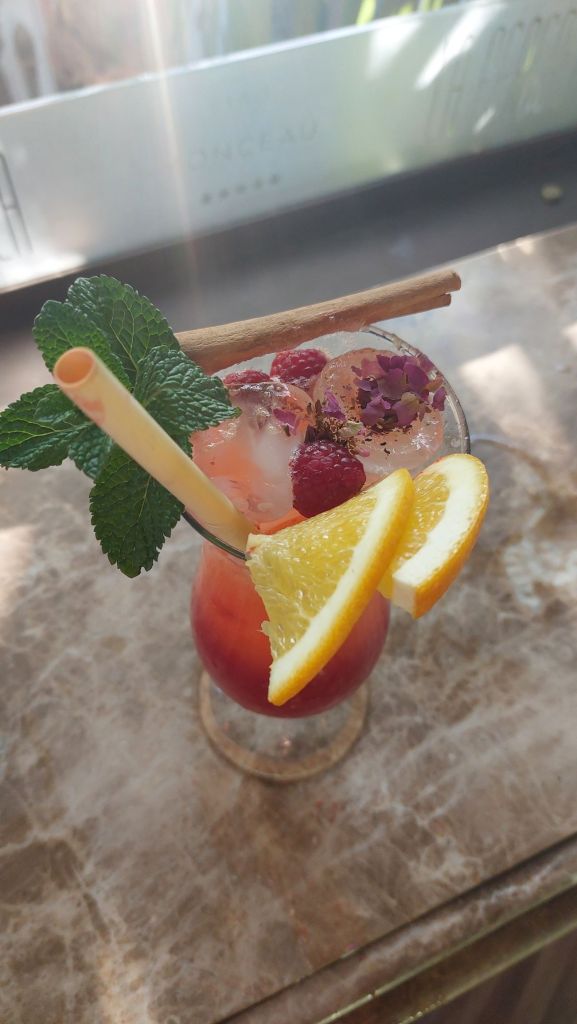
There are a few nice bars selling alcohol and cocktails around the medina, such as Le Pergola and Kabana rooftop bar.
Gueliz and Hivenage have plenty of clubs and bars if you want a night out with alcoholic beverages and entertainment.
Some high-end riads and hotels will also serve alcohol.
It’s forbidden to consume alcohol in the medina unless you’re in a place that is licensed to sell it.
If you get tired of haggling in the souks, there is an artisans market.
The prices are slightly higher but you can simply buy the products without having to bargain for them.
There is also a fixed price store in the Kasbah called Dar Bouchaib.
People in Marrakesh can be quite camera shy.
It’s best not to take photographs unless they specifically say you can.
Be prepared to have to pay for the privilege, too.
Most travellers are discouraged from starting conversations about the King of Morocco.
Try sticking to conversations about the history of Marrakech and Amazigh culture.
The locals will love telling you all about it..
There are a few scams going on in the square, but it’s mainly opportunists trying to make a few dirhams.
I haven’t had any problems myself, but just keep your wits about you and don’t fall prey to anything.
Marrakech is relatively safe, but just like anywhere else in the world, exercise caution with your personal belongings in crowded areas.
Keep your personal items in front of you and don’t carry large amounts of money around.
The Souks close around 9.00 to 10.00 pm, so be careful if you’re walking around after that, especially if you’re a solo female traveller.
I haven’t experienced anything unpleasant, but it can feel rather unnerving in the dark alleyways after dark.
See my separate post about solo female travellers in Marrakech.
I hope some of these nuggets of advice help you to have the best experience in Marrakech.
The first place I go after arriving in the medina is Henna Art Cafe.
It’s the perfect spot to stop and refuel myself after my flight and the long queues at Marrakech Menara airport.
Henna Art Cafe is a place where I can familiarise myself with where I am and check Google maps for the location of my riad.
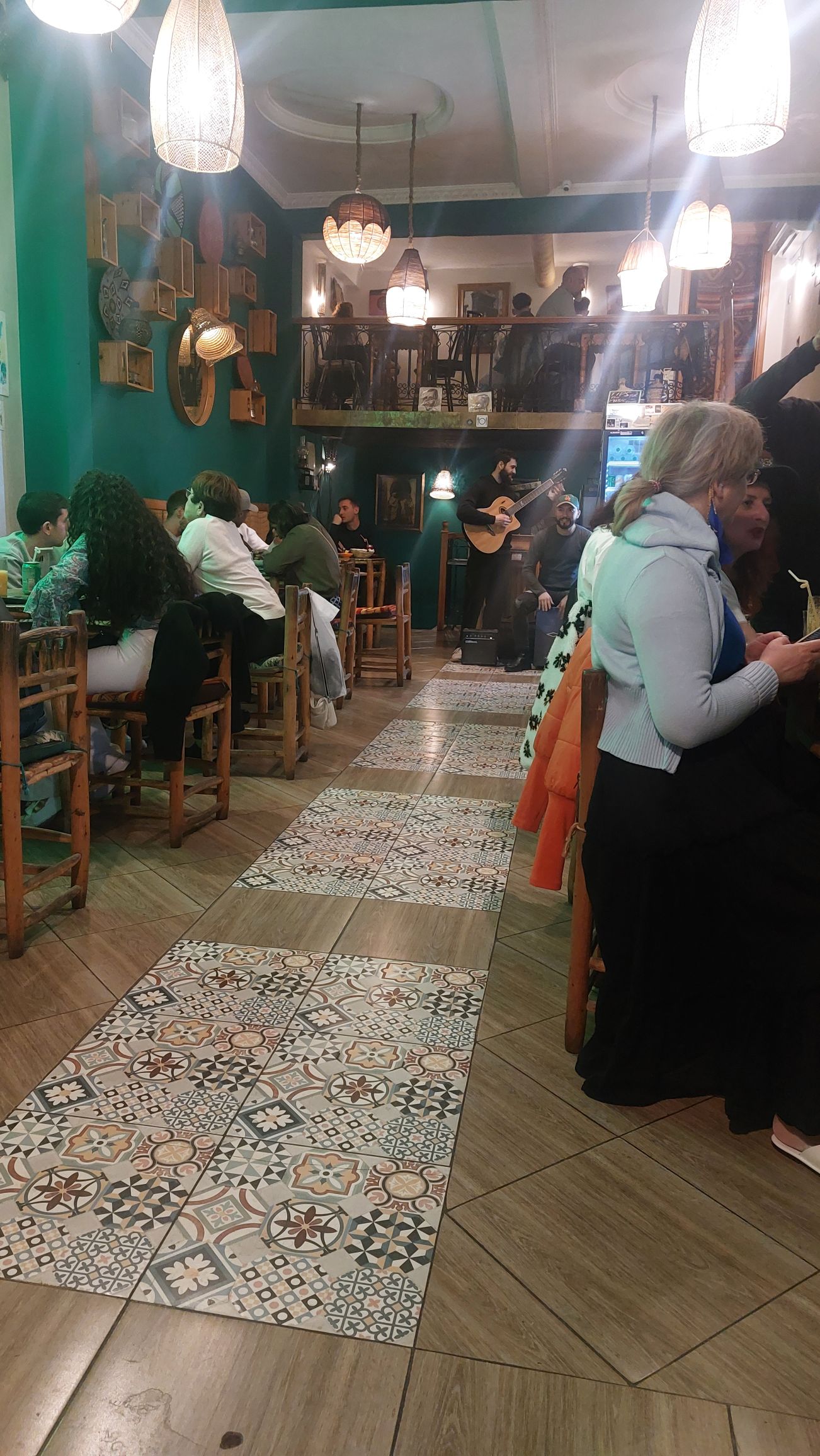
It’s a quirky place with decent food and the funkiest little bathroom, even if it is a bit of a tight squeeze.
On the first floor, you can get henna tattoos done, and there are plenty of designs to choose from.
All are 100% natural, and the henna ladies are very professional.
I would recommend getting your henna tattoo done in a reputable place like here as opposed to Jamaa El Fna.
Henna Art Cafe has a really relaxing vibe, and I often stop by to enjoy a meal at lunchtime whilst shopping in the medina.
It’s also very reasonable if you’re on a tight budget.
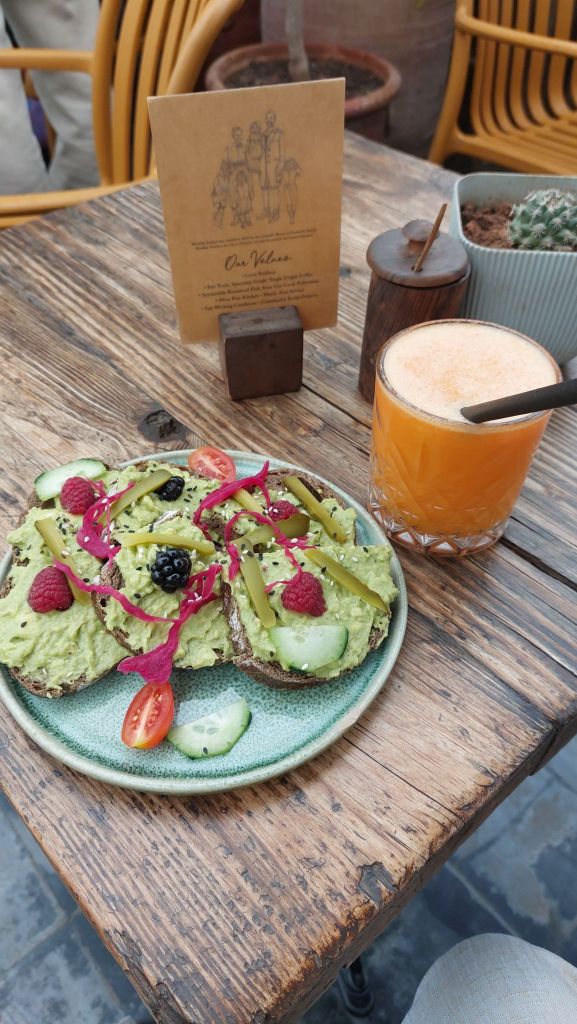
There is a good selection of food on the menu, vegetarian, vegan, and gluten free options are available.
There is free WiFi, and it’s popular with digital nomads.
It’s a friendly place and a good introduction to the medina without being too overly stimulating.
Henna Art Cafe is located in the heart of the medina, just a three minutes stroll down Riad Zeitoun al Kdim from Djemma El Fna.
It is open 7 days a week from 11 to 8.30 PM.
During Ramadan, it closes earlier at 5.30 PM.
I recommend the freshly squeezed lemon juice. It’s tangy and refreshing and packed with vitamin C.
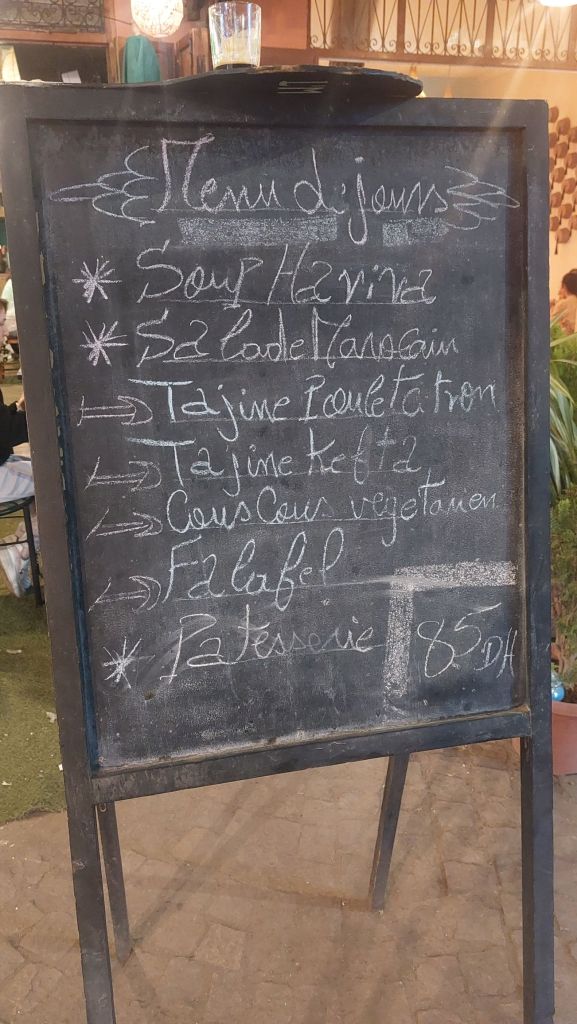
Henna Art Cafe does a nice fragrant tagine, but if you’ve overdosed on tagine or couscous, there are plenty of other interesting options on the menu.
Images by Freebird Tracey.
Payment for your meal is taken downstairs on the way out, and cards are accepted here.
After a nice meal and a rest at Henna Art Cafe, I’m always ready to tackle the challenge of trying to locate my riad.
My battery is recharged, and I have begun to climatise to the change of temperature between my own country and that of North Africa.
Image by Freebird Tracey.
I have a soft spot for this quirky little cafe.
Henna Art Cafe was my first introduction to the medina, and I was eased into the cultural change with my first bowl of harissa soup and traditional Morroccan bread.
I could say this is where my love affair with Marrakech began..
My 5 favourite and not so favourite things about Marrakech.
Image by Freebird Tracey.
Marrakech is ‘my happy place’.
It’s a city of contrasts, from the ancient walls of the medina to the plush bars and clubs of Gueliz and Hivernage, the new part of the city.
Visitors may find Marrakech is an assault on the senses.
The lively sights, sounds, and smells of Jamaa El Fna can be overly stimulating for even the most seasoned of travellers.
However, don’t let that put you off coming to Marrakech because it’s part of the charm of the city and is just as exciting as it is chaotic.
I have made a list of the 5 things that I love and hate about this fascinating city..
The 5 things I dislike are;
1.
If you’re an animal lover, you might find the hustlers in the main square too much to cope with.
The monkeys on chains and the snake charmers that encourage you to have a photo taken with them are difficult for me to accept.
I wouldn’t encourage this.
The monkies have been brought down from their natural habitat in the Atlas mountains.
Although local people need to make a living somehow, they clearly don’t want to be chained up for hours every day dressed in tutus and nappies.
Then there are the horses, taking tourists through the busy traffic and the donkeys pulling heavey laden carts through narrow alleyways full of motorbikes and tourists.
The horses seem to be looked after, but the traffic is horrendous, and I’ve witnessed accidents where they’ve been clipped by passing motorists.
The donkeys look overworked and neglected.
It’s the culture of Marrakech, but very different from what I’m used to.
I can’t criticise an age-old way of life or impose my beliefs onto another culture, but I did struggle with it the first time I visited Marrakech.
I avoided eye contact with the snake charmers and monkeys on chains, and eventually, they stopped approaching me.
There are a lot of stray dogs and cats, but they are looked after by the locals, and many of the cats have been rehomed by the owners of many of the riads.
They are regularly fed, and the people in Marrakesh are kind and caring towards them as a rule.
If you are an animal lover, you may find Marrakech a bit of a culture shock to begin with.
2.
Queueing at the airport.
Be prepared to stand in line for up to 2 hours on arrival. The process is slow, so you have to accept it.
Take a snack and keep a drink readily available. You will most likely need it.
You can pay extra for the fast- track service, but it may cost you around €230 for the first person and €190 for the second person.
Tip: Try to visit the bathroom before the plane lands and consider choosing a seat near the exit.
Get off the plane and boot it to passport control as quickly as you can.
3.
Marrakech is touristy.
The narrow alleyways in the Souks can be very crowded most of the time.
Don’t expect to get anywhere quickly because you and hundreds of other tourists will be browsing around the shops at the same time.
Marrakech is one of the most popular tourist destinations, and it may feel as though they’re all there at the same time as you.
Tip: Plan to visit in January or November when it’s quieter.
It is still sunny but much cooler than during the summer months.
There are fewer people around the tourist attractions, so you will be able to get that perfect photo opportunity, and the queues will be shorter.
Tip: Don’t try taking photographs of the local people or vendors without asking for permission first. They don’t feel comfortable about being photographed and may ask for money off you.
4.
The smell of fumes from the motorcycles in the souks is thick and heavy.
The souks are full of motorcycles and tuk-tuks, giving off clouds of fumes as they hurtle past.
This can get stuck in the back of your throat, causing you to feel a little bit nauseous occasionally.
There is little you can do to change this, but I recommend doing your shopping in the souks early in the morning before they get too busy.
Around 9 is an ideal time.
There are a lot of vehicles on the roads, and it can be chaotic at times.
Pollution is fairly bad in Marrakech, so just be aware of this if you struggle with asthma or other breathing issues.
5.
The street vendors in the main square can be rather persistent.
During the evening, the main square opens up becoming a meeting place for thousands of people.
This includes locals and tourists alike, and it gets incredibly busy.
The food stalls are all in competition with each other, and vendors will persistently shove the menu in your face to get your custom.
Some of them can be very persuasive, even pushing the boundaries occasionally.
It can be very overwhelming, and it’s often difficult to remain calm in those kinds of situations
The henna ladies also vy for your custom.
It’s not uncommon for them to take hold of your hand and begin applying henna on them telling you that it’s a gift.
After they’ve finished they’ll ask for money from you and it can get quite heated.
Tip: If you’re not interested, try not to show too much interest with any of the vendors.
Politely saying “La Shukran” which means no thank you in Arabic, is a helpful way to discourage unwanted attention.
It’s important to remember, every one is simply trying to make a living.
Marrakech was badly affected by the devastating earthquake in 2023, and many people have lost their livelihoods and homes.
Whilst it’s sometimes difficult to cope with the constant barage of vendors calling out to you for your custom, it’s worth remembering their own struggle to survive is very real.
Marrakech is certainly a different way of life from what you may be used to and a culture shock to many first-time visitors.
So now I’ve told you about a few of the things I find challenging in Marrakech, I would like to tell you about what keeps me going back time and time again…
Image by Freebird Tracey.
Marrakech is definitely my ‘happy place’
I am absolutely in love with this city.
Here’s why…
1.
The people are wonderful.
You can expect to meet the friendliest,most welcoming people you have ever met.
They are constantly smiling and can’t wait to tell you all about their beautiful city.
They are multi-lingual, and many people speak up to 5 different languages.
They love to teach you about the Amazigh culture, the indigenous tribes of North Africa.
Many of the people of Marrakech identity as Amazigh, and their culture is fascinating.
The level of service in restaurants is astonishing, and the staff in the riads go out of their way to make sure that your stay is nothing short of perfect.
I highly recommend staying in a riad at least once.
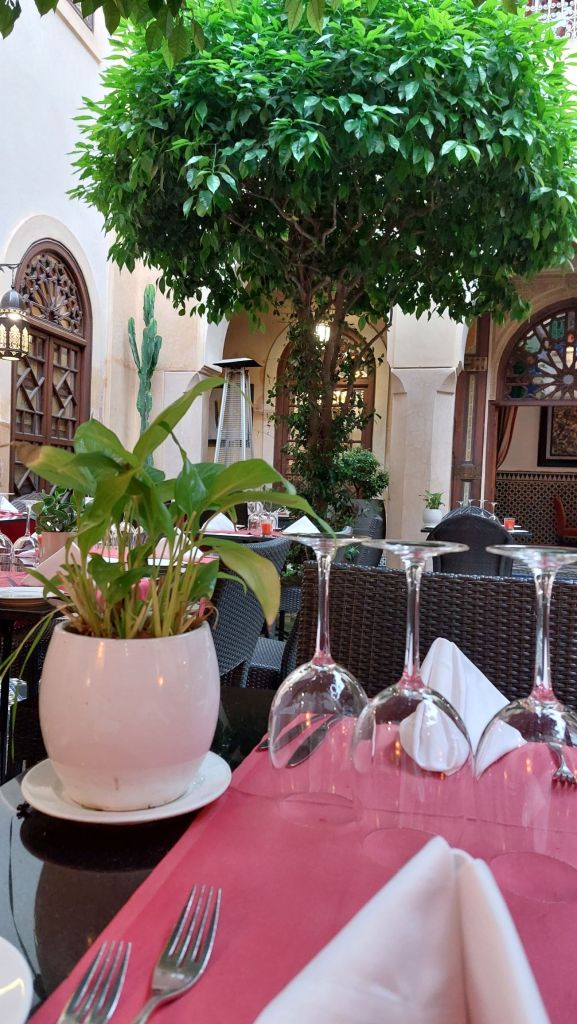
They are traditional Moroccan houses with a central indoor garden or courtyard.
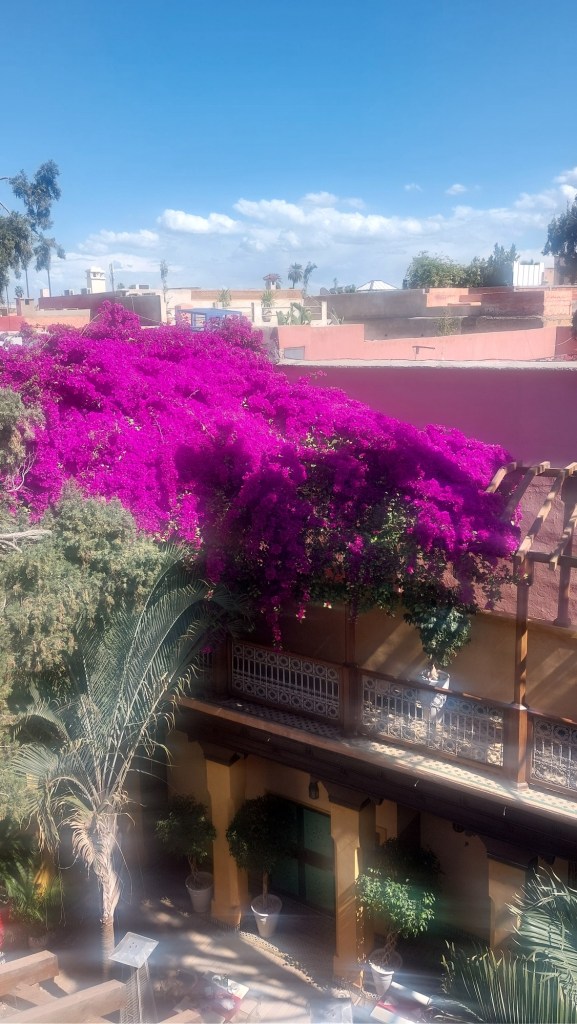
The views over the rooftops of the medina are stunning, and listening to the birds singing in the morning is delightful.
They are a haven of peace and tranquillity after an exhilarating experience outside the walls of the riad.
I have written a separate post about staying in a traditional riad.
2.
The vibrant colours and wonderful craftsmanship around Marrakech.
If, like myself, you are drawn to beautiful, vibrant colours, you will be in paradise in the Souks.
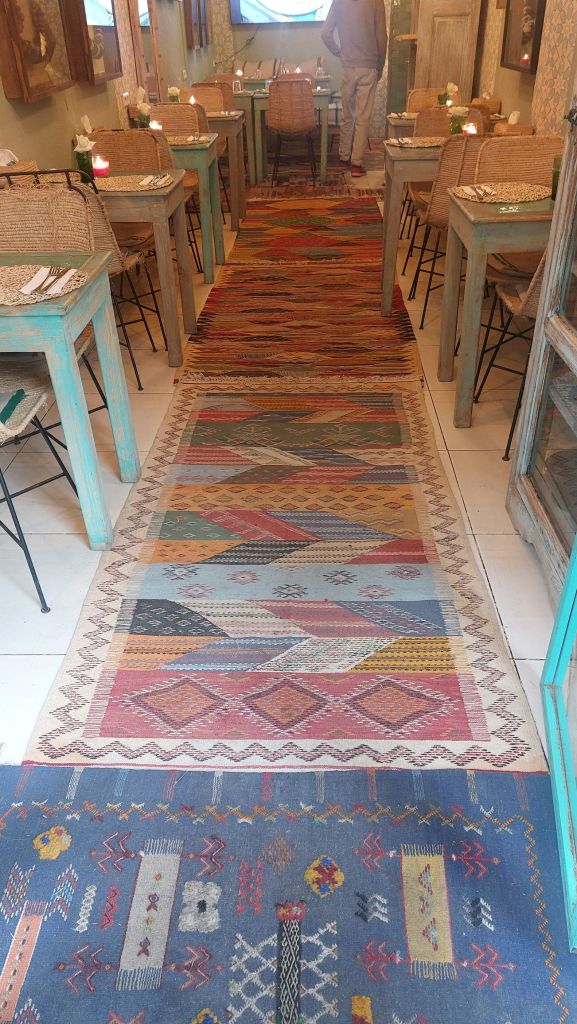
You will find an assortment of fine jewellery, inticately designed Berber rugs, wood carvings, and a vast array of other wonderfully crafted products
You will be blown away by the artisans, creating wonderfully curated pieces of work in front of you, and the displays of various items in their designated areas.
Wherever you look, you will notice something that catches your eye.
Just be prepared to bargain.
3.
The food is delicious.
There are some amazing places to dine in Marrakech, and the food is of an incredibly high standard.
There are good quality vegetarian restaurants and cafes, and many cater for vegans and people with gluten intolerance.
The food in Marrakech is diverse, and you can find dishes to suit everyone’s palate from all over the world.
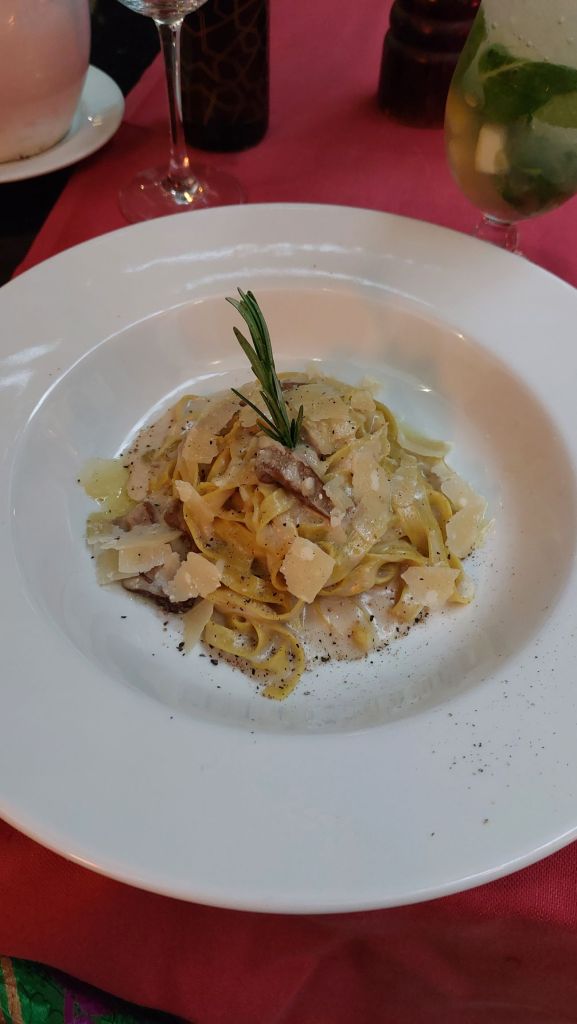
I found delicious Italian restaurants that made the most wonderful pizzas and pasta dishes.
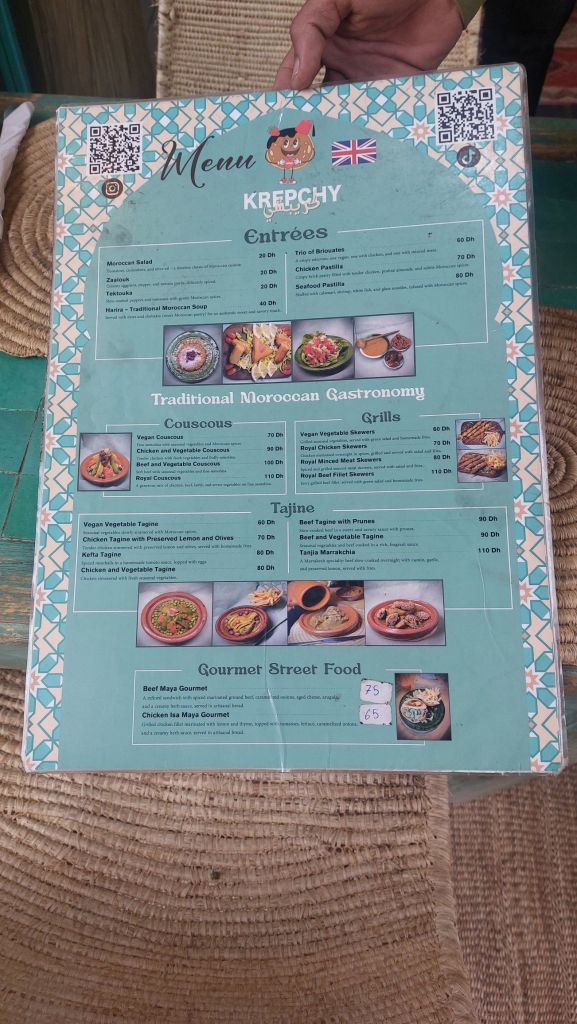
The signature dish of Marrakech is Tagine.
Tagine is the name of the clay pot used to cook the dish in
It’s cooked very slowly, resulting in the most decadent, mouthwatering flavours.
Choose from meat or vegetable tagine, you won’t be disappointed.
Tangia is a pot of meat, usually lamb or beef, that’s cooked in the embers of the local Hammam.
It’s left to cook for several hours until it’s really tender.
There are some more unusual options, such as sheep’s head and snails found in the main square, Jamaa El Fna.
This seemed to be more popular amongst curious tourists.
Also, a few restaurants sell camel burgers if you’re feeling adventurous.
Overall, I was very impressed with the amount of variety on offer, and many of the restaurants around the medina are absolutely stunning inside.
I also recommend visiting Bacha Coffee if you’re a coffee lover.
There are hundreds of different coffees to choose from and a nice selection of cakes, pastries, and other light snacks.
You do have to wait for a table, but you get to look around the museum and enjoy the lush garden whilst waiting.
4.
The architecture is absolutely stunning.
There are so many interesting places to visit, and the intricacy of the tile work is absolutely exquisite.
Islamic craftsmanship with its symmetry and attention to detail is beautiful, and I was spellbound.
The lush gardens are also breathtaking and a welcome respite from the hustle and bustle of the Souks.
I recommend visiting these places to get an idea of how exceptional everything truly is,
. Bahia Palace.
. Madrasa Ben Youssef.
. The saadian Tombs.
. The Koutoubia Mosque.
. The Secret Garden.
. Bacha Museum.
. Marrakech Museum
Big wooden doorways around the medina are an example of the amazing craftsmanship that Marrakech is known for.
Marrakech is steeped in history, and there is something exciting to see for every visitor.
5.
Marrakech is a great starting place for visiting other places
I took a wonderful trip out to the Agafay desert, and it was absolutely magical.
I had dinner in the desert watching the sunset it was unforgettable..
There are trips to Ouzoud to see the second largest waterfall in North Africa and experience a boat ride and feed the monkeys.
You can also take a train to Casablanca or visit Essaouira for the day.
If you wish, you can venture into the Sahara desert if you have about 3 days to spare. It’s a very popular destination amongst tourists.
Tours are very well organised, and the tour guides are incredibly knowledgeable and helpful. They go out of their way to make sure you have the best experience.
Riads or hotels are happy to help you organise your trip, but you can also check other popular online sights for price comparison.
Image by Freebird Tracey.
There are many different reasons why I love Marrakech, I have listed only a few.
Here are a few other things to take into consideration..
Marrakech is a safe place to visit, especially for solo female travellers.
Although it is mainly an Islamic city, it is relatively liberal.
I would always encourage showing a little bit of respect regarding your dress code. Wearing a loose cover around your shoulders when visiting religious sites is advisable.
Marrakech can reach temperatures of 50° in the summer, which is incredibly hot, so bare that in mind when choosing when to go.
Riads and hotels have places for you to sunbathe, and it is acceptable to wear shorts and bathing suits there..
Image by Freebird Tracey.
If you’re looking for a place that is a combination of many different things, from the ancient to modernity, a place that is diverse and can often feel like an organised chaos, yet perfectly functional, a place that will transport you to the world of 1001 Nights,
Then Marrakech is for you.
I would recommend doing a little bit of research before you visit.
Arm yourself with plenty of knowledge so that you will know what to expect.
That way, you will have an unforgettable experience and come away with memories of places and people that will remain with you forever.
One of the things you will notice when you’re in Marrakech is the number of stray cats everywhere.
I was surprised to see so many, especially around the busy square, and in the souks.
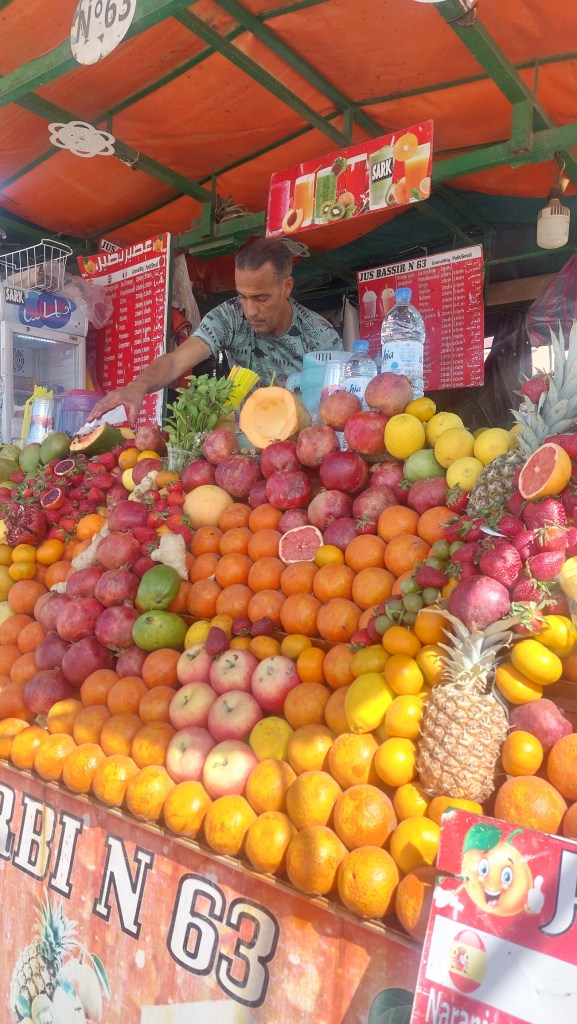
They seemed to be experts at dodging the many motorcycles and hiding inconspicuously under the juice stalls.
There were cats sleeping on rugs and cushion covers in the souks, and lazing about without a care in the world.
I witnessed strays giving birth to kittens inside alleyways and watched as cats prowled across rooftop perimeters at dawn.
Five years ago, when I first visited Marrakech, I took pity on the cute little kittens hanging around outside my riad.
They looked thin and hungry, I wanted to do something to help them..
Image by Freebird Tracey.
I purchased a couple of tins of sardines and carefully wrapped the leftovers from my dinner into napkins.
I found a couple of cats and strategically placed the food in a safe place for them.
Images by Freebird Tracey.
The next minute, there were so many cats who appeared out of nowhere, also demanding to be fed.
This made me feel very guilty because I’d only managed to afford them a few tiny morsels.
It was a case of first come, first served..
I went back to the UK feeling a little sorry for all the homeless cats who alerted passing tourists of their existence with a gentle mewing and extended paw.
The next time I arrived at marrakech, I saw things from a different perspective.
Cats are seen as ritually pure in the Islamic faith and highly regarded.
According to the Prophet Muhammad, cats are allowed access to homes and mosques because they don’t create impurity.
I stayed in three separate riads that each had a resident cat, who was very well cared for.
I noticed restaurants leaving food outside their premises and butchers dropping scraps of meat on the floor for the local cat population to eat.
Images by Freebird Tracey.
Many of the cats were being looked after, and some were actually thriving on the titbits and bowls of food dotted around the medina.
Images by Freebird Tracey.
There was only one upsetting incident where a young man was sitting with a kitten on his lap, and it was holding a business card in its paws.
On closer inspection, it isn’t something I ever want to see again, and I don’t feel the need to go into more detail here..
I’m sure you can imagine what I saw.
That is the only startling discovery I have made, thankfully.
On the whole, the cats appear to be relatively content.
They don’t exist in the way domesticated cats do in the west, but they’re not being ill treated any more than anywhere else in the world.
I even saw a man get off his motorcycle in the busy souk and move a little kitten to the safety of an alleyway.
Image by Freebird Tracey.
If you’re coming to Marrakech, seeing all the stray cats may initially shock you.
I was exactly the same, but after closer observation, I came to the conclusion that the situation wasn’t as dire as I first thought.
There are plenty of little pools of water around the city for the cats to drink from, and some vendors leave water out for them.
The crazy traffic and crowds of tourists seem to be the biggest problem, but the cats have learnt how to navigate their way around.
I’m happy to say that I haven’t seen an injured cat lying at the side of any of the roads around Marrakech yet.
There are tourists who are rescuing stray cats around Marrakech and taking them back to European countries.
They are working with local vets to get injured cats treated and all the necessary vaccinations done before taking them out of the country.
The cats in Marrakesh have learnt how to survive.
They only know this life, and have adapted to it.
On the whole, people are kind and compassionate towards them.
Plus, in all the years of visiting Marrakech, I’ve never seen one single rat in the city.
Camels, sunsets, and a fire show that left me speechless.
Image by Freebird Tracey.
We met our tour guide near Jamaa El Fna at 6.00pm and boarded our air-conditioned mini bus.
The journey took around 45 minutes from Marrakech in total in an air-conditioned mini bus with a small group of about 8 people.
Agafay desert is a gravelly desert, composing of stones, rocks, and dunes where some vegetation is able to survive.
As we approached, there were camels with their calfs looking fairly nonplussed at the convoy of tourists driving slowly past.
On arrival, we could hear music playing from our camp a short distance away from where we were parked.
Our guide led us to our tables that overlooked the vast expanse of the desert that lay before us.
The panoramic view was absolutely breathtaking..
We could see for miles.
Images by Freebird Tracey.
Our camp was really pretty, with colourful seats and rugs scattered everywhere.
There was a Berber tent for us to shelter in, and we could also eat inside there since it was becoming slightly windy.
After a hot, sweet mint tea, we all took the optional camel ride.
Images by Freebird Tracey.
Much to everyone’s amusement, my camel came untied and got a bit frisky with the one in front.
After he was reattached, we continued a bit further for a short while before turning around and heading back to disembark.
That was also something of an experience.
I wobbled about on my camels back as he dropped down to the ground in the most undignified manner.
Immediately after we got off the camels, our food was presented to us.
It was a three course meal consisting of vegetable soup with traditional Morroccan bread, a delicious tagine followed by cakes and fruit for dessert.
Image by Freebird Tracey
We ate our dinner watching the beautiful golden sun go down. The sky was fiery red.
It was absolutely stunning.
I can honestly say it was one of the most beautiful sunsets I have ever seen.
Images by Freebird Tracey.
Traditional musicians played their instruments around the tables, entertaining us as we finished our meal.
It was a lot of fun.
Traditional musicians entertaining visitors.
As soon as dinner was over, more merriment commenced.
Dubious tourists were pulled into a circle and were soon snaking around the campfires and attempting to mimic traditional Berber dancing.
The atmosphere was incredible.
Everyone was out of their seats, clapping and enjoying themselves.
The stars came out, and the campfires roared.
The temperature had cooled down, but we were soon nice and warm again.
After the lively display of Berber dancing had finished, we all sat down to catch our breath once more.
The air was full of laughter, and spirits were high.
Soon, the grand finale was about to begin..
A spectacular light show in the middle of the desert.
It was completely dark by now, and the visual effects were totally hypnotising.
Everyone looked on in awe at the amazing pyrotechnic display taking place on the dune in front of us.
It was the highlight of the whole evening.
We were completely blown away, watching the flames leaping about against the back drop of the vast dark desert.
I certainly wasn’t expecting anything quite as fantastic as that!
The fire display brought the evening in Agafay desert to a close.
It had been a wonderful evening.
We had tasty food, the entertainment was a lot of fun, the fire display was incredible, and the camel ride was interesting!
Everyone was able to participate in what turned out to be a very enjoyable time.
Once the evening had drawn to a close, we were taken back to our meeting point near Jamaa El Fna.
The cost of the excursion was well worth the money, and I would highly recommend it.
I booked my trip through Get Your Guide, and most of the accommodation in Marrakech will also organise the trip for you.
Apparently, there are a few different desert camps to choose from.
Some have better facilities than others, and some include a different itinerary. The cost varies, so do check what activities you are getting before you book.
It is also possible to book an overnight stay at Agafay luxury camp.
There is a swimming pool and other amenities with a more luxurious touch, such as rather grand tents with showers and bathtubs.
Check Booking.com or look for reputable online sites for details about staying there.
Here are a few things to consider if you plan to visit Agafay Desert.
Take a warm sweater or blanket, the evenings drop cooler, and you may find the wind is a little bit blustery.
There are plenty of toilet facilities but take some tissue with you in case there isn’t any. You may also want to take some hand sanitiser.
There are vegetarian options available. I had vegetable tagine, and the other people in my group had chicken.
The guides are excellent at their job.
I have been several times, and they always find us at the end of the evening if we get separated.
No one gets left behind.
Some tours visit an Argan Cooperative on the way to the desert.
I really enjoyed this and purchased some argan oil for my skin. It was a decent quality oil and lasted me ages.
The tour usually finishes around 9.30-10.00.
I think I may take a journey to the Sahara desert next.
After the painstakingly long queues at the airport, you finally arrive at your riad.
At this point, you’re feeling lightly overwhelmed and dishevelled.
The manager of the riad gives you the warmest welcome and guides you into the beautiful courtyard.
You sit down on the colourful cushions, listening to the gentle sound of the trickling water from the fountain and smell the fragrance of blossom on the trees.
Slowly, you begin to unwind.
The manager reappears with an ornate teapot with colourful glasses on a tray, accompanied by a dish of fresh olives.
The tea is poured, holding the teapot higher and higher.
This is a traditional Morroccan greeting for visitors. The higher up the teapot is held, the more respect the guest is being shown.
The tea also becomes aerated, making it cooler to drink.
You watch with amazement as the tea finds its way perfectly into the little glasses without a single drop spilling out.
It takes practice to perfect pouring tea from such a height, I have tried and failed miserably.
Video by Freebird Tracey.
The aroma from the fresh mint leaves begins to fill the air around you.
Soon, you are feeling refreshed and accustomed to your new surroundings.
After you have drank your sweet tea and eaten the delicious fresh olives, the panic of trying to locate the riad and queues at the airport disappear as if by magic.
The image of Google Maps not working and dragging your luggage through narrow alleyways crammed with tourists starts to become a distant memory.
Image by Freebird Tracey.
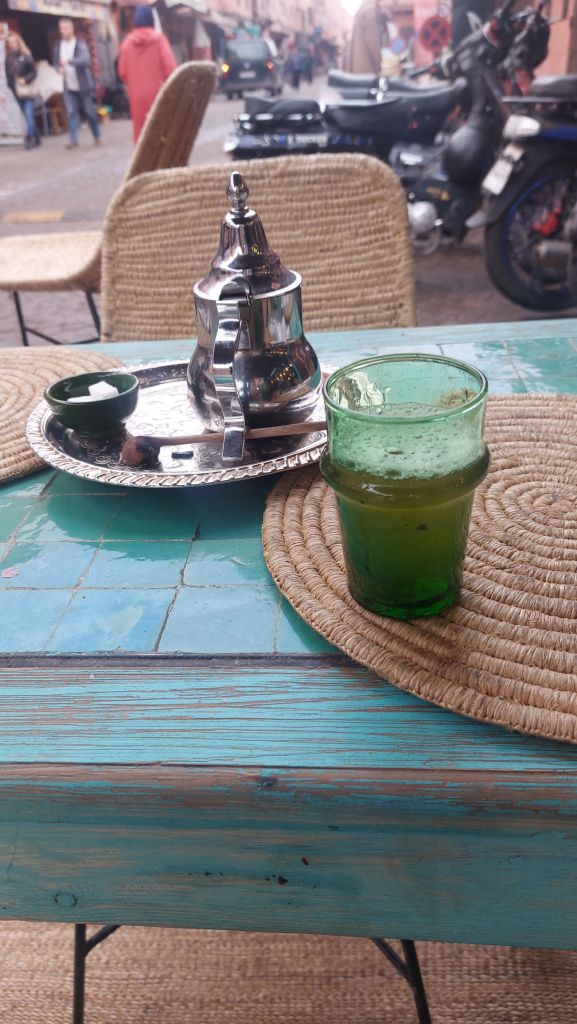
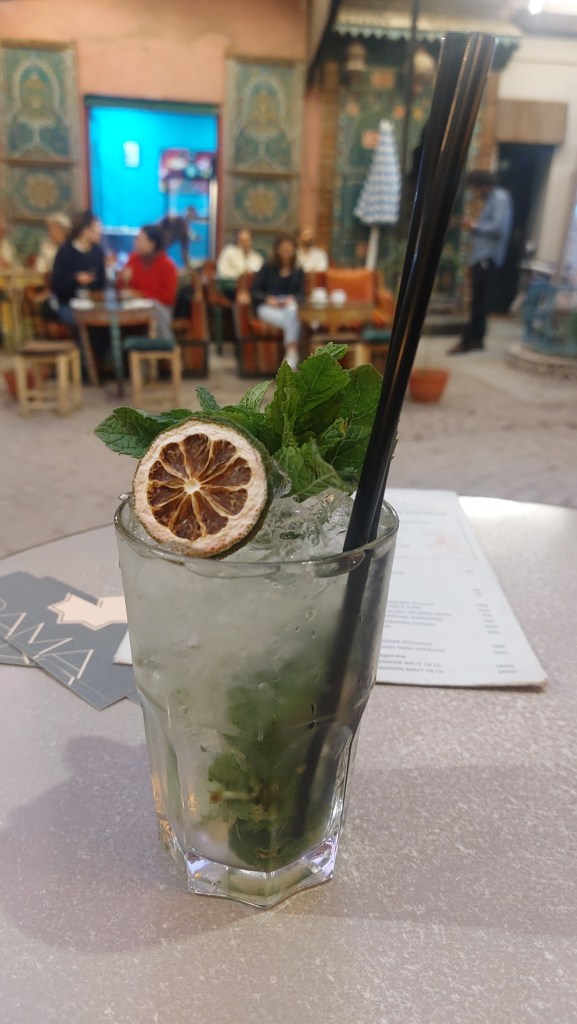
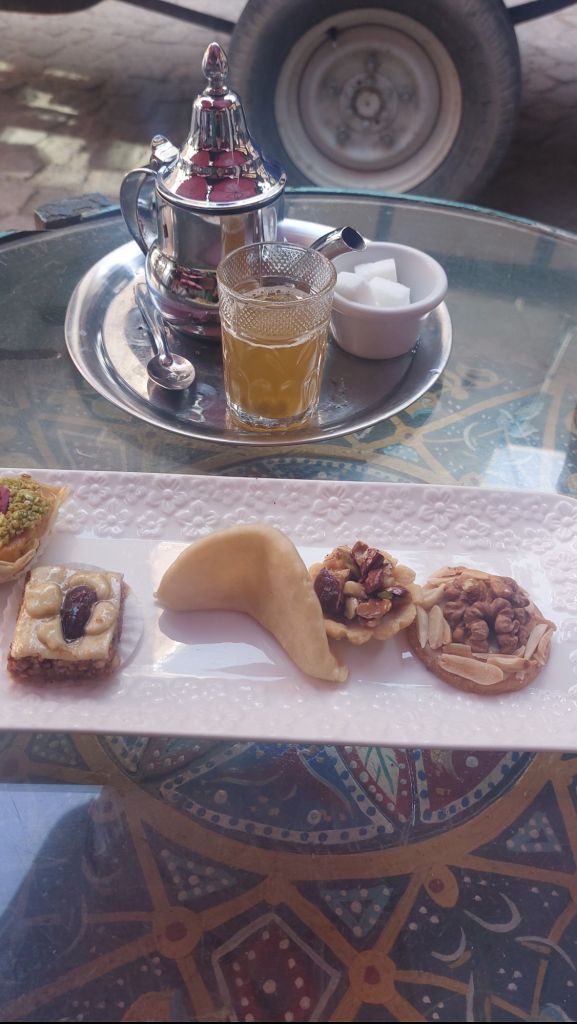
Mint tea is served everywhere in Marrakech.
It’s a refreshing drink that the locals enjoy as they sit inside cafes chatting with their friends.
I highly recommend 1112 Moroccan Tea House. They serve wonderful tea, and there is a room telling you all about the history of the tea.
It’s situated inside a beautiful riad, and it’s the first Moroccan tea house in Marrakech.
I’ve also written a separate article about 1112 Moroccan Tea House.
Image by Freebird Tracey.
Drinking mint tea is a central part of Moroccan social life.
The name for mint tea is ‘atay’ in Moroccan darija
It is known by the locals as ‘Morroccan Whisky’
Image by Freebird Tracey.
The tea is made using gunpowder green tea and fresh mint leaves, and it is often sweetened with sugar cubes before serving.
If you find it a bit too sweet, ask to have the sugar cubes separately.
That way, you have control over how sweet it is.
Fresh mint is displayed on market stalls all around the medina, and the strong aroma is evident when you walk past.
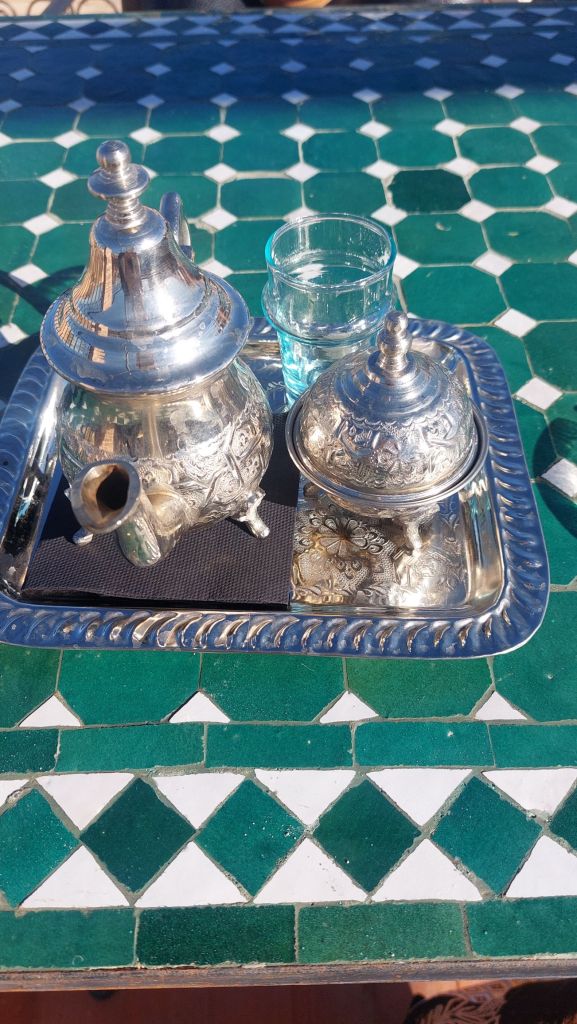
You can purchase the ornate tea glasses in the souks, along with the traditional teapots, they make the perfect gift for taking home with you.
Make sure to wrap them well as they are quite delicate and can break easily.
Image by Freebird Tracey.
Moroccan mint tea has many health benefits.
It improves digestion, helps to improve oral health, is a natural decongestant, and provides antioxidants that support good mental well-being, skincare, and alertness.
Sipping mint tea overlooking the lively square from a rooftop is a nice way to experience Marrakech.
For a great day out, take a trip to Ouzoud to see the spectacular waterfall.
Image by Freebird Tracey.
Ouzoud Waterfall is the second largest waterfall in Africa.
It is well worth the three hour drive through the stunning Atlas Mountains to see it.
I met my driver at Cafe de France, and after picking up a few more passengers, we were on our way.
The mini bus had air conditioning and was pretty comfortable. We drove for around one and a half hours, then stopped for a toilet break and a drink.
There was a small cooperative selling Argan oil, and a few tourists in the group purchased some to take home with them.
Soon, we were on our way again, and the views of the Atlas Mountains were breathtaking.
It was a really scenic drive, and time passed quickly.
When we arrived at Ouzoud, we were introduced to our guide, who spoke several different languages, and we set off walking.
We rambled through the olive groves as the cheeky wild Barbary macaque monkeys played hide and seek in the trees with us.
Image by Freebird Tracey.
The waterfall was visible from different angles with plenty of viewing points to take photographs or rest for a few moments.
The waterfall plunges 110 metres into the canyon below, making it a breathtaking sight.
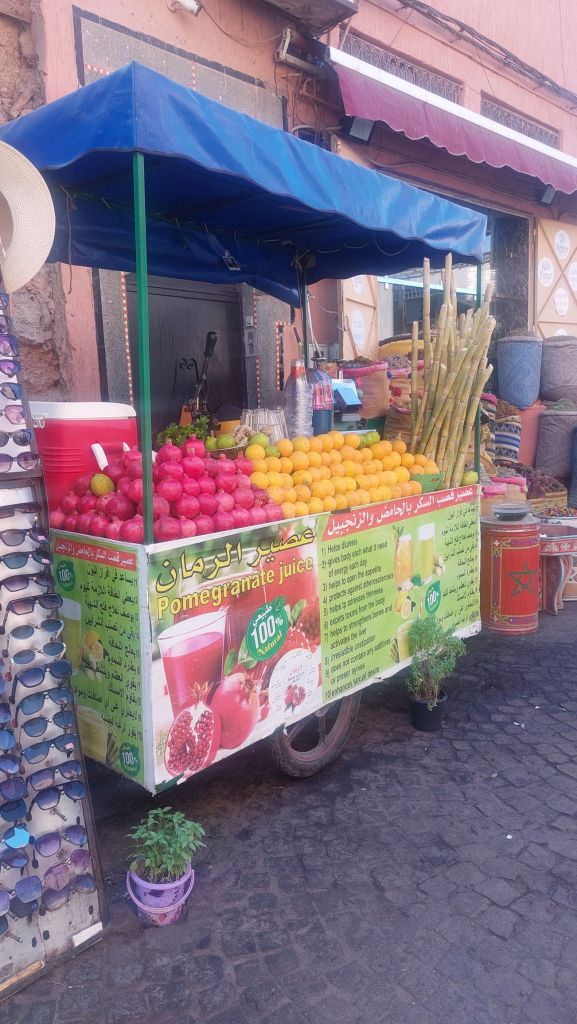
It was a warm day, so we stopped for a freshly squeezed pomegranate juice before continuing our way down to where the boats were.
Image by Freebird Tracey.
A boat ride up against the waterfall is part of the itinerary if you book a tour.
The boats are colourfully decorated, and we were taken right up to the waterfall, allowing us to get some great photos.
It was an amazing experience.
The feeling of the cool water spraying our faces was a welcome relief from the heat.
Image by Freebird Tracey.
We were dropped off on the opposite side and then had quite a steep climb up to the restaurants.
I was able to get a table overlooking the waterfall, and the view was amazing.
I had a three course meal consisting of a starter, which was a small salad with fresh bread and olives, followed by a vegetable tagine and fruit for dessert.
Images by Freebird Tracey.
The meal was finished off with a glass of Morroccan mint tea.
The meal cost around 150 dirhams and was fairly good value.
It was very tasty and filling enough for a light lunch.
Image by Freebird Tracey.
After lunch, we made our way up some more steps, stopping off to feed the monkeys at the top.
Images by Freebird Tracey.
Finally, we were reunited with our driver, and it was time to set off back to Marrakech.
We stopped again on the way back for a toilet break and to pick up a drink or snack for the remainder of the journey.
It was early evening when we arrived back in Marrakech.
Overall, the trip to Ouzoud was well worth the six hours of travelling.
It was absolutely beautiful. Sitting above the waterfall looking down at it whilst eating my lunch was the highlight of the trip for me.
The monkeys were also very amusing, I had to keep hold of my sunglasses to stop them stealing them.
The guide was so helpful and looked after everyone really well.
He spoke five languages, and it was very impressive that he was able to communicate with the whole group.
I highly recommend going to Ouzoud if you visit Marrakech. It’s a wonderful day trip.
If you have mobility issues, it may be challenging for you. There are a lot of steps, and it’s a bit of a steep climb from where the boats are up to the restaurants.
There’s also a fair amount of walking involved to see all the vantage points.
Some people were taken back up on Donkeys, so that’s an option.
Image by Freebird Tracey.
I booked my trip with Get Your Guide, and it was good value for money for such a great day out.
It included the drive in an air-conditioned vehicle, the tour, and the boat ride.
The lunch was separate.
Your accommodation can also organise visiting Ouzoud and other popular day trips for you.
I’ve put together a few helpful tips to help you decide.
Image by Freebird Tracey.
Marrakech is an all year round destination.
It has a high desert climate, so it is pleasant all year round.
During the summer months, temperatures can reach a staggering 45°C or higher, which a lot of visitors find unbearably hot.
The Winter months can be moderately warm and sunny, feeling chillier in the evenings.
I suggest the best time to go is during the spring, from March till May or in autumn, from September till November.
Springtime sees warm, sunny weather, and you can still dine on the rooftops in the evening.
I would recommend taking a lightweight jacket or jumper to throw on as temperatures can drop after sunset.
Image by Freebird Tracey.
March is the wettest month experiencing 12mm of rain over a day and the occasional storm.
Be prepared by carrying an umbrella and wearing sensible footwear.
June is the driest month with 1mm of rainfall over one day but temperatures in June and July do tend to soar.
This might make excursions and activities more uncomfortable if you’re walking around in that kind of heat.
Suncream is essential whichever time of year you decide to visit because you can not underestimate the power of the hot Moroccan sun.
Carrying bottled water with you is important too so that you don’t become dehydrated.
If you prefer going when there are fewer tourists, I would suggest January to February.
The climate is sunny, with average highs of 19°C and lows of 6°C during the evening.
This would be the ideal time to visit if you’re put off by huge crowds and long queues at popular sightseeing destinations.
Another thing to consider is that Ramadan takes place between February and April, so some stores and restaurants may be closed.
Many do stay open, but the vibe can feel slightly different.
I choose to visit in late March and late September or early October.
The Jacaranda trees along the main roads in Gueliz look really beautiful, and the air is really fragrant at this time of year.
Image by Freebird Tracey.
March can be quite hot, but heavy thunderstorms are also frequent.
The sky can look very dramatic and holds its own kind of beauty just before a storm.
Image by Freebird Tracey.
Springtime can still be very busy with tourists, and the souks are lively and bustling with excitement.
For me, that is part of the fun, but for some people, the crowds can be overwhelming.
Image by Freebird Tracey.
September can be humid.
I found it more challenging to walk around the palaces and stand in long queues in the humidity.
Between 3.00pm and 7.00pm becomes particularly warm and sticky, so try to get most of your sightseeing done in the early morning.
Afternoons can be a good time to relax by the pool or take a nap in your hotel or riad.
Image by Freebird Tracey.
Marrakech is sunny and warm all year round, and if you do decide to visit during the summer months, here are a few suggestions to help you cope with the heat.
Plan to visit tourist attractions in the morning as soon as they open.
If you pre book, you will avoid waiting in long queues in the heat, and there will be fewer people around.
Pace yourself.
You don’t have to rush around. Many places stay open quite late in the evening.
Alternate between sightseeing and finding places in the shade to have a long rest with a cool drink to avoid too much sun exposure. There are plenty of beautiful spots with banana trees and beautiful tall palms to relax beneath.
Wear natural fibres like cotton or linen clothing.
They are breathable and perfect for wearing in hot weather. Choose loose clothing that covers your arms and shoulders. They allow the air to circulate and help to evaporate sweat, keeping you cooler.
I have written a separate article on suitable clothing for Marrakech.
Stay hydrated.
Carry bottled water at all times to keep yourself from dehydrating.There are plenty of little kiosks dotted around the medina selling reasonably priced water.
Check the seals before purchasing for peace of mind.
Plan to do more during the evening when it’s cooler.
Some of the tours begin later in the day, and trips to Agafay desert begin just before sunset.
The square comes alive in the evening, so most of the souks are still trading until late because people are still present.
Wear high factor sunblock and keep your head covered.
The sun can be pretty fierce, even as early as March.
Visit the water slides of Oasiria.
Take advantage of the air conditioning available and consider taking an afternoon nap.
Visiting the Sahara desert will be blisteringly hot in summertime. Consider going in the cooler months when days are still warm but not unbearable.
Remember, evenings get cold in the desert.
Marrakech is a wonderful city all year round.
If you follow these simple rules, you should have an enjoyable visit whichever time of year you decide to travel.
It’s about planning your trip beforehand.
Consider what it is you want from your experience.
Are you put off by crowds of tourists all crammed into the souks at the same time?
Can you handle the extreme heat, or would you prefer the cooler temperatures in December or January?
Whichever time you decide to travel to Marrakech, the locals are always smiling, and there’s always plenty to do and see..
I recommend reading my article about visiting Marrakech in winter for tips about travelling in the cooler season.
Everyone visiting Marrakech should stay in a traditional riad at least once.
If you want a taste of authentic Moroccan life, spending time in a riad inside the walls of the medina will give you one.
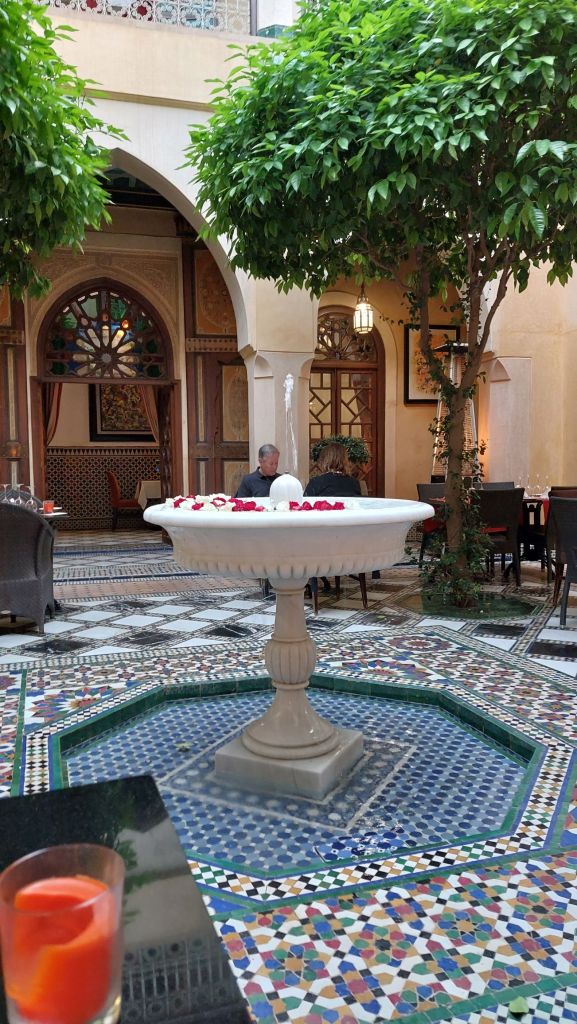
Traditional zellige tiles and the sound of trickling water from the ornate fountain in the central courtyard is just a small part of what riad life has to offer.
Image by Freebird Tracey.
Riads are the homes once lived in by the well-to-do of Marrakech.
Whole families lived inside them, and they offered a private, secluded place, especially for the women in the family.
They are built around a central courtyard with the windows facing inwards and have citrus and palm trees in the centre, reaching up through the open rooftop.
Many have a small pool for cooling off in, and most of them still have their original fountain from when they were first constructed.
The rooftop can be reached by climbing the steep tiled steps.
You will be greeted by a vibrantly coloured seating area where you can escape from the heat and admire the incredible views over the medina.
Images by Freebird Tracey.
The interior rooms are traditionally decorated in Moroccan lamps and Berber artefacts, which include colourful rugs, cushions, and exquisitely handcrafted furniture.
Many riads around the medina have been purchased by Westerners, renovated and refurbished to appeal to the ever growing influx of tourists.
A lot of riads still maintain their original appearance, and staying in one is like being immersed in a tale from ‘1001 nights’
Some of the original tiles from hundreds of years ago have been brought back to life, and they exude charm and character.
High-end riads are also beautiful and rather luxurious.
They include bidets and television sets in the rooms.
All riads are charming, and it all depends on whether you favour luxury over authenticity.
My choice of riad is a family owned property, one that still has it’s old world charm and feels as though I’m staying with a Moroccan family.
Like a tale from an ‘Arabian Nights’ adventure, a testimony to the beauty of Islamic architecture and craftsmanship.
Images by Freebird Tracey.
Most riads cook delicious home cooked food for their guests and offer cooking lessons.
There is also a hammam and massage service available in most riads.
This is a wonderful experience, and something everyone who comes to Marrakech should indulge in at least once.
Rooms in a riad are usually slightly dark inside.
This keeps them cool in the summer when temperatures can exceed 50°
Some of the windows have intricate screens from when the riad was a harem to keep the women private and secluded.
Waking up to the sound of birds singing in the trees and the gentle flowing of water burbling from the fountain is such a wonderful start to the day.
The early morning sunshine reflecting off the beautifully tiled floors puts me in such a happy mood.
Image by Freebird Tracey.
Most riads provide their guests with a hearty breakfast, which is sweeter than we are used to in the west.
Some staff cook omelettes, and there is always fresh orange juice and homemade yoghurts and jams served with traditional bread.
The msemen pancakes served with honey and amlou are my absolute favourite.
Image by Freebird Tracey.
I love sunbathing on the rooftop, listening to the call to prayer from the Koutoubia mosque.
If you’re staying near Jamaa El Fna,you can hear the gnawa musicians and the drumming in the distance.
This is a true immersion in the culture of Marrakech.
Image by Freebird Tracey.
In the evening, I like to watch the sunset from the rooftop.
At dusk, Jamaa El Fnaa comes alive with thousands of visitors.
You can hear the vendors calling out to beckon tourists into their food stalls.
The aroma of the food cooking catches your breath.
Image by Freebird Tracey.
Back in the courtyard, you feel as though you are in an oasis.
This calm and peaceful environment is a far cry from what is happening outside the big, heavy wooden door of the riad.
The sound of gentle music plays quietly in the background, creating a sense of tranquillity.
Image by Freebird Tracey.
Staff at the riad can suggest places where you can eat and also arrange popular excursions for their guests.
They are eager to please and go above and beyond the call of duty.
For me, staying in a traditional riad has a more intimate feeling than a hotel.
I like to spend a few days having what I call, a riad experience, and enjoying the culture of Marrakech like a true local.
Images by Freebird Tracey.
Whether it’s a former palace or a family owned business, staying in a riad is one of the most authentic experiences you can have when you come to Marrakech.